scroll top

If you're ready to divorce, you have several options: Expensive and exhausting legal battle with lawyers, mediation, and filing online, amicably.

DIY divorce is the lowest-cost way to go, though it can be confusing. An affordable divorce paper filing company is a good option. While CompleteCase is a quality option.

Keep reading to learn more about CompleteCase …

What is CompleteCase?

Is Complete Case legitimate?

Who should use CompleteCase.com?

How does CompleteCase work?

How much does a divorce with Complete Case cost?

CompleteCase reviews

Pros and cons of a DIY online divorce with CompleteCase.com

Is CompleteCase.com a good choice?

Complete Case vs. other online divorce services

Bottom line: Is a CompleteCase good option?

What is CompleteCase?

CompleteCase is an online divorce preparation service founded in 2002 by Randy Finney, a Seattle family law attorney. The site claims to have helped more than 700,000 users through the divorce process. 

Divorce.com, OnlineDivorce.com and CompleteCase were all acquired by a private equity firm in 2022, and work in partnership with Hollywood celebrity divorce attorney Laura Wasser.

Is Complete Case legitimate?

CompleteCase is 100% legit and is accredited by the Better Business Bureau with an A+ rating. CompleteCase has a 100% money-back guarantee that your divorce papers will be accepted by your local court.

CompleteCase has been featured in news outlets including USA Today, Good Morning America, Los Angeles Times, and TIME magazine, and has helped more than 700,000 users through the divorce process.

Is CompleteCase secure?

CompleteCase.com is shored up by TrustedSite, which monitors the site for malware, malicious links, and phishing.

Data entered on CompleteCase is encrypted by Go Daddy Secure Certificate Authority.

Who should use CompleteCase.com?

Molly Rosenblum, owner and founding attorney of The Rosenblum Allen Law Firm based in Las Vegas, says she typically recommends filling out forms through an online divorce service like CompleteCase if you and your spouse:

  • Don’t have kids OR you agree on how to co-parent your kids, including setting custody and child support arrangements 
  • Are more or less on the same page about how to divide your assets and debt (or you don’t have any shared assets/debt)

Because of its accessibility and coverage area, CompleteCase.com also bills itself as an easy solution for members of the military both at home and overseas.

How does CompleteCase work?

CompleteCase fills out divorce forms on your behalf through a detailed questionnaire, covering topics like asset/debt division, custody arrangements, and child support/alimony. 

How to sign up for CompleteCase

I recently went through the sign-up process for CompleteCase, and this is how it went:

  1. Answer four questions to determine your eligibility:
    • State of residence
    • Whether you know the location of your spouse (not required)
    • Whether your spouse agrees to the divorce and is willing to sign the divorce papers (CompleteCase notes that you must be in agreement before you can receive your divorce paperwork, and their form is designed to help you get there.) 
    • Whether you and your spouse have any children under the age of 18
  2. If you qualify, you’ll continue answering questions about:
    • Date and location of your marriage
    • Children and pregnancies
    • Properties and debts
    • Who is filing for divorce
    • Current living arrangements
    • Community property
    • Community debts and money owed
    • Income sources
  3. After these initial questions are complete, you’ll have to pay a processing fee of $299 to continue answering questions and receive your form. 
  4. The next set of questions can be completed in less than an hour and covers topics like:
    • Custody/visitation
    • Child support
    • Alimony
    • Division of assets/debt
    • Retirement benefits
    • Pending claims
    • Child litigation
    • Insurance coverage
    • Real estate
    • Vehicles
    • Debts
  5. Once you’ve reviewed your answers, you submit your forms for processing, which typically takes two business days, or you can pay $49 to get your divorce papers within 30 minutes. You can opt to receive your forms in one of three ways:
    • Online download – Free
    • Shipping via Priority US Mail – $20
    • Expedited shipping – $35
  6. After you receive your documents, review them for accuracy and make changes as necessary.
  7. File your approved paperwork with your local court system.
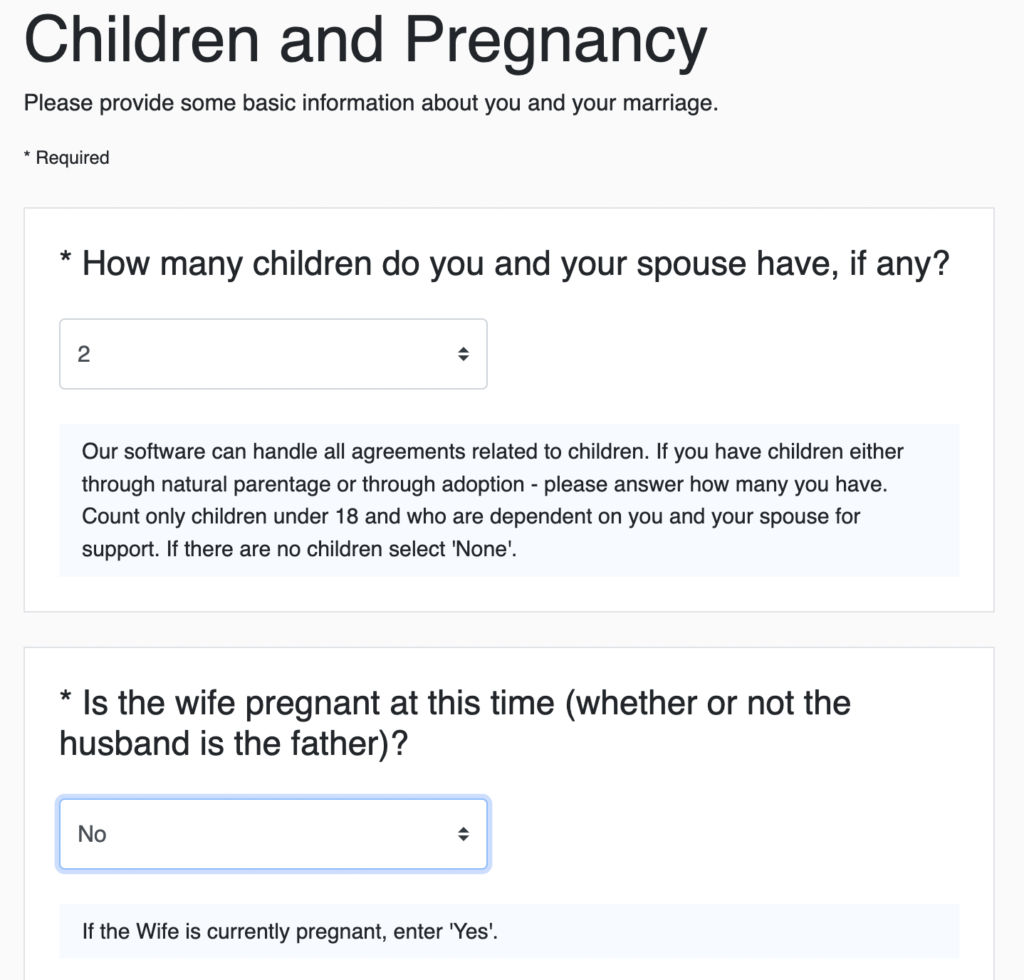
CompleteCase.com review questionnaire date and location of marriage.
CompleteCase.com review questionnaire children and pregnancy.
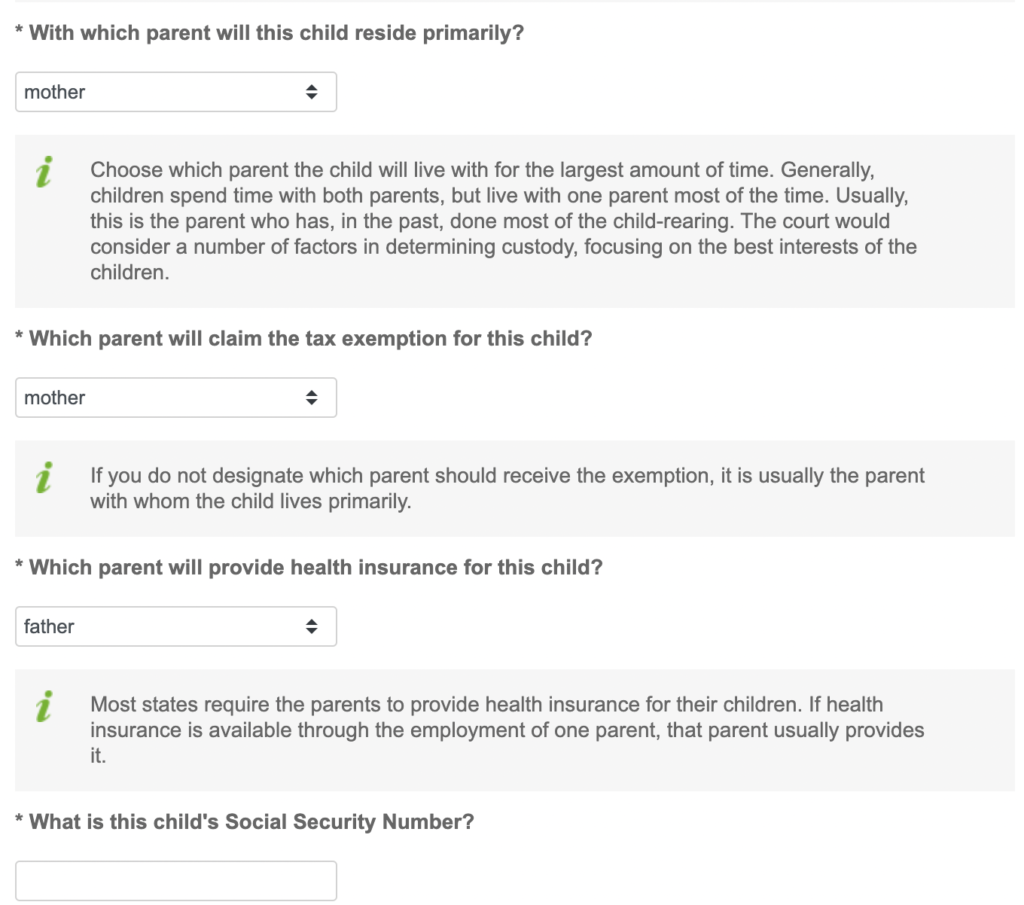
CompleteCase.com review questionnaire about children.

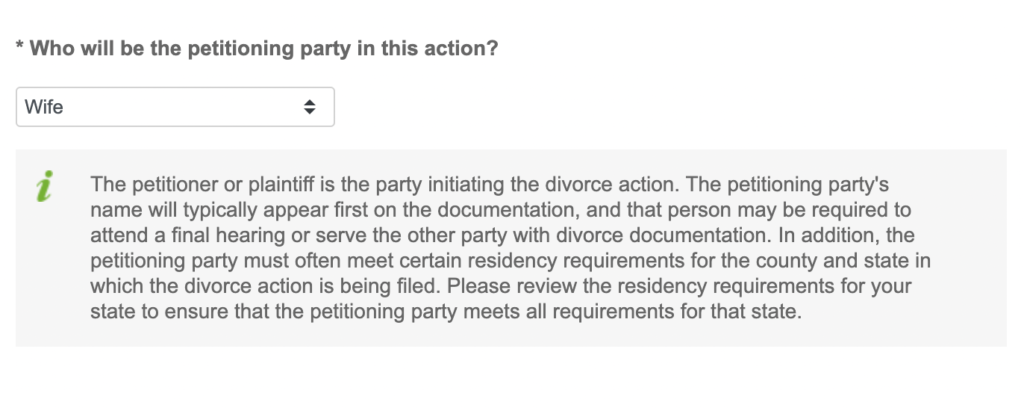
The process to sign up was fairly straightforward, and CompleteCase provided instructions for each question to ensure I was filling out the correct information.

CompleteCase.com review questionnaire information.

Questions you’ll have to answer for CompleteCase

These are some questions you’ll have to answer: 

  • When and where did you get married?
  • How many children do you and your spouse have, and are you pregnant? CompleteCase helps resolve all child-related issues, including custody, time-sharing, child visitation schedules, and child insurance coverage.
  • Do you two own any property, like a house or a car, and do you have any debts?
  • Which one of you is actually going to file for the divorce?
  • Do you live together?
  • Will you split the things you bought together evenly?
  • Will you divide your owed debts evenly?
  • Do you and your spouse have sources of income other than employment?
  • Do you owe each other money?
  • Do either of you serve in the military?
  • Who gets the house in the divorce, or will you sell it?
  • Do you have any shared vehicles and who will get them?

The questions in the CompleteCase questionnaire took me about a half hour to complete, though you can take as much time as you need to get it right. Instructions are provided through each step of the process.

The software autosaves any progress you make so you can pick up right where you left off, and you can keep making changes right up until you’re ready to file.

Make an account and pay

For CompleteCase’s $299 service fee, you can: 

  • Organize your case information
  • Calculate child support  
  • Access completed documents for signature
  • Access detailed filing instructions  
  • Make minor document updates within 30 days
  • Access phone and email support
  • Receive documents in two days in all U.S. states and Canada
  • Edit/update your information via online portal for 30 days

You’ll only have access to your account for 30 days, after which you can pay for unlimited storage for $39.99/month.

How much does a divorce with Complete Case cost?

The CompleteCase package costs $299. This price includes all the papers you need to file for divorce in your state, as well as detailed filing instructions. There are no additional fees for children, assets, or alterations to your case made within 30 days. 

If you don’t get everything done in one month, you can extend your CompleteCase.com subscription, which extends the time you have access to your divorce forms for $39.99 per month.

CompleteCase.com will refund your money in full within 30 days of purchase if the documents it provides are not accepted by your local court.

There’s one other thing that’s really important to understand: None of this includes your actual court-filing fee for the divorce, which can range from $200-$500 depending on where you live. However, all of this is far less than the average $15,000 to $20,000 you’ll spend if you file for divorce with an attorney, based on data in a recent Forbes article.

CompleteCase reviews

CompleteCase reviews are a mixed bag, depending on the review site. Common complaints include issues with delays in service and difficulty getting refunds.

Positive reviews praise CompleteCase's customer service department and claim the site makes getting a divorce easy and affordable.

Here's how we rated this service:

Our CompleteCase.com ratings:
  • User interface
  • Time to complete forms
  • Value
  • Customer service
4

CompleteCase BBB rating 

CompleteCase has been accredited by the Better Business Bureau since 2013 and holds an A+ rating.

CompleteCase reviews from the BBB

CompleteCase has 1/5 stars on its BBB profile, based on more than ten reviews, though the newest one is from May 2024.

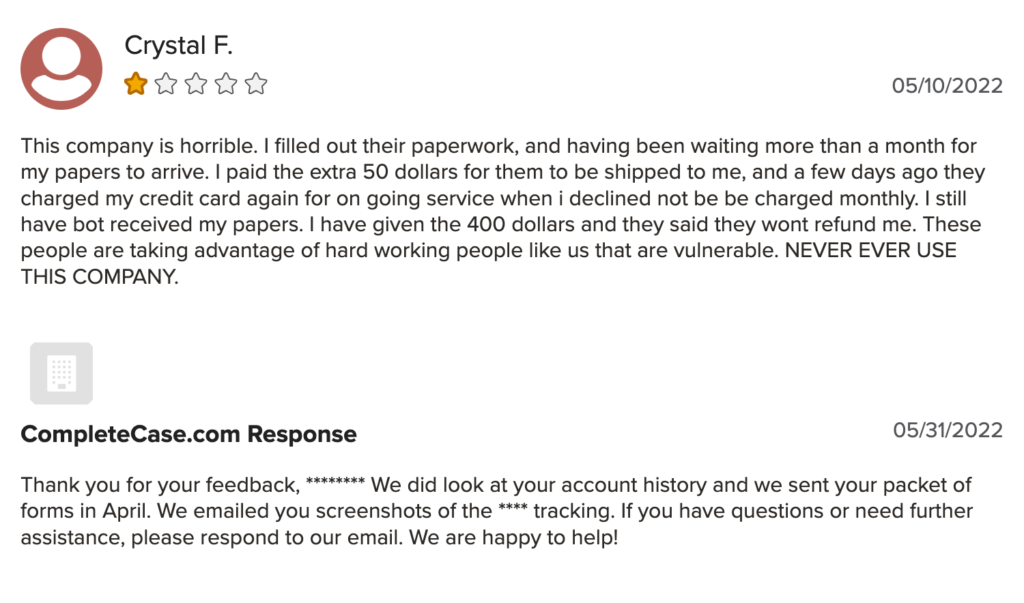
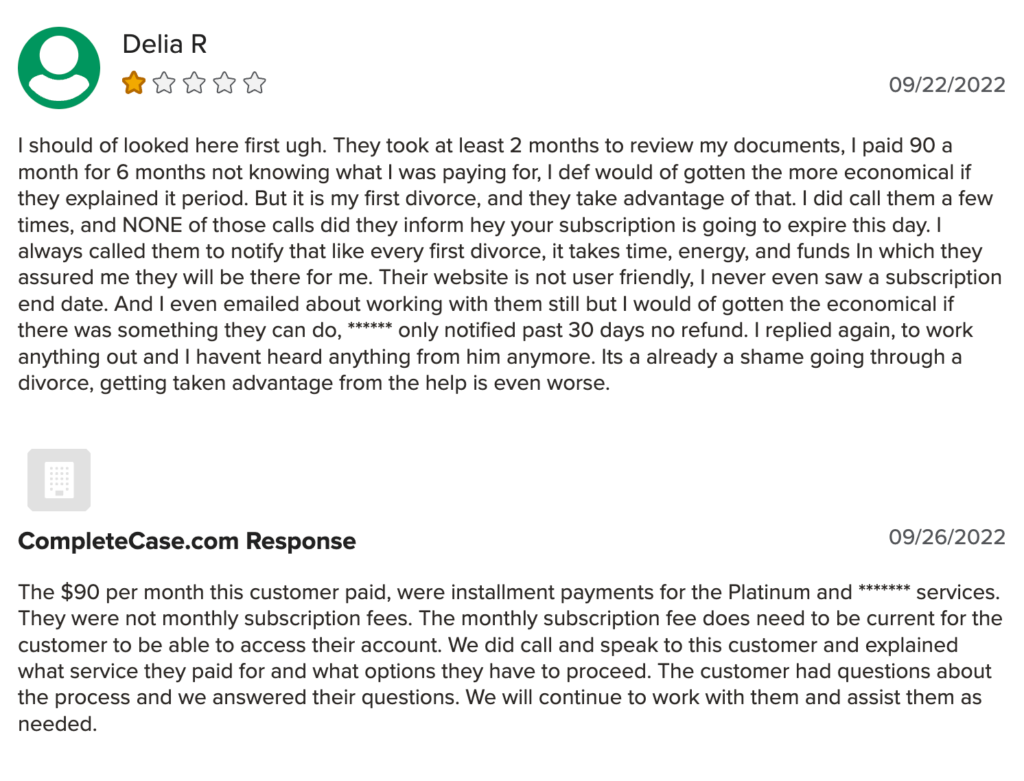
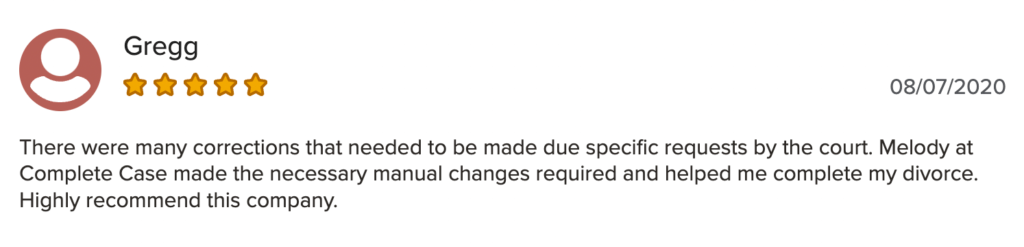
Negative reviews mention delays in service and difficulty securing a refund, though CompleteCase's customer service department appears to be proactive in resolving complaints:

CompleteCase.com BBB Review From July 2024
1-star CompleteCase review posted on BBB.
1-star CompleteCase review posted on Better Business Bureau.
5-star CompleteCase review posted on Better Business Bureau.

CompleteCase reviews from Trustpilot 

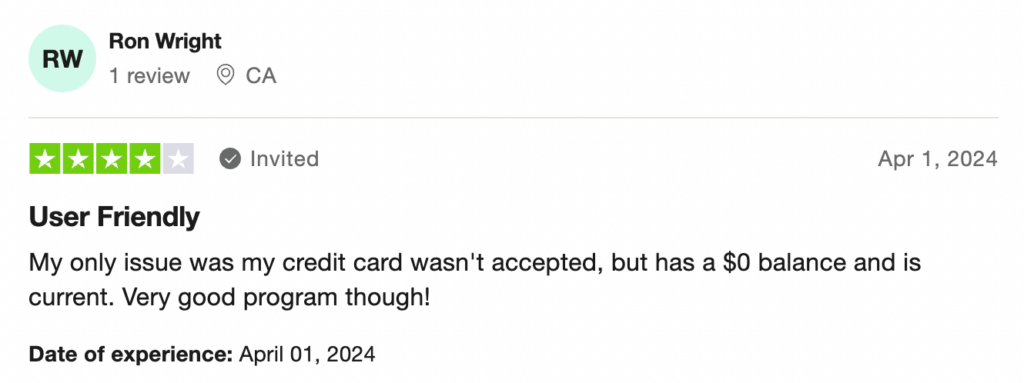
CompleteCase has 4.3/5 stars on Trustpilot based on 631+ reviews, though some are very brief and seem repetitive:

CompleteCase.com Trustpilot Review From July 2024-2
CompleteCase.com Trustpilot Review From July 2024-1

CompleteCase reviews from Reddit

All of the Reddit posts/comments I could find about CompleteCase weren't great, though they were all from more than two years ago, before the company was acquired:

Posts from the divorce
community on Reddit
COMPLETECASE.com
byu/mrbeamis inDivorce
Comment
byu/ransacks from discussion
inDivorce
CompleteCase review on Reddit.

Pros and cons of a DIY online divorce with CompleteCase.com

CompleteCase pros

  • Established site with an A+ BBB rating (accredited) and 20+ years of experience
  • If this is something that works for you and your spouse, you could save a lot of time and a lot of money
  • CompleteCase.com offers a simple, straightforward process with detailed instructions
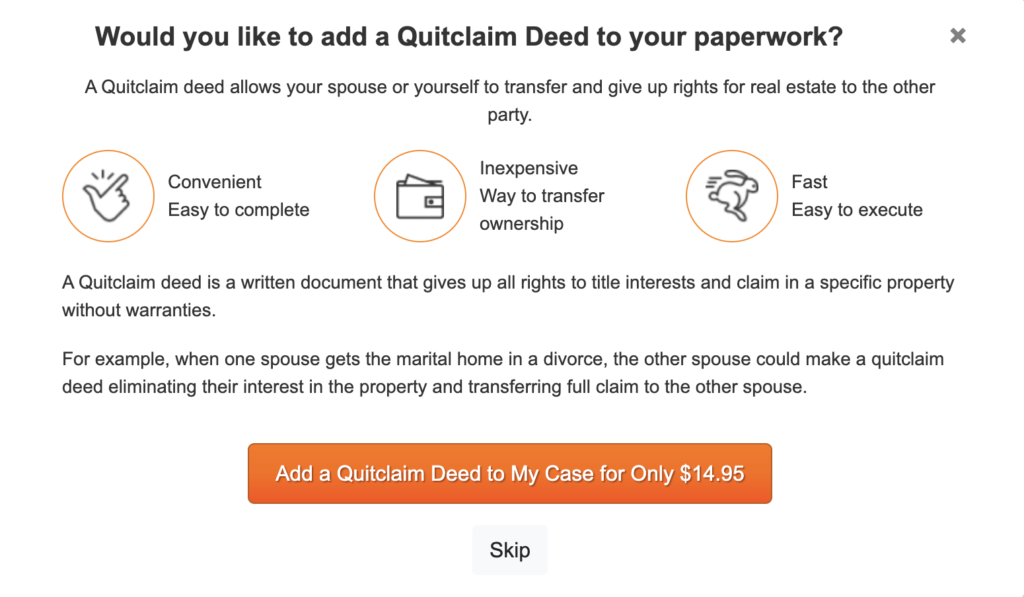
  • Additional offerings for purchase, including Quitclaim Deeds ($14.95),  “Children in Between” parenting class ($89.95 per spouse), Name Change kit ($35)
  • Because of its accessibility and coverage area, CompleteCase.com can be an easy solution for members of the military both at home and overseas
  • Email and phone support from legal pros
  • Links to state court systems and other resources, like tips on finding local attorneys

CompleteCase cons

  • Like most of its competitors, CompleteCase.com doesn’t actually offer legal advice. If you’d really like a legal expert to handle your divorce, this isn’t the place for you.
  • This works on a subscription basis, so if you don’t complete your online paperwork within a month, you’ll need to pay $39.99 per month to retain access.
  • As you’re filling out the questionnaire, there is no progress bar to let you know how much longer you have to go. There are also some pop-ups for additional products you’ll have to skip past if you don’t want to purchase them.

Also, CompleteCase just helps you get divorced — not create a new life. A top priority of course is healthy co-parenting with your now-ex.

Read our OurFamilyWizard review.

Is CompleteCase.com a good choice?

If you and your spouse are ready to move on with your lives and you both agree on how you want to do it, it’s going to be tough to find something more efficient than CompleteCase.com.

There’s absolutely nothing wrong with cutting ties as soon as possible so that you can begin your healing process and both of you can start figuring out your futures.

But there’s also nothing wrong with taking things slow if that’s what you need. After all, divorce is a monumental moment in your life.

Complete Case vs. other online divorce services

CompleteCase is just one of the many filing companies. You can learn more in our reviews of online divorce services, including why we like 3StepDivorce.com.

Bottom line: Is a CompleteCase good option?

There are so many lousy online divorce paper services that CompleteCase stands out as a good choice.

Ready to file? Our guide for how to prepare for divorce

Is Complete Case legitimate?

CompleteCase is 100% legit and is accredited by the Better Business Bureau with an A rating. CompleteCase has a 100% money-back guarantee that your divorce papers will be accepted by your local court.

I am not in the business of promising magic, or even overnight results.

Building wealth, including a successful business or career, requires time and dedication. But the biggest obstacles to these challenges are bad daily habits and your mindset—things that can turn around with regular, dedicated practice. That’s what this money challenge is all about.

In a year or less, you can tackle every single major part of financial wellness—most critically of all, the way you think and act around money. It’s not all mindset and intention. It’s also about the real, practical steps to getting your financial act together. 

This 52-week money-saving challenge will get you on track to control your spending, start saving and investing and turn around your debt and credit score. 

In short, if you follow these simple steps every week, you will thrust your spending, earning, and saving on a powerful, positive trajectory—which will change your life forever.

Ready to revolutionize your finances? Save more, earn more, spend less? Sign up:

Before you start this money challenge:

Ready to start this year-long money challenge? Babe, here’s a quick jumpstart to get your money flowing in the right direction:

Commit to a 52-week saving challenge (automatically)

Depending on your level of income and extra money, challenge yourself to save each and every week for a whole year. you will be so addicted to watching your emergency cushion grow, you will find yourself increasing your savings and extending this practice beyond 2024 into a lifetime habit.

Savings challenge Step 1:

Designate a savings account ONLY for this purpose. I recommend a savings account at a bank that is separate from your regular checking account, to minimize the ease of transferring your savings into a checking account when you find a good sale online, etc.

Savings challenge Step 2:

Set up automatic weekly deposits to your new account. This should be a sum that challenges your spending addiction, while also not challenging your ability to pay rent.

Savings challenge Step 3:

Assess your savings goal quarterly. Every three months, have a look at that savings account. How good does that feel? Celebrate with a moment of deep gratitude for the security and abundance that account provides — and all the good things that helped you achieve that goal. Now, ask yourself: Can you save more? If yes, bump up that weekly auto-payment, even if it is by $1.

Explore ways to make more money

Need to make more money? Later in the challenge we will explore ways to start a side gig, work-at-home careers, negotiate a higher salary and more.

Protect your family

Part of repairing and growing your relationship with money is addressing your guilt or worry or stress around money topics. For example, you likely know that you should get life insurance, but have not.

“I love money!” Money Challenge Week 1

Each week of this money challenge has two parts: a battlecry, which is a phrase I want you to shout out loud, to think about, write in your journal and stew on.

Each week will also include one task. This is an action step. Each is small, yet powerful. Do each and every one.

Here we go!

Week 1’s battlecry

“I LOVE MONEY!” Say it at least three times, as loud as you can muster. Public or private, no matter. Own it. Own that money is powerful and you deserve to feel amazing about money. Maybe today you don’t love money. Maybe money makes you squirm or want to turn away and wish it didn’t exist. 

Maybe you tell yourself that money is the construct of the patriarchy, designed to control and manipulate the vulnerable. Maybe that is true, I don’t know. But I do know this: you can’t serve the world if you are broke and worried about paying the rent. So I will help you get over all that and learn to adore money and the power that comes with it.

Week 1’s task

You don’t need an expensive leather-bound notebook. Any scrap of paper will do. You can buy yourself a nice journal on Amazon. Save a polar bear and reuse the back of all that crap they send home in your kid’s school folder, or the margins of the newspaper. The point is to physically write it down. Powerful! 

Write down the number-one aspect of your money that gives you the most grief and stress and sucks away time. Debt? Stuck in your career? Not saved yet for retirement? No cash cushion? Write it down and look at it hard. That is your truth. Neither good nor bad. Huge step. Good work!

“I’m money-honest!” Money Challenge Week 2

Today is the day you have likely been avoiding: looking at the cold, hard numbers.

Week 2’s battlecry

“I am ready to be 100 percent honest with myself about my finances! No more fibs or avoiding facts.” Remember to say this out loud!

Week 2’s task

Embrace technology. 

Use an app like Mint.com (free) or YNAB (You Need a Budget, free for 34 days) to connect all your money accounts into one place—checking and savings, investment, credit card, student and car loans, mortgage. 

As you stare at your debts and assets, you will see some patterns and some truths. Write these truths down. The good, the bad, the nasty-ass. 

One mom completed this step and emailed me: “I was really surprised to see that I have a six-figure net worth. I feel so broke all the time, and this helped me realize I’m doing better than I thought.” 

You may also be disgusted by how much debt you have, or how much more you owe on your old car. Avoid judgment on these feelings and facts. Embrace the pain as a necessary step in positive change.

Ready to dream big? Money challenge Week 3

Let’s set some goals now.

Week 3’s battlecry

“I’m ready to dream big!”

Week 3’s task

Use a goal calculator to be very real with yourself about how far you are from your saving and investing goals. The U.S. Securities and Exchange Commission has a free financial planning tool to help you set and meet whatever your personal finance goal is: pay off debt, retirement, buy a home, start a business, go back to school, save for a vacation or a home remodel.

Make it a family affair: Money Challenge Week 4

Today’s mission is fun and easy: talk to your kids about your money goals, and make them a family goal. 

I don’t care how old your kids are, it’s your job to teach them about money and to have a positive, healthy relationship with personal finance. I know that might sound really hard if you’re working through your own issues around money, but this is such an important part of your journey. 

When you tell your child that as a family, you have created a money goal and explain what you will all do together to reach that goal, so many positive things are happening:

  • you hold yourself accountable;
  • you are transparent and honest about money; 
  • you take a step in financial literacy for your kids, which is something you know you break the cycle of money taboo!

Week 4’s battlecry

“I am the single most powerful source of financial information and habit-building for my kids. I have a moral obligation to be the best money management role model for everyone who is watching—especially my children!”

Week 4’s task

Communicate your new financial goals with your kids. The key here is to be honest and specific. Tell your kids: “It is important that we live within our income, live frugally, and appreciate what we have, which is a lot. That way, we will have money in the bank in case of an emergency, so we are secure in the future, and we can save for special things like vacations. 

To reach our savings/debt/car/home goal, we are going to make some changes. This includes . . .” Tell them that you will eat out just once per month, will cut cable, and will stop hanging out at the mall on weekends. Then, as a family, keep track of your goal progress in a community place— like using a paper thermometer on the kitchen fridge that they can color in.

Money-soul connection: Challenge Week 5

Hooking up all your accounts on Mint or YNAB or another tool is so powerful because you just can’t argue with those numbers. They’re in your face and they don’t lie. If you haven’t created accounts there, do it now! 

Week 5’s battlecry

“I am devoted to raising my consciousness about money. I am grateful for the small and large things that money affords my family and me.”

Week 5’s task

Drill down into those charges in YNAB or Mint. Really take stock of how much you spend each day, week, and month on things like restaurants, cafes, clothes, unmemorable activities for your kids—like movies at the theater or frivolous trips to the toy store. Then, over the next week, keep track of all the cash you spend. I know that a lot of financial experts recommend paying all cash for everything if you’re trying to change your money habits; but I recommend credit or debit cards for all expenses, because it’s 100 percent tracked on my Mint account, so I see it all in one place.

For things you pay in cash, like coffee, field trip fees for your kids, parking meters—everything else—write them down and plug them into your YNAB account. This is about honesty, being accountable, and appreciating that even small decisions and expenses define your money situation and mindset.

For the past few months, categorize expenses, including restaurants, clothes, home goods, grocery stores, coffee, etc.

See any problem areas? See if you can drill down further. For example, if you notice you’re spending a lot on meals and drinks out (coffee, happy hour), categorize those expenses by: “workweek lunch,” “takeout for family dinners,” etc. What do you see? What’s behind those expenses? 

For example, if you’re spending too much on weeknight takeout with the kids, you might be feeling guilty for working long hours — and then coming home to spend more time cooking instead of with the kids. 

Instead, can you find a way to make meal planning and prep a family activity? Or, if the kids are older than 8 eight, assign them a meal to be prepared before you get home—or if you can easily afford all the restaurant food, then keep buying it and stop feeling guilty for not June Cleaver-ing every meal!

7 best cash back apps to scan receipts for money

What if money were EASY? Money Challenge Week 6

Today’s exercise is to streamline your money management. This will be an ongoing process, but chances are, that hard look at all your accounts made you realize you have way too many accounts, too much information, and general overwhelm. The easier you make your money management, the less you have to think about the basics of paying bills, and the more energy and time you’ll have to spend on making, investing, saving and ENJOYING money.

Week 6’s battlecry

“Money is easy!”

Week 6’s task

This week’s task is to sign into every single account you have and tackle these three things:

1. Set up auto-payment on every single account you can: rent, credit cards, car, insurance, utilities, phone. If you’re not sure, call and ask or research online. Never miss another bill!

2. While you’re logged into your accounts, set up paperless payments for everything. The environment thanks you, and vendors often give you a small discount. 

3. Change the payment dates on all your accounts to the same day—say, the first of each month. No more trying to remember when everything is due! Again, find ways to remember and think about fewer money tasks.
This process can take a little time, but it’s so worth it. Invest an hour now, and get your life back. You Need A Budget (YNAB) is a great tool that will bring all your accounts into a single snapshot, set budgets and reach your goals. 

Or, Mint.com is a totally free online tool that helps you streamline your finances.

Ready to revolutionize your finances? Save more, earn more, spend less? Sign up:

Money: less is more? Challenge: Week 7

Like last week, today’s exercise is to streamline your accounts. This time, you will see if you can consolidate existing bills. The fewer bills you have to manage, the less you have to think about boring money administrative issues, and the more time and money you have to get at those goals.

Week 7’s battlecry

“Money is easy!” (Can we say it enough?)

Week 7’s task

Use as few credit and bank accounts as you can. The fewer accounts you have to manage, the fewer pieces of information, the more likely you are to be engaged and successful with your money.

Have multiple credit cards? Consider consolidating your credit card debt and closing accounts.

Do you have multiple checking accounts? Personally, I have just one personal checking account and one business account, and one credit card for each. That’s it! I use my Costco card as my personal card. Fewer accounts the better!

No shopping, no problem: Money Challenge Week 8

Today is all about not buying shit. Our culture is hyper-focused on shopping for, consuming, and owning stuff. If you’re not happy with your money situation, you’re likely out of alignment with your values. If you always wish you had more or other things—a new wardrobe, a different/better/bigger house, a nicer car, better furniture—your thoughts and energy are engaged in a poverty mentality. 

You are focused on things, when deep down you know it’s people and experiences that bring you joy and love. You become focused on what you do not have. You put little energy in being grateful and full with what you do have. Which, if you’re reading this on a smartphone or laptop, then you already have a lot. Your life is abundant. Live in abundance, and you generate more abundance.

A personal shopping ban requires not just curbing the buying, but putting a stop to the shopping. No more browsing your favorite stores “just to look.” No longer skimming online retailers “just to see what they have.” No more careering from Target’s grocery section to the home goods section “in case there are good deals.” The point is to recondition yourself from seeing shopping as an innocuous hobby, and instead focus on how much you do have and appreciate that it’s more than enough. 

Today, I invite you to join me on my no-shopping week. I am right there with you. I know we are a few days into our challenge, but let’s support each other for the rest of this month to buy nothing. No new clothes. No toys or crap for your kids. Make a goal to eat through everything in your pantry, cupboards, fridge, freezer—including the granola bars in the glove compartment, but not necessarily all the booze in the liquor cabinet (I leave that to your discretion).

Week 8’s battlecry

“I do not need new things. My life is full, and I am so grateful!”

Week 8’s task

Start a daily gratitude practice. Write down all the things you’re grateful for. Here are a couple gratitude journals if you prefer. Remember: no shopping!

No spend, no problem: Money Challenge: Week 9

Now that the personal shopping ban has ended, today is the day you start shopping with a list. No more shopping without a list. No shopping when you’re hungry. No adding things to the cart that aren’t on your list. If you get home and you realize you’ve forgotten something, try to be creative and make do with what you have.

One of my favorite challenges is to cook away all the scraps of random food in the fridge. It is fun, it prevents the waste of food and money, and it makes me really appreciate how much I have — even if I had just 20 minutes earlier opened the fridge and cried, “There is nothing to eat!”

Week 9’s battlecry

“I have so much more than I could imagine! 

Week 9’s task

Make your food shopping list while you’re at home, after you’ve had a meal. Full stomach = better shopping decisions Buy only what you need and nothing more. Consider shopping online for groceries and other essentials, comparison shopping and resisting the impulse purchases.

Financial independence: Money Challenge Week 10

For most single moms, your kids have a father in the picture in some form. Child support and/or alimony are likely part of your single mom story—especially if you don’t get all you feel you are owed. 

My goal for all single moms, everywhere, is to enjoy the freedom, independence, and pride of building a life without depending on a man for child support or alimony. Note: child support is monthly payments to maintain your home and food, while extras are out of-pocket expenses that parents can and should split in a fair way (insurance, health care, childcare, and extracurriculars). Alimony is designed to keep women in “lifestyles to which they are accustomed,” supported by men they are no longer in romantic relationships with. 

Money very, very rarely does not cause conflict between divorced or separated partners, which destroys the possibility of healthy co-parenting. Also, any negative energy about money with your kids’ dad is just that: negative energy.

Week 10’s battlecry

“I deserve to feel the amazing, unique power of being completely financially independent—independent from debt, from reliance on my parents, and from a man or government programs for my future.”

Week 10’s task

First, be honest with yourself. How do you feel when you take money from your kids’ dad? How do you feel about fighting with him over money? Write down any downsides of that money exchange—or fighting for money. 

Write down all the energy and time you spend getting that money and being mad about not getting more. Do these arguments bring you back to bad times during the relationship? Does it make it harder to move on and heal? Finally, do you ever under-earn or manipulate your income to qualify for more alimony or child support? Be honest: How does that make you feel? 

Next, make a plan to stop relying on child support and alimony. I appreciate that you may receive it now and may very much feel that you need it. Also, you may not receive money you are owed but spend a lot of time, energy, and even money fighting for it or being angry about it. 

Take a breath. 

Consider this: you deserve not to feel angry or spend negative energy on getting that money out of a man. You cannot change him. You can change yourself. You can, right here today, make a plan to let go of any sense of entitlement to his money—no matter how much you are legally or even ethically owed it. Today, recognize that you have the power to build whatever lifestyle you want to become accustomed to! You deserve all the financial security in the world, and to never be limited by another person—especially one who you are no longer in a romantic relationship with! 

Practical tools:

Our list of career-level jobs for moms

How to become a self-employed bookkeeper and earn 6-figures 

How to become a proofreader and start at $20/hr

Abundance mindset: Week 11

When I first became a single mom, I was so terrified. I was obsessed with the quality of life I used to have with my (ex) husband. I was always watching what my married friends wore, new things they bought for their home, and (the worst of all) the vacations they boasted about on social media. 

First of all, just because people have fancy things or trips does not mean that they can afford them—after all, so many people purchase all this stuff, but most people also have debt and no savings! But the real point of today’s task is to help you focus on how much you do have and recognize how absolutely abundant your life already is. When you focus on what you do have—and not on what you don’t have, or covet—your energy refocuses away from a poverty mentality, and into an abundance mentality.

Week 11’s battlecry

“By the mere fact that I can read this challenge on an electronic device attached to the internet in a warm, safe place means that I am wealthier than 99 percent of the people on this planet. I am so unbelievably grateful for everything I have, and I have the power to create even more abundance—as much as I desire. In fact, it’s embarrassing how abundant my life is!”

Week 11’s task

Get out a pen and paper, baby. You are going to write. Write down every single thing and feeling and fact you are grateful for. 

For your health. 

Health of loved ones. 

Abundance of food at your disposal. 

A job. Nice people in your life. 

That you live in a time and place of unprecedented opportunities for women. 

Peacetime. 

That dime you found on the sidewalk. 

That you didn’t get a parking ticket even though you should have (on my personal list today!). 

That hug your kid gave you this morning.

That your BFF made you crack up. 

That you never worry about clean water coming out of the faucet when you turn it on. 

Wine. 

Magnums. 

That you are loved. 

For the internet that connects you with amazing people and ideas and community and opportunities all around the world. 

I could go on for days. You can too. This exercise is so sosososososososo powerful. It feels so fucking good. Do it every day. Your life will change.

Ready to revolutionize your finances? Save more, earn more, spend less? Sign up:

Budgeting: Money Challenge Week 12

Now that you have started crunching numbers, seeing how much you actually spend each month, and realizing how far you actually are from your goals, it’s time to shake up your life by creating a budget.

Budgets aren’t sexy and they’re rarely fun, but they are empowering and necessary. Plus, you know you need one, and by simply doing this one thing, you relieve yourself of so much guilt and stress. Trust me, you will feel incredible after this task.

If you took my advice and signed up for an app like Mint.com (free), Ellevest or YNAB (You Need a Budget, free for 34 days), you can set up your budget right now, for free. Didn’t sign up yet? Go back to week 2 and get started now.

Week 12’s battlecry

“I am a grown-ass woman and I am ready to do the work it takes to achieve my goals!”

Week 12’s task

Next, make your budget: 

1. Write down your net income. This includes money that goes into your bank account, net of taxes, insurance, and other deductions that come from a job, side gigs, and child support and alimony. YNAB keeps track of this for you if you have already connected your accounts, so log in to see your total income.

2. Write down your core expenses—what you are actually spending today on rent or mortgage, basic utilities, insurances, car payments, food, and taxes if you are self-employed and pay those directly. Again, YNAB or Mint.com will be helpful here.

3. Write down the rest of your expenses. 

Total all of your expenses from steps 2 and 3 and that’s how much you spend in a month. Ideally, your expenses should be less than your income from step 1 so that you can start setting aside money for those goals you identified earlier in this money-saving challenge.

If your expenses are greater than your income or there is very little difference, then the next step is to slash those expenses.

More on setting up a budget here.

14 best, affordable tax relief companies

Find all the ways to save: Money Challenge Weeks 13-29

Slash your expenses like your life depends on it. I don’t care what your money goal is, you very likely can stand to spend less than you are. Here are ways that you can further cut your monthly and weekly expenses like a boss.

Week 13-29’s battlecry

“The less I spend, the more I feel.”

Week 13’s task

Cable TV: I know, you love it. The kids love it. But this is serious business, and the whole family must get on board to make important changes. And it doesn’t have to be forever. You can watch tons of stuff on your computer, Hulu, or SlingTV (or stream Amazon videos to your TV, which is what I do). Showtime has a free 30-day trial for new members.

Also: read, play games, and do other stuff you keep telling yourself you’ll do with the kids but don’t get around to.

Week 14’s task

Libraries: Did you know that you could borrow more than books from the library? Nowadays, you can borrow e-books, DVDs, streaming services, and much more. Some libraries even have baking pans to lend you and makerspaces to try out new hobbies. 

If you listen to a lot of audiobooks, your local library likely has an online resource that you can use. And, if that won’t work, Audible is a great deal for unlimited access to millions of audio books, audio articles and other products.

Week 15’s task

Gym membership: I really hope you’re getting exercise and taking care of your body. But if you haven’t been to the gym in more than two months, you must cancel that membership. Get real. Also, there are zillions of ways you can get and stay fit for free, including jogging, yoga, and training and aerobics at home.

Week 16’s task

Subscriptions: Go through all the subscription and automatic-renewal services on your bills. Upon close inspection, I realized I was paying for two monthly Netflix subscriptions. At $9.99 per month, that was costing me nearly a hundred dollars per year. Sneaky on their part, lazy on mine! 

You may pay for membership to professional organizations that you’re no longer interested in, or have access to publications or online services you don’t use. Cancel, cancel, cancel.

Week 17’s task

Internet, cable and phone service: This one may feel brutal, but it can save you thousands of dollars per year. [Buckle your seatbelt!]

  1. Cancel cable. I haven’t had cable for 10 years! I DO NOT MISS IT! I get my news by reading a paper newspaper, reading the Internet, and listening to public radio and podcasts. The pleasant voices of WNYC have been the backdrop of my children’s mornings.

    For entertainment, we subscribe only to Netflix and Amazon Prime. This makes our entertainment very affordable, but also forces us to be conscious about what we consume — no more channel surfin. Amazon Prime is 50% off for students and those who qualify for EBT, SNAP, TANF and other programs. See if you qualify >>
  2. Get rid of that landline!  I did this and saved twenty dollars per month, effective immediately! Also, check Assurance Wireless to see if you qualify for a free plan. Assurance is a federal government assistance program that provides low-income customers free monthly data, unlimited texting, and free monthly minutes, plus a free phone. Learn about other resources for low-income single moms
  3. Without cable, phone and streaming services, you might be able to get away with a slower internet connection, which could mean a lower bill. Call your Internet service provider to see what’s available. 

Also, research bundling your Internet, cable and mobile phone services. I recently changed up my plan, bundled my mobile and Internet services with Verizon and saved $30/month! 

Week 18’s task

Utilities: Get serious about using less electricity, gas and water:

  • Set the thermostat at a few degrees cooler in winter and raising the AC a few degrees in the summer. 
  • Switching to a programmable thermostat like NestEcobee or Honeywell can save you save up to 10 percent on cooling and heating costs, according to the Alliance to Save Energy, switching to a programmable thermostat.
  • Use ceiling and floor fans through the year to circulate heat in the winter, and make the room feel cooler in the summer. 
  • Use energy-efficient light bulbs.
  • Keep blinds closed. 
  • Unplug electronics when they’re not in use. 
  • Use the dishwasher. According to the California Energy Commission, using an Energy Star-qualified dishwasher instead of hand washing can save you, on average, 5,000 gallons of water and $40 in utility costs each year, (as well as 230 hours of your time)!
  • Only run a fully loaded dishwasher!
  • Opt-out of the heat-dry cycle on your dishwasher and open the door just a crack and let your dishes air-dry.
  • Set your washing machine to cold water.
  • Run an extra spin cycle to help speed energy-sucking time in the clothes dryer. 
  • Keep your dryer lint-free, and invest in reusable dryer balls that can reduce dryer time. 
  • Use the smallest appliance for the job — no need to turn on the oven when you can warm or cook a small item in the toaster oven, for example.

Week 19’s task

Food: It can be very tempting for a busy, working single mom to splurge on restaurant food and prepared meals. Use these as special treats, or when a discount makes them a great deal. 

Here are things that happen at my house to keep food costs down (other benefits include kindness to the environment, healthier diets and more fun!)

  • Eat less meat. My daughter and many of our friends are vegetarian and since I like to keep cooking simple, we eat a lot less meat than we used to. I feel so much better as a result! 
  • Cook from scratch more. Less packaged food means healthier food, less waste. 
  • Share the cooking and cleanup. The less of a burden cooking is, the more likely you will do it. My kids alternate weeks at their dad’s house and mine. When they are here, I do the cooking. When they are with their dad, my boyfriend cooks. Plus, the kids are responsible for cooking and cleaning some meals when at my house. We all win. 
  • Focus on cooking in bulk. I like to make a giant pot of stew, roast, or pasta sauce, eat a third that night, freeze a third, and eat the rest for lunches and dinner leftovers. More on meal planning here.
  • Keep cooking simple. Food Network is not the goal. Some tasty, vegetable-based meals that you eat together as a family is the goal. One dish is fine. Simple ingredients is find. Roast some veggies and toss with pasta or rice. Grill some fish and eat with ramen. Eggs and toast is great for any meal. You’re welcome!

Week 20’s task

Insurance: Call your auto insurer and ask about lowering your rate or bundling your car, life insurance, and homeowners policies for a discount. Especially if you are a longtime customer, your insurer is likely to give you a competitive rate—but you have to call and ask! 

Week 21’s task

Phones: Check Assurance Wireless to see if you qualify for a free plan. Assurance is a federal government assistance program that provides low-income customers free monthly data, unlimited texting, and free monthly minutes, plus a free phone. 

Learn about other resources for low-income single moms, as well as more places to get free smartphones wireless service.

Ready to revolutionize your finances? Save more, earn more, spend less? Sign up:

Week 22’s task

Prescriptions: If you don’t have prescription drug coverage with your health insurance and have to pay cash, ask the pharmacist if they know of any discounts available. You can also download the GoodRx app to see if there are coupon codes available for your particular prescription.

Read: 7 pharmacies offer free or cheap prescriptions

Week 23’s task

Holidays and birthdays: Christmas, Passover, Eid, birthdays and anniversaries — these special days can be especially stressful for single moms (they are for me). Co-parenting arrangements tend to implode during these events, and special times can feel especially empty without another parent to share them. The financial stress can make them anxiety-ridden for everyone involved. It’s no wonder that overspending plagues the holidays—and single moms are especially vulnerable. 

To tackle this financial landmine, set a budget in January for each family member’s birthday celebration, birthday gifts, and holiday gifts. Focus on activities instead of things. Instead of toys, make part of the Christmas gift a family trip to the water park in the spring or a favorite museum (especially if you were planning to go to these places anyway).

9 places for free Christmas and holiday gifts for single moms

19 easy and legit ways to get free gift cards now

Week 24’s task

Gifts: When you’re shopping for gifts, shop Amazon Renewed for refurbished goods and Amazon Warehouse for open box specials. Even if the recipient figures out that the gift is not perfectly new, they will understand and appreciate the gesture! 

Also, consider thrifting for holiday gifts, hitting up antique and pawn shops and consignment stores — including online favorites like ThredUpPoshmark and Mercari, as well as eBay and Etsy.

Week 25’s task

Sell your car: If you ended up underwater purchasing your last vehicle, you might try selling your car for cash. Then, purchase a less expensive, more economical vehicle. 

Before you buy another car though, check Auto Credit Express to see if you can qualify for a better rate on your new car loan than you had on your old one.

If you need a car loan but have very low — or no — credit, a repossession or bankruptcy, check out Auto Credit Express. A+ Better Business Bureau rating, 30-second pre-approval and cash within 24 hours.

Week 26’s task

Debt consolidation: If you have credit card debt, car note, mortgage or personal loans, it may be ruining your chances of saving money. The average credit card interest rate is 18%, according to CreditCards.com, and mortgage rates have dropped dramatically in the past few years. 

The more high-interest debt you pay off, the more money you’ll have to spend and save each month. By lowering your monthly interest rates, you can pay down debt faster. A good way to do this is to refinance your debt.

For credit card debt, a balance transfer card that gives you 0% APR for up to 21 months can change your life. Keep in mind, however, that some cards that offer 0% APR for a limited amount of time also charge a balance transfer fee of 3% to 5%.

If your credit is low, and you don’t qualify for a refinance, work to fix your credit. Read: How to repair a low credit score — fast!

Week 27’s task

Go generic. Stick to generic products at the grocery and drug store. I wrote this article for Forbes about why department store and Sephora cosmetics are a huge rip-off.

Kirkland brands from Costco are a big presence in our house (including my boyfriend’s beloved wardrobe of Kirkland Couture or is it Kouture?).

Week 28’s task

Go thrifting. When you go shopping for clothes that you or your kids need, start at thrift stores and consignment shops — including online favorites like ThredUpPoshmark and Mercari, as well as eBay and Etsy.

Week 29’s task

Get creative. Even more ways to save money here, including:

  • Find cheap or free things to do outside.
  • Save on travel (and see the world) 
  • Invest in quality clothes and home goods

Ready to revolutionize your finances? Save more, earn more, spend less? Sign up:

Declutter for cash! Money Challenge Week 30

Today’s task is both practical and spiritual. I am a firm believer in living a simple, frugal life—a life full of gratitude for the things you do have, and surrounding yourself with items and people who fill you up and bring you joy and abundance in your emotions, health, experiences, and money. 

Today’s task is to cleanse your physical life of negative objects, with a special focus on negative past relationships (i.e., the ex). I have been separated/divorced for more than eight years, and I know this can be a long and hard process. For one, you may not be able to afford to replace all the furniture/dishes/clothes that have memories and emotions attached to past, negative people and experiences. In that case, today’s exercise is designed to be a starting point, an opportunity to map out a long-term plan to renovate your possessions and life. 

Plus, it’s a big task! After years of systematic purges, I still occasionally come across a memento or household item that floods me with bad memories about my ex-husband. Case in point: in cleaning out the above-the-fridge cupboard, I found one of those big plastic Tupperware containers designed for cereal, which was the source of so much domestic contention when I was married. Stupid, but true. Needless to say: buh-bye stupid Tupperware container! 

When you rid your physical space of things that hold negative feelings and memories, you make room for positive experiences and feelings—like the feeling of having a shit-ton of money. Those items, big and small, help you let go of old ideas about who you used to think you were, and what you used to believe you were capable of, and makes room for a new, better, and more abundantly joyful you. Today’s exercise will free your energy to attract all kinds of good things, money being just one of them: better relationships with your kids/friends/family, a new girlfriend/boyfriend, new work opportunities, travel—you name it. 

Trust me on this. It may be hard at first, but you really just have to get rid of everything that you don’t love or use.

Week 30’s battlecry

“My surroundings reflect my self-identity. I am in control of both.” Say it loud, and say it proud!

Week 30’s task

Start with one spot in your house that you dread dealing with the most. Perhaps a closet full of photos from your marriage, a garage shelf loaded with your ex’s crap, or a closet full of clothes that don’t fit/are out of style from a time in your life that you senselessly pine for. Take an hour and tackle that spot. Be ruthless. Brutal. Throw out everything and anything you absolutely have not used in the past month. Sell it, give it away, or just throw it away. 

If you have something worth selling, like designer clothing or purses, you might be able to use a site like MercariPoshmark, or ThredUP to sell it.

If you have old jewelry you don’t wear, sell that, too. CashforGoldUSA.com buys all gold, silver, diamonds and high-end brands like Tiffany and Cartier. Excellent customer service, fair prices and an A+ with the Better Business Bureau. 

Sit for a moment when this is done (completely done—the crap at Goodwill or in the town dump or sold for profit). How do you feel? Pretty awesome, right? Then, identify the next spot for tomorrow. Repeat daily this week.

When you’re done, set aside the money you made from those sales to either contribute to your savings goal or pay down debt.

Downsizing: Money Challenge Week 31

You have your budget, and you have your goal. Today, I want you to take a very hard look at your housing situation. As your money situation stands today, is your current home really your best option? One of the biggest mistakes I see single moms make is financially struggling to stay in a home they cannot easily afford. 

Whether you go into debt each month to make rent or mortgage, or constantly stress and put all kinds of negative energy into the universe just to make ends meet, this is a bad personal and financial decision. I hear moms tell me the following reasons for staying in homes they can’t afford: 

“I love this house.”

“I want to keep the kids in a good school district.”

“Selling this house would be a public sign of failure. I don’t want my neighbors and friends to know how broke I am.” 

“This was the house I was supposed to grow old in with my ‘whole’ family. It’s not fair that I have to move just because he had an affair and decided to get divorced.” 

“I can barely make rent, but when I go to court and force my ex to pay more alimony/child support (or when I get my business off the ground/get that promotion), then it will be better.” 

Here are the facts about what home you can afford:

  1. What is the monthly cost to own or rent that does not stress you out? That is the home you need to live in right now. You can upgrade in the future when your finances are in a different spot. But perpetuating a lifestyle you cannot afford is living a lie. Nothing good comes of lies. 
  2. All those positive reasons for staying put are overshadowed by a nagging stress or outright panic for not being able to afford it. Again, when you are stressed about money, you are a stressed-out mom, you make decisions from a place of fear and frenzy, and you don’t live up to your potential as a woman. You attract the wrong guys. You consider partnering with a man for financial reasons. You make money and career decisions based on fear.

Week 31’s battlecry

“I deserve to live in a home I can easily afford. Today.”

Week 31’s task

Get real about whether you can afford your current home. You know the answer already. Make a plan. This might include calling a mortgage broker, a real estate agent, an apartment broker, or committing an evening to culling the local rental ads. Remember: home ownership can be wonderful, but it’s not always right for everyone, all the time. Plenty of wealthy, successful, financially wise people chose to rent their homes. 
Not sure what to do? Start with the New York Times ‘Rent or Buy?’ calculator. Also, consider there are affordable housing programs you might qualify for and also a quick way to sell your house for cash if you need to.

Ready to revolutionize your finances? Save more, earn more, spend less? Sign up:

Debt: Money Challenge Week 32

Today starts the debt-destroyer part of this challenge, and it is going to be gooooood. 

If you are like most Americans, you have consumer debt: credit cards, medical debt, student loans, a car payment. Just because debt is so common doesn’t mean it’s not destructive. When you owe others money, they own you. Even if the interest rates are low and your credit score is solid, debt still erodes your life. When you’re focused on paying back debt, your work, energy, and thoughts are focused on a negative—not on building wealth, assets, or a positive life. 

If you are drowning in debt, you likely find it hard to make payments on time, max out your limits, and other habits that result in a low credit score. When your credit score is low, you have fewer options: it’s harder to get a mortgage or lease, trickier to start your dream business, and more difficult to buy or lease a new car when your old one dies. You deserve to have all the choices in the world. Your money situation can be a prison of few options, or a bountiful smorgasbord of choice and freedom. You deserve choice and freedom. Choice is power. 

Week 32’s battlecry

“I am ready to take every necessary step to build my financial security and my family’s future—no matter how uncomfortable or painful!”

Week 32’s task

The first step is to retrieve your credit score and report. If your score is low, you likely have avoided your credit. This means that getting your score is that much more important. By doing so, you’re telling the universe you’re ready for change! In this case, that change means taking steps to clean up your credit history and boost your credit score.

The first step? Request your credit reports from AnnualCreditReport.com so you can take steps to improve clean up your credit history, which will help improve your credit score. Start by cleaning up errors on your report. By law, you are entitled to have any obsolete, outdated, or erroneous errors removed. To do so, contact (in writing and sent by certified mail) the reporting credit bureau with documentation about why the item is wrong. By law, they have to remove these errors within 30 days of confirming your complaint is valid. Removing credit report errors is 100 percent doable and within your legal rights. Here are ways to repair your credit yourself. 

That said, there are also some really great and legit tools where, for a modest fee, you can get some support.

Credit score: Money Challenge Week 33

Credit scores can seem complicated and intimidating, but achieving a score above 700 is actually simpler than you might think. Below, I outline a simple system for boosting your credit score by at least 100 points over a year—and at least 50 points within a month. The process takes patience, time, and diligence.

Week 33’s battlecry

“My credit score is important, and I am committed to facing my past mistakes and making changes so my credit report reflects my positive financial future.”

Week 33’s task

When your credit score is low, you have fewer options for dealing with your debt and also qualifying for housing or a job.

Now that you have your credit reports, credit reports from AnnualCreditReport.com so you can take steps to improve clean up your credit history, which will help improve your credit score. 

The second step is to get your credit score and see what you can do to make improvements. You can use Credit Sesame, Credit Karma, or Experian Boost to get your credit score for free, right now.

With your score in hand and credit report errors disputed, you can focus your efforts next on paying off smaller balances. This is great for a quick credit score boost. If you have, say, $100 on a credit card, compared with $3,000 on a student loan account, paying off the smaller sum signals to the credit bureaus that you are tackling debt.

Debt: Money Challenge Week 34

Now that you have your credit score, and you can see all your debt in one place, it’s time to make a plan for getting rid of it!

Week 34’s battlecry

“When I owe others money, I lose power. I am powerful, and my money reflects that.” Remember to say it out loud!

Week 34’s task

Get real with your debt total. Look at those numbers on Mint or YNAB.

Haven’t connected all of your accounts to Mint or YNAB yet? Start by collecting statements for each and every one of your debts that might have come in the mail:

  • Credit cards 
  • Medical bills  
  • Student loans  
  • Car note  
  • Mortgage 
  • Home equity line  
  • Personal loans from your family or friends  
  • Back taxes
  • Loans against your 401(k) or pension 

Lay these statements out on the kitchen table. Feel them in your hands. Look them in the eye. I’m talking 100 percent transparency. 

Next, connect all of these other accounts you’ve received statements for to your account so you have all of your debt totaled in one place.

Then, create a list of all your debts, including interest rates, monthly minimum payments, and any deadlines—such as when promotion rates expire. You’ll use this list in the next task.

Debt payoff plan: Money Challenge Week 35

Now that you know what’s what with your debt, it’s time to make a monthly budget and figure out how much you can afford to pay toward your debt. 

Week 35’s battlecry

“I am committed to living debt-free. I am willing to do what it takes to pay off debt, and stay that way!”

Week 35’s task

After you have cut out all those extra expenses, stopped shopping, and taken steps to live that elegantly simple life, how much extra do you have each month to devote to getting rid of debt? Subtract your income from your expenses now and write that number down — that is the minimum you will devote to paying off debt each month.

With that extra money you have identified in your budget, start by paying off credit cards or loans with the lowest balances first. When the smallest debt is paid off, then you will pay off the next smallest debt and so on until your are debt free. This is called a “debt snowball” and the advantage is that you get the psychological and emotional thrill of paying off accounts quickly. 

More on how to pay off your debt, for good

Lower rates: Money Challenge Week 36

Perhaps you are one of the very few Americans without consumer debt—no credit card balance, car note, student debt, outstanding medical bills, or money you owe your loved ones. If so, good for you, mama! 

For everyone else who has some debt to pay off, here’s some good news: you can usually negotiate your credit terms for a better rate. This is a great way to pay off debt and save a lot of money on interest along the way. 

Week 36’s battlecry

“When I ask for what I want, with a sincere desire to make my life better in a meaningful way, I usually get it right away, and I always get it eventually.”

Week 36’s task

Call companies to which you currently own money and simply ask for a better rate. Here’s a script to help you: “Hi, as you can see, I am a longtime cardholder and I love using your product. I am committed to paying off my debt and improving my credit history, and I’d love to stay with you. However, I need a better rate on my balance. Based on my research, I can get a [insert honest quote you received from another card] rate. Can you match it or do better?” 

If you can’t get lower rates on your credit cards, you could see if you qualify for a 0% balance transfer credit card to consolidate your credit card debt. This only works if you are very organized, read all the fine print, and make sure you pay the premiums on time, and either pay off the balance or transfer the balance before the end of the promotion period.

Open a savings account: Money Challenge Week 37

Part of being wealthy is dealing with shame around being a financial hot mess. I have certainly been there: living paycheck-to-paycheck, no emergency savings, a credit card balance, car note, student loan, and a big fat $0 in retirement accounts. Not a good look! 

Before I could change that ugly scene, I had to be honest with myself about a) what a mess I was, b) how I got into that mess, and c) how to get out of it by making a plan that worked for me. 

One of the most powerful tools in my financial arsenal actually has one of the lowest balances. That is my emergency savings fund. I like to keep around three months of business and personal expenses in a separate savings account that is not connected to my checking accounts or credit cards. This chunk of money sits there, in conservative investments, and does two things for me:

  1. Serves as an actual safety net in the event that I have a medical emergency, a home or car repair pops up, my business unceremoniously tanks, or Armageddon hits. 
  2. In the more likely event none of those things happen, I walk around God’s green earth with a bounce in my step thanks to the confidence that I am not SOL. The confidence and void of financial fear is actually the most powerful part of my entire financial portfolio, even though the dollars sum is but a small percentage of the rest of my assets. This account helps me make good, sound financial and business decisions every day, because those decisions are made from a place of confidence, not fear.

Week 37’s battlecry

“I deserve to feel financially secure every day, all the time.”

Week 37’s task

If you have not set up an emergency fund, take that first step today. Open a savings account that’s at a different bank than your checking account so that it’s harder to toss money back and forth when you don’t really need to.

Next, set a goal. If you are at $0, start with the goal of saving $1,000.

Ready to revolutionize your finances? Save more, earn more, spend less? Sign up:

Open an investing account: Money Challenge Week 38

According to some fascinating studies I’ve read, women are actually better at investing than men, but they save and invest far too little, too infrequently, which puts us at a huge disadvantage. The wealth gap is a terrible issue, as women have far less invested and saved than men, and we need those long-term assets even more than dudes since: 

a) women will live longer, on average, 

b) women are disproportionately more likely to be responsible for children and aging relatives, and 

c) will earn less during our careers (damn you, pay gap!), and therefore receive less from Social Security. 

Plus, we are better at investing, so we should just be investing and growing our money for the sake of the economy, gender equality, and national security—am I right?

Week 38’s battlecry

“I am in control of my financial future, and I have the power to start investing today.” 

Week 38’s task

First, read this post: How single moms can build wealth.

Second, open a retirement account if you don’t already have one. Even if you have just $100 today to start investing, it’s something!

Third, write down your experience with investing. If you do have a great foundation to your retirement investments, articulate in writing how this makes you feel. If are just starting out and worry you have a lot of catching up to do, write that down. It’s so powerful to articulate your fears and joys. Honesty is required for change.

Earning: Money Challenge Week 39

Throughout my work, I constantly discourage women from anything that keeps you thinking small. Go big, or go home. You only have so many hours in the day, only so many kilowatts of energy, only so many years on this planet. Do you want to focus on clipping coupons, arguing with your ex over money, or slogging away at a meh job that pays the bills—or do you want to build an incredible life where your energy is spent creating meaningful work that helps others, generates tons of money, and sets an incredible example for your kids and everyone else around you? 

I thought so. 

When it comes to money, it can be an easy crutch to focus on saving money by cutting costs and bargain shopping. These things are so important, but you can only cut so much. However, when you focus on earning, the sky’s the limit! Plus, when you focus on building a career or a business, there are so many residual positives. You bring joy and productivity into your life. You affect the world in a positive way. You attract other joyful, successful people into your professional and personal (and romantic, trust me on this) lives. 

All of this growth is so good for you as a woman and a mother, and inspires others around you to live to a higher standard. In other words, when you succeed, you give others permission to succeed. Your children. Your neighbors and colleagues. Your friends. This is activism. It is important and powerful.

Week 39’s battlecry

“I have amazing gifts and talents that I deserve to be paid a lot of money for. I deserve to wake up excited, proud, and positive about my career! Loving my work is not a luxury allocated for a special few. I deserve both money and joyful work.”

Week 39’s task

Today’s task might be really easy for you—you may currently be building your next career chapter and are cruising! However, you might join many other women who are frustrated, scared, unsure, or confused about where you are on your career journey.

Get really real with yourself about your career. Sit down and get in touch with how you feel about your job, your income, your daily schedule, and the people you spend time with at work. Ask yourself:  

  • Am I happy with my income?  
  • Do I feel appreciated?  
  • Is what I do each day in alignment with my values?  
  • Do I respect the people I work for and with?  
  • Does this work showcase my greatest talents and skills that I have to offer the world?  
  • Do I like my job? 

You may find this truth through meditation, prayer, hiking in the woods, exercising, sex, yoga, or before you fall asleep at night. This is an exercise in feeling, not thinking. Do not focus on rationalization, like, “I hate my job, but this work allows me to be there for my kids,” or, “I am really bitter that I am not paid more, but my job is secure,” or, “I am underpaid, overworked, and treated poorly—but not everyone can love their work and get paid a lot, ya know!”

This exercise may take some days and weeks to work on—I am constantly revising my relationship with my work and tweaking my business, art, and income goals as a result. Be gentle with yourself, but also brutally honest. Remember: you love money! (You said that earlier in this money-saving challenge.) Also: loving your work is not a treat, but something you deserve and can achieve.

Career goal: Money Challenge Week 40

Last week, you were assigned a frank look at how you feel about your career. What you do each day. How much you earn. The people you work with and for. The people or causes you serve. How these things align with your sense of joy, appreciation, values, and your healthy, awesome desire for a lot of money. Now, it’s time to set career goals.

Week 40’s battlecry

“I am worthy of all the career and financial success I desire.”

Week 40’s task

Write down a big-arse, scary career goal. Here’s my process for how to do this: 

Step 1: Set a goal. 

Step 2: Revise your goal to make it so big and crazy it scares you. For many years on January 1, I would set income and other goals for my business—and I would always blow that goal out of the water. I’d get so pissed at myself for not setting a bigger goal. If it doesn’t make you uncomfortable, the goal is not worth making. 

Step 3: Be really specific about what you want. “I want a big raise this year” is not enough. “I want to earn $20,000 more by Christmas, and to be in a new position where I am able to exercise my vision for my team” is specific. 

Step 4: Identify the intention behind the goal. Your objective must not include only money or a title or vanity metric (like attracting a certain number of Instagram followers, or making a bestseller list). The goal must include meaningful accomplishments, like serving others in a campaign you are passionate about, or jumping out of bed with excitement every (or, most!) morning, or being a positive role model to your children. Also, I learned early on that money or titles are not enough. You must serve others. When you focus on how you can create positive change in the world and seek joy in your work, that’s when you do your best work and have meaningful, impactful, and long-lasting success. Since we are so abundant, that is our obligation.

Step 5: Share your goal with someone, but be careful about who you share that goal with. I have a tight circle of accountability partners, mentors, and homegirls and homeboys who have my back. Others don’t need to know about my goals. I don’t welcome random energy into my circle. Gotta keep this sphere void of any toxic energy.

Negotiate a raise: Money Challenge Week 41

If you want to make more money, often that means asking for more money—whether by getting a different job with a higher salary, starting a business where you will set rates that will bring in more income, or by asking your current employer or clients for a raise. Better yet—tell your boss or client that your rate is going up! 

In Women Don’t Ask: Negotiation and the Gender Divide by Linda Babcock and Sara Laschever, the authors show women negotiate 30 percent less often than men and, when we do, we ask for up to $16,000 less. 

Low confidence and lack of female role models in leadership positions are to blame. I also argue women are taught that prioritizing money is unseemly and the equivalent to greedy. Eff that! 

The net result? In 2015, the gender wage gap narrowed by just .4 of a percent. In fact, the pay gap “has not shown a statistically significant annual increase since 2007,” according to the US Census Bureau!

Week 41’s battlecry

“Upping my fee or asking for a raise is business—not personal.”

Week 41’s task

Commit to asking for that raise. Here’s how:

1. Remember that a raise it business, not personal. 

The PayScale survey found employees avoid salary negotiation because they’re worried about being fired or appearing too pushy (like women fear being called bossy?).

But a salary negotiation is not about whether people like each other; it’s a conversation with the goal of coming to a mutual decision that benefits both parties. It can actually be a win-win situation if you bring up the pay scale in the right manner. 

If you are paid fairly, you are more committed to your work and company. Your boss feels more confident that you will be a better employee and stay around longer. Bosses hate replacing workers. It’s expensive and time-consuming. Capitalize on that fear!

2. Do salary research first.

Understand your value in the marketplace to see if there’s really wiggle room, or if you’re asking for a pay raise without a good reason. Check sites like PayScale and CareerBuilder, look at comparable job postings, ask your colleagues, and inquire with industry associations and recruiters. Then, define your boss’s and the company’s greatest needs and challenges. Understand how your past performance and current skills address those pain points. 

Whenever possible, quantify your success and put a number on it. Prove how your marketing efforts drove this much more traffic to the company’s website, or that you exceeded sales goals, which meant X million dollars in more revenue for them.

If your firm’s top priority is to grow a certain segment of their business, show how your deep contacts within the group have already led to the bottom line and can stand to contribute even more next year. Focus on the other party. 

Also, consider timing. If it’s been more than a year since your raise or hire, or evaluations are just several months away, now is a good time to approach the boss. 

Most companies stipulate a certain sum of money for payroll, raises, and bonuses, and some of that can be decided based on performance reviews. That said, even if your colleagues warn you that a raise is not likely, consider going for it anyway. But if there have been massive layoffs or any other kind of financial crises, you probably won’t gain anything from going for it.

3. Ask for that raise!

Approach your boss about meeting to discuss your salary. Keep communication in line with your normal exchanges. For example, if your boss is typically very direct, also be direct. If you have frank weekly lunch meetings, bring it up then. If you chat face-to-face throughout the day, it may seem unusually passive to suddenly approach them by email. Likewise, if you’re on instant message throughout the workday, suddenly popping into their cubicle could be surprising. 

Use this type of language to set up the meeting: “Can we meet in the next week to discuss my compensation?”

During the meeting, keep the tone light, direct, and non-emotional (it’s business, not personal!). 

Arrive armed with documents backing your performance, but start with a verbal, top-line summary of your accomplishments, as well as any additional responsibilities you’ve taken on during your tenure. 

Don’t forget to position your case to appeal to their interests. And don’t take for granted your boss is aware of all of your duties or successes. If your research indicates you’re paid below market, mention that too. Here’s a script: 

“I believe my accomplishments deserve a salary of X based on what other positions are paying, and my successes for the company.”

More on how to negotiate a pay raise here.

What if you’re turned down?

In the event you’re turned down, ask about other benefits. 

For example, see if your company pays a “spot bonus,” a reward for a single project done well. Or counter with a more flexible work schedule, more vacation time, or increased training possibilities. 

If you’re finding difficulty in getting a raise in your current situation, consider looking for a new job. Some of the biggest pay raises typically come when workers switch companies.

Ready to revolutionize your finances? Save more, earn more, spend less? Sign up:

Networking: Money Challenge Week 42

Some really annoying life coach somewhere coined the phrase, “Your network is your net worth.” I’m repeating it, because it’s true. 

CareerXroads survey found that only 15 percent of jobs are landed by sending your résumé into the black hole that is job boards. The other 85% of jobs? Networking. 

What is networking? Here are some examples of how I’ve gotten paying jobs via networking: 

  • People I vaguely know on Facebook who vaguely know what I do for work reached out and asked if I was open to new work. 
  • Random people who found me on LinkedIn, which I obsessively update and work. 
  • A guy I chatted with once at the gym referred me to a client who hired me.
  • A mom of my kid’s friend who noticed my email signature while we were sorting out a play date.
  • I went for lunch with an old friend and shared my goals with her. She said: “I know who you should talk to!” and introduced me via email to a friend who got me a job.
  • and many more…

Week 42’s battlecry

“The key to making my dreams come true is connecting with the right people. The universe will conspire to help me find those people.” 

Week 42’s task

First, dig into all the contacts you have and make a list of all of them: personal friends, colleagues, and acquaintances. Networking also means meeting new people. For the next week, contact at least 20 people every day. Every. Single. Day. That is 100+ people in one week. That sounds like a lot, but think about how many Facebook friends you have, email contacts, LinkedIn connections, Twitter followers, etc…

Many of these are people you actually know at least a little, if not a lot? Even the ones you have never even chatted with—digitally or otherwise— these are contacts. These communications should very briefly outline to the other person: 

  1. Your goals 
  2. What you offer 
  3. Ask what you can do for them. As always in life, give as much as you can. It comes back around. Always. Say: “What are you working on that I can support?”
  4. Listen. Yes, listen to their request and do your best to help. But also ask questions about what’s going on at their company, their industry, what their predictions and experiences are. That’s how you learn about opportunities that you may not have considered. Listening also gives you the chance to identify connections and opportunities for other people you know—which is the number-one best way you can cultivate good career and money mojo. Plus, helping others feels awesome!
  5. Ask for referrals or introductions to help you build your network.

Part of setting these big goals is to jump-start your goal-making momentum. The more people you reach out to, the more feedback you’ll get. The more positive reactions, introductions, and referrals you receive, the more positive you will feel about reaching your goals getting that money rolling in.

Gigs: Money Challenge Week 43

Today, you have untold opportunities to find a side gig or create a business with little financial investment, from home, in your free time. A side gig is not only an incredible income opportunity, but it can also be very personally fulfilling, and is a great way to create security—after all, should your main job go away, you always have at least a little income coming in from your side hustle. 

In my case, my side gig—Wealthysinglemommy.com—turned into my full-time career and passion, and my income quadrupled when I stopped writing for clients in my freelance business and instead chose to grow my media company serving single moms.

Week 43’s battlecry

“Multiple streams of income are a great way to try a new field, have fun, and make my family more financially secure. I deserve it all!”

Week 43’s task

The opportunities for income on the side are endless. Here are resources to help you find an opportunity that’s right for you.

Business ideas for moms

Start that side business: Money Challenge Week 44

A business is different than a gig. A gig pays a bill. A business can grow into an empire. 

Today, you can complete entire college degrees online. But you don’t need a college degree to get a high-paying job that lets you work from home and has great benefits. Nope. You can learn new skills online now to build your resume.

Week 44’s battlecry

“I am an entrepreneur!”

Week 44’s task

You can work from home either full time or part time if you want a way to make extra money. Here are resources to help you find an opportunity that might be right for you:

High-paying jobs, no experience required

How to become a bookkeeper

How to become a proofreader

How to become a coder

How to become a doula

Outsourcing: Money Challenge Weeks 45-47

Women are super weird about outsourcing household tasks, including housekeeping. They tell me, “Doing one’s laundry is simply a part of life.” 

Or, “If my family heard I hired a housekeeper, they would think me a snob.” 

Or, “Cooking homemade meals for my family every day is simply what good mothers do.” 

You already outsource nearly every task in your life. You don’t wash your clothes on rocks in the river. You outsource laundry to sophisticated machines. You don’t grow, harvest, preserve, and cook food over a wood stove.

You buy food—probably plenty of preprepared and packaged food—at the store and make a meal out of it in your kitchen full of very advanced cooking tools and devices — whose production were outsourced to underpaid workers in a developing country.

Week 45-47’s battlecry

“No one has ever become wealthy without outsourcing. I deserve to be wealthy, and I deserve to outsource. It’s a no-brainer.”

Week 45’s task

Feel squeamish about outsourcing? Convinced you can’t afford to ever pay someone else to clean or mow or cook for you? Feel guilty for paying someone else to do what you should be able to do for yourself? Worried that your parents or friends will think you are a snob if they find out?

Dig into those feelings. Where does that guilt, shame, resistance come from?

Next, write down in your journal all the things you ALREADY outsource. These include:

  • Growing your own food
  • Making most of the food you buy at the grocery store
  • Sewing clothes — including growing the cotton, shearing the wool, weaving cloth and designing and sewing all the garments your family wears. Plus linens.
  • Did you pull a Pa Ingalls and build your home out of logs you fell yourself in the North woods of Wisconsin? Didn’t think so. 
  • Etc.

See? By way of being a member of contemporary society in a developed country you already outsource 99% of the tasks required to keep your family alive and remarkably comfortable. The list above could become an incredible book, there are so many things you already outsource!

Ready to revolutionize your finances? Save more, earn more, spend less? Sign up:

Week 46’s task

Identify one task in your home that you can outsource. What is the thing you hate to do the most? Which do you resent? Commit to using that extra time you save by outsourcing to build your income or to rejuvenate yourself so you can better serve your family, career, and community. A few ideas to get you started: 

  • Laundry 
  • Housekeeping  
  • Yard work
  • Meal planning and preparation

Then, go to Care.com and find someone to do that task for you. Get 20% off with code JOINCARE20 >> BAM!

I know the pushback: But, Emma—not everyone is a wealthy single mommy! I can’t afford to outsource! 

To this, I say: you have to take a risk with the confidence that it will pay off. You invest money in housekeeping now, that makes your week and life infinitely better. You have more time to build your side gig, more energy for your kids, or better performance at your full-time job. Extra hours to exercise, which helps you look and feel incredible—sentiments that trickle into the rest of your life.

The return on outsourcing may not be immediate, but if used constructively and with gratitude, it will change your life in dramatic ways.

No one has ever become wealthy without outsourcing.

Week 47’s task

Outsource more child care. Most moms are spending too much time with their children — as evidenced by the fact that we spend 3X the hours our mothers spent with us, per Pew studies, and the pandemic’s documented effect on all this time we spent with our kids was overwhelmingly bad for moms, bad for kids and bad for the economy. 

Here is my favorite piece of research that has been produced since someone proved that masturbation does not cause blindness:

A meta study of 34 related studies by University of Maryland found the pressure to spend so much quality time with children stresses moms out so much that it may actually make us worse parents than if we just focused our time on making more money, and less on frontal-lobe development and deep connection with our children. Read more about that study and what you can do about all that wasted guilt about not spending enough time with your kids. 

Here is how to hire a nanny or babysitter.

Then, go to Care.com and find someone to help. Get 20% off with code JOINCARE20 >>

Mom Guilt: Money Challenge Weeks 48-50

I often hear from moms who tell me: “I need to work limited hours / earn low because my children need me at home. Especially now that they are from a broken home (single mother guilt).”

I understand why moms feel like that — I have felt that way myself. We are conditioned since birth to believe that maxim time with children is best. We are told that stay-at-home moms are superior moms.

The message is: If you work outside the home, your children will suffer. In fact, a couple years ago a Pew survey found a stunning 40 percent of Americans believe that when a mother (not parent, mind you. Mother.) works outside the home it actually harms her children.

If you are like me and the majority of mothers in the United States, and you work outside the home, it is very hard to avoid feeling guilty and stressed as a result.

And so we dutifully spend more time with our kids. Wrote the Pew researchers:

For 3-to-11-year-olds, U.S. mothers spend an average of 11 to 30 hours each week either fully engaged in activities with their kids, or nearby and accessible when needed. And for kids in their early teens, moms are there between 11 and 20 hours each week. On average, in 1975 moms spent just over 7 hours per week with their kids. We are spending more time with our children, yet feeling more guilty and stressed.

The ramifications of this trend are enormous. The more-time-is-more parenting paradigm has given rise to and celebrated stay-at-home-mother-is-best paradigm, which puts actually puts women, children and families in financial peril. 

Week 48’s battlecry

“I will base my relationship with  being a working mom on facts, not feelings.“

Week 48’s task

Here are some facts about the benefits of mothers working for pay:

  1. A University of Maryland meta study found that after age 2, it makes literally zero difference how much time parents spent with their kids when it comes to measuring the children’s academic or psychological success. In fact, researchers found that the pressure to spend so much quality time with children stresses moms out so much that it may actually make us worse parents than if we just focused our time on making more money, and less on frontal-lobe development and deep connection with our children.
  2. “How Does the Amount of Time Mothers Spend with Children Matter?” authors found that the pressure to spend so much quality time with our children means all parents — working and stay-at-home — schedule both professional and housework around the children’s activities to maximize this presumed critical time together — at the detriment to all parties’ emotional wellbeing. To what effect?
  3. The researchers found that for young children, not much.
  4. That is right: We are spending TOO MUCH time with our children.
  5. Say what?
  6. This is stunning in and of itself (though more juicy data are to come).
  7. This finding completely confronts and contradicts the prevalent parenting message of our time: More time with your kids is more.
  8. In fact, that is a lie. 
  9. Harvard Business School study of 50,000 adults found that in 24 countries, the daughters whose moms worked before the girls were 14 years old finished more years of education, earned higher salaries, and were more likely to be employed and in supervisory roles than their peers whose moms stayed at home.

In the United States, the Harvard study found that daughters of working mothers earned 23 percent more than daughters of stay-at-home mothers, and sons spent seven and a half more hours a week on child care and 25 more minutes on housework.

Week 49’s battlecry

“It is OK that I feel guilty sometimes about work, but I will not succumb to it.”

Week 49’s task

Try to understand where your working mom guilt comes from. Use your journal and write down your earliest memories about moms who work, vs stay-at-home moms. Maybe it was some modeling (good or bad) from your own mother, grandmother or neighbors. Perhaps you idolized some TV families with at-home moms, or remember overhearing your parents lamenting how horrible it was that working women created a generation of latchkey kids. Or perhaps you feel the pressure from your current friends and neighbors to be a full-time at home mom.

Whatever you realize, sit with that. That is all OK. Just the facts of how you got here. Helpful in moving forward!

Week 50 battlecry

“I choose to let go of working-mom guilt and go big. I want my sons and daughters to see me break through previous limiting beliefs and set a new, positive trajectory!”

Week 50’s task

Double-down on earning more. Now that you are free from the weight of guilt, now have permission to hire out more child care, are free to leave your kids alone more, and are generally more accepting that your kids don’t need you all the damn time, you can get to work. 

This week do at least one:

  • Ask for a raise
  • Make a plan to get promoted 
  • Start networking to find a new and better job 
  • Take steps to get more training or education to advance your career
  • Start or invest time in a side business 
  • If you own your own company, raise your rates or hire support staff (more outsourcing!)
  • Etc. 

Accountability: Money Challenge Week 51

You almost completed this monster challenge. This is so incredible. No matter how much progress you made, no matter whether you tackled every single task, just taking a step on this journey is huge. 

You recognized a need for change, and took responsibility for that change. All good things stem from the moment you decided to own responsibility for your success. 

Today, your job is to take stock of how far you’ve come and where you are on your money mastery journey.

Week 51’s battlecry

“No one is responsible for my financial well-being but me. I am in control of my financial future. I am powerful!” 

Week 51’s task

Write down how far you have come in your money journey. Answer these questions: 

  1. What is the biggest mental or emotional roadblock you recognize that was or is holding you back financially? 
  2. What have you done to overcome that mindset? 
  3. Do you check your YNAB account regularly? Your credit score and debt pay-down plan? How do you feel about your financial snapshot? 
  4. How much have you reduced your monthly expenses? How have you done on your no-spend month and simple living plan? 
  5. What steps have you taken to get on track for retirement? 
  6. How do you feel about your new career path? What steps have you taken to boost your income and create a dream career? 
  7. Overall, how do you feel about this challenge? What was the hardest part? The most inspiring? What do you need help with next?

Accountability: Money Challenge Week 52

We’ve been talking about budgeting, saving, investing, and debt. We also talked a lot about money mindsets. Negative money mindsets plague everyone, but the brand of negative self-talk when it comes to single moms is unique. 

One of my own personal growth breakthroughs in my life— including around money—is learning to ask for help. As a child, I was taught to ignore any emotions perceived as “bad” (feeling sad, angry, jealous, bitter, heartbroken). I also felt as a child I couldn’t count on people. These two things went hand in hand. Not only did my parents let me down in important ways, but also I was taught to deny my feelings. How can you even think to ask for help if you aren’t allowed to recognize you need it? 

As an adult, I am so grateful to realize that everyone needs help. Everyone experiences every emotion, and humans are limited and fallible. It’s those limitations that drive us to seek help from others. That help may come in the form of logistical support, such as asking a neighbor to watch your kids when you have a really hot date and your ex flakes on his visit. Or it may also be emotional support, such as asking for encouragement when you feel guilty for having insanely audacious dreams, or as if you will never meet your money goals. It’s that interdependence of people that creates social and emotional connections, communities, tribes, relationships, and families—the very connections that are the very most important experiences a human can have.

In other words, needing help fosters the very relationships that you and I and the Pope and Oprah and everyone else seek out the most. By taking this money challenge, you have consciously sought out a very big shift in your life. This is hard. This is very hard. This kind of shift requires not simple budgeting strategies. That’s easy, and that doesn’t work to make significant change in your life. To change your money situation—to have more money, to feel abundant, to be powerful and in control of your finances—requires a spiritual, emotional, and social change. That is hard.

Week 52’s battlecry

“I am not alone. I have all the support and love I need to make positive change in my life, and the lives of my children. All I have to do is ask for the support I need and be ready to receive it.”

Week 52’s task

Identify an area of your money mindset that’s challenging, and seek out the support you need. Perhaps this means asking for help and care from your accountability partner, your romantic partner, a good friend, colleague, or family member. Tell them what you need. Receive it. Feel lost for a person in your life? Head right now to our closed Facebook group Millionaire Single Moms. We are your tribe!

After a breakup or divorce, your life and finances are different, and you may need to consider moving to a different home or apartment.

According to a comparative study on the National Library of Medicine site about the consequences of divorce for men and women, women have historically experienced a 27% decline in their standard of living, while men realized a 10% increase after divorce.

While there are many factors to explain the sharp divide, there’s a common thread that can shape life after divorce: education.

Knowing how to adapt to the post-divorce landscape can make a difference — and that often begins with downsizing. 

Here’s how to navigate life with less stuff after divorce:

Options for downsizing after divorce

Getting rid of stuff after divorce

Downsizing your lifestyle

The takeaway

Options for downsizing after divorce

Be honest: Have more space than you can use?

Is your current house barely — or not — affordable on your income alone? If you’re struggling, even with child support or alimony, then it’s not affordable.

Using most of your moola just to keep a roof over your head is shortsighted in the extreme because personal finance isn’t just about covering the bills.

You need an emergency fund. You need to save for retirement. And all women — not just single moms — need to invest and grow their wealth.

If you’ve got enough equity, you might be able to keep the house when dividing property in a divorce through a variety of options you may discuss with your attorney or banker. If not, you’ll need to figure out where to live after your divorce, which could include a new home or rental or living with friends or family.

Move to a more affordable house nearby

Educate yourself about your options, but remember that the best choice might be to move. You can look for a cheaper place in the same school district — but be prepared to start over in a different neighborhood altogether.

Free or affordable housing options for single moms

Sure, it’ll be a major disruption. But you know what else is disruptive? Getting evicted! Or even just having a mom who’s constantly freaked out about whether she can afford to pay for that unexpected car repair.

Owning a home is a great way to build equity, so if you can afford it, this may be a smart decision for your future.

A guide to low-income home loans for single moms

Move to a rental

Jumping straight into a new home purchase isn’t always the best move.

You might still be raw from grief if the breakup was sprung on you, or wiped out by the divorce process even if you initiated it. Helping your kids cope with the new normal can be pretty migraine-inducing, too. 

So instead of rushing into homeownership, consider renting for a year to get your finances — and maybe your head — in order. Some pros of renting include:

  • Low maintenance: In a condo or townhome, someone else mows the lawn or shovels the snow. In an apartment, it’s the landlord that deals with the Revolt of the Appliances. 
  • No home ownership costs: When renting, you aren’t responsible for paying a mortgage, property taxes, maintenance costs, HOA fees, and other expenses for the upkeep of a home.
  • Flexibility: If you aren’t sure where you want to live long-term or have a job that requires frequent moving, a rental can be a smart decision.
  • Saving money: Depending on where you live, monthly rent may be lower than a mortgage payment, and some landlords include utilities. Renter’s insurance is typically considerably lower than what you’d pay for homeowner’s insurance premiums. Get a quote on renter's insurance >>
  • No down payment necessary: Although you have to pay a security deposit (usually one month’s rent) upfront, this is much less than a down payment for a home, which can start at 3.5% of the home’s purchase price with an FHA loan.

If you want to save even more money, or you don't want to live alone, consider renting with roommates. Platforms like spareroom.com can help you find rooms for rent in Houston, NYC, Las Vegas, or anywhere else in the US!

Once again, moving might be the right choice, even if it isn’t an easy choice. Here are some of the advantages one Redditor has with a smaller space:

Comment
byu/linamatthias from discussion
insimpleliving

There is also the emotional equation of living in your own home that you can afford. In her book The Kickass Single Mom (Penguin), Emma Johnson writes:

Ohio mom Wendy, together with her teenage daughters, moved out of a four-thousand-square foot spread with five bedrooms and four bathrooms and into a three-bedroom, one-bath rental that was one-third the size. She took very few things from her previous home, which had been largely decorated with gifts and heirlooms from her ex-husband’s parents.

“Starting from nothing was daunting, but it was also completely liberating. I didn’t have to ask anyone else their opinion. My choices were mine, and mine alone. It was a huge adjustment for my kids moving from a fancier home into a quite spare rental house. But it was a very valuable lesson in what actually makes a home: people, feelings, and memories, and not granite countertops and spiffy bathrooms. A year ago, I purchased a home just a few blocks from our rental house. We had grown to love our neighborhood and neighbors. Our new home is still small, and we still have only one bathroom, but the girls now regard this as their home.

“Their dad is now under contract with his latest girlfriend on a six-bedroom, five-bath stately Tudor on a very fancy street about a mile from us. The contrast between my house and that house could not be greater. And though I know we would all like more bathroom space, I have no doubt that this will continue to feel like my kids’ home, however spacious and upscale his new digs are.”

Other ways to save on housing expenses or make money include renting out your house for Airbnb income, while renting a smaller apartment, sharing a home with another single mom, or moving in with her parents to save money.

Moving back in with parents after divorce

And maybe, just maybe, your folks have been begging you to come home. On the face of it, moving back into your childhood bedroom is no one’s idea of successful adulting. Yet it could actually be a shrewd choice for the short term. (Assuming, of course, that you and your parents generally got along before you left home.)

Before you say “OMG yes, thanks!” to the offer, make a game plan. First, figure out how much cash you’ll need to tidy up your finances and move back out.

Next, do the math: Based on your current salary plus careful budgeting and maybe a side hustle, how long will it take to get those dollars?

Set some guidelines: You won’t be a pain in the ass, and they won’t infantilize you. Is this a free flop or are you required to pay rent? How many chores will you be expected to do? Which nights will you cook?

Set some boundaries, too. Chief among them: 

  • Mom, not Grandma and Grandpa, will be in charge of raising the children.
  • Mom is also in charge of her own life, and will not accept being chided for wearing bright-red lipstick or staying out late.

Talk these things over with your parents. Heck, print out your game plan and have them sign it. Should friction develop later on you’ll be able to say, “Hey, we agreed that…”

Remember: Your being there could be as good for them as it is for you. They get loads of grandbaby time, and you could take on some of the heavier chores – yard work, deep cleaning – that aren’t as easy for your folks as they used to be. (Or, again, you could outsource those chores.)

In return? You get a cheap (or free) place to stay as you power closer to your financial goals.

Still, it can be frustrating to be back where you started. So while you’re home, practice self-care with an eye toward improved health and beauty, rather than eating alllll the ice cream and binging on British TV mysteries. A new look after divorce might be just the thing you need to convince yourself that life does, in fact, go on.

How to hire someone to do your laundry

5 benefits of hiring a housekeeper or house cleaner

Getting rid of stuff after divorce

Whether you stay where you are or move, you’ll also want to declutter and get rid of stuff you don’t need.

While the urge to purge is understandable, pause and see if you can make cash from any post-divorce rejects methodically. Sell rather than give away furniture and other valuable items (including your wedding and/or engagement ring). 

Items you’ll want to think about selling or donating include:

  • Furniture
  • Bridal jewelry
  • Clothing
  • Other items that might remind you of your marriage or ex

Sell rather than give away furniture and other valuable items (including your wedding and/or engagement ring). 

For fine gold jewelry and coins and diamond jewelry, CashforGoldUSA is a quality choice to sell your jewelry online, quickly, for the highest price.

The money from this continued cleansing will help pay for your post-breakup furniture and décor, moving expenses, and other housing-related costs.

Downsizing your lifestyle

Look at your budget to find areas where you can cut back on spending, such as getting rid of cable or cooking at home versus eating out. 

Here are a few things you can do to downsize:

Get a different car

You can buy a used car outright to avoid monthly payments, so your vehicle expenses will be limited to gas and maintenance.

Research reliable cars with great gas mileage and a history of low maintenance costs. Resources like Kelley Blue Book and US News and World Report can help you make an informed choice. 

If you currently have a vehicle with a high monthly payment, there are a few things you can do to get rid of the expense. You’ll need to work with your lender, but these options could save you money:

  • Sell the car — You’ll need to pay the remaining balance on the loan, so price the vehicle at a cost that will wipe out that debt. Reach out to the dealership where you purchased the car to start the sales process.
  • Pay off your loan  — If your balance is low, pay it off if you can to eliminate the monthly payment.
  • Ask for a voluntary repossession  — This is the last possible option you should consider. While some lenders may forgive your remaining debt and take the car, this action will hit your credit report and decrease your creditworthiness.

If you want to keep your car and save your credit, talk to your lender about renegotiating your payments. But be aware that this could extend your loan period.

Can't afford your car payment? See if you qualify to refinance for a lower payment.

Auto Credit Express is A+ rated with the Better Business Bureau:

  • Average Saving:  $1,700 or $143 per month
  • Minimum Credit Score: 525
  • APR from 3.99%
  • Loan Amounts: $5,000 – $45,000
  • Vehicle Criteria: Under 10 Years/150K Miles

Get a refi quote from Auto Credit Express in 30 seconds >>

Decrease spending

Resist the urge to use credit to pay for everyday expenses. Use a debit card or cash instead so that you can keep track of what you spend. Plus, once that money is spent, it does not have to be paid back (like a credit card).

Cancel unnecessary and unused subscriptions. It might not seem like a lot, but $5 here and there for access to streaming or audiobooks can add up.

Set boundaries on how much you will spend on:

  • Food
  • Entertainment
  • Clothing
  • Monthly phone bills
  • Internet/cable access at home 

Before you make a purchase or take on a bill, decide if it’s necessary. If it is, have a set amount you want to pay before committing. For example, if your budget for monthly cell phone service is $40, look for providers that offer discounted plans. 

10+ ways to get a free smartphone and discounts on monthly cell plans

Shop less

As mentioned earlier, downsizing can also mean letting go of physical items through donation or selling. But don’t declutter your home only to replace those items with more stuff. Limit your shopping, opting to buy quality goods that last.

To limit the temptation to overspend, schedule one day a week for grocery shopping following a strict list of items and only buy new clothing or shoes as needed.

The takeaway

Many moms find that downsizing to a smaller, more affordable home that is also easy to maintain gives them the freedom and confidence they need to move forward with their new life. 

Downsizing after divorce includes getting rid of unwanted possessions, downsizing or otherwise changing homes, losing weight or an unhealthy mindset (“What kind of awful mother am I to be putting my kids through all this?”). 

Plus: a feng-shui home makeover post-divorce or breakup is good for the soul, inviting in new, positive experiences and people.

Take what’s worth keeping from your old life and use it to create a meaningful new life of your own design. 

Looking for inspiration for your new life? Check out my list of books for single moms, and gifts for single moms (from yourself, your kids, lover, friends). Also, my single-mom homie Karen Salmansohn is a great source of inspirational quotes for moms.

If you’re looking to make some money by clearing out stuff you no longer need, there are dozens of apps for selling clothing, jewelry, books, household items, and even vehicles. These are our top picks:  

  1. ebay: Best app for selling online
  2. Facebook Marketplace: Best app for selling locally
  3. Poshmark: Best app for selling clothes
  4. Craigslist: Best app for selling furniture and other large items 
  5. AutoTrader: Best app for selling cars

We ranked all of the apps on this list from 1-5 based on: 

  • Listing experience for sellers — How easy the app is to navigate, how long it takes to list and sell your item
  • Sellers’ fees — The higher the fee, the lower the score
  • Value for sellers — Number of potential buyers, proven track record of successful selling
  • Customer service — Based on Google Play, App Store reviews

Keep reading to learn more about these and other apps on our list of 21 of the best apps for selling stuff online or nearby: 

#1. ebay: Best app for selling online

Since it launched in 1995, ebay has become synonymous with buying and selling used goods online. In 2021, about $87.4 billion worth of products were sold through the site. 

On the ebay app, which launched in 2008, selling is pretty straightforward: 

  • Create a listing for your item(s), including pictures and a description
  • Choose between a “Buy now” sale (where you set a sale price) or auction-style sale, where buyers can bid on your item to drive up the starting price you set
  • Get paid via your linked checking account — ebay collects 12.9% of the sale price or less, plus $0.30 per order

ebay has an A+ rating from the Better Business Bureau and 1.2 stars on TrustPilot, with most complaints from sellers who were suspended after buyers submitted complaints. 

Note that most sellers on ebay are professional vendors, so you may face some competition from more established sellers who have reviews/ratings to verify that they’re legit.

What you can sell:

  • Clothing and accessories
  • Health and beauty
  • Fitness
  • Jewelry
  • Pet supplies
  • Mobile phones and accessories
  • Cameras and photos
  • Vehicles

Ratings: 

  • Listing experience for sellers — 5/5
  • Sellers’ fees — 2/5
  • Value for sellers — 5/5
  • Customer service — 4.75/5

#2. Facebook Marketplace: Best app for selling locally

Some items, especially bigger products like furniture pieces or vehicles, are easiest to sell locally so you don’t need to worry about shipping. If you have a Facebook account, you can access Facebook Marketplace and post a listing for free. 

Payments can be made through Facebook messenger or handled at the time of item handoff using cash, check, or a third-party payment platform like Venmo/Paypal.

Be aware that the BBB has warned Facebook Marketplace scams are on the rise. On the Facebook app, you can rate sellers and buyers to let others know about your experience with that person.  

What you can sell:

  • Furniture
  • Home furnishings
  • Clothing
  • Tools
  • Vehicles and boats
  • Houses
  • Places for rent
  • Electronics

Ratings: 

  • Listing experience for sellers — 2/5
  • Sellers’ fees — 5/5 (there is a 5% fee for shipping items)
  • Value for sellers — 5/5
  • Customer service — 4.9/5

#3. Poshmark: Best app for selling clothes

Poshmark is primarily a place to sell your old clothes and accessories. It’s easy to create a listing by adding a photo and inputting item details.  

For all sales under $15, Poshmark takes a flat commission of $2.95. For sales of $15 or more, you keep 80% of your sale price. Poshmark does payouts within three days of item delivery, and you can spend your earnings within the app or request a mailed check or direct deposit to your bank for free. You can also pay $0.35 to have your earnings transferred to a Paypal or Venmo account. 

What you can sell:

  • Women’s, men’s, and children’s fashion and accessories
  • New personal care products
  • Select home goods
  • Select pets items
  • Select electronics

Ratings: 

  • Listing experience for sellers — 4.5/5
  • Sellers’ fees — 3/5
  • Value for sellers — 3/5
  • Customer service — 4.75/5

Poshmark has a B rating from the BBB and 1.4 stars on TrustPilot. According to sellers, because of the fee structure, this platform is best suited for selling items under $15. 

Check out our Poshmark review.

#4. Craigslist: Best app for selling furniture and other large items 

You’re probably familiar with Craigslist, a site that introduced the idea of online classifieds in 1995. On the Craigslist app, which launched in 2008, you can create a free Craigslist account or post anonymously.

What you can sell:

  • Furniture
  • Clothing and jewelry
  • Vehicles
  • Baby clothing and equipment
  • Appliances
  • Electronics including DVDs and video games
  • And much more

Ratings: 

  • Listing experience for sellers — 4.5/5
  • Sellers’ fees — 5/5 (posting an item is free, except for car listings, which cost $5)
  • Value for sellers — 4.5/5
  • Customer service — 4.7/5

Craigslist has an F rating on the Better Business Bureau and 1.3 stars on TrustPilot. Sellers posting bad reviews mention receiving calls from scammers or Craigslist taking down their ad with no explanation.

Check out these other sites like Craigslist and ways to donate furniture.

#5. Autotrader: Best app for selling cars

Autotrader is an online marketplace and app that claims to have the largest selection of vehicle inventory from dealers and private sellers, with more than 3 million vehicle listings. Autotrader reports more than 14 million buyers use the site per month. 

After entering your license plate number and state, Autotrader will automatically pull information about your vehicle and provide an estimated market value. 

What you can sell:

  • Used cars

Ratings: 

  • Listing experience for sellers — 4/5
  • Sellers’ fees — 3/5
  • Value for sellers — 5/5
  • Customer service — 3.75

Autotrader.com was launched in 1997 and has an A+ rating from the BBB and 1.6/5 stars on Trustpilot. 

Find out other options for selling your car.

More apps for selling stuff online

#6. OfferUp

OfferUp is available for both local transactions and shipping and allows you to promote your items to reach more buyers. There is a $1.99 fee or 12% of the sales price processing fee when you ship an item. 

What you can sell:

  • Clothing
  • Power tools
  • Gardening equipment
  • Baby gear
  • Furniture
  • Appliances
  • Shoes
  • Kitchen stuff

Ratings: 

  • Listing experience for sellers — 2/5
  • Sellers’ fees — 3/5
  • Value for sellers — 3.5/5 
  • Customer service — 4.6/5

OfferUp is not BBB accredited, but has 1.2 stars on TrustPilot. Many users complain about the app’s lack of security, mentioning scammers. The BBB also has an alert for OfferUp noting a pattern of complaints about customer service and billing.

#7. Vinted

Think of Vinted as an online thrift store. After selling an item, you’ll use a prepaid shipping label to ship the package within five days. As a seller, you also have a protection plan to keep your interests safe — and you don’t have to pay listing fees.

Vinted makes money by charging buyers a 5% buyer protection fee, so you will receive the full selling price of your item.

What you can sell:

  • Clothing
  • Costume jewelry
  • Home goods

Ratings: 

  • Listing experience for sellers — 4/5
  • Sellers’ fees — 4.5/5
  • Value for sellers — 4.5/5
  • Customer service — 4.5/5

Vinted has 1.4 stars on TrustPilot. Reviewers caution to watch out for scammers when you’re selling an item.

CashforGoldUSA display ad

While they don’t have an app, our top pick for selling fine jewelry online is CashforGoldUSA, a top online metals buyer that buys all gold, silver, and diamond items. CashforGoldUSA boasts an A+ rating with the BBB and offers a highest price guarantee.

Get an offer from CashforGoldUSA today >>

#8. Depop

Depop is a website and app (iOS and Android) where you can sell items from your closet. Trending fashion brands are most popular on the platform, which has 30 million active users. You’ll need to create a free Depop account and connect your verified PayPal account to sell something. 

Once you sell an item, Depop charges a 10% fee on the total transaction amount (including shipping costs). You will also be charged a standard transaction fee by either PayPal or Depop of around 2.9%.

What you can sell:

  • Mens’ and womens’ clothing
  • Jewelry 
  • Beauty and hair care products 
  • Home decor
  • Shoes
  • Other accessories (hats, belts, sunglasses, scarves, purses) 

Ratings: 

  • Listing experience for sellers — 2.5/5
  • Sellers’ fees — 4/5
  • Value for sellers — 4/5
  • Customer service — 4.35/5

Depop has an F rating from the Better Business Bureau and 2.7 stars on TrustPilot. Poor reviews mention high seller fees and slow customer service response.

#9. Swappa

Swappa is a user-friendly website and app where you can sell gently used electronic devices. When you create a listing, Swappa will suggest a price based on the item you’re selling. You choose the final price point. There is a 3% seller fee on this platform. 

What you can sell:

  • Phones 
  • Tablets 
  • Computers
  • Wearables 
  • Video games 

Ratings: 

  • Listing experience for sellers — 1/5
  • Sellers’ fees — 4.5/5
  • Value for sellers — 3.5/5
  • Customer service — 4.5/5

Swappa receives a B rating from the BBB and 4.8 stars on TrustPilot. Reviews say the platform is a good ebay alternative. 

33 things to sell to make money from the stuff around your house

#10. Mercari

Mercari is a good fit for anyone who wants to declutter their space by selling items like clothes, shoes, and electronics. This platform provides a prepaid shipping label with insurance worth up to $200. It’s free to post a listing, and Mercari takes a 10% commission of the sale. However, returns are allowed and encouraged, which can cause more hassle for sellers.

What you can sell:

  • Electronics
  • Seasonal Decor
  • Clothing
  • Collectibles
  • Video Games
  • Shoes
  • Bath and beauty products

Ratings: 

  • Listing experience for sellers — 3.5/5
  • Sellers’ fees — 4.5/5
  • Value for sellers — 2/5
  • Customer service — 4.8/5

Mercari has an A rating from the BBB and 3.1 stars on TrustPilot. The site is reportedly very user-friendly, although sellers do express frustration with buyer returns. 

Check out our Mercari review.

#11. Vestiaire Collective

With the Vestiaire Collective app, you can sell clothes, handbags, and jewelry and watches from designer brands (like Dolce & Gabbana, Burberry, Kate Spade, and others). You’ll upload a photo and description of the item, and Vestiaire recommends a price; you can negotiate this price with buyers via chat. Then use a prepaid shipping label to send in your jewelry.

Listing an item to sell is always free, but Vestiaire charges a 12% selling fee and a 3% fee for payment processing.

What you can sell:

  • Women’s, men’s, and children’s clothes, shoes, and accessories 
  • Bags
  • Watches and jewelry (rings, bracelets, necklaces, earrings)

Ratings: 

  • Listing experience for sellers — 3.5/5
  • Sellers’ fees — 2/5
  • Value for sellers — 4/5 
  • Customer service — 4.35/5

Vestiaire Collective is not BBB accredited or rated but has 3.4 stars on TrustPilot. Users complain about the site’s process of verifying item authenticity, saying that designer items are often rejected and not allowed to be sold.

#12. Decluttr

With the Decluttr app, you can sell your used tech and get paid via direct deposit or PayPal. Select the make, model, and condition of your cell phone or tech device, or use your phone’s camera to scan the barcode of a CD or DVD. Decluttr will give you a quote. 

Once an item sells, print a free shipping label and send it off. To complete an order, you need to sell at least 10 media items or one tech item. Your total order value also needs to be over $5.

What you can sell:

  • DVDs and CDs
  • Phones
  • Textbooks and books
  • Video games and consoles
  • Tablets
  • LEGO sets

Ratings: 

  • Listing experience for sellers — 4/5
  • Sellers’ fees — 5/5
  • Value for sellers — 3.5/5
  • Customer service — 3.5/5

Decluttr has an A- rating from the BBB and 4.3 stars on TrustPilot. Reviewers say the pricing is very fair, although customer service is lacking.

#13. thredUP

thredUP is an online consignment store that takes care of shipping and returns for you. In fact, thredUP does virtually everything, including photographing your items. 

Your only job is to fill your “clean-out kit” (provided by thredUP — currently limited to one per customer) with gently used items and mail it in. Once your items have sold and passed the 14-day return window, you’ll get paid. thredUP does take a percentage of each sale.

What you can sell:

  • Womens’ clothing and accessories 
  • Shoes
  • Purses
  • Baby clothes

Ratings: 

  • Listing experience for sellers — 3/5
  • Sellers’ fees — 3/5
  • Value for sellers — 4/5
  • Customer service — 4.45/5

thredUP receives an A- rating from the Better Business Bureau and 2 stars on TrustPilot. Sellers say it takes a long time for items to be listed, and the customer payout continues to get smaller year by year.

Check out our thredUP review.

#14. Ziffit

Ziffit lets you sell your books online for cash. Scan or enter barcodes and get an instant price. Pack up the books and send them to Ziffit. Then get paid via bank transfer or PayPal. While Ziffit doesn’t accept everything, the platform buys a wide range of titles. Be aware the platform will keep and recycle any books of yours that they don’t accept (meaning you won’t get paid for those titles).

What you can sell:

Ratings: 

  • Listing experience for sellers — 4.5/5
  • Sellers’ fees — 4/5
  • Value for sellers — 2/5
  • Customer service — 3.55/5

Ziffit receives 4.6 stars on TrustPilot, and its parent company World of Books has an F rating from the BBB. Reviews say Ziffit is easy to use and payment happens quickly. 

#15. Tradesy

At Tradesy, you can sell designer clothes, handbags, and shoes. List items from your closet, and set your own price. 

Once you make a sale, you’ll receive up to 80% of the listing price; Tradesy takes a flat fee of $7.50 for items less than $50, or a commission rate of 19.8% for items that cost more. Tradesy pays for shipping and also processes returns if needed. 

What you can sell:

  • Clothing
  • Bags
  • Shoes
  • Accessories

Ratings: 

  • Listing experience for sellers — 4/5
  • Sellers’ fees — 2/5
  • Value for sellers — 4/5 
  • Customer service — 4.9/5

Tradesy has an A- rating from the BBB and 4.3 stars on TrustPilot. Customers say Tradesy is responsive and that returns the process is smooth.  

#16. Flyp

Flyp is unique because it’s based on artificial intelligence (AI). Once you upload photos of your items, this platform will automatically match you with professional sellers (who will take over the selling process from there in exchange for a commission of the sale). 

Send items to the seller with the provided shipping label. You’ll get paid after the seller makes a sale. However, you will only earn 40-60% of the profit. 

What you can sell:

  • Designer and name brand clothes
  • Designer and name brand shoes
  • Designer and name brand purses and bags

Ratings: 

  • Listing experience for sellers — 4.5/5
  • Sellers’ fees — 1/5
  • Value for sellers — 3/5
  • Customer service — 4.35/5

#17. Chairish

Chairish is meant for vintage and used furniture and design items. Create a listing, and once the platform approves your post, you’ll receive inquiries from verified buyers. After the 48-hour return window, you get 70% or more of the price via PayPal.

What you can sell:

  • Seating
  • Tables
  • Desks
  • Beds
  • Storage
  • Art
  • Lighting
  • Decor
  • Tableware
  • Rugs
  • Outdoor

Ratings: 

  • Listing experience for sellers — 2.5/5
  • Sellers’ fees — 2/5
  • Value for sellers — 3.5/5
  • Customer service — 4.4/5

Chairish receives a rating of B from the BBB and 1.5 stars on TrustPilot. Sellers say the customer service is not good at all.

#18. Nextdoor

Nextdoor is an app intended for local neighbors to interact. Among other functions, it has a buy-and-sell category. You can create a listing for the people in your neighborhood, and the post will expire after 30 days. You don’t have to pay a fee to use Nextdoor or sell an item.

What you can sell:

  • Personal items (think clothing, toys, household decor, etc.)

Ratings: 

  • Listing experience for sellers — 3.5/5
  • Sellers’ fees — 5/5
  • Value for sellers — 2.5/5
  • Customer service — 4.6/5

Nextdoor has an A+ rating from the Better Business Bureau and 1.9 stars on TrustPilot. 

#19. Etsy

Etsy isn’t just for handmade products. You can also sell vintage items from around your house on this website and app. Vintage items must be at least 20 years old, and Etsy says newer, vintage-style or collectible items aren’t allowed in this category. 

It does take some effort to set up an Etsy shop, and you’ll be subject to a $0.20 listing fee, 6.5% transaction fee, and 3% + $0.25 payment processing fee.

What you can sell:

  • Vintage items (clothing, household items, etc)

Ratings: 

  • Listing experience for sellers — 4/5
  • Sellers’ fees — 2/5
  • Value for sellers — 4.5/5
  • Customer service — 4.9/5

Etsy has an A- from the BBB and 1.7 stars on TrustPilot. 

#20. 5miles

5miles aims to create a better experience for buying and selling locally online. To sell an item, upload a photo and description; then, set a starting price so buyers can bid. 5miles will use your phone’s location to reach potential buyers in your area. 

Users can verify their identity via phone or Facebook, and the app’s messaging system keeps your contact info hidden. 5miles does take 10% of the fee when an item sells.

What you can sell:

  • Cars
  • Art and collectibles
  • Electronics
  • Fashion and accessories
  • Home and garden items
  • Sports and leisure items

Ratings: 

  • Listing experience for sellers — 4.5/5
  • Sellers’ fees — 4/5
  • Value for sellers — 3/5
  • Customer service — 4.45/5

5miles receives an F rating from the BBB and 3.5 stars on Trustpilot

#21. The RealReal

The RealReal is a luxury online consignment shop for designer clothes, bags, and other items. Send your stuff to The RealReal, then they’ll do the legwork to sell your items. Most items sell within 30 days, at which point you’ll earn up to 85% of the sale price.

What you can sell:

  • Designer womens’ clothing
  • Designer mens’ clothing
  • Fine jewelry
  • Designer watches
  • Art
  • Home
  • Kids

Ratings: 

  • Listing experience for sellers — 3/5
  • Sellers’ fees — 3/5
  • Value for sellers — 4/5
  • Customer service — 4/5

The RealReal has an A+ rating on the BBB and 4.0 stars on TrustPilot. Most complaints are from people who claim they were sold fake items or that they items they received were not as they were pictured. 

FAQs about selling apps

What apps can I sell on for free?

Most resale apps allow you to create a free account. However, they may have additional fees that will kick in once you sell an item. You can post a listing for free on apps such as Nextdoor, Facebook Marketplace, Craigslist, Decluttr, Vinted, Mercari, and Depop. 

What is the best app for selling items locally?

Nextdoor, Craigslist, Facebook Marketplace, and Offerup are some of the best apps for selling items locally.

Bottom line: Which app is best for selling?

At the end of the day, the best app for selling depends on what you’re selling. These are our top picks in a number of categories, based on listing experience, sellers' fees, value for sellers, and customer service:

  1. ebay: Best app for selling online
  2. Facebook Marketplace: Best app for selling locally
  3. Poshmark: Best app for selling clothes
  4. Craigslist: Best app for selling furniture and other large items 
  5. AutoTrader: Best app for selling cars
What apps can I sell on for free?

You can post a listing for free on apps such as Nextdoor, Facebook Marketplace, Craigslist, Decluttr, Vinted, Mercari, and Depop.

What is the best app for selling items locally?

Nextdoor, Craigslist, Facebook Marketplace, and Offerup are some of the best apps for selling items locally.

If you’re thinking about selling your diamonds or diamond jewelry, you can either sell locally to a jewelry store or pawn shop, or you can choose from a number of reputable online buyers.

Both are good options, but there are a few advantages to selling online:

  • Online diamond buyers tend to have many more online reviews (good and bad) that can help you decide where to do business
  • Online transactions are more private and can be completed without ever leaving your home
  • Online buyers have greater competition and are incentivized to give you the highest payout possible

We put together a list of some of the top online diamond buyers, including pros and cons for each business:

Before you get started, be sure to set your expectations appropriately and learn about the declining value of diamonds.

After jumping 31% during the pandemic and peaking in April 2022, diamond resale prices have fallen significantly, with the RapNet Diamond Index for 1-carat goods December 15, 2024, overall prices for 1-carat goods are down 22.54% from this time a year ago. However, Rapaport says diamond prices stabilizing at low levels.2

RAPNET Diamond Index as of December 5, 2024

You may also want to read: Where to sell gold online and locally: What our investigation found since the setting of your jewelry may be worth more than the stone.

Reviews of 10 online diamond buyers

The following online diamond buyers are listed alphabetically:

Diamond buyer: Abe Mor

Located in New York City, but doing business everywhere through the company’s website, Abe Mor is a popular and well-known diamond buyer. 

The company has an A+ rating with the Better Business Bureau, and their record has zero customer complaints lodged against it. If you choose to sell your diamond through them, you can rest assured that they are a reputable company.

Like myGemma, formerly WP Diamonds, another diamond buyer leader detailed below, the company specializes in diamond jewelry and luxury resale. In addition to loose diamonds, the company will purchase any branded jewelry or jewelry that contains a diamond of at least 0.5 carats in size.

If your jewelry has smaller stones, or does not contain a diamond, though, Abe Mor will not purchase it. In those cases, our suggestion is to sell with Diamonds USA.

Pros of Abe Mor

  • A+ BBB Rating and 0 customer complaints
  • Items are insured by FedEx and Brinks for up to $25,000, with additional insurance available if necessary
  • Diamond grading reports are not required, though accepted
  • Clean, modern, and easy-to-use website
  • Relatively quick 2 to 4 day payment upon acceptance of an offer — which can take an additional several days

Cons of Abe Mor

  • Like other diamond buyers on this list, their final offer to you is based on a single evaluation (as opposed to an auction of multiple buyers)
  • Evaluations are conducted by in-house Abe Mor staff, not third-party lab reports
  • Only accepts diamonds at least 0.3 carats in size
  • Time from shipment to payment is longer than other sites that promise 24-hour payment. 

The takeaway is that Abe Mor is a reputable diamond buyer with more than 50 years of experience in the industry. Read our full Abe Mor review.

Comparison shopping? Get an estimate from Abe Mor now >>

Diamond buyer: The Alloy Market

Alloy is a newcomer to the diamond buying space as of 2023. In that time, the startup has generated some serious media buzz, with coverage from the likes of USA Today, CBS News, and MSN.

While Alloy’s main focus is buying gold, they also accept silver, platinum and palladium, as well as diamond and gemstone jewelry. 

Alloy’s process is similar to other online gold buyers on the market. When we requested a mailer, it arrived the next day. Once you accept an offer, immediate payment is made via Venmo, Paypal, ACH/direct deposit or check by mail, whichever method you choose. 

Pros of Alloy

  • A BBB score (accredited) with 0 complaints
  • 4.9/5 stars on Trustpilot 
  • Up to $100,000 insurance on every shipment
  • Free shipment and returns with no obligation
  • Quick turnaround of a week or less if you immediately mail in your items

Cons of Alloy

  • Main focus is on metals, not diamonds
  • Early promise to launch an app for the sales process has been put on hold indefinitely, according to CEO Brandon Aversano

Check out our full Alloy review.

Diamond buyer: Circa (merged with Mondiamo)

Mondiamo was a relative newcomer to the diamond buyback market, which partnered with BlueNile, a retail leader in the online diamond engagement ring world. 

In early 2020, Mondiamo merged with a competing company, Circa. Circa has maintained Mondiamo’s relationship with BlueNile and has an A+ rating with the BBB.

Circa accepts high-end branded jewelry, as well as diamonds of at least .4 carats, and diamond engagement rings. They will also purchase historical or estate jewelry, including pieces such as: Antique, Edwardian, Georgian, Art Nouveau, Belle Epoque, Art Deco, Retro, Modern.

Circa has 14 physical locations (11 in the U.S. and 3 international), or if you prefer, you can schedule an appointment for an in-person evaluation of your jewelry. Whether in-person or online, if you accept the offer on your loose diamond or diamond ring, you will be paid immediately.

If you provide a grading report from the GIA, EGL, IGI, AGS, GSI, GCAL, IIDGR, or HRD, Circa provides a guaranteed offer range. Once you mail in your jewelry, Circa is able to guarantee a final offer that falls within this range.

The company claims that more than 90% of its customers receive a final offer price higher than the midpoint of the guaranteed range (which includes shipping and insurance). Circa's 15% fee is already calculated into the range.

Circa pros

  • Work in partnership with diamond retailer BlueNile, and promise to offer a high fee by cutting out the middleman
  • Better Business Bureau rating of A+
  • Website's videos and posts create transparency
  • Fully insured FedEx delivery — both from you to Circa, as well as returns, when relevant

Circa cons

  • They only deal in jewelry with a diamond of at least .4 carats
  • If you do not have a lab report, you must send in your item for evaluation and grading before an offer is made
  • That offer is good for just 7 days, after which you have to start the whole process over again

In short, Circa is a solid company that brings the BlueNile experience full circle, promising to offer jewelry sellers high prices by removing the middleman.

Diamond buyer: Diamond Banc

Diamond Banc offers two separate services — direct purchases of diamond and other fine jewelry, and short-term loans that use your jewelry as collateral. In this way, Diamond Banc is like an online pawnshop — but only for these items:

  • Gold, diamond, and other fine jewelry, including engagement rings
  • Loose diamonds
  • Luxury watches (including Rolex)
  • Designer handbags
  • Gold and silver bullion and coins

Diamond Banc, which was founded in 2007 by third-generation jeweler Mills Menser, is accredited by the Better Business Bureau with an A+ rating and has 4.9/5 stars on Trustpilot. 

If you want to sell your jewelry directly to Diamond Banc:

  • Fill out this submission form online to get a free initial estimate, providing item details and photos of your diamond jewelry.
  • After you review this offer, Diamond Banc will provide you with a prepaid shipping label to send in your item for a full evaluation. All shipments are insured up to $100,000 by Jewelers Mutual and Parcel Pro.
  • Diamond Banc will evaluate your item and contact you with an official offer. 
  • If you accept the offer, Diamond Banc offers immediate payouts via check or wire transfer. If you don’t accept the offer, your items will be returned to you via insured shipping.

You can also sell at one of Diamond Banc’s storefront locations in: 

  • Tampa
  • Boca Raton
  • Miami
  • Aventura
  • Orlando
  • Nashville
  • Atlanta
  • Roswell
  • Charlotte
  • Kansas City
  • Columbia
  • Rochester

If you are hoping to secure a short-term loan through Diamond Banc:

  1. Use this online submission form to describe your item.
  2. Upload a photo.
  3. Select your desired loan amount. 

Diamond Banc offers 30-day loans that can be extended for as many 30-day periods as you need. Loans can be paid off in full at any time without penalty. Money is typically deposited in your account within two days.

Minimum monthly loan payments depend on the approved loan amount, as well as fees associated with security, storage, and insurance for your diamond jewelry, with interest rates starting at 2.5%. Assets are stored in alarm-protected, 24-hour security-monitored, fireproof vaults and are fully insured while in custody.

Most Diamond Banc loans are worth 65-75% of what your diamond jewelry would sell for in the current market.

Diamond Banc pros

  • A+ BBB-rated company with hundreds of 5-star reviews on Trustpilot
  • Does not conduct credit checks or employment verification on loans under $30,000
  • Shipments are insured up to $100,000 by Jewelers Mutual and Parcel Pro

Diamond Banc cons

  • Diamond Blanc only accepts high-value fine jewelry, including designer pieces from Tiffany & Co., Cartier, David Yurman, Graff, Harry Winston.
  • Could cost you a lot if you don't repay the loan within the agreed-upon timeframe.

Check out our full Diamond Banc review.

Diamond buyer: DiamondBuyers.com

Headquartered in Houston, Diamond Buyers is a local and online business that purchases diamonds and diamond jewelry. Though online customer reviews for DiamondBuyers.com are virtually nonexistent, its parent company, Shaftel Diamonds, has an A+ rating from the Better Business Bureau (accredited since 2001) and has been in business since 1978. Shaftel Diamonds has 4.6 out of 5 stars on Trustpilot.

Diamond Buyers purchases diamonds and diamond jewelry over 0.7 carats, though they specify they are mostly interested in fine diamonds weighing 2 carats or more. They accept the following items: 

  • Diamond engagement rings
  • Diamond wedding rings
  • Loose diamonds
  • Certified diamonds
  • Diamond necklaces
  • Diamond earrings
  • Diamond bracelets
  • Non-certified diamonds

These are some of the luxury brands they purchase: 

  • Tiffany & Co.
  • Bvlgari
  • Cartier
  • Chopard
  • David Yurman
  • Graff
  • Harry Winston
  • Piaget

You can get a free estimate on your diamonds from Diamond Buyers by filling out an online form, or you can visit their storefront location in Houston to get a cash offer from one of their GIA-trained gemologists.

DiamondBuyers.com pros

  • Parent company Shaftel Diamonds has more than 40 years of experience buying and selling diamonds, and has an A+ BBB rating
  • Easy to get a no-obligation, free estimate
  • Offers a video check-in, where you can watch Diamond Buyers’ appraisers open your package and evaluate your diamond jewelry from home
  • Diamonds fully insured en route, while in possession, and upon return (if you don’t accept their offer)

DiamondBuyers.com cons

  • Virtually no reviews online for DiamondBuyers.com (just for its parent company)
  • Does not accept diamonds less than 0.7 carats

Diamond buyer: Gemesti

Founded in 2003, Gemesti is owned by third-generation diamond dealers and jewelers who tout their three-step process for buying diamonds and diamond jewelry:

  1. After filling out Gemesti’s online form with information about your diamond, you’ll get a same-day call back with an initial offer based on its estimated market value. 
  2. If you want to move forward, Gemesti will mail you a FedEx shipping label so you can send in your items for a professional appraisal. Secure overnight shipping is free, and your package is insured.
  3. When your diamonds arrive at Gemesti’s lab, they film your package opening and appraisal by a professional gemologist. You’ll be contacted immediately with a formal offer, which you can accept or deny. If you accept, your payment will be processed within hours. 

Gemesti buys: 

  • Engagement rings
  • Loose diamonds
  • Diamond jewelry
  • Designer and branded jewelry

Gemesti has an A+ rating from the Better Business Bureau and has been accredited since 2021.

Gemesti pros

  • Insured up to $100,000 by Lloyds of London in transit
  • Receipt and opening of your package and appraisal are filmed
  • Gemologists must pass a strict background check
  • Payments can be made in as little as 48 hours from the time you submit Gemesti’s online form if you mail in your item as soon as you receive your shipping label

Gemesti cons

  • Evaluations are conducted by in-house Gemesti staff, not third-party lab reports such as the GIA

Diamond buyer: Meridian Diamonds

Meridian Diamonds offers in-person and mail-in appraisals and valuations on diamonds, fine-colored gemstones, engagement rings, watches, and fine jewelry. They prefer diamonds larger than 1 carat and gemstones such as sapphires, rubies, and emeralds. 

Meridian Diamonds has an A+ rating from the Better Business Bureau (not accredited). 

To receive a valuation on your diamonds or diamond jewelry, you can text, email, or call Meridian Diamonds, or fill out the form on their website. You can choose to mail in your diamonds with insured shipping or schedule an in-person appointment at one of Meridian’s three locations:

  • Tampa
  • Miami
  • New York City

Meridian says a typical engagement ring evaluation takes about 30 minutes. They also offer appraisals for: 

  • Insurance replacement
  • Estate appraisals
  • Customs reports
  • Donation reports
  • Damage reports
  • Gem identification
  • Buying consultations
  • Expert witness/legal testimony

Meridian offers immediate payment in person via check or bank wire. For mail-in transactions, Meridian can deposit money in as little as a few hours from offer acceptance via ACH deposit (or you can choose a mailed check or bank wire).

Meridian Diamonds pros

  • Each member of Meridian’s gemological team is a Gemological Institute of America (GIA) Graduate Gemologist in Residence
  • For mail-in valuations, all packages are opened under video surveillance and inspected on the same day
  • Immediate payment upon offer acceptance

Meridian Diamonds cons

  • Business emphasis seems to be on in-person evaluations, though there are a limited number of in-person locations for evaluations
  • Not an accredited BBB business

Diamond buyer: myGemma, formerly WP Diamonds

myGemma, formerly WP Diamonds, is a leading diamond ring and loose diamond buyer.

With an A+ BBB rating, MyGemma is one of the older diamond buyers in the online space, and has a reputation for being fair and reliable.

Unlike some of the other buyers we’ve reviewed, myGemma specializes in diamonds — diamond earrings, necklaces, bracelets, rings, etc. They also buy and sell watches, luxury handbags, and luxury accessories. This is what myGemma accepts:

  • GIA-certified diamonds and diamond jewelry of at least 0.5 carats
  • Designer diamond and non-diamond jewelry: Tiffany, Cartier, Harry Winston and more
  • Radiant-cut diamonds to oval, marquise, round, emerald cut and more
  • Luxury handbags
  • Luxury watches (including Rolex)
  • Luxury accessories like shoes, belts, scarves, and more

Pros of myGemma

  • A+ BBB rating and over a thousand customer reviews
  • Security ensured by free, FedEx round-trip shipping with insurance that covers the full cost of your items
  • Close contact with your dedicated client services representative throughout the process
  • User-friendly website and estimate tools
  • Meticulous diamond appraisal process

There are no fees or commissions deducted from myGemma's final offer made. Their offer is what you receive in payment.

Cons of myGemma

  • Limited in what they accept, which is higher-end diamonds, jewelry and watches
  • myGemma bases your price on the current second-hand diamond market and their team of GIA trained gemologists
  • myGemma doesn’t use GIA or other certified outside appraisers, but an in-house appraisal team

Takeaway: myGemma is a quality diamond buyer for larger stones. Read our complete myGemma review.

Diamond buyer: The Diamond Valet

TheDiamondValet.com is a stripped-down version of other, much more robust diamond buyback sites.

The website says the company has more than 100 years of jewelry business experience, though it does not have a Better Business Bureau profile.

As is the case with many other buyers on this list, The Diamond Valet will evaluate your jewelry and make you an offer based on what they believe the value of the piece to be. They provide just one offer, which you can take or leave.

If the jewelry you’re selling doesn’t include diamonds, then The Diamond Valet isn’t for you. 

Pros of The Diamond Valet

  • Straightforward website

Cons of The Diamond Valet

  • Just one estimate
  • Payment takes longer since they only send paper checks — no PayPal or bank transfer.
  • No third-party appraisal. You are at the mercy of the price they offer you.

Diamond buyers FAQs

Here's what you need to know about diamond buyers:

What is a diamond buyer?

A diamond buyer is exactly what it sounds like: A business that purchases loose or mounted diamonds in order to resell those diamonds at a profit. Diamond buyers may resell a stone or piece of diamond jewelry directly to consumers or to industry insiders. While some diamond buyers may operate physical locations (such as a storefront), many of today’s most popular diamond buyers do most of their business online.

What is a diamond exchange?

Most typically, the term diamond exchange is used to refer to a place where diamonds (loose or mounted) can be exchanged — either for cash or, in some cases, trade. 

While the term may have originally been associated with diamond bourses (places where diamonds are traded by industry insiders) this isn’t really the case anymore. Today, the term “diamond exchange” is most synonymous with brick-and-mortar jewelry shops, as evidenced by the number of businesses that weave the term into their name.

How much will buyers pay for diamonds?

A jeweler or other diamond buyer must make a profit on any diamonds purchased, so expect a jeweler to offer you half or less of what you paid for your diamond.

If the stone is an unpopular cut — for example, a marquise shape, or a princess or rose-cut stone — the price may be less than a more popular cut.

This post goes into detail about how to understand the resale value of diamonds.

Diamond resale prices have been on a roller coaster in the past few years.

Prices have fallen nearly 30% since their summer 2022 peak, according to IDEX, which tracks global diamond trends3 :

IDEX September 8, 2024 report.

Why? 

  • Softening U.S. economy 
  • Increased popularity in lab diamonds and fake diamonds
  • Uncertainty in China's diamond-mining market1

Should I look at diamond buyers only or gold and diamond buyers?

That largely depends on what you have. For instance, if you have gold jewelry that features a diamond or diamond accents, you should get quotes from gold buyers and diamond buyers to see which is willing to offer you more.

Should I sell gold and diamonds separately or together?

Some online diamond buyers will pay you for the value of both your diamonds and gold — you do not need to separate them. Also consider the time involved in seeking out a second buyer. It is likely worthwhile to unload the whole lot with one buyer.

Should I consider selling to private diamond buyers?

When you’re dealing with something as valuable as a diamond, we recommend working with a highly rated and established company rather than a private buyer.  

Before you pull the trigger, research at how long the company has been in business, insurance policies, as well as reviews from sites like the Better Business Bureau and Trustpilot and ask around to friends and family to see if they have any personal experience.

Wouldn't it be better to find a diamond buyer locally.

Every diamond and jewelry buyer has its pros and cons. If you need immediate cash in hand, a local diamond buyer, like a pawn shop or jewelry store, might be your best option. However, in our experience, selling diamonds online will typically result in a higher payout, and many offer quick and insured mail-in services, with payments in 24 hours or less.

Bottom line: Who is the best buyer of diamonds?

Diamonds USA is our top choice online diamond buyer because:

  • Pays within 24 hours
  • BBB rating of A+
  • Pays a 10% bonus if you ship within 7 days
  • 100% free and trackable shipment through FedEx — door-to-door
  • Insures your item up to $150,000 via Jewelers Mutual en transit, and through Lloyds of London while at their facility
  • 100% highest price guarantee
  • Buys all diamonds of all sizes and quality

Whether you are selling your gold jewelry, ring, dental fillings, gold coins or silver, Diamonds USA and its sister site, CashforGoldUSA, are quality businesses.

Is Diamonds USA legit?

Diamonds USA is owned by C.J. Environmental, which has an A+ rating with the BBB, and buys all quantities of gold, diamonds, silver and jewelry. Diamonds USA sells to wholesale diamond buyers.

How Diamonds USA works

Diamonds USA operates on a straightforward system. A few years ago, I searched for places to sell diamonds locally, as after my divorce I had a small gold and diamond ring that I no longer wanted.

I checked out Diamonds USA because it has an A+ BBB rating. It was really easy. Here's how it works:

  1. I went to the DiamondsUSA website, entered my address, and waited for a mailer to arrive.
  2. Two days later I received a USPS mailer in the mail. You can also opt to use a FedEx label, free of charge to me. Your item is insured up to $150,000 through Jeweler's Mutual, and comes with a tracking number.
  3. Popped my ring in the mailer, and then the mail.
  4. Within a day, I got an email with an offer for my ring. I accepted and within 24 hours received a PayPal deposit for 10% more than I was quoted, as a bonus for shipping within 7 days.

That was my experience, but you can set up the process by email or phone.

Like I did, you can opt for an email offer, which you’ll receive as soon as your diamond is appraised.

You can then accept or reject it online.

Accept, and your check is mailed within 24 hours. Decline, and you’ll get your jewels back with priority shipping.

You can also get a call from the company with your offer. Whether you accept or decline, you’ll get your check or ring back ASAP.

Get an estimate from Diamonds USA and send in your item within 7 days to get a 10% bonus >>

Diamond buyer DiamondsUSA

SOURCES

  1. “Rapaport Press Release: Diamond Prices Weak in Sluggish Market,” June 4, 2024. Business Wire. https://www.businesswire.com/news/home/20240604632340/en/Rapaport-Press-Release-Diamond-Prices-Weak-in-Sluggish-Market
  2. “Rapaport Market Comment,” Nov. 14, 2024 2024. Rapaport. https://rapaport.com/market-comment/market-comment-weekly-diamond-news-november-14-2024-2/
  3. “Diamond prices slashed 25% as lab-grown gems rock the industry,” Jan. 15, 2024. New York Post. https://nypost.com/2024/01/15/business/diamond-prices-slashed-up-to-25-as-sales-slump/
What is a diamond buyer?

A diamond buyer is exactly what it sounds like: A business which purchases loose or mounted diamonds in order to resell those diamonds at a profit.

What is a diamond exchange?

Most typically, the term diamond exchange is used to refer to a place where diamonds (loose or mounted) can be exchanged, either for cash or, in some cases, trade.

How much do diamond buyers pay?

A jeweler or other diamond buyer must make a profit on any diamonds purchased, so expect a jeweler to offer you half or less of what you paid for your diamond.

Are there lab-grown diamond buyers?

None of the diamond buyers purchase lab-grown diamonds, which are technically a diamond, but far less expensive to buy — and even less valuable on the buyback market. Adadiamonds.com buys laboratory-made diamonds.

While men continue to dominate the trucking industry, the number of women truck drivers is on the rise — and for good reason. 

“This is one of the only industries that pays equally for men and women,” says Kayla Chavez, a truck driver whose handle on TikTok, @iamkaylachavez, has nearly 20,000 followers. 

According to the Truck Driver Institute, a vocational training company, truck drivers are typically paid on a standard per-mile or hourly basis, so there’s not likely to be a discrepancy based on sex. Furthermore, the average truck driver salary with only one year’s experience or less nationwide is $72,571, according to Indeed.com.

Chavez, who previously worked in other industries and was dissatisfied with her schedule and pay, says trucking has given her more money and more freedom. 

“I used to be a banker,” she says. “I quit that job to become a flight attendant, and it wasn’t paying well — $19 an hour. I was working two jobs, overwhelmed and broke.”

At first, when her boyfriend’s uncle suggested she get into trucking, Chavez was skeptical. But she soon took a leap of faith, and it has paid off. 

“I thought, I’m 5’3”; these trucks are huge; I don’t know if I can handle this job,” she admits. “But I looked on YouTube [for inspiration], and …three months later, I got a grant from my state (Nevada) to get trained.”

After working for a megacarrier for six months, Chavez started her own business delivering dry goods with her own truck, which she affectionately named “Riggie Smalls.”

She and her boyfriend travel together with their dog, regularly making 4,400-mile trips over several days. The pair take turns driving and sleeping in their truck, where they also cook microwave meals. On their days off, they book hotel rooms and sample delicious foods all over the country. They shower at rest stops, do their laundry at laundromats, and make a point to exercise at gyms along the way.

If you’re looking for a high-paying and unique career, keep reading to learn how to become a truck driver:

Women truck drivers? Yes! The trucking industry is recruiting more female drivers

What does a truck driver do? 

5 steps to become a truck driver (with CDL)

  1. Get a driver’s license.
  2. Get a high school diploma or GED. 
  3. Enroll in truck driver training. 
  4. Get a commercial driver’s license.
  5. Apply for truck driver jobs. 

3 steps to become a local truck driver (no CDL required)

  1. Get a driver’s license. 
  2. Get a High school diploma or GED. 
  3.  Pass a background check. 

Companies that pay you to drive (CDL required)

Companies that pay you to drive (CDL not required)

Apps that pay you to drive (CDL not required)

Where to find truck driving jobs

FAQs about becoming a truck driver

Women truck drivers? Yes! The trucking industry is recruiting more female drivers

According to the Women in Trucking Association, 13.7% of long-haul drivers are now female, compared with 10% in 2019. The trucking industry is making an effort to recruit more female drivers amid national driver shortages, fueled by early retirements and trucking school closures that happened during the pandemic.

The organization was founded in 2011 with the goal of:

  • Raising awareness of women’s issues
  • Promote career opportunities for women
  • Improve conditions for women working in the industry
  • Increase the number of women drivers
  • Increase the number of women in leadership positions in the industry
  • Gather data about women working in the trucking industry

Women in Trucking offers $1,000 scholarships for women truck drivers upon completion of an approved training program. The Foundation is supported by the Women In Trucking Association, is led by a board of directors and is a 501(c)(3) organization. 

AllTrucking.com, which provides resources for people in the trucking industry, also has a $1,000 tuition scholarship for women truck drivers.

Check out the president of Women in Trucking talking about efforts to recruit women truck drivers: 

What does a truck driver do? 

According to the Bureau of Labor Statistics, heavy and tractor-trailer truck drivers transport goods from one location to another, often spending days or weeks at a time on the road.

How to become a truck driver with a Commercial Drivers License: 5 steps (no prior experience required!)

While you don’t need any prior experience to become a truck driver with a CDL, there are some prerequisites and required training: 

1. Get a driver’s license. 

You’ll first need a standard, non-commercial driver’s license, which will later be upgraded to your Commercial Driver’s License (CDL). 

2. Get a high school diploma or GED. 

Most companies will require you to have a high school diploma or GED, but, as Chavez points out, no other education is necessary. 

“You can earn so much and not have to go to college and get into debt,” she says. 

3. Enroll in truck driver training. 

Though larger companies advertise their own training, Chavez suggests choosing an independent training program so you aren’t contracted to drive for the company that trained you. 

“The megacarriers will hire you quickly, but you tend to be just a number to them,” she says. “My school lasted two months, and then I could drive for anyone.”

4. Get a commercial driver’s license. 

While requirements vary by state, you’ll likely have to apply for a CDL permit by passing a series of written exams and taking a vision test. Then, you’ll have to wait a specified period of time and pass a skills test to obtain your CDL.

Commercial driver’s licenses come in three different classes. Here is a breakdown of the three classes, what they mean, and which vehicles they allow you to drive:

Class A: Enables you to operate any combination of vehicles with a gross combined weight rating (also known as GVWR) of 26,001 or more pounds, provided the towed vehicle is heavier than 10,000 pounds. 

What you can drive: Class A covers tractor-trailers, which are also known as semis, big rigs or 18-wheelers; truck and trailer combos; tankers; livestock carriers; and flat beds.

Class B: Required for a vehicle that isn’t hitched to a trailer — some commercial trucks that have an attached cab and cargo area with a combined weight greater than 26,000 pounds — or a truck with a towed cargo vehicle as long as it weighs less than 10,000 pounds. 

What you can drive: Straight trucks; large buses, including city buses; box trucks (such as furniture trucks); and dump trucks with small trailers.

Class C: Allows you to operate a single vehicle with GVWR of less than 26,001 pounds, a vehicle towing another vehicle that weighs less than 10,000 pounds or transporting 16 or more passengers, including the driver. 

What you can drive: Tripe trailers; regular buses; tank trucks and HAZMAT/emergency vehicles

Safety reminder: Brake inspections and proper maintenance are critical parts of professional trucking. If a crash ever involves suspected brake failure, understanding your legal options can help you protect your rights with a truck brake failure lawyer and determine whether a carrier, manufacturer, or maintenance provider may be responsible

You can also obtain one of six endorsements, which allow you to operate specific types of vehicles. These endorsements aren’t required but may help you secure a more specialized and potentially higher-paying job: 

5. Apply for truck driver jobs. 

Chavez says Linkedin and Indeed.com are both great places to find truck driving jobs, or you can apply directly through specific brand or trucking company websites. Some top U.S. trucking employers are: 

  • UPS
  • Fedex
  • J.B. Hunt 
  • YRC Freight
  • Old Dominion Freight Line
  • Landstar System
  • C.R. England
  • Swift
  • Schneider
  • Western Express
  • Werner Enterprises
  • Amazon
  • Walmart

How to become a local truck driver: 3 steps (no CDL or experience required!)

1. Get a driver’s license. 

You can drive for Uber, DoorDash, Amazon, or another rideshare or delivery service without a commercial license. 

2. Get a High school diploma or GED. 

Most companies won’t hire a driver who hasn’t completed high school.

3. Pass a background check. 

If you’re driving other people for a rideshare company, you’ll likely have to undergo a background check before you can start working.

12 no-background check jobs

Companies that pay you to drive

These are some companies that hire drivers with a CDL (salary information is from Ziprecruiter): 

Food and Beverage 

Coca Cola Driver 

Pay: $46,327 per year average, up to $84,865
Requirements: 

  • High school diploma
  • Class A CDL
  • Clean driving record
  • Expect to work about 45 hours per week, or 10 per shift, with occasional overtime

Frito-Lay Regional Class-A Truck Driver

Pay: $42,289 average, up to $69,500 

Requirements: 

  • High school diploma
  • Class A CDL 
  • At least 100,000 accident-free miles
  • Ability to stand for long time periods 
  • Ability to lift between 15 and 50 pounds
  • Hours vary by location, but expect to work long shifts of about 12 hours

Pepsi CDL Driver

Pay: $46,614 average, up to $71,188

Requirements: 

  • High school diploma
  • At least 21
  • Class A CDL
  • Pass a drug test and physical
  • Day shift can be as long as 12 hours

Delivery

FedEx City Driver or Road Driver

Pay: $35,472 average, up to $48,637

Requirements: 

  • High school diploma
  • At least 21
  • Class A CDL
  • Clean driving record
  • Clean background check 
  • Pass drug test
  • FedEx trains drivers for about two weeks

UPS Tractor Trailer Driver

Pay: $50,465 average, up to $91,318

Requirements: 

  • High school diploma
  • Class A CDL
  • Clean driving record
  • Pass a road test and physical 
  • Drivers work an average of 9 hours per shift, usually overnight

United States Postal Service Tractor Trailer Operator

Pay: $54,795 average, up to $91,318

Requirements: 

  • High school diploma
  • At least 18 
  • Class A CDL 
  • Clean driving record
  • Pass a background and drug check.

Trucking companies

Schneider

Pay: $58,387 average, up to $93,500

Requirements: 

  • Class A CDL 
  • Schneider offers a three-week driver training program 
  • Pass drug and background checks
  • Clean driving record
  • Pass a knowledge exam
  • Expect to work about 10 or 11 hours per shift

Swift

Pay: $88,111 average, up to $178,500

Requirements: 

  • Swift drivers can earn their CDL in the “Swift Academy” 
  • Pass written and road tests 
  • Pass background checks

YRC Freight

Pay: $51,462 average, up to $84,500

Requirements: 

  • Good driving record, 
  • At least 21 years old
  • Class A CDL
  • At least a year of experience
  • For inexperienced drivers (less than six months driving), there’s a training program where you’ll be paired with a veteran driver for 160 hours. 
  • Expect shifts to last between 8 and 11 hours

Companies that pay you to drive (CDL not required)

Coca Cola Delivery/Merchandising Driver

Pay: $33,089 average, up to $58,000

Requirements: 

  • Driver’s license
  • Some customer service experience and/or merchandising experience preferred
  • Expect to work 8-hour shifts and some weekends. 

FedEx Casual Courier

Pay: $46,686 average, up to $78,500 

Requirements: 

  • Driver’s license
  • Courier license for your state, which may involve job shadowing
  • Expect to work between 9 A.M. and 5 P.M. 

Kroger Delivery Driver

Pay: $37,642 average, up to $65,000

Requirements: 

  • At least 21
  • Driver’s license
  • Good driving record
  • Good communication skills, 
  • Ability to lift boxes up to 50 pounds

Frito-Lay Delivery Specialist (Local Driver)

Pay: $42,289 average, up to $69,500

Requirements: 

  • Driver’s license
  • Good driving record

Pepsi Driver Merchandiser

Pay: $32,353 average, up to $58,000

Requirements: 

  • At least 18
  • Driver’s license
  • Insurance and your own vehicle
  • Positions can be full-time or part-time

UPS Package Delivery Driver

Pay: $35,168 average, up to $56,577

Requirements: 

  • Driver’s license 
  • Expect to work longer shifts, between 8 and 12 hours

UPS Personal Vehicle Driver

Pay: $46,486 average, up to $79,000

Requirements: 

  • At least 21
  • Driver’s license and a car 
  • Ability to lift boxes up to 70 pounds

United States Postal City Carrier 

Pay: $41,788 average, up to $74,000

Requirements:

  • U.S. citizen 
  • Valid driver’s license 
  • Pass a written exam
  • Shifts are typically 8 hours

Apps that pay you to drive (CDL not required)

AmazonFlex

Pay: $43,009 average, up to $64,500

Requirements: 

  • Midsize vehicle or larger
  • At least 21
  • Driver’s license
  • Smartphone

DoorDash

Pay: Doordashers make between $15 and $25 per hour, depending on mileage, delivery fees, and tips.

Requirements: 

  • At least 18
  • Car and driver’s license (you can use a bike or scooter) 

GrubHub

Pay: Similar to DoorDash, you’ll be paid based on mileage, delivery fees, and tips, but most drivers make an average of $18.28 per hour.

Requirements: 

  • At least 19
  • Driver’s license
  • Car (or a bike in some places)
  • Smartphone

Instacart

Pay: $27,018 average, up to $46,556 per year

Requirements: 

  • At least 18
  • Car and license
  • Smartphone
  • Able to lift 50 pounds. 

Shipt

Pay: $42,900 average

Requirements: 

  • At least 18
  • Car newer than 1997
  • Smartphone
  • Driver’s license
  • Ability to lift 45 pounds
  • Valid mailing address

Uber and UberEats

Uber pay: $42,257 average a year

Ubereats pay: $48,645 average a year

Requirements: 

  • At least 19 years old
  • Car newer than 15 years
  • Pass a background check 

Where to find a job as a woman truck driver

WomenInTrucking.org career center

WomenInTrucking.org posts trucking industry jobs, as well as career-related advice. You can sign up for email alerts related to your keywords and filter through your search by location, position title, and job functions. 

Indeed.com

One of the most popular job search sites, Indeed allows you to search keywords, locations, salary and more, plus sign up for email alerts. Create a profile with a resume and cover letter, and you can easily apply to multiple jobs in one sitting. 

ZipRecruiter

Ziprecruiter walks you through questions about your job search and gives you estimates on what salary you can expect to make and shows you matching jobs.

FAQs about becoming a truck driver

Is it worth it becoming a truck driver?

Yes! Because truck driving doesn’t require a college degree, you can make money without paying back hefty loans, Chavez says. 

“Even if you don’t have a diploma, just get a GED. No other education is required,” she says. “You can earn so much and not have to go to college and get into debt.”

Chavez does her best to encourage the women who reach out to her on social media and says that a career in truck driving can be a great opportunity. 

“I get questions and messages on Instagram since TikTok doesn’t allow much communication,” Chavez says. “I message the women back, and if they are interested [in truck driving] I tell them to get a grant to pay for the training. It’s still a man’s world right now, but I feel like once more women get into it, like it, and become confident, they'll love it as much as I do.” 

Is truck driving a good career for a woman?

Although the field is still dominated by men, the number of women in the field is growing, from 10% in 2019 to 13.7% in 2021. 

“I’ve talked to so many trainers and so many people in HR who say that women are better at driving commercial vehicles,” Chavez says. “We’re diligent and careful. I think if more women are interested, that’s a good thing. There’s no micromanaging or corporate ladder to climb.”

What is the percentage of female truck drivers?

According to the Women in Trucking Association, 13.7% of long-haul drivers are now female. 

What to expect for a female truck driver’s salary?

The average truck-driving salary in the United States is about $66,667 for less than one year of experience.

Is it hard becoming a truck driver?

No. The only thing you need to get started is a driver’s license and a diploma or GED. If you want to drive larger trucks and semis, you will need to go through a brief training program and earn a commercial license. 

How do I get started as a truck driver?

Enroll in a CDL driving school — either an independent one in your state or one through a major carrier. Make sure you have a diploma or GED and regular license. 

Can you make a living by being a truck driver?

Absolutely. The average salary for drivers with a year’s experience or less nationwide is $66,667.

Truck driving not for you? Check out these other job posts: