scroll top

You’re 62, you know how to do things, and you need another $1,000 or $1,500 a month. What you don’t want is a second career at a laptop, a phone full of delivery apps, or a cash register job under fluorescent lights for minimum wage.

That’s a reasonable set of requirements. It still leaves a lot of options. Most people over 60 have skills, reliability, and life experience that younger gig workers don’t, and employers and clients tend to notice. The market for in-person, hands-on, relationship-based work is very real.

None of the options below require you to stare at a screen all day. Several can be done a few hours a week. A handful can replace a part-time salary. What works best depends on your physical condition, your existing skills, and where you live, but there’s something on this list for most people willing to put in some hours.

Substitute teaching

older male teacher
Image Credit: Shutterstock

School districts across the country are desperate for substitutes, and in most states you don’t need a teaching certificate to get in the door. A bachelor’s degree is often enough, sometimes just a few years of college credits. You apply through the district, pass a background check, and you’re on their call list within weeks.

The pay is around $22 an hour nationally, though it varies a lot by district and state. Many districts pay by the day, typically $100 to $150 for a full school day. You can say yes or no to any given assignment, which means you control your schedule entirely. Want to work three days a week? Done. Need a week off? Take it.

The work itself is manageable. You’re not planning lessons or grading papers. You’re maintaining order, following lesson plans left by the regular teacher, and keeping things moving. High school can be more challenging than elementary school depending on the subject and the district. Long-term sub assignments, where you fill in for a teacher on extended leave, pay more and give you a consistent schedule for weeks at a time.

Becoming a notary and loan signing agent

Notary public
Image Credit: Getty Images via Unsplash

A notary public commission costs less than $100 to obtain in most states, takes a few weeks to process, and requires passing a short exam or completing a basic course. Once you’re commissioned, you can charge fees every time someone needs a document notarized. Banks, title companies, hospitals, attorneys, and real estate offices all need notaries regularly.

The bigger opportunity is becoming a loan signing agent. These are notaries who specialize in handling real estate closing documents, which involve large stacks of paperwork that must be witnessed and notarized. Loan signing appointments typically pay $75 to $200 each, and a single closing can take 90 minutes from arrival to completion. You go to the borrower’s home or office, they sign, you notarize, you leave.

Mobile notaries, who travel to clients rather than waiting for clients to come to them, earn more because they can charge travel fees on top of signing fees. Building relationships with title companies and real estate attorneys is how the repeat business comes in. This is not passive income, but it is genuinely flexible, and the startup cost is low compared to nearly any other business.

Pet and house sitting

pet and house sitter
Image Credit: Shutterstock

A lot of pet owners would rather have someone stay in their home with their animals than use a kennel. Boarding at someone’s house feels safer to them, and for a well-run sitter, it can bring in real money. Overnight boarding on Rover averages $35 to $75 a night, and if you’re comfortable hosting a dog at your own home or staying at a client’s house, you can line up multiple clients through the holidays and summer months.

Walking is lower per service but adds up. Several regular clients booked Monday through Friday builds a predictable weekly income. The combination of walks, drop-in visits, and overnight stays is how serious sitters earn $1,000 or more a month. Rover takes 20% of bookings made through the platform, so experienced sitters migrate their best clients off-platform over time and arrange payment directly.

House sitting without pets is also a real market. Homeowners traveling for weeks at a time prefer having someone present over leaving the place empty. These arrangements are often handled through personal connections and neighborhood networks rather than apps. If you already know people in your community who travel, that’s a good place to start.

Flipping furniture and secondhand finds

older male painting furniture
Image Credit: Shutterstock

People give away perfectly good furniture constantly. Moving sales, Facebook Marketplace freebies, curbside pickups, and thrift stores are full of solid wood pieces that need nothing more than a cleaning, a coat of paint, and new hardware. A dresser bought for $30, painted well, and sold for $175 is a realistic example. Markups of 200% to 400% are common on refurbished furniture when the work is done cleanly.

This takes storage space and a vehicle large enough to move pieces, so it works better for people who have a garage and either own a truck or are willing to rent one occasionally. The sourcing, prepping, and photographing is physical work, but it’s not continuous. You can work on two or three pieces a week in a few hours and list them on Facebook Marketplace, where pickup is local and shipping is irrelevant.

The ceiling on what you can earn part-time is real but not trivial. Flippers who are consistent about sourcing and quality report bringing in $500 to $1,000 or more a month without treating it as a full-time job. The key is buying pieces with clean lines and good bones, not projects that require structural repair. Dressers, side tables, chairs, and small cabinets sell faster and for better margins than sofas.

Handyman and home repair work

electrician repairing intercom at gate
Image Credit: Shutterstock

If you’ve spent decades fixing things, building things, or working in construction, maintenance, or skilled trades, there is consistent demand for what you know. Homeowners who need a door rehung, a fence section replaced, a bathroom caulked, or shelves installed don’t want to hire a licensed contractor and wait three weeks. They want someone competent who can show up this week.

Independent handyman work typically charges $48 to $115 an hour depending on the task, location, and your experience level. You don’t need a general contractor’s license for smaller jobs in most states, though some electrical and plumbing work requires licensure. Word of mouth from a few satisfied clients in a neighborhood builds a book of business quickly.

The physical demands are real, which means this works better for people in good shape who can handle being on their feet, bending, and lifting. It’s also worth being realistic about which jobs you take on. Sticking to what you do well means fewer callbacks and better reviews. Older clients in particular tend to be loyal and reliable about payment once they trust someone who shows up on time and does what they say.

Renting out a room or extra space

spare room to rent
Image Credit: Shutterstock

If you own a home and have a spare bedroom, basement suite, or detached garage apartment, you’re sitting on potential income. A furnished room in a home rents for $800 to $1,500 a month in most mid-size cities, more in high-cost areas, and this requires essentially no time once a good tenant is in place. The vetting process matters, but a solid lease and a few hours of screening pays off in stability.

Short-term rental through Airbnb is a separate path that usually pays more per night but requires significantly more management. Guests cycle in and out, you’re responsible for cleaning and restocking, and you’re at the mercy of local regulations that have tightened in many cities. Long-term tenants are less lucrative per night but vastly lower effort and stress. For most people over 60, a long-term arrangement is the better fit.

Renting isn’t just bedrooms. Parking spaces in tight urban neighborhoods, storage space in a garage, and even backyard space rented to a neighbor for a garden can generate smaller but consistent income. If you have an RV, boat, or camper sitting unused, platforms like Outdoorsy and RVshare let you rent them by the night or week. None of this is completely passive, but it gets close.

Leading local tours

Brewery tour guide
Image Credit: Shutterstock

Tour companies in cities, small towns, historic districts, food scenes, and national park gateways hire part-time guides regularly. The base pay is around $21 an hour with tips averaging $85 a day on top of that. Tips are the real upside, and guides who are engaging, funny, and knowledgeable consistently out-earn their base rate by a significant margin.

You don’t have to work for a tour company. Walking tours sold directly through a ticketing platform like Airbnb Experiences or ToursByLocals let you set your own itinerary and price. A two-hour neighborhood history walk for ten people at $25 a ticket grosses $250, and the platform’s cut leaves you with the majority. If you know your city’s history, neighborhoods, food culture, or ghost stories, there’s probably a tour in there somewhere.

This is seasonal in colder climates, which limits it as a year-round income source in many places. For someone who loves talking to people, spending time outside, and sharing local knowledge, though, it barely feels like work. The social component is part of what makes it genuinely enjoyable for people who’ve spent years in more solitary or desk-bound roles.

Teaching what you know in person

teaching cooking class
Image Credit: Shutterstock

Cooking classes held in someone’s home kitchen routinely sell for $50 to $100 per person. A class of eight pays well even after ingredients. The same logic applies to pottery, woodworking, quilting, knitting, floral arrangement, bread baking, cake decorating, or any hands-on craft with a clear outcome that people want to learn. You don’t need a studio. You need skill, space, and the ability to teach it.

Community centers, parks and recreation departments, senior centers, libraries, and local colleges often hire instructors for adult education courses on a contract basis. The pay isn’t always high, but they handle the marketing and enrollment, which removes the hardest part of running classes independently. Once you have a track record and some loyal students, moving to private classes at higher rates is a natural next step.

Teaching skills works best when it’s something people actually want to do for leisure, not just learn about in theory. Gardening workshops, beginner photography courses shot entirely on location, or basic home maintenance classes for new homeowners are all examples of subjects with consistent demand and minimal startup costs. The equipment and materials required are often things you already own.

Running a home daycare

Running a home daycare
Image Credit: Shutterstock

Licensed home daycares are in genuine short supply in most communities. The waitlists at daycare centers are long, and parents who find a trustworthy in-home provider tend to stay for years. In-home daycare providers typically charge around $344 a week per child, and a licensed small home daycare can legally care for four to six children depending on the state. That math works out quickly.

The licensing process requires a home inspection, background checks, first aid and CPR certification, and sometimes training hours. It takes several weeks to a few months. The requirements vary by state, so looking up your state’s child care licensing office is the first step. Once licensed, liability insurance and clear contracts with parents are non-negotiable.

This is genuine work. You’re on for eight or nine hours a day, managing young children and keeping a structured environment. It’s not for everyone. But for people who love being around children, are organized enough to run a household-scale operation, and find the energy rewarding rather than draining, it pays well and builds consistent income over time. Grandparents who already care for grandchildren part-time are sometimes natural fits for this transition.

Selling at farmers markets

Image Credit: Shutterstock

Farmers market vendors sell baked goods, produce, plants, preserves, honey, eggs, cut flowers, handmade soaps, candles, crafts, and any number of other things that people want to buy in person from someone who made or grew them. The startup cost is a booth fee, a tent, some tables, and whatever you’re selling. Markets are typically weekend mornings, which leaves the rest of your week free.

What you can realistically earn depends entirely on what you’re selling and how good it is. A baker with standout products can pull $400 to $800 from a solid market day. A plant seller moving well-priced perennials and herbs in spring does similar numbers during peak season. The margins on homemade food products vary a lot and depend on keeping ingredient costs controlled.

Beyond the money, farmers markets are social in a way that most jobs aren’t. You build regulars. People come back week after week for your specific thing. For someone who spent decades in an office or in a profession that felt transactional, selling something you made with your hands to people who are genuinely glad to have it is a different kind of satisfaction. Check your local market’s vendor guidelines before committing to a product, since cottage food laws vary by state.

Consulting in your former field

retired HR director
Image Credit: Shutterstock

Decades of professional experience in almost any field has real market value to smaller organizations that can’t afford full-time staff with your level of expertise. A retired HR director can help a 20-person company build its hiring process. A retired nurse can consult for a health-related nonprofit. A retired school principal has knowledge that a startup charter school needs but can’t pay a full-time salary to access. The work is project-based and billed by the hour or the engagement.

Hourly consulting rates for experienced professionals typically start around $75 and run well above $150 depending on the field and specificity of the expertise. You don’t need a website or a formal business structure to get started. You need two or three people in your network who know what you can do and are willing to send referrals. Most first consulting clients come from former colleagues, employers, or professional associations.

The screen time objection here is fair. Consulting does involve some email and video calls. But it’s a fundamentally different relationship to a screen than a standard desk job. You work the hours you choose, on problems you find interesting, for clients you’ve selected. If your field was something where your hands and judgment matter more than your typing, the actual work stays in the physical world.

Babysitting and after-school care

making cookies with grandma
Image Credit: Shutterstock

The national average rate for babysitters is around $21 an hour, with higher rates in urban areas and for multiple children. After-school babysitters who pick up children, help with homework, and manage the 3 to 6 p.m. stretch are in constant demand. Working parents with two incomes and no family nearby are often desperate for someone reliable, and reliable is something people over 60 tend to be.

The advantage of sitting over running a full daycare is the lack of licensing requirements and overhead. You take the clients you want, decline the ones you don’t, and set your schedule around other commitments. Families often prefer older caregivers, particularly those with grandchildren of their own or backgrounds in education. The Care.com platform, local Facebook groups, and NextDoor are all good places to build a client base without paying a placement agency fee.

Building steady relationships with two or three families brings in predictable income. A family paying $21 an hour for 15 hours a week is over $1,300 a month from one client. Weekend and overnight sitting rates tend to be higher. If you’re physically comfortable with children and enjoy the work, this can be one of the steadier and more personally rewarding options on this list.

Working estate sales

Working estate sale
Image Credit: Shutterstock

When a family needs to sell the entire contents of a home, they typically hire an estate sale company to organize, price, and run the sale over a weekend. Those companies need workers: people to sort items, set up displays, man the cash table, and manage crowds of buyers. The pay is generally $15 to $25 an hour, the hours are typically Thursday setup through Sunday close-out, and the work is entirely physical and social.

The deeper opportunity is running your own estate sales as a contractor. Estate sale companies typically take 30% to 40% of gross proceeds as their fee. On a house that sells $20,000 worth of contents, that’s $6,000 to $8,000 gross revenue for two to four days of work. It requires building a reputation, sourcing clients (usually through attorney referrals, real estate agents, and senior living facilities), and a team of two to four people for the actual sale.

Starting by working for an established company first makes sense. You learn how pricing works, how sales are organized, how to handle money and crowds, and which goods move fast and which sit. It also builds connections in a world where reputation matters a lot. Families entrusting you with everything in a deceased parent’s home are putting significant trust in whoever they hire, and references from prior clients are how that trust gets established.

Lawn and garden services

older person mowing lawn
Image Credit: Shutterstock

Basic lawn care and gardening is steady, seasonal, and usually billed at $30 to $60 an hour for independent operators. Mowing, edging, weeding, mulching, pruning, and planting are all tasks most homeowners either can’t do themselves or don’t want to. Older homeowners in particular need this help, and they tend to want someone consistent and trustworthy rather than the lowest bid from a stranger.

The physical demands here are real and worth being honest about. Full days of landscaping in summer heat are taxing. Most over-60 operators who do this successfully keep their client list manageable, work morning hours during hot months, and focus on lighter maintenance rather than heavy labor like tree removal or large installations. Building a base of five to eight regular weekly or biweekly clients is more sustainable than chasing single large jobs.

Specializing in gardening rather than general landscaping can raise both rates and enjoyment. Garden design consultations, planting seasonal containers, maintaining kitchen herb gardens, and helping clients develop pollinator-friendly yards all pay more per hour than mowing and attract clients who are invested in what you’re doing. A good reputation in one neighborhood tends to spread organically, and supplies and equipment for basic work aren’t expensive if you already have them.

Event and banquet staffing

banquet and event staffing
Image Credit: Shutterstock

Catering companies, event venues, hotels, conference centers, and wedding operators hire part-time staff for events on an as-needed basis. The work involves setting up tables and chairs, serving food and drinks, breaking down after events, or staffing registration and hospitality roles. Pay typically runs $15 to $25 an hour, and most events are evenings and weekends, which keeps your daytimes free.

This is often overlooked because it sounds like server work, but the role at many events is closer to hospitality ambassador or event support. Wine and food festivals, corporate product launches, trade shows, museum galas, and charity dinners all hire temporary staff who are presentable, personable, and comfortable around guests. Someone who spent a career dealing with people professionally often excels in these roles.

Event staffing agencies in most mid-size and larger cities maintain rosters of part-time workers they call for specific bookings. Getting on those rosters is usually a matter of applying, doing one or two jobs well, and becoming someone they reliably call back. The physical demands vary by event, from standing for a few hours at a reception to moving chairs and tables during setup, so knowing what you’re signing up for before each booking is part of managing it well.

Discover job hunting tips, ways to earn more, and flexible working options:

Practising job interview
Image Credit: Shutterstock

21 high-paying careers that desperately need workers, but nobody wants to do them: The pay is generous, but these jobs are searching for workers.

No background check jobs: 12 background friendly jobs: If you’re struggling to find a job due to past issues, here are jobs you can get without background checks.

15 remote jobs you probably didn’t know pay $150,000+ In 2026: High income and flexible work hours from home is not a myth — here are some remote-friendly careers.

Cleaning supplies are easy to underbuy because no one wants to spend their fun money on trash bags, bleach, and dishwasher pacs. Then you run out midweek and pay drugstore prices for the tiny version. That is where Costco’s bulk sizes actually make sense.

The best buys are the ones you will keep using: trash bags, paper towels, laundry detergent, surface cleaners, sponges, dusters, and refills that do not expire before you need them. Prices are accurate at the time of publishing but may vary by store, delivery method, or sell out quickly.

Kirkland Signature Flex-Tech kitchen trash bags

Kitchen Trash Bags
Image Credit: Costco

Trash bags are boring until the box is empty. This Kirkland Signature pack gives you 200 13-gallon drawstring bags for $20.42, which works out to about 10 cents per bag before any local price changes.

For most households, that box can cover a big stretch of the year without taking over a closet. The value is not just the low unit price, it is avoiding the smaller grocery-store packs that disappear fast and cost more per bag. If your kitchen bag tears when it is only half full, you are not saving money. You are just cleaning the floor twice.

Kirkland Signature paper towels

paper towels
Image Credit: Costco

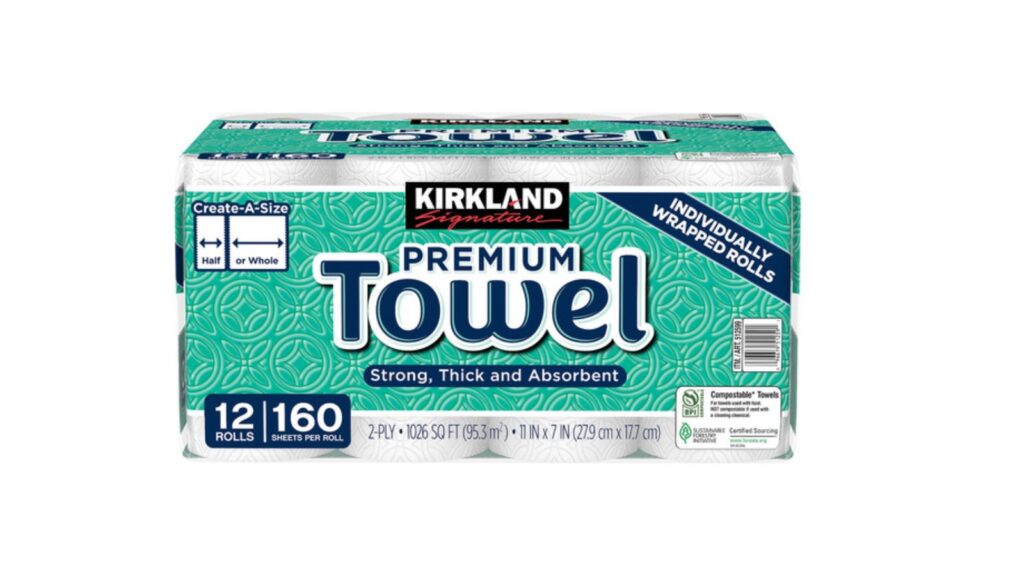
Paper towels are not the cheapest way to clean everything, but they are useful for raw meat cleanup, greasy messes, pet accidents, and the kind of spill that makes reusable towels feel like a bad idea. Costco’s Kirkland Signature pack has 12 rolls with 160 sheets each for $23.60.

This is a smart bulk buy if you use paper towels carefully instead of treating them like napkins, plates, and emotional support all at once. The create-a-size sheets help stretch the pack because not every wipe-down needs a full sheet. Families, pet owners, and anyone who cooks often will get the most use from it.

Kirkland Signature microfiber towels

microfiber towels
Image Credit: Costco

Reusable cleaning cloths are one of the better ways to stop burning through paper towels. This Kirkland Signature pack includes 36 microfiber towels for $19.28, which is enough to keep some in the kitchen, bathroom, garage, and laundry room.

They are especially useful for dusting, wiping counters, drying appliances, cleaning glass, and handling car messes. The money angle is simple: wash and reuse them instead of grabbing disposable wipes for every basic job. Keep a small bin for dirty ones so they do not vanish into the regular laundry and come back covered in lint.

Scott shop towels

Scott Shop Towels
Image Credit: Costco

Some messes are too greasy or gritty for your nicer cleaning cloths. Scott Shop Towels come in a 10-roll pack for $20.19, with 55 towels per roll for garage, workshop, car, grill, paint, and outdoor cleanup.

This is not the first thing every household needs, but it is a good buy if you do any hands-on work at home. They are tougher than regular paper towels, so you use fewer sheets for oil, tools, muddy shoes, and messy projects. That matters if your current system is sacrificing dish towels and then wondering why they never look clean again.

Scotch-Brite zero scratch sponges

zero scratch sponge
Image Credit: Costco

Sponges are cheap until you are replacing a two-pack every few weeks. Costco has the Scotch-Brite Zero Scratch 24-count pack for $12.47 after $4 off through June 7, with a limit of five.

These are useful because they can handle dishes, counters, sink grime, and nonstick cookware without being as harsh as heavy-duty scrub pads. A 24-pack is easy to split between the kitchen, bathrooms, and utility sink, and it gives you enough to replace them before they get embarrassing. If you have roommates or kids doing dishes, having extras on hand is not a luxury.

Mr. Clean Magic Eraser whole home pads

magic eraser
Image Credit: Costco

Magic Erasers are best used like a targeted tool, not an all-purpose sponge. This Mr. Clean Whole Home Extra Durable pack includes 18 pads for $17.01, which is a solid buy if scuffs and soap residue show up often in your house.

They are useful on baseboards, tubs, doors, sneakers, light switches, and the mystery marks that appear when children or furniture have been near a wall. The savings come from stretching the life of surfaces you already own. If a $17 box helps you avoid repainting a hallway or replacing a stained shower caddy, that is useful money.

Swiffer Duster heavy duty dusting kit

dusting kit
Image Credit: Costco

Dust is cheap to ignore until allergies flare, ceiling fans get gross, or you realize your blinds have grown a second texture. The Swiffer Heavy Duty Dusting Kit includes one handle and 17 refills for $16.56 after $4 off through June 7.

This is a better buy for people who actually use dusters, especially in homes with pets, older vents, high shelves, or lots of blinds. The handle helps you get places a cloth does not reach easily, and the refill count should last a while if you save it for dust-heavy jobs. For small apartments, one box is plenty.

Swiffer heavy duty wet mopping cloths

mopping cloths
Image Credit: Costco

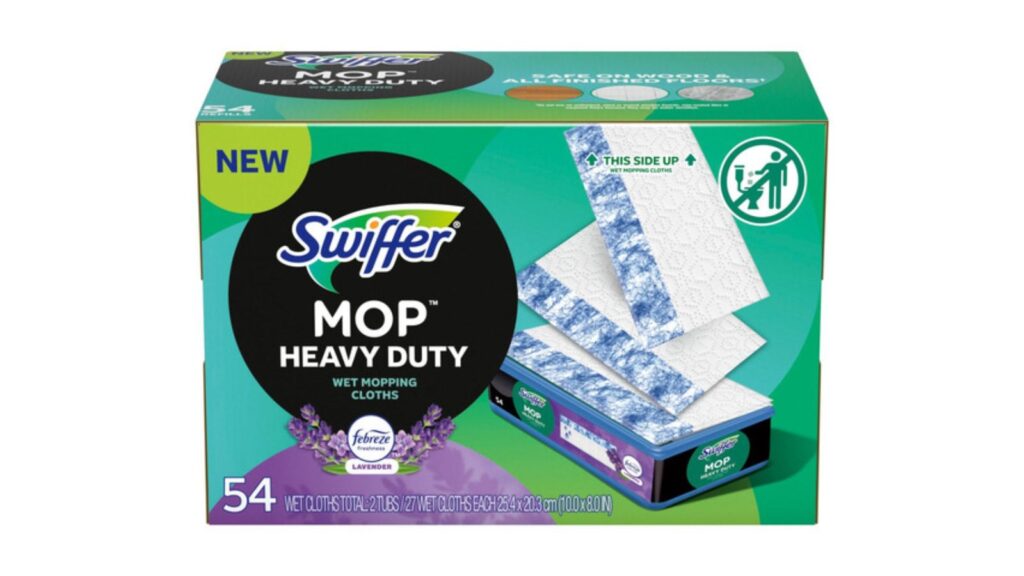
If you already own a Swiffer mop, the refills are usually where the cost sneaks up. Costco’s Heavy Duty Wet Mopping Cloths pack has 54 lavender-scented cloths for $17.81 after $4 off through June 7.

This is useful for quick kitchen, bathroom, and entryway cleaning when pulling out a bucket feels like too much for one sticky patch. The unit price is better than buying small refill packs, and 54 cloths can cover a lot of weekly cleanups. It makes the most sense for tile, vinyl, or sealed floors in homes where spills happen often.

Clorox disinfecting wipes

disinfecting wipes
Image Credit: Costco

Disinfecting wipes are not for every surface, every day, forever. Used wisely, though, they are handy for doorknobs, light switches, bathroom handles, trash can lids, and after-sickness cleanup. Costco has the Clorox variety pack with five 85-count canisters for $21.33.

That gives you 425 wipes, enough to keep one canister in the kitchen, bathrooms, and laundry area without constantly moving the same tub around. The value is strongest for households with kids, shared bathrooms, caregivers, or anyone who wants disinfecting supplies ready before someone gets sick. Just do not use them as a replacement for regular cleaning.

Lysol disinfectant spray

Lysol Disinfectant Spray
Image Credit: Costco

Lysol Disinfectant Spray is useful for soft surfaces and odd spots where a wipe is not practical, like trash cans, upholstery, gym bags, and bathroom air after a rough morning. Costco sells the 19-ounce three-pack for $18.15.

A three-pack is enough to stash one where it gets used instead of buried under the sink. This is a good buy for homes with sports gear, pets, school backpacks, or shared spaces. The savings come from not paying convenience-store prices when flu season, stomach bugs, or mystery smells show up. Follow the label directions, especially around ventilation and contact time.

Clorox Clean-Up all-purpose cleaner with bleach

Clorox
Image Credit: Costco

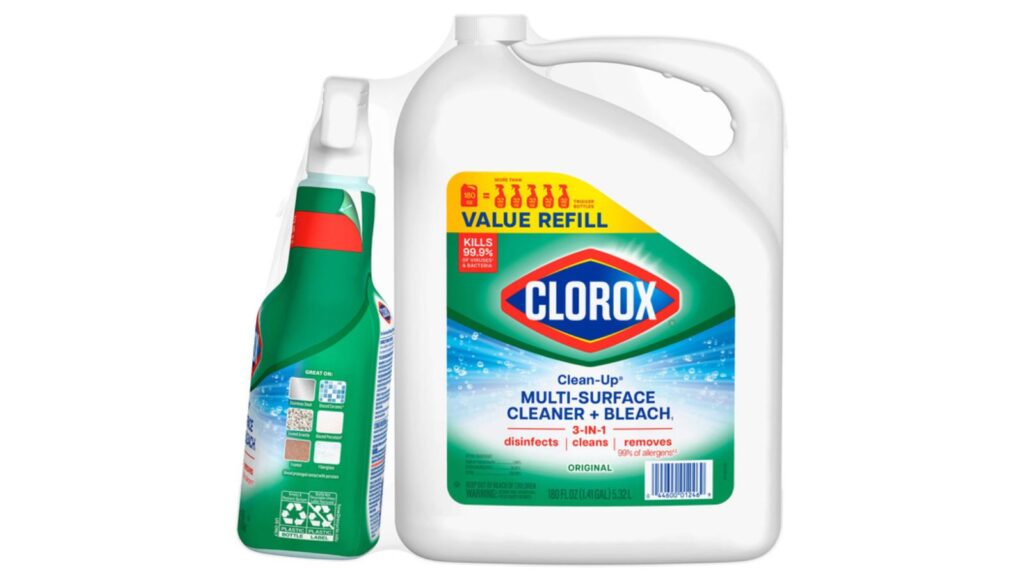
For bathrooms, kitchen sinks, trash areas, and other hard nonporous surfaces, Clorox Clean-Up is the strong stuff people keep reaching for. Costco’s combo pack includes a 32-ounce spray bottle and a 180-ounce refill for $18.72.

The refill is the real value here. Instead of buying a new spray bottle every time, you can refill the one you already have and cut down on both cost and plastic. This makes sense for households that clean bathrooms often, deal with stains, or want one heavier-duty cleaner on hand. It is not for delicate surfaces or casual misting.

Pine-Sol multi-surface cleaner

Pine-Sol
Image Credit: Costco

Pine-Sol earns its shelf space because it is concentrated and flexible. Costco has the 60-ounce two-pack for $14.74, and it can be diluted for floors, counters, sinks, and other approved surfaces.

This is the kind of cleaner that stretches because you are not using it full strength for every job. It is a good choice for homes with tile, sealed floors, heavy kitchen traffic, or bathrooms that need regular attention. The scent is not subtle, so skip it if pine cleaner gives you a headache. For everyone else, two big bottles can cover a lot of routine cleaning.

Mrs. Meyer’s multi-surface cleaner variety pack

multi-surface cleaner variety pack
Image Credit: Costco

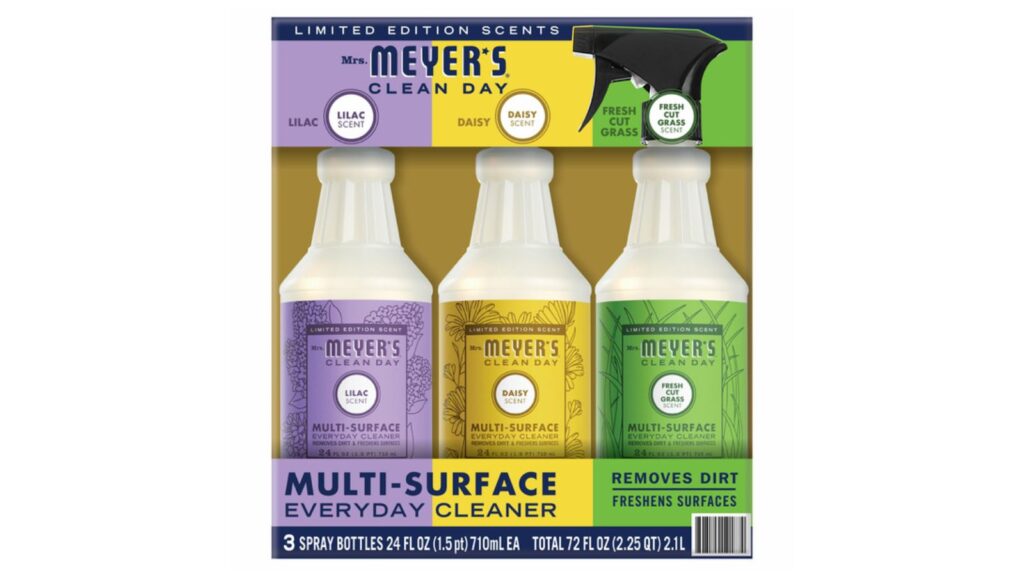
Not every cleaning job needs bleach or a disinfectant. Mrs. Meyer’s Multi-Surface Variety Pack gives you three 24-ounce bottles for $18.83, with limited-edition scents including lilac, daisy, and fresh cut grass.

This is more of an everyday wipe-down cleaner for counters, tables, and general surface messes. The price is better than buying single bottles at many grocery stores, and three bottles let you keep one in the kitchen, bathroom, and laundry area. It is best for people who clean often and want a regular surface spray that is not as harsh as their bathroom cleaner.

Lysol advanced toilet bowl cleaner

toilet bowl cleaner
Image Credit: Costco

Toilet cleaner is not exciting, but running out is deeply annoying. Costco has the Lysol Advanced Toilet Bowl Cleaner four-pack for $13.04, with 32 ounces in each bottle.

This is a practical stock-up for households with more than one bathroom or anyone who cleans on a weekly schedule. Four bottles should last a long time for most homes, and the curved bottle design makes it easier to get under the rim. The budget win is having a dedicated toilet cleaner on hand instead of wasting all-purpose spray on a job it was not built to do.

Clorox performance bleach

Clorox Performance Bleach
Image Credit: Costco

Bleach is a low-cost staple for laundry whitening, disinfecting approved surfaces, and handling certain cleaning jobs when used correctly. Costco’s Clorox Performance Bleach pack includes three 121-ounce bottles for $21.55.

This is best for people who already know they use bleach regularly. Three large bottles are not ideal for a tiny apartment with no storage, and bleach does not belong on every surface. But for households with white towels, utility sinks, outdoor bins, or bigger cleaning routines, buying the large pack keeps you from paying more for small bottles one emergency at a time.

Dawn Platinum Plus Powerwash dish soap spray

dish soap spray
Image Credit: Costco

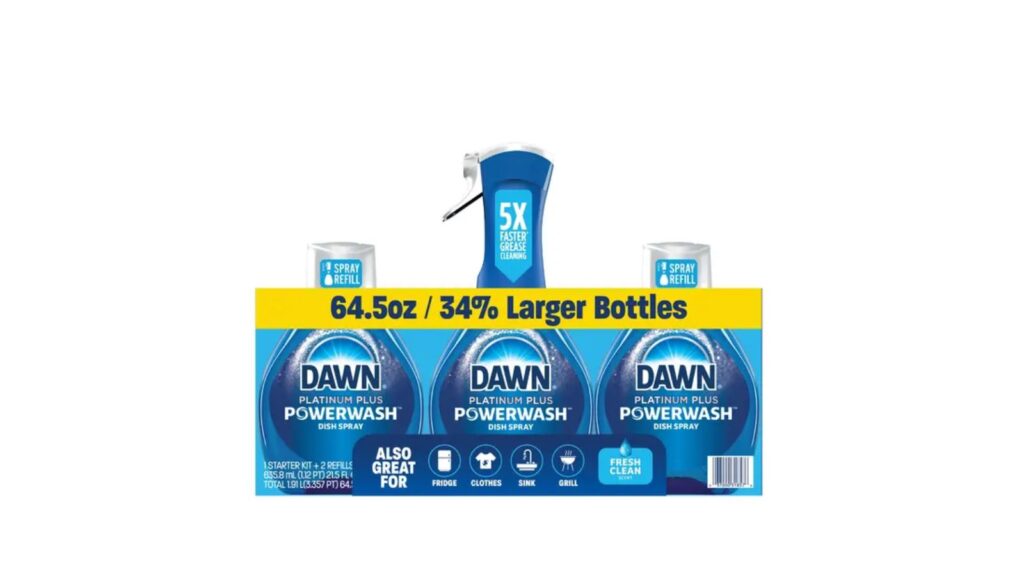
Dawn Powerwash is one of those products that is easy to dismiss until you use it on greasy pans, sheet trays, air fryer baskets, and stovetops. Costco’s pack includes one 21.5-ounce starter spray and two 21.5-ounce refills for $14.74.

The refill setup matters because the sprayer is the part you keep. This is a good buy for people who cook often and hate soaking pans overnight like it is a personality trait. It can also help stretch regular dish soap because you are using the spray for the greasy jobs instead of dumping half a bottle into one skillet.

A credit score below 670 qualifies you for subprime rates on a mortgage. A score of 760 or above gets the best available rate. On a $300,000 loan, the difference between those two tiers adds up to tens of thousands of dollars in extra interest over 30 years. If your score is sitting somewhere in the middle and you’re not sure why it won’t move, something on this list is probably the reason.

Most of the common advice holds: pay on time, keep your balance below 30% of your credit limit, don’t open a bunch of new accounts at once. But other factors work differently. Some are habits that feel completely responsible. Some stem from recent changes to how credit systems work. None are obvious until you know to look.

Closing a credit card you just paid off

man cutting up credit card
Image Credit: Shutterstock

Paying off a card feels like progress, and closing it feels like the next logical step. The problem is that closing a card reduces your total available credit immediately, which pushes up your utilization ratio across all your remaining accounts even if your spending hasn’t changed. Utilization accounts for 30% of your FICO score, making it one of the biggest levers in either direction.

There’s a secondary effect if the card you closed was one of your oldest. Closed accounts do stay on your credit report for up to 10 years, so you don’t lose the payment history overnight. But your total available credit shrinks the moment the account closes, and that change hits the bureaus in the next reporting cycle. Scores can drop by 40 points or more when a long-standing card is closed, particularly if it represented a significant chunk of your total credit limit.

The fix: keep paid-off cards open and active. Put a small recurring charge on them, a streaming service or a monthly subscription works well, and set up autopay. The account stays current, your available credit stays intact, and the card keeps aging in your favor. If you’re worried about an annual fee, call the issuer and ask to downgrade to a no-fee version of the same card rather than closing it outright.

Paying your credit card bill after the statement closes

man stressed about credit card balance
Image Credit: Shutterstock

Credit card issuers report your balance to the three major credit bureaus shortly after the statement closing date, not on your due date. Your due date typically falls three weeks after the statement closes. If you wait until the due date to pay, the bureaus have already recorded whatever balance you were carrying when the statement was generated. That balance is what determines your utilization rate for that cycle.

Here’s how it plays out in practice: you have a $5,000 credit limit and carry a $3,000 balance at statement close. Your reported utilization is 60%. You pay the full amount by the due date and feel good about it. But the bureaus saw 60% when the statement closed, and that’s what factors into your score. Over time, consistently high reported balances keep scores lower than people expect even when they always pay in full.

The fix: find your statement closing date, usually labeled in your account dashboard, and pay your balance down before that date rather than just by the due date. Getting below 10% of your credit limit before the statement closes is what actually moves your score. If you tend to make large purchases early in the billing cycle, consider a mid-cycle payment to bring the balance down before it gets reported.

Small bills that quietly go to collections

opening up a new credit card
Image Credit: CardMapr.nl via Unsplash

A $50 unpaid gym cancellation fee doesn’t feel like a debt. Neither does a final cell phone bill from a carrier you left two years ago, or a parking ticket that got buried and forgotten. None of these show up on your credit report directly. But once a business sells the debt to a collection agency and the agency reports it to the bureaus, it shows up as a collection account and can stay on your report for seven years.

The threshold that determines whether it damages your score is $100. Most modern scoring models ignore collection accounts below that amount. But fees accumulate: a $35 parking ticket can reach $90 after administrative penalties, and a final phone bill with early termination fees can exceed $100 before you’ve given it a second thought. A single collection account can drop a score by 50 to 100 points depending on where you started.

The fix: when you cancel any subscription, service, or account, request a final statement and confirm the balance is zero. Check your credit reports at AnnualCreditReport.com regularly; they’re free and can now be accessed weekly. If you find a collection account from a civil or municipal debt, contact the agency and ask whether they’ll do a “pay for delete,” which removes the account from your report when you settle the balance.

Medical debt still on credit reports after the federal rule fell through

final notice on a medical bill
Image Credit: Shutterstock

In January 2025, the Consumer Financial Protection Bureau finalized a rule that would have removed medical bills from credit reports for roughly 15 million Americans and erased nearly $49 billion in medical debt from credit files. A federal court vacated that rule in July 2025. Medical bills over $500 that are more than a year old can still appear on credit reports in most states.

Some protections remain in place. In 2022, the three major credit bureaus voluntarily stopped reporting paid medical debt, collections under $500, and medical collections less than 12 months old. Those changes are still in effect. But large unpaid medical bills that fall outside those parameters are still being reported. Because medical debt often results from billing disputes, insurance delays, or surprise charges rather than financial irresponsibility, many people have collections on their report for amounts they didn’t even know they owed.

The fix: check your report specifically for medical collection accounts. Fifteen states have passed their own laws banning medical debt from credit reports; if you’re in one of those states and see medical debt on your report, you can dispute it regardless of the amount. If a medical collection is less than a year old or under $500, it should not be appearing regardless of where you live, and you can dispute it directly with the bureau. Pull all three of your reports for free at AnnualCreditReport.com.

Buy Now, Pay Later missed payments

buy now pay later
Image Credit: Cube29 via Freepik

For years, Buy Now, Pay Later loans were invisible to credit bureaus. You could split a $400 purchase into four payments, miss two of them, and your score wouldn’t register a thing. That changed when FICO launched new scoring models incorporating BNPL data in fall 2025. Lenders are beginning to adopt them, which means a missed BNPL payment now affects your score the same way a missed credit card payment would.

The habit is easy to develop. BNPL checkout flows are frictionless, they often don’t involve a hard credit pull, and they historically had no credit consequences. But nearly 41% of BNPL users made at least one late payment in the past year. Under the new models, those late payments feed directly into payment history. Multiple open BNPL plans at once can also reduce your average account age, since each new plan registers as a new credit account.

The fix: treat BNPL the same way you’d treat a credit card. Set up automatic payments on every plan to avoid missing a due date. Limit how many open BNPL loans you carry at once, since stacking several in a short window looks like rapid new credit to scoring models. Check your credit report to see which of your BNPL providers are now reporting to the bureaus, since reporting is still inconsistent across providers.

Co-signing a loan for someone

co signing a loan
Image Credit: Shutterstock

Co-signing a loan is legally the same as taking it out yourself. The full debt balance appears on your credit report, which affects your debt-to-income ratio and can make it harder to qualify for your own credit. But the more immediate risk is what happens when the primary borrower misses a payment. Any delinquency hits your credit report the same way it would if you were the borrower, because as far as the lender is concerned, you are equally responsible.

You have no control over the other person’s payment behavior once you’ve signed. If they fall 90 days behind, that’s a 90-day delinquency on your credit history. If the loan defaults, you’re on the hook for the balance and your score takes the full fallout. Relationships change and finances change, and you’re left with someone else’s financial decisions permanently attached to your record.

The fix: before co-signing, ask yourself whether you could comfortably pay that loan yourself if the other person stops. If the answer is no, decline. If you’re already a co-signer and concerned about the borrower’s reliability, ask the lender whether you can set up account alerts so a missed payment doesn’t catch you off guard. Getting yourself removed as a co-signer typically requires the primary borrower to refinance the loan in their own name, which requires their active cooperation.

Errors on your credit report that you never found

poor credit score report
Image Credit: Shutterstock

27% of people who checked their credit reports in a 2024 study found at least one error significant enough to affect their score. Common problems include payments marked as late that were made on time, accounts belonging to someone with a similar name, debts that were discharged but still appear as active, and collection accounts that should have been removed years ago. None of these go away on their own.

Disputing errors has also become harder in practice. In 2025, the rate at which Experian resolved consumer credit report complaints in the consumer’s favor dropped from 20% in 2024 to under 1%, with TransUnion’s resolution rate falling by roughly half over the same period. The CFPB received nearly five million credit reporting complaints in 2025, up dramatically from prior years, with incorrect information being the single most common issue.

The fix: pull your reports from all three bureaus at AnnualCreditReport.com and go through them carefully. They’re free and can be checked weekly. File disputes directly with the bureau reporting the error, not just the creditor, and document everything in writing. If the bureau doesn’t resolve the dispute, file a formal complaint through the CFPB’s complaint portal; a filed complaint often prompts a faster response than disputing with the bureau alone.

Being an authorized user on someone else’s problem account

couple stressed about credit card bills
Image Credit: Shutterstock

Being added as an authorized user on a family member’s or partner’s credit card can be an effective way to build credit. Their payment history, account age, and available credit all show up on your report as if the account were partially yours. But that works in both directions. If they start missing payments, run the card close to its limit, or have the account closed for delinquency, those negative marks attach to your report just as quickly.

This situation comes up most often when relationships change. A parent adds an adult child to an old card as a favor. A couple shares a card and one partner stops paying. Someone’s financial situation deteriorates and the authorized user, who has no ability to compel the account holder to manage it responsibly, ends up absorbing the damage.

The fix: if you’re an authorized user on an account where the primary cardholder is struggling, call the card issuer directly and ask to be removed. You can typically do this without the primary cardholder’s involvement. Once removed, the account history usually falls off your report within one or two billing cycles. If you were benefiting from that account’s long positive history, plan to build your own credit through a secured card or credit builder loan before making the change.

Applying for store credit cards at the register

paying with a store card
Image Credit: Curated Lifestyle via Unsplash

A 20% discount at checkout is tempting, but the application generates a hard inquiry on your credit report. One hard inquiry typically reduces a score by a few points and stays on the report for two years. That’s not catastrophic in isolation. But people who accept store card offers at multiple retailers in the same season can accumulate several inquiries in a few months, and each one compounds the effect.

There’s a second hit: each new store card is also a new account, which lowers your average account age. Account age is 15% of your FICO score, and a lower average age means a lower score even if you handle the new accounts responsibly. A $50 discount for one card is generally fine. Three or four cards opened in six months can cost more in score damage than you saved at the register, particularly if you’re planning to apply for a car loan or mortgage soon.

The fix: if you’re a regular at a particular store and the card offers ongoing rewards beyond the signup discount, applying for one can make financial sense. But make that decision deliberately rather than at the register in the moment. Don’t apply for multiple cards in the same period, and if you’re planning any major credit application in the next six to twelve months, skip new credit entirely during that window.

Letting a credit card go inactive until the issuer closes it

three credit cards
Image Credit: Shutterstock

Card issuers can close accounts that haven’t been used for 12 to 24 months, sometimes sooner, because inactive accounts generate no interchange revenue. When they do, the effect on your credit is the same as if you had closed it yourself: total available credit drops, utilization climbs if you’re carrying balances elsewhere, and if it was one of your older accounts, your average account age shrinks.

This happens most often to people who are trying to simplify their finances. They pay off a card, set it aside, and forget about it. The issuer reviews the account at some point, finds no activity, and closes it. The first notice many people get is when they check their credit report and see the account listed as “closed by creditor,” which can raise a flag for future lenders since it implies the closure wasn’t the cardholder’s choice.

The fix: for any card you want to keep open, put a small recurring charge on it. A monthly subscription works well. Pair it with autopay so the card covers itself each month, you never carry a balance, and the account stays active indefinitely. A card that charges no annual fee, has been open for years, and requires almost no effort to maintain is worth keeping.

Making only the minimum payment each month

minimum payment written on white paper
Image Credit: Shutterstock

The minimum payment keeps the account technically current, which is better than missing it. But it doesn’t help your score much if you’re carrying a high balance. Utilization is calculated on the balance reported at your statement closing date, not on whether you’ve made the required payment. A card with a $10,000 limit and a $6,500 balance that you’re paying the minimum on shows 65% utilization every month, which consistently depresses your score even though you’re never delinquent.

The interest math compounds the problem. If you’re paying 24% APR and making minimum payments on a $5,000 balance, the balance moves very little each month while interest accumulates. The debt can take years to clear, and your credit score reflects elevated utilization the entire time. Being technically current while carrying a high balance is not the same as managing credit well, and scoring models treat it accordingly.

The fix: pay more than the minimum whenever possible. Even an extra $50 to $100 per month meaningfully accelerates payoff and brings your utilization down faster. If you’re managing multiple cards, put extra payments toward whichever card is closest to its limit first. A balance drop from 65% to below 30% on a single card can move your score within one or two reporting cycles.

Having a thin or one-dimensional credit mix

couple organising credit mix account
Image Credit: Shutterstock

Credit mix accounts for 10% of your FICO score, so it’s easy to dismiss. But if your entire credit history consists of revolving accounts like credit cards with no installment debt at all, you may be leaving points on the table. Scoring models view a consumer who has responsibly managed both revolving credit and installment loans, such as car loans, personal loans, or mortgages, as less of a risk than someone who has only ever handled one type.

The reverse also surprises people: when you pay off your only installment loan, your credit mix narrows and your score can dip temporarily. Someone who just paid off their car loan and feels good about it may notice their score drop 5 to 10 points that same month. The account is closed, the diversity is reduced, and the scoring model notices. The drop is usually temporary, but it catches people off guard.

The fix: you don’t need to take on unnecessary debt to round out your credit mix. But if you’re already planning to finance something, knowing that an installment loan strengthens your mix is useful context. Credit builder loans offered through many credit unions are designed for this purpose specifically; you make payments into a savings account and get the funds back when the loan is paid, ending up with a stronger credit profile and a small savings cushion.

Federal student loan delinquencies now showing up on credit reports

student loan
Image Credit: Shutterstock

During the pandemic, federal student loan payments were paused and missed payments weren’t reported to credit bureaus. When payments resumed in 2023, the Biden administration added a 12-month grace period through September 30, 2024, during which late payments still wouldn’t be reported. That grace period is over. As of early 2025, federal student loan delinquencies are being reported to the bureaus, and the average national credit score dipped as late payments accumulated.

People who thought they were still covered aren’t necessarily. Some enrolled in income-driven repayment plans but got caught in processing backlogs with their servicers. Others simply didn’t realize the protection had ended. A 90-day delinquency on a student loan is treated the same as a 90-day delinquency on any other debt, and it can drop a score by 100 points or more. Those marks stay on a credit report for seven years from the date of the first missed payment.

The fix: log in at studentaid.gov and check your loan status. If your loans are showing as delinquent, contact your servicer immediately. Income-driven repayment plans can set your monthly payment as low as $0 if your income qualifies, which allows you to stay current without necessarily paying anything. Getting into any repayment plan stops the delinquency from accumulating further and begins the recovery.

Opening new credit accounts in the months before a major loan application

loan application on computer
IMage Credit: Shutterstock

Every credit card or loan application generates a hard inquiry on your credit report. A single inquiry typically reduces your score by fewer than five points. That sounds minor, but the timing matters. If you’re planning to apply for a mortgage or car loan, a lower score at the moment of that application can mean a higher interest rate, a reduced borrowing limit, or outright rejection. Lenders often pull credit within days of a formal application, and recent inquiries are fully visible. Before submitting a major loan application, completing a free credit score check can help you understand where your credit stands and whether there are any areas you may want to improve before lenders review your application.

New accounts also lower your average account age. And unlike mortgage or auto loan shopping, where multiple inquiries within a 14 to 45-day window are generally treated as a single inquiry by most scoring models, credit card applications don’t get that same protection. Each one is its own separate hard inquiry. Opening two credit cards and a personal loan in the months before applying for a home loan can take your score down 15 to 25 points precisely when it matters most.

The fix: if you’re planning to apply for a mortgage, car loan, or any other major credit product in the next six to twelve months, stop opening new credit accounts during that period. No store cards, no new credit cards, no personal loans. Let your existing accounts age, your utilization stabilize, and your score settle before the lender pulls your credit.

A small balance left on an account you thought was paid off

shocked senior woman getting text about low balance
Image Credit: Shutterstock

When you make what feels like a final payment on a credit card, interest sometimes continues to accrue after that payment posts. The billing cycle doesn’t stop the moment you pay. The issuer generates a statement the following month showing a small amount due, and if you’ve mentally closed the account and stopped looking at it, the balance sits there. If it goes 30 days past due, it gets reported to the bureaus as a delinquency, and at 30 days late, it counts as a real one.

This happens more often than people realize. Someone pays off a card, sees a zero balance in the app, assumes the account is clear, and moves on. A statement arrives showing $4 or $8 in accrued interest. Nobody notices. A few weeks later it’s past due. Several months later they’re trying to figure out why a delinquency appeared from a card they haven’t touched in a year.

The fix: when paying off any credit card, call the issuer and ask for the exact payoff amount as of that day, including any accrued interest. Pay that figure, not just the balance the app shows. Check the account again about a month later to confirm the balance is zero and the account is current. If you’re planning to close the card, do it after you have written confirmation of a zero balance.

Your kid comes home humming a song you haven’t thought about in 30 years. Their friend is wearing a scrunchie and a windbreaker that looks exactly like one you owned in sixth grade. McDonald’s just brought back the Changeables Happy Meal toys, the ones that turn into robots, originally launched in 1987. You are either thrilled or slightly unsettled by all of this. Possibly both.

The 80s revival is not subtle right now. It’s showing up in music, fashion, toys, home decor, and fast food promotions. And it’s landing differently than past nostalgia cycles, partly because it isn’t only adults driving it. Kids and teenagers who were nowhere near being born in 1987 are genuinely into it.

There’s something real underneath the trend worth paying attention to, because it’s not just about neon and cassette tapes.

Why nostalgia is hitting harder than usual

The appetite for 80s culture isn’t random. It’s a reaction. Families right now are dealing with high costs, packed schedules, kids who are online constantly, and a flood of parenting apps all promising to bring order to the chaos. When life feels relentless, the past starts to look peaceful, even when it wasn’t.

That’s exactly what nostalgia does. It edits out the hard parts and hands you back a highlight reel. Brands are well aware of this. Pinterest’s 2026 trend forecast called out a “Throwback Kid” wave, pointing to surging searches for vintage kids’ clothes, classic toys, and cozy, analog childhood spaces. Searches for “80s luxury” on Pinterest surged 225% in 2025, and interest in 1970s childhood toys was up 280%. People aren’t just noticing the trend. They’re actively seeking it out.

For parents especially, the appeal makes sense. The 80s represent a version of childhood that felt less supervised, less expensive, and less optimized. Kids went outside. They got bored. Nobody scheduled their free time. Whether or not that was actually better is a different question. But the fantasy of it is powerful when you’re managing your child’s screen time, enrichment activities, and emotional regulation all before 9 a.m.

How kids are actually finding it

Here’s what’s interesting: most kids aren’t discovering the 80s through their parents’ old photo albums or home videos. They’re finding it on TikTok, in thrift stores, on streaming platforms, and in the background music of short-form videos. The decade comes to them pre-filtered, stripped of context, and genuinely fresh.

That’s a big part of why the trend has traction with teenagers. Gen Z didn’t live through the era. They have no memory of the Cold War, the AIDS crisis, or the specific tedium of rewinding VHS tapes. What they see is the aesthetic: the bold silhouettes, chunky jewelry, bright colors, and playful prints that defined the decade. Those looks are now showing up across runways and secondhand racks alike, and teens can copy them for almost nothing if they shop vintage or thrift.

Music travels the same way. A song gets used in a 15-second video, picks up millions of views, and suddenly a 14-year-old knows every word to something recorded before their parents finished high school. Then it shows up in a show, a commercial, a game. The reach compounds fast.

This is actually a decent opening for a real conversation. Ask your kid what they like about the style or the music, and you’ll probably learn something about what they’re looking for in it. Sometimes it’s the aesthetic. Sometimes it’s the idea of a simpler time, which tells you something about how they’re feeling about right now.

Family in retro outfits beside a vintage car
Image credit: Kristin Mulligan via Pexels

Retro toys are back in a serious way

The 80s revival isn’t just clothes and music. Toys are a major part of it. Classic, physical, non-app-dependent toys are showing up in stores, thrift shops, and Happy Meals, and kids are genuinely interested in them.

McDonald’s brought back the Changeables Happy Meal toys in January 2026, the Transformers-style toys that flip from a McDonald’s food item into a robot or dinosaur. They were originally launched in 1987 and were, according to McDonald’s own senior marketing director, the single most-requested Happy Meal program across social media and customer service channels. The 2026 version has 16 characters. They sold out fast at a lot of locations.

It’s a smart move by McDonald’s, and it tells you something about how the trend works. Parents recognize the toys from their own childhood and feel something. Kids see them as novel and cool. Both generations end up engaged, which is the goal. Brands have figured out that nostalgia is a shortcut to that emotional reaction, and they’ll keep using it.

The practical takeaway for parents: you don’t have to buy into every comeback product to let your kid engage with the trend. A used toy from a thrift store, a garage sale find, or a library event that features classic games can scratch the same itch for a fraction of the price. Simple doesn’t require a brand new purchase.

What’s actually worth bringing back from 80s parenting

This is where people get a little misty-eyed and start saying things like “kids today just need more fresh air.” There’s some truth in that impulse, even if the framing is annoying. Some things about how kids spent their time in the 80s were genuinely good, not because the decade was superior, but because certain habits hold up regardless of era.

More unstructured outdoor time is near the top of the list. Kids who play outside without a structured agenda, who get bored and have to figure out what to do next, develop problem-solving skills and tolerance for discomfort that no app can replicate. Boredom isn’t a crisis to manage. It’s a condition that produces creativity, if you let it run its course instead of immediately filling it.

Simple family dinners are worth bringing back too. Not elaborate ones. A little meal planning and a grocery list that covers the basics will do. A sandwich night counts. So does breakfast for dinner. Even twice a week makes a difference in how connected a family feels.

Libraries are genuinely underused by most families right now, and they’re free. Books, programs, storytimes for little kids, homework help for older ones. If you’re looking for ways to spend less while giving kids more, a library card is one of the best tools available.

Chores are the other one. Kids in the 80s did more around the house, not because parents were harsher, but because it was expected. A kid who folds laundry, wipes down counters, and helps with dinner is learning something real about how households function and how to take care of themselves. It also makes your life slightly less exhausting, which matters.

What should stay in the past

Mother reading and laughing with young daughter
Image Credit: www.kaboompics.com

Nostalgia is selective by design, which means it’s worth being deliberate about what you’re actually romanticizing. The 80s childhood had real problems. Mental health got ignored, kids were expected to shake off things that actually needed attention, bullying went largely unchecked, and a lot of families operated on rigid role expectations that put enormous weight on women in particular.

Shame-based discipline, the “toughen up and deal with it” approach, didn’t produce resilient kids. It produced kids who hid what they were struggling with. A successful single mother is already carrying enough without adding pressure to recreate some perfect throwback childhood on top of it. That’s not a model worth reviving, no matter how calm and uncomplicated the era looks in retrospect.

Unsafe independence isn’t the same as healthy independence either. Kids still need clear rules, safe adults, and a sense that someone is paying attention when something goes wrong. The goal isn’t to recreate 1986. The goal is to pull out the parts that genuinely worked, the outdoor time, the less-stuff, the boredom, the chores, and leave behind the parts that didn’t.

The trend is worth paying attention to precisely because it’s telling you what a lot of families are quietly looking for right now: less, slower, simpler. You don’t need a revival to give them that.

The most a 62-year-old can collect from Social Security in 2026 is $2,969 a month. Wait until 70, and that ceiling jumps to $5,181. For someone who lives into their 80s, that gap adds up to hundreds of thousands of dollars over a lifetime, and it widens every year because cost-of-living adjustments get applied to a higher base.

Most people know you can delay claiming. Fewer know about the other levers, some of which have nothing to do with when you file. A missing entry in your earnings record can quietly cut your check every month, permanently, unless you catch it. A marriage from decades ago might entitle you to benefits on someone else’s record. If you spent any time working in the public sector, a law signed last year may have unlocked benefits you never applied for.

The right moves depend on your work history, your spouse, and your timeline. But they’re worth understanding before you hit the filing window.

Wait to claim, because the math is severe

older person working in store
Image Credit: Shutterstock

The gap between claiming early and claiming late is not marginal. In 2026, the maximum monthly benefit at 62 is $2,969, at full retirement age it’s $4,152, and at 70 it’s $5,181. Past age 70, waiting adds nothing. That’s the ceiling.

Full retirement age is 67 for anyone born in 1960 or later, and 66 and 10 months for those born in 1959. For every year you delay past your FRA, your benefit grows by 8 percent, compounding permanently. That’s not a temporary bonus. It’s baked into your check for the rest of your life, and every cost-of-living adjustment after that applies to the higher number.

The breakeven point where delaying produces more total lifetime income than claiming early is typically around age 82 or 83. If you’re in reasonable health and your family tends to be long-lived, the math almost always favors waiting. If you have a chronic illness or significant financial pressure, that calculation shifts. But the default assumption for most people should be: hold off as long as you reasonably can.

Make sure you have at least 35 working years

older person working in greengrocers
Image Credit: Shutterstock

Social Security calculates your benefit using your 35 highest-earning years, adjusted for inflation. If you worked fewer than 35 years, every missing year gets counted as zero. Those zeros pull down your average significantly, which lowers your monthly check permanently.

Someone who worked 30 years with solid earnings still has five zeros sitting in their benefit formula. Each one drags down the average Social Security uses to determine their payout. Working even a few more years, at any income level above zero, replaces those empty slots with actual earnings and can help increase your benefit amount.

The SSA reviews your record each year and automatically recalculates your benefit if a new year of earnings belongs in your top 35. You don’t have to refile. The update shows up in your January payment the following year. For people who took time out of the workforce to raise children, care for a parent, or deal with a health issue, even a few years of part-time work before retirement can make a real dent in those zeros.

Keep working if your early-career earnings were low

older person working in book store
Image Credit: Shutterstock

This one surprises people who think they’ve already completed their 35 years. If you’re earning significantly more now than you did at 22 or 25, your early years may be the weakest entries in your formula, even after the SSA adjusts older wages for inflation. Staying on the job longer can push those low-earning years out of your top 35 entirely.

Say you made $30,000 in your early years and you’re earning $85,000 now. That gap, even after indexing, means a recent year of work can displace an early year and raise the average that determines your benefit. This math works quietly in your favor any time your current income is meaningfully higher than your earliest working years.

The effect is smaller for people whose earnings have been consistent and high throughout their careers, and if your 35 years are already strong, the marginal gain from one more year may be modest. But for people whose income grew substantially over time, the benefit from a few extra working years can be larger than they expect. You can see exactly which years are in your top 35 by reviewing your statement at ssa.gov/myaccount.

Check your earnings record for errors before it’s too late

social security written on table with people around it
Image Credit: Shutterstock

Your monthly benefit is calculated from the earnings your employers reported under your Social Security number over your entire working life. If an employer underreported your wages, if earnings were attributed to the wrong number, or if a year of income is simply missing, your benefit calculation is off, and you likely have no idea.

You can review your complete earnings history by creating a free account at ssa.gov/myaccount. Errors from recent years are easier to catch and correct. Older errors run into a time limit: generally three years, three months, and 15 days from the end of the tax year in question, though some exceptions apply.

Pull up your record and cross-reference it against old tax returns or W-2s. Pay close attention to any years where you know you worked but your earnings look low or missing entirely. Job changes, name changes, and clerical mistakes at an employer are all common causes of discrepancies. If something doesn’t look right, contact the SSA directly to dispute it. A single missing year of decent wages can reduce your monthly check by more than you’d expect, and that reduction lasts a lifetime.

Know the spousal benefit rules before either of you files

Mature, coffee or happy couple talking in home living room for conversation or communication in marriage. Smile, drinking tea or woman speaking to man in retirement or discussion to relax together.
Photo Credit: The Yuri Arcurs Collection via Freepik

If you’re married, you may be entitled to up to 50 percent of your spouse’s full retirement age benefit, regardless of your own work history. In couples where one person earned significantly more, this can mean real money for the lower-earning spouse.

The higher-earning spouse must have filed before the lower-earning spouse can claim on their record. That creates a sequencing problem. If the higher earner delays to 70 to maximize their own benefit, the lower earner has to wait too before accessing spousal benefits. That tradeoff is worth working through carefully before either of you files.

One critical timing detail: spousal benefits do not keep growing past your own full retirement age. Unlike a personal retirement benefit, which grows by 8 percent per year when delayed past FRA, the spousal benefit maxes out at FRA. Waiting until 68 or 69 to claim a spousal benefit gets you nothing extra. And when one spouse dies, the survivor receives the higher of the two benefit amounts, which is a strong reason for the higher earner to delay as long as possible, since the survivor inherits whatever that number is for life.

If you were married for at least 10 years, check your ex’s record

older wedding
Image Credit: Shutterstock

Divorced-spouse benefits are one of the most commonly overlooked options in Social Security. If your marriage lasted at least 10 consecutive years and you haven’t remarried, you may be entitled to up to 50 percent of your ex-spouse’s full retirement age benefit. It doesn’t matter whether your ex has remarried. It has no effect on what they receive. Your claim comes from a separate pool.

If you’ve been divorced for at least two years and your ex is at least 62, you can apply even if they haven’t filed yet. You must be at least 62 yourself. If you’re already receiving benefits based on your own record, you’ll get whichever amount is higher, not both.

If your former spouse dies, the benefit can increase significantly. Divorced survivor benefits can equal up to 100 percent of what your ex was receiving, provided the marriage lasted at least 10 years and you meet the age requirements. The divorced-spouse benefit caps at your FRA just like a regular spousal benefit, so there’s no advantage to waiting past that age to claim it on a living ex’s record. But the survivor benefit is a different calculation and worth understanding if you’re in that situation.

If you worked in the public sector, file or review your benefits now

older male teacher
Image Credit: Shutterstock

For decades, teachers, firefighters, police officers, and federal employees covered by the Civil Service Retirement System had their Social Security benefits reduced by the Windfall Elimination Provision and the Government Pension Offset. The Social Security Fairness Act, signed into law in January 2025, repealed both. The repeal is effective back to January 2024, meaning those who were already receiving reduced benefits have been receiving retroactive lump-sum payments and adjusted monthly amounts since early 2025.

If you never applied for Social Security benefits because you assumed the WEP or GPO would eliminate them, you need to apply now. That adjustment does not happen automatically for people who have never filed. Call the SSA at 1-800-772-1213 and specifically mention the Fairness Act. There’s a dedicated unit handling these claims.

Affected workers include teachers in states where pension systems don’t pay into Social Security, federal employees under the old CSRS retirement system, and public employees in states including California, Illinois, Texas, Ohio, and Massachusetts, among others. If you spent any part of your career in one of these roles and you’ve been assuming Social Security doesn’t apply to you, that assumption may no longer be correct.

Understand the earnings test before claiming early while you’re still working

social security and money
Image Credit: Shutterstock

Claiming Social Security before full retirement age while still working can reduce your benefits in the short term. In 2026, the earnings limit for people who are under FRA all year is $24,480. For every $2 you earn above that amount, the SSA withholds $1 from your benefits. In the year you reach FRA, the limit rises to $65,160, and the penalty drops to $1 for every $3 over.

The withheld amounts don’t disappear permanently. The SSA recalculates your benefit after FRA to account for the months when payments were held back, which raises your monthly check going forward. But the adjustment takes time, and in the meantime your income has been cut. For anyone still working full-time and earning well above those thresholds, the earnings test is usually reason enough to wait before filing.

Once you reach full retirement age, there’s no limit on what you can earn. You can work, collect Social Security, and pay no penalty at all. For people who want to keep working past FRA, the cleaner approach is usually to delay filing entirely and collect the delayed retirement credits instead.

Suspend your benefits if you claimed earlier than you should have

social security benefit
Image Credit: Shutterstock

If you’re already receiving Social Security but wish you had waited, you have more options than most people realize. Once you reach full retirement age, you can request a voluntary suspension of your benefits. The SSA pauses your payments and you earn delayed retirement credits for every month of suspension, at 8 percent per year. Your payments restart automatically at 70 if you haven’t asked for them sooner.

There’s a harder reset option too, but it’s time-limited. Within your first 12 months of receiving benefits, you can withdraw your application entirely, repay everything you’ve collected, and refile later as if you never claimed. This works as a full do-over, though most people aren’t in a financial position to repay months of benefits in one shot.

The suspension route requires no repayment and no penalty. The only real cost is going without the monthly payment for however long you suspend. For someone in good health who claimed at 62 or 63 out of financial pressure that has since eased, suspending at FRA and letting the benefit grow for a few years can meaningfully improve their long-term income. The gain is permanent.

Widows and widowers have more flexibility than most people realize

upset widow
Image Credit: Shutterstock

Survivor benefits operate under different rules than regular retirement benefits, and one difference works in your favor: deemed filing doesn’t apply. That means widows and widowers can start one benefit while letting the other grow and then switch, a strategy that isn’t available with regular spousal benefits.

A surviving spouse can begin collecting survivor benefits as early as age 60, at a reduced rate, and delay their own retirement benefit until 70 to let it reach its maximum. Or they can claim their own benefit early and switch to the full survivor benefit at their FRA for survivors. Either sequence can make sense depending on which benefit is ultimately larger.

If your spouse earned more than you and delayed claiming, the survivor benefit you inherit includes those delayed retirement credits. That’s worth knowing before the higher earner decides when to file. Optimizing the survivor benefit isn’t just about what the higher earner receives while they’re alive. It’s about what you’ll have for the rest of your life if you outlive them.

The claims process for survivor benefits cannot be done online. You’ll need to call the SSA or visit a local office to start that application.

Learn how to stretch your retirement savings and maximize your Social Security benefits for a comfortable retirement:

planning for retirement
Image Credit: Shutterstock

18 ways to stretch your retirement savings without feeling poor: The goal isn’t to pinch every penny — it’s to protect the big stuff and trim quiet leaks. Here are simple moves that keep freedom high and stress low.

18 budgeting rules that actually work for people over 50: Money habits change as we age. In this post, discover budgeting rules that fit your income and shift of priorities when you’re over 50.

15 clever strategies to maximize your Social Security benefits: Use the facts in this post to make choices that raise your monthly check for years.

You switched to the generic brand. You stopped going out. You canceled the streaming service. And somehow, you’re still short every month. That experience is real, and it’s common: only 32% of adults with family income under $25,000 said their spending was less than their income last month, compared with 66% of adults earning over $100,000. The gap isn’t just about discipline. It’s partly about which financial habits actually save money and which ones quietly cost more than they save.

Some of the most popular frugality strategies were designed for households with financial cushion. On a tight budget, the same moves can accelerate the very problems they’re meant to solve. That’s not a character flaw. It’s a structural mismatch between generic advice and real financial constraints.

Here are 18 of the most common budgeting habits that tend to backfire specifically for low-income households, and what to do instead.

Signing up for overdraft “protection”

Missing jigsaw puzzle with text OVERDRAFT isolated on a red background
Image Credit: Shutterstock

Overdraft protection sounds like a safety net, and banks market it that way. What it actually does is charge you a fee every time you spend money you don’t have. The average overdraft fee is $26.77 in 2025, and the typical debit transaction that triggers it is $24 or less. You might be paying more in fees than you spent in the first place.

In 2024, U.S. consumers paid a combined $12.1 billion in overdraft and NSF fees. The burden falls hardest on lower-income households: among banked adults, those with lower and middle incomes are significantly more likely to pay overdraft fees than higher earners. One overdraft per week adds up to nearly $1,400 a year in fees alone.

The better move is to opt out of overdraft coverage entirely. A declined transaction is embarrassing. A cascade of $27 fees for small purchases is catastrophic. Many credit unions and online banks now offer checking accounts with no overdraft fees at all. If you’re currently at a large bank, it’s worth shopping around.

Turning to payday loans for short-term cash

Payday loan application form
Image Credit: Shutterstock

When rent is due Friday and your paycheck doesn’t hit until next week, a payday loan looks like the obvious answer. It almost always makes things worse. Payday lenders drained more than $2.4 billion in fees from low-income borrowers in a single year, based on storefront lending alone. The average payday loan carries fees of $520 on an initial $375 borrowed. That’s not a typo.

The average annual percentage rate on a payday loan is close to 400%. Most borrowers end up rolling the loan over multiple times, paying more in fees than they originally received. About 80% of survey respondents said their payday loan left them in a worse financial position than before they took it out. The debt trap is the product, not a side effect.

Alternatives worth trying first: a credit union small-dollar loan (many cap rates at 28% APR), an employer payroll advance, a 211 call to local emergency assistance programs, or a negotiated payment extension directly with whoever you owe money to. Any of those options, even if imperfect, will almost certainly cost less than a payday loan.

Skipping health insurance to cut the monthly bill

health insurance online
Image Credit: Shutterstock

Going without health insurance to save $200 a month feels logical when money is extremely tight. The problem is what happens when something actually goes wrong. The average ER visit without insurance costs approximately $2,715, not counting lab work, imaging, or follow-up care. A single hospitalization can quickly run into five figures. For the 27.1 million Americans who remained uninsured in 2024, medical debt is one of the leading causes of financial crisis.

The calculation also ignores what skipping care costs in the long run. One in three adults said they skipped or postponed needed health care in the past year because of cost. Untreated conditions get more expensive over time, not less. An unmanaged chronic condition that leads to an ER visit ends up costing far more than consistent primary care would have.

Before going uninsured, check whether you qualify for Medicaid, which covers adults up to 138% of the federal poverty level in expansion states. Marketplace plans through Healthcare.gov often carry subsidies that reduce monthly premiums significantly for lower-income households. Many people who assume they can’t afford insurance haven’t checked what they’d actually owe after subsidy.

Renting furniture and appliances to own

renting furtniture
Image Credit: Shutterstock

Rent-to-own stores advertise no credit check and low weekly payments. The math underneath those ads is brutal. Rent-to-own agreements are frequently equivalent to paying a 60% or higher interest rate on the retail value of the item. A TV that sells at a big-box store for $660 can end up costing you nearly $2,000 after a year of weekly payments, and that doesn’t include sales tax, mandatory insurance fees, or setup charges.

It gets worse if you miss payments. Miss a few weeks, and the item gets repossessed. You walk away with nothing, and whatever you’ve paid is gone. There’s no partial credit, no equity, no ownership until the final payment clears. That’s the entire structure of the arrangement.

If you need an appliance and can’t afford to buy it outright, used appliances from Facebook Marketplace, Craigslist, Habitat for Humanity ReStores, or appliance resale shops are almost always a better deal. A secondhand washing machine that costs $150 and lasts three years beats a rent-to-own arrangement that costs $1,800 and ends with repossession.

Paying only the minimum on credit card balances

credit card and percentage sign
Image Credit: Shutterstock

The minimum payment is calculated to keep you in debt as long as possible while maximizing the interest the bank collects. With average credit card interest rates at 28.6% as of January 2025, a large share of each minimum payment goes toward interest rather than reducing what you owe. A $3,000 balance at a 17% rate, paid at the minimum, takes over 11 years to pay off and generates $3,743 in interest charges alone. You’d pay close to $7,000 total for $3,000 of purchases.

The math gets worse at higher rates. At 28.6% interest, which is close to the current national average, that same balance compounds faster than most minimum payments can keep pace with. You can spend months making payments while your balance barely moves, or even grows.

If you can’t pay the full balance, pay as much above the minimum as possible, even $20 or $30 more per month. That small difference has a real impact on how long it takes to pay off the debt and how much you pay in interest. If you’re carrying balances on multiple cards, focus extra payments on the highest-rate card first.

Closing credit cards to gain control of spending

poor credit score report
Image Credit: Shutterstock

Cutting up a credit card you can’t trust yourself with makes emotional sense. Closing the account is a different matter. When you close a card, your total available credit drops, which raises your credit utilization ratio. Closing an existing card can increase your credit utilization ratio and lower your credit score, sometimes significantly.

Credit utilization, which is how much of your available credit you’re actually using, makes up 20% to 30% of your total credit score. If you have two cards with $5,000 limits and $1,000 balances on each, your utilization is 20%. Close one card and that jumps to 40% on the same debt, which can trigger a meaningful score drop. A lower credit score costs money over time through higher interest rates on loans, higher insurance premiums, and landlords who reject your application.

If the problem is overspending on the card, put the card somewhere inconvenient rather than closing the account. Keep a small recurring charge on it and pay that automatically so the account stays active. The credit score benefit of keeping the account open is worth the friction.

Skipping routine car maintenance

car maintenance
Image Credit: Shutterstock

Oil changes, tire rotations, and fluid checks feel like discretionary spending when money is short. They’re not. Routine maintenance and repair costs average about $1,650 per year for a driver covering 15,000 miles, or about $137 per month. Skipping that maintenance doesn’t eliminate the cost. It defers it and multiplies it. Skip $150 in routine service and you’ll often pay $1,200 for the repair it would have prevented. Delay brake work until the pads are gone, and you’ll also need new rotors, turning a $200 job into a $1,000-plus rebuild.

Car repair costs jumped 15% year-over-year in 2025, and the average trip to a repair shop now runs $838. For households where losing access to a car also means losing income, the stakes are even higher. A vehicle breakdown that costs $1,500 to fix is also a missed paycheck, or missed shifts, or a temporary job loss.

Basic maintenance done on schedule is a form of insurance against much larger costs. If you can’t afford a repair shop, many auto parts stores will do a free diagnostic read and can walk you through simple fixes like air filters or battery replacements. Keeping up with oil changes in particular is the single highest-return maintenance task for extending engine life.

Cashing checks at check-cashing stores

bank teller
Image Credit: Shutterstock

Check-cashing stores are convenient, but they charge for that convenience in ways that add up significantly over a year. Fees range from 1% to 10% of a check’s value, with a national average of roughly 4%. Cash a $1,500 paycheck twice a month at 4%, and you’re handing over about $120 a month in fees, which is $1,440 a year. That’s money you earned, gone before you can spend it on anything.

The trap is partly structural: once someone gets flagged by ChexSystems for unpaid overdraft fees, many banks won’t open a new account for them. That leaves check-cashing stores as the only practical option. It feels like there’s no way out. There usually is. Second-chance checking accounts, offered by many credit unions and some banks, are specifically designed for people with a troubled banking history. Many come with no overdraft fees, which prevents the cycle from repeating.

Walmart cashes payroll and government checks for a flat fee of $8 or less, which is far cheaper than a percentage-based storefront fee. If you’re regularly cashing checks, the fastest financial move you can make is getting that money deposited directly into a bank account where it costs you nothing to access.

Not claiming government benefits you’re eligible for

SNAP
Image Credit: United States Department of Agriculture, Public domain, via Wikimedia Commons

Millions of households that qualify for food assistance, utility help, or health coverage never apply, either because they assume they won’t qualify, because the application process is daunting, or because there’s a stigma attached. Among older adults alone, an estimated 9 million who are eligible for SNAP are not enrolled, representing only 30% participation in that age group. The average SNAP benefit is $188 per month. That’s real money left unclaimed every single month.

SNAP isn’t the only gap. The Low Income Home Energy Assistance Program (LIHEAP) helps with utility bills and is significantly underutilized. Medicaid expansion covers adults up to 138% of the federal poverty level in most states, and millions who qualify don’t enroll. Many states offer property tax relief programs for low-income homeowners that most eligible people never take advantage of.

The site BenefitsCheckUp.org lets you enter your zip code and household information to see what programs you qualify for locally. It takes about ten minutes and often surfaces assistance programs people didn’t know existed. There is no penalty for applying and being found ineligible. There is a real cost to not applying at all.

Keeping emergency savings in cash at home

emergency fund
Image Credit: diwdom5355 via Freepik

Keeping a stash of cash at home feels safer than putting it in a bank, especially for people who’ve had bad banking experiences. The problem is that cash earns nothing while it sits there. High-yield savings accounts currently pay more than 4% APY, compared to the national average of 0.38% at traditional banks and 0% in a drawer. On $2,000 in savings, that’s the difference between earning $80 a year and earning nothing, plus the ongoing risk of theft, fire, or loss.

Cash at home is also not protected. Money in an FDIC-insured bank account is guaranteed up to $250,000 per depositor. Cash under a mattress has no protection at all. A burglary or a fire wipes it out completely with no recourse. The fear of banks is understandable, but keeping savings outside the banking system compounds the financial disadvantage it’s trying to avoid.

Online-only banks and credit unions typically offer the highest savings rates, often with no minimum balance and no monthly fees. Many have no overdraft programs at all, which removes the risk that led to the original banking problem. If opening a traditional account feels risky, a credit union with a second-chance program or a federally insured online bank is worth investigating.

Bulk buying when cash flow is unpredictable

buying in bulk
Image Credit: Shutterstock

Buying in bulk to save per-unit cost is sound advice for households with stable income and adequate storage. For households living paycheck to paycheck, it frequently backfires. The average American now wastes over $760 a year on uneaten food. Buying 48 yogurts because they’re on sale only saves money if all 48 get eaten before they expire. A bulk purchase that spoils halfway through isn’t a deal. It’s an expensive mistake.

There’s also a cash flow problem. Spending $120 at once on bulk supplies means $120 less available for rent, utilities, or an unexpected bill this week. For households that are frequently short mid-month, that timing mismatch can trigger overdrafts, late fees, or debt that costs more than the bulk discount saved.

Bulk buying works when it’s limited to non-perishable items you use constantly, when you have the storage space, and when the purchase doesn’t stress that month’s cash flow. For household goods like laundry detergent, dish soap, or toilet paper, it makes sense. For food, especially produce or anything refrigerated, the math usually doesn’t work out.

Cutting food spending down to almost nothing

Customer with shopping trolley full of items
Image Credit: Shutterstock

Food is often the only truly flexible expense in a low-income budget, which is why it tends to take the hardest cuts. But there’s a floor below which cutting the food budget creates costs elsewhere. Persistent food insecurity is linked to higher rates of chronic illness, reduced work performance, and worse mental health outcomes, all of which carry their own financial consequences. A $50 cut to the monthly grocery bill that leads to one ER visit for a preventable health issue costs many times what it saved.

The false economy also shows up in quality. The cheapest available food is often the most calorie-dense and least nutritious. Diets built around ultra-processed food tend to produce health problems that become medical expenses within a few years. That’s not a moral observation about food choices. It’s a practical observation about what underfunded nutrition tends to cost downstream.

Programs like SNAP, WIC, and food bank networks exist specifically to address this gap. Using them isn’t a failure. It’s using a resource that was created to prevent the exact downstream costs that inadequate nutrition produces. If you qualify for SNAP and haven’t enrolled, that’s the highest-return action on this list.

Letting a bill go 30+ days past due to prioritize other expenses

Electricity bill
Image Credit: Shutterstock

When you can’t pay everything, you have to choose. Rent, utilities, and food usually go first. Credit cards and medical bills often end up at the bottom of the pile. That hierarchy makes sense for immediate survival. The problem is that a single 30-day late payment on a credit account shows up on your credit report and can drop your credit score by 50 to 100 points, sometimes more. Payment history is the single largest factor in your credit score, making up 35% to 40% of your total.

A significant score drop raises the cost of everything that requires a credit check: future loans, car insurance rates, security deposits, and in many states, rental applications. A lower credit score doesn’t just mean you get turned down for things. It means you pay more for the things you do get. The extra interest cost on a car loan or personal loan for someone with damaged credit can add up to thousands of dollars over the life of the loan.

If you can’t make a full payment, call the creditor before the due date and ask about hardship programs, payment plans, or deferment. Many lenders have programs that pause payments or reduce minimums without triggering a negative credit report, but they typically require you to ask proactively. The call is uncomfortable. The credit damage is worse.

Buying the absolute cheapest version of everything

fixing cheap shoes with glue
Image Credit: Shutterstock

Price and cost are not the same thing. The cheapest shoes might need replacing every three months; the mid-price pair might last two years. The cheapest space heater might fail after one winter or run at low efficiency and drive up the electric bill. The cheapest phone charger might fry a $400 device. In each case, the sticker price is low and the total cost is high. Economists call this the “boots theory” of poverty. It’s a real pattern, not a platitude.

On a tight budget, the instinct to always choose the lowest upfront price is completely rational in the moment. The problem is that it tends to produce higher spending over time on the same category of item. Before buying the cheapest option on something you’ll use heavily, it’s worth checking reviews specifically for durability, not just satisfaction. A product that’s slightly more expensive but lasts twice as long is usually the better financial decision.

This doesn’t apply equally to everything. Generic medications, generic pantry staples, and store-brand cleaning products are almost always identical to name-brand versions and should be bought at the lower price. The calculus changes for items subject to heavy use: shoes, cookware, tools, phone charging cables, and anything with moving parts. On those, the cheapest version is often the most expensive choice in the long run.

Co-signing loans for family or friends

co signing a loan
Image Credit: Shutterstock

Co-signing a loan for a family member or close friend feels like helping. Legally, it makes you fully responsible for the debt. If the primary borrower misses a payment, that missed payment shows up on your credit report. If they default entirely, the lender can come after you for the full balance. This is not a technicality buried in the fine print. It’s the entire point of a co-signer from the lender’s perspective.

For a household already operating with thin margins, absorbing someone else’s loan default can be financially catastrophic. The debt gets counted toward your debt-to-income ratio, which affects your ability to qualify for your own loans or housing. The credit damage from their late payments appears on your record as if they were yours.

If you want to help someone get credit or financing, there are less risky ways. Helping them find a credit union that offers second-chance accounts, helping them understand the application process, or supporting them in building their own credit history are all forms of help that don’t put your financial stability on the line. Co-signing is a high-risk move for anyone. For a household with limited financial cushion, it can be destabilizing.

Using tax refund products to get money faster

Tax,Refund
Image Credit: Shutterstock

Refund anticipation checks and refund anticipation loans marketed at tax prep storefronts promise faster access to your refund. What they actually do is charge you fees to access money you were going to receive anyway. Refund anticipation check fees ranged from $25 to $55 during the 2024 filing season, on top of whatever the tax preparer charged for preparing the return. And they don’t actually speed up the IRS. Your refund still takes the same amount of time to process.

The alternative is free and faster. Filing electronically through IRS Free File (available to households earning under a certain threshold), or through a Volunteer Income Tax Assistance (VITA) site, costs nothing. Choosing direct deposit, most e-filed returns receive refunds in 21 days or less. The refund anticipation product doesn’t change that timeline. It just takes a cut of your money before it arrives.

If you’ve been paying a storefront tax preparer $150 to $400 per year to prepare a simple return, VITA sites offer free preparation by IRS-certified volunteers. The IRS Free File program is available to filers with adjusted gross incomes below $84,000. Either option saves money that the tax prep industry is currently collecting from the households that can least afford to give it up.

Avoiding all credit to stay out of debt

man cutting up credit card
Image Credit: Shutterstock

Cutting up credit cards and refusing to borrow anything is a reasonable response to a painful experience with debt. The problem is that avoiding credit entirely produces a thin credit file, and a thin credit file creates its own financial penalties. When you apply for an apartment, many landlords run a credit check. When you finance a car, a thin file usually means a higher interest rate or an outright rejection. Some employers run credit checks as part of background screening. No credit history is not treated the same as good credit history.

The cost shows up concretely in interest rates. A borrower with no credit history who does eventually need a loan, for a car, an emergency, or a security deposit, will typically pay significantly more in interest than someone who built credit steadily over time. The difference between a 7% auto loan and a 20% auto loan on the same car represents thousands of dollars in extra payments over the life of the loan.

Building credit doesn’t require going into debt. A secured credit card, where you deposit money as collateral and the card draws against that deposit, builds credit history without risk of overspending beyond what you’ve already set aside. A credit-builder loan from a credit union works similarly. Used for a single recurring bill that’s paid automatically each month and paid in full, a secured card builds credit steadily while carrying no balance and charging no interest.

Keeping track of that progress is equally useful, especially when you’re trying to understand how your financial habits affect your credit over time. Looking into SoFi Coach vs. Aura credit monitoring can help clarify the difference between managing your broader financial picture and keeping an eye on your credit information.

Never renegotiating recurring bills

Most people pay whatever the bill says, every month, without questioning it. That’s often more than necessary. Cell phone carriers, internet providers, and insurance companies routinely offer lower rates to customers who call and ask, particularly if the customer mentions that they’re considering switching. These aren’t advertised rates. They’re retention offers, and they exist because keeping an existing customer costs less than acquiring a new one.

Internet providers in particular routinely raise rates after an introductory period expires while continuing to offer new-customer pricing on their websites. Calling and asking for the new-customer rate, or asking to speak with the retention department, frequently results in a meaningful reduction. Car insurance rates also tend to creep up year after year on policies that aren’t actively shopped. Getting a competing quote and calling your current insurer with it is a reliable way to keep premiums from drifting upward unnecessarily.

Annual subscriptions, gym memberships, and any recurring charge that renews automatically are worth reviewing once a year. Services you’ve forgotten about but are still paying for are pure waste. A single afternoon spent reviewing bank and credit card statements for automatic charges, canceling what you don’t use, and calling to renegotiate two or three active bills can often recover $50 to $150 a month from a budget that feels like it has no room left.