scroll top

Your manager is 33. You’re 57. Last spring, her team cut six people, all under 35. Then she asked if you’d be willing to delay your retirement by another two years. It’s a strange thing to sit with.

The conventional wisdom has been that older workers are expensive, resistant to change, and quietly shown the door whenever a company needs to trim costs. That narrative is still playing out in plenty of workplaces. But something else is also happening: employers who spent years favoring youth are rediscovering the value of experience, and the reasons are more structural than sentimental.

A few things converged at once. The workforce is aging faster than it’s being replaced. AI is displacing entry-level work more than experienced work. And the institutional knowledge walking out the door with retiring workers is starting to cost companies real money. Here’s what’s actually driving the shift.

The retirement wave that nobody properly planned for

older person working in greengrocers
Image Credit: Shutterstock

Adults 50 and older now make up 34% of the U.S. workforce, up from 24% in 2000. That share is projected to hit 40% within the decade. But the more urgent number is about who’s leaving. From 2024 through 2032, an estimated 18.4 million experienced workers with postsecondary education are expected to retire, far outpacing the 13.8 million younger workers projected to enter the workforce with comparable credentials.

This isn’t a gradual shift. The pipeline in has never caught up with the pipeline out, and the gap is widest in industries that depend on accumulated skill: healthcare, construction, advanced manufacturing, and the trades. The workforce isn’t just aging. It’s shrinking at the top of the experience curve.

For employers, the math is getting uncomfortable. For workers who are already deep into their careers, the math is starting to move in their direction.

AI is going after entry-level jobs, not senior ones

half human half AI
Image Credit: Shutterstock

The story most people expected was that AI would hit middle management and senior knowledge workers first. That’s not what the data shows. A Stanford University analysis of payroll data found that software developer employment for workers ages 22 to 25 declined nearly 20% through mid-2025, while job counts for more experienced developers at those same companies stayed flat or grew.

The explanation is cleaner than you’d expect. AI replicates codified knowledge well, the stuff you learn from textbooks, training manuals, and certification courses. What it can’t replicate is tacit knowledge: the understanding that comes from watching a negotiation fall apart, knowing a client is about to bolt before they say anything, or recognizing that a supplier’s “minor delay” means you have a six-week problem. Research from the Federal Reserve Bank of Dallas confirms that AI is substituting for entry-level workers while augmenting experienced ones, not the reverse.

For workers with 20 or 30 years of accumulated pattern recognition, this is genuinely good news. The thing AI can’t easily replicate is the exact thing experience builds.

What decades on the job actually buys

older person working in store
Image Credit: Shutterstock

Employers are increasingly focused on what they call soft skills: judgment, communication, conflict resolution, the ability to read a room. workers with broad interpersonal and foundational skills earn more, advance further, and prove more resilient across market changes than those with narrow technical knowledge alone. These are not things that develop during onboarding.

Experienced workers also carry something less discussed: institutional memory. The person who remembers why the company tried a particular strategy in 2014 and what went wrong is worth something. The person who knows the unwritten rules of a major client relationship, who’s actually making decisions, who needs to feel heard before they’ll say yes, is worth more. When those people retire, that knowledge goes with them. A lot of companies are realizing they’ve been losing it faster than they can document it.

Firms with a higher proportion of workers over 50 are measurably more productive, with a 10-percentage-point increase in older workers associated with roughly 1.1% higher productivity. That’s not a feel-good claim. It shows up in the numbers.

Skilled trades are in a full-blown emergency

electrician repairing intercom at gate
Image Credit: Shutterstock

The labor picture is most extreme in skilled trades, where the demand for experienced workers isn’t a trend, it’s a crisis. More than 400,000 skilled trade jobs are currently unfilled across the U.S., with the shortage expected to grow significantly over the next decade. Construction, HVAC, electrical work, plumbing, pipe fitting. All of these fields are losing experienced workers faster than they’re gaining new ones.

More than one in five construction workers is currently over 55. In facilities management, 39% of workers are above the age of 55 and approaching retirement, compared to 28% across all occupations. Electrician roles are projected to grow at more than triple the rate for all occupations through 2034, while the trained workforce to fill those roles is shrinking.

An experienced electrician or HVAC technician wiring a data center or maintaining pharmaceutical equipment is doing work that requires years of accumulated knowledge. That gap can’t be closed with a YouTube tutorial or a six-week certification course. Companies in these industries are actively working to hold onto older workers and slow the drain.

High turnover costs more than most employers want to admit

older person working
Image Credit: Shutterstock

One of the most concrete reasons experienced workers have gained leverage is the plain expense of replacing them. Replacing a senior professional can cost between 50% and 200% of their annual salary once recruiting, onboarding, lost productivity, and training time are factored in. For highly specialized roles, the figure is higher.

Older workers are less likely to leave. Younger employees move around more, which is normal and was also true of boomers at that age, but in a period when companies are exhausted from recruitment cycles and onboarding costs, stability carries real weight. Age-balanced firms consistently show lower overall turnover and stronger team performance compared to organizations skewed toward younger workers. That’s a business outcome, not a sentiment.

A UK retailer that quietly staffed one store almost entirely with older workers found profits rose 18%, absenteeism dropped sharply, and staff turnover fell to a fraction of the company average. It’s a single example, but it points to something real about what stability and experience actually do to a bottom line.

Age discrimination hasn’t gone away

mature older person working
Image Credit: Shutterstock

This is worth saying plainly: none of the above means the job market is suddenly welcoming to workers over 50.

Nearly two in three workers over 50 have experienced or witnessed age discrimination at work. Federal age discrimination complaints reached 16,223 filings in fiscal year 2024, up from 11,500 in 2022 and continuing to climb. Hiring algorithms still filter for “digital native” and “recent graduate.” Older applicants still get passed over at rates that don’t match their qualifications. And when hiring slows generally, the bias compounds.

The forces making experienced workers more valuable are real. The bias working against them in hiring is also real. These things coexist. What’s changing is the underlying pressure. The demographic math and the AI-driven entry-level squeeze are forcing more employers to question assumptions they’ve held for two decades. Some are changing. Many haven’t yet.

What this actually means if you’re looking

searching for jobs
Image Credit: Getty Images via Unsplash

If you’re 50-plus and navigating the job market, the shift in the underlying economics doesn’t automatically translate into easier hiring. But there are ways to use it.

Specific beats general. The more precisely you can describe what you know and who you’ve worked with, the less you look like a generic applicant and the more you look like the answer to a specific problem. An employer who needs someone to manage a complex supplier relationship in healthcare doesn’t want a resume. They want evidence that you’ve done exactly that before.

Flexible arrangements are worth pursuing. More employers are offering contract work, phased retirement roles, and part-time consulting arrangements specifically designed to capture knowledge before it walks out. These often pay well, and they fit different life circumstances better than full-time roles do for a lot of people at this career stage.

A meaningful share of senior roles never get posted publicly. They fill through relationships. If you’ve been treating a job search like an application process, most experienced workers are better served by direct contact with people who already know the quality of their work.

Learn how to stretch your retirement savings and maximize your Social Security benefits for a comfortable retirement:

planning for retirement
Image Credit: Shutterstock

18 ways to stretch your retirement savings without feeling poor: The goal isn’t to pinch every penny — it’s to protect the big stuff and trim quiet leaks. Here are simple moves that keep freedom high and stress low.

18 budgeting rules that actually work for people over 50: Money habits change as we age. In this post, discover budgeting rules that fit your income and shift of priorities when you’re over 50.

15 clever strategies to maximize your Social Security benefits: Use the facts in this post to make choices that raise your monthly check for years.


When your budget is getting squeezed from every direction, a “good job” stops meaning prestige and starts meaning $80 an hour with real stability behind it.

Here’s what nobody leads with: some of the best-paying work in this country is genuinely unglamorous. We’re talking safety logs, compliance checklists, patient charts, and the kind of careful, methodical work that won’t trend on TikTok but will absolutely pay your mortgage.

That’s also why these jobs keep going unfilled. Employers can’t just pull someone off the street . These roles require licenses, certifications, and the kind of judgment that takes time to develop. Most people won’t bother.

That’s good news if you will.

Certified registered nurse anesthetist

Certified registered nurse anesthetist
Image Credit: Shutterstock

Certified registered nurse anesthetists give anesthesia and monitor patients before, during, and after procedures. A lot of the job is careful routine: checking vitals, reviewing medication history, adjusting anesthesia, and staying alert while everyone else focuses on the surgery. Average pay is about $102.98 per hour.

This is not a quick-entry job. You need to become a registered nurse, gain critical-care experience, and complete advanced anesthesia training. The payoff is strong demand in hospitals, surgery centers, dental surgery practices, and rural facilities that need anesthesia providers. The work is repetitive in one sense, but the stakes are high. A machine can track numbers, but a trained clinician still has to read the patient, react fast, and keep the room safe.

Certified anesthesiologist assistant

Certified anesthesiologist assistant
Image Credit: Shutterstock

Certified anesthesiologist assistants work on anesthesia care teams under physician anesthesiologists. The work can feel very checklist-heavy: set up equipment, review charts, place lines, monitor airway and vitals, document everything, and repeat the process for the next case. Average pay is about $99.13 per hour, though pay depends heavily on the practice and schedule.

This role usually requires a science-heavy bachelor’s degree, a master’s program, national certification, and state authorization where the job is recognized. It is a narrow career path, which is part of why employers have trouble filling it. Surgery centers and hospitals keep adding cases, and anesthesia teams need people who can stay calm through long blocks of routine work interrupted by real emergencies. That human judgment is the whole point.

Clinical pharmacy senior manager

Clinical pharmacy senior manager
Image Credit: Shutterstock

A clinical pharmacy senior manager oversees medication safety, staffing, inventory, policies, insurance rules, and patient-care systems. It can be dry work: order reviews, audits, controlled-substance logs, formulary updates, and meetings about medication errors. Average pay is about $98 per hour, especially in larger health systems and complex pharmacy operations.

You usually need a PharmD, licensure, several years of pharmacy experience, and often residency or specialty experience. The role is not just “checking prescriptions.” Hospitals, infusion centers, specialty pharmacies, and cancer programs need managers who understand medication risk and can keep staff, systems, and regulators aligned. Software can flag drug interactions, but it does not take responsibility for a medication program or decide how to fix a messy workflow.

General dentist

veteran visiting dentist
Image Credit: Shutterstock

General dentistry can be surprisingly repetitive. You examine teeth, review X-rays, fill cavities, numb patients, check crowns, manage gum issues, and explain the same brushing and grinding problems over and over. Median pay for general dentists is about $83.07 per hour, with higher pay for owners and dentists in busy practices.

Dentists need a dental degree, clinical training, and a license. That barrier is high, but demand is steady because teeth do not fix themselves, and an aging population needs more crowns, implants, dentures, and ongoing care. The job is hands-on, local, and trust-based. Patients may hate the chair, but they still want a real person holding the drill, reading the X-ray, and deciding what actually needs to be done.

Air traffic controller

air traffic controller
Image credit: CreativeDesign295 via Freepik

Air traffic control is not boring because it is easy. It is boring because so much of it is disciplined repetition: watching radar, giving clear instructions, tracking spacing, checking weather, and repeating standard phrases with no room for sloppy wording. High earners in this field make about $101.16 per hour.

The path is strict. Controllers go through screening, academy training, and years of facility training before they are fully certified. Employers struggle because the job has age limits, stress, shift work, and a high washout rate. Demand stays steady because planes still need human separation and judgment, especially when weather, equipment problems, emergencies, and crowded airspace collide. Automation helps, but it does not replace the person responsible for the calls.

Airline pilot

non commercial airline pilot
Image Credit: Shutterstock

Airline pilots spend a lot of time doing the same things in the same order: checklists, briefings, weather reviews, radio calls, system monitoring, and long stretches of cruise flight. Median pay for airline pilots, copilots, and flight engineers comes to about $109 per hour when viewed against full-time annual pay.

Getting there takes flight training, ratings, flight hours, medical certification, and years of building experience. The job market can move with the airline cycle, but retirements and ongoing travel demand keep openings flowing. This is also a regulated safety job, not a casual driving job in the sky. Autopilot helps with flying the plane, but pilots still handle weather, emergencies, passengers, crews, maintenance calls, and the final decision to go or stay put.

Harbor pilot

Harbor pilot
Image Credit: Shutterstock

Harbor pilots guide large ships through tight ports, channels, rivers, and docking areas. A lot of the job is slow and repetitive: study tide, wind, current, draft, traffic, tug plans, and port rules, then do it again for the next ship. Average pay is about $84 per hour.

This is a niche maritime job, and the path can be long. Harbor pilots usually have deep vessel experience, licensing, local knowledge, and years of training before they are trusted with major ships. Employers and ports need them because one bad turn can damage cargo, block a channel, or create an environmental mess. Software can show charts and traffic, but it cannot feel a current, read a captain, and make a split-second docking call in ugly weather.

Power plant operations manager

Power plant operations manager
Image Credit: Shutterstock

Power plant operations managers oversee the steady, repetitive work that keeps a generating facility running. They review shift reports, maintenance issues, safety procedures, output targets, equipment alarms, staffing, and compliance paperwork. Average pay is about $81 per hour.

This role usually requires years of plant, utility, engineering, or operations experience. Some managers come up through operator jobs, while others start in engineering or maintenance. The work is not trendy, but it is important. Hospitals, factories, homes, and data centers all need reliable power. Control systems can automate pieces of the plant, but people still manage outages, storms, maintenance tradeoffs, safety calls, and the ugly problems that do not match the manual.

Data center director

Data center director
Image Credit: Shutterstock

A data center director keeps servers, cooling, power, backup systems, security, vendors, and uptime plans under control. The work can be tedious: capacity reports, maintenance windows, incident reviews, temperature issues, generator testing, access logs, and endless planning around things not breaking. Average pay is about $90 per hour.

Most people get there through IT infrastructure, facilities, electrical systems, network operations, or critical-environment management. Demand is strong because businesses keep adding cloud, streaming, storage, payment, health record, and security needs. The job is not just sitting near blinking lights. When power fails, cooling drops, or a vendor misses a step, someone has to make fast calls that protect millions of dollars in equipment and customer data.

Cybersecurity architect IV

Cybersecurity architect IV
Image Credit: Shutterstock

A cybersecurity architect IV designs security systems for networks, cloud platforms, identity tools, and sensitive data. The boring side is real: diagrams, control reviews, risk registers, vendor questions, firewall rules, access models, and documentation that has to match what is actually built. Average pay is about $87 per hour.

This is usually a senior role for people with years in security engineering, network security, cloud security, or incident response. Certifications help, but hands-on judgment matters more. Employers need these workers because cyber risk keeps spreading across hospitals, banks, utilities, retailers, and government contractors. Security tools can scan and alert, but someone still has to design the defense, weigh business tradeoffs, and explain why “just approve the access” is a bad idea.

ERP configuration director

ERP configuration director
Image Credit: Shutterstock

ERP configuration directors oversee the giant business systems that run purchasing, inventory, payroll, finance workflows, manufacturing, and reporting. The job can be painfully dull: settings, approvals, testing scripts, user complaints, release notes, data cleanup, and long meetings about one broken field. Average pay is about $91 per hour.

People usually move into this role after years working with enterprise systems, business operations, implementation projects, or systems analysis. This is not web development. It is the unglamorous work of keeping a company’s core system from turning into a costly mess. Employers need it because large companies cannot easily rip out these systems once they are embedded. Automation can help with testing and reporting, but it cannot untangle years of business rules, politics, and exceptions by itself.

Regulatory affairs director

Regulatory affairs director
Image Credit: Shutterstock

Regulatory affairs directors handle the paperwork and strategy behind medical devices, drugs, biotech products, and other regulated products. The day-to-day work can be dry: submission timelines, labeling changes, agency questions, quality records, product claims, and piles of technical documents. Average pay is about $97 per hour.

This role often requires a science, pharmacy, nursing, engineering, or regulatory background, plus years of experience with product approvals and compliance. Employers need these workers because one missed requirement can delay a launch, trigger a warning, or pull a product off the market. The job is not flashy, but it sits close to revenue and risk. Software can draft and organize, but humans still decide what can be claimed, what must be disclosed, and how to answer regulators without creating a bigger problem.

Associate director medical reviewer for pharmacovigilance

Associate director medical reviewer for pharmacovigilance
Image Credit: Shutterstock

This job is mostly about reviewing safety information after drugs are used in real people. You look at adverse event reports, medical histories, timelines, lab values, seriousness criteria, and whether a medicine may have played a role. It is repetitive, detailed, and heavy on documentation. Average pay is about $84 per hour.

Many people in this field come from pharmacy, nursing, medicine, life sciences, or drug safety operations. Employers need them because safety reporting rules are strict, and mistakes can affect patients, labels, trials, and approvals. This work is a good example of boring but hard to replace. Automated systems can sort cases and spot patterns, but a trained reviewer still has to read the messy human story and decide what it means.

VP actuary

VP actuary
Image Credit: Shutterstock

A VP actuary leads the math-heavy side of insurance pricing, reserves, risk, benefits, or capital planning. The job can be very dry: claims triangles, assumption memos, rate filings, reserve reviews, mortality tables, trend analysis, and meetings about whether one number is too optimistic. Average pay is about $108 per hour.

This career usually requires a strong math background, years of actuarial exams, and deep insurance experience. The exams are a grind, which is one reason fully credentialed actuaries are hard to find. Demand is strong because health care costs, climate risk, aging populations, and financial regulation all create more uncertainty for insurers. Tools can process data faster, but they do not replace the person who has to defend the assumptions when real money is on the line.

Discover job hunting tips, ways to earn more, and flexible working options:

Practising job interview
Image Credit: Shutterstock

21 high-paying careers that desperately need workers, but nobody wants to do them: The pay is generous, but these jobs are searching for workers.

No background check jobs: 12 background friendly jobs: If you’re struggling to find a job due to past issues, here are jobs you can get without background checks.

15 remote jobs you probably didn’t know pay $150,000+ In 2026: High income and flexible work hours from home is not a myth — here are some remote-friendly careers.

The old tools in the back of the garage are usually the first things priced wrong at an estate sale. Someone dumps a rusted hand plane and a couple of saws into a box for five dollars, and the collectors who know what they’re looking at clear the whole thing out by nine in the morning. You don’t have to be the person who lets that happen.

Vintage American hand tools have a real collector market, and it has grown steadily for years. The names that matter most are Stanley, Disston, Millers Falls, and a handful of English makers, but the difference between a two-dollar thrift store find and a three-hundred-dollar score comes down to knowing which specific model or version you’re looking at. A No. 4 smooth plane made by Stanley in 1953 is worth very little. The same plane made between 1910 and 1925 is a different story.

What drives value in this market is specificity. The model number, the production era, whether the piece is complete with all its original parts, and most importantly whether it has been damaged, repainted, buffed, or “restored” in ways that collectors hate. A dirty original example in working condition beats a wire-wheeled, re-japanned mess every time.

The tools below run from things that turn up in attics and tool boxes all the time to a couple of genuine grails. Most are accessible, findable items that average people are genuinely likely to own or encounter. The few high-end examples are flagged clearly so you know you’re looking at a needle-in-a-haystack scenario.

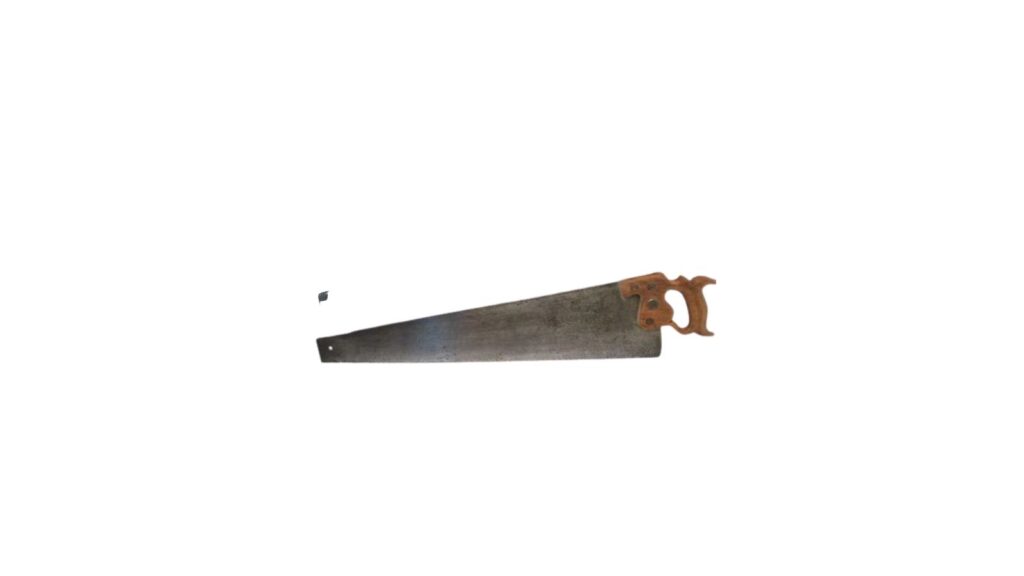
Disston No. 7 handsaw with an applewood or fruitwood handle

Disston No. 7 handsaw
Image Credit: TiqueTrader via eBay

Henry Disston built his company into the largest saw manufacturer in the world out of Philadelphia, and for generations his saws were what carpenters actually used. The No. 7 is one of the most commonly found Disston models and also one of the more consistently valued, especially when the etch is clear, the blade runs straight, and the handle is in good shape. Clean examples with strong etching and applewood or fruitwood handles typically bring $50 to $125 depending on size and point count.

What separates a valuable Disston from a worthless one is condition across three things: the blade, the etch, and the handle. The blade must be straight without kinks or bad waves. The etch, which is the decorative acid-stamped design on the blade with the maker’s name and city, needs to be legible. A ghost etch that you can barely read drops value significantly. The handle should have all its hardware, no replaced screws, and ideally be the original fruitwood without cracks through the horns. A chipped top horn is common and acceptable. A crack that runs through the grip area is not. The Disstonian Institute has a thorough reference for dating and identifying Disston saws by their medallion and etch design.

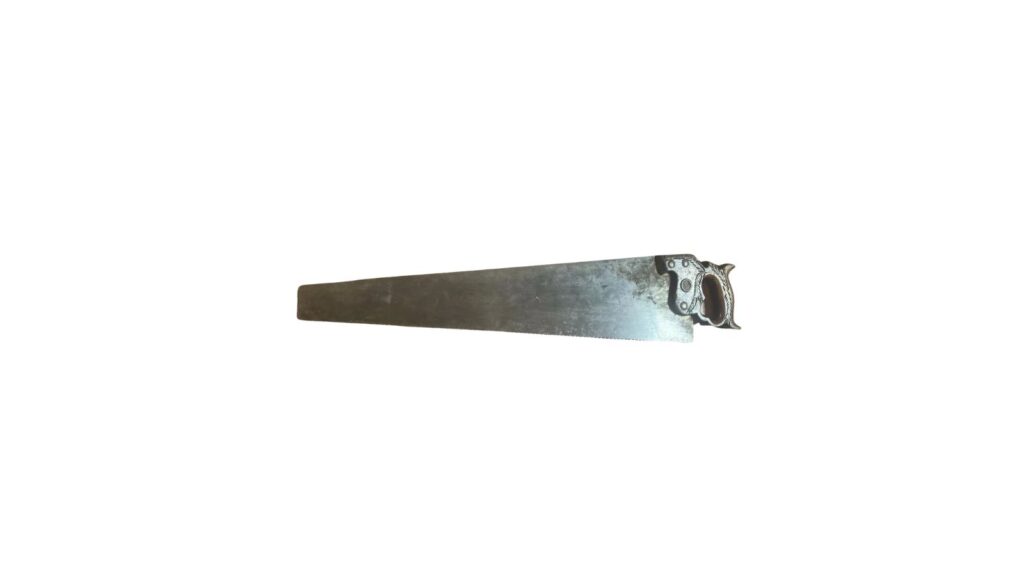
Disston No. 12 “London Spring” crosscut handsaw

Disston No. 12
Image Credit: nipesway via eBay

The No. 12 was Disston’s premium production crosscut model, made from tempered London spring steel and given a finer finish than the standard line. It is noticeably more flexible than a common crosscut, which is the point, and woodworkers sought it out for fine finish work. Nice surviving examples in 26 to 28 inches with a clear etch and an intact applewood handle typically bring $95 to $150, occasionally more in exceptional condition.

You can identify it by the “London Spring Steel” designation etched on the blade near the heel and, on older examples, a “Henry Disston & Sons” or “H. Disston & Sons” etch with the Philadelphia address. Later production marked “Disston & Morss” or simply “Disston” can look similar but commands less. The handle hardware should be original; replaced screws or a refinished handle pushes it toward user territory and away from collector interest. As with all Disstons, a kinked blade is essentially irreparable and turns an otherwise nice saw into a wall decoration.

Disston No. 43 combination handsaw

Disston No. 43 combination handsaw
Image Credit: sarenevie via eBay

This is the unusual one. The No. 43, also known as the Disston combination saw, incorporated a square, a rule, a level, and a scribe into a working handsaw. Disston marketed it as the tool you could show up to a job with when you’d forgotten everything else. Whether that was true or not, it is an extremely uncommon saw, and collectors find the novelty as appealing as the rarity. Good examples with intact vials, legible blade markings, and a solid handle regularly bring $350 to $550.

Completeness is everything here. Both level vials should be unbroken and functional. The rule markings should be legible. The handle needs all its original hardware. Any damage to the hardware or missing features drops it hard, because the whole point of this saw is that it does everything. A stripped-down No. 43 is not especially collectible, just unusual. If the vials are cracked or dry, expect the value to reflect that immediately.

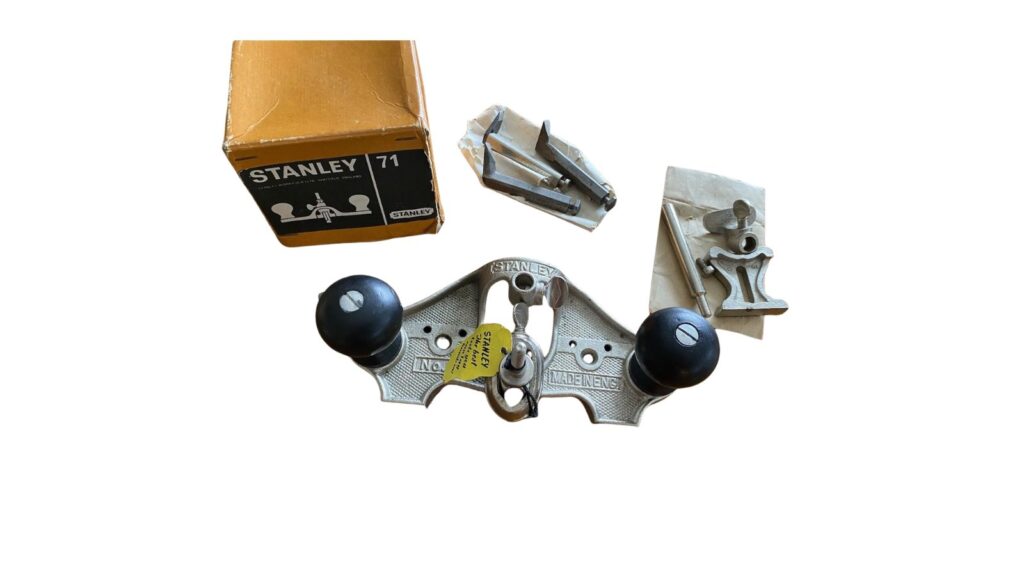
Stanley No. 71 open-throat router plane, complete

Stanley No. 71 open-throat router plane
Image Credit: kmf0725 via eBay

The No. 71 is a hand router plane, not the electric kind. It cleans and levels the bottoms of dadoes, grooves, and mortises to a precise, consistent depth, and it does this job better than almost anything made today. The fact that modern makers like Lie-Nielsen and Veritas charge $200 or more for new versions of essentially the same design tells you something about the demand. A complete vintage No. 71 with all three original cutters (1/4-inch, 1/2-inch, and V-shaped), the depth-stop assembly, and ideally the original wooden handles brings $80 to $150 in good original condition.

“Complete” is the word that matters. Missing cutters drop value significantly because they are hard to find separately. The depth stop is commonly lost as well. Check whether the fence (closed throat option) is present if the piece is the 71-1/2 variant. The plane was made from 1884 to 1973, and condition varies enormously based on how hard it was used. Light pitting on the sole is acceptable. Rust-pitted threads or a stripped cutter clamp thumbscrew are serious problems. The type and date can be identified by the logo stamped on the flat bar.

Millers Falls No. 2 eggbeater hand drill

Millers Falls No. 2 eggbeater hand drill
Image Credit: Titillating Treasures via eBay

The Millers Falls Company of Massachusetts made hand drills for over a century, and the No. 2 is the model most commonly found at flea markets, in old toolboxes, and at estate sales where someone cleaned out a basement workshop. They are small, well-made, beautifully engineered, and they actually work better than most cheap modern drill-press equivalents for fine work in wood. A No. 2 in clean original condition with a working chuck, a smooth ratchet, and its original rosewood handles typically brings $60 to $100 in good-plus to fine condition.

The things to check: the chuck should open and close cleanly without binding, the ratchet (if present) should engage properly, and the handle finish should be intact. A drill that has been cleaned with a wire wheel or buffed looks polished but is no longer collectible, only functional. The gear wheel should be free of broken or bent teeth. Millers Falls drills in original boxes bring more, so if you find one with the original pasteboard box, keep it with the tool. The Millers Falls price guide at Old Tool Heaven is the most thorough reference available for this maker.

North Brothers “Yankee” No. 1530 two-speed hand drill

No. 1530 two-speed hand drill
Image Credit: jbd1275 via eBay

The North Brothers company (later absorbed into Stanley) made a line of Yankee-brand tools that collectors actively seek out. The No. 1530 is the most collectible of the hand drills because it incorporated a two-speed transmission, allowing the user to switch between high and low gear for different materials. In practice it is a genuinely useful feature, and the engineering is elegant. Clean working examples bring $45 to $75 in good condition.

The ratchet should work in both directions, and the two-speed mechanism should shift cleanly. The handle should be tight with no cracks. These drills were popular workhorses and saw a lot of use, so expect some wear, but excessive slop in the mechanism significantly reduces desirability. Collectors prefer examples that have not been cleaned with a wire wheel or polished with a buffing compound, both of which remove the original surface and make the drill look new while actually lowering its collector value. Original condition with patina is better than polished and shiny.

Ohio Tool Co. or Auburn Tool Co. wooden moulding planes

wooden moulding plane
Image Credit: miloauk-3 via eBay

Pre-1880 American wooden moulding planes made by firms like the Ohio Tool Company of Columbus and the Auburn Tool Company of Auburn, New York are some of the most affordable interesting collectibles in the vintage tool market. Individual planes in profiles like quarter-round, ovolo, or cove typically bring $25 to $50 in good working condition. Matched pairs, where a hollow and round of the same size are together, bring more, and a complete matched set of hollows and rounds in 18 or 22 graduated sizes can reach $200 to $375 for a clean run.

These were working tools, so expect wear, but the key factors are: the wedge should be present and tight, the iron (blade) should be original and not ground away to a stub, the body should be free of cracks especially through the throat, and the maker’s stamp on the toe should be legible. Double-boxed planes (where strips of boxwood are let into the sole to protect the profile) are more desirable than unboxed. Complex profiles like ogees and coves command more than simple rounds or simple beads. The town of Auburn’s prison labor history is part of the background of this trade, and some of the finest examples in the market came from those shops.

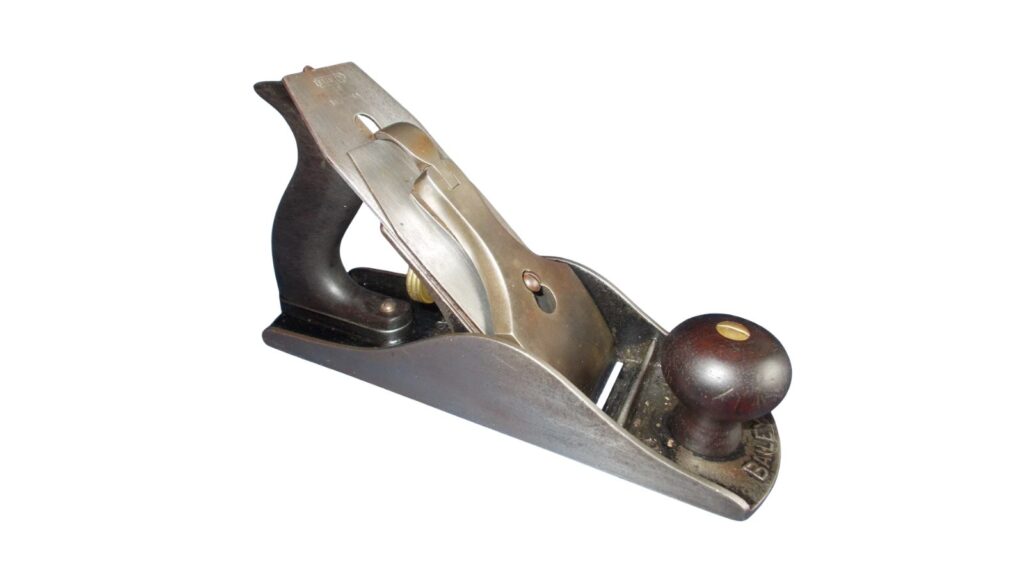
Stanley No. 4 Bailey smooth plane, Types 11-13 (c.1910-1925)

Stanley No. 4 Bailey smooth plane
Image Credit: viktru79 via eBay

The No. 4 smooth plane is the most produced and most commonly found vintage Stanley plane there is. The good news is that a specific version of it commands real money. Stanley produced its bench planes in a series of manufacturing types, and planes from roughly Type 11 through Type 13, made between about 1910 and 1925, are marked by a distinctive combination of features: large brass depth adjuster, patent date behind the frog, and on the best examples a cutter with the original “V” or “Y” logo that predates the heart-shaped Sweetheart mark. These fetch $75 to $175 in good to fine original condition.

What separates a collectible Type 11-13 from the masses of later, common planes: the original japanning (the black finish) should be at least 85 to 90 percent intact, the rosewood tote and front knob should be crack-free, and the cutter logo should be legible. A plane with a replaced cutter from a different era is still usable but less desirable. The Stanley type study at Wood and Shop is the clearest photographic tool available for figuring out what you have. A plane that has been wire-wheeled, re-japanned, or had its sole lapped aggressively has lost most of its collector value, however clean it looks. Use the type study, check the japanning, and look at the cutter logo before you decide what you have.

Stanley No. 45 combination plane with full cutter set

Stanley No. 45 combination plane with full cutter set
Image Credit: kggibbon via eBay

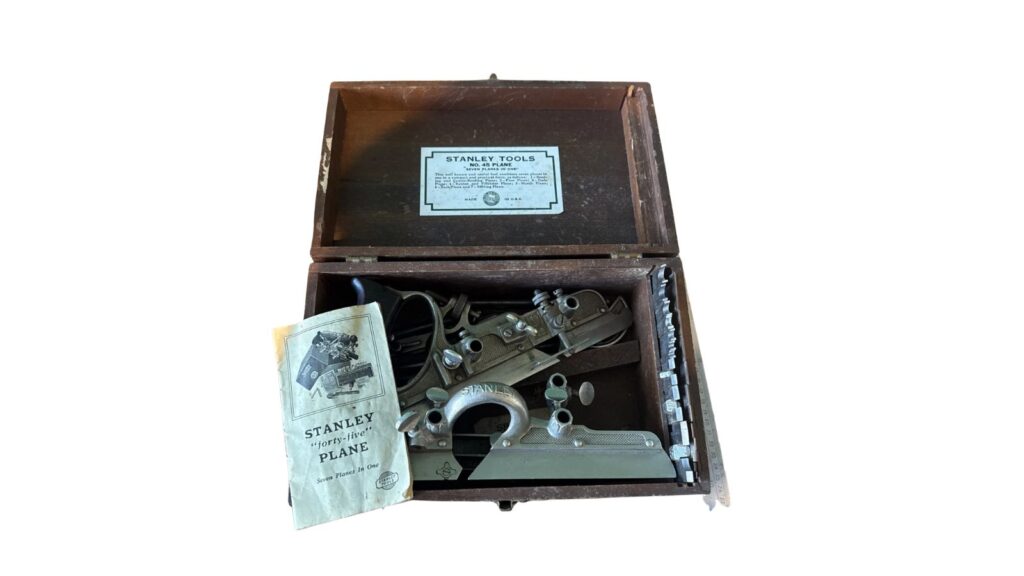
Stanley made the No. 45 from 1884 to 1962, billing it as a planing mill in a single tool. With its interchangeable cutters, adjustable fence, depth stops, and multiple skates, a properly set-up No. 45 can cut grooves, rabbets, dadoes, beads, and tongue-and-groove joints, replacing a whole cabinet of specialty wooden planes. Finding one at an estate sale is entirely realistic. Finding one complete is less so, because the parts tend to scatter over decades. A No. 45 with all its original cutters (usually 18 to 23 depending on era), both depth stops, all rods, cam rest, and slitter typically brings $175 to $425 in good to fine condition, with earlier types and Sweetheart-era examples at the higher end.

Completeness is the whole game here. Check the parts list before you buy or sell, because a plane missing several cutters or the fence rods is frustrating and noticeably less valuable. The fence rods are particularly likely to be absent. The cutter box (a wooden carrier for the cutters) is often gone. Earlier types with the floral “B” casting and a complete set of cutters in their original wooden box are worth significantly more than a later type with half its cutters loose in a bag. The plane was made in such numbers that it is not rare, but a genuinely complete example in fine condition is harder to find than you’d expect.

Stanley Bedrock No. 605 jack plane

Stanley Bedrock No. 605 jack plane
Image Credit: Whitney House Antiques Tool Shop via eBay

The Bedrock line was Stanley’s top-of-the-line bench plane series, produced from about 1898 to the start of World War II. The difference between a Bedrock and a standard Bailey plane is the frog design: on a Bedrock, the frog mates with the body through a precision-machined track, eliminating any gap between the two and making blade adjustments more stable and accurate. Modern plane makers like Lie-Nielsen use the same basic design. The No. 605 is the jack plane size, and a clean, crack-free example in good to fine condition brings $150 to $475 depending on type and condition.

The japanning on Bedrock planes needs to be substantially intact for full collector value. The tote should be crack-free. The lever cap should have its “Bedrock” marking, and the cutter logo should be from the proper era for the plane. Any Bedrock that has been re-japanned loses much of its value even if the work was done well. Later Bedrock “Type 8” or “Type 9” planes from just before WWII are substantially less valuable than earlier Type 3 through 6 examples. The type study for Bedrocks follows the same logic as the Bailey planes, and the castings changed meaningfully over the production run.

Stanley No. 2C corrugated smooth plane (aspirational find)

Stanley No. 2C corrugated smooth plane
Image Credit: lugefish via eBay

The standard No. 2 smooth plane is already hard to find in decent condition, and the No. 2C, a corrugated-sole version with parallel grooves running the length of the sole, is considered by some collectors to be rarer and harder to find than the legendary No. 1. Stanley offered the corrugated option on many planes to reduce friction in use, and on the No. 2 size that option was made in small numbers. Clean examples bring $395 to $650 in good-plus condition, with Sweetheart-era versions at the upper end.

The corrugations themselves are a point of caution: fakes exist. Unscrupulous sellers have had grooves machined into smooth-bottom No. 2 planes to pass them off as corrugated examples. The way to check is by examining the corrugations carefully under good light. Original Stanley corrugations run lengthwise, are perfectly parallel, stop before the toe and heel of the sole, and terminate in a pointed fashion. Shop-made fake grooves look cruder and often run all the way to the edges. This is a plane where a reference like Patrick Leach’s Stanley guide is worth reading before you hand over significant money.

Stanley No. 1 smooth plane (grail)

Stanley No. 1 smooth plane
Image Credit: ntservices09 via eBay

The No. 1 is the holy grail of Stanley plane collecting. At just 5-1/2 inches long with a 1-1/8-inch iron, it is barely large enough to hold in an adult hand, and Stanley never made it in large numbers because there was limited practical use for it. The collecting community’s love for it is equal parts scarcity, history, and the irresistible absurdity of a perfectly proportioned little bench plane that costs more than a good used car payment. In good-plus to fine original condition, the No. 1 brings $800 to $1,800, with exceptional Type 1 and early type examples pushing significantly beyond that.

The plane has been reproduced, and the reproduction is detectable: the most reliable tell is the threaded rod on which the depth-adjustment nut rides. On a genuine No. 1, this rod runs perfectly parallel to the sole. On known reproductions, it is angled slightly upward toward the tote. Beyond that, the usual condition factors apply: original japanning at 90 percent or better, rosewood tote and knob intact and crack-free, full-length original cutter with legible logo. A genuinely fine original No. 1 is a once-in-a-lifetime find. A common No. 1 in rough shape still brings several hundred dollars, which should tell you something about the market.

The rent is paid, the groceries are covered, and there’s a little left over at the end of the month. Things feel basically fine. And then the car needs tires, or the kid breaks a tooth, and suddenly “basically fine” turns into a scramble. For millions of households, the problem isn’t just the emergency itself. It’s that small, invisible leaks have been draining the budget for years without anyone noticing.

Most money mistakes don’t feel like mistakes when they’re happening. They feel like convenience, or inertia, or just the way things work. The subscription renews, the minimum payment clears, the overdraft gets covered. Life moves on. But these are the habits that silently move money out of your family’s pocket and into someone else’s, month after month.

Some of these mistakes cost $30 a year. Some cost $3,000. All of them are fixable once you know to look.

Only making minimum credit card payments

man stressed about credit card balance
Image Credit: Shutterstock

The average American carrying a credit card balance owes $7,886 on those cards, and the average interest rate on accounts currently carrying a balance is 22.30% APR as of Q4 2025, per Federal Reserve data. At that rate, making only the minimum payment on a $5,000 balance would take about 23 years to pay off and cost roughly $7,723 in interest alone, according to Bankrate’s calculator. That’s more than you originally borrowed.

Minimum payments are designed to feel manageable. A $7,000 balance might generate a minimum payment of $140 or so. That feels fine. What doesn’t feel fine is the part the statement doesn’t emphasize: the bulk of that payment is going to interest, and the actual balance is barely moving. The card company wins every month you stay in that cycle.

If you’re carrying balances across multiple cards, look into a 0% balance transfer offer and make a real payoff plan. Even paying $50 or $100 more per month than the minimum will cut years off the timeline and save hundreds or thousands in interest.

No emergency fund

emergency fund
Image Credit: diwdom5355 via Freepik

Nearly one in four Americans has no emergency savings at all, and more than two in five people said they couldn’t cover an unexpected $1,000 expense with savings, according to Bankrate’s 2026 Emergency Savings Report. That means a single car repair, a trip to urgent care, or one missed paycheck is enough to send the household to a credit card or a payday lender, where the cost of borrowing is punishing.

The three-to-six-months guideline for emergency savings exists because most real emergencies don’t resolve in a week. A job loss, a health issue, a major repair: these situations tend to unfold over time. The goal isn’t to build the whole fund at once. It’s to start with something, even $500 or $1,000, that creates a buffer between a bad day and debt.

If your savings account earns next to nothing, consider moving your emergency fund to a high-yield savings account, where online banks have been offering rates significantly above what traditional banks pay. The money stays accessible but it grows while it sits.

Paying for subscriptions you’ve forgotten about

checking subscriptions
Image Credit: Shutterstock

The average household pays around $219 per month on subscriptions, but when asked to estimate their own spending, most people guess closer to $86. That gap reflects a specific problem: subscription billing is designed to be forgettable. Monthly charges blend into a bank statement. Free trials convert to paid plans. An app you downloaded once keeps quietly billing you.

The number isn’t just the streaming services. It’s gym memberships, meal kit trials, premium software tiers, cloud storage upgrades, fitness apps, and news subscriptions that got added one at a time until the total crept past a number that would have given you pause. Go through your last two months of bank and credit card statements and flag every recurring charge. You’ll likely find at least one or two you’d completely forgotten.

Cancel what you’re not actively using. Rotate streaming services rather than running them all simultaneously. Some employers and cell carriers also bundle subscriptions as perks worth checking, and some credit cards offer free streaming or other services that could replace a paid account.

Missing your employer’s 401k match

401K on wooden blocks
Image Credit: Shutterstock

One in four workers who have access to a 401k with an employer match don’t contribute enough to get the full match, according to research from SHRM. That’s free money, left on the table. If your employer matches 50% of the first 6% of your salary, and you’re contributing only 3%, you’re handing back half of an available benefit.

The math on this is stark. A household earning $60,000 where the employer matches up to 3% of salary is potentially walking away from $1,800 per year in employer contributions. Over 20 years, with investment growth, that gap compounds into a meaningful retirement shortfall. The match is part of your compensation, the same as your salary or health benefits, except this part is optional to collect.

If tight cash flow is the issue, start by contributing just enough to capture the full match, then increase contributions by 1% each year, often timed to a raise. Many plans let you automate these increases so you don’t have to think about it.

Paying overdraft fees

Missing jigsaw puzzle with text OVERDRAFT isolated on a red background
Image Credit: Shutterstock

Americans paid an estimated $12.1 billion in overdraft and nonsufficient funds fees in 2024, with the average overdraft fee running around $27. These fees hit hardest at the people who can least afford them: households earning between $25,000 and $50,000 are almost three times as likely to be charged overdraft fees as households earning over $100,000.

Most overdraft fees happen on small transactions, a debit card purchase of $20 or $30 that tips an account slightly negative, often because a recurring charge hit at an inconvenient moment. The timing mismatch between when bills post and when paychecks clear is responsible for a lot of overdrafts that have nothing to do with reckless spending.

Several banks now offer no-overdraft-fee accounts or small buffers before fees kick in. Setting up low-balance alerts through your banking app can also prevent most overdrafts before they happen. If you’re regularly triggering fees, that’s a signal worth addressing directly, either through a banking switch or a small buffer cushion kept in checking.

Staying with the same car insurance company year after year

car insurance claim form
Image Credit: Shutterstock

The average full-coverage car insurance premium hit $2,679 per year in 2025, up more than 30% since 2023. Insurers calculate rates based on actuarial tables that change constantly, but many policyholders never renegotiate or shop around. Among those who did switch carriers in Consumer Reports’ 2024 survey of more than 40,000 policyholders, the median annual savings was $461.

Loyalty to an insurance company is not something that company typically rewards in kind. Insurers often reserve their best rates for new customers. Meanwhile, if you’ve had a birthday, changed your commute, paid off a car loan, or simply let a few years pass since your last price check, your current rate may not reflect your actual risk profile anymore.

Get quotes from at least three companies every year or two. Comparison sites make this faster than it used to be. Also ask about discounts for bundling home and auto, installing a dashcam, or enrolling in a usage-based monitoring program, many of which offer meaningful savings for low-mileage drivers.

Not claiming the Earned Income Tax Credit

working out Earned Income Tax Credit
Image Credit: Shutterstock

About one in five eligible taxpayers never claims the Earned Income Tax Credit, and the credit averaged $2,916 for 2024 returns. For families with three or more qualifying children, the maximum EITC for 2025 is $8,046. This is a fully refundable credit, meaning you can receive it as a cash refund even if you owe no federal taxes.

The EITC is aimed at working households with low to moderate incomes. For 2025, single filers with no children can qualify with income up to $19,104. The limit rises significantly with children, reaching $68,675 for married couples with three or more kids. Gig workers, freelancers, and people with self-employment income are eligible if their earned income falls within the thresholds. The most common reason people miss it is simply not knowing they qualify.

If you’re unsure, the IRS EITC eligibility tool walks you through the criteria in a few minutes. If you missed the credit in previous years, you can generally claim it on amended returns going back three years.

Losing FSA money to the use-it-or-lose-it rule

FSA written on wooden tiles and money
Image Credit: Shutterstock

A health care Flexible Spending Account is a useful benefit: you contribute pre-tax dollars, reducing your taxable income, then use the funds for out-of-pocket medical expenses. The problem is the deadline. Money left in your FSA at the end of the plan year (usually December 31) is forfeited, and it goes back to your employer. About 47% of FSA holders forfeited money in 2023, with an average forfeiture of $422 per account.

Most people lose money because they overestimated how much they’d spend or put off expenses until it was too late to run through the balance. Some employers offer a short grace period through March 15 of the following year, or allow a small rollover, but neither is required and not all plans include them. If you don’t know your plan’s rules, assume the hard December 31 deadline applies and plan accordingly.

Eligible expenses are broader than most people realize. Prescription glasses, dental work, physical therapy, mental health copays, and a wide range of over-the-counter medications and products all qualify. Check your balance in October or November each year and schedule anything you’ve been putting off.

Keeping savings in a low-yield account

putting savings in a piggy bank
Image Credit: Shutterstock

The national average interest rate on regular savings accounts at traditional banks sits around 0.5%, while high-yield savings accounts at online banks have been offering rates several times higher. On a $10,000 emergency fund, the difference between 0.5% and 4.5% is $400 per year in interest, for doing absolutely nothing differently except choosing a different account.

For most people, the barrier is inertia. Savings accounts opened years ago at the same bank as a checking account just sit there, collecting almost nothing, because switching feels like a project. Online high-yield accounts are FDIC insured the same way traditional accounts are. The money is just as accessible. The main difference is that you earn meaningfully more while it sits.

The gap between account types matters more when balances are larger, but even households with modest savings benefit from the switch. It takes about 20 minutes to open a high-yield savings account, and the rate difference compounds over time in your favor rather than the bank’s.

Not reading your medical bills

final notice on a medical bill
Image Credit: Shutterstock

It’s estimated that up to 80% of medical bills contain errors. Most patients pay whatever number appears on the statement without reviewing it, partly because the bills are confusing and partly because the system isn’t designed to make errors obvious. One survey found that the average hospital bill over $10,000 contains around $1,300 in overcharges.

Common billing errors include duplicate charges for the same service, charges for care you didn’t receive, incorrect insurance application, and coding mistakes that result in higher cost categories than the actual procedure warrants. These aren’t usually the result of fraud. They’re often data entry errors or coding mismatches in a billing process that runs largely on autopilot.

Always request an itemized bill from any provider. Compare the charges line by line against the explanation of benefits your insurance company sends. If something doesn’t match what you remember receiving, call the billing office and ask for clarification. Errors get corrected regularly when patients push back, but almost never when they don’t.

Buying a new car instead of a used one

buying a new car
Image Credit: Shutterstock

A new car loses a significant portion of its value the moment it leaves the lot, with the steepest depreciation coming in the first two to three years of ownership. A three-year-old vehicle with 30,000 miles on it often costs 30 to 40% less than the same model new, while typically still having most of its useful life ahead of it and remaining under a certified pre-owned warranty.

The appeal of a new car is real: fresh warranty, no unknown history, the version with the latest features. But for families buying in a tight budget, the extra premium for new versus a well-maintained used vehicle often doesn’t make financial sense when spread over the ownership period. A $35,000 new car versus a $22,000 comparable used one is a $13,000 gap that shows up directly in your monthly payment and total interest paid.

If buying used feels risky, certified pre-owned programs through manufacturers offer a middle ground: a used vehicle with a manufacturer-backed warranty that substantially reduces the uncertainty. Independent mechanics can inspect any used vehicle purchase before signing for a modest fee.

Continuing to pay PMI after you hit 20% equity

Private mortgage insurance
Image Credit: Shutterstock

Private mortgage insurance, or PMI, is typically required when a buyer puts down less than 20% on a conventional home purchase. It’s charged to protect the lender if the borrower defaults, and it benefits the homeowner exactly zero. Once your loan balance drops to 80% of the home’s original appraised value, you can request that the lender cancel your PMI. At 78%, federal law requires most lenders to cancel it automatically.

The problem is that many homeowners never request the cancellation at 80%, either because they don’t know it’s an option or because the cancellation isn’t automatic until 78%. PMI typically costs 0.5% to 1.5% of the original loan amount per year. On a $300,000 mortgage, that’s $1,500 to $4,500 per year in charges that stop being necessary the moment your equity crosses a threshold you may have already passed.

If your home has also appreciated since purchase, your current equity may be well above what the original amortization schedule suggests. In that case, you can request a new appraisal and ask your lender to remove PMI based on current market value rather than just the original purchase price, potentially saving years of payments.

Relying only on your workplace life insurance

man looking at life insurance policy
Image Credit: Shutterstock

Most employer-sponsored life insurance policies provide one to two times your annual salary in coverage. For a household with a mortgage, kids, and one primary earner, that rarely comes close to what survivors would actually need to maintain their financial footing. Financial planners commonly recommend coverage of ten to twelve times your income.

The other issue with workplace coverage is portability. If you change jobs or get laid off, the policy typically doesn’t come with you. The period after a job loss is often exactly when having life insurance matters most, and it’s also when buying a new individual policy is most difficult if your health has changed in the meantime.

Individual term life insurance is significantly cheaper than most people expect, particularly for younger and healthier applicants. A $500,000 20-year term policy for a healthy person in their 30s can cost less than $30 per month. Getting a standalone policy while you’re still in good health locks in that rate regardless of what happens with your employment or health later.

Missing government assistance programs you qualify for

SNAP
Image Credit: United States Department of Agriculture, Public domain, via Wikimedia Commons

SNAP, Medicaid, the Children’s Health Insurance Program, the Low Income Home Energy Assistance Program, and dozens of other federal and state programs exist specifically for working families under income thresholds. Many of those families don’t apply, sometimes because of stigma, sometimes because the process seems complicated, and sometimes because they genuinely don’t know they qualify.

Income limits for programs like SNAP are higher than most people assume. A family of four can qualify with a gross monthly income up to 130% of the federal poverty level, which works out to roughly $40,000 per year for a family that size. Part-time workers, households with recent income changes, and people who work seasonally frequently qualify and never check.

The nonprofit Benefits.gov allows households to check eligibility across multiple programs in a single session. Many local community action agencies also offer free benefits screening. If your family has experienced any income change in the past year, including a job loss, a reduction in hours, or a change in household size, it’s worth running through the eligibility check.

Paying for extended warranties on things that probably won’t break

extended warranty and bank notes
Image Credit: Shutterstock

Extended warranties are high-margin products for the retailers and manufacturers that sell them, and low-value products for most of the consumers who buy them. Studies consistently show that the average consumer pays significantly more in warranty premiums over time than they recover in warranty claims. The exception is for specific high-failure-rate electronics or appliances with a documented reliability problem.

Two other things worth checking before buying any extended warranty: many major credit cards automatically extend the manufacturer’s warranty on purchases made with that card by one or two years. You may already have coverage you’re not using. Homeowners insurance and renters insurance also cover certain electronics and appliances in cases of specific perils.

If a retailer’s checkout screen is pushing hard for an extended warranty, that’s usually a signal about the retailer’s margin structure, not the product’s reliability. Read the actual failure rate data for any major appliance purchase, and skip the warranty if the manufacturer’s coverage is solid and your credit card backstops it.

Letting food delivery apps become a budget line item

food delivery outside door
Image Credit: Shutterstock

A $15 restaurant order placed through a delivery app doesn’t cost $15. It costs the menu price, plus a delivery fee, plus a service fee, plus a tip, and possibly a small-order fee. A meal that would run $15 picked up directly from the restaurant can easily total $30 to $35 by the time it arrives at your door. For families using these apps multiple times per week, the real annual cost often runs into thousands of dollars.

The apps make the total cost difficult to see clearly. Fees are disclosed individually in a way that de-emphasizes the sum, and the convenience factor does real work on decision-making when you’re tired and it’s 6pm. That’s not an accident. These platforms are engineered to reduce friction at exactly the moment when cost-sensitivity is lowest.

This isn’t about never ordering delivery. It’s about treating it the same way you’d treat any discretionary category: set a monthly number, track what you’re actually spending, and make the decision intentionally rather than by default. Many families who’ve audited this category find the actual monthly number is two or three times what they thought they were spending.

Not checking your credit report

poor credit score report
Image Credit: Shutterstock

Every American is entitled to a free credit report from each of the three major bureaus once per year through AnnualCreditReport.com. Errors on credit reports are more common than most people realize, and those errors can affect the interest rate you’re offered on a car loan, a mortgage, or a credit card. An incorrect late payment, an account that belongs to someone else, or outdated information about a debt you’ve already paid off can quietly cost you money for years.

Identity theft often shows up in credit reports before the person affected notices anything else. A new account you didn’t open, an address you’ve never lived at, or an inquiry from a lender you’ve never contacted are all warning signs. Catching these early significantly limits the damage.

The current access is actually better than it used to be: the three bureaus now allow free weekly checks through AnnualCreditReport.com rather than just annually. You don’t need to pay for credit monitoring to do this. Dispute any errors you find directly with the bureau in writing. The bureau is required by law to investigate within 30 days.

Paying for tax preparation when free options exist

preparing taxes
Image Credit: Shutterstock

The IRS Free File program offers free federal tax preparation software to households earning under $89,000 per year, which covers roughly 70% of all taxpayers. For households with very simple returns, Free File Fillable Forms are available to all taxpayers at any income level. Many people pay $100 to $300 per year for tax software or professional preparation on returns that a free tool handles easily.

The paid options aren’t always wrong. A complex return with multiple income sources, rental property, business income, or significant investment activity may genuinely benefit from professional help. But for a W-2 household claiming standard deductions and maybe a dependent or two, the free tools are more than adequate and the output is identical.

VITA, the Volunteer Income Tax Assistance program run by the IRS, provides free in-person tax help for households earning under $69,000. These are IRS-certified preparers who handle returns for free, including situations that might seem complicated, like a side gig or a new dependent. Finding a VITA location takes about two minutes on the IRS website.

Skipping the annual open enrollment review

employer benefit
Image Credit: Shutterstock

Open enrollment happens once a year for most employer benefit plans, and most people click through it in ten minutes without changing anything. That approach works fine in stable years. In years when your health needs have changed, your family size has shifted, or your income has moved up or down, staying on autopilot means you might be paying more than necessary for coverage you don’t need or, worse, carrying insufficient coverage for what’s actually going on in your life.

Beyond health insurance, open enrollment is when HSA contributions can be set or adjusted, when FSA elections reset, when life insurance supplemental coverage can be added, and when disability insurance options appear. Most employees with access to an HSA don’t max it out, which means leaving a tax-advantaged vehicle partially unused. For 2025, individuals can contribute up to $4,300 to an HSA, and any unused balance rolls over year after year with no deadline.

Spend 30 minutes reviewing your actual health care spending from the previous year before you make your elections. Compare the premium difference between plan tiers against the out-of-pocket maximum for each. If you’re generally healthy and rarely use your insurance, a high-deductible plan paired with an HSA often saves money over a low-deductible plan with higher premiums, but running those numbers takes more than a quick click through the enrollment screen.

Most of these mistakes share a common mechanism: they’re invisible until you look directly at them. No single one of them is going to feel urgent on any given day. But the ones running quietly in the background, the forgotten subscription, the minimum payment, the FSA deadline that passed unnoticed, are collectively doing real damage to a family’s financial position. Finding even two or three of them and fixing them changes the math.

Money-saving tips on Wealthy Single Mommy:

saving money
Image Credit: Shutterstock

Free cars for low-income families: If you are struggling financially, read on to find ways to get the transportation you need.

Housing for single moms: free or affordable options now: In this post, we share the options available to you if you’re low income in need of housing.

Help with Christmas: free gifts and resources for low-income families: This is the updated list of organizations that help financially struggling families get free Christmas toys for their kids.

If you’re the person who opens the panel, checks the leak, listens for the weird sound, or wants to know why the machine stopped, that skill can pay better than a lot of office jobs.

The job market feels strange right now. Some white-collar jobs are shaky, and plenty of “easy remote work” is crowded. Hands-on repair work is different because broken systems still need a real person with tools, judgment, and nerve.

These jobs are specific, practical, and built around fixing real things. Most pay at least around $30 an hour, and many can go much higher with licenses, overtime, travel, union work, or specialty training.

1. Wind turbine service technician

Wind turbine service technician
Image Credit: Shutterstock

Wind turbine service technicians climb towers, inspect blades, replace worn parts, troubleshoot electrical faults, and keep turbines producing power. It is not a calm little repair job in a shop. You’re working high above the ground, often in heat, cold, and wind, with safety gear and a tight checklist.

Median pay is $62,580 per year, and the field is one of the fastest-growing hands-on careers. That makes it a strong fit for people who want repair work that feels modern without being stuck at a desk.

Most people start with a technical school program or wind energy certificate, then get on-the-job training. If you like electrical systems, mechanical problems, and work that changes from day to day, this is a real option. The machines are remote, dangerous, and expensive, which keeps skilled techs valuable.

2. Elevator and escalator installer and repairer

repairing an elevator
Image Credit: Shutterstock

Elevator and escalator repair is for people who like puzzles with real pressure attached. You work on motors, cables, hydraulics, controls, brakes, doors, sensors, and safety systems. When an elevator stops working in a hospital, office tower, apartment building, or airport, people notice fast.

Median pay is $106,580 per year, which is why this trade is so competitive. The work usually starts with a paid apprenticeship, and licensing rules are common because safety matters so much.

This is not a quick-entry job, but it is one of the best-paying fix-it careers around. It rewards people who are patient, careful, and not afraid of heights, cramped spaces, or after-hours calls. Buildings keep getting taller and older systems still need modernization, so good repair techs stay needed.

3. Aircraft maintenance technician

Aircraft maintenance technician
Image Credit: Shutterstock

Aircraft maintenance technicians inspect and repair planes before they carry passengers, cargo, or medical crews. You may work on engines, landing gear, fuel systems, brakes, controls, and warning systems. It takes a detail-heavy mind because small mistakes can become serious fast.

Median pay for aircraft mechanics and service technicians is $78,680 per year. Many people train through aviation maintenance schools, military experience, or employer-backed paths that lead toward federal certification.

This job fits people who like machines but want more precision than a typical garage role. Airlines, repair stations, manufacturers, cargo carriers, and charter operators all need mechanics. Software can flag problems, but someone still has to inspect the aircraft, turn the wrench, sign off the repair, and stand behind the work.

4. Avionics technician

Avionics technician
Image Credit: Shutterstock

Avionics technicians fix the electronic systems that help aircraft navigate, communicate, monitor weather, and operate safely. You may troubleshoot radar, radios, autopilot systems, displays, wiring, sensors, and flight-control electronics. It is a good fit if you like electronics more than engines, but still want hands-on work.

Median pay is $81,390 per year. Many workers come through aviation maintenance programs, electronics training, military avionics experience, or specialized certifications.

Planes are only getting more electronic, which keeps this work important. Avionics techs work for airlines, repair stations, manufacturers, defense contractors, cargo operators, and private aviation companies. This role calls for patience, clean documentation, and the ability to trace a fault through a maze of wires and signals.

5. Medical equipment repairer

Medical equipment repairer
Image Credit: Shutterstock

Medical equipment repairers, often called biomedical equipment technicians, fix the machines hospitals and clinics count on every day. That can mean patient monitors, infusion pumps, imaging equipment, electric beds, sterilizers, wheelchairs, and lab devices. When a machine is down, patient care can slow down with it.

Median pay is $62,630 per year. Entry paths vary, but many workers have an associate degree, military electronics training, manufacturer training, or experience repairing electronics and mechanical systems.

This is a smart repair career for someone who wants purpose without becoming a nurse or doctor. Hospitals, clinics, equipment makers, and service contractors all need people who can keep medical devices safe and running. The work is too physical, regulated, and patient-adjacent to hand off to software.

6. Industrial machinery mechanic

Industrial machinery mechanic
Image Credit: Shutterstock

Industrial machinery mechanics repair the equipment that keeps factories, food plants, warehouses, and production lines moving. You may replace bearings, align belts, fix pumps, adjust sensors, troubleshoot motors, and figure out why a machine keeps shutting down at the worst possible time.

Median pay for this group is $63,510 per year, and job growth is projected to be much faster than average. That is a solid sign for people who want hands-on work with steady demand.

This job often starts with trade school, mechanical experience, military maintenance, or a paid trainee role. It suits people who like noise, motion, tools, and solving problems under pressure. More automation in factories can actually help this role, because somebody has to repair the automated equipment when it fails.

7. Millwright

Industrial machinery mechanic and millwright
Image Credit: Shutterstock

Millwrights install, move, repair, and align heavy industrial machines. This is a bigger, more rugged cousin of general machinery repair. You might work with turbines, conveyors, compressors, robotic production cells, packaging lines, or massive equipment that has to be placed within tight tolerances.

Median pay for millwrights is $65,170 per year. Many workers train through apprenticeships, union programs, industrial maintenance certificates, or years of shop-floor mechanical work.

This is a strong fit if you like solving physical problems and do not mind hard work. Millwrights show up in manufacturing plants, power facilities, refineries, construction sites, and large equipment repair firms. The job is hands-on, technical, and hard to fake, because the machine either runs right or it doesn’t.

8. Electrical power-line installer and repairer

Electrical power-line installer and repairer
Image credit: Heri Susilo via Unsplash

Power-line repairers build and fix the lines that carry electricity to homes, businesses, hospitals, and factories. The work can mean climbing poles, working from bucket trucks, replacing transformers, repairing storm damage, and handling high-voltage systems where shortcuts are not an option.

Median pay is $92,560 per year, and the occupation is projected to grow faster than average. Overtime and emergency work can push earnings higher, but the trade is physically demanding and risky.

Most people enter through line schools, utility training programs, or apprenticeships. This job fits people who can follow safety rules, handle heights, and work outside in rough conditions. The grid needs constant repair, upgrades, and storm response, so skilled lineworkers remain hard to replace.

9. Substation and relay repair technician

Substation and relay repair technician
Image Credit: Shutterstock

Substation and relay repair technicians work on the hidden electrical systems that keep power flowing. They inspect, test, repair, and maintain relays, breakers, transformers, panels, and other equipment inside substations and power facilities. It is cleaner than some trades, but the voltage is serious.

Median pay is $100,940 per year. Many workers build up from electrical work, utility maintenance, military power systems, or electronics training, then add employer-specific and safety training.

This is a good path for someone who likes electrical troubleshooting but wants a specialty beyond basic wiring. Utilities, contractors, power plants, and industrial facilities need these workers because grid equipment must be tested and repaired on a schedule. The job depends on judgment, field testing, and careful hands, not guesswork.

10. Signal and track switch repairer

Signal and track switch repairer
Image Credit: Shutterstock

Signal and track switch repairers keep rail systems moving safely. They install, inspect, and repair the signals, switches, gates, circuits, and control systems that tell trains where to go and when to stop. When something fails, delays pile up quickly.

Median pay is $83,600 per year. Workers usually need a high school diploma or equivalent, then get technical and on-the-job training through railroads, transit agencies, or contractors.

This is a niche fix-it job that many people never think about. It can involve outdoor work, odd hours, and safety rules that have to be followed exactly. Rail and transit systems rely on these repairs because a bad signal is not just annoying. It can shut down service or create real danger.

11. Control and valve repairer

Control and valve repairer
Image Credit: Shutterstock

Control and valve repairers work on the parts that manage pressure, flow, steam, gas, water, and chemicals. You might repair valves in a water plant, refinery, power plant, pipeline system, factory, or large building. The job is part mechanical repair, part safety work, and part detective work.

Median pay is $74,690 per year. Many workers come in through industrial maintenance, pipefitting, instrumentation, military mechanical work, or employer training.

This job is a good match if you like taking apart stubborn equipment and understanding how systems move. It is also more specialized than many trades, which can help your earning power. Facilities cannot ignore leaking, stuck, or misreading valves, especially when pressure, chemicals, heat, or public utilities are involved.

12. Automation controls technician

Automation controls technician
Image Credit: Sutterstock

Automation controls technicians fix the sensors, panels, drives, programmable controllers, and wiring that run modern production lines. When a conveyor, robot cell, packaging machine, or warehouse system stops, these techs trace the fault and get things moving again.

Average pay for an automation controls technician I is $79,500 per year. Training may come through mechatronics programs, electrical certificates, industrial maintenance work, military experience, or manufacturer classes.

This is one of the better fix-it paths for people who like both tools and screens. You still need to be on-site, reading panels, checking sensors, and testing equipment. As more workplaces add automation, the people who can repair those systems become more important, not less.

13. CNC field service technician

CNC field service technician
Image Credit: Shutterstock

CNC field service technicians repair computer-controlled machines used to cut metal, plastic, wood, and aerospace parts. The work can include diagnosing spindle problems, replacing drives, checking servo motors, calibrating machine axes, and helping shops get expensive equipment back online.

Average pay for a CNC field service engineer is $106,539 per year. Some employers use “engineer” in the title even when the path is more about technical training, manufacturer experience, and strong troubleshooting skills than a four-year engineering degree.

This job often involves travel, customer sites, and high-pressure repairs. It is a great fit if you like machines, electronics, and problem-solving with a customer watching. Machine shops, manufacturers, and equipment makers need field techs because downtime costs real money every hour.

14. Data center support technician

Data center support technician
Image Credit: Shutterstock

Data center support technicians keep servers, storage equipment, cables, racks, and network hardware running inside the buildings that power cloud services, streaming, banking, shopping, and business systems. You may replace failed parts, trace cable issues, test connections, and respond to hardware alerts.

Average pay is $80,879 per year. Entry paths often include computer hardware experience, networking certificates, military tech work, or hands-on IT support.

This is a good repair job for someone who likes technology but does not want a fully desk-bound role. Data centers are growing because companies need more computing power, and the hardware still lives in real buildings. When a server rack fails, someone has to walk the floor and fix it.

15. Fire alarm service technician

Fire alarm service technician
Image Credit: Shutterstock

Fire alarm service technicians install, inspect, test, and repair alarm panels, smoke detectors, pull stations, strobes, horns, wiring, and sprinkler monitoring systems. The work is detailed because these systems are tied to building safety, inspections, and emergency response.

Average pay is $73,413 per year. Many techs start through low-voltage electrical work, alarm companies, trade school, or manufacturer training, then add fire alarm certifications as they gain experience.

This is a strong niche for people who like wiring and troubleshooting but do not want to become a full electrician. Schools, hospitals, apartments, warehouses, offices, and factories all need fire alarm systems tested and repaired. Code requirements keep the work steady, and a failed inspection usually needs a human tech fast.

16. Marine diesel mechanic

Marine diesel mechanic
Image Credit: Shutterstock

Marine diesel mechanics repair engines and related systems on boats, work vessels, ferries, fishing boats, tugboats, and other marine equipment. You may troubleshoot fuel systems, cooling systems, transmissions, electrical faults, and engines that have been abused by salt, vibration, and long hours.

Average pay is $30 per hour. Training can come through diesel programs, marine technician schools, military engine work, apprenticeships, or years of hands-on shop experience.

This job is not as obvious as auto repair, but it can be a better fit for people who like engines and want a specialty. Marinas, commercial fleets, ports, repair yards, and equipment dealers need mechanics who understand marine systems. Boats do not fix themselves, and engine failures can strand people or stop paid work cold.

17. Electric vehicle technician

Electric vehicle technician
Image Credit: Shutterstock

Electric vehicle technicians diagnose and repair EV systems, including battery packs, charging issues, cooling systems, electronics, drivetrains, sensors, and software-connected components. This is not old-school car repair with a new badge. High-voltage safety and electronics matter a lot.

Average pay is $61,920 per year. Many workers start as auto technicians, electrical trainees, fleet mechanics, or dealership techs, then add EV-specific training and high-voltage safety credentials.

This job is a good fit if you like cars but see where the market is going. Fleets, dealerships, repair shops, charging companies, and manufacturers all need people who can safely work on electric vehicles. Diagnostic software helps, but someone still has to confirm the fault and make the repair.

18. Rope access repair technician

Rope access repair technician
Image Credit: Shutterstock

Rope access repair technicians use climbing systems to reach places where lifts, scaffolds, or cranes are expensive or impossible. They may inspect and repair wind turbines, bridges, tanks, towers, industrial stacks, stadiums, ships, or high-rise equipment. It is physical, high-focus work.

Average pay for rope access work is $80,179 per year. Getting in usually means rope access certification plus another useful skill, such as welding, inspection, blade repair, mechanical repair, painting, rigging, or industrial maintenance.

This is one of the more unusual fix-it jobs on the list, and it is not for everyone. You need calm nerves, strict safety habits, and comfort working at height. But for the right person, it turns repair work into a specialty that many crews cannot handle without you.

Discover job hunting tips, ways to earn more, and flexible working options:

Practising job interview
Image Credit: Shutterstock

21 high-paying careers that desperately need workers, but nobody wants to do them: The pay is generous, but these jobs are searching for workers.

No background check jobs: 12 background friendly jobs: If you’re struggling to find a job due to past issues, here are jobs you can get without background checks.

15 remote jobs you probably didn’t know pay $150,000+ In 2026: High income and flexible work hours from home is not a myth — here are some remote-friendly careers.

You inherit a house. You look around the living room, check the jewelry, wonder about the furniture, and then completely ignore the lamp in the corner. It’s vaguely space-age looking, odd color, probably from the sixties. You figure it goes in the donation pile.

That’s the right call for the vast majority of mid-century lamps. Mass production meant that tens of millions of broadly similar-looking fixtures were sold through department stores and furniture chains between 1945 and 1975, and most of them are worth almost nothing today. But a specific and identifiable slice of that market, defined by designer names, manufacturer labels, and production quality, has become seriously collectible. Prices have climbed sharply over the past fifteen years as interior designers and collectors rediscovered the originals.

The complication is that nearly every valuable piece from this era has been reissued, reproduced, or copied. Louis Poulsen still makes the PH5. &Tradition now produces the Flowerpot. All of these are excellent products, but none of them is the same as an authentic vintage original, and the market prices them accordingly.

Poul Henningsen PH5 pendant lamp (Louis Poulsen, white, 1958 onward)

Poul Henningsen PH5 pendant lamp
Image Credit: BSIELamps via Etsy

The PH5 is one of the most copied lamp designs in history, which creates an immediate identification problem. Designed by Danish architect Poul Henningsen in 1958 and produced by Louis Poulsen, it has been continuously reissued, widely imitated, and counterfeited to varying degrees of quality. What you want is a pre-1980 example with the original Louis Poulsen label intact inside the upper shade and all five disc layers present and undamaged.

Standard white vintage PH5 pendant lamps in good condition typically bring $700 to $1,200, depending on age and whether the internal colored accent discs are clean and intact. First-edition examples from the late 1950s in rare colorways like purple-blue or red bring more, often $1,500 to $2,500. The small internal reflector cone must be present. A replaced cord in a non-original color is a minor issue; a missing disc is a major one.

The Louis Poulsen foil label on the inside surface of the largest shade is the authentication point. Check the five-layer disc system carefully. Any bent, cracked, or missing layer reduces value substantially. The lamp has been made for sixty-seven years and counting, so the age indicators (heavier gauge metal, earlier socket types, period-appropriate cord) matter to buyers who know what they’re looking at.

Verner Panton Flowerpot VP1 pendant (Louis Poulsen, 1968+)

Verner Panton Flowerpot VP1 pendant
Image Credit: midbottcentury via Etsy

Two offset hemispheres, the larger on top, the smaller below, hiding the bulb completely. Verner Panton designed the Flowerpot VP1 for Louis Poulsen beginning in 1968 and it’s been reissued by &Tradition since 2015. That distinction matters because original Louis Poulsen examples are heavier, made with thick enamel rather than painted metal, and carry the old Poulsen label on the inside.

Standard white or orange vintage examples from the 1970s typically bring $500 to $900. First-edition 1968-1969 examples with original thick heavy-gauge enamel and the matching textile cord command $900 to $1,500 and sometimes more for unusual color combinations. The internal red reflector disc must be intact. &Tradition and any other reissue label means you have a reissue, not a vintage original. The difference in resale value is the difference between a few hundred dollars and close to a thousand.

Enamel chips anywhere visible on the exterior substantially reduce value. The cord should ideally be original textile in a matching color. A replaced modern cord is manageable but negotiable. The original Louis Poulsen label on the inside is the primary authentication point, and its presence separates a $600 lamp from a $60 lamp at resale.

Jo Hammerborg Nova pendant for Fog & Mørup (1960s)

Jo Hammerborg Nova pendant for Fog & Mørup
Image Credit:
i.sell.my.art.collection via eBay

Denmark’s Fog & Mørup was one of the serious Scandinavian lighting companies of the postwar decades, and Jo Hammerborg served as its principal designer from 1959 until he retired in 1980. The Nova pendant, with its wide shallow aluminum disc and clean geometric profile, is among the most representative of what Hammerborg produced: clearly space-age in proportion, still looking purposeful rather than dated.

Original Nova pendants in good condition with the Fog & Mørup maker’s mark typically bring $400 to $700. Hammerborg designed several related pendant lamps under different model names (Juno, Saturn, Corona), and all bring roughly similar money. The company closed for good in 2005, so all genuine examples are now vintage. Condition of the aluminum finish is the primary value driver: original matte or brushed finishes in clean shape bring the most, while repainted examples are worth noticeably less.

The Fog & Mørup maker’s mark and Hammerborg’s design credit are usually found on the inside or back of the shade. The shade should have no significant denting, which is visible on a plain aluminum surface. Check the joint between the stem and the shade for stability. Original canopy and period cord are a genuine plus.

Italian Murano glass cased mushroom table lamp (1950s-60s)

Italian Murano glass cased mushroom table lamp
Image Credit: endeavourcottageroses via eBay

Murano glassmakers were producing some of the most striking decorative lamps in the world during the 1950s and 1960s. The mushroom-cap form in cased glass, where a layer of colored glass is encased in clear and shaped into a broad rounded shade, is the most recognizable. These lamps show up fairly often at estate sales, but the ones worth real money are those with a maker’s label intact and no chips along the shade rim.

Signed or labeled examples from established Murano houses in clean condition typically bring $300 to $700 depending on color and how clearly the piece is attributed. Unlabeled Italian mushroom lamps, however similar they look, sell for much less because attribution is impossible without documentation. Rich amber, deep green, and layered swirl finishes command more than standard yellow or white.

Check the rim of the mushroom shade first. Small chips are extremely common on glass that has seen sixty years of use and substantially reduce value. The brass or chrome base fittings should show age-appropriate patina but no verdigris. If a label is present on the base or underside, it is worth researching the maker before assuming the lamp is generic.

Isamu Noguchi Akari light sculpture, early 1950s-60s models with sun/moon stamp

Isamu Noguchi Akari light sculpture
Image Credit: Ty-store-from-japan via eBay

Noguchi began making Akari lamps in 1951 through the Ozeki workshop in Gifu, Japan, and Ozeki still produces them today. That continuous production is what makes authentication essential: originals from the 1950s and 1960s carry the red sun-and-moon ideogram stamped on the bamboo ribbing inside the shade, a marking that distinguishes vintage examples from the long succession of later production and imitations.

Early original Akari lamps with the sun/moon stamp in good condition, undamaged washi paper, and an intact original base typically bring $700 to $2,000 for common models like the 1A table lamp or 10A floor lamp. Examples from the 1950s with the original cast iron base and full “Made in Japan” marking are rarer and bring more. The later 1980s Gemini/Ozeki editions are authentic but bring considerably less.

The washi paper is the most fragile element. Any tear, water staining, or significant yellowing reduces value sharply. The bamboo ribs should flex without cracking. Never open a folded shade roughly. The sun/moon stamp on the internal ribbing is the authentication point: without it, early vintage origin cannot be confirmed.

Arne Jacobsen AJ table lamp for Louis Poulsen (original 1957-60s)

Arne Jacobsen AJ table lamp for Louis Poulsen
Image Credit: digitalwideworld via eBay

Jacobsen designed the entire AJ lamp family in 1957 for the SAS Royal Hotel in Copenhagen, creating one of the most completely resolved examples of Scandinavian design thinking: a cylindrical housing with an angled conical shade, the whole assembly rotatable to direct light with precision. Louis Poulsen still produces it, so original vintage examples need the appropriate age indicators.

Original 1960s AJ table lamps with the Louis Poulsen label, working tilt mechanism, and clean interior white-painted shade typically bring $1,200 to $2,500. The floor lamp version sells for roughly the same. Condition of the shade interior matters more than people expect: the white painted reflecting surface should be clean, without yellowing or scorching from an incorrect bulb. The copper colorway is rarer than chrome and commands a premium.

The Louis Poulsen label inside the shade is the authentication point. The tilt mechanism should move smoothly and hold position. A modern replacement cord is manageable but worth noting in any price negotiation. The SAS Royal Hotel still exists and is now a design-designated landmark, which has only increased awareness of these pieces.

Gerald Thurston Triennale floor lamp for Lightolier (1960s)

Gerald Thurston Triennale floor lamp
Image Credit: the_little_red_wagon via eBay

Thurston’s response to the Italian Triennale design is its own distinct object: three independently positionable enameled cone shades on adjustable arms extending from a central brass pole. Several Lightolier versions exist, and the most desirable are the polychrome configurations with three shades in different colors, typically red, white, and black, or the dusty rose arrangement. The color combination is part of the design, not cosmetic.

Original Thurston Triennale floor lamps with all three original shades, intact counterweight arm handles, and the Lightolier marking typically bring $600 to $1,400. Replaced shades in non-period colors substantially reduce value because the original colorway is what makes the piece. Finding a polychrome example with all three period shades in matching condition is genuinely harder than it sounds.

Check the pivot mechanisms on each arm: they should hold position without freezing. The cone shades should have no significant denting at the socket opening and no chips at the rim. The base should be the original cast metal disc, not a substitute. Period color shade configurations command the premium; single-color versions are worth less.

Fog & Mørup Fibonacci pendant by Sophus Frandsen (1963)

Fog & Morup Fibonacci pendant by Sophus Frandsen
Image Credit: Davintdesign via eBay

The Fibonacci is the most unusual lamp in the Fog & Mørup catalog: a pendant built from a spiraling sequence of graduated flat metal sections arranged mathematically, which creates a layered shadow pattern when lit that looks like nothing else. Frandsen designed it in 1963, production was limited, and the design never had a straightforward reproduction or reissue. That means genuine examples are both rarer and more confidently identifiable than most Danish pendants of the era.

Clean original Fibonacci pendants with the Fog & Mørup label and all spiral sections intact typically bring $600 to $1,200. The precise arrangement of the sections is the first check: they should be evenly spaced without bending or gaps. A single missing section breaks the mathematical sequence visually and reduces value meaningfully. This lamp surfaces rarely outside Europe.

The finish on the metal sections should be original and consistent throughout. The canopy and period cord should be intact. The Fog & Mørup label is authentication. Because the design is unusual enough to attract forgery, verify the canopy marking before committing to anything above $300.

Italian brass Sputnik chandelier (Stilnovo or Gaetano Sciolari, original 1950s-60s)

Stilnovo Sputnik Chandelier
Image Credit: Luminous Lighting Decor

Italian lighting companies were producing serious brass Sputnik chandeliers before the design became a mass-market phenomenon, and the originals by Stilnovo and designer Gaetano Sciolari are in a different category from what followed. The difference comes down to brass gauge, socket fitting quality, and manufacturing origin. Original Italian examples from the late 1950s and 1960s are heavier, better engineered, and carry specific markings that modern reproductions and current decorative chandeliers do not.

Verified Stilnovo or Sciolari originals with authentic period hardware and markings typically bring $1,500 to $4,500 depending on arm count and condition. Higher arm counts from 1950s production bring the most. Reproductions look similar but are dramatically lighter. The Stilnovo logo on the canopy or socket caps is the authentication point.

The weight is the first tell between original and reproduction. Lift it if you can: a period Italian original is noticeably heavier. Check for the Stilnovo marking before assuming attribution. Wiring will typically need inspection and possible rewiring for modern use, which is normal and does not reduce collector value. Any replaced arms or socket caps in non-matching metal reduces value proportionally.

Greta Magnusson Grossman Grasshopper G-33 floor lamp (Bergboms, 1947-50s)

Greta Magnusson Grossman Grasshopper G33 floor lamp
Image Credit: d-rose-mod via eBay

This is where the market gets serious. Grossman designed the Grasshopper in 1947, producing the American version via Ralph O. Smith and a nearly identical Swedish version through Bergboms. GUBI has made an authorized re-edition since around 2011, and Design Within Reach sells it as a current product. The re-editions are excellent quality and clearly labeled as GUBI. They are not the same investment as an original.

Bergboms-produced originals with the “G-33 Bergboms Max 25W” label on the socket fitting, original lacquered metal finish (black, grey, or the rarer petroleum blue), and intact counterbalance mechanism typically bring $3,000 to $6,000. Ralph O. Smith American originals from 1947 with the original paper label inside the shade push toward the top of that range. Unusual original lacquer colors bring the most.

Confirm whether you have a GUBI re-edition or an original before making any commitment above a few hundred dollars. A GUBI piece is labeled as GUBI and is worth what a quality new lamp is worth. On an authentic period original, the ball joint at the shade attachment should pivot freely and hold position. All three tripod legs should be period metal with no replacement hardware.

Greta Magnusson Grossman Cobra table lamp for Ralph O. Smith (1950)

Greta Magnusson Grossman Cobra table lamp for Ralph O. Smith
Image Credit: ho569248 via eBay

Grossman designed the Cobra in 1950, the year she was at the peak of her popularity with California modernist clients including Greta Garbo and Joan Fontaine. The lamp curves like a cobra’s neck and terminates in a directional socket. It is smaller and more accessible than the Grasshopper, which means it turns up more frequently, particularly at California estate sales where Grossman’s work concentrated. GUBI makes an authorized re-edition here too.

Original Cobra table lamps for Ralph O. Smith, with the original paper label intact and the original lacquered finish, typically bring $1,200 to $2,500. Period colors (black, grey, or olive) command more than any repainted examples. The original socket fitting should be appropriate to the era rather than a modern replacement.

Confirm the label before committing to anything above $300. Without a label, this piece cannot be distinguished from anonymous period-similar lamps or from current re-editions. The Cobra neck should be smooth continuous metal, not welded sections. Any visible weld or repair anywhere on the body warrants a direct explanation from the seller.