scroll top

A doula is someone who provides emotional and physical comfort and support to parents during—and after—pregnancy and childbirth.

Researchers at the University of Toronto1 found that women who have continuous support during labor are more likely to be happy with their overall birth experience. Babies and happy parents — what could be a more meaningful career?!

As a doula, you can help moms have less-stressful labor and save money, but you also get to run your own business. That means you can have control over how much you work, and when.

To gain the skills you need to be a doula, it’s best to get certified through a credible organization. Getting certified can help you gain valuable skills, make you more desirable to clients, and could even land you higher pay. 

There are many online doula certification programs out there to help you get started on this career path. 

Here's what you need to know:

What qualifications do I need to be a doula?

How much does a doula make?

How to become a certified birth doula

Certifying organizations for doulas

Doula training online programs

Postpartum doula training

How to get doula clients 

Frequently asked questions about becoming a doula

Is becoming a doula worth it?

What qualifications do I need to be a doula?

Birth doulas are non-clinical professionals. Unlike obstetricians and midwives, you don’t need a medical degree or state license to practice. In fact, there is currently little oversight over the profession in the United States—because of that, there aren’t any universally accepted credentials required to become a doula.

According to the National Health Law Program2:

  • 16 states or U.S. territories are currently reimbursing doula services through Medicaid
  • 13 states or U.S. territories are in the midst of implementing reimbursement
  • 18 states or U.S. territories addressed Medicaid doula benefits in a different way (such as a pilot program or doula registry)
  • 2 states or U.S. territories proposed action (such as introducing a bill) but have not made progress
  • No data was found for 9 states or U.S. territories

These bills also aim to help establish training and certification requirements in those states. 

In Oregon, for example, you must complete an approved training program3 to become a state-certified doula. However, you can still operate as a doula even if you’re not state-certified. 

While you don’t need a certification to become a doula, getting certified through a credible organization like Doulas of North America (DONA) International or the International Doula Institute (IDI) can help you gain valuable skills, increase your marketability, and help you earn more money.

Most online doula certification programs don’t have any professional prerequisites, but you’ll have to satisfy certain requirements to receive your certification. That may include reading course material, writing papers, taking tests, and attending live births.

Can Doulas be Legally Accountable For Birth-Related Injuries?

Doctors and midwives are clinical staff and provide clinical care and because of that, they can be held accountable for medical mistakes (malpractice) that cause injuries during childbirth.

Also, keep in mind that depending on the state, the statute of limitations is different for malpractice during birth and for the child born, in case it suffered an injury because of the malpractice. For example, in the state of Illinois, if someone from Chicago was trying to sue the hospital on their own behalf they’d look for a Chicago attorney for birth-related injuries, they could sue the hospital for malpractice up to 2 years after they found out about the injury, but no more than 4 years after the act (‘statute of repose’). As for a minor, if he/she was injured during birth, it's 8 years or until they turn 22 (Illinois law, 735 ILCS 5-13/212(b)); this leaves the hospital exposed to lawsuits for a long period.

Since doulas don’t provide clinical care, they can’t be held accountable for these types of injuries.

Doulas can, however, be sued for other types of negligence (e.g., giving ‘medical’ advice outside their scope, abandoning a client, breach of contract, etc.).

How much does a doula make?

Your salary as a doula will depend on where you live, whether you decide to work full-time or part-time, and what kind of certification you hold. 

Most full-time doulas average four births per month and charge flat fees ranging anywhere from $500 to $2,500 per birth depending on their location and experience. 

According to Ziprecruiter,4 birth doulas in the United States make about $65,000 a year on the high end, with a national average salary of $49,220. Assuming this number is based on four births per month, that works out to about $1,025 per birth.

Holding a doula certification may also bump up your salary. According to DONA International, their doulas make 25% more than non-certified doulas and 7% more than doulas with certifications from other organizations.

How to become a certified birth doula

  1. The first step to becoming a certified doula is determining which program is right for you. There are in-person programs, online programs, and hybrid programs that combine the two. 
  2. During the certification process, you’ll learn all about childbirth and breastfeeding, as well as techniques for supporting and comforting clients during labor. 
  3. You’ll also learn the basics of starting your own doula business. 
  4. Attend births in-person, regardless of which program type you choose, to satisfy certification requirements.
  5. Receive an evaluation from your clients and a healthcare provider about their experience with you. 

Program Length

The time it takes to become a doula can vary depending on the certification or organization. Usually, you’ll spend 10 to 48 hours attending a course or workshop in-person or online. On top of that, you’ll have to satisfy other certification requirements including reading books, writing papers, and taking quizzes. And, you’ll have to attend three births for a minimum of 15 hours total. 

Most programs can be completed in three to six months, though some can be taken in just a few weeks.

Many organizations give you up to a year to finish the program, while others have no time limit for completion. 

Re-certification

Most doula certifications are valid for three years. Once that time is up, you must apply for recertification. 

Recertification usually involves obtaining continuing education credits. This can range anywhere from 15-30 hours. Examples of continuing education include: attending in-person workshops and reading a book or research articles pertaining to childbirth or parenting and writing a 500-word paper about it. 

You may also be asked to pay a recertification fee as part of this process. The recertification fee varies by organization, but you can generally expect to pay anywhere from $80 to $250.

Certifying organizations for doulas

Per the Maternal Health Task Force out of Harvard T.H. Chan School of Public Health,5 there are more than 80 organizations and programs in the U.S. that train and certify doulas. Each organization has its own curriculum and guidelines for what makes a certified doula. 

Some of the most widely-recognized organizations offering doula training and certification include:

  • Childbirth and Postpartum Professional Association (CAPPA)
  • Childbirth International (CBI)
  • Doulas of North America International (DONA)
  • ExpertRating
  • International Childbirth Education Association (ICEA)
  • International Doula Institute (IDI)
  • Postpartum Care Foundation (PCF)

Here’s a quick comparison of these programs:

CAPPACBIDONAExpertRatingICEAIDIPostpartum Care Foundation
Online classesYesYesYesYesYesYesYes
In-person classesYesNoYesNoYesNoNo
Certification exam costNo exam feesNo exam feesNo exam feesNo exam fees$390 initial exam, $230 for recertificationNo exam feesNo exam fees
Enrollment/training feesStarts at $775$785 (birth doula)$755 (postpartum doula)Starts at $68 for a one-year membership, certification packets start at $45 for members and $55 for non-members, $110 certification packet submission fee$99.99$230 and $450-$650 (in-person training)
$750 (online training)
Starting at $790 for doula and postpartum doula certifications$555
Birth doula trainingYesYesYesYesYesYesNo
Postpartum doula trainingYesYesYesYesYesYesYes
Financial aidPerez Scholarship FundCBI scholarship programSpirit Fund fee waiver for low-income applicantsNot availableICEA scholarship programPayment plans availableNot available
Labor experience requirementsProof of observing two labors or births for a total of 10 hoursProof of support for two clients for a total of 20 hoursProof of three labor support experiencesNot requiredProof of three, six-hour labor support experiencesNot requiredMust work with three postpartum clients as part of earning your certification
Childbirth education requirementsComplete CAPPA childbirth education courseNot requiredAudit a childbirth education class/lactation classNot requiredObserve one childbirth education series (unless you are a certified childbirth educator)Not requiredMust work with three postpartum clients as part of earning your certification
How long certification lastsThree yearsLifetimeThree yearsOne yearThree yearsThree years
Free online resourcesYesYesYesNoYesYesYes

These certifications are not recognized by state or federal governments, but there are benefits to getting certified by one of these organizations. 

  • You’ll receive hands-on training during the process, which can help you feel prepared and confident as you launch your own doula business. 
  • Doula certification can also make you more desirable to prospective clients, as it shows you have a solid educational foundation and understanding of the job. 
  • You may even earn 10%-20% more money if you are certified by one of these organizations. 

If you decide to sign up for certification through an organization, here’s what you need to know.

8 free online childcare training courses

Can you receive an online doula certification?

There are a number of reputable organizations offering online doula certification. Here’s how to become a doula online. 

How much does doula training online cost?

Doula certification costs vary widely depending on the program. Costs range from as little as $100 for a basic online certification course on becoming a doula, all the way up to $1,100 for a more comprehensive online certification course from DONA International, a leading doula training organization. 

Is there a free online doula certification program?

You’ll have to pay tuition for most online doula training. However, some organizations offer complimentary introductory courses or scholarships. 

IDI, for example, has a free intro course you can access when you sign up for their mailing list. 

DONA International also has a limited number of fee waivers for people who need financial assistance. You can apply for a scholarship directly through their website. 

Doula training online programs

Here’s a look at the most popular online doula certification programs and what to expect from each one. 

Childbirth and Postpartum Professional Association (CAPPA)

CAPPA provides certifications for doulas specializing in both labor and postpartum care, as well as programs for birth educators, lactation consultants, and new parents. Classes are offered online, as well as in person at locations across the U.S., Canada, and abroad. 

The CAPPA training course starts at $550 for virtual, hybrid and in-person options with an approved faculty member. To pass the course, you must:

  • Pass a pretest and final exam
  • View required video lessons
  • Attend at least three births as a doula and receive evaluations from parents and health care providers
  • Create a resource list for local parents

After the first year, you’ll have to pay $75 per year to maintain your A CAPPA membership status.

Childbirth International (CBI)

Childbirth International offers training for birth and postpartum doulas, as well as lactation consultants and childbirth education. The birth doula course costs $835 (or five payments of $162), and the postpartum doula course costs $790 (or five payments of $156). You can pay less if you choose to receive digital vs. printed reading materials ($760 and $730 respectively). 

CBI’s certifications are for life and do not require you to pay an annual membership or renewal fee. They also offer a 15-25% discount if you purchase more than one course at a time and offer 15% of all future course purchases. You can also receive a full course refund within 48 hours of registering if you decide the course isn’t right for you. 

CBI training includes video and written lessons, as well as online, open-book exams (between 10-20 multiple choice questions each). You must also work with two clients for a total of 20 hours.

DONA International online training program

DONA International is one of the leading organizations for doula training, certification, and continued education. They’ve been around for over 25 years and have certified more than 13,000 doulas across the globe. 

DONA International’s online doula certification program costs between $700 and $1,100. This includes: 

  • $100 fee to become a DONA International member 
  • $45 fee to purchase the DONA International Birth Doula Certification Packet
  • $110 certification processing fee
  • $75 fee to buy the required books 
  • $20 fee to attend a required doula business webinar
  • $400 to $700 fee to attend a required DONA-approved birth doula workshop
  • To maintain annual DONA membership, which costs $100 per year, and pay a fee of $80 every three years to renew your certification

DONA’s online doula training is incredibly comprehensive. It covers all aspects of doula care and includes training on breastfeeding, basic childbirth education, client support, networking, and business practices. You’ll also get hands-on experience assisting a few clients during childbirth as part of your training. 

The program is self-paced. After attending one of their in-person birth doula workshops, you’ll have four years to finish the rest of the program. 

As a member of DONA International, you’ll get discounts on continuing education, access to mentoring and professional networking, and a subscription to DONA’s quarterly trade publication. 

You’ll need to attend an in-person course about the basics of childbirth that may be 12 or more hours in total and attend an in-person workshop that goes for 16 to 24 hours over the course of two or three days. Additionally, you’ll need to provide primary doula care for three clients, for a total of at least 15 hours and provide documentation of the experiences.  

ExpertRating

ExpertRating is an ISO-certified certification and testing business that offers online certifications in over 800 different skill areas, including doula care. 

The ExpertRating Doula Certification costs $99.99 and covers the basics of being a doula. During this online course, you’ll learn about the birthing process, how to provide emotional and physical support to mothers during pregnancy and birth, and what’s involved with prenatal and postpartum doula care. 

It takes two to four weeks to complete and includes an exam after you finish the coursework. You can renew your certification for $30 after one year and retake the exam up to three times for $10.

Learn how to support expectant mothers with a certification from ExpertRating >>

International Childbirth Education Association (ICEA)

ICEA offers birth and postpartum doula certifications in person and online and offers discounted certifications to experienced doulas who already hold certifications with other established doula organizations. 

Course costs are broken up into three sections — $230 enrollment fee, plus $520 self-paced workshop pricing, and $290 exam pricing. These fees are for U.S.-based course enrollees. ICEA has a country-based pricing structure with lower fees for countries with lower income levels. They also have fees for course extensions ($75), certification reinstatements after expiration ($115), and for exam retakes ($200). 

As part of birth doula training, enrollees must verify three labor support experiences of at least six hours each.

International Doula Institute

IDI is a comprehensive doula training organization. IDI’s Birth Doula Certification Program costs $790. You’ll receive a discount of $150 if you’ve already been certified by another organization. 

You also have the option of signing up for a package that includes multiple online certification programs. IDI’s other certifications include postpartum doula, childbirth educator, breastfeeding counselor, advanced lactation and counseling, and perinatal nutrition. Tuition costs $4,740 for all six certification programs. 

IDI’s certification programs are done completely online and are self-study so you can go at your own pace. You have a full year to complete a program after signing up. 

The birth doula course includes daily and weekly lesson plans taught by doulas, doctors, nurses, midwives, and dietitians. You’ll need to complete assignments, tests, quizzes, and projects throughout the program and pass an exam at the end. 

Tuition also gives you access to a doula trainer via phone or email for one year, membership in a private Facebook support group, doula mentorship, an online doula workshop, and the certification exam. 

IDI says most people complete their online doula certification program in six to 12 weeks, working about an hour a day. 

Certification is valid for three years. To renew, you’ll need to pay $100, complete three continuing education classes, and submit three surveys from clients you’ve worked with. 

Postpartum doula training

Doulas aren’t just there to help guide moms through labor and delivery. Another type of doula is a postpartum doula, who is there to help women through postpartum recovery. 

What does a postpartum doula do? 

A postpartum doula offers a woman and her family physical and emotional support after she gives birth. 

Postpartum doula services include helping families navigate newborn care, caring for an older child while parents tend to the baby, and preparing healthy meals for families. 

Postpartum doulas can’t provide medical care, but they can share resources and help clients find a healthcare provider if needed. 

How to become a postpartum doula

Like birth doulas, you don’t need a degree or state license to become a postpartum doula. That said, there are many organizations that offer postpartum doula certification if you choose to go that route. 

  1. Complete postpartum doula certification in person, online, or a mix of both.
  2. Learn about lactation, nutrition and exercise during the postpartum period, infant health problems, and changes that a woman may experience physically and mentally during the postpartum period.
  3. Complete any required reading or in-person training during the certification.

Complete hands-on training. You’ll likely have to work with three families, spending at least 15 hours on in-person support total, to satisfy the certification requirements.

Postpartum Care Foundation online training program

Postpartum Care Foundation’s online training program costs $555. Tuition covers access to lessons in the program, including postpartum nutrition and lactation support. 

PCF offers two other options. For $555, you can take the online postpartum doula certification course and get a starter herb kit that includes postpartum teas, baths, and a belly binding. 

For $977, you can take the course, get the starter herb kit, and receive three one-hour career support sessions with Zoe Weston, an international leader in women’s health. 

Textbooks and other required reading materials aren’t included in the tuition cost.

Pros of the Postpartum Care Foundation online program

Postpartum Care Foundation’s online program includes comprehensive training for becoming a postpartum doula at a lower cost than other comparable programs. (DONA International’s postpartum doula training certification is more than double the cost, for example.)

Postpartum Care Foundation’s online program includes an introduction to the postpartum period and lessons on postpartum nutrition, belly binding, emotional support, lactation support, and baby bonding. You’ll also get in-person experience working with three postpartum clients as part of earning your certification. 

Another benefit is that this program is self-paced so you can complete it on your own time from anywhere in the world. 

Cons of the Postpartum Care Foundation online program

While the tuition for Postpartum Care Foundation’s online program is affordable, one downside is it doesn’t cover everything. 

The required reading materials for the course aren’t included in the cost, so you’ll need to factor that in when you sign up. Expect to spend between $50 and $75 on books. 

You may also need to buy supplies to work with clients during the program since these aren’t covered by the tuition either. Supplies include things like crates to transport your healing tools, mason jars for teas and broths, and small bowls for herbs and oils. 

How to get doula clients 

There are a variety of ways to get your first doula client:

  • Set up a website advertising your services. Make sure the website is easy to navigate and optimized for search results so potential clients in your area can find you. 
  • Join local pregnancy and parenting groups on social media to find prospective clients. 
  • Go to community events where potential clients could be in attendance. Have business cards ready to hand out in case you meet someone who’s interested in your services.
  • Network with pediatricians, midwives, obstetricians, breastfeeding consultants and others in the birthing industry who can refer you and your services.  
  • Ask to be a guest speaker at a birth class, or volunteer at a birth class, so you can introduce yourself to expecting parents.

Frequently asked questions about becoming a doula:

How long does it take to become a trained doula?

Most doulas are able to get certified within three to six months of starting the program, regardless of the type of doula that they become.

Many doula certification programs allow you to go at your own pace, so you can complete your training and certification when you have time, which can be great if you have family or other responsibilities.

Some doula certification programs give you a full year to complete your work, and others have no time limit on when you have to finish.

Expect to spend 16-24 hours taking an in-person or online workshop and at least 15 hours supporting parents during labor to satisfy certification requirements. You’ll also typically have to read at least seven books, complete written assignments, and take quizzes to satisfy certification requirements. 

What are the services a doula can provide?

According to the Mayo Clinic, a birth doula can provide many services and benefits:

  • Provide ongoing support before, during, and after labor and delivery
  • Explain the birth process, including any procedures that may occur
  • Act as a communicator between the parents and hospital staff
  • Educate parents about birth options and teach them ways to be more comfortable during labor, like breathing and massage techniques

WebMD lists the following services a postpartum doula can provide:

  • Education, support and assistance with breastfeeding
  • Share strategies for taking care of a newborn, such as how to soothe, feed, change and properly lay the baby down for a nap 
  • Help with post-birth comfort and ensure the mother is adjusting to motherhood and healing from childbirth
  • Provide child care so parents can rest or run errands

How much does a doula make on average?

How much money you’ll make as a doula depends on where you live, how much you decide to work, and what sort of certification you have. Doulas who are certified by a reputable organization, like DONA International, can charge 10%-20% more than doulas who aren’t. 

According to career site Indeed, in large cities like New York, Los Angeles, and San Francisco, doulas usually charge between $1,600 to $2,000 per birth. If you’re able to attend four births a month that could earn you up to, you could make up to $8,000 per month—or up to $96,000 per year. 

In mid-size cities, like Cincinnati, Atlanta, and Austin, doulas usually charge $900 to $1,400 per birth. This can net you up to $5,600 per month if you assist in four births or up to $67,200 per year.

In smaller cities, expect to make anywhere from $600 to $1,200 per birth. This means you can make up to $4,800 per month for four births or up to $57,600 per year. 

In the case of postpartum doulas, most charge by the hour. Average salaries range from $20 to $50 per hour, depending on your location and the services you offer. If you work 40 hours a week as a postpartum doula, you could make up to $2,000 a week, which would work out to more than $90,000 annually.

What does a doula’s schedule look like?

As a doula, your schedule will vary depending on the role you take. According to the American Pregnancy Association6:

  • A birth doula may schedule time (maybe an hour or more) to talk with a mom-to-be about what to expect during labor
  • An antepartum doula may block out time to offer emotional support for a mom who is on bedrest because of a high-risk pregnancy
  • A postpartum doula may offer to watch the baby while the mom takes a nap or help with the breastfeeding process

Your day will begin based on the needs of the client, so it may start in the morning, afternoon, or evening. If you are planning to work as a part-time doula, there is flexibility to take on clients while still respecting the needs of your own family and job.

You have the choice of seeing one or multiple clients in a day, and you can also choose to offer video chats to provide support when you can’t be there in person but want to answer client questions.

Darcy Sauers, owner of The Doula Darcy, is a doula business coach, certified postpartum doula, and certified lactation counselor.

“I truly view my work and time with a new family as sacred,” Sauers says.

As a postpartum doula, she says she tends to work in four to five-hour shifts. According to Sauers, a typical shift can include:

  • Discussion with the new mom to answer questions and find out how the night went
  • Preparing a beverage, meal, or snack while mom cuddles with the baby
  • Asking the mom what she needs the most that day
  • Assisting with breastfeeding by assessing the baby’s latch or addressing concerns
  • Performing light household chores such as laundry or washing dishes
  • Watch the baby and older sibling so mom can take a nap or bathe
  • Provide non-judgmental support and offer gentle tips and suggestions

Bottom line: Is becoming a doula worth it?

Becoming a trained doula can definitely be worth it for many people. The work is certainly meaningful—research shows women who have the support of a doula have more positive birth experiences and pay less for medical expenses, and being part of such a meaningful moment in a family's life can be rewarding for many doulas.

Plus, as a doula, you get to run your own business and have flexibility over how much you work. Depending on your location and credentials, you can earn anywhere from $500 to $2,500 per birth.

But while being a doula can be rewarding—and you can make good money doing it—it’s hard work. Because labor is often unpredictable, expect to put in long hours from time to time. 

The bottom line: If you’re someone who thrives at comforting, nurturing, and supporting others—and you don’t mind the occasional long hours—then becoming a doula could be a worthwhile career move.

Other related job ideas:

30 jobs for single moms: Best high-paying jobs now

10 quick job certifications that pay well

13 jobs that pay well without a degree

How to become a medical biller and coder

How to become a grant writer


  1. “Not Just Another Delivery: Women’s Maternity
    Care Experiences of Provider Client Relationships,” by Megan Aston, Dalhousie; Christine Saulnier, Midwifery Coalition of Nova Scotia; and Karen Robb, Midwife Practitioner. University of Toronto. https://tspace.library.utoronto.ca/bitstream/1807/24420/1/9.1_aston_etal.pdf
  2. “About the Doula Medicaid Project,” National Health Law Program. https://healthlaw.org/doulamedicaidproject/
  3. “Welcome to the Equity and Inclusion Division,” Oregon Health Authority. https://www.oregon.gov/oha/ei/Pages/index.aspx
  4. “Birth Doula Salary,” Ziprecruiter. https://www.ziprecruiter.com/Salaries/Birth-Doula-Salary
  5. “Expanding Access to Doula Care: State of the Union,” Maternal Health Task Force at the Harvard Chan School. Jan. 8, 2020. https://www.mhtf.org/2020/01/08/expanding-access-to-doula-care/
  6. “Having a Doula – What are the Benefits?” American Pregnancy Association. https://americanpregnancy.org/healthy-pregnancy/labor-and-birth/having-a-doula/
What qualifications do I need to be a doula?

While you don’t need a degree or state license to be a doula, many doulas decide to become certified through an organization like Doulas of North America (DONA) International or the International Doula Institute (IDI). Certification programs can help you learn valuable skills, become a more desirable job candidate, and earn you more money. 

How much does a doula make?

Most full-time doulas average four births per month and charge flat fees ranging anywhere from $500 to $2,500 per birth depending on their location and experience.

Can you receive an online doula certification?

There are a number of reputable organizations offering online doula certification.

How long does it take to become a doula?

How long it takes to become a doula depends on which online doula certification you choose. Most programs can be completed within three to six months, though some take less time.

How much does doula training online cost?

Doula certification costs vary widely depending on the program. Costs range from as little as $100 for a basic online certification course on becoming a doula, all the way up to $1,100 for a more comprehensive online certification course from DONA International, a leading doula training organization.
Co-parenting apps are designed to be an ecosystem in which divorced or separated co-parents communicate, schedule on a shared calendar, and in some apps, track and share expenses, access documents and contacts and otherwise manage your kids' lives.

Often, courts require moms and dads use co-parenting apps, sometimes attorneys or therapists recommend it, and more and more, parents decide on their own to use co-parenting apps.

OurFamilyWizard (sometimes mistakenly called, ‘My Family Wizard’) is a co-parenting app used by tens of thousands of parents to make it easier to share a calendar and schedule, text, share documents and information and other features for better communication — that can be used in court if needed.

Our Family Wizard ranked #1 on our list of best co-parenting apps now. Why?

  • A+ Better Business Bureau rating for its parent company Avirat
  • Superior technology — great user experience, and glitch-free (or close to it) interface
  • Widely recognized by courts  
  • Starting at $149.99 for one year, a money-back guarantee and 30-day free trial

Our review of Our Family Wizard app

OFW is a quality co-parenting app, that is the most widely used and most-recognized by courts — and most often ordered by judges and court mediators, and recommended by attorneys and family therapists.

There are many, many co-parenting apps on the market, and I feel confident that Our Family Wizard is the top choice. After years of complaints of poor technology and customer service, OFW has seen dramatic improvements after being acquired by private equity firm Spectrum Equity in 2020.

I personally do not use Our Family Wizard, as my kids' dad and I rely on regular text, Google Calendar, email occasionally Zelle to manage our two teenagers.

However, if you are required or are considering a co-parenting app to keep all your calendars, finances, documents like health insurance and medical info, babysitters and school contacts, birth certificates and the like in one place, as well as a secure way to document and share finances, Our Family Wizard is worth the investment for many families.

Keep reading for more details about exactly how this app works, and its pros and cons.

Our Family Wizard reviews from the App Store

OFW has a 4.5/5 star review on the Apple App Store, based on more than 32,500 ratings. As of this writing, the app has most recently been updated May 14, 2025.

User reviews generally report the app is useful and the best of the co-parenting apps, but negative reviews report too many bugs.

Our Family Wizard reviews from Google Play

On Google Play, where OFW has been downloaded more than 100,000 times, the app has 3.9/5 stars based on more than 10,680 reviews. It was most recently updated June 26, 2024.

How does Our Family Wizard work?

Here is how Our Family Wizard works:

  1. Each parent creates their own account
  2. You can then connect OFW accounts by inviting the other parent (or vice versa!)
  3. You can then immediately synch calendars, exchange messages inside the app, document and send requests for reimbursement for expenses, and more. Other features include:
    • OFW Tone Meter that flags any inflammatory language that could start an argument — or get you in trouble in family court
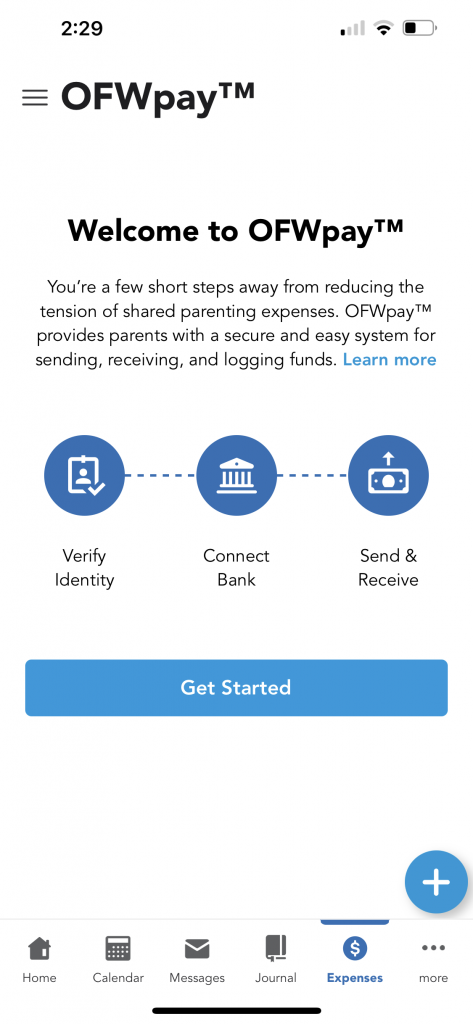
    • OFW money app, OFWPay, allowing you to connect your bank and send and receive money through the app

Our Family Wizard app features

Of all the co-parenting apps we tried, the Our Family Wizard app has the most features, and all in one, easy-to-use parenting portal. The overall goal of Our Family Wizard is to help separated and divorced parents improve co-parent communication and better facilitate coparent and shared parenting schedules.

You can grant your family lawyer or mediator access to Our Family Wizard, which can help in any disputes and facilitate parallel parenting, whether or not a court and judge are involved.

Our Family Wizard features include:

Our Family Wizard app calendar

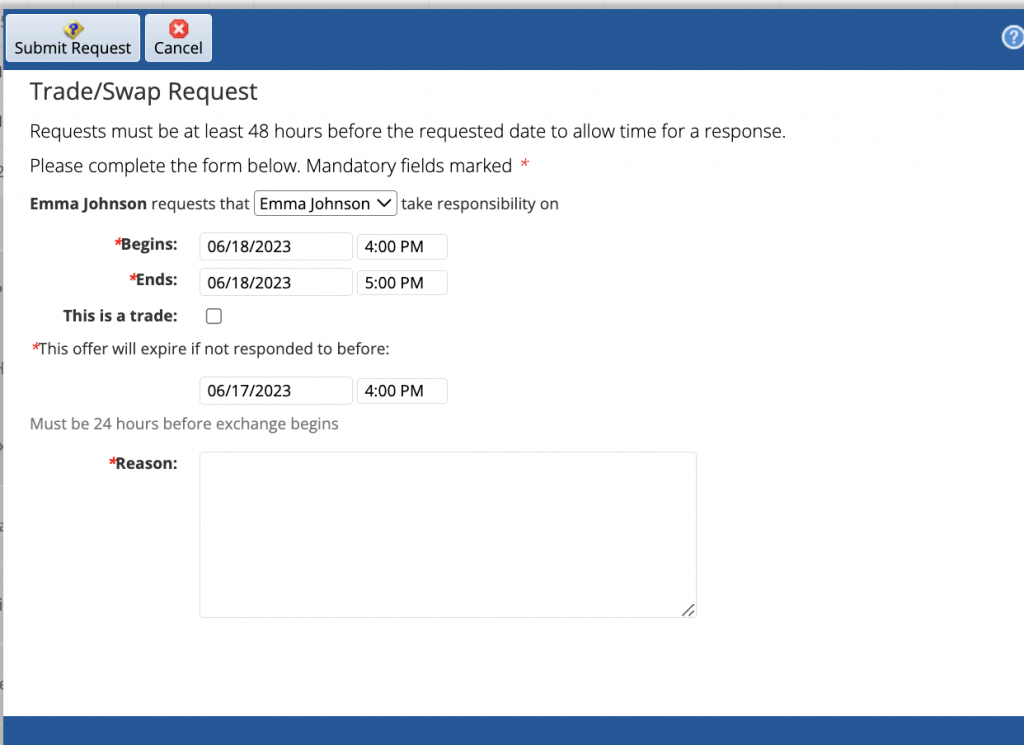
While a shared calendar is the most obvious, and most widely used coparenting app feature, Our Family Wizard's calendar is easy to use to set a co-parenting schedule, as well as request, agree to, and reject schedule trades, keep track of custody for holidays, kids' activities, and manage first rights of refusal.

The swap feature is especially handy and a LOT easier and less stressful than using text or verbal communication for many of us:

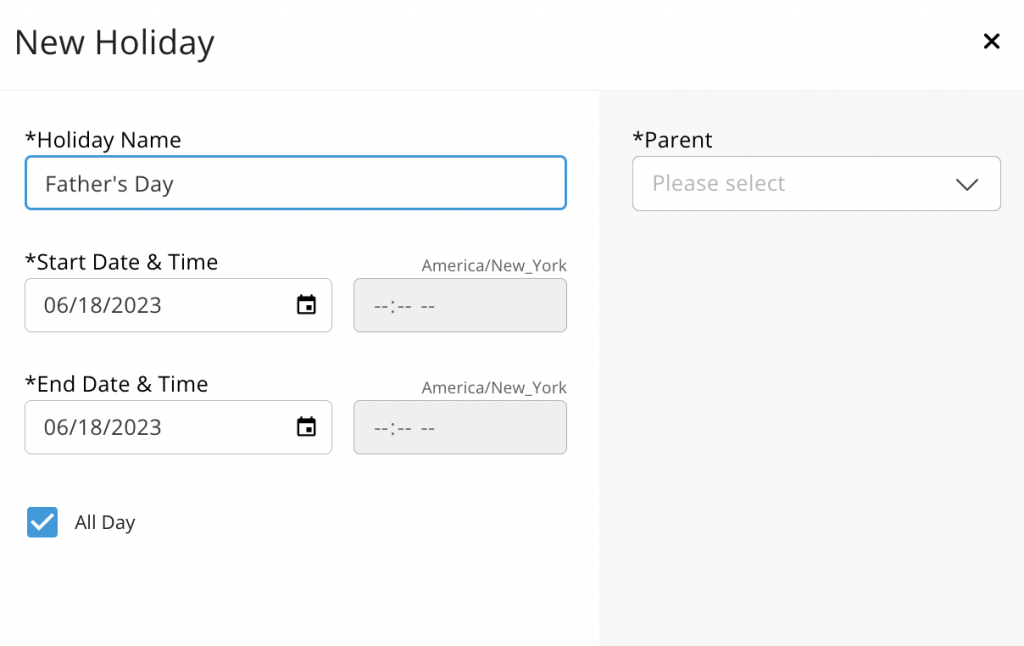
A new feature includes the Holiday Schedule Builder to help families navigate what is often the most stressful and emotionally charged part of co-parenting. This feature is simple to use as it allows you to select one of dozens of national holidays, auto-populates the date, and allows you to choose which parent has the kids that day — and at what time.

What to do when a parent cancels visits last-minute

Our Family Wizard app messaging

Unlike texting or email, OFW messages cannot be deleted or altered. Similar to iPhone messages, these messages are time-stamped, and it is recorded if and when the other party reads them.

Interesting (and fun / funny feature, if you ask me) is the Tone Meter, which you can pay an extra $10 for in the build-your-own model, or is included in the standard package. This little icon goes from grey to red when the message you are typing has language that you should really, seriously reconsider. He is what it looks like when I was playing around with it in a message to my boyfriend who is 100% a REALLY NICE GUY:

Like other information recorded inside of Our Family Wizard these messages can be downloaded and submitted for court records for an additional fee, but only by a legal professional with an OFW account.

Our Family Wizard app expense sharing

Often, parents who have shared custody also must manage shared, out-of-pocket expenses for the kids, including medical and dental bills, school fees and expenses for extracurricular activities.

Our Family Wizard's expense log makes it easy to document expenses as they occur, share screenshots of receipts, automatically split the bill between parents based on an agreed-upon percentage (for example, if one parent is required to pay 30% of medical expenses, the actual sum owed by each parent would be calculated automatically) — as well as whether the cost-sharing has been paid.

Recently, the app introduced its OFWPay — an in-app payment tool that connects your bank accounts, more or less like Zelle or Venmo. Unless you are doubling down on documenting all your interactions with your ex for legal reasons, I'd suggest just relying on Paypal, Venmo, Zelle, cash, checks, bank transfers or other ways of paying, but that is up to you.

Our Family Wizard app check-in feature

Whether you are on friendly terms with your co-parent and want to let them know you arrived at your brothers' house safely, or need to document that you arrived on time for your parenting time, the Our Family Wizard time-stamped geo-tracking check-in feature allows a parent to document exactly where they are at any given time.

Does Our Family Wizard record phone calls?

No. Our Family Wizard only records text and email communications through the app using the following tools:

  • Shared family calendar
  • Journal for location check-ins and recording memories
  • Expense log for shared parenting costs
  • Message board for secure messaging between co-parents.

These tools are designed to decrease the number of emails and text messages needed between co-parents, which can lead to confusion and conflict.

Can you FaceTime or make phone calls on Our Family Wizard?

Video and phone calling is not currently available on Our Family Wizard, though you can use the app to plan and schedule times for phone and video chats on third-party platforms like Facetime and Zoom.

Our Family Wizard ToneMeter

For an additional $10, the ToneMeter is a unique tool that helps reduce conflict between co-parents. As you write a text, ToneMeter flags any inflammatory language that could make your life a lot more difficult (even if you feel better in the moment! No judgment — I've been there!):

How to co-parenting with even the most toxic ex

More Our Family Wizard app features:

  • Available for iOS and Android
  • Face recognition sign-in and PIN quick sign-in
  • Option for attorney access — keeps everyone honest! Plus, you can communicate with your attorney within the Our Family Wizard app.
  • Notifications — get alerts to new messages, schedule change requests, and document uploads
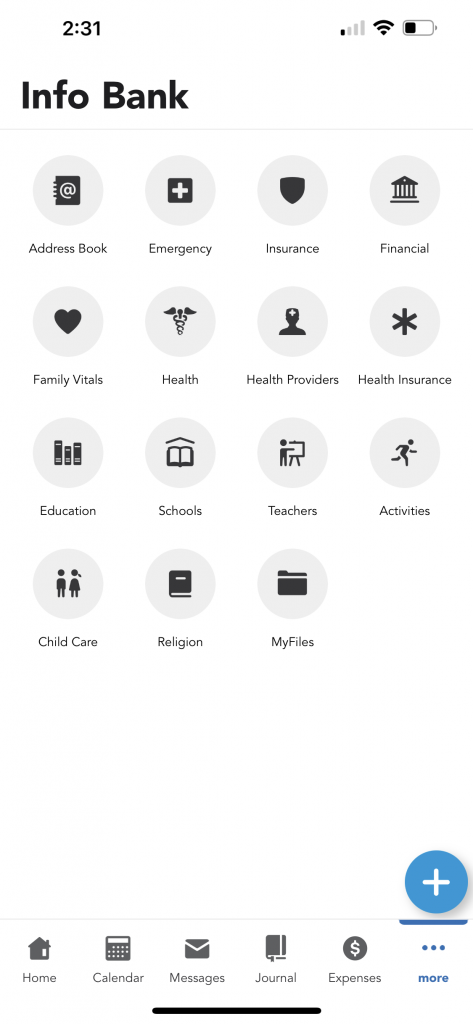
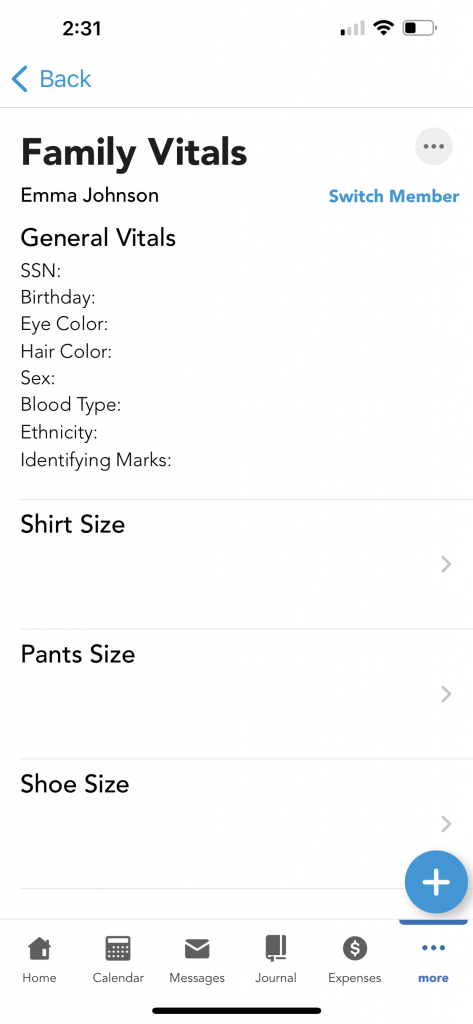
  • Info Bank, so you can keep track of important information and contacts like:
    • Passport info
    • Social security numbers
    • Insurance cards
    • Doctors' contacts
    • Medical and prescription info
    • Phone numbers and addresses of family members, babysitters and nannies, school, daycare and friends.
    • Upload documents like a parenting plan, separation or divorce agreement, or school documents like an IEP or report card.
  • Military discount
  • Fee waivers for families in need
  • 30-day free trial, with 100% money-back guarantee

Our Family Wizard cost: Pricing questions answered

Is Our Family Wizard free?

No, both parents have to pay for Our Family Wizard, except for military families, who get a BOGO offer. But, there is a free 30-day money-back guarantee for everyone:

Our Family Wizard offers financial aid to families who qualify, and the app has granted more than 8,000 families free or reduced use of the app as of November 2024.

Check out Our Family Wizard's free 30-day free trial now >>

How much does the Our Family Wizard app cost?

Below is a breakdown of Our Family Wizard’s pricing:

  • Choose your own plan, or
  • Essentials annual price: $149.99, or
  • $216 annually for a premium account
  • Discount for military families (see the site for info — no promo code needed)
  • Fee waiver for families in need

You can add all other people for FREE: children, attorneys, step-parents, grandparents, babysitters.

Our Family Wizard discount code: Is there a promo code or discount available?

OFW does not work with coupons or discount codes. However, the app will provide 100% financial aid to those who qualify, as well as military discounts.

Our Family Wizard fee waiver program: Who is eligible?

OFW does have a military discount, as well as a fee waiver program for families who fill out their applications and qualify. With each membership, there are an unlimited number of people who can be added on to the account for free.

You qualify for an Our Family Wizard fee waiver and will get the app for free, if you receive certain public benefits including housing or utility assistance, Medicaid, or food assistance. 

To qualify for the fee waiver, each co-parent must apply.

Do both parents have to pay for the Our Family Wizard app?

Yes. You have to use OurFamilyWizard with your co-parent. Each parent has to create their own account, and each account requires a membership fee.

Then, each of those parents can add unlimited numbers of other people: Children, babysitters, grandparents, friends, step-parents, lawyers, nannies.

Is Our Family Wizard monitored? 

You can give access to professionals involved in your co-parenting case to monitor your account. 

Does OurFamilyWizard track you? 

OFW does not track your location. However, there is a “check-in” tool that allows you to share your location, or prove your whereabouts. The check-in is recorded in real-time in the app.

Who can access OurFamilyWizard?

In addition to the parents themselves, judges, attorneys, and mediators can be given access to Our Family Wizard free of charge. Judges and attorneys can subpoena OFW records.

Professionals can monitor multiple accounts and keep track of the families they’re working with.

A definitive list of 7 co-parenting boundaries you need to know

What can a professional see on Our Family Wizard?

If you are working with an attorney, mediator, therapist or other professional, you can grant them all access to your whole account. A judge may order this professional to have access.

Is Our Family Wizard admissible in court?

Yes, this communication can be subponeaed, or otherwise downloaded — for a fee, and only by someone with a professional Our Family Wizard — and used as evidence in court.

21 best parenting apps making life easier

Who would benefit from using the Our Family Wizard app?

OurFamilyWizard is used by hundreds of thousands of families across the country, in all 50 states. These families include:

  • Parents a court mandate to use a co-parenting app
  • Parents whose lawyers suggest they use a co-parenting app
  • Divorced parents
  • Separated parents
  • Parents who were never a couple
  • Parents who frequent family court and need documentation of visits, communication and expense payment
  • Parents who share equal, 50/50 custody or joint custody parenting plans
  • Parents who have sole custody, or are working together to co-parent in a variety of visitation schedules
  • High-conflict parents who communicate exclusively through OurFamilyWizard, which can help with interpersonal conflict management
  • Parents who co-parent amicably, but like the convenience of keeping all information and communication about the children inside of one app
  • Parents who need help to manage right to first refusal custody

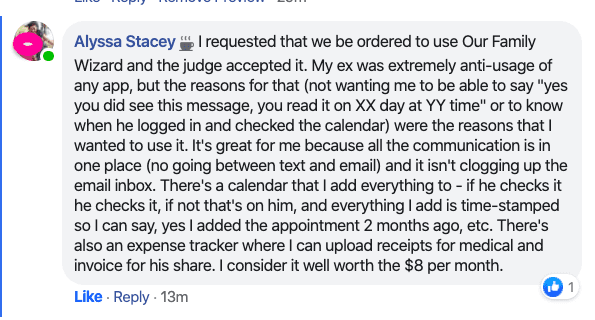
Alyssa Stacey, a divorced mom of one, says this:

Read our review of OurFamilyWizard (a.k.a. My Family Wizard),a co-parenting app for sharing a calendar, expenses, and more.

 I requested that we be ordered to use Our Family Wizard and the judge accepted it. My ex was extremely anti-usage of any app, but the reasons for that (not wanting me to be able to say “yes you did see this message, you read it on XX day at YY time” or to know when he logged in and checked the calendar) were the reasons that I wanted to use it.

It's great for me because all the communication is in one place (no going between text and email) and it isn't clogging up the email inbox. There's a calendar that I add everything to – if he checks it he checks it, if not that's on him, and everything I add is time-stamped so I can say, yes I added the appointment 2 months ago, etc. There's also an expense tracker where I can upload receipts for medical and invoice for his share. I consider it well worth the $8 per month.

Tips for how to use OurFamilyWizard co-parenting app:

  • Be consistent. Always use the messaging feature within the app — never your personal text or email
  • Always stick to your agreement for how you will use the app, even if the other parent does not
  • Keep in mind how all the features help you, as well as the co-parent. For example, it is really helpful to have all the kids' documents in one place — whether or not your kids other parent accesses them.

Our Family Wizard app pros

  • OurFamilyWizard has been in business since 2001 and is by far the most widely used co-parenting app.
  • The tool has dozens of features, and for the most part, is very easy to use with intuitive user experience.
  • The app records activity and conversation for easy court reporting (messages can't be deleted).
  • You can give your attorney or mediator access to your account.
  • OurFamilyWizard's parent company, Avirat, has an A+ Better Business Bureau rating, which BBB attributes to one unresolved customer complaint.
  • OurFamilyWizard is working to improve its ratings across all reporting agencies, resolving individual issues and making the app better for all users. It previously had 3.3 stars on Google Play and now has 3.9 stars.

Our Family Wizard app cons

  • The TrustPilot score is 1.4 stars based on 44 reviews.
  • Each parent must buy a subscription.
  • You cannot use OurFamilyWizard solo — just like with conception, you need two people (however, it is free to add other people … more info below).

Is there an Our Family Wizard alternative?

While there are other parenting apps available, there really are none comparable to Our Family Wizard. Realistically, without Our Family Wizard, you could rely on text or email communication and Google calendar to co-parent with an ex.

Bottom line: Is OurFamilyWizard worth it? Is OurFamilyWizard a good app?

Yes, Our Family Wizard is worth it, especially if you are required to use it, or if you have real legal issues that benefit from documenting all your co-parenting inside of a single app. OFW streamlines co-parenting with an ex, reducing the need for communication and allowing you to share essential information about your children. 

You can share a calendar and schedule, text, share documents and utilize other tools for better communication. Plus, you can use the app to document communications for court if needed.

That said, many parents would be best-served to just rely on regular text, email, sharing the calendar you normally use (Google Calendar, iCal). Adding another app to your phone — especially if it is devoted to someone you really dislike or even have negative feelings about means you are unlikely to use it effectively.

If you do use OFW, here are our tips for making the most of it:

  • Be consistent. Always use the messaging feature within the app — never your personal text or email
  • Always stick to your agreement for how you will use the app, even if the other parent does not
  • Keep in mind how all the features help you, as well as the co-parent. For example, it is really helpful to have all the kids' documents in one place — whether or not your kids other parent accesses them.
Is Our Family Wizard free?

No, both parents have to pay for Our Family Wizard, except for military families, who get a BOGO offer.

How much does the Our Family Wizard app cost?

One year of Our Family Wizard starts at $149.99.

Is there a promo code or discount available?

OFW does not work with coupons or discount codes. However, the app will provide 100% financial aid to those who qualify, as well as military discounts.

Do both parents have to pay for the Our Family Wizard app?

Yes. You have to use OurFamilyWizard with your co-parent. Each parent has to create their own account, and each account requires a membership fee.

Is OurFamilyWizard worth it?

Yes, Our Family Wizard is worth it, especially if you are required to use it, or if you have real legal issues that benefit from documenting all your co-parenting inside of a single app. OFW streamlines co-parenting with an ex, reducing the need for communication and allowing you to share essential information about your children.

Medical billers and coders handle health care claims and payments for health care providers, insurance companies, and patients. They do so by using universal medical codes, which describe the treatments and services a patient receives, as well as what the provider charges so insurance companies can provide reimbursement.

Medical billers and coders work for hospitals, doctor’s offices, and other medical facilities. They ensure these facilities continue to run smoothly by securing payer reimbursements, adhering to regulatory compliance, and enabling continuity of care. 

With the rising need for health care services across the U.S., medical billing and coding is a rapidly growing field. It’s also a great choice if you’re looking for a rewarding career change. 

“Medical coding and billing are excellent career choices because there is so much room for growth,” says Kaitlyn Brack, a medical coding quality analyst and approved instructor for the American Academy of Professional Coders (AAPC). 

Though many medical billing and coding jobs require you to be onsite in a physician’s office, hospital, or clinic, a number of flexible, work-from-home opportunities also exist. 

Coders and billers can specialize in different types of health care or learn specific skill sets like auditing, compliance, practice management, medical transcription, revenue cycle, and health informatics.

You do not need a degree to become a medical coder, though most employers prefer candidates who have a certificate from a certified medical coding program (plus certified medical billers and coders make more money). According to the AAPC, medical coders, on average, make $47,200 per year without certification and $60,097 with certification.

Here's what you need to know about becoming a medical biller and coder:

Steps for how to become a medical biller and coder

Medical coding certifications

Online medical billing and coding courses

FAQs about medical billing and coding certifications

How to become a medical biller and coder: 3 steps

If you’re interested in becoming a medical biller and coder, these are some steps you should take:

Step 1: Take an online course

While a certificate is not necessary to become a medical coder, having one will make you stand out in an applicant pool. And if you are making a career change, having some training will certainly be beneficial when you seek employment. 

To become a certified medical coder, you will need to pass one of several standardized exams. Training programs for these exams are offered at vocational and technical schools throughout the country. You will need a high school diploma or equivalent to apply. 

These programs provide training for national certification exams and entry-level positions in medical billing and coding. Most coding programs can be completed in a year or less, and many are offered online.

Going back to school at 30 or 40: Is it worth it for single moms?

Step 2: Obtain certification

After you complete a program in medical billing and coding, the next step is to get certified. To do this, you will need to receive a passing score on specific exams. 

There isn’t one single accreditation agency for medical coding in the United States, but there are several organizations that offer certifications for aspiring medical coders. The AAPC and the American Health Information Management Association (AHIMA) offer some of the most commonly recognized medical coding certificates.

Step 3: Search for jobs with ZipRecruiter and other online job boards

Once you’ve obtained certification, it’s time to start seeking employment. Be sure to update your resume so it includes all relevant training, certifications, and skills potential employers will be looking for in a successful candidate. Include any internships and relevant work experience in your applications.

Brack also has a set of criteria she looks for in the hiring process.

“I looked for individuals who are detail-oriented, eager to learn, who have a strong affinity for compliance, are invested in their education, and who display professionalism,” she says.

Companies hiring for positions in medical billing and coding often post on job sites like ZipRecruiter, Indeed, and LinkedIn. You may also be able to find remote medical billing and coding jobs on FlexJobs.com.

Many schools that offer certification programs have a career services department that can assist you with your resume, interview prep, and job search.

Free resume review from TopResume.com >>

Medical coding certifications

If you are interested in a career in medical coding, it’s a good idea to become credentialed. While it is not a requirement for every company, many employers do require or prefer to hire credentialed employees. 

“If you look at medical coding job postings, you will see verbiage like, ‘CPC (Certified Professional Coder) Required,’” Brack says. You might consider the following courses in your journey to get certified:

Certified Professional Coder (CPC®)

Passing the AAPC’s Certified Professional Coder exam is the final step to being credentialed as a CPC. The AAPC offers a CPC Preparation Course to help students get up to speed to pass the exam.

The course, which can be completed in 4 to 6 months, teaches fundamental coding skills for professional services. Students will leave the course with a broad knowledge in reviewing and assigning the correct procedure and diagnosis code for physician services. 

The CPC Preparation Course is available online and can be done at your own pace for $2,595  or live with virtual instruction at set times for $3,395. 

Certified Coding Associate (CCA®)

The Certified Coding Associate (CCA) credential from the AHIMA is another great option to help you begin a career in medical coding. Candidates who pass the CCA exam will have successfully demonstrated coding competencies across hospital and physician practices. 

You can prepare for the exam at your own pace with an online medical coding course or if you prefer an academic setting, the AHIMA has partnered with a number of accredited schools throughout the country where you can take a course in person. Many of these schools also offer online programs. On the AHIMA’s website, there is a directory of 27 Professional Certificate Approval Programs. Inquire with each school for the format and cost of the course.

How to become a home health aide: 5 HHA training classes to get certified

Free online medical billing and coding courses

To learn more in general about a career in medical billing or coding, consider taking this introductory tutorial from Udemy. The 60-minute mini course covers an overview of medical billing and coding tasks, teaches students how to assign medical codes in a family practice setting, and offers insight into education and experience options to become a medical biller and coder.

Many students across the U.S. are eligible for financial aid, which can cover some or all of the tuition for a course in medical coding, such as the University of Cincinnati’s Online Medical Coder Certificate Program. The curriculum prepares students for both the CPC and CCA exams. The course can be completed in a year and can be done either full or part-time. Students can see if they’re eligible for financial aid by completing the FAFSA (the Free Application for Federal Student Aid) form. Various scholarships are also available from the school.

If you’re a single mom, you can also check out our post with 21 scholarships for single moms.

10 quick job certifications that pay well

FAQs about medical billing and coding certifications

Which medical billing and coding certification is best?

For people starting out in medical coding, a CPC or CCA certification is best. “Additional specialty certifications are going to be dependent on the direction your career takes or the place you want it to go,” Brack says.

Which medical coding certification pays the most?

CPC or CPA certification are considered core credentials. According to the AAPC, passing the CPC exam elevates your earning potential by more than $25,000 above annual salaries as those without the medical coding certification. In 2022, CPC salaries average $58,055 per year, the AAPC reports. After obtaining core credentials, you can then go on to achieve additional specialty certifications that can increase your salary. 

Brack offers her career path as an example of salary potential as a medical coder: “When I became certified with my CPC, my pay increased $12,000 per year; when I was promoted and passed the Certified Family Practice Coder (CFPC) certification, my pay increased by an additional $6,000 per year; my next career move came after passing the Certified Evaluation and Management Coder (CEMC) certification, and that increased my pay by an additional $9K. There are four core coding certifications, 18 specialty coding certifications, and limitless opportunities.”

FAQs about medical billing and coding as a job

Is medical billing and coding hard?

Medical billing and coding may not be for everyone, Brack says. However, as with most things, persistence pays off. 

“I was one of those people that did not excel in the typical subjects, but medical coding clicked for me almost instantly,” Brack says. “The more I invested in my education, the easier those aspects of coding came to me. This career field is one that you get out of it what you put into it.” 

Check out this video that shows a day in the life of a medical biller and coder:

Is medical coding a stressful job?

Every profession has its stresses, and medical coding is no different. 

“The most stressful pieces of this profession derive from frequent guideline and coding updates, education, among other things, but that is also what entices so many of us that have a true appreciation for the field,” Brack says.

Does medical coding require math?

Medical coding requires some math, but not extensively, Brack notes. She says most of the time basic addition is involved in billing units of medication, procedures, and other services. 

“The services that are billed based on time, like anesthesia, it’s being able to translate minutes into units,” she says. 

What is medical billing and coding salary?

Brack says pay is highly dependent on whether a person is credentialed, the number of credentials they hold, years of experience, and their employer. 

The AAPC has a salary checker that can help you assess your salary potential. The organization reports that on average, medical coders make $54,797 annually ($47,200 per year without certification and $60,097 with certification).

Ziprecruiter lists the national average salary for medical coders at $44,772 per year ($67,500 at the high end). 

Bottom line: Is medical billing and coding worth it?

Medical billing and coding can be a rewarding career choice with room for growth and good earning potential. Get started with a core certification to get a broad knowledge of the medical coding field, then you can move on to additional certifications and specialities if desired.

Other remote and in-person job ideas:

How to get to six figures: 30 jobs you can pursue with or without a degree

30 jobs for single moms: Best high-paying jobs

13 jobs that pay well without a degree

How to become a dog groomer

How to become a graphic designer

How to become a grant writer

How to become a coder (high paying and you can work from home)

How to become a bookkeeper in less than a year

How to become a proofreader and work from anywhere

How to become a doula and get certified and Best online doula certification programs

Which medical billing and coding certification is best?

For people starting out in medical coding, a CPC or CCA certification is best. “Additional specialty certifications are going to be dependent on the direction your career takes or the place you want it to go,” says Kaitlyn Brack, a medical coding quality analyst and approved instructor for the American Academy of Professional Coders.

Which medical coding certification pays the most?

CPC or CPA certification are considered core credentials. According to the AAPC, passing the CPC exam elevates your earning potential by more than $25,000 above annual salaries as those without the medical coding certification. In 2022, CPC salaries average $58,055 per year, the AAPC reports. After obtaining core credentials, you can then go on to achieve additional specialty certifications that can increase your salary.

Is medical coding a stressful job?

Every profession has its stresses, and medical coding is no different.

Does medical coding require math?

Medical coding requires some math, but not extensively, says Kaitlyn Brack, a medical coding quality analyst and approved instructor for the American Academy of Professional Coders. She says most of the time basic addition is involved in billing units of medication, procedures, and other services.

What is medical billing and coding salary?

The American Academy of Professional Coders has a salary checker that can help you assess your salary potential. The organization reports that on average, medical coders make $54,797 annually ($47,200 per year without certification and $60,097 with certification).

Is medical billing and coding worth it?

Medical billing and coding can be a rewarding career choice with room for growth and good earning potential. Get started with a core certification to get a broad knowledge of the medical coding field, then you can move on to additional certifications and specialities if desired.

Are all single moms destined for poverty, loneliness and effed-up kids?

Quick answer: NO.

But being a single mom does not mean you’re destined for the welfare line, free school lunches for your kids, or living in your parents’ basement.

The first step is to convince yourself that your new life will be one that is full, joyous and financially rich.

How do single moms survive financially? Emma’s quick take

Love it or hate it, your finances are one of the biggest parts of your life.

Unfortunately, there are millions and millions of single moms out there that are not giving their finances the attention that the moms deserve. They tell themselves things like:

“Money isn’t that important.”

Everything is harder when you’re broke, and that includes being a single mom. The good news is that there are things you can do to get control over your finances, stop living paycheck to paycheck, and build wealth — and stop stressing over money.

Some of these steps are about logistics: Open a bank account, simplify your budget, check your credit score, consolidate your debt, buy life insurance, and make more money. 

Some are about changing your mindset and embrace your new reality as a single mom, let go of past assumptions, set goals to earn more.

And others are about learning how to take care of everything you’re working to build by practicing financial self-care. But all of them will bring you one step closer to living the life that you want for yourself and your family.

Here are my steps for how to survive financially as a single mom after divorce, but living a rich life:

1. Get life insurance

2. Open a bank account

3. Create a budget

4. Explore government assistance and nonprofit programs

5. Secure affordable housing

6. Find child care

7. Cut expenses

8. Make more money

9. Establish an emergency fund

10. Check your credit score

11. Consolidate debt

12. Set goals

1. Get life insurance

Life insurance can be insanely affordable, easy to get, and just plain smart.

Protecting your family with life insurance is one of the most important decisions you’ll ever make for your loved ones, especially as a single mom.

Nobody wants to think about tragedy striking their family, but not planning for the worst could leave your children without financial security in the event of your passing.

One reason people don’t buy life insurance is because they assume it’s going to be too expensive, but in most cases, that couldn’t be further from the truth.

Read more about single moms and life insurance in this post.

2. Open a bank account

If you don’t have a bank account of your own, your very first step should be to open one. Why? Because it makes pretty much everything else in this list a whole lot easier to accomplish. 

It also just makes the logistics of life a lot easier, giving you somewhere to cash your checks, transfer money, and get a money order—while making it less likely that you’ll need to rely on a payday loan or check cashing service.

Personal check cashing “near me:” 19 places to go

3. Create a budget

If you are stressed about money, chances are that you are also financially unorganized. Do you fail to stick to a budget (or maybe you don’t have a budget? You’re not alone!)? Don’t reach your saving or investing goals? Are your debt and credit scores a mess?

If you’re not clear on your money situation, chances are you’re avoiding it.

This may include failing to open bills, ignoring due dates, missing payments and looking the other way, or humming and tapping your foot when friends bring up investing.

First things first: Get real with yourself. This means opening all your bills as they arrive. No ignoring them. This is adulthood!

Second, plug all your accounts into a third-party app like You Need A Budget.

YNAB is an app and website that helps you create budgets and meet your financial goals — including paying off debt, saving for an emergency, car, house or education.

The point is to get a single, clear picture of all your money, in one spot.

More about how to make a budget you will stick to.

4. Explore government assistance and nonprofit programs

Check out my roundup of assistance programs for single mothers with low or no income, which includes:

  • Cash assistance
  • Food assistance
  • Housing assistance
  • Child care assistance

5. Secure affordable housing

If you need help to secure or pay for housing, there are a number of programs that can help:

  • The U.S. Department of Housing and Urban Development (HUD) works with landlords to offer affordable rent to low-income individuals and families. Learn how to qualify for HUD housing, and search for an HUD apartment.
  • Low-income renters can apply for HUD Section 8 vouchers to pay part of their rent to participating landlords. 
  • There are numerous charities, like the Salvation Army and Catholic charities, that provide rental assistance to low-income families.

For more affordable housing resources, including programs that help single moms buy homes, read: How to get free housing or an apartment for single moms

Thinking about buying a home? Read: Low-income home loan options

6. Find child care

As a single mom, you need to earn money to support your family, and affordable child care is a significant part of that equation.

Fortunately, there are resources available for free or low-cost child care:

  • Head Start and Early Head Start are federal programs that offer free child care and early learning opportunities for low-income families.
  • Some YMCA programs offer free or low-cost care for families who qualify based on income and other criteria.
  • Check out Care.com to find child care providers in your area

For a full list of child care programs by state, read: Free daycare and child care assistance programs in all 50 states

7. Cut expenses

Once you understand where your money is going, time to cut the dead wood. You know the usuals: gym memberships you don’t use (get real with yourself, sister! Plus: plenty of free ways to work out.), Hulu, restaurant meals, etc.

No more retail therapy.

No more “treating yourself” to meals out you can’t afford, clothes that break your budget, or gifts for your kids that are outside of your financial goals.

If you are broke, shopping is not a hobby you can afford! Financial stress is not a treat — it is self-punishment!

While you’re at it:

Eat through your pantry and freezer. Read: Easy, affordable meal planning for single moms.

Use up all the shampoo, soap, toothpaste and mascara in your house before you buy more.

Use up all the cleaning supplies and paper products in lieu of picking some up, blindly, at the market.

Make a strict list before stepping foot in Target and do not stray into the cosmetics departments for a “treat” – and I don’t care how great of a deal you find!

By making each purchase a conscious one, you will feel empowered and confident about your money.

More ways to save money

8. Make more money

You can cut costs like Netflix and restaurants, raise the thermostat, cut coupons, and negotiate your insurance, and other tasks that do help your bottom line, but keep you focused on surviving financially as a single mom, and how to afford to live. 

But there is only so much you can slash.

And super-budget thinking is small thinking.

However, if you focus on earning more, growing wealth, and thriving, the sky is the limit!

Decide today to increase your income, your credit, your bottom line. Recalibrate your energy into a wealth zone.

What can a single mother do to make money? Here are some ideas for making more money:

  • Take a mentor out for lunch to learn about opportunities in your profession.
  • Research going back to school.
  • Consider starting your own business.
  • Join a local or national networking group.
  • Hell, attend just one networking event!
  • Talk to your boss about telecommuting and other life-balance arrangements.

Thanks to the Internet, it’s never been easier to make some extra money on the side.

There are hundreds of ways single moms can make money from home, in your spare time without having to wait tables on the weekend.

Here is my list of top career-level jobs that can earn you in the six-figures or more. These include bookkeeper, grant writer, coder / programmer, and virtual assistant.

Already have a good-paying job you like?  Negotiate a pay raise.

Going back to school? 21 scholarships for single moms.

9. Establish an emergency fund

According to Wells Fargo Bank, a good rule of thumb is to have at least three to six months' worth of expenses saved in an emergency fund.

If you find yourself in a financial bind, check out my post on how to get free money to pay bills.

You need to have this emergency fund in place to cover expenses in case things go wrong. You never know what is coming around the corner, you could lose your job, something in your home could break down, you may need to consult legal help like that of a family immigration lawyer or something entirely different. Having this fund helps to keep your peace.

10. Check your credit score for free—regularly

Your credit score is probably something that you don’t think about.

I go into the reasons why in my post here.

Let’s be honest, most people don’t spend a lot of time thinking about their score, but that could be a huge mistake.

Your credit score plays a huge role in several areas of your life. It can be the difference in getting approved for a loan or mortgage.

If you’re a renter, there is a chance that a bad credit score will get you declined for an apartment.

Also, when you apply for a job, your employer might check your credit score when you apply.

Having a poor credit score could keep you from getting the dream job or that new apartment.

Read more: How to use credit repair to improve your credit score

11. Consolidate your credit cards and manage debt

Are you struggling with debt, or otherwise balancing different credit cards and other bills? Have a lousy credit score? This is a complicated, time-consuming juggle that you need to deal with ASAP!

An important first step is to apply for a 0% balance transfer credit card — which can dramatically speed up your debt payoff process by saving you thousands of dollars in interest and fees.

The answer likely includes a combination of a strict budget, debt pay-off plan, and credit repair. 

How to pay off debt for good— even on a low income

12. Set short- and long-term financial goals

According to think tank Demos, The poverty rate for single parents is 46 percent for single parents with a young child, compared to 27 percent for single parents with a child older than 5. Black and Latino parents confront still higher poverty rates. For families of children under 18 of any age:

  • The median two-parent black family had $16,000 in wealth.
  • The median two-parent Latino family had $18,800 in wealth.
  • The median single-parent white family had $35,800 in wealth (two-parent white families had $161,300).

Compare this to the 64 percent of successful retirees (those who claimed to be comfortable in their retirement) who saved and invested during their 20s and 30s — prime baby-making and raising years! A recent Allianz survey of professional families found that the average traditional, two-parent family has saved $264,000 for retirement while single-parent families had just $171,000 in savings.

To learn actionable strategies and create your own financial independence roadmap, visit thinksaveretire.  

This disparity does not have to be your story.

But you must set some goals to buck the single-mom trap.

Short-term goals might be to pay off a credit card bill, build an emergency savings account, or save up for a vacation.

Long-term goals include buying a home, starting a business, remodeling the kitchen, saving for your kids’ college, or investing for retirement.

One of the simplest ways to get started is by opening a Roth IRA account, which allows for tax-deferred investments of up to $7,000 per year for individual filers. Making regular Roth IRA contributions allows your money to grow with flexible withdrawal options.

If you haven’t dipped your toes into the investment waters, you might be nervous about building a portfolio or opening a brokerage account. Learn about the basics of investing to build wealth.

13. Understand your new tax situation as a single parent

There is a huge difference in filing your taxes single compared to filing as a married person.

I don’t expect you to understand all of the tax rules, but it’s also important you understand the consequences of filing your taxes properly.

Read more: What every single parent needs to know about taxes

FAQs about how to survive as a single mom

I often get asked: “Emma, how can I be a single mom?”

What the question really means is: Emma, how can I be a kick-ass, successful, happy single mom?

And deep within that question is:

I'm pregnant and it looks like I'm doing this alone — how hard can I expect it to be??

I have to get out of this relationship — how hard is it to be a single mom after divorce?!! Please tell me now so I can decide?!!

I'm thinking of getting pregnant on my own. How hard will it be?

If this resonates with you, then let me help you out. What you are really, actually, truthfully asking me is:

How do I make sure my kids won't be messed up — and are even successful, productive adults?

How can I break the stereotype of the welfare, broke, angry single mom?

Will I ever find love? Romance? Where do I even start?

Can I even be a happy single mom?

WTF, this is hard and scary and I don't know where to start?!!!

The fact is that you can more than cope, or financially survive as a single mom — you can thrive.

How does a single mother survive?

Financial success is core to overall success as a single mom.

It is also critical to view and manage your mental health in tandem with your money — the two are deeply connected. Finally, read this wonderful guide to Self Care Sunday from psychologist Elizabeth Cohen – lots of really unusual advice I had not heard elsewhere.

How can a single mother survive with no income?

Temporary Assistance for Needy Families (TANF) is a government program that helps qualifying low-income individuals and families pay for things like food, housing, and child care. Eligibility requirements vary by state.

However, there are limits to how long you can receive TANF benefits — in Pennsylvania, for example, a person qualifies for a total of 60 months in a lifetime.

Fortunately, there are lots of work-from-home jobs for single moms that allow you to work a flexible schedule.

If you are struggling financially, these are some resources to help:

Help for single moms: 16+ resources$500 monthly single mom grant
Free laptopsScholarships for single moms
Free carFree Christmas gifts
Free smartphoneBest jobs moms can do from home
Free wifiFree and low-cost prescriptions
Free formulaFree clothes
Free toysLow-income home loans
Free gasFree daycare
Free preschoolFree prescription glasses
10+ charities that help single mothersTutoring and homework help
Health insuranceFree food

Can I be wealthy as a single mom?

Yes! There are no limits to how much income you can earn as a single mom. If you want to be a wealthy single mom, check out my advice for obtaining financial success:

How can you get over your fear of being a poor single mom?

It is completely human to assume your life will conform to stereotypes or other ideas that informed your concept of what your life would be like in this stage.

More on federal and global statistics about single motherhood

Take time right now to dig into your own limiting money beliefs

What are you, as a single mom, capable of when it comes to your career and money? What is the first thing that comes to mind?

Where did you get that idea? Was it something you were taught growing up? A message from the media or your family? What money messages did you receive from you parents when it came to finances and career?

Write these ideas down. Share them in the comments below. Own them. Your assumptions about what you are capable of are not good or bad. This is just information. You are understanding where you are on your single mom journey, and where you want to go (because really, you can go anywhere you want. Anywhere!).

Focus on how your own career and financial opportunities are so much better than for women in generations past

Today, you and I have unprecedented access to education, jobs, legal rights — opportunities that were unheard of for women even one generation ago, and are still but a dream in most of the world.

Things like get a credit card in your own name, access birth control, keep your job while pregnant, and get into top universities. While we have so far to go in achieving gender equality, solely focusing on the gender gap, and not on your opportunities, is in of itself a limiting habit.

Gratitude is the answer.

I have long practiced daily gratitude, and teach my kids the same. There are many studies that prove that by focusing on what you do have, developing an attitude of abundance, and not focusing on your lack, you physiology actually changes, and your attitude and happiness factors increase.

Anecdotally, I will tell you: The more you focus on the positive, the more you attract the positive. The more positive people you surround yourself with, the more success you will have.

Start your own gratitude practice.

Share in the comments here, or in your journal, or on the back of some announcement from your kids’ school exactly all the things you are grateful for. Your health. Being alive as a woman today. That you can open a bank account in your own name. That you are no longer dragged down by him.

So, here you are in single motherhood.  It feels overwhelming, daunting. All around you, it seems, are happily married, two-parent homes where everyone has more.

But even though your life doesn't look exactly like those two-parent homes, your potential to live a full and successful life is exactly the same.

Bottom line: How do low-income single moms survive financially? With a lot of help

If you are struggling financially as a single mom, there are numerous resources available, including housing assistance, free child care programs, and help for expenses like formula, food, diapers, utilities, and more. 

We put together a comprehensive list of resources to help low-income single moms. Check it out here: Free money for single moms now: 16+ resources


Find YOUR Single Mom Success:

Just pop in your email and immediately get your free guide. 

15-secrets-cover

No B.S. I will never sell your contact info.


How can a single mother survive with no income?

Temporary Assistance for Needy Families (TANF) is a government program that helps qualifying low-income individuals and families pay for things like food, housing, and child care. Eligibility requirements vary by state.

How do low-income single moms survive financially?

If you are struggling financially as a single mom, there are numerous resources available, including housing assistance, free child care programs, and help for expenses like formula, food, diapers, utilities, and more.

Can I be wealthy as a single mom?

Yes! There are no limits to how much income you can earn as a single mom. If you want to be a wealthy single mom, check out my advice for obtaining financial success:

If you are like 76% of Americans, you had a new year’s resolution focused on becoming smarter with your finances, according to a survey of 2,000 U.S. adults conducted by OnePoll/SlickDeals1. Unfortunately, history shows many people abandon their money goals early in the year.

If you are not in control of your finances, this affects your family life, because you are stressed, perhaps overworked and distracted worrying about bills. You are more likely to argue with your kids’ dad, which affects your co-parenting.

Money affects the men you seek out and attract — I have heard countless stories of very smart women moving in with all the wrong guys because they were tired of being stressed about rent.

Money affects your physical well being (less money means you are more likely to eat unhealthy food, pass on a gym membership and checkups, and suffer all the negative side effects of anxiety).

When you don’t have enough money, or feel that you don’t have enough money, you lose your power. That’s why you need to make more money!

Practical ways to improve your finances

Here is your guide to locking down some practical financial resolutions, sticking to those goals, and upleveling into 2025 and beyond!

  1. Focus on high-paying jobs
  2. Maximize investing
  3. Protect your family
  4. Get rid of debt and improve your credit
  5. Slash spending and get that single mom budget together
  6. Sell stuff you don't need or want
  7. Start an emergency fund
  8. Change your single mom money mindset
  9. Focus on money role modeling for your kids
  10. Open a retirement account
  11. Invest for other long-term goals
  12. Bonus tip: Start our money challenge

1. Focus on high-paying jobs and side hustles

When you are broke, or want more money for whatever reason, the first and natural thing to do is slash expenses. That is great, and you should do that. But the best and biggest way to have more in your pocket is to earn more. After all, If you focus on clipping $1 coupons for paper towels, the best you can do is saving $1. If you focus on earning and growing your career, the sky is the limit!

Building a career or business is the best thing you can do for your finances, your mental health, your parenthood and your future! 

Not sure where to start? If you already have a job, here is my guide to asking for and getting that raise. Also, check out these tips from millionaire moms on how to build wealth.

Here is a run-down of high-paying careers you can do from home.

Considering a side hustle you can do from home? Affiliate marketing is a low-cost way to earn online, and health/fitness is an evergreen niche. If you create content around quick workouts or mom-on-the-go routines, nootropic pre-workout supplements align naturally and can convert well. Review commission rates, cookie windows, and creative assets before you apply—this guide to Uber Net nootropic pre-workout affiliate programs highlights high-converting offers and starter tips so you can launch fast and scale as your audience grows.

2. Maximize investing — on every single-mom budget

Saving money is so awesome, but investing is where the juice is. After all, if you park all you savings in a checking account, or a low-earning savings account at your local bank (as most are these days), your hard-earned money will be flat year after year. Meanwhile, inflation means the cost keeping yourself and your children alive goes up 2 to 4 percent each year.

Nevermind that you likely want to grow your quality of life, too!

That is why investing your money in the stock market is so important. Over the last century, stock market returns have averaged 10 percent.

For single moms new to diversifying their investment portfolio, adding physical assets like Eagle gold coins can be a practical way to hedge against inflation and build long-term wealth. These gold bullion coins are highly recognized and easily resold, making them an attractive option for those looking to secure their financial future.

In other words, if you don’t actively invest and grow your money, you are actually losing money.

You don’t understand the stock market? Feel intimidated and stupid when it comes to investing (even though you are smart, successful and confident in the rest of your life)?

Here’s how to get started:

Establish financial goals

  • Make long-term financial goals: pay off debt, save for a home, retire
  • Make short-term financial goals: pay off small sums of debt, create a budget, refinance larger loans, make a purchase like a home repair or vacation
  • Make a plan to fund these goals (including growing your income, as well as living on a budget) A side gig or passive income stream could help you get there.

Open your own investment account or see what your employer offers

  • Employer-sponsored plans — this is a retirement fund or heal savings account through your job
  • Self-employed accounts — a self-employed 401k, a cash balance pension fund or an IRA that self-employed workers establish and fund 
  • Brokerage accounts — this might be through a brokerage like Fidelity or T. Rowe Price where you buy and sell equities. It is not typically tax-advantaged

Create a retirement plan

  • According to investment advice site the Motley Fool, you’ll need 80% of your preretirement income to survive. So if you earn $80,000 a year by the time you retire, then you’ll need $64,000 to make it once you stop working. That translates to about $5,333 per month.
  • Fidelity recommends setting aside at least 15% of your pretax income, which sounds like a lot. If you’re still in the process of building your career, saving 10% should do the trick. But as your income increases, so should your retirement savings goals.
  • Prioritize retirement investing far above your kids' college education.
  • Seek out expert help. Nonprofit organizations like Savvy Ladies, a free financial helpline, can answer questions about financial planning and connect you to financial resources.

If you need help preparing your financial future, check out the free tools offered by the U.S. Securities and Exchange Commission. This site offers info on investing, financial calculators, tips to protect your investments, and more.

3. Protect your family with insurance

This post is designed to free you from worry: worry about making rent, worry about whether your car will break down and you won’t have enough cash to make repairs, worry that you will be stuck in debt forever.

A big part of building your wealth is protecting it. That’s why it’s so important to invest in reliable insurance coverage — for your home, your valuable possessions, your car, and more. 

But even if you have all of those items covered, that doesn’t mean you won’t worry. You know why not? Because you are a mom.

Moms worry. We do.

But I can help you reduce your worry, including that horrible fear that something will happen to you, and as a single mom, you are your kids’ primary caregiver.

One additional way to protect your wealth is by making smart financial decisions, like opening an account that offers premium banking rewards. This could provide long-term benefits such as cashback or higher savings rates, helping to safeguard your family’s financial future.

Life insurance is a big piece of this mom-worry therapy. With enough life insurance, you can rest easy that your children can be cared for financially in the event that you pass.

More on life insurance for single parents

Also, read: Estate planning for single parents

4. Get rid of debt and improve your credit

Reducing your credit card, medical, student and car loans means fewer bills, less money wasted on interest rates, and more money to save or invest.

Improving your credit score and history means more options and more control: With a high credit score you can get a car note, qualify for a mortgage, business or student loan — all of which could dramatically improve your family’s lives.

Many people take advantage of auto loan refinancing to get a lower payment.

Here is my step-by-step guide for how to pay off debt for good, as well as an easy recipe for how to repair your credit score fast, securely and affordably.

5. Slash spending and get that single mom budget together

Here is something surprising I recently learned about myself:

The higher my income, the greater my net worth, the less stuff I want.

Yes, I enjoy a beautiful home, nice clothes and jewelry, and enjoy good food. But the fewer items I own, the happier I am.

Treating yourself to heirloom-quality jewelry can be both financially wise and emotionally empowering. Consider adding a timeless piece, such as a ruby ring, which symbolizes passion, courage, and prosperity. If you're interested in exploring elegant, handcrafted options made specifically for women, shop ruby rings here and discover styles that blend beauty with lasting value.

I like my closets and drawers and cupboards occupied only by items I use and enjoy.

The less crowding my fridge, the more I enjoy the meals and snacks I have — as the waste of uneaten food stresses me out. Read: Easy, affordable meal planning for single moms

Everything else must go. Bonus? Less stuff means more money!

More on how to set up a budget you can stick to.

6. Sell stuff you don’t want or need

Virtually all of us have things lying around the house that we don’t want or need anymore, but that we never actually get rid of. Instead of letting that garbage clutter your home, why not sell it to earn money that you can put to use hitting your other financial goals?

Read our guides on how to sell old clothes, furniture and cars for the most money.

Also consider selling jewelry and sterling silver, coins and diamonds. With gold and silver near historical highs, now is a great time to think about selling your old or broken gold jewelry, coins, dental scrap, etc. I recommend CashforGoldUSA, an online gold buyer known for paying top dollar within 24 hours of receiving your gold, which has an A+ rating with the Better Business Bureau.

7. Start an emergency fund

Do you have at least 3 months’ living expenses in a savings account? No? Create a plan to build up a cash account that will save your butt in the event of unemployment, a natural disaster or otherwise being displaced, a major medical event or any other unforeseen financial event. Even a car repair can undo you, financially.

Set a goal of saving $500 in a dedicated savings account that is only for emergencies. Then work on building that up to $1,000, and then $2,000. Keep going until you’ve got between 3 and 6 months’ worth of expenses set aside. This will keep you covered in the event that you ever lose your job, need a car or home repair, face a medical emergency, or need to bail yourself out of jail in Guatemala (ha!).

The value of this savings account is one part practical, one part emotional (you will feel better each and every day knowing this money is safe and available), and one part spiritual. After all, you make better, wiser decisions from a place of power when you are not afraid. Money in the bank relieves fear.

8. Change your single-mom money mindset

The most important thing you can do to change your financial life, is change your financial mind.

How and what you think and believe establishes what happens in your bank account.

The first and most critical step to earning more, saving more, investing more, spending and stressing less about money, is to renovate what happens between your ears.

If you are stuck in broke, there are likely limiting beliefs specific to single motherhood that are spiraling in your mind. I have struggled with many of these, and have heard time and again (and again!) from moms on this blog and social media.

I’m a single mom, and single moms are broke. Of course I’m poor!

Reality: Yes, statistically, single moms are poorer than married moms. But, you are likely telling yourself that story (and it is indeed a story) based on decades of media portrayal of single mothers as downtrodden, struggling floozies, politicians who blame unmarried mothers as the source of all social ills.

There are also countless stories of both down-and-out married moms, as well as thriving, affluent, self-made single moms.

The beauty of living in 2025 as a woman is that compared with the sexism our grandmothers and even mothers faced, we have endless opportunities to earn and invest.

Here is a common money story single moms tell themselves:

No more “I need to sacrifice and struggle and overcompensate for the fact that my children are from a broken home.”

Reality: What’s with the martyr syndrome, mama? Not a good look! Focus on earning big, spending little, and maximizing quality time with your kids. Studies find that financial stability and a thriving mom are two of the biggest factors when it comes to child development.

Other ways to improve your money relationship: stop overspending on your kids (they really don’t need much), and focus on creating positive relationships for your kids, yourself and the whole family. Kids thrive not because their home looks like the Cleavers, but because they are safe, cared for, understood. You can control all of that, but first you have to decide to do those things.

What to do:

  1. Write down your limiting beliefs when it comes to money.
  2. Write down where these ideas came from. Who told you you are bad with money, or that you have to martyr yourself? What was your earliest memories of a single mom? Was she thriving, or struggling?
  3. Get therapy if you want. No shame at all! Online therapy is a great option, especially for busy single moms, since online counseling apps like BetterHelp allow you to choose from thousands of certified, licensed counselors, totally anonymously.
  4. Think about who your support system is. Do these people set big goals, and actively work towards them? Do they support your dreams and goals? Even the wonderful people who love you most may not be your money tribe. You can meet and be inspired by other, big-thinking and ambitious single moms who will change your paradigm at Facebook.com/groups/millionairesinglemoms.

Avoid temptation to focus on getting more alimony or child support — which are finite, negative and ultimately hold you back. Instead, my research found that moms who share parenting time equally are more likely to earn more, and feel better about being a mom.

9. Focus on money role modeling for your kids

Like it or not, your kids are watching. Lecture them all the livelong day about the importance of saving, budgets and investing, but if your children see you live beyond your means and spend frivolously, one of two things will happen:

  1. They will repeat your bad habits, or
  2. They will grow up to have better money habits, and resent your bad ones. Especially if you are now financially dependent on your kids because of those bad habits, which they now feel pressure to care for.

Instead, involve your kids on your money journey. Set them up on an allowance system.

In this post, I elaborate here on what we do at my house, with spend/save/give jars, as well as a guide to teaching kids about money.

Talk to them about the importance of money for security, including all kinds of insurance policies.

Set a family money goal — say, an ice skating outing (which my kids have been nagging me about for weeks). If the event costs $50, find ways to save money (sell unused items, skipping a weekly ice cream treat), to save up.

Get creative, and pay attention to what excites your kids — and you!

When my friend Blake was growing up, his family made a game of seeing how low they could get the monthly electric bill. This is something I think will go over well at my house, as both my son and I are passionate about green living.

Not only do these measures teach your kids important, core skills, but it keeps you motivated and on-track, too.

Plus, it relieves guilt, since you know you should be a good money role model for your kids.

10. Open a retirement account

Once your short-term savings are firm and your debt is being managed, start planning for longer-term goals, including retirement.

The good news is that there are a lot of different types of retirement plans to consider. If you’re currently employed, you may be eligible to participate in a 401(k), 403(b), or SIMPLE IRA offered by your employer. As a bonus, many employers match a certain percentage of your contributions each year, which is essentially free money. But even if you’re self-employed, you have options in the form of a Roth IRA or SEP IRA.

11. Invest for your other goals

If you’ve crossed off everything else in this list and still have some money to put to use, a brokerage account from a company like Vanguard or Fidelity will help you save for other investment goals: a down payment for a house, your child’s college education, or starting a business. You can invest in these accounts in index funds, mutual funds or bonds. But with high interest rates, a savings account or CD might be a safer and more lucrative option for these goals.

50 college grants and scholarships for single moms

Go back to school at 30 or 40?

Bonus tip: Start our money challenge

The biggest obstacles to building wealth are bad daily habits and your mindset—things you can change with regular, dedicated practice.

I put together a 52-week money challenge to help single moms like you learn to control spending, start saving and investing, and turn around your debt and credit score.

If you're ready to revolutionize your finances — save more, earn more, and spend less — sign up here:


SOURCES

  1. “Seventy-six Percent of Americans Resolve to be Smarter With Their Finances in 2022, According to Survey Commissioned by Slickdeals,” Dec. 21, 2021 https://www.prnewswire.com/news-releases/seventy-six-percent-of-americans-resolve-to-be-smarter-with-their-finances-in-2022-according-to-survey-commissioned-by-slickdeals-301449006.html

Lots of WealthySingleMommy is devoted to the challenges of single motherhood. But you deserve to celebrate why you, as a single mom, are so awesome! Let me count the ways…

  • You’re raising a human being by yourself. WTF. That’s HUGE.
  • You pay the bills and plan a future by yourself.
  • When your kid does something so awesome, so adorable or sweet or hilarious or brilliant, you don’t have that other person to turn to to appreciate it. So  you appreciate it double.
  • You’re building memories alone. And you do it anyway.
  • When your kid’s bad behavior is really about to undo you, when you don’t know what the hell you’re doing as a parent, when all you want is for someone to come over and discipline the kid and turn this all around, you figure it out. Somehow, you just figure it out.
  • Many of you are raising boys to be men without fathers around.
  • And raising daughters to know what to expect from men without fathers around.
  • You embrace that you are more than a mom. You are a sexy woman, a wonderful friend, a talented and hard-working professional. You are a spiritual person, someone who has a physical body that needs care, nurturing and exercise, a creative individual whose pursuits the world needs. You are likely a daughter, sister, cousin and niece, a citizen and activist. All, all, all of those things are important. My wish is you honor each one.
  • You keep your bitch-hole closed when your married mom friends– the ones who don’t have to work — complain about being so overwhelmed and you don’t even know what their reality is. Because you have grace. Even if inside you’re about to punch them in the throat.
  • Even though you make the money and care for the kids you still have time to give back and be a good friend and don’t use your marital status as an excuse to be less than the person you want your kids to see you being. Less than you want to be.
  • Because even though society tells you that going on a date with a man who is not the father of your children makes you a selfish mother, you do it any way. And enjoy every minute of it.
  • And even though society tells you that mothers who have sex with men whom they are not married to are filthy whores, you do it any way. And enjoy every glorious, filthy second of it.
  • Because more than anyone you understand that “family” can mean many, many things. You know your family is whole.
  • You are a revolutionary. No one teaches you how to be a single mom. This is crazy-making. But you do it anyway. No one teaches you how to be a single mom. But you do it. You do it pretty damned well. People see that. Your kids see that. Unhappily married moms around you see it. Single women who dream of being mothers but are unsure of whether they could do it on their own see it. I see it, and other single moms do, too. The world is watching you and me and we are making a difference every time we do it right. Which is most of the time.
  • Because your example makes it easier for other women and your daughter to embrace their choices.
  • You’re grateful. You’re grateful to live in a time when an unmarried woman can raise a family on her own, and earn enough money to have a good quality of life and pursue her passions and romance and raise amazing human beings. Even if your family doesn’t look like you’d initially hoped, or your neighbors expect, or your parents dreamed. You own it. You own this is your life and it is pretty freaking awesome.

You might feel alone Mother's Day

What do single mothers do for Mother's Day?

Ways single moms can celebrate Mother's Day

Mother's Day quotes for single moms

You might feel alone Mother's Day

In general I find the holidays stressful, and the Hallmark Cards variety pesky. If you are like me, a single mom without a lot of extended family nearby — and therefore hardly any fixed traditions or planned events that my kids and I can blindly participate in — it’s a lot of pressure to not only plan the festivities, but invent tradition out of thin air that will define my children’s upbringing and establish custom for generations to come. That is too much for one person!

What do single mothers do for Mother's Day?

In the past my single mom bestie and I would take our kids out for brunch at a restaurant, and other years I held a gathering at my home. My friend is now in a blended family, and while I could invite myself along to whatever they’ve got planned, it feels a little like being a tagalong. Another family I’ve been friends with for 20 years has other plans, and I could host a gathering at my place, and while I love to entertain I’m just not in the mood. Plus, it is MOTHER’S DAY! This is supposed to be about celebrating ME! — giving me a break from the drudgery part of motherhood. Since my kids are little someone else would have to step in to take on that role. There isn’t anyone else.

And so I can cook up some super-fun-memory making event to mark the day. Or I can just chill out and do something I will enjoy — like having a picnic somewhere sunny and pretty and kick around the soccer ball with the kids. Maybe I’ll make a quiche and maybe the lilacs will be in bloom. Maybe it will look like Hallmark, or maybe not. Or maybe Hallmark can kiss my ass.

Ways single moms can celebrate Mother's Day:

  • Pair up with other single moms. You’re all in the same boat. Plan brunch/a zoo trip/shots. Make it special.
  • Help your kids celebrate you. Depending on their age, you can guide them in various ways– take little kids shopping with you to pick out a special gift. If you suspect older kids have forgotten the holiday, remind them with appropriate degrees of that they should honor you on that day.
  • If self-treating is a challenge for you, make plans NOW to honor ourself. The usual mani/pedi, massage, facial jam or dermal filler treatment might be your thing. Or maybe you really need a good night out with your girlfriends. A leisurely swim? An afternoon reading trashy magazines? You know your thing. Do that.
  • Don’t get too hung up on it. I don’t have anything particularly against Mother’s Day, but it is an over-commercialized faux holiday that can get out of hand and induce guilt and hurt feelings if not fully celebrated according to media-issued standards. Take it for what it is.

Related: Best gifts for single moms on Mother's Day

Mother's Day quotes for single moms

  1. Dream really, really big — regardless of your family status — and know that you can achieve it. Listen to me: There are no limitations. There just aren’t. Do what you want to do.
  2. Embrace your freedom to create a family and romantic life that suits you. That you have the strength to ignore people who tell you what your family should look like, or what kind of relationship will make you happy, or whole or acceptable. Only you know that.
  3. Give yourself a freaking break already. Live it up a little! Dance — at the club, in the kitchen in your robe, in the yard with the kids. Go out with your girlfriends and laugh your ass off. Eat spaghetti with your kids not using any hands. I mean, really. Just be ridiculous, OK?
  4. Enjoy your kids. If you’re like me, it can be really, really easy to get into a rut of dragging the kids out of bed, shoving some semi-healthy food down their little throats, wrangling them grumpily into the shower-clothes-jackets-shoes-bus each morning before dragging our own selves into the shower and to the office … then repeating in reverse in the evenings. It can be easy to lose track of the fact that life is to be lived (see above). Kids are pretty freaking awesome, hilarious, full of adorableness and life lessons. They grow up really fast. I know you know this. But we all need a reminder now and again.
  5. Embrace that you are more than a mom. You are a sexy woman, a wonderful friend, a talented and hard-working professional. You are a spiritual person, someone who has a physical body that needs care, nurturing and exercise, a creative individual whose pursuits the world needs. You are likely a daughter, sister, cousin and niece, a citizen and activist. All, all, all of those things are important. My wish is you honor each one.
  6. Get your sexy on. Moms are sexy. You know why? BECAUSE YOU’RE A WOMAN. You know why else? YOU ARE A PERSON! There are a zillion studies that show sex makes humans happier, healthier, richer, have sparklier teeth, walk straighter and have hair with that certain bouncy-bounce (I am editorializing on those points, but you know it’s true). The idea that single moms shouldn’t enjoy all those basic, life-sustaining and enhancing benefits is just inhuman. Rev up your vibrator, set up a Tinder date, whatever you have to do. Just do it. Best dating sites for single mom
  7. Remember that you are a revolutionary. No one teaches you how to be a single mom. But you do it. You do it pretty damned well.
  8. Know that your family is whole. You are not missing a parent. You have enough love and enough time to create a beautiful family and life. You are enough.

Tell: What are you Mother’s Day plans? Does it bum you out that no one is spoiling you today? Are you spoiling yourself?