Money is often cited by experts as the top reason for and cause of divorce. Dave Ramsey's parent company found that financial issues came in No. 2 for causes for divorce, behind infidelity, in a survey of 1,000 couples. Money differences can include:
Different spending, saving and investing habits, which reflect different values and priorities. Learn more about paying off debt.
Financial infidelity, in which one spouse secretly spends, gambles or accrues debt.
You are ready for divorce if you no longer respect him as a person, and have not for a while. Signs of a toxic marriage or unhappy marriage.
3. Alcoholism or other addictions
Addictive behaviors are common and vary widely in their extremes. Some people who drink too much or become addicted to prescription drugs, porn, gambling, video games or other habits can overcome them easily, while others may struggle to stay clean with support, and yet others may face a lifetime of relapses.
Many people with addictions can and do maintain relationships, but others see their marriages end because of the addiction.
University of Michigan researchers found that nearly half of the more than 17,000 study participants with a history of alcoholism divorced at some point in their lives, while only 30% of the participants who were not affected by serious alcohol problems got a divorce.
Of course, lots of people overcome these struggles by working on healthier coping mechanisms and building supportive networks. Checking into a luxury addiction treatment facility to receive personalized care can provide the stability and resources needed for long-term recovery. These programs often combine medical expertise with a comfortable environment that promotes healing on multiple levels. As a result, individuals are better equipped to rebuild their relationships and move forward with a stronger foundation.
4. No sex, bad sex, or lack of sexual compatibility
You are likely ready for divorce if there is no more sex or sexual attraction, and you are not OK with that. Couples navigate this issue in all kinds of ways, including acceptance and agreed-upon open relationships. You may find peace in one of these solutions, or you may be ready for divorce.
Some couples may find that one partner develops new sexual interests, such as seeking an open relationship, threeesoms, SMBD or other kinks — and their longtime spouse is not interested, or is threatened by these interests.
An estimated 15% of married couples have not had sex in the last year according to numbers from the General Social Survey Sample — a period that qualifies the union as a “sexless marriage.” Reasons can include health issues, sexual disfunction including vaginal dryness and impotence, reduced sexual desire related to aging — as well as overall lack of interest. Sleeping in separate rooms because of snoring, sleep issues or other health problems can also contribute to a lack of sex.
That said, married people are far more likely to have sex than unmarried, divorced or widowed people, according to the same data set. Just saying.
You may be ready for divorce if you changed and he didn’t, or vice versa, or — most likely — you both changed in different directions, and no longer fit.
You’ve fallen out of love. Physical chemistry dried up, you don’t feel any romantic affection towards this person. Those feelings may return — or they may not. Those feelings may be very important to you, or not. Libidos change as we age and relationships mature. These are very personal decisions.
You’re ready for divorce because you just want to be divorced. Maybe your husband is a really nice guy and you feel guilty about it. Maybe he is a decent person but really, really annoying. Perhaps you are in love with someone else and want to pursue that relationship — or be alone or date or otherwise be free. Maybe he is harmless but still an asshole. No matter what: You’re over it, and that is OK.
One study of divorcing parents found that the most common reasons for divorce from a list of choices were growing apart (55%), not being able to talk together (53%), and how one’s spouse handled money (40%).
A statewide survey in Oklahoma found that the most commonly checked reasons for divorce were lack of commitment (85%), too much conflict or arguing (61%), and/or infidelity or extramarital affairs (58%).
Discipline, diet, bedtimes, homework, exercise and whose career takes precedence over childcare drive many couples apart. Parenthood has been correlated with divorce by multiple studies, drilling into the age, school performance and health of the children as co-factors in marital dissolution.
Keep in mind that even if you divorce, you still have to co-parent indefinitely.
Need help with a shared parenting calendar, tracking expenses and better communication? Check out our roundup of best co-parenting apps.
8. Irreconcilable differences
Before no-fault and uncontested divorce became the norm, irreconcilable differences was just one of many reasons a spouse could use to argue rights to be granted a divorce. Today, spouses do not have to prove reason for divorce, though irreconcilable differences is still used in some states’ divorce decrees.
In short, the definition of irreconcilable differences is that the spouses just can’t get along enough to make the marriage work.
The husband(s) and wife/wives are incompatible because of interests, character, lifestyle, personalities or beliefs.
If you are ready to consider divorce seriously, here are our guides for asking for a divorce and filing for divorce. Ideally, you can file your own divorce, without an attorney, amicably. Learn more about the best online divorce services, or check to see if you qualify for a DIY divorce in your state:
FWB is, in theory, very straight-forward: You are emotionally platonic friends, but physically, you are sexual.
However, just because this dynamic issimple on paper doesn’t mean that it’s uncomplicated in real life. If you’re contemplating starting a FWB relationship, you likely have pressing questions.
Let's get down to business. Here is what you need to know about FWB:
Sometimes, you’ll have existing friends with whom FWB can develop. However, oftentimes, finding a FWB means making a new friend altogether.
A great place to start is with online dating sites. As you start searching for potential hookup buddies online, make sure you connect with people who want the same type of relationship you do, rather than a committed relationship.
Some online dating sites will be better tailored to your needs than others. For example, sites like eharmony focus on building serious relationships, while apps like Tinder and AdultFriendFinder.com cater to users who are seeking hookups and/or casual dating.
Reddit user ecish found a successful FWB dynamic through online dating:
Of course, online dating isn’t the only way to meet a FWB. You might also meet someone at work, through friends, recreational clubs and activities, or out and about in your neighborhood.
Some people also consider being FWB with an ex, which Aliyah Moore, Ph.D. and certified sex therapist, doesn't recommend in most cases.
“The emotional baggage, past memories, and potential for confusion often make it more of a challenge than a benefit for both involved,” Moore says.
Katie Schubert, certified sex therapist and LMHT, says to make this kind of arrangement work, “[it] would mean dealing with the baggage so it doesn't reappear as triggers in the new FWB relationship.”
What do friends with benefits do together?
A FWB is called a FWB for a reason: you share a friendship in addition to your sexual relationship. That means there are no set rules over what you can and can’t do together.
Maybe common interests and activities are the basis of your friendship. That’s great! Whether you share a love of football, food, or theater, you can hang out and enjoy things together, just like friends do. Then, of course, the main benefit: you can have sex.
You are not allowed to fall in love.
(Good luck with that.)
How long does friends with benefits usually last?
There’s no set timeline on how long a FWB can last. Just like any relationship, the two of you set your own pace. What matters most is that you communicate and check in with each other on a regular basis to make sure that the dynamic is still serving you both.
One potential pitfall of FWB is that, if you don’t communicate, your expectations and needs can change and you could both get stuck in a limbo state, preventing one or both of you from moving on to a committed romantic relationship — together or with someone else.
It’s totally normal for needs and feelings to change with time: Maybe you want more. Maybe the relationship just isn’t serving you anymore. Maybe you want to instill a new boundary. Whatever your need is, check in with yourself, communicate, and then respect your FWB’s response.
Is FWB a good idea?
FWB can be an excellent way for you — and your FWB — to get your needs met. However, the dynamic is inherently precarious and can become complicated (just like any other relationship between two people!).
Mature adults who are respectful to one another may be able to successfully navigate this better than others.
If you notice you are experiencing feelings of jealousy, anxiety, or a yearning for commitment, then FWB may not be a good idea for you personally.
This might be a sign that you actually want a serious relationship.
Friends with benefits? 9 rules to follow
“Always value the “F” in FWB,” Moore says. “Even in a laid-back relationship, respect and kindness should be at the forefront.”
To help you make the most of your FWB situation, here are eight guidelines:
1. Understand relationship limits and boundaries.
“At the core, this relationship is about physical closeness. But emotions can be complex,” Moore says.
Before diving in, she suggests discussing the potential future of the relationship,” She offered these questions to think over — on your own and together — to help you get started:
How do I truly feel about this relationship?
What do I hope to get out of it?
Could it evolve into something romantic, or is it strictly casual?
Am I open to the idea of romance, or do I want to keep things strictly physical?
A FWB is not a public relationship. This means your kids, friends, and family do not meet your FWB — and neither do your Instagram or Facebook followers.
Moore says in today's digital age, privacy is paramount. It’s also something that needs to be discussed and agreed to from the start.
“Are you both OK with others knowing about your relationship, or is discretion preferred?” Moore says. She recommends asking yourself, “How public or private do I want this relationship to be?”
Privacy is important even beyond the realm of our social networks. Moore recommends that FWB avoid sending intimate photos, ensuring that trust — and privacy — remain intact.
3. Keep your FWB separate from your kids.
If you’re a single parent, it’s important to set strict boundaries around when and where you see your FWB. This means no sneaking your FWB into the house when your kids are sleeping! Kids are perceptive, and doing this teaches children to distrust their instincts and feel unsafe in their home.
4. Know that a friend-with-benefits is not your support system.
Remember, a FWB is not your significant other or a potential spouse. There are stricter limits and parameters around your relationship. Your arrangement is built upon mutual enjoyment — not a long-term commitment. To healthily sustain this, Moore recommends regular check-ins.
“The closeness in a FWB can sometimes blur lines,” Moore says. “Always try to remember the casual nature of your arrangement and not get carried away.”
When lines get blurred, you risk things getting messy. “One person might invest more time and effort into the arrangement, leading to feelings of imbalance,” Moore says. “This could cause strain as one person might feel they're putting in more than they're getting out.”
5. Address the subject of monogamy.
In committed relationships, we have expectations around how our partner will behave: we might want a text the next day after we see them, or expect them to remember birthdays and other special occasions. If we’re monogamous, we expect that we are their only sexual partner.
However, FWB is inherently different. The same “rules” do not apply. Moore says that even if you have a FWB, you can still be in the dating scene, free to meet other people. The flipside is that your “friend” has this right, too.
Moore provides tips on how to make this as simple possible, starting with an emphasis on boundaries around sexual health.
“If the friends aren't monogamous, they need some sort of agreement around with whom condoms/other forms of protection are used and how often they receive STI screenings,” she says. “On that note, they should also discuss boundaries around monogamy — do they plan to be monogamous or have other partners?”
Having these conversations are paramount to a healthy FWB relationship and your health in general.
Don’t get bogged down by all the do’s and don’ts! Remember, the basis of FWB is shared enjoyment and fun.
“It can be a space where you explore your desires and understand your preferences in a trusted environment,” Moore says. “This can be liberating for those who aren't looking for anything serious.”
7. Accept your friends-with-benefits relationship for what it is.
Once you have had your exploratory conversations and decided on what boundaries look like for you in your own FWB relationship, it’s important to accept and respect the relationship’s set parameters.
You mutually chose this arrangement for any number of reasons: you have sexual chemistry but do not fit into one another's lives. Or, you need one another's companionship but are both otherwise not interested in a serious commitment.
Whatever the reason, you chose casual rather than commitment. This means it is not appropriate to try to manipulate your FWB into a serious relationship.
If your needs or desires change, check-in with your FWB.
The only constant in life is change! Be open to the possibility of developing a deeper connection with your FWB — especially if you’re using FWB to avoid your fear of commitment and/or emotional intimacy.
Who knows! Your FWB could be the start of a love story.
“Sometimes, sparks fly when least expected,” Moore says. “Over time, the bond might deepen, and what started as a fun arrangement could blossom into a full-blown romance.”
The key is knowing if your FWB is on the same page — which is why regular communication is vital.
9. Be safe.
Regular common-sense rules of dating apply.
Are you worried the guy you are dating is cheating, married or you just want to check him out before you meet up IRL? You can always do a paid background check or use one of these other free or inexpensive ways to find people online.
As with any budding relationship, it’s important to be upfront about what you’re looking for from the start. As you begin chatting and spending time with someone, be clear that you are looking for a casual relationship.
You’ll want to explore your connection with them before initiating the conversation. Here are a few questions to ask yourself:
Do I have fun when I am with this person?
Do we share sexual chemistry?
Are my needs getting met?
Is this person looking for the same thing, or do they want more?
Then, it’s time to get candid. Share what you want and see if it’s mutual.
How to end a friends-with-benefits situation
“FWB setups don't always last,” Moore says. “Know that it might end and that it's OK to possibly just go back to being friends.”
If your feelings have changed, communicate them to your FWB. Just because you aren’t in a committed relationship doesn't mean ghosting your FWB is appropriate. Just as you communicate your needs and expectations at the beginning of your arrangement, share what has changed with your FWB.
Here's what else you might be wondering about FWB.
Do friends with benefits work?
“Constantly navigating the dynamics of an FWB relationship, especially when boundaries aren't clear, can be mentally and emotionally taxing,” Moore says. “The effort to maintain the balance might sometimes feel draining.”
However, that doesn’t mean that putting in the effort isn’t worth it. Friends with benefits are just like any human relationship: It can be a source of joy or of pain. It all depends upon how you communicate and set boundaries and expectations. Only you will know what works for you!
How do you tell if your friend with benefits wants more?
“Some people find it challenging to keep close moments separate from deep romantic feelings,” Moore says.
This could be true for your FWB. “Relationships evolve, and feelings can shift,” she says. The best way to tell if your FWB wants more is by having check-ins. Schubert says it's important to feel you can speak openly to your friend about feelings and concerns if they come up in the course of your relationship.
Can friends with benefits fall in love?
We don’t choose who we fall in love with. Love surprises us time and time again. It’s completely possible for you and your FWB to fall in love — you already share a friendship and powerful sexual connection!
Where to find a friend with benefits?
Start with online dating sites and local hookup apps.
What do friends with benefits do together?
So, you can hang out, drink, travel, go to dinner, watch sports, shop, go to theater, and have sex.
How long does friends with benefits usually last?
FWB can last a lifetime, for one evening, or anywhere in between.
Is FWB a good idea?
Friends with benefits can be very excellent, meeting both partner's needs. But it can quickly become messy. After all, humans with emotions are involved.
Do friends with benefits work?
Friends with benefits are just like any human relationship: It is can be beautiful and perfect until it's not. The key is to set boundaries, communicate, and be realistic.
Parents who follow a 50/50 custody schedule split time with their children as evenly as possible. This type of schedule is for parents with joint physical custody or shared physical custody.
There are many perks to a 50/50 custody schedule. It allows your child to develop close bonds with both parents (essential to their emotional well-being), ensures more equality in parenting responsibility and could even benefit your wallet.
It can be tricky to find the right schedule for you and your little ones. With built-in 50/50 custody schedule templates and options for customization, a co-parenting app could help you build the best schedule for your family.
Keep reading for our list of typical schedules for 50/50 custody and things to consider when choosing a schedule.
The following are the most common equal parenting schedules, which is the type of schedule is for parents with joint physical custody or shared physical custody:
1. The alternating weeks custody schedule
The alternating weeks schedule (also called a 7/7 schedule) has your child spending one week in one parent's home, then spending a week with the other. This rotation repeats throughout the year.
This is the schedule my kids' dad and I adhere to — along with splitting holiday breaks and summer vacation — all equally.
2. 2-2-3 custody schedule
With the 2-2-3 schedule, your child lives with one parent for two days of the week, spends the next 2 days with the other parent, and then returns to the first parent for three. The next week it switches.
3. 2-2-5-5 custody schedule
The 2-2-5-5 is popular as a 50/50 joint custody schedule with alternating weekends. However, it can also split each weekend between parents, depending on when you choose to start the schedule.
Your child lives two days with one parent, then two days with the other parent, followed by five days with the first parent, and five days with the second parent.
4. Every extended weekend custody schedule
The every-extended-weekend schedule is a residential schedule where the child spends weekdays with one parent and weekends with the other. The weekend would begin on a Friday after school and end Monday morning when the kids are dropped off for school.
This would typically give the parent with weekdays 60 percent of the time and the other parent 40 percent, but if you account for the time the child spends at school, it becomes a 50/50 custody schedule.
Children's needs vary. You'll want to choose a schedule that suits their age group.
Babies: Avoid disrupting sleep, feeding schedules and bonding time, but make sure they have frequent contact with each parent. An alternating-weeks schedule with short visits for the noncustodial parent sprinkled throughout the week could work.
Toddlers: Allow the child to spend ample time with each parent. A schedule like the 2-2-3 allows the child to see each parent throughout the week and on alternating weekends.
School-aged (6 to 12 years): Account for study time and extracurriculars. With an every-extended-weekend schedule, your child won't have to worry about switching homes during the school week.
Teenagers: A typical 50/50 custody schedule for teens is the alternating-weeks schedule. The weekly exchanges between homes make it easier for them to concentrate on school and their social life, work and extracurriculars.
When you begin a schedule, pay attention to how your child adjusts. If you notice their grades falling or that they become anxious whenever it's time for an exchange, you may need to make some changes.
If you live a significant distance away from the other parent, it's best to limit exchanges. Some parents decide to allow one parent to keep the child for the majority of the school year while the other has them for the entirety of summer break.
Your relationship with the other parent
A 50/50 custody schedule requires cooperation. Before you commit to a schedule, discuss how you'll handle exchanges and unexpected changes to the schedule. If you don't have the most amicable relationship, you could hire a parenting coordinator to make decisions for you when you're at odds or to help improve communication.
Your availability
Most 50/50 custody schedules require parents to share in the responsibility of transporting the child to and from school, between sports practice and any other extracurriculars. Some parents argue that equal parenting time is not compatible with their workload or other commitments.
“I argue that parents have a moral, legal and financial obligation to share parenting time equally. Hundreds of studies find that equal parenting schedules are best for children, and my own research concluded that equal parenting schedules correlate with higher earning for single moms.” — Emma Johnson, founder Wealthysinglemommy.com and Moms for Shared Parenting
Also, think of what you'll do when you're unavailable to watch your child during your custody time (e.g., doctor's appointments). Will you hire a babysitter? Take your child to a daycare center? Ask the other parent to take the child? Engage a grandparent or other relative?
50/50 holiday custody schedules
A holiday custody schedule is a vital part of your visitation arrangement. With 50/50 custody, it's typical for parents to alternate holidays based on even- and odd-numbered years. For example, Dad could have the kids on Christmas Day in even-numbered years and Mom could have the holiday in odd-numbered years.
Another holiday custody schedule option is to split the day of the holiday in half. However, while it may seem fair to the children and parents to get equal time on holidays, traffic and other conditions could cut into your quality time.
After one meeting with my ex and our lawyers to negotiate the custody agreement of our divorce, I went home, busted out the calculator, and cried.
I freaked out at the idea of being away from my kids for extended hours or days, and I need to know how many hours each week I would spend with my son and daughter under various arrangements.
How many hours they would be sleeping, in day care and with their dad? How many minutes each week would they be mine? When we separated, I was pregnant and my daughter was not quite 2.
I subscribed to many tenets of attachment parenting. I was used to being with my tiny children the vast majority of the time, running errands with one or the other strapped to my chest, their tiny bodies cozied up to mine in bed, the little one would nurse at least a year like his sister.
Anything less than that seemed devastating. They needed me so, so much, I thought. And I needed them.
Fast-forward three years, and when my ex texts to say he’s skipping a visit for reasons well within his control (a party, volunteer work, a last-minute weekend trip to California), I lose my mind.
I get crazy-angry at his cavalier approach to parenting and how that affects the kids. I resent being taken for granted, as if I were a babysitter on-call 24/7, and unpaid. I also resent that I don’t get my scheduled kid-free time.
Those hours are a precious commodity I fully utilize to nurture friendships, date, work, exercise and relax. When the kids come home Sunday evening from their weekly overnight, we are all so happy to see each other and I can feel in my whole body how much more energy I have for them.
Never in a bazillion years would I have imagined I’d feel like that.
When you share parenting with your ex, and take steps to truly co-parent in a positive way, only good things happen:
It is best for kids, for one.
You stop fighting (as much), since there isn’t that much to fight over. This frees up so much psychic and emotional energy.
Now that the kids are happily with their dad half the time, you are now free to build that career, date, spend time with friends, travel without children (my fav), eat a sandwich without being interrupted by being begged for a bite, or simply chill out.
This does so many great things for gender equality: your kids see that both genders are equal parents, you are no longer burdened by the expectations to be the full-time homemaker/mom and, are now freer to earn and grow a business and career. Others are watching you and your success. You inspire the world around you.
50/50 custody schedules FAQs
What is the most common child custody arrangement?
According to Molly Rosenblum, founding attorney of The Rosenblum Allen Law Firm in Las Vegas, joint physical custody is the most common and preferred custody arrangement by law.
Joint physical custody, also called shared physical custody, means that your child spends time living with both parents.
Rosenblum says that at her firm, which handles family law, criminal defense and civil cases, about 25% of cases are either primary physical or sole physical custody.
What is the best custody arrangement for an infant?
Because of their need for consistent sleep and feeding schedules, infants may be better off primarily spending nights with Parent A, while Parent B takes the child for daytime visits until the child is old enough to adapt to a changing schedule.
What age is best for week-on, week-off custody?
Rosenblum believes week on/week off custody is a tough schedule.
“I will confess I am not a big fan,” she says.
However, Rosenblum advises it’s best for children 12 and older. At that pre-teen/teen stage, she says children can better handle the transitions from week to week.
“It is a long time between seeing parents for younger children,” Rosenblum says. “It can also cause issues with holidays and how vacation time is counted.”
Are there any other 50/50 custody schedules to consider?
These are two other common 50/50 custody schedules, according to Alexandra Cromer, a Licensed Professional Counselor from Thriveworks in Richmond, VA.
2-2-5-5: In this arrangement, children spend two nights with Parent A, then two nights with parent B, followed by five nights in a row with each parent. This allows each parent to spend a long weekend with the kids. However, this routine lacks consistency and it can be harder to keep track of which days the child is switching homes.
3-3-4-4: Both Parent A and B have the child for three days each, followed by each parent having the child for four days each. In this arrangement, however, one parent will consistently have the children more weekend days than the other.
Bottom line: What is the best 50/50 schedule?
Many parents choose the alternating weeks schedule due to its simplicity and alternating weekends. However, what works for others may not work for you. The best 50/50 custody schedule is the schedule that:
Accommodates your child's needs, age and maturity
Fits your schedule and availability
Allows both parents to spend quality time with the kids
Doesn't cause frequent disagreements
Will work for years to come
The best way to make a 50/50 custody schedule is with Our Family Wizard, the leading co-parenting app. Features:
Free 30-day trial
Create co-parenting schedule, keep track of missed visits, submit to courts
Discount for military families (see the site for info — no promo code needed)
Fee waiver for families in need
Add all other people for FREE: children, attorney, step-parents, grandparents, babysitters
Many parents choose the alternating weeks schedule due to its simplicity and alternating weekends.
What is the most common child custody arrangement?
According to Molly Rosenblum, founding attorney of The Rosenblum Allen Law Firm in Las Vegas, joint physical custody is the most common and preferred custody arrangement by law. Joint physical custody, also called shared physical custody, means that your child spends time living with both parents.
Whether you’re looking for a parenting app to control your child’s phone, limit their screen time, track their location, create a family calendar, or co-parent, there’s a plethora of options for you to choose from. In fact, there are so many that finding the right one can be somewhat overwhelming.
Emma’s quick take on parenting apps
My family has two households (my boyfriend/me + kids’ dad/his wife) and two kids ages 10 and 12, and we went with Qustodio. Our concerns are limiting the hours kids spend on screens, so we sought out an app that helped us give the kids access to sites they need for school — Google products and even YouTube — while restricting their social media and overall endless hours going down the digital rabbit hole.
Below we take a look at 21 popular parenting apps and highlight our recommendations in a number of categories so that you can make a more informed decision about which app is right for you and your family.
EyeZy is a new but robust phone monitoring app with unique features that you won't find elsewhere. These include the ability to see social media activity on TikTok, Facebook Messenger, Snapchat, Instagram and more, as well as read texts (including deleted messages), keystroke tracking/recording, and more.
Best parenting app for parental control of a child’s phone: FamiSafe
Our No. 1 pick for best parental control apps is FamiSafe. We chose Famisafe because it is unique in that it allows you to monitor your child's texts, social media activity, app usage, and internet usage, and a whole lot more — all in one app, and for a very affordable price. (See the full review below for more details.)
Best parenting app to limit screen time: FamiSafe
Here again, FamiSafe is our top choice.
FamiSafe includes a robust set of reports that you can use to understand how much time your child is using their device and individual apps. This can help you spot patterns of activity that might imply screen addiction, or let you know if your child is using their devices when they shouldn’t be (such as during school hours, bedtime, etc.).
Once you know how your child spends their time, you can set screen time limits on the device as a whole and also for individual apps. For example, you might block the entire device during school hours, or limit your child to 30 minutes across social media or games, etc.
Best computer monitoring software for parents: FamiSafe
We recommend FamiSafe for computer monitoring as well! The features discussed above apply to computers (Mac and PC) as well as phones. Use FamiSafe to block websites, search terms, specific apps on your child’s computer, set screen time limits and schedules, and more.
Best kid location tracker app for parents: Find My Kids
Our top choice for child locator apps is Find My Kids.
Many parenting apps will allow you to track your child’s location, but most of them have limited functionality for the simple reason that the locator function was an afterthought. Find My Kids, by comparison, was built specifically as a child locator app.
In addition to tracking your child's location, you can view the route they take when traveling from place to place, track your child's location history, listen in on your child's surroundings, and more. Your child can even send you an SOS if they're in danger but can't call.
Best kids chore app: Greenlight
Our No. 1 choice for chore apps is Greenlight.
Greenlight is a holistic, all-in-one platform that you can use to teach your child the basics of personal finance — including using Greenlight to assign your child chores, track their progress, and pay an allowance.
You can also use Greenlight to help your child identify and set financial goals. Money kept in the account earns a very competitive 2% interest rate, helping them grow their savings over time and encouraging them to develop healthy money habits.
Best family calendar app: Cozi
Between your work schedule, your child’s school schedule, extracurricular activities, appointments, family events, and everything else going on in your busy life, it helps to have a reliable family calendar to keep track of everything all in one place.
Cozi is built around an easy-to-use but robust calendar. The app lets up to a dozen people share (and add to) your family’s calendar, which gives an at-a-glance description of your day. Cozi is popular amongst married couples, as well as divorced parents who are trying to co-parent.
With Cozi, you can also create shared lists, share photos, set appointment reminders, and more.
We recommend Cozi because it is a fairly comprehensive, general family app that has a solid free version. Since “family” is increasingly defined in different ways, and a single family will have different scheduling, communication and organizing needs throughout its life, Cozi is a small and useful app that can be useful and easy-to-use for most households.
In addition to the family calendar, you can also use Cozi to create lists, set up a family journal, share photos, keep notes, set appointment reminders, and more.
Cozi currently has a score of 4.7 out of 5 stars in Apple's App Store, and a score of 4.3 out of 5 stars in Google Play. While Cozi is accredited with the BBB, it does not currently have a company rating.
Cozi is 100% free to use, but the free version does include ads. You can pay $29.99 per year for a Cozi Gold subscription to remove ads if you’d like—$2.50 per month. Cozi Gold offers a 14-day free trial.
Cozi is available for both Android and Apple devices.
Best parenting app for co-parenting: Our Family Wizard
If you are looking for an app specifically designed for co-parenting, our #1 recommendation is Our Family Wizard.
In addition to being our top choice, Our Family Wizard is one of the most highly recommended co-parenting apps on the market. It’s so widely trusted that it is court-approved in courts throughout the country as a means of tracking parental communication and parenting time for custody disputes.
Our Family Wizard is a co-parenting app built around five main tools:
Calendar: Keeping track not only of your child’s schedule, but also your parenting schedule and appointments.
Messageboard: This is a secure platform for communicating with your ex. Messages are preserved and can not be deleted or edited, making them ideal for tracking communication to comply with court orders.
Journal: The journal allows you to share updates with the other parent, and acts as a family diary and photo album.
Expense log: Manage your shared expenses right from within the app.
Info bank: Keep track of important family information, such as insurance information, medical history, school schedules, contact information, and more.
While Our Family Wizard only has a score of 1.5 stars on Trustpilot, that score is based on just 35 reviews. By comparison, the app scores 4.5 stars on the Apple App Store and 3.9 stars on Google Play. Our Family Wizard maintains an A+ rating with the BBB.
Our Family Wizard costs $149.99 per year ($12.50/month) for the Essential plan, $216 per year ($18/month) for the Premium Plan, and $299.88 ($24.99/month) for the Max Plan. (This price includes one parent, so it will be double for both parents.) You can get a 30-day money-back guarantee if you are not satisfied. Military families and low-income families may qualify for a discount.
Best parental control app for online & offline safety
AirDroid Parental Control helps parents create a safer digital and real-world environment for kids—with their knowledge and consent. Parents can manage screen time, filter harmful websites, and track location responsibly, while kids stay informed and engaged in building healthy online habits. With features like screen mirroring, app management, social content detection, and remote camera access, it supports families in balancing safety, trust, and independence.
Parenting app reviews
Bark review
Bark helps parents monitor their child’s cell phone use. The tool can monitor text messages, email, and is compatible with more than 30 apps and social media platforms, including:
Facebook
Snapchat
Tiktok
Instagram
Twitter
YouTube
Messenger
Chrome
and more
Parents can also use Bark to set screen time limits, set web filtering, and more. The software is built to detect activity related to sexting, cyberbullying, drug use, suicidal thoughts, and to notify parents immediately.
Bark has won awards from a number of prestigious organizations, including the Mom’s Choice Awards, National Parenting Product Awards, and National Parenting Center. Bark maintains a score of 4.9 out of 5 stars on Consumer Advocate, based on 35 customer reviews. Bark has been accredited with the BBB since 2019 and maintains an A+ rating with the agency.
Bark has three plan options:
Bark Home starts at $6 a month. It has all of the features of Bark Jr. but also allows you to add unlimited devices and accounts.
Bark Premium starts at $14 per month. It includes everything in Bark Home plus location check-ins and alerts, text, app, and social media monitoring, as well as parental alerts from suspicious or alarming behavior.
Bark Phone starts at $39 per month. It's a smartphone with all of the features of Bark Premium built-in, plus it offers control over deletion of text messages, enables remote alarms to help keep your child on schedule, and gives you power to approve or deny apps and contacts in your child's phone.
Bark is compatible with Apple and Android devices.
BusyKid review
Parents can use BusyKid to set their child’s chores, monitor their progress, and pay their allowance. Kids use BusyKid to let their parents know once chores are complete. The app is also designed to help teach kids about budgeting and money management. It does this by allowing children to start dabbling with investing, donating to charity,and even spending through a linked debit card.
BusyKid is a 2020 National Parenting Product Awards winner, and maintains a score of 4.0 out of 5 stars on Trustpilot based on more than 2,020 reviews. BusyKid is not currently accredited with the BBB but maintains a B- rating with the company.
BusyKid is available on both Android and Apple devices. Pricing is $48/year for the entire family, including two parents and up to five spend cards for each child.
eyeZy is one of many parental control apps that gives adults ability to control, monitor and record kids' keystrokes, see what your kids are saying on all the most popular social media sites, track their text messages, including deleted messages, and set internet control, and tech time use.
This parental control app, while new with little user feedback, does seem to offer valuable tools its competitors do not, including the ability to track your kid's activity on Instagram, TikTok, Google messages, Facebook messages, Snapchat and more. However some features seem redundant (phone tracker — most of us are on Android or iCloud where we have that anyway), as well as the Plans Breaker, which lets you check your kids' calendar plans — are kids really sending iCal invites to their friends??
eyeZy has a 2.7 rating on Google Play and 4.7 out of 5 stars ratings on the Apple App Store, where it shows it was recently updated, as of May 4, 2025.
Prices start at $4.99/week up to $99.99/year, depending on the plan — which is definitely on the high side for parental controls, though this is a robust app that does have several unique features.
FamiGuard review
FamiGuard is a parental control app. Parents can use it to monitor their child’s app usage, monitor their child’s web activity, set screen time limits, control app usage, track their child’s location, and more.
FamiGuard has 1.4 out of 5 stars on Google Play and 3.0 out of 5 stars on the App Store.
FamiGuard pricing for iOS:
$39.99 for a one-month plan
$19.99/ month, billed at $59.99 for a three-month plan
$9.16/month, billed at $109.99 for an annual plan
FamiGuard is compatible with Android devices and the Apple iPad.
FamilyTime is a broad-reaching parenting app that allows you to monitor and control your kid's screen time, call and text history, driving, location check-in, schedule, an SOS button, and more.
FamilyTime promotes itself as a co-parenting app that is useful for married and separated parents alike.
This is truly a robust parenting app that may make it easier for you to co-parent as well as monitor your kid.
FamilyTime has a score of 3.8 out of 5 stars on Consumer Advocate based on 90 customer reviews. It scores 1.6 out of 5 stars on the Apple App Store and 3.8 out of 5 stars on Google Play. FamilyTime does not currently have a profile with the BBB.
FamiSafe is a parental control app. You can use FamiSafe to:
Monitor which apps your child is using on their phone and how long they spend in each app
Block individual apps as you see fit
Block apps based on age-restrictions
Block websites and search terms
Set limits as to how long your child can use either the device as a whole or individual apps
Set screen time limits and schedules (for example, by blocking apps during school hours or after bed time)
Monitor your child’s texting and social media messages
Receive alerts when your child sends or receives messages with “suspicious words” which you can customize
Receive alerts when a suspicious photo is detected on your child’s phone
Monitor your child’s location in real time
View your child’s location history
Set “geo-fences” and receive a notification if your child steps outside of the space you’ve designated as safe
Best of all FamiSafe is relatively cheap considering all of the applications that it comes with. For a full year, you’ll only pay $59.99 (and they often offer steep discounts).
FamiSafe's parent company, Wondershare Technology, is not accredited with the BBB. Still, the BBB has given Wondershare an F rating, primarily due to the fact that Wondershare has not responded to any of the customer complaints on record with the bureau. While it is impossible to know for certain, it seems likely that this is due to the fact that the company, which is based in Canada, is unaware of its BBB profile and complaints against it.
FamiSafe has a score of 3.8 out of 5 stars on Trustpilot, 3.1 out of 5 stars on Google Play, and 4.5 out of 5 stars in the Apple App Store. The app has won awards from the National Parenting Center, National Parenting Product Awards, and Mom's Choice Awards.
FamiSafe is compatible with both iPhones and Android/Galaxy phones, as well as Kindle Fire, Windows/PC computers, and Macs.
Find My Kids is a location tracking app for parents. In addition to always being able to find your child, you can use Find My Kids to:
See your child’s location in real time
Receive notifications about where your child visits, including key locations such as home, school, etc.
Track your child’s location history, including the route they took between point A and point B (especially helpful if your child walks to/from school or drives)
Listen to your child’s surroundings remotely, through their phone (not available on iPhone)
Receive an SOS message from your child if they are in danger and cannot call you. You’ll receive a message with their location and the phone will automatically begin to record audio.
See mobile app usage statistics (not available on iPhone)
And more
Find My Kids has a Trustpilot page, but the profile is not currently accepting reviews. It maintains a score of 4.8 out of 5 stars on Google Play and 4.7 stars on the Apple App Store based on more than 14,000 reviews. Based in Russia, Find My Kids does not currently have a profile with the BBB.
You can get a paid Find My Kids subscription starting at $5.99 per month.
Find My Kids works with both Apple and Android phones.
The Homey app allows parents to manage chores and allowances for their child. You use the app to set your child’s chores, and also to pay an allowance as each is completed. Kids can also use the app to set long-term savings goals, such as saving up for a new bike or video game, helping them gain some basic budgeting and saving skills.
Homey has a score of 4.1 out of 5 stars on Trustpilot, 3.6 stars on Google Play, and 4.5 tars on the Apple App Store. Homey and its parent company (Homey Labs, Inc.) do not currently have a profile with the BBB.
Homey is free for families with up to three accounts. If your family needs more than three accounts, you will pay $4.99 per month, billed annually at $49.99.
Homey is compatible with both Android and Apple devices, as well as Kindle.
Family Link is a free app developed by Google designed to allow parents to monitor and control their child’s device activity. You can use Family Link to monitor their activity, see which apps they spend the most time in, approve or deny app downloads, control remote learning apps, set screen time limits, lock their device, and even track where they are.
Google Family Link currently has a score of 4.7 out of 5 stars on Google Play based on more than 3.61 million customer reviews and 4.6 out of 5 stars on the Apple App Store based on more than 217,440 reviews. Currently, Google has a C- rating with the BBB.
The app only monitors activity on Android phones and Chromebooks, so if your child has a non-Android device this won’t be a good choice for you. That being said, parents can access the app on either Android or Apple devices.
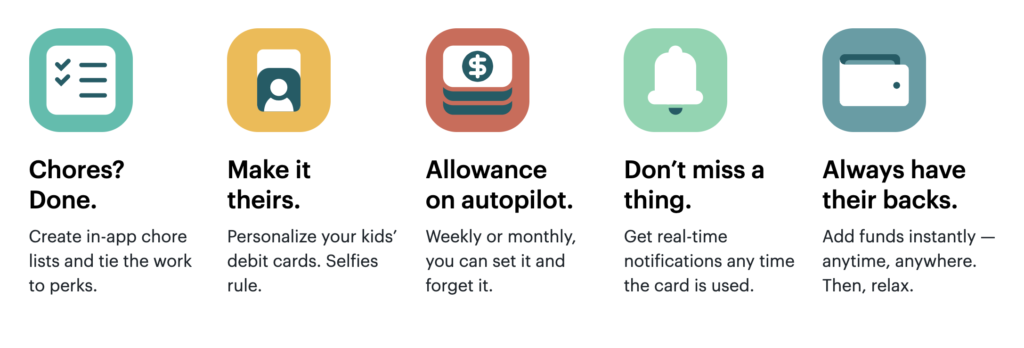
Greenlight is a chore management app that doubles as a personal finance coach for your child, helping them learn the ins and outs of earning, saving, and spending money.
Use Greenlight to set your child’s chores and monitor their progress toward completion. Assign each chore with a dollar amount that your child will earn as an allowance once they’ve completed their chores.
Greenlight is directly connected to a debit card where your child will receive their allowance, and that they can use to spend what they earn. You’ll receive a notification each time your child uses their card, letting you monitor their spending and keep an eye on where they are, and they’ll earn 1% cash back with each purchase. (You can also add funds at any time.)
Your child can also use the Greenlight app to set specific savings goals, where they'll earn up to 2% interest on their savings balance.
Greenlight has been accredited with the BBB since 2017, and maintains a B rating with the bureau. Greenlight currently has a score of 3.9 out of 5 stars on Trustpilot based on over 5,500 reviews. It's got a score of 4.8 stars on the Apple App Store and 4.7 stars on Google Play.
Greenlight offers three subscription plans:
Greenlight Core, which includes chore and allowance management and comes with a debit card for spending, costs $4.99/month.
Greenlight Max includes everything in Core but also includes identity theft protection, phone and purchase protection, and 2% cash back to savings. It costs $9.98/month.
Greenlight Infinity includes everything in Max but also includes family location sharing, SOS alerts. crash detection and 5% cash back to savings. It costs $14.98/month.
Greenlight is compatible with both Apple and Android devices.
Kaspersky Safe Kids review
Kaspersky Safe Kids is a parental control and child tracking app that allows parents to:
Track their child’s location
Set a “safe zone” where their kids are allowed and receive a notification if they step outside of it
Set screen time limits
Set website and app filters
Set YouTube safe search
And more
Kaspersky Safe Kids has a score of 3.3 out of 5 stars on Google Play and 4.2 out of 5 stars on the Apple App Store. Kaspersky Lab, Inc. has a D- rating with the BBB.
Kaspersky Safe Kids costs $22.99 per year for one user, and protects all of your children. The family plan costs $149.99, includes Kaspersky Premium, and covers up to ten devices. A free version is available that does not include screen time monitoring, GPS location, YouTube search management, and other premium functions.
Kaspersky Safe Kids is compatible with Mac, PC, Android, and Apple devices.
MMGuardian is another parental control app that parents can consider. It uses artificial intelligence to monitor your child’s text and social media messages. It will notify you if it detects inappropriate photos or mentions of drugs, cyberbullying, suicidal thoughts, violence, online predators, and more.
You can also use MMGuardian to set screen time limits, to block certain websites or apps, and to view your child’s location.
The MMGuardian parent app has a score of 4.3 stars on the Apple App Store and 4.2 stars on Google Play. The MMGuardian child app (for use on the child's phone) also has a score of 1.4 (iOS) and 1.8 (Android) stars, largely due to children complaining that the app is working as intended. Neither MMGuardian or its parent company, Pervasive Group Inc., currently have a profile with the BBB.
MMGuardian offers the following subscription plans for families with one child:
$4.99 monthly for one child phone
$49.99 annually for one child phone
Families with more than one child can opt into the family plan for coverage on up to 5 devices:
$9.99 per month
$99.99 per year
MMGuardian is compatible with both Android and Apple devices.
Mobicip review
Mobicip is a parental control software and internet filter. You can use the app to monitor activity on all of your family’s devices, set screen time limits on each individual device, lock devices, track your child’s location, manage web browsing and app usage, and more.
Mobicip has received a Mom's Choice Award. The app has a score of 3.1 stars on Google Play and 3.4 stars on the Apple App Store. Mobicip has been accredited with the BBB since 2023, and maintains an A+ rating with the company.
Mobicip offers the following payment plans:
Free 7-day trial
Lite – $2.99/month for up to 5 devices
Standard – $4.99/month for up to 10 devices
Premium – $7.99/month for up to 20 devices
Mobicip is compatible with iOS, Android, Windows, Mac, Kindle, and Chromebook.
mSpy kids review
mSpy is a parental control app specifically designed for smartphones. It allows you to monitor your child’s phone calls, text messages, and social media usage (such as Snapchat, Facebook, Messenger, Tinder, and WhatsApp). It also allows you to view your child’s GPS location. You can also use mSpy to view all photos and videos saved on your child’s phone, view their internet activity, and more.
mSpy has a score of 3.0 stars on Trustpilot, and 4.1 out of 5 on the Apple App Store. It is not currently available on Google Play. Neither mSpy or its parent company, Altercon Group, currently has a profile with the BBB.
mSpy offers three payment plans:
$11.66/month (annual)
$27.99/month (quarterly)
$48.99/month (monthly)
mSpy is compatible with iPhone.
NetNanny review
NetNanny is a parental control app that you can use to:
Set and manage screen time limits
Block certain websites and apps
Monitor your child’s social media and internet activity
Set filters for types of internet content you don’t want your child to access
Track your child’s location
Set alerts
And more
Parents have access to a Parent Dashboard that allows them to view information about all of their connected devices in one central location.
While NetNanny has been selected as the Editors' Choice for Best Parental Control App by Tom's Guide, it scores more poorly when rated by actual users. The app has a score of 2.1 stars on Trustpilot, 3.3 stars on Consumers Advocate, 2.7 on the Apple App Store, and 2.2 on Google Play. NetNanny's parent company, ContentWatch, Inc., is not accredited with the BBB but maintains an A rating with the agency.
As of May 2025, NetNanny costs $39.99 per year for one desktop. Coverage for 5 or more devices costs $54.99 per year. Protection for 20 devices costs $89.99 per year.
NetNanny is compatible with Android, iOS, Windows, Mac, and Kindle Fire devices.
Norton Family is a parental control app designed by the trusted Norton brand of antivirus and security software. Like other parental control apps, Norton Family allows you to:
Monitor the websites your child visits online
Block specific websites you don’t want your child to access
Monitor the apps your children use on their tablets and phones
Block apps you don’t want your child to use
View the search terms your child types into Google
Set screen time limits and schedules
Norton Family also has a few functions that other parental control apps do not. The most unique feature is “School Time,” a feature designed with virtual learning and distance learning in mind. School Time allows you to greenlight only those websites that your child needs to do their schoolwork, while blocking everything else during the school day.
Norton Family has a score of 4.7 stars on the Apple App Store and 4.6 stars on Google Play based on tens of thousands of reviews. NortonLifeLock is not accredited but has an A+ rating with the BBB.
Norton Family costs $49.99 per year. Certain other Norton products (such as Norton 360 Deluxe) may already come with a Norton Family subscription, so if you’re already a Norton customer you should check the terms of your package.
Norton Family is compatible with Windows, Mac, Android, and Apple devices.
OurHome app review
OurHome is a family chore management app that parents can use to assign chores to each of their children and monitor their progress. Each chore is assigned a certain number of “points” which children can save and redeem from a list of rewards that parents create. Examples might include an allowance, additional screen time, a special treat, or anything else that might motivate your child.
OurHome also includes a family calendar app and a shared grocery list, making it easy for everyone to stay in the loop.
As of May 2025, OurHome does not charge a subscription fee, which makes it a great, simple tool for families on a budget.
OurHome has a score of 5.0 stars on the Apple App Store. Based in Australia, OurHome does not currently have a profile with the BBB.
OurHome is compatible with iOS and Android, and also has a web app that you can access from any internet connected device.
OurPact review
OurPact is a parental control app built around two key, free features:
The ability to set screen time limits
The ability to block and grant access to the internet and other apps on your child’s phone
Additional features are available for premium members, who pay a subscription fee. These include:
The ability to set different rules for different apps on your child’s phone
The ability to set a “Screen Time Allowance” for your child to earn additional screen time
A family locator
The ability to block texting
The ability to filter or block certain web content
The ability to view your child’s online activity and a gallery of randomly taken screenshots of your child’s activity (Only available for Premium+ subscribers)
OurPact comes in three pricing tiers:
Free, which applies to 1 device and does not include access to premium features
Premium, which costs $6.99/month and can be used with 20 devices
Premium+, which costs $9.99 per month, can be used with 20 devices, and includes all premium features plus the “View” function
OurPact has a score of 2.5 stars on Trustpilot, 2.7 on Google Play, and a score of 4.4 stars on the Apple App Store. Neither OurPact or their parent company, Eturi Corp, currently have a profile with the BBB.
OurPact is compatible with Apple and Android devices.
Qustodio review
My family — two households that co-parent two kids, ages 12 and 14 — uses Qustodio. I own the account, but my kids' dad and stepmom also have the login info. Sometimes the time limits we set for the kids' devices need to be adjusted when they need to use their computer for homework, for example.
Qustodio parental control app built around a dashboard that parents can use to set screen time limits and monitor their digital wellbeing. Some of the other functions that Qustodio offers include:
The ability to filter websites and apps
The ability to track calls and texts
A family locator app
Reports to help you quickly understand your child’s activities
Alerts if your child searches for a restricted search term or if concerning behavior (bullying, sexting, etc.) is detected
The ability for your child to send you an SOS if they need your help
Qustodio has a score of 3.2 stars on Trustpilot, 4.2 stars on the Apple App Store, and 3.7 stars on Google Play. Qustodio is not currently rated by the BBB.
I think Qustudio is fine, but can be kind of cumbersome to use. I don't always find the interface intuitive, but for the most part I feel like it keeps my kids safe from porn and other weird web activity, and lets our family easily limit their screentime.
Qustodio Basic costs $54.95 per year for up to 5 devices. Qustodio Complete costs $99.95 per year for unlimited devices.
Qustodio is compatible with Windows, Mac, Chromebook, Kindle, Android, and Apple devices.
S’moresUp review
S’moresUp is a household management app that parents can use to set and manage their child’s chores. Once chores are set up, the app uses AI to send nudges and reminders to whichever child is responsible. This lets S’moresUp be the “bad cop” instead of forcing that burden on mom and dad. When the chore is complete, your child earns points that they can then redeem for rewards that you also set up.
In addition to chore management, S’moresUp also includes:
A built-in family calendar that you can use to schedule play dates, family events, appointments, and more
A Savings Goal function that teaches children how to save the points they’ve earned from completing chores
A parenting community where you can connect with others to learn tips about the app, or just ask questions from other moms in the same shoes as you
S'moresUp has a score of 4.2 stars on the Apple App Store and 3.5 stars on Google Play. S'moresUp does not currently have a profile with the BBB.
S’moresUp is available in both free and paid subscriptions. The free plan includes all of the basic functionality discussed above. The Standard plan costs $2.99 per month. The Premium plan costs $9.99 per month per family and offers the ability to:
Set more advanced chore types. You can, for example, have your children compete against each other, collaborate with each other, or rotate a schedule.
Set a late penalty
Auto-allocate regards and points
Require parental approval for chores
Schedule rewards
and more
S’moresUp is compatible with both Apple and Android devices.
Salfeld Child Control is a parental control tool built specifically for Windows and Android.
Parents can use Salfeld to set time limits for the device as a whole or for individual programs and app groups. For example, games can be limited to one hour per day while educational apps remain unrestricted.
The web filter blocks content by age or category across Chrome, Edge, and Firefox.
The Roaming feature tracks screen time across multiple devices (Windows + Android) under a single shared limit, useful in households where kids switch between a phone and a family computer.
Parents can also issue Bonus Time Codes as rewards, and receive daily or weekly usage reports by email.
All settings are managed through a web portal accessible from any browser, including iPhone and Mac.
Salfeld has a score of 4.1 out of 5 stars on Google Play. The company is based in Germany and has been operating since 1998.
Pricing starts at €19.95/year for one device. A 30-day free trial is available with all features unlocked, no credit card required.
Salfeld is compatible with Windows and Android devices.
Free parental control apps and alternatives
Parental control apps for Android
If you have an Android device (phone, tablet, etc.) you can put parental controls in place in a number of ways, completely free. These options include:
Creating a restricted profile on the phone for your child to use. Going this route will allow you to choose which apps on the phone your child has access to and which they won’t. They also will not be able to download anything without your approval.
Turning on Parental Controls on the phone. To do this, just open your settings and search “parental controls” to see your options.
Turn on Parental Controls within Google Play, which will again allow you to control which apps your child downloads. Just open the Google Play app, click Menu, Settings, and then Parental Controls.
Download the Google Family Link app (discussed above).
Parental control apps for Chromebook
In order to turn on parental controls for your child’s Chromebook, you’ll need to download Google’s Family Link app. The app is free to use and is designed to integrate with Android devices and Chromebooks. The app is discussed in more detail above.
Parental control apps for iPhone, iPod, and iPad
To turn on parental controls for your child’s Apple device, simply open the settings menu and then click Screen Time. From there, you will set a passcode for yourself as an administrator. You can then choose to set app time limits, block app downloads or purchases, toggle on/off apps that are already downloaded to the phone, filter explicit content (music, movies, books, etc.), filter web content, and more.
Parental control apps for Kindle
To turn on parental controls for your child’s Kindle, just select Menu, Settings, Device Options, and then Parental Controls. From there, you can choose to allow or restrict your child’s access to web browsers, the Kindle Store, the Cloud, and Goodreads.
Parental control apps for Mac
To turn on parental controls for your child’s Mac, just click on the Apple Icon, Click System Preferences, and search for Parental Controls. From there, you will need to select your child’s account. From there, you can set screen time limits and privacy controls. You can also restrict your child’s access to certain apps, websites, and stores.
Parental control apps for Microsoft PC
To turn on parental controls for your PC, just open the Windows search bar and search for Family Options. You will be prompted to create an account for your child if you haven’t already. This will automatically set the Microsoft Edge browser settings to Strict, which means your child will not be able to access adult-rated websites. It will also prevent incognito browsing. Parents can greenlight or disable additional websites as they see fit, and also gain access to reports around their child’s activity and screen time. You can also track the apps and games that your child uses, and set screen time limits.
Internet service providers
Most internet service providers also have some of their own built-in parental control tools. Below is a look at some of the most common.
AT&T parental controls
Log into your AT&T account through their website. You can then set restrictions on up to 10 devices. This includes creating a list of approved websites for your child’s device, monitoring web use, setting screen time restrictions, and more.
Spectrum/Charter parental controls
If you are a Spectrum customer, you can set parental controls in a number of ways depending on the products you use. This includes TV settings (through the TV Guide), online settings, and for the Spectrum TV App.
Sprint parental controls
Log into your Sprint account, click My Sprint, and then click Permissions. Scroll to the bottom of the page and click Permissions. From here, you will want to remove your child’s phone number, as this will prevent them from being able to make changes. You can then use parental controls to block apps, digital media, and third party charges. If you’d like, you can prevent your child from sending and receiving photos and videos from their phone. You can also turn on the Family Locator service as a paid add-on to your account, if you would like.
T-mobile parental controls
T-mobile offers a number of different apps that you can use to monitor, track, and control your child’s internet usage. These include FamilyMode, Family Allowances, T-Mobile FamilyWhere, and Web Guard. Each app has its own functions, compatible devices, and pricing.
Verizon parental controls
Log into your Verizon account through their website and click on the Parental Controls tab. Then, find your child’s device in the “Networked computers/devices” list. You will then be able to limit your child’s access to specific websites, categories of websites, or even the entire internet.
Xfinity/Comcast parental controls
Log into either the Xfinity app or the Xfinity website. Click on Parental Controls and then Managed Services. You can then block specific sites and keywords. You can also set internet access time limits for your child’s device.
FAQs about parenting apps and parental monitoring
How can I see everything on my child's phone?
If you want to see everything your child is doing on their device, you’ll need to take one of the following steps:
Turn on parental controls on their device (if available). Some devices will allow you to view your child’s activity in this way, while others will only allow you to set restrictions.
Turn on parental controls through your internet service provider. Whether or not you can view your child’s activity will depend on the options available through your provider.
Download an app that will track your child’s activity. Look for an app that specifically allows you to view your child’s activity. This should include their app usage, internet browsing activity, screen time, and also any photos or videos they send or receive.
Can Snapchat be monitored by parents?
Yes and no.
There are a number of settings that you can toggle on your child's account to make it more private. These include:
Only allowing your child’s existing friends to contact them
Toggling off “Quick Add” so that Snapchat doesn’t recommend your child as a friend to others
Turning on “Ghost Mode” in the map function so that others cannot see your child’s location
Toggling off “Let others find me using my mobile number”
As a parent, though, you cannot view what they send to their friends, what they receive, or what their activity looks like. The best way to do this would be to download a third-party app.
How do I monitor my child's TikTok?
If your child has a TikTok account, you can control some important privacy settings. To do so, you will need your own TikTok account. You can then turn Family Pairing Mode on. Family Pairing Mode will let you manage your child’s screen time, their direct messaging settings, and the types of content the app serves them.
To turn on Family Pairing Mode:
Log into your TikTok account on your phone and your child’s account on their phone.
Tap on the three dot icon next to your user profile. Click on Digital Wellbeing.
Tap Family Pairing. This will generate a QR code on the screen of your phone.
Using your child’s device, scan the QR code.
Bottom line: How to choose the best parenting app for you
The best parenting app for you will depend on the age of your kids, your family situation, and what you’re hoping to accomplish. For example:
If you’re looking for an app to monitor and control your teen’s phone, internet, and social media activity, we recommend FamiSafe.
If you are divorced or separated and co-parenting with an ex, we recommend Our Family Wizard, a court-approved app that allows parents to schedule, communicate, and share milestones.
How can I see everything on my child's phone?
If you want to see everything your child is doing on their device, you’ll need to turn on parental controls (if available) or download an app.
Can Snapchat be monitored by parents?
As a parent, you cannot view what they send to their friends, what they receive, or what their activity looks like. The best way to do this would be to download a third-party app.
How do I monitor my child's TikTok?
If your child has a TikTok account you can control some important privacy settings. To do so, you will need your own TikTok account. You can then turn Family Pairing Mode on.
Thinking of going back to school? Going after your first degree? There may be a single mom scholarship, grant, or financial aid program with your name on it.
If you are a single parent, these scholarships can help you set your family up for greater success, expand your standard of living, inspire your children, and place your dreams within reach.
Keep reading to learn more about college grants and scholarships for single moms:
These higher ed scholarships and grants are for single moms or dads pursuing their education but do not have requirements regarding where parents attend school or live.
Bethel Foundation Grace Scholarship
The Bethel Foundation Grace Scholarship Fund helps single moms pursuing a degree or certificate full- or part-time. Established by Lynda Powell, who knows the struggle of being a single mother, this scholarship awards up to $3,000 per year for tuition or books.
Educational Foundation for Women in Accounting offers multiple scholarships for single moms. These financial aid programs offer up to $16,000 over a four-year period for women who are the sole breadwinners for their families as they pursue higher education in the field of accounting.
The Custody X Change Giving Fund Scholarship is a global award program open to single mothers pursuing a course of study part- or full-time at an accredited school. Three undergraduate scholarships for single moms are awarded each year, ranging between $500 and $1,000.
Federal Supplemental Educational Opportunity Grant
The Federal Supplemental Educational Opportunity Grant awards up to $4,000 per school year to undergraduate students who need financial help to attend an accredited college or university. The grant is renewable. You must fill out the FAFSA to be considered.
Harold J. West Memorial Scholarship
The Harold J. West Memorial Scholarship provides up to $2,500 to parents enrolled in or preparing to attend college while also working a part-time job. To apply, you must work a minimum of 24 hours per week and attend or plan to attend a University of California, Cal State University, or community college in Southern California. The scholarship is needs-based and renewable for up to four years as long as you keep a minimum GPA of 3.2 as a full-time student.
Kathleen McVey Memorial Scholarship
The Kathleen McVey Memorial Scholarship is awarded to single parents enrolled in the Licensed Vocational Nursing (LVN) or Registered Nursing (RN) program at College of the Redwoods in Eureka, California. It’s a need-based scholarship for continuing college students who graduated from high schools in Humboldt County or Del Norte County. Award amounts vary.
The Park Foundation Scholarship program offers two scholarships a year: one for a single mom and one for a single father. Additionally, you are eligible if you are a Vietnam veteran without education benefits. The need-based award offers $2,000 for education expenses.
Patsy Takemoto Mink Education Foundation Scholarship
The Patsy Takemoto Mink Education Foundation Scholarship awards single moms up to $5,000 to tear down the financial barriers to higher education. Patsy Takemoto’s legacy, as a recipient of the Presidential Medal of Freedom, reflects a commitment to offer a boost to single moms pursuing a post-secondary degree.
Soroptimist Live Your Dream Awards
The Soroptimist Live Your Dream Awards is a global scholarship opportunity offering up to $16,000 to single moms to cover the costs of tuition, childcare, transportation, books and other financial concerns while pursuing an undergraduate degree, vocation, or skills training program. From Soroptimist International of the Americas.
School or state-specific scholarships and grants for parent students
Parent students” is the term for college students who have kids — typically these are younger students (say, age 30 and younger). Lots of institutions recognize the challenges of finishing a degree while also taking care of kids.
The following scholarships are available to parent students but have eligibility requirements based on your location or the school you attend.
Answer Scholarship
The Answer Scholarship is an ideal single mom scholarship for enrolled or accepted students seeking a first-time degree at an accredited university. You must reside in select counties in the Carolinas. The award amount varies, and the scholarship is renewable.
Arkansas scholarships
The Arkansas Single Parent Scholarship Fund offers scholarships for single moms in Arkansas and Bowie County, Texas. If you’re a single mom holding down your household while pursuing a degree, certificate or skilled trade, it’s worth a look. Money is available for school, but also to help navigate the cost of living while you level up.
The Single Parent Scholarship Fund of Northwest Arkansas provides up to $2,500 per school year for single parent students enrolled in degree or licensing programs at accredited colleges and trade schools in Arkansas. You can also get up to $2500 per term if you are pursuing credentials in various health care or tech programs.
Beatrice F. Kroesche Memorial Scholarship
The Beatrice F. Kroesche Memorial Scholarship is for single moms at the University of Utah enrolled in the College of Education or Department of English. Maintain a full course load and a 3.0 GPA to be in the running. With yearly awards between $1,000 to $2,000, it’s worth a shot.
Bernice Murray Scholarship
The Bernice Murray Scholarship is for trailblazing single parents securing an undergraduate degree. Applicants must live in Vermont, demonstrate financial need, and use the funds for childcare expenses. Single moms studying part- or full-time can get up to $4,000 to lighten the load at home.
Bruce and Marjorie Sundlun Scholarship
The Bruce and Marjorie Sundlun Scholarship is open to single parents living in Rhode Island going after a post-secondary education. While preference is given to applicants who are current or past recipients of state benefits or previously incarcerated, all single moms can apply. Awards vary, but can be as much as $2,000 annually.
BYU Marriott School Single Parent Scholarships
Brigham Young University (BYU) Marriott School Single Parent Scholarships are for single moms in the graduate program at BYU Marriott in Provo, Utah. It’s a renewable single mom scholarship designed to help with education expenses for full-time students looking to improve life for their children. Award amounts vary.
The Capture the Dream, Inc. Single Parent Scholarship awards $1,000 to single parents in the Greater San Francisco Bay Area earning a degree at an accredited, not-for-profit, two- to four-year institution. It minimizes tuition cost and the stress of balancing work, home and school.
Downer-Bennett Scholarship
The Downer-Bennett Scholarship is one of the multiple scholarships available to students attending the University of New Mexico, main campus. To be considered you must complete the Free Application for Federal Student Aid (FAFSA). This single-parent scholarship offers a one-time award of up to $1,000.
Ellen M. Cherry-Delawder Memorial Scholarship
The Ellen M. Cherry-Delawder Memorial Scholarship is a merit- and need-based award bestowed upon single parents pursuing a business or finance-related degree. Preference is given to single moms raising children. Applicants must reside in Maryland and attend Howard Community College.
Helping Hands for Single Moms
Helping Hands for Single Moms program provides scholarships for post-secondary education for single moms in Dallas, Tx. and Phoenix, Az. Scholarship recipients also have access to a community of assistance, from legal help to emergency funds. To apply, you must meet requirements for income, school enrollment, residency, and more. Financial awards vary.
LouEllen Dabbs Scholarship
The LouEllen Dabbs Scholarship is one of dozens of scholarships offered by the Holyoke Community College (HCC) Foundation in Massachusetts. To apply, you need to be a single parent enrolled at HCC with at least nine credit hours. Awards vary and go toward tuition. Single moms with strong academic performance can stand out.
Sacramento Region Community Foundation
The Sacramento Region Community Foundation is a top provider of scholarships in the Sacramento region. The foundation also lists grants and scholarships from other organizations. Awards range from $500 to $10,000. Apply now — the deadline for many of these opportunities is March 10.
Scholarships and grants in Florida
The P.E.O. International Continuing Education Grant is a great option if you are looking for scholarships for single moms in Florida. It offers a one-time gift of up to $3,000 to help with any educational expense, from tuition to childcare when you are in class. You must be enrolled in a degree or certification program at an accredited school.
The William L. Boyd, IV Effective Access to Student Education Program helps undergraduate Florida residents pay for tuition if they are attending an accredited college or university in Florida. You must be pursuing your first degree. Award amounts vary, and eligibility requirements are set by each participating school.
The First Generation Matching Grant offers needs-based grants to undergraduate students whose parents have not earned a baccalaureate degree or higher. It encourages a legacy of higher education and is offered at Florida state universities and community colleges.
The Florida Law Enforcement Academy Scholarship Program pays for tuition, fees, and up to $1,000 for eligible expenses for students enrolled in a law enforcement officer program at a Florida institution or technical learning center.
The Florida Student Assistance Grant Program provides a minimum $200 yearly grant to students enrolled in undergraduate or postsecondary studies at a public or private accredited college or university. This needs-based award is determined by the Free Application for Federal Student Aid (FAFSA).
The Honorably Discharged Graduate Assistance Program is a needs-based benefit that helps students pay for living expenses during holiday or semester breaks. Students must be on active duty or honorably discharged from the Armed Forces. Students must have served on or after September 11, 2001 to be eligible.
The Jose Marti Scholarship Challenge Grant Fund awards up to $2,000 per semester to students in need who have Hispanic ancestry and attend public or private educational institutions in Florida. This grant is available for undergraduate and graduate applicants.
The Mary McLeod Bethune Scholarship Program offers financial help to students in need who attend Bethune-Cookman University, Edward Waters College, Florida A&M University, or Florida Memorial University. Each school determines eligibility and application procedures and deadlines.
The Minority Teacher Education Scholars (MTES) program awards $4,000 for up to three years to students pursuing a degree in education. Applicants must be of African-American, Hispanic-American, Asian-American, or Native American descent.
The Randolph Bracy Ocoee Scholarship Program provides an annual award of up to $6,100 to pay for tuition and fees. Applicants must prove that they are either a direct descendant of victims of the Ocoee Election Day Riots of 1920 or a current African-American resident of Ocoee, Fla.
The Rosewood Family Scholarship offers up to $6,100 each year for tuition and fees of students who can prove they are direct descendants of Rosewood, Fl. families who were victims of the massacre and destruction of the town in January 1923.
Every month, Wealthysinglemommy.com awards $500 to a single mom. The Kickass Single Mom Stimulus Grant offers a helping hand to single mothers struggling with life balance, health issues, childcare expenses and anything else keeping them from living their best life. Apply here:
Other scholarships and grants
Discover Scholarship Award
The Discover Scholarship Award offers $5,000 scholarships to students pursuing or continuing education at an eligible school. There is one awardee each month through January 31, 2024.
You don’t need to purchase a Discover product or loan to be eligible, but you must be a resident of the United States (including U.S. territories), at least 16 years old when you apply, and meet one of the following:
Senior in high school, an alternative school, or homeschooling
Student who holds a GED or high school diploma equivalent
Undergraduate or graduate student
First Responders Children’s Foundation Scholarship
The First Responders Children’s Foundation Scholarship provides financial help to students who have first responder parents. Preference is given to students whose parents died in the line of duty or became disabled. Awards vary, are renewable, and are for tuition and fees for an accredited college, university, or technical/vocational school in the U.S.
Roadway Worker Memorial Scholarship
The Roadway Worker Memorial Scholarship offers up to $10,000 in financial assistance for post-secondary education to children and spouses of workers killed or permanently disabled in roadway work zones. If you lost a spouse to an unfortunate roadway accident or have become the sole provider, this money can help you carry on.
The Teacher Education Assistance for College and Higher Education (TEACH) Grant is a federal grant that requires recipients to teach students full time for four years in a low-income area, in a field that is in need of qualified teachers. If you don’t fulfill the teaching service requirement, you must pay back the grant with interest. Grant awards are up to $4,000 per year.
The Little Bundle Supermom Scholarship
The Little Bundle Supermom Scholarship awards one college winner and one high school winner every six months. Eligible applicants must be U.S. citizens or permanent legal residents who are single mothers, children of single mothers, or closely impacted by a single mother, with all fields of study and GPAs considered.
Jeannette Rankin Women's Scholarship Fund
The Jeannette Rankin Women's Scholarship Fund scholarship supports low-income women aged 35 and older pursuing technical, vocational, associate's, or first bachelor's degrees at accredited U.S. institutions. Awards up to $10,000 are distributed directly to recipients and are renewable for up to five years.
Women's Independence Scholarship Program
Women's Independence Scholarship Program (WISP) assists survivors of intimate partner abuse who are pursuing education to gain economic independence. Applicants must have been separated from their abuser for at least one year but not more than seven years, with award amounts varying based on individual needs.
Kentucky Colonels Better Life Scholarship
The Kentucky Colonels Better Life Scholarship scholarship offers awards up to $3,000 for single parents in Kentucky pursuing post-secondary education. It aims to support single parents in improving their lives and their children's lives through higher education.
Minnesota Office of Higher Education Grants
The Minnesota Office of Higher Education provides various grants for Minnesota residents, including some specifically for student parents. Award amounts vary depending on the specific grant program and the applicant's circumstances.
Women In Need Scholarship (Washington State)
The Women In Need Scholarship supports low-income women in Washington State pursuing education to improve their lives. Eligible applicants must be Washington residents for at least 12 months, with awards up to $5,000 per year for up to four years of study.
Elevate-A-Life Scholarship
The Elevate-A-Life Scholarship provides financial support to single parents pursuing higher education. Eligible applicants must demonstrate financial need and a commitment to improving their lives through education.
SVCF Deblinger Family Scholarship (Alameda, Santa Clara, Santa Cruz, or San Mateo County, California)
The SVCF Deblinger Family Scholarship offers up to $10,000 to low-income single mothers returning to college. Eligible applicants must be residents of specific California counties and enrolled in a community college or four-year transfer program.
Scholars Fund for Education Scholarship
The Scholars Fund for Education Scholarship supports students facing financial barriers in pursuing higher education. Eligible applicants must demonstrate academic achievement and financial need.
Judith Heavenrich Memorial Scholarship (Saginaw County, Indiana resident)
The Judith Heavenrich Memorial Scholarship assists Saginaw County, Indiana residents in pursuing higher education. Eligible applicants must demonstrate financial need and academic potential.
Women in Transition Scholarship (Women who are pursuing accounting degrees)
The Women in Transition Scholarship supports women pursuing accounting degrees who are the primary source of support for their families. Eligible applicants must be incoming freshmen seeking a bachelor's or associate's degree in accounting.
NLHA Education Fund Scholarship
The NLHA Education Fund Scholarship supports students pursuing higher education in fields related to affordable housing or community development. Eligible applicants must demonstrate financial need and a commitment to these fields.
Jeffery Isaiah David Memorial Foundation Education Scholarship
The Jeffery Isaiah David Memorial Foundation Education Scholarship supports students pursuing higher education, with a special focus on single fathers. Eligible applicants must demonstrate academic achievement and financial need, with priority given to single dads striving to balance parenting responsibilities with educational goals.
Bottom line: Get single mom scholarships for school now
Getting your degree is attainable with the right plan. Start with the FAFSA — it’s a blanket application to pursue Pell Grants for single mothers and be considered for a wealth of programs that provide financial aid for single moms.
You’re not alone in your quest for a better life for yourself and your children. Tap into these scholarships, grants and financial assistance programs offered specifically to help you rise and fly. We also put together a list of scholarships and grants for women.
Other ways to find helpful and free resources for low-income families and individuals:
“What’s behind the growing gap between men and women in college completion?” by Kim Parker, Nov. 8, 2021, Pew Research Center https://www.pewresearch.org/short-reads/2021/11/08/whats-behind-the-growing-gap-between-men-and-women-in-college-completion/
In this post, I share how I got over my own mindset blocks that had me stuck.
Emma’s quick take: What makes me a successful single mother
Each single mom starts her journey at a different point. You may be struggling to make ends meet, in which case you may need some help with bills, child care and housing and other needs. That is the reason I created my monthly $500 single mom grant program.
Then, there are some financial basics that have helped me thrive through lean and abundant times:
1. Live frugally and simply. Even though I could easily afford a different home, my kids and I enjoy our two-bedroom NYC co-op. We only buy what we need, or what will give us true pleasure, and are mindful of the environmental impact of our purchases. My 2013, banged-up Subaru Impreza hatchback is paid-off and fuel-efficient. How to create a budget you will stick to.
2. Invest in myself first. Every year for the past five years I have maxed out my tax-advantaged retirement accounts (401k and Roth IRA), which are especially rich because I am self-employed (did you know you can shelter up to $56,000 in a 401k if you are self employed?).
Other investments include a cash emergency fund, and life insurance and disability insurance. Yes, these investments are wise and advisable, but the greatest advantage is they make me feel safe and secure. Knowing that the chances of my family’s future is secure has freed me from untold stress, and graced me with a confidence that informs so many of my decisions.
3. I live debt-free. Early in my life, I struggled with student loans and credit card debt — did the monthly minimum payment mambo, and tossed balances around to different 0% balance transfer credit cards and other shenanigans. Fast-forward to today and a debt-free life (except a mortgage, with a very low, tax-advantaged interest rate).
4. I am grateful. It is very easy to slip into assuming society’s damnation of single motherhood, and buy into the mantra that as an unmarried mom, I am a hot, struggling mess.
My secret weapon against the single-mom blues is finding a gratitude exercise. The more you focus on what you DO have, and what you CAN accomplish, and HAVE ALREADY accomplished, the more likely it is that you minimize your focus on what you lost, or what your friends have (that you don’t), and free yourself to step into all the possibility of your future.
A gratitude exercise can include writing in a pretty notebook each morning all the things you are grateful, or creating a family ritual in which each member shares three things they are grateful for before a meal or at bedtime, or simply taking a moment during a stressful spot to remind yourself of all you have. Here are just a few things that I am grateful for:
I live in a time of peace, in a place and time where there are unprecedented opportunities for women — including unmarried mothers.
My children are healthy, bright, kind and funny people.
I have all the love I am capable of receiving.
I have skills to pay the bills.
So much privilege
5. I give back. Once you embrace all your blessings, big and small, and step into a sense of true gratitude, the resulting humility precludes you from serving others. This may mean giving to a charity or house of worship. It can include volunteering your time, being a listener, or bringing a casserole, shoveling the driveway or other favor to a friend or family member for those in your life who need a hand, or other selfless acts.
My service includes giving at least 10% of my net income each year to charity; buying extra food with my kids each time we go to Costco each month and give it to a local food pantry; and giving free consulting services to people, organizations and businesses that align with my principles. Recently, I launched Moms for Shared Parenting, an activist organization to which I am giving my time, money and skills for zero pay.
1. Embrace that you are now financially independent as a single mom
Fights about money are one of the biggest reasons single moms are not romantically involved with their kids’ dads in the first place.
The fact that you are now financially free to make good, sound money decisions is one of the most positive, powerful changes in your life.
So is your newly encumbered ability to work and earn more money. You don’t have to play to anyone’s ego anymore.
Embrace this independence and all the freedom and power that comes with it.
Do not start to dream and strategize about how the next man will be your meal ticket to a better financial future.
Maybe one day you’ll couple with a man who is at least if not more successful than you, which will bolster your financial security. Even then, you need to take care of yourself, and your finances, and build a life and wealth as an independent adult woman. Because you are, and you can.
Yes, you may receive child support and/or alimony. But remember this: That money could go away any time.
He could lose his job, skip town, become disabled or pass away at any moment.
You cannot control that. But you can control how much money you earn.
And you can earn far more than a judge may order you be paid.
Plus: It is critical to your ability to move on emotionally in this phase of life if you are not connected to your ex and your former life through bi-weekly child support or alimony payments.
2. Let go of assumptions about what is possible as a single mom
Your family, media, friends, and colleagues likely give you messages — subtle and not-so-much — about your urge to get married “while you’re still young and cute,” settle for a low-paying, but steady job, and how statistically, your kids are destined for juvie and a life of otherwise underperformance.
Ignore those people, and contend with those messages in your own mind (I’ve had them, trust me! Worries about living out of a car that I didn’t even own, visions of constantly struggling). Instead, surround yourself with successful, positive people. Identify successful single moms in your own life, or in the world. Cocoon in messages of what is possible. You absorb it by osmosis.
Single moms are statistically poorer and more stressed out with kids who don’t do so great when compared with other families. That is not a sentence for your life. You can do whatever you want, but you have to do it through the lens of a person, a professional, a woman.
Were you offered a promotion of your dreams, but consider not taking it because the travel will permanently damage your kids? Has any man ever in the history of mankind ever had that thought?! Take the freaking promotion, hire a wonderful babysitter to help you out, get a housekeeper for crying out loud, and show your kids — and the world! — how shit is done.
Were you offered the promotion of your dreams, but consider not taking it because the travel will permanently damage your kids? Has any many ever in the history of mankind ever had that thought?! Go after that promotion, hire a wonderful babysitter to help you out, get someone to clean your house for crying out loud, and show your kids — and the world! — how shit is done. Living your greatest potential is the best gift any mother can give her children, and the world.
One of the biggest mistakes single moms make is they prioritize saving for their kids’ college over their own financial futures. I wrote about this in my SUCCESS magazine column.
Nearly half (47 percent) of single moms say that saving for their children’s education is their No. 1 greatest motivation for developing a long-term financial plan — above saving for retirement. Compare that with just 26 percent of other modern families who say the same, according to an Allianz survey.
I suspect that single moms feel guilty for being a “broken family” and attempt to make up for any pain a breakup caused their children by financing their educations. The reason may also be that the moms themselves have struggled financially, and hope to lessen that struggle for their kids.
No matter how benevolent the reasons, don’t do this.
Your kid can get loans for school, you can’t get loans for retirement. Financial pros will tell you that retirement savings trump college on all fronts: more tax benefits, longer vestment periods and a higher priority overall. Plus, your kids will be super irritated if they have to support you when you’re old and you could have made better decisions.
4. Spend money in ways that make you money
Time is money.
If you spend all your free time on housework and errands, you will never break free from your financial challenges and build something new.
There is a reason the wealthy — and even the financially comfortable people — hire out cleaning, yardwork, and other chores: Their time is too valuable doing what they do not enjoy, and they can hire out to an expert, instead.
Pay for yard service, and use that time saved to build a business.
Invest in a dishwasher and spend that extra time studying for a degree that will earn you more money.
Consider simplifying your money management too, for instance, using online banks with intuitive apps and low fees can save both time and stress, freeing you up to invest in yourself rather than chase paperwork.
For many single moms, one of the best investments is pursuing a high-earning, stable career, especially in fields like accounting. Getting certified takes careful preparation and determination. Check out this resource on how to pass the CPA exam for practical tips and a step-by-step approach that makes success more attainable—even with kids and a busy schedule.
Part of self-care is fueling your body for the season you’re in. Investing in sleep, simple movement, and superfood-based maternal nutrition supplements designed to support fertility, pregnancy, breastfeeding and postpartum can boost energy, mood and focus—so you can show up for your kids and career. Think of it as a tool, like childcare or a housecleaner, that buys you capacity to build wealth.
You can shop at Nutrition Geeks to get high-quality, science-backed supplements that support your health and well-being without breaking the bank.
Create a money self-care practice
Just as everyone needs a fitness routine and can benefit from mindfulness or spiritual practice, so, too, is the case with money. Creating an action-based plan for staying conscious and actively involved with your money habits and attitudes is the essence of financial self-care.
Examples of items in your self-care practice might include:
Daily money gratitude writings
Weekly check-in with financial support group/friend
Weekly review of all expenses
Monthly assessment of financial goals
Twice-yearly meeting with financial advisor / CPA / banker
Monthly charity donation
Of course, your self-care practice will be your own. As you commit to and tweak your own wellness practice, you will find that it can feel so powerfully positive that — not unlike a great exercise habit — your whole being will crave it when you miss a day or week. That is when you know true change is underway.
Face facts about your money
Money still carries heavy taboos, and talking about it with anyone but your partner is still considered rude in many circles. This shadow over money carries over into our own feelings and management of our personal finances, which are easily ignored.
Do you tend to leave bills and financial statements unopened? Do you know exactly how much debt you have — and at what interest rates? How close are you to healthy retirement savings?
If you can’t answer these basic questions, it’s time to get really honest with yourself. Face all the facts about your money.
One of my favorite tips is to use free online tools to easily pull in all of your financial accounts into one place, tallying all your income, debt, investments and credit cards. Simply looking at these numbers in one spot is often life-changing.
You may be pleasantly surprised — one single mom who undertook this step at my advice told me she was stunned and thrilled to learn that she had six-figures in assets. You may be less pleased with what you see, and that is OK. Be kind to yourself, and appreciate the bravery involved in taking this first, hard step — which growth depends upon.
Identify the root of your relationship with money
To start a new, better relationship with your finances, dig into where your current relationship started. Think about your earliest money memories and write them down.
What lessons did your parents teach you about earning, spending and saving? Did your parents fight about money? Were finances a source of stress or joy in your home? Was money revered as a very important source of status? A means to control others? Or simply a currency to help achieve comfort?
Just like it can take decades to decode any other life challenges, money issues are complicated and nuanced, and your insights will evolve over time. But honoring the very real early influences on your money relationship can help you take control of a new, better path. Online therapy can be an affordable way to explore your money story. Learn more at our reviews of best online therapy sites.
Get support
Surrounding yourself with others who are on a positive, self-care journey with their money is critical to your success in this part of your life. Studies find time and again that the people you surround yourself with have a huge impact on your habits. If you don't have those role models in your real life, seek them out in books, movies and TV shows — even Oprah.
For example, teenagers whose friends smoke are also likely to smoke. Same, too, with personal finance habits.
If your friends are all swimming in debt, love to shop when they can’t afford it and care little about their investments, it is time to find a new tribe.
This might include joining a Facebook group of like-minded women, forming a support group in your neighborhood or house of worship, or reaching out to a friend who lives far away and scheduling monthly accountability calls to keep each other on track.
Getting the financial support you need also likely includes working with professionals. A good accountant or tax preparer, financial advisor, bookkeeper (if you own a business), debt counselor and a banker might all be part of your financial team. What single parents need to know about taxes.
These experts will not only provide money- and time-saving services, but will also hold you accountable to your goals. Plus, simply reaching out and creating a professional relationship is a positive action step that will make you feel empowered.
Join my Facebook group, Millionaire Single Moms, where positive, evolved women support one another in building careers, businesses, wealth, relationships and more!
6. Dream really, scary big
Single moms might get out of rock-bottom poverty mode, but they often fail to truly break free from mindsets that hold them back from their true potential. I often see single moms who blame their exes for their financial limits, complaining that failure to pay child support means they can’t go back to school to earn a higher degree, and therefore make more money.
Others say that the lack of their ex’s involvement means that they work the hours required to qualify for a promotion. Others blame their family status for not taking on big risks like starting a new business, taking a demanding new job, or otherwise stretching their professional or financial comfort zone, citing needing to be home more, or lack of support as the reason.
I get all of these and have felt them myself. But when I am about to kill my ex for not honoring his visitation schedule, which means I have to scramble to find a sitter last-minute or cancel a media opportunity, I have learned to pause, reach out to my network of sitters, family and friends, and hire that child care, work after the kids are asleep, or otherwise do whatever it takes to make it work. Otherwise, I am giving my power to others — my ex, my family status, or society who I may fear judges me and my parenting.
Do not give your power to others. Do not live in fear, anger or otherwise mute your brilliance. Instead, put the pedal to the metal. Set giant, scary, ridiculous goals. Hire the child care you need, and make parenting about quantity over quality time. After all, if you are stressed over money, resentful over unfulfilled dreams and goals, you are a far, far lesser mom and woman than one who spends a few less hours with her kids, but is living her full potential, and serving as a far poorer role model for her children.
Go for it. You got this.
This is my story.
I was pregnant with a toddler when my ex left. He made all the money and his job provided insurance and other benefits.
I was terrified. I would lay in bed at night figuring out how the kids and I would live in my 1999 red Subaru Forester. Today, I run a business with revenue of hundreds of thousands of dollars each year. My hot boyfriend of five years is a wonderful partner. I enjoy at least four vacations each year — often internationally, and sometimes with the kids, others with my boyfriend, a girlfriend, or solo. My investments are in awesome shape for retirement, as well as short-term goals. I co-parent 50/50. And best of all— my kids are thriving and happy.
This truth bomb from Jessica Mraz, 50, St. Paul, Minnesota, who let go of child support, changed her life for the better, and changed the world:
“Life lesson learned yesterday. I was struggling to figure out how to pay for my son’s health insurance and medical bills since the premiums went up and my deductible changed as well as sports and guitar lessons. I got into a big argument with my ex because he refuses to pay for any of it since he gives me some child support and thinks that should cover everything. Suddenly a light went off in my head and I thought:
“Why are you wrestling with this piggy? You are just covering yourself up with mud. You will never get him to agree with you. So woman, you are just going to have to make all the money you need to pay for everything that your son needs and you need to have a great life. Stop thinking in this limited way. Now raise yourself up and walk away from this struggle.
“I was angry and felt like blowing off some important things I had to do. But I didn’t. I turned that anger into energy. Then I walked into the recording studio where I do voiceover and knocked it out of the park. One of the most empowering moments of my life. I am grateful to Emma and the Millionaire Single Moms (Facebook group, join here!) for helping me get to this place of awareness and dignity.”
— Jessica
Jessica is a professional translator, one of the career paths that pay very well and many moms do from home — learn how to get into this lucrative, flexible field and 12 others in this post about work-at-home high-paying careers.
7. Write your own mission statement
This is my mission statement for this platform, myself, and for single moms everywhere. It is from my #1 Bestselling book, The Kickass Single Mom (Penguin), which the New York Post called a “Smart, must read” and was featured on The Doctors, New York Times, Wall Street Journal, Jenny McCarthy Show, Oprah Magazine, MONEY magazine and more than 150 other outlets:
I will set big, giant scary goals for myself and family, regardless of what my family looks like, or what other people think I am capable of.
I appreciate every single day that I live in a time of unprecedented wealth and opportunity for women, and it is my duty to achieve both to honor the people who fought for me to have these opportunities, as well as for those who come after me.
I accept responsibility for my own financial well-being.
I might not have it all figured out right now, but I am taking steps to be debt-free, financially independent, and with a financial plan for the future.
I will never chose to under-earn in order to maximize receipt of child support, alimony or public benefits.
I will never under-earn to minimize paying child support or alimony.
I will take steps to minimize working mom guilt, instead deferring to extensive research that finds that after age 3, the number of hours moms spend with their kids does not impact their development, and actively thwart peer pressure that assumes that the stay-at-home mom is the better mom, because all science finds to the contrary.
I will strive to co-parent amicably and equally share with my kids’ other parent / dad, because I accept that women are not inherently better parents, nor more responsible for children, than men.
I will take big and calculated (and some not-so-calculated) risk. Because that is the only way to grow and change — financially, professionally and personally.
I will seek without guilt or shame work that is exciting, creative and fulfilling.
I will never minimize my professional success — in actuality or perception — in order to appear attractive to men.
I relish that I am a role model of earning and professional success for my children. Also, for other women and moms.
I give back. Even — especially — when I feel like I don’t have any more to give, I remember that I can give to others, and that gives me strength.
I accept help. I’m just one woman, I am vulnerable, and I can’t do everything on my own (that would be insane).
I will stumble, fail, eff stuff up in the worst way. Then get back up and go for it again.
I’m never, ever, ever, ever, ever entitled. Ever!
I am capable of so, so much more than I limit myself to. I open myself up to the amazing and impossible.
Bottom line: What do single mothers need most to be successful?
Single mothers need to focus on being financially independent and self-sufficient. This can include getting help from charities and services, but also focusing on building a career or business, building your personal finances, and modeling a healthy, positive life for your children — as well as other moms who are watching you!