scroll top

I blindly grew up and into my 30s assuming the standard-issue feminist party line:

Women's work is uncompensated and undervalued. When women become stay-at-home mothers, that benefits men's careers, and when the marriage ends, she should be compensated for that lost earning potential. Both partners' lifestyles should be the same when the marriage ends!

Then, I watched my friend get divorced, and face alimony.

He had a high-earning career, and after spending her 20s in low-paid retail jobs, his wife stayed home full-time until the kids were in high school, then worked part-time retail, tried to start a couple of craft businesses that went nowhere, and then started sleeping with her massage therapist.

When they divorced, this couple stayed on mostly friendly terms and would get together with the kids, who were by then in college.

His career continued on while she struggled bitterly. Since they broke up in the middle of the housing and stock market bust, there weren't many assets to divide.

The kids were out of the house, so there was no child support. When they split, he had been laid off and was unemployed, so there was no alimony.

She went from a very comfortable life as a suburban housewife, to struggling very hard to get by, living in a shared apartment.

At the time, I was incredulous about this. He should support her, I screamed in my head. Her lifestyle is so compromised compared with his.

Today, I recognize alimony as a dated, sexist construct that has grown out of its intended purpose, and only holds women and gender equality back.

First, some basics on why and how stay-at-home motherhood hurts gender equality:

When I push back against the stay-at-home mom fantasy — the myth that children fare better when mothers do not work, and that this lifestyle benefits anyone at all — I am often met with: “What do you care? We should respect all women's choices in the spirit of sisterhood!”

Wrong.

When women choose to stay home full time, abandon career and earning, in the name of better mothering, or commitment to family, we all lose, most especially women.

Why alimony is wrong, sexist, and unfair:

1. You model a stereotypical female roles, which informs your children, spouse, friends and neighbors

2. Stay-at-home moms influence sexism in workplaces

3. Stay-at-home moms hurt the economy

4. The choice to stay home with children hurts the hiring and promotion of other women

5. Staying home with kids means you abandon the women who stay and fight for equality

6. Stay-at-home moms shame working moms

7. Stay-home moms perpetuate the myth that motherhood is enough to fulfill us

8. Stay-at-home moms are more prone to poverty

9. Women who do not work are less likely to be involved in family finances

10. Women who do not earn their own money are more likely to suffer domestic violence

11. When you divorce, stay-at-home wives and moms are screwed

12. When women stop working, you have far fewer choices, and we all lose

13. SAHMs' post-divorce / separation life is tumultuous

14. How alimony hurts the gender pay gap

15. Alimony is legislated dependence for women

16. Alimony makes divorce so much harder, more expensive, and dragged out

17. Alimony and child support keep you passionately attached to your ex

18. Alimony makes co-parenting very contentious

19. Alimony holds you back professionally, personally and financially

Bottom line: Get off the alimony gravy train because your choices affect me, and my choices affect you

1. You model a stereotypical female roles, which informs your children, spouse, friends and neighbors

If you, woman, are home, your children equate housekeeping, child care and other unpaid ‘women's work' with women. They see their father, a man, earn in the world. That informs their ideas about gender and what is expected of women and men.

That is why Harvard professor Kathleen McGinn found, in her study of 34,000 people across 24 countries, that girls raised by mothers who worked outside the home for pay, achieved more academically and grew up to be women who achieved more professionally and financially than their peers who had stay-at-home moms.

Boys raised by working moms were more caring for children and older people living in the home than their SAHM peers, and grew up to be men who were the same — all while achieving as much academically and professionally as those raised by SAHMs. In short: kids grow up to be what they see.

2. Stay-at-home moms influence sexism in workplaces

Men — especially the white variety — still very much control corporate and government policy, and are far more likely to advocate for policy that supports working parents if they themselves share in family responsibility because their wives work, too.

Researchers at Harvard, NYU and University of Utah found:

“Employed husbands in traditional marriages, compared to those in modern marriages, tend to (a) view the presence of women in the workplace unfavorably, (b) perceive that organizations with higher numbers of female employees are operating less smoothly, (c) find organizations with female leaders as relatively unattractive, and (d) deny, more frequently, qualified female employees opportunities for promotion.”

3. Stay-at-home moms hurt the economy

When you do not participate in the labor force, the world misses out on your unique talents

Recent headlines such as “Closing the gender gap could grow the economy by $2.1 trillion” (CNN) scream that the best way to grow the economy is to better engage women in the professional world.

You consumed educational resources that were designed for the benefit of all of society. You worked hard to earn positions, raises or build a business.

When you drop out for any significant period, all those collective skills and network are paused — or tossed out. That is a brain drain that we, as a society and world, cannot afford to lose.

4. The choice to stay home with children hurts the hiring and promotion of other women

Your departure from the workforce discourages managers and companies from hiring, training and promoting women since it sets the precedence that women of a certain age will just drop out indefinitely to have babies. Read: “Motherhood Penalty Affects Women Who Never Have a Child” (NBC).

5. Staying home with kids means you abandon the women who stay and fight for equality

My friend Maria, a divorced mom, has fought her way into an executive position at the male-dominated accounting industry where she's worked for 22 years.

She told me: “Every time a woman in my company drops out to stay home and ‘be a mom,' I want to scream. I think, ‘I and every other woman in this big company need you to be here in these meetings and fight for them.' I feel let down and, frankly, abandoned. They left me here to fight alone.”

6. Stay-at-home moms shame working moms

Culturally, Americans believe children need stay-at-home moms. Pew found that 60 percent of Americans believe it is best for kids when a parent is home full-time, and a full 40 percent of Americans say that children are harmed (!) when mothers work outside the home. 

A full 70 percent of U.S. mothers work, and the majority of those who do not would like to work, but do not because child care is so prohibitive, studies find.

The majority of moms who work do so because they need to eat, and their children need to eat — not because it is a lifestyle choice. In other words,

When women say, “I don't want to go back to work because I love my children,” that means, “I love my children more than you do. I am a better mom.” We all love our children. Here a very important fact you need to hear right now:

The University of Maryland’s very important meta-study, “How Does the Amount of Time Mothers Spend with Children Matter?” found that for children ages 2 to 11, it makes no difference the number of hours a mother spends with her when it comes to the child’s academic or psychological success.

7. Stay-home moms perpetuate the myth that motherhood is enough to fulfill us

Instead, here are studies that show that mothers who work are happier and healthier, and less sad and angry, than their peers who work for pay. This is old news.

Betty Friedan's 1963 blockbuster The Feminine Mystique established this five decades ago. We are having the exact same emotion vs fact debate today. Let's move this conversation forward.

8. Stay-at-home moms are more prone to poverty

Whether you stay married for the rest of your life, divorce, or your spouse passes away before you do (statistically likely), you are more likely to be poor.

A financial plan in which an entire family is dependent on one income is simply bad planning. After all, you know you should buy life insurance in the unlikely event that you or your partner dies.

The chances of that happening are far, far lower than divorce, disability, illness or unemployment — all situations in which a second career could mean the difference between staying in your home or living out of your car.

The fewer women living in poverty means good things for all women — and members of the world.

9. Women who do not work are less likely to be involved in family finances

Knowing everything about your household finances is critical in the event that you divorce, or otherwise are forced to manage the money in the absence of your spouse (he becomes disabled, unemployed, dies, is incarcerated or any other horrible things that happen every single day).

One study found that women's involvement in household finances is directly proportionate to their contribution to family income. In other words, the more a woman contributes to the family finances, the more involved she is with managing them.

The more involved a woman is with managing money, the more security she and her whole family have. this contributes to making wiser, empowered decisions, and being safe in every sense of the word.

29 jobs for single moms: Best high-paying jobs now

10. Women who do not earn their own money are more likely to suffer domestic violence

A full THIRD of U.S. women will be abuse victims at the hands of an intimate partner, and in 99 percent of those cases, financial abuse is part of the equation. You are in physical, emotional and sexual danger when you do not have your own money.

11. When you divorce, stay-at-home wives and moms are screwed

You have the same ~50 percent chance as the rest of us (though some studies suggest the divorce rate is higher in marriages when one spouse is financially dependent on the other).

Alimony reform is underway in every state, and while you may get short-term maintenance (think about that term: a man who you are no longer involved with is forced to maintain you), you are now expected to earn a living.

Statistically women wind up poorer after divorce than men — typically because we have less earning power to start with. Take away any recent work experience, you are s-c-r-e-w-e-d.

The challenges for divorced women with no recent work history run deep. Want to keep your house in your name? Without two years work history, you can't get a mortgage.

You also likely can't get a car loan or credit card with a decent interest rate. In short: the pay gap, wealth gap and women's choices overall plummet without earning power.

Stay-at-home mom divorce: Follow these 3 steps to prepare

12. When women stop working, you have far fewer choices, and we all lose

According to the Institute for Women’s Policy Research, a woman’s earnings drop 30 percent after being out of the workforce for two to three years.

This calculator created by the Center for American Progress projects the potential impact to a woman’s lifetime earnings when she takes a break mid-career.

A 26-year-old woman earning $50,000 per year stands to lose more than $800,000 in wages, raises and retirement benefits over her lifetime when she steps off the career path for just five years. You also can't get a decent car loan or credit card or mortgage.

13. SAHMs' post-divorce / separation life is tumultuous

When you are in financial straits post-divorce/separation, you are understandably afraid, and acting in fear leads to bad decisions and poor behavior.

Any family attorney or divorce court judge will tell you that terrified women and angry men then spend a lot of very contentious time and lots of money with lawyers and judges arguing over money.

This conflict bleeds deeply into your co-parenting. It is impossible to share parenting time and decisions in a healthy way if you are duking it out in court. Your children suffer the most.

These are the same children who were supposed to benefit from the countless hours you spent with them at home.

As a citizen, I am affected because courts are jammed up with petty arguing over custody and alimony, while actual abuse and neglect cases are marginalized.

As a society, we all suffer, because statistically, when men are marginalized in custody cases — and they are in 80 percent of cases that go to court, in favor of giving mothers primary custody, despite 55 reviewed studies that prove that equally shared time with kids is best for children, once again following in those gender-stereotype  — they tend to drop out of kids' lives all together.

This is good for no one. Not you, not me, not the kids, dads or penal systems, which are full of kids who did not grow up with involved dads. Ladies, be part of the solution.

What to ask for in a divorce settlement agreement

14. How alimony hurts the gender pay gap

There is a lot of pressure on women in the workforce to forsake their economic power in lieu of family.

Pew found that an astonishing 40 percent of Americans believe that children suffer when their mother works outside of the home.

And study after study finds that the 21% gender pay gap is a result not of rich white men in C-suite keeping competent women down, but rather women choosing to compromise their careers to care for loved ones.

This pressure is so great that women who actually earn a living, falsely label themselves “stay-at-home moms.”

A recent project between my friend time management expert Laura Vanderkam and Redbook magazine found that 62% of described stay-at-home moms contributed to their household income, including 25% who run businesses.

I know a blogger who earns $80,000 per year and calls herself a stay-at-home mom — a disconnect that is both common and destructive, since it perpetuates the economically oppressive pressure to abandon our livelihoods and lives for our children and husbands.

Meanwhile, all research confirms: It makes zero difference how much time a parent spends with a kid after age 2, and the greatest indicators of a child's future wellbeing is her mother's education and income level.

Let us not forget: Working mothers are far less prone to depression and anxiety, and divorce rates are 50% higher for families in which one spouse does not work.

In other words: We glamorize stay-at-home moms, when science proves again and again that everyone is happier, healthier and more financially secure when both parents work.

After all: Divorce rates have been more or less steady at 50% for 40 years. The other 50% of couples? Unemployment, disability, death and other catastrophes mean a one-career family is a precarious financial agreement indeed.

And when these families do divorce or separate, the new paradigm is likely to be very sexist indeed, with the mom having primary care of the kids, and being financially dependent on her ex's child support and/or alimony payments.

Want to get your finances in order? Earn more, pay off debt and stop stressing? Join my 52-Week Money Challenge now! 100% free!

Breaking the cycle of the wage gap

So this is what you will do to make sure we break this cycle of women sabotaging their own wellbeing, and that of their children, marriage and for women and society overall:

You will identify a girl. Maybe it is your daughter, or granddaughter. Niece, student, mentee or neighbor. She might be 6 or 16 or a young woman of 26. You will tell her with zero nuance or caveat:

Always have your own money. 

Never give up your ability to earn.

You are not an adult if you chose to be financially dependent on another person. 

In my research, I have found it only takes telling a young person this critical message one time. The message taps into such a primal, visceral need for freedom, power and independence, even very young girls understand it intuitively.

But do not tell her just one time. Tell her again and again. Like you make sure your child knows to be kind, and say thank you and not to chew with her mouth open. Just as you make sure that young people know how to swim and must eat vegetables, this is a non-negotiable.

How to be a successful single mother in 7 steps

Knowing this shapes the life decisions you make

Because when a child is raised to reap the magnificent bounty that is the education, professional, political and financial equality that women in this country in the 21st century enjoy, and understand that she will never, ever chart her own course in this world until she embraces it as her duty to exercise it in its fullest, you set her on a certain course.

On the right course. It is a course that affects every single vertical of her life:

  • The choices she makes in where she attends college, and how she will pay for it (because when you are wise about your education and related finances, and do not assume that a man will take care of you and your debt eventually, you make better choices).
  • The career path she pursues.
  • The relationships she forges with friends and colleagues (because these are the spine of her entire life).
  • The money she does and does not spend on fun.
  • The money she does and does not invest.
  • The partner she selects (or rejects).
  • The children she chooses to have (or not).
  • The age she chooses to become a mother.
  • The way she sees herself in the world, the value she brings to her partner, her children, friends, and the world around her. 

By saying: “Always have your own money,” to a girl you are saying:

“You are powerful. And I believe that you will never, ever give up that power.”

She gets it. She will thank you. And women everywhere, forever, will thank you.

Alimony contributes to the wealth gap

When women earn their own money and think like breadwinners, the wealth gap will shrink. One study found that women’s involvement in household finances is directly proportionate to their contribution to family income.

In other words, the more a woman contributes to the family finances, the more involved she is with managing them. Consider these alarming figures on female financial literacy from workplace wellness program firm Financial Finesse:

  • One-third of women feel confident about their investment allocation, vs half of men
  • 66% of women report a general knowledge of investing, vs 85% of men
  • 63% of women report having a handle on cash management, vs 78% of men
  • 47% of women indicate that they have an emergency fund, vs 62% of men

One, a stay-at-home mom told me at our kids' bus-stop that if she ever got a divorce, her husband would have to pay her out the nose for all her “sacrifice.” Never mind he was perpetually unemployed in a middle-class job.

Where did she think that all that money would come from? Bottom line is she was relaying the common assumption that men always pay women when they have children together, and this woman had no money, a neglected career and a low-income husband.

Ending alimony would be a boon for family financial security, ringing a clear, screaming alarm that you, woman, must plan for the very real chance that both spouses’ income will be likely critical to the family.

What will it take for people to realize — and plan for — the fact that divorce rates have hovered around 50% for decades? Divorce is just one risk.

Maintaining a career is about being a responsible member of your family. Even if you have the hottest, most committed marriage that lasts until the end of one of your lives, there are other realities you must plan for.

And if you are divorced and dependent on income from your ex, never forget that he could lose his job, die, become disabled, chose a lower-paying career, see his business tank, or go MIA.

You have no control over that, and if you depend on his income, you live in fear every single day it will go away. Shift that energy into your own income and career, which you do have control over, and watch your life change.

Unemployment. Nearly four out of five U.S. adults will face severe joblessness, near poverty or being on welfare. Men in recent history have been far more likely to suffer in an economic downturn.

During the recession – from December 2007 to June 2009—men lost 5.4 million jobs while women lost 2.1 million. Again, this is a numbers game. Betting on your husband to support you and your family simply is not a good financial move.

Disability. Nearly 5% of all eligible adults receive disability insurance benefits.

Life. Crap happens. Accidents, psychotic breaks, natural disasters and fires. You have no idea what is in store. So you do smart things. Like keep a career going, which boosts your family’s financial security by 2x at least.

15. Alimony is legislated dependence for women

An end of alimony would force each able-bodied person to be financially responsible for themselves.

Suffragists and feminists before us fought bitterly (and sometimes joyously, one would hope) so you and I have financial and legal parity with men.

We have a ways to go, but for the most part in this country women have the opportunity to support themselves. With opportunity comes responsibility. You choose to be financially dependent on someone else (like a husband), you take a risk.

If that marriage ends and you have little career equity and low earning potential as a result, you must pay the consequences of the downside of that risk. Taking that responsibility away from women, and perpetuating a model in which women are financially dependent on men, infantizes all women.

We are not infants. We are capable adults with untold professional and financial opportunities.

Take alimony out of the career-planning equation and we force women to take full responsibility for their careers and finances from the beginning of adulthood.

This is critical if we are going to close the pay gap, which has little to do with workplace sexism, and more to do with women choosing lower-paying professions and stepping away from careers to devote to family life — all in the name of being a “better” mother who spend countless time with her children, even though all the search proves that children fare better when they have moms who work, and benefit none from endless hours with their parents.

Harvard professor Kathleen McGinn found, in her study of 34,000 people across 24 countries, that girls raised by mothers who worked outside the home for pay, achieved more academically and grew up to be women who achieved more professionally and financially than their peers who had stay-at-home moms.

Boys raised by working moms were more caring for children and older people living in the home than their SAHM peers, and grew up to be men who were the same — all while achieving as much academically and professionally as those raised by SAHMs. In short: kids grow up to be what they see.

I talk about this on this blog, my podcast, and book, The Kickass Single Mom (Penguin), and am very proud to say I have converted many moms to getting off the alimony gravy train (one of my favorite reader book reviews: “Thanks for ruining alimony for me forever, Emma!”).

Many women say that this message has propelled them into a life of autonomy independent of the man to whom they were once married.

Nonetheless, there continue to be lots of vintage thinking about money, marriage, family, and gender, and in this post, I explain why all the typical arguments in favor of alimony are wrong.

Listen to my interview with McGinn

16. Alimony makes divorce so much harder, more expensive, and dragged out

Alimony adjustments, enforcements and arguments, are the No. 1 reason that divorced couples return to divorce court, or otherwise spend money on expensive family lawyers. Think about it:

There are countless ways to fight about alimony:

  • You suspect or know his income increased, and therefore believe you are entitled to more.
  • He suspects or knows you are earning more (good for you!) and therefore he should be paying less.
  • He believes (or says) his income decreased, or his living expenses went up, so he should pay less.
  • One of your remarried, or is in a relationship or living with a girlfriend or boyfriend, and therefore your financial situation has changed, and one of you believes the payments should be adjusted, too.
  • Someone believes income is earned under the table, is not reported, or otherwise being hidden.

And on and on. It's exhausting, toxic, keeps you enmeshed in the emotional part of the divorce for ever and ever, and the only people who benefit from this are the divorce lawyers, who laugh all the way to the bank.

Take alimony out of the equation, the co-parenting relationship improves, and the divorce is far more amicable from the start. In fact, you may even be file a no-contest, DIY divorce, for a few hundred dollars.

17. Alimony and child support keep you passionately attached to your ex

I have a friend who abandoned a thriving small business she’d built for 15 years when she married a successful New York City tax attorney and had a baby.

The marriage ended. He pays her a sum each month that keeps her in an Upper East Side two-bedroom, three-story townhouse, while she struggles to rebuild her business. “Tell your readers to never stop working,” she told me recently.  “There is nothing worse than being dependent on a man who you are trying to separate from.”

Also, there is nothing better than knowing that your own life is entirely of your making. That is the definition of empowerment — gender or otherwise.

I was on WCCO CBS in Minneapolis speaking about this win my friend, anchor Jordana Green who receives alimony. “Isn't it unfair if you're used to living in a $500,000 house but have to move into an apartment when you divorce?” she asked.

My answer? “If you want a $500,000 house, pursue a career that affords you one.”

As one alimony reform activist emailed me: “Alimony law was created to ‘keep the lesser earning spouse in the lifestyle in which they are accustomed.' Using that logic, wealthy parents should be legally obligated to support their kids throughout their lives.” I agree.

18. Alimony makes co-parenting very contentious

Alimony and child support are the main reasons that people return to family and divorce courts again and again. There has never, ever in the history of divorce been a person who pays money to another person who they believe is capable of supporting themselves.

Since your ex is angry about paying alimony (and child support), that anger will manifest in all sorts of ways in your relationship, which has now been reduced to coparents. May not be fair, may be court-sanctioned, but you are lesser co-parents because this money came between you. 

Learn how to co-parent successfully with your ex for the sake of your kids

Dana Lin was a stay-at-home mom for most of her marriage, and admits there was a measure of pride in not pursuing alimony or child support in her divorce, even though she could barely support herself — selling her wedding and heirloom jewelry to make ends meet, and not eating for days on end when her children spent time with their dad. She was entitled to $3,000 in monthly support alimony.

Lin, the mother of two grade-school daughters at the time, also didn’t want money complicating her relationship with her children’s father.

“I never wanted him to be able to say, ‘I can’t spend time with the kids because I have to work long hours to support you,’” says Lin, who at the time of the split worked part-time as a school office manager for $20 per hour.

Today, she says, she has a very friendly relationship with her ex, who “is an amazing father now,” while he was only marginally involved while married.

If you receive alimony, your ex is likely really angry about it. He will question all your lifestyle choices, want to know why you are not earning more yourself, and be resentful of any man who comes into your life — especially if you live together or otherwise share expenses.

All of this makes it so much harder to co-parent. So much more tension, suspicion, and anger — all of which you both need to shed in order to move on with your own lives and come together for your kids.

19. Alimony holds you back professionally, personally and financially

In most courts, you only get child support or alimony if you earn less than your ex. If that is always on your mind, it is easy to consciously or unconsciously earn less in order to qualify for alimony.

That money often makes women less ambitious, less professionally fulfilled, and more resentful of your ex. This is bad for you, a bad example for your children, bad for women, and bad for the pay and wealth gaps.

Meanwhile, plenty of women flip the script. Dana Lin was guaranteed alimony as a stay-at-home mom with a high-earning ex-husband. But she turned it down.

“I was very ambitious and had great earning potential,” says Lin, 43. “I didn’t want anyone to say I couldn’t make it without him.”

Lin pursued her dream of being a screenwriter, today working as a script doctor and ghostwriter. Two years ago with a partner she launched Zen Life Services, which provides stress training management skills to law enforcement employees.

“Living lean taught me to be more disciplined,” she says. “Sometimes if you have too much of a cushion you’re not as aggressive in pursuing your dreams.”

The takeaway? Keep a foot in the workforce, even when your kids are babies.

Accept as fact you have a 50 percent chance of being divorced, and even if your husband seems to fully support heading a one-income household, deep down he likely feels very differently — or eventually will.

Regardless of what everyone feels, the only feelings that really matter are the judge's. And as more women take the ranks of the courts, there is less legal inclination for alimony — especially when the petitioner is an educated woman who chooses not to earn a living.

Bottom line: Get off the alimony gravy train because your choices affect me, and my choices affect you

Nearly 400,000 divorced women receive alimony — a critical topic when considering post-divorce life, feminism, the pay gap, and women's empowerment — financial or otherwise.

I feel very strongly that every single woman (indeed, 97 percent of people who get spousal support are women) should turn down any opportunity for alimony, aka spousal support, as it is a took to keep women to be dependent on men and not take full responsibility for themselves.

None of us live on an island. This is community and society and we are all intertwined. Choices matter, and when you make choices that hurt gender equality, I am hurt by that. All women, children and men are hurt by that. I am responsible to you, and vice versa.

I get the challenges. I appreciate very much that childcare is prohibitively expensive. I recoil at the fact that the United States has some of the worst maternal leave, child care, and health care policies when it comes to working parents.

I work very hard in both my personal and professional lives to change that. I also understand very much the incredible social pressure to stay at home full time with children.

This pressure is rooted in the misconception (some of the numerous relevant studies cited below) that this is what is best for children. I meet many women who make the decision to fully abandon their earning power and become dependent on husbands with genuine belief that this is what is good for their families.

Many others leave the workforce because child care costs make employment unaffordable.

The United States needs vast policy change.

But votes and calls to legislators are not enough.

Each of us is called to make choices for our lives and families that aim for the greater good — including equality for all people. The more educated you are, the more money, access, privilege you have, the more responsibility you have to others to live a life that pushes the envelope for positive change in the world.

Related:

The real reason your ex doesn’t see the kids

Why is child support so unfair to fathers? A case for needed reform
A dad explains: “Why I don’t see my son.”

What is parental alienation? Recognize the 18 signs

In my work writing about women, money and family in the United States, there are two prevailing issues:

  • Dads who do not live with their kids are barely involved. (Just 22% of dads who live apart from their children see them more than once weekly, per Pew.)
  • That pay gap will. not. close.
  • Child support is unfair and needs to be reformed.

Here’s the answer:

Start all custody negotiations at a default 50/50 equally shared parenting time and custody, with no child support or alimony.

Why is child support so unfair to fathers

How child support reform promotes father involvement

How to avoid child support

Why not to fight your ex for child support, alimony or other money

  1. It costs you more in legal fees than you stand to receive
  2. You're fighting for money he doesn't have
  3. You're building a lifestyle around someone else's money — that you may never get
  4. You're fighting for money in divorce out of spite
  5. He needs the money more than you do
  6. Fighting for money is exhausting and bad for the kids
  7. You hold yourself back when you fight your ex for money

Bottom line: Because child support is unfair, seek equitable solutions

Why is child support so unfair to fathers?

While the world is changing for the better in many ways, the majority of child support payors are men. Here are all the reasons why child support is is unfair to dads:

Child support is built on the presumption that one parent (mothers) care for the children while another (father) pays for them. This shoehorns men and women into sexist roles, with men forced to be the breadwinner.

Often, whether by law or practice, child support is tied to the amount of time a man is allowed to spend with their children — heightening an already adversarial family court system, and making men pay to see their children.

Child support calculations rarely factor in a man’s ability to afford payments, and in states where failure to pay leads to jail time, forces poor men trapped in a cycle of imprisonment, unemployment, and more imprisonment. Meanwhile, no money is paid in child support, and fatherlessness is perpetuated.

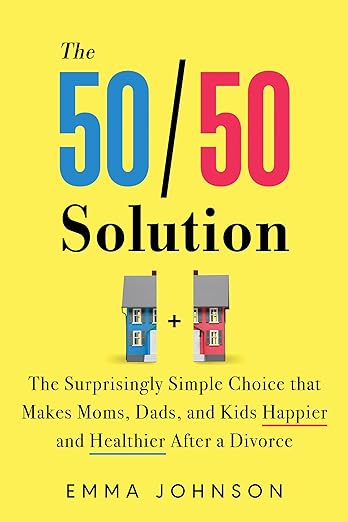
I elaborate on reforming child support in The 50/50 Solution: The Surprisingly Simple Solution that Makes Moms, Dads and Kids Happier When Parents Split (Sourcebooks, March 26, 2024):

Cover of The 50/50 Solution book by Emma Johnson.

Child support payments

Though the threat of jail is considered an effective incentive for people who are able but unwilling to pay, many critics assert that punitive policies are trapping poor men in a cycle of debt, unemployment and imprisonment.

The problem begins with child support orders that, at the outset, can exceed parents’ ability to pay. When parents fall short, the authorities escalate collection efforts, withholding up to 65% of a paycheck, seizing bank deposits and tax refunds, suspending driver’s licenses and professional licenses, and then imposing jail time.

Child support debt

“Parents who are truly destitute go to jail over and over again for child support debt simply because they’re poor,” said Sarah Geraghty, a lawyer with the Southern Center for Human Rights, which filed a class-action lawsuit in Georgia on behalf of parents incarcerated without legal representation for failure to pay. “We see many cases in which the person is released, they’re given three months to pay a large amount of money, and then if they can’t do that they’re tossed right back in the county jail.”

Skip Child Support. Go to Jail. Lose Job. Repeat. — The New York Times

While many assume child support is mandatory in divorce — it does not have to be. If you settle out of court through a low-cost online divorce service, you can negotiate joint 50/50 custody, equal parenting time, no or lower child support, and any other arrangements that you and your child’s other parent agree to.

If you go to family court, however, a judge will likely apply your state’s child support calculator, with no flexibility.

Do courts prefer mothers over fathers?

While the current child support system isn’t equitable, there isn’t concrete data to support that courts favor mothers over fathers in custody or child support decisions, says Molly Rosenblum, founding attorney of The Rosenblum Allen Law Firm in Las Vegas, Nev. which handles family law, criminal defense, and civil cases. 

Ultimately, courts are charged with making a choice that supports the best interest of the child.

When choosing a child support payment amount, judges are bound to use predefined calculations to determine how much the non-custodial parent will pay. This does not change whether the non-custodial parent is the child’s mother or father.

But the reality is — the cost of raising a child is far beyond child support calculations. 

“Is the system geared toward making men pay? As far as child support goes, I don't believe that's true,” says Rosenblum.

In Nevada, and other states, child support statutes are in place to make sure the non-custodial parent contributes financially to meet the needs of the child or children. 

And in custody decisions, Rosenblum asserts that gender of parentage is not a factor. The laws dictate that gender does ot influence custody decisions. However, in court, it may look like decisions favor mothers.

“In practice, it may appear that courts have a preference for mothers over fathers but I personally believe that this is changing slowly over time,” says Rosenblum. “I have seen plenty of cases where fathers receive primary custody.” 

A 2020 US Census Bureau report looking 2017 data about custodial parents’ child support found:

  • Fathers are more likely to become custodial parents, rising from 16% in 1994 to 20.1% in 2018
  • Legal or informal child support arrangements were in place for 49.4% of custodial parents
  • Over half of custodial parents received some form of non-monetary support from the non-custodial parent

If you are able to work with the other parent and make decisions together, you and your child's other parent can create your own parenting plan for free using documents from your local court.

How child support reform promotes father involvement

Fatherlessness is a public health crisis, that affects every facet of American life. Antiquated child support laws and collection enforcement are at the root of this issue.

A whole body of work studying lack of father involvement finds that when a child is raised without active involvement of a father, they are likely to suffer:

  • Diminished sense of physical and emotional security (children consistently report feeling abandoned when their fathers are not involved in their lives)
  • Behavioral and social problems, including with friendships
  • Poor academic performance as 71% of high school dropouts are fatherless
  • High crime, as 85% of youth in prison have an absent father
  • Fatherless children are more likely to have sex before age 16, not use contraception during first intercourse, and become teenage parents, and transmit STDs
  • More likely to use and abuse alcohol and other drugs
  • 90% of runaway kids have an absent father
  • Mental health disorders (father absent children are consistently overrepresented on a wide range of mental health problems, particularly anxiety, depression and suicide)
  • As adults, fatherless children are more likely to experience unemployment, have low incomes, remain on social assistance, and experience homelessness)
  • Poor future relationships (father absent children tend to enter partnerships earlier, are more likely to divorce or dissolve their cohabiting unions, and are more likely to have children outside marriage or outside any partnership)
  • Higher mortality rates (fatherless children are more likely to die as children, and live an average of four years less over the lifespan)

A dad explains: “Why I don’t see my child”

How to avoid child support

Search the internet and you will find all kinds of shady and illegal ways to hide your income, get fired and other nefarious ways to avoid paying child support. Here are a few legal ways to get out of paying support:

  • Terminate your parental rights
  • Agree to allow another adult adopt the child
  • The child has been emancipated or enlisted for military duty
  • Both parents agree to a settlement, including a parenting plan in which no child support is paid
  • Increasingly, despite what laws may be on the books in your state, judges are ordering equal parenting time with no or reduced child support.
  • If you currently pay child support, but the time-sharing has moved to a 50/50 schedule, you can file for a child support review to have it revised.

Why not to fight your ex for child support, alimony or other money

Money is often cited as the No. 1 thing divorcing couples fight over. Financial disagreements clog the courts and wrack up attorney bills — not to mention burn untold units of stress and misery for each party, their children and anyone within earshot.

This money-related financial tension carries over after breakups and divorce. Often, women tell me that they can't move forward with their lives because they are stuck financially because of money their ex owes. They tell me: I can't afford to go back to school / advance my career by traveling or taking additional responsibilities because there is no money for child care — because he won't pay. 

He may very well owe you that money. Morally and legally, you may be entitled to it.

But sometimes you can be so right, you are wrong. After all, the average sum of child supported ordered monthly is less than $300, and total child support owed is actually paid just 40% of the time. What if you let that all go and focused on earning big, big money? I want every woman to understand what it feels like to be financially independent. Only then do you truly step into your power, and live your life in the biggest, most authentic way possible.

Life is not fair. There are laws designed to protect women and children in divorce, and there is also the universal law of what is just. But there is also the legal system, and it is messed up, unfair and is designed to support mainly the rich. Unless you're Elin Nordegren and Tiger Woods, there is often a very low threshold to cross before it stops making sense to spend money on lawyers to get what you are owed. Do the math. Then take a deep breath. Let the breath go. And let that money go, too.

2. You're fighting for money he doesn't have

You can't get blood from a stone, as the old adage goes. Sure, he may owe you tens of thousands of dollars in back child support. You could have the courts take his car and send him to jail. But if you honestly know that he doesn't have that cash, do you really want to do that? Yes? What do you get in return?

How to deal when you’re a mom who pays child support or alimony

3. You're building a lifestyle around someone else's money — that you may never get

When you create a budget based on money you get from someone else, you are dependent on them. This is never a good idea. For financial reasons, that money may never materialize — or suddenly disappear. Men's child support and alimony doesn't show up if he loses his job, becomes disabled and cannot work, dies, refuses to pay for whatever reason, or has another child and is allowed by the courts to pay less. Plus, don't you just want to stop fighting and earn your own money? Doesn't that sound really, really delicious — to never be dependent on him or another man again?

19 reasons why alimony is unfair and hurts gender equality

4. You're fighting for money in divorce out of spite

Anger and spite are normal. God knows I've spent a lot of time being pissed at my ex! But exuding all that negative energy to take revenge is not a good reason to fight for money — even if you're entitled to it. Good reasons include providing a better life for yourself and your kids and/or because the money is genuinely yours.

Single mom struggles: How to overcome 9 stereotypes keeping you broke

5. He needs the money more than you do

Maybe each of your financial situations have changed. Maybe you have indeed moved on and are now killing it financially. Maybe he lost his job and is struggling. Maybe you're both stable, but you see that the money in question could help him out a whole lot more than it could help you. And now that you've moved forward, and you are no longer spiteful and angry, you have the energy to do the right thing.

6. Fighting for money is exhausting and bad for the kids

Divorce is one of the most stressful, draining crises a person can go through. In many cases — especially if there are children and significant assets involved — it is worth taking your time with a good lawyer to negotiate a fair settlement. But until the mailman delivers the manilla envelope containing your signed divorce decree, you will likely feel that your whole world is in limbo. Letting some stuff go moves everyone forward — including the kids.

After all, the more conflict between you and your ex, for whatever reason, means the children suffer at the hands of it. He might legally owe you, but sometimes you can be so right you're wrong.

Co-parenting is your priority now, and that is hard to do peacefully if you are fighting over money. Read my tips on how to co-parent with your ex, peacefully, as well as all the science-based research on why equally shared parenting is best.

One of the first co-parenting apps, and widely used app, OurFamilyWizard, which features chat, information storage (like pediatrician and teacher contact info, prescriptions, etc.), and financial record-keeping. 30-day free trial,  discounts for military families, and a program to provide OurFamilyWizard free to low-income families. Each parent can add unlimited numbers of other people for free, including children, grandparents, step and bonus parents, as well as attorneys.

Read our review of OurFamilyWizard.

7. You hold yourself back when you fight your ex for money

Deepak Chopra tells us that human beings have infinite energy, and I accept that to be true. But we are also physical beings living in the real world, and a girl only has so much energy to go around.

When you are dependent on his money, you are dependent on HIM. Dependence is never healthy. It holds you back, keeps you embroiled in a romantic relationship that is over, with someone who you likely don't care for much.

You have a choice: Spend your time, energy and power to fight with him, or invest that time and energy and power in yourself to earn far more money than he owes you from his 401(k). After all, when it comes to earning and building wealth, the sky is the limit!

My mantra: The best revenge is living well.

Bottom line: Because child support is unfair, seek equitable solutions

According to the National Conference of State Legislatures (NCSL), child support orders that consider the actual income of low-income fathers are part of the pathway to address equity in the system. Other factors include education on debt reduction and finding ways to increase earnings in employment.

And single mothers who are custodial parents have a financial burden on them to make up the difference as stated by The American Bar Association referencing 2020 US Census Bureau data showing that women were the head of 82% of single parent households in America.

If you are able to work together to create a parenting plan that covers top concerns like child support and visitation, you’ll have power over the outcome. Plus, you can file it in your local court to make it enforceable. 

If you leave your child support arrangement up to the courts, you might not agree with the outcome. To find the best equitable solutions, both parents must work together to come up with a parenting plan. File it in your local court so that it stands as a legal, enforceable decision.

 It’s all about creating a co-parenting relationship to raise your children in a healthy environment. For more information and help on how to achieve this, check out the following resources:

Divorce Corp and Erasing Family documentaries

Kickass Single Mom, Be Financially Independent, Discover Your Sexiest Self, and Raise Fabulous, Happy Children, By: Emma Johnson

Blend, The Secret to Co-Parenting and Creating a Balanced Family, By: Mashonda Tifrere

Co-parenting with a Toxic Ex: What to Do When Your Ex-Spouse Tries to Turn the Kids Against You, By: by Amy J. L. Baker, PhD and Paul R Fine, LCSW

Divorce Poison: How to Protect Your Family from Bad-mouthing and Brainwashing, By: Dr. Richard A. Warshak


Are you part of the Facebook group, Millionaire Single Moms? No income requirement, though BIG GOALS and a positive MINDSET required! Join now!

Why is child support so unfair to fathers?

Child support is built on the presumption that one parent (mothers) care for the children while another (father) pays for them. This shoehorns men and women into sexist roles, with men forced to be the breadwinner.

The rare coin market has doubled in the past decade and gold and silver prices have hit record highs in past month (despite a January 30 drop) and many people are seeking out alternative investments.

This is only amplifying an always-lucrative investment, with some rare coins that have sold for hundreds of thousands or even millions of dollars. Others are worth their weight in gold or silver, both of which have prices hitting repeated record highs in recent months.

In short: now is a great time to sell collectible coins of any value.

Are your coins worth money?

Are your coins worth money?

If you have any of the coins on this list or other coins worth money, always have them authenticated by a reputable coin dealer, like a member of the Professional Numismatists Guild, before trying to sell.

You can also find information about popular coins in The Red Book, A Guide Book of United States Coins 2026 79th Edition.

“You can look up in the Red Book and see if you have something that's a good date,” says Douglas Winter, founder of Douglas Winter Numismatics and author of more than a dozen books on numismatics (the study/collection of currency). “It's not going to really give you an accurate value, but it'll give you an idea of what the value is relative to the most common issue of a type.”

Note that the price you’re likely to get for even the rarest coins will typically be affected by the condition of the coin. 

Others coins may be worth their melt value of silver or gold — both of which are enjoying record highs. For silver, at the end of the year, the price was up 167% YTD at $80 per ounce. Gold has also reached record highs of more than $4,500 over the past months.

Coins are valued on their: 

  • Rarity: Coins that were part of a limited series, that were misstamped or misprinted, or that contain errors are more likely to be worth money as a collector’s item. The rarer the coin/collection, the more valuable it’s likely to be. 
  • Grade: This is a measure of the coin’s appearance, from Poor (almost completely worn out) to Perfect Uncirculated (a coin with no wear and no flaws of any kind), according to the Professional Coin Grading Services (PCGS). 
  • Metal composition: Older coins especially often contain precious metals like gold, silver, and platinum. In addition to their potential value as collectibles, they are also worth their scrap metal value — that is, the amount of pure metal they contain. 
  • Face value: As long as the currency is still in circulation, every coin is worth at least its face value.

You can find information about thousands of popular coins in The Red Book, A Guide Book of United States Coins 2026 79th Edition.

“You can look up in the Red Book and see if you have something that's a good date,” says Douglas Winter, founder of Douglas Winter Numismatics and author of more than a dozen books on numismatics — the study/collection of currency. “It's not going to really give you an accurate value, but it'll give you an idea of what the value is relative to the most common issue of a type.”

If your gold coins or silver coins are not a collector’s item you can sell them for their scrap metal value. Both gold and silver are near record prices at the moment.

Gold prices hit even more record highs in 2025, scraping $4,500, with news projecting $5,000 records as of January, 2026.1

For silver, as of end of December, 2025, silver continued to make record prices thanks to industrial demand, low supply and investors seeking safe havens as the stock market goes bananas.1 At the end of the year, the price was up 167% YTD at $80 per ounce.

CashforGoldUSA display ad

Are your coins worth money?

Learn about 15 rare coins worth money.

Pennies worth money

As the treasury recently announced plans to cease production of the beloved penny, old 1-cent U.S. coins are more valuable than ever.

The 1943 Lincoln Head Copper Penny

Front and back of the 1943 Lincoln Head Copper Penny. 15 coins worth money in 2024: Do you have one at your house?
Credit: Wikimedia Commons

In 1942 — in an effort to save copper for ammunition in World War II — the U.S. Mint began producing steel pennies for the first time in history. 

However, during the transition period between 1942 and 1943, there were a number of leftover copper planchets (the plain metal discs used to make coins) that were accidentally struck with 1943 dates. There are believed to only be about 20 of these rare coins in the world. 

If you happen to have a copper-colored penny with a 1943 date stamp, hold it up to a magnet. If it sticks, the coin you have is made of steel and holds a lower value, though steel 1943 pennies that maintain their gray color are still worth a pretty penny and have sold for as much as $218,500 at auction.

Auction record: $372,000 – Heritage Auctions*

*All auction records are from the Professional Coin Grading Services (PCGS).

1955 Double Die Penny

Front and back of the 1955 Double Die Penny. 15 coins worth money in 2024: Do you have any at your house?
Credit: Wikimedia Commons

In the coin-making process, a working hub is a metal punch that looks like the surface of the coin. These hubs are used to create metal dies, a reverse indentation of the coin design that is pressed onto a planchet to create the coin. 

In 1955, the Mint accidentally struck a working hub and a working die together when they were both slightly rotated differently from one another, leaving a double die impression.  

There are estimated to be about 15-20,000 of these pennies still in existence, though there are many counterfeits on the market. 

Auction record: $24,000 – ebay

1969-S Lincoln Cent with Double Die Obverse

Front and back of the 1969 S Double Die Lincoln penny. 15 coins worth money in 2024: Do you have any at your house?
Credit: ebay seller dz_maniacs

In 1969, two men named Roy Gray and Morton Goodman began producing fake 1969 Doubled Die Lincoln cents and other counterfeit coins.

Gray asked a collector named Robert Teitelbaum to sell the illegal coins and to place 85 of them into circulation in Washington. Instead, Teitelbaum turned them over to the Secret Service. 

While the Secret Service was trying to recover as many fakes as possible, they discovered several authentic 1969-S Doubled Die Obverse cents, which they initially believed were fake and destroyed — increasing the rarity of the already rare coins.

It is believed that less than 100 examples of the authentic 1969-S Doubled Die Obverse cents still exist, with only 40 examples ever certified. 

Auction record: $126,500 – Heritage Auctions

1972 doubled die obverse Lincoln Memorial cent

Front and back of the 1972 doubled die obverse Lincoln Memorial cent. 15 coins worth money in 2024: Do you have any at your house?
Credit: USA Coin Book

There are more than 10 doubled dies for the 1972 Lincoln cent, but Type 1 is the most valuable. 

This double die is easy to see with the naked eye, with: 

  • Doubling to the Southwest on all four digits on the date
  • LIBERTY doubled toward the South
  • IN GOD WE TRUST on the other side doubled toward the East

Auction record: $14,400 – Heritage Auctions

CashforGoldUSA display ad

Nickels worth money

1913 Liberty Head Nickel

Front and back of 1913 Liberty Head Nickel. 15 coins worth money in 2024: Do you have any at your house?
Credit: Wikimedia

The 1913 Liberty Nickel was produced by the U.S. Mint, with only five coins believed to be in existence. Today, these coins are all accounted for, and two are on display in museums.

The most elusive of these coins was owned by George Walton, the youngest signer of the Declaration of Independence. On April 25, 2013, a coin owned by Walton family heirs once believed to be fake was authenticated as the real fifth coin. 

Auction record: $4,560,000 – Stack's Bowers

2005-D 5C Speared Bison Jefferson Nickel

Front and back of the 2005 Speared Bison Jefferson nickel. Click here to know the 15 coins worth money in 2024: Do you have any at your house?
Credit: Canva

The image of a bison initially adorned the reverse of the nickel from 1913-1938, before transitioning to the Jefferson nickel, which is still in circulation today.

In commemoration of the bicentennials of the Louisiana Purchase and the Lewis and Clark expedition, the U.S. Mint resurrected the bison design as part of the four-coin Westward Journey Nickel Series. 

In the bison series, there were several coins discovered to have a large die gouge — a raised feature that appears on a coin when a die is damaged. This particular die gouge is highly visible running through the bison’s back.

Auction record: $2,650 – ebay

Dimes worth money

Mercury dimes

Front and back of the 1916 Mercury Dime. 15 coins worth money in 2024: Do you have any at your house? Click here for more info.
Credit: Wikimedia

In 1916, a new dime design replaced the Barber design coin that had been used since 1982. Designed by sculptor A.A. Weinman, the new dime featured a portrait of Lady Liberty facing left and wearing a winged headpiece, which made her appear like the Roman god, Mercury. These dimes came to be known as  “Mercury Head” dimes.

Most Mercury dime dates can be obtained with little difficulty, though some are extremely rare in high grade. These coins are also known as “Winged Liberty Head” dimes.

These are auction records for the rarest Mercury Dime series:

1916-D: $29,900 – Stack's

1921: $3,960 – Sotheby's

1921-D: $23,500 – Legend Rare Coin Auctions

1926-S: $9,950 – David Lawrence RC

1942/41: $32,200 – Goldberg Auctioneers

1942/41-D: $6,900 – Heritage Auctions

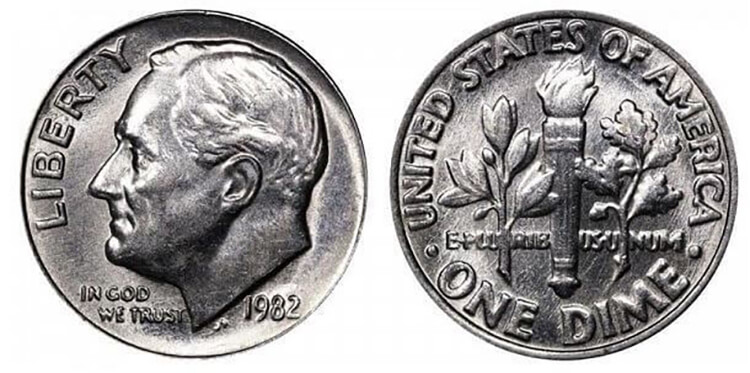
1982 No Mint Mark Roosevelt Dime

Front and back of the 1982 No Mint Mark Roosevelt Dime. 15 coins worth money in 2024: Do you have any at your house?
Credit: USA Coin Book

Also called the 1982 No P Dime, these dimes were the first and only U.S. business strike coin (a coin intended for circulation) that accidentally left the U.S. Mint without being stamped with their designated mint mark.

Approximately 8,000 to 10,000 coins were reportedly found in Sandusky, Ohio, where they were handed out at Cedar Point Amusement Park as change. However, experts with PCGS believe there are potentially up to 150,000 of these coins in existence. 

Note: Mint marks are used to distinguish coins by where they were minted. The four currently operating U.S. Mints are: 

  • P: Philadelphia Mint
  • D: Denver Mint
  • S: San Francisco Mint
  • W: West Point Mint

Other mints no longer in operation are: 

  • D: Dahlonega Mint (coins from 1861 and earlier — Denver didn’t open until 1906)
  • C: Charlotte Mint 
  • O: New Orleans Mint 
  • CC: Carson City Mint 
  • M: Manila Mint

Auction record: $2,185 – Heritage Auctions

Quarters worth money

Washington quarters

Front and back of the 1932 Washington Quarter.
Credit: Wikimedia

In honor of George Washington’s 200th birthday, the U.S. government held a competition to redesign the quarter. The chosen design — proposed by New York sculptor John Flanagan — was minted on a silver alloy from 1932 to 1964, with the exception of 1933. 

After 1964, a new alloy was used that eliminated silver, which is still in circulation today. Because they were minted at the height of the Great Depression, not a lot of Uncirculated 1932 examples were initially saved, making top grade 1932 Washington quarters a rarity. 

Auction record: $40,250 – Heritage Auctions

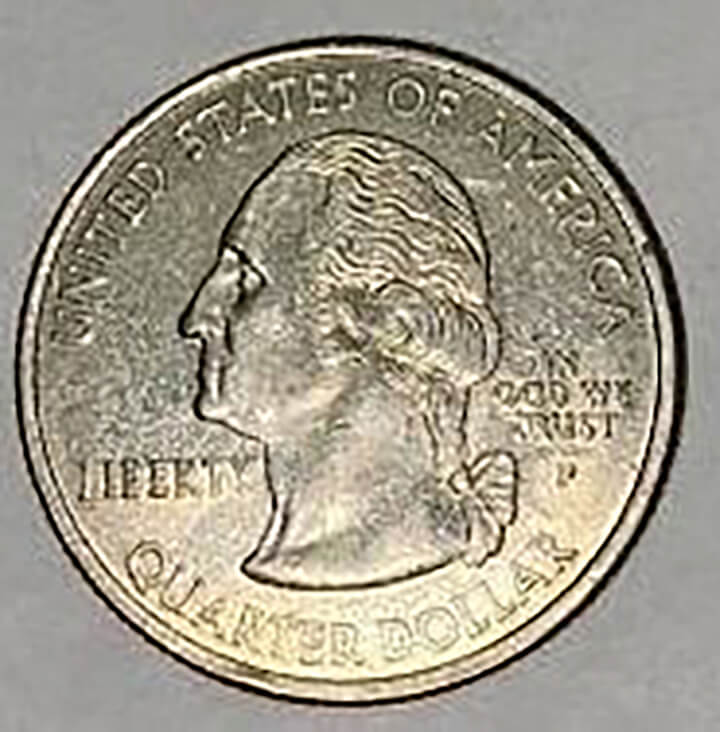
1999-P Connecticut Broadstruck Quarter

Front and back of the 1999 Connecticut Broadstruck quarter. Read more about the 15 coins worth money in 2024: Do you have any at your house?
Credit: Wikimedia

The 1999 Connecticut Quarter is the fifth design released in the 50 States quarter collection. 

Some error coins in this collection (not just the Connecticut quarter) were either broadstruck — meaning they were struck outside of the retaining collar of the coin — or double or triple stamped. 

These coins aren’t particularly valuable and are listed from about $2 to $50 on ebay. 

Auction record: $4,362 – Superior Galleries

2004 Wisconsin State Quarter with Extra Leaf

Front and back of the 2004 Wisconsin State Quarter extra leaf. 15 coins worth money in 2024: Do you have any at your house?
Credit: USA Coin Book

2004-D Wisconsin Extra Leaf Quarters have extra husks on the left side of the corn stamped onto the coin. There are two different varieties — one with a leaf that appears lower on the corn (more common), and one with a leaf that appears higher. 

Most of these coins were discovered in bank wrapped rolls in the Tucson and San Antonio areas.

Auction record: $6,000 – Heritage Auctions

2005-P In God We Rust Kansas State Quarter

Front and back of the 2005 in God We Rust Kansas Quarter. 15 coins worth money in 2024: Do you have any at your house?
Credit: USA Coin Book

When coins are being pressed, lubricant is used on the machine to reduce friction between parts. In this case, some of that grease made its way onto the surface of the coin die, filling the spot where the first T indentation was supposed to happen. 

At a glance, these coins read “In God We Rust,” but you may be able to see a faint T on some coins if you look for it.

Though they’re a fun find, these coins aren’t that valuable — you can buy one on ebay starting at about $6. 

Other coins worth money

Morgan Silver Dollars

Front and back of the 1883 Morgan Silver Dollar. 15 coins worth money in 2024: Do you have any at your house?
Credit: Wikimedia

While the The Coinage Act of 1873 demonetized silver, putting an end to silver dollar production, the Bland-Allison Act was passed in 1878 in response to poor economic conditions at the time. This act required the U.S. government to purchase large quantities of silver and turn them into silver dollars, which were called Morgan Dollars after their designer, George T. Morgan. 

Morgan Dollars were produced from 1878-1904, then again in 1921. Some series are more valuable than others. 

These are the auction records for the rarest Morgan Silver Dollars series:

1889-CC: $462,000 – Bowers & Merena 

1893-S: $735,000 – Sotheby's

1895 (Proof only): $150,000 – Sotheby's

Sacagawea Cheerios dollar

Front and back of the Sacagawea Cheerios dollar. Want to learn about the 15 coins worth money in 2024: Do you have any at your house?
Credit: Wikimedia

As part of a General Mills promotion in 1999, 5,500 Sacagawea Dollars were placed inside every 2,000th box of Cheerios. 

In 2005, a collector discovered that some of these Sacagawea Cheerios Dollars had detailed veins in the eagles' tail feathers. Only several dozen examples were actually found, but a lot more are thought to exist. 

Auction record: $10,200 – Heritage Auctions

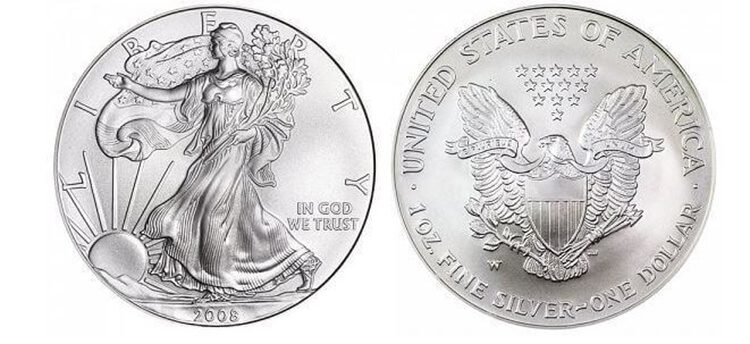
2008-W silver eagle reverse of 2007

Front and back of the Sacagawea Cheerios dollar. Want to learn about the 15 coins worth money in 2024: Do you have any at your house?
Credit: Wikimedia

For 2008, the U.S. Mint decided to modify the reverse design of Silver Eagle coins. However, during the transition, some 2008-W Silver Eagles were accidentally stamped with the pre-2008 design. 

While the designs appear similar, the fonts and some design elements were changed. There are about 45,000 of these coins in existence.

Auction record: $1,700 – ebay

CashforGoldUSA display ad

FAQs about coins that are worth more than face value

How do I find out what my coins are worth?

PCGS offers a coin price guide where you can search for the current value of collectible coins. They also offer professional coin grading. 

You can also find information about popular coins in The Red Book, A Guide Book of United States Coins 2026 79th Edition.

“You can look up in the Red Book and see if you have something that's a good date,” says Douglas Winter, founder of Douglas Winter Numismatics and author of more than a dozen books on numismatics (the study/collection of currency). “It's not going to really give you an accurate value, but it'll give you an idea of what the value is relative to the most common issue of a type.”

What are the most valuable coins in circulation?

These are some of the most valuable coins in circulation, based on PCGS record auction pricing:

  • 1969-S Lincoln Cent With a Doubled Die Obverse, $54,625
  • 2004-D Wisconsin State Quarter with an Extra Leaf, $6,000
  • 1970-S Large Date Lincoln Cent With a Doubled Die Obverse, $3,675
  • 1972 Lincoln Cent With a Doubled Die Obverse, $1,150
  • 1999 Wide “AM” Reverse Lincoln Cent, $250

How much does it cost to get coins appraised?

Online appraisals for valuation and selling purposes are available for free, including by auction houses that will list your item. Fair market valuation of personal property is typically determined through these assessments as a starting point. For official written appraisals for insurance and estate planning, expect to pay $75 to $150+ per hour.  

Bottom line: How to sell your coins for the most money

If you want to sell your collectible coins for the most money, Winter recommends finding a large national dealer or a reputable local dealer who is a member of the Professional Numismatic Guild. 

“There's those pawn shops or local cash-for-gold buyers — that's not a good place to sell your coins,” Winter says. “You're likely to be offered a small fraction of what they're worth.” 

If your gold coins or silver coins are not a collector’s item you can sell them for their scrap metal value. Both gold and silver are near record prices at the moment:

As of , the silver resale value in the United States was at per ounce, or  per gram.

We recommend selling to CashforGoldUSA or its sister site CashforSilverUSA, which accept items like gold, silver, and diamonds in any form, including gold scrap, gold jewelry including chains, necklaces, earrings, bracelets, silver jewelry, gold bullion, and dental gold.

CashforGoldUSA is our top choice for selling coins for scrap because: 

  • A+ BBB rating
  • Payouts within 24 hours
  • Buys all weights and quality of gold and silver
  • Price- match guarantee
  • Free return guarantee
  • 100% customer satisfaction guarantee
  • Free shipments insured up to $150,000
  • 10% bonus if you send in your item within 7 days

Read our CashforGoldUSA review, or get money for your coins today with CashforGoldUSA >>


SOURCES:

  1. Gold prices will take their cues from oil this week following Venezuela attacks, initial resistance at $4,474/oz,” by Ernest Hoffman, Kitco News
  2. Reason For A 2026 Gold And Silver Surge That’s Predicted To Blow Up The Bitcoin Price,” by Billy Bambrough, Forbes.
How do I find out what my coins are worth?

Professional Coin Grading Service offers a coin price guide where you can search for the current value of collectible coins. They also offer professional coin grading.

What are the most valuable coins in circulation?

These are some of the most valuable coins in circulation, based on Professional Coin Grading Service record auction pricing:
– 1969-S Lincoln Cent With a Doubled Die Obverse, $54,625
– 2004-D Wisconsin State Quarter with an Extra Leaf, $6,000
– 1970-S Large Date Lincoln Cent With a Doubled Die Obverse, $3,675
– 1972 Lincoln Cent With a Doubled Die Obverse, $1,150
– 1999 Wide “AM” Reverse Lincoln Cent, $250

Care.com connects clients and providers of childcare, senior care, pet care, housekeeping, and other professional services. 

Whether you’re a family looking to hire someone or you are looking for jobs as a housekeeper, nanny, or pet sitter, Care.com is a legit and trustworthy site — if you know how to safely use it. 

We like Care.com for these reasons: 

  • Easy to create a profile, post jobs, pay providers
  • Requires caregivers to pass a background check every year
  • Provider/employer match made every 9 minutes (as of Oct. 2022)
  • Reviews/references provided to help you screen providers

Here’s everything you need to know about using Care.com this year:  

Is Care.com legit?
Care.com services
How Care.com works
Care.com reviews
Care.com pros and cons
Care.com alternatives
FAQs from families and from caregivers

What is Care.com?

Care.com is a membership site that connects people who need:

People seeking a service — as well as corporate care providers like daycare centers or nursing homes — can post jobs on the site. 

Providers can apply to jobs and communicate with potential employers. Employers are also able to pay care providers directly through Care.com.

Is Care.com a trustworthy site?

Yes! Care.com is a legit site that has helped millions of people find safe and reliable care providers online. A representative for Care.com says that a provider/employer match is made every 9 minutes on the site (as of October 2022).

Care.com has 3.44/5 stars based on 8,169 reviews on review site Sitejabber.

Anyone who registers on Care.com as a caregiver must be over the age of 18 and undergo a detailed background check called a CareCheck. This includes:

  • Social Security number trace
  • Multi-jurisdictional criminal database search
  • Federal and county criminal records search

Caregivers are not approved to create a profile unless their CareCheck comes back clean. Each user’s CareCheck is repeated annually. As a user, only your first name and last initial, as well as the area (city/zip code) where you live, will be displayed. 

Care.com does not employ caregivers and is not responsible for their conduct. Site users are responsible for doing their own additional research to ensure that a job or caregiver is legitimate. 

However, Care.com does provide resources and tips to help families hire safely and to help caregivers vet potential employers. 

Care.com has a B rating from the Better Business Bureau and 1.1 stars on Trustpilot, though most negative reviews are related to the site’s billing and fees rather than the quality of caregivers. The majority of complaints are from employers seeking to find a caregiver. 

Care.com was in the news in 2020. A lawsuit alleged that Care.com falsely represented its CareCheck by claiming the check included a search of the National Sex Offender Registry, when it actually does not. 

The suit also alleged that Care.com unlawfully enrolled its customers in auto-renewal subscriptions without getting customers' consent. Care.com paid $1 million to settle the lawsuit. 

The site is no longer allowed to claim National Sex Offender Registry checks and must notify customers that they can cancel their subscriptions before it automatically renews.

Like any marketplace website, Care.com could potentially connect you with dangerous people. However, the site does have measures in place that are intended to protect users, such as: 

  • CareCheck background check
  • Suite of supplemental background checks
  • Community guidelines

Employ common sense as you search for a provider or job and do extra research, check references, and interview them in person before you hire someone to take care of your home or loved one.

Care.com services

Care.com offers the following services:

  • Childcare
    • Daycare
    • Part-time childcare
    • Preschools
    • After-school transportation
    • Child hospice care
    • In-home hospice care
    • 24-hour childcare
    • Before school or after-school programs
  • Tutoring
    • Homeschool
    • English
    • Math
    • Online
    • Special needs
    • Test prep
    • Science
  • Senior care
    • Post-surgery care
    • Food delivery
    • Special needs adult care
    • Assisted living
    • Home care
    • Respite care
    • Memory care
    • Hospice care
    • Companion care
    • Palliative care
    • Nursing assistants
    • Dementia care
    • Adult daycare
    • Home aids
    • Senior apartments
    • Senior helper
    • Independent living
    • Transportation
  • Pet care
    • Dog walkers
    • Pet sitters
    • Dog boarding
    • Pet care
  • Housekeeping
    • Housekeeping
    • House cleaning
    • Maid jobs
    • Errand runners
    • Move out cleaning services

How Care.com works

This is how Care.com works for families/businesses looking to hire and for providers looking to get hired: 

For families

New users who are looking for a caregiver are prompted to select what type of care they need and how soon they need it. You’ll provide more information about your children or pets (such as how many you have and their ages) and what you’re looking for in a caregiver. Enter your ZIP code, add your name and email address, and you’re in. 

You can join Care.com for free. A free account allows you to:

  • Search for caregivers near you (you can’t send messages without a premium membership)
  • Post a job and see who applies

The optional Premium Family Membership costs $38.99 per month if not on sale. A Premium account will let you:

  • Message any caregiver
  • Book a sitter when you need one
  • Get background check options
  • Pay your sitter online
  • Chat with support

Once you’ve signed up, you can scroll through profiles of caregivers near you. These profiles will provide information such as the caregiver’s:

  • Availability
  • Bio
  • Services
  • Qualifications
  • Recommendations from previous Care.com employers 

You can also create a job posting so caregivers can apply.

For caregivers: Care.com background check 

If you’re interested in becoming a caregiver, you’ll follow a similar series of steps to create your account. Select the type of service you’d like to provide. Then add your ZIP code and how far you’re willing to travel. Build out your profile with information like your availability and pay rate. The final step is answering required safety questions.

Care.com runs a background check on all caregivers before they’re allowed to join the platform. This CareCheck includes:

  • Social Security number trace
  • Multi-jurisdictional criminal database search
  • Federal and county criminal records search

You will have to pay a fee of $18.99 per year (the CareCheck renews annually) to complete this background check if you don’t have a premium membership. Once you’ve registered, you can browse job postings and apply to any that interest you. Potential employers in your geographical area will also be able to find you via your profile.

Check out these job training posts for different types of caregivers:

Care.com reviews

Care.com is not accredited with the Better Business Bureau but has a B rating. 743 complaints have been closed in the last three years, and out of 419 customer reviews, the average rating is 1.03 out of 5 stars. 

On Trustpilot, Care.com is a verified company but has only 1.1 out of 5 stars based on 2,279 reviews. 

While ratings on both sites aren’t great, most negative reviews are related to billing, disputed extra fees, and auto-renewal complaints rather than poor caregiver experiences. 

It is actually very easy to cancel a premium subscription on Care.com. The site provides these instructions:

  1. Log in to your Care.com account.
  2. From the Me drop-down menu at the top of the page and click My Premium.
  3. Click Manage membership to expand your subscription details.
  4. Click Cancel subscription.
  5. Click Continue to cancel.
  6. Continue through the cancellation survey, and click Confirm cancellation.

If you purchased a Premium Membership on the iOS app, you must cancel on your iOS device using these steps:

  1. Open the App Store app on your phone or tablet and tap your profile icon in the upper right corner.
  2. Tap Subscriptions.
  3. Tap the Care.com subscription.
  4. Tap Cancel Subscription.
  5. Confirm cancellation.

Care.com pros and cons

Care.com pros:

  • Caregivers undergo background check
  • Site is easy and intuitive to search
  • Free membership is available
  • Additional resources on rates, hiring, etc.

Care.com cons:

  • Free membership is very limited
  • Paid membership is automatically renewed
  • Site receives poor online reviews

Care.com alternatives

If Care.com isn’t a good fit for you, there are plenty of other places where you can find a babysitter or find a nanny:

  • Babysits — enter your ZIP code to browse sitters in your area for free
  • BambinoSitters — uses your Facebook account to suggest sitters your friends have used and recommend
  • SeekingSitters — on-demand babysitter referral service matches you with a sitter in your area
  • SitterCity — post a job and search for sitters near you
  • UrbanSitter — post a job and search for sitters near you
  • Craiglist — view area-specific ads for nannies

You can also find a babysitter or caregiver by simply asking your friends and family for recommendations; posting in a local social media group; or asking your child’s pediatrician for a referral.

Families’ FAQs about Care.com

Can you get scammed on Care.com?

Like any online marketplace, yes, it is possible to get scammed on Care.com. If you’re interested in hiring someone on Care.com, do your own research on the candidate. 

Use common sense — don’t give out your personal information right away, and have your first meeting in a public place. The same advice goes for caregivers who are interested in a job. Care.com also has safety measures in place for you to report profiles if needed. 

How does Care.com payroll work?

If you pay a caregiver over $100 per week, you might owe taxes. Care.com offers a HomePay option that handles things like direct deposits, payslips, W-2s, and tax filing.

Is there a free version of Care.com?

Yes. If you’re interested in hiring a caregiver, you can use Care.com to browse profiles for free. However, you won’t be able to reply to applications to schedule interviews unless you go premium — the most you can do with a basic membership is send an automated “no, thank you” message.

A basic membership allows you to:

  • Set up an account
  • Post a job
  • Search and view profiles of local caregivers
  • View profiles of every caregiver who applies to your job
  • Use site tools and resources

All caregivers must pay an annual fee for their background check.

Can I get a refund from Care.com?

No. Care.com does not offer refunds on its Premium Membership, background check, or other paid services.

Caregivers’ FAQs about Care.com

What are Care.com’s requirements for caregivers?

Caregivers must be at least 18; be able to legally work in the U.S.; provide certain required information; and pass a background check. Required information for membership with Care.com includes:

  • Date of birth
  • Full legal name
  • Complete permanent address
  • Phone number
  • Email address

Care.com’s background check includes:

  • Social Security Number trace
  • National Sex Offender Public Website search
  • Multi-jurisdictional criminal database search
  • Federal and county criminal records search

What kinds of jobs are on Care.com?

You can use Care.com to find contract or part-time jobs for:

  • Childcare
  • Tutoring
  • Senior care
  • Pet care
  • Housekeeping

The site also has a section for full-time jobs, although these are less common.

TrustedHouseSitters reviews: Who’s the house-sitting service good for?

How does payment work on Care.com?

Care.com uses the Stripe platform to process payments. Caregivers can accept payments directly through their Care.com profile and transfer the funds to their personal bank account. 

Once an employer has submitted payment, the money will be deposited into the caregiver’s account within 1-3 business days. Caregivers can edit their payment preferences to indicate the payment types they are willing to accept. 

How do you get hired on Care.com?

To get hired on Care.com, you’ll need to create a profile, complete the mandatory background check, and apply to job postings that fit your skills and experience.

Should I give my SSN to Care.com?

If you want to register as a caregiver on Care.com, you will need to provide your Social Security number as part of the site’s mandatory background check. Care.com promises to store your information using secure encryption. According to the site, your SSN is only shared with Care.com’s background check vendor.

Many people assume that both parents have rights to equal time with their kids should they divorce or separate. This is mostly false. In the majority of cases, kids spend the majority of time with the mom, and dads have visits with their children.

What is equally shared parenting?

Do kids need both parents equally?

Pros of equal shared parenting

Cons of equal shared parenting

Does shared parenting work? Research finds equal shared parenting is best for kids

When is equally shared parenting not a good idea?

How to get equally shared parenting time

My personal story of equally shared parenting

Bottom line: Why equal shared parenting is important

What is equally shared parenting?

Equally shared parenting is an arrangement that ensures both parents have equal time with their children. Parents also agree to share the responsibility of decision-making for their children.

Shared parenting can be called many things:

  • Equally shared parenting
  • Equal shared parenting
  • Equal care time
  • 50/50 parenting schedule
  • Joint physical custody
  • Shared residential custody
  • Shared physical custody
  • Equal legal custody

It is possible to have equal parenting while parallel parenting.

Do kids need both parents equally?

Dr. Linda Nielsen, Wake Forest University professor, reviewed 60 studies and found that equally shared parenting is best for children in separated and divorced families. Kids who share time between both parents' homes approximately equally have better outcomes related to:

  • Academic achievement
  • Drug, alcohol and cigarette use
  • Mental and physical health
  • Less early sexual activity and teen pregnancy
  • Higher employment and earnings later in life
  • Greater likelihood of family stability in their own adulthoods
  • Better relationships with parents, step-parents and grandparents.

These outcomes were true even in cases where there is high conflict between the parents, or one is richer than the other.

Why are the outcomes so dramatically better for kids with equal parenting time, when compared with minimum time with the non-custodial parent (dad)?

  • When parenting time is presumed equal, dads are less likely to feel marginalized and drop out of kids' lives.
  • Boys and girls both benefit from bonding and time with their dads.
  • When kids don't see their dad, that creates a sense of abandonment and general anxiety.
  • Parents who share parenting time have less to fight over, and there is less conflict between parents — which benefits everyone.
  • Dads who are more involved are more likely to pay child support and/or contribute financially.
  • Kids who have relationships with both parents benefit from an extended network of family, grandparents, friends and neighbors.

Benefits to women, men and gender equality when parenting time is shared equally

  • My survey of nearly 2,300 single moms found a direct correlation between equality in time-sharing and single mothers' income and wellbeing. Also: The majority of single moms are in favor of equal shared parenting.

WHITE PAPER PDF

  • Less bickering over percentage times, and defaulting to equal time-sharing, means less time, energy and money spent on lawyers and court filings.
  • When parents share parenting time, moms are freer to build careers and earn more — which benefits children, mothers, gender equality and co-parenting relationships.
  • Divorced men who are legally separated from their children are more likely to suffer depression and attempt suicide.
  • Divorced dads statistically are eight-times more likely to commit suicide than divorced women, and this is especially so for men who have been legally removed or marginalized in their kids' lives.
  • When parenting time is split equally, parenting means both parents now have equal rights and equal responsibility for child-rearing — exactly what gender equality activists dream of!

Pros of equal shared parenting

As outlined below, there are zillions of ways that women benefit when we equally share parenting time with our kids' fathers. If you are wondering what the benefits of equally shared parenting are, here’s a list of 9 benefits:

Benefit 1: Stems gender inequality

When we equalize parenting time, we equalize the genders. Today, when the vast majority of parents separate, courts dictate that kids stay with the mom, dads get visits with their own children, dads pay child support.

This just reinforces dated, sexist gender norms: Moms are the default caregivers financially dependent on men, dads are the default breadwinner for whom parenting is optional.

Split parenting time in half, with both parents equally responsible for the time, logistics and mental load of parenting, and gender inequality will be stemmed.

Benefit 2: Decreases fatherlessness

Bring up equally shared time in a room of single parents, and dads scream their rights as parents have been violated, while mothers scream that dads don't show up and do their share.

Both are equally correct.

We cannot expect men to be active, engaged fathers when they have been told since birth that they are the lesser parent, that they should defer to the mothers, and that once they no longer live in the same home as their children, they are relegated to a visitor and a paycheck.

Similarly, we cannot expect women to be financially independent if courts and cultural norms dictate we be primary caretakers.

Surveys find that men do want to be involved fathers. Let's create a world where they can be.

Benefit 3: Increases financial support for kids

A study published in a 2015 issues of  Journal of Marriage and Family, finds that about half of fathers who were cash-poor and unable to make child support payments, nevertheless make a significant contribution in kind—providing baby products, clothing, school expenses and food—worth an average of $60 a month.

Fathers who did not visit their kids gave only about half as much in-kind support as those who spent at least 10 hours a month with them.

“The child support system weakens the child/father bond by separating the act of love from the act of providing,” said the study author Kathryn Edin, a sociologist and Johns Hopkins Bloomberg Distinguished Professor.

Plus, when each parent has the kids equal time, that means that each parent has to pick up expenses like food, replacing outgrown clothes, random school fees and birthday gifts.

Benefit 4: Decreases domestic violence

Family law practitioners and mental health professionals have long noted the increase in high conflict and violent incidences spike at the time of separation and divorce, including false reports designed to gain an upper hand in custody disputes.

Take the inherent dispute out of separating, and domestic violence cases drop.

That is what is happening in Kentucky, which in 2017 became the first state in the country with a presumption of equally shared parenting time. A year later, family court filings had dropped by 11 percent, and domestic violence reports were down 4 percent.

Benefit 5: Moms have more time to build a business/career

My co-parenting relationship has improved gradually in my 10-year career as a single mom, and today we have approximately equal time sharing.

I am here to tell you: It is a hell of a lot easier to travel to conferences, go to evening work events, take on the extra project or start a second income stream if you do not have to juggle those professional tasks with parenting.

28 jobs for single moms: Best high-paying jobs

Benefit 6: Moms have more time to date

Guaranteed free time, including overnights, means moms have more time to be women — without the burden of paying for child care.

Take the guilt and stress of time away from kids, and arranging a sitter, now mothers can date in a healthier way, and not resort to sneaking out, or sneaking men in (pro tip: please don't do that).

Many single moms report that dating as a single mom is the most fun, and the best sex, they've ever had.

Benefit 7: Moms have more time to exercise

Hate to break it to you: The more free time you have, the fewer excuses!

Benefit 8: Kids enjoy more love

Aside from all proven benefits of bonding with both their mother and father, children who enjoy the broader circles of extended family, friends and community: grandparents, cousins, aunts, uncles, neighbors — all support and care that benefits all children — and adults!

This new network of caregiving opens up all kinds of benefits, including more flexible schedules for the parents (more access to loving and free childcare — thanks grandma!), as well as one-on-one time with each parent — something any single mom or single dad can tell you is hard to come by.

Benefit 9: Both parents have time to rest and recharge

Half my social media feed is crowded by selfies from moms who have sequestered themselves in a pantry and are 911-ing for an emergency wine delivery to relieve them from the overwhelm of full-time parenting.

Give her a break. Give the dad a break. Share the kids. Use your newfound free time to go on a hike. Binge Fleabag. Hook up with your cute neighbor. Take a spin class. Or go out for a glass of wine at a bar with your girlfriend like a grown-ass woman.

Mothers argue that their nursing babies should not be apart from them overnight, even though those babies were toddlers — a position my divorce lawyer friend says a judge would laugh at, especially if an enthusiastic father was pushing for more access to his kids. She's seen judges order babies as young as 3 months stay overnight with their fathers.

Check out this podcast interview I did on equally shared parenting:

Cons of equal shared parenting

You may consider some of these points as negatives of equally shared parenting time:

  • One parent who prefers to have the kids most of the time may now miss them.
  • A parent who prefers to be an every-other weekend parent may resent equal parenting responsibilities, and the sacrifices they must make to care for the kids.
  • Depending on where you live, equal parenting time may mean you are not entitled to child support, or less child support, or no alimony. Or, you may find yourself paying child support when you would not have had the children the majority of the time.

Does shared parenting work? Research finds equal shared parenting is best for kids

Wake Forest professor and shared parenting expert Linda Nielsen crunched the data of 60 studies and found that absent situations in which children needed protection from an abusive or negligent parent even before their parents separated—children in shared-parenting families had better outcomes than children in sole physical custody families.

This includes high-conflict divorces in which the fighting continues long-term. The measures of well-being included:

  • Diminished sense of physical and emotional security (children consistently report feeling abandoned when their fathers are not involved in their lives)
  • Behavioral and social problems, including with friendships
  • Poor academic performance. 71% of high school dropouts are fatherless
  • High crime, as 85% of youth in prison have an absent father
  • Fatherless children are more likely to have sex before age 16, not use contraception during first intercourse, and become teenage parents, and transmit STDs.
  • More likely to use and abuse alcohol and other drugs.
  • 90% of runaway kids have an absent father.
  • Mental health disorders (father absent children are consistently overrepresented on a wide range of mental health problems, particularly anxiety, depression and suicide)
  • As adults, fatherless children are more likely to experience unemployment, have low incomes, remain on social assistance, and experience homelessness)
  • Poor future relationships (father absent children tend to enter partnerships earlier, are more likely to divorce or dissolve their cohabiting unions, and are more likely to have children outside marriage or outside any partnership)
  • Higher mortality rates (fatherless children are more likely to die as children, and live an average of four years less over the lifespan)

When is equally shared parenting not a good idea?

Shared parenting may not be a fit for families where one parent struggles with addiction, there is a history of violence or abuse, or severe mental illness. However, many of these families can successfully parent equally after a period of healing.

From an article in Psychology, Public Policy and Law:

“The best research currently available suggests that the quality of the parent-child relationship is more closely linked than parental conflict or the quality of the co-parenting relationship to children’s outcomes, with the exception of the most extreme forms of conflict to which some children are exposed.”

How to get equally shared parenting time

There is no single formula that guarantees joint physical custody. However, I have seen the following be helpful in establishing equal shared parenting:

  1. Focus on a goal of a low-conflict, amicable, and equal process
  2. Start custody negotiations at 50/50
  3. Hire the right family / custody attorney with a track record of winning fair and equal divorce settlements
  4. Do not try to negotiate lower child support in exchange for more parenting time
  5. Never miss a visit (within reason!)
  6. Play fair: Never interfere with the other parent's time with the kids
  7. Keep records of your visitation adherence — as well as that of your co-parent

One of the first co-parenting apps, and widely used app, OurFamilyWizard, which features chat, information storage (like pediatrician and teacher contact info, prescriptions, etc.), and financial record-keeping. 30-day free trial,  discounts for military families, and a program to provide OurFamilyWizard free to low-income families. Each parent can add unlimited numbers of other people for free, including children, grandparents, step and bonus parents, as well as attorneys.

Read our review of OurFamilyWizard.

My personal story of equally shared parenting

After one meeting with my ex and our lawyers to negotiate the custody agreement of our divorce, I went home, busted out the calculator, and cried.

I freaked out at the idea of being away from my kids for extended hours or days, and I need to know how many hours each week I would spend with my son and daughter under various arrangements.

How many hours would they be sleeping, in daycare and with their dad?

How many minutes each week would they be mine? When we separated, I was pregnant and my daughter was not quite 2.

I subscribed to many tenets of attachment parenting.

I bought into the cultural message that children should be with their mother, and,

A woman's identity is tied to her motherhood.

My identity was tied to being a mom.

Plus, I was used to being with my tiny children the vast majority of the time, running errands with one or the other strapped to my chest, their tiny bodies cozied up to mine in bed, the little one would nurse at least a year like his sister.

Anything less than that seemed devastating. They needed me so, so much, I thought. And I needed them.

Fast-forward and there were years my ex would say he's skipping a visit for reasons well within his control (a party, volunteer work, a last-minute weekend trip to California), and I would lose my goddamned mind. I'd get crazy-angry at his cavalier approach to parenting and how that affects the kids. I'd steam and stew at how much he took me for granted, and had the freedom to do what he pleased without worry about child care.

Considering 50/50 custody schedules? How to choose the best for you

I also resent that I don't get my scheduled kid-free time. Those hours are a precious commodity I fully utilize to nurture friendships, date, work, exercise and relax. When the kids come home Sunday evening from their weekly overnight, we are all so happy to see each other and I can feel in my whole body how much more energy I have for them.

Never in a bazillion years would I have imagined I'd feel like that.

Fast-forward, and today, after a long campaign, my kids share equal parenting time with their dad and me, alternating weeks, holidays and vacation time at each parent's home.

Today, I am committed to equal shared parenting as a presumption for separated and divorced families. Research finds this is what is best for children, women and men — as well as what is critical for gender equality.

Bottom line: Why equal shared parenting is important

Shared parenting provides an opportunity for children to build a relationship with both parents, even when they don’t live under the same roof. 

Dozens of studies on solo vs. shared parenting have found that children in shared parenting relationships had better outcomes in terms of:

  • Behavior
  • Emotional stability
  • Physical health
  • Academic well-being
  • Building relationships with extended family

These outcomes were seen regardless of income or conflict between parents.

For ways to build a beneficial shared parenting relationship, refer to the following resources:

Must-see documentaries on equally shared parenting:

Divorce Corp and Erasing Family

Books on the benefits of equally shared parenting:

Kickass Single Mom, Be Financially Independent, Discover Your Sexiest Self, and Raise Fabulous, Happy Children, By Emma Johnson

Improving Father-Daughter Relationships: A Guide for Women and Their Dads, By Linda Nielsen

Blend, The Secret to Co-Parenting and Creating a Balanced Family, By: Mashonda Tifrere

Co-parenting with a Toxic Ex: What to Do When Your Ex-Spouse Tries to Turn the Kids Against You, By Amy J. L. Baker, PhD and Paul R Fine, LCSW

Divorce Poison: How to Protect Your Family from Bad-mouthing and Brainwashing, By Dr. Richard A. Warshak

What is equally shared parenting?

Equally shared parenting is an arrangement that ensures both parents have equal time with their children. Parents also agree to share the responsibility of decision-making for their children.

Does shared parenting work?

From an article in Psychology, Public Policy and Law, the best research currently available suggests that the quality of the parent-child relationship is more closely linked than parental conflict or the quality of the co-parenting relationship to children's outcomes, with the exception of the most extreme forms of conflict to which some children are exposed.

Hinge has always been one of my favorite dating apps, and for good reason. It's one of the few dating apps out there that (in my opinion) really wants to help you find love. The best part? You don’t have to pay for a membership to successfully find a partner on Hinge.

When I was actively dating, this was the dating app I always went back to. And after reviewing more than a dozen dating sites and apps for Wealthysinglemommy.com, Hinge is my favorite. A big reason why: It worked — Hinge is actually where I met my boyfriend.

  • Member's experience
  • Matches
  • Cost
  • Customer service
3.6

Keep reading for my comprehensive Hinge review and start looking for a serious partner on Hinge for free >>

What is Hinge?

Is Hinge just a hookup app?

How does Hinge work?

Is Hinge a safe dating site?

Does Hinge have fake profiles?

How much does Hinge cost?

Is Hinge worth paying for?

Hinge reviews

Which is better, eharmony, Bumble or Hinge?

Hinge alternatives

What is Hinge?

Hinge is a dating app dedicated to helping singles find long-term relationships. It was founded in 2012 by CEO and cofounder Justin McLeod, quickly branding itself as the “relationship app” in response to Tinder's reputation as a “hookup app.” 

When it was first launched, Hinge matched people who were friends of friends. You'd sign up with your Facebook credentials and see profiles who shared mutual friends with you. In 2016, the app was relaunched with a new look and a bigger focus on helping singles find love. 

Hinge is owned by Match Group, Inc., whose other dating services include Tinder, Match.com, OkCupid, Plenty of Fish, Ship, and OurTime.

Is Hinge just a hookup app?

No — Hinge is not just a hookup app, which is why their slogan is “Designed to be deleted.” The minute you open the app, you'll notice that it has an entirely different feel from other dating apps. 

The app relies on a Nobel-prize-winning algorithm called the Gale-Shapely algorithm to pair you with the right people. Basically, it takes your interests and matches you with people who mutually like one another. The more you use the app, the more compatible your matches. 

Hinge encourages users to let their personalities shine by answering thought-provoking prompts, a big difference from other apps where photos are the primary focus.

Example prompts on Hinge review.

According to Hinge, as of 2021, 30 million people had gone on a date with someone they met through Hinge. Most notably, U.S. presidential candidate Peter Buttigieg met his husband on Hinge. And here's another fun fact: Hinge is the most mentioned dating app in the New York Times Weddings section, according to Bustle.com

How does Hinge work?

You can sign up using your phone number or Apple or Facebook credentials. You can also verify your identity through a video selfie. When I signed up, Hinge verified my phone number, then asked me to share information about myself and my desired partner, including:

  • Name
  • Date of birth
  • Sexual orientation
  • Who I'm interested in dating
  • Location
  • Education
  • Job title
  • Lifestyle factors (such as whether I smoke or drink)
  • Whether or not I want kids
Bianca's profile on Hinge review.

Some of these answers can be hidden from your profile if you don’t want them to show. 

Hinge asks you to choose six photos and fill out three prompts, such as what your greatest strength may be, or what your typical Sunday looks like. These prompts act as your bio and are designed to help you express your interests and personality. Plus, they act as great conversation starters as you start matching with other singles.

Hinge uses all of the information you inputted to show you compatible matches. Instead of swiping right or left to interact with other members, you can “like” or comment on individual photos or prompts. If the person likes you back, you'll get a notification and you can begin to message back and forth — you can do all of this for free, unlike most other dating apps. 

You can see everybody who's liked you in the “Likes you” section of the app. You can skip any profile you're not interested in, or you can “like” the person back and continue the conversation. 

A few days later, Hinge will ask you if you had a chance to meet your match and whether or not you'll go on another date with them. By providing that information, you help Hinge better understand who you're looking to date, and the app will tailor your future matches based on your previous successes/failures.

Hinge also has these other paid features:

Standouts

Hinge’s Standouts page highlighting different profiles that are getting the most attention on Hinge. 

Roses

Like on The Bachelor, you can send a rose to other members to show them you're super into them (starting at $9.99 for 3 roses). A rose is Hinge's version of Tinder's super-like.

Roses feature on Hinge review.

Boosts

Like other dating apps, Hinge allows you to boost your profile for one hour, during which your profile will be shown to more people. When someone matches you as a result of that boost, a lightning bolt will appear next to their name.

Boosts feature on Hinge review.

Is Hinge a safe dating site?

Hinge has recently been in a lot of hot water for how they manage data. According to a 2020  Vice article, the app has been accused of sharing users' personal information with other dating sites and third parties, and for not deleting users' data if they choose to stop using it. 

While Hinge has not directly responded to these claims, they do have a page on their site devoted to keeping your account safe. Some of their tips are pretty obvious, like not sharing any super personal or financial information about yourself, reporting any suspicious-looking accounts, and being wary of any people looking for long-distance relationships.

Does Hinge have fake profiles?

Fake profiles are always an issue with dating apps, so yes, it's possible that Hinge may have some fake ones. 

A recent NYTimes article featured Hinge at the center of crypto scams. Scammers would target  Hinge users, developing an online relationship and encouraging them to invest their money in crypto. 

Remember that this type of scam can happen in any dating app. Do not share any financial information with someone you meet online, and be cautious about anyone who wants to pursue a long-distance relationship or who acts suspiciously (i.e., doesn't want to meet IRL or on Facetime).

How much does Hinge cost?

Hinge is free to use, but they offer two memberships: Hinge+ and HingeX.

Hinge+ costs:

  • 1 week – $14.99
  • 1 month – $32.99
  • 3 months – $64.99
  • 6 months – $99.99

HingeX costs:

  • 1 week – $24.99
  • 1 month – $49.99
  • 3 months – $99.99
  • 6 months – $149.99

What's included for free on Hinge:

  • Eight likes per day (this does not include liking back people who already liked you)
  • Limited filters and preferences you can use to search matches
  • Unlimited messaging

What’s included in the Hinge+ membership

  • Send unlimited likes
  • Sort through your likes easily
  • Option to use additional filters (such as height, education, politics, etc.) for searching
  • See all of your likes at once
  • Fine tune preferences

What's included in the HingeX membership:

  • Everything from Hinge+
  • Enhanced recommendations
  • Skip the line (priority placement in Hinge recommendations)
  • Priority likes (your likes stay near the top of the list of people you are interested in)

Extra features to purchase:

  • Boosts – Helps your profile stand out for one hour ($9.99 per boost, $8.99 each for three boosts, $7.99 each for five boosts, and $19.99 superboost for 24 hours.
  • Roses – a feature to make your likes stand out more to other members ($3.33 each for 3 roses, $2.49 each for 12 roses, and $1.49 each for 50 roses)

Is Hinge worth paying for?

Unless you're super picky and want to utilize additional filters to weed out matches, I don't think it's worth paying for Hinge. You can use most of the app for free.

Pros

Hinge’s algorithm is designed to match compatible people — and seems to work. 

The more you fill out your profile, the greater your chances of being shown people who share your interests and match your dating criteria.

Prompts encourage conversation.

Hinge allows your personality to shine through in a way that other dating apps don’t. Plus, those prompts can help you move past awkward introductions and one-liners.

You can use most of the app for free.

Compared to other dating apps and websites, Hinge offers many free features for its users, including messaging. Is paying just to apply some extra filters really worth it? 

Cons

Some users complain about randomly getting banned from the site.

I've read multiple reviews on the Better Business Bureau and Trustpilot about paid users getting banned from Hinge out of nowhere, then not being able to contact customer service. It's all very sus to me.

Hinge Trustpilot Review From February 2025

Hinge has a smaller dating pool.

Hinge is not as big as dating apps like Tinder or Bumble, so its dating pool is smaller, especially in less populated areas. But Hinge is very much tailored for those looking for long-term relationships, so think quality over quantity here.

Hinge reviews

Like many other dating apps, Hinge reviews are mixed. While people praise Hinge for being the best dating app for singles, the most critical complaints are the app’s technical issues and customer service.

App stores

Hinge has a 4.4 out of 5-star rating from Apple's app store. One 5-star review called Hinge “the best choice for singles,” praising its use of prompts.

One critical reviewer gave Hinge two stars because of its price increase and buggy user experience.

On Google Play, Hinge has 4.5 out of 5 stars. Lots of users left 1-star reviews because they were frustrated with the app's poor user experience and claimed there were a lot of fake profiles.

BBB

Hinge has a B rating by the Better Business Bureau with a customer rating of 1.09 out of 5 stars. Most reviews are from frustrated users who got banned from using Hinge for no apparent reason. This seems to be a big problem with Hinge — the same issue is also mentioned in Trustpilot reviews (where Hinge currently has a 1.1 out of 5-star rating).

Bianca's experience with Hinge 

Hinge was always the dating app I went back to when other apps were frustrating me, and reviewing it now, I still stand by it being my favorite dating app. While I encountered some fuckboys here and there, most of my dates were positive, with nice guys who genuinely wanted long-term, serious relationships. All of my searching on Hinge paid off because it led me to my boyfriend.

He’s the kind of guy who doesn’t play games and does what he says. When we started dating, he always followed through with texts and plans. He was always respectful towards me, taking the time and effort to really get to know me. Plus, at the time, he too was being very careful about his health (we were in a pandemic, after all), which would’ve been an absolute deal breaker if he wasn’t.

However, while I do think Hinge is one of the best dating apps out there, I’m not sure if I believe in Hinge’s algorithm (I think most dating app algorithms are pure marketing tactics). In fact, I remember not having a good date with someone Hinge chose as one of my most compatible matches. 

Like with any dating app, you need to put in some work: get creative with your prompts (be as specific as you can when filling them out and avoid generic statements such as I love food, wine, and travel), choose good photos, and have engaging conversations. 

Check out these guides for how to create an engaging profile: 

Which is better, eharmony, Bumble or Hinge?

Hinge is the right hybrid between Bumble and eharmony. It has a seamless app experience but is dedicated to singles finding real love. I will say that Bumble, eharmony, and Hinge are among the best dating apps and websites out there, though eharmony comes out on top in its ability to vet user profiles. 

eharmony requires users to prove their identity through the site's user verification tools, and the site is constantly monitoring for suspicious-looking profiles (including checking to make sure users aren't married). eharmony then curates potential matches for members using a detailed compatibility quiz, which prevents you from having to scroll through endless, unviable options.

As mentioned, Hinge doesn't have an extensive verification process, nor does Bumble.

Ratings

eharmony is one of very few dating websites accredited by the Better Business Bureau — it also boasts an A rating, while Bumble's BBB rating is an F and is not accredited. Hinge's parent company Match Group currently is not accredited or rated by the BBB. On Trustpilot, eharmony has a 2.8 rating, Bumble has a 1.3, and Hinge has a 1.1.

Cost

eharmonyHingeBumble
Free basic account: $0

Premium Light:
$38.94/ month for 6 months
$23.94/ month for 12 months
$17.94/ month for 24 months

Premium Plus:
$44.94/ month for 6 months
$26.34/ month for 12 months
$20.34/ month for 24 months

Premium Unlimited: 
$47.94/ month for 6 months
$29.94/ month for 12 months
$21.54/ month for 24 months
Free basic account: $0

1-week membership: $14.99 (Hinge+)

1-month membership: $32.99 (Hinge+)

3-month membership: $64.99 (Hinge+)

6-month membership: $99.99 (Hinge+)
Free basic account: $0

1-week membership: $29.99 (Premium)

1-month membership: $59.99 (Premium)

3-month membership: $119.99 (Premium)

Lifetime membership: $269.99 (Premium)

My pick? Hinge is the happy medium between eharmony and Bumble. If you're older and really serious about finding love, then eharmony is for you.

Hinge alternatives

Check out my reviews of other popular dating sites and apps:

SingleParentMeetZooskDating.com
Plenty of FishAdult Friend FinderMatch.com
Coffee Meets BagelOKCupid13 international
dating apps
Catholic dating sitesChristian dating sitesTawkify
Seeking ArrangementJewish dating sitesThe League
What is Hinge?

Hinge is a dating app dedicated to helping singles find long-term relationships.

Is Hinge just a hookup app?

No — Hinge is not just a hookup app, which is why their slogan is “Designed to be deleted.” The minute you open the app, you'll notice that it has an entirely different feel from other dating apps.

How much does Hinge cost?

Hinge is free to use, but they offer a preferred membership that you can pay for that's $32.99 for 1 month.

Is Hinge worth paying for?

Unless you're super picky and want to utilize additional filters to weed out matches, I don't think it's worth paying for Hinge. You can use most of the app for free.