If you’re wondering how to buy a house as a single mom, especially on a low income, know that it is possible with the right resources.
Sarah Coleman-Lee, a single mom and one half of a mother-daughter realtor team based in Charleston, says she regularly helps single women achieve their dreams of homeownership.
“You are more than capable of buying a home,” Coleman-Lee says. “It may take a little longer, but it's 100% achievable.”
This post will help you get in position to buy a home on any income. We’ll cover:
Buying a house with government help vs. the traditional way: 3 differences
If you have a low income or receive government benefits, you may be eligible to purchase your home with help from a government-backed loan or through a special home-buying program like these:
Peter Bieda, a real estate agent and mortgage broker based in Chicago, is the COO of FHA Lend, a mortgage lending company licensed in 48 states. He says there are several differences between buying a home through a government program vs. using a conventional mortgage:
Government-backed loan
Conventional loan
Lower down payment: If you are working with a government-backed loan such as a Fannie Mae HomeReady or Freddie Mac Home Possible mortgage, you can pay a down payment as low as 3% of the home’s purchase price.
Down payment: With a conventional loan, lenders set their own down payment requirements — you might have to put down 15% or more.
Government insured: When the government backs a loan, lenders are protected if the buyer stops paying the mortgage. This often translates into lower interest rates and better odds of approval for low-income home buyers.
Not government insured: When a loan isn’t government insured, it’s riskier for the lender, so they may demand higher interest rates or deny loans to borrowers with financial challenges or low credit scores.
Accept credit scores in the 500s: For an FHA loan, you’ll need a credit score of at least 500 to qualify (580 for a 3% down payment), while VA and USDA loans have no minimum score requirement.
Minimum credit score requirement: Most conventional home loans require a minimum FICO score of 620.
Some income limits: Some homebuyer programs have a maximum income limit. For example, you can only qualify for a HomeReady Mortgage if your income doesn’t exceed 80% of the Area Median Income for the property's location. However FHA loans do not have a minimum or maximum income requirement.
Debt-to-income ratio limits: Most conventional loan lenders care less about your income level and more about your debt-to-income ratio, which should be 50% or less to qualify for a conventional loan.
Program purchase limits: For example, the FHA loan limit is $472,030 in most parts of the country.
Individual purchase limits: You are only limited by the amount of money a lender approves you for based on your income/credit score.
Mortgage insurance: Mortgage insurance is typically required on FHA and USDA loans because you’re putting less money down on the home.
Mortgage insurance: You’ll likely only need to pay for mortgage insurance If you make a down payment less than 20% of the purchase price of the home.
Keep in mind that all lenders don’t work directly with government home-buying programs, so you’ll have to do some research to find one that does. Most state housing websites have a directory of approved lenders.
These are the steps for how to buy a house as a single mom:
Improve your credit score
Figure out how much you can afford for a house
Look at ratio of debt to income for mortgage
Work to earn more and save your down payment (if required)
Consider your mortgage options
Determine if it’s the right time to buy
1. Improve your credit score
Do you know your credit score? Lenders use that three-digit number to measure your level of risk as a borrower. Scores range from 300 to 850, and most conventional home loans require a credit score of at least 620. The higher your credit score, the lower your interest rate.
Request a credit report to see where you stand. You can get a free report from the Federal Trade Commission (FTC)-approved site AnnualCreditReport.com every 12 months.
Request the removal of wrong or negative information from your credit report. The FTC offers guidance on how to address errors. For negative information, you can contact the creditor directly and negotiate a pay-for-delete agreement, which means you agree to pay off the collections account in exchange for a removal of the negative mark. If the account is old, you can also request a goodwill deletion or adjustment. Otherwise, you can wait for the negative mark to be removed from your report, which typically happens after seven years.
If you need a quick credit score increase, check out Experian Boost. It’s a free service that factors in on-time, positive payment history from accounts like your cell phone bill or streaming service. Experian reports those who qualified for a boost improved their FICO score by an average of 13 points.
Pay your existing accounts down. This can positively impact your credit use rate.
Ask for a credit line increase. Contact your credit card companies, or make an online request. This can immediately improve your score.
Pay your accounts on time. If you have trouble remembering when to pay, you can often sign up for automatic payments.
Keep accounts that are in good standing. Do not cancel them after you have paid them off.
2. Figure out how much house you can afford
There are a lot of costs involved in homeownership:
Mortgage: For a $200,000 30-year mortgage with a 7% interest rate, you can expect to pay about $1,300 a month.
Mortgage insurance: Mortgage insurance lowers a lender’s risk of approving a loan and is usually necessary when you make a down payment less than 20% of the home’s purchase price. If you put 3% down on that same $200,000 at 7% interest, you’ll pay about $100/month in mortgage insurance until you reach 20-22% equity in your home (at which point the policy will be canceled).
Property taxes: According to investing advice company the Motley Fool, the median real estate tax paid in the United States was $2,971 in 2021 (the most recent data available).
Home insurance:Bankrate found that the average cost of homeowners insurance in the U.S. is $1,428 per year for a policy with $250,000 in dwelling coverage.
You can also consider energy-efficient modern heating solutions to reduce your utility bills. UK Radiators offers a wide range of stylish electric designer radiators that can help you cut long-term heating costs while keeping your space comfortable.
HOA fees: If you live in a development with homeowners association fees, expect to pay between $100 and $1,000 per month to cover things like lawn maintenance, pool maintenance, snow removal, and trash removal.
Home maintenance and repairs: According to internet services company Angi, the average American spends $3,018 a year on home maintenance and repairs.
If you are in the process of buying a home, you’ll need a mortgage pre-approval, which will show a specific, maximum amount you’re approved to finance. That letter is only good for 90 days, so wait until you are ready to buy to obtain pre-approval.
3. Look at ratio of debt to income for mortgage
Certified Financial Planner R.J. Weiss of Geneva, Ill., suggests a 50/30/20 budget to assess whether you can afford to buy a home.
The 50/30/20 budget involves allocating your net take-home income like this:
Weiss says to rethink buying a home if adding a mortgage tips your necessities category over 70% of your monthly income.
Another common budgeting tactic is to ensure your housing costs are no more than one-third of your income. To calculate the percentage of your housing costs, divide the monthly cost of homeownership by your total monthly income.
The New York Times offers a calculator to help you determine whether you should rent or buy a home.
4. Save your down payment (if required)
Depending on the type of mortgage you plan to get, you’ll need to save at least 3% of your home’s purchase price for a down payment. If you’re taking out a conventional loan, you may need to save 15% or more.
Some loans — like VA loans, which are for veterans, members of the armed forces, and their spouses — allow you to put $0 down. However, that’s not advisable for several reasons:
You’ll pay more money in interest over the life of your loan
You won’t be able to afford as much home as you would if you put money down
You'll start out with zero equity in your home (which means it will take you more time to build substantial equity in your home)
You’ll have to pay for private mortgage insurance (PMI) until you reach 20-22% equity in your home. Expect to pay 0.1% – 2% of your loan amount per year (the less you put down, the more you’ll pay).
Here are some ways to save money for a down payment:
Open a high-interest savings or checking account
Many banks pay 5% or more on savings accounts these days.
Increase your income
Earning more money is the best way to save your down payment.
In Alabama, single mothers can get 4% of the sale price — up to $10,000 — for down payment assistance through the “Step Up” program.
Idaho homebuyers can get up to 10% of the sale price of a home they want to buy to pay their down payment or closing costs
Florida Housing offers $10,000 in down payment and closing costs in the form of a deferred second mortgage loan on FHA, VA, USDA and conventional loans
These down payment assistance programs are available to homebuyers nationwide:
The Chenoa Fund (excludes New York state): The Chenoa Fund is a national program that offers second mortgage loans to prospective homeowners who need help to fund a down payment and/or closing costs. Borrowers must be seeking an FHA-insured loan for their first mortgage, have a FICO Score of at least 600, and choose from one of these assistance options:
Repayable: 10-year term with a fixed interest rate 2% higher than the first mortgage interest rate
Forgivable: 30-year term with a 0% interest rate and no monthly payments. This loan is forgiven at the borrower’s request when forgiveness conditions are met, which are determined by the down payment assistance amount:
3.5%: Forgivable after 36 consecutive, on-time payments on the first mortgage
5%: Forgivable after the initial 120 payments on the first mortgage.
Fannie Mae Community Seconds: If you plan to purchase a home with a Fannie Mae-backed mortgage, you may also be eligible for a Community Seconds loan, a second mortgage on your home to cover your down payment, closing costs, and/or minor home renovations. These loans are:
Offered by your primary lender but may be funded by local/state housing agencies, nonprofit organizations, and even local employers
In some cases, deferrable until the first mortgage is repaid or may be completely forgivable — the lender sets the terms, which must comply with these guidelines set by Fannie Mae
If the lender allows, they may be deferred until the first mortgage is repaid or forgiven without repayment.
If you're self-employed or run your own business, navigating the mortgage process can feel more challenging. Many lenders require extensive income documentation that doesn’t always reflect your actual earning power. Some specialized home loan lenders, such as Griffin Funding, cater to self-employed buyers by offering flexible qualification standards and tailored mortgage options based on unique financial profiles.
You can also inquire about low-income home loans at your current bank or join a credit union. Both may have programs or discounts for home financing or work with outside organizations to help you buy a home.
6. Determine if it’s the right time to buy
Even if you have job security, money saved for a down payment, and a high credit score, be strategic about when to purchase a home to save money in the long term.
While home prices remain high, U.S. News and World Report predicts a 5.3% decrease in existing home sale prices in 2023, as long as mortgage rates remain relatively high.
As of March 2023, mortgage rates are over 7% for a 30-year fixed-rate mortgage.
Rocket Mortgage reports that home prices are typically lowest in the winter, though you will likely have less homes to choose from.
Interest rates and home prices regularly fluctuate throughout the year, influenced by everything from local to global factors.
Build your credit history, get pre-approved for a mortgage, figure out how much mortgage you qualify for, and save for a down payment and closing costs.
2. Find a real estate agent (if you choose to use one)
Your agent will be paid a portion of the seller's commission fee from the final sale price of the home.
Northern Virginia Realtor, Darren Robertson, advises to look for an agent who has a deep understanding of the market and a proven track record.
3. Search for a property
If you work with an agent, they'll schedule times for you to tour local houses for sale until you find one you'd like to buy. Once you find a potential match, it is highly recommended to find property records to check the home's history, previous sale prices, and property taxes before making an offer.
4. Make an offer
Once you're pre-qualified for a mortgage from your lender, you can make an offer on a home. If you're working with a real estate agent, they'll handle back-and-forth negotiations with the seller's agent.
5. Close and move into your new home
The average closing period is 30-45 days, during which time you'll have to pay for a home inspection ($300 to $500), provide financial proof of mortgage eligibility, schedule utilities at your new property, and plan a move-in date.
During closing, you'll sign paperwork to transfer homeownership into your name and pay closing costs, which are typically 3% to 6% of the loan amount.
Unless the seller specifically requests to continue occupying the home for a period after closing, you can typically move into your new home right away — the ultimate reward after all of the hard work it took to get here.
If you need money quickly, a jewelry loan may be a good option — as long as you have fine jewelry worth more than you want to borrow.
Can you get a loan for jewelry?
Yes. If you have fine jewelry you do not wear that is worth more than $500 — like an engagement ring, or diamond earrings — you can use that jewelry as collateral to secure a personal loan through companies that specialize in jewelry loans. Most do not require a credit check but use your jewelry or other luxury item as collateral.
This is how Diamond Banc's process works to obtain a jewelry loan online:
Fill out an online submission form with a description of your jewelry and desired loan amount to get an initial quote.
Diamond Banc provides a free and fully insured shipping label to send in your jewelry for final evaluation.
If you accept the loan offer, you’ll be issued payment immediately via check or wire transfer. If you don’t, your jewelry will be immediately returned.
Once your loan has been fully repaid, your jewelry will be securely returned to you.
Most jewelry loans are issued for 50-75% of your jewelry’s estimated liquid wholesale value. For example, if you purchased a diamond from a competitively priced retail store for $6,000. The wholesale value would likely be about $4,500. Diamond Banc would then loan you 75% of that value, or $3,375.
Jewelry loans tend to have low interest rates — typically between 3% and 8% — and are meant to be repaid in a shorter amount of time than a traditional loan.
Diamond Banc’s loan period starts at 30 days, which can be extended indefinitely as needed. The longer you take to repay your loan, the more you’ll pay in interest.
Alternatively, you can use pawnshops to get cash for your loan, though the interest rates tend to be much higher at pawn brokers at 10% to 20%.
You might consider a jewelry loan if you:
Want to secure a loan with a low interest rate
Need money in a short amount of time
Have a low credit score and can’t qualify for a traditional loan
Want a loan with flexible repayment options
Keep reading to learn more about jewelry loans and how they work:
How to get a loan on jewelry
If you are considering a jewelry loan, here’s how to make sure you get the best deal:
1. Get an idea of what your jewelry is worth
If you want to find out how much your jewelry is worth and how much you could potentially borrow, you should start by getting a jewelry appraisal, which is a statement of value that spells out the worth of your item.
When you apply for a jewelry loan, the company funding the loan will issue their own appraisal, but having one ahead of time can help you determine if you’re getting a fair offer.
During an appraisal, an appraiser will inspect your jewelry to determine its dollar value.
Jewelers Mutual insurance company says you can expect to pay a flat or hourly rate of $50-$150 for an independent jewelry appraisal, depending on the complexity of your jewelry. However, a jewelry loan provider like Diamond Banc will not charge a fee to appraise items you send in.
Local jewelers, pawn shops, and gold or diamond exchanges are all good options to get appraisals.
If you have diamond jewelry, you can also get a diamond appraisal from an independent association like the Gemological Institute of America (GIA), which will detail key characteristics of your diamond, like its:
Color: The whiter the diamond, the more valuable it’s likely to be
Clarity: Clearer stones with fewer inclusions (defects) are usually worth more
Carat: Measures the physical weight of diamonds (the higher the better)
Cut: Certain diamond cuts are more popular than others, which affects their value
Note that there is a difference between a certified jewelry appraisal and jewelry grading, the latter of which does not include your jewelry’s estimated resale price.
If you don’t have time to get a professional appraisal, you can see what similar items have recently sold for on ebay and other resale sites. Check out our post on symbols stamped on jewelry to determine the type and quality of any precious metal jewelry you have.
2. See who offers loans on jewelry online
If you search online for “jewelry collateral loans,” you’ll get a list of local and online companies that offer jewelry loans.
These are a couple of the bigger companies that offer jewelry collateral loans online:
Diamond Banc
A+ BBB rating (accredited since 2014)
Secure mail-in process
Also has locations for drop off in Tampa, Boca Raton, Miami, Aventura, Orlando, Nashville, Atlanta, Charlotte, Kansas City, Columbia, and Rochester
Borrow between $500 and $500,000
Rates as low as 2.5%
Receive funds in as little as 24 hours
Accepts diamonds, fine jewelry, luxury watches, gold and precious metals
Loans 65%-75% of the estimated liquid wholesale value of your jewelry
Assets are fully insured and stored in alarm-protected, 24-hour security monitored, fireproof vaults
Offers 30-day loans that can be extended for as many 30-day periods as needed
Accepts fine jewelry and diamonds, luxury watches, gold and silver, designer handbags and accessories, luxury and classic cars, fine art, luxury auction-quality assets
Loans 50-70% of current fair market value prices
Assets are fully insured and stored in high-security vaults with video surveillance
3. Do searches for “jewelry loans near me” and “jewelry collateral loans near me” to find local options
If you search for “jewelry loans near me” or “jewelry collateral loans near me,” you’ll get a list of local jewelers, pawn shops, and loan companies that offer jewelry loans.
4. Get answers to your questions before you take out a jewelry loan
When you’re choosing a jewelry loan company, these are some questions you should ask:
What are the loan terms?
Most jewelry loans are meant to be paid back in a short amount of time over a period of days, weeks, or months. Some require payment over time, while others can be paid off all at once. In general, the longer your loan period, the more interest you’ll pay.
In most cases, you’ll receive your jewelry back when the loan principal and interest are paid off.
Is a credit check required for the jewelry loan?
Most jewelry loans do not require credit checks, which means there is no negative impact on your credit score if you cannot repay the loan. However, you will have to surrender the item you pledged as collateral.
When do you get your money?
You can usually receive your money within a few days of sending in your jewelry as collateral.
How will your jewelry be stored?
Reputable jewelry loan companies store your jewelry in a highly secure storage facility under 24-hour surveillance.
Is your jewelry insured?
Reputable lenders will insure your jewelry while in transit and in possession.
If you use an online secured jewelry lender, who pays for shipping and insurance?
Typically, the lender pays for shipping costs and insurance, though every company has its own way of handling business.
5. Decide whether a jewelry loan is right for you or should you sell your jewelry
If you need money quickly, getting a jewelry loan is a good option if you want to hold onto the jewelry you’re using as collateral.
However, if the jewelry is something you no longer wear or want to keep, you can sell jewelry for cash instead. The best part? You won’t have to pay it back (or pay interest on it).
These are some places you can sell fine jewelry:
Local jewelry shops
Pawn shops
Online precious metal and diamond buyers like Diamonds USA
Have more questions about jewelry loans? Keep reading:
Why would you get a jewelry loan?
Tracy Cauley, a chartered financial analyst (CFA) from Dallas, says there are a couple benefits of getting a jewelry loan over a traditional loan:
Faster and easier application process, with less paperwork
No credit checks or financial disclosures
Who offers loans on jewelry and what kind of jewelry do they accept?
Some local jewelry stores and pawn shops offer loans on jewelry, as well as online lenders like Diamond Banc (which also has physical locations). Most accept these jewelry items as collateral:
Fine jewelry
Diamond jewelry
Gold and silver jewelry
Luxury watches
Bottom line: Do your research before you take out a loan on jewelry
Cauley says these are a few red flags you should look out for when you’re shopping for a jewelry collateral loan:
Additional or hidden fees (like appraisal and storage fees)
High interest rates, which could signify predatory lending practices
If you’re considering selling your jewelry instead of taking out a loan, we recommend Diamonds USA, sister site of CashforGoldUSA, because:
A+ Better Business Bureau rating
Gem Institute of America appraisals
100% guarantee highest price
Offers free insured door-to-door FedEx shipping
Pays within 24 hours
10% bonus when you send in your diamond or jewelry within 7 days
Yes. If you have fine jewelry you do not wear that is worth more than $500, like an engagement ring from a previous marriage, you can use that jewelry as collateral to secure a personal loan through companies that specialize in jewelry loans.
Why would you get a jewelry loan?
Tracy Cauley, a chartered financial analyst (CFA) from Dallas, says there are a couple benefits of getting a jewelry loan over a traditional loan: faster and easier application process, with less paperwork and no credit checks.
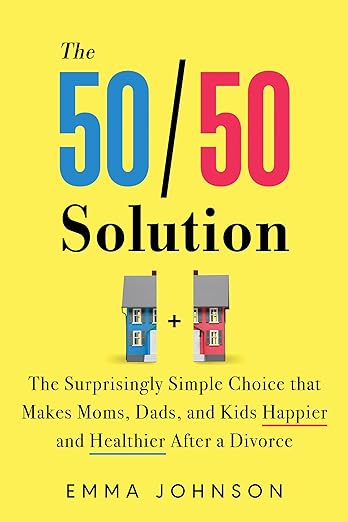
Increasingly, separated and divorced parents are either choosing or being forced by courts to share parenting time equally.
While it makes sense for a parent with minority time to pay support to a majority time parent — off-setting some of the daily costs of raising a child, as well as compensating a majority-time parent for care — when parenting time is shared 50/50, child support makes less sense.
Keep reading to understand the child support rules when parenting time is equally shared:
50/50 custody or time-sharing means that kids spend an equal amount of time with both parents.
50/50 parenting time can be called many things:
Equally shared parenting
Joint physical custody
Shared residential custody
Shared physical custody
Equal legal custody
Equal parenting time
Molly Rosenblum, owner and founding attorney of The Rosenblum Allen Law Firm based in Las Vegas, says the most common custody arrangement is joint physical custody, though equal parenting time is far less common.
Neither joint legal nor joint physical custody automatically have any bearing on one another, nor any child support paid. In other words:
A father with 50/50 custody can pay child support — and even alimony. However, as divorces become less contentious, more people file their own divorce papers online, and equal parenting becomes the norm, this sort of arrangement is less common.
Custody is a broad term. Here is what you need to know about child custody in divorce, according to Divorcenet.com:
What is legal custody? This refers to the legal rights a parent has to decision-making rights for major issues, including education, religion, and medical decisions.
What is physical custody? This refers to who has the majority time with the children — this can refer to sole physical custody or shared physical custody.
What is joint custody or shared custody? This is the most common agreement, in which both parents have equal rights to have a say in major decisions affecting children.
What is sole custody or full custody? Sole custody means that one parent has all the legal rights to make major decisions concerning the child — and all or most of the time with the child. Visitation, or time-sharing, or residential custody are all terms that refer to the amount of time the children spend with each parent. Children live with parents who have “primary physical custody.”
If you are navigating a 50/50 custody schedule with your ex, simplify your communication with the Our Family Wizard app.
Is joint custody the same as 50/50 custody?
Custody term definitions really depend on where you are who you are talking to, so it is best to ask for clarification. Custody can refer to legal custody or physical custody.
Both types of custody can be split equally, or one parent can be granted primary or sole custodian of the child — in regards to either/or legal or physical care.
Who pays child support with joint custody or 50/50 custody?
Each state has its own laws and child support calculator and in some of them the sum of time each part spends with the children is factored into the sum owed. However, there is no state in which equal parenting time equals no child support owed. Mothers who earn more than the father can be ordered to pay child support.
That said, parents can make any agreement between them and deviate from their local family court child support standards, and agree on a 50/50 time-sharing with no child support paid to anyone, while the parents figure out how to equitably split out-of-pocket expenses like health insurance, child care and extracurricular activities.
If you and your spouse have an amicable separation and feel like you can settle your divorce yourselves, you may be able to agree on sharing time with the kids equally and foregoing child support. Uncontested, mediated and collaborative divorces create a low-conflict space to negotiate a fair child support agreement and be better co-parents.
While there is a great movement towards 50/50 equally shared visitation time, the majority of family courts still default to some version of a model that has prevailed in separated families for decades:
Women’s job in society as unpaid caregiver, financially dependent on a man.
Men’s job in society is to be the breadwinner, reliant on a woman to care for his loved ones.
These notions are supported by Pew research findings:
About three-quarters of Americans (76%) say men face a lot of pressure to support their family financially, compared with 40% who say the same about women. And while about two-thirds (68%) say men face a lot of pressure to be successful in their job or career, fewer than half (44%) say women face the same type of pressure.
By contrast, far larger shares of the public say that women are pressured to be an involved parent. 77% say women face a lot of pressure to be an involved parent; 49% say the same for men.
This outdated arrangement holds women, men, families and the economy back.
I can tell you first-hand it is a heck of a lot harder to get ahead professionally and financially if you are the sole – or majority care provider for children.
If we unburdened the 10 million single mothers in this country from this responsibility (40% of women in the U.S. have had at least one baby outside of marriage), and forced fathers to be true co-parents, gender economics in this country would look very, very different.
Listen to my Like a Mother podcast episode on the topic:
What are the pros and cons of 50/50 custody?
According to Alexandra Cromer, a Licensed Professional Counselor from Thriveworks in Richmond, VA., these are some pros and cons to a 50/50 custody schedule:
Pros of 50/50 custody
Reliable and consistent
Helps in planning for travel/trips/scheduling
Allows kids to have a substantial amount of time spent with each parent
Does not require a sudden change of environment multiple times throughout the year/week/month
Cons of 50/50 custody
Some arrangements might be “too long” for some kids, especially if they are more attached to one parent over the other and aren’t used to seeing them as frequently
Can cause issues in terms of scheduling birthdays and holidays
Can cause social and sometimes academic aspects of a child’s life to be disrupted
What are common 50/50 custody schedules?
There are a lot of different types of 50/50 custody schedules, so you can find one that works for your specific family situation:
Alternating week schedules
Alternating week schedules — one week on, one week off. May parents use the school as an exchange spot in this case, with one parent dropping off the children at school on Friday, and the other parent picking them up that Friday for the following week.
Alternating two days schedule
Alternating two days — parents switch off every two days. This can work well for very small children.
2-2-3 schedule
The 2-2-3 schedule has the child spend 2 days with one parent, 2 days with the other parent and 3 days with the first parent. Then the next week the schedule flip-flops.
3-4-4-3 schedule
The 3-4-4-3 schedule has your child spend 3 days with one parent, then 4 days with the other parent. Then it switches, and the child spends 4 days with the first parent, followed by 3 days with the other parent.
2-2-5-5 schedule
The 2-2-5-5 schedule has your child spend 2 days with each parent and then 5 days with each parent.
According to a review of research published in the Journal of Family Psychology, children in joint custody vs. sole custody arrangements had:
Less behavior and emotional problems
Higher self-esteem
Better family relations
Better school performance
50/50 custody, parenting and time-sharing is better for all families, everywhere
If women know they can never rely on a man outside of marriage for income, we will make different, better decisions about our careers, and money.
When divorce courts force both sexes to participate in the workforce and with children in equal measure, that message trickles into all families — including married and single-people homes.
When both sexes are forced by court or social pressure to parent equally, men and women on corporate boards, in Congress, in C-suites, and on down make different, better policies for workers and families.
Plus, this presumed, equal and fair arrangement relieves courts of the endless bickering and petitions that distract from extreme cases — like actual abuse and neglect — for which deviation from this rule would be appropriate.
Strong workforce participation by women is great for children, as studies have shown. Strong workforce participation by women is great for the economy, national security and societal stability.
How 50/50 custody, parenting and time-sharing affect the pay gap
When parenting time is shared equally, single moms would have so much more time to invest in their careers and businesses.
When parenting is equal, moms are not the default caregiver when kids barf in the night and need to stay home from school.
50-/50 custody means moms would not automatically be the parent that must leave work early for teacher meetings, or systematically forgo career-advancing work travel or evening networking events.
More equal time affords moms much-needed time to rest, exercise and develop relationships and interests outside of their kids that make women happier mothers and more productive citizens.
This survey of 2,279 single moms found a direct correlation between time-sharing equality, and the women’s income and attitudes about motherhood: more time equality meant more income, and more satisfaction with parenting.
When dads not only have equal parenting time, but also equal parenting responsibility, fathers are forced to make the hard work-life decisions that women have known for generations, leveling the workplace playing field.
Decisions like whether to take time off after having a child, or scale back a career to nurture young children — the very hard decisions that women have made for generations, and are at the root of the pay gap.
Finally, joint physical custody equalizes parents not only in separated and divorced families, but all families. Laws supporting 50/50 custody change family culture. If equal parenting were the norm, this would create a collective mind shift at home, work and in the bedroom.
After all, time and again, when asked how we will ever close the pay gap, experts cite affordable child care. Having half of the time off from your kids, who are in the safe and loving care of the other parent, is as good as it gets. No expensive state or federal budgets required! No politically charged policy to pass! JUST SPLIT TIME EQUALLY BETWEEN PARENTS!
Just because the child lived in your uterus does not mean you get more say in how they are raised.
However, if you work on practicing equally shared co-parenting, you may find that both parents can grow in their parenting — and know that their children benefit from it. More tips on how to co-parent in this post.
Men will never step into their full father potential if we keep assuming they are the inferior parent. In fact, many men and women both attest to the fact that fathers really improved their parenting after divorce. These parents say that this happened because:
They were forced to — the mom wasn’t there all the time to swoop in when parenting was stressful. This is hardly surprising. Parenting is not rocket science, and men and women are born equipped for the job. Keep in mind that humanity has thrived based on the model of very young, uneducated people raising other to adulthood. Parenting is not a higher calling requiring of special skills or education.
There was no mom nearby micromanaging his parenting. Now alone with the kids, the dad now had room to grow into the father he was meant to be.
2. We agreed I would give up my career to stay with the kids, and it is not fair that my standard of living is compromised because he wants to divorce!
You’re not a child, and he is not your father. You entered into marriage knowing the risks.
You are an adult woman who has political and economic rights that you chose not to exercise.
That was not a good decision, and I am sorry you made them, but it is not another person’s responsibility to pay for those decisions.
If you want a higher standard of living, you are free to pursue a career that will afford you that.
Now that he has the kids 50%, you have plenty of time to do that.
3. He is supposed to take the kids half the time but never shows up. I still shouldn’t pursue child support?
That is a decision that you have to make.
Yes, if he doesn’t care for the kids half the time, he should step up and care for them financially.
But keep in mind these things:
He will always and forever resent giving you that money and it will be a wedge between you in any co-parenting.
Psychologically, taking that money will likely hold you back. He is a man you are no longer tied to romantically, and from whom you are (or should be) striving to create a separate life. Money ties people together. You risk being dependent on him. Tread carefully.
4. My kids are so little! My baby is nursing! 50-/50 doesn’t make sense!
I agree. This is about being reasonable and what is good for the greater sum, without abandoning the individuals.
Nursing babies and their moms, temporarily, require certain circumstances. So do disabled adults, and deployed military.
If today you commit to 50/50 parenting starting at age 1 with increased time with the father now, that defuses conflict and builds trust that the spirit of your agreement is indeed fair.
A broader societal move to default, equal parenting and no child support will not be painless. But they are necessary steps in an evolution towards financial and parental equity.
Note that in cases where ‘standard’ visitation is awarded — every-other-weekend — fathers become depressed and non-involved, and within 3 years, one study found, 40% of children in an unequal visitation arrangement had lost complete touch with their non-custodial parents, which are nearly always the father.
FAQs about child custody
What is the most common child custody arrangement?
Joint custody is the most common child custody arrangement, where a child spends part of the time with each parent.
What is a typical joint custody schedule?
There is no definitive data on the most common joint custody schedule, but these are popular options:
Alternating weeks
Alternating two days schedule
2-2-3 schedule
3-4-4-3 schedule
2-2-5-5 schedule
Who claims child on taxes with joint custody?
Which parent claims the children on taxes with equal parenting time can be decided between the parents, and with the help of an accountant, you both may be able to work out an arrangement that saves you both on taxes. However, if you can’t figure this out yourselves, your state’s family law may have a law that will guide you, or a judge will make the determination.
What rights does a father have with joint custody?
Technically, if parents have equal custody, they both have equal say in how the child is raised regarding large decisions, equal time with the children, and the right to parent how they like during their parenting time.
Unfortunately, it can be messier than this.
Constitutionally, both parents have equal rights to the children, and children have a right to their parents.
What are the disadvantages of joint custody?
I have studied parenting for single parents for nearly a decade and I have seen no real evidence in the scientific literature to find any large-scale negatives for equally shared parenting. Children fare best when they spend equal time with both parents.
Mothers can earn more and be more well-rested when they share parenting time equally with their kids’ parent. And men who are engaged fathers suffer less mental and physical health issues.
On an individual level, some parents may not want to share parental control, or miss out on time with their children.
Can a mother refuse joint custody?
Anecdotally I know that women are raised to believe we are the dominant parent, and we behave accordingly. The question here only supports this notion that mothers have within our power to refuse or grant fathers access to their own children.
Technically, mothers do not have this power in any state. However, mothers do have an upper hand in the domestic sphere and in family court, and when in question, most judges do still grant mothers primary parenting time.
Why would a judge deny joint custody?
There are many reasons a judge would deny equal parenting time, or order an unequal parenting schedule:
One parent has a history of abuse of any kind
One parent has a history of addiction
One parent has a history of mental health issues
One parent has unstable housing
The judge is not educated about the most recent, and very established science that proves that children fare best when they spend equal time with both parents, and instead defaults to erroneous presumptions that children need on primary home
The judge is sexist and believes mothers are better parents
The judge is sexist and has a history of punishing women
The judge is sexist and has a history of punishing men
The judge is jaded after hearing too many false allegations and grants primary time to the accused parent
There is evidence of parental alienation, and the judge grants primary time to the alienating parent
One parent wants less than 50% parenting responsibility and time
An equal parenting schedule would dramatically reduce child support for one parent, and the judge wants to prevent that
The judge owes one of the parties’ attorneys a favor, or is otherwise a friend
The judge is sick of one parent filing frivolous and petty claim and is retaliating
The judge is having a bad day and one parent ticked her off
The ambiguity about what to expect in family court is a good reason to find a way to stay out of family court if you can. You can come up with your own agreement, and file it in your local court if you prefer, saving you untold sums of money, time, stress and loss of control.
How do you split custody evenly?
Cromer says one way to split custody evenly is to make sure the number of days/weeks spent with each parent per year is roughly equal.
“This allows for the child/parents to pick the schedules and days of the year that best work for them and allows them to spend the most time together with minimal impact to the child,” Cromer says.
Bottom line: Is 50/50 custody best for a child?
Cromer says there is no straightforward answer to this question. She says the best custody schedule for a child is one that:
Meets the child's need for interaction with a parent
Fosters healthy relationships
Still allows the child to have social, academic, and emotional successes
“Ideally, the best custody schedule would be the one that most closely fits the schedule and needs of the child, rather than the parents,” Cromer says.
Are you part of the Facebook group, Millionaire Single Moms? No income requirement, though BIG GOALS and a positive MINDSET required! Join now!
What is 50/50 custody?
50/50 custody or time-sharing means that kids spend an equal amount of time with both parents.
According to GoodRx1, hearing aids can cost between $2,000 and $7,000 on average. So, where can you turn when you, your child, or your parent has hearing loss and can’t afford the hearing aids they need?
If you have a low income, you are more likely to qualify for free or low-cost hearing aids, though income isn’t a qualification for every program on this list.
Free hearing aids for kids
Medicaid
If your child has Medicaid and/or Children’s Health Insurance Program (CHIP) benefits, they can get free hearing screenings, diagnostics, and treatment to age 21.
In some states — like Florida, Texas, and New York — Medicaid offers hearing aid coverage through the Early and Periodic Screening, Diagnostic, and Treatment (EPSDT) program to address hearing impairment. However, not all states cover hearing aids.
For questions about Medicaid and CHIP coverage, check with your state Medicaid office.
In some states, like Texas, you can also apply for a Medicaid Buy-In (MBI) for your children. An MBI program provides more affordable health services to children in families that cannot qualify for Medicaid.
Individualized Education Program (IEP)
If your child has an IEP at school stating that they need hearing assistance, you may be able to get free hearing aids if you cannot afford them as part of the federal Individuals with Disabilities Act (IDEA). Talk to your child’s guidance counselor or special education coordinator to find out what may be available.
State-sponsored programs: Check with your state Department of Social Services (DSS), Department of Health and Human Resources (DHHR), or Health and Human Services (HHS) offices for free hearing aid programs.
Free hearing aids for adults through Medicaid
Each state governs its own Medicaid coverage. That means your state may offer full, partial, or no coverage for hearing aids.
For example, according to the Hearing Loss Association of America2, 28 states currently cover hearing aids for adults:
However, healing aid coverages are subject to change. For the latest coverage, contact your state Medicaid office.
Free hearing aids for seniors
If you are a senior looking for free hearing aids, check out these options:
Lions Club hearing aid assistance program: Local Lions Clubs collect donated hearing aids and give them to people in need. Contact your local chapter to see what’s available.
Medicare Advantage Plan: While Medicare does not cover hearing aid costs, a Medicare Advantage Plan might. If you have one, contact your benefits administrator to find out if hearing aids are a fully or partially covered expense.
Senior centers: You can also check with your local senior center or dial 2-1-1 to ask a United Way representative about programs in your area for free hearing aids for seniors.
Free hearing aids for veterans
Veterans who have registered and are enrolled in Department of Veterans Affairs (VA) health care can receive a hearing test. If it is determined that hearing aids are necessary, they will be provided at no cost to the veteran.
Contact your local VA medical center to learn more:
Look for “hearing aid free trials near me” to be part of research programs. If accepted as a volunteer, you might be able to get free hearing aids or other hearing assistive devices.
Free hearing aids for workers
Some programs are available to help people who need hearing aids to do their jobs:
State Vocational Rehabilitation Agencies: These agencies serve people of working age, helping them get the proper help or devices they need to address impairments and disabilities so that they can get or keep a job.
Start Hearing: This program is for people who are current or retired federal employees.
Grants for hearing impaired people
Help America Hear is a nationwide program that helps men, women, and children get free, new hearing aids. Applicants must not have any other financial means to buy hearing aids.
Travelers Protective Association provides grants to use toward hearing devices, treatments, speech classes, and other resources to address hearing impairment. Grant applications are accepted by the end of each quarter: March 31, June 30, September 30, and December 31. Grant awards vary, and anyone who is deaf or hard of hearing can apply.
Audient Alliance helps low-income households get access to hearing care and hearing aids at a much lower cost than retail and works with brands like Oticon and Siemens. Audient prices start at $495 per ear for entry-level technology with a max price of $1,750 for two premium aids ($875 each). These are the income limits to qualify for Audient:
Family size
48 other states
Alaska
Hawaii
1
$27,075
$33,825
$31,150
2
$36,425
$45,525
$41,900
3
$45,775
$57,225
$52,650
For each additional person, add:
$9,350
$11,700
$10,750
Hearing Charities of America works with partner organizations to provide refurbished hearing aids for free to low-income individuals through The Hearing Aid Project. They also provide an A-Z list of hearing aid assistance programs by state — Click “Resources” on the linked page above.
Talk to your audiologist. They may know of local programs for seniors, students, and low-income families that can offer affordable or free hearing aids such as the Penn Hearing Aid Program, which matches patients with hearing aids based on their budgets.
The HIKE Fund: This not-for-profit charity helps about 100 children each year in the U.S. and Canada get free hearing aids and other assistive devices. To apply, your household income cannot exceed $125,000.
The Miracle-Ear Foundation: The Gift of Sound program provides free hearing aids to children and adults whose household income is at or below 200% of the federal poverty guidelines. There is a $150 non-refundable application fee for adults ages 19 years and older.
Hearing aid loaner banks: Some cities/states have hearing aid banks that supply hearing aids temporarily while you seek a permanent solution. Search Google for “hearing aid loaner bank near me.”
2 Ears 2 Learn: This nonprofit helps children from birth to 10 years old suffering from specific hearing impairments (microtia and aural atresia) get refurbished sound processors at no cost. The program is geared toward children between birth and 10 years of age.
United Healthcare Children’s Foundation: This nonprofit provides medical grants up to $5,000 to help children 16 or younger get devices like hearing aids and to improve their quality of life. These are the income requirements:
Family of 2: $55,000 or less
Family of 3: $85,000 or less
Family of 4: $115,000 or less
Family of 5 or more: $145,000 or less
Free hearing aids FAQs
Do insurance companies cover hearing aids?
All insurance companies do not cover the purchase and fitting of hearing aids. That’s because all states don’t mandate hearing aid coverage. Speak with your insurer directly to find out what’s covered under your plan.
Can I get hearing aids through a workers' compensation claim?
If your hearing loss is related to an accident at work, you may be able to purchase hearing aids using proceeds of your worker’s compensation settlement. It’s best to consult a lawyer first. Sites like Avvo.com allow you to ask lawyers legal questions for free.
How do poor people get hearing aids?
If you have low income and are eligible for Medicaid, you can check to see if free hearing aids are covered in your state by contacting your state Medicaid office.
If you don’t qualify for Medicaid, research nonprofits, community free clinics, and grants that offer free or discounted hearing aids or that give you cash to purchase them. There are also less expensive over-the-counter hearing aids available. We like Audien Hearing, with aids starting at $85 after the 15% discount.
Does Social Security pay for hearing aids?
While the Social Security Administration (SSA) does not pay directly for hearing aids, if you have hearing loss that prevents you from working, you can apply for SSA financial assistance.
Does Medicare pay for hearing aids?
No, Medicare does not pay for hearing aids.
Where can I get cheap hearing aids?
If you don’t qualify for free hearing aids, these are some other low-cost options:
Over-the-counter hearing aids can be purchased out of pocket or using funds from a flexible spending account (FSA), health savings account (HSA), or health reimbursement account (HRA). Some hearing aid makers, like Klarna, offer installment payments.
Audien Hearing offers aids starting at $85 for new customers (with 15% signup discount), for very small aids, 20-hour battery life, noise cancelation and remote charging.
Bottom line: How do you get hearing aids when you can't afford them?
There are many free hearing aid programs. Some are available only to children, while others are open to people of all ages.
Here’s a quick recap on where to look for free hearing aid help:
State programs run by DSS, DHHR, or HHS
State Vocational Rehabilitation Agencies
Hearing aid trials
Medicaid
CHIP
Medicare Advantage Plans
VA
Nonprofits
Hearing aid loaner banks
And if you don’t know where to start, call the United Way at 2-1-1 or visit the United Way website to find resources in your area.
Check out these other resources for low-income individuals:
All insurance companies do not cover the purchase and fitting of hearing aids. That’s because all states don’t mandate hearing aid coverage. Speak with your insurer directly to find out what’s covered under your plan.
How do poor people get hearing aids?
If you have low income and are eligible for Medicaid, you can check to see if free hearing aids are covered in your state by contacting your state Medicaid office.
Does Social Security pay for hearing aids?
While the Social Security Administration (SSA) does not pay directly for hearing aids, if you have hearing loss that prevents you from working, you can apply for SSA financial assistance.
Does Medicare pay for hearing aids?
No, Medicare does not pay for hearing aids.
If you’re a single mom in Illinois struggling to make ends meet, keep reading for resources that help with:
Statistically, families benefit most with cash assistance (vs through benefits programs).1 Here is our guide to single mom grant programs, including our own.
Every month, I give out $500 cash to one single mom struggling with money, health, stress, child care, illness or loneliness — no strings attached.
Qualifications are simple:
1. You're a single mom.
2. You need the money right now.
Fill out this form to apply:
(Note that the figures and information in this post are current as of publication date.)
Number of people in family/household
Annual income
1
$15,960
2
$21,640
3
$27,320
4
$33,000
5
$38,680
6
$44,360
7
$50,040
8
$55,720
For families/households with more than 8 people, add $5,680 for each additional person.each additional person.
Emergency cash for low-income families in Illinois
If you need cash to pay bills, buy gas, feed your family, or for any other reason, these programs can help:
Temporary Assistance for Needy Families in Illinois
Illinois’s Temporary Assistance for Needy Families (TANF) program provides cash assistance for qualifying families with children to help with:
Food
Clothing
Housing
Other basic needs (not medical)
Cash assistance is available for a lifetime total of 60 months for parents/caregivers and their children (which includes assistance received in other states). However, there are some exceptions related to medical conditions, pending social security applications, and education that allow you to receive benefits for a longer amount of time.
If you care for children who aren’t your own, you can still get cash for just the children after the 60 months.
These are the payouts for Illinois’s monthly TANF cash assistance program:
Number of Children
Payout for Adult and Children
Payout for Children Only
1
$340
$255
2
$458
$344
3
$576
$432
4
$694
$521
Illinois notes that 75% of TANF payments must be allocated for child-benefiting spending only.
TANF in Illinois also provides GED preparation, vocational training, postsecondary education, vocational rehabilitation, classes in basic English, help with child care, work stipends, job retention services, and screenings for substance abuse, mental health, and domestic violence.
Qualifications:
Must be a U.S. citizen or a qualified non-citizen
Illinois resident
Have children under 18 or under 19 if still enrolled in high school
Pregnant women with or without children
Children and mother must have social security numbers
Children must have birth certificates to prove relationship to mother or caregiver
Monthly countable income must be less than the payout amount
Must pursue child support enforcement, have child support in place, or have good cause for refusing child support
Create a Responsibility and Services Plan (RSP)
If you are a single parent who is able to work and your youngest child is under age 6, you must work or participate in a work activity for at least 20 hours per week. If your youngest child is 6 or older, you must work at least 30 hours per week.
If you need help finding a place to live or paying your rent/mortgage, these programs can help:
Rental assistance in Illinois
There are multiple programs in Illinois to help renters find housing and pay their rent:
Illinois Rental Assistance Program
As part of Illinois’s Emergency Rental and Utility Assistance (ERA) programs, the Department of Human Services partners with community-based agencies to provide up to $25,000 in annual rental assistance per household.
Qualifications:
Must have no active or pending eviction court proceedings
Illinois resident
Proof of hardship caused by the COVID-19 pandemic
Household income does not exceed 80% of the AMI
Must not receive other ERA benefits from Illinois Housing Development Authority, country program, or city of Chicago program
Proof of citizenship is not required to qualify. The program gives priority to people whose household earns less than 50% of the AMI or who have been unemployed for 90 days.
CBRAP — the Illinois Court-Based Rental Assistance Program — is supported by the Illinois Housing Development Authority and provides emergency rental payments to tenants or landlords with pending eviction court cases.
CBRAP can provide up to $25,000 in rental payments to help prevent eviction, which can go toward 15 months of past-due rent and 3 months of future rent.
Qualifications:
Must be in a court eviction proceeding for unpaid rent
If you need help buying a home in Illinois, these programs can help:
Illinois Housing Development Authority down payment assistance programs
Illinois Housing Development Authority helps with down payment and closing costs in the form of a second mortgage loan.
These loans must be combined with applicable IHDA 30-year fixed rate mortgages, including conventional, VA loan, FHA, or USDA loan types. You can apply for these mortgages through a participating IHDA lender.
Each county sets income and purchase price limits based on your household size that help determine your eligibility for down payment assistance programs. Your lender can help you determine whether you qualify and which of the four different down payment assistance programs you should apply for:
Opening Doors (Abriendo Puertas)
$6,000 towardsin down payment and/or closing cost assistance
0% interest second mortgage
No monthly payments and loan forgiven after 5 years*
Access Forgivable Mortgage Down Payment Assistance Program
4% of the purchase price up to $6,000 in assistance for down payment and/or closing costs
0% interest second mortgage
No monthly payments and loan forgiven after 10 years*
Access Deferred Mortgage Down Payment Assistance Program
5% of the purchase price up to $7,500 in assistance for down payment and/or closing costs
0% interest second deferred mortgage
Payment is deferred unless you sell, refinance your first mortgage, or reach 30 years.
Not forgivable
Access Repayable
10% of the purchase price up to $10,000 in assistance for down payment and/or closing costs
0% interest second mortgage
Monthly payments must be paid over a 10-year period
Not forgivable
*If you sell your home or refinance your first mortgage prior to the forgiveness period, you will have to repay the training unforgiven balance.
Qualifications:
These loans are not available as standalone assistance but in conjunction with IDHA mortgage programs. Other qualifications include:
First-time or current homebuyers
Contribute $1,000 or 1% of the purchase price (whichever is greater)
The Illinois Department of Human Services created the Homeless Prevention Program to help prevent Illinois residents from becoming homeless if they are facing eviction, foreclosure, or other risks of homelessness. The program also helps residents who are currently homeless find affordable housing.
Continuum of Care agencies across the state offer homeless prevention services for IDHS, including:
Rental or mortgage payment assistance
Utility payment assistance
Security deposit payment assistance
Housing location and inspection services
Job preparation and employment services
Counseling
Qualifications:
Requirements may vary depending on individual Continuum of Care agencies, but general qualification include:
Immediate danger of eviction, foreclosure or homelessness
Currently homeless
Documentation that proves a temporary economic crisis beyond your control
Must demonstrate an ability to pay rent and utilities after assistance
The Illinois Department on Human Services also offers a program to help those at risk of homelessness find emergency or transitional housing. This program funds local nonprofit organizations and local governments to help provide services like:
Meals
Counseling
Transportation
Abuse intervention
Housing in overnight shelters for less than 12 hours
Housing in transitional shelters up to 2 years
Voucher shelter provided by hotels and motels
Qualifications:
You must live in Illinois and be at risk of becoming homeless or are already homeless.
Transportation help for low-income families in Illinois
You may be eligible for these transportation programs that serve low-income Illinois families:
Free and low-cost transportation
These free and low-cost transportation resources can help you and your family get to where they need to go in Illinois:
Medicaid transportation
Single moms and their children who are on Medicaid or All Kids insurance may receive free transportation to and from medical appointments if they don’t have reliable transportation of their own. These rides must be scheduled ahead of time through the family’s care coordinator.
Qualifications:
Medicaid or All Kids recipient
How to get help:
Contact your Medicaid or All Kids care coordinator
Illinois public transit
Illinois has 63 public transit providers across the state. The following systems are free or low-cost options.
Central Illinois Public Transit
Covers: Christian, Clay, Effingham, Fayette, Montgomery, Moultrie, and Shelby counties
Offers: Free rides for children up to 5, children 6-12 have a discounted $2 fare
Chicago Transit Authority
Covers: Chicago metro area
Offers: Free rides for children 7 and under, $0.75 fares for students, reduced fares ($1.10+) for children 7-11
CityLink
Covers: Peoria
Offers: Children 54” or less ride free, students ride for $0.50
Connect Transit
Covers: Bloomington
Offers: Free fares for children 5 and under with a paying adult
Danville Mass Transit
Covers: Danville
Offers: Free transfers, free fare for children under 46”, $0.50 fare for children over 46” through middle school
Decatur Public Transit System
Covers: Decatur
Offers: Free fares for children 5 and under, $0.80 fares for older children
Effingham County Public Transportation
Covers: Effingham County
Offers: Children 0-5 ride free with an adult, and children 6-12 have a discounted fare of $2
Jackson County Mass Transit
Covers: Jackson County
Offers: Free fares to children 0-5; $1 fares for children 6-14
MetroLink
Covers: Rock Island and Moline
Offers: Free fares for children under 5, children and college students traveling to and from school, and people with disabilities; children 5-15 ride for $0.50
New Trier Township Taxi Service
Covers: New Trier Township
Offers: Free rides 24/7 to participants in New Trier’s food bank or residents with disabilities
Niles Free Bus
Covers: Niles
Offers: Free rides through Niles from 9:30 AM to 4:40 PM every day of the week
PACE
Covers: Cook, Will, DuPage, Kane, Lake and McHenry counties
Offers: Free fare for children under 7 and $1 fare for older children
Quincy Transit
Covers: Quincy
Offers: Free rides for children 1-4, $0.25 fares for school-age children, $0.50 regular fare
RIDES Mass Transit District
Covers: Champaign-Urbana area
Offers: $1 general fare, students can ride free with a student pass, and children 46” or shorter ride free with an adult
River Valley Metro
Covers: Kankakee County
Offers: Children 5 and under ride free, reduced fare of $0.50 for students and people with disabilities, free rides for people with disabilities who qualify for the Benefit Access Program
Sangamon Mass Transit District
Covers: Springfield
Offers: Five and under ride free, $0.60 fare for children 6-12
South Central Transit
Covers: Washington, Marion, Jefferson, Clinton, Franklin, and Perry counties
Offers: Children 4 and under ride free with a paying adult
Illinois transportation providers
The Illinois Department of Transportation (IDOT) maintains a published map of all public transit providers within the state and the areas they cover. You can view the map on IDOT’s Transit System page.
Vehicle donation and car repair help in Illinois
These programs provide financial assistance for car repairs or free car repairs and vehicles for needy families in Illinois:
Supportive Service Payments
Illinois offers Supportive Service Payments to people enrolled in the state’s SNAP program. These are one-time payments providing temporary financial assistance to help a recipient continue participating in the program by helping them get to work or continue training for a job.
The program allows up to $1,400 per year in payments toward repairs on a vehicle needed for a recipient to get to work. Recipients need to provide two written estimates of the cost of repairs to receive a payment.
Qualifications:
SNAP participant in Illinois
How to get help:
Call 800-843-6154
Contact your SNAP caseworker
New Life Car Care
New Life Car Care is a charitable auto repair shop providing free or affordable car repairs to single moms and people with disabilities in Illinois. The company also holds free car maintenance classes and donates vehicles to families in need. New Life Car Care is supported by community and business donations. Repairs and maintenance services include, but are not limited to, oil changes, brake repairs, tune-ups, and fuel pump repairs.
How to get help:
Call 217-273-3161
Email nlcc1@yahoo.com
Free cars in Illinois
This charity offers free cars to qualified applicants in Illinois:
Free Charity Cars
Free Charity Cars awards free vehicles to selected applicants in all 50 states. The nonprofit charity group has been awarding free vehicles to low-income American families since 1996 and has gifted more than 9,000 cars. The charity group notes that they do not have an inventory of vehicles readily available as they award cars as soon as they get them, so there can be extensive waiting periods for those selected for the free car program.
If you are struggling to pay your utility bills in Illinois, check out the following programs:
Low Income Home Energy Assistance (LIHEAP) in Illinois
LIHEAP helps qualifying households pay for heating, gas, propane, and electricity. This service is supported by federal funds allocated by the Illinois Department of Commerce and Economic Opportunity (DCEO).
Qualifications:
Resident of Illinois
Rent must be greater than 30% of your income if heat and/or electric are included
Total income at or below 200% of FPL 30 days before application
Using federal funds, DCEO created the CSBG program to help low-income Illinois families pay for necessities such as:
Utility bills
Rent
Temporary shelter
Food
Medicine
The program does not provide grants directly to individuals. If you qualify for the grant, the funds help your local Community Action Agency provide you with essential services
Qualifications:
Total income at or below 200% of FPL 30 days before application
Contact the Illinois Families Call Center at 833-711-0374
Low Income Household Water Assistance Program
LIHWAP is another Illinois DCEO program that helps pay for water and wastewater bills to avoid utility disconnection. You can also apply for LIHEAP at the same time.
Qualifications:
Total income is not above 200% of FPL 30 days before application
Resident of Illinois
Immediate danger of water or wastewater disconnection
Contact the Illinois Families Call Center at 833-711-0374
Illinois Home Weatherization Assistance Program
IHWAP helps low-income families lower their monthly energy bills by making their homes more energy efficient. The program also provides health- and safety-related upgrades. Types of assistance include:
Attic and wall insulation
HVAC repair or replacement
Water heater repair or replacement
Lighting replacement
Refrigerator replacement
Ventilation and moisture control measures
The program offers up to $16,000 for energy-related weatherization and repairs, and $3,500 for health and safety upgrades.
Qualifications:
Household income must be at or below 150% of the FPL using State funds
Household income must be at or below 200% of the FPL using DOE and HHS funding
Medical insurance and dental help for single moms in Illinois
The following medical and dental services are available to qualifying individuals and families:
Illinois Department of Healthcare and Family Services Medical Programs
The HFS Medical Programs include two primary services — Medical Assistance (including Medicaid) and Children’s Health Insurance — that help low-income Illinois families afford health care.
Enrolling in these programs helps cover the cost of services at an HFS-enrolled health care provider. Covered services include:
Doctor visits
Well-child visits
Dental care
Immunizations for children
Mental health services
Substance abuse services
Hospital care
Emergency services
Prescription drugs
Medical equipment and supplies
Qualifications:
Eligibility requirements vary by program.
How to get help:
Call 800-843-6154 and ask how to apply for medical benefits
Health Resources & Services Administration (HRSA) in Illinois
HRSA, an agency of the United States Department of Health and Human Services, funds health centers that provide free or subsidized health and dental care to low-income people and those otherwise unable to access quality health care, like people living in rural areas.
HRSA also offers a 24/7 free and confidential mental health hotline for pregnant and new moms. Dial 833-943-5746 (833-9-HELP4MOMS) if you are struggling.
Qualifications:
Each health center sets its own eligibility criteria for free or reduced cost care.
How to get help:
Find an HRSA health center in Illinois by typing in your address on HRSA’s search tool.
A number of federal and state food and nutrition programs are available across the state:
Illinois Supplemental Nutrition Assistance Program (SNAP)
USDA’s Supplemental Nutrition Assistance Program (formerly known as the Food Stamp program) provides food benefits and nutrition education to low-income households.
SNAP recipients are issued an EBT card (called the Illinois Link Card) that can be used like a debit card in select retail food stores to purchase food, including:
The Special Supplemental Nutrition Program for Women, Infants, and Children is a nutrition program that provides free baby formula and nutritional food items to low-income mothers and their babies.
Qualifications:
Low-income, pregnant, breastfeeding, and postpartum women, for up to one year postpartum
Women up to six months postpartum who are not breastfeeding
Infants and children under 5 years old, including foster children
Low-income sole provider parents of children under age of 5 who are at nutritional risk and who are below 185% of FPL
If you are currently receiving Medicaid, Temporary Assistance, or Food Assistance help, you are also eligible for WIC
How to get help:
Call your local WIC office or (217) 782-2166 and say you want to apply for WIC.
National School Lunch Program (NSLP) and School Breakfast Program (SBP)
NSLP serves healthy, well-balanced, reduced-price or free meals to children in school. An extension of the NSLP, the School Breakfast Program provides free or low-cost breakfast to eligible students. All public schools in Illinois must offer a free lunch program (and breakfast if offered) as part of the Illinois Free Lunch and Breakfast Program.
Illinois schools may also offer the Summer Food Service Program (SFSP) that offers free or low-cost lunch and breakfast during school vacation periods for eligible students and their families. This service is part of the Seamless Summer program, where a school offers NSLP, SBP, and SFSP.
Child care help for low-income families in Illinois
There are multiple state and federally funded education programs and child care resources in Illinois:
Illinois Child Care Assistance Program
The Illinois Office of Child Care offers CCAP to help low-income families afford child care while they work or go to school.
Qualifications:
Illinois resident
Employed at time of application and/or attending to a trade school, undergraduate college, or other eligible education
Children are younger than 13*
Monthly non-exempt income must be between 275% of FPL and 85% of the state median income to have 12-month assistance extended for 3 months
Monthly non-exempt income is up to 225% of FPL at the time of application
You can estimate your eligible income using the CCAP eligibility calculator. Once you know your non-exempt income, you can determine your income eligibility for CCAP. These are the current income guidelines for CCAP recipients:
Family Size
225% FPL (for initial 12 months)
275% FPL and 85% State Median Income Range (for 3-month extension)
2
$3,433
$4,196 – $4,921
3
$4,318
$5,278 – $6,079
4
$5,203
$6,359 – $7,237
5
$6,088
$7,441 – $8,395
6
$6,973
$8,523 – $9,553
7
$7,858
$9,604 – $9,770
8
$8,743
$9,987 – $9,987
9
$9,628
$10,204 – $10,204
*If you have a child with special needs, you may be eligible for child care assistance until they are 19.
Head Start is a free federal preschool program for children aged 3 to 5 from low-income families. Early Head Start serves pregnant women and children under age 3. The programs focus on cognitive, social, and emotional development and prepare children for school.
Qualifications:
Children from birth to 5
Meet federal poverty guidelines
Children in foster care, homeless children, and children from families receiving public assistance (TANF, SSI, etc.) are eligible regardless of income
Some programs accept kids with incomes above FPL
Pregnant women can also receive prenatal and postpartum information, education, and services through Early Head Start
If you’re a single mom who wants to further her education, here are some helpful resources:
Get a GED in Illinois
If you are at least 18 years old in Illinois, you can take the GED test. You may also be able to take the test at 16 or 17 with special permission from the school district where you live or if you are enrolled in certain learning programs that petition on your behalf.
You are not required to take a GED Program for Adults in order to take the test. However, you must also complete an Illinois Constitution Module available on the ICCB website.
The GED test is broken into four exams on different subjects, which can be spaced out and taken at your own pace (though each individual exam has a time limit):
Mathematical reasoning – 115 minutes
Reasoning through language arts – 150 minutes
Social studies – 70 minutes
Science – 90 minutes
You have two options for taking the test in Illinois:
Online at-home test – $36 per subject
In person at a test center – $30 per subject
Grants and scholarships in Illinois
The Illinois Student Assistance Commission (ISAC) connects students and prospective students with grants and scholarships available in Illinois. To find out which scholarships and grants you may be eligible for, visit the ISAC student portal.
Individual schools also offer need-based and academic scholarships for their students. If you’ve been accepted to a higher education institution, contact their office of financial aid to learn how to apply.
Employment help for single moms in Illinois
Workforce programs in Illinois provide training and assist with employment:
Illinois Unemployment Insurance
This program provides unemployment compensation to eligible Illinois residents who are out of work through no fault of their own.
Qualifications:
Illinois resident
Unemployed for no-fault circumstance
Earned a certain amount of wages in the past 18 months
Single moms in Chicago, Illinois, can utilize these assistance programs and charities:
Emergency cash help in Chicago
This Chicago-based program provides emergency funding for families in need:
Chicago Emergency Fund
The City of Chicago reserves funding for its residents in emergency situations or in need of short-term financial assistance, whether they’re at risk of homelessness or have experienced an unexpected emergency, leaving them without enough money to pay for their rent or basic needs. The fund can help with various situations, including people experiencing a long-term financial crisis or families transitioning to stable, permanent housing.
Qualifications:
Varies by program, but recipient must be experiencing a financial emergency
How to get help:
Call 3-1-1 and ask for short-term financial assistance
Housing help in Chicago
Chicago, Illinois, offers several housing-related programs for residents to get financial assistance with their rent or buying a home in Chicago:
City of Chicago Rental Assistance Program (RAP)
RAP provides partial or full rental assistance to Chicago residents who are at risk of becoming homeless due to a financial hardship. The money gets paid directly to the participant’s landlord to apply to their rent.
The Chicago Housing Authority manages Chicago’s HCV program, which is funded by the federal HUD program. These housing vouchers are used as a subsidy toward rent payments to make rent more affordable for low-income households.
Participants pay, on average, about 30% of their income in rent and utilities.
CTO is a program sponsored by the Chicago Housing Authority allowing participants in the HCV program to use their subsidy toward a mortgage payment for a home they own rather than for rent.
Participate in a CTO orientation in person or online
Affordable Homeownership Opportunities
Chicago’s Department of Housing provides affordable homeownership opportunities by taking ownership of new or on-sale properties in Chicago and selling them at affordable prices to moderate-income families. Properties are usually at or below $250,000.
Qualifications:
Area median income of 80% or less
Occupy home as primary residence
Participate in HUD-approved pre-purchase counseling
How to get help:
Complete the application and email it to destiny.durham@cityofchicago.org after getting approved for a mortgage
Building Neighborhoods and Affordable Homes Program
As part of Chicago’s mission to renovate neighborhoods, the city offers this program giving homebuyers up to $100,000 to buy newly constructed residential buildings. The properties can be 1-4 units. The amount of the grant is based on income, but won’t drop below $50,000 for homebuyers reaching the maximum income limit of 140% of the area median income.
Qualifications:
No more than 140% of area median income
Purchase a home built according to a City of Chicago land sale redevelopment agreement
Primary residence for at least 10 years
How to get help:
Call 312-744-3653
Email destiny.durham@cityofchicago.org
Emergency Heating Repair Program
Homebuyers can use this program to get their heating system repaired or replaced. The program pays the full cost for eligible participants.
Look to these transportation resources in Chicago if you’re in need of free or cheap transportation.
Cars of Hope
Cars of Hope gifts vehicles and offers free repairs to needy individuals and families in and around the Chicago area.
Qualifications:
Work with a social services agency for Medicaid, SNAP, or other services
In need of reliable transportation
How to get help:
Contact your Chicago area social services agency
Call 224-216-2277
Chicago Transit Authority Free and Reduced Fare Programs
The Chicago Transit Authority is one of Chicago’s public transportation systems, offering free rides to children under 7, reduced fares as low as $1.10 for children 7-11, and $0.75 fares for students. People with disabilities and military members can ride free.
How to get help:
Call 888-968-7282
Utility bill assistance in Chicago
This program can help you pay your water and sewer bills in Chicago, Illinois.
Utility Billing Relief (UBR) Program
UBR provides a 50% reduction on Chicago residents’ water and sewer bills for those who qualify. The program also pays off the debt owed to the city’s water company if a program participant pays their bills on time for at least one year using their UBR credit.
Chicago, Illinois, offers several free and low-cost medical and dental services for low-income residents or people who are underinsured or uninsured:
Chicago Free Clinics
Chicago hosts numerous free health and dental clinics for families without adequate health insurance and low incomes. Contact each center for assistance.
CommunityHealth: If you have no insurance and income at or below 300% of the FPL, you can get free healthcare at CommunityHealth, which offers primary care, lab services, medications, telehealth, mental health services, and basic dental care. CommunityHealth must be the only place you receive medical care to qualify.
Compassionate Care Network: Patients who live in Illinois and don’t have health insurance can get no-cost services here when they pay just $15 a month for a family.
Hayat Clinic: Hayat Clinic provides free primary care services, vaccinations, lab services, vision screenings, and surgical consultations.
IAMA Charitable Foundation Free Health Clinic: This clinic has preventative care, pharmacy and laboratory services, and primary care services for patients with no insurance. The clinic is staffed by volunteer medical professionals.
Interprofessional Community Clinic: If you live in Lake County or the surrounding area and have no health insurance, you can receive free care from this clinic, which is run by medical students.
Mercy to Mankind: Mercy to Mankind offers primary medical care services to uninsured patients in the Chicago area. You can walk in or make an appointment online.
Mobile Care Chicago: Mobile Care Chicago provides no-cost medical and dental care to children and families using mobile medical clinics.
NLVS Free Clinic: Students from surrounding colleges run the NLVS Free Clinic to provide free medical care to uninsured and underinsured patients in Chicago.
Old Irving Park Community Clinic: Volunteer medical professionals provide free primary care services at this clinic. Patients are seen by appointment only.
Port Ministries: Uninsured patients living in Chicago’s southside neighborhoods can visit Port Ministries for free primary and urgent care.
The Night Ministry: The Night Ministry serves homeless individuals and families in Chicago. Its mobile healthcare units help people with acute and chronic medical conditions and basic medical services.
Washington Park Children’s Free Health Clinic: This clinic provides free primary and preventative care, health screenings, and immunizations to children from uninsured or underinsured families. The clinic is open every Tuesday from 5:30 to 7 p.m. for walk-ins and appointments.
Cook County Health and Hospital Systems (CCHHS) CareLink
CCHHS CareLink is a free program for residents of Cook County who get medical care at a Cook County Health clinic. The program covers a portion or all of a participant’s medical expenses at a CCHHS facility.
Qualifications:
Live in Cook County
Uninsured or underinsured
Income below 600% of FPL
How to get help:
Call 866-223-2817
Chicago Dental Society (CDS) Foundation Clinic
The CDS Foundation Clinic offers free dental care to low-income families, including oral exams, X-rays, extractions, and cleanings. The clinic is supported by volunteer dental professionals.
Qualifications:
Uninsured or underinsured
Live in Cook County, DuPage County, or Lake County
How to get help:
Call 630-260-8530
Email clinic@cdsfound.org
University of Illinois Chicago Student Dentistry
The University of Illinois Chicago has a student dentistry clinic with affordable care for adults and children. Dental students perform basic and advanced dental services, like general dentistry, dental implants, and root canals. Anyone is able to make an appointment.
How to get help:
Call 312-996-7555
Food help in Chicago
Chicago, Illinois, is home to several food banks and programs that help single moms and their families find food:
Ravenswood Community Services
This organization runs a community kitchen for hot meals and a food pantry for groceries every Tuesday from 5:30 to 7:30 p.m. It also offers a weekend food pantry on the second Saturday of each month starting at 9 a.m. School children at participating schools in the Uptown and Ravenswood areas can also pick up free groceries through the organization’s after-school mobile program each Thursday.
How to get help:
Call 773-769-0282
Irving Park Community Food Pantry
This food pantry serves the Irving Park area on Wednesdays from 9 a.m. to 12 p.m. and the second Tuesday of each month from 6 to 7 p.m. Recipients get up to five days of food and can also receive pet food if they have pets.
Common Pantry provides free food every Wednesday from 1 to 4 p.m. and 6 to 8 p.m. and Thursdays from 1 to 4 p.m. Each family can get food once a month.
Nourishing Hope offers free groceries through its food pantries like Sheridan Market and El Mercadito. It also has an online market where registered clients can order groceries online for free to pick up in person.
Qualifications:
Varies by program, but all require Chicago residency
How to get help:
Call 773-525-1777
The Friendship Center
The Friendship Center provides fresh groceries to Cook County residents four days a week plus hot to-go meals on Thursday evenings.
Qualifications:
Live in Cook County
Able to provide proof of address
How to get help:
Call 773-907-6388
Email info@friendshipcenterchicago.org
New Hope Community Food Pantry
This food pantry gives needy families up to one full week’s worth of groceries once a month on Tuesdays between 9:30-11:30 a.m. The pantry also offers additional services, like basic health screenings and recipes, for free.
Qualifications:
Live in one of the following zip codes: 60630, 60631, 60646, 60656, 60706, or 60634
How to get help:
Call 773-775-1215
Email directornewhopefoodpantry@gmail.com
The Love Fridge
The Love Fridge is a system of community refrigerators where people in need can take refrigerated food home. The organization also provides free culinary kits filled with portable kitchen tools, like camping stoves and pans, to anyone who needs them.
A Just Harvest hosts a food pantry every Wednesday from 3 to 5 p.m. and a hot community meal every day from noon to 2 p.m. Families can also get fresh produce for free on Mondays from 10 a.m. to noon and 2 to 3 p.m.
How to get help:
Call 773-262-2297
Email info@ajustharvest.org
Pilsen Food Pantry
The Pilsen Food Pantry provides free food to anyone in need who visits, including dairy, produce, and meats. Households can visit once every two weeks, Monday through Friday.
Qualifications:
Valid photo ID
Live in the Chicago area
How to get help:
Call 773-812-3150
Email info@pilsenfoodpantry.com
Education assistance in Chicago
Explore the following resources in Chicago that can help you afford an education:
CSBG Scholarship
The CSBG Scholarship gives eligible attendees of an Illinois college, university, or training program $1,000 to $5,000 to put toward tuition, books, fees, and other school-related costs.
Qualifications:
Chicago resident
Enrolled full-time in Illinois college or university
People who participate in Chicago’s housing voucher program may be eligible for free or low-cost college through the Partners in Education Program. The program can assist with tuition, fees, and books.
City Colleges of Chicago Fresh Start and Future Ready
The City Colleges of Chicago offers these two programs to help Chicago students afford their degrees:
Fresh Start: This program helps students who have incurred debt from their degree at City Colleges wipe away their debt so they can continue their degree. Students are eligible if they had at least $201 in debt on their accounts before July 1, 2022.
Future Ready: New City Colleges students who are Chicago residents may qualify for Future Ready, which provides free college certificates in specific fields, like phlebotomy and software development. Future Ready funding applies after any financial aid you qualify for.
How to get help:
Call 773-265-5343
Employment help in Chicago
Need help getting a steady job in Chicago or training for your next career? Check out these free resources:
Skills for Chicagoland’s Future
Skills for Chicagoland’s Future maintains a job database for job seekers and has additional resources for workers, like the Pivot to Success program, which helps workers transition from entry-level to more advanced careers through on-the-job experience. The organization also hosts career and job resource events and skill workshops.
The Chicago Help Initiative hosts a weekly jobs club with volunteer career counselors that provide personalized coaching to help you get the job you want. Attendees can also access the organization’s list of open jobs.
The Chicago Cook Workforce Partnership provides numerous career resources to Cook County residents, including resume writing, career coaching, and training for the area’s in-demand industries, like construction and healthcare.
How to get help:
Call 312-603-0200
JVS Career and Employment
JVS Career and Employment connects clients with open jobs, offers career coaching, and personalizes career roadmaps to help Chicagoans find suitable jobs.
How to get help:
Call 855-275-5237
Email ask@jcfs.org
Westside Health Authority
The Westside Health Authority’s employment center helps registered clients with job placement, skill development, and vocational training. Its services are geared toward the homeless, underemployed, veterans, people with felonies, and people with disabilities in Chicago.
How to get help:
Call 773-786-0226
Walk in to register at 5417 West Division in Chicago, Monday through Friday from 9 a.m. to 11:30 a.m.
Charity organizations in Chicago
Several charities in Chicago, Illinois, can assist single moms and their children:
The Well of Mercy
The Well of Mercy helps homeless mothers and pregnant women find safe and reliable housing. The program allows mothers and their children a place to stay for up to five years while helping them work toward their housing and financial goals with a personalized plan.
Qualifications:
Homeless mother or pregnant woman
How to get help:
Call 773-654-3167
Email info@thewellofmercy.com
New Moms Chicago
New Moms Chicago supports pregnant and new moms by providing temporary or transitional housing, job training, and family education. The charity also offers support for new moms to finish college, whether they need help paying for child care or financial assistance to get through school.
Single Mothers of Culture helps single moms and their children in Chicago become more financially independent through various services, like connecting families with homeless shelters, providing career counseling, and assisting women who are in domestic violence situations.
Qualifications:
Single mom
How to get help:
Call 773-413-0153
Email info@singlemothersofculture.org
Housing Opportunities for Women (HOW)
HOW has created more than 600 supportive housing units in Chicago for women who are facing homelessness. The organization also gives women case management services, helps with career training, provides summer and youth camps and activities to children, and offers health and wellness care for people living with HIV or AIDS.
Qualifications:
Be considered low to moderate income for the Chicago area
At risk for homelessness
How to get help:
Call 773-465-5770
Email ChicagoCES@csh.org
Cornerstone Community Outreach
Cornerstone Community Outreach is a homeless shelter network that gives its families additional resources, like food, clothing, and life skills classes. Its Hannah shelter is specifically for single mothers and their children.
Qualifications:
Homeless
Single mom
How to get help:
Call 773-271-8163, extension 0
Email info@ccolife.org
SOURCES
“The Long-Term Impacts of Cash Assistance to Families,” by Kevin Werner, The Urban Institute, Jan. 31, 2024 https://www.urban.org/research/publication/the-long-term-impacts-of-cash-assistance-to-families
Not your state? Select yours here:
I have been blogging about single motherhood for a decade and have interacted with tens of thousands of single moms, and have access to millions of data points about moms parenting outside of a nuclear family.
While there are many joys of being a single mother, you will face single mom struggles.
This post highlights many of the stereotypes that our culture serves up to single moms — and how assuming them to be true, we unconsciously hold ourselves back. Shedding sexist and dated assumptions allows you and me to step into our power, change our own narratives and that for millions of families everywhere.
Here are 9 most common single mom struggles we face and advice for how to overcome them:
“I will be lonely for the rest of my life because no good man wants a woman with children.”
Here are some comments I heard when I divorced, most of the from people who love me:
Too bad. And it will be hard to meet men now that you’re a mom.
Better hurry up and get married while you’re still young and cute.
Only really neurotic / poor / loser men are interested in single moms.
A quality man will never commit to a single mom. They consider them used goods.
To one of the above, I actually said, square in her face (we were in a small elevator, crowded by myself, a toddler, baby in stroller, her and her dog): “FUCK YOU.”
Not only are all of those messages rude and unhelpful, they are untrue!
I have met hundreds and hundreds of single moms who have successfully found love and partnership. I have had a few great boyfriends in my single-mom tenure, including my current partner of two years — who loves the fact that I am a mom. I fact, he (like many men I know) prefer to date women with children. The reasons include:
They are single dads, and feel the shared experience of parenthood is critical to relating to a woman.
They missed the boat on being a father, and hope to enjoy that experience through step-children.
They can quickly assess a woman’s character by observing her parenting.
“I need to work limited hours / earn low because my children need me at home. Especially now that they are from a broken home (single mother guilt).”
Here is my favorite piece of research that has been produced since someone proved that masturbation does not cause blindness:
A meta study of 34 related studies by University of Maryland found the pressure to spend so much quality time with children stresses moms out so much that it may actually make us worse parents than if we just focused our time on making more money, and less on frontal-lobe development and deep connection with our children. Because guess what?
MYTH: “Being a mom is the most important job in the world.”
FACT: It doesn’t matter that much how much time you spend with your children.
“How Does the Amount of Time Mothers Spend with Children Matter?” authors found that the pressure to spend so much quality time with our children means all parents — working and stay-at-home — schedule both professional and housework around the children’s activities to maximize this presumed critical time together — at the detriment to all parties’ emotional wellbeing. To what effect?
The researchers found that for young children, not much.
University of Maryland meta study that found that after age 2, it makes literally zero difference how much time parents spent with their kids when it comes to measuring the children’s academic or psychological success. In fact, researchers found that the pressure to spend so much quality time with children stresses moms out so much that it may actually make us worse parents than if we just focused our time on making more money, and less on frontal-lobe development and deep connection with our children.
That is right: We are spending TOO MUCH time with our children.
Say what?
This is stunning in and of itself (though more juicy data are to come).
This finding completely confronts and contradicts the prevalent parenting message of our time: More time with your kids is more.
“I need to fight for maximum custody of my children because I am the better parent.”
Forty years ago when Americans started divorcing en masse, early research suggested that very young kids do best by being with the mom full-time. There was a study or two decades ago that supported the idea that children do best with a primary residence (which was automatically presumed to be the mom), and maybe visits with the second parent (dad).
That was the advent of what New York divorce attorneys call “the Friday Night Special” — kids live with their mom, spend every-other weekend and Wednesday dinners with their dad. The dad builds his career, the cliche goes, and pays the mom child support, and maybe alimony.
The notion that kids’ time should be primarily with one parent — the better parent — has instilled in you and me by a culture and court system that dictates: “When parents break up, a fight must ensue. Everyone battles to win — win money, win children.”
Unfortunately, the only winners in these epic battles are attorneys and a court system that profits from your family misery.
To feed the presumption that children benefit when they spend most of their time with one parent, the divorce and separation process is designed to inherently create a conflict over which parent is better.
It goes without saying that exceptions apply for cases of abuse and neglect.
In January, 2021, I published the results of a survey of 2,279 single moms and found a direct link between their income and their time-sharing arrangement with their kids’ dad. As it stands, the vast majority of single moms have their children the majority of the time, with 51% of survey participants saying they have their children in their care 100% of the time.
A summary and white paper, endorsed by Anne-Marie Slaughter and others, are here. Highlights:
Moms with a 50/50 parenting schedule are 54% more likely to earn at least $100,000 annually than moms whose kids are with them most of the time (with “visits” with the dad) and more than three times (325%) more likely to earn $100,000 than single moms with 100% time with their kids.
Moms with 50/50 parenting schedules are more than twice as likely to earn $65,000+, and nearly three-times as likely to earn that sum than moms with 100% parenting time.
13%, or 1 in 8, single moms have a 50/50 arrangement — and 98% of them are content with it.
“My professional shortcomings are because I am a single mom.”
Recently, a single mom who pitched consulting services to me said:
“I understand why you might want to go with the other consultant who is much more experienced than I am. But keep in mind – I am trying to build a business while being a single mom. He’s a single guy with tons of time on his hands.”
You are a businessperson selling me a product, in this case coaching services. My business doesn’t have an affirmative action program for single moms. If I’m going to invest thousands of dollars in your services, it’s because I expect there to be a return on that investment. Not because you are a charity case in need of financial assistance. And when your sales pitch includes blaming your lack of competitive advantage on your personal circumstances I wonder how on God’s green earth you can help me get over my own fears to succeed.
Related story: Last week a divorce coach reached out to bemoan her difficulty finding financially independent single moms to share their stories. I told her that I meet many successful single moms through work and personal networks, but I agreed — most do not lead with the “single mom” title, and instead identify by other parts of their lives: Parent, professional, Junior League President, etc.
For better or worse, “single mom” has negative connotations. It connotes poverty and victimhood. At some point in life you embrace the fact that you are not in a relationship, that life didn’t turn out as planned, and you went through a whole lot of pain as a result. Then you get over it. At least most women do.
Others wallow in that grief and don’t ever really move on. And like these women I bumped into recently, you use your family status as a crutch for poor decisions. The net result was that others (and by “others” I really mean “I”) think even less of you than you do yourself.
When you frame yourself — and use as a manipulation tool — your single-mom status, you really play a victim role, and demean women everywhere. You believe — and assume others to believe — that unmarried mothers are ALWAYS poor, and ALWAYS in need of charity and special consideration. In fact, an increasing number of single moms pay child support to their exes.
In reality, that is sometimes true. Also in reality: You are a woman in who has more rights, opportunity and access than most PEOPLE in the world, and certainly WOMEN EVER IN HISTORY.
“It is OK if I go into debt / overspend on my children because I’m a single mom.”
One woman told me:
“I have this $10,000 credit card balance I can’t shake. I racked it up last year when I paid for my son’s wedding. What was I supposed to do?! I’m a single mom!”
I get why you want to give your kid all the advantages in the world. In this instance, sending him and his lovely new wife off into the world with a beautiful wedding. But personal finance basics apply to everyone: Spend wisely. Don’t finance anything that is not an investment (home, education).
A wedding is no exception. Um, hello?! You are twice divorced! Did you learn nothing from your own over-priced nuptial celebrations?! You don’t get a spendthrift pass just because you’re overspending on a child. And you certainly don’t get a freebie because you’re a single mom! If anything, you there is a GREATER responsibility to be financially smart: without a partner to depend on in retirement or in case of a financial emergency you run a bigger risk of being a burden on your kids. Ask your son — and your daughter-in-law especially — Which do you prefer? A big wedding today? Or for you to live in their home wiping your elderly ass for a decade?
No, no, no.
I often hear about women carrying large sums of debt, living without budgets or retirement accounts or any cash savings, but buy their kids plenty of toys, Disney vacations, clothes, meals out.
The rationale: My kids suffer so much because theirs is a broken home/ their dad isn’t around / they went through so much with the divorce / I work such long hours and don’t have that full-time, stay-at-home mom which is their God-given right, so they deserve all this stuff.
Here is what kids deserve:
A safe home
A vegetable once per week
A hug once per month
Kidding! (Kinda.). All the research is there, and you know in your heart this:
Kids’ priorities and needs are to be safe, healthy, loved, appreciated.
Instead, we see single moms over-prioritize spending on their children over their financial solvency. A few years ago, an Allianz survey found that nearly half (47 percent) of single moms say that saving for their college education is their No. 1 greatest motivation for developing a long-term financial plan — above saving for retirement. Compare that with just 26 percent of other modern families who said the same.
Allianz didn’t surmise why single moms are disproportionately making this financial mistake, but I will: Mom guilt.
Don’t do this. Your kid can get loans for school, but you can’t get loans for retirement. Financial pros will tell you that retirement savings trump college on all fronts: more tax benefits, longer vestment periods, and a higher priority overall.
Here’s the thing: If your financial decisions are made out of guilt, those are lesser decisions. If you go into debt, spend too much doing the holidays, choose a mortgage you cannot afford (even if it is in a great school district, or prevented your kids from relocating), your whole clan is at financial risk.
True: lots of single moms are broke. Also true: lots of single moms are not broke. Your family status does not preclude your financial status.
Think about it: In ‘traditional’ nuclear families, in which the dad works, and the mom stays home full-time, there is just one income in the house. One! Yes, the mom cares for the very young babies, which is a huge financial help, since child care in the United States is prohibitively expensive. But now most kids go to preschool around age 2 or 3, because we know that is what is best for child development. Yet, the mom is still home. Maybe she helps the household bottom line because she cooks meals that might otherwise be bought at a restaurant, and cleans the house, which might be outsourced to a cleaning service if she were to work full-time.
But that unemployed mom also costs the family. She needs a car, clothes, food. It is expensive to bring another adult on vacation, and to the theater and sports events.
If that breadwinning dad loses his job, becomes disabled, or dies, that mom’s earning potential is now questionable because she has been out of the workforce for a few years — or even decades.
Yes, in a great marriage / partnership, both partners equally share in household duties, and are equal parents. In reality, that doesn’t happen in most heterosexual relationships. Whether or not the mom has a career, she does more housework and child care.
So many women I meet find their groove professionally and their incomes skyrocket after becoming single moms.
When people learn you’re a single mom, is the pity automatic? Do you hear things like,
“I don’t know how you do it.”
“You’re amazing— must be so hard to do it all by yourself!”
“It must be so hard for the kids, I’m sorry.”
Etc., ad nauseam, blah blah, right?
Welcome to my world. I frequently meet strangers who, upon learning that I am a single mother tell me that I have the hardest job in the world. They have no idea how I manage it. “It is so TOUGH to have little kids all by yourself!”
Yes, it can be stressful to be a single mom, just like it can be stressful to be adopted/have crooked teeth/lots of body hair, and any other number of things. But you know better than to waltz up to a new snaggle-puss acquaintance and let them know you have their life all figured out — and that that life is worse than yours.
But when you and I are bombarded with these negative messages, that affects how we think about our potential. When you are raised with messages from your family, community, the media, that single motherhood is a shameful, downtrodden existence, that narrative can become a self-fulfilling prophecy once you become a single mom.
“I deserve to struggle all alone because I got myself into this mess.”
Here are some self-blaming messages that single moms often tell themselves:
“I screwed up and got knocked up outside of a committed relationship. If I’m struggling, it is my fault.”
“He left / I left / we broke up. I couldn’t keep my relationship / marriage / family together. If I’m struggling, it is my fault.”
“I chose the wrong guy. Signs of his drinking / addiction / cheating / chronic unemployment / shitty personality were there all along, and I ignored it, so this is now on me.”
“I knew deep down he never really wanted a baby. I basically chose to be a single mom without choosing to be a single mom. I’m pathetic! (But also a single mom by choice — which sounds kind of cool.)”
Your shame is likely rooted in some not-great decisions. My son was conceived during a really bad time, right after my then-husband came home from the hospital after suffering a major brain injury, was out of his mind, and we were screaming at each other all the time. I felt really guilty for getting pregnant then, and he was really angry at me for it, but then I got over it. Having a gorgeous baby who grew into a beautiful child helped.
So did forgiveness. Shit happens all the time. Most mistakes happen in a regrettable split-second. Like automobile accidents, and not pulling out at the last second because it feels so good.
Maybe your mistake was rooted in malicious, manipulative planning (like trapping a guy), or limited self-awareness (like dating a jerk because you didn’t believe you deserve better), or a momentary lack of good judgment followed by months of childlike hope that his neurons would re-connect and life would return to normal, even if all the medical literature assured that would never happen (me).
For the record, almost half of pregnancies are not intended. Which is pretty astonishing considering that we all know how babies are made, and women are only fertile a couple days each month.
Which brings me to the big lesson here:
No one deserves to be punished in perpetuity for having a baby in less than ideal circumstances — including by yourself.
You are a whole woman, right now, in the family you head, right this minute.
There is no such thing as a “broken home.”
Today, 40 percent of kids are being raised by what the Census Bureau considers single moms. That is 10 million of us. We will be a statistical majority within our kids’ lifetimes. Single moms are the new normal.
Lots and lots of us prefer to parent without a co-parent living in our homes.
Single-moms by choice is the fastest growing sub-segment of single parenthood.
In other words, you do not need a man.
If you feel like you are incomplete without a man, there is good reason for that.
Until about a minute ago, women did kinda sorta need a man throughout most of Western history. Without the ability to hold a paying job, own property or any other legal rights, women were not full citizens, or even close. Instead, women lived ins societies where they were defined by, hopefully cared for, and definitely controlled by men:
Fathers, brothers, husbands.
Without one of the above, women were left to the wilds of the patriarchy.
It was ugly.
Today, thankfully, things are different. Better.
Yet pressure to be attached persists.
From people who love us most. And people who define themselves by a man. And the media.
Attitudes have not kept pace with our opportunities and successes. All the while, we are told that good men are hard to find.
If your top goal is to find a man, pump the breaks.
This signals to your kids that their family is broken, and they are broken by proxy.
You signal to men that you will accept far less than you deserve — because any man is better than no, man, right?
You do not prioritize yourself. You may be devastated to find yourself at this crossroads, and that is OK. Single motherhood is no one’s Plan A (that I’ve met). This is an incredible opportunity to find out who you are, what you are made of, the type of mother you were meant to be, and the type of woman.
If you skip the alone-time part of single motherhood (which you are free to revisit at any point), you miss out on a fantastic opportunity at a new life experience, namely being single.
I like to think about divorce and single motherhood as simply another life experience. I have been single, I have been married. I had the experience of divorce, of being a married mother, and of being a single mother. I have dated as a single woman, and I have dated as a middle-aged mom of toddlers. Each experience was worthwhile, as is being alone and without a man while also being a mother.
This includes the type of lover and girlfriend and date and partner you may be.
In fact, I urge you to date, explore, hook up, enjoy your sexuality for everything that it is. You may find the many moms who are stunned to realize how incredible sex is at this stage of life. After all, sex is now for sex’s sake (not for baby making), dating can be enjoyed without the pressure of finding a husband in time to make those babies.
And if and when you choose to be with a man in a committed way, it will be an act of love and choice — not obligation, fear, or necessity.
That, woman, is freedom.
The power of freedom is what you deserve most of all.
I have been thinking a lot about how my work with single moms is my greatest influence in the resistance. I have also been honing my deep understanding that earning and achieving professionally is the greatest act of activism each of us can participate in. You model a different, better story for your children, your friends, family, colleagues and everyone who is silently watching. Your own life either perpetuates a stereotype, or tells the world to FUCK OFF, and write a new set of rules.
Generational poverty and inflexible class structure are real and powerful. Also: each of us is responsible for our own happiness and wellbeing. The moment anyone suggests they are owed anything, their own individual power and society overall crumble.
To women of any privilege — race, class, education — you have an even greater obligation to step into your power. By achieving leadership at work, in your community, in your financial standing, you are in a position to advocate for new and better policy. You become a model that sets new norms for everyone around you: your colleagues, your bosses, other women in your community and family, and your children. You break the cycle for all of us.
By being alive now and living in the Western world, you and I have incredible privilege, and with privilege comes responsibility. The biggest impact you and I can make right now, today, is to earn and achieve. Decide right now to not depend on a man, play small for the sake of over-parenting your kids, or not seeming “too greedy” at work. These choices keep the pay gap alive and thriving. That is when the wealth gap widens. Corporate boards and Washington remain void of women. Anti-women and family policy persist. As a person of privilege, it is your responsibility to work to change those realities for those who have less.
I 100% agree with you on universal child care. But there will never be universal child care until the people in power feel the pain of expensive child care. White, rich men with stay-at-home moms don’t care about universal child care because their wives take care of it without question. Single dads don’t care about universal child care because their kids' moms take on the responsibility of paying for, arranging and combating the mom guilt and juggling of child care. Only when we have equal parenting, and equal numbers of women in power positions will these sorts of family- and women-friendly policies take place.
In short: When single moms like you and I thrive — the world thrives. YOUR POWER IS REAL!
“I have kids 100% of the time so it's almost impossible to go out and meet friends without them, which is why I don't have particularly many friends left. On the other hand, once they fall asleep and I could actually do stuff, I can't really since I can't leave them alone. And I don't feel like complaining about it to the few friends I have left, do it just mostly feels I have no life outside work and kids.”
“I used to struggle a lot having the time to cook dinner, get groceries, and get them to activities in the afternoon. I mean, there aren't enough hours. But I made some changes and although it's not perfect, it's way better than before. Carpooling saves me a LOT of time.”
“My single mom friend is an RN…she has issues getting her children to school at 8am because she often has to be at work by 6am. This seems like a single mom issue. My husband would theoretically take our son to school if I couldn't. Her being my bestie though, I help her out and often play chauffeur for his kids' schedules.”
“Cooking dinner that’s both quick and healthy. After getting home from work, child care pick up, etc. the struggle is real.”
“Men will play you along and say all the right things until the moment they get in your pants, and since you have a kid, they'll run away as fast as they can afterwards. Not all men but most.”
How do you help a struggling single mom?
If a friend, colleague, neighbor or relative is a single mom having a hard time, here is how you can support her:
Be a good friend. Feeling isolated, ostracized, unsupported and otherwise alone are some of the top concerns single moms express. Check in with her. Invite her to parties (she will often be excluded). Listen. Urge her to check in with you, and count on you in case of an emergency.
Careful with indulging the pity. There is a lot of support for single moms to feel sorry for themselves, and blame their lives on their single-mom status. There is some validity to this, but it serves no one to wallow there. Point out to her all the single moms who have built successful careers, bought homes, raised happy kids, found love.
Watch her kids. Offer to have her kids over for playdates, offer up babysitting. Be specific. Opposed to saying, “Let me know if you need me to watch your kid,” text her: “How about if you drop the baby off Sunday for the day while you go take some me-time!”
Bottom line: Single mom struggles are real, but you can overcome
For specific help with money, finances, emergency services, check our posts on help for single moms and resources for single mothers.