scroll top

If youโ€™re patient and have a sense of adventure, metal detecting can be an exciting way to make a little extra money on the side. At its best, itโ€™s a hobby โ€” not a way to earn a full-time living โ€” but there is potential to find valuables you can cash in on. 

Keep reading to learn all about metal detecting for beginners:

  • If metal detecting is worth doing and how to cash in what you find
  • What items you can expect to find
  • The best places to metal detect (and where itโ€™s illegal)
  • Which metal detecting equipment you should buy


Continue reading on making money through metal detecting:

Can I make a living metal detecting?

Tools youโ€™ll need for metal detecting treasure hunting

Is metal detecting profitable?

Can a metal detector find gold?

Where is the best place to metal detect?

Do I need a license for a metal detector?

Best metal detector for beginners and FAQs about metal detectors

How to use a metal detector and 6 tips for beginners

Can I make a living metal detecting?

In most cases, metal detecting is not sustainable as a full-time job, but rather as a fun hobby or side gig to make some extra cash.

This is the case for a woman named Kay who goes by She Detector. The She Detector YouTube channel is dedicated to Kay's metal detecting adventures.

โ€œI watched a video on YouTube showing some guy in another country using a handheld Vibra-Tector in a river finding coins and such,โ€ she says โ€œI thought it was super cool, so I was like, I wanna give that a try!โ€  

She launched her metal detecting journey in 2015, starting her YouTube channel alongside her newfound hobby, and she now has nearly 30,000 subscribers.

Kay bought a $1,500 underwater metal detector (a Garrett Sea Hunter Mark II) and started recording her adventures. She detects for about three hours each week but invests roughly 30 hours a month editing videos and engaging with her followers. Right now, she makes about $150 each month from her channel.

Her most valuable find was a menโ€™s platinum wedding band worth $1,000 found on a Florida beach. However, Kay didn't cash it in but was able to get the ring back to its rightful owner. You can watch her discovery in this video:

โ€œI've never cashed anything in,โ€ she says. โ€œI still have all the real jewelry that I've found and I still have all the coins that I've found.โ€

For Kay, the thrill is in finding hidden treasures โ€” though she admits one day she may cash in on her haul.

Her advice to beginners:

  • Start with the basics: You donโ€™t need the most expensive gear when you begin metal detecting because you can find most things with a cheap, entry-level machine
  • Research your area: If you will start metal detecting in your area find out what the laws are to make sure you are practicing the hobby legally
  • Have fun: Metal detecting is for everyone and can be a fulfilling activity for all ages

She says metal detecting is worth her time because itโ€™s fun and exciting (you never know what youโ€™ll find), she gets to interact with other enthusiasts, and she's willing to put in the time and effort into this side hustle to grow it into something bigger. 

Over on the r/metaldetecting subreddit, hobbyists share how much they have made from unearthing treasures. Some have profited a few hundred dollars to a few thousand over time:

Comment
byu/strangebutalsogood from discussion
inmetaldetecting
Comment
byu/gayorgianess from discussion
inmetaldetecting

Tools youโ€™ll need for metal detecting treasure hunting

If you want to make legitimate money as a beginner metal detector, youโ€™ll need professional-grade equipment and a daily plan to hunt for gold and other precious metals in strategic locations. Note that you canโ€™t dig on most state, federal, and private property without permission โ€” and some places are prohibited altogether.

It will likely take you a while to turn a profit from metal detecting, considering the cost of equipment and any money spent traveling to your detecting destinations. If youโ€™re serious about metal detecting, youโ€™ll need:

  • One or two metal detectors (one as a backup in case one detector stops working while you are out searching): $75-$500 each on Amazon, though some higher-end models like this OKM Fusion Light 3D Metal Detector cost several thousand dollars (keep reading to learn more about what you get with more expensive detectors)
  • Spot locator to pinpoint where metals are buried: $20-$120 on Amazon
  • Digging and collection tools like a hand shovel, a sand sifter, and a pouch for the valuables you find: $15-100 on Amazon

If you're looking for other ways to make money, check out these posts:

Is metal detecting profitable?

You can use a metal detector to find gold and other metals in the form of gold coins, silver coins, jewelry and sell them for cash to a top online gold buyer like CashforGoldUSA โ€” which has an A+ Better Business Bureau rating and is our top recommendation for selling gold scrap online. 

You can use CashforGoldUSAโ€™s gold calculator to get the melt value of any gold scrap you have right now:
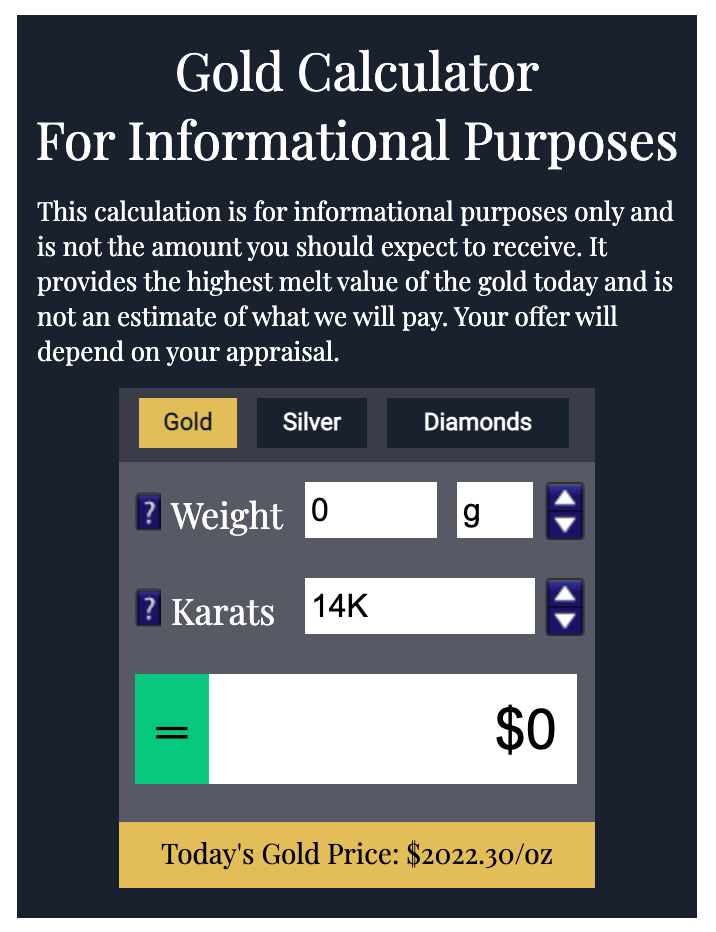
CashforGoldUSA informational gold calculator

CashforGoldUSA also accepts other metals like silver, platinum, and palladium. 

You might also find historically significant items like old Civil War bullets that can be sold to a pawn shop or antique dealer โ€” as long as you can legally take them from the site where you found them. 

Note that most federal military parks and burial grounds prohibit metal detecting. Even having a metal detector in your vehicle within one of these parks could result in fines or arrest. Do your homework before metal detecting โ€” whether it is on federal, state, or private property โ€” and obtain any necessary permits or permissions.

What can you find with a metal detector?

If youโ€™re searching on a public beach, for example, you're likely to find:

  • Gold and silver rings
  • Diamond rings
  • Coins
  • Gold necklaces
  • Metal hair clips
  • Metal-framed glasses/sunglasses

Coins are one of the fastest ways to earn money because people tend to lose them frequently, according to MetalDetector.com, a 40+ year metal detector business and pioneer online retailer of metal detectors.1 Rings are another frequently lost item.

Check out this video where a metal detector found nine wedding rings underwater:

The history of an area may also dictate what you can find. For example, if you have permission to metal detect at an old home site, you might find: 

In areas near an old Civil War battleground, you might find:

***Important note: The National Park Service prohibits metal detecting on most federal military parks and burial grounds. Even having a metal detector in your car in one of these areas could lead to fines or even arrest. 

However, as long as you seek permission from private property owners, obtain permits, and follow any metal detecting guidelines (like the types of tools you can and canโ€™t use), private property that surrounds historic sites can be rich with artifacts. 

Also follow specific guidelines for what to do with any discovered artifacts. Some places may want you to leave them untouched, while others may ask that you turn them into local authorities/property owners for historical preservation.

If you have permission to take historic artifacts from your detecting site, you should have an antique dealer evaluate any items you find to ensure they arenโ€™t worth more than their scrap metal value.

Coin machines and more: 9 ways to cash in coins

Can a metal detector find gold?

Yes, a metal detector can find gold. Even though gold is non-ferrous (not magnetic), most quality metal detectors have a setting to detect gold and other non-ferrous metals including aluminum, copper, tin, brass, or bronze. Before you buy a metal detector, verify that it can detect gold.

Tips for detecting gold

Your best chance of detecting metal is in well-traveled or highly populated areas. Here are our top tips for finding gold scrap:

  1. Research areas before you start. Know the laws that govern those areas, and get permission to search, including obtaining any necessary permits. Some state and federal lands are off limits to metal detecting. 
  2. Contact your local United States Geological Survey (USGS) office for a list of places where you can legally search for gold deposits in your state with a metal detector. Search โ€œUSGS office near me.โ€ Some locations may be off limits, require permits, and prosecute violators.
  3. Research and buy the right metal detector for your needs and learn how to use it properly. You should get one that specifically detects gold.
  4. Test your metal detector with a gold ring or necklace. Itโ€™ll give you an idea of what it sounds like to detect gold. You can try this with other metals, too.
  5. Sweep the area, slowly keeping your coil near the ground. The coil is at the bottom of the metal detector. Itโ€™s usually circular, but can come in different shapes.
  6. Buy the right accessories and tools, such as a hand shovel, scoop, pick hammer, and pouch. These tools will help you dig, sort, and store your finds. 
  7. Consider using metal detecting headphones. They can make it easier to hear the sounds of your metal detector, especially if you are in a crowded area.
  8. Work with a partner when looking for gold so that you can cover more ground.
  9. Try not to wear metal on detecting days, and keep your cellphone off to avoid interference.
  10. Join an online or local metal detecting club or gold prospecting club to learn tips for searching and places to check out.
  11. Be patient. It will take time to learn how to use your equipment and find the right places.

Here are some metal detecting tips for beginners: 

Where is gold most commonly found?

People commonly find gold in or near bodies of water, like lakes, rivers, streams, and creeks. Check these areas after significant rainfall because soil erosion can shift gold or metal scrap.

Larger bodies of water like oceans and seas are also excellent places to look. Of course, youโ€™ll need a waterproof detector or a waterproof coil (the part at the bottom of a metal detector).

Wherever large numbers of people spend time, youโ€™re sure to find lost gold, silver, and even diamond items โ€” just make sure you are legally allowed to metal detect wherever you go.

How deep can metal detectors detect gold?

The depth will be determined by the type of metal detector you use, where you are using it, and the size of the gold piece. For example, a 3D ground-scanning metal detector can find objects buried 30 feet or more underground. But such detectors can cost $5,000 or more.

A more affordable detector can detect gold that is anywhere from 6 inches to 2 feet under dirt or sand.

Where is the best place to metal detect?

That depends on where you live, but in general, any area where many people gather is best (and where you are legally allowed to go). 

Consider areas like:

  • Parks
  • School grounds
  • Sports fields
  • Fairgrounds
  • Beaches
  • Campgrounds
  • Ski lifts
  • Rest areas on highways
  • Old churches
  • Abandoned neighborhoods
  • Old drive-in movie spaces

Beaches are a good place to start metal detecting because they experience a fair amount of traffic. Kay says beach hunting involves using a metal detector anywhere on the beach, from the dry sandy shoreline to wet sand right at the waterโ€™s edge.

She says a waterproof detector isnโ€™t necessary because the coils on most detectors (the part that touches the sand and detects the metals) can get wet with no issues. You just have to be careful to not drop the machine in the water.

โ€œSome detectors might be a bit โ€˜chattyโ€™ in the wet-ish sand due to salt water,โ€ she says, referring to the sound a detector emits as it searches. โ€œBut for the most part, every machine will do fine at the beach.โ€

Kay says that the best spots are in what is called the “umbrella zone,” the area where people set up or rent an umbrella and chairs. 

โ€œPeople normally take off their jewelry and empty their pockets on their towels,โ€ she says. โ€œAt the end of the day, they forget they did that, and they go to shake off their towels, and everything goes flying into the sand.โ€

She says itโ€™s best to go in the evening after most people leave the beach, since some beaches rake the sand in the morning to clean up garbage and may scoop up valuable finds.

Kay says even if you don't find anything cool and amazing, you're still helping to get trash off of the ground, off the beach, and out of the water. 

โ€œThat is worth it to me to keep some poor sea creature from ingesting it,โ€ Kay says.

Her โ€œShe Detectorโ€ YouTube channel spends a lot of time detecting on Florida beaches:

You can use the USGS Mineral Resources Data System (MRDS) search to find gold claims by state. Research the area to find out if it is open to metal detecting and whether you need to obtain permits to search/dig on the land.

Can you metal detect in the woods?

Assuming you have permission to be there, the woods are a great place to look โ€” especially high-traffic areas like hiking trails and campsites. But the rocky and uneven terrain can be challenging. Proper gear like hiking boots and poles may be necessary. 

Detecting around branches, stones, or roots will take more effort to dig up what you find, so make sure you bring along high-quality tools. 

Are you allowed to metal detect on beaches?

Most public beaches allow metal detecting. They may simply require you to refill any holes you dig. Some beaches may require a permit. Before you go, contact the recreation and parks office, beach authority, or tourism department of the area to ask about local rules and regulations.

Do I need a license for a metal detector?

You don't need a license to buy or use a metal detector in the United States. If you are traveling overseas, some countries may require a license or may not allow metal detecting at all.

Some specific locations, especially state parks and federal lands, do require a permit or may not allow metal detecting at all. Permit requirements vary by individual location, city, county, or state.

For example, Pennsylvania state parks allow metal detecting without a permit, but you must get permission from the on-site park manager and follow detecting rules (including following their list of approved digging tools). In Ohio state parks, you can only detect metal in certain areas, like sand-covered beaches. But each park has its own requirements โ€” Ohioโ€™s Geneva State Park requires a permit.

The good news is, if you need a permit, youโ€™ll probably just need to fill out a form and pay a fee. For example, the New York City Department of Parks and Recreation offers an online form to get a permit.

Here are some helpful resources to find local rules on metal detecting:

Best metal detector for beginners and FAQs about metal detectors

According to New York Magazine, the best metal detector for beginners is the Minelab Vanquish 440. Recommended by long-time detectorist George Streeter, the detector is lightweight, collapsible, waterproof, and offers technology that gives you accurate readings so you will know which metal you found before you dig:

What are the different types of metal detectors?

There are two main types of metal detectors: 

  1. Very low frequency (VLF) 
  2. Pulse induction (PI)

However, there are also specialty detectors that serve a specific purpose โ€” like detecting gold or searching underwater. There are also multi-frequency or 3D detectors, which can cost thousands of dollars but detect metals deeper in the ground.

What is the most reliable metal detector?

Garrett Ace detectors frequently headline โ€œbest-ofโ€ and โ€œtop-ratedโ€ metal detector review lists. The Garrett Ace 250 is thought to be one of the most reliable metal detectors you can buy when it comes to finding gold:

How much does a really good metal detector cost?

A really good metal detector will cost you at least $250. Of course, pricing and features will vary by brand, and there are options with decent reviews for less than $150, like the Bounty Hunter TK4:

What is the most powerful metal detector?

The Fisher Gold Bug 2 metal detector is considered one of the most powerful metal detectors on the market. It debuted in 1995 and is still a top contender today. It operates at a frequency of 71 kHZ, which makes it powerful and sensitive enough to find gold of all sizes โ€” even tiny bits and flakes:

What's the best metal detector for the money?

For the money, the Garrett Ace 300 is a solid metal detector. And, since itโ€™s easy to operate, itโ€™s a good beginner metal detector:

How to use a metal detector and 6 tips for beginners

Metal detectors are fairly simple to operate. Here are 6 tips to help you get started with metal detecting for beginners:

  1. Buy a metal detector with good reviews that you can afford.
  2. Make sure your detector can detect items you want, including gold.
  3. Always read the user manual for your metal detector first. Itโ€™s important to learn the different parts and features of your metal detector and how they work.
  4. Look up videos on YouTube for how to use your specific metal detector.
  5. Join a local metal detecting club. Ask about group or guided outings.
  6. Move slowly when you are detecting metal, and keep the coil close to the ground.

How do you use a metal detector successfully?

Use a slow, back and forth sweeping motion to cover your search area. Donโ€™t touch the ground with the coil, but hover just above it for best results. Your metal detector will make sounds to alert you when it has located metals.

Over time, youโ€™ll learn what different sounds mean. For example, gold and silver tend to make higher-pitched sounds than lower value metals like iron.

Also, learn how to read the display on your metal detector. Many models will show you a number that corresponds to a type of metal, as well as how far down youโ€™ll need to dig.

Is it better to metal detect when the ground is wet?

A metal detector often performs best when the ground is wet, like after a soaking rain. The dampness of the soil seems to improve the communication between the buried metal and the metal detector.

What will throw off a metal detector?

Several things can throw off a metal detector reading, including:

  • Interference from cell phones or radios
  • Bumping the coil into the ground
  • Wearing steel-toed boots or shoes with metal accents
  • A sensitivity setting that is too high
  • Searching in highly mineralized soil

If you are searching for gold or other metals in areas with mineralized soil, it can be difficult for the metal detector to pinpoint what youโ€™re looking for. Mineralized soils are hard to identify, but you can use a ground balance setting (if available) on your metal detector.

When you ground balance your detector, it will more accurately pick up buried metals and ignore the surrounding mineralized particles that can throw off your reading.

How do you use a metal detector to find gold?

First, make sure your detector is designed to find gold. As you slowly move across an area, pay attention to your metal detectorโ€™s readings and sounds. High-pitched sounds often indicate the presence of gold in the ground. Your detectorโ€™s digital display may also show you that the device detects gold.

If you find gold or any other fine metals while youโ€™re metal detecting, we recommend selling them to CashforGoldUSA. Why?  

  • A+ BBB rating
  • Highest price guarantee
  • No minimum value
  • 100% free trackable shipping from FedEx or USPS
  • Free insurance from Jewelersโ€™ Mutual up to $150,000 per shipment
  • Insured by Lloyds of London in CashforGold facility

Cash in on your metal-detecting finds with CashforGoldUSA >>

SOURCES

  1. โ€œHow to Make Money Metal Detectingโ€ June 30, 2023. MetalDetector.com. https://www.metaldetector.com/blogs/new_blog/how-to-make-money-metal-detecting
Selling scrap metal is a fast way to make some extra money. Itโ€™s easy to get started, and if you have small items to sell, you can handle everything by mail with prepaid postage.

You likely have scrap metal sitting around your house โ€” your broken aluminum washing machine could net you $20 in scrap metal. Those 14k gold chains you no longer wear could earn you hundreds.

In this post, weโ€™ll show you:

How to identify scrap metal

Scrap metal prices

Where to find a reputable scrap yard or business that buys scrap metal

Where to find scrap metal

How to collect and sort scrap metal

FAQs about scrapping metal for cash

What is scrap metal?

Scrap metal is a broad term that refers to any type of metal that is no longer in use. Recycling plants melt the metal and reshape it into new products, which keeps scrap metal out of landfills.

These are some examples of scrap metal:

  • Old cars and other vehicles
  • Old appliances such as refrigerators, washers, and dryers
  • Jewelry, coins, and objects made from precious metals including gold
  • Silver tea sets and dinnerware
  • Unwanted or broken machinery
  • Dental work or fillings with precious metals like silver or gold
  • Old electronics, laptops, mother boards, cellphones, and hard drives that contain precious metal scraps 

While recycling scrap metal is good for the environment, it's also important to be aware of the potential hazards associated with handling it. 

Scrap metal can sometimes be sharp or jagged, and it can also conduct electricity. That's why it's important to use caution when collecting and transporting scrap metal.

Scrap metal prices:

The scrap metal market fluctuates, sometimes daily. To get the most up-to-date scrap metal prices, you can subscribe to a free app like iScrap. 

Scrap yards with websites may also post daily prices. According to iScrap, prices may differ by region.

Who buys the most scrap metal?

These are some of the top scrap metal buyers:

CJ Environmental

If you want to earn cash for your metal scrap, CJ Environmental is a BBB-accredited business with an A+ rating and lots of positive customer reviews. It serves the United States, Canada, and Puerto Rico.

This national metal refining business will pay you top-dollar for your unwanted scrap. They recycle all kinds of metal scrap through multiple subsidiaries:

CashforGoldUSA.com

CashforGoldUSA.com is one of the largest online gold buyers globally. 

Not only do they accept gold scrap from jewelry, but also diamonds, silver, palladium, platinum, and even gold or silver dental scrap

At CashforGoldUSA.com, youโ€™ll get:

  • Free, insured postage via USPS or FedEx, up to $150,000 while in transit
  • Shipment tracking so you always know the location of your scrap metal
  • 10% bonus if you ship within 7 days
  • A price match guarantee (they will match any competitorโ€™s offer)
  • Payments within 24 hours via check, bank wire, or PayPal
  • Free return of your scrap if you reject their offer

CashforGoldUSA.com will accept your gold scrap even if itโ€™s broken or in poor condition.

Get an offer on your gold scrap from CashforGoldUSA >>

CashforSilverUSA.com

CashforSilverUSA.com buys unwanted silver jewelry, silverware, silver flatware, silver coins, silver tea sets, and other silver scrap. They also accept gold jewelry and platinum jewelry, gold coins, diamonds, and Rolex watches

While CashforSilverUSA will accept broken scrap, they do not take silver-plated items.

CashforSilverUSA.com guarantees a higher payout than any competitorโ€™s formal offer. 

Request a free FedEx shipping label from CashforSilverUSA.com and get a 10% bonus if you return your items within 7 days >>

CashforElectronicScrapUSA.com

CashforElectronicScrapUSA.com buys old electronics and processes them to remove scraps of gold, silver, palladium, and other precious metals from your  old cellphone, computer, circuit board, or other electronic parts.

This business primarily serves businesses and schools, but also individuals.

With CashforElectronicScrapUSA.com, youโ€™ll get:

  • Free shipping label to mail in your electronic scrap
  • Certificate of destruction/recycling upon request
  • Best price for your electronic scrap with no hidden fees
  • Prompt payment by check or PayPal

Once you send in your items, you canโ€™t get them back. All sales are final. 

Get money for your unwanted electronic scrap from CashforElectronicScrapUSA >>

Peddle.com

Peddle buys cars, trucks, vans, and SUVs in any condition. Even if you have a junk car that doesnโ€™t run, Peddle will give you a cash offer fast. Depending on your vehicleโ€™s condition, Peddle may resell or scrap it for metal or parts.

Peddle is an accredited Better Business Bureau business with an A+ rating that serves the United States. 

With Peddle.com, youโ€™ll get:

  • A free, no-obligation quote for your vehicle
  • Free pickup from a Peddle towing partner at your convenience
  • Payment by check at the time of pickup

Take Peddleโ€™s vehicle questionnaire to get a quote for your unwanted car >>

Once you receive an offer, you have seven days to accept it. 

Where to find scrap metal

Go through your home and look for any broken or unwanted items that you can scrap for metal. If you want a higher quantity of items, you can reach out to family and friends and offer to pick their metal scrap. 

To find more scrap metal:

  • Place an ad on Craigslist.org in search of scrap
  • Join Freecycle.org and look for or request unwanted metal scrap
  • Make a post on social media requesting scrap items
  • Search Facebook Marketplace and Buy Nothing groups
  • Post scrap request flyers on community message boards 
  • Use the Nextdoor app to inquire about metal scrap in your neighborhood
  • Metal detecting

How to scrap metal

The steps to scrapping metal are dictated by the place youโ€™ll take your items. Some require that you separate different metals and items, while others allow you to bring in or ship mixed items. 

Be sure to check with your local or online scrap buyer for procedures. Be ready to negotiate your price if you have a high volume of metal scrap (100 pounds or more). 

Here are some tips for scrapping specific metals:

Steps to scrap aluminum

First, identify that your scrap is aluminum. Aluminum is not magnetic, so if a magnet sticks to it, it may be a different metal (possibly iron). Aluminum will be rust-free, lightweight and is commonly found in:

  • Soda cans
  • House siding and gutters
  • Car rims
  • Bicycles
  • Cookware

To scrap aluminum:

  1. Research and find a scrap yard with a good reputation
  2. Clean your aluminum scrap, if possible
  3. Sort your aluminum based on your scrap buyerโ€™s preferences. There are different prices for different types
  4. Transport or mail aluminum scrap to your chosen refiner

If you take your scrap to a scrap yard, you can expect same-day payment. If you are recycling scrap metal by mail, you must wait for the items to ship and undergo an appraisal before receiving compensation by check, bank transfer, or via PayPal. 

Steps to scrap copper

Scrap copper comes in many forms: wiring, pipes, cookware, and electric motors are just a few items you can sell for money.

To scrap copper:

  1. Research and find a reputable scrap dealer
  2. Clean your copper, if possible
  3. Sort your copper according to your scrap yardโ€™s specifications 
  4. Transport or mail in your copper scrap to your chosen refinery

Remember, sorting is often the most important step. If your scrap yard takes mixed scrap, they might pay you a lower price if your higher-dollar copper items are mixed with lower-priced ones.

Check out this video on how to grade and sort copper scrap:

Steps to scrap gold

Unless you are selling bulky gold items, we recommend selling to a top online gold buyer like CashforGoldUSA.com, which allows you to ship your gold items for free.

To scrap gold:

  1. Find a reputable gold buyer
  2. Sort your items if necessary (CashforGoldUSA.com doesnโ€™t require sorting)
  3. Transport or mail your gold scrap and get paid

Gold scrap demands higher prices than other scrap metals. Do your research to make sure you are getting a fair payout.

Steps to scrap silver

If you want to sell silver for cash, we recommend CashforSilverUSA.com, sister site of CashforGoldUSA.com. CashforSilverUSA offers a free, insured mailer to send in your items.

To scrap silver:

  1. Find a reputable silver buyer (see our list of online silver buyers)
  2. Take or mail your silver scrap to your chosen silver scrap buyer

Note: Most places do not take silver-plated items. 

Here's a video on how to scrap silver:

FAQs about scrapping metal for cash

Is scrapping metal profitable?

If you have scrap metal items you no longer need or use, you can make money selling them to a reputable scrap metal buyer. How much you make depends on the volume and quality of the metals you scrap. 

Scrapping metal can become a nice side hustle if you know how to consistently find it and where to get the most money for your metal scrap.

What is the rarest metal on earth?

Rhodium is the rarest metal on earth and therefore the most expensive. It has a silvery white appearance and is often found in catalytic converters, mirrors, and searchlights.

What is the most expensive metal?

Rhodium is the most expensive metal. While its price fluctuates, at the time of this post, it was worth about $14,500 per ounce.

What is the most valuable metal?

Rhodium, commonly used as a plating on white gold, is the most valuable metal at this time.

What is the best metal to scrap for money?

Copper is one of the best metals to scrap for money because itโ€™s a common metal that is in high demand at metal scrap yards. Plus, you likely have it sitting around your house. 

You can find copper in pipes and wiring, so if you upgrade your plumbing, check to see if there are copper pipes you can sell for a profit.

What is scrap metal?

Scrap metal is a broad term that refers to any type of metal that is no longer in use. Recycling plants melt the metal and reshape it into new products, which keeps scrap metal out of landfills.

Is scrapping metal profitable?

If you have scrap metal items you no longer need or use, you can make money selling them to a reputable scrap metal buyer. How much you make depends on the volume and quality of the metals you scrap.

What is the rarest metal on earth?

Rhodium is the rarest metal on earth and therefore the most expensive. It has a silvery white appearance and is often found in catalytic converters, mirrors, and searchlights.

What is the best metal to scrap for money?

Copper is one of the best metals to scrap for money because itโ€™s a common metal that is in high demand at metal scrap yards.

Outsourcing can be the core to your success, including outsourcing laundry. I am adamant about not ever doing laundry, so I hire someone to do laundry. I send it out, pay my housekeeper to do it, or assign it to my children.

Absolving myself of the time and headspace required to stay on top of clothes, linens and unmentionables frees me to build the life I want.

If you are looking to hire laundry or other housekeeping, here are three resources to help you find help:

Want to hire someone to do laundry? 5 solutions

  1. Hire a household manager or housekeeper to do laundry who can also clean and organize your house
  2. Drop off your laundry at a laundromat
  3. Search โ€œlaundry pick up and delivery near meโ€
  4. Pay your nanny to do your laundry
  5. Pay someone to do laundry

Laundry service reviews

Why you need to hire someone to do laundry

50 things you can do instead when you hire someone to do laundry

FAQs about hiring someone to do your laundry

Want to hire someone to do laundry? 5 solutions

1. Hire a household manager or housekeeper to do laundry who can also clean and organize your house

Hiring a housekeeper can provide multiple benefits besides having a clean home. A housekeeper can wash, fold, and put away your laundryโ€”including delicate items such as linen clothesโ€”but also keep your home organized.ย 

By taking care of tasks like laundry, your house manager can:

  • Keep your home organized so you can always find what you need, quickly
  • Free up your time, so you can do things youโ€™ve been putting off
  • Decrease your stress level by eliminating clutter
  • Ensure you have a healthier household by sanitizing hard surfaces, clothes, and linens
  • Decrease the money you spend on cleaning products

There are so many reasons why hiring a housekeeper makes sense, especially if you have the budget to do so. You can choose to hire an independent housekeeper or a cleaning service that has a team of housekeeping staff.

On average, it costs between $15.50 and $20.25 an hour to have a housekeeper, according to Care.com. But, some businesses charge a flat fee per space.

No matter what you choose, be sure to make a list of what you need and expect so that you can find the best fit for your household. 

And if you feel guilty about outsourcing your laundry, itโ€™s time to reframe your thoughts. You work hard. Thereโ€™s nothing wrong with delegating. Itโ€™s a boss move.

2. Drop off your laundry at a laundromat

I used to live in New York City, where every neighborhood has wash-and-fold services for around $1 per pound. Most places will pick up your filthy sack of poopy, pee-y, spit-up-y, avocado-y, spaghetti-saucy, grass-stainy laundry in the morning, and deliver it after work, neatly folded, sorted and smelling fresh as your babyโ€™s butt that you just washed โ€” all for about $20.

That same bag full of laundry would cost me about $8 to do in the coin laundry, including detergent (I live in an apartment) each week.

I figure it would also cost about $10 per week if I had my own washer and dryer, factoring in detergent, water, electricity, and wear and tear on a Maytag.

But all this outsourcing really isnโ€™t about the saved $15 or the extra $15 or the wear and tear. Wash and fold laundry service is about economizing time and energy.

Read: How to set up a budget

3. Search โ€œlaundry pick up and delivery near meโ€

Not every zip code has these amazing wash-and-fold services (I lived in NYC), but you can find someone to do your laundry in your home through sites like Care.com.

Care.com (founded by a mom) is another reputable service where you can find local household managers, housekeepers, laundry and nanny services near you. Check out our Care.com review

If you cannot outsource laundry through Care.com, try a search for โ€œlaundry pick up and delivery near meโ€.

4. Pay your nanny to do your laundry

You can also pay your nanny or babysitter extra to also change your linens and do your laundry. 

5. Pay someone to do laundry

You can ask around for a recommendation, and tell parents in the neighborhood that you'd be happy to pay someone to take over your laundry. It may inspire a fellow mom to start a work-at-home business that could change her life.

A local parent in your neighborhood may also be interested in taking in your laundry. Ask around!

Laundry service reviews

These are some websites that can connect you with professionals who offer laundry services:

CD One Price Cleaners

CD One Price Cleaners is a national dry cleaning chain that also offers wash and fold services.

CD's advantages include:

  • Fast turnaround
  • Environmentally friendly processes
  • Clothes, rug, linen and leather services
  • Manage your account online
  • Home delivery

Bark

Bark is a website that finds local professionals for you for free. There is also an app called Bark Professionals available for iOS and Android devices.

If you're looking to hire a housekeeper to do your laundry and clean your home, these are the questions Bark will ask you:

  • What type of property needs cleaning?
  • How often do you need cleaning services?
  • How many bedroom(s) need cleaning?
  • How many bathroom(s) need cleaning?
  • How many reception room(s) need cleaning (living/dining)?
  • When are the best days for cleaning?
  • Will you be supplying cleaning materials and equipment?
  • How likely are you to make a hiring decision?

Once you answer these questions, you have to provide your email and phone number so local professionals can contact you with a quote for your requested services. If you're not someone who wants to receive a bunch of calls and emails, Bark may not be for you.

Bark also does not require background checks.

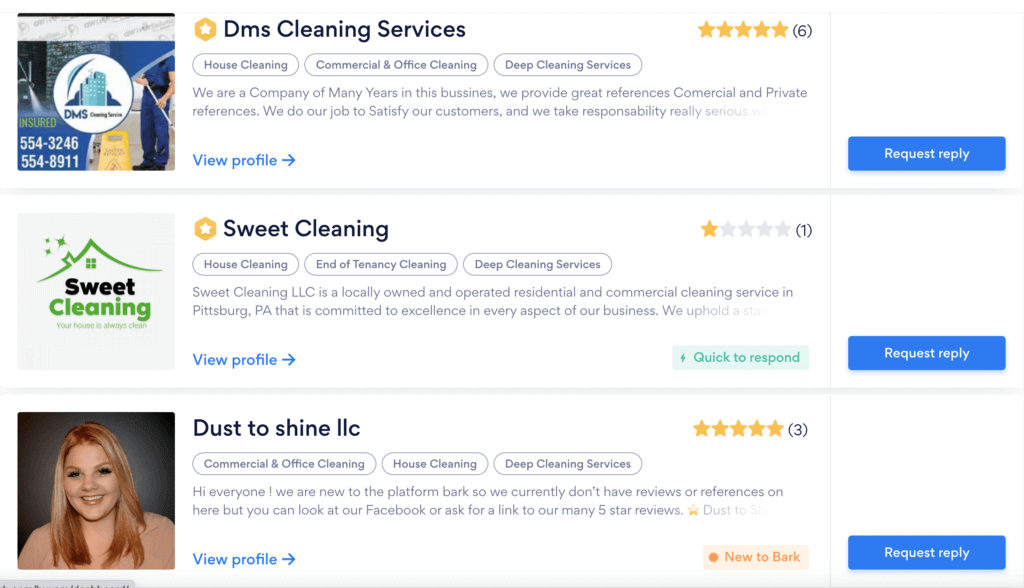
These were the professionals that showed up based on my location and preferences:

Examples of professional cleaning services found through Bark.com.

Care.com

Care.com isn't just for babysitting. You can hire a number of professionals through the platform, including housekeepers. Care.com also has an iOS and Android app.

Care.com requires caregivers to pass a background check every year, though it does not require the same of all professionals.

To use Care.com, you have to create a profile and fill out information about your home, what type of cleaning services you're looking for, and how much you want to pay.

Care.com generates an ad on your behalf, which you can add to/edit. To post your ad, you have to pay for a membership. There are three payment options:

  • Annual – $12.95
  • Quarterly – $24.95
  • Monthly – $38.95

These are some messages I got from housekeepers within a few hours of posting an ad:

Care.com has a B rating from the Better Business Bureau, though only 1.4/5 stars on Trustpilot. Most negative customer reviews are from people who had trouble finding a professional in their area.

Angi

Angi, formerly known as Angie's List, is a website that matches you with professionals for various jobs, including housekeeping. When you visit the site, you'll be asked to choose what type of cleaning service you need from these options:

  • Central vacuum
  • Stone or marble restoration and polishing
  • Maid service
  • Spring cleaning
  • Walls, ceiling, tile, and grout cleaning
  • Ducts and vents cleaning
  • Professional home or office organizer consultant
  • Post construction cleanup
  • Range and hood cleaning

Angi asks whether you need recurring services or a one-time cleaning, the square footage of your house, and how soon you'll be needing services.

Angi matches you with professionals in your area who specialize in the type of service/cleaning you've requested, and you can see how they've been rated by past clients:

Laundry service quotes from Angi.

If you request a quote from a company, they may reach out to you via phone or email.

Angi requires professionals designated as Angi Certified businesses to undergo a background check.

Angi had its accreditation revoked by the Better Business Bureau in 2022 because the company was sued in California for misleading customers into believing it had completed background checks on contractors when it hadn't.

Angi has 3.1/5 stars on Trustpilot and has an app available for iOS and Android devices. Angi merged with HomeAdvisor in 2017.

Thumbtack

I like Thumbtack because it's straightforward. On the main page, you type in your zip code and what you need โ€” in this case, laundry services โ€” and you get a list of professionals who provide that service in your area.

You can read reviews from past clients, see how many employees a company has and how long they've been in business, and request a quote if you want to move forward. That means no unsolicited phone calls from professionals.

Thumbtack does not require background checks, though they are available for free if a professional chooses to do one.

Thumbtack is accredited by the Better Business Bureau with an A+ rating and has 4.2 out of 5 stars on Trustpilot. Thumbtack for Professionals is available for iOS and Android devices.

Why you need to hire someone to do laundry

I really, really hate to do the wash, and I really, really hate to fold.

The sorting and cycling and hauling of this never-ending chore so tedious, so mundane and omnipotent that it's a joke for moms everywhere.

Except that it will make you poor. Nothing funny about that!

Investing in laundry service makes me richer because it frees up my time to use in more productive ways.

What if you invested just half all those laundry hours in your career, a business or freelance gigs? What if not having to worry about wash and dry and fold freed you up to spend more energy at work โ€” and be more focused and engaged with your family when you are at home.

We havenโ€™t even mentioned the happy factor. Some people just love laundry. I have never met one of these people, and I suspect I would not like her.

For me, wiping laundry off my weekly to-do list has been the most incredibly liberating exercise.

Before, it was a constant gnat swarming around my mind โ€“ what was clean when, when would I schedule a load, when to haul the dripping sheets into the dryer and to remember to take out my lacey things to air dry.

Now, I spend a fraction of that mental energy to coordinate a visit with Sandra.

When you are a single mom, money and time are especially precious.

Our professional lives, our kids and we ourselves simply cannot be weighed down by regrouting the tub (unless that is your thing, of course) or keeping your kids undies sparkling white. You are better than that.

When I get on my soapbox about this topic, I often hear people โ€“ and by โ€œpeople,โ€ I mean โ€œwomenโ€ โ€“ who cry:

โ€œLaundry is just a part of life, you spoiled asshole!โ€

Not so long ago dying in childbirth was just part of life. Economies and technology changed since that was a valid point, and you are now free to unload unsavory tasks to people who want to earn a living doing them.

โ€œLaundry doesnโ€™t take that long, I donโ€™t see what the big deal is, jeez! So lazy!โ€

One, two hours is a lot of time for me โ€” as you will see below my long list of other things you might do with those minutes. Second, it is actually far more than just two hours of labor to do your laundry. Because you spend countless hours thinking about and remembering and stressing about when and how you will do the laundry. You might fight with your spouse or kids about the laundry. Get annoyed with yourself if you forget the wash overnight โ€” or the drying and wind up with a crumply, wrinkly mess.

So it is two hours, plus countless brain cells and energy and emotion spent on laundry.

Itโ€™s a big-picture thing.

โ€œOh, but doing laundry is just a part of life. Iโ€™d feel guilty for sending it out.โ€

Do you feel guilty for using a dishwasher, instead of cleaning every grimy fork and sippy cup by hand? Do you feel guilty for not washing your clothes on rocks by the river โ€” because you are already outsourcing their cleaning to a machine made in China, that sits in your garage / basement / laundry room and does 99% of the work involved in laundry. In other words: You already outsource, so why not take it just a fraction of a step further and offload that task completely?

โ€œI feel it is my duty as a parent to teach my kids to mop the floor.โ€

Really? Do you really think that your child will grow up incapable of knowing how to mop a floor in an emergency? For real?

โ€œYou are such a snotty, rich bitch. Not everyone can afford spending all their money on house cleaners and laundry service. I hate you.โ€

Muah back atcha!

Look, no one has ever gotten rich without outsourcing some tasks. No one. You canโ€™t do it all โ€” I donโ€™t care if you are a sculptor slaving away in your attic, you rely on an agency, a gallery, someone to publicize your shows and host boozy after parties where hedge fund guys will feel all important and buy your stuff. Or if you are a tech entrepreneur, you simply cannot work alone in a Starbucks and create a bazillion dollar enterprise. You are one person. Successful enterprises consist of people doing what they do best, and being wise enough and humble enough to pass along other tasks to others who are more competent and enthusiastic about those things.

If you spend your energy and time on sorting and washing and drying and ironing and sorting and matching and folding, your energy is on a low-skilled task that fosters resentment. I donโ€™t know of one fabulously successful person who does his or her own laundry. Do you?

I often hear from blog readers or friends incredulous cries: โ€œHow do you get so much done all the time! Do you ever sleep?!โ€

Actually, many nights Iโ€™m in bed by 9 p.m. (not proud of that, it is what it is), and I spend plenty of time dawdling on Facebook. But it is true: I produce a lot of creative work I am very proud of, make a handsome living, pick my kids up from the bus most days, hit the gym, jogging path, or yoga studio five times per week and enjoy a hot date or evening out with my friends once or twice weekly. Not to mention day trips, vacations, weekly movie night and family dinners every weeknight with my kids and guests. No complaints.

My secret โ€“ the one all those incredulous friends do not want to hear? I outsource shit I donโ€™t like to do. I even outsource stuff I DO like to do, because it makes more sense for someone else to do it! In my business, I hire people in my business to do things I can do but am not efficient at โ€” like podcast production and editing, web design and marketing.

Easy, affordable meal planning tips for single moms

Couples and families fight over housework, so just outsource laundry and housekeeping

People keep getting divorced. A lot. Rates have been around 40-50 percent for more than four decades.

Younger people aren't getting married, as marriage rates hitting historic lows.

Married women are pretty freaking unhappy. Researchers found: โ€œThe average married woman is less happy than the average married man, less happy than single women, less convinced that married people are happier than single people, and more likely to file for divorce. Once returned to single life, womenโ€™s happiness recovers, whereas menโ€™s declines, and divorced women are less eager to remarry than divorced men.โ€

50 things you can do instead when you hire someone to do laundry:

  1. Play checkers with your kids.
  2. Host a dinner party.
  3. Have a glass of chardonnay while watching Handmaid's Tale.
  4. Hit the gym.
  5. Go to yoga, Zumba or Pilates.
  6. Go for a jog, hike or power walk with a friend.
  7. Finish your degree.
  8. Get a new degree or job designation that will give you a new direction and earning power in your career.
  9. Take steps to launch that new dream business.
  10. Grow your business. Or, find a great work-at-home career to start.
  11. Find cool, quick ways to make money from home.
  12. Attend a networking event.
  13. Take an online course.
  14. Network online via LinkedIn, professional associations, Facebook groups, following up on email communication or setting up meetings.
  15. Call your parents.
  16. Teach your kids how to jump rope.
  17. Just hang out alone together in the same room with your kids without engaging in electronics. Maybe some of you are reading, or doing a puzzle or Legos.
  18. Cook as a family.
  19. Fire up that online dating site or app, if you havenโ€™t. (Here's my list of best dating sites for single moms.)
  20. Go on a date.
  21. Read. A book. An actual real, paper book. Fiction even! (Here's my list of the best books for single moms.)
  22. Have sex.
  23. Listen to podcasts.
  24. Get a massage.
  25. Give a massage.
  26. Work in the garden.
  27. Declutter your home like a mad woman. Go nuts! Feels so good!
  28. Get sun on your body. Even in the winter, just some sun on your face and hands is amazing.
  29. Bath. Take a great, long bath. 5 Tips for Self-Care Sunday
  30. Nap.
  31. Catch up with that best friend or cousin who lives far away.
  32. Visit loved ones.
  33. Write birthday cards, and send them!
  34. Thank-you notes!
  35. Gratitude. Start and maintain a gratitude practice, whether sharing by email your thankful thoughts each day, or writing them down in a special notebook, or verbalizing them on a voice app on your phone.
  36. That skill that you always wanted to learn but did not? Do that. For me: Iโ€™m going to take tennis and acting classes. Maybe you want to learn to ride a motorcycle, use power tools (that kind, or that kind, too) or juggle.
  37. Volunteer. Animal shelter, teen center, nursing home.
  38. Mentor someone. Officially, through a program at work or in your community, or informally offer your guidance to someone you know.
  39. Listen to a friend who needs to be heard.
  40. Create something. A craft, a poem, song or essay.
  41. Make your home prettier. Paint a room (better yet: go to the paint store, select a color, and hire someone to paint), hang a few new pictures, rearrange the furniture, change up the bed linens. Make it pretty, make it yours.
  42. Library. When was the last time you hung out at the library?
  43. Help a friend reach her dreams.
  44. Go to a service where you worship. Or, if youโ€™re in the market, find a new house of worship.
  45. Do a new activity with your kids โ€” learn to rollerblade or pogo-stick together. Take a community college class on woodworking or CPR.
  46. Start a family give-back project. Raise money for a cause, give volunteer time, or reach out to people you know who need company, help around the house or meals.
  47. Attend live performances โ€“ music, theater, dance. Free outdoor summer concerts, college and high school productions, Broadway or community theater.
  48. Stroll the streets of a neighborhood or town youโ€™ve never visited.
  49. Visit a travel site, and brainstorm and daydream and drool โ€“ then budget!
  50. Dream! Dream big and beautiful and outrageous! Write those dreams down! Create a dream board, tell your mastermind group, a trusted girlfriend, your cat! Spend those two hours each week teaching yourself to believe you can and will fill those hours will more wonderful incredible life than any top-loading, energy-saving appliance can afford you.

Donโ€™t just take it from me, here is a guest post from single mom Danyel Clarke, who lives in Claremore, Oka., with her two-year-old and a puppy. Consider hiring out household tasks to nurture your relationship with yourself!

Danyel's storyโ€ฆ

If you were to walk into my house, youโ€™ll almost think I have my crap together. My son's room and bathroom are always perfect. Living room, kitchen and dining room are almost always perfect: things put away, clean, where they belong.

Then you open my bedroom door and realize that I have been putting all of my energy into the rest of the house and I actually havenโ€™t done my laundry since September. You read that right. SEPTEMBER. I have enough clothes to make this is perfectly feasible. My son's laundry gets done, towels are always clean, sheets are washed, then I lose energy and say โ€œscrew itโ€ by the time itโ€™s my turn for my clothes.

Iโ€™ve been so exhausted with work, family, the โ€œto-doโ€ list, putting absolutely everyone and everything before myself. Nothing and everything gets done all at the same time.

I havenโ€™t made it to church in two months, but it was my New Year's resolution to quit using exhaustion and chores as an excuse and just GO!

But ladies, today, the first Sunday of the year, I ran out of clean underwear. Completely out. Not a thong, faded or period-granny-panty one left in the drawer. Completely out.

So I freeballed it to church. Yep, I sure did!

On my way to church and during worship I was making a mental list of all the things I needed to get done today: top of the list was wash a load of underwear. Take boxes to recycling, go to the grocery store, remember that I'm supposed to bake a pecan cheesecake for that lady at work (add ingredients to that grocery list), take those glasses to my mom, I really need to steam clean that carpet, oh! Get a light bulb for the fridge, donโ€™t forget to close the vents outside the house, trim the dog's nails as heโ€™s really starting to leave marks on the kid, clean up the playroomโ€ฆyou get the picture.

Most people wouldnโ€™t show up to church without underwear. But Iโ€™m sure glad I did, because today I was reminded of imperfection and grace.

After church I had planned to head home, make lunch for me and my little, and get started on my list.

After all, I should save the money. But instead I headed to one of my favorite places in town to eat. Just the two of us. Ordered (two) MANmosas, an appetizer, a tasty grilled chicken club, a meal for my little that I knew he wouldnโ€™t eat, but hey! Now, he has dinner and I donโ€™t have to cook at all today!

I had every intention of getting home right at the time he goes down for a nap so that I could nap, too.

And I donโ€™t feel bad about it.

Like many single moms, I do it on my own. No breaks, no every-other-weekend, or any day at all that the kid goes to the other parent. Iโ€™m exhausted. And between a strong-headed 2-year-old and a puppy (hellooooo, just another toddler. What was I thinking?!?) I'm usually at my wit's end. That is definitely not to say I, or any other mom, or that I have it tougher than any other mom โ€” I donโ€™t mean that at all. Itโ€™s all hard. Momming is hard. Period.

For all of us, itโ€™s important to remember that perfection isnโ€™t required. Itโ€™s okay to splurge. Not cook. Donโ€™t do the laundry (but yes, I did put a load in when we got home), to nap, and go to church commando!

Thatโ€™s my long winded way of saying that I was โ€œselfishโ€ today. Blissfully, happily and wonderfully selfish. Little one finally fell asleep and now Iโ€™m going to nap as well.

Happy Sunday, mommas. Much love! ♥

Danyel

FAQs about hiring someone to do your laundry

What do you need to know before hiring a laundry service?

Before you hire a laundry service, read Google reviews and reviews from sites like the Better Business Bureau, Trustpilot, and Sitejabber to find one with a good track record and reasonable cost. You can also ask family and friends if they have any recommendations. 

For smaller businesses and individual service providers, you can often look at reviews on professional-for-hire marketplaces like HomeAdvisor or Care.com.

Once you have a few options, ask for quotes based on the services you want. Ask how the laundry service works, what items they accept, pickup/return times, and how long it takes to get your clean laundry back.  

How much should I pay someone to do a load of laundry?

Costs will vary based on geographic area and what the service provider counts as one load. Some laundry services charge by the pound with a minimum weight, while others use a flat rate per laundry bag. 

Hereโ€™s what you can expect to pay for a load of laundry:

  • $1-$3/pound or $35-$55/bag for laundry service
  • $9-$16/hour for an individual service provider
  • $14.81-$18.82/hour for a housekeeper to do laundry in your home

How much to pay someone to do your laundry?

If you plan to get ongoing help for your laundry, you might be able to get a lower monthly rate. Exact costs will be based on your location, the amount of laundry you have and the frequency of service, but you can expect to pay $150-$200 per month.

What do you need to know before hiring a laundry service?

Before you hire a laundry service, read Google reviews and reviews from sites like the Better Business Bureau, Trustpilot, and Sitejabber to find one with a good track record and reasonable cost. You can also ask family and friends if they have any recommendations.

How much should I pay someone to do a load of laundry?

Some laundry services charge by the pound with a minimum weight, while others use a flat rate per laundry bag. Hereโ€™s what you can expect to pay for a load of laundry:
– $1-$3/pound or $35-$55/bag for laundry service
– $9-$16/hour for an individual service provider
– $14.81-$18.82/hour for a housekeeper to do laundry in your home

How much to pay someone to do your laundry?

Exact costs will be based on your location, the amount of laundry you have and the frequency of service, but you can expect to pay $150-$200 per month.

Whether we're in a recession now, or will be sometime in 2025, a recession is an imminent reality, most economists agree. This post explains all the wonky details about how economists decide whether we are in a recession, but you are likely wondering normal, human questions like:

How does a recession affect the average person?

What happens to prices during a recession? What happens to my money?

And … of course:

How does a recession affect me?

Keep reading to learn what you need to know about the impacts of a recession on you, your family, and your money:

How a recession is likely to affect you

What happens to your money in a recession

What happens to prices in a recession?

What happens to jobs in a recession?

What happens to your 401k and stocks in a recession?

What happens to interest rates in a recession?

What happens to housing prices during a recession?

What happens to car prices during a recession?

How does a recession affect healthcare? 

Bottom line: Hereโ€™s what a recession does to the average person like you and me.

How does a recession affect me?

In general, everyday people can expect the following in a recession:

  • More layoffs, less hiring, fewer pay raises and bonuses
  • Higher interest rates, including for mortgages and car loans
  • Lower prices for homes and cars
  • Stock market investments decreases
  • Interest rates on savings increases

This Bloomberg video explains why a 2025 recession would be unique in history:

This video explains why this unique, post-pandemic economy is so unique, with very low unemployment rates, very high inflation, high corporate profits and cash, and declining economic activity (GDP) โ€” all challenging common understandings of how economics and recessions work.

What happens to your money in a recession?

Stock market investments tend to decrease during a recession โ€” which can pose a good opportunity to buy.

Prices tend to stay at higher, pre-recession rates during a recession.

Higher mortgage rates mean that housing payments can be more expensive, though the recent very competitive real estate market will likely cool, so the purchase price may be more affordable for buyers. However, with higher unemployment, fewer people will be shopping for, or be able to afford to buy a home.

Similarly, supply chain and inflation-related high car prices will cease and drive down purchase prices for new and used vehicles. However, higher interest rates mean that car payments will be less affordable.

What happens to prices in a recession?

Prices during a recession tend to hold steady โ€” which doesn't seem to make sense since prices increase during good economic times, as inflation is a result of more consumer demand. Economists call prices “sticky” in that they don't go down with the economy, but stick to = rates that grew with inflation pre-recession.

Sticky prices are linked to sticky wages, as companies find it very difficult to cut workers' pay. However, layoffs are more common during recessions.

What happens to jobs in a recession?

Recessions and unemployment are tightly linked during a recession โ€” there are more layoffs during a recession, and it will take employees longer to find a new job once they are laid off. Pay raises and bonuses are more scarce during a recession.

Poorer people spend less money, which hurts companies' profits, which leads to more layoffs โ€” the recession cycle continues.

What to do: Research the types of jobs available, invest in a side gig, a recession-proof business or one of these recession-proof jobs.

Read our guides on 30 high-paying careers for moms, and good jobs that do not require a degree.

What happens to your 401k and stocks in a recession?

Stock and equity investments tend to tank just before a recession โ€” one of the leading indicators that an economy is headed into the red.

The S&P 500 rose an average of 1% during all recession periods since 1945.

Stock markets typically decline sharply for several months during a recession, bottom out about six months after the start of a recession and rally before the economy picks up. This article's graphs and charts give more details.

What to do: Unless you are a day trader or quantum computer, hold steady in your long-term investment strategy to build wealth. If you happen to have a chunk of cash sitting around, investing in a diversified, target-date index fund during a down market can reap rewards long-term.

In other words: if you can, buy low, sell high.

After all, rich people typically find ways to make money in a recession.

What happens to interest rates in a recession?

Interest rates tend to be high just before a recession, as the Federal Reserve intentionally sets higher rates in order to discourage wayward consumer spending in an effort to stave off that recession. Rates at the beginning of a recession will lower as the Fed tries to invigorate the economy, and lift as we move out of a recession in months ahead.

What to do: Avoid taking on variable-interest debt, including an ARM mortgage, line of credit, or any credit card or personal loan in which rates will fluctuate. If you already have one of these types of loans, research refinancing them now to a fixed-rate loan โ€” especially if you fear losing your job, which would make a re-fi difficult.

You can also use this time of higher APRs to stash your cash in a CD, money market account, or high-interest savings account >>

What happens to housing prices during a recession?

While home prices tend to stabilize or even decrease during a recession, the higher interest rates before a recession sets in mean the overall cost of home ownership will likely go up during a recession โ€” though rates tend to fall early in a recession, and raise as the recession lifts.

Recessions mean higher unemployment and lower consumer confidence, so demand for housing will be lower. This is a positive if you are buying a home, but a negative if you are selling your house.

Other home-ownership expenses like repairs, renovations and taxes do tend to stabilize during a recession, which can offset higher mortgage rates.

What to do: Because mortgages will be less affordable, you may consider investing in a rental property. If you are thinking of buying a new home, it may make sense to wait until interest rates decrease again.

Free housing for single moms

What happens to car prices during a recession?

Car prices tend to decrease during a recession, as more people hold on to their vehicles and invest in repairing older cars and trucks, rather than buy new. Many people will sell second vehicles, be less likely to invest in any big purchase, and perhaps trade in for more fuel-efficient cars.

Higher interest rates will increase the monthly payments of car prices, however, as will any increase in gas prices.

However, the new and used car shortage that lingers after the pandemic supply-chain issues will likely be relieved, helping to drive down car prices.

What to do: If you can wait, especially if you can buy cash, you may consider waiting until a recession to buy your next car. Or, if you must finance, you might buy sooner than later while car loan rates are still relatively low.

Can't afford your car payment? See if you qualify to refinance for a lower payment.

Auto Credit Express is A+ rated with the Better Business Bureau:

  • Average Saving:  $1,700 or $143 per month
  • Minimum Credit Score: 525
  • APR from 3.99%
  • Loan Amounts: $5,000 – $45,000
  • Vehicle Criteria: Under 10 Years/150K Miles

Get a refi quote from Auto Credit Express in 30 seconds >>

How to get free car as a single mom

How does a recession affect healthcare? 

When people are broke, or worry about their financial security, they are less likely to schedule elective or even necessary procedures, less likely to schedule routine medical care, and less likely to pay their bills.

This affects people's well-being and increases the chances of more severe โ€” and expensive โ€” health issues. All of these recession trends, along with slashed government budgets, means that the healthcare industry will struggle financially and in its ability to serve communities.

These pressures mean that health insurance is ever-more important, harder to afford, and more expensive and less rich for the everyday person during a recession.

How to become a home health aid

How to become a medical biller and coder

How to get free prescription drugs, free prescription glasses and free dentures

Bottom line: Hereโ€™s what a recession does to the average person like you and me.

A recession is a financial stress for most average people: Higher chance of unemployment, higher interest rates, though steady cost of goods, and often lower home and car prices.

There are opportunities for investments during a recession, though you should expect your retirement fund to go down โ€” including learning to live more frugally, starting a business during a time of less competition, invest in homes or stocks that are down.

12 free printable budget worksheets and Google Sheets templates

How does a recession affect me?

In general, everyday people can expect the following in a recession: more layoffs, less hiring, fewer pay raises and bonuses, higher interest rates, and more.

What happens to your money in a recession?

Stock market investments tend to decrease during a recession โ€”ย which can pose a good opportunity to buy. Higher interest rates mean that near-zero APRs on savings accounts and CDs are over, and you may earn 2 to 3% on your cash savings.

What happens to prices in a recession?

Prices during a recession tend to hold steady โ€”ย which doesn't seem to make sense since prices increase during good economic times, as inflation is a result of more consumer demand. Economists call prices โ€œstickyโ€ in that they don't go down with the economy, but stick to = rates that grew with inflation pre-recession.

What happens to jobs in a recession?

Recessions and unemployment are tightly linked during a recession โ€” there are more layoffs during a recession, and it will take employees longer to find a new job once they are laid off. Pay raises and bonuses are more scarce during a recession.

What happens to your 401k and stocks in a recession?

Stock markets typically decline sharply for several months during a recession, bottom out about six months after the start of a recession and rally before the economy picks up.

What happens to interest rates in a recession?

Interest rates tend to be high just before a recession, as the Federal Reserve intentionally sets higher rates in order to discourage wayward consumer spending in an effort to stave off that recession. Rates at the beginning of a recession will lower as the Fed tries to invigorate the economy, and lift as we move out of a recession in months ahead.

What happens to housing prices during a recession?

Recessions mean higher unemployment and lower consumer confidence, so demand for housing will be lower.

What happens to car prices during a recession?

Car prices tend to decrease during a recession, as more people hold on to their vehicles and invest in repairing older cars and trucks, rather than buy new.

How does a recession affect healthcare?

When people are broke, or worry about their financial security, they are less likely to schedule elective or even necessary procedures, less likely to schedule routine medical care, and less likely to pay their bills.

Worried about having a job?

Whether weโ€™re currently in a recession โ€” or weโ€™re on the verge of entering one โ€” is currently up for debate among economists. But it is certain that the job market is fluctuating widely with massive layoffs, even though at the same time we seem to be in a worker shortage. 

Read our guides on 55 side hustles and best at-home careers to bolster your skills and career plans, which may include jobs that do not require a degree or starting one of these 7 recession-proof businesses.

Still worried? More info on what happens in a recession and how to prepare for a recession.

What are recession-proof jobs?

What are the top recession-proof industries?

Government recession-proof jobs

Healthcare recession-proof jobs

Mental health recession-proof jobs

Recession-proof jobs in retail

Professional services that are recession proof

Recession-proof jobs in education and academia

Recession proof utility/trade jobs

Even more recession-proof jobs

โ€ฆ..and the worst jobs during a recession?

Bottom line: Protect yourself with recession-proof skills

What are recession-proof jobs?

Most recession-proof jobs are in essential industries, which means people will continue to spend money in those sectors regardless of the what is happening in the economy. 

During the Great Recession, which lasted from December 2007 to June 2009, the Bureau of Labor Statistics reported that the unemployment rate rose to a whopping 10% โ€” today it sits at 3.5% โ€” with construction, manufacturing, and financial advising sectors losing the highest numbers of jobs.

Need resume help? Upload your resume and get a free, confidential review from TopResume now >>

Learn whether it's worth going back to school at 30 or 40.

What are the top recession-proof industries?

These are some industries that have historically remained the most stable in a recession:

Government

During the Great Recession, federal hiring increased about 14%, with higher increases in the executive branch and defense departments. 

Health care

In its April 2011 Monthly Labor Review, the Bureau of Labor Statistics reported the health care industry added 428,000 jobs during the 18 months of the Great Recession and continued a steady growth in the months that followed.

Food / discount retail

According to data from the National Bureau of Economic Research, families increased spending at discount stores during the Great Recession.

Mental health

Researchers at the University of Minnesota found in a 2019 study that people who suffered a financial, housing-related, or job-related hardship as a result of the Great Recession were more likely to show increases in symptoms of depression, anxiety, and problematic drug use. During this time, clinical psychologists reported an increase in referrals. 

Professional services

Professional services can include everything from financial advisors to funeral directors. 

People in a recession may turn to financial professionals like accountants, bookkeepers, tax preparers, auditors, and insurance agents to ensure their financial security.

Government recession-proof jobs

All annual salaries are from Ziprecruiter, unless otherwise noted:

Military

Why itโ€™s a recession-proof job: In January 2009, the New York Times reported that all active-duty and reserve forces either met or exceeded their recruitment goals for the first time since 2004, though itโ€™s worth noting that the same year, violence in Iraq intensified.

Job training: Go to the U.S. military website and read about the requirements for each branch (they all vary in terms of age, fitness level, education and more). 

Salary: $52,369 average, with earning potential of $111,000 per year

Criminal justice jobs

Why itโ€™s a recession-proof job: According to an article published in the Journal of Contemporary Criminal Justice, robbery and property crime rates typically rise during recessions โ€” though the Great Recession was an anomaly in this regard. However, the Texas Department of Criminal Justice did report during that recession that their staffing levels went from โ€œcriticalโ€ to โ€œadequate.โ€ 

Job training: Requirements vary by position/state/county/municipality, but most criminal justice jobs require you to complete a training or degree program and pass entrance exams/undergo extensive background checks.

Salary: 

  • Police officer – $57,931 average, up to $81,500
  • Corrections officer – $42,777 average, up to $62,000
  • Prison guard – $68,069 average, up to $183,000
  • Crime Scene Investigator – $53,940 average, up to $71,500
  • Detective – $42,792 average, up to $83,000

Court clerk

Why itโ€™s a recession-proof job: The New York Times reported in December 2009 that New York state courts handled 4.7 million cases that year, the highest ever recorded at that time.

Job training: You can get an entry-level court clerk job with a high school diploma or GED in most states, though it helps to enroll in a court clerk certification course.
Salary: $40,177 average, up to $73,000

Healthcare recession-proof jobs

ER doctors and nurses

Why itโ€™s a recession-proof job: The Kaiser Family Foundation found that people tend to put off preventative and other needed care during a recession, which in turn leads to increased ER admissions. 

Job Training: After high school, ER doctors need 11 more years of study and training โ€“ four years of undergraduate, four years of medical school and three to five years of residency, typically. ER nurses need a four-year degree, plus at least two years of residency. 

Salary:

  • ER nurse – $102,995 average, up to $253,500
  • ER doctor – $346,707 average, up to $400,000

Psychiatrists

Why itโ€™s a recession-proof job: A study published by the Association for Psychological Science found that people who experience a recession have a higher risk of adverse mental health conditions, including depression, anxiety, and suicide. 

Job training: After earning a bachelorโ€™s degree, youโ€™ll need either a PhD in psychology, which is more research-based, or a PsyD in psychology, which is more practice-based. Youโ€™ll then need to complete your stateโ€™s licensing exams. Psychiatrists must also go to medical school and complete about three years of psychiatry residency. 

Salary: $270,087, up to $400,000

Nurses/RNs

Why itโ€™s a recession-proof job: The Bureau of Labor Statistics reported that during the Great Recession, nursing wages and employment increased. 

Job training: Nurses have either a bachelorโ€™s degree in nursing, which takes four years to complete, or an associateโ€™s degree in nursing, which takes as little as two years but might net you a lower salary (Nightingale College reports ADN nurses make an average $40,250, while BSN nurses earn $71,730 on average). 

Salary: $76,124 average, up to $123,500

Home health aides/LPNs and CNAs

Why itโ€™s a recession-proof job: According to the Bureau of Labor Statistics, the Great Recession saw marked growth in hospitals and doctorsโ€™ offices, as well as home health and skilled nursing facilities.

Job training: To be a licensed practicing nurse, or LPN, youโ€™ll need about 12 months of training, and you can become a certified nursing assistant (CNA) or home health aide (HHA) in as little as a few weeks. 

Salary: 

  • HHA – $28,211 average, up to $38,000
  • LPN – $50,867 average, up to $79,000
  • CNA – $34,168 average, up to $56,000

Check out our list of five HHA training classes to get certified as a home health aide

Occupational therapists

Why itโ€™s a recession-proof job: An article from the American Occupational Therapy Association cites job security for OTs during the Great Recession with โ€œdemand being on the rise.โ€

Job training: Youโ€™ll need to complete a bachelorโ€™s degree, a masterโ€™s degree, an accredited OT program (usually about six weeks), clinical hours (varies depending on program) plus pass the national examination administered by the National Board for Certification in Occupational Therapy.

Salary: $96,075 average, up to $165,500 

Pharmacists and pharmacy techs

Why itโ€™s a recession-proof job: According to the 2009 National Pharmacist Workforce Survey pharmacists were in โ€œhigh demand overallโ€ during the Great Recession.

Job training: 

  • Pharmacist – Most PharmD programs (a doctorate in pharmacy) can be completed alongside your bachelorโ€™s degree, equating to about six years total of education. Then youโ€™ll need to take the North American Pharmacist Licensure Exam (NAPLEX) and either the Multistate Pharmacy Jurisprudence Exam (MPJE) or a jurisprudence exam specific to your state. 
  • Pharmacy tech – You can complete either a certificate program, which takes about 9 months, or go for an associateโ€™s degree in about 2 years. Then youโ€™ll have to pass the Pharmacy Technician Certification Exam, or PTCE, and get licensed. 

Salary: 

  • Pharmacist – $115,427 average, up to $150,000
  • Pharmacy tech – $34,319 average, up to $48,000

Hospice workers

Why itโ€™s a recession-proof job: In an article published in Hospice News, hospice CEOs expressed confidence that their facilities would remain in high demand in a recession, citing an aging population and increased demand overall for hospice services. 

Job training: Many different professions are needed in hospice care, including nurse aides, occupational therapists and mental health counselors, and training varies for each. 

Salary: As of Aug 8, 2022, the average hourly pay for a Hospice Nurse in the United States is $38.40 an hour, according to ZipRecruiter.

Intake Specialists 

Why itโ€™s a recession-proof job: Intake specialists are the folks who welcome you and check you in for medical appointments. Given the recession-proof nature of health care jobs in general, according to the BLS, intake specialists would likely be safe in the event of a recession. 

Job training: You can typically gain employment with a high school diploma or GED.

Salary: $35,615 average, up to $52,500

Mental health recession-proof jobs

Psychologists and psychiatrists

Why itโ€™s a recession-proof job: A study published by the Association for Psychological Science found that people who experience a recession have a higher risk of adverse mental health conditions, including depression, anxiety, and suicide. 

Job training: After earning a bachelorโ€™s degree, youโ€™ll need either a PhD in psychology, which is more research-based, or a PsyD in psychology, which is more practice-based. Youโ€™ll then need to complete your stateโ€™s licensing exams.

Salary: $113,600 average, up to $217,000

Many therapists like the flexibility and ease of serving clients through online therapy platforms. We reviewed Betterhelp.

Social workers

Why itโ€™s a recession-proof job: Not only is social work still needed during an economic downturn, the US Bureau of Labor & Statistics predicts it will grow 12% between now and 2030.

Job training: To become a social worker, in most states you will need a bachelorโ€™s degree and a masterโ€™s degree from an accredited program, plus a license. To be a clinical social worker, youโ€™ll need supervised clinical experience. 

How much you can make: The average salary for a social worker is around $56, 797 per year, or $27 per hour. 

Counselors

Why itโ€™s a recession-proof job: The American Counseling Association published an article in 2009 that โ€œfear, panic and disillusionment are way upโ€ during tough economies. 

Job training: To become a licensed mental health counselor, or LMHC, in most states, youโ€™ll need a bachelorโ€™s degree, a masterโ€™s degree, clinical supervised training, a completion of the National Board of Certified Counselors exam, and your particular stateโ€™s license to practice. 

How much you can make: The average national salary for LMHC is around $83,984.

Substance abuse counselors

Why itโ€™s a recession-proof job: A 2019 article published in Case Management Basics discusses how any sort of counseling is recession-proof โ€” not only do people need more counseling in tough times, but the role cannot be automated and should be secure in the future. 

Job training: Youโ€™ll need to earn a bachelorโ€™s degree and then a masterโ€™s degree in counseling, check whether you need supervised field experience in your state, then pass the exam(s) and apply for a license in your state.

How much you can make: Expect to make around $43,494 as a national average. 

Learn more about the signs of a recession and how one will affect your life.

Recession-proof jobs in retail

Grocery store workers

Why itโ€™s a recession-proof job: Eating is essential, but dining out is not โ€” and this 2022 article from PYMNTS.com talks about consumers shifting from restaurants to grocery stores during a recession. 

Job training: You donโ€™t need a college degree to work in a grocery store. Most will train you on-site to become a cashier. But for a specialized supermarket role, such as butcher or florist, youโ€™ll need additional credentials. 

Salary: Expect to make around $12/hourly, or $24,631 yearly, on average, as a grocery store cashier. 

Discount retail cashiers

Why itโ€™s a recession-proof job: While discount shops such as OLLI and Dollar Tree target lower income households, during a recession, their business booms. Check out this 2022 article from Investorโ€™s Business Daily to read how discount retailer stock shares rise in recessions. 

Job training: Similar to grocery store cashiers, discount retail cashiers typically only need a high school education. 

How much you can make: Again, similar to being a grocery store cashier, expect to make an average of $12/hourly.

19 easy and legit ways to get free gift cards

Beer, wine and liquor sales

Why itโ€™s a recession-proof job: Peopleโ€™s drinking habits didnโ€™t shift much during the Great Recession. According to polling from Gallup โ€“ 65% of American adults still raise a glass in hard times.

Job training: Similar to other retail cashier roles, youโ€™ll need a high school education, and likely the ability to lift heavy boxes. 

How much you can make: Expect to make around $23,634 a year in a liquor store, or $11/hourly. 

Same-day pay jobs: 26 instant payout opportunities for quick cash

Professional services that are recession proof

Financial advisors

Why itโ€™s a recession-proof job: People who hire financial advisers are not likely to stop using them in an economic recession. In fact, this article from Personal Finance says that 77% who work with one think their adviser will help them through the recession. 

Job training: Start with a bachelorโ€™s degree, and then enroll in courses that will make you a Certified Financial Planner. Some are available through major banks like Wells Fargo and Merrill Lynch. 

How much you can make: Expect to make around $81,325 a year.

Tax Accountants

Why itโ€™s a recession-proof job: Jobs in accounting are expected to grow 7% between now and 2030, according to the US Bureau of Labor and Statistics.

Job training: Beyond a bachelorโ€™s degree, youโ€™ll need around 150 additional hoursโ€™ worth of accounting-related courses, followed by the CPA exam. 

How much you can make: Expect to make around $76,616 yearly as a CPA.

Lawyers

Why itโ€™s good in a recession: People always need lawyers, says this article from LawPath, updated in 2022, but certain kinds will fare better in a recession: criminal lawyers and family lawyers in particular, rather than business and transaction lawyers. 

Job training: To become a lawyer, start with earning a bachelorโ€™s degree, then pass the Law School Admission Test (LSAT) exam, then graduate law school and complete the bar exam. 

How much you can make: An entry-level lawyer can expect to make around $52,304 annually.

Credit and debt counselors

Why itโ€™s good in a recession: During a recession, many people realize they need help managing credit โ€” check out this 2009 article, published by WTOC News in Savannah, discussing the uptick in consumers needing credit help. 

Job training: After earning your bachelorโ€™s degree, get certified through The National Foundation for Credit Counseling (NFCC), National Association of Certified Credit Counselors (NACCC) or Financial Counseling Association of America. 

How much you can make: Expect to rake in about $57,368 per year as a credit counselor.

Funeral directors

Why itโ€™s a recession-proof job: Check out this article from 2008 discussing how funeral services are still valid in a downturn โ€” and the National Funeral Directors Association โ€œprojects the U.S. death rate will increase from eight people per thousand in 2007 to 9.3 people per thousand in 2020 and 10.9 per thousand in 2040, as baby boomers die offโ€ฆโ€ 

Job training: Most states require at least an associateโ€™s degree in mortuary science, then an apprenticeship, before you can become licensed. 

How much you can make: Expect to make a yearly salary of $51,973 on average. 

Insurance agents

Why itโ€™s a recession-proof job: An article from Insurance Business America published in 2020 reminds us that โ€œpeople and businesses need insurance whether the economy is doing well or not.โ€

Job training: You donโ€™t need a bachelorโ€™s degree to be an insurance agent but it helps. Afterward, determine what your stateโ€™s requirements are to be licensed โ€” in most cases youโ€™ll have to take at least a few courses and pass an exam. 

How much you can make: Expect to make around the national average of $50,707 each year.

Bookkeepers

Why itโ€™s a recession-proof job: Small businesses rely on bookkeepers to help them determine where to cut costs, according to this article from the Atlanta Journal-Constitution. 

Job training: Obtain a bachelorโ€™s degree and improve your chances of getting a job by enrolling in a certificate program โ€” plenty exist online and you can complete one remotely. 

How much you can make: Youโ€™ll probably make an average of $42,837 as a bookkeeper, though many earn into the six-figures or mopre.

Check out our posts on how to become a bookkeeper without any experience, bookkeeper jobs, and our review of Bookkeepers.com, the leading online bookkeeping training course, which offers a FREE masterclass >>

Recession-proof jobs in education and academia

Teachers

Why itโ€™s a recession-proof job: According to an article from Randstad, education has been โ€˜dealt a better handโ€™ than many other professions during economic recession. The article points out that even if youโ€™re laid off from one school, chances are you can find work at another. 

Job training: You need a bachelorโ€™s degree to become a public school teacher, followed by a teaching certificate and experience in the classroom. 

How much you can make: Expect to make around the average of $32,396 annually as a public school teacher.

Tutors/Homeschool Teachers

Why itโ€™s a recession-proof job: A 2010 article published by The Christian Post points out that the Great Recession did not affect homeschooling โ€” in fact, the movement was growing and continues to be stable now.

Job training: Requirements to tutor or work as a homeschool teacher will vary according to the family hiring, but becoming a certified teacher is always desirable for the position. 

How much you can make: Expect to make an average of about $65,302 per year โ€” potentially double what public teachers make โ€” as a private homeschool instructor. 

How to get free tutoring

Library Work

Why itโ€™s a recession-proof job: An article from Smart Cities Dive, published in 2020, pointed out the necessity of libraries in a downturn to help people find job-related resources and engage in free community activities. 

Job training: To be a librarian, you need a bachelorโ€™s degree and a masterโ€™s in library science โ€” but many libraries will hire assistant roles, requiring less education. 

How much you can make: A librarian can expect to make about $57,411 annually, while a librarian assistant can bank on about $39,255.

Recession proof utility/trade jobs

Water Treatment

Why itโ€™s a recession-proof job: The Department of Homeland Security has deemed safe water quality an essential service, as published in this Water Quality Association newsletter. 

Job training: In some states, you can work in water without any kind of water operator certification, but check your location to find out. 

How much you can make: Expect to make about $43,233 as a water treatment operator. 

Waste Management 

Why itโ€™s a recession-proof job: The country produces hundreds of millions of tons of trash per year โ€“ and someone has to pick it up and process it. 

Job training: Typically, working in waste management consists of on-the-job training. 

How much you can make: Expect to make an average of $52,093 per year in waste management.

Electrical Work

Why itโ€™s a recession-proof job: Thinking about becoming an electrician? Bright idea โ€“ thereโ€™s an electrician shortage and the demand is high, according to a 2021 article from Qmert. 

Job training: If you have a high school diploma, enroll in either an electrician program at a trade college or find an apprenticeship program. Then, pass the test and get licensed in your state.

How much you can make: Expect to make roughly $51,695 annually as an electrician. 

How to become a truck driver in 5 steps

Even more recession-proof jobs

Mechanic

Why itโ€™s a recession-proof job: Take a look at this article from the Great Recession in 2009 published in Charlotte โ€” auto repair shops were seeing an uptick in business, since fewer people bought new vehicles. 

Training: Most of the time, you can enroll in a mechanic training program through a trade school after finishing high school. You can then get on-the-job training and, down the road (pun intended) get certified for more complex repairs, such as brakes and electrical systems. 

How much you can make: Expect to make around $44,459 a year as a car mechanic.

Home repair/Handyman

Why itโ€™s a recession-proof job: The Daily Record reported in 2008 that handymen and repair service providers stayed busy in the downturn due to people not purchasing new items. 

Training: Training depends on the repair, but in many cases, no formal training is needed.

How much you can make: Expect to make around $55,303 per year as a handyman. 

Veterinarian 

Why itโ€™s a recession-proof job: According to this article from PetCareRX, spending on pet care has increased 4.6% annually in the last decade, and millennials have more pets than previous generations. 

Training: You will need a bachelorโ€™s degree plus four years of vet school and clinical training to become a Doctor of Veterinary Medicine, or DVM.

How much you can make: Expect to make about $145,858 annually as a vet. 

21 of the best jobs for stay-at-home moms

10 quick job certifications that pay well

How to be a dog groomer

โ€ฆ..and the worst jobs during a recession?

So what jobs should you steer clear of when the economy looks like itโ€™s heading for a crash? Here are six professions that wonโ€™t be as durable. 

  • Construction/Renovation: Construction projects are often paused in a recession. This includes renovations. 
  • Auto sales: Large purchases, including new cars, are put on hold in recessions. 
  • Tourism/travel: Less travel in a downturn means less need for travel-related employees. 
  • Culture/Events: Most people watch TV at home during a recession, rather than buying tickets to events, movies and concerts. 
  • Restaurant workers: Cooking at home and skipping restaurant dining is par for the course in recessions. 
  • Marketing: Because people stick to essential goods and services during a recession, less marketing is needed.

You also shouldn't rely on manifesting money or assuming things will get better than they are without putting in hard work.

Bottom line: Protect yourself with recession-proof skills

To make the most of your education and skills during a recession, ask yourself what would be the highest-paying, most essential job you can obtain in the shortest amount of time. You might even want to rewrite your resume to showcase your most recession-proof skills. With a little bit of planning, you can keep the cash flowing no matter what. 

What are recession-proof jobs?

Most recession-proof jobs are in essential industries, which means people will continue to spend money in those sectors regardless of the what is happening in the economy.

What are the top recession-proof industries?

These are some industries that have historically remained the most stable in a recession: retail, professional services, and healthcare.

If youโ€™re cleaning out your home and come across any items that may contain silver โ€” even if theyโ€™re broken or no longer usable โ€” you can get money for their scrap silver content rather than simply throwing them away.

With scrap silver prices hovering at record highs this year, now is a great time to sell.

Any sterling silver jewelry, medals, awards or coins, silverware or serving pieces have scrap silver value to a scrap silver buyer that include jewelers, pawnbrokers, coin shops or online buyers like CashforSilverUSA >>

Here's what you else you should know about selling scrap silver:

What is considered scrap silver?

Scrap silver is any silver item that's only worth the value of the silver it contains. In other words, the item itself is no longer usable or useful, whether itโ€™s old, broken, or part of something that no longer works like electronics. More below on where you can find scrap silver.

Can you sell silver scrap?

Yes, you can sell silver scrap for the value of its silver content. More here on selling silver, or keep reading for details on where to sell your silver scrap for the highest price: CashforSilverUSA.com

What is scrap silver worth?

The scrap silver price is based on the spot price of silver. Your silver scrap is worth as much as the pure silver it contains.

Scrap silver price per ounce and gram

Silver is worth the price of silver today x the quality of silver, minus the buyer's commission.

As of , the silver resale value in the United States was at per ounce, or  per gram.

Most silver jewelry and flatware is sterling, marked as 925 silver when it contains 92.5% silver, combined with another metal โ€” typically copper. Since 925 silver contains 92.5% silver, it is worth 92.5% of the silver spot price.

Junk silver prices

Junk silver refers to United States coins made of 90% silver, which were in circulation prior to 1965. These coins have no collector value and are therefore worth 90% of the spot silver price. 

Scrap sterling silver prices

Sterling silver, or 925 silver, is an alloy of 92.5% silver and 7.5% metal alloy โ€” typically copper. Scrap sterling silver is worth 92.5% of the spot silver price. 

Where to sell scrap silver online

There are a number of online silver buyers who will purchase your scrap silver. In general, these are some things you should look for when choosing a scrap silver buyer:

  • Positive customer reviews across sites like the Better Business Bureau and Trustpilot
  • Trusted reputation of high payouts and good customer experience
  • Insured shipping to/from your home
  • Highest price guarantee
  • Quick payouts

Our No. 1 recommended silver buyer is A+ rated CashforSilverUSA, sister site of CashforGoldUSA, which checks all of the boxes above and has paid out millions of dollars since it was founded in 2005. Get a free and instant quote now from CashforSilverUSA >>

You can check out our overview of silver buyers here.

Who buys scrap silver โ€˜near meโ€™?

Consult Google reviews and ask in local Facebook groups for recommendations on reputable silver buyers in your area. These are some types of local businesses that may purchase your scrap silver:

Pawn shops

You can sell your silver scrap to a pawn shop, though you'll get more money if you get multiple offers from different shops, as well as online silver buyers. The benefits of selling to a pawnbroker is that the sale is quick and in cash.

Reddit users shared mixed opinions on pawning silver:

Comment
byu/Deadmanjustice from discussion
inSilverbugs
Comment
byu/Deadmanjustice from discussion
inSilverbugs
Comment
byu/Deadmanjustice from discussion
inSilverbugs

A friends for recommendations, check local BBB and Yelp reviews, and shop around before making a sale.

Jewelry shops

Some jewelry shops might buy scrap metal in the form of old or broken silver jewelry, then turn around and sell it to a refiner (which means you miss out on some of the profit).

Before you sell, check your silver for markings and weigh your item to determine how much silver it contains. Learn more about common symbols stamped on jewelry.

925 sterling silver mark if you want to sell silver flatware.

Coin shops

Some coin shops will pay you the scrap value of common silver coins. Note that if you have rare silver coins, theyโ€™ll likely be worth more than their silver content. 

9 places to sell silver for cash, online and โ€œnear meโ€

Where can I find scrap silver?

If youโ€™re looking for scrap silver, start in your home, then check out local flea markets, yard sales, consignment shops, pawn shops, and estate sales. You can also keep an eye on Buy Nothing Facebook groups in your area (where people in your community post items they no longer want for free) or post on apps like Nextdoor. 

These are some common sources of scrap silver you may have in your home: 

Jewelry

If you have old jewelry thatโ€™s out of style, broken, or missing pieces โ€” like a silver earring missing its pair โ€” you can sell it for its scrap silver value. 

If you aren't sure whether your jewelry is real silver, check out our post on silver plated vs. sterling silver vs. white gold.

Old coins

Silver coins that have no collector value and are no longer in circulation can be sold for scrap. 

Silver flatware

A 32-piece sterling silver flatware set may be worth $800 to $1,200 just based on its scrap silver content. 

Silver plaques

If you have a plaque with a silver plate or frame, you can sell it for scrap, as long as it's sterling silver. You may have to send it in for evaluation to make sure it's not a silver-plated item.

Old medals and awards that contain silver

While most of todayโ€™s medals are made of bronze or brass then coated in gold or silver, some older medals made before about 1970 might be made of solid sterling silver. Note that most silver buyers do not take silver-plated items. 

Like medals, most modern trophies are made of bronze or brass, but older trophies and other awards made before about 1970 might contain solid sterling silver, which is worth 92.5% of the spot silver. 

Old electronics

Silver scrap in electronics can be recycled and sold for cash. Here is how to find and remove silver scrap from electronics:

Bottom line: What is the best way to sell old silver scrap for cash?

A local pawnshop or trusted jeweler can be a good place to

Online silver buyers like CashforSilverUSA may be a good choice

  • Convenience โ€” get paid within a couple days without leaving home
  • Lower overhead
  • Higher volume
  • More competitive market (literally, the entire world)

CashforSilverUSA is a sister site of CashforGoldUSA, which accepts gold in all its forms, diamonds, and more. 

Get an instant estimate on your silver scrap from CashforSilverUSA >>

What is considered scrap silver?

Scrap silver is any silver item that's only worth the value of the silver it contains. In other words, the item itself is no longer usable or useful, whether itโ€™s old, broken, or part of something that no longer works.

Can you sell silver scrap?

Yes, you canย sell silverย scrap for the value of its silver content.

What is scrap silver worth?

The scrap silver price is based on the spot price of silver. Your silver scrap is worth as much as the pure silver it contains.

Where can I find scrap silver?

If youโ€™re looking for scrap silver, start in your home, then check out local flea markets, yard sales, consignment shops, pawn shops, and estate sales. You can also keep an eye on Buy Nothing Facebook groups for your area or post on apps like Nextdoor.