scroll top

You’re staring at a dusty stack of Disney tapes, wondering if any of them could actually help with groceries, a credit card bill, or that next car repair. Most copies won’t. But a few very specific releases, often sealed, sometimes signed, sometimes in strange gift boxes, have brought in real money.

The big theme: condition and rarity. The exact version on the spine and even the shrink-wrap sticker can make the difference between a $2 yard-sale tape and a four-figure auction result.

Here are 18 specific Disney video cassettes that have recently sold for far more than you’d expect.

2007 “Cars” Disney Movie Club VHS

Cars VHS
Image Credit: Heritage Auctions

“Cars” came out in 2006, when most people had already moved to DVD and Blu-ray. That’s exactly why one particular VHS release has become a modern grail: the 2007 Disney Movie Club edition, produced in tiny numbers right at the end of the VHS era. A graded, factory-sealed copy from that print run sold at auction in early 2023 for about $8,750.

Collectors look for the white clamshell case, Disney Movie Club branding, and a professional grading label (this one was graded 8.5 with a strong seal). That combination, late-era title, first-class condition, and grading, is what pushes the price into used-car territory.

If your “Cars” tape is opened, scuffed, or a standard retail release, it probably won’t come close to that number. But if you somehow tucked away a pristine, still-sealed Movie Club copy, it’s worth checking carefully before donating it with the kids’ old cartoons.

1983 “Tron” First-Run VHS With White Cover

Tron White VHS
Image Credit: Heritage Auctions

Early Disney home-video releases were expensive when they came out and weren’t pressed in big numbers. “Tron” is the poster child for that. A first-run 1983 VHS with the white Walt Disney Home Video clamshell, silver sticker seal, and early catalog markings sold in 2023 for $2,000.

This copy was factory sealed and professionally graded, which matters a lot. Graders noted the original silver seal, the “flatback” shrink-wrap style, and the early white cover art. That’s basically the dream combo for VHS collectors: first issue, untouched, and verified.

An opened “Tron” you rented to death back in the ‘80s isn’t going to reach four figures. But if you have a white-cover “Tron” that’s still sealed, with an old Walt Disney Home Video logo and price sticker, you’re in a much better lane than a random “Lion King” from the bargain bin.

1985 “Tron” Re-Release, Graded Nearly Mint

Tron VHS 2
Image Credit: Heritage Auctions

Yes, “Tron” shows up twice, because a later, mid-’80s VHS issue is valuable on its own. A 1985 re-release in a clamshell case, graded a near-perfect 9.8 with an A+ seal, brought $1,375 at a 2023 auction.

This one came from a well-known “pedigree” collection where the original owner bought tapes new and never opened them. The tape still had its ‘80s-era price sticker and promo label, plus the shiny Disney foil sticker on the side. That kind of provenance is catnip for serious collectors.

The takeaway for you: even a later VHS issue can be worth real money if it hits the trifecta, early print, sealed, and in top-tier graded condition. If your “Tron” has sharp corners, crisp shrink-wrap, and no rental stickers, it may be worth more than you assume.

1983 “Dumbo” Gift-Wrapped Big Box With Ornament

Dumbo VHS
Image Credit: Heritage Auctions

Some of the wildest Disney prices aren’t for standard clamshells at all, but for holiday gift bundles. A 1983 “Dumbo” VHS packaged in an embossed big box with a Mickey-themed Christmas ornament sold for about $4,500 in 2022.

This wasn’t just a tape; it was a full holiday presentation, big decorative outer box, gift-wrapped look, and a Mickey ornament still attached. Even though the grading on the box and seal was in the mid-range (not perfect), the unusual packaging and completeness of the set drove the price.

If you find an oversized Disney box that looks more like a Christmas present than a normal video, don’t toss it in with the regular tapes. Check for an unopened ornament, intact outer box, and original shrink-wrap. Those pieces can be worth more together than the tape alone.

1983 “The Black Hole” Limited Gift-Wrapped Edition

Black Hole VHS
Image Credit: Heritage Auctions

Disney’s moody sci-fi film “The Black Hole” didn’t light up the box office, but its fancy early VHS did just fine with collectors. A 1983 limited gift-wrapped edition, clamshell inside a Mickey-embossed gift box with an ornament attached, sold in 2023 for $375.

Again, it’s the packaging that makes this special. The outer box, the ornament, and the intact seal all scream “early ‘80s premium release,” and there just aren’t many untouched examples left.

Loose “Black Hole” tapes don’t bring in big money. But if yours is still in that gift-style box, with the ornament and shrink-wrap intact, it’s in the same family as this sale, not a retirement fund, but more than pocket change.

1990 “Honey, I Shrunk the Kids” Sealed VHS

Honey I Shrunk the Kids VHS
Image Credit: Heritage Auctions

“Reasonably” modern titles can still surprise you. A sealed 1990 VHS of “Honey, I Shrunk the Kids” graded 85 (near mint) sold in 2022 for around $375.

The movie was a huge hit, so open copies are everywhere. The difference here is a clean gray sticker seal, sharp corners, and no rental markings, all locked in behind the factory wrap. The grading label confirms condition, which gives bidders confidence to spend hundreds instead of tens.

If your copy is still sealed and clearly looks like an early-’90s release (old Disney logo, original price stickers), it might be worth a closer look. A worn, opened tape will mostly be nostalgia, not cash.

1991 “Fantasia” VHS Signed by the Cover Artist

1991 “Fantasia” VHS Signed by the Cover Artist
Image Credit: Heritage Auctions

Autographs can turn a common tape into a collector piece. A 1991 VHS of “Fantasia,” still sealed and signed on the cover by artist Corey Wolfe, sold in December 2023 for $325 after being graded 85+ (near mint plus).

What pushed this copy higher wasn’t just the classic artwork, but the combination of factory seal, grading, and a certificate of authenticity from the artist himself. Collectors get the nostalgia of “Fantasia” plus a signed piece of original package art in one object.

If you have a Disney tape that’s actually signed, and you can prove it’s by the cover artist or a key voice/creator, don’t treat it like a random duplicate. Paperwork, photos of the signing, or a note from the artist can swing the value a lot.

1990 “The Little Mermaid” First-Release VHS, Signed

1990 “The Little Mermaid” First-Release VHS, Signed
Image Credit: Heritage Auctions

“The Little Mermaid” kicked off the Disney Renaissance, and its early-’90s VHS releases are heavily collected. A first-release sealed VHS, signed by cover artist Corey Wolfe and graded 80+ (near mint), sold for about $174 in late 2023.

This one had all the buzzwords: original clamshell, controversial first-run artwork, intact horizontal seal, and a signature from the artist who worked on the back cover. That’s a lot more compelling to a collector than a scuffed tape from a yard sale bin.

You’ve probably seen wild five-figure asking prices for “Little Mermaid” tapes online. Most never actually sell for that. But a sealed, first-issue copy in great shape, especially with something extra like a signature, can bring in a nice chunk of cash instead of a couple of dollars.

1997 “Sleeping Beauty” VHS Signed and Graded

1997 “Sleeping Beauty” VHS Signed and Graded
Image Credit: Heritage Auctions

“Sleeping Beauty” got a lush ‘90s VHS reissue in 1997, complete with bold, modern cover art. A sealed tape from that run, signed by Corey Wolfe and graded 85 (near mint plus), sold in 2023 for about $209.

What made this copy stand out was the full package: clean clamshell, sharp shrink-wrap, a high grading score, and a clear signature with documentation. It’s not early-’80s rare, but it hits a sweet spot for collectors who grew up on this exact box art.

If your “Sleeping Beauty” tape has a similar late-’90s look, it may not be a gold mine on its own. But a sealed, signed, and authenticated copy shows there is money in certain “not even that old” Disney reissues, especially ones that tie into the studio’s big renaissance years.

1992 “101 Dalmatians” Signed VHS

1992 “101 Dalmatians” Signed VHS
Image Credit: Heritage Auctions

“101 Dalmatians” has been re-packaged over and over, but a specific 1992 sealed VHS with cover art by Corey Wolfe and his autograph pulled about $85 at auction in 2023.

That’s not thousands, but it’s still serious money compared with a couple of bucks at a thrift store. The graded near-mint condition, factory seal, and matching certificate make it feel more like a signed art print than something that sat in a VCR.

For you, the lesson is simple: signed Disney VHS in provable, sealed condition lives in a different world than random tapes your kids dragged around the minivan. Even mid-range prices like this can be a small but real budget boost if you have the right version.

1984 “Cartoon Classics: Pluto” VHS

1984 “Cartoon Classics Pluto” VHS
Image Credit: Heritage Auctions

Before the big ‘90s movies took over, Disney released compilations of older shorts under the “Cartoon Classics” banner. A sealed 1984 “Cartoon Classics: Pluto” tape, graded 60 (still respectable for an early title), sold in mid-2023 for about $93.

Collectors like these because they capture Disney’s classic shorts in their first wave of home video, with clamshell cases, early logos, and quirky design choices. Even with a modest grade, this Pluto tape almost hit $100 simply because sealed examples don’t pop up that often.

If you have older “Cartoon Classics” volumes, especially from 1984–1985, check the spine, year, and whether the wrap looks original. A little dog on the cover might end up worth more than a stack of later “blockbuster” tapes.

1984 “Cartoon Classics: Limited Gold Edition – Mickey”

1984 “Cartoon Classics Limited Gold Edition – Mickey”
Image Credit: Heritage Auctions

Another sleeper is the 1984 “Cartoon Classics Limited Gold Edition: Mickey.” A sealed copy, graded 70+ with a gold foil Walt Disney sticker, sold in January 2024 for about $95

This is basically a curated Mickey Mouse “greatest hits” tape wrapped in early-’80s packaging. The gold edition branding and foil sticker make it clear this wasn’t a bargain-bin release. Even with a mid-range grade, collectors were willing to pay close to $100.

For you, that means any “Limited Gold Edition” Disney VHS from the mid-’80s deserves a second look. They’re not at Cars-level money, but they’re far from worthless, especially sealed, with that gold foil still shining.

1984 “Cartoon Classics: Silly Symphonies” VHS

1984 “Cartoon Classics Silly Symphonies” VHS
Image Credit: Heritage Auctions

“Silly Symphonies” shorts are a big deal in Disney history, and their early home-video release is collectible in its own right. A 1984 “Cartoon Classics: Silly Symphonies” VHS, sealed and graded 60, sold in early 2024 for $68.

This isn’t a jackpot, but it’s a good example of how older compilation tapes can command real money when they’re complete, sealed, and from the early days of Disney’s home-video push. The gold foil seal and early clamshell design signal to collectors that it’s a first-wave release, not a later re-issue.

If you’re sorting a box and see “Cartoon Classics” plus a year in the mid-’80s, don’t assume it’s worthless, especially if it still has that crisp shrink-wrap and foil seal intact.

1985 “The Disney Dream Factory 1933–1938” VHS

1985 “The Disney Dream Factory 1933–1938” VHS
Image Credit: Heritage Auctions

“The Disney Dream Factory 1933–1938” is another Cartoon Classics volume that quietly pulls in more money than you’d expect. A sealed 1985 copy, graded 80+ (near mint), sold in 2023 for about $87.

This tape focuses on early cartoons from Disney’s golden age and came in the classic white Disney clamshell with flatback seal. The higher grade helped, but the key is scarcity: not many people kept these sealed for almost 40 years.

If you see a Cartoon Classics tape with a date range in the title, that’s a clue it might be from this early era. Paired with a clean seal and box, it could be one of the more valuable “boring-looking” tapes in your stash.

“Beauty and the Beast” Black Diamond VHS

“Beauty and the Beast” Black Diamond VHS
Image Credit: Oolalaboutiquebows via eBay

Here’s where the numbers get wild. with some important reality checks. A “Black Diamond” edition of “Beauty and the Beast” (the clamshell with the black diamond logo and “A Walt Disney Classic” on the spine) has reportedly sold in at least one online sale for around $60,000 back in 2017

Another documented transaction saw a pair of “Beauty and the Beast” tapes go for about $9,000 in 2018. These are extreme outliers, the kind of thing that happens when you have a perfect storm of condition, timing, grading, and two bidders who really want the same tape.

Most Black Diamond “Beauty and the Beast” copies sell for a tiny fraction of that. But if yours is factory sealed, flawless, and maybe even professionally graded, it’s one of the few mass-market Disney tapes that has a shot at four-figure money.

“Aladdin” Black Diamond VHS

“Aladdin” Black Diamond VHS
Image Credit: sethk_999 via eBay

“Aladdin” is another Black Diamond tape that has gone way beyond nostalgia pricing in isolated cases. One high-profile online sale reached roughly $28,000 for a single Black Diamond copy in 2017

Again, this isn’t what most people get for a used tape. That big number likely involved a sealed copy in outstanding condition, possibly graded, with buyers who were willing to go all-in. But it proves that certain Black Diamond titles, in the right circumstances, can hit jaw-dropping prices.

If your “Aladdin” clamshell has the black diamond logo, early-’90s artwork, and still-intact shrink-wrap with studio seals, it’s worth more research. If it’s sun-faded, cracked, or a rental, expect more “nice movie, low value” than “down payment on a house.”

“The Fox and the Hound” Black Diamond VHS

“The Fox and the Hound” Black Diamond VHS
Image Credit: Collecting The Past via eBay

“The Fox and the Hound” doesn’t get as much attention as the big ‘90s musicals, but its Black Diamond tape has quietly sold for serious money. One online sale hit just under $20,000 in 2018 for a top-tier copy.

The appeal here is the mix of a beloved but slightly less overprinted title and the Black Diamond branding. For collectors chasing a full Black Diamond run in the best possible shape, a mint, sealed “Fox and the Hound” is a must-have, and they’ll pay up when a great one appears.

If yours is opened and shows years of normal family use, it won’t come close to those numbers. But a sealed Black Diamond copy with crisp white plastic and unfaded art sits in a very different category than a random tape from a thrift-store bundle.

“The Rescuers” Vintage VHS With Record Online Sale

“The Rescuers” Vintage VHS
Image Credit:
Seandra Lorg via eBay

“The Rescuers” isn’t usually top of mind, but one specific VHS copy made headlines when it sold online in 2017 for about $14,399

That sale involved a pristine, sealed tape from the right era, the kind of copy collectors drool over and almost never see. The number isn’t typical, but it shows how much demand there is for rare, untouched Disney releases that hit the nostalgia sweet spot for Gen X and elder millennials.

If you have “The Rescuers” on VHS, check which release you’re holding. Early, sealed editions with the right logos and no price-sticker damage are the kind that get attention. Later reissues and rental copies are still fun to watch, they just won’t be paying off your credit card.

How to Tell if Your Disney Tape Might Be Special

selection Disney VHS
Image Credit: Anderson Family Video via eBay

If you’re going through a box right now, here are quick filters:

  • Look for factory seal and studio stickers (Disney holograms, silver or gold foil, “Walt Disney Home Video” tape on the bottom).
  • Check the era, early ‘80s and first-run Black Diamond titles get the most interest.
  • Watch for odd packaging like gift boxes, ornaments, or “Limited Gold Edition” branding.
  • Signatures + proof (COAs, photos) can add real value.

Most Disney VHS tapes are sweet memories, not windfalls. But if you see details that match any of the tapes above, it’s worth pausing before you drop them at Goodwill.

If you are deciding between white gold and yellow gold — perhaps for an engagement ring — or you have white gold or yellow gold pieces to sell, you’ve come to the right place. 

White gold and yellow gold are both timeless and similarly priced, so which one you choose will largely depend on your style preferences. In this post, we’ll give you all the info you need to select the right metal for you (or your partner):

What is the difference between white gold and yellow gold?

gold rings, one white gold and one yellow gold
Image Credit: Shutterstock

Beyond their obvious color difference, white gold and yellow gold are alloys (a mixture of metals) composed of different types of metals. White gold is also typically plated with a layer of rhodium, which gives it its white appearance.

The amount of pure gold in both yellow gold and white gold is dependent upon its karat weight (which is typically stamped on jewelry):

  • 24k gold = 99.9% pure
  • 18k gold = 75% pure
  • 14k gold = 58.3% pure

According to the United States Geological Survey, white gold became popular in the 1920s as a less expensive alternative to platinum, which typically costs hundreds more in a ring setting.

Historically, both gold alloys have traded off popularity, with yellow gold currently making a comeback in engagement ring fashion (thanks in part to Prince Harry and Meghan Markle).

What’s yellow gold made of?

yellow gold jewelry
Image Credit: Shutterstock

Yellow gold is an alloy of pure gold and metals like copper and zinc.

What’s white gold made of?

white gold and diamond rings
Image Credit: Shutterstock

White gold is an alloy of pure gold and white metals like silver, nickel, palladium, or zinc, which give it an off-white, less yellow appearance. White gold is often plated in rhodium to achieve a whiter color and increase its durability and shine. 

Is white gold real gold?

Yes! White gold is real gold alloyed with other metals like silver, nickel, or palladium. 

Sterling silver vs. plated silver vs. white gold

Rhodium plating and white gold FAQs

Rhodium is a rare platinum group metal commonly used to plate white gold. 

What is rhodium plating?

Rhodium plating is a thin layer of rhodium that coats other metals, typically white gold, to make it appear pure white and to make it more durable and reflective. 

Rhodium is actually the most expensive metal in the world at nearly $10,000 per ounce as of January 2026 — down from a high of $29,000 in 2021.

However, its hard and brittle nature — as well as its exorbitant cost — means it cannot be used in its pure form to make jewelry.

How long does rhodium last on white gold?

Rhodium plating fades over time to reveal the warmer white gold underneath, especially with frequent wear and exposure to chemicals like chlorine. According to New York City jeweler Frank Darling, you’ll need to have it replated every six months to a year to maintain its white appearance. 

Is rhodium plating white gold a good idea?

That depends on your personal preferences and whether you want to spend money to have your rhodium-plated jewelry replated every six months to a year. The cost of rhodium plating varies by jeweler and the thickness of the plating, though it typically costs less than $100 for an engagement ring.

Rhodium is also hypoallergenic, so if you have a nickel allergy but want a white gold piece, it can protect your skin.

On their own, most of today’s white gold mixtures do appear white, with a slightly warm hue. You may only notice a color difference if your white gold piece is placed next to a platinum or rhodium-plated piece. If you are happy with this warmer, off-white color, you do not need to have your white gold plated.

Yellow gold FAQs

Gold is a simple metal found on the Periodic Table of Elements — yet it is deeply mysterious, primed for scams throughout history, and requires some basic education.

Here are some terms you may encounter:

What is gold vermeil?

Gold vermeil is sterling silver that has been gold-plated, typically with 22K to 24K gold. It is more common to find gold vermeil in 14K-18K.

What is “gold plated?”

Gold plating involves affixing a thin layer of gold onto the surface of another metal — like copper or silver — by a chemical or electrochemical plating process.

Gold-plated jewelry typically doesn't have resale value. Learn more about how to tell if gold is real.

What is “gold filled?”

Gold-filled jewelry is constructed in two or three layers: The core metal is brass, and a gold alloy is then bonded to one or both surfaces of the brass core with heat and pressure. Gold-filled jewelry contains a much thicker layer of gold than plated or vermeil items and will hold up better with wear comparatively.

What's the difference between gold, gold filled, and gold plated?

Unlike plated (also referred to as “electroplated” or “dipped”) gold, gold-filled items are legally required to contain 5% gold by weight. “Gold” items are the same gold alloy all the way through.

Pros and cons of yellow gold

If you’re shopping for a yellow gold piece of jewelry, you should keep these things in mind:

Pros

  • Will not need to be replated
  • If your diamond is slightly yellow, yellow gold will do a better job of hiding its yellow color
  • Provides a beautiful contrast to most colorless and colored gemstones

Cons

  • More prone to scratching than white gold

Pros and cons of white gold

These are some pros and cons of choosing a white gold piece: 

Pros

  • Alloyed with stronger metals than yellow gold, making it more resistant to scratching and regular wear
  • Rhodium plating provides an extra layer of protection and shine

Cons

  • Needs to be replated every six months to a year to maintain its pure white color, which can cost $50-100 each time (depending on the jeweler and size of your jewelry)
  • Decreased in popularity in recent years, though trends are always changing
  • All about selling gold by searching “sell gold near me”

White vs yellow gold FAQs

Common questions about the qualities of the different gold colors:

White gold vs yellow gold price

White gold and yellow gold of the same karat weight contain the same amount of pure gold, so most white gold and yellow gold pieces have relatively similar (or the same) prices. Any price differences will be a reflection of current trends/demand of either gold type. 

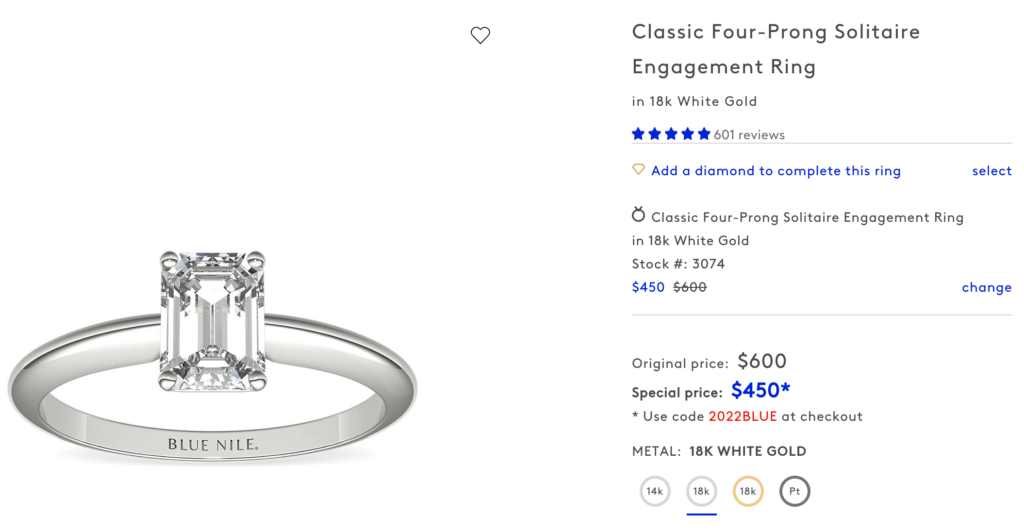
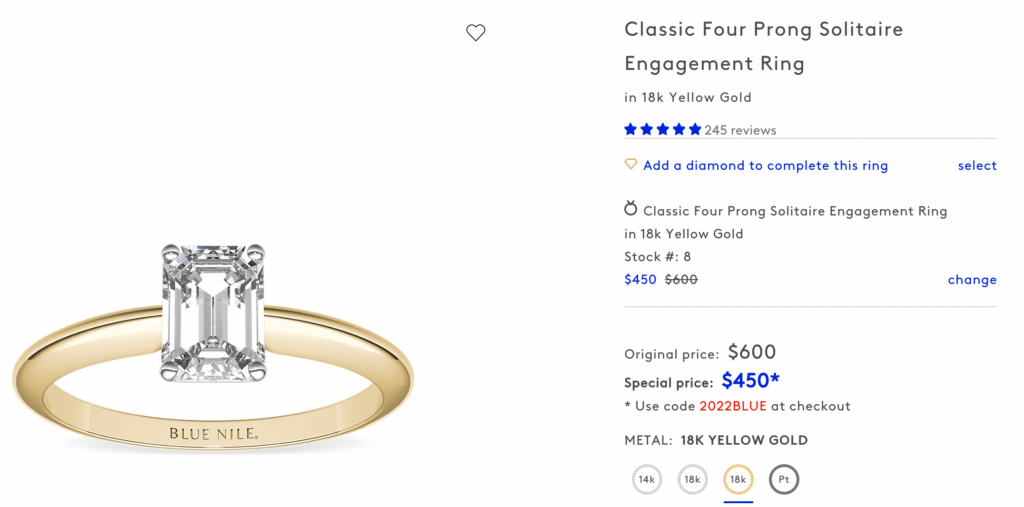
For example, this Blue Nile engagement ring setting is the same price in both 18k white gold and 18k yellow gold: 

White gold vs. yellow gold ring on Blue Nile.
Yellow gold vs. white gold ring on Blue Nile.

The Knot 2021 Jewelry & Engagement Study surveyed more than 5,000 recently engaged couples and found that yellow gold ring settings have increased in popularity by 11% since 2017, though white gold settings remain the most popular choice at 45% of all engagement ring settings (down from 61% in 2017). 

Vox Media credits Meghan Markle’s yellow gold engagement ring (with side stones from his mother Princess Diana’s jewelry collection) for the recent resurgence of yellow gold, though yellow gold overall has regained popularity in recent years.

Do diamonds look better in white or yellow gold?

According to the International Gem Society, a yellow gold setting is more forgiving for diamonds that have a nearly colorless or faint color, making them appear whiter in contrast.

If you have a colorless diamond, white gold can enhance its white color, while yellow gold will show through your diamond to give it a slightly yellow hue. 

However, whether you choose white or yellow gold is primarily a personal preference. 

White gold vs yellow gold engagement ring?

Whether you choose a white gold vs. yellow gold engagement ring depends on your personal style preferences and the color of the gemstone you choose. 

If you want a contrasting look or you have a diamond with a slightly yellow color, a yellow gold setting might be best. You can also buy a two-tone engagement ring, where the band is yellow gold and the ring prongs are white gold or platinum to reduce the amount of yellow that shows through your diamond. 

White gold engagement ring settings continue to be the most popular among engaged couples, according to a 2025 survey by The Knot, though yellow gold has increased in popularity in recent years.

Which is more durable?

Because the metals it's alloyed with are more durable and because it’s typically plated in rhodium, white gold is more durable and resistant to scratching than yellow gold. 

Bottom line: Is white gold worth more than yellow gold? Which has the better resale value?

White gold and yellow gold of the same karat weight have about the same value. If you were to sell either for scrap, you would get about the same value from a gold buyer. Now is a great time to sell as gold is at record highs.

Whether you’re looking to sell white gold or yellow gold jewelry, we recommend selling to CashforGoldUSA, one of the oldest and most reputable online gold buyers.

CashforGoldUSA is our top choice because: 

  • A+ Better Business Bureau rating
  • 100% free door-to-door, trackable FedEx or USPS shipping
  • Free Jewelers’ Mutual insurance up to $150,000 on each shipment
  • No minimum value
  • Facility insured by Lloyds of London

CashforGoldUSA also has a highest price guarantee for all of your gold, silver, and diamond jewelry

Get an offer for your white or yellow gold from CashforGoldUSA (and get a 10% bonus if you send in your item within 7 days) >>

What is the difference between white gold and yellow gold?

Beyond their obvious color difference, white gold and yellow gold are alloys (a mixture of metals) composed of different types of metals. White gold is also typically plated with a layer of rhodium, which gives it its white appearance.

What’s yellow gold made of?

Yellow gold is an alloy of pure gold and metals like copper and zinc.

What’s white gold made of?

White gold is an alloy of pure gold and white metals like silver, nickel, palladium, or zinc, which give it an off-white, less yellow appearance. White gold is often plated in rhodium to achieve a whiter color and increase its durability and shine.

Is white gold real gold?

White gold is real gold alloyed with other metals like silver, nickel, or palladium.

What is rhodium plating?

Rhodium plating is a thin layer of rhodium that coats other metals, typically white gold, to make it appear pure white and to make it more durable and reflective.

How long does rhodium last on white gold?

Rhodium plating fades over time to reveal the warmer white gold underneath, especially with frequent wear and exposure to chemicals like chlorine.

Is rhodium plating white gold a good idea?

That depends on your personal preferences and whether you want to spend money to have your rhodium-plated jewelry replated every six months to a year. The cost of rhodium plating varies by jeweler and the thickness of the plating, though is typically less than $100 for an engagement ring.

What is gold vermeil?

Gold vermeil is sterling silver that has been gold-plated, typically with 22K to 24K gold. It is more common to find gold vermeil in 14K-18K.

What is gold plated?

Gold plating involves affixing a thin layer of gold onto the surface of another metal — like copper or silver — by a chemical or electrochemical plating process.

What is gold filled?

Gold-filled jewelry is constructed in two or three layers: The core metal is brass, and a gold alloy is then bonded to one or both surfaces of the brass core with heat and pressure.

There are a lot of coins worth money — some rare coins that have sold for hundreds of thousands or even millions of dollars. Others are worth their weight in gold or silver.

If you have any of the coins on this list or other coins worth money, you should always have them authenticated by a reputable coin dealer, like a member of the Professional Numismatists Guild, before trying to sell:

For silver, as of end of December, 2025, silver continued to make record prices thanks to industrial demand, low supply and investors seeking safe havens as the stock market goes bananas.1 At the end of the year, the price was up 167% YTD at $80 per ounce.

Are your coins worth money?

Keep reading to learn which pennies, nickels, dimes, quarters, and other coins are worth a lot of money if you’re lucky enough to have them in your possession. Note that the price you’re likely to get for even the rarest coins will typically be affected by the condition of the coin. 

Pennies worth money

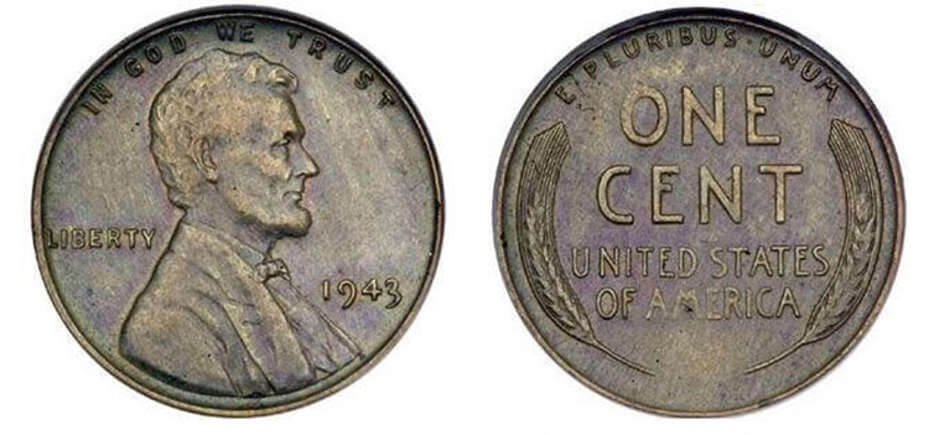
The 1943 Lincoln Head Copper Penny

Front and back of the 1943 Lincoln Head Copper Penny. 15 coins worth money in 2024: Do you have one at your house?
Credit: The original uploader was 293.xx.xxx.xx at English Wikipedia., Public domain, via Wikimedia Commons

In 1942 — in an effort to save copper for ammunition in World War II — the U.S. Mint began producing steel pennies for the first time in history. 

However, during the transition period between 1942 and 1943, there were a number of leftover copper planchets (the plain metal discs used to make coins) that were accidentally struck with 1943 dates. There are believed to only be about 20 of these rare coins in the world. 

If you happen to have a copper-colored penny with a 1943 date stamp, hold it up to a magnet. If it sticks, the coin you have is made of steel and holds a lower value, though steel 1943 pennies that maintain their gray color are still worth a pretty penny and have sold for as much as $218,500 at auction.

Auction record: $372,000 – Heritage Auctions*

*All auction records are from the Professional Coin Grading Services (PCGS).

1955 Double Die Penny

Image Credit: GoldStandardAuction via eBay

In the coin-making process, a working hub is a metal punch that looks like the surface of the coin. These hubs are used to create metal dies, a reverse indentation of the coin design that is pressed onto a planchet to create the coin. 

In 1955, the Mint accidentally struck a working hub and a working die together when they were both slightly rotated differently from one another, leaving a double die impression.  

There are estimated to be about 15-20,000 of these pennies still in existence, though there are many counterfeits on the market. 

Auction record: $24,000 – ebay

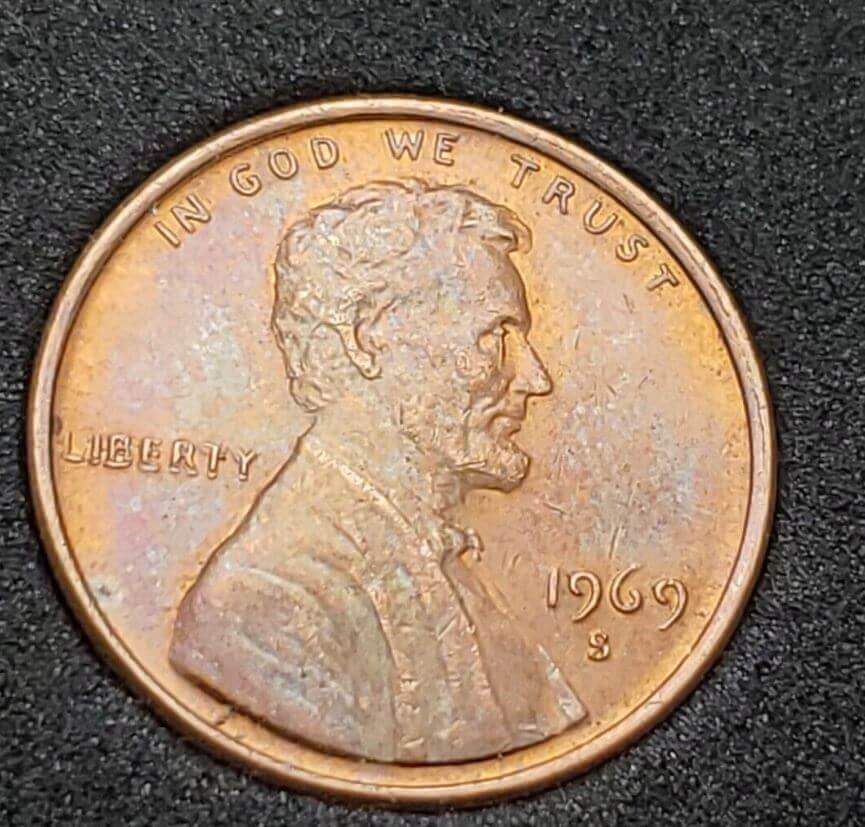
1969-S Lincoln Cent with Double Die Obverse

Front  of the 1969 S Double Die Lincoln penny. 15 coins worth money in 2024: Do you have any at your house?
Credit: ebay seller dz_maniacs

In 1969, two men named Roy Gray and Morton Goodman began producing fake 1969 Doubled Die Lincoln cents and other counterfeit coins.

Gray asked a collector named Robert Teitelbaum to sell the illegal coins and to place 85 of them into circulation in Washington. Instead, Teitelbaum turned them over to the Secret Service. 

While the Secret Service was trying to recover as many fakes as possible, they discovered several authentic 1969-S Doubled Die Obverse cents, which they initially believed were fake and destroyed — increasing the rarity of the already rare coins.

It is believed that less than 100 examples of the authentic 1969-S Doubled Die Obverse cents still exist, with only 40 examples ever certified. 

Auction record: $126,500 – Heritage Auctions

1972 doubled die obverse Lincoln Memorial cent

972 doubled die obverse Lincoln Memorial cent
Image Credit: UniqCoin via eBay

There are more than 10 doubled dies for the 1972 Lincoln cent, but Type 1 is the most valuable. 

This double die is easy to see with the naked eye, with: 

  • Doubling to the Southwest on all four digits on the date
  • LIBERTY doubled toward the South
  • IN GOD WE TRUST on the other side doubled toward the East

Auction record: $14,400 – Heritage Auctions

Nickels worth money

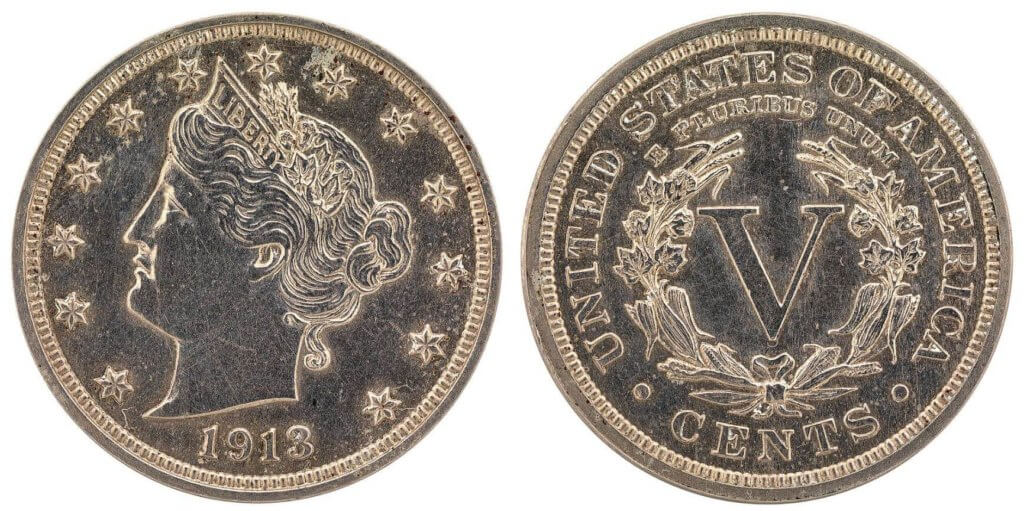
1913 Liberty Head Nickel

Front and back of 1913 Liberty Head Nickel. 15 coins worth money in 2024: Do you have any at your house?
Credit: US Mint (coin), National Numismatic Collection, Public domain, via Wikimedia Commons

The 1913 Liberty Nickel was produced by the U.S. Mint, with only five coins believed to be in existence. Today, these coins are all accounted for, and two are on display in museums.

The most elusive of these coins was owned by George Walton, the youngest signer of the Declaration of Independence. On April 25, 2013, a coin owned by Walton family heirs once believed to be fake was authenticated as the real fifth coin. 

Auction record: $4,560,000 – Stack's Bowers

2005-D 5C Speared Bison Jefferson Nickel

2005-D 5C Speared Bison Jefferson Nickel
Image Credit: exclusive_finds_760 via eBay

The image of a bison initially adorned the reverse of the nickel from 1913-1938, before transitioning to the Jefferson nickel, which is still in circulation today.

In commemoration of the bicentennials of the Louisiana Purchase and the Lewis and Clark expedition, the U.S. Mint resurrected the bison design as part of the four-coin Westward Journey Nickel Series. 

In the bison series, there were several coins discovered to have a large die gouge — a raised feature that appears on a coin when a die is damaged. This particular die gouge is highly visible running through the bison’s back.

Auction record: $2,650 – ebay

Dimes worth money

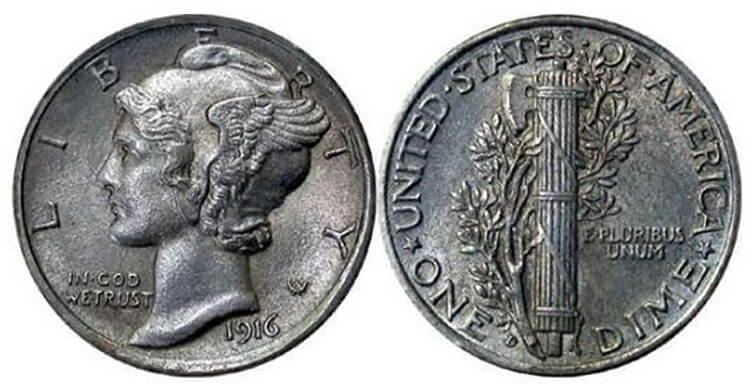
Mercury dimes

Front and back of the 1916 Mercury Dime. 15 coins worth money in 2024: Do you have any at your house? Click here for more info.
Credit: United States Mint, CC BY-SA 4.0, via Wikimedia Commons

In 1916, a new dime design replaced the Barber design coin that had been used since 1982. Designed by sculptor A.A. Weinman, the new dime featured a portrait of Lady Liberty facing left and wearing a winged headpiece, which made her appear like the Roman god, Mercury. These dimes came to be known as  “Mercury Head” dimes.

Most Mercury dime dates can be obtained with little difficulty, though some are extremely rare in high grade. These coins are also known as “Winged Liberty Head” dimes.

These are auction records for the rarest Mercury Dime series:

1916-D: $29,900 – Stack's

1921: $3,960 – Sotheby's

1921-D: $23,500 – Legend Rare Coin Auctions

1926-S: $9,950 – David Lawrence RC

1942/41: $32,200 – Goldberg Auctioneers

1942/41-D: $6,900 – Heritage Auctions

1982 No Mint Mark Roosevelt Dime

1982 No Mint Mark Roosevelt Dime
Image Credit: Upstate Numismatic Services via eBay

Also called the 1982 No P Dime, these dimes were the first and only U.S. business strike coin (a coin intended for circulation) that accidentally left the U.S. Mint without being stamped with their designated mint mark.

Approximately 8,000 to 10,000 coins were reportedly found in Sandusky, Ohio, where they were handed out at Cedar Point Amusement Park as change. However, experts with PCGS believe there are potentially up to 150,000 of these coins in existence. 

Note: Mint marks are used to distinguish coins by where they were minted. The four currently operating U.S. Mints are: 

  • P: Philadelphia Mint
  • D: Denver Mint
  • S: San Francisco Mint
  • W: West Point Mint

Other mints no longer in operation are: 

  • D: Dahlonega Mint (coins from 1861 and earlier — Denver didn’t open until 1906)
  • C: Charlotte Mint 
  • O: New Orleans Mint 
  • CC: Carson City Mint 
  • M: Manila Mint

Auction record: $2,185 – Heritage Auctions

Quarters worth money

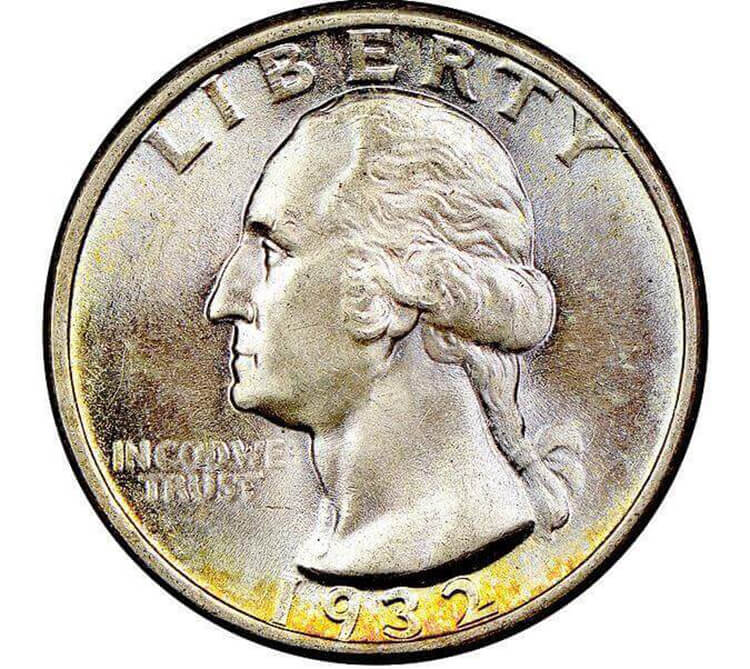
Washington quarters

Front of the 1932 Washington Quarter.
Credit: Numismatic Guaranty Corporation, Public domain, via Wikimedia Commons

In honor of George Washington’s 200th birthday, the U.S. government held a competition to redesign the quarter. The chosen design — proposed by New York sculptor John Flanagan — was minted on a silver alloy from 1932 to 1964, with the exception of 1933. 

After 1964, a new alloy was used that eliminated silver, which is still in circulation today. Because they were minted at the height of the Great Depression, not a lot of Uncirculated 1932 examples were initially saved, making top grade 1932 Washington quarters a rarity. 

Auction record: $40,250 – Heritage Auctions

1999-P Connecticut Broadstruck Quarter

1999-P Connecticut Broadstruck Quarter
Image Credit: Heritage Auctions

The 1999 Connecticut Quarter is the fifth design released in the 50 States quarter collection. 

Some error coins in this collection (not just the Connecticut quarter) were either broadstruck — meaning they were struck outside of the retaining collar of the coin — or double or triple stamped. 

These coins aren’t particularly valuable and are listed from about $2 to $50 on ebay. 

Auction record: $4,362 – Superior Galleries

2004 Wisconsin State Quarter with Extra Leaf

2004 Wisconsin State Quarter with Extra Leaf
Image Credit: Heritage Auctions

2004-D Wisconsin Extra Leaf Quarters have extra husks on the left side of the corn stamped onto the coin. There are two different varieties — one with a leaf that appears lower on the corn (more common), and one with a leaf that appears higher. 

Most of these coins were discovered in bank wrapped rolls in the Tucson and San Antonio areas.

Auction record: $6,000 – Heritage Auctions

2005-P In God We Rust Kansas State Quarter

2005-P In God We Rust Kansas State Quarter
Image Credit: Genesis Widick at English Wikipedia, Public domain, via Wikimedia Commons

When coins are being pressed, lubricant is used on the machine to reduce friction between parts. In this case, some of that grease made its way onto the surface of the coin die, filling the spot where the first T indentation was supposed to happen. 

At a glance, these coins read “In God We Rust,” but you may be able to see a faint T on some coins if you look for it.

Though they’re a fun find, these coins aren’t that valuable — you can buy one on ebay starting at about $6. 

Other coins worth money

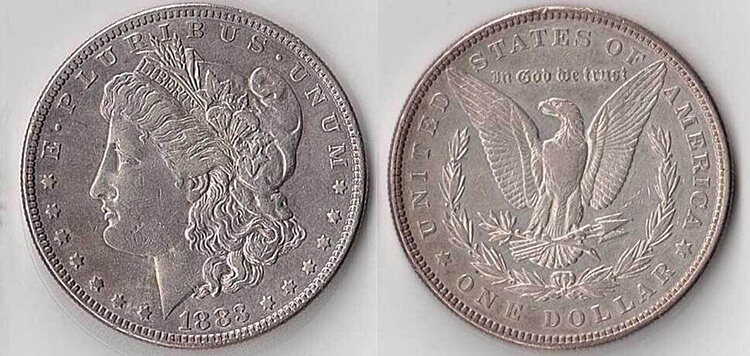
Morgan Silver Dollars

Front and back of the 1883 Morgan Silver Dollar. 15 coins worth money in 2024: Do you have any at your house?
Image Credit: Albertomos, Public domain, via Wikimedia Commons

While the The Coinage Act of 1873 demonetized silver, putting an end to silver dollar production, the Bland-Allison Act was passed in 1878 in response to poor economic conditions at the time. This act required the U.S. government to purchase large quantities of silver and turn them into silver dollars, which were called Morgan Dollars after their designer, George T. Morgan. 

Morgan Dollars were produced from 1878-1904, then again in 1921. Some series are more valuable than others. 

These are the auction records for the rarest Morgan Silver Dollars series:

1889-CC: $462,000 – Bowers & Merena 

1893-S: $735,000 – Sotheby's

1895 (Proof only): $150,000 – Sotheby's

Sacagawea Cheerios dollar

Sacagawea Cheerios dollar
Image Credit: Heritage Auctions

As part of a General Mills promotion in 1999, 5,500 Sacagawea Dollars were placed inside every 2,000th box of Cheerios. 

In 2005, a collector discovered that some of these Sacagawea Cheerios Dollars had detailed veins in the eagles' tail feathers. Only several dozen examples were actually found, but a lot more are thought to exist. 

Auction record: $10,200 – Heritage Auctions

2008-W silver eagle reverse of 2007

2008-W silver eagle reverse of 2007
Image Credit: Heritage Auctions

For 2008, the U.S. Mint decided to modify the reverse design of Silver Eagle coins. However, during the transition, some 2008-W Silver Eagles were accidentally stamped with the pre-2008 design. 

While the designs appear similar, the fonts and some design elements were changed. There are about 45,000 of these coins in existence.

Auction record: $1,700 – ebay

FAQs about coins that are worth more than face value

How do I find out what my coins are worth?

PCGS offers a coin price guide where you can search for the current value of collectible coins. They also offer professional coin grading. 

You can also find information about popular coins in The Red Book, A Guide Book of United States Coins 2024 77th Edition.

“You can look up in the Red Book and see if you have something that's a good date,” says Douglas Winter, founder of Douglas Winter Numismatics and author of more than a dozen books on numismatics (the study/collection of currency). “It's not going to really give you an accurate value, but it'll give you an idea of what the value is relative to the most common issue of a type.”

What are the most valuable coins in circulation?

These are some of the most valuable coins in circulation, based on PCGS record auction pricing:

  • 1969-S Lincoln Cent With a Doubled Die Obverse, $54,625
  • 2004-D Wisconsin State Quarter with an Extra Leaf, $6,000
  • 1970-S Large Date Lincoln Cent With a Doubled Die Obverse, $3,675
  • 1972 Lincoln Cent With a Doubled Die Obverse, $1,150
  • 1999 Wide “AM” Reverse Lincoln Cent, $250

How much does it cost to get coins appraised?

Online appraisals for valuation and selling purposes are available for free, including by auction houses that will list your item. Fair market valuation of personal property is typically determined through these assessments as a starting point. For official written appraisals for insurance and estate planning, expect to pay $75 to $150+ per hour.  

Bottom line: How to sell your coins for the most money

If you want to sell your collectible coins for the most money, Winter recommends finding a large national dealer or a reputable local dealer who is a member of the Professional Numismatic Guild. 

“There's those pawn shops or local cash-for-gold buyers — that's not a good place to sell your coins,” Winter says. “You're likely to be offered a small fraction of what they're worth.” 

If your gold coins or silver coins are not a collector’s item you can sell them for their scrap metal value. Both gold and silver are near record prices at the moment:

As of , the silver resale value in the United States was at per ounce, or  per gram.

We recommend selling to CashforGoldUSA or its sister site CashforSilverUSA, which accept items like gold, silver, and diamonds in any form, including gold scrap, gold jewelry including chains, necklaces, earrings, bracelets, silver jewelry, gold bullion, and dental gold.

CashforGoldUSA is our top choice for selling coins for scrap because: 

  • A+ BBB rating
  • Payouts within 24 hours
  • Buys all weights and quality of gold and silver
  • Price- match guarantee
  • Free return guarantee
  • 100% customer satisfaction guarantee
  • Free shipments insured up to $150,000
  • 10% bonus if you send in your item within 7 days

Read our CashforGoldUSA review, or get money for your coins today with CashforGoldUSA >>


SOURCES:

  1. Gold prices will take their cues from oil this week following Venezuela attacks, initial resistance at $4,474/oz,” by Ernest Hoffman, Kitco News
  2. Reason For A 2026 Gold And Silver Surge That’s Predicted To Blow Up The Bitcoin Price,” by Billy Bambrough, Forbes.
How do I find out what my coins are worth?

Professional Coin Grading Service offers a coin price guide where you can search for the current value of collectible coins. They also offer professional coin grading.

What are the most valuable coins in circulation?

These are some of the most valuable coins in circulation, based on Professional Coin Grading Service record auction pricing:
– 1969-S Lincoln Cent With a Doubled Die Obverse, $54,625
– 2004-D Wisconsin State Quarter with an Extra Leaf, $6,000
– 1970-S Large Date Lincoln Cent With a Doubled Die Obverse, $3,675
– 1972 Lincoln Cent With a Doubled Die Obverse, $1,150
– 1999 Wide “AM” Reverse Lincoln Cent, $250

Sometimes the math just doesn’t work. Groceries, rent, kids’ activities, student loans, all of it keeps climbing, while your paycheck inches up a few cents at a time. Earning around $40 an hour can be the difference between barely hanging on and finally breathing a little.

You might also be thinking about job security. It’s hard to get excited about a new career if a robot or software update could replace you in five years. The good news: there are plenty of careers in the $40–$50 per hour range that still need real humans, hands-on skills, face-to-face care, complex judgment.

Most of these jobs do require training, and some need a degree or license. But you’re trading that effort for work that’s in demand, pays solid money, and should be around for a long time. Here are 18 options to consider if you’re aiming for roughly $40 an hour with strong job security.

Registered nurse

Nurse jobs are in demand, worker shortage
Image Credit: Freepik

Registered nurses are the backbone of the healthcare system. They check vital signs, give medications, coordinate care, answer scared family members’ questions, and keep doctors from missing important details. This mix of physical work, critical thinking, and human connection is very hard to automate.

Median pay for RNs is about $93,600 per year, or roughly $45 an hour. Job growth is projected at 5% from 2024 to 2034, faster than the average for all jobs, and that’s on top of ongoing nursing shortages as the population ages. That demand is one reason hospitals offer sign-on bonuses, loan repayment, and flexible schedules.

You’ll usually need a nursing degree (associate or bachelor’s), pass the NCLEX-RN exam, and get licensed in your state. From there, you can specialize: ER, ICU, pediatrics, oncology, home health, schools, and more. If you want strong income plus almost guaranteed work in any city, this is one of the most reliable career paths out there.

Dental hygienist

Dental hygienist
Image Credit: Shutterstock

Dental hygienists clean teeth, take X-rays, screen for gum disease, and coach patients on keeping their mouths healthy. Most appointments are actually spent with the hygienist, not the dentist, which makes this job central to every dental practice and hard to replace with a machine.

Median pay is about $94,260 per year, or $45.32 per hour. Jobs are projected to grow 7% between 2024 and 2034, much faster than average, as more people keep their teeth longer and preventive care becomes a bigger focus.

You typically earn an associate degree in dental hygiene from an accredited program, then pass a national exam and state licensing requirements. Many hygienists work four-day weeks, have fairly predictable schedules, and can move between offices or states if they need a change. AI can help with charting or image analysis, but it can’t lean someone back, calm their nerves, and carefully work inside their mouth, that’s you.

Speech-language pathologist

Speech‑Language Pathologist
Image Credit: Getty Images via Unsplash

Speech-language pathologists (SLPs) help children and adults who struggle to communicate or swallow, kids with speech delays, stroke survivors, people with voice disorders, and more. Sessions are one-on-one and deeply personal, which makes this work both meaningful and very human.

Median pay is about $95,410 per year, or $45.87 an hour. Jobs are projected to grow a huge 15% from 2024 to 2034, much faster than average. Demand is rising in schools, hospitals, and private clinics, especially as awareness of early intervention grows.

Most SLPs need a master’s degree in speech-language pathology and state licensure. The work mixes science (brain and language) with creativity and patience. Apps can support practice, but they can’t design a nuanced care plan or adjust on the fly when a child melts down or a patient is frustrated. If you like helping people be heard, literally, this is a high-paying, future-proof path.

Physical therapist

Physical Therapist
Image Credit: Shutterstock

Physical therapists (PTs) help people recover from injuries, surgeries, and chronic pain so they can move, work, and live again. You might guide someone through learning to walk after a stroke, rebuild strength after a torn ACL, or help an older adult stay independent and avoid falls.

Median pay is about $101,020 a year, or roughly $48.57 per hour. Jobs are projected to grow 11% between 2024 and 2034, much faster than average, as the population ages and more people live longer with complex health needs.

PTs usually need a Doctor of Physical Therapy (DPT) degree and a license. It’s a serious education commitment, but you end up with a hands-on healthcare job where you’re not stuck behind a computer all day. Robots can’t safely stretch a tight hamstring, read someone’s face when an exercise hurts too much, or motivate a tired patient to try one more step, that’s your value.

Occupational therapist

Occupational therapist
Image Credit: Shutterstock

Occupational therapists (OTs) help people learn or relearn everyday tasks after injury, illness, or disability, getting dressed, cooking, writing, using adaptive tools, or returning to work. The focus is on function and independence, not just movement.

Median pay is about $98,340 per year, or around $47.28 per hour. Jobs are projected to grow 14% from 2024 to 2034, much faster than average. Demand is strong in hospitals, schools, nursing facilities, and home health.

You’ll typically need a master’s or doctoral degree in occupational therapy plus state licensure. It’s very people-centered work. You might customize a kitchen layout for someone in a wheelchair or design sensory-friendly activities for a child with autism. Technology can provide tools, but deciding what works for a specific person in a real home or workplace takes human judgment, creativity, and empathy, which is why this role stays in demand.

Diagnostic medical sonographer

Diagnostic medical sonographer
Image Credit: Shutterstock

Sonographers use ultrasound equipment to create images of organs, blood vessels, and pregnancies. They don’t just push buttons; they decide which angles to capture, recognize when something looks off, and talk patients through anxious moments.

Median pay is about $89,340 a year, or roughly $42.95 an hour. Jobs are projected to grow 13% from 2024 to 2034, much faster than average. Imaging is cheaper and safer than many other tests, so doctors order more of it, which fuels demand.

Most sonographers complete a two-year associate degree or a postsecondary certificate and often earn credentials in a specialty like cardiac or vascular sonography. AI tools are starting to help with interpreting images, but someone still has to position the patient, adjust settings in real time, and notice subtle details. If you want a patient-facing healthcare job with high pay and less schooling than a full degree in medicine, this is a strong option.

Nuclear medicine technologist

Nuclear medicine technologist
Image Credit: Shutterstock

Nuclear medicine technologists prepare and administer small doses of radioactive drugs, then use specialized cameras to track how those substances move in the body. This helps diagnose heart disease, cancer, and other serious conditions. The work is very technical and tightly regulated.

Median pay is about $97,020 per year, or $46.64 per hour. Job growth is projected at about 3% from 2024 to 2034, roughly in line with the average. But the skill set is so specialized that qualified techs tend to have good job security.

Most people enter the field with an associate or bachelor’s degree in nuclear medicine technology and then get certified. Because you’re working with radiation, you have to follow strict safety procedures and handle equipment that’s not easily automated. Software can assist with image processing, but you still need a careful human at the controls making judgment calls in real time.

Medical scientist (except epidemiologist)

Medical scientist looking through microscope
Image Credit: Shutterstock

Medical scientists design and run studies that improve how we prevent, diagnose, and treat disease. They might test new drugs in the lab, study how cancer cells grow, or analyze patient data to improve treatments. Their work sits behind many of the medications and therapies people rely on.

Median pay is about $100,590 per year, or roughly $48.36 per hour. Jobs are projected to grow 9% between 2024 and 2034, much faster than average. That demand is driven by new technologies, aging populations, and ongoing health challenges.

Most roles require a Ph.D. in a biological science or a medical degree, or sometimes both. While AI can help crunch data or model molecules, humans still design studies, interpret messy results, and decide which findings are actually meaningful. If you like science, detail, and long-term impact more than day-to-day patient care, this is a high-paying path with strong staying power.

Electrical power-line installer and repairer

Electrical power-line installer and repairer
Image credit: Heri Susilo via Unsplash

Power-line workers climb poles and towers, repair downed lines after storms, and keep the electrical grid running. This is physically demanding, sometimes dangerous work, and that’s part of why it pays well and isn’t getting replaced by robots anytime soon.

Median pay is about $92,560 per year, or $44.50 per hour. Jobs are projected to grow around 7% from 2024 to 2034, much faster than average. Every community needs reliable electricity, and extreme weather only increases the need for skilled crews.

You typically start with a high school diploma, then enter a technical program or apprenticeship where you learn climbing, safety, and electrical systems. This job is very hands-on and outdoors, often in all kinds of weather. AI can monitor grid performance, but when a transformer blows in the middle of the night, it’s human workers in bucket trucks who fix it.

Mechanical engineer

Mechanical engineer
Image Credit: Shutterstock

Mechanical engineers design and improve machines and mechanical systems, from car engines and HVAC systems to manufacturing equipment and consumer products. They solve problems like “How do we make this part lighter but stronger?” or “How do we cut energy use without losing performance?”

Median wages are about $102,320 per year, or roughly $49.19 per hour. Mechanical engineering roles are expected to grow around 9% over the 2024–2034 decade, faster than average, as companies push for energy efficiency, automation, and new products.

Most mechanical engineers have a bachelor’s degree in mechanical engineering and, in some cases, a professional license. AI tools help with simulations, but engineers still define the problem, interpret the results, and balance safety, cost, and performance. It’s a strong option if you like math, physics, and building things that exist in the real world, not just on screens.

Civil engineer

civil engineer
Image Credit: Scott Blake via Unsplash

Civil engineers plan, design, and help oversee the construction of roads, bridges, water systems, and other infrastructure. These projects last decades, so mistakes are expensive, which is why this work stays in human hands even as software tools get smarter.

Median pay is about $99,590 per year, roughly $48 an hour if you divide by a full-time schedule. Job growth is projected at 5% from 2024 to 2034, faster than average, driven by aging infrastructure and new building projects.

Civil engineers usually have a bachelor’s degree in civil engineering, plus state licensure if they sign off on public works. Design software can help model loads and flows, but humans still weigh community needs, environmental rules, budgets, and safety. If you like the idea of driving over a bridge and thinking, “I helped build that,” this career can pay well and feel very concrete, literally.

Industrial engineer

Industrial engineering technologist
Image Credit: Shutterstock

Industrial engineers make systems more efficient, they figure out how to reduce waste, improve quality, and streamline processes in factories, warehouses, and service organizations. That might mean rearranging a production line, changing how a hospital schedules surgeries, or reducing errors in a shipping operation.

Median wages are about $101,140 per year, or $48.63 per hour. Projected growth is “much faster than average,” at 7% or higher between 2024 and 2034, as companies push to cut costs and improve productivity.

Most industrial engineers have a bachelor’s degree in industrial engineering or a related field. Yes, they use software and data, but their value is in understanding people, machines, and workflows together. AI can point to a bottleneck; an industrial engineer figures out what change will actually work on the floor without burning out staff.

Project management specialist

Project management specialist
Image Credit: Shutterstock

Project management specialists keep complex projects on track, budgets, timelines, resources, and communication. They work in construction, tech, healthcare, government, and more, acting as the glue between different teams and stakeholders.

Median pay is about $100,750 per year, or roughly $48.44 per hour. Employment is projected to grow 6% from 2024 to 2034, faster than average. Pretty much every industry needs people who can take messy goals and turn them into well-run projects.

Many project managers have a bachelor’s degree plus experience in their industry. Certifications like PMP can help, but aren’t always required. Software tools can track tasks and timelines, but they can’t navigate office politics, calm an upset client, or decide how to adjust when a key supplier suddenly drops out. That human problem-solving is exactly what keeps this role valuable.

Management analyst

Management analyst
Image Credit: Shutterstock

Management analysts, often called management consultants, study an organization’s operations and recommend ways to cut costs, increase revenue, or improve performance. They might redesign processes, analyze financial data, or help implement new systems.

Median pay is about $101,190 per year, or $48.65 per hour. Job growth is projected at 9% from 2024 to 2034, much faster than average. Companies constantly look for ways to stay competitive, and they often bring in outside experts to help.

Most management analysts have a bachelor’s degree, several years of experience, and sometimes an MBA. AI can analyze data, but clients still want a human to sit across the table, explain what the numbers mean, and make realistic recommendations that fit the culture and constraints of their organization. If you like problem-solving, data, and working with different clients, this path can pay very well.

Operations research analyst

Operations research analyst
Image Credit: Shutterstock

Operations research analysts use math, statistics, and modeling to help organizations make better decisions, routing delivery trucks, setting inventory levels, pricing products, or staffing hospitals. Their work sits behind many “smart” systems in business and government.

Median pay is about $91,290 per year, or roughly $43.89 per hour. Jobs are projected to grow a huge 21% from 2024 to 2034, much faster than average, as companies lean harder on data-driven decisions.

Most roles require at least a bachelor’s degree in math, statistics, engineering, or a related field; many employers prefer a master’s. Yes, this is a data-heavy job, and AI tools will be part of your toolkit. But someone still has to pose the right questions, choose sensible assumptions, and explain the results in plain language to non-technical decision-makers. That bridge between math and real-world choices is not easily automated.

Financial examiner

Financial examiner
Image Credit: Shutterstock

Financial examiners help keep banks, credit unions, and other financial institutions safe and honest. They review records to make sure lenders follow laws, manage risk properly, and maintain enough capital. Their work protects depositors and the broader financial system.

Median pay is about $90,400 per year, or $43.46 per hour. Jobs are projected to grow 19% from 2024 to 2034, much faster than average, as regulations evolve and financial products become more complex.

You’ll usually need a bachelor’s degree in accounting, finance, or a related field, and on-the-job training in specific laws and systems. Software can flag unusual transactions, but humans still interpret whether something is actually a problem, weigh the intent behind a pattern, and decide what enforcement action is appropriate. That mix of rules plus judgment keeps this role in demand.

Personal financial advisor

Personal financial advisor
Image Credit: Shutterstock

Personal financial advisors work directly with individuals and families to plan for retirement, manage investments, choose insurance, and handle big money decisions. It’s part math, part coaching, and part therapy, which makes it harder to replace with a simple app.

Median pay is about $102,140 per year, or $49.11 per hour. Jobs are projected to grow 10% between 2024 and 2034, much faster than average, as more people need help navigating retirement accounts, market volatility, and debt.

Most advisors have a bachelor’s degree and may pursue certifications like CFP. Many are self-employed or work for firms that offer performance-based bonuses, so pay can go higher with experience and a strong client base. Robo-advisors manage basic portfolios, but many people still want a human to talk them off the ledge during market swings and tailor plans to messy real lives.

Web developer and digital designer

Web developer
Image Credit: Shutterstock

Web developers and digital designers build and maintain websites and user interfaces, everything from small business sites to complex e-commerce platforms. They write code, design layouts, optimize for mobile, and make sure sites actually work for real users.

Median pay is around $90,930 per year for web developers, and about $98,090 for web and digital interface designers, roughly in the low-to-mid $40s per hour. Job growth is projected around 7% over the next decade, faster than average, as online business continues to expand.

You don’t always need a four-year degree; many developers come from bootcamps or self-study plus a portfolio. AI can generate snippets of code and templates, but real-world sites have quirks, client demands, and integrations that need a human brain. Someone has to manage tradeoffs between speed, design, accessibility, security, and SEO, and fix things when they break.

If your job feels chaotic and underpaid, here’s a weird reality: some of the steadiest, “boring” work out there is getting harder to staff, and paying more as a result.

Think of jobs like accounting, compliance, plant technicians, mechanics, data-center support, or skilled trades. They don’t go viral on social media. They’re not “dream careers.” But employers are struggling to hire and keep people in these roles, even as they quietly raise pay and sweeten benefits to keep operations running

If you’re tired of chasing the next big thing, it might be time to take “boring” seriously.

What we mean by “boring jobs”

man bored at work
Image Credit: Shutterstock

“Boring” here doesn’t mean useless. It usually means repetitive, predictable, or behind the scenes.

These are the roles that keep the lights on and the books balanced: the mechanic who keeps a fleet on the road, the electrician wiring a new warehouse, the person in a windowless room checking safety reports, the claims processor clicking through screens all day. In manufacturing and infrastructure, people often talk about the “dirty, dangerous and dull” work that most of us never see but still rely on every day.

They’re not glamorous. They’re not “mission driven.” They usually don’t come with a personal brand or a fancy title. But they’re hard to automate completely, and when you don’t have enough people doing them, entire companies stall.

Why these jobs are suddenly hard to fill

First big reason: age. A huge chunk of the people who’ve been doing this work are retiring. In one analysis of U.S. manufacturing, nearly a quarter of the workforce was already over 55, with many headed out the door soon. Another study estimated that hundreds of thousands of trade and manufacturing jobs are already open, and that unfilled roles could climb toward 2 million within a decade if nothing changes.

Second reason: image. For years, young people were pushed toward four-year degrees and “knowledge work.” Meanwhile, many of these hands-on, routine, or industrial jobs were described as outdated, unpleasant, or on their way out. Surveys of manufacturing’s public image show people still picture it as dirty, low-skill work, even while the technology and pay have moved up.

Third reason: lifestyle mismatch. A lot of younger workers say they want remote options, flexible hours, and work that feels creative. Many “boring” jobs are the opposite: on-site, shift-based, highly structured. One recent piece looked at remote back-office jobs paying around $100,000 a year that still sit vacant because the work is quiet, narrow, and not very exciting.

Put all that together, and you get a basic shortage: there’s more “boring” work than people willing and able to do it.

The talent gap is forcing employers to pay up

bored person at work
Image Credit: Shutterstock

When a job is essential and there aren’t enough people to do it, pay moves.

Overall, the U.S. still has roughly one job opening for every unemployed worker, more than before the pandemic when you adjust for population and demand. But in sectors that rely heavily on skilled, routine work, the imbalance is sharper.

One recent survey of manufacturers found that attracting and keeping workers has been the top business problem for years, ahead of things like raw materials or regulations. Another report highlighted that trades like carpenters, electricians, welders, and plumbers are in a full-on hiring crunch because demand for buildings and infrastructure hasn’t slowed, but the pipeline of new tradespeople has.

You can see what that looks like in real life. One high-profile auto executive recently said his company couldn’t fill 5,000 technician and mechanic roles, even at around $120,000 a year, because there simply aren’t enough people with the skills and interest to do the work. That’s a “boring” job by social-media standards, but it’s paying like a high-end office career.

Accounting, compliance, and other quiet desk jobs

accountant at work
Image Credit: Shutterstock

It isn’t just blue-collar roles. Some back-office desk jobs are also getting squeezed.

Take accounting. Recent articles have noted that roughly 340,000 accountants left the field over about five years, and some estimates say around three-quarters of the remaining workforce could exit in the coming decade. Why? Older workers are retiring, younger workers call the work dull, and the training pipeline hasn’t kept up.

At the same time, companies still need the books done and tax rules followed. That tension is pushing salaries up and opening fast tracks for new grads willing to do what others don’t want to. Some writers have pointed out that Gen Z is quietly using this gap to jump into stable, six-figure careers in fields like accounting, compliance, and similar “anti-hustle” roles that pay well precisely because they’re not glamorous.

If you can tolerate repetition and detailed rules, this is one of the clearest examples of boring work becoming more valuable.

Trades and “middle-skill” jobs: lots of openings, steady raises

electrician
Image Credit: Shutterstock

Look at hands-on jobs that don’t require a four-year degree but do need training.

Recent government data show electricians earning a median wage in the low $60,000s, with job growth faster than average and tens of thousands of openings projected each year, mostly because older workers are retiring or changing careers. Plumbers and pipefitters tell a similar story: steady demand, solid wages, and around 44,000 projected openings a year over the next decade.

In healthcare, “middle-skill” jobs are booming too. Roles like surgical technologist, medical instrument sterilizer, imaging tech, and radiation therapist often pay in the $50,000 to $70,000 range or more, but employers struggle to fill training programs and open positions. The work can be repetitive, prepping instruments, checking scans, following strict procedures, but it’s also extremely reliable.

Across many of these fields, the big driver of higher pay is simple: there aren’t enough people willing to stick it out through the training and show up every day. When that happens, employers raise wages, offer bonuses, and become more flexible about who they’ll train.

What this means if you’re figuring out your next move

If you’re burnt out on “interesting” jobs that pay badly and feel unstable, you don’t have to stay stuck. You can flip the script and ask a different question:

“What’s a job that other people avoid, but that I could tolerate, or even like, if it paid well and stayed steady?”

That might be a hands-on trade where you’re on your feet all day. It might be a technical hospital role that’s half patient care, half machines. It might be a quiet compliance or accounting job where you live in spreadsheets instead of group chats. A lot of these paths run through community college programs, apprenticeships, or short vocational courses, not a second bachelor’s degree.

Practical things you can do now:

  • Look at job boards and filter for words like “technician,” “operator,” “specialist,” “installer,” or “mechanic.”
  • Check your local community college and trade schools for programs that lead straight into specific roles.
  • Talk to people actually doing the job, not just online opinions, about what the hours, stress, and pay look like after a few years.

“Boring” doesn’t have to mean miserable. It can mean predictable, paid on time, and calm enough that you still have energy for your real life after work. In a labor market where these steady, unglamorous roles are hard to fill, that’s exactly why the pay is creeping up, and why it might be worth giving them a second look.

Discover job hunting tips, ways to earn more, and flexible working options:

Practising job interview
Image Credit: Shutterstock

You didn’t “ruin your life” by overspending on the holidays. You did what a lot of people do when they’re stressed, tired, and trying to make things nice for people they love.

Now the cards are maxed, you’re juggling bills, and every “pay in 4” email makes your stomach drop. You don’t have extra cash lying around, so how are you supposed to pay this off without skipping rent or groceries?

The goal isn’t to do everything perfectly. It’s to stop the bleeding, find small bits of money, and point them at the most expensive debt first. Here’s how to do that when you already feel broke.

1. Freeze the damage so your balance stops growing

man cutting up credit card
Image Credit: Shutterstock

Before you think about paying anything off, you have to stop adding to it. If your holiday debt is on credit cards or buy-now-pay-later, commit to no more “just this once” swipes.

Take the cards out of your wallet. Delete them from your online accounts and phone. Turn on spending limits in your banking app if you have them. If you share money with a partner, be honest: “We can’t swipe the cards right now; this is the damage and I need your help stopping it.”

If you truly need something (prescriptions, gas to get to work), try to pay with debit or cash only. That way, you’re only spending what actually exists, not pushing the problem into next month with more interest. It might feel strict and uncomfortable for a few weeks, but freezing the damage is what turns this from a snowball rolling at you into a snowball you can eventually roll away.

2. Protect rent, food, and lights first

rental agreement on a laptop
Image Credit: Shutterstock

If money is tight, debt should not be the first thing you pay. Survival comes first:

  • Housing
  • Utilities (especially heat, power, water)
  • Basic food
  • Transportation to work or school

Make a simple list of your must-pay bills in date order. Those get paid before any extra goes to debt. You still want to make at least the minimums on your cards to avoid late fees and damage to your credit, but not at the expense of keeping a roof over your head.

If you’re forced to choose, call your landlord or utility company before you miss a payment. Many offer payment plans or hardship options, especially in winter. This isn’t about being irresponsible. It’s about triage: you can fix a credit score later; being evicted or having power shut off is harder to bounce back from.

3. Make a “broke” budget that matches your actual income

man with empty wallet
Image Credit: Shutterstock

When money is tight, big monthly budgets often fail because they ignore the real problem: timing. If you’re paid weekly or every two weeks, build a simple plan by paycheck, not by month.

Grab paper or a notes app and, for each paycheck, write:

  • Net pay amount
  • Which bills come out of that check
  • How much is left for food and gas
  • What small amount can go to holiday debt (even $10–$20)

If the numbers don’t work, something has to give: a subscription, eating out, or a non-essential bill needs to be paused or cut. This “broke budget” isn’t forever. It’s a short-term, stripped-down plan that gets you through the crunch while you work the other tips on this list.

Seeing the whole picture in black and white also lowers anxiety. You go from “I’m drowning” to “Okay, I’m short $150 this month, I need to cut or earn that much.” That’s still stressful, but it’s a problem you can work on.

4. Call your card companies and ask for cheaper interest

man with credit cards
Image credit: Jim Chen via Unsplash

You don’t need magic words or perfect credit to negotiate. You just need a phone and a calm script. High interest is what makes holiday debt drag out for months or years. Lowering that interest, even a little, helps your payments do more.

Call the number on the back of your card and say something like:

“I’ve been a customer for X years. I’m going through a tight time and really want to pay off this balance. Are there any lower-rate offers, hardship programs, or ways to reduce my interest or fees?”

They might:

  • Offer a temporary lower APR
  • Waive a late fee
  • Put you on a hardship plan with lower payments for a few months

If the first person says no, hang up and try again another day. Make notes of who you spoke to and what they said. Even a few percentage points off the interest can knock months off how long you’re stuck with this debt.

5. Use balance transfers wisely not as an excuse to spend more

woman happy with balance transfer
Image Credit: Shutterstock

If your credit isn’t wrecked, you might get offers for 0% balance transfer cards. These can help, but they’re a tool, not a miracle. The idea is: you move high-interest holiday debt to a card with 0% interest for a set period, then pay it down aggressively before the promo ends.

If you go this route:

  • Only transfer what you can realistically pay off during the promo.
  • Stop using both the old card and the new card for new spending.
  • Watch for transfer fees and the date the 0% ends. Set a reminder in your phone.

This move makes zero sense if you keep swiping or treat it as “free money.” But if you’re disciplined and your main problem is interest, not spending, a balance transfer can turn a scary pile of debt into something you can finally chip away at.

6. Switch to weekly “micro-payments” instead of one big monthly payment

paying bills using credit card machine
Image credit: hellooodesign via Unsplash

When you’re broke, it can feel impossible to throw an extra $100 at debt at once. But you might be able to find $20 five times a month. Micro-payments add up.

Most credit cards let you pay more than once a month. If you’re paid weekly or biweekly, schedule small payments the day after each paycheck: $10, $15, $25, whatever is truly doable.

Benefits:

  • You chip away at the balance more often, which slightly reduces interest.
  • You’re less likely to spend leftover money if it’s already been sent to debt.
  • Mentally, it feels easier to give up one takeout order or impulse buy than a big chunk of cash.

Tie micro-payments to something specific: “Every time I get tipped at my side gig, I send $5 to the card” or “Any day I don’t buy coffee out, I transfer that $6 to debt.” Tiny actions compound faster than you think.

7. Attack your recurring bills like a part-time job

happy paying bills on time
Image Credit: Shutterstock

If you’re already broke, you can’t “stop buying lattes” and suddenly be debt-free. You need meaningful cuts. The fastest place to find money is in the bills you pay every month without thinking.

Go line by line through:

  • Streaming services
  • Subscription boxes
  • App subscriptions
  • Gym membership
  • Phone, internet, and insurance

Ask yourself: “If I lost my job today, would I keep this?” If the answer is no, cancel or downgrade it. Then call your phone, internet, and insurance providers and ask about cheaper plans, promotions, or loyalty discounts. Even $10–$20 shaved off a few bills can free up $50–$100 a month.

That money doesn’t just vanish. Redirect it to your highest-interest holiday debt. It’s not fun to cut things you enjoy, but this isn’t forever. Think of it as a temporary “debt detox” so you can get back to a normal budget later without dragging your past holidays around with you.

8. Grab a side gig that pays fast, not someday

man delivering take away food to a woman
Image Credit: Shutterstock

When you’re already broke, you don’t have time to build a whole new career. You need cash in days or weeks, not months. That means picking side gigs that pay quickly:

  • Food delivery or rideshare
  • Grocery or package delivery
  • Babysitting, pet sitting, dog walking
  • Task-based work like cleaning, yard work, furniture assembly
  • One-off weekend shifts at events, catering, or retail

Set a simple rule: “Side gig money = holiday debt money.” Don’t blend it into your regular spending. Cash out once a week and send it straight to your highest-interest card.

Even an extra $100–$200 a month, for three to six months, can make a big dent. You don’t have to do this forever. Think of it like a temporary sprint to get the worst of the debt out of your life.

9. Sell stuff you don’t use, including gifts that missed the mark

lots of unwanted gifts
Image credit: Nicolas J Leclercq via Unsplash

If you’re already broke, pride has to take a back seat. It’s okay to sell things, even if they were gifts. An unused gadget in your closet isn’t honoring the gift-giver; it’s just sitting there while you pay 25% interest on holiday debt.

Walk through your home and look for:

  • Electronics you don’t use
  • Brand-name clothes or shoes in good condition
  • Toys your kids ignore
  • Small appliances, tools, or decor that just sit there
  • Duplicate or unwanted gifts still in the box

List them on local marketplaces, resale apps, or consignment shops. Price things to move. Then take every dollar from those sales and send it to debt within 24 hours so it doesn’t get absorbed into everyday spending.

You’re not a failure for selling things. You’re someone making grown-up choices to get your money under control. That’s something to be proud of.

10. File your taxes early and pre-plan your refund

tax time written on post it note
Image credit: Supannee U-prapruit via Unsplash

If you usually get a tax refund, that lump sum can be a huge tool for killing holiday debt. But if you don’t plan, it’s easy to blow it the week it hits your account.

As soon as you have your tax documents, file. Before the money shows up, decide exactly how much goes to:

  • Highest-interest holiday debt
  • Catching up on any must-pay bills
  • A small cushion (even $100–$200) so you’re not right back on the card next emergency

Write that plan down. When the refund comes, follow the plan within a day or two. Treat it like paying a bill, not “fun money.”

Going forward, if your refund is big every year, consider adjusting your paycheck withholding so you keep a little more each month instead. That extra cash flow can help prevent future debt, but for this year, use that refund like a sledgehammer on your most expensive balance.

11. Use hardship programs and community help to free up cash

people working in a food bank
Image Credit: Shutterstock

If you’re truly broke, there is no shame in using every form of help available. The goal isn’t to live off charity forever. It’s to create breathing room so you can dig out.

Look for:

  • Food pantries or food banks
  • Utility assistance programs
  • Rent relief or local housing aid
  • Sliding-scale clinics or prescription discount programs
  • Church or community groups that help with emergency bills

Every dollar of groceries from a food pantry is a dollar you don’t spend at the store, which can be redirected to keeping you current on debt and essentials. Call your utility company and ask if they have hardship plans or budget billing. The answer is often yes, but they won’t chase you down to tell you.

Using help now keeps small money problems from turning into disasters. That’s smart, not shameful.

12. Build a tiny “holiday payback plan” so this doesn’t repeat

Savings in jar
photo by Alexander Mils for Unsplash

Once you’ve stopped the bleeding and made a plan, your final step is protecting your future self. You don’t want to be back here next year, staring at your statements in January and swearing you’ll “do better.”

As soon as you’ve freed up even a little room in your budget, set up an automatic transfer into a separate “Holidays” savings account, even $10–$20 per paycheck. Treat it like a bill. By the time next November rolls around, you’ll have a small pile of cash waiting.

Combine that with stricter limits (like “We spend X dollars total this year and that’s it”) so you’re not forced back onto high-interest cards. Paying off this round of holiday debt is important. Changing how you handle the next holiday season is what keeps you from staying in a permanent loop of “broke in January.”

You made a mistake. You’re fixing it. That’s what responsible looks like in real life.