
scroll top

A doula is someone who provides emotional and physical comfort and support to parents during—and after—pregnancy and childbirth. 

Researchers at the University of Toronto found that women who have continuous support during labor are more likely to be happy with their overall birth experience. Babies and happy parents — what could be a more meaningful career?!

As a doula, you can help moms have less-stressful labor and save money, but you also get to run your own business. That means you can have control over how much you work, and when.

A 2022 Future Market Insights analysis of the doula industry showed a 6.2% expansion in the market share for doulas and birth coaching businesses. The market for these services is expected to reach $24.6 million by 2032 (it was nearly $13.5 million in 2022). Many of these birth professionals earn $100,000 or more.

According to the Bureau of Labor Statistics Occupational Outlook Handbook (BLS OOH), nurse midwives (a parallel profession) are also in high demand, with a projected job outlook growth of 40% through 2031. For perspective, the BLS OOH reports that the average rate of job growth is 5%.

The need for doulas is predicted to rise as states explore programs that would increase access to doula care. The U.S. Department of Health and Human Services (DHHS) Office of the Assistant Secretary for Planning and Evaluation (ASPE) published a brief in December 2022 that mentioned federal support to expand the perinatal workforce, which includes doulas and nurse midwives.

According to the most recent nationwide data published in the 2013 Listening to Mothers survey, 6% of birthing individuals received supportive care from a doula during labor.  

Work as a doula can be rewarding work with a high income and strong career growth, making it a career that you may want to explore.

Interested in becoming a doula? Here is what you should know before becoming a doula:

How to become a birth doula

Labor and birth doula training and education

Postpartum doula training

What does a postpartum doula do? 

How to become a postpartum doula

Frequently asked questions about becoming a doula

How to get doula clients 

Bottom line: Is becoming a doula worth it?

How to become a certified birth doula

  1. The first step to becoming a certified doula is determining which program is right for you. There are in-person programs, online programs, and hybrid programs that combine the two. 
  2. During the certification process, you’ll learn all about childbirth and breastfeeding, as well as techniques for supporting and comforting clients during labor. 
  3. You’ll also learn the basics of starting your own doula business. 
  4. Attend births in-person, regardless of which program type you choose, to satisfy certification requirements.
  5. Receive an evaluation from your clients and a healthcare provider about their experience with you. 

Birth doula training and education

Birth doulas are non-clinical professionals. Unlike obstetricians and midwives, you don’t need a medical degree or state license to practice. In fact, there is currently little oversight over the profession in the United States—because of that, there aren’t any universally-accepted credentials required to become a doula. 

According to the National Health Law Program:

  • 11 states are currently reimbursing doula services through Medicaid
  • five states are in the midst of implementing reimbursement
  • 14 states addressed Medicaid doula benefits in a different way (such as a pilot program or doula registry)
  • 10 states proposed action (such as introducing a bill) but have not made progress
  • No data was found for 13 states

 These bills also aim to help establish training and certification requirements in those states. 

In Oregon, for example, you must complete an approved training program to become a state-certified doula. However, you can still operate as a doula even if you’re not state-certified. 

While you don’t need a certification to become a doula, getting certified through a credible organization can help you gain valuable skills, increase your marketability, and help you earn more money.

Program Length

The time it takes to become a doula can vary depending on the certification or organization. Usually, you’ll spend 10 to 48 hours attending a course or workshop in-person or online. On top of that, you’ll have to satisfy other certification requirements including reading books, writing papers, and taking quizzes. And, you’ll have to attend three births for a minimum of 15 hours total. 

Most programs can be completed in three to six months, though some can be taken in just a few weeks.

Many organizations give you up to a year to finish the program, while others have no time limit for completion. 

Re-certification

Most doula certifications are valid for three years. Once that time is up, you must apply for recertification. 

Recertification usually involves obtaining continuing education credits. This can range anywhere from 15-30 hours. Examples of continuing education include: attending in-person workshops and reading a book or research articles pertaining to childbirth or parenting and writing a 500-word paper about it. 

You may also be asked to pay a recertification fee as part of this process. The recertification fee varies by organization, but you can generally expect to pay anywhere from $80 to $250. 

11 business ideas for moms

Certifying organizations

 Per the Maternal Health Task Force out of Harvard T.H. Chan School of Public Health, there are more than 80 organizations and programs in the U.S. that train and certify doulas. Each organization has its own curriculum and guidelines for what makes a certified doula. 

Some of the most widely-recognized organizations offering doula training and certification include:

Here’s a quick comparison of these programs:

DONACAPPACBIICEA
Online classesYesYesYesYes
In-person classesYesYesNoYes
Certification exam costNo exam feesNo exam feesNo exam fees$390 initial exam, $230 for recertification
Enrollment/training feesStarts at $68 for a one-year membership, certification packets start at $45 for members and $55 for non-members, $110 certification packet submission feeStarts at $775$785 (birth doula)
$755 (postpartum doula)
$230 and $450-$650 (in-person training)

$750 (online training)
Birth doula trainingYesYesYesYes
Postpartum doula trainingYesYesYesYes
Financial aidSpirit Fund fee waiver for low-income applicantsPerez Scholarship FundCBI scholarship programICEA scholarship program
Labor experience requirementsProof of three labor support experiencesProof of observing two labors or births for a total of 10 hoursProof of support for two clients for a total of 20 hoursProof of three, six-hour labor support experiences
Childbirth education requirementsAudit a childbirth education class/lactation classComplete CAPPA childbirth education courseNot requiredObserve one childbirth education series (unless you are a certified childbirth educator)
How long certification lastsThree yearsThree yearsLifetimeThree years
Free online resourcesYesYesYesYes

These certifications are not recognized by state or federal governments, but there are benefits to getting certified by one of these organizations. 

  • You’ll receive hands-on training during the process, which can help you feel prepared and confident as you launch your own doula business. 
  • Doula certification can also make you more desirable to prospective clients, as it shows you have a solid educational foundation and understanding of the job. 
  • You may even earn 10%-20% more money if you are certified by one of these organizations. 

If you decide to sign up for certification through an organization, here’s what you need to know.

8 free online childcare training courses

Postpartum doula training

Doulas aren’t just there to help guide moms through labor and delivery. Another type of doula is a postpartum doula, who is there to help women through postpartum recovery. 

What does a postpartum doula do? 

A postpartum doula offers a woman and her family physical and emotional support after she gives birth. 

Postpartum doula services include helping families navigate newborn care, caring for an older child while parents tend to the baby, and preparing healthy meals for families. 

Postpartum doulas can’t provide medical care, but they can share resources and help clients find a healthcare provider if needed. 

How to become a postpartum doula

Like birth doulas, you don’t need a degree or state license to become a postpartum doula. That said, there are many organizations that offer postpartum doula certification if you choose to go that route. 

  1. Complete postpartum doula certification in person, online, or a mix of both.
  2. Learn about lactation, nutrition and exercise during the postpartum period, infant health problems, and changes that a woman may experience physically and mentally during the postpartum period.
  3. Complete any required reading or in-person training during the certification.

Complete hands-on training. You’ll likely have to work with three families, spending at least 15 hours on in-person support total, to satisfy the certification requirements. 

Postpartum doula certification

The in-person or online workshop will take place over two or three full days. Expect to spend at least 16 hours on that portion of the certification. You can also expect to read at least seven books. 

You’ll also get to work on hands-on skills needed to be a successful postpartum doula, including newborn care, caring for multiple babies and babies with special needs, breastfeeding support, and first aid measures. Re-certification

Some organizations require recertification after three years. Recertification may include 18 to 24 hours of continuing education as well as paying a fee of up to $250, depending on the organization.

Becoming a certified postpartum doula can teach you how to set up and run your own business, give prospective clients more confidence to hire you, and allow you to charge more money for your services. 

How to become a home health aide: 5 HHA training classes to get certified

Frequently asked questions about becoming a doula

Here, get answers to your most pressing questions to figure out if this is the right career path for you. 

How much does it cost to become a certified doula? 

It can cost you $1,000 or more to become a certified doula, depending on the program you choose.

  • Tuition for DONA International’s certification programs, for example, range from $100-$1,100. 
  • Carriage House Birth’s certification program costs $900 for tuition.
  • International Doula Institute’s certification program costs $790 for tuition.

How long does it take to become a trained doula?

Most doulas are able to get certified within three to six months of starting the program, regardless of the type of doula that they become.

Many doula certification programs allow you to go at your own pace, so you can complete your training and certification when you have time, which can be great if you have family or other responsibilities.

Some doula certification programs give you a full year to complete your work, and others have no time limit on when you have to finish.

Expect to spend 16-24 hours taking an in-person or online workshop and at least 15 hours supporting parents during labor to satisfy certification requirements. You’ll also typically have to read at least seven books, complete written assignments, and take quizzes to satisfy certification requirements. 

What qualifications do I need to become a doula? Do you need a degree?

You don’t need a degree or state license to practice as a doula, but many doulas decide to become certified through an organization like DONA International, CAPPA, or ICEA.

Certification has many benefits including preparing you for the job, making you more desirable to prospective clients, and earning you 10%-20% more money. 

While there are no specific qualifications, a career as a doula may be good if you are passionate about birth, babies, and supporting women and families during and after labor. Those who have experience in related fields, such as daycare workers, nannies, or home health aids, may find the transition to doula work easy.

Best online doctor app? Read 14 reviews

Which doula certification is the best?

Doulas of North America (DONA) International or the International Doula Institute (IDI) are two of the most widely recognized doula certification programs. 

We put together a list of the best online doula certification programs.

What are the services a doula can provide?

According to the Mayo Clinic, a birth doula can provide many services and benefits:

  • Provide ongoing support before, during, and after labor and delivery
  • Explain the birth process, including any procedures that may occur
  • Act as a communicator between the parents and hospital staff
  • Educate parents about birth options and teach them ways to be more comfortable during labor, like breathing and massage techniques

WebMD lists the following services a postpartum doula can provide:

  • Education, support and assistance with breastfeeding
  • Share strategies for taking care of a newborn, such as how to soothe, feed, change and properly lay the baby down for a nap 
  • Help with post-birth comfort and ensure the mother is adjusting to motherhood and healing from childbirth
  • Provide child care so parents can rest or run errands

How much does a doula make?

How much money you’ll make as a doula depends on where you live, how much you decide to work, and what sort of certification you have. Doulas who are certified by a reputable organization, like DONA International, can charge 10%-20% more than doulas who aren’t. 

According to career site Indeed, in large cities like New York, Los Angeles, and San Francisco, doulas usually charge between $1,600 to $2,000 per birth. If you’re able to attend four births a month that could earn you up to, you could make up to $8,000 per month—or up to $96,000 per year. 

In mid-size cities, like Cincinnati, Atlanta, and Austin, doulas usually charge $900 to $1,400 per birth. This can net you up to $5,600 per month if you assist in four births or up to $67,200 per year.

In smaller cities, expect to make anywhere from $600 to $1,200 per birth. This means you can make up to $4,800 per month for four births or up to $57,600 per year. 

In the case of postpartum doulas, most charge by the hour. Average salaries range from $20 to $50 per hour, depending on your location and the services you offer. If you work 40 hours a week as a postpartum doula, you could make up to $2,000 a week, which would work out to more than $90,000 annually.

What does a doula’s schedule look like?

As a doula, your schedule will vary depending on the role you take. According to the American Pregnancy Association:

  • A birth doula may schedule time (maybe an hour or more) to talk with a mom-to-be about what to expect during labor
  • An antepartum doula may block out time to offer emotional support for a mom who is on bedrest because of a high-risk pregnancy
  • A postpartum doula may offer to watch the baby while the mom takes a nap or help with the breastfeeding process

Your day will begin based on the needs of the client, so it may start in the morning, afternoon, or evening. If you are planning to work as a part-time doula, there is flexibility to take on clients while still respecting the needs of your own family and job.

You have the choice of seeing one or multiple clients in a day, and you can also choose to offer video chats to provide support when you can’t be there in person but want to answer client questions.

Darcy Sauers, owner of The Doula Darcy, is a doula business coach, certified postpartum doula, and certified lactation counselor.

“I truly view my work and time with a new family as sacred,” Sauers says.

As a postpartum doula, she says she tends to work in four to five-hour shifts. According to Sauers, a typical shift can include:

  • Discussion with the new mom to answer questions and find out how the night went
  • Preparing a beverage, meal, or snack while mom cuddles with the baby
  • Asking the mom what she needs the most that day
  • Assisting with breastfeeding by assessing the baby’s latch or addressing concerns
  • Performing light household chores such as laundry or washing dishes
  • Watch the baby and older sibling so mom can take a nap or bathe
  • Provide non-judgmental support and offer gentle tips and suggestions

YouTuber Carly Watson shares her thoughts on her schedule as a doula:

Check out this reddit thread that gives insight into what schedule you can expect as a doula:

Is there such thing of a normal doula schedule?
byu/kyrsten07 indoulas

How to get doula clients 

There are a variety of ways to get your first doula client:

  • Set up a website advertising your services. Make sure the website is easy to navigate and optimized for search results so potential clients in your area can find you. 
  • Join local pregnancy and parenting groups on social media to find prospective clients. 
  • Go to community events where potential clients could be in attendance. Have business cards ready to hand out in case you meet someone who’s interested in your services.
  • Network with pediatricians, midwives, obstetricians, breastfeeding consultants and others in the birthing industry who can refer you and your services.  
  • Ask to be a guest speaker at a birth class, or volunteer at a birth class, so you can introduce yourself to expecting parents.

Bottom line: Is becoming a doula worth it?

Becoming a trained doula can definitely be worth it for many people. The work is certainly meaningful—research shows women who have the support of a doula have more positive birth experiences and pay less for medical expenses, and being part of such a meaningful moment in a family's life can be rewarding for many doulas.

Plus, as a doula, you get to run your own business and have flexibility over how much you work. Depending on your location and credentials, you can earn anywhere from $500 to $2,500 per birth.

But while being a doula can be rewarding—and you can make good money doing it—it’s hard work. Because labor is often unpredictable, expect to put in long hours from time to time. 

The bottom line: If you’re someone who thrives at comforting, nurturing, and supporting others—and you don’t mind the occasional long hours—then becoming a doula could be a worthwhile career move. 

Explore other careers: 28 jobs for single moms

What is a doula?

A doula is someone who provides emotional and physical comfort and support to parents during and after pregnancy and childbirth.

Are doulas in high demand?

According to the most recent nationwide data published in the 2013 Listening to Mothers survey, 6% of birthing individuals received supportive care from a doula during labor. However, that figure is predicted to rise as states explore programs that would increase access to doula care.

Is it difficult to become a doula?

Most programs can be completed in three to six months, though some can be taken in just a few weeks. Some certifications require you to attend several live births. While you don’t need a certification to become a doula, getting certified through a credible organization can help you gain valuable skills, increase your marketability, and help you earn more money.

What does a postpartum doula do?

A postpartum doula offers a woman and her family physical and emotional support after she gives birth.

How much does it cost to become a certified doula?

It can cost you $1,000 or more to become a certified doula, depending on the program you choose. Tuition for DONA International’s certification programs, for example, range from $100-$1,100.

How long does it take to become a trained doula?

Many doula certification programs allow you to go at your own pace, so you can complete your training and certification when you have time. Some doula certification programs give you a full year to complete your work, and others have no time limit on when you have to finish. Most doulas are able to get certified within three to six months of starting the program.

What qualifications do I need to become a doula?

You don’t need a degree or state license to practice as a doula, but many doulas decide to become certified through an organization like DONA International, CAPPA, or ICEA. Certification has many benefits including preparing you for the job, making you more desirable to prospective clients, and earning you 10%-20% more money.

Which doula certification is the best?

Doulas of North America (DONA) International or the International Doula Institute (IDI) are two of the most widely recognized doula certification programs.

What are the services a doula can provide?

A doula can provide many non-clinical, non-medical services to moms and families. Birth doulas are able to educate parents about birth options and teach them ways to be more comfortable during labor, like breathing and massage techniques.

How much does a doula make?

According to career site Indeed, in large cities like New York, Los Angeles, and San Francisco, doulas usually charge between $1,600 to -$2,000 per birth. If you’re able to attend four births a month that could earn you up to, you could make up to $8,000 per month—or up to $96,000 per year.

Is becoming a doula worth it?

Becoming a trained doula can definitely be worth it for many people. The work is certainly meaningful—research shows women who have the support of a doula have more positive birth experiences and pay less for medical expenses, and being part of such a meaningful moment in a family's life can be rewarding for many doulas.

The more parenting time equality single moms share with their kids' dads, the higher their income.

This was the biggest finding of Single Mom Income and Time-Sharing Survey, which polled 2,270 single mothers about their employment, income, time-sharing and related feelings.

The survey sought to understand the connection between single moms' parenting schedules and the women's income, attitudes about work, parenting and wellbeing.

“Emma Johnson is focusing on an important and almost completely overlooked piece of the complex gender equality puzzle. She is absolutely right to point out that while social norms around equal parenting may be slow to change, reforming laws and practices governing divorced couples could make a big and beneficial difference for single mothers and fathers relatively quickly.”

Anne-Marie Slaughter, CEO of New America

Problem:

Mothers overall suffer a pay gap of 29%, earning an average of 71 cents for every $1 earned by a dad — or an average of $16,000 less per year, according to the National Women’s Law Center. 

This motherhood penalty is dramatically worse for single mothers at 35%. According to Pew Research, single moms with a household of three earn just $26,000 per year on average, compared with $40,000 per year for single dads.

Gender income inequity is being exasperated today as recent job loss is worse for women overall, mothers especially as they struggle to manage work and child care, and single moms most of all, as the majority of unpartnered mothers have the vast majority of child responsibilities compared with fathers.

Through this blog and related platforms, I have interacted with hundreds of thousands of single mothers over the past decade. Anecdotally, it was evident to me that moms who have more equality in their parenting schedules have an easier time building their careers and income than those who have majority responsibility for their children. Meanwhile, many moms who have their kids in their physical care the majority or 100% of the time believe they could grow financially with more parenting equality.

This makes intuitive sense, as studies of married mothers find a correlation between equality at home and their professional success. Yet I could not find any data on single moms, parental time-sharing and income.

So, I set out to collect the data myself. The Single Mom Income and Parenting-Time Survey polled 2,279 U.S. single moms.

The big takeaway: More equality in time-sharing means higher earning for single moms

See the full results:

Learn more in 11 surprising facts about equal shared parenting

Single-mom survey highlights

About single moms in the United States

About the single-mom survey

Single-mom survey highlights

More equality in time-sharing single mothers have with their children’s father correlates with higher income and more reports of feeling proud of their parenting.

A few survey highlights include:

  • Moms with a 50/50 parenting schedule are 54% more likely to earn at least $100,000 annually than moms whose kids are with them most of the time (with “visits” with the dad). 
  • Moms with a 50/50 parenting schedule are more than three times (325%) more likely to earn $100,000 than single moms with 100% time with their kids.
  • Moms with 50/50 parenting schedules are more than twice as likely to earn $65,000+ than those with majority time, and nearly three-times as likely to earn that sum than moms with 100% parenting time.  
  • 13%, or 1 in 8, single moms have a 50/50 arrangement — and 98% of them are content with it.
  • 51% of single moms surveyed have their children 100% of the time.
  • Equally shared parenting is popular with single moms: The majority of single moms, 53%, either already enjoy a 50/50 schedule or wish they had it. 
  • 9 in 10 single moms say they could earn more money if they had more equality in their parenting time
  • Moms with 50/50 parenting time are 34% more likely (23% vs. 15%) to say they feel “awesome and proud” of being a mom compared with moms who care for their kids 100% of the time.
  • About 70% of moms who have their kids 100% or majority time feel parenting gets in the way of self-care, vs just 50% of moms with 50/50 schedules.

About single moms in the United States:

There are 20 million single-parent led households with children in the United States, 16 million of whom are single mothers. More and more younger women are having children outside of “traditional” families, with 64% of millennial moms having at least one child outside of marriage (Johns Hopkins). 

Single mom statistics

While the vast majority of children of separated and divorced families spend most or all of their time with their mothers, there is a growing shift towards more equally shared parenting. Our culture is slowly but surely moving towards more egalitarian custody arrangements, while courts and policy are also making incremental, positive changes fueled by a growing body of research that finds that a 50/50 schedule benefits children.

Equally shared parenting research— is it really best for kids?

In fact, a review of 60 peer-reviewed studies by Wake Forest University professor Linda Nielsen found that children fare best when kids spend approximately equal time with both parents. Children who grow up in families with unequal parenting schedules are at greater risk of incarceration, addiction, poorer mental and physical health and academic outcomes, and lifetime employment and relationship challenges. 

In 2017, Kentucky became the first state in the country to pass an equally shared parenting law that creates a rebuttable presumption of equal parenting time for separated and divorced parents. That means that when you split in Kentucky, time with the kids is equally split in half — and the onus is on one parent to argue the other should have less time.

Within two years of the law going into effect, the number of family court filings in Kentucky dropped by more than 11%, and the number of family court filings involving domestic violence dropped by 4%. The law has been endorsed by Kentuckians Against Domestic Violence.

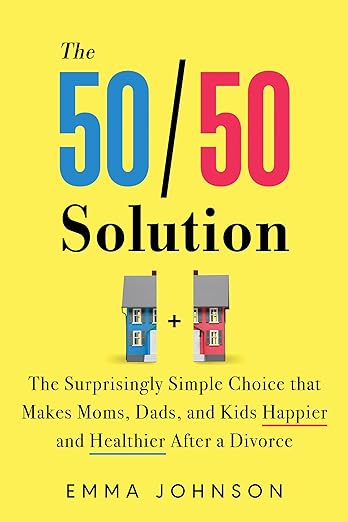
In my book, The 50/50 Solution: The Surprisingly Simple Solution that Makes Moms, Dads and Kids Happier When Parents Split (Sourcebooks, March 26, 2024), I show how this law resulted in lower rates of family court filings for matters including domestic violence.

Cover of The 50/50 Solution book by Emma Johnson.

About the single-mom survey

The Single Mom Income and Time-Sharing Survey was conducted via Survey Monkey. Respondents were recruited from Wealthy Single Mommy’s social media, search traffic and email audiences, during the summer of 2020. Respondents came from all 50 U.S. states.

A total of 2,279 participants were asked about their age, race, location and number of children, as well as income, employment, time-sharing arrangements and related questions.

For media inquiries, please email emma@emma-johnson.net

About Emma Johnson:

Emma is founder of award-winning WealthySingleMommy.com, the world’s largest platform for single moms, and the bestselling author of The Kickass Single Mom (Penguin). As an expert on single motherhood and gender equality, she has been featured in hundreds of media outlets including The New York Times, The Wall Street Journal, The Doctors, NPR and more. Emma has spoken about equally shared parenting at the United Nations, at Google, and recently in testimony before the Georgia Legislature’s Judiciary Committee on behalf of her organization, Moms for Shared Parenting. Learn more about Emma, and see media appearances here. She lives in New York City.

Media

The Single Mom Income and Time-Sharing Survey has been featured in these news outlets:

TIME: This Mom is Working to Help Divorced Moms Achieve Financial Independence

Elle: I Thought I Won My Divorce. Then I Realized Standard Custody Is Court-Sanctioned Sexism

CNBC: Equal Pay Day: Single moms are hit the hardest by the gender pay gap — and custody arrangements can matter

Parents: Single Moms Who Share Parenting Tend to Earn More Money

Forbes: Study Finds That Equal Custody Arrangements Narrows The Gender Pay Gap

Fox Business Radio: Single Mom Proponent Says 50/50 Co-Parenting Helps Women Feel Better, Earn More

Moms.com: Single Moms' Custody Arrangement Matters When Earning Money

Red Tricycle: Single Moms with This Arrangement Likely to Earn More: Study

Little Things: I Fought For Less Time With My Kids And I Think Other Single Moms Should, Too

Here is the good and bad news: It is possible to co-parent with a narcissist.

The good news is that there are tools you can use to ensure your kid has a relationship with both parents, equally, which is what research finds is what is best for kids — and moms and dads.

The negative side of this is that you have to co-parent with a narcissist. This is hard, frustrating and seemingly impossible — yet it can be done.

Maybe he or she has been diagnosed with narcissistic personality disorder, or perhaps they have a more-than-normal dose of narcissism. Either way, you are stuck co-parenting with your kids’ other parent, and it is possible.

Perhaps you have to resign yourself to parallel parenting, in which you do not interact much at all, but instead allow each other to parent as you see fit when the child is in each of your care.

Or you learn to ‘grey rock’ your ex — not react to any inflammatory texts, calls or messages sent through the kids. Co-parenting couples therapy can help.

So can co-parenting classes.

We recommend the High Conflict Co-Parenting and Parenting Without Conflict courses from OnlineParentingPrograms.com. Ranging from 6 to 16 hours, these courses will help you parents boundaries, manage emotions, and help children of divorce and separation transition and thrive. Use coupon code WSM20 for a $20 discount on any class.

Where to find parenting classes “near me”

Can you co-parent with a narcissist?

How do you survive co-parenting with a narcissist?

How do I protect my child from a narcissistic father?

More common co-parenting problems — and how to deal with a bad coparent

Can you co-parent with a narcissist?

Yes, people co-parent with narcissists every day! However, many parents who share parenting with a narcissist find that parallel parenting works best. Parallel parenting is a brand of co-parenting in which each parent more or less parents how they prefer during their parenting time, with minimum collaboration between mom and dad. In fact, all parenting has some element of parallel parenting, as each parent has their own style, rules and personality.

33 gaslighting examples + advice from experts

How do you survive co-parenting with a narcissist?

  • Self-care
  • Focus on what you can control
  • Try to stay unemotional

How do I protect my child from a narcissistic father?

Divorce attorney and expert on narcissism Rebecca Zung gives this advice on how to protect your kid from a narcissistic parent:

  • Educate yourself about parental alienation
  • Accept that you can’t change the narcissist
  • Try to stay unemotional!
  • Consider a custody evaluation
  • Document all egregious behavior
  • Don’t seek a restraining order frivolously
  • Use a co-parenting app like Our Family Wizard
  • Write a binding non-disclosure clause — no bad-talking — written into the parenting agreement
  • Improve your own co-parenting skills
  • Seek out therapy for your children

How to negotiate with a narcissist — and win

If the usual co-parenting tips do not apply to your high-conflict situation, keep reading on information on how to successfully navigate common co-parenting problems.

Understand why a father would walk out on his children.

More common co-parenting problems — and how to deal with a bad coparent

If you and your ex are still working on co-parenting communication and tend to fight a lot, keep reading. We will address issues including:

1. “My ex cancels all the time.”

2. “My ex is trying to prevent me from introducing my boyfriend to the kids.” or “I’m upset my kids’ dad introduced them to his new girlfriend right away.” Here are the rules.

3. “My kids’ stepparent is overstepping co-parenting boundaries.”

4. Fighting with your kids’ dad about holiday schedules? Do this…

5. “My ex calls the kids all the time when they are with me.”

6. “My ex is jealous of my new relationship.”

How to co-parent with an abuser

If there is a history of domestic violence, you likely have an order of protection, drop-offs and pickups at public places, as well as supervised visits for the children. This is a difficult situation, and it may not get better. Using a co-parenting app can help (especially if it is court-mandated) because any text communication is documented and can be submitted to the court or authorities.

Parallel parenting is likely the best strategy when co-parenting with an abuser.

How to co-parent with a passive-aggressive, toxic, controlling ex

If your child’s mother or father is very difficult, uncooperative, or otherwise a pain in the ass, stick to the advice above, and keep in mind on how to co-parent with a controlling or toxic ex:

  • They likely won’t change
  • Accept your part of the relationship. How do you respond to nasty messages or manipulative behavior?
  • Practice the “grey rock” method, and do not respond to any aggressive behavior. Do not give your coparent the satisfaction of seeing you get mad or defensive. Do a lot of ignoring.
  • Heal yourself. The relationship was likely hurtful. Heal from that hurt. Forgive (hard as it is!). Surround yourself and your kids with positive, healthy people. Recondition yourself to expect and express joy and cooperation.

All about unhappy marriages

How to co-parent with a manipulative ex

Stick to your instincts about what is right and wrong.

When they go low, you go high.

Focus on the facts, and get all agreements in writing.

How to coparent with an alcoholic

Millions of parents are addicts, and it is very hard to trust that a parent who abuses alcohol, illegal drugs, marijuana, prescription drugs — not to mention sex, food, gambling, and drama!

If your ex is actively using, you likely have supervised visits. If you do not, and you have not been successful in securing a limited visitation schedule through the courts, is there a way to coordinate visits with a family member, friend or leader in your religious community to keep the kids safe?

Seek professional support, but keep this advice in mind:

  • Support their recovery efforts.
  • Recognize and work on any codependency on your part. Al-anon.

If you have an amicable relationship, create an agreement that addresses restrictions on driving, increased communication between you and the addicted parent, and repercussions if they use when they are with the children. This Psychology Today article gives good advice on co-parenting with an addict.

How to co-parent with someone you hate

My post-divorce road with my ex has been rocky. We’re six years into this co-parenting business, and we’re far from hitting a permanent groove. In the early days, aside from screaming matches in front of the kids and neighbors alike, there were in fact calls to police and a restraining order. Weeks would go by without seeing him, and last-minute cancellations were commonplace.

Whatever nasty thing you can imagine saying to another person were in fact said. I’m guilty.

It seems inconceivable that our relationship would be anything other than an East Coast version of Pamela Anderson and Tommy Lee.

Every day I hear from people in the midst of coparenting hell: Dads who check out, moms who block visitation, parents who cancel visits while the kids are waiting by the door, parents who call police when the other is one minute past the court-ordered time, screaming matches and one or the other spending nights in jail — for no good reason.

Fast-forward to today, and my ex and I hardly have it figured all out, and ups-and-downs ensue. What I could not have imagined has come to pass: More or less regular visits and smooth communication. Spontaneous meals together with the kids, whether at my place or restaurants. Rides shared in one or the other’s Subaru to soccer games. Gifts exchanged on behalf of the kids to the other parent on birthdays and holidays. Chit chats and the occasional hug after a big argument or birthday party co-hosted successfully at the local bowling alley.

As I told him recently in a co-parenting counseling session: I love him. I’ve known him for more than 15 years and have two kids with him. He’s a good person. I’m a good person. We both love the kids. At some point everything more or less calmed down, the divorce was finalized and life moved forward. Battles picked. The immediate trauma of divorce subsided.

I wish I could say we are perfectly civilized like the lovely Brandie Weikle, my friend who heads the excellent blog and podcast TheNewFamily.com, and who lives next door to her ex and his new wife, and are the shining model for what a healthy coparenting relationship can look like — but that would be a lie (though we did discuss vacationing together — until we got into a fight about it, but nevermind.)

Instead, I am here to tell you that it can get better. That one day while you’re both at the soccer game expecting the usual arctic glacier to stand between you on either side of the sidelines, you will find that you need help passing out rice crispy treats for the team in order to make it to the team manager meeting for  your other kid across the park. And you will say, ‘Hey, can you handle this for me?’ and he will be so glad to thaw the boreal tension that he will chirp, ‘Sure!’ and suddenly there is a bit of a rapport, a hint of cozy relations that suggest the potential for more of good vibes and less of teeth-grinding hostility, and it feels good.

Single mom resources

It feels good to you, and it feels good to him, too. And after a while you forget why you were so freaking angry at him all the time, because being angry just sucks and being nice and getting along is so much better. Even if it isn’t fair or logical, you let go. You forgive. He forgives. You see this has been hard for him, too. You see that he does love the kids, and that is a lot. You offer him a ride home. He offers to help you replace your windshield wiper blade.

You get on with it. Steel yourself not for friendship or even a sense of family. At least not yet. Instead, you open yourself to a relationship that you have not yet defined, but will explore. And everything is better.

That, I want you to know — need you to know — is possible.

Can you co-parent with a narcissist?

Yes, people co-parent with narcissists every day! However, many parents who share parenting with a narcissist find that parallel parenting works best. Parallel parenting is a brand of co-parenting in which each parent more or less parents how they prefer during their parenting time, with minimum collaboration between mom and dad.

Covid and economic-related stresses contributed to higher 2020 divorce rates, with U.S. numbers jumping 34% and newlywed separations doubling to 10%, according to a Daily Mail report.

While divorce rates overall have been falling to record lows over the past decade, overall marriage rates are lower, with younger generations preferring to delay marriage — or forgo marriage altogether.

Thinking of divorce? How to make that very tough decision.

Signs you are ready for divorce

  1. You stop arguing.
  2. You prefer to spend more time with your friends or family than your husband or wife.
  3. You stop making future plans — whether with your spouse, or in your own mind you stop envisioning a future.
  4. You regret getting married.
  5. You have reason to be secretive about your phone.
  6. You start worrying about money in the event you find yourself single.
  7. Your spouse is showing signs he or she is ready for divorce.

3 reasons for when you should consider a divorce

Should I leave my husband / wife and get a divorce? 

What are the advantages if I should ended up getting a divorce?

What are the disadvantages if I should ended up getting a divorce?

Signs you are ready for divorce

Perhaps you are worried that your spouse senses your eagerness to leave the marriage — or you are contemplating leaving the relationship. Here are signs that the marriage is ready to end. 

1. You stop arguing.

Each of you is totally over this relationship, is no longer interested in fighting to keep it alive — and therefore stop actually fighting. The fire is gone. 

2. You prefer to spend more time with your friends or family than your husband or wife.

Humans need companionship, community and connection. If you don’t get those relationships from your partner you will seek them out from other people who love and care for. 

3. You stop making future plans — whether with your spouse, or in your own mind you stop envisioning a future.

If your heart is not in a future with your partner, you stop making plans for the future — travel, home improvement, retirement. 

4. You regret getting married.

If you feel like this person ruined your life, or your life would otherwise have been better if you had not chosen your husband or wife, there is not a lot that can turn that sentiment around.

5. You have reason to be secretive about your phone.

Flirting with an ex or co-worker? Communicating with a divorce attorney or real estate agent in coordinating a new house or apartment? Sharing your plans to leave your marriage with your brother or BFF?

Of course you would be shy about your spouse seeing these texts hinting at the end of the marriage. 

6. You start worrying about money in the event you find yourself single.

Fact: Everyone is poorer after divorce. Whether you worry that leaving your breadwinner husband or wife will leave you broke — or that you will face hefty child support or alimony bills, money is a big and real worry for those contemplating divorce. Dividing retirement funds, selling the family home, supporting now two households and other expenses are stressful — and expensive. Learn more about total costs of divorce.

7. Your spouse is showing signs he or she is ready for divorce.

We elaborate on these signs of divorce in this post (which more or less mirror what you may be feeling).

We also put together a guide on how to ask for a divorce.

3 reasons for when you should consider a divorce

There are a few times when you must get divorced:

  • Divorce is necessary if your spouse is abusive to you, your children, pets or anyone else. This includes physical, sexual, verbal, emotional and financial abuse.
  • You have to get divorced if your spouse wants to get divorced. You very likely can’t change his or her mind — and even if you could get him to stay, that rarely works out long-term.
  • Marriage breakdown that he or she refuses to address or work on. It’s over!

Other reasons are more subjective and personal — one spouse gained weight, snoring, or you simply fell out of love with a nice guy.

This post explores the research behind the most common causes of divorce.

If you have a reasonably low-conflict divorce, you can file your own divorce papers quickly and online. Read our reviews of the best online divorce paper services.

Should I leave my husband / wife and get a divorce? 

In addition to the emotional questions listed above, there are many other parts of divorce outside of the relationship itself. As you make your decision, ask these questions:

  • What will your life look like after the divorce? While you may be poorer short-term after a breakup, most people do financially recover, or at least become stable. Many people stay in miserable marriages because they believe that the immediate lower lifestyle is not worth it. But many people report that leaving an unhappy union is worth the financial struggle.
  • Are you prepared to be away from your children for half the time — or more? While equally shared parenting is becoming the norm, it is still common for one parent to be legally allowed to see the kids for a minority of the time.
  • Are you prepared to have the kids all the time? It is not uncommon for one parent who is granted minority time with the kids (the father, usually), to move away or otherwise not see the children. This leaves the time, logistical, financial and emotional responsibility on the remaining parent. Are you ready for that to be you?
  • Are you ready to co-parent with this person? The marriage may end, but you are in it for the rest of your lives if you have children with your husband or wife. This means that you may not be able to move to another location, must continue to compromise on parenting issues and otherwise negotiate with your spouse.

To get a sense of the divorce process, get this free w0rksheet:

Regardless of your path, make sure you get the support you need and deserve.  You may find that with your current family and friends, your divorce lawyers, a new tribe of strong single women friends, or a trusted therapist. Connect with a certified mental health professional through BetterHelp.com. Read our review.

You, your kids, and your husband are all best served by seeking out an amicable, low-conflict, collaborative, mediated or uncontested divorce if at all possible.

Divorcing a narcissist husband

Rebecca Zung, top-rated divorce attorney and divorced mom herself, has a whole video course on how to divorce a narcissist, which I review in How to Negotiate With a Narcissist. Her tips include:

  1. Have a plan ready to execute before you tell your husband or wife you want a divorce:
    • Prepare a new place to live
    • Have your own cash money saved
  2. Hire a divorce attorney
    • Decide what parenting plan you want
    • Take your time to learn how to negotiate with a narcissist and win — to save yourself countless dollars, untold sums of stress and the potential to lose everything.
  3. Tell them in person that you are divorcing them as you walk out the door, or pack up in the middle of the night or while they are out of town, and have them served with divorce papers the next day. Do not give them a chance to manipulate you.

How do stay-at-home wives get divorced?

Divorcing your alcoholic husband

If your husband is an alcoholic or addict and is either actively using, or is in recovery but you worry will relapse, first, accept that it is not your job to save him. You are not responsible for his wellbeing, and in fact, were likely a co-dependent enabler. No more!

Take steps to protect you and your kids financially, physically and emotionally. It is OK and even healthy to be hopeful that you will one day have an amicable co-parenting relationship if and when he is sober, but until then you must work with your attorney to secure the wellbeing of you and the kids.

Divorcing your bipolar husband

Similar to addicts, living with and divorcing a bipolar spouse is very stressful, unpredictable and possibly dangerous for you, your kids, and your spouse. You are not responsible for their behavior and can only protect yourself and your kids.

Divorcing a husband who won’t work

If your husband refuses to work, you may find yourself paying child support or alimony — at least for a short time. Judges are increasingly intolerant of divorced people who try to live off of payments from their exes, and yours may be ordered to work. Because our culture is a sexist one, there is less tolerance for men who do not work and live off of women’s income.

Here is my advice to women who pay alimony or child support.

What are the advantages if I should ended up getting a divorce?

Divorce of course gives unhappily married people the opportunity to leave a miserable marriage. Divorce also allows people in abusive relationships to leave.

Many people are much happier after divorce.

Benefits include:

  • More control over your home and life. If your spouse’s bad money habits were a source of contention, now you can have control of how much you spend and save. If they were a slob or neat-freak, now you can control how messy or clean your home is.
  • Date without cheating on a spouse. You are single now. Best dating sites and apps for single parents
  • Start anew. Many people thrill in starting a new life, on their own terms.

How do you define a single mom vs. solo mom?

What are the disadvantages if I should ended up getting a divorce?

Both parties are almost always poorer after divorce. It takes more money to support two homes than one, after all.

While the effects of divorce on children is misunderstood, it is hard on children when their parents live in two separate homes — especially when the parenting schedule is lop-sided.

Stress on extended family and friends. People who know and love both of you may feel torn to choose one side, or otherwise suffer a stressed relationship with one or both partners.

You may be lonely after divorce. Though you may have been lonely while married.

Not everyone wants a divorce. You may wish you were still married.

You may miss your kids while they are with their other parent.

Estate, will and guardianship planning for single parents


Should I get a divorce?

Regardless of your path, make sure you get the support you need and deserve. You may find that with your current family and friends, a new tribe of strong single women friends, or a trusted therapist.

I wrote this a few years ago, and revisit each holiday season for both myself and readers. I admit that the holidays are hard for me personally — so much pressure to make them memorable, spend more than I'm inclined to, and be cheerful when I often feel lonely and overwhelmed.

Fast-forward to 2025 and I am giving advice on co-parenting during the holidays on ABC:

November, 2016: This is one of the years my kids are with their dad for Christmas, something I advocated for as part of my effort to create a more equal parenting relationship with my children's dad. I am mostly OK with it, thanks to the fact I am not very sentimental, but did fret about what I would do on Christmas Eve. I made a couple calls, and was warmly invited to an old friend's dinner party in a pretty part of Brooklyn in her beautiful brownstone apartment. She is an excellent cook, hilarious with a filthy mouth, and her friends are fabulous. I had an amazing time!

Here's my rulebook for muscling through the tough parts and making the most of this time of year. What would you add? What is the hardest part of the holidays for you? The best?

Single mom holiday manifesto

8 things single moms can do to not just get through Christmas— but to make it awesome.

  1. Know you're not alone
  2. Plan ahead for Christmas gifts
  3. Buy your ex a gift
  4. Be flexible about the visitation schedule
  5. Start a new Christmas or other holiday tradition
  6. Make the holidays simple
  7. Make a plan for when the kids are with their dad
  8. Take stock

How to get the support you need as a single mom this Christmas

Why I find the Christmas holidays so stressful as a single mom — and what I do about it

Open letter berating myself about my holiday nonsense


Having a rough time financially? I've been gathering resources to help single moms:

Help for single moms: 33 resources$500 monthly single mom grant
Free laptopsScholarships for single moms
Free carFree Christmas gifts
Free smartphoneBest jobs moms can do from home
Free wifiFree and low-cost prescriptions
Free formulaFree diapers
Free clothes

Single mom holiday manifesto

  • I will not try to recreate holidays of years past. Those are from another time in my life, and I will celebrate this holiday, this year, in a way that makes sense for this moment as a single woman.
  • I will create at least one new holiday tradition for my family that is allll ours.
  • I will not resent that I either actually am or feel like the only single parent at the school holiday events.
  • I will not spear or fantasize about spearing with a sharpened candy cane the stay-at-home Pinterest mommies in the neighborhood.
  • I will shop within my budget.
  • I will not over-spend on my kids out of guilt because their family does not look like said mommies' Pinterest boards.
  • I will not argue with the ex this holiday. I will remind myself that my children will not remember that they did not wake up on actual Christmas morning at mommy or daddy's house, but they will remember that mommy and daddy screamed at each other on the snowy front porch on Christmas morning.
  • I will give others the benefit of the doubt. The Fox News republican cousin, the manipulative ex, the passive-aggressive mother — if some iteration of these characters are in your life, you will remember that poor behavior stems from human suffering, and thou shall be gracious, kind and patient.
  • If I am apart from my kids on the holiday, I will not be depressed. I will grieve what I previously hoped the holidays would be, what my family would look like, and I will accept that it is different now. I will visit a friend, go to a movie, soak in the bath, call a male escort, spend time with people in a nursing home, work on my dream career, or attend two yoga classes back-to-back. Love Actually, come to Mama.
  • I will remember that the holidays are at least a little crappy for most people.
  • I will give thanks, and give back. Especially if I am feeling poor — financially, emotionally, socially or spiritually — thou shall find a way to give time, money or energy to others who need it. Because we all need it at some time or another.
  • I will prioritize experiences over things — for myself and my children.
  • I will recognize community. Whether attending a religious service, an office, neighborhood, friend or family party, giving a shout-out in a Facebook group like our Millionaire Single Moms, delivering holiday cards to service people (crossing guard, barber, grocery store clerk, mail carrier) who are part of the fabric of my life, I will recognize how vast and rich my circle. 7 friends every single mom needs — and how to find them
  • I will ensure my kids give me a gift. It's not all about them.
  • I will not use the holiday or my current situation as an excuse to eat and drink like a sow.
  • I will enjoy good food and good, good drink.
  • I will remember: It really is just another day.

For single moms and divorced families, the holidays can come with some unique challenges: visitation schedules must be negotiated, you may find yourself focused on how the season falls short of your dreams and expectations. Lots of times the financial crunch of these months is especially tough.

But all is not lost. Keep reading for practical solutions to annoying single-mom holiday problems …

8 things single moms can do to not just get through Christmas— but to make it awesome.

1. Know that you’re not alone

The holidays are a tough time of year for a lot of people, especially parents, and especially single moms. The American Psychological Association reports that nearly 70% of parents experience significant stress1 during the holiday season, and studies have shown that single mothers experience higher levels of stress2 compared to those in two-parent households. This stress, obviously!, can intensify during the holidays.

2. Plan ahead for Christmas gifts

Moms frequently get very stressed because they feel they can't afford Christmas presents, they are facing the fact that — perhaps for the first time — they are a single mom at Christmas with no help.

If you're like me and avoid stressful tasks, I forgive you. Now, I call on you to make plans to afford Christmas on a tight budget. Briefly:

  • Kids under age 4 don't notice if they don't get gifts
  • Tell the adults in your life you are opting out of gift-giving for reasons of budget and that you care about the planet
  • Set expectations early with kids who you will gift
  • Start saving early.
  • Set up a budget. If you have a budget, don't blow it on the holidays. Remember: the greatest gift you can give your kids is stability, and that requires financial stability.

3. Buy your ex a gift

If your kids are little you will sign it from them. Or maybe it will be directly from you. It will be heartfelt — nothing passive aggressive like, say, socks if his holey footwear was a point of marital contention. Just a sincere present, expecting nothing in return, and putting behind you any child support he owes, or apologies not granted or the share of his IRA you’re entitled to.

How co co-parent with a narcissistic or toxic ex

4. Be flexible about the visitation schedule

Remember: years from now the kids won’t remember whether they missed your cousin’s annual sing-along. But they will remember you screaming at their dad on Christmas. 

Standard child custody holiday schedule examples include:

  • Alternate holidays every-other year. For example, mom gets kids on Christmas even years, and Thanksgiving odd years. Dad gets kids on Christmas odd years, and Thanksgiving even years.
  • Split up holidays each year. So, perhaps mom gets kids Christmas Eve and dad gets Christmas day, swap the following year.
  • Divvy up holidays according to each parent's preferences. For example, maybe one parent celebrities Eid and the other Chanukah, so the schedule can reflect those traditions.
  • Create a standard holiday visitation schedule that works for your family, get it in writing, play fair and do your best to enjoy the damn holidays!

30 rules for co-parenting with your ex (even the narcissist)

5. Start a new Christmas or other holiday tradition

If you are a single mom, your holiday celebration likely does not exactly match what you had in mind when you were a kid dreaming of life as an adult. You’re working with Plan B. While you might find meaning in introducing your children to your own childhood family traditions, or those that their dad helped initiate — introduce a ritual that will be yours alone.

At my house we I launched some new traditions: a chili-and-tree-trimming party in December, and monkey bread on Christmas morning. Give gag gifts (fake poop, squirting lapel flowers) on New Year’s Eve, or new pajamas for everyone on the night before Christmas. How about a Pictionary death match? This is your new life. You need new habits and celebrations.

6. Make the holidays simple

Maybe you have fond memories of elaborate childhood Christmases you aim to replicate. Or maybe holidays were especially stressful growing up — and you vowed to do better by your kids. In any case, keep it real. Just because William Sonoma catalogs and your annoying cousin with her perfectly holiday-coiffed center-hall Colonial suggest that you should be cooking and decorating and shopping like a freak doesn’t mean you actually have to.

So keep it within your budget. Do what is meaningful and fun, and hire a cleaning person and snow removal person and babysitter. Order in the Christmas dinner, or bring store-bought cookies to the party. Just because you’re not married doesn’t mean you have to kill yourself.

7. Make a plan for when the kids are with their dad

You may find yourself lonely or depressed if you have nowhere to go on one of the special days, when you’d prefer to be with your children. Instead, make plans. This might include:

  • Ask around and get invited to a party
  • Make a date with yourself to see a movie
  • Hit yoga
  • Dinner and movie at home
  • Masturbate in the tub
  • Go for sushi on Christmas day with your Jewish friends
  • Volunteer at a nursing home, hospital or shelter. 
  • Book an Airbnb for a few nights.
  • Go on a date. I went on a very nice Christmas Eve first date a few years ago. It was fun, non-traditional, and reminded me that plenty of other nice people don't have plans on the holiday! 

Check out Best dating apps now.

8. Take stock

Cliche but useful: The end of the year is a fantastic time to look back at what you have accomplished this year. Sure, assess your bank account, and review your professional resume.

Also, look at your family. The kid’s grades and trophies are important. But examine the other stuff. Acknowledge the stresses you managed. The tricky situations you maneuvered without committing homicide. The new friends you made, relationships mended or strengthened. Recognize the fact that you are all thriving despite all odds.

Ask yourself: Do my kids feel loved? If you can answer yes, you did good, woman. You did good.

Are single-parent families whole?

How to get the support you need as a single mom this Christmas

“It’s important to not be afraid to reach out for support,” says Emily Zeller, a Licensed Marriage and Family Therapist in Pennsylvania. “So many mothers, especially single mothers, feel like they need to do it all on their own — unsurprisingly, considering that they literally have had to do a lot of things on their own. But there is support out there if you reach out, and you deserve support, especially around the holidays. There is no shame in that.”

“Taking the first step to connect and reach out for support takes a lot of courage,”  acknowledges Zeller. “When you’re feeling overwhelmed and lonely, it can be difficult to figure out where to start. But remember, you are not alone and there are resources out there.”

Emotional support

“This is the time to lean on your people,” says Dr. Lilit Ayrapetyan, Psy.D., a psychotherapist in Pasadena, California. “Friends, family, and fellow moms can be lifesavers. Whether it’s getting help with childcare, having someone bring a dish to a holiday meal, or just venting over coffee, remember you’re not in this alone. Let others step in and give you some breathing room.”

Zeller agrees, saying, “Your loved ones probably want to help but don’t know how. Be specific about what you need, whether it’s babysitting, a shoulder to cry on, or just someone to enjoy a cup of coffee with. Parenting can be really isolating—let the people in your life know you need support.”

If you're struggling emotionally, Dr. Ayrapetyan recommends checking out the nonprofit Single Parent Advocate for practical support and guidance for single parents. Also, she recommends Open Path Collective for affordable therapy services.

Community & practical support

Leaning on friends and family sounds great, but if you’re really feeling alone, it’s not always an option. It truly is easier than you think to find some support right in your community. “During the holidays, community centers often offer free events and meals which can be a great opportunity for single moms to celebrate without financial stress,” advises Kristie Tse, a psychotherapist and founder of Uncover Mental Health Counseling in New York. “Churches or nonprofit organizations might also have programs that single moms can tap into, providing everything from children's gifts to holiday meals,” says Tse. 

Tapping into resources in your local community could mean engaging in church/ or religious activities, looking up local community centers in your area, or finding the closest YMCA/YWCA, says Zeller. “All of these places can connect you with support systems or other parents, and many of them also have events, classes, and activities for both parents and kids.”

Make a call to your town’s community center and ask them to point you in the direction of any holiday resources they know of. It’s worth Googling for local churches and other community organizations near you, or, Zeller recommends, “search for single mom or parent groups on websites like Meetup.com.”

Also, don’t sleep on your local library as a place to find free entertainment and company—it’s also a potential source for even more resources. “Libraries frequently hold festive storytelling events that are both free and enriching for children,” says Tse. “As a psychotherapist, I've seen how local support groups not only offer a space to share experiences, but they also often bring along resources or recommendations for accessing holiday help.” 

Check our our giant resource list full of more ideas for where to get help for the holidays.

National charities that help single mothers

Why I find the Christmas holidays so stressful as a single mom— and what I do about it

Last week marked the second annual Helena and Mommy Day when we played hookey during a weekday to go ice skating. This year we started off our venture in typical style for a 4 1/2 year-old: me holding her up by her armpits, then with Helena scooting along the rail.

I'd glanced away for a moment only to then find she had made her way out to the middle of the thoroughfare, determinedly wobbling and moving along with the other skaters. Without any urging from me, she found the best way to learn to skate was on her own.

I'm not sure I've felt the same breed of maternal pride before. There was something in her understated confidence, the practicality of it, and her desire to be free. But a time or two she caught a glimpse of me beaming at her, and she'd reach out to hold my hand again. Those were the times when she'd twist and fall and revel in the cute skate guards who'd miraculously swoop in from nowhere and pop her back onto her little skates.

“No,” I'd tell her when she'd extend a hand. “No, you do much better when you rely on yourself.”

That may be true for amateur skating, but is that what I want to teach her about life?

This holiday was an unusually stressful one. The family traditions that I've relied on my whole life have ended, and for the first time I've decided not to travel back to see my family in Illinois. I felt this enormous pressure to create — out of thin air, on my own — a set of rituals that would define my little family, and shape my children's memories and identities. How could I make it all meaningful – without thrusting stress on everyone around me to make it oh-so-meaningful? How can I do that by myself?

As today, Christmas Eve, approached, I met it with a mix of dread and relief. First the good news: my mom decided to join us in New York, where my brother Josh and sister-in-law Susan also live. The holiday cards and party invites started to arrive. Friends agreed to join us for a party at my house on Christmas day.

But the day was still rife with anxiety, as holidays often are. Coordinating holiday schedules with ex-husbands can be difficult, and in our case we have a brain injury to contend with. We argued about a visitation, I worried about him spending his holiday alone. I worried about my mom, who is also struggling with health issues. Unwell loved ones are always a source of worry, but the holidays heighten the fear of what life might be like without them.

I didn't realize how on-edge I had been until the kids and I returned from a trip to the playground this afternoon. We came home to packages of baked goods neighbors had dropped off. We opened the mail to find a stack of new Christmas cards, just as my brother in Chicago texted to arrange a Skype chat. A friend sent a note saying gifts were on the way, and my iPhone chimed with messages and voicemails of greetings.

We were still standing at the dining table, wearing our coats and hats, marveling at the generosity. “People care for us,” Helena said in that perfect way she has.

I spun around to face the wall, clapped my hands over my face so the kids couldn't see, and let out a single, silent sob. It let out just enough grief and stress, and made room instead for all that love and care around us.

And then we went on with our day — our new holiday. Josh and I made a new version of oyster stew to honor our late Grandpa Ernie who loved the stuff and died last year. And Helena, a puzzle savant just like her Great-Grandma Shirley,  received two 300-piecers. Even more neighbors dropped by with gifts and treats. Tonight, when Helena and Lucas are in bed, my mom will sneak into the living room and fill up their stockings with little goodies she's lovingly collected, just as she did for me and my brothers well into our adulthoods.

When the kids were in the bath and I was cleaning the kitchen, I took the liberty to switch the “White Christmas” channel on Pandora to Babel Gilberto, who always makes me think of my ex-husband. I thought about all the friends and acquaintances he brought into our lives when we were together, and how families and emotional resources can multiply through marriage. And when he had his accident it was all that love that came up around us when our life fell apart. Everyone said what a strong person I was, and maybe that was true. But if it was, it was only so because I had all of that.

And then the kids ran out naked and we looked at the snow falling outside and they were amazed. And I thought tomorrow morning when they will dig gleefully into their stockings just like I did, and we will sit down to our new Christmas morning breakfast of bagels and lox and then our friends will bring wine and appetizers. That will be our new Christmas tradition, and it will happen because people care about us, just like Helena said.

And somehow that makes me strong enough to be alone.  Maybe because each of us never really is.

How to manage being alone at Christmas after divorce

Those first holidays after a breakup, after divorce, or as a single mom can be so tough.

There are feelings like:

I am such a failure. Now I have a broken family, and holidays will never be what they should.

My kids won't ever know the kind of magical Christmases I had as a child. 

I am so disappointed that my kids will miss the big, extended-family traditions because of co-parenting.

I really miss my in-laws, and traditions in their family. 

I lost my family. 

I hate being alone. 

Is it possible to celebrate Christmas alone?

All of these feelings are normal — and common. 

In addition to the suggestions for how to party solo during the holidays (including how to find other humans to enjoy!), you may find that you could use some professional help.

Good news is that online therapy is widely available, very affordable, and so convenient. Counseling apps like BetterHelp, which has an A+ Better Business Bureau rating, lets you choose from thousands of certified, licensed therapists, for fees starting at $65/week for unlimited messaging and weekly live sessions. Read about my experience with BetterHelp.

Or research other top-rated online therapy sites.

Open letter berating myself about my holiday nonsense

I wrote this single mom holiday letter to myself last year and I am very proud to say that nearly all my shopping is done and the Christmas cards did not require a rush-fee! Also: there are five bottles of wine (and a couple six-packs of decent beer) still awaiting their fate as hostess gifts, and I'm proud to report that I'm feeling more festive and much less stressed than I have in years! 

Dear Emma,

Each and every year the holidays are a stressful mess. It's getting a little embarrassing- I mean, it's the same shit show each and every year. Would you get your act together for 2014? Please? Pretty please? Let's recap what you did not learn this year — the fact I'm writing this list now — a full week before Christmas — says something about the severity of the situation. Come on already and get your act together!

  1. Buy 10 bottles of decent wine Nov. 20. You will need them to entertain guests and when attending parties. Stop going to the effing liquor stores a million times. This is an annoying, stupid waste of time.
  2. Likewise — stock up ingredients for your signature holiday dish (bacon-wrapped dates, since you ask. If you live in the NYC tri-state area and know me, I forbid you from making these. This is my jam. Ok?)
  3. The little packet of spare Christmas tree lights? Tape them to the inside flap of the ornament box. This location is now documented in this post. You don't have to remember it.
  4. The day after Thanksgiving dig into your stash of gifts and wrapping paper. Figure out what you already have. You hate waste and crap laying around the house. So do something about it.
  5. List. Make a freaking list of gifts already. Just make the list, then buy that stuff the first week of December. Be done with it. You hate shopping and malls and crowds. What is it with all this self-punishing, last-minute shopping? You're ridiculous.
  6. Order the goddamn picture holiday cards well in advance. I mean, really, Emma — how many times do you have to learn this painful, stressful lesson which sets you back an unnecessary $30 for rush shipping?
  7. New Year's resolution: Cease your endless year-round cursing of the tacky dollar stores populating your neighborhood because without them you would be screwed during the holidays.
  8. Stop stressing over inane crap. You fancy yourself an expert on managing overwhelm, for crying out loud. Why the freak-out over whether the holiday cards fit perfectly inside your client gifts? Who cares?! Lighten up!

Next year, come Nov. 1, pull up this letter. Read it. Follow your own advice. And get it together for once.

Love you!

Emma

P.S. Read the Single Mom Holiday Manifesto every Nov. 1 for the rest of your life.
 
Struggling this time of year? Learn about single mom Christmas help resources.
 

What are you most excited about this holiday? What are you most stressed or sad about? Share your single mom holiday tips in the comments.

Are you part of my Facebook group, Millionaire Single Moms? No income requirement, though BIG GOALS and a POSITIVE MINDSET required! Join now and share about your single-mom holiday experience!

What about Mother's Day? Happy Mother's Day to you, you incredible single mama!!


Sources

  1. “Even a joyous holiday season can cause stress for most Americans,” American Psychological Association press release. November 30, 2023.
    https://www.apa.org/news/press/releases/2023/11/holiday-season-stress
  2. “Stressors and coping strategies among single mothers during the COVID-19 pandemic,” byWakai H, Nawa N, Yamaoka Y, Fujiwara T., PLoS One. March 8,2023.
    https://pmc.ncbi.nlm.nih.gov/articles/PMC9994735/

Whether you are in a legal battle with a narcissist, divorcing a narcissist, or have a family member, friend, boss, parent, child or sibling who has strong narcissistic tendencies, it can be maddening to negotiate or otherwise deal with them — even if you love them.

This post will help you understand the narcissistic personality, and how to stay sane, ethical and calm when one is in your life:

Can you negotiate with a narcissist?

What is a narcissist?

Married to a narcissist husband or wife?

Narcissism in divorce

Narcissistic family

Signs of narcissism: How to tell if someone is narcissistic

Living with a narcissist? Tips for dealing with a narcissist 

Narcissistic Victim Syndrome: 8 signs you’re a victim of narcissistic abuse

Am I a narcissist?

If you’re divorcing a narcissist, here is what you really want to know …

Can you negotiate with a narcissist?

It is very difficult, if not impossible, to negotiate with someone suffering from Narcissistic Personality Disorder. An attorney skilled in negotiation with such a person may be in order.

Top 3 things to keep in mind when divorcing:

1. Aim for is a quick divorce. While this may not be possible if you are divorcing a narcissist, learn more about the divorce laws in your state:

AlabamaAlaska
ArizonaArkansas
CaliforniaColorado
ConnecticutDelaware
District of ColumbiaFlorida
GeorgiaHawaii
IdahoIllinois
IndianaIowa
KansasKentucky
LouisianaMaine
MarylandMassachusetts
MichiganMinnesota
MississippiMissouri
MontanaNebraska
NevadaNew Hampshire
New JerseyNew Mexico
New YorkNorth Carolina
North DakotaOhio
OklahomaOregon
PennsylvaniaRhode Island
South CarolinaSouth Dakota
TennesseeTexas
UtahVermont
VirginiaWashington
West VirginiaWisconsin
Wyoming

2. Go for 50/50 parenting schedules. Get examples of 50/50 schedules here.

3. Make sure you have the most overlooked item in a divorce settlement agreement: insurance.

What is a narcissist?

“Narcissism” has become the go-to word when describing the personality types that are characterized by selfishness, entitlement, validation-seeking, and lack of empathy. In today’s society, we hear the words ‘Narcissist’ or ‘Narcissism’ tossed around casually to describe the people whom we find obnoxiously pompous and arrogant. Although these descriptions may be accurate, these individuals might actually be living with what clinicians have identified as Narcissistic Personality Disorder. 

Definition of narcissism

In order for an individual to be diagnosed with Narcissistic Personality Disorder as defined by the DSM-5, he or she must meet the following criterion: 

Characteristics of a narcissist

1. One must have a significant impairment in personality functioning: 

a) Identity functioning

OR

b) Self-direction functioning

AND

2. One must have a significant impairment in interpersonal functioning: 

a) Empathy

OR

b) Intimacy 

In addition to the above traits, one must also exhibit:

Antagonizm through either:

a) Grandiosity 

OR

b) Attention seeking 

Not only must these traits remain stable throughout time but also across various environments.

This person’s behavior mustn’t be understood as normal by his or her surrounding community and/or culture and mustn’t be caused by a medical condition and/or drug use/abuse. 

Although most narcissists never actually get diagnosed by a mental health professional with Narcissistic Personality Disorder, one can usually figure out if someone they know is a narcissist if the individual exhibits at least a few of these characteristics — relationship red flags:

  1. Delusions of grandeur
  2. The need for constant praise and admiration 
  3. Sense of entitlement leading to arrogance and haughty behaviors/attitudes 
  4. Exploits others without feeling shame and/or guilt
  5. Devalues others in a plethora of ways
  6. Lacks empathy
  7. Envies others  

Now, you’re probably thinking how awful it must be to be in direct contact with someone that exhibits the above characteristics; however, the worst is yet to come. 

There are those too who exhibit displays of both Narcissism and Antisocial Personality Disorder. We call these individuals Narcissistic Sociopaths.

Clinically, one must meet all the DSM-5 criteria for Narcissistic Personality Disorder in addition to all of the criteria for Antisocial Personality Disorder in order to be diagnosed as a Narcissistic Sociopath. 

The DSM-5 criteria for Anti-Social Personality is as follows:

  1. An individual must exhibit a pervasive pattern of disregard for and violation of the rights of others. 

AND

  1. Must show at least 3 of the of the following behaviors/traits: 
  • Repeated failure to follow social norms resulting in grounds for arrest 
  • Engaging in deceitfulness (lying, using aliases, etc)
  • Impulsivity and not planning ahead; moving around constantly
  • Irritability and aggressiveness 
  • Reckless disregard/concern for the safety of other people
  • Chronic irresponsibility reflected by a continued failure to maintain a job, finish school, stay on top of financial commitments
  • Lack of remorse about hurting others (indifferent/rationalizes)

AND

One must be 18 years or older and have had evidence of conduct disorder by age 15. 

Similarly to narcissists, most narcissistic sociopaths never actually get diagnosed with either of the above disorders. So, we have gathered a list of characteristics that compile the Prototypical Narcissistic Sociopath so that you can steer clear of them:

  • They often have criminal records or have engaged in criminal activity yet believe they are exempt from the moral code
  • They are often climbing the corporate ladder
  • They are nearly always on the quest for acquiring positions of power
  • They are often hard to spot because they are often:
    • Polished, Well-dressed, Charming, & Successful 
    • Taking part in philanthropy/charity (solely for the validation it gives them)
  • They can be physically and/or emotionally aggressive/abusive 
  • They nearly always exhibit validation seeking behaviors
  • They rarely apologize and even more rarely feel guilty or remorseful
  • They believe they are invincible and behave accordingly 
  • They are always self-serving
  • They try to control everything and everyone around them

What percentage of the population is narcissistic?

From Medscape:

Narcissistic Personality Disorder is present in 0.5% of the U.S. population and in 2-16% of those who seek help from a mental health professional. NPD is found in 6% of the forensic population, in 20% of the military population (the actual disorder as well as narcissistic traits), and in 17% of first-year medical students.

Married to a narcissist husband or wife?

A large aspect of the conversation about narcissism is in response to the consequences caused by involving oneself in a romantic relationship or marriage to a narcissist. Although most narcissists exhibit similar qualities, there are some gender differences when it comes to Narcissism in relationships.

Excessive care for one’s physical appearance is found in nearly all narcissists; however, narcissistic women usually use their appearance to gain superiority and often adjust their physicality through plastic surgery to do this. Although, to an extent, this is true for men as well, males usually use their appearance as a way to manipulate a situation to gain a specific desired outcome. Both men and women will use their appearance to threaten infidelity in relationships.

Narcissistic men vs. narcissistic women

While both men and women use seduction tactics as a means of obtaining control and narcissistic supply, narcissistic men typically use charm to seduce a potential partner while women use their bodies and sexualites to do so. Women often use sex and withholding sex in relationships as a way to devalue their partners while men are seen engaging in sexually abusive behaviors (as listed above) more often. 

Another difference you might find between narcissistic men and women in relationships is when dealing with money. While narcissistic men are often found striving to gain and keep an endless amount of money and power, narcissistic women will be found enjoying excessive spending. In relationships, narcissistic men are more often found controlling their partner’s access to money while narcissistic women might be found financially abusing their partner through maxing out credit cards, depleting funds, etc.

You will usually find narcissistic men exhibiting more aggressive behaviors in relationships while women are found using more covert devaluing tactics. Of course, there are exceptions. 

What are the effects of being married to a narcissist?

Healthline outlines 12 signs of Narcissistic Victim Syndrome, which include:

  • Feeling isolated
  • Feeling helpless and freezing
  • Trouble making decisions
  • Feeling like you always are doing the wrong thing
  • Feelings of anxiety, depression and being unsettled

Can a narcissist ever really love you?

Writes Elinor Greenberg Ph.D.:

“It is actually highly unlikely that your narcissistic partner is even capable of real love, let alone feels it towards you past the beginning of your relationship. People with narcissistic personality disorder are not equipped to experience and show love in the sense that most of us mean it.  The narcissists that I know lack the capacity to deeply appreciate the authentic self of another human being. 

They do not really care about their mate’s happiness or welfare except as it affects their own. And, they are rarely willing to sacrifice anything in order to make their mate happy. The only happiness that they are really concerned about is their own.”

Beware of these 18 sneaky divorce tactics so you can overcome them

Narcissism in divorce

Are you getting ready to divorce a narcissist? Divorcing is difficult regardless of whether there is the presence of a personality disorder, but when you are divorcing a narcissist or any high-conflict personality, you are in for an all-out war. When you’re divorcing a narcissist, you are either for them or against, so once the divorce starts, you are the enemy. 

The narcissist will have a plan — and it’s not what your plan is. Your plan will be a reasonable outcome that takes as little time as possible, where you’ve spent as little on attorneys as possible. The divorcing husband or wife’s plan is to smear you, make you squirm, use the court system as a sword, and take you down.

Can you divorce a narcissist?

Yes, people divorce narcissists every day. In fact, with the right support and tools, it is possible to divorce a narcissist without losing your money, kids or mind. You will wish you had these tools when you were married to the narcissist!

Divorcing a narcissist is almost always more complicated, expensive and painful than a typical uncontested divorce, in which you can easily settle outside of court, with minimal cost and time. Similar for collaborative or mediated divorce options.

How to decide whether to get a divorce

How does a narcissist husband or wife react to divorce? 

The loss of control brings out the worst in narcissists.

Things to expect when trying to divorce a narcissist
by inNarcAbuseAndDivorce

How does a narcissist feel and act after divorce?

Especially if the other party initiated the divorce, a narcissistic husband or wife will feel out-of-control, powerless — and enraged. This is when someone with narcissistic tendencies will really start manipulating, trying to control and otherwise destroy the other party.

Anybody with experience divorcing a narcissist?
by inDivorce

How to divorce a narcissist — successfully

Here is how to successfully divorce a narcissist, according to divorce attorney Rebecca Zung:

  1. Have a plan ready to execute before you tell your husband or wife you want a divorce:
    • Prepare a new place to live
    • Have your own cash money saved
  2. Hire a divorce attorney
    • Decide what parenting plan you want
    • Take your time to learn how to negotiate with a narcissist and win — to save yourself countless dollars, untold sums of stress and the potential to lose everything.
  3. Tell them in person that you are divorcing them as you walk out the door, or pack up in the middle of the night or while they are out of town, and have them served with divorce papers the next day. Do not give them a chance to manipulate you.

Why you don’t have to tell your ex about your new relationship

How to negotiate when divorcing a narcissist

Zung suggests her SLAY strategy

  • S stands for developing a super strong STRATEGY. This means having a clear plan that you will stick to with the support of your attorney, therapist and loved ones. (Connect with a certified mental health professional through BetterHelp.com. Read our review.) With a strategy, you are less tempted to fall into the controlling behavior of your ex.
  • L stands for the invincible LEVERAGE you will need to create which will ultimately motivate and incentivize the narcissist to want to resolve the case. 
  • A stands for how you will ANTICIPATE what the narcissist is going to do and be two steps ahead of them. Narcissists are a dime a dozen, and by reading books, taking this course, speaking with experts and those who have gone through divorce with a narcissist, you will know exactly what to anticipate, and devise and stick to your strategy.
  • Y stands for focussing on YOU and your case. The narcissist will try to make the divorce about THEM — their feelings, their financial situation, their relationship with the kids, their career.

Agreeing to equal parenting time and no child support can quickly diffuse much of the debate.

Narcissistic family

A larger part of the global conversation happening surrounding narcissism, is how they act in romantic relationships; however, narcissistic family members can do just as much damage as romantic partners- especially since they are often harder to escape from! 

Narcissistic parents

The below characteristics are often exhibit by narcissistic parents:  

  1. Parents use children to live vicariously through: parents might use children to make own hopes dreams come true
  2. Marginalization
  3. Grandiosity and superiority
  4. Superficial image
  5. Manipulation
  6. Inflexible/touchy
  7. Lack of empathy
  8. Dependency/codependency
  9. Jealousy/possessiveness 
  10. Neglect 

How to co-parent with a narcissistic ex

Narcissistic siblings

Narcissists come in all shapes and sizes. If a parent can be a Narcissist, then surely a child can as well. Due to the close proximity, siblings often find themselves being the target of their narcissistic brother or sister. The behavior in this dynamic looks no different than in other relationships, as Narcissists exhibit similar behaviors across their different environments.

Siblings of narcissists often find themselves being subjected to emotional, verbal, physical, and sometimes even sexul abuse. Due to the Narcissist’s need for validation and admiration, parents are often manipulated by the narcissist so that their abusive behavior is never caught on to – leaving the sibling victim even further isolated and devalued. 

Due to the complexity of family dynamics to begin with, having a Narcissist as a family member can often create a deeper sense of trauma to the individual that is being exploited by the Narcissist.

Signs of narcissism: How to tell if someone is narcissistic

In addition to meeting some or all of the above characteristics that make up Narcissists and/or Narcissistic Sociopaths, common narcissistic behaviors are as follows:  

Narcissistic behavior

  • Love Bombing
    • Gift-giving
    • Excessive verbal affirmation 
  • Devaluing
    • Name-Calling
    • Withdrawing
    • Stone-walling
    • Gaslighting
    • Emotional appeals
    • Empty promises
    • False flattery
    • Flying monkeys/triangulation
    • Dehumanizing
  • Conversation hogs, talking about all of their achievements, etc. 
  • They don’t have any/many long term friends
  • They think they are right about everything
  • They panic if you try to leave/break up with them 
  • They lash out if you do leave/break up with them 

If someone you know exhibits some or all of these behaviors, you are more likely than not dealing with a narcissist. 

Narcissism personality test/quiz

Outside of the DSM-5, there are other diagnostic tests one can take in order to see where on the spectrum one might fall in regards to narcissism. Some of these tests might be given by a mental health professional in order to properly diagnose while others are less clinical and more readily accessible to the public.

In addition to spotting the behaviors and characteristics of a Narcissist, there are several Narcissistic Personality Tests out there so that you can see where on that spectrum an individual might fall. Here are just some of them: 

  • Narcissistic Spectrum Scale 
  • Narcissistic Personality Inventory
  • Personality Diagnostic Questionnaire-4 
  • International Personality Disorder Examination

Living with a narcissist? Tips for dealing with a narcissist 

Living with a narcissist, whether it be a family member, romantic partner, roommate, or if you are married to a narcissist, is incredibly exhausting and painful. Narcissists do not change so the best way to free yourself from the pain associated with dealing with one is to get out. For good. If you are unable to do so at the moment, here are some tips to hopefully help ease your pain when dealing with a narcissist on an intimate, daily basis:

  • Remain calm and unemotional in front of the narcissist
  • Communicate with them as little as possible
  • Feed their ego (even if it’s the last thing you want to do), this will keep them calm and hopefully will keep them from acting out
  • Establish boundaries
  • Avoid the blame game 
  • Reset your expectations 

Estate, will and guardianship planning for single parents

Narcissistic Victim Syndrome: 8 signs you’re a victim of narcissistic abuse

If you have or are still experiencing any of the below symptoms, there’s a good chance you have been a victim of narcissistic abuse.

  1. Dissociation
  2. Walking on eggshells
  3. Sacrificing own basic needs to satisfy the narcissist’s
  4. Health issues/chronic pain
  5. Feeling like you can’t trust anyone or anything
  6. Depression and isolation
  7. Self-Sabotaging behaviors
  8. You protect the narcissist’s image 

If you think you might have Narcissistic Victim Syndrome, it is important that you seek legal and psychological help as soon as possible and get the support you need to leave your relationship. You are not alone. 

Narcissistic abuse

Often, the above behaviors evolve into what we call Narcissistic Abuse. Most narcissists actually end up abusing the people in their lives as they continue their never-ending quest for what we call narcissistic supply. 

The most common forms of narcissistic abuse are: 

  1. Devaluing: Common devaluing tactics listed above 
  2. Sexual Abuse (typically found in stages)
    1. Early Stage: Characterized by Narcissist testing his or her partner’s limits and gaining control of partner
      1. Verbal assaults
      2. Jealousy rages
      3. Coercion tactics
      4. Threatening infidelity
    2. Pushy Stage: Where you begin to see how nothing is ever enough for the narcissist
      1. Inciting fear
      2. Selfish appeals
      3. Sexual withdrawal as a form of manipulation
      4. Destroying partner’s principles and boundaries
    3. Violent Stage
      1. Rape
      2. Degrading acts
      3. Sadistic sex 
    4. Exit/discard stage
  3. Financial Abuse
    1. Withhold access to funds 
    2. Stealing from you and your family/friends
    3. Fraud
    4. Prevent you from acquiring assets
    5. Coerce you into selling/signing over financial assets
    6. Cancelling insurance without your knowledge
    7. Forcing you to give them access to your personal funds
    8. Put all bills/credit in your name 
    9. Max out credit cards and ruin your credit rating
    10. Shame you for how you spend your money

The above examples of narcissistic abuse are just a peek into the types of behaviors that one night use when abusing the people in his or her life. Narcissists will find every possible way to use and abuse their victims. 

Am I a narcissist?

In addition to assessing the personality traits outlined above, Health.com says you may be a narcissist if you have these qualities:

  • You like to be the center of attention
  • You tend to give unsolicited advice
  • You get frustrated with slow service or otherwise have a sense that you deserve special treatment
  • You are very ambitious
  • You are extremely competitive
  • You can turn on the charm and work a room
  • You hold grudges and seek revenge
  • You take advantage of people — your relationships tend to be transactional
  • You have an addiction — drugs/alcohol, shopping, gambling, sex, social media, video games

.

What is a narcissist?

Narcissism has become the go-to word when describing the personality types that are characterized by selfishness, entitlement, validation-seeking, and lack of empathy. Although these descriptions may be accurate, these individuals might actually be living with what clinicians have identified as Narcissistic Personality Disorder.

Am I a narcissist?

In addition to assessing the personality traits outlined above, Health.com says you may be a narcissist if you have these qualities: you like to be the center of attention; you tend to give unsolicited advice; you get frustrated with slow service; among several other qualities.

How does a narcissist feel and act after divorce?

Especially if the other party initiated the divorce, a narcissistic husband or wife will feel out-of-control, powerless and enraged. This is when someone with narcissistic tendencies will really start manipulating, trying to control and otherwise destroy the other party.

Can you divorce a narcissist?

Yes, happens every day. In fact, with the right support and tools, you can divorce a narcissist without losing your money, kids or mind. You will wish you had these tools when you were married to the narcissist!

Can you negotiate with a narcissist?

It is very difficult, if not impossible, to negotiate with someone suffering from Narcissistic Personality Disorder. An attorney skilled in negotiation with such a person may be in order.









