scroll top

My kids are halfway through a 2.5 week trip to Europe with their dad, visiting his family there. This is by far the longest we’ve been away from each other, and I was worried they would miss me — and me them. So far, so good. It sounds like a lot of days at the beach with their little cousins and family dinners of chicken, potatoes and other Greek food. I can easily envision them in the home I visited many times during my marriage, eating the awesome home Greek cooking of my ex’s stepmom and enjoying the Mediterranean sun.

Despite my initial plans to call every few days, we have spoken only twice. On Thursday I had fun telling them that our cat caught a mouse (and laid it at the foot of my chair in the dining room), hearing from Lucas about the airplane ride, and getting silly with Helena, surmising what kind of bathing suit our cat would wear at the beach (Would it be a bikini, or a tankini? Duh – a CATkini!).

But — true parenting confession here — I only really started to miss them when I hung up the phone. Until then — and mostly since — I have been enjoying my kid-free time, meeting up with friends, accomplishing work and household tasks that otherwise went unattended to, and spending time with someone new I’m dating (more on that later this week, ladies).

I realized: If frequent calls and check-ins make me miss my kids, it probably makes them miss me and home. So if they’re having a great time focused on their environs in Greece, why would I want to refocus them to their mom and New York life — especially if they’re not asking for me?

“I miss my son/daughter when they’re with their dad.”

Being separated from your child: What do you do when you miss your son or daughter?

Communication guidelines for different co-parenting schedules

Co-parenting tips and successful co-parenting strategies

Bottom line: Limit those calls when your kids are with their dad

“I miss my son/daughter when they’re with their dad.”

Do you talk to your kids every day when they are with their dad? Why?

If you’re having a hard time getting over your divorce, and over-relying on your kids for emotional support, I feel you! But you need to sort that out rather than stalk your kids.

Therapy can be a great option, including online therapy. Connect with a certified mental health professional through BetterHelp.com. Read our review.

Being separated from your child: What do you do when you miss your son or daughter?

First, remember that the time with the other parent is really what is best for your child. Second, find ways to grow your own life and wellbeing. Stay busy! Ideas include:

General no-nos in co-parenting include constantly texting or calling your child while he or she is with the other parent (or any other time for that matter!), assuming that the child misses you constantly, or needs you, or you try to get information about your co-parent or otherwise control that parenting time.

Keep reading for more about healthy communication with your kid while co-parenting.

Communication guidelines for different co-parenting schedules

A divorced friend shares equal 50-50 custody with her ex who expects pictures and updates every few hours when the kids are with her — and nightly Facetime. She enjoys the occasional cute pic in return, but sees no point in the dozens of mundane images of her offspring the dad sends every week — especially since there is rarely a time when the kids go more than two or three days without seeing either parent. “It feels intrusive and controlling, but he says he misses them so much — so how can I deny him?” she complained.

Co-parenting apps can be helpful in keeping track of communication and schedules — including pre-agreed-upon FaceTime.

Our Family Wizard is a Better Business Bureau accredited app and site used by tens of thousands of divorced and separated families. 30-day free trial, plus step-parents, grandparents and kids can be added for free. Read our review of Our Family Wizard.

Child custody and phone calls

That’s the thing: he misses them. No one asked what is good for the kids. These parents make it about them, and what they are missing out on. The kids just want to live their lives, be engaged in the people and activities around them and not be interrupted by forced reportage to the absent parent – especially if they can get that parent up-to-date on their shenanigans within 48 hours.

How often should a non-custodial parent call? How often should the custodial parent call when the kids are with their dad?

If you’re wondering how often a non-custodial or custodial parent should call, a general rule of thumb that kids are perfectly fine away from their parents for extended periods of time — even weeks or months, assuming that they trust those parents are committed to them.

If parenting is 50-50 or close to it, a good rule of thumb is that contact can be more frequent when kids are very young, about once per week for kids ages 5-12 and never or whenever when they’re teens. A kid who is sick, or going through a rough period, or has a milestone you want to celebrate of course comes with a call or text or unscheduled visit that both parents agree to.

Keep in mind that children have forever attended summer camp for a FULL SUMMER starting at age 7 without so much as a text message from their parents, and many of these kids grow up to cherish this parent-free time as their most precious childhood memories.

I understand that a lot is lost when you do not see your kids every day. But that is the price that is paid for the luxury of divorce. You don’t have to be married to the other party, but you also get to spend less time with your children. You also get to spend less time with your kids. Remember how wonderful it is when children go back to school at the end of summer, or winter break? That. Keep that in mind.

But I do not think that loss is so horrific. If it were, people would stop getting divorced in such high numbers. In fact, the idea that you do not know your kids or otherwise are an inferior parent because they do not hear your voice every single day before they turn 18 is a product of the over-parenting trend that stems from the elevation of mother to saint-like status. It puts too much pressure on parents to be intimately involved in every aspect of their kids’ lives. Every day.

[Why you don’t have to tell your ex that your kids met your new boyfriend]

Which is where a caveat is in order: In instances when one parent lives afar, or is on an extended trip that requires they be apart from the kid for weeks on end, well then of course calls and video chats are wonderful tools for staying connected. In fact, we rely on video chat to stay close some family and friends who live in other parts of the country.

Co-parenting tips and successful co-parenting strategies

While the amazing technology that allows us connect with the world via stream-of-conscious sharing of tweets and posts, researchers increasingly find that technology that connects us also makes us anxious and depressed. In fact, I suggest that the same mentality that compels us to share our every thought on Facebook and Twitter is the same one that drives us to be in constant contact with our kids.

All this connectivity has proven to shorten our attention spans, heighten anxiety and weaken relationships. Even a few years ago phone calls were expensive (who remembers a mass of relatives piling on a single phone line to talk over each other to a far-away relative in effort to save on long distant charges?) and the idea of instant sharing of pictures and video chats was the stuff of fantasy.

And yet we survived. Even thrived. And kids of divorce still bonded with both parents, and divorce wasn’t so bad that it deterred people from divorcing en masse. Not to romanticize divorce of years of yore, but we stand to learn from ways our parents messed that up, but also see what worked. Which is that kids don’t need their parents as much as we may think they do.

Instead of impulsively jumping on text or a call to your kids or their other parent when you are apart, here are some rules for healthy co-parenting — and parenting!

Co-parenting schedules

Set a time sharing or custody schedule and stick to it. Whether you are on a 50-50 shared parenting schedule, or the old-fashioned every-other-weekend-with-dad routine, get it in writing, submit it to the courts if you must, create a shared Google calendar, print out that calendar so everyone in your household can see and follow it — then stick to it! 

Co-parenting agreement

Create a co-parenting agreement, which outlines not just the schedule, but how to manage schedule changes, medical, education and religious decisions, modes of communication, and financial matters.

Include a clause about contact with the other parent during parenting time. Limit this to once daily for very young children, and less frequently as children get older.

This should also include a clause that each parent makes the day-to-day decisions for the child during their parenting time.

Co-parenting apps

If Google Calendar does not work for you, consider one of the many co-parenting apps. These include:

  • Our Family Wizard
  • 2Houses
  • Coparently
  • Cozi
  • TalkingParents

Co-parenting classes

Many judges now require both parenting and co-parenting classes for families making their way through the court system. Almost all local courts will connect you with a local, in-person co-parenting class, or you can find an online co-parenting course to take by yourself, or in collaboration with your kids’ other parent.

Typically these classes are affordable and last a few hours.

Co-parenting therapy

Just as there is couples therapy, many divorced or separated parents chose to go to ongoing therapy to ensure open communication about the children and the whole family’s wellbeing. You may chose to go to co-parenting counseling weekly for six months during and after a breakup, or ongoing monthly until the children are grown.

A local therapist may be found through your attorney, or a referral from a trusted friend or health care worker. Or, online therapy may be more convenient, affordable, and allow you to enjoy the benefits of counseling by conducting the text, phone or video sessions in a different location from your ex!

Time apart as a divorced family makes for better conversations and stories

I pick my kids up at the airport in a few days after three weeks apart — them in Crete with their dad, me in Copenhagen where I’ve been hanging out, working and having a pretty amazing time. I was so sad for the first days apart, and have missed them so much. As I wrote here, their dad and I agreed that I wouldn’t speak to them often since I realized last year that constant communication only makes us all miss each other, and prevents them and their dad from getting into their own groove.

We did chat on the phone a couple of times, and I was struck by what interested, curious children I have. When I told Lucas, 5, that I had spent the day touring my city by bike, exploring the neighborhoods and many canals, he asked: “Did you go over any draw bridges?” Is that a great question or what?

And after I told Helena, 7, about my day full of museums, food shopping and dinner with a new friend, she asked: “But what are you doing TECHNICALLY?” which, it turns out, meant, What kind of coffee pot did I use to make my morning brew? What did the restaurant look like? What did I wear that day? What do Danish people wear? What did my friend do for work? What did we eat?

Don’t be a helicopter mom: Overprotective parents can hurt their kids

I am so proud at what the curious minds of my kids, and appreciate how this time apart can bring us closer, since we will have so much to talk about when we see each other Friday, and how good it will feel to squeeze the crap out of them when I see them, and wake up in the morning when they will cuddle into me in the bed, and we fall into our old routines again.

But in the long view of divorced families, we are constantly re-discovering each other and stitching together two lives that our kids must straddle. It is often an exhausting exercise to re-acquaint ourselves with our children (and vice versa) and constantly re-establish routines — one of the struggles of single motherhood.

The upside is that I see this creating children who are fantastic conversationalists. Through the details of my life outside of mothering them, my kids see me as a person with a full life, and not just a mom. While there is indeed a sweet and deep intimacy that comes with the constant (unrelenting, grinding) care of children, a life of fulltime motherhood simply is not mine. This is my life, and it is your life too. And the details of it can be pretty sweet.

What to do when a parent cancels visits last-minute

Bottom line: Limit those calls when your kids are with their dad

Healthy co-parenting means accepting that as with any relationship, it is healthy that the kids and I get a break from each other and miss one another. Missing and longing are a healthy part of life. If we deny our kids that, we rob them of the ability to learn patience, memory (which studies find is collectively challenged thanks to Google), storytelling and the satisfaction of seeing someone after missing them.

Learn more co-parenting tips.

Originally published in 2015.

How often should a non-custodial parent call?

If parenting is 50-50 or close to it, a good rule of thumb is that contact can be more frequent when kids are very young, about once per week for kids ages 5-12 and never or whenever when they’re teens.
Whatever your single-mom related questions, issues, joys or challenges are, there is a single mom book for it.

In fact, I wrote a book for you, too! Here is my list of vetted titles of books for single mothers, designed for you in whatever state of your journey, in no particular order… *cough*

Note that Amazon Prime offers a 50% discount for memberships for those who qualify! 

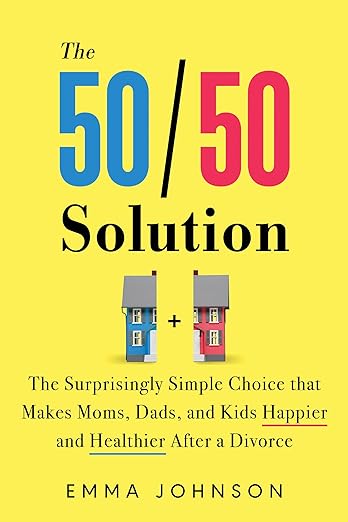
Featured book for single moms: The 50/50 Solution

How to get just about any audiobook for free

Featured book for single mothers: The Kickass Single Mom

Single parenting books

Books for single moms raising sons

More single mom books

Sex, romance and relationship books

Divorce books

Kids Books About Divorce

Featured book for single moms: The 50/50 Solution

Out March 26, 2024, you can pre-order now, The 50/50 Solution: The Surprisingly Simple Choice that Makes Moms, Dads, and Kids Happier and Healthier after a Split (Sourcebooks).

One part deep dive on social research about what helps kids and parents thrive, one part manifesto about what is fair and just, I wrote this book to help make equal parenting the social and legal norm.

In The 50/50 Solution, creator of the Wealthy Single Mommy community Emma Johnson showcases the robust research proving that, in the vast majority of cases, equal timesharing is the best outcome for everyone in a family where the adults no longer live together. The 50/50 Solution will show you that equal parenting time leads to:

  • Better physical, emotional, and mental health for children of divorce
  • Higher career earnings for single mothers
  • Fathers who are more engaged and whose rights as parents are preserved
  • Far less parental and legal conflict
  • A progressive, forward-thinking cultural norm that promotes gender and racial equality for all families, regardless of their configuration

Featured book for single mothers: The Kickass Single Mom

This is my baby.

The Kickass Single Mom (Penguin), is my #1 bestseller, and I am so proud of it. It is all about my own experience becoming a single mom, the details about how much pain I went though, how I got back on my feet financially, thrived professionally and in my motherhood, and came to enjoy dating, sex and romance.

It includes lots of incredible stories from other, kickass single moms, research, and tips from incredible moms and experts. Hundreds of readers have told me it changed their lives in incredible ways, and it was endorsed by the NYT, The Doctors, Fox & Friends, Oprah.com and dozens of other media.

Also, check out our list of TV shows and movies about single parenthood.

Single parenting books

The Whole-Brain Child

The Whole Brain Child by Daniel J. Siegel and Tina Payne Bryson.

It doesn’t take a neurologist to tell you that kids’ brains don’t finish developing until their early adult lives. But knowing exactly what to do with that information is key. Cue neuroscientist Daniel J. Siegel and parenting expert Tina Payne Bryson, whose book, The Whole-Brain Child helps parents understand differences in children’s brain development patterns and use this knowledge to raise calmer, happier kids.

Why I like this book for single moms: 

Their crystal-clear explanations and age-appropriate strategies will help you teach your kiddos important life skills in ways they’ll understand now. This New York Times bestseller is a must-read for moms looking to corral their kids with compassion.

26 reasons being a single mom is awesome

No Bad Kids

No Bad Kids by Janet Lansbury.

Janet Lansbury, author of No Bad Kids, is a four-leaf clover among other professional parenting and family relationship experts. She studied under one of the first and greatest child specialists, Magda Gerber, which means her advice and techniques aren’t the product of formal studies and research trials; she’s got actual hands-on experience helping parents and toddlers.

Why I like this book for single moms: 

The book addresses solutions for the common issues of punishment, cooperation, boundaries, disobedience, testing, tantrums, hitting, and more. Moms, if you’re at your wits’ end and your toddlers are testing your limits, this book is definitely for you.

Year of Yes

Year of Yes by Shonda Rhimes.

If the name Shonda Rhimes sounds familiar, that’s because she is the executive producer of How to Get Away with Murder, Scandal, and Grey’s Anatomy. In her New York Times bestselling book, Year of Yes, learn how saying “YES” changed her life. For as bold as Rhimes’s TV shows are, it’s pretty shocking to learn how much of an introvert Rhimes is. So, for one whole year, she decided to say “YES!” to everything that scared her.

Why I like this book for single moms: 

In this part-memoir-part-inspirational book, see how drastically her life became once she started opening herself up to new opportunities, shutting down self-doubt and self-sabotage, and exploring her newly empowered self. By the end of this book, you’ll be putting on your shoes and getting out to try something new, ASAP!

Books for single moms raising sons

Strong Mothers, Strong Sons: Lessons Mothers Need to Raise Extraordinary Men

Strong Mothers, Strong Sons by Meg Meeker, M.D.

Strong Mothers, Strong Sons is a must-read for any parent, or anyone who loves boys who today face unique challenges and pressures that put them at high risk for many serious issues. This book offers a road map to help mothers be more confident, bold and affection towards their sons — including for single mothers faced with filling in the void of father figures in their son’s life. This book sets you up for success as a parent of a son today, and going forward through the rest of your adult relationship.

Why I like this book for single moms: 

Single moms of sons (raising my hand!) can feel overwhelmed and incompetent when it comes to bringing up a male child. This book, while for all mothers, gives tactical tools for connecting with your son and helping you give him what he needs.

Boys Adrift: The Five Factors Driving the Growing Epidemic of Unmotivated Boys and Underachieving Young Men

Boys Adrift by Leonard Sax, MD, PhD talks about the factors that drive an epidemic of unmotivated boys and underachieving young men.

Boys and men are in an under-discussed crisis, and as parents we have an opportunity to identify and support our sons into success. This book helps the reader understand

By Leonard Sax, MD, PhD, Boys Adrift explores studies that find that boys today are less resilient and less ambitious than twenty years ago. The gender gap in college attendance and graduation rates has widened dramatically, and social, cultural, and biological factors have created an environment that is literally toxic to boys.

Why I like this book for single moms: 

 This book presents practical solutions, sharing strategies which educators have found effective in re-engaging these boys at school, as well as tips for parents about everything from homework, to videogames, to medication.

Do you make your son the man of the house? Avoid this single-mom pitfall

More single mom books

Inspirational and motivational books for single moms

Read my thoughts about self-fulfilling stereotypes for single moms, then check out these titles: 

Daring Greatly

Daring Greatly by Brene Brown.

#1 New York Times Bestselling author Brene Brown is a social scientist who has built her platform by sparking conversations about love, courage, creativity, self-acceptance, and joy. In her book, Daring Greatly, she helps her readers understand one of the least-valued traits: vulnerability.

Why I like this book for single moms: 

Brown explains that vulnerability and the willingness to trust without guarantee of success, is the key to living a brave and meaningful life. Through countless interviews with people of all walks of life, she helps us make the connection between allowing ourselves to fall, get uncomfortable, gain footing again and rise with more identity, truth, and an appreciation for the process.

Big Magic

Big Magic by Elizabeth Gilbert.

Elizabeth Gilbert, author of Eat Pray Love, is no stranger to inspiration, as proven by Big Magic. In this book, she digs down into her own creative process and reveals her unique perspective on the art of inspiration – managing it, growing it, and embracing it.

Why I like this book for single moms: 

I love her explanation of creativity as “strange jewels” that are inside each of us, which we each have to uncover for ourselves. Whether you’re looking to start a business, write a book, advance at work, or simply find a higher level of inspired existence and passion, this book is just what you need.

The Subtle Art of Not Giving a F*ck

Just when you thought this self-help book list was getting too woo-woo and fuzzy – BAM! In comes Mark Manson’s The Subtle Art of Not Giving A F*ck. This has to be one of the most refreshing and unexpected books to hit the inspirational book circuit in quite a while, and it’s 100% worth the read.

Why I like this book for single moms: 

Manson himself is a blogger, but his approach to “living the good life” isn’t covered with Instagram filters and emojis. Instead, his book teaches that being positive all the damn time isn’t really helping us become better, happier people. His raw, real, and honest perspective is the opposite of coddling – he wants us to stop running from painful truths, fears and limitations and start seeking the honesty, responsibility, curiosity and strength we need to build the lives we want.

Rising Strong

Rising Strong by Brene Brown.

It’s not a true self-help book list for single moms if Brene Brown isn’t in here at least twice! In Rising Strong, she discusses the importance of resetting yourself in order to live, love, parent and lead more effectively. She empowers her readers to allow themselves to transform into whatever they want to be, and to embrace their process.

Why I like this book for single moms: 

This is a perfect book for divorced single moms, or anyone trying to get back on the horse. Brene’s ability to be comforting and encouraging while also being influential and motivating is a true gift to those of us who need a little grace, a little self-acceptance, and a whole lot of healing.

The Slight Edge

Slight Edge by Jeff Olson.

The Slight Edge, by Jeff Olson, is a life-changing book. It’s about processing information and about thinking in a way that leads to a happier, more successful life. It’s incredibly impactful for something that sounds so simple: tweak your daily habits and activities and create powerful results that ripple throughout your life.

Why I like this book for single moms: 

The book includes insight into how we process information and think about things on a basic level, and what impact those little actions and thoughts have on our interpretation of absolutely everything in life. If you’re into hacking into your psychology to make small changes that really make the difference, this is your kind of book.

Eat Pray Love

Eat Pray Love by Elizabeth Gilbert.

Sure, Elizabeth Gilbert’s Eat Pray Love is about divorce and separation, but more importantly, it’s about the journey that happens after divorce – the inspiration, self-actualization, raw vulnerability, acceptance, and humility – the empowerment. Gilbert’s autobiography of coming to terms with her desire to leave her marriage, her journey over one year in Italy, India and Indonesia, and her exploration of love after marriage are all relatable, beautiful and full of hope.

Why I like this book for single moms: 

This book is amazing and bright, whether you’re divorced or not. But it takes on a much fuller meaning and comes alive with so much more color if you’ve gone through it. Eat Pray Love is a perfect pick-me-up for a girlfriend who’s going through divorce. 

You Are a Badass

You Are a Badass by Jen Sincero.

Lots of single mom books in the self-help genre claim to be able to help you “live your best life.” But few are as effective and memorable as Jen Sincero’s blunt how-to guide, You Are a Badass. This book has rocketed in popularity since it was released, and it’s all because of the bestselling author, speaker, and world-travelling success coach’s refreshing tough love approach.

Why I like this book for single moms: 

If you ever find yourself too busy to get anywhere in a book (hello, raise your hand, single mamas!), this one’s for you. Sincero’s 27 snackable chapters are chock-full of inspirational, gut-bustingly funny stories, sincere insights, easy exercises, and – my fave – gratuitous swearing. 

Sex, romance and relationship books

You’re single. You are a sexual woman. This is an incredible new journey for you! 

All about why and how dating is so great as a single mom.

Pussy: A Reclamation

Mama Gena, author of Pussy: A Reclamation.

If you listen to my podcast, you’ll already know I’m a huge fan of my friend’s book, Pussy: A Reclamation. Mama Gena lays it all there for us, ladies. From helping your daughters to nurture their own femininity and sensuality, to what the word “pussy” (really) means to us, it’s all there. No holds barred.

Check out the podcast, hear what Regena has to say on the magical topic of pussy, and learn to embrace what makes us, well… us.

Why I like this book for single moms: 

Mama Gena was divorced with a small daughter who built a seven-figure business while enjoying her body and relationships

The 5 Love Languages

5 Love Languages by Gary Chapman.

This one is just a staple for every woman (and man) to read. The 5 Love Languages: The Secret To Love That Lasts is such an impactful book because it shows us how we can all give love, and receive love, in the most powerful way unique to us. You think you know someone, and what makes them tick?

You may want to think again. Dr. Gary Chapman, author of the 5 Love Languages, puts love and relationships into a whole new perspective, one which might just flip your world on its head.

Why I like this book for single moms: 

Chances are you are, as a single mom, many of your relationships are in flux: romatic, familial, friendships — and getting to know your growing child. If you’re anything like me, expect more than one “Aha!” moment as you learn about love languages, as a way to understand and connect with those around you.

This #1 bestseller for the NYTimes is here to stay. Make sure the people you care about are, too, and learn their language.

Money and business books

Single moms have unique money and personal finance needs. All about how to set up a budget, pay off debt (even on a low income), and invest to build wealth as a single mom.

From Passion to Profit

From Passion to Profit by Claire Hughes.

It’s never been easier to start a business, and yet, getting all of your ducks in a row is a seemingly daunting task at times. From Passion to Profit takes youtakesyou step-by-step through starting a profitable online enterprise in less than six weeks.

Why I like this book for single moms: 

Creative mamas and makers of all sorts swear by this book for its no-nonsense tips and advice for everything from developing your products and services to branding yourself and getting traffic to your online store.

Power of Transparency

Power of Transparency by Lisa Liberatore.

Are you a mom struggling with work-life balance? Who isn’t?! Lisa Liberatore gets it, and her book, Power of Transparency, offers a solution: creating transparency in all you do. Her sections on navigating life’s obstacles, staying on track with goals, and communicating openly are hugely empowering in a world focused on Instagram images, sound bites and other faux-perfect mesasging.

Why I like this book for single moms: 

Learn how to find meaning and clarity in both personal and professional life, manage expectations, and GET FOCUSED. This book’s impact cannot be stressed enough!

You Are a Badass at Making Money

You Are a Badass at Making Money by Jen Sincero.

#1 New York Times bestselling author Jen Sincero’s You Are a Badass at Making Money has quickly become a cult favorite – and for good reason! Her story is incredible: she transformed her life from broke to bountiful over just a few years.

Why I like this book for single moms: 

Using her balls, wit, and real-world solutions, she helps readers unleash their earning potential, see money in a new light, and uncover what’s been holding them back from making money. Her bite-sized concepts and strategies make this book truly memorable and, more importantly, actionable.

Secrets of Six-Figure Women

Secrets of Six-Figure Women by Barbara Stanny.

Dig this: in 1998, the average woman earned less than $25,000 annually. As of 2018, over 15 million women make $100,000 or more – and that number is growing at a faster pace than men!

What makes these women able to pull these incomes, even in varied industries? Barbara Stanny was curious, and her research became Secrets of Six-Figure Women, an Amazon best-selling book. What she found is that, though these women came from different backgrounds and have vastly different careers and work experiences, certain characteristics remain the same.

Why I like this book for single moms: 

This book will help single moms work through the poverty mindset and focus on earning and growing their wealth.

Divorce books

Maybe you’re deciding whether to get divorced, or learning about the divorce process. There is a book for that.  

How to Talk to your Kids About Your Divorce

How to Talk to Your Kids About Divorce by Dr. Samantha Rodman.

Dr. Samantha Rodman, author of How to Talk to Your Kids About Your Divorce, knows there’s no easy way to discuss the tricky subject of divorce with your kids.

But whether you’re breaking the initial news, or helping your children cope with their changing environment following yourseparation, it’s totally possible to have open and effective communication with them.

Why I like this book for single moms: 

Dr. Rodman teaches moms how to help kids express their thoughts about the divorce and validate their concerns and emotions. Her sections on answering questions in age-appropriate ways is a big favorite for a lot of moms, and the expertise in both psychology and relationships is obvious after reading only a few pages.

The Co-Parenting Handbook

The Co-Parenting Handbook by Karen Bonnell.

Anyone who reads my blog, listens to my podcast, follows me on YouTube, or knows me in general, knows that I’m a HUGE proponent of co-parenting. However, it’s still a largely debated matter for many families. Karen Bonnell’s book, The Co-Parenting Handbook, is a buoy in the sea of questions about exactly what “co-parenting” means and how to make it happen.

The book addresses practical and logistical questions of how shared parenting works, plus strategies for parents and children that help make this method work for your own family unit.

Why I like this book for single moms: 

Shared parenting is critical for women, as involved co-parents, both inside and outside of marriage, mean women have far more support at home, which allows us to thrive as parents, professionals and earners. After all, we can’t be equals at work, if men are not equals at home!

Divorce Poison

Divorce Poison by Dr. Richard A. Warshak is a guide to preventing and overcoming parental alienation.

Parental alienation is real, mamas. It’s a subject I’ve written about in the past and one I’m particularly passionate about. Richard A. Warshak discusses this form of abusive behavior in depth in his book, Divorce Poison.

Warshak explains how to deal when your ex-spouse bad-mouths you to your kids, portrays you in a negative light, and/or attempts to turn your children against you.

Why I like this book for single moms: 

You’ll learn powerful strategies to preserve and rebuild your relationships with your kids, and what to do from legal and mental health standpoints to prevent longer-term repercussions of these negative situations.

How to co-parent with a toxic ex

Happy Divorce

Happy Divorce by Rossana Condoleo.

With a two-part approach, Rossana Condoleo’s Happy Divorce shows readers how to turn their divorce into the most empowering and transformative opportunity of a lifetime. Part One offers support and comfort for women coping with the stress and pain of separation and divorce. From there, she moves into helping uncover and embrace the readers’ visions, true Self, dreams, and purpose, setting goals along the way.

Part Two is very practical advice for everything from managing social life post-divorce, helping children cope and understand the shifts, taking care of a home on your own, choosing and dealing with divorce lawyers, and many more guides.

Why I like this book for single moms: 

Anyone looking for a one-two-punch of compassion and advice in the wake of a divorce should grab a copy ASAP!

Too Good to Leave, Too Bad to Stay

Too Good to Leave Too Bad to Stay by Mira Kirshenbaum.

Mira Kirschenbaum’s book, Too Good to Leave, Too Bad to Stay, is the perfect book for anyone who finds themselves wondering, “Should I get a divorce?” As an international bestseller and well-respected therapist, her years of relationship counseling make her well-equipped to answer this troubling question.

Why I like this book for single moms: 

Kirschenbaum’s techniques and questions are meant to promote self-analysis and get to the root of relationship and marital issues, which she follows with no-BS, practical advice for relationships – new or old – delivered in a clear manner.

Kids Books About Divorce

Two Homes

Two Homes by Claire Masurel.

Kids books about divorce can be a little tricky to come by. Claire Masurel’s book, Two Homes, handles the often-sensitive topic of divorce with the perfect measure of optimism and sensitivity. The book describes main character Alex’s favorite elements of life at both parents’ homes – “At Mommy’s house, Alex has a soft chair. At Daddy’s house, Alex has a rocking chair.”

Why I like this book for single moms: 

The words are simple, positive, and reassuring, and Alex’s place is firmly established in both homes with loving detail. A simple book for small kids — and their parents.

Dinosaurs Divorce

Dinosaurs Divorce by Laurie Krasny Brown and Marc Brown.

Dinosaurs Divorce by Marc Brown has been a learning and coping tool for families for over 25 years. Through basic storylines and lovable dinosaur characters, it helps young children understand basic concepts like divorce words and what they mean and why parents divorce, plus what to expect after divorce, like telling friends, meeting parents’ new friends, and living with stepparents and step-siblings.

Why I like this book for single moms: 

It even helps kids know how things will change once divorce takes place, such as celebrating holidays and special occasions. Knowing why divorce happens and what to expect has made so many kids feel more comforted and secure, and I highly recommend helping them learn with an age-appropriate book like this one.

Llama Llama Series

Llama Llama Red Pajama by Anna Dowdney.

Moms love this Llama Llama series by Anna Dewdney in part because seemingly-solo Mama Llama is so freaking relatable! She teeters on the edge of blowing her stack as her little Llama Llama gets grumpy during holiday shopping, refuses to share with his playmates, takes all his frustrations out on the poor woman, and will not stay in bed already. She’s also sweet and giving and rounds out a whole, real mom in a way so few children’s books do. Stay strong, Mama Llama!

Why I like this book for single moms: 

Llama Llama books are beloved classics, and I love the realistic and fun way that the single mom is the quiet hero in them all.

What are your favorite single mom books? Let us know in the comments!


I have written extensively on the importance of the movement towards shared parenting. A review of 60-peer reviewed studies found that shared parenting is best for children in separated and divorced families — when time is split approximately equally between homes — including in high-conflict situations.

Very closely related is the recognition by courts and mental health experts of parental alienation, or the psychological manipulation of a child into showing unwarranted fear, disrespect or hostility towards a parent. Parental alienation is increasingly recognized as child abuse, and the result of mental illness in the alienating parent.

This post aims to serve as a clearinghouse of useful information for parents who feel they have been alienated, as well as children who are victims of parental alienation. This article does not address estrangement that is justified as a result of abuse or neglect. Parental alienation specifically focuses on the unjustified dislike or mistrust of one parent (the targeted parent), due to the deliberate actions of the other parent (the alienating parent).

If your children have been alienated from you — or you fear they might be — I recommend starting with the book Divorce Poison, by Richard Warshak, PhD, widely recognized as a leading expert on parental alienation.

From Amazon about Divorce Poison:

Your ex-spouse is bad-mouthing you to your children, perhaps even trying to turn them against you. If you handle the situation ineffectively, your relationship with your children could suffer. You could lose their respect, lose their affection, and even, in extreme cases, lose all contact with them.

This groundbreaking work gives parents powerful strategies to preserve and rebuild loving relationships with their children and provides legal and mental health professionals with practical advice to help their clients and ensure the welfare of children.

Divorce Poison offers advice on how to:

  • Recognize early warning signs of trouble
  • React if your children refuse to see you
  • Respond to rude and hateful behavior
  • Avoid the seven common errors made by rejected parents

Divorce Poison on Amazon >>

The 50/50 Solution by Emma Johnson.
Your divorce settlement agreement should include your co-parenting plan, division of assets, your house (if you can afford it), and other key considerations.

I write about parental alienation in my new book: The 50/50 Solution: The Surprisingly Simple Solution that Makes Moms, Dads and Kids Happier When Parents Split (Sourcebooks, March 26, 2024)

What is parental alienation?

3 types of parental alienation

What are the signs of parental alienation?

  1. Badmouthing
  2. Limiting contact
  3. Interfering with communication
  4. Interfering with symbolic communication
  5. Withdrawal of love
  6. Telling the child that the targeted parent is dangerous
  7. Forcing the child to choose
  8. Telling the child that the targeted parent does not love him or her
  9. Confiding in the child
  10. Forcing child to reject the targeted parent
  11. Asking the child to spy on the targeted parent
  12. Asking the child to keep secrets from the targeted parent
  13. Referring to the targeted parent by first name
  14. Referring to a step­ parent as  “Mom” or “Dad” and encouraging child to do the same
  15. Withholding medical, academic, and other important information from targeted parent/keeping targeted parent’s name off medical, academic, and other relevant documents
  16. Changing child’s name to remove association with targeted parent
  17. Cultivating dependency/undermining the authority of the targeted parent
  18. Child’s polarized views of their parents

How to prove parental alienation

How to disprove parental alienation

How to deal with parental alienation

Parental alienation FAQs

Recommended reading on parental alienation

Podcasts about parental alienation

What is parental alienation?

Parental alienation is a form of child abuse in which the toxic actions of one parent intentionally harm the relationship the child has with the other parent. In these cases, the child rejects the alienated parent based on flimsy reasoning. Parental alienation occurs almost exclusively in cases of separated and divorced families, and one study found that parental alienation was an issue in 13.4 percent of divorced families, with nearly half being severe.

According to Vanderbilt University psychiatrist and parental alienation expert Dr. William Bernet:

“Almost every mental health professional who works with children of divorced parents acknowledges that Parental Alienation—as we define it—affects thousands of families and causes enormous pain and hardship.”

Beware of these 18 sneaky divorce tactics so you can overcome them

3 types of parental alienation

Psychologists have identified three degrees of parental alienation: 

Mild parental alienation

Child may resist visits with the other parent, but then enjoy their time when they are along with their mom and dad, and away from the alienated parent. 

Moderate parental alienation

These kids resist time with the alienated parent, and remain resentful during their time together. 

Severe parental alienation

Severely alienated children not only resist time with the other parent, but also actively run away or otherwise act fearfully to not be around that parent.

  • A campaign of denigration against the targeted parent
  • The child’s lack of guilty feelings for rejecting the target parent
  • When asked, the child gives irrational and frivolous reasons for the criticisms of the targeted parent
  • The child paints the parents in black and white — one parent can do no wrong, while everything the second parent does is horrible.
  • A knee-jerk defensiveness of everything about the favored parent
  • A child who parrots the favored parent’s words, often using phrases of an adult to describe the rejected parent, or citing scenarios that he or she heard the favored parent speak about, but did not himself experience.
  • Spread of the child’s animosity toward the target parent’s extended family or friends.
  • A child suffering from parental alienation often insists that his feelings are entirely his own. The child might call his father to say: “I don’t want to come to your house anymore. Mom had nothing to do with this decision, I made it all on my own.” The alienating parent is quick to protect the child’s “right” to choose whether he wants to visit his parent.
  • Children may show warmth and affection towards the targeted parent when alone with them, but then speak poorly of them to others, including the alienating parent.

What are the signs of parental alienation?

In her book Working With Alienated Children and Families Amy J. L. Baker, author of Co-Parenting with a Toxic Ex, identifies these 18 toxic signs that a parent aims to alienate:

For more tips on co-parenting with an ex, read Co-parenting rules—even with a difficult ex

1. Badmouthing

Alienating parent uses toxic verbal and non-verbal communications that convey to the child that the targeted parent is unloving, unsafe, and unavailable. Existing flaws are exaggerated and non-existent flaws are manufactured.

2. Limiting contact

The alienating parent violates parenting plans and/or takes advantage of ambiguities in the plan to maximize time with the child. The targeted parent has fewer opportunities to counter the toxic, badmouthing message, leading to the attenuation of the parent-child attachment relationship. The child acclimates to spending less time with the targeted parent.

3. Interfering with communication

The alienating parent demands constant access to the child when the child is with the targeted parent but does not reciprocate when the child is with him/her. Phones are not answered, email messages are blocked, and messages are not forwarded. The targeted parent has fewer opportunities to be a part of the child’s daily world and share with the child the small moments that make up a child’s life.

4. Interfering with symbolic communication

A man prohibiting a child from using a mobile phone. What is parental alienation? Recognize the 18 signs here.

Thinking about, talking about, and looking at pictures of a parent while away can help a child feel close and connected to an absent parent. The alienating parent creates a toxic environment in which the child does not feel free to engage in these activities with respect to the targeted parent.

5. Withdrawal of love

A man speaking to a child who is ignoring him. What is parental alienation? Recognize the 18 signs here.

Alienating parents make their approval of paramount importance to the child; so much so that the child would do anything to avoid the loss of love that is experienced when the child has disappointed or angered that parent. Typically what angers and hurts the alienating parent most is the child’s love and affection for the targeted parent.

Thus, in order to secure the love of one parent, the child must relinquish the love of the other. Although this is not something likely to be explicit to the child, it will be apparent to the targeted parent that the child lives in fear of losing the alienating parent’s love and approval.

6. Telling the child that the targeted parent is dangerous

This involves creating the impression in the child that the targeted parent is or has been dangerous. Toxic stories might be told about ways in which the targeted parent has tried to harm the child, about which the child has no memory but will believe to be true nonetheless, especially if the story is told often enough.

7. Forcing the child to choose

A husband and wife reprimanding their child who is covering his ears. What is parental alienation? Recognize the 18 signs you have to know.

The alienating parent will exploit ambiguities in the parenting plan and create toxic opportunities to seduce/compel the child away from the targeted parent by scheduling competing activities and promising valued items and privileges. If both parents are present at the same even/location the child will favor the alienating parent and ignore or be rude to the targeted parent.

8. Telling the child that the targeted parent does not love him or her

A dad talking to his son who is crying. What is parental alienation? Recognize the 18 signs here.

Another specific form of badmouthing occurs when the alienating parent allows or encourages the child to conclude that the targeted parent does not love him or her.

The alienating parent might make toxic statements that conflate the end of the marriage with the end of the parent’s love of the child (i.e. daddy left us, or mommy doesn’t love us anymore). The alienating parent will foster the belief in the child that she is being rejected by the targeted parent and distort every situation to make it appear as if that is the case.

9. Confiding in the child

A woman carrying a child with a sad face. What is parental alienation? Recognize the 18 signs by reading here.

The alienating parent will involve the child in discussions about legal matters and share with the child personal and private information about the targeted parent that the child has no need to know. The alienating parent will portray him/herself as the victim of the targeted parent, inducing the child to feel pity for and protective of the alienating parent, and anger and hurt toward the targeted parent.

10. Forcing child to reject the targeted parent

Alienating parents create situations in which the child actively rejects the targeted parent, such as calling the targeted parent to cancel upcoming parenting time or request that the targeted parent not attend an important school or athletic event. Not only is the targeted parent being denied something that s/he truly desires but s/he is being delivered the news by the child, leading to feelings of hurt and frustration. The targeted parent may respond by lashing out at the child, further damaging their already fragile relationship. Further, once children have hurt a parent, the alienation will become entrenched as the child justifies his/her toxic behavior by devaluing the targeted parent.

11. Asking the child to spy on the targeted parent

A child typing on a laptop. What is parental alienation? Recognize the 18 signs to consider.

The targeted parent may have information in their files, desk, or computer that is of interest to the alienating parent, such as pay stubs, receipts, legal documents, medical reports, and so forth. An alienating parent might suggest directly to a child or hint that the targeted parent has information that s/he is not sharing with the alienating parent. The alienating parent will likely create the impetus in the child by linking the information to the child’s desires (i.e., if we knew whether Daddy got a raise we could ask for more money and buy a new dog for you). Once children betray a parent by spying on them, they will likely feel guilty and uncomfortable being around that parent, thus furthering the alienation.

12. Asking the child to keep secrets from the targeted parent

A father whispering something to his daughter. What is parental alienation? Recognize the 18 signs you can find here.

The alienating parent will ask or hint that certain information should be withheld from the targeted parent in order to protect the child’s interests.

Such as, “If Mommy knew that we were planning on taking a trip she would take me to court and try to stop it. Let’s not tell her until Saturday, when it will be too late for her to interfere.” Like spying, keeping secrets creates a toxic parenting psychological distance between the targeted parent and the child, who may feel guilty and uncomfortable with the targeted parent.

13. Referring to the targeted parent by first name

Rather than saying “Mommy/Daddy” or “Your mommy/Your daddy” the alienating parent will use the first name of the targeted parent when talking about that parent to the child. This may result in the child referring to the targeted parent by first name as well.

The message to the child is that the targeted parent is no longer someone whom the alienating parent respects as an authority figure for the child and no longer someone who has a special bond with the child.

14. Referring to a step­ parent as  “Mom” or “Dad” and encouraging child to do the same

A son hugging his father while his mom tries to talk to him. What is parental alienation? Recognize the 18 signs here.

Once the alienating parent is remarried, s/he will speak of the new partner as if that parent were the only mother/father of the child. This parent will be introduced to others (teachers, coaches, parents of friends) as the “mother/father” rather than as the step-parent.

15. Withholding medical, academic, and other important information from targeted parent/keeping targeted parent’s name off medical, academic, and other relevant documents

A man filling out a form seriously. What is parental alienation? Recognize the 18 signs here.

All important forms from school, sports, religious education, and so forth ask for information about the child’s mother and father. The toxic parent will not provide information about the targeted parent in the appropriate place on the form and may not include the information at all.

16. Changing child’s name to remove association with targeted parent

If the alienating parent is the mother, she may revert to using her maiden name after the divorce and will institute a practice of using that name for her children as well.

If the alienating parent is a mother and she remarries, she will assume the surname of her new husband and will institute a practice of using that new surname for her children as well.

If the alienating parent is the father, he may start referring to the child with a new nickname (convincing the child that s/he has always been called by this name) and in this toxic way forge a new identity for the child in which the alienating parent is the most important parent.

17. Cultivating dependency/undermining the authority of the targeted parent

Alienating children often speak of the alienating parent as if that parent’s dependency/undermining were perfect, exceptional, and in every way above reproach. They also behave as if they are dependent on that parent in a way that is not necessary or appropriate given their age and life experience. Alienating parents are able to develop dependency in their children rather than (as is typical of non-alienating parents) help their children develop self-sufficiency, critical thinking, autonomy, and independence. At the same time, they will undermine the authority of the targeted parents in order to ensure that the child is loyal to only one parent. Examples include instituting rules that the child must follow even when with the targeted parent, and mocking or overwriting the rules of the targeted parents.

18. Child’s polarized views of their parents

A lonely child looking out the window. What is parental alienation? Recognize the 18 signs you can find here.

Richard Warshak, PhD., another leading expert on parental alienation and is author of the bestselling Divorce Poison, How To Protect Your Family from Bad-mouthing and Brainwashing. 

Warshak writes on his website of these behaviors in children suffering from parental alienation:

“Severely alienated children express extremely polarized views of their parents; they have little if anything positive to say about the rejected parent and often rewrite the history of their relationship to obscure positive elements …Severely alienated children treat the rejected parent with extreme hostility, disobedience, defiance, and withdrawal … These children harbor strong and irrational aversion toward a parent with whom they formerly enjoyed a close relationship. The aversion may take the form of fear, hatred, or both.

Alienated children’s thoughts about their parents become highly skewed and polarized. They seem unable to summon up positive memories or perceptions about the rejected parent, and have difficulty reporting negative aspects or experiences with the favored parent. They rewrite the history of their relationship with the rejected parent to erase pleasant moments.

With children who are severely and irrationally alienated, critical thinking about parents is nowhere in evidence. Instead the children demonstrate knee-jerk support of the favored parent’s position in any situation where the parents disagree.”

Learn more about parental alienation, and solutions for reuniting estranged parents and children in the documentary Erasing Family, a film by Ginger Gentile:

How to prove parental alienation

Unfortunately, parental alienation is hard to prove, whether to a therapist, to the victim, friends, family, as well as lawyers and judges.

If you suspect your child is being alienated against you:

  1. Document everything you observe, in a journal, your calendar, or a co-parenting app. Also document all your visits, so you can counter should the other parent accuse you of missing scheduled visits. Also keep track of requests or remarks made by the other parent. One of the first, and widely used, co-parenting apps is OurFamilyWizard. This app features chat, information storage (like pediatrician and teacher contact info, prescriptions, etc.), and financial record-keeping. They offer a 30-day free trial, discounts for military families, and a program to provide OurFamilyWizard free to low-income families. Try OurFamilyWizard for free for 30 days now >>
  2. Stick to, and enforce your visitation schedule. Either party skipping or interfering with scheduled visits is something that most courts will recognize as egregious at face value. Documenting any violations can help with future alienation court cases.
  3. Foster an open relationship with your child, so they feel comfortable talking about everything — including any alienating behavior (“Daddy told me not to tell you …”) or abuse. If you suspect abuse of any kind, take the child to a professional, opposed to addressing the issue with the other parent.
  4. Seek legal advice. Find a family attorney experienced with parental alienation cases, and seek their advice. This may include filing a court filing against your child’s other parent, deposing them as well as any family therapists, relatives or people familiar with your family dynamic. Parental alienation court cases are almost always lengthy, expensive, and hard to prove.

How to disprove parental alienation

This article in the New York Bar Association’s Family Law Review by Ashish Joshi is a great overview of the legal process of disproving parental alienation.

How to deal with parental alienation

Parental alienation FAQs

What changes are needed for parental alienation laws?

Parental alienation affects millions of families, with one third of children whose parents divorce or separate losing all contact with one parent. But parental alienation goes beyond missing out on a relationship with one parent. Parental alienation means lost relationships with siblings, extended family and friends. The reasons for this human rights travesty are complex, and unfair court systems, as well as unstable, angry parents can be blamed.

To stem parental alienation requires a drastic paradigm shift in this country: one that stops celebrating mothers as the default better parent, and gets away from outdated and sexist assumptions that in times of separation, it is best for kids to have one primary home (with the mom), and occasional visit the other parent (the dad, who pays the mom). On all fronts, science has time and again obliterated these notions:

Whether you like it or not, shared parenting — which receives a 70 percent public popularity rating, split equally among men and women, conservatives and progressives, democrats and republics — is quickly being adopted by courts.

Why is child support so unfair to fathers? A case for needed reform

Since 2012, Arizona, Kentucky and Arkansas have passed shared-parenting laws that start custody negotiations with the presumption of equal time. This year, 25 states are considering bills that would do the same. 

In other words: The world is changing, and if you’re not on board with shared parenting, and recognizing the systematic atrocity that is parental alienation, it is time to get over it. Because faced with it in your own life, you are likely to lose in the face of a court, and if not, by a  judging society.

Ginger Gentile produced and directed Erasing Dad, a similar project in Argentina, and herself is the victim of parental resulting from her  parents’ divorce.

You can learn more about Erasing Family here, and support this important project.

Is parental alienation a crime?

While social science concludes that parental alienation is traumatic and abuse towards both the child and targeted parent, there is little legal precedent to position it as a punishable crime, primarily because it is nearly always dealt with in family court — not criminal court.

How prevalent is parental alienation against mother? How common is parental alienation against father?

There is an assumption — prompoted often by family violence advocates — that fathers use parental alienation to abuse their ex-partners.

Social science finds otherwise.

Jennifer Harman, a Colorado State University social psychologist who studies parental alienation and its consequences, in 2020 published in the Journal of Family Violence, findings that mothers and fathers use different tactics in alienating tactics, with mothers using indirect methods such as spreading rumors, while fathers used both indirect and direct methods, like badmouthing the mother to the child. Harman found that 14% of fathers, and 20% of mothers in the sample used equal amounts of both forms of aggression.

This article outlines many studies over the past three decades that have found that generally, parental alienation is used against fathers more often than against mothers.

‘Parental alienation’: What it means and why it matters at TheConversation.com

Lost Parents: When High Conflict Divorce Leads to Parental Alienation on Huffington Post

Detroit Free Press article about a various reunification programs specifically for alienated families

Expert Richard Warshak’s breakdown of leading program Family Bridges

Legal Dictionary on Parental Alienation

Edward Kruk, PhD, is a leading researcher on parental alienation and co-parenting, and his thoughtful posts on PsychologyToday.com are a great read.

Podcasts about parental alienation

With co-founder of Leading Women for Shared Parenting, Terry Brannen:

On this Like a Mother episode I interview film maker Ginger Gentile, whose latest project is Erasing Family, a documentary about parental alienation. Award-winning documentarian and herself a victim of parental alienation, Gentile’s work focuses on the now-adult children who grew up without knowing a parent, siblings, or extended family thanks to the wishes of another parent — and a court system designed to promote conflict between separated families.

What is parental alienation?

Parental alienation is a form of child abuse in which the toxic actions of one parent intentionally harm the relationship the child has with the other parent. In these cases, the child rejects the alienated parent based on flimsy reasoning.

What are signs of parental alienation?

There are nine signs of parental alienation, including: a campaign of denigration against the targeted parent, the child’s lack of guilty feelings for rejecting the target parent, and more.

Mention the fatherless epidemic in the United States, and the arguments are polarizing. We hear things like “Father refuses to see child” or “Father not involved in child’s life.” These issues can be especially thorny during the holidays.

It’s easy to fall into stereotypes about deadbeat or indifferent dads, but I discovered the issue is quite complicated:

Father not involved in child’s life? A look into why fathers walk away after divorce

Why do fathers give up?

How can a father walk out on his child?

A father’s experience with parental alienation

Bottom line: Father not involved in child’s life? Try to make co-parenting work.

Father not involved in child’s life? A look into why fathers walk away after divorce

It is either:

  1. Men are irresponsible douchebags who abandon their children to mothers, who are left to raise the children with few resources, or …
  2. Women are conniving, malicious, entitled nut-jobs who alienate fathers from their children while taking all said fathers’ money — all of which is supported by the family court system.

However, as we unpack in this article, the real reasons are more complicated, complex and human. Men after all, are marginalized as inferior or at least secondary parents, a fact that is codified in family court when mothers are nearly always granted primary time with children — a power position that means men and dads are officially a lesser parent. 

Read: My advice to moms and dads whose other parent is not involved

Why do fathers give up?

This post challenges a cultural assumption that men willingly walk out on their children and are irresponsible, apathetic parents. Instead, we all suffer under a sexist culture and legal system that marginalizes fathers, and makes it hard if not impossible for them to be meaningfully involved with their children, for reasons including:

  • Sexist culture that does not value or support dads, or prime boys to grow up to expect to be involved, meaningful parts of their children’s lives
  • Family and divorce courts that favor mothers=
  • Parental alienation, in which one parent turns the kids against the other parent
  • One dad’s compelling story about why he doesn’t see his kids (keep reading)
  • Many dads don’t believe the child is theirs or were tricked into fatherhood, or otherwise felt they did not decide to father the child.

853 reader comments and counting on this post tell a story about how prevelant fatherlessness is, how passionate people feel about its reasons and results — and how varied and nuanced those reasons can be.


Looking for your kid’s dad, but not sure where to start?

Background check tools like TruthFinder can be free or affordable ways to find people you have lost touch with — or never knew.

TruthFinder has an A+ BBB rating.


How can a father walk out on his child?

After studying this issue for the four years I’ve had this blog, I understand that the issue is complicated and nuanced. Men walk out on their child for many reasons, including:

  • They never wanted to be a dad in the first place but were trapped 
  • They have been marginalized by our culture and court system to every-other-weekend parents, which is more painful than walking away and starting a new life that promises more joy 
  • Conflict with the child’s mother is too difficult to navigate 
  • They feel unworthy of parenthood, and feel like walking away is the best thing for the child 
  • The father never had a strong father figure, does not feel competent as a dad nor understand how important his role is.

Not sure where your child’s father is — or you are looking for your dad? TruthFinder offers background checks, reverse phone lookup, address and phone number search. A+ rating on the BBB.

A father’s experience with parental alienation

What I haven’t reported much is the point of view from the checked-out dads, many of whom have shared with me articulate, thoughtful, and often heart-breaking accounts of why they are not part of their children’s lives.

These stories resonate with me, as they have challenged my earlier, blind admonishments that every parent has a moral obligation to fight for their children, no matter what.

I still believe this, but I also believe in empathy, and for recognizing each other’s humanity.

Here is one story from a reader, John G:

Point of view from a dad who doesn’t see his child

From my own experiences, I believe it’s widespread for women to use children as a weapon to exact revenge against the ex during, and after, divorce proceedings.

During my lengthy divorce, my ex-wife claimed I was abusive, that she was ‘afraid for her safety,’ and tried to get ‘supervised visitation.’

None of it worked, because it wasn’t true, and because, as an educated professional I had enough money to spend six figures on an attorney.

However, it was still a waste of time and money. Even after the divorce, the games continued.

My son was being tutored on what to say to me (did you ever hear a 7-year-old respond ‘I’m not comfortable talking about that’ when asked a question?) and being instructed to call me by my first name and not ‘dad.’ I grew tired of making phone calls that weren’t answered, or of being put on hold and the child not coming to the phone, and of canceled visits.

It was heartbreaking seeing the child slip away from me, little by little.

I went to court on several occasions. There is the assumption that the man will just sit there and take the abuse because he does not want to lose the child.

She stuck by the letter of the law, and was able to severely limit my contact with my son by way of orders of protection and maintaining to the courts that he was a ‘danger.’

Related: This is the real reason your ex doesn’t see the kids

Orders of protection as divorce strategy

Of the divorced, professional men that I know, all of them had orders of protection against them by their wives.

This is even a problem that is recognized by the courts. Some attorneys go so far as to admit that the ‘afraid for my safety’ issue is part of the ‘gamesmanship of divorce.’ I went from the mindset of being a father to the child, to being reduced to the status of a ‘visiting uncle’ or a ‘Disneyland dad’ allied with thinking all the time like an attorney.

I was often worried what would happen if she started to make untrue claims that I had (for example) abused the child. When he fell over and scraped his arm when he was with me, I was advised by my attorney to go to all the trouble of going to the doctor, having the scrape bandaged and so on, just to legally cover myself in case she would claim that it had in fact been intentionally caused.

While on the lookout for anything that could be used against me, all the while constantly being told I was a bad person, a bad father, and all my involvement with my son was systematically stripped away. The whole process became a painful sham.

Where to find the best, affordable life insurance for single moms (no medical exam)

Father refuses to see his child? Not quite …

I eventually reached a crossroads with four paths. Some men commit suicide because they can’t handle the anguish. Others resort to violence and anger against the ex-wife. Others take the difficult road, and sacrifice years of their happiness, battling on a hopeless battle with the ex, just to maintain some sort of contact with the kids. The fourth way, is to simply give up, and decide that the cost to the child through seeing the conflict, and to oneself, is too high.

I considered all the above paths for a long time and was tempted by more than a few of them. In the end, I walked away from all contact with my child more than two years ago.

What to do when the non-custodial parent doesn’t show up or cancels last minute

Mother keeping child away from father

After I had calmed down, I tried again and contacted the ex. I had hoped she would have calmed down and would be willing to work with me.

But no, she is still the same bitter and vengeful baggage that she always was. Rather than attempting to discuss things and put things on the right track, she is willing to communicate in writing only.

She refuses point blank to let me contact the child. Everything has to go through her.

Some people will say it would be the noblest thing to carry on fighting regardless. ‘I would do anything for my kids!’ they spout.

Frankly, I feel that’s very naive and is almost always a view propagated by women.

Any father here who has been generously granted a weekend every two weeks knows the feeling when you say goodbye.

You’re just getting used to having them around, and they are gone. It’s like having a wound that never heals. Like a band-aid being ripped off over and over. The pain never really went away.

During those days, I used to recall these lines from Shakespeare’s King John:

Grief fills the room up of my absent child,

Lies in his bed, walks up and down with me,

Puts on his pretty looks, repeats his words,

Remembers me of all his gracious parts,

Stuffs out his vacant garments with his form;

Logically, I have to balance the damage to myself, my life and mental health, the possibility of the conflict damaging the child, against the damage done by my absence.

People who don’t know the situation raise their hands in horror, or pass judgment, assume that this is a choice that is taken lightly and easily. It is not.

There isn’t a day that goes by that I don’t think about it. Sometimes I see children in shops that look like my child and find it hard not to break down.

Sometimes I can’t take my eyes away. Even the shoes are the same. I don’t like to watch movies with children of that age in them.

I had to remove all the photographs that I had of my child and every other item and put them in a box. And that’s where all those emotions are now.

In a box, held tightly under control, so that I can try and enjoy some semblance of a normal life. It usually works.

I spoke to my ex recently. She claims that the child is just fine. She doesn’t seem to think that I’m needed and believes that my seeing the child is a bad thing.

She told me that the gifts I had been sending postally were in a box and he never got them. What is the point of trying? Who am I to argue?

She lives with the kid and does the real parenting. All that I could do, once a month or less (she lives a long way from me) would be to visit for a shallow shared visit, a museum trip perhaps – that’s not parenting – that’s just being a Disneyland dad.

I am in despair that many people and the courts expect the impossible. They expect the man to be totally interested, committed, involved with his child’s life – and yet – they make it impossible for that involvement to happen.

How can you remain interested and involved when you are given no information about the child’s everyday life, when even the most basic contact is made difficult or impossible, when you are limited to four days a month contact time if you are lucky?

In far too many cases, the father is merely viewed as a source of income.

The mother is viewed as the ‘real parent’ who almost always gets physical custody of the child. And once she has the child, she is then almost entirely free of the threat of any consequences.

Related: What is parental alienation?

Impact on a child’s life when a father isn’t involved

This is a great shame for the children involved who will probably be involved in divorces of their own or be afraid of marriage because they have seen the consequences when they fail.

I shouldn’t be surprised if more and more men eschew marriage and traditional family values over the next century.

Personally, I refuse to be blackmailed by my better instincts. I refuse to be reduced to the level of a Disneyland dad by some judge, attorney, social worker or indeed his mother.

I refuse to beg for access, or beg for photographs, or ask permission when I can please take him on vacation.

No. They will have no more of me.

One day, I will be able to get in touch without going through her once the child is old enough. Until then, I intend to get on with my life.

Please listen to Terry Brennan, co-founder of Leading Women for Shared Parenting, explain why default every-other-weekend visitation leads to absentee fathers:

Note that in cases where ‘standard’ visitation is awarded — every-other-weekend — fathers become depressed and non-involved, and within 3 years, one study found, 40 percent of children in an unequal visitation arrangement had lost complete touch with their non-custodial parents, which are nearly always the father.

Have a listen:

Bottom line: Father not involved in child’s life? Try to make co-parenting work.

If you are tempted to turn your child against the other parent, or not sure what is the best kind of parenting time arrangement, keep it simple, and equal. In fact, there are now more than 60 studies that prove that equally shared parenting is best for children (and, moms and dads!).

While we’re at it, have a read about why a simple, fair 50-50 shared parenting time with no child support is the best, fairest, and most feminist arrangement.

To prevent this kind of trauma, here are some tips to how to make co-parenting work:

  • Accept that mothers and fathers are equal. This is a gender equality issue
  • Accept that just because the other person doesn’t parent like you do, that is not abuse.
  • Let him fail, succeed and find his own parenting style. Many dads become better fathers after divorce because they have to.
  • When communicating with him, use ‘your house’ and ‘my house’ … not ‘Home.’ Same when you address the kids – “daddy’s house” and “my house.” Both places are their homes..
  • Keep him posted on matters large and small. Even if he doesn’t show up for the teacher meetings, or make the doctors’ appointments, keep him abreast of what is happening with the kids.
  • Buy him holiday and birthday presents on behalf of the kids.  

But the bigger challenge is to change our culture, from one in which it is presumed that fathers are incompetent, and mothers are the default primary parent. Terry Brennan of Leading Women for Shared Parenting, and an equality activist. Listen to our podcast conversation:

For more on co-parenting communication, and reasons for better shared parenting, read: Co-parenting rules–even with a difficult ex

What do you think? Are you a dad who no longer sees his kids? Why? Please share in the comments …

Or, are you the mother of a child with an absentee father? What is your response?

Why do fathers give up?

This post challenges a cultural assumption that men willingly walk out on their children and are irresponsible, apathetic parents. Instead, we all suffer under a sexist culture and legal system that marginalizes fathers, and makes it hard if not impossible for them to be meaningfully involved with their children.

How can a father walk out on his child?

After studying this issue for years, I understand that the issue is complicated and nuanced, and there is plenty of legitimate room for both of these points of view. What I haven’t reported much is the point of view from the checked-out dads, many of whom have shared with me articulate, thoughtful, and often heart-breaking accounts of why they are not part of their children’s lives.

The most recent National Retail Federation survey found that the average family with K-12 students spent $8751 on school supplies in 2024. 

While inflation continues to increase the prices of everyday items, including common school supplies, there are a number of ways and resources to find discounted or free school supplies in your area.

Keep reading to learn everything you need to know about the places to get free school supplies in 2024.

Where to find free back to school supplies in your area

Where to find free back to school supplies online

Where to find inexpensive school supplies

Where to find free back to school supplies in your area

To start, search Google for “free school supplies near me” to find out what resources are available in your community:

Connect with the following resources for free back-to-school supplies:

google-maps-usa-image

Check with your child’s school district for free school supplies

Your child’s school, school district, or local board of education are great places to begin your search. Reach out to your child’s teacher, principal, or guidance counselor to ask what help is available for students in your district.

In Monongalia County, W.Va., for example, a principal started an annual back-to-school giveaway where students could get books, backpacks, school supplies, and clothing, among other items.

The Salvation Army

Salvation Army branches often partner with local or national retailers to provide new school supplies for K-12 students. 

Find your local Salvation Army’s website to see if any donation drives or back-to-school events are planned:

google-maps-usa-image

United Way

The United Way is a network of nonprofits that connect people with the resources they need. Some United Way locations hold back-to-school drives to help students in need get free school supplies.

For example, the Minnesota-based United Way of 1000 Lakes collects donations and recruits local volunteers to help with its annual “Stuff the Bus” school supplies event. Volunteers organize and stuff free backpacks with supplies for distribution to students at local schools. 

Contact your local United Way for similar events in your area:

google-maps-usa-image

Boys & Girls Club of America

Young girls and boys leave from school holding folders and carrying their backpacks. The Boys and Girls Club of America provide free supplies to students with the help of volunteers.

Boys & Girls Clubs of America locations partner with local organizations and volunteers to provide free supplies for students. Last year, the organization partnered with a variety of retailers in its Back2School campaign.

Find your local Boys & Girls Club online to learn how you can free school supplies for your student this year:

google-maps-usa-image

Community Action

Community Action Agencies work with community leaders and volunteers to help local communities. That includes making sure every child in the community has the proper supplies before school starts. These locally run agencies receive aid from a number of sources, including the federal Community Services Block Grant, which provides funds to help communities combat poverty.

Government programs

Check with your state’s Human Services agency and Department of Social Services (DSS) to inquire about upcoming back-to-school drives for K-12 students. These offices will often sponsor or partner with other agencies to collect donated school supplies and give them to students in need.    

How to prepare for a recession and survive this year

Back to School Brigade (Operation Homefront)

Operation Homefront is a nonprofit supporting military families. Through its annual Back-to-School Brigade program, eligible children of armed forces service members receive free backpacks and school supplies. 

Eligible children are:

  • Dependents of military personnel
  • Enrolled in the Defense Enrollment Eligibility Reporting System (DEERS)
  • In kindergarten through 12th grade

These supplies are first-come, first-serve. You must register to take part in the Back-to-School Brigade program. 

To register, select your state and choose “Back-to-School Brigade” as the event type on the Operation Homefront website. Click on your nearest event to access the registration.

Kids in Need Foundation

The Kids in Need Foundation supports underserved communities by supplying teachers and students with free school supplies. Schools with 70% or more of students participating in the National School Lunch Program (NSLP) get preference.

Supplies are distributed by Kids in Need Foundation’s network of over 40 resource centers. To get free supplies, check to see if there is a resource center near you.

Local churches and community centers

Google “churches near me” or “community centers near me” to find a list of churches and centers that may offer free school supplies in your area. You can call and inquire about any services they offer. 

Even if they don’t directly host school supply drives, they might be able to point you in the direction of local organizations that do.  

Local law enforcement and firefighter groups

Police departments, volunteer fire organizations, and law enforcement groups such as the Fraternal Order of Police (FOP) frequently spearhead community events that help children. Check with your local police and fire stations about upcoming back-to-school drives for free school supplies.

Local food bank

Some food banks and pantries not only collect food donations, but often school supplies and clothing for children. Even if they do not directly offer free school supplies, food banks often have relationships with other community service organizations that can help.

Feeding America is the largest national food bank resource. To locate a food bank near you, use Feeding America’s search tools.

Some food banks and pantries operate within school systems. Try contacting your public school system to learn about affiliated food banks and pantries. 

In the news

Watch the news or pick up your local newspaper to learn about back-to-school events. You can also look online for the digital versions of newspapers, although some might require a subscription to access. Community magazines and bulletins are also great places to check. 

Google “local news city state” (add your city and state) to get a list of local news outlets. For example, “local news Austin TX” or “local news New York NY” will show you TV news stations and newspapers that cover your area.

Where to find free back to school supplies online

Here are three online resources to find free school supplies:

Buy Nothing Project

Buy Nothing Project is a free app with 5.33 million members operating in 44 countries. Membership is free, but donations are encouraged to keep the platform free of ads. 

As a member, you can ask for items you need (such as school supplies). If other members respond, you can claim the supplies by making arrangements to pick them up. Just exercise caution and meet in a public place.

Facebook Marketplace

Facebook Marketplace is a place for people to list their unwanted items to other Facebook users. To see free items, you can navigate to “Free Stuff” and do a search for school supplies. Not all listings will be free, and some may require shipping.

If you have a Facebook account, you can also access the Groups feature and search for “buy nothing groups city state” (add your city and state) to search for and request free school supplies. Parenting groups are also a great place to find free school supplies.

Of course, you can also make a post on your own profile asking for school supplies. It’s a quick way to let your network know what your children need. You might be surprised how many people are willing to help out. 

Freecycle.org

Freecycle is a free membership community with 10 million+ members. Once you sign up, you’ll be able to join your local community group. Post the school supplies you need, or browse what people are offering. Then, make arrangements to pick up the free items locally.

Freebie Alerts

The Freebie Alerts app, available on the App Store and Google Play, sends you a notification every time your neighbors are giving away free stuff, like school supplies. 

The app monitors:

  • Facebook Marketplace
  • Nextdoor
  • OfferUp
  • TrashNothing

You can choose to receive alerts from all or some of these sources of free stuff. 

If you want specific items, you can use the whitelist feature to notify you of offers with certain keywords. When you want an item, just tap on it in the app to communicate with the person giving it away. You can also post items you would like to give away.

Where to find inexpensive school supplies

If you’re looking for specific items for school, here are the top places to buy low-cost school supplies:

Goodwill

Find your local Goodwill store and ask about its annual back-to-school sale. Many stores offer a discount on clothing, as well as school supplies to help students get ready for school in the fall. You can also shop Goodwill online and ship items for as low as $0.01.

Yard sales

Weekends are a great time to look for local yard sales. You can drive around your neighborhood to look for posted signs or try online sources like Craigslist.org and GarageSaleFinder.com to find upcoming yard sales in your area.

Dollar Tree

Although everything doesn’t cost a dollar, items are $1.25 or less. Dollar Tree offers a variety of school supplies, including scissors, glue, notebooks, and pencils, and you can also shop online in bulk. 

Walmart

Walmart is known for its discounted prices. You can shop in-store or online to get deals on everything your child needs to get ready for school. Walmart also works with some school districts to compile back-to-school lists so you won’t miss anything your teacher requests.

More free resources:

Help for single moms: 16+ resources$500 monthly single mom grant
Free laptopsScholarships for single moms
Free carFree Christmas gifts
Free smartphoneBest jobs moms can do from home
Free wifiFree and low-cost prescriptions
Free formulaFree clothes
Free toysGovernment assistance for single moms
Free gasFree daycare
Free preschoolFree prescription glasses
10+ charities that help single mothersTutoring and homework help
Health insuranceFree food
Low-income home loansFree or cheap dental care
Free gift cardsFree money for bills

SOURCES

  1. National Retail Federation, Back-to-School expenses https://nrf.com/research-insights/holiday-data-and-trends/back-school/back-class-data-center

Dear Emma,

When my daughter was six months old, her dad left and more or less never showed up again. There were a few visits for a few years, and a couple of visits to family court for child support, but since then we have not heard or seen from him. My daughter is now 8 years old.

We don’t talk about it much and I feel like it isn’t such a huge deal. She is a great kid — does well in school, has lots of friends and is polite. We are close with my parents and siblings, who live nearby. I am glad that I get her all to myself and don’t have to share custody like some of my divorced friends. Sometimes people say things to me like, “I feel so bad for her that she doesn’t know her father.” She never mentions her dad, and I feel like she doesn’t care. She doesn’t know any different. What should I tell all these rude people who judge our situation?

— Shannon

Dear Shannon,

I’m not worried about your rude neighbors. I am worried about you and your daughter.

Absentee fatherhood is a huge, complicated problem in this country. Incarceration, a culture and family court system that presumes fathers are incompetent, and other lack of support for shared parenting are among the causes for the fact that just 22 percent of fathers who don’t live with their kids see them once per week or more, according to Pew Research, and nearly a third never see their kids.

This, of course, is heart-breaking for your child, and stressful for you as a single mom.  If your child’s dad is not, or marginally involved, there are a few guiding principles for addressing your child’s concerns and questions.

Father not involved in child’s life? What do you do?

What to say to your child when his dad is not involved

What are the effects of fatherlessness?

Why fathers are absent in their children’s lives?

If a father doesn’t want to be involved, is this child abandonment or fatherlessness?

Absent father now wants contact: What to do

Movies and books on absent fathers and shared parenting

Father not involved in child’s life? What do you do?

Every family is different, but here are some things to consider:

Work on co-parenting

If there is some communication, take the opportunity to improve co-parenting. Men are typically marginalized as secondary parents, and statistically likely to duck out of their kids’ lives if they have limited visits and a high-conflict relationship.

How to co-parent, even with a toxic ex

Types of co-parenting

Why 50/50 parenting is best for kids

Out now from Sourcebooks:

The 50/50 Solution: The Surprisingly Simple Choice that Makes Moms, Dads, and Kids Happier and Healthier after a Split

by Emma Johnson

Cover of The 50/50 Solution book by Emma Johnson.

Featured in Newsweek, MSN, Slate.

Face your own anger at your kids’ father

You may be angry that he gets to check out and expects you to take on the extra responsibility. That is a legit complaint! You may consider taking him to family court and demanding an equal parenting schedule. 

Missing dads are always an issue

But don’t pretend there is no issue. You, your child, and together as a family you may benefit from individual therapy or group therapy.


Looking for your kid’s dad, but not sure where to start?

Background check tools like TruthFinder can be free or affordable ways to find people online you have lost touch with — or never knew.

TruthFinder has an A+ BBB rating.


What to say to your child when his dad is not involved:

1. Be honest. Don’t say he died if he didn’t. Never say “He’s working far away.” Your child deserves the truth, even if it is painful for both of you to address.

2. Be kind, and keep your feelings out of it. “Being a parent is really hard for some people, and your dad wasn’t ready to be a parent yet.”

3. As you will do in your relationship with your child’s father, as well as in your own heart, you will keep the door open to future, improved relationships. At the same time, be very careful not to nurture false hope in your child. It’s a tough balance, but an important one. Note in the “yet” in the sample script above.

4. Answer all their questions. “I’ll tell you when you’re older,” or “We don’t talk about that in our family.” These create the notion of secrets, and secrets foster shame, self-hatred, and lack of trust.

5. Highlight the fact that there are all kinds of families, and every family is whole. Even if it feels silly, as you go through your day, or are watching movies or TV, point out gay families, interracial families, kids being raised by grandparents, multigenerational households, friends who live together, foster and adoptive families, how some groups of friends create families, and on and on. Then, name the people in your family — blood relatives, friends, your neighborhood network. Do this enough and nuclear, married, straight families start to seem like the weirdoes!

6. That said, do not dismiss or minimize pain that a child experiences by his father being absent from his life. It might be really, really hard to hear, but listen. It sucks to feel like you’re the only kid at school whose dad isn’t around. It hurts like hell when your birthday comes around and your father doesn’t call. You worry you did something wrong, or you’re unlovable, or deeply flawed — no matter how great your mom and life are.

My father was mostly not part of my life after age 8, and there was no space for me to talk about it. Growing up with my mom, I heard no positive stories about my father, and no space for any of us to ask questions, or to share hurt feelings about the matter. The few times I remember asking about my dad, I was just reminded of how good our life was, which only made me feel stupid and selfish for feeling so horrible for not having an involved father.

I think my mom felt really bad about the situation, and didn’t know how to deal with her own feelings, much less her kids’. Fast-forward to today, after plenty of therapy and other ways of processing my daddy issues, I now find myself answering my children’s questions about why they don’t know their paternal grandfather. While your son or daughter is not your bartender, talking with your child openly can be a wonderful way to heal your own heart, too.

7. Do not always wait for your child to ask. For many reasons, your child may not bring up the fact that her father isn’t part of her life. It is up to you to talk about it very early, even earlier than you may think reasonable. One day, when my daughter came home from school and said, “Today Sofia talked about how both our parents are divorced.” She was 3! Even as a toddler your child sees her friends with two parents. Movies and TV shows and books are powerful messages, consisting almost always of a mother and father. It is your responsibility to address this, even if she doesn’t initiate the discussion.

8. Remember: Life is long. The questions will continue throughout your life, and each conversation at each age will lend new perspective and healing for both you, your child, as well as your relationship with each other.

What are the effects of fatherlessness?

Often, articles and even academic studies cite that 1-in-4 kids grow up fatherless, even though that figure is based on U.S. Census data that a quarter of children in the United States are raised in a home led by a single mother. However, most of those kids have a relationship with their dads, including in 50-50 time-sharing families. 

However, a lack of meaningful involvement with either parent is often devastating to a child—especially if that parent is alive, and ostentibally able to be involved if he chooses. 

Based on an analysis of dozens of studies, the federally funded Fatherhood Initiative reports that a child who grows up without meaningful time with his or her father, that child is more likely to struggle with:

  • Poor academic performance 
  • Emotional struggles 
  • Drop out 
  • Early sexual activity and teen pregnancy 
  • Incarceration 
  • Employment, long-term 
  • Mental and physical health issues 

Being abandoned as a child often produces adults who struggle to trust friends, colleagues or romantic partners. They may struggle with self-esteem, having an early message that they are unworthy of unconditional love. Adults with abandonment issues may unconsciously push people away, and repeat distant behaviors with their loved ones.

Alternatively, adults with a fear of abandonment may lack boundaries and be overly needy and dependent in an attempt to protect themselves.

When a parent is absent from a child’s life — no matter by choice, imprisonment or death — it is a loss. It is a loss for that child and a loss for those who love her.

Your child may ask you:

“Who is my dad?”

“How is my dad?”

“How old is my dad?”

“Where is my dad?”

“Where can I find my dad?”

“Why is my dad so mean?”

“Is my dad dead?”

We are all socially conditioned and predisposed with a deep need to know both our mother and our father. Socially, it is easy to understand that the majority of people grow up living with both a mother and a father — and nearly everyone else knows both parents. That is the norm. Your daughter is very aware that her family does not look like other families. She understands deeply that most of her friends have relationships with their dads and she does not.

We are biologically half our mothers and half our fathers. Humans have an intrinsic need for family. We yearn to know our relatives so that we can better know ourselves. When we are raised apart from our families, homelands and extended cultures, there is a sense of loss that transcends our daily experience.

This explains why people who are adopted are compelled to find their birth parents — no matter how wonderful their adoptive families. This also explains why humans are driven to visit their ancestral homelands, even when they are removed from the place by generations. This is why companies like DNA mapping companies 23andMe.com and Ancestry.com are so successful, and genealogy is among the most popular hobbies in the United States — and world.

Not every person will know both their parents. This is a fact. This does not mean that your daughter does not have a fantastic life, or that she is a wonderful child who will grow up to be a happy, productive and lovely adult.

But that does not mean that the process will be easy.

Before you can support your child, you must address your own loss and grief.

When your ex-husband left and abandoned your daughter, he also abandoned you — both as a husband but more to the point here, as a co-parent. You also suffered a loss in that you do not have someone to help raise your daughter — even if it means separately, as divorced parents. You do not have anyone to enjoy their sweet habits, or commiserate on the daily challenges of parenthood. You do not enjoy a happy co-parenting arrangement that gives you a break. Most of all, you suffer because deep down you know that your daughter is hurt. That, for any mother, is devastating.

This situation can be changed. But you must take action.

First, you must recognize the situation for what it is: A huge, giant, grave loss. It may not be your fault. Maybe it is. But it is your responsibility as a parent to address it. First, acknowledge how this has affected you personally. Lean into that pain. Right now you are avoiding that pain, which is why you are dismissing it in your daughter. Just sit with it. Cry, scream, punch the refrigerator or write him an angry letter you never send. Whatever is your way, go there.

Then, recognize that he is human. When a parent abandons a child, that parent is deeply wounded. There is a reason they cannot fulfill their responsibility. They do not recognize they are worthy of being needed, or can bring value to another person’s life. Your ex misses out — in a very major way — of the joy of raising and loving his child. He also suffers knowing that he deeply hurts her. Every day.

Recognizing this is part of the process of forgiveness. It involves empathy and grace. It will take time. But you must get there — for your sake, and that of your daughter.

While you work through that, you must now face your daughter.

Talk with her. Say: “I’ve been thinking a lot about your dad. I imagine you do, too. How do you feel about the fact you don’t know him?”

Ask her how she feels when she visits friends who live with their dads — or have visitation schedules with both their divorced parents. Tell her about her father, how you met him, what you liked and loved about him. Tell her stories about your time with him, and stories he told you about his life. Tell her about his family and jokes he told. Ask her what she’d like to know about him. Answer honestly — including about the part where he left. And why he doesn’t call. If you don’t know how to answer some questions, say so. “I wish I knew, but I don’t.”

That is just the first conversation.

Have another the next week.

And the next.

You may not have weekly conversations about your daughter’s father for the rest of your lives. But get into a habit of talking about him. About her father. Give her permission to ask, and to feel. Do not sugar coat the information, or your own feelings. Especially as she gets older, tell her what really went down, and how absolutely infuriated you were — and maybe still are. By recognizing your feelings and sharing them honestly with her, you give her permission to recognize and honor her own, complex and human feelings.

Only then can both of you move forward with a full, wonderful — and complex — life you were meant to have.

A definitive list of 7 co-parenting boundaries you need to know

Why fathers are absent in their children’s lives?

There are many reasons that explain fatherlessness. These reasons include:

  • Parental alienation, as this father explains
  • He did not want to be a father in the first place
  • Conflict with the mother was too much
  • The father cannot afford child support, and pursuing more parenting time means increased risk of going to jail
  • He doesn’t feel confident as a father — and with minimal parenting time each month, it is hard to grow as a dad

How co co-parent with a narcissistic or toxic ex


If a father doesn’t want to be involved, is this child abandonment or fatherlessness?

If a non-custodial parent — mother or father — is found to have willingly abandoned the child, they may lose parental rights depending on state law and a judge’s ruling. This can mean that the father is not allowed to have visitation or legal rights to his child. It can also mean that in the absence of other safe adults to care for the child, the child will be taken into the welfare system, including foster care.

There are Safe Haven laws in all 50 states and Puerto Rico, which decriminalize the leaving of unharmed infants at a police station, fire station or hospital so that the child becomes a ward of the state. 

Outside of safe haven laws, parents technically cannot voluntarily forfeit their parenting responsibilities without facing criminal consequences. 

While all states have child support policies and laws that force (in theory) parents to contribute financially to their children, there is no mandate for non-custodial parents to participate in the physical caring of children.

Child abandonment laws usually apply when a custodial parent or guardian fails to care for a child, leaves them with another adult for long periods without contact, and sometimes leaves a child alone at home, unattended.

The laws on these issues vary from state-to-state, and sometimes apply to non-custodial parents, but not typically.

Child abandonment may be an emotionally traumatic experience, though not a criminal one.

Proving child abandonment may be required to win full legal and/or physical custody of a child. Parents who wish to relocate with a child may want to prove abandonment or have the child adopted by a step-parent or other adult.

These are examples that a court may consider criminal child abandonment by a custodial parent or guardian, according to the U.S. Health and Human Services’s Children’s Bureau:

  • Leaving a child with another person without making arrangements to care for or communicate with the child for three or more months
  • Failing to maintain a regular visitation schedule for at least six months
  • Abandoning an infant in an unsafe place — as most states have ‘safe haven laws’ that allow mothers to leave their newborns in designated places such as a hospital, police station or church without facing criminal charges.
  • Leaving the child home alone in a situation deemed unsafe
  • Otherwise failing to provide care, support or reasonable resources (food, clothing, heat) for a child you are responsible for

Fatherlessness, meanwhile, refers simply to kids who grow up without an involved dad, for whatever reason.

Absent father now wants contact: What to do

Does an absent father have rights?

Increasingly, courts favor keeping families connected if possible. This includes reuniting children with willing fathers who have been absent from their lives, as well as recognize legal joint custody when considering matters such as where a child goes to school, where the child lives, and religious and medical decisions — regardless of the father’s or mother’s actual participation in the child’s life.

That means that even though a father is not involved with their kids today, there is an opportunity for them to be involved going forward.

Does an absent father feel guilty?

Many fathers who do not see their children regularly do feel guilty they are not more involved, or feel angry that they feel they were kept from being involved with their children. Parents who do not see their kids often miss them very much.

Movies and books on absent fathers and shared parenting:

Recommended shared parenting documentary: Divorce Corp

Kickass Single Mom, Be Financially Independent, Discover Your Sexiest Self, and Raise Fabulous, Happy Children, By: Emma Johnson

Blend, The Secret to Co-Parenting and Creating a Balanced Family, By: Mashonda Tifrere

Co-parenting with a Toxic Ex: What to Do When Your Ex-Spouse Tries to Turn the Kids Against You, By: by Amy J. L. Baker, PhD and Paul R Fine, LCSW

Divorce Poison: How to Protect Your Family from Bad-mouthing and Brainwashing, By: Dr. Richard A. Warshak


Is your child’s father not as involved as he should be? How do you deal with it? What mistakes have you made? What advice can you share with other parents? Share in the comments…

Single mom parenting after divorce. My kid's dad is not involved and I don't know what to say to her. First, you must recognize the situation for what it is: A huge, giant, grave loss. It is not your fault. It is life. But it is your responsibility as a parent to address it.
What are the effects of fatherlessness?

Being abandoned as a child often produces adults who struggle to trust friends, colleagues or romantic partners. They may struggle with self-esteem, having an early message that they are unworthy of unconditional love. Adults with abandonment issues may unconsciously push people away, and repeat distant behaviors with their loved ones.

Why fathers are absent in their children’s lives?

There are many reasons that explain fatherlessness: parental alienation, conflict with mother, can’t afford child support, and more.

Does an absent father have rights?

Increasingly, courts favor keeping families connected if possible. This includes reuniting children with willing fathers who have been absent from their lives, as well as recognize legal joint custody when considering matters such as where a child goes to school, where the child lives, and religious and medical decisions — regardless of the father’s or mother’s actual participation in the child’s life.

Does an absent father feel guilty?

Many fathers who do not see their children regularly do feel guilty they are not more involved, or feel angry that they feel they were kept from being involved with their children. Parents who do not see their kids often miss them very much.