scroll top

You already know new is almost always more expensive. What people underestimate is how much more expensive, and how little difference it makes in practice. A set of hand tools from a garage sale does exactly the same job as a set from Home Depot. A used ski jacket keeps you just as warm. A hardback novel is just as readable the third time it changes hands.

The case for buying used isn't just about saving a few dollars here and there. On the items below, the gap between new and used pricing is so large that paying full retail is genuinely hard to justify. These are the categories where depreciation is steep, quality holds up well, or the product is simply indistinguishable from new once it's been lightly used.

Some exceptions apply throughout, and this article covers them. Helmets are one. Car seats are another. Beyond those, the categories below are mostly fair game.

Cars

buying a used car
Image Credit: Shutterstock

New cars lose around 20% of their value in the first year of ownership, and roughly 60% within five years. That first-year hit happens the moment the vehicle leaves the lot. You are paying a significant premium purely for the experience of being the first owner.

A car that's two to three years old, well-maintained, and sold with a vehicle history report gives you most of the useful life of a new car for considerably less money. Certified pre-owned programs from manufacturers add an extra layer of assurance, often including extended warranties that close much of the gap between used and new. The sweet spot for used cars is typically the two-to-four-year range: past the steepest depreciation curve, but before the point where maintenance costs start climbing significantly.

Search Carmax, Carvana, and the dealer's own CPO inventory. For private-party sales, always pull a vehicle history report before you commit to anything. Know what the car is actually worth before you walk in, using Kelley Blue Book or Edmunds as your baseline.

Textbooks

buying text books from second hand book store
Image Credit: Shutterstock

College textbooks have become one of the more blatant consumer rip-offs in American life. New editions of the same core texts come out every few years with minimal changes, at prices that have no reasonable relationship to the content inside. Buying new is almost never necessary.

The used market for textbooks is deep and well-organized. Amazon, ThriftBooks, AbeBooks, and Chegg all carry used copies at a fraction of retail, and your campus bookstore's used section is worth checking too. Before buying anything, confirm the edition your professor actually requires. In many cases, the previous edition is functionally identical and costs a fraction of the price. If the professor wrote the book themselves and insists on the newest edition, that's worth knowing before you spend $200.

Renting is another option for courses where you need the book for one semester and have no interest in keeping it. The rental market through Chegg, Amazon, and the college bookstore can cut costs by 80% or more versus buying new.

Children's clothing

selling childrens clothing
Image Credit: Shutterstock

Kids outgrow clothing so fast that much of what ends up at consignment stores and garage sales has been worn only a handful of times. A toddler's winter coat that cost $60 new often turns up at a children's consignment store for $10 to $15, in near-perfect condition, because the child grew out of it two months after it was bought.

ThredUp, Poshmark, and local Facebook Marketplace groups are all solid sources for used kids' clothes. Children's consignment stores, which are common in most mid-sized cities, let you see and touch the items before buying. Once Upon a Child is a national chain that buys and resells children's clothing and gear; the quality bar is decent, and the prices are consistently below what you'd pay at Target or Old Navy for equivalent items.

The one caveat here is shoes. Children's shoes can mold to the shape of the previous wearer's foot, which can affect gait during a developmental period. New or nearly new shoes are worth prioritizing for kids who are still growing into their stride.

Baby gear

baby in a bouncer
Image Credit: Shutterstock

The baby gear industry is very good at convincing first-time parents that everything needs to be purchased new, sanitized, certified, and preferably monogrammed. Most of it does not. Bouncers, swings, high chairs, baby monitors, carriers, and play mats all hold up well and move through the used market in large volumes, usually because babies outgrow them within months.

Facebook Marketplace and local mom groups are the most efficient places to find used baby gear, because pickup is local and you can inspect items in person. Be realistic about what you actually need. The swing that worked perfectly for one family's baby may sit unused in yours, and paying secondhand prices for it reduces the sting considerably.

Car seats are the exception. Seat safety standards change, and a seat that has been in an accident may look fine but have compromised structural integrity that you cannot see. The same applies to cribs manufactured before 2011, when federal safety standards changed. For everything else in this category, used is generally fine.

Sports equipment

a selection of sports equipment
Image Credit: Shutterstock

Most sports equipment sits unused within a year or two of purchase. The golf clubs, the ski boots, the tennis racket, the rowing machine someone swore they would use every morning. All of it flows steadily through the used market, often in excellent condition, at prices well below retail.

Play It Again Sports has locations across the country and buys and sells used gear across dozens of sports. Prices are typically 40% to 60% below what the same items would cost new. SidelineSwap operates as an online marketplace specifically for sports equipment, with strong inventory in hockey, lacrosse, baseball, golf, and skiing. For outdoor gear, skis, snowboards, bikes, and camping equipment, Geartrade runs a well-organized consignment operation with consistent pricing.

The item you should not buy used in this category is a helmet. Whether it's a ski helmet, a bike helmet, or a hockey helmet, the internal foam can be damaged by a single impact without visible signs. That damage compromises protection on the next impact. It costs nothing to replace a helmet and it could cost everything not to.

Hand tools

full toolbox
Image Credit: Shutterstock

A wrench does not wear out. A hammer does not depreciate in any meaningful sense. Hand tools are among the easiest used purchases you can make, because function is easy to verify on the spot and quality tools from 30 years ago are often better-made than their equivalents today.

Estate sales and garage sales are the best sources. You can find individual pieces or full sets for a fraction of retail, often from households where someone accumulated a lifetime of tools they no longer need. Craigslist and Facebook Marketplace carry steady tool inventory. Pawn shops are worth checking for larger items like circular saws and drills, though prices there are less reliably below market.

What to look for: rust on cutting surfaces, cracked handles, and power tools where the cord has been repaired or shows obvious fraying. Light surface rust on wrenches or chisels is cosmetic and usually cleans up. Deep pitting on the cutting edge of a chisel or saw blade is harder to fix. Buy quality brands when you see them. Craftsman, Snap-on, and Dewalt tools retain function for decades.

Furniture

looking at second hand furniture
Image Credit: Shutterstock

Most solid wood furniture becomes more valuable in character as it ages, and “used” often means it has already been broken in without breaking down. A dining table made from real oak or maple will outlast several rounds of flat-pack furniture at a fraction of the cost, used or otherwise.

Facebook Marketplace and Craigslist are the default starting points. Estate sales frequently surface high-quality pieces from households being cleared out. Habitat for Humanity ReStores carry donated furniture at very low prices. For higher-end pieces, consignment furniture stores in wealthier neighborhoods often have genuine finds because people redecorate rather than wear things out.

What to avoid used: upholstered pieces with unknown history, particularly sofas and mattresses. Fabric items can harbor pests or odors that are genuinely difficult to eliminate. Solid wood, metal, and glass furniture carries no such risk. For upholstered pieces, buying from someone you can talk to directly and inspect in person reduces the risk considerably.

Books

reading a book
Image credit: Matias North via Unsplash

A used book is the same book. The words on page 47 of a used paperback are identical to the words on page 47 of a new one. This is one category where buying new is almost impossible to justify at full retail prices unless you specifically want to support an author you care about or need a pristine copy for a gift.

ThriftBooks offers used books in multiple condition grades, with free shipping over a low threshold and prices often starting around $3 to $4. AbeBooks is strong for out-of-print titles. Better World Books combines cheap used books with a donation model for literacy programs. Your public library's book sale is still one of the best-kept secrets in affordable reading, with hardbacks often priced at a dollar and paperbacks for less.

Physical used bookstores are worth cultivating if you have one nearby. Browsing is genuinely different from searching online, and a good used bookstore rewards it. Many also sell store credit toward purchases, which makes it worth bringing your own used books in rather than leaving them in a donation bin.

Musical instruments

playing a guitar
Image Credit: Shutterstock

Instruments are bought with enthusiasm and often played for six months before life intervenes. The used market is full of guitars, keyboards, violins, clarinets, and drum kits from people who had good intentions and then moved on. Beginners and learners in particular have almost no reason to buy new.

Guitar Center's used gear section is one of the largest aggregated markets for used instruments in the country. Reverb.com is the specialized online marketplace for used instruments and gear, with wide inventory and buyer protections. Local music stores often sell used instruments on consignment and can advise on condition and whether the price is reasonable, which is useful if you are not yet experienced enough to judge for yourself.

The one purchase worth making new in this category is strings, reeds, or anything that goes directly in contact with the player's mouth or body on a regular basis. For the instrument itself, especially at the beginner-to-intermediate level, used is not a compromise. It is simply a smarter use of money when you are not yet certain what you will stick with.

Video games and consoles

young boy playing retro video games
Image Credit: Shutterstock

New video games are almost always available used within a few months of release, at meaningfully lower prices. Consoles hold their value a bit longer, but used consoles in good working condition are still significantly cheaper than new. Neither the gameplay nor the experience is affected by whether you were the first person to own the cartridge.

GameStop's trade-in model has long allowed used game circulation, though their buy prices to sellers are low. Better options for buyers are eBay, Facebook Marketplace, and local game stores with used sections. Prices on eBay tend to track market value closely and are worth using as a benchmark for any purchase.

Check used game purchases for disc condition before completing the transaction. Deeply scratched discs may not read correctly. For digital purchases, used is not an option, but sales on the PlayStation Store and Xbox Marketplace regularly drop major titles to a fraction of launch price within a year.

Board games and puzzles

Family playing board game
Image Credit: Shutterstock

Board games at retail are expensive. A popular strategy game runs $50 to $80 new. The same game shows up at thrift stores and on Facebook Marketplace for $5 to $15 regularly, often with the components untouched and the rules still folded neatly in the box.

Before buying a used board game, ask specifically whether all components are present. Most listings on Facebook Marketplace let you ask the seller directly. Thrift stores are a gamble on completeness, but the price is low enough that a missing piece or two is manageable if the game is one you can verify online. BoardGameGeek lists every component for thousands of games, which makes it straightforward to do a quick inventory check before committing.

Puzzles are even more of a bargain used. A 1,000-piece puzzle costs as much as $25 new and turns up in good condition at thrift stores for $1 to $3. The only real risk is missing pieces, which most sellers who are honest about it will mention. Thrift stores sometimes seal puzzles in plastic after verifying they are complete, which is worth looking for.

Outdoor and camping gear

camping
Image Credit: Shutterstock

Camping and outdoor gear is expensive when new and often barely used secondhand, because outdoor enthusiasts upgrade frequently and beginners sometimes discover they do not enjoy the activity as much as they expected to. Tents, sleeping bags, backpacks, and portable stoves are all good candidates.

Geartrade operates specifically in the outdoor and ski/snowboard gear market, with consignment pricing and reliable condition descriptions. REI's used gear program sells returned and lightly used outdoor equipment at reduced prices, with the credibility of a retailer behind the description. Facebook Marketplace and Craigslist are reliable for local pickup, which avoids shipping costs on bulky items.

Sleeping bags are worth inspecting carefully for down that has clumped or lost loft, which indicates the insulation's effectiveness has degraded. Tents should have their poles and stakes verified as complete, and the waterproofing can be refreshed at home with inexpensive spray products if needed. Neither of these issues disqualifies a purchase. They are just things to check before you agree on a price.

Gym equipment

home gym set up
Image Credit: Shutterstock

Gyms close. Home gym setups get abandoned. Treadmills and stationary bikes become expensive clothing racks. The used home fitness equipment market is permanently well-stocked, and prices are often drastically below retail because sellers are motivated to get large, space-consuming items out of their homes.

Facebook Marketplace is the most productive place to look, because most gym equipment is too bulky to ship economically and local pickup is standard. Prices on treadmills and ellipticals can be 60% to 70% below retail for machines that are mechanically sound. Dumbbells and weight plates, which are heavy and expensive new, are particularly good used buys.

The things to check on motorized equipment: listen to the motor for unusual sounds, walk or run on a treadmill before agreeing to buy it, and ask how old the machine is and how heavily it was used. Older machines with worn belts can be repaired, but parts can be hard to find for discontinued models. A three-year-old treadmill from a major brand in good condition is a far safer purchase than a ten-year-old machine from a brand that no longer exists.

Bikes

learning to ride a bike
Image Credit: Shutterstock

A decent new bike costs several hundred dollars at minimum. A decent used bike costs considerably less, and the quality difference at equivalent price points often favors used, because older bikes from better manufacturers were frequently built to a higher standard than new bikes at the same price today.

Facebook Marketplace, Craigslist, and local bike shops that deal in used bikes are the main channels. Bike shops that sell used are worth prioritizing because they typically inspect and tune up bikes before putting them on the floor, and they can tell you what they found. For higher-end bikes, The Pro's Closet is a well-regarded online marketplace with graded condition ratings.

Before buying from a private seller, check that the wheels spin true (no wobble), that the brakes respond correctly, and that the gears shift cleanly through their range. A basic tune-up at a bike shop costs $60 to $80 and can correct minor issues, which is still a fraction of what you save versus buying new. A bike that needs a new chain and a brake cable adjustment is not a bad deal if the frame is sound.

Small kitchen appliances

food processor
Image Credit: Shutterstock

Stand mixers, blenders, and food processors are built to last for years and frequently sold used when households downsize or consolidate. A KitchenAid stand mixer that retails for $400 new is a regular presence on Facebook Marketplace at $100 to $150, often in excellent condition.

The used kitchen appliance market is most productive on Facebook Marketplace and at estate sales, where people sell complete kitchens' worth of equipment at once. Thrift stores carry small appliances too, but condition is inconsistent. If you can test it before buying and the price is right, thrift stores can yield good finds.

The appliances to buy new rather than used are anything with a heating element that will be in sustained contact with food, specifically rice cookers, slow cookers, and instant pots where the interior pot shows significant wear or discoloration. For these, the risk of residual damage or contamination from heavy prior use is worth avoiding. Blenders, mixers, and food processors, where the food contact parts are easily inspected and often dishwasher-safe, carry much less risk.

Jewelry

jewelry box full of silver
Image Credit: Shutterstock

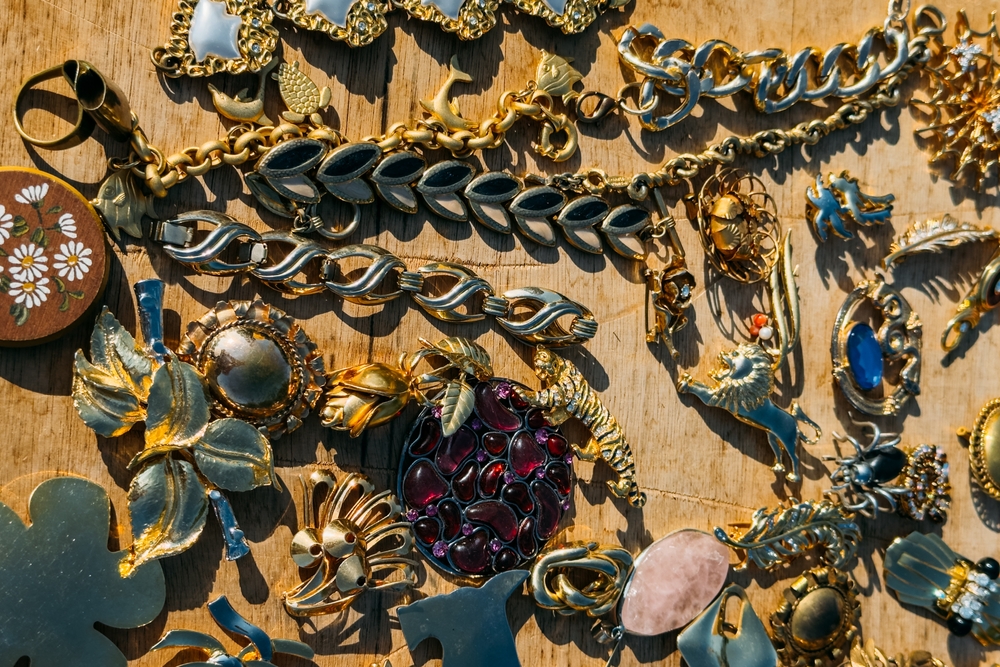
Jewelry loses a significant portion of its retail price the moment it leaves the store, largely because retail markup on new jewelry is high, particularly at chain stores. Used and estate jewelry can be purchased at close to melt or metal value, which is a much more honest price for what you are actually getting.

Estate sales are the traditional channel for fine jewelry, and a local jeweler can give you a quick assessment of what you are looking at. Online, Worthy and I Do Now I Don't both specialize in pre-owned diamond and fine jewelry. eBay has extensive jewelry inventory, but it requires more diligence about verifying seller ratings and return policies before committing.

The practical caveat: anything with a prong setting should be checked by a jeweler before you wear it regularly, because prongs can wear thin or break over time and allow stones to fall out. A basic prong check and tightening is inexpensive and takes minutes. For costume and fashion jewelry, there is no meaningful difference between new and used at all.

CDs and DVDs

VHS to DVD player
Image Credit:
SFA TREASURE Store via eBay

Physical media has been priced out of relevance for most households, which means the used market is overflowing with excellent content at near-giveaway prices. A used DVD that cost $20 new five years ago goes for $1 to $3 at thrift stores. CDs that were $15 new are similarly cheap, and the audio quality is identical whether the disc is new or used.

Thrift stores are the most productive channel for bulk browsing, and the prices rarely justify any more targeted approach. For specific titles, eBay and Decluttr are worth checking. Decluttr buys CDs and DVDs directly from sellers and resells them, which means their inventory is consistent and their condition grading is reliable.

The practical case for buying CDs and DVDs used is still real for people who want access to content that is not available on streaming services, who want to own rather than rent, or who simply prefer physical media. A used Blu-ray of a film you love plays identically to a new one, and the price difference is usually significant.

Craft and sewing supplies

using a sewing machine to repair clothes
Image Credit: Shutterstock

Fabric, yarn, and crafting supplies accumulate in remarkable quantities in households of people who take up new hobbies regularly. The result is a secondhand market where you can find high-quality materials at steep discounts from people who bought more than they needed or moved on to a different interest.

Facebook Marketplace groups dedicated to sewing and crafting exist in most metro areas and are worth joining even if you only buy occasionally. Destash sales, where crafters sell off excess supplies, are common in these groups. Estate sales that include sewing rooms can be particularly productive, because lifetime crafters often accumulate tools and materials over decades.

Sewing machines are a particularly good used buy because quality machines from major brands are built to last for many years. A used Bernina or Brother machine in working order is a far better value than a new entry-level machine at the same price, if you can find one from a reputable seller and verify it runs smoothly. Have a local sewing machine repair shop do a basic service if you are uncertain about the condition.

Office furniture

office in the home
Image Credit: 97kasunifernando via Freepik

Offices reconfigure, companies downsize, and furniture that cost thousands of dollars when purchased gets sold off at a fraction of that price. The commercial office furniture market is particularly good for anyone setting up a home office, because the quality of commercial-grade desks and chairs is usually higher than what the same budget would buy at retail.

CORT Furniture Rental sells off used commercial furniture regularly. Local office liquidation sales are listed on Craigslist and Facebook, and sometimes by specialized liquidators who handle complete office clearouts. Ergonomic chairs in particular are worth targeting here. A Herman Miller or Steelcase chair used from a liquidation sale at $150 to $300 is a much better value than a new chair at the same price from a consumer retailer.

Fabric task chairs carry the same caveat as other upholstered furniture: inspect them closely for staining or wear before you commit. Leather or vinyl seating is easier to assess and clean. Solid-surface desks and storage units carry essentially no risk when purchased used.

Gardening tools

gardening together
Image Credit: Getty Images via Unsplash

Quality gardening tools are built to last for decades, and most of what shows up at estate sales and garage sales has years of useful life remaining. Shovels, rakes, hoes, pruners, and wheelbarrows are all legitimate used purchases. The handles can be replaced if they crack, and metal parts clean up with a little oil and steel wool.

Garage sales in spring are the most productive time to shop for garden tools, because people clear out sheds and garages as the season starts. Estate sales following a gardener's lifetime of accumulation can yield serious tools, including high-quality brands like Felco, Fiskars, and Spear and Jackson, at prices that reflect the fact that the estate just wants things gone.

Power tools for the garden, including rototillers and lawn mowers, are worth more diligence. A used lawn mower should start reliably, run without excessive smoke, and have a blade that is intact. A basic tune-up at a small engine repair shop is inexpensive and worthwhile if the machine is otherwise sound. Anything that requires significant engine work before it runs may not be worth the price of repair.

Pet supplies

dog in crate at home
Image Credit: Shutterstock

Dog crates, pet carriers, aquariums, bird cages, and pet beds circulate constantly through the used market as animals grow, households change, or owners discover that the crate they bought is the wrong size. Most of these items are expensive new and indistinguishable from new once cleaned.

Facebook Marketplace is the most efficient channel for large pet items like crates and tanks. Specific buy-and-sell groups for aquarium enthusiasts exist in most cities and are worth joining if you keep fish, because they carry equipment and livestock that pet stores do not stock. Local animal shelters sometimes sell donated pet supplies at low prices, which serves the secondary purpose of supporting the shelter directly.

Wash fabric pet items thoroughly before use. Plastic and metal items can be cleaned with diluted bleach solution. The only item worth buying new consistently in this category is the actual pet food, for obvious reasons, and flea treatments or other medications where shelf life and storage conditions matter.

Picture frames and wall art

art on wall of house
Image Credit: Shutterstock

Frames are sold at extraordinary markups at retail, where a basic 8×10 frame can cost $30 or more. The same frame at a thrift store costs $2 to $5, and you can reuse the frame for a completely different print or photo. Large frames for poster-size or oversized artwork are particularly good used buys because the retail prices for those sizes are genuinely steep.

Thrift stores are the primary source, and the selection varies enough that browsing is part of the process. Estate sales can surface high-quality frames in quantity. For original artwork, local art markets, Etsy, and directly from emerging artists often offer work at prices well below what comparable pieces sell for in galleries, though this is not strictly a “used” purchase so much as a smarter-sourcing one.

The practical check for used frames: look at the backing and the glass for moisture damage, particularly in the corners, and check that the hanging hardware is functional. Both are easy and inexpensive to replace if they are not. The frame itself rarely degrades in any meaningful way.

If you grew up using Sacagawea dollars, state quarters, or those short-lived presidential dollars, there might be more money in your change jar than you realize. The 2000s were packed with new designs, mint mistakes, and modern commemoratives that now sell for far more than their face value.

Most coins from this era are still worth exactly what they say. The ones below are the exceptions. Condition, grading, and authenticity matter a lot, and fakes are a thing, especially online. But if the details line up, these 16 specific coins from the 2000s can be serious finds.

2000-P โ€œCheeriosโ€ Sacagawea dollar

2000-P โ€œCheeriosโ€ Sacagawea dollar
Image Credit: Heritage Auctions

Back in 2000, a special batch of Sacagawea dollars was slipped into boxes of Cheerios cereal as a promo. A tiny fraction of those turned out to have a special prototype reverse with extra-detailed tail feathers on the eagle. Collectors now call these โ€œCheerios dollars,โ€ and they are one of the key modern U.S. coins. You can spot one by looking closely at the eagleโ€™s tail: if the feathers are sharply defined and separated instead of soft and rounded, you might have the rare version.

Certified Cheerios dollars are in a different universe from regular 2000-P Sacagaweas. Nice graded examples often change hands in the $5,000โ€“$15,000 range, and a top-graded piece with the best surfaces has brought more than $30,000 at auction. Because of those numbers, fakes and โ€œwishful thinkingโ€ are common. Most cereal-promo dollars are the normal type, and you really need clear tail-feather detail and (ideally) a professional opinion before assuming youโ€™ve hit the jackpot.

2000-P Sacagawea โ€œWounded Eagleโ€ dollar

2000-P Sacagawea โ€œWounded Eagleโ€ dollar
Image Credit: Heritage Auctions

This is another 2000-P Sacagawea, but with a dramatic die gouge across the eagleโ€™s body on the reverse. The gouge runs through the eagleโ€™s lower belly and looks like a spear wound, which is how this variety got the โ€œWounded Eagleโ€ nickname. It was created by damage to the die at the mint, so every genuine example shows the same sharp line in the same place.

While not in Cheerios-dollar territory, this variety is still worth a lot more than one dollar. In typical circulated or low-end Mint State, Wounded Eagle dollars often sell in the $100โ€“$300 range, and attractive certified coins can bring a few hundred more. One superb MS68 example has sold for over $5,000. The catch: millions of regular 2000-P Sacagaweas exist, and surface scratches or stains can look โ€œwound-like.โ€ Always compare your coin to clear photos of confirmed examples before getting too excited.

2000-P Sacagawea dollar / Washington quarter mule

2000-P Sacagawea dollar Washington quarter mule
Image Credit: Heritage Auctions

This is the wild one. A tiny number of coins were struck with a Washington state quarter obverse on a golden Sacagawea dollar planchet, with the normal Sacagawea eagle on the back. That means George Washington on one side, the Sacagawea reverse on the other, and a gold-colored dollar-sized planchet. It is one of the most famous U.S. error coins of all time, and fewer than two dozen have been confirmed.

If you somehow find one of these, you are not dealing with pocket-change money. Recent auction results show examples selling well into six figures, with some grading-certified pieces bringing in the $120,000โ€“$190,000 range depending on grade and eye appeal. Because the stakes are so high, this is heavily counterfeited. If a coin like this crosses your path, treat it like a lottery ticket: donโ€™t clean it, donโ€™t try to โ€œfixโ€ anything, and get it in front of a major grading service or reputable dealer fast.

2000 Lincoln cent โ€œWide AMโ€ reverse

2000 Lincoln cent โ€œWide AMโ€ reverse
Image Credit: ebf1943s via eBay

Most 2000 Lincoln pennies are worth a cent. A small number, though, were struck with a reverse design meant for proof coins, where the letters A and M in โ€œAMERICAโ€ on the back are clearly separated instead of nearly touching. These โ€œWide AMโ€ business-strike cents are a fun cherry-pick from pocket change or old rolls. You check this by flipping the coin and looking between the A and M with a magnifier.

Even in lower Mint State grades, Wide AM cents bring real premiums. Slabbed examples in the middle of the pack often sell in roughly the $25โ€“$100 range, with top-grade pieces reaching a few hundred dollars and a record MS68 sale around $800. The vast majority of 2000 cents are the normal โ€œClose AMโ€ type, so do not assume every bright penny is valuable. You need the correct reverse and decent condition for collectors to care.

2004-D Wisconsin quarter โ€œExtra Leaf Highโ€

2004-D Wisconsin quarter โ€œExtra Leaf Highโ€
Image Credit: Black River Collectibles via eBay

The Wisconsin state quarter has a cow, a wheel of cheese, and a stalk of corn. On some 2004-D coins, a mysterious extra leaf appears on the left side of the corn husk, pointing up. This โ€œExtra Leaf Highโ€ variety became a big modern error story, because it was a neat visual mistake right in the middle of a program millions of people collected.

Regular worn Wisconsin quarters are still worth 25 cents, but Extra Leaf High pieces can bring real money. Circulated examples have been trading around the $50โ€“$200 range, while nicer Mint State coins graded MS64โ€“MS65 can reach several hundred dollars. A few top-graded coins have sold for over $1,000. You do need the leaf to be bold and clearly separate from the husk; random scratches or stains do not count. There is also a similar โ€œExtra Leaf Lowโ€ version, which is its own thing.

2004-D Wisconsin quarter โ€œExtra Leaf Lowโ€

2004-D Wisconsin quarter โ€œExtra Leaf Lowโ€
Image Credit: Heritage Auctions

The โ€œExtra Leaf Lowโ€ Wisconsin quarter has the same basic design as above, but the added leaf on the corn husk points downward instead of up. It came from a different damaged die, so it is cataloged as a separate variety. Collectors like owning both, and some people hunt rolls and bags of old state quarters just for these two errors.

Values are similar but usually a bit softer than the High Leaf. Many Extra Leaf Low coins in circulated condition sell for somewhere in the $40โ€“$150 range, with nice certified Mint State pieces landing a few hundred dollars. As with the High Leaf, condition and clarity matter a lot. The extra leaf should look like a small, raised extension of the husk, not a tiny nick. Because these quarters have been cherry-picked heavily for years, finding one in loose change is tough but not impossible.

2005-D โ€œSpeared Bisonโ€ Jefferson nickel

2005-D โ€œSpeared Bisonโ€ Jefferson nickel
Image Credit: Heritage Auctions

The 2005 Buffalo-reverse nickel was already popular because it brought back a classic American animal. A dramatic die gouge on some Denver-minted coins cuts through the bisonโ€™s body, creating the โ€œSpeared Bisonโ€ variety. On genuine examples, you will see a strong raised line running diagonally through the buffalo, usually from its shoulder toward the midsection.

Because the error is bold and the design is attractive, collectors pay up. Circulated Speared Bison nickels often sell in the $20โ€“$50 range, while certified Mint State examples commonly bring a couple hundred dollars, and high-end MS66โ€“MS67 pieces can push into the high hundreds or even low thousands. There are also plenty of nickels with random scratches near the bison, which can trick the eye. Compare carefully to confirmed photos before sending one off for grading.

2005-P Minnesota quarter โ€œExtra Treeโ€ doubled die

2005-P Minnesota quarter โ€œExtra Treeโ€ doubled die
Image Credit: Heritage Auctions

The Minnesota state quarter shows an outline of the state, a lake, and a line of trees. On some 2005-P coins, doubling in the tree line creates what looks like an extra tree trunk or shadowy forest in the background. There are several different doubled-die varieties, but the strongest โ€œExtra Treeโ€ versions have a very clear extra trunk between the main trees.

Not every Minnesota quarter with a weird mark is valuable, but the stronger varieties have sold well. Good Extra Tree examples in nicer circulated or lower Mint State grades often bring around the $75โ€“$200 range, and at least one certified MS67 example has approached $800. Minor doubled-tree varieties are worth less, sometimes only a few dollars. You really need strong, clear extra tree detail plus clean surfaces for collectors to pay the bigger premiums.

2005-P Kansas โ€œIn God We Rustโ€ quarter

2005-P Kansas โ€œIn God We Rustโ€ quarter
Image Credit:
naj32 via eBay

On some 2005-P Kansas quarters, grease on the die partially filled in the letter T in โ€œTRUSTโ€ on the obverse. The result looks like the coin says โ€œIN GOD WE RUST,โ€ which made headlines and turned a fairly common error type into something people actively hunted for. Grease-filled letters happen a lot, but this particular phrase is what made this one famous.

Value depends on how strong the missing T is. Mild examples might only be worth a few dollars, but bolder โ€œWE RUSTโ€ coins in nice shape often sell in roughly the $15โ€“$50 range, with especially sharp or graded pieces sometimes going higher and some guides suggesting top examples can reach into the low hundreds. Lots of coins have weak letters or dirt in the word โ€œTRUST,โ€ so you should look for a clearly missing T and otherwise decent condition. Even then, this is more of a fun bonus coin than a retirement fund.

2007 George Washington presidential dollar missing edge lettering

2007 George Washington presidential dollar missing edge lettering
Image Credit: Heritage Auctions

When the Presidential dollar series launched in 2007, the date, mint mark, and โ€œIN GOD WE TRUSTโ€ were moved to the coinโ€™s edge. On some Washington dollars, that step never happened, leaving a coin with a totally plain edge and no motto. Collectors rushed to search unopened rolls, and these โ€œgodless dollarsโ€ became the best-known modern edge error.

Missing-edge Washington dollars are not as rare now as they felt at the time, but they still carry a solid premium. Certified Mint State coins often sell in the $20โ€“$50 range, with some higher-grade or special-label pieces bringing more, and a few sales in the $50+ bracket. The key is that the edge has to be completely blank; weak or patchy letters are less desirable. Plenty of regular presidential dollars with normal edges are sitting in jars and drawers, so do not assume any 2007 dollar is valuable until you check the rim under good light.

2007 John Adams presidential dollar double edge lettering

2007 John Adams presidential dollar double edge lettering
Image Credit: Heritage Auctions

John Adams dollars brought a different kind of edge error. Instead of missing the lettering entirely, some coins went through the edge-lettering machine twice. That created overlapping or doubled inscriptions around the rim. On genuine pieces, you will see the full edge text repeated, sometimes in the same direction, sometimes inverted, which is why these are called โ€œdoubled edge letteringโ€ or โ€œoverlappedโ€ errors.

These are scarcer than the Washington missing-edge dollars, and the better ones sell for more. Typical certified examples tend to trade somewhere around the $50โ€“$150 range, and a high-grade MS66 coin has brought close to $300 at auction. As always, grade matters: a bright, problem-free coin with strong, readable doubled edge lettering is what collectors want. Be careful not to confuse this with the normal orientation variation where the edge text is just โ€œupside down,โ€ which is common and not an error..

2000 American Silver Eagle $1 bullion coin

2000 American Silver Eagle $1 bullion coin
Image Credit: Heritage Auctions

American Silver Eagles are bullion coins with a $1 face value, but each one contains a full troy ounce of fine silver. The 2000-dated coin is part of that series, so even a plain uncirculated example is worth more for its metal alone than its face value. Many people bought these new from the Mint in the early 2000s and tucked them away, so they still show up in drawers, safe-deposit boxes, and inherited collections.

Because they track the silver market, exact numbers move around, but recent completed sales show 2000 Silver Eagles often changing hands in about the $40โ€“$100 range for typical uncirculated or lightly handled coins, with premium graded MS69 or MS70 examples bringing more. Condition, whether the coin is still in original mint packaging, and current silver prices all matter. Watch out for plated or โ€œsouvenirโ€ pieces; a genuine Silver Eagle should weigh about one troy ounce and ring like silver when gently tapped.

2001 American Buffalo commemorative silver dollar

2001 American Buffalo commemorative silver dollar
Image Credit: Heritage Auctions

This modern commemorative reprises the classic buffalo design on a large silver dollar. Issued in 2001, it has a face value of $1 but contains nearly three-quarters of an ounce of silver and strong collector appeal. Many were sold in nice presentation boxes with a certificate, then stored and forgotten, which is exactly how they might show up in an estate or old safe.

Values vary based on whether it is uncirculated or proof, and whether it has been graded. Regular uncirculated Buffalo dollars in original packaging often sell in roughly the $90โ€“$130 range, while certified MS69 or top-grade pieces can bring a bit more, and a perfect MS70 example once realized over $1,700. Tarnish, cleaning, or missing packaging can drag the price down, even though the coinโ€™s silver content still gives it a floor value well above one dollar.

2000-W Library of Congress bimetallic $10 coin

2000-W Library of Congress bimetallic $10 coin
Image Credit: Heritage Auctions

This $10 coin was issued in 2000 to mark the Library of Congress bicentennial and is the only modern U.S. coin made of both gold and platinum. It has a gold ring around a platinum center and a face value of ten dollars, but its metal content and collector demand push it into a much higher price bracket. Many were sold directly to collectors in special boxes, which is how they tend to surface today.

Because it contains significant precious metal and is a key modern commemorative, prices have stayed strong. MS69 examples in recent years have often sold in about the $900โ€“$1,500 range, with some perfect MS70 pieces bringing closer to $2,000. Condition, grading, and whether all the original Mint packaging is present can move the needle. If you see something that looks like a bimetallic โ€œbullseyeโ€ coin with this design, do not treat it like pocket change.

2008-W American Gold Buffalo $50 one-ounce coin

2008-W American Gold Buffalo $50 one-ounce coin
Image Credit: Heritage Auctions

The American Gold Buffalo is a 24-karat gold bullion coin that revives the famous buffalo nickel design. The standard one-ounce coin carries a $50 face value but contains a full ounce of fine gold, which already makes it far more valuable than the number stamped on it. Many 2008-dated Buffalos were bought as investment pieces and stored away, so they sometimes show up in family collections without anyone realizing how much they are now worth.

With gold prices where they are today, even a basic ungraded one-ounce 2008 Gold Buffalo typically sells for several thousand dollars, with many recent sales landing in roughly the $2,000โ€“$3,500 range, and perfect MS70 or special-label pieces bringing more. Any coin like this should be handled by the edges only, kept out of jewelry mounts if you care about collector value, and checked for authenticity, since high-dollar bullion coins are frequent targets for counterfeiting.

2009 Ultra High Relief gold double eagle $20 coin

2009 Ultra High Relief gold double eagle $20 coin
Image Credit: Heritage Auctions

In 2009, the Mint issued a modern recreation of the famous Saint-Gaudens high-relief double eagle, struck in 24-karat gold with a face value of $20. These Ultra High Relief coins are thick, beautifully detailed, and contain an ounce of gold, so they were never meant for circulation. They were sold directly to collectors and investors, often one per household, and quickly became a modern classic.

Today, even average certified examples bring serious money. Many graded pieces trade in about the $4,000โ€“$8,000 range, depending on grade and whether they come with the original box and paperwork, and the finest known coins have realized over $20,000 at auction. If you find one in a safe or inheritance, resist the urge to polish or โ€œshine it up.โ€ Any cleaning can hurt value fast, and with this kind of money at stake, having it authenticated and graded is almost always worth it.

You're probably making more money now than you ever have. Your career has momentum, the kids aren't small anymore, and somewhere between the mortgage and the school fees and the aging parents, retirement got pushed to the background. Not abandoned, just deferred. That's the trap your 40s set for you.

The compounding math that makes retirement savings work requires time. Specifically, it needs roughly 20 years to do its heaviest lifting. You still have that runway, but it's shortening. A dollar you invest at 44 has about half the compounding time of a dollar invested at 34. That's not a reason to panic, but it is a reason to stop coasting.

Most retirement advice for people in their 40s is embarrassingly vague: save more, spend less, diversify. This isn't that. These are moves with actual dollar impact in this specific decade, and some of them only work now, before the math shifts again.

Max out catch-up contributions the year you turn 50

A sack labeled with 401k with several coins beside it and a yellow calculator.
Image Credit: Shutterstock

The IRS gives people over 50 the right to contribute more to their retirement accounts than everyone else. For 2025, the standard 401(k) limit is $23,500. Once you hit 50, you can add an extra $7,500, bringing your total to $31,000. In 2026, those numbers rise to $24,500 and $8,000 respectively, for a $32,500 combined total. There is also a “super catch-up” available to people aged 60 to 63: instead of $8,000, they can contribute an additional $11,250 in 2025. If your plan offers this and you fall in that range, use it.

The same logic applies to IRAs. For 2025, the IRA limit is $7,000 for most people, plus a $1,000 catch-up for those 50 and older. That's $8,000 total. If you're earning too much to contribute directly to a Roth IRA (above $150,000 for single filers or $236,000 for married filers in 2025), a backdoor Roth conversion still gets money into the account. The mechanics are more involved, but they work.

People who start maxing catch-up contributions the year they turn 50 and continue to 65 can add well over $100,000 more to their retirement accounts than someone who never bothers with the extra allowance. That's before growth. The difference isn't marginal. If you're already contributing but not hitting the max, this is the first number to get to.

Use your HSA like a second retirement account

HSA on wooden blocks
Image Credit: Shutterstock

If you're on a high-deductible health plan, a Health Savings Account is one of the best financial tools available and one of the most underused. The reason is the triple tax advantage: contributions go in pre-tax, the money grows tax-free, and withdrawals for qualified medical expenses are tax-free. No other account does all three.

For 2025, the contribution limits are $4,300 for individual coverage and $8,550 for family coverage. Those 55 or older can add an extra $1,000 as a catch-up. What most people miss is that the account doesn't expire. The money carries over forever. You can invest it, let it grow for 20 years, and then use it in retirement to pay Medicare premiums, dental and vision costs, long-term care premiums, and most out-of-pocket medical expenses, all tax-free.

The strategy that makes this work is paying your current medical costs out of pocket if you can manage it, and letting the HSA balance grow untouched. Keep the receipts. There's no time limit on reimbursing yourself for past qualified expenses, so a $900 doctor bill from 2025 can be reimbursed from your HSA in 2039. Healthcare costs in retirement routinely run into six figures. An HSA that's been invested and growing for 20 years is real money toward those costs, and it's money that never gets taxed.

Run a Roth conversion projection before your income peaks too high

Roth IRA
Image Credit: Shutterstock

If you have a traditional 401(k) or IRA, every dollar in there will be taxed as ordinary income when you pull it out in retirement. Required minimum distributions kick in at 73 under current law, and they force withdrawals whether you need the money or not, potentially pushing you into a higher bracket precisely when you're trying to manage income carefully.

Roth conversions let you pay taxes now, on your terms, and let the money grow tax-free from there. The tactic that works best is converting up to the top of your current bracket each year: if your income is $150,000 and you're a single filer in the 24% bracket, you can convert up to about $47,000 more before hitting the 32% threshold. Do that for several years running and you meaningfully shift the balance between taxable and tax-free money in retirement.

Your 40s are the window for this. If income keeps rising into your 50s, conversion becomes harder to justify because you're already in a higher bracket. If your income dips (a job gap, a sabbatical, a lower-earning year for any reason), that's actually a prime moment to convert more. The RMD rules mean a large traditional IRA will eventually force income you didn't choose. Getting ahead of that in your 40s gives you control you won't have in your 70s.

Get real disability insurance, not just whatever work gives you

disability insurance
Image Credit: Shutterstock

Group disability coverage from an employer typically replaces around 60% of your salary, up to a capped monthly maximum. That cap, often $5,000 or $10,000 a month, is the problem. If you're earning $120,000 a year and your employer plan caps at $5,000 monthly, you're already under water.

The risk here is bigger than most people think. About 25% of today's 20-year-olds will become disabled before retirement age, and roughly one in seven workers can expect a disability lasting five years or more. Disability causes nearly 50% of home foreclosures. For most working adults, their income is their most valuable asset by a wide margin. A $100,000 salary for 25 more working years is worth $2.5 million in undiscounted future income. Most people insure their house and their car but leave that income only partially protected.

A private individual disability policy fills the gap. Look for own-occupation coverage, which pays out if you can't perform your specific job, not just any job. The cost depends on your age, health, occupation, and benefit level, but buying in your early 40s is significantly cheaper than waiting until your late 40s or 50s. Health changes can make you uninsurable at any time. This is one protection that gets harder to get, not easier, so the right time to review your coverage is now.

Add an umbrella insurance policy to your coverage stack

model car, house, and umbrella
Image Credit: Shutterstock

As net worth grows, liability exposure grows with it. Standard homeowners and auto policies have liability limits, typically $300,000 to $500,000. If you're involved in a serious car accident and the judgment exceeds your policy limit, your savings, your home equity, even your future wages can be at risk.

A personal umbrella policy sits above your existing coverage and adds $1 million or more in liability protection. The cost is low relative to the coverage, usually $150 to $300 per year for a $1 million policy, because most people never need it. But by your 40s, you likely have assets worth protecting that didn't exist when you were 25. A rental property, investments, a home with substantial equity. All of that is exposure.

The other reason to review this in your 40s: teenage drivers. Adding a new driver to your household increases your liability risk considerably. If a 17-year-old on your policy injures someone seriously, a standard auto policy limit may not cover the full damage. Umbrella coverage is one of the cheaper things you can buy and one of the more overlooked.

Lock in term life insurance before your 50s

man looking at life insurance policy
Image Credit: Shutterstock

If you still have dependents, a mortgage, or income that others rely on, and you haven't bought term life insurance or haven't revisited what you have, your 40s are the last affordable window. Premiums for a 20-year term policy rise sharply between 45 and 55. Waiting four years doesn't cost you four more years of premiums. It can double the monthly rate.

The math on how much coverage you need is simpler than people make it. A rough estimate: 10 to 12 times your annual income, adjusted for existing savings, outstanding debt, and how many years until your youngest dependent is financially independent. If you have $400,000 saved and a $200,000 mortgage and want to replace $80,000 per year for 15 years, the numbers will tell you the gap. Don't guess.

What you don't need in most cases is permanent life insurance (whole life, universal life). These are expensive products with a savings component that grows slowly and comes with high fees. For most people in their 40s, a 20-year term policy covers the years of maximum financial obligation. Once the mortgage is paid and the kids are on their own and retirement savings are substantial, the insurance need often goes away entirely.

Sequence your debt paydown deliberately

paying off debts
Image Credit: Shutterstock

Not all debt is created equal, and paying it down in random order costs more than it should. The standard advice is to pay the highest-interest debt first, which is correct. But there's nuance worth knowing.

Credit card debt at 20% or more is a guaranteed 20% return on every dollar you throw at it. No investment reliably beats that. Pay it. Aggressively. Personal loans and car loans are typically next. Mortgage debt is usually last, because the interest rate is lower and the compounding return on retirement investments is likely to exceed the mortgage rate over a long enough period. Putting an extra $500 a month toward a 6.5% mortgage is financially worse than putting that $500 into a diversified retirement account if you have 20 years of growth ahead.

Student loans depend on the rate. Federal loans at 4% to 5% are low-priority. Private loans at 8% or above move up the queue. The key habit to build now: every time you eliminate a payment (a car paid off, a loan closed), redirect that amount to savings rather than absorbing it back into spending. Debt paydown creates cash flow. The question is whether you capture it or let it disappear.

Update your beneficiary designations and get basic estate documents in place

older people talking to financial advisor
Photo by Getty Images on Unsplash

This is the one item on this list that people are most likely to have wrong. Beneficiary designations on 401(k)s, IRAs, and life insurance policies override your will. They always have. The problem is that these forms get filled out when accounts are opened and rarely revisited. Someone who named their ex-spouse as beneficiary in 2007 may still have that ex-spouse listed on an account today.

Pull out every financial account and insurance policy you own and check who's named. Update anything that's wrong. Then look at your estate documents: a basic will says who gets what and names a guardian for minor children. A durable power of attorney lets someone manage your finances if you're incapacitated. A healthcare directive tells medical providers what you want if you can't speak for yourself. These are not complicated documents, and a basic estate attorney can draft a complete set for a few hundred to a few thousand dollars depending on complexity.

Recalibrate your investment allocation for a 20-year runway

building an investment porfolio
Image Credit: Shutterstock

The common mistake in your 40s is staying in an allocation that made sense at 30 (heavy on growth, light on stability) and forgetting to adjust as the timeline shortens. You're not approaching retirement tomorrow, but you're also not 30 years away. A market downturn the year before you retire, with 90% in equities, is a significantly different problem than a downturn at 32.

A rough rule that still holds up: subtract your age from 110 and put that percentage in equities. At 44, that's about 66% stocks, 34% bonds and stable assets. At 50, it's 60/40. The exact numbers depend on your risk tolerance, other income sources like a pension, and how much flexibility you have in retirement timing. The point is that the allocation decision isn't a one-time setup you make at 30 and forget.

Also check where you're invested within equities. If your entire stock allocation is in U.S. large-cap index funds, you have more concentration risk than you might think. International exposure, small-cap exposure, and sector diversification all reduce the likelihood that any single region or sector collapse takes down your whole portfolio. Rebalancing once a year, selling what's grown and buying what's lagged, enforces discipline and keeps you roughly on target without having to time the market.

Open a taxable brokerage account

tax account
Image Credit: Shutterstock

Tax-advantaged accounts (401(k)s, IRAs, HSAs) are the right place for most retirement savings. But they come with rules: age restrictions on withdrawals, required minimum distributions, annual contribution limits. A taxable brokerage account has none of those constraints. You can contribute any amount, withdraw at any time, and invest in anything a regular brokerage offers.

The tax treatment isn't as favorable as a Roth IRA, but it's not punishing either. Long-term capital gains, on investments held more than a year, are taxed at 0%, 15%, or 20% depending on income. That's still lower than ordinary income rates for most people. And qualified dividends from most U.S. stocks get the same treatment. The flexibility of a taxable account becomes especially valuable if you want to retire before 59ยฝ, when retirement account access is restricted.

Even modest regular contributions to a taxable account in your 40s compound meaningfully by your late 50s. If you're already maxing out your 401(k) and HSA and IRA, this is the next logical bucket. If you're not there yet, get the tax-advantaged accounts maxed first. But having at least some money outside of locked-up retirement accounts gives you options: a bridge to early retirement, a safety valve if something changes, or simply access to cash without the penalty and tax complication.

Separate your kids' college savings from your retirement funding

saving for kids' college in piggybank
Image Credit: Shutterstock

This is the sequence most parents get backward. Retirement savings should come first. Not because your kids' education doesn't matter, but because your kids can borrow for college. You cannot borrow for retirement. A 529 plan funded at the expense of a 401(k) match is a math error.

Once your retirement contributions are where they should be, 529 plans are an efficient vehicle for college savings. Contributions are made with after-tax dollars, but growth and withdrawals for qualified education expenses are tax-free. Many states also offer a state income tax deduction on contributions. The accounts can be transferred between family members if one child doesn't use the full balance, and under recent rule changes, unused funds can eventually be rolled over into a Roth IRA for the beneficiary, subject to limits and conditions.

What doesn't work: paying for college out of retirement savings. Withdrawals from a traditional IRA before 59ยฝ trigger income taxes and a 10% penalty. A Roth IRA contribution withdrawal avoids the penalty but costs you tax-free growth. Neither is a good deal. The cleaner path is to save for college in a 529 starting early, treat it as a separate funding bucket, and resist the pressure to raid retirement money when tuition bills arrive.

Consolidate old 401(k)s from previous employers

401K on wooden blocks
Image Credit: Shutterstock

Most people have at least one old 401(k) they stopped thinking about when they changed jobs. Sometimes there are several. These accounts tend to sit with their original provider, invested in whatever fund was selected at hire, sometimes with limited investment options, and always with fees that may be higher than what you'd pay elsewhere.

Rolling an old 401(k) into an IRA at a low-cost provider like Vanguard, Fidelity, or Schwab gives you more investment options, often lower expense ratios, and one less account to track. If you later want to do a backdoor Roth contribution and have money sitting in traditional IRAs, the IRS pro-rata rule will complicate the math, so there's sometimes a case for rolling IRA money into a current employer's 401(k) instead. That depends on your situation.

The administrative case for consolidation is real too. Accounts that get lost or forgotten are more common than you'd expect. If you have an old 401(k) from a company that was acquired or renamed, tracking it down in 20 years becomes a project. Dealing with it now, when the account is findable and you have the login information, is a lot simpler. One place to start if you've lost track of an old account: the National Registry of Unclaimed Retirement Benefits lets you search by Social Security number for lost accounts.

Project what healthcare will actually cost you in retirement

healthcare bills statement
Photo by Getty Images on Unsplash

Healthcare is the retirement expense most people underestimate, sometimes by a lot. Most financial plans assume a monthly spending number and leave healthcare as a vague line item. In practice, healthcare costs in retirement are a major and inflation-sensitive expense, and they depend significantly on when you retire relative to Medicare eligibility at 65.

If you retire at 60, you need to cover five years of private insurance or COBRA, which can run $700 to $1,500 or more per month for a single person depending on the plan and your location. After Medicare kicks in, there are still premiums for Part B, Part D, and supplemental coverage (Medigap), plus uncovered dental and vision costs, plus any long-term care expenses that insurance doesn't pay. A 65-year-old couple retiring today can expect to spend several hundred thousand dollars on healthcare over their retirement.

Long-term care insurance is worth evaluating now, not in your 50s. Premiums are meaningfully lower when you're in your early 40s, and you're more likely to qualify medically. The catch is that long-term care insurance is complex and the industry has a history of premium increases on existing policies. Hybrid policies that combine life insurance with long-term care benefits have become more popular and offer more predictable pricing. A fee-only financial planner with experience in this area can model the math for your specific situation.

Know your Social Security earnings record and understand the claiming decision

worrying about taxes on earnings on social security
Image Credit: Shutterstock

Your Social Security benefit is calculated from your 35 highest-earning years, adjusted for inflation. If you have gaps, years with no earnings count as zeroes in that calculation. Checking your earnings record now, through your account at ssa.gov, confirms that your wages have been recorded correctly and gives you a preview of your estimated benefit.

The gap between claiming at 62 and waiting until 70 is substantial. At the maximum benefit level in 2025, claiming at 62 yields up to $2,831 per month, while waiting until 70 yields up to $5,108. That's a difference of more than $2,200 a month. For people who will rely heavily on Social Security, delaying past full retirement age earns an 8% increase per year up to age 70. That's a guaranteed return on patience that no investment reliably matches.

You don't have to decide your claiming strategy now, and it's likely to change as your financial picture evolves. But understanding how the math works in your 40s means you can plan for it intentionally: whether to keep working past 62, whether to fund retirement savings in ways that give you bridge income if you delay claiming, and how Social Security fits into a spousal strategy if you're married. The decisions you're making in your 40s, about savings rates and Roth conversions and when to retire, all interact with the Social Security claiming question.

Run a financial stress test

stressed and worried about finanaces
Image Credit: Shutterstock

This is the move most people skip because it's uncomfortable. The question is: what happens to your financial plan if things go badly? Not catastrophically, just badly. A job loss at 55. A serious illness at 52. A divorce. A market crash that cuts your portfolio by 40% the year before you planned to retire.

Stress-testing a financial plan means running the numbers under realistic adverse assumptions. If you were laid off at 55 and couldn't find comparable work, how long could your current savings sustain your household without touching retirement accounts? If you needed to retire five years earlier than planned, what would your monthly income look like? If Social Security reform reduces benefits by 20% (one scenario that's been discussed), does the plan still work?

The point isn't to catastrophize. It's to find the real weak spots while there's still time to address them: a disability coverage gap, too much lifestyle inflation relative to savings rate, a retirement date assumption that doesn't hold up under scrutiny. The people who come out of unexpected setbacks in their 50s with their finances intact are generally the ones who had some version of this conversation with themselves a decade earlier.

The 40s feel long while you're in them. From the other side of retirement, the people who have the most options in their 60s are the ones who treated their 40s as the decade that actually determined the outcome.

Learn how to stretch your retirement savings and maximize your Social Security benefits for a comfortable retirement:

planning for retirement
Image Credit: Shutterstock

18 ways to stretch your retirement savings without feeling poor: The goal isnโ€™t to pinch every penny โ€” itโ€™s to protect the big stuff and trim quiet leaks. Here are simple moves that keep freedom high and stress low.

18 budgeting rules that actually work for people over 50: Money habits change as we age. In this post, discover budgeting rules that fit your income and shift of priorities when youโ€™re over 50.

15 clever strategies to maximize your Social Security benefits: Use the facts in this post to make choices that raise your monthly check for years.

The call comes a few days after the funeral. Someone says they're a debt collector, that your mother had an outstanding balance, and that it needs to be taken care of. They're polite enough. They may even sound sympathetic. But the implication is clear: they expect you to pay.

Most people in that situation don't know enough to push back. They feel guilty, or overwhelmed, or they just want to make the call stop. Some end up making payments on debt they were never legally required to pay. This happens constantly, and debt collectors know it.

Here is what the law actually says: family members are generally not responsible for paying a deceased person's debt out of their own money. The estate is responsible. If the estate doesn't have enough money to cover the debt, in most cases the debt goes unpaid. That is not a loophole. That is how the law works.

There are real exceptions, and this article covers them. But the starting point is that you probably don't owe what they're calling about.

How the estate works

lawyer talking to executor
Image Credit: Shutterstock

When someone dies with unpaid debt, those debts become the responsibility of their estate, which is the legal term for whatever money, property, and assets they left behind. The executor, the person named in the will to manage the estate, is responsible for figuring out what debts exist, notifying creditors, and paying valid claims from the estate's assets before distributing anything to heirs.

If there isn't enough money in the estate to cover everything, creditors are paid in a legally determined order. What's left gets distributed to heirs. If nothing is left, creditors often don't get paid. That's the risk they accept by extending credit. It is not transferred to you.

Where it gets complicated is that some assets pass outside of probate entirely. Life insurance proceeds, jointly-held bank accounts, and retirement accounts with named beneficiaries generally go directly to those beneficiaries, bypassing the estate. This is worth knowing if you're handling an estate, because creditors can only make claims against the estate, not against assets that transferred directly.

Credit card debt

selection of credit cards
Image Credit: Shutterstock

This is the debt people most often get pressured to pay when they have no legal obligation to do so. Credit card debt is unsecured and goes into the estate when the borrower dies. The card issuer can file a claim against the estate and may get paid if there are assets. If there are no assets, the debt is generally written off.

Your children are not responsible for your credit card debt. Your parents are not responsible for yours. The exception, and it matters, is the difference between a joint account holder and an authorized user. If you were a joint account holder, you shared legal responsibility for that debt and you owe it. If you were just an authorized user on someone else's account, you do not. Those are two very different things, and collectors will sometimes blur the distinction.

If you received calls about a deceased parent's or sibling's credit card debt and you had no joint accounts with them, you do not owe that money. You don't have to pay it to protect your own credit, either. A deceased person's credit report and yours are separate. Their debts do not appear on your report.

Medical debt

man worried about debt after the death of a loved one
Image Credit: Shutterstock

Medical debt is unsecured debt and follows the same basic rule: it becomes a claim against the estate. If the estate can't cover it, it generally goes unpaid, and family members are not on the hook for the shortfall.

There are two exceptions worth knowing. First, if you're a surviving spouse and live in a state with what are called necessaries statutes, those laws can hold spouses responsible for certain necessary costs, including healthcare, incurred during the marriage. Second, more than half of U.S. states have filial responsibility laws on the books, which in theory can require adult children to pay for an indigent parent's care. In practice, these laws are rarely enforced for unsecured consumer medical debt, but if you live in one of those states and a hospital is making noise about it, that's worth talking to a lawyer about specifically.

If a parent was on Medicaid, the state may attempt to recover the cost of care paid on their behalf, but it does this through the estate, not by billing you directly. It may place a lien on property that was part of the estate. It cannot come after your personal assets.

Mortgages and property you inherit

A mortgage is secured debt, meaning it's attached to the property itself. If you inherit a house that still has a mortgage on it, you inherit the obligation to keep making payments if you want to keep the house. You don't owe the lender out of your personal assets, but if payments stop, the lender will foreclose.

Federal law gives heirs who inherit a mortgaged property some protections. You generally have the right to assume the mortgage without triggering a due-on-sale clause, and lenders are required to work with you through the process. The practical steps are to notify the mortgage servicer of the death, provide a death certificate, and get clear on what your options are, including whether you want to keep the property, sell it, or let it go.

If you inherit a car with a loan attached to it, the same logic applies. You can keep making payments and keep the car, or you can surrender it. What you don't do is owe money out of your own pocket if you choose not to keep it.

Student loans

Federal student loans are discharged when the borrower dies. This includes Direct Loans, Parent PLUS Loans, and other federal loan types. All federal student loans are discharged at death, meaning no one, not the estate, the cosigner, or any family member, owes the remaining balance. To initiate the discharge, a family member submits a death certificate to the loan servicer.

Private student loans are more complicated. Private lenders are not required to discharge debt when a borrower dies, though many do. If the loan doesn't discharge, the lender can pursue the estate. More importantly for families, if someone cosigned a private student loan and the borrower dies, the cosigner may still owe the balance. Some lenders release cosigners automatically; others do not. If you cosigned a private loan and the borrower has died, contact the lender immediately and ask about their death discharge policy before assuming the worst.

If a parent took out a federal Parent PLUS loan for their child and the parent dies, the loan is discharged. If the child dies, it's also discharged. These protections are specific to federal loans. For private loans in community property states, a surviving spouse may be liable for student loan debt taken on during the marriage even without cosigning, which is an edge case worth knowing if you're in one of those states.

When you actually do owe the debt

There are clear situations where you are legally on the hook, and knowing them prevents confusion in the other direction.

You owe the debt if you were a co-signer on a loan. When you cosign, you agree to be equally responsible for repayment. That obligation doesn't end when the primary borrower dies. The lender can come to you for the full remaining balance.

You owe the debt if you were a joint account holder on a credit card or bank account. Again, this is different from being an authorized user. Joint account holders are both legally responsible.

You may owe the debt if you live in one of the nine community property states and you're the surviving spouse. Those states are Arizona, California, Idaho, Louisiana, Nevada, New Mexico, Texas, Washington, and Wisconsin. In community property states, debt taken on during the marriage is generally considered joint debt, regardless of whose name is on the account. Separate debt, meaning debt your spouse had before the marriage, is a different matter.

If none of those apply, the answer is almost certainly no.

What collectors can and cannot legally do

debt collector talking to a woman
Image Credit: Shutterstock

The Fair Debt Collection Practices Act governs this directly. Under the FDCPA, debt collectors can only discuss the details of a deceased person's debt with the executor or administrator of the estate, a surviving spouse, or someone with legal authority to pay debts from the estate's assets. They cannot discuss the debt with siblings, adult children, or other relatives who aren't in one of those categories.

Collectors can contact other family members, but only to locate the person who does have that authority. They can call once to ask for contact information. They cannot discuss the debt, imply that the family member owes it, or pressure them for payment. If a collector calls you and starts describing the debt and pushing you to settle it, and you are not the spouse, executor, or cosigner, that is an FDCPA violation.

Collectors also cannot call before 8 a.m. or after 9 p.m., claim to work for a government agency, or threaten legal action they have no intention of taking. If a collector tells you that you are personally responsible for a debt when you are not, that is illegal, full stop. You can report violations to the Consumer Financial Protection Bureau at consumerfinance.gov or to the FTC at reportfraud.ftc.gov. Under the FDCPA, you can also sue a collector for violations and recover up to $1,000 in statutory damages, plus attorney's fees.

What to say when they call

You are not required to discuss any debt with a collector. You don't have to confirm your relationship to the deceased, provide your address, or explain your financial situation.

If you are not the executor, cosigner, or spouse, you can say this: “I'm not the personal representative of the estate and I'm not legally responsible for this debt. Please contact the estate executor directly.” Then provide the executor's contact information if you have it, and end the call.

If you are the executor and want to verify the debt before engaging further, you have the right to request written validation of the debt. Once the collector gets a written dispute from you within 30 days of first contact, they must stop contacting you until they verify the debt in writing. Send any dispute or cease-contact request by certified mail so you have documentation.

If the calls don't stop after you've made clear you have no legal obligation, send a written cease-contact letter to the collection agency. They are then permitted to contact you only to confirm they'll stop, or to notify you of a specific legal action they plan to take. Keep a copy of everything. If they continue calling after receiving that letter, that's a violation worth reporting and potentially pursuing.

Grief is already hard enough. The law mostly protects you from being financially responsible for someone else's debts, and knowing that clearly is the most useful thing you can take from this.

You've got a box of jewelry that belonged to someone you loved, and now you're trying to figure out what to do with it. Maybe you need the money. Maybe you just don't want to keep it in a drawer for the next twenty years. Either way, you're staring at a pile of rings, chains, brooches, and earrings with no real idea what any of it's worth, or where to start.

Most inherited jewelry sells for less than people hope. A few pieces sell for significantly more. The difference almost always comes down to knowing what you have before you walk into a buyer's shop or fill out an online quote form. The less you know going in, the less you walk away with.

Emotional value and market value are not the same number

inherited jewelry
Image Credit: Shutterstock

The hardest thing about selling inherited jewelry isn't finding a buyer. It's the gap between what something meant to the person who wore it and what a stranger will pay for it. A ring your grandmother wore every day of her adult life is precious to you. To a gold buyer, it's worth the weight of the metal minus their cut.

That's not cynicism. It's just how the market works. Jewelry buyers, whether they're local shops, online dealers, or auction houses, are not buying memories or sentiment. They're buying metal, stones, and in some cases, craftsmanship or brand name. The sooner you separate those two things in your mind, the cleaner the whole process becomes.

If certain pieces feel too significant to sell for melt value, that's a completely reasonable conclusion. Not everything has to go. But the pieces you do sell will be priced on their physical components, and knowing that going in keeps the experience from feeling like a betrayal.

The karat stamp tells you most of what you need to know about gold

Turn any gold piece over and look for a small stamped number: 24K, 18K, 14K, or 10K. That number tells you what percentage of the metal is pure gold. 24K is 99.9% pure gold, which is too soft for most jewelry. 18K is 75% gold. 14K, the most common in American jewelry, is 58.3% gold. 10K is 41.7% gold and is the minimum legal karat for jewelry to be sold as gold in the United States.

The stamp may also appear as a three-digit number: 750 means 18K (75%), 585 means 14K (58.5%), 417 means 10K. European pieces often use this decimal format instead of the karat mark. If you don't see any stamp, the piece may be gold-filled, gold-plated, or costume and not solid gold.

Karat matters because it directly determines the melt value. A 14K ring and an 18K ring of the same weight are worth meaningfully different amounts. If there's no stamp and you're not sure, a jeweler can test the metal for a few dollars, sometimes for free.

How to calculate gold's melt value yourself

gold being weighed
Image Credit: Shutterstock

You don't need a buyer to tell you what your gold is worth. You can figure it out yourself in about two minutes. Weigh your piece in grams, a postal scale works fine, then multiply that weight by the purity percentage of the karat. That gives you the pure gold content by weight. Convert grams to troy ounces by dividing by 31.1, then multiply by the current spot price of gold.

For example: a 14K ring weighing 5 grams contains 5 ร— 0.583 = 2.9 grams of pure gold. Divided by 31.1, that's about 0.093 troy ounces. At $3,300 per troy ounce, the melt value is roughly $307. A buyer will offer less, typically 70โ€“80% of melt value to cover their margin, so a realistic offer on that ring might be $215โ€“$245.

That number is your floor. It's the minimum any buyer should offer you. If someone quotes you less than 70% of melt value, you're being lowballed. Knowing your floor before you walk in changes the conversation entirely.

Sterling silver and silver plate are not the same thing

Silver jewelry stamped 925 or marked “sterling” is 92.5% pure silver and has real melt value. Silver-plated jewelry has a thin layer of silver over a base metal, usually copper or brass, and is worth very little to a silver buyer. Most won't take it at all.

The easiest way to tell the difference is to look for the stamp. Sterling pieces will say 925, 900, 800, or “sterling.” If there's no stamp, or if it says “silver plate,” “EP,” “EPNS,” or “IS,” the piece is plated. Another clue: sterling silver is lighter and slightly flexible, while plated pieces tend to feel heavier and more rigid because the base metal is denser.

It matters because selling expectations need to match what you actually have. A box of sterling silver bracelets and a box of silver-plated bracelets look almost identical, but their values are completely different. One is worth weighing and selling to a silver buyer. The other belongs at a thrift store or on Facebook Marketplace.

Diamonds don't hold their value the way most people think

close up of diamonds
Image Credit: Shutterstock

The diamond in your inherited ring is probably worth far less than what was paid for it. The retail markup on diamonds can be 100โ€“200%, which means the resale value of a typical diamond is often 20โ€“50 cents on the dollar compared to its original purchase price. This surprises almost everyone.

Buyers who are purchasing diamonds to resell them need room to make a profit. They're not going to pay retail for a stone they then have to retail again. A diamond that cost $4,000 new might realistically sell to a buyer for $800โ€“$1,500 depending on size, quality, and whether it has a certificate.

There are exceptions, very large stones, exceptional quality, and certified diamonds all command better prices, but for the typical half-carat or one-carat diamond in a classic setting, you should expect to recover a fraction of original cost. That's not a reason not to sell. It's just a reason not to be shocked by the offer.

A grading certificate changes everything for a diamond

A GIA (Gemological Institute of America) or AGS certificate is a formal grading report that documents a diamond's cut, color, clarity, and carat weight. If the jewelry you inherited came with one of these documents, keep it as it can significantly increase what a buyer will pay.

Uncertified diamonds are harder for buyers to price confidently, so they offer less to account for uncertainty. A certified diamond, especially one with a GIA grading report, gives the buyer verifiable information about what they're getting. That certainty is worth money. A one-carat certified diamond and a one-carat uncertified diamond of similar quality can generate offers that are hundreds of dollars apart.

If you don't have a certificate, you can have a stone certified. The cost is typically $100โ€“$150 for a standard round diamond. For high-value stones, it's often worth doing before you sell. For smaller or lower-quality diamonds, the cost may not be justified so ask a jeweler to give you a rough estimate of value first.

Designer and signed pieces are a completely different market

Jewelry from Tiffany & Co., Cartier, Van Cleef & Arpels, Bulgari, David Yurman, or other recognizable luxury names sells for a premium that has nothing to do with melt value. A Tiffany sterling silver bracelet that contains maybe $30 worth of silver can sell for $200โ€“$400 because of the brand. A Cartier Love bracelet in 18K gold that might have a melt value of $1,500 might sell for $4,000โ€“$6,000 at resale.

The key is documentation and presentation. Original boxes, pouches, and receipts all help. So does the designer's hallmark with most signed pieces are stamped with the maker's name somewhere on the piece, usually in a discreet location. If you think a piece might be designer but aren't sure, take it to a reputable estate jeweler before taking it to a gold buyer. A gold buyer will give you melt value. A designer reseller will give you market value, and those numbers can be very far apart.

Not every designer piece commands a premium. Lesser-known or regional designers may add little or nothing to the value. But for major international names, the difference is substantial enough to justify seeking out a specialist.

Vintage and antique jewelry has its own buyer pool

Trifari Vintage Costume Jewelry Brooch
Image Credit: AJ's Antiques And Art Gallery, LLC via eBay

Jewelry made before 1930 is generally considered antique. Pieces from roughly 1930โ€“1980 are often called vintage or estate. These categories matter because certain buyers, estate auction houses, antique dealers, collectors, pay for the style, craftsmanship, and period of a piece, not just its metal and stone content.

Art Deco platinum-and-diamond pieces from the 1920s. Victorian gold mourning jewelry. Edwardian filigree work. Retro 1940s gold brooches. These all have collector markets where the right buyer will pay more than melt. The challenge is finding that buyer, which typically means going through an estate auction house, an antique jewelry dealer, or a platform like 1stDibs rather than a standard gold buyer.

If you don't know what era your pieces are from, look at the style and construction. Pre-1950 jewelry is often hand-fabricated with fine detail work, intricate settings, and platinum or yellow gold rather than white gold. A local antique jewelry dealer can usually date a piece quickly and tell you whether it has collector value beyond its metal content.

Don't clean, repair, or alter anything before getting a quote

This one costs people money every year. Before selling inherited jewelry, leave everything exactly as you found it. Don't clean it, don't polish it, don't attempt repairs, and don't remove stones to sell them separately. What looks like dirt or tarnish to you might be original patina that a collector or dealer values. What looks like a loose stone might be an intentional design feature.

More practically: a professional buyer will clean and assess pieces themselves. They don't need you to do it first, and cleaning can actually damage certain materials, antique enamel, pearls, certain porous gemstones, or destroy the surface characteristics that help date a piece accurately.

The same applies to repairs. A broken clasp or missing stone is a common condition for inherited jewelry and doesn't necessarily reduce value significantly. Having it repaired before selling almost never recouped the repair cost in a higher offer, and in some cases, particularly with antique or signed pieces, amateur repairs actively reduce what a specialist will pay.

An appraisal and an offer are two very different numbers

Insurance appraisals value jewelry at retail replacement cost, what it would cost to buy a comparable piece today at full retail price. That number is almost always significantly higher than what anyone will pay you for the piece. If your aunt's ring has an insurance appraisal of $5,000, a buyer may still offer you $800.

This isn't fraud. It's just two different measurements. The insurance appraisal tells you what it would cost to replace the item. A buyer's offer tells you what the secondary market will bear. Resale value for most jewelry runs 20โ€“50% of insurance appraisal value, sometimes less.

If you have appraisals with your inherited pieces, read them carefully. The purpose of the appraisal is usually stated at the top, “insurance replacement value” is not the same as “fair market value” or “liquidation value.” For selling purposes, fair market value is the relevant number, and getting that estimate means going to a buyer or a dealer who will tell you what they'd actually pay, not what it would cost to replace it in a jewelry store.

Pawnshops, estate buyers, and gold buyers want different things

pawn shop sign
Image Credit: Shutterstock

Not all jewelry buyers are the same, and the type of buyer you approach changes the offer you'll get. A pawnshop needs to be able to resell your piece quickly from a retail case. They price accordingly, typically offering 40โ€“60% of resale value. That's not a bad deal for a fast transaction on a common piece, but it's not the ceiling.

A gold and silver buyer is primarily interested in melt value. They'll pay a percentage of the metal content and aren't particularly interested in the design, brand, or stones unless those stones are significant. This is the right option for broken pieces, plain gold chains, or anything without collector or brand value.

An estate jeweler or consignment dealer looks at the whole piece, metal, stones, craftsmanship, condition, and desirability, and may offer more for quality pieces that they can resell at a premium. They typically pay less upfront than a cash buyer but can yield significantly more for pieces with real resale appeal. Know what you have before you decide which door to walk through.

Online buyers are a legitimate option, with caveats

Several reputable online precious metal buyers will accept mailed jewelry, assess it, and send you a check, or return the piece if you decline their offer. For straightforward gold, silver, or platinum pieces, this can be a convenient and competitive alternative to local buyers, particularly if you're in an area without many options.

Before using any online buyer, check their Better Business Bureau rating and Trustpilot reviews. Confirm that they offer insured shipping both ways, that their return policy is clearly stated, and that you'll receive an itemized offer showing how they valued each piece. Reputable services will also provide a prepaid shipping label and insure your package for its estimated value.

The limitation of online buyers is that they work best for metal and straightforward pieces. If you have potentially valuable vintage jewelry, signed pieces, or significant stones, an online buyer is unlikely to offer what a specialist would. Use online buyers for scrap gold, silver chains, broken pieces, and any jewelry you're confident is valued primarily by its metal content.

Auction houses make sense for some pieces, not all

buyers at an auction
Image Credit: Shutterstock

A major auction house like Christie's, Sotheby's, or Bonhams is not the right venue for a 14K gold chain. But for an exceptional diamond, a signed designer piece, or a rare antique jewelry item, auction can yield far more than any private buyer would offer. because two or more motivated collectors bidding against each other drive the price up in a way a single buyer never will.

The threshold varies by house, but most major auction houses won't accept individual pieces valued under $5,000โ€“$10,000. Regional auction houses and estate auction specialists work with lower-value pieces and are worth considering for Victorian, Art Deco, or other period jewelry with genuine collector interest. Auction houses typically charge a seller's commission of around 10% of the final hammer price, so factor that into your expectations.

If you're not sure whether a piece is auction-worthy, consignment shops and estate dealers can often tell you quickly. Most reputable dealers would rather send you to auction than underpay you, they have reputations to protect, and it's a bad look to give someone $300 for a piece that subsequently sells at auction for $3,000.

Broken and incomplete pieces still have scrap value

A necklace with a missing clasp, a ring with a lost stone, a bracelet someone bent out of shape, none of that makes a piece worthless if the metal is real. Gold and silver are melted down and refined regardless of condition. A broken 14K gold bracelet has exactly the same melt value as an intact one of the same weight.

The same is true of partial sets, odd earrings without their partners, and watches that no longer run. The metal content doesn't care about the condition. Collect everything in the box, even the pieces that look like junk, and weigh them together before deciding anything should be thrown out. What looks like a tangled mess of cheap chains might be several ounces of sterling silver.

The exception is pieces where the value is primarily in the design or brand. A Tiffany bracelet with a broken clasp is still a Tiffany bracelet, but a buyer may offer less for it because the repair cost comes out of their margin. For those pieces, getting the repair done first may make financial sense. Ask a jeweler to give you a repair cost estimate alongside a rough value estimate so you can do the math.

Costume jewelry almost never belongs in a jewelry buyer's shop

vintage costume jewelry
Image Credit: Shutterstock

Costume jewelry, pieces made from base metals, glass, plastic, rhinestones, or other non-precious materials, has essentially no melt value and most jewelry buyers won't give you anything for it. The exceptions are rare: signed pieces by recognized costume jewelry designers like Miriam Haskell, Schiaparelli, Eisenberg, or Trifari can have real collector value, sometimes reaching hundreds or thousands of dollars for a single piece.

For the vast majority of costume jewelry, the right venue is not a jeweler, it's eBay, Etsy, a consignment shop, or an estate sale. Costume pieces from the 1930sโ€“1960s in particular have strong collector markets on those platforms. A box of vintage brooches that a gold buyer won't touch might yield $200โ€“$400 sold individually on eBay to collectors who value them for what they are.

If you have a large quantity of costume jewelry, an estate sale company can often sell it more efficiently than you could piece by piece. They know what's worth putting on display, what sells quickly, and how to price it, and their commission comes out of what they sell, not out of your pocket upfront.

Colored gemstones are difficult to value without a specialist

Rubies, sapphires, emeralds, and other colored stones are harder to price than diamonds because their value depends on color, origin, treatment history, and clarity in ways that require trained eyes and sometimes laboratory testing. A ruby that looks similar to another ruby can be worth ten times as much if it came from Burma rather than Thailand and hasn't been heat-treated.

Most general jewelry buyers and gold buyers will price colored stones conservatively if they're uncertain about quality and origin, so they offer less to protect themselves. For any piece with a significant colored stone, a gemological appraisal from someone who specializes in colored stones is worth the cost before you sell. The American Gem Trade Association maintains a directory of members who can give you a proper assessment.

The difference in value between a low-quality and a high-quality colored stone of the same size can be enormous. A one-carat sapphire can range from $50 to $50,000 depending on those factors. Don't let a generalist buyer set the price on a piece with a significant colored stone without a specialist's opinion first.

Always get multiple offers before accepting anything

This is the single most practical piece of advice in this list, and the one most people skip because the process feels uncomfortable. Get at least three offers from different buyers before you accept anything. The spread between the lowest and highest offer for the same piece can be 50โ€“100%.

Buyers know that most people selling inherited jewelry are not experts, are often dealing with an emotionally charged situation, and want to be done with the process. Some count on getting a quick yes before you find out what the piece is actually worth. Getting multiple offers doesn't require any special knowledge, you just have to do it.

Keep a simple record: write down who you talked to, when, and what they offered for each piece. If you're selling multiple items, ask for itemized offers so you can compare piece by piece. Some buyers will increase their initial offer when they know you're shopping around. That's not adversarial, it's just how any transaction works when the seller has information.

Selling inherited jewelry may have tax implications

tax and calculator
Image Credit: Shutterstock

When you inherit jewelry, the IRS generally allows a stepped-up basis, meaning your cost basis for tax purposes is the fair market value of the piece on the date of the original owner's death, not what they paid for it decades ago. In practice, this means that if you sell inherited jewelry for close to its appraised value at the time you received it, you may owe little or no capital gains tax.

If you sell for more than the stepped-up basis, say, a piece appraised at $2,000 at inheritance that you later sell for $3,500, you would owe capital gains tax on the $1,500 difference. Jewelry held for more than a year before sale is typically taxed at the long-term capital gains rate rather than the higher short-term rate.

This is worth knowing, not panicking about. For most people selling typical inherited jewelry for melt or close-to-melt value, the tax impact is minimal or zero. But if you have high-value pieces, or if you're selling a substantial collection, talking to a tax professional before you sell is a reasonable precaution.

Having some idea of what you own, and what different buyers are actually looking for, puts you in a completely different position than walking in blind.

When your car breaks and the shop hands you a repair bill you canโ€™t cover, you immediately hit panic mode. Work, school drop-off, grocery runs, doctor visits, all of it starts wobbling at once.

The annoying part is that help does exist, but a lot of it is local, limited, or buried under the wrong search terms. Some programs pay part of a repair. Some cut labor costs. Some only help if the car failed an emissions test. A couple are really search tools, but they can save you hours of dead-end calls.

211

car broken down at side of the road
Image Credit: Shutterstock

If you have no idea where to begin, 211 is one of the best first calls you can make. It is not a mechanic fund by itself. It is a referral system that connects people to local help for bills, food, housing, transportation, and emergency support. That matters because car-repair money is often handled by small county programs, churches, nonprofit agencies, or case-managed crisis funds that are hard to find with a normal search.

For a car issue, be very specific when you call. Say you need help with โ€œcar repair,โ€ โ€œtransportation assistance,โ€ โ€œwork-related auto repair,โ€ or โ€œemergency vehicle repair.โ€ That wording can get you to the right list faster. If your local 211 operator cannot name a repair fund, ask for agencies that handle emergency financial assistance or employment-related transportation problems. That is often where the money is hiding.

Modest Needs Self-Sufficiency Grants

senior man looking at car engine at side of the road
Image Credit: Shutterstock

Modest Needs Self-Sufficiency Grants are built for working people who are just above the line for a lot of regular aid, but still one bad bill away from a real mess. The program handles short-term emergency expenses and certain monthly bills tied to a documentable hardship. It is not a car-only program, but it is very relevant when a repair bill wrecks the rest of your budget.

This one makes sense if your car problem is part of a bigger chain reaction. Maybe you paid a repair bill and now rent is short. Maybe you had an accident, a deductible, and insurance costs all at once. Modest Needs asks for income and employment proof, so it is better for people who can document the hit than for someone who just needs same-day cash. Still, for paycheck-to-paycheck workers, it can be one of the more realistic national options.

Britepaths Reliable Rides

Overheated car
Image Credit: Shutterstock

Britepaths Reliable Rides is a strong example of what local car-repair help can look like when it is run well. This Fairfax County, Virginia program helps fund major car repairs so people in crisis can keep working and keep the car safe. Britepaths says it typically pays a portion of the bill, often up to $1,000, and pays the repair provider directly.

The catch is that it is local and referral-based. People usually have to come through Coordinated Services Planning, and funds are not unlimited. Still, this is exactly why it is worth checking your county before giving up. Many areas have one quiet program like this that does not show up until you call the right office. If your county has anything similar, the language to search is โ€œfinancial assistance vehicle repair,โ€ โ€œreliable rides,โ€ or โ€œemergency car repair fund.โ€

Catholic Charities vehicle repair help

paying for car repair at garage
Image Credit: Shuttterstock

Catholic Charities of the Diocese of Arlington Vehicle Repair Assistance is another good example of a local repair fund people miss because they assume churches only help with food or rent. This program helps with a car repair tied to a failed Virginia emissions or safety inspection for people in a temporary financial crisis. It also has a written screening process and direct guidelines, which is more organized than many local funds.

Even if you do not live in Northern Virginia, this is still worth knowing about because many Catholic Charities agencies run some version of emergency assistance. It may not always be labeled โ€œcar repair,โ€ but transportation, inspection-related repairs, and work-stability help can fall under the same umbrella. Local rules matter, and so does timing, but it is a real lane to check when the repair is the only thing standing between you and a legal, working car.

California Consumer Assistance Program

problems with car smog
Image Credit: Shutterstock

Californiaโ€™s Consumer Assistance Program is one of the clearest state repair programs out there. If your car failed its biennial Smog Check, this program may help with emissions-related repairs. The current repair amounts listed by the state are up to $1,450 for model year 1996 or newer vehicles and up to $1,100 for model years 1976 through 1995, as long as you meet the rules.

This is not a general โ€œmy car is making a weird noiseโ€ fund. It is for a specific kind of repair problem, and it comes with eligibility rules and co-pays. Still, if registration is about to become a problem because the car will not pass Smog Check, this program can keep a bad situation from getting worse. California also makes the application path pretty clear, which is a blessing compared with some local programs that feel like a scavenger hunt.

Arizona Voluntary Vehicle Repair Program

car mechanic
Image Credit: Shutterstock

Arizonaโ€™s Voluntary Vehicle Repair Program, or VVRP, helps pay for emissions-related repairs after a failed emissions test. The state says the program pays up to $900 toward approved repairs, while the vehicle owner pays a $100 co-pay. Arizona also says the repair has to go through an approved facility, and the program is built around getting the vehicle to pass emissions testing.

This will not solve every repair problem, but it is a solid option if the thing keeping your car off the road is a failed emissions test. The nice thing here is that the path is direct. You apply, get approved, pick an approved shop, and work through the repair that way. If you live in an emissions-testing area of Arizona and your registration is hanging in the balance, this is the kind of program you check before putting the repair on a credit card you already regret.

Utah VRRAP

car mechanic talking to customer about their car
Image Credit: Shutterstock

Utahโ€™s Vehicle Repair and Replacement Assistance Program, or VRRAP,, is another state-backed option tied to failed emissions tests. The Utah page says the program serves income-qualified residents and can help with repair or replacement, depending on the case. The current state page lists programs for Box Elder, Cache, Davis, Salt Lake, Tooele, and Weber Counties, with some county programs currently running.

This matters because Utah treats the repair issue as both a transportation problem and an air-quality problem, which opens up actual funding. If your vehicle is older and failed inspection, this program may offer a better path than trying to scrape together cash for a repair that still might not solve the problem. It is county-based, so your local health department or county program matters, but this is a real government repair lane, not just a vague promise of โ€œresources.โ€

United Way of Greater Stark County Auto Repair

female car mechanic
Image Credit: Shutterstock

United Way of Greater Stark County Auto Repair is one of the more detailed local repair programs now online. It partners with Stark County Job and Family Services and can provide up to $2,000 for major vehicle repairs. The program is aimed at working families, and the page lays out the rules plainly, including income limits, proof of work, and the need for ASE-certified estimates.

What makes this program especially useful is that it is not pretending to be broad help for everything. It tells you what it will not cover, like towing, cosmetic work, and routine maintenance, and it explains how estimates are handled. That kind of detail saves time. If your county has a United Way with a transportation or family-stability program, it is worth checking whether they copied this model. A lot of real help sits inside county partnerships, not flashy national programs.

Cars for Neighbors

mechanic putting new tires on car
Image Credit: Shutterstock

Cars for Neighbors has been helping people in Anoka County, Minnesota with safety-related repairs for years. The organization says applicants need to meet federal poverty guidelines, and the program focuses on the kind of repairs that keep a vehicle safe and usable, not showroom-perfect. It also asks for income verification, which is common for this kind of help.

This is a good reminder that the best repair programs are often small and local. They know their area, they know their partner shops, and they usually understand that a brake problem or steering issue can blow up someoneโ€™s whole month. If you live anywhere near a county-run or county-focused nonprofit, search that county name plus โ€œcar repair assistance.โ€ Cars for Neighbors shows how much practical help can come from a program most people outside the area have never heard of.

Wrench It Forward

car breakdown at side of the road
Image Credit: Shutterstock

Wrench It Forward is a Lubbock, Texas nonprofit that offers low-cost car repairs for households with limited means. Its posted guidelines are unusually clear: household income cannot exceed 200% of the federal poverty guideline, you need proof of insurance, proof of ownership, a valid driverโ€™s license, and you must be able to get the vehicle to the shop.

That may sound strict, but clear rules are often a good sign. It means you can tell quickly whether the program is worth your time. Wrench It Forward is also a good model for what to search for in other cities: nonprofit auto repair, low-cost repair, and application-based help. A lot of programs do not fully pay the bill, but cutting labor costs can be enough to turn a repair from impossible into barely doable, which is sometimes the whole game.

Impact Garage

stressed at car breaking down
Image Credit: Shutterstock

Impact Garage serves low-wage individuals and families in the Dayton, Ohio area. The group says repairs are low cost rather than free, with labor discounted by up to 80% and parts provided at cost. That is a big deal, because labor is often where the estimate really starts to hurt.

This kind of program is especially useful for people who earn too much for emergency charity but not enough to float a $1,200 repair. It is also more realistic than some grant programs because you are not waiting for a full rescue. You are trying to get the bill down to a number you can survive. If a free repair program is not available where you live, a nonprofit discount garage like this may be the next best thing. It is still help, and real help counts.

Wheels of Success

car with flat tyre
Image Credit: Shutterstock

Wheels of Success in the Tampa Bay area is broader than a repair fund, but repairs are part of what it offers. The organization says it helps with automotive repairs, preventive maintenance, and car-care support for low- and moderate-income working families. It also works on vehicle replacement and other transportation help, which matters when a repair is too big to make sense.

This is one of those programs that understands the bigger problem. Sometimes the issue is not just one bad alternator. It is a chain of transportation instability: repairs, licensing, old debt, a shaky work schedule, and no margin for surprises. A program that sees the whole picture can be more useful than one small grant. If your area has a transportation nonprofit instead of a straight repair fund, do not skip it. Those groups often have more options than the name suggests.

Fix It Forward Ministry

expensive car repair
Image Credit: Shutterstock

Fix It Forward Ministry serves the Fargo, North Dakota and Moorhead, Minnesota area and says it provides free auto repairs and donated cars to people in need. That is rare. Most programs offer partial help, discounted labor, or referrals. Free repair help is harder to find, which is why local ministries and community auto charities are worth checking even if you are not usually the type to look there first.

The lesson here is simple: small regional programs can be some of the strongest ones. They are often built around donated labor, donated cars, or local repair-shop partnerships, and that can stretch every dollar farther than a standard cash-assistance model. If you are in their service area, this is exactly the kind of place to contact before giving up, borrowing badly, or driving an unsafe car another month.

Stranded Motorist Fund

car break down on side of road
Image Credit: Shutterstock

Stranded Motorist Fund is a newer nonprofit, but it is very direct about what it does. The group says it provides emergency vehicle repairs and donated cars to people facing transportation crises, including single parents, veterans, domestic violence survivors, and working people who cannot absorb an unexpected repair. The site says it has been operating since 2020.

This one stands out because it treats a broken car like the emergency it often is. Food insecurity is visible. Housing insecurity is visible. Transportation insecurity gets brushed off until the missed shifts, missed school runs, and missed medical care start piling up. If your car is the only thing keeping your routine together, this is the kind of mission-focused group that may understand the urgency better than a general charity office.

C.A.R.S. Ministry

ringing for help at side of road
Image Credit: Shutterstock

C.A.R.S. Ministry is a church-and-nonprofit repair network that helps partner organizations provide auto repair assistance. The program says applicants generally need proof of income from the last 60 days, income no more than 20% above the federal poverty level, a valid license, a vehicle in their name, and a vehicle that is not more than 20 years old. The group also says it can connect people to a local partner if they are not already tied to one.

More benefits advice and news from Wealthy Single Mommy:

A couple doing paperwork together
Image Credit: Shutterstock.

Legit single mom hardship grants โ€” This is an updated list of dozens legitimate hardship grants for single mothers โ€” from private charities, businesses and individual donors.

SNAP in 2026: New max benefits, rule changes, and the exact moves to raise your payout โ€” For the 2026 fiscal year, the caps go up in most places, deduction amounts change, and other changes affect how much you receive. Below youโ€™ll find the new numbers in plain English, a quick way to estimate your own benefit, and how to maximize your sum.

7 surprising EBT benefits โ€” If you receive EBT card benefits you can qualify for more than free groceries and other essential items. In this post, you'll find places to go for EBT card holders, including free entrance, discounts and other free stuff.