scroll top

If you’re a single mom in Alaska struggling to make ends meet, keep reading for resources that help with: 

We also put together resources specifically for:

Statistically, families benefit most with cash assistance (vs through benefits programs).1 Here is our guide to single mom grant programs, including our own.

Every month, I give out $500 cash to one single mom struggling with money, health, stress, child care, illness or loneliness — no strings attached. 

Qualifications are simple:

1. You’re a single mom.

2. You need the money right now.

Fill out this form to apply:

(Note that the figures and information in this post are current as of publication date.)

Many of the programs on this list determine eligibility as a percentage of the federal poverty level (FPL) for Alaska. These are the 2024 Alaska poverty guidelines:

Number of people in family/householdAnnual income
1$18,810
2$25,540
3$32,270
4$39,000
5$45,730
6$52,460
7$59,190
8$65,920

You can also look up your area median income (AMI) here.

* For families/households with more than 8 people, add $6,730 for each additional person.

Emergency cash for low-income families in Alaska

If you need cash to pay bills, buy gas, feed your family, or for any other reason, these resources can help: 

Alaska Temporary Assistance Program 

The Alaska Temporary Assistance Program (ATAP) is provided under the federal Temporary Assistance for Needy Families (TANF) block grant. This program provides cash assistance and work services to low-income families with children for a lifetime limit of 60 months.

Payouts vary by family makeup, size, and monthly income, with the maximum payout for a one-parent household of three set at $923/month. 

Qualifications:

  • Live in Alaska
  • U.S. citizen, legal alien, or qualified alien
  • Unemployed or underemployed, with low income — $3,657/month for a three-person family unit
  • Less than $2,000 in countable resources, OR less than $3,000 if the family includes an individual who is 60 or older
  • Must also meet at least one of the following:
  • Have a child 18 years old or younger
  • Be pregnant
  • Be 18 years old or younger and the head of your household

How to get help:

  • For additional information on this program, visit the Alaska Temporary Assistance page 
  • Call the Public Assistance main office at 907-465-3347

Alaska Permanent Fund Dividend (PFD)

The Alaska PFD is available to eligible state residents. It pays a portion of the state’s revenue from investment earnings from mineral royalties. You must apply to be considered for an annual payment. The 2024 application is available until March 31, 2024.

Qualifications:

  • You were an Alaska resident for a full calendar year in 2023 (Jan.-Dec.)
  • You plan to remain in Alaska long term
  • You claim no residency in any other state or country since December 31, 2022
  • You were not convicted of a felony, or in jail as a result of a felony conviction in 2023
  • You were not in jail in 2023 as the result of a misdemeanor conviction or prior felony since or two or more misdemeanors since January 1, 1997
  • If you were not in Alaska for more than 180 days, the absence was allowed
  • You were in Alaska for at least 72 consecutive hours during 2022 or 2023

How to get help:

  • Apply for PFD
  • Call 907-465-2326

General Relief Assistance (GRA) in Alaska

GRA is a state-funded program that meets basic needs like shelter, food, clothing, and utilities in emergency situations. It is offered as a last option when all other sources of help have been exhausted. It pays up to $120 per household member. Funds go directly to the vendor, landlord, or utility provider.

Qualifications:

  • Alaska resident
  • US citizen or legal alien
  • Proven emergency (such as a shut off or eviction notice)
  • 18 and over
  • No more than $500 in liquid assets (such as cash or money in a savings account)
  • Meet income limits

How to get help:

  • Call 800-478-7778

More emergency cash help in Alaska: 

Single moms in Alaska can visit 211.org or dial 2-1-1 to ask for assistance.

Check out these posts for more ways to get emergency cash: 

These are some more tips for getting cash quickly: 

Housing help for single moms in Alaska

If you need help finding a place to live or paying your rent/mortgage, these programs can help: 

Public Housing and Housing Choice Vouchers (Section 8)

The U.S. Department of Housing and Urban Development (HUD) offers affordable housing and vouchers to help low-income households pay their rent. 

Alaska’s local HUD office offers rental assistance for up to 24 months. Tenants are initially responsible for paying approximately 30% of their adjusted gross income to the landlord for rent.

Qualifications:

Vouchers and housing are based on household income and family size. You can find your county’s income limits on the HUD website. 

How to get help: 

  • Contact your local public housing agency and ask how to apply for assistance
  • Call 800-955-2232
  • Contact the Alaska Housing Finance Corporation for more information by calling 907-338-6100 (Anchorage) or 800-478-2432 (outside Anchorage)

Mortgage assistance in Alaska

If you need help buying a home in Alaska, these programs can help: 

NeighborWorks Alaska

NeighborWorks Alaska provides several programs for homeowners, including down payment assistance and home modification grants. 

How to get help: 

Call (907) 677-8490 or sign up online to apply and learn more information.

Check today’s mortgage loan rates >>


Homeless assistance in Alaska

If you are homeless or at risk of becoming homeless, check out this program: 

Adelaide Apartments

Adelaide Apartments, located in downtown Anchorage, are for people who have been homeless. One of several rentals available through NeighborhoodWorks, the apartments are drug and alcohol free with shared kitchens, bathrooms, and laundry facilities. Rent payments are based on your income. 

Qualifications:

  • Income cannot be more than 30% of AMI
  • Must be homeless

How to get help: 

Alaska Housing

Alaska Housing offers several rental programs for Alaska residents. Three of these programs are intended for low-income Alaskans: 

Qualifications:

  • To qualify for program #1, the family’s income must be at or below 50% of the AMI. 
  • For program #2, income must be at or below 80% of the AMI. 
  • For #3, income must be at or below 60% of the AMI. Additional requirements and qualifications vary based on each program.

How to get help: 

More housing help: 

Transportation help for low-income families in Alaska

Alaska offers transportation assistance for single moms and low-income families. The following resources can help you save money:

Alaska public transit

Alaska has 14 public transit options in the state. Some free and/or low-cost options are listed below:

Bethel Public Transit System

  • Covers: Bethel 
  • Provides: Free rides for children under 3 and seniors 65 and older, day passes with unlimited rides are $5 for riders ages 3-64 

Capital Transit

  • Covers: Juneau, Mendenhall Valley, and Douglas 
  • Provides: Free rides for children 5 and under and seniors with a local senior sales tax exemption card, reduced fares for children 6-18 

Glacier Valley Transit

  • Covers: Girdwood Valley 
  • Provides: Free fares for all riders 

MACS Transit

  • Covers: Fairbanks 
  • Provides: Free fares for children up to age 5 and seniors 60 and over, half-price fares for youth 6-18, Medicare or Medicaid card holders, disabled persons, and active duty military and their dependents  

Sunshine Transit

  • Covers: Caswell, Houston, Talkeetna, Trapper Creek, and Willow 
  • Provides: Free fares for all on fixed routes 

The Bus

  • Covers: Ketchikan 
  • Provides: Free rides for children under 12 with a fare-paying adult and reduced fares for children 12-17, seniors 60 and over, and students with a school ID 

The Ride

  • Covers: Sitka 
  • Provides: Free rides for children under six with an adult and half-price fares for seniors 6 and over 

Valley Transit

  • Covers: Anchorage and the Valley 
  • Provides: Free fares on Fridays of fixed routes for youth 17 and under and seniors 60 and over 

Non-emergency travel in Alaska for Medicaid recipients

If you receive Medicaid benefits, you and your children may be eligible for free or reimbursed travel to and from medical appointments. 

Qualifications:

  • Medicaid recipient or participant in the Early and Periodic Screening, Diagnostic, and Treatment (EPSDT) program

How to get help:

  • Call 800-780-9972 (Medicaid)
  • Call 888-276-0606 (EPSDT)

Free cars in Alaska

This charity provides free cars to people in Alaska who meet the eligibility guidelines:

Free Charity Cars 

Free Charity Cars awards free vehicles to selected applicants in all 50 states. The nonprofit charity group has been awarding free vehicles to low-income American families since 1996 and has gifted more than 9,000 cars. The charity group notes that they do not have an inventory of vehicles readily available as they award cars as soon as they get them, so there can be extensive waiting periods for those selected for the free car program. 

Qualifications:

  • Be a resident of the U.S.
  • Be 18 years of age or older
  • Have a valid driver’s license
  • Be at or below 200% of the Federal Poverty Level
  • Have a genuine need for a vehicle 
  • Have access to a Computer and Internet Service
  • Sign up for an online account 
  • Complete an online application for a vehicle
  • Have the financial means to pay for the fees, including the tag, title, emissions, insurance, etc.,
  • Take financial responsibility for maintaining insurance and upkeep on the vehicle if awarded 

How to get help:

If you’re ready to buy a car, but you have low or no credit, Auto Credit Express is a quality lender:

  • Better Business Bureau rating of A+
  • In business since 1999
  • For new or used cars
  • Auto loans and refi for buyers who have low or no credit, or who have gone through bankruptcy or had a vehicle repossessed
  • Pre-approval within 30 seconds

24 hours to a car loan with Auto Credit Express >>

Electric bill assistance in Alaska

If you are struggling to pay your utility bills in Alaska, check out the following programs:

Heating Assistance Program (HAP)

HAP is a federally funded program that helps low-income households with their home energy bills. HAP may also be able to help with weatherization-related home repairs.

Qualifications:     

Must meet income limits — $3,599/month for a family of three.

How to get help:

Download an application on the Heating Assistance website.

Weatherization Assistance Program (WAP)

The Alaska Weatherization Assistance Program (WAP) pays for home insulation that will help lower utility costs. 

Qualifications:

You must be a resident of Alaska, with an income below $28,790 for a family of three. See full list of income limits.

Preference may be given to:

  • People over 60 years of age
  • Families with one or more members with a disability
  • Families with children (in most states)

Under DOE guidelines, you are automatically eligible to receive weatherization assistance if you receive Supplemental Security Income (SSI) or Temporary Assistance for Needy Families (TANF). 

How to get help:

For more information on Alaska’s Weatherization program, visit the Alaska Housing Finance Corporation website. You can also call 800-478-2432 (statewide except Anchorage). In Anchorage, call 907-338-6100.

More electric bill help: 

Free money to help pay bills

Medical insurance and dental help for single moms in Alaska

The following medical and dental services are available to qualifying individuals and families:   

Affordable Dental Care 

Affordable Dental Care locations in Anchorage, Wasilla, and Fairbanks offer monthly specials for non-insured patients. All offices offer full-service dental care, including procedures such as root canals, implants, and porcelain crowns. 

How to get help: 

Contact Affordable Dental Care to learn more about their three locations. 

Health Resources & Services Administration (HRSA) in Alaska

HRSA, an agency of the United States Department of Health and Human Services, funds health centers that provide free or subsidized health and dental care to low-income people (eligibility criteria vary) and those otherwise unable to access quality health care, like people living in rural areas.

HRSA also offers a 24/7 free and confidential mental health hotline for pregnant and new moms. Dial 833-943-5746 (833-9-HELP4MOMS) if you are struggling.

Qualifications: 

Each health center sets its own eligibility criteria for free or reduced cost care. 

How to get help:

Find an HRSA health center in Alaska by typing in your address on HRSA’s search tool.

Alaska Medicaid

Medicaid is a health insurance program for low-income families in Alaska that covers: 

  • Medical
  • Dental
  • Hospital
  • Transportation services

Qualifications:

  • Resident of the state of Alaska
  • U.S. citizen, permanent resident, or legal alien
  • In need of health care and insurance assistance
  • Within income limits
  • Must also be at least one of the following:
  • Pregnant
  • Responsible for a child 18 years old or younger
  • Blind
  • Have a disability (or a family member in your household with a disability)
  • 65 years old or older

How to get help:

  • Download a copy of the application and mail it to your nearest Public Assistance office
  • Call 888-318-8890 or 907-269-6529

Denali KidCare 

Denali KidCare is Medicaid coverage for children ages birth through age 18 and for pregnant women. Denali KidCare is generally issued for 12 months at a time. After the year is up, you’ll have to renew. 

Denali KidCare pays for all medical bills and medications. The program also covers: 

  • Dental work
  • Hearing aids
  • Physical rehabilitation equipment
  • Medically necessary airfare, hotel stays, meals, and taxis

Qualifications: 

  • Resident of the state of Alaska
  • U.S. citizen, permanent resident, or legal alien
  • In need of health care and insurance assistance
  • Within income limits — $5,257/month for a family of three

How to get help: 

More medical/dental help: 

Food help for low-income families in Alaska

A number of federal and state food and nutrition programs are available across the state:

Alaska Supplemental Nutrition Assistance Program (SNAP)

The Alaska Supplemental Nutrition Assistance Program provides food benefits to low-income households. You will receive these benefits via an Alaska Quest card that you can use at authorized stores (similar to a debit card). 

The amount you receive each month depends on your household size and income. Alaska has special rules that allow for higher SNAP benefits in rural areas, and the use of benefits to purchase certain hunting and fishing subsistence supplies.

Qualifications:

  • Must live in Alaska
  • Must be a U.S. citizen, a U.S. National, or a qualified alien
  • Most able-bodied people between 16 and 59 years old must be actively working a job
  • Asset limit is $2,750 for most households, and $4,250 for households with a member who is disabled or over 60 years old

How to get help: 

Apply for benefits on the Alaska SNAP website or call 907-222-3119

Women, Infants, and Children (WIC)

The Special Supplemental Nutrition Program for Women, Infants, and Children is a nutrition program that provides free baby formula and nutritional food items to low-income mothers and their babies. 

Qualifications:

  • Low-income, pregnant, breastfeeding, and postpartum women, for up to one year postpartum
  • Women up to six months postpartum who are not breastfeeding
  • Infants and children under 5 years old, including foster children
  • Low-income sole provider parents of children under age of 5 who are at nutritional risk and who are below 185% of FPL
  • If you are currently receiving Medicaid, Temporary Assistance, or Food Assistance help, you are also eligible for WIC

How to get help: 

National School Lunch Program (NSLP) and School Breakfast Program

NSLP serves healthy, well-balanced, reduced-price or free meals to children in school. An extension of the NSLP, the School Breakfast Program provides free or low-cost breakfast to eligible students. 

Qualifications: 

Household income must fall at or below the limits of the federal income eligibility guidelines.

How to get help: 

Schools send home meal applications at the beginning of each school year. However, you can apply for school meals anytime by submitting a household application directly to your school.

Alaska’s Summer Food Service Program

The Summer Food Service Program (SFSP) provides free, nutritious meals to children age 18 or younger living in low-income areas. Summer meal sites are located at places like schools, public housing centers, playgrounds, camps, parks, churches, and rec centers.

Qualifications: 

Participants must live in Alaska and be under 18 years old. 

How to get help: 

Find a location near you at the USDA Summer Food Service Program website or call 907-465-3316.

Alaska Food Banks

The Food Bank of Alaska provides meals for individuals and families who are struggling to put food on the table. This nonprofit has 150+ partner food pantries and soup kitchens all over the state.

Qualifications: 

Each individual food bank sets its own eligibility and proof of need requirements. 

How to get help: 

To find a food bank near you and for additional information, visit the Food Bank of Alaska website.

More food help: 

Child care help for low-income families in Alaska

There are multiple federally funded education programs and resources in Alaska:

Alaska Head Start and Early Head Start

Head Start is a free federal preschool program for children aged 3 to 5 from low-income families. Early Head Start serves pregnant women and children under age 3. The programs focus on cognitive, social, and emotional development and prepare children for school. 

Qualifications: 

  • Children from birth to age 5 
  • Meet federal poverty guidelines 
  • Children in foster care, homeless children, and children from families receiving public assistance (TANF, SSI, etc.) are eligible regardless of income
  • Some programs accept kids with incomes above the federal poverty guidelines
  • Pregnant women can also receive prenatal and postpartum information, education, and services through Early Head Start

How to apply: 

Parents as Teachers 

Parents as Teachers sends professionals to visit families in their homes to help children from birth to age 5 with:

  • Learning support
  • Language development
  • Social-emotional skills
  • Physical development

Professionals evaluate children, assess family needs, and provide resources to help them. Children are also screened for concerns, and families can participate in group activities if desired.

How to get help: 

Parents Achieving Self Sufficiency (PASS)

PASS is the state’s child care assistance program. If your children are 12 and under, you may be eligible for assistance. PASS helps eligible parents pay for child care through three options:

  • PASS I: Benefits families who receive Alaska Temporary Assistance (ATAP)
  • PASS II: Provides for families transitioning out of ATAP
  • PASS III: Offers benefits for families who do not qualify for PASS I or PASS II

Qualifications:

  • For PASS I, you must be an ATAP recipient, working or in an assigned work activity
  • For PASS II, you must be transitioning from ATAP
  • For PASS II, you must be working or a student in a training program
  • For all programs, you must meet income limits (discussed at the time of application)

How to get help:

  • Call 800-478-7778

Alaska IN!

Alaska IN! Is a child care assistance program that supports low-income families of children with special needs. It offers a subsidy to help pay for specialized care for children up to 12 years old. The program also offers referrals to help parents find the right care for their children.

Qualifications:

  • Participating in PASS, Alaska’s Child Care Assistance Program (CCAP)
  • Have a child not older than 12 
  • Child has a diagnosed special need or developmental disability
  • The special need or developmental disability requires additional services at a cost to the approved CCAP provider

How to get help:

  • Call 907-269-4500
  • Email ccpo@alaska.gov

More child care help

Education help for single moms in Alaska

If you’re a single mom who wants to further her education, here are some helpful resources: 

Get a GED in Alaska

You can take the GED test in Alaska at 18 years of age. If you’re 16 or 17, you can take the test by showing either a withdrawal slip from the last school you attended in Alaska, a legal emancipation document, or written permission from a parent or guardian. There are no pre-testing or studying requirements.

The GED test has four main areas of testing:

  • Mathematical Reasoning
  • Reasoning through Language Arts
  • Science
  • Social Studies

You have two options for taking the test in Alaska: 

  • Online at-home test – $36.00 per subject
  • In person at a test center – $30 per subject

Free tutoring in Alaska

The Alaska Department of Education and Early Development partners with Schoolhouse.world to offer free peer-to-peer tutoring, homework help, and SAT prep.

Qualifications:

  • Open to all Alaska residents with children 13 and older

How to get help:

AlaskaCAN!

AlaskaCAN! is an online resource to help you look for education and training opportunities throughout the state.

Qualifications:

  • This free service is open to all Alaskans

How to get help:

  • Apply to AlaskaCAN!
  • Call 907-269-7971
  • Email 65by2025@gmail.com

Grants and scholarships in Alaska

The Federal Student Aid connects students and prospective students with grants and scholarships available in Alaska. To find out which scholarships and grants you may be eligible for, create a student profile on the Federal Student Aid website. 

Individual schools also offer need-based and academic scholarships for their students. If you’ve been accepted to a higher education institution, contact their office of financial aid to learn how to apply. 

More education help: 

Employment help for single moms in Alaska

Workforce programs in Alaska provide training and assist with employment:

Alaska Connect

Alaska Connect is a year-round online training platform that provides job skills and technical training, including certifications, in a wide range of training areas. You can attend virtual trainings, conferences, and take advantage of other offerings. 

How to get help: 

  • Learn more through Alaska CONNECT
  • Email Amy Tannahill to enroll atannahill@akforum.org

Alaska Job Center Network

The Alaska Job Center Network offers employment and training services, career counseling, and job search assistance. 

How to get help: 

More employment help: 

Charity organizations in Alaska

There are a number of charitable organizations throughout Alaska that offer support to single moms:

Lutheran Social Services of Alaska (LSSA)

LSSA provides programs that help Alaskans access food, shelter, medication, and transportation to medical appointments. Based in Anchorage, the nonprofit works with United Way to reach more people in need.

Qualifications:

  • Eligibility guidelines vary by program
  • Food pantry is open to all, registration is required

How to get help:

  • Call 907-272-0643
  • Email lssa@gci.net

Helping Alaska

Helping Alaska offers several programs to help Alaska neighbors in need:

  • Furniture bank: Buy gently used furniture at a discount or qualify for a voucher to furnish your home
  • Community helpline: You can call the helpline when you have a hardship or need assistance with an issue and get guidance, resources and support
  • Housing assistance: Helping Alaska offers many programs to meet the needs of families who need help with housing

Qualifications:

  • Eligibility guidelines are different for each program contact Helping Alaska to learn the application process

How to get help:

  • Call 907-452-3876
  • Email mission@helpingak.org

The Salvation Army of Alaska

The Salvation Army helps with:

  • Food, shelter, and clothing
  • Medication costs
  • Education and job training
  • Christmas presents
  • Rent and utility bills
  • Substance abuse rehabilitation
  • Youth services
  • Emergency disaster response

Qualifications: 

Each Salvation Army branch determines its own eligibility criteria for different programs. 

How to get help: 

Visit the Salvation Army website to find your local chapter. 

Catholic Social Services of Alaska

Catholic Charities helps with:

  • Housing and rent relief 
  • Utility assistance
  • Food assistance
  • Health care assistance

How to get help: 

  • Learn more about specific addresses and food bank dates and times at this website
  • Phone: 907-222-7300

United Way of Alaska

The United Way of Alaska connects people in need with local resources like: 

  • Food
  • Shelter
  • Child care services
  • Housing
  • Health care
  • Support groups

How to get help: 

Help for single moms in Anchorage, Alaska

The following resources serve residents of Anchorage, Alaska:

Housing help in Anchorage

If you need housing help in Anchorage, here are some options:

RurAL Community Action Program (CAP)

RurAL CAP provides an array of services to address housing needs, from homelessness to homeownership.

Programs include:

  • Affordable housing: Rental housing for low-income Anchorage residents
  • Supportive housing: Transitional and permanent housing for formerly homeless families
  • Homeless outreach: Helps homeless families connect to housing and services like healthcare and mental health support
  • Bay Haven shelter: Shelter for people who have experienced domestic violence and sexual assault serving Hoper Bay, Chevak, and Scammon Bay
  • Homeownership: Options for low-income families to own a home by participating in the construction to get an affordable loan or help with pursuing a USDA 502 loan in rural areas
  • Home improvement: Programs to help you weatherize, upgrade, and repair your home

Qualifications:

  • Each program has its own requirements

How to get help:

  • Call 907-279-2511
  • Email info@ruralcap.org

Adelaide Apartments

Adelaide Apartments, located in downtown Anchorage, are for people who have been homeless. One of several rentals available through NeighborhoodWorks, the apartments are drug and alcohol free with shared kitchens, bathrooms, and laundry facilities. Rent payments are based on your income.

Qualifications:

  • Income cannot be more than 30% of AMI
  • Must be homeless

How to get help:

Transportation assistance in Anchorage

Here are some options for free or discounted travel in Anchorage, Alaska:

People Mover

People Mover provides fixed route transit service throughout Anchorage and Eagle River. People Never gives free rides to:

  • Children ages 5-18 during summer
  • Students in the Youth Connect program
  • U-Pass carriers (students, faculty and employees of area schools)

Youth 5-18, seniors 60 and over, Medicare card holders, and veterans are eligible for half price fares with proper ID. 

If you are an elementary school teacher in the Anchorage School District, you may get the Class Pass for $60. This pass allows you, up to 30 students, and adult chaperones to ride on People Mover throughout the school year for field trips. 

Qualifications:

  • To get reduced fares you must be aged 5-18, 60 and over, be a veteran, or receive Medicare benefits

How to get help:

  • Call 907-343-6543

Municipality of Anchorage Travel Vouchers

If you receive WIC, you may be eligible to receive travel vouchers to help you get to grocery stores and farmers markets. These vouchers are dependent on program funding, and are not always available. You’ll have to check periodically to see what’s available.

Qualifications:

  • WIC recipient

How to get help:

  • Call 907-343-4668 

Electric bill assistance in Anchorage

If you are looking for help with utility bills in Charleston, check out this resource:

Coins Can Count

Coins Can Count helps you pay your past due water and or wastewater bill if you are experiencing a financial hardship.

Qualifications:

  • Single-family residence
  • Past due utility bill
  • Living in the Anchorage Water & Wastewater Utility service area

Other qualifications are determined by the Anchorage Health Department during the intake process. 

How to get help:

  • Call 907-343-7770

Medical and dental care help in Anchorage

Here are some options for single moms looking for medical and dental care in Anchorage:

University of Alaska Anchorage dental clinic

The University of Alaska provides discounted dental care to children and adults from September to April. The clinic is staffed by dental students and dental professionals. Students perform the dental services which are reviewed by professionals. Appointments are long (sometimes up to four hours).

Qualifications:

  • The clinic is open to all Anchorage residents

How to get help:

  • Call 907-786-6960
  • Email uaa_dentalclinic@alaska.edu

Anchorage Neighborhood Health Center

Anchorage Neighborhood Health Center provides medical and preventative, routine, and emergency dental care to people of all ages. They use a sliding fee scale to keep costs affordable.

Qualifications:

  • All Anchorage residents are welcome
  • To be eligible for sliding fees, you must be willing to share proof of income for household size as part of the intake process

How to get help:

  • Call 907-743-7200 (Medical)
  • Call 907-743-7202 (Dental)

Anchorage Project Access

Anchorage Project Access helps low-income families get connected with affordable medical and dental care.

Qualifications:

  • Income at or below 300% of the FPL based on household size
  • Uninsured

How to get help:

  • Call 907-743-6600
  • Email info@anchorageprojectaccess.org

Food help in Anchorage

Here are food resources local to Anchorage, Alaska:

St. Francis House Food Pantry

The St. Francis House pantry in Anchorage is one of the largest sources of emergency food assistance in the state. The pantry is open from 9 a.m. to 1 p.m. Monday through Thursday and from 4-5:30 p.m. on the fourth Wednesday of each month.

Qualifications:

  • Anyone who needs food is welcome to use the pantry

How to get help:

  • Call 907-222-7323
  • Visit the pantry at 3710 E. 20th Avenue in Anchorage

Friends in Serving Humanity (FISH)

If you have a food emergency, FISH may be able to help. The nonprofit’s volunteers will deliver food to your home. FISH responds to the first 20 food requests each day, so it’s important to contact them as soon as you have a need. When your request is accepted, food is delivered the next day.

Qualifications:

  • Anyone experiencing a food crisis in Anchorage is welcome to call

How to get help:

  • Call 907-277-0818 between 9 a.m. and 1 p.m. on Sunday, Tuesday Thursday, or Friday
  • Fll out the online request form

Child care assistance in Anchorage

If you need help with before or after school care, check out this local resource: 

Camp Fire Alaska Scholarships

Camp Fire Alaska offers in-school programs like before and after school care and summer programs. If you need financial help for your children to participate, consider applying for a scholarship. 

Qualifications:

  • Children in K-6
  • Must complete a Child Care Assistance application and a Camp Fire scholarship application

How to get help:

  • Call 907-279-3551
  • Email campfire@campfiresak.org
  • Call 907-269-6520 for questions about applying for state Child Care Assistance

Employment help in Anchorage

Get free resources in Anchorage to help you find a job:

Anchorage Public Library

The Anchorage Public Library provides free in-person and online tools to help you find a job or advance in your career.

The library offers:

  • Help with building and updating your resume and cover letter
  • Courses on interview skills
  • Interview prep
  • Access to LinkedIn Learning courses

Qualifications:

  • Must be a registered library patron

How to get help:

  • Call 907-343-2975

Charity organizations in Anchorage

This charity helps single moms in Anchorage:

Soroptimist International of Anchorage

Soroptimist International of Anchorage works with community partners to provide help to families in need. 

Programs include:

  • Bundle of Joy Community Babyshower: This event happens every spring and helps moms experiencing housing instability to provide necessary items for their babies
  • Rose Kapingen Scholarship: Provides funds to help Anchorage women pursue a degree program or trade school certification
  • Stocking for Clare House: Provides a stocking filled with gifts around the winter holiday season that will be useful to Clare House residents

Qualifications:

The scholarship requires US citizenship and Anchorage residency, the baby shower event is open to all homeless or at-risk moms who need extra help, and the stocking program is for Clare House residents

How to get help:

  • Email sianchorage@gmail.com

SOURCES

  1. “The Long-Term Impacts of Cash Assistance to Families,” by Kevin Werner, The Urban Institute, Jan. 31, 2024 https://www.urban.org/research/publication/the-long-term-impacts-of-cash-assistance-to-families


Not your state? Select yours here:
If you’re a single mom in Arkansas struggling to make ends meet, keep reading for resources that help with: 

Statistically, families benefit most with cash assistance (vs through benefits programs).1 Here is our guide to single mom grant programs, including our own.

Every month, I give out $500 cash to one single mom struggling with money, health, stress, child care, illness or loneliness — no strings attached. 

Qualifications are simple:

1. You’re a single mom.

2. You need the money right now.

Fill out this form to apply:

(Note that the figures and information in this post are current as of publication date.)

Number of people in family/householdAnnual income
1$15,960
2$21,640
3$27,320
4$33,000
5$38,680
6$44,360
7$50,040
8$55,720

For families/households with more than 8 people, add $5,680 for each additional person.each additional person.

You can also look up your area median income (AMI) here.

Emergency cash for low-income families in Arkansas

If you need cash to pay bills, buy gas, feed your family, or for any other reason, these programs can help: 

Temporary Assistance for Needy Families in Arkansas

TANF offers temporary cash assistance to families with children in Arkansas through separate sub-programs:

Transitional Employment Assistance: TEA is the primary TANF program offering cash assistance to families while also giving single parents work training and job search help.

Work Pays: After becoming employed through the TEA program, parents and caregivers can receive cash assistance of up to $204 per month from Work Pays to continue supporting their families. It also has bonuses of $400-$1,200 for maintaining employment or earning above 150% of the federal poverty level and transitioning out of the program.

Career Pathways: Single moms can attend Career Pathways-funded programs in local schools to train for a specific career.

Community Investment Initiative: This program gives money to community agencies to help support families with children in whatever ways they need, including shelter, food, or money.

TEA pays the following maximum monthly amounts:

Family SizeMaximum Monthly Amount
1$81
2$162
3$204
4$247
5$286
6$331
7$373
8$415
9+$457

Qualifications:

  • Arkansas residents
  • At least one child under 18 or pregnant
  • TEA recipients can qualify for Work Pays once they get a job
  • Schools and community agencies create their own eligibility guidelines for Career Pathways and Community Investment Initiative programs
  • Fit the income guidelines set by your county’s Department of Human Services for each program (varies)

How to get help:

Apply online through Access Arkansas.

More emergency cash help in Arkansas: 

Single moms in Arkansas can visit 211.org or dial 2-1-1 to ask for assistance.

Check out these posts for more ways to get emergency cash: 

These are some more tips for getting cash quickly: 

Housing help for single moms in Arkansas

If you need help finding a place to live or paying your rent/mortgage, these programs can help: 

Rental assistance in Arkansas

There are multiple programs in Arkansas to help renters find housing and pay their rent:

Arkansas Fresh Start

Arkansas Fresh Start helps families pay their rent. The program gives money to community agencies, which distribute the funds to families in need. Families in rent-to-own agreements may also be eligible. Families can get up to 2.5 months of rent assistance, paid directly to the property’s landlord.

Qualifications:

  • Arkansas residents
  • Past-due rent as of March 18, 2020
  • Have income at or below 80% of AMI
  • Have an economic hardship due to a COVID-related issue

How to get help: 

Locate your community action agency on the Arkansas Fresh Start map for contact information.

Public Housing and Housing Choice Vouchers (Section 8) in Arkansas

The U.S. Department of Housing and Urban Development (HUD) helps low-income individuals and families pay rent through its voucher system. 

Qualifications:

Eligibility is determined by HUD agencies governing each Arkansas county. Participants must meet their area’s income guidelines.

How to get help: 

  • Contact your local public housing agency for information on how to apply/income eligibility
  • Call 800-569-4287

Mortgage assistance in Arkansas

If you need help buying a home in Arkansas, these programs can help: 

Arkansas Homeowner Assistance Fund

This program pays up to six months of mortgage payments for homeowners who are struggling to make their payments.

Qualifications:

  • Own a home in Arkansas and use that home as your primary residence
  • Income at or below 150% of AMI  
  • Mortgage must be with a lender with an NMLS number

How to get help: 

Apply on the Arkansas Homeowner Assistance Fund website.

ADFA Homeownership Programs

The Arkansas Development Finance Authority funds home loans to help Arkansas homebuyers finance their homes. The ADFA backs its home loans through participating lenders. 

The ADFA offers the following programs for homeowners:

  • ADFA Move-Up: This mortgage loan is for 30 years at a competitive fixed interest rate with no prepayment penalty 
  • Mortgage Credit Certificate Program: Eligible homebuyers can get a tax credit of up to 35% of their paid mortgage interest for the year
  • Down Payment Assistance Program: Pays up to $15,000 in down payment assistance and closing costs through a 10-year second mortgage loan
  • Arkansas Dream Down Payment Initiative: Gives homebuyers who are eligible for an AFDA mortgage up to $25,000 as a second mortgage loan, forgiven over 5-10 years, to help them pay their down payment

Qualifications: 

Each lender determines their own requirements, but homebuyers should meet income requirements set by the ADFA for a mortgage or down payment assistance program:

How to get help: 

Use the Home Loans Arkansas website to find a participating lender.

Hope Credit Union Home Loans

Hope Credit Union Enterprise Corporation offers loan options for first-time homebuyers, homeowners who want to refinance, and those denied lending because of poor credit. Hope offers loan products that cater to low- to moderate-income families:

  • FHA loan – Ideal for families with low to moderate income who cannot afford a large down payment
  • Hope loan – An affordable housing loan from Hope Credit Union you can apply for even if your credit score is as low as 580

Hope has loan options for any income level and credit standing.

Qualifications:

  • Arkansas resident

How to get help:

Check today’s mortgage loan rates >>


If you own a home, a home equity loan can provide funds for renovations, debt consolidation or other major expenses. These loans offer fixed rates and terms, making them a stable borrowing option.

Understanding home equity loan rates in Arkansas is key, as rates vary based on factors like credit score and lender terms. Comparing rates from different lenders can help you find the best option for your needs.

Homeless assistance in Arkansas

COVID-19 Emergency Solutions Grant

Single moms in Arkansas who are at risk of becoming homeless or are currently without a home can get help from this program. The grant gives money to organizations that provide emergency shelter, rapid rehousing services, or rental assistance.

Qualifications: 

The organizations receiving funds determine eligibility for their programs.

How to get help: 

Download the list of community agencies that distribute Emergency Solutions Grant funds.

More housing help: 

Electric bill assistance in Arkansas

If you are struggling to pay your utility bills in Arkansas, check out the following programs:

Low-Income Home Energy Assistance Program (LIHEAP) in Arkansas

LIHEAP pays money directly to energy companies for Arkansas families with low incomes. The program works year-round for both heating and cooling costs. 

Qualifications:       

  • Resident of Arkansas
  • Have an income within the program’s limits:
Family SizeMaximum Monthly Countable Income
1$1,936
2$2,531
3$3,127
4$3,723
5$4,318
6$4,914
7$5,239
8$5,829
9$6,419
10$7,009
11$7,599
12$8,189
13$8,779
14$9,369
15$9,959
16$10,549
17$11,139
18$11,729
19$12,319
20$12,909
Each additional person, add$590

How to get help:

Contact your local LIHEAP Community-Based Organization (CBO).

Weatherization Assistance Program (WAP) in Arkansas

WAP helps Arkansas residents improve their home’s efficiency. The program gives money to community agencies to help families in need with services like installing insulation and improving a home’s heating system.

Qualifications:

  • Resident of Arkansas
  • Income must not exceed 200% of poverty guidelines set by the Department of Energy

How to get help:

Contact your local WAP-funded community agency.

More electric bill help: 

Free money to help pay bills

Medical insurance and dental help for single moms in Arkansas

Arkansas single moms can get help paying for medical and dental services with the following federal and state programs.   

Dental Lifeline in Arkansas

Dental Lifeline is a network of volunteer dentists in Arkansas that help people get medically necessary dental care for free. 

Qualifications: 

  • Single moms can qualify if they are disabled or require medically necessary dental care with a doctor’s explanation
  • Caregivers over the age of 65 may also qualify for care

How to get help: 

Contact the Dental Lifeline Arkansas coordinator:

  • Call 501-993-8245
  • Email rbaltz@DentalLifeline.org 

Charitable Dental Clinics in Arkansas

The University of Arkansas for Medical Sciences (UAMS) hosts a directory with free dental clinics that help adults and children in need get necessary dental care.

Qualifications: 

Each clinic sets its own eligibility guidelines for dental patients.

How to get help: 

Visit the UAMS Charitable Dental and Medical Clinics Resource Directory to find a clinic near you.

Arkansas Medicaid

Arkansas offers several Medicaid programs that help single moms and their children get free or affordable health care services:

  • Maternal Life 360: This program uses Medicaid funds to buy private health insurance coverage for pregnant women, new moms, and their babies.
  • Newborn: Newborns under age 1 can get Medicaid coverage until their first birthday, even if their family’s income is too high, if the mother qualified for Medicaid at the time of the baby’s birth.
  • Parent or Other Caretaker Relative: Parents or caregivers of minor children may receive Medicaid through this program if they meet income guidelines.
  • Full Pregnant Women: Pregnant women 19 and older who meet income limits can receive Medicaid through this program.
  • Unborn Pregnant Women: Non-citizen pregnant women in Arkansas can receive limited-service Medicaid to assist with their prenatal, delivery, and postpartum care throughout their pregnancy and for a short time after delivery.

Qualifications:

Income and eligibility guidelines vary by program.

How to get help:

Contact your county Arkansas Department of Human Services for eligibility details and to apply.

ARKids First (Arkansas Children’s Health Insurance Program)

ARKids First gives children and teens low-cost or free health care services as part of the state Medicaid program. 

There are two ARKids programs:

  • ARKids A: Children without health insurance whose family has income above traditional Medicaid guidelines can receive health care coverage without co-pays under this program.
  • ARKids B: This program requires some low-fee co-pays for specific services. It’s for children who have not had health insurance for at least 90 days and do not qualify for other health coverage through their parents. 

Qualifications: 

  • Children must be under 19
  • Family must not meet Medicaid income guidelines
  • A child’s family must have income under 142% of the federal poverty guidelines to qualify for ARKids A or 142% to 211% for ARKids B:
Family SizeMonthly Income for ARKids A (Children’s Medicaid)Monthly Income for ARKids B (Children without insurance for 90 days)
1$1509.93$2243.63
2$2040.07$3031.37
3$2570.20$3819.10
4$3100.00$4606.83
5$3630.47$5394.57
6$4160.60$6182.30
7$4690.73$6970.03
8$5220.87$7757.77
Each additional member$530.13$787.73

How to get help: 

Apply on at Access Arkansas.

More medical/dental help: 

Food help for low-income families in Arkansas

A number of federal and state food and nutrition programs are available across the state:

Arkansas Food Assistance Program (SNAP)

SNAP helps low-income Arkansas families buy food. Arkansas puts eligible funds on a card for families to use at participating stores to buy produce, pantry items, and other nutritious foods. 

Recipients can also use their SNAP benefits to buy food from local farmers’ markets. The SNAP program also doubles up to $20 of benefits when you shop at a farmers’ market.

You can find the maximum amount of monthly benefits for your household in this chart.

Qualifications:

  • Be a U.S. citizen
  • Be an Arkansas resident
  • Have a valid Social Security number
  • Have no more than $2,250 in resources
  • Meet income guidelines:
Family SizeGross Monthly Income
1$1,383
2$1,868
3$2,353
4$2,839
5$3,324
6$3,809
7$4,295
8$4,780
9$5,266
10$5,752

How to get help: 

Women, Infants, and Children (WIC) in Arkansas

WIC in Arkansas helps pregnant women, mothers, and children get nutritious food, including baby formula and food. The program also:

  • Provides breastfeeding support
  • Gives mothers nutritional resources
  • Refers members to helpful health services

Qualifications:

  • Low-income, pregnant, breastfeeding, and postpartum women, for up to one year postpartum
  • Women up to six months postpartum who are not breastfeeding
  • Infants and children under 5 years old, including foster children
  • Low-income sole provider parents of children under age of 5 who are at nutritional risk and who are below 185% of FPL
  • If you are currently receiving Medicaid, Temporary Assistance, or Food Assistance help, you are also eligible for WIC

How to get help: 

  • Visit your county health unit
  • Call 501-661-2508 or 800-235-0002
  • Email wic.program@arkansas.gov 

National School Lunch Program (NSLP) and School Breakfast Program in Arkansas

Federal school lunch and breakfast programs give money to states like Arkansas to help children within the state have affordable or free school meals. Participating schools in Arkansas provide the program to students through age 18. 

Qualifications: 

How to get help: 

  • Contact your child’s school for more information
  • Call 501-682-8869 or 800-482-5850, extension 28869.

Arkansas Summer and Out-of-School Meal Programs

When school is not in session — either for summer or after school — children who qualify for free or reduced school meals may also qualify for free meals funded by the USDA. 

How to get help: 

Visit the USDA website to find participating locations in Arkansas.

Arkansas food banks

Food banks across Arkansas provide food to families in need.

Qualifications: 

Each food bank sets its own eligibility requirements.

How to get help: 

Visit the Arkansas Food Bank website to find a food bank in your area.

More food help: 

Child care help for low-income families in Arkansas

There are multiple federally funded education programs and resources in Arkansas:

Arkansas Child Care Assistance Program

The Child Care Assistance Program pays child care expenses for parents with low incomes while they go to work or school. Eligible parents must choose a child care program that participates in the program.

Depending on their income, as shown below, some families may have a copay for child care services. Copays are based on the star level of the center a child attends, either 2% or 4%. That percentage is then multiplied by the center’s per-day rate to determine a family’s copay.

Qualifications:

  • Have an eligible child age 12 or younger
  • Household adults must work at least 30 hours per week, attend school full-time, or work and attend school for at least 30 hours weekly
  • Meet income requirements:
Family SizeMonthly Income (No Co-Pay)Monthly Income (Co-Pay)
1$1,290.57$2,742.46
2$1,687.67$3,586.30
3$2,084.77$4,430.13
4$2,481.87$5,273.97
5$2,878.97$6,117.80
6$3,276.06$6,961.64
7$3,350.52$7,119.86
8$3,424.98$7,278.07
9$3,499.43$7,436.29
10$3,573.89$7,594.73
11$3,648.34$7,752.73
12$3,722.80$7,910.95
13$3,797.26$8,069.16
15$3,871.71$8,227.38
15$3,946.17$8,385.60

How to get help:

Download an application and email it to familysupport@dhs.arkansas.gov, bring it to your local Arkansas Department of Human Services office, or mail it to:

Arkansas Department of Human Services

Division of Child Care and Early Childhood Education

P.O. Box 1437, Slot S145

Little Rock, AR 72203

Arkansas Head Start and Early Head Start

Early Head Start in Arkansas gives educational and healthy development resources to children up to age 3 and pregnant women.

Head Start is the follow-up program for children 3 to 5 years old. It supports early learning and healthy development through learning programs and building healthy and strong family relationships and support systems. 

Qualifications: 

  • Children from birth to 5 
  • Meet federal poverty guidelines 
  • Be an Arkansas resident or qualify as a seasonal migrant working family

How to apply: 

  • Call 501-371-0740
  • Email jackie.govan@arheadstart.org or deanah@arheadstart.org 

More child care help

Education help for single moms in Arkansas

If you’re a single mom who wants to further her education, here are some helpful resources: 

Get a GED in Arkansas

Anyone age 18 or older can take a GED test in Arkansas with a valid driver’s license or state ID. Single moms who are 16 or 17 years old can complete the exam with parental permission after completing an approved GED course and passing the Civics Exam.

Each part of the exam costs $4 at a test center or $36 per section if taken online with a proctor. The four exam subjects are: 

  • Social studies
  • Science
  • Mathematical reasoning
  • Language arts

Grants and scholarships in Arkansas

Single moms in Arkansas can search the state’s Scholarship Application Management System to find state-specific grants and scholarships they might qualify for. These grants and scholarships can apply directly to a degree program to help single moms pay for college.

Arkansas Single Parent Scholarship Fund

This scholarship fund helps single moms in Arkansas pay for their education through scholarships. Scholarships can range up to $3,600 for one year.

Qualifications: 

  • Arkansas resident
  • United States citizen
  • Single parent
  • Have a high school diploma or GED
  • Have a GPA of at least 2.0
  • Have income no higher than 250% of the federal poverty level
  • Have a completed FAFSA for financial aid
  • Attend an approved school

How to get help: 

Apply on the Arkansas Single Parent Scholarship Fund website.

More education help: 

Employment help for single moms in Arkansas

Workforce programs in Arkansas provide training and assist with employment:

Arkansas Unemployment Benefits

Single moms in Arkansas who have lost their job or have been laid off through no fault of their own may be able to get unemployment benefits until they can get another job.

Qualifications: 

  • Arkansas resident 
  • Unemployed
  • Meet the earnings requirements for a qualifying pay period
  • Be able and willing to look for another job

How to get help: 

Apply online through EZARC. 

American Job Centers in Arkansas

Single moms looking for work in Arkansas can search the American Job Center website to find a local office that can help with:

  • Job training
  • Job searches
  • Career development
  • Career planning
  • Self-assessments
  • Skill building workshops
  • Practice interviews
  • Salary and industry research and resources

How to get help: 

  • Search for a location on the American Job Center website
  • Call 877-872-5627 
  • Email info@careeronestop.org 

More employment help: 

Charity organizations in Arkansas

There are a number of charitable organizations throughout Arkansas that offer support to single moms:

Arkansas Community Foundation

ARCF gives grants to community agencies in Arkansas to support causes like early literacy and food security. Community organizations receiving scholarships and grants can help local single parents through their own programs. Single moms attending school can also receive scholarships for their education from ARCF.

Qualifications: 

The eligibility for scholarships and grant-funded support varies by program.

How to get help: 

The Salvation Army in Arkansas

The Salvation Army’s Arkansas and Oklahoma division helps low-income families thrive in their communities with programs offering:

  • Financial assistance
  • Donations
  • Shelter
  • After-school programs
  • Emergency help
  • Help to buy holiday gifts
  • Food
  • Job search and training
  • Help with domestic abuse situations
  • Spiritual support

Qualifications: 

Salvation Army locations in Arkansas determine the services they offer and their eligibility guidelines for each program.

How to get help: 

Enter your zip code on the Salvation Army website to find a center near you.

United Way in Arkansas

United Way helps Arkansas families by meeting their basic necessities, helping with financial needs, and improving local education and economies. There are 19 United Way locations in Arkansas.

How to get help: 
Contact your nearest United Way location.

SOURCES

  1. “The Long-Term Impacts of Cash Assistance to Families,” by Kevin Werner, The Urban Institute, Jan. 31, 2024 https://www.urban.org/research/publication/the-long-term-impacts-of-cash-assistance-to-families


Not your state? Select yours here:

If you’re a single mom in Delaware struggling to make ends meet, keep reading for resources that help with: 

We also put together resources specifically for:

Statistically, families benefit most with cash assistance (vs through benefits programs).1 Here is our guide to single mom grant programs, including our own.

Every month, I give out $500 cash to one single mom struggling with money, health, stress, child care, illness or loneliness — no strings attached. 

Qualifications are simple:

1. You’re a single mom.

2. You need the money right now.

Fill out this form to apply:

(Note that the figures and information in this post are current as of publication date.)

Number of people in family/householdAnnual income
1$15,960
2$21,640
3$27,320
4$33,000
5$38,680
6$44,360
7$50,040
8$55,720

For families/households with more than 8 people, add $5,680 for each additional person.each additional person.

You can also look up your area median income (AMI) here.

Emergency cash for low-income families in Delaware

If you need cash to pay bills, buy gas, feed your family, or for any other reason, these resources can help:

Temporary Assistance for Needy Families (TANF) in Delaware

Delaware’s TANF program provides cash assistance for qualifying families with children. The amount paid out varies depending on your family’s size, household income, and if you receive other forms of cash assistance. Cash assistance is available for a lifetime total of 36 months for adults and children.

Delaware’s monthly TANF payments are $338/month for a family of three who makes less than $2,664/month. See all payout and income amounts. 

To determine an applicant’s net income, Delaware also subtracts $90 for work-related expenses, up to $200 for child care, and the first $50 of child support.  

Qualifications:

  • U.S. citizen or a qualified non-citizen
  • Delaware resident
  • Have children under 18
  • Raising children under 18 who are blood relatives 
  • 18-year-old high school students who will graduate before turning 19
  • Pregnant women in ninth month of pregnancy
  • Household income must meet set income limits for family size
  • Must attend parenting classes
  • Must participate in work activities for 30 hours per week
  • Must attend school hours and work hours for 20 hours per week (if also in school)
  • Children must attend school and be up to date with immunizations

How to get help:

More emergency cash help in Delaware: 

Single moms in Delaware can visit 211.org or dial 2-1-1 to ask for assistance.

Check out these posts for more ways to get emergency cash: 

These are some more tips for getting cash quickly: 

Housing help for single moms in Delaware

If you need help finding a place to live or paying your rent/mortgage, these programs can help: 

Rental assistance in Delaware

There are multiple programs in Delaware to help renters find housing and pay their rent:

Delaware Housing Assisting Program (DEHAP)

DEHAP is an initiative of the Delaware State Housing Authority (DSHA) that helps low-income renters in four ways:

  • Rental assistance
  • Utilities assistance
  • Security deposits
  • First month’s rent for new rental units

Qualifications:

  • Qualify for unemployment or currently experiencing a reduced income, significant costs, or other financial hardship related to the COVID-19 pandemic
  • At risk of homelessness or housing instability from past-due utilities, rent notice, eviction notice, or housing costs (if rent is more than 30% of your monthly income)
  • Income is at or below 50% of AMI for your county

How to get help: 

Public Housing and Housing Choice Vouchers (Section 8)

The U.S. Department of Housing and Urban Development (HUD) offers affordable housing and vouchers to help low-income households pay their rent.

Qualifications:

Vouchers and housing are based on household income and family size. You can find your county’s income limits on the HUD website. 

How to get help: 

Mortgage assistance in Delaware 

If you need help paying your mortgage or buying a home in Delaware, these programs can help: 

Delaware Mortgage Relief Program 

The Delaware Mortgage Relief Program offers up to $50,000 in assistance to help homeowners at risk of losing their homes. This one-time payment can go toward past-due: 

  • Mortgage payments 
  • Property taxes
  • Chattel loan payments
  • Due land lease payments
  • Water and sewer bills
  • Homeowner’s association or condominium association fees
  • Homeowner’s insurance 

Program funds can be applied to mortgage loans to help lower or alter future mortgage payments with a principal curtailment, rate reduction, or other modification that helps make payments more affordable. 

The Delaware Mortgage Relief Program makes payments directly to the mortgage lender or other vendor, and it does not pay for home repairs or electric bills.

Qualifications:

  • At risk of displacement from past-due mortgage payments or other property charges
  • Own and occupy the property as primary residence
  • Experienced a COVID-19 pandemic-related financial hardship after January 21, 2020
  • Household income is at or below 150% of the AMI or 100% of the U.S. median income                             

How to get help: 

Delaware State Housing Authority Homeownership Loan Program

DSHA offers a home buyer program with 30-year fixed rate mortgage loans to low- and moderate-income Delaware residents. These loans can be offered as FHA, VA, USDA, and conventional loans.

Qualifications:

  • Credit score of at least 620
  • Must attend housing counseling if your credit score is at or below 659 
  • Requested loan amount is at or below $417,000 

Household income must also be at or below the following county limits:

County1-2 People3 or More People
New Castle $126,480$158,100
Kent & Sussex$116,280$145,350

How to get help: 

Delaware down payment assistance 

DSHA’s Preferred Plus program helps with down payment and closing costs in the form of a no-interest second mortgage loan. The loan can equal 2-5% of your overall mortgage loan amount and must be paid after you sell, transfer, or refinance your home (or if the home is no longer your primary residence).

Qualifications:

These loans are not available as standalone assistance and must be combined with a DSHA Homeownership Loan as your first mortgage. To qualify, you must meet the same requirements outlined above for the Homeownership Loan program. 

How to get help: 

Delaware First-Time Homebuyer Tax Credit

Delaware offers first-time homebuyers a tax credit that helps lower their federal income tax liability. Those who qualify can claim 35% of the annual interest paid on their mortgage (or up to $2,000 a year) as a special federal tax credit.

Qualifications:

  • Home is your primary residence and located in Delaware
  • Have not owned a home in the past three years* 
  • Household income must not exceed program limits (same as loan program above)
  • Home purchase price must not exceed program limit of ​​$417,000
  • Must complete tax credit documents at closing
  • Must use a DSHA lender for your mortgage loan

*Those who are not purchasing their first home may still be eligible if they purchase a home in a target area or use the Qualified Veteran Exemption. 

How to get help: 

Check today’s mortgage loan rates >>


Homeless assistance in Delaware

Office of Community Services

Run by the Division of State Service Centers, the Office of Community Services funds local nonprofit organizations that provide emergency or transitional housing to help those at risk of homelessness. The office also helps homeless Delaware residents find housing. 

Qualifications: 

Requirements are set by individual State Service Centers.

How to get help: 

More housing help: 

Transportation help for low-income families in Delaware

If you need free or low-cost transportation, here are some resources available to low-income families in Delaware:

Free or discounted rides in Delaware

Here are resources for free or discounted rides:

DART First State

DART offers multiple options to save money on transportation throughout the state, from fixed route bus service to paratransit (door-to-door) service. 

Here are some free and discounted options for riders:

  • Free fares: Up to two children with a height of 46 inches and under ride free with a fare-paying adult and visually impaired riders with a DVI photo card ride free
  • Discounted fares: Seniors 65 and over, Medicare card holders, and disabled persons are eligible for reduced fares
  • Job Works!: A free ride to and from a scheduled job interview arranged through an agency that helps with job placement
  • Senior Citizens Affordable Taxi (SCAT): A 50% discount on a cab ride ticket book is available to persons 65 and over or any person with a physical or mental disability that prevents them from driving

Qualifications:

  • Each program has its own requirements, contact DART for more information

How to get help:

  • Call 800-652-3278

Get a Job/Get a Ride

The Get a Job/Get a Ride (GaJ/GaR) program provides new employees with a free 30-day pass to ride the Delaware Administration for Regional Transit (DART) bus. Your employer must participate in the program for you to receive the benefit. This is a one-time bus pass.

Qualifications:

  • Work 20 hours each week or more

How to get help:

  • Check with your employer

Commuter resources in Delaware

If you commute to work or school, here is a helpful resource to check out:

Delaware Commute Solutions

Delaware Commute Solutions is a free commuter services program that helps you plan your transportation. You can earn points to redeem rewards when you use commuting options such as carpooling, biking, walking, teleworking, and public transit.

Qualifications:

  • Live, work or attend college in Delaware

How to get help:

  • Call 888-RIDE-MATCH (888-743-3628)
  • Email general@delawarecommutesolutions.org

Nonemergency medical transportation (NEMT) in Delaware

If you need NEMT in Delaware, check out the following:

Medicaid NEMT

If you have full Medicaid benefits or are a Delaware Healthy Children program client, you can get nonemergency medical transportation to a covered service or appointment through Modivcare.

Qualifications:

  • Medicaid or Delaware Healthy Children recipient

How to get help:

  • Call 866-412-3778

Free cars in Delaware

This charity offers free cars to qualified applicants in Delaware:

Free Charity Cars 

Free Charity Cars awards free vehicles to selected applicants in all 50 states. The nonprofit charity group has been awarding free vehicles to low-income American families since 1996 and has gifted more than 9,000 cars. The charity group notes that they do not have an inventory of vehicles readily available as they award cars as soon as they get them, so there can be extensive waiting periods for those selected for the free car program. 

Qualifications:

  • Be a resident of the U.S.
  • Be 18 years of age or older
  • Have a valid driver’s license
  • Be at or below 200% of the Federal Poverty Level
  • Have a genuine need for a vehicle 
  • Have access to a Computer and Internet Service
  • Sign up for an online account 
  • Complete an online application for a vehicle
  • Have the financial means to pay for the fees, including the tag, title, emissions, insurance, etc.,
  • Take financial responsibility for maintaining insurance and upkeep on the vehicle if awarded 

How to get help:

If you’re ready to buy a car, but you have low or no credit, Auto Credit Express is a quality lender:

  • Better Business Bureau rating of A+
  • In business since 1999
  • For new or used cars
  • Auto loans and refi for buyers who have low or no credit, or who have gone through bankruptcy or had a vehicle repossessed
  • Pre-approval within 30 seconds

24 hours to a car loan with Auto Credit Express >>

Electric bill assistance in Delaware

If you are struggling to pay your utility bills in Delaware, check out the following programs:

Delaware Energy Assistance Program (DEAP) 

DEAP is a federally funded program under the Low-Income Home Energy Assistance Program (LIHEAP) that helps qualifying households cover energy bills. Delaware’s program is run by the Division of State Service Centers, which contracts with Catholic Charities to offer three main forms of assistance:

Fuel assistance

This grant helps homeowners and renters pay for heat from Oct. 1 to March 31. Applicable sources of heat include electricity, natural gas, oil, kerosene, propane, coal, or wood.

Crisis assistance

This supplemental grant helps households facing a shut-off notice pay for heating bills or pay for fuel if they are out or can’t pay for more fuel. These funds are also offered in the winter.

Summer Cooling Assistance Program (SCAP)

This grant helps pay summer electricity bills so Delaware residents have reliable air conditioning. Some households may also qualify for a room-sized air conditioner. 

Qualifications:     

  • Income is at or below 200% of FPL
  • Resident of Delaware
  • U.S. Citizen, qualified non-citizen, or permanent resident of the U.S.

How to get help:

Call your local Catholic Charities office and ask how to apply for DEAP:

  • Kent County: 302-674-1782
  • New Castle County: 302- 654-9295
  • Sussex County: 302-856-6310

Weatherization Assistance Program (WAP)

Delaware’s WAP helps low-income families lower their monthly energy bills by making their homes more energy efficient. Types of assistance include:

  • Air sealing, caulking, glazing, weather-stripping, and crack patching
  • Replacing broken glass
  • Insulating walls, floors, and attic
  • Ventilating
  • Sealing heating and cooling ducts
  • Insulating hot water heaters
  • Insulating hot and cold water pipes
  • Providing energy efficient light bulbs

Homeowners also receive educational materials about how to conserve energy and lower fuel costs. A heating system maintenance check may also be available, and those who qualify for WAP may apply for the Low- to Moderate-Income Solar Program for free or reduced-cost solar power.

Qualifications:

How to get help:

More electric bill help: 

Free money to help pay bills

Medical insurance and dental help for single moms in Delaware

The following medical and dental services are available to qualifying individuals and families:       

Delaware Oral Health Program

The Bureau of Oral Health and Dental Services offers free or low-cost dental coverage to Delaware residents. Individuals and families must qualify for Delaware’s Medicaid or Delaware Healthy Children Program (DHCP) — Delaware’s CHIP — to receive dental coverage. 

Children’s dental services are covered under Delaware Medicaid or DHCP. Adults 21 and older are offered two dental options under Medicaid: 

Both programs include a $3 copay for dental services and a maximum benefit limit of $1,000 per calendar year. Another $1,500 is available for authorized emergency dental care.

Qualifications: 

  • Must meet income limits and qualify for Delaware’s Medicaid or DHCP program
  • Children who are under 21 are eligible for dental coverage through Medicaid
  • Children who are 18 or younger can receive dental coverage under the Delaware Healthy Children Program (DHCP)

How to get help: 

Health Resources & Services Administration (HRSA) in Delaware

HRSA, an agency of the United States Department of Health and Human Services, funds health centers that provide free or subsidized health and dental care to low-income people and those otherwise unable to access quality health care, like people living in rural areas.

HRSA also offers a 24/7 free and confidential mental health hotline for pregnant and new moms. Dial 833-943-5746 (833-9-HELP4MOMS) if you are struggling.

Qualifications: 

Each health center sets its own eligibility criteria for free or reduced-cost care. 

How to get help:

Find an HRSA health center in Delaware by typing in your address on HRSA’s search tool.

Delaware Medicaid

Medicaid provides medical coverage for low-income individuals and families. In Delaware, most Medicaid recipients are enrolled in a Diamond State Health Plan, which can include coverage for:

  • Doctor visits
  • Hospital care 
  • Labs
  • Prescription medications
  • Transportation to medical services
  • Routine shots for children
  • Mental health and substance abuse services

Qualifications:

  • Resident of Delaware
  • U.S. national citizen, permanent resident, or legal alien
  • Meet income limits:
    • Household income is at or below 100% of FPL
    • Children who are 1 or under 6 with a household income at or below 133% of FPL
    • Pregnant women and babies under one with a household income at or below 200% of FPL

How to get help:

Apply for coverage on the Delaware ASSIST website.

Delaware Healthy Children Program

The Delaware Healthy Children Program — part of the national Children’s Health Insurance Program (CHIP) — offers low-cost health insurance for uninsured children. 

Depending on your income, household premium payments range from $10-$25 per month. The program also incentivizes early payments, and for every three months you pay in advance, the fourth month is free. ‘

Prescriptions are 100% covered, and there are no co-payments for medical services — with the exception of non-emergency hospital emergency room visits.

The Delaware Healthy Children Program provides health services with a choice of local doctors, hospitals, and pharmacies. Benefits include:

  • Doctor visits
  • Surgeries
  • Vaccines
  • Vision, speech, and hearing 
  • Prescription medication
  • Physical therapy
  • Hospital stays

The program also checks all applicants for Medicaid eligibility, so your child may qualify for Delaware Medicaid instead depending on their age, your household income, and household size.

Qualifications: 

  • Children do not have comprehensive health insurance
  • Under the age of 19 
  • Resident of Delaware
  • U.S. citizen or qualified noncitizen
  • Not a dependent of a State of Delaware employee 
  • Household income is at or below 200% of FPL

How to get help: 

Delaware Smart Start

Smart Start provides in-home education and prenatal services to pregnant women who are eligible for Medicaid.

Education services cover:

  • Prenatal care
  • Parenting 
  • Pregnancy and delivery
  • Prenatal nutrition
  • Local resources and assistance for housing, utilities, transportation, and child care

Qualifications: 

Pregnant women who qualify for Medicaid are eligible for Delaware’s Start Smart services.

How to get help: 

Contact your local Maternal Child Referrals Intake for more information.

Health Care Connection

The Health Care Connection helps uninsured Delawareans get access to primary care and preventative medical treatment. Health services are provided by community health centers and participating doctors who care for HCC patients. Medical care is discounted based on income.

Qualifications:

  • Delaware resident
  • Uninsured
  • Not eligible for Medicaid
  • Exempt or ineligible for the Healthcare Marketplace

How to get help:

  • Dial 211 on your cell or landline phone
  • Email dhss_dph_healthaccessde@delaware.gov

More medical/dental help: 

Food help for low-income families in Delaware

A number of federal and state food and nutrition programs are available across the state:

Delaware Food Assistance Program (SNAP)

USDA’s Supplemental Nutrition Assistance Program (formerly known as the Food Stamp program) provides money for food and nutrition education to low-income households. 

SNAP recipients are issued an EBT card that can be used like an ATM card to purchase food in retail food stores, including:

  • Breads
  • Cereals
  • Fruits
  • Vegetables
  • Meats
  • Fish
  • Poultry
  • Dairy
  • Plants and seeds to grow food 

Delaware also has a SNAP Online Purchasing Program where you can buy groceries online. 

Qualifications:

  • Delaware resident
  • U.S. citizen or eligible non-citizen
  • You must also have an annual household income at or below $3,840/month for a family of three

How to get help: 

Apply for benefits on the Delaware ASSIST website.

Women, Infants, and Children (WIC)

The Special Supplemental Nutrition Program for Women, Infants, and Children is a nutrition program that provides free baby formula and nutritional food items to low-income mothers and their babies. 

Qualifications:

  • Low-income, pregnant, breastfeeding, and postpartum women, for up to one year postpartum
  • Women up to six months postpartum who are not breastfeeding
  • Infants and children under 5 years old, including foster children
  • Low-income sole provider parents of children under age of 5 who are at nutritional risk and who are below 185% of FPL
  • If you are currently receiving Medicaid, Temporary Assistance, or Food Assistance help, you are also eligible for WIC

How to get help: 

Call your local State Service Center and say you want to apply for WIC. 

Delaware’s School Nutrition Program (SNP)

SNP is Delaware’s program that administers the National School Lunch Program (NSLP). NSLP serves healthy, well-balanced, reduced-price, or free meals to children in public schools, non-profit private schools, and residential child care centers.

An extension of the NSLP, the School Breakfast Program provides free or low-cost breakfast to eligible students. 

Qualifications: 

Household income must fall at or below the limits of the federal income eligibility guidelines.

How to get help: 

Contact your child’s school to enroll. 

Delaware’s Summer Food Service Program

The Summer Food Service Program serves nutritious meals at no cost to children during summer break. Food is distributed at approved SFSP sites, like local schools and libraries, in areas with a large number of low-income children.

Qualifications: 

You must meet the same household income limits as the SNP to qualify for the Summer Food Service Program.

How to get help: 

Find a location near you at the USDA Summer Food Service Program website.

Delaware food banks


Food banks in Delaware provide meals for individuals and families who are struggling to put food on the table. 

Qualifications: 

Each food bank sets its own eligibility and proof of need requirements. 

How to get help: 

To find a food bank near you and for additional information, visit the Food Bank of Delaware website.

More food help: 

Child care help for low-income families in Delaware

There are multiple federally funded education programs and resources in Delaware:

Delaware Head Start and Early Head Start

Head Start is a free federal preschool program for children aged 3 to 5 from low-income families. Early Head Start serves pregnant women and children under age 3. The programs focus on cognitive, social, and emotional development and prepare children for school. 

Qualifications: 

  • Children from birth to 5 
  • Meet federal poverty guidelines 
  • Children in foster care, homeless children, and children from families receiving public assistance (TANF, SSI, etc.) are eligible regardless of income
  • Some programs accept kids with incomes above the Poverty Guidelines
  • Pregnant women can also receive prenatal and postpartum information, education, and services through Early Head Start

How to apply: 

Early Childhood Assistance Program (ECAP)

Delaware’s ECAP is a state-funded program that helps low-income families find affordable child care for preschool-age children and children with disabilities (without income restrictions). 

Qualifications: 

  • Household income is at or below FPL
  • Children are in foster care
  • Children are experiencing homelessness
  • Children have documented delays or disabilities 
  • Children 3 to 4 years old

Families with preschool-aged children who already qualify for TANF are also eligible for ECAP. 

How to get help: 

Contact your local ECAP program for more information. 

Delaware Child Care Subsidy

Delaware’s Purchase of Care program provides financial assistance to families who need help paying for child care.

Qualifications:

  • Income at or below 200% of the FPL
  • Need child care to be able to work or tend to health conditions

How to get help:

More child care help

Education help for single moms in Delaware

If you’re a single mom who wants to further her education, here are some helpful resources: 

Get a GED in Delaware

If you are at least 18 years old in Delaware, you can take the GED test. You may also be able to take the test at 16 or 17 with special permission from the Delaware Department of Education.

The GED test is broken into four exams on different subjects, which can be spaced out and taken at your own pace (though each individual exam has a time limit): 

  • Mathematical reasoning – 115 minutes
  • Reasoning through language arts – 150 minutes
  • Social studies – 70 minutes
  • Science – 90 minutes

You have two options for taking the test in Delaware: 

  • Online at-home test – $36 per subject
  • In person at a test center – $30 per subject

Leading Youth Through Empowerment (LYTE)

LYTE offers programs that empower and prepare low-income middle school and high school students in underserved Wilmington neighborhoods to graduate and pursue college. LYTE Scholars begin working with mentors the summer before eighth grade and attend the best schools in the state, through scholarships and financial aid as needed.

Qualifications:

  • Delaware resident
  • Income at or below 185% of the FPL

How to get help:

  • Apply online
  • Call 302-786-5983
  • Email lyteinfo@lytescholars.org

Grants and scholarships in Delaware

Delaware Higher Education Office Scholarships

The Delaware Higher Education Office (DHEO) connects students and prospective students with grants and scholarships available in Delaware. To find out which scholarships and grants you may be eligible for, create a student profile on the DHEO website. 

Individual schools also offer need-based and academic scholarships for their students. If you’ve been accepted to a higher education institution, contact their office of financial aid to learn how to apply. 

Scholarship Incentive Program (ScIP) 

Single moms going back to school may qualify for ScIP, a $1,000 need-based grant awarded to Delaware students who need help paying for college. If applicants need help polishing scholarship essays or meeting application requirements, an online paper writer can help you streamline drafts and tighten arguments so submissions look professional and on-point.

To determine eligibility, students must complete a Free Application for Federal Student Aid (FAFSA). The grant is also nonrenewable, and you must complete a new FAFSA every year to be considered for additional ScIP grants (with a limit of 5 years). 

Qualifications: 

  • Delaware resident
  • File the 2023-2024 FAFSA by May 15, 2023 
  • Demonstrate financial need
  • Enroll fulltime in an undergraduate degree program at an accredited Delaware institution* 

*You may also be eligible for ScIP if you enroll fulltime in an out-of-state graduate or undergraduate program, as long as the degree program you choose is not offered at the University of Delaware, Delaware State University, or Delaware Technical Community College.

How to get help: 

Apply online after creating a student profile on the DHEO website. 

SEED Scholarship

The SEED scholarship gives Delaware residents tuition-free access to obtain an academic degree at Delaware Technical Community College (DTCC) or the University of Delaware (UD). This scholarship can go toward the pursuit of an associate degree and partially toward a bachelor degree. For applicants 25 and over, there is a five-year residency requirement.

Qualifications:

  • Resident of Delaware
  • Graduate of a Delaware high school
  • Must complete the FAFSA
  • Minimum 2.5 GPA

How to get help:

  • Call DTCC at 302-857-1000
  • Call UD at 302-831-2792

Inspire Scholarship

Inspire is a four-year tuition-free scholarship to attend Delaware State University to complete an academic degree program. You must be a high school graduate ready to enroll in the fall after graduation. 

Qualifications:

  • High school graduate from a Delaware school
  • Complete a FAFSA
  • Enrolled at Delaware State University
  • Minimum 2.75 GPA

How to get help:

  • Call 302-857-6351
  • Email admissions@desu.edu

More education help: 

Employment help for single moms in Delaware

Workforce programs in Delaware provide training and assist with employment:

Delaware Unemployment Insurance

This program provides unemployment compensation to eligible Delaware workers who are out of work through no fault of their own.

Qualifications: 

  • Delaware resident 
  • Unemployed
  • Earned a minimum amount of wages
  • Actively looking for another job

How to get help: 

American Job Centers

American Job Centers offer employment and training services, career counseling, and job search assistance. 

How to get help: 

  • Search for a location on the American Job Center website
  • Call 877-872-5627 
  • Email info@careeronestop.org 

More employment help: 

Charity organizations in Delaware

There are a number of charitable organizations throughout Delaware that offer support to single moms:

The Salvation Army of Delaware

The Salvation Army wears many hats. Chapters assist with:

  • Food, shelter and clothing
  • Medication costs
  • Education and job training
  • Christmas presents
  • Rent and utility bills
  • Substance abuse rehabilitation
  • Youth services
  • Emergency disaster response

Qualifications: 

Each Salvation Army branch determines its own eligibility criteria for different programs. 

How to get help: 

Visit the Salvation Army website to find your local chapter. 

Catholic Charities of Delaware

Catholic Charities of Delaware assists with:

  • Rent and Mortgage assistance
  • Utility assistance
  • Food assistance
  • Budget counseling
  • Job readiness

All three counties in Delaware have a Catholic Charities office.

Qualifications: 

You must provide documentation that shows you need help paying basic expenses like rent, energy costs, or food. Applicants also have to complete a personal interview and a financial assessment with Catholic Charities.

How to get help: 

Lutheran Community Services

LCS helps connect low-income residents of New Castle County and Wilmington with food, housing, financial, and health care assistance.

Qualifications: 

Must be a resident of New Castle County or Wilmington. Other criteria depend on the specific program or service.

How to get help: 

  • Email info@lcsde.org for more information
  • Visit the LCS website 
  • Call 302-654-8886

West End Neighborhood House

West End Neighborhood House assists Delaware residents with programs and services including:

  • Employment and entrepreneurship training
  • Youth employment programs
  • Before and after school care
  • Emergency services
  • Financial management and cochin service
  • Loan programs 
  • Transitional and permanent housing

Qualifications: 

Eligibility criteria varies on the specific program.

How to get help: 

Visit the West End Neighborhood House website or call 302-658-4171.

United Way of Delaware

The United Way of Delaware connects people in need with local resources like: 

  • Food
  • Shelter
  • Child care services
  • Housing
  • Health care
  • Support groups

How to get help: 

Help for single moms in Wilmington, Delaware

The following resources serve residents of Wilmington, Del.:

Housing help in Wilmington

Check out these housing resource available in Wilmington, Del.:

Wilmington First Start Homebuyer Program

The First Start Homebuyer Program offers up to $15,000 or 6% of the home price to help first-time homebuyers purchase a home in Wilmington. The funds may be used for a down payment or closing costs. Home buyers must be able to contribute at least $1,000 and secure a 30-year (or less) fixed-rate mortgage with no origination points or fees.

Qualifications:

  • U.S. citizen or legal resident
  • Single parent, displaced homeowner, or have not owned a home in the last three years
  • Income eligibility is 80-100% of AMI (or less)
  • Property must be in the City of Wilmington
  • Home will be owner’s primary residence

How to get help:

  • Call 311 in Wilmington or 302-576-2620 (outside of Wilmington)

Transportation help in Wilmington

If you want a bicycle to get around Wilmington, this organization offers help:

Urban Bike Project of Wilmington, Inc.

The Urban Bike Project provides refurbished bicycles to adults who want them as a mode of transportation and recreation. The program may also be able to provide:

  • Helmets
  • Bike locks
  • Lights
  • Fenders
  • Racks

Qualifications:

  • Must live in the Wilmington area (City of Wilmington residents get top priority)
  • Must be referred by a social services provider
  • Income at or below 167% of the FPL

How to get help:

Electric bill assistance in Wilmington

If you need help with paying your utility bill in Wilmington, here is a good option:

Wilmington Utility Payment Assistance Program

The Utility Payment Assistance Program provides up to $1,500 to pay past due water/sewer bills for eligible households.

Qualifications:

  • Lives in Wilmington
  • 18 and over
  • Owner of property or renting and responsible for utility bill
  • City of Wilmington utility account is three or more months late
  • Income at or below 200% of the FPL based on household size for the last 30 days
  • Must agree to get on a monthly payment plan if a balance remains after you receive assistance

How to get help:

  • Apply online
  • Call 311 within Wilmington city limits
  • Call 302-576-2620 outside of Wilmington

Medical and dental care help in Wilmington

This center offers dental care at a reduced cost in Wilmington:

DTCC Dental Health Center Financial Assistance

Delaware Technical Community College in Wilmington runs a Dental Health Center, staffed by dental hygiene students and dentists. Dental services are offered while school is in session. The center offers basic dental care such as exams, cleanings, and fillings but also more complex procedures such as root canals and fitting patients for full or partial dentures. Eligible patients can get many of these services at a reduced cost through the school’s financial assistance program.

Qualifications:

  • Anyone is eligible to get a cleaning at a 50% discount and an initial oral exam, but further treatment requires proof of financial need based on all sources of income and government assistance

How to get help:

  • Call 302-571-5364

SOURCES

  1. “The Long-Term Impacts of Cash Assistance to Families,” by Kevin Werner, The Urban Institute, Jan. 31, 2024 https://www.urban.org/research/publication/the-long-term-impacts-of-cash-assistance-to-families


Not your state? Select yours here:

If you’re a single mom in Florida struggling to make ends meet, keep reading for resources that help with: 

We also put together resources specifically for:

Statistically, families benefit most with cash assistance (vs through benefits programs).1 Here is our guide to single mom grant programs, including our own.

Every month, I give out $500 cash to one single mom struggling with money, health, stress, child care, illness or loneliness — no strings attached. 

Qualifications are simple:

1. You’re a single mom.

2. You need the money right now.

Fill out this form to apply:

(Note that the figures and information in this post are current as of publication date.)

Number of people in family/householdAnnual income
1$15,960
2$21,640
3$27,320
4$33,000
5$38,680
6$44,360
7$50,040
8$55,720

For families/households with more than 8 people, add $5,680 for each additional person.each additional person.

You can also look up your area median income (AMI) here.

Emergency cash for low-income families in Florida

If you need cash to pay bills, buy gas, feed your family, or for any other reason, these resources can help: 

Temporary Cash Assistance in Florida

TCA — Florida’s name for their Temporary Assistance for Needy Families (TANF) program — provides cash assistance for qualifying families with children or to relatives who have court-ordered custody of a child placed in their home. 

The amount paid out varies depending on household income. However, these are the monthly payouts for children in the custody of a caregiver:  

  • Age 0 through 5 – $242 per child
  • Age 6 through 12 – $249 per child
  • Age 13 through 17 – $298 per child

TCA notes that these rates are higher than the payouts for family assistance.  

Qualifications:

  • Must be a U.S. citizen or a qualified non-citizen
  • Permanent Florida resident
  • Have children under 18 or under 19 if still enrolled in high school
  • Pregnant women in third trimester if unable to work or in 9th month of pregnancy
  • Children and mother must have social security number
  • Gross income must be less than 185% of FPL
  • Family assets of $2,000 or less
  • A child must be living in the home maintained by a parent or a relative who is a blood relative of the child.
  • Children under age 5 must be up to date with immunizations
  • Children ages 6 to 18 must attend school, and parents/caretakers must attend school conferences

Cash assistance is available for a lifetime total of 48 months for adults.

How to get help:

  • Apply online on the ACCESS Florida website
  • Contact the Florida Department of Children and Families at 866-762-2237
  • In-person at your local Social Security Office

google-maps-usa-image

More emergency cash help in Florida: 

Single moms in Florida can visit 211.org or dial 2-1-1 to ask for assistance.

Check out these posts for more ways to get emergency cash: 

These are some more tips for getting cash quickly: 

Housing help for single moms in Florida

If you need help finding a place to live or paying your rent/mortgage, these programs can help. 

Rental assistance in Florida

There are multiple programs in Florida to help renters find housing and pay their rent:

State Housing Initiatives Partnership (SHIP)

SHIP is an initiative of the Florida Housing Finance Corporation that helps low-income renters in two ways: 

  • Developing low-income housing
  • Rental assistance   

Qualifications:

How much you pay in rent in a SHIP-funded unit is based on your income in relation to the AMI. 

  • Extremely low income = below 30% of AMI
  • Very low income = At or below 50% of AMI
  • Low income = At or below 80% of AMI
  • Moderate income = At or below 120% of AMI

These are the current income limits to qualify for SHIP housing. 

To receive rental assistance, your rent cannot exceed the maximum for your household’s income category.

How to get help: 

Contact your local SHIP program and ask how to apply. Some counties may not offer rental assistance.

Public Housing and Housing Choice Vouchers (Section 8)

The U.S. Department of Housing and Urban Development (HUD) offers affordable housing and vouchers to help low-income households pay their rent.

Qualifications:

Vouchers and housing are based on household income and family size. You can find your county’s income limits on the HUD website. 

How to get help: 

Mortgage assistance in Florida 

If you need help buying a home in Florida or keeping your home after facing hardship, these programs can help: 

Florida Homeowner Assistance Fund (HAF) Housing Counseling

Florida’s HAF provides counseling services through the U.S. Department of Housing and Urban Development (HUD). The counselors teach homeowners how to work with mortgage holders to avoid foreclosure and stay in their homes. HAF also offers group workshops on financial topics to empower homeowners. 

Qualifications:

  • Florida resident and homeowner
  • Facing or experiencing foreclosure, bankruptcy, or financial hardship

How to get help:

Florida Housing Homebuyer Program

Florida Housing offers a home buyer program with 30-year fixed rate mortgage loans for first-time home buyers. These loans can be offered as FHA, VA, USDA, and conventional loans.

Check today’s mortgage loan rates >>


Qualifications:

  • Credit score of at least 640
  • Work with an approved, participating lender**
  • Go through their education program 
  • House you want to buy is within purchase price limits for your county**
  • Income below program’s county limits**
  • Must meet IRS definition of a first-time homebuyer, which means you can not have owned any other principal residence for three years prior to the date of purchase of the new principal residence                            

**All of this information can be found by using the Florida Housing Homebuyer Program Wizard. Select the number of people in your household and the county you want to buy in to access a list of available programs, a lender directory, purchase price limits, and income limits for your county.                                                                                                         

How to get help: 

  • Contact a participating lender listed on the Homebuyer Program Wizard
  • Call 850-488-4197

Florida Housing down payment assistance

Florida Housing also helps with down payment and closing costs in the form of a second mortgage loan. 

There are three down payment assistance options available: 

The Florida Assist (FL Assist)
  • Up to $10,000 on FHA, USDA, conventional, and VA loans
  • 0%, non-amortizing, deferred second mortgage
  • Repayment is deferred unless you sell, transfer, pay off the first mortgage, refinance the property, or no longer occupy the property
  • Not forgivable
The Florida Homeownership Loan Program (HLP) Second Mortgage
  • $10,000 loan
  • 3% fully-amortizing second mortgage
  • 15-year term
  • Requires a monthly payment, then the remaining unpaid principal is deferred unless you sell, transfer, pay off the first mortgage, refinance the property, or no longer occupy the property
Florida PLUS 3%, 4% or 5% Second Mortgage Program
  • 3%, 4% or 5% of the total first loan amount in a forgivable second mortgage
  • Forgiven at 20% a year over a 5-year term

Qualifications: 

These loans are not available as standalone assistance but in conjunction with Florida Housing’s first mortgage program above, which offers the following loan types: 

  • Florida First (FHA, VA, USDA-RD loans only) – Qualifies for Florida Assist
  • HFA Preferred or Advantage Conventional Loan Program – Qualifies for Florida Assist or HLP
  • HFA Salute Our Soldiers Military Loan Program – Qualifies for HLP or PLUS
  • HFA Preferred or Advantage Conventional Loan Program – Qualifies for Florida Assist

How to get help: 

  • Contact a participating lender listed on the Homebuyer Program Wizard
  • Call 850-488-4197

Homeless assistance in Florida 

Office on Homelessness

The main goal of the Office of Homelessness is to prevent Florida residents from becoming homeless — or from having to return to homelessness. The office oversees designated Continuum of Care agencies across the state that offer services including:

  • Emergency shelters
  • Transitional housing
  • Permanent housing
  • Counseling to acquire the necessary life skills to maintain permanent housing

Qualifications: 

Requirements are set by individual Continuums of Care agencies. 

How to get help: 

More housing help: 


Transportation help for single moms in Florida

Florida provides several free and low-cost transportation services for single moms and their families to travel within their city, county, or the state of Florida.

Free and low-cost transportation

If you’re eligible, you can take advantage of the following free and cost-effective transportation options in Florida:

Free electric vehicle rides with Freebee

Freebee offers free rides in electric vehicles to people in numerous areas of Florida, including Miami, Fort Pierce, and Delray Beach. You can download and use the Freebee app to book your ride for free. 

Get reduced-cost shared rides through the Florida Commission for the Transportation Disadvantaged

If you don’t have a way to get to doctor’s appointments or other places within your community, you may be able to qualify for the Transportation Disadvantaged Program for low-cost rides, also known as paratransit. 

Qualifications:

  • Physical or mental impairment and can benefit from public transport, or
  • Considered transportation disadvantaged due to a disability, income, or age

How to get help:

Medicaid transportation in Florida

Managed Medicaid plans in Florida can provide you with transportation to and from your doctor appointments for free. 

Qualifications:

  • Florida Medicaid recipient

How to get help:

  • Contact your Medicaid health plan for information and scheduling

Florida public transit

Florida has over 40 public transit systems, several of which offer free or low-cost transportation. We’ve included them below:

Arc on the Gulf 

  • Covers: Franklin County, Gulf County
  • Offers: Free or low-cost rides for people with disabilities or low income

Baker County Transit

  • Covers: Baker County, Duval County, Columbia County, Alachua County
  • Offers: Transportation for as low as $1 per trip for medical appointments

Bayway

  • Covers: Bay County
  • Offers: Low-price travel for adults with disabilities ($0.75), free rides for children aged 5 or younger and FSU students with valid ID, and $4 day passes for unlimited rides.

Big Bend Transit

  • Covers: Leon County, Gadsden County, Taylor County, Madison County, Jefferson County
  • Offers: Rides to eligible members of the paratransit program

Broward County Transit

  • Covers: Broward County
  • Offers: Rides to eligible members of the paratransit program 

Charlotte County Transit

  • Covers: Charlotte County
  • Offers: Free fares to sites along its route, like libraries, airports, and shopping plazas 

Citrus Connection

  • Covers: Polk County
  • Offers: Free fare for children seven and under when riding with an adult, plus discounted and free rides to eligible riders with disabilities or over 64

Citrus County Transit

  • Covers: Citrus County
  • Offers: Rides to eligible members of the paratransit program and free rides to veterans, seniors 60 and over, children 12 and under, and Medicare/Medicaid recipients

City of Fort Lauderdale LauderGo!

  • Covers: Fort Lauderdale
  • Offers: Free rides via shuttle, water taxi, or electric vehicle to select destinations, including beaches and shopping areas

City of Key West Transit

  • Covers: Key West
  • Offers: $1 reduced fares for people with disabilities and members of the military

City of Ocala SunTran

  • Covers: Ocala
  • Offers: Reduced fares (lower than $1.50) for eligible youth and people with disabilities

Collier Area Transit

  • Covers: Naples
  • Offers: Fares as low as $1 per trip for children 17 and younger, people with disabilities, and military members, and free rides for children 5 and under with a fare-paying adult

Escambia County Area Transit

  • Covers: Escambia County
  • Offers: Reduced fares as low as $0.85 for children and people with disabilities and rides to paratransit participants 

Gainesville RTS

  • Covers: Gainesville
  • Offers: Free rides for paratransit members, unlimited day passes for $3, and $0.75 fares for military members and Medicaid recipients. Children under 18 and seniors 65 and over ride free.

Hernando County Transit

  • Covers: Hernando County
  • Offers: Reduced fares as low as $0.60 for riders with disabilities and students and free fares for children 6 and under

Hillsborough County Sunshine Line

  • Covers: Hillsborough County
  • Offers: Door-to-door rides to paratransit participants and free daily or monthly bus passes to low-income residents

Hillsborough Transit Authority (HART)

  • Covers: Hillsborough County
  • Offers: Free rides on the TECO streetcar for all, discounted bus fares (as low as $1) for children 6-18 and adults with disabilities, and children 5 and under ride free if they’re under the height limit

Indian River County Transit (GoLine)

  • Covers: Indian River County
  • Offers: Free non-emergency transportation to all riders

J-Trans

  • Covers: Jackson County
  • Offers: Free, coordinated rides for community events, medical transportation, educational activities, and other trips in Jackson County. Riders must coordinate their trip three business days prior to riding.

Jacksonville Transportation Authority (JTA)

  • Covers: Jacksonville area
  • Offers: Fares as low as $0.75 for adults with disabilities and free fares for middle and high school students

Lake County Public Transportation (LakeXpress)

  • Covers: Lake County
  • Offers: Rides to paratransit participants, free rides to students and children 5 or younger, and fares as low as $0.50 for adults with disabilities and veterans

Lee County Transit (LeeTran)

  • Covers: Lee County
  • Offers: Free fares for students and children 6 and younger, discounted fare of $0.75 for adults with disabilities, and discounted 12-trip passes as low as $6.50 

Liberty County Transit

  • Covers: Liberty County
  • Offers: Paratransit rides for $1.85 for emergencies and $3.18 for non-emergencies

Lynx

  • Covers: Orlando, Orange, Seminole, Osceola County, Lake County, Polk County, Volusia County
  • Offers: Discounted passes for eligible riders, like adults with disabilities

Manatee County Area Transit (MCAT)

  • Covers: Manatee County
  • Offers: Free fares to Manatee County residents traveling its fixed routes to beaches, shopping plazas, and more

Martin County Public Transit (MARTY)

  • Covers: Martin County
  • Offers: Free fare for veterans and discounted fare ($0.75) for passengers with disabilities

Miami-Dade Transit System

  • Covers: Miami-Dade County
  • Offers: Several reduced-price fare programs, like half-price (as low as $1.10) or free fares for full-time students, discounted rates for county employees (monthly pass for $95.65), and free or reduced fares (as low as $1.10) for people with incomes less than $21,870

Okaloosa County Transit

  • Covers: Okaloosa County
  • Offers: Free transfers, rides to paratransit participants, and reduced fares of $1 for riders with disabilities

Palm Tran

  • Covers: Palm Beach County
  • Offers: Paratransit rides and discounted $1 fares for riders with disabilities

Pasco County Public Transportation (PCPT)

  • Covers: Pasco County
  • Offers: Reduced fares for students (21 and under), seniors (65 and over), disabled persons, veterans and Medicare recipients

Pinellas Suncoast Transit Authority (PSTA)

  • Covers: Pinellas County
  • Offers: Reduced fare ($1.10) for adult students, children aged 9-18, seniors 65+, and people with disabilities, plus free rides for children eight and younger

Sarasota County Breeze Transit

  • Covers: Sarasota County
  • Offers: Free fares for up to two children 5 and under, local government employees and staff and students at elect local colleges. Bus, trolley, paratransit, and rideshare transportation for as little as $0.75 to eligible riders with a qualifying impairment.

South Florida Regional Transportation Authority (Tri-Rail)

  • Covers: Southern Florida cities, including West Palm Beach, Boca Raton, and Fort Lauderdale
  • Offers: Train rides with fares discounted by 50% (as low as $1.25) for people with disabilities, students, and children

Space Coast Area Transit

  • Covers: Brevard County
  • Offers: Bus and paratransit rides and fares as low as $0.75 for military members, students, and riders with disabilities, and free rides for children under 5

St. Johns County Sunshine Bus

  • Covers: St. Johns County
  • Offers: Paratransit rides and fixed-route transit as low as $1 per trip for students, Medicaid recipients, and people with disabilities. County residents can also ride free on the first Wednesday of the month if they have a St. Johns County library card.

St. Lucie County Area Regional Transit

  • Covers: St. Lucie County
  • Offers: Paratransit, fixed-route trips, and free microtransit services during the week and on Saturdays

StarMetro

  • Covers: Tallahassee
  • Offers: Free bus rides for K-12 students, children under 5, and transfers. Reduced fare as low as $0.60 for people with disabilities.

SunRail

  • Covers: Central Florida, including Longwood, Orlando, and Kissimmee
  • Offers: Train rides with 50% off fares for people with disabilities and children aged 7-18, plus free rides for children 6 and under with an adult

Suwannee Valley Transit Authority (SVTA)

  • Covers: Columbia County, Hamilton County, Suwannee County
  • Offers: Rides for paratransit participants, $2 scheduled rides to doctor appointments, stores, and community places

Votran

  • Covers: Volusia County

Offers: Free bus rides for children under 7, and rides as low as $0.85 for children aged 7-18 and people with disabilities

Florida transportation providers

The Florida Department of Transportation’s Public Transit Office maintains a listing of urban, rural, and association transit partners across the state:

Vehicle donation and car repair help in Florida

Look to the following program if you need a vehicle or car repair help in Florida:

Wheels of Success

Wheels of Success offers a few programs for single moms in need of reliable transportation:

  • Vehicles for Veterans: This program donates cars to military veterans who are reentering the workforce.
  • Road to Independence: Victims and survivors of domestic violence can reach out to this program to get a vehicle donated so that they can begin their path toward independence.
  • Cars for Caregivers: Caregivers can get a donated vehicle to help them provide transportation for their kids to go to school or for them to complete trips for work and personal needs.

Wheels of Success can also assist single moms with unaffordable vehicle repairs so that they can continue to attend their jobs.

Qualifications:

  • Full-time job
  • Valid Florida driver’s license
  • Income at or below 250% of the federal poverty level
  • Not receiving government assistance with the following exceptions: unemployment compensation, Medicaid, or SNAP
  • Unable to attend work reliably due to transportation issues
  • Referred by a social services agency, church, employer, or board member

How to get help:

If you’re ready to buy a car, but you have low or no credit, Auto Credit Express is a quality lender:

  • Better Business Bureau rating of A+
  • In business since 1999
  • For new or used cars
  • Auto loans and refi for buyers who have low or no credit, or who have gone through bankruptcy or had a vehicle repossessed
  • Pre-approval within 30 seconds

24 hours to a car loan with Auto Credit Express >>

Electric bill assistance in Florida

If you are struggling to pay your utility bills in Florida, check out the following programs:

Florida Power and Light (FPL) Care To Share Electric Assistance

The FPL Care To Share program offers up to $750 in a 12-month period, per household, to help FPL customers pay their light bill. Priority is given to homes with seniors, disabled persons and children under 10 years old. Help is available based on funding from nonprofits and government agencies.

Qualifications:

  • Live in the FPL service area with an FPL account
  • Live at the FPL service location
  • Have a past due bill, final notice, or disconnect notice
  • Are disconnected from service or in danger of disconnection
  • Can show proof of hardship and a plan to pay future bills
  • Not eligible for any other energy assistance
  • No history of fraud or tampering with electric service
  • Annual income is at or below 150% of the federal poverty level for household size

How to get help:

Low-Income Home Energy Assistance (LIHEAP) in Florida

LIHEAP helps qualifying households with home heating and cooling costs, paid directly to utility companies like FPL. The agency does not assist with water, sewer, or telephone services. 

Qualifications:       

  • Total income no more than 60% of the Florida State Median Income
  • Responsible for paying your home heating or cooling bills
  • Resident of Florida
  • U.S. Citizen, qualified alien, or permanent resident of the U.S.

How to get help:

Contact your local LIHEAP office.

Low-Income Household Water Assistance Program (LIHWAP)

The Florida Department of Economic Opportunity (DEO) administers LIHWAP, a federal program through the U.S. Department of Health and Human Services (HHS) that issues funds to low-income households in Florida to pay for water utility services. 

These payments, made directly to your water supplier are to avoid disconnection or turn water services back on. This program runs until Sept. 2023 in Florida.

Qualifications:

  • Florida resident
  • U.S. citizen, qualified non resident or permanent U.S. resident
  • Annual income does not exceed 60% of the Florida State Median Income (SMI) for household size
  • Responsible for paying water utility bills

How to get help:

Print an application and submit it to your local Florida Community Action Agency

Weatherization Assistance Program (WAP)

WAP helps low-income families lower their monthly energy bills by making their homes more energy efficient. Types of assistance include:

  • Installing carbon monoxide detectors
  • Removing mold
  • Replacing inefficient or unsafe heating units 
  • Insulating a single family home for energy efficiency

Qualifications:

  • U.S citizen or a qualified alien
  • Resident of state of Florida
  • Meet annual household income guidelines based on the number of people in your household:
    • 1 – $22,340
    • 2 – $30,260
    • 3 – $38,180
    • 4 – $46,100
    • 5 – $54,020
    • 6 – $61,940
    • 7 – $69,860
    • 8 – $77,780
  • Automatically eligible if you are receiving SSI, TANF or Aid to Families with Dependent Children benefits

How to get help:

Applications are not available online, so you have to visit your county’s Weatherization provider.

More electric bill help: 

Free money to help pay bills

Medical insurance and dental help for single moms in Florida

The following medical and dental services are available to qualifying individuals and families:        

Florida Discount Drug Card

The Florida Discount Drug Card Program helps state residents save on prescriptions. It’s a free program that help you save money on most generic and brand name prescription drugs at pharmacies in-store and online through Elixir Solutions.

Qualifications:

Any Florida resident can sign up for the card.

How to get help:

Dental 101 

Dental 101 connects Florida residents with dental clinics throughout the state that offer free and low-cost dental care. 

Qualifications: 

Each individual clinic sets its own eligibility requirements. 

How to get help: 

Select your city from the dropdown list on the Dental 101 site for a list of free and low-cost dental clinics.

Project: Dentists Care (PDC)

PDC is a nonprofit organization founded by the Florida Dental Association to provide dental care to low-income individuals who don’t qualify for public assistance. 

Qualifications: 

Each individual clinic or program sets its own eligibility requirements. 

How to get help: 

Search the PDC resource guide for a list of clinics across Florida.  

Health Resources & Services Administration (HRSA)

HRSA, an agency of the United States Department of Health and Human Services, funds health centers that provide free or subsidized health and dental care to low-income people and those otherwise unable to access quality health care, like people living in rural areas.

HRSA also offers a 24/7 free and confidential mental health hotline for pregnant and new moms. Dial 833-943-5746 (833-9-HELP4MOMS) if you are struggling.

Qualifications: 

Each health center sets its own eligibility criteria for free or reduced cost care. 

How to get help:

Find an HRSA health center in Florida by typing in your address on HRSA’s search tool.

Florida Medicaid

Medicaid provides medical coverage for low-income individuals and families. In Florida, most Medicaid recipients are enrolled in the Statewide Medicaid Managed Care program, which includes:

  • Managed Medical Assistance (MMA) – Covers medical services like doctor visits, hospital care, prescription drugs, mental health care, and transportation for medical needs
  • Long-term Care (LTC) – Covers care in a nursing facility, assisted living, or at home (must be at least 18 years old and require nursing home-level care or hospital-level care if you have cystic fibrosis)
  • Dental – Covers all dental services for children and adults

Qualifications:

  • Resident of Florida
  • U.S. national citizen, permanent resident, or legal alien
  • Meet income requirements: 
Florida Medicaid income limits

Plus, you must meet at least one of the following requirements:

  • Pregnant, or
  • Caretaker for a child 18 or younger
  • Member of the household has a disability, including blindness
  • 65 or older

How to get help:

Apply for coverage on the Florida Department of Children and Families website or call 850-300-4323.

Florida KidCare 

Florida KidCare — part of the national Children’s Health Insurance Program (CHIP) — matches each qualifying child to one of its four health insurance programs: 

  • Medicaid – birth through 18
  • MediKids – 1 to 4 years
  • Florida Healthy Kids – 5 to 18 years
  • Children’s Medical Services – birth through 18 years with special health care needs

These placements are based on the age of the child, household size, and family income. Medicaid does not require any paid premiums. However, the other three programs do require a minimum monthly payment based on income. 

Most families pay nothing, and many pay as little as $15 or $20 a month for all children in the household. Families who do not qualify for free or subsidized coverage may purchase a full-price plan through Florida KidCare.

KidCare provides both health and dental services with a choice of local doctors, dentists, hospitals, and pharmacies. Benefits include:

  • Doctor visits
  • Surgeries
  • Vaccines
  • Vision and hearing 
  • Hospital stays

Qualifications: 

All children above the age of 1 are eligible for Florida KidCare coverage through a subsidized or full-pay program, even if one or both parents are working.

These are the current income guidelines for free and subsidized plans: 

Florida KidCare income limits

How to get help: 

Apply on the Florida Kidcare website to be matched to the program that fits your child/family. 

Florida Healthy Start

Healthy Start provides home visits to educate parents and coordinate care for people who need it. 

Education services cover:

  • Prenatal care and parenting 
  • Conception 
  • Stress management
  • Local resources and assistance

Qualifications: 

Pregnant women and parents of children under three years old are eligible for Florida Healthy Start services. 

How to get help: 

Search for services by county on the Florida Association of Healthy Start Coalitions website.

More medical/dental help: 

Food help for low-income families in Florida

A number of federal and state food and nutrition programs are available across the state:

Florida Food Assistance Program (SNAP)

USDA’s Supplemental Nutrition Assistance Program (formerly known as the Food Stamp program) provides food benefits and nutrition education to low-income households. 

SNAP recipients are issued an EBT card that can be used like an ATM card to purchase food in retail food stores, including:

  • Breads
  • Cereals
  • Fruits
  • Vegetables
  • Meats
  • Fish
  • Poultry
  • Dairy
  • Plants and seeds to grow food 

A program called Fresh Access Bucks (FAB) allows you to increase the spending power of your SNAP benefits on fresh fruits and vegetables at designated farmer’s markets, produce stands, CSAs, mobile markets, and community grocery outlets. For a current list of markets, go to Fresh Access Bucks Locations – Feeding Florida.

Qualifications:

  • Florida resident
  • Current bank balance (savings and checking combined) under $2,001 or under $3,001 and share your household with one of the following:
    • Person or persons age 60 and over
    • Person with a disability (child, spouse, parent, yourself

You must also have an annual household income below these amounts: 

Florida household income limits for SNAP benefits

How to get help: 

Apply for benefits on the Florida ACCESS website or call 850-300-4323.  

Women, Infants, and Children (WIC)

The Special Supplemental Nutrition Program for Women, Infants, and Children is a nutrition program that provides free baby formula and nutritional food items to low-income mothers and their babies. 

Qualifications:

  • Low-income, pregnant, breastfeeding, and postpartum women, for up to one year postpartum
  • Women up to six months postpartum who are not breastfeeding
  • Infants and children under 5 years old, including foster children
  • Low-income sole provider parents of children under age of 5 who are at nutritional risk and who are below 185% of FPL
  • If you are currently receiving Medicaid, Temporary Assistance, or Food Assistance help, you are also eligible for WIC

How to get help: 

Call your local WIC office or 800-342-3556 and say you want to apply for WIC. 

National School Lunch Program (NSLP) and School Breakfast Program

NSLP serves healthy, well-balanced, reduced-price or free meals to children in school. 

An extension of the NSLP, the School Breakfast Program provides free or low-cost breakfast to eligible students. Schools with at least 80% of the students eligible for free or reduced-price meals must provide breakfast at no cost to all students. 

Qualifications: 

Household income must fall at or below the limits of the Federal Income Eligibility Guidelines.

How to get help: 

Apply online or contact your child’s school to enroll. 

Florida’s Summer Food Service Program

The Florida Department of Agriculture and Consumer Services serves nutritious meals at no cost to children during summer break. Food is distributed at local schools, nonprofits, l parks and libraries. 

Qualifications: 

These are the current income guidelines for the Summer Food Service Program: 

Florida Summer Food Service Program income limits

How to get help: 

Find a location near you at the USDA Summer Food Service Program website.

Florida food banks

Food banks in Florida provide meals for individuals and families who are struggling to put food on the table. 

Qualifications: 

Each food bank sets its own eligibility and proof of need requirements. 

How to get help: 

To find a food bank near you and for additional information, visit the Feeding Florida website.

More food help: 

Whether you’re going through divorce, eviction, family court issue, or need other legal help, there are ways to get it for free or at a reduced rate: 

Florida Bar Association

The Florida Bar Association lists a number of pro bono and legal aid resources: 

The following resources are also available: 

Florida Law Help

Enter your location, the type of legal assistance you need, and your income/family size, and Florida Law Help will pull up a list of legal services and resources you may be eligible for. 

This site allows users to post their civil legal questions. Volunteer attorneys log in to the website, select questions to answer, and provide legal information and advice. Users receive an email when their questions have a response. Topics include child support, education, domestic violence, and housing.

SLC is a nonprofit law firm that provides free legal help to low-income individuals with civil rights issues. They also offer educational resources and free clinics to help people self-advocate on issues like: 

  • Education disputes
  • Disability disputes
  • Employment discrimination
  • Homeless rights
  • Employment, employee and salary issues

Qualifications: 

SLC decides on a case-by-case basis which people and cases to take on. They primarily work on cases like lawsuits against the government and cases affecting: 

  • Low-income people
  • Homeless people 
  • Children
  • People with disabilities
  • LGBTQ+ people

How to get help: 

Apply for legal assistance on the SLC website or call 352-271-8890.

LSC is a private nonprofit organization that provides free legal help and representation to qualifying low-income individuals. There are seven organizations across Florida that carry out their initiatives: 

Child care help for low-income families

There are multiple federally funded education programs and resources in Florida:

Florida Head Start and Early Head Start

Head Start is a free federal preschool program for children aged 3 to 5 from low-income families. Early Head Start serves pregnant women and children under age 3. The programs focus on cognitive, social, and emotional development and prepare children for school. 

Qualifications: 

  • Children from birth to 5 
  • Meet federal poverty guidelines 
  • Children in foster care, homeless children, and children from families receiving public assistance (TANF, SSI, etc.) are eligible regardless of income
  • Some programs accept kids with incomes above the Poverty Guidelines
  • Pregnant women can also receive prenatal and postpartum information, education, and services through Early Head Start

How to apply: 

Florida’s School Readiness Program

Florida’s School Readiness Program provides child care so a parent can work or attend a training or education program.

Qualifications: 

  • Parent must be working or attending school
  • Household gross income at or below 150 percent of family poverty level
  • Families engage in a co-pay based on income and family size

How to get help: 

More child care help

Education help for single moms in Florida

If you’re a single mom who wants to further her education, here are some helpful resources: 

Get a GED in Florida

If you are at least 18 years old in Florida, you can take the GED test. You may also be able to take the test at 16 or 17 with special permission from the school district where you live. 

The GED test is broken into four exams on different subjects, which can be spaced out and taken at your own pace (though each individual exam has a time limit): 

  • Mathematical reasoning – 115 minutes
  • Reasoning through language arts – 150 minutes
  • Social studies – 70 minutes
  • Science – 90 minutes

You have two options for taking the test in Florida: 

  • Online at-home test – $38.00 per subject
  • In person at a test center – $32 per subject

Grants and scholarships in Florida

The Office of Student Financial Assistance (OSFA) connects students and prospective students with grants and scholarships available in Florida. To find out which scholarships and grants you may be eligible for, create a student profile on the OSFA website. 

Individual schools also offer need-based and academic scholarships for their students. If you’ve been accepted to a higher education institution, contact their office of financial aid to learn how to apply. 

Florida Department of Education tuition and fee exemptions and waivers

In Florida, you might be able to attend college and have fees and/or tuition waived if you meet eligibility requirements. 

Qualifications:

You’ll need to contact the Florida-based college you are interested in to get specific eligibility requirements, but you might be able to waive fees and/or tuition if:

  • You are in a dual enrollment or early admission program
  • You are in an approved apprenticeship program
  • You are homeless  
  • You are enrolled in workforce development training through the welfare transition program

How to get help:

  • Email FCSInfo@fldoe.org

Employment help for single moms in Florida

Workforce programs in Florida provide training and assist with employment:

Florida Reemployment Assistance (Insurance) Program

This program provides unemployment compensation to eligible Florida workers who are out of work through no fault of their own.

Qualifications: 

  • Florida resident 
  • Unemployed
  • Previously employed for the past 12 months
  • Earned a certain amount of wages
  • Actively looking for another job

How to get help: 

American Job Centers

The American Job Centers offer employment and training services, career counseling, and job search assistance. 

How to get help: 

  • Search for a location on the American Job Center website
  • Call 877-872-5627 
  • Email info@careeronestop.org 

More employment help: 

Charity organizations

There are a number of charitable organizations throughout Florida that offer support to single moms:

The Salvation Army of Florida

The Salvation Army wears many hats. Chapters assist with:

  • Food, shelter and clothing
  • Medication costs
  • Education and job training
  • Christmas presents
  • Rent and utility bills
  • Substance abuse rehabilitation
  • Youth services
  • Emergency disaster response

How to get help: 

Visit the Salvation Army website to find your local chapter. 

Catholic Charities of Florida

Catholic Charities assists with:

  • Housing
  • Utility assistance
  • Food assistance
  • Health care assistance

There are seven chapters across Florida: 

  • Catholic Charities Bureau Diocese of St. Augustine (based in Jacksonville)
  • Catholic Charities Diocese Of St. Petersburg
  • Catholic Charities Diocese of Venice
  • Catholic Charities Miami
  • Catholic Charities of Central Florida (based in Orlando)
  • Catholic Charities of NW Florida (based in Pensacola)
  • Catholic Charities Palm Beach

How to get help: 

United Way of Florida

The United Way of Florida connects people in need with local resources like: 

  • Food
  • Shelter
  • Child care services
  • Housing
  • Health care
  • Support groups

How to get help: 

Help for single moms in Jacksonville, Florida

Single moms in Jacksonville can get assistance from the following resources:

Emergency cash in Jacksonville

If you’re in need of cash to pay for food, rent, or utilities, contact the following Jacksonville resources:

Downtown Ecumenical Services Council

The Downtown Ecumenical Services Council (DESC) helps families in the Jacksonville area get the resources they need, including food, shelter, and money, to get back on their feet after an emergency or unexpected situation. 

Qualifications:

  • Have not received help from the organization within the last 12 months
  • Have not received emergency federal help within the last 90 days

How to get help:

  • Call 211 using your phone and have a referral placed to DESC

Emergency Assistance Program

Jacksonville’s Social Services department offers an Emergency Assistance Program for families facing financial hardship. Eligible families can get temporary cash assistance to help them pay for rent or utilities.

Qualifications:

  • Duval County resident
  • Household income at or below 200% of the FPL
  • Have a financial crisis
  • Have a notice of eviction, foreclosure, shut-off notice, or loss of service due to delinquency in payments
  • Have not received help from the program within 30 months
  • Had the capacity to take care of your living expenses before facing financial hardship

How to get help:

  • Call 904-255-3329
  • Email MarthaH@coj.net

Housing help in Jacksonville

Jacksonville offers the following resources for families in need of housing help:

BEAM

BEAM is an emergency assistance program serving residents of Jacksonville’s beach communities. The program offers rent and utility assistance to eligible families, as well as help with food, Medicaid, and case management.

Qualifications:

  • Not have had assistance from BEAM within the last 12 months
  • Current lease
  • Unable to meet current rent or utility obligations

How to get help:

  • Call 904-241-2326
  • Email help@jaxbeam.org

Home Sweet Home Program

Offered by the Jacksonville Housing Finance Authority, the Home Sweet Home Program gives eligible first-time homebuyers an affordable 30-year fixed-rate mortgage and up to $20,000 to use toward their down payment or closing costs. 

Qualifications:

  • Resident of Duval County
  • New home will be the primary residence
  • Income up to $78,865 for up to two people or $90,694 for three or more people
  • Maximum home price of $299,000
  • First-time homebuyer
  • FICO score of 640 or higher

How to get help:

  • Call 904-630-2489
  • Ask your preferred lender if they participate

Mortgage Relief Program

Jacksonville’s mortgage relief program gives families who have fallen behind on their mortgage up to $7,500 to make up to six months of mortgage payments.

Qualifications:

How to get help:

Foreclosure Intervention Program

The Foreclosure Intervention Program helps homeowners who are facing potential foreclosure through mortgage counseling services, mortgage assistance, and educational resources. The program provides up to $12,000 as a deferred-payment loan to make past-due mortgage payments.

Qualifications:

  • Live in Jacksonville
  • Own a home that is your primary residence
  • Behind on a mortgage due to a financial or personal hardship
  • Income below 140% of area median income

How to get help:

Medical and dental care in Jacksonville

Get free or low-cost medical care in Jacksonville, Fla.:

Community Health Outreach (CHO)

CHO provides low-cost medical and dental services to families with low or no income who don’t have insurance coverage. It also provides grocery distribution to eligible families on Saturdays.

Qualifications:

  • Resident of Duval County
  • Uninsured
  • Income below 200% of FPL

How to get help:

  • Fill out an application and bring it to your appointment
  • Call 904-573-1333
  • Email admin@chojax.org

Agape Family Health

Agape Family Health serves Jacksonville families with affordable medical and behavioral health care. Its clinics accept any patient, even if they can’t pay, and has a sliding-scale fee system to make services more affordable.

Qualifications:

  • Qualify based on income, which will be reviewed at your first appointment

How to get help:

Volunteers in Medicine Jacksonville

More than 200 volunteer medical professionals provide services to Volunteers in Medicine Jacksonville to give qualifying patients access to free medical care. 

Qualifications:

  • Meet income guidelines
  • Work at least 20 hours a week
  • No health insurance coverage
  • 18-64 years old

How to get help:

  • Call 904-399-2766 (South San Marco)
  • Call 904-539-3020 (West Jacksonville)
  • Fill out the online form

Food

If you’re in need of food to fill your pantry or refrigerator, seek out these Jacksonville, Fla. resources:

Feeding Northeast Florida

Feeding Northeast Florida offers the following programs for moms and their children:

  • Mobile Pantry: The Mobile Pantry brings fresh produce to low-income communities in Northeast Florida.
  • Snack Packs: Snack Packs are offered to eligible children through school and youth programs.
  • Prescriptive Nutrition: Low-income families without adequate health insurance can receive nutrition resources to feed their families healthy meals.

Feeding Northeast Florida also stocks participating school cafeterias and provides a database of food pantries.

Qualifications:

  • Live in a qualifying area
  • Income eligible (varies by program)

How to get help:

Lutheran Social Services Food Pantry

Lutheran Social Services is a Christian organization with numerous community outreach programs. It operates a food pantry for people in Northeast Florida and a backpack program with healthy food for school children to eligible families.

Qualifications:

  • Income eligibility is determined with an application

How to get help:

  • Apply at the food pantry
  • Call 904-448-5995
  • Email contact@lssjax.org

United Community Outreach Ministry (UCOM) Food Pantry

UCOM operates a food pantry and provides holiday meals to eligible families in the Jacksonville area.

Qualifications:

  • Varies by case

How to get help:

  • Call 904-396-2401 to make an appointment
  • Email info@ucomjax.org

Education help in Jacksonville

If you’re interested in beginning your college education, consider the following tuition assistance program:

Florida State College at Jacksonville (FSCJ) Scholarships

FSCJ allows eligible students to get assistance with tuition, fees, and books. Scholarship programs vary and many can be viewed via Scholarship Universe. 

Qualifications:

  • Eligibility varies by scholarship program

How to get help:

  • Call 904-646-2300 to speak with a financial aid advisor
  • Email financialaid@fscj.edu

Employment help in Jacksonville

Check out these resources if you live in the Jacksonville area and need help finding a job:

The Arc Jacksonville

The Arc Jacksonville helps people with developmental and intellectual challenges fill unstaffed positions in the community. 

Qualifications:

  • Any disabled person in the Jacksonville area can receive help with find a job that suits their interests and abilities

How to get help:

  • Call 904-355-0155
  • Email info@arcjacksonville.org

CareerSource Northeast Florida

Find open positions in your area through CareerSource Northeast Florida, which also offers apprenticeships to develop your skills. Eligible job-seekers can also apply for financial help if they’re unemployed and looking for work.

Qualifications:

  • Anyone in Northeast Florida can get job search help
  • Reemployment assistance applicants must be out of work through no fault of their own

How to get help:

  • Call 904-356-5627
  • Email help@careersourcenefl.com

CIL Jacksonville

CIL Jacksonville helps job seekers with disabilities in Jacksonville find and apply for open positions and prepare for work with mock interviews and skill development.

Qualifications:

  • Jacksonville resident
  • Looking for work

How to get help:

  • Call 904-399-8484
  • Email info@ciljacksonville.org

Transportation help in Jacksonville

This program offers free transportation to people in Jacksonville, Fl.:

Beach Buggy

Beach Buggy is a free transportation service that provides rides to people around Jacksonville Beach and surrounding areas. Riders can request on-demand service for the buggies for groups up to 14 people.

How to get help:

Charity organizations in Jacksonville

This Jacksonville charity provides services to single moms and their families:

Family Promise of Jacksonville

Family Promise of Jacksonville helps single moms and their children who are facing homelessness by offering temporary shelter and case management to connect them to supportive services. 

Qualifications:

  • Single parent, two-parent family, or grandparent with children

How to get help:

Help for single moms in Miami, Florida

Find help in Miami with the following cash, employment, utility, and other assistance programs:

Emergency cash in Miami

The following Miami-based program can help families who need rental assistance:

Tenant-Based Rental Assistance

If you are in North Miami and have recently experienced a rent increase that you can’t afford, you may qualify for North Miami’s Tenant-Based Rental Assistance, which offers a one-time payment of up to $3,000 to help with rental costs.

Qualifications:

  • Current rental price is unaffordable
  • Renting within North Miami
  • Rent price doesn’t exceed 40% of household income
  • Income at or below 80% of area median income

How to get help:

  • Apply through your local HUD office
  • Call 305-893-6511

Housing help in Miami

Miami-Dade Florida Homeownership Assistance Program (HAP)

Low- to moderate-income residents in Miami-Dade County can get up to $28,500 in down payment assistance from the Miami-Dade Economic Advocacy Trust. These funds can be layered with funds from other state, county, and local government programs to help you buy a home.

Qualifications:

  • Resident of Miami-Dade County
  • Voluntarily attend a HUD-approved homebuyer education course
  • Annual income must not exceed 140% of the area median income in Miami-Dade County based on household size

How to get help:

  • Call 305-375-5661
  • Email HAPInfo@MiamiDade.gov

Medical and dental care in Miami

Look to these programs and clinics to help you and your family get necessary medical and dental care: 

Free and low-cost health care through the Jackson Health System (JHS)

JHS provides free and low-cost primary and prenatal care to residents of Miami-Dade County who are without adequate health insurance. How much you pay is determined by your current income and household size.

Qualifications:

  • Resident of Miami-Dade county
  • Proof of citizenship immigration status
  • Income up to 300% of the FPL
  • Without funds or uninsured

How to get help:

  • Call 305-585-6000 to schedule a financial assessment appointment

Free and low-cost health care clinics in Miami

A few free and low-cost clinics are available for medical and dental care in Miami:

Qualifications:

  • Varies by location, but patients are typically required to fall within income guidelines and be uninsured or underinsured

How to get help:

  • Contact each clinic to learn more about its services and patient eligibility

Food help in Miami

The following resources can provide you with nutritious food for your family in Miami, Fla.:

NoMi Food Pantry

This food pantry offers food twice a month to North Miami families in need.

Qualifications:

  • Resident of North Miami
  • Qualify as needy, as determined by the food pantry, based on income

How to get help:

  • Call 305-893-6511, Ext. 20000 to make an appointment to apply for assistance

Food For Life Network

Food For Life Network is a charity organization that delivers ingredients and meals to parents and their children living with chronic illnesses. The organization has several programs, including a food pantry for families dealing with HIV/AIDS, home-delivered meals for long-term care members, and emergency food assistance for families with a financial hardship.

Qualifications:

  • Qualifications vary by program 

How to get help:

  • Speak with your current case manager to ask about a referral
  • Call 305-576-3663 for emergency food assistance

Child care help in Miami

If you’re having trouble paying for child care, consider the following resource for Miami families:

Early Learning Coalition of Miami Dade/Monroe

Get free or low-cost childcare through early learning centers partnered with the Early Learning Coalition (ELC) of Miami Dade/Monroe. Parent fees are based on a sliding scale by income. The agency also provides free pre-kindergarten instruction for children aged 4 and 5. 

Qualifications:

  • Meet income requirements as determined by ELC
  • Work or go to school

How to get help:

Miami Dade College’s Child Care Access Means Parents in School (CCAMPIS) Program

Miami Dade College provides parents with children under age 5 who attend the school to get free childcare assistance at an approved daycare facility. 

Qualifications:

  • Enrolled in a degree program at Miami Dade College
  • At least one child under age 5
  • Receiving the Pell Grant
  • Minimum 2.0 GPA
  • Use an approved childcare center
  • Minimum enrollment of 6 credit hours

How to get help:

  • Call 305-237-0200
  • Email ccampis@mdc.edu 

Education help in Miami

Single moms in Miami, Florida, who attend Miami Dade College may benefit from several school-sponsored financial resources:

Miami Dade College assistance for student parents

Miami Dade College supports parents who are attending the college through child care assistance, financial assistance, and professional development resources. Some scholarships provide free tuition, fees, and books for eligible student parents.

Qualifications:

  • Care for a child under age 18
  • Attend Miami Dade College

How to get help:

  • Call 305-237-0316
  • Email MissionNorthStar@mdc.edu

Employment help in Miami

If you’re looking for a job or training for a future job in Miami, check out the following resources: 

City of Miami Opportunity Center

Anyone in Miami can register for the City of Miami Opportunity Center, an online job portal for Miami-based jobs in all industries. After registering an account, you can view the status of jobs you applied to and sign up for job alerts when jobs match your skill set and interests.

Qualifications:

  • Miami resident or looking for work in Miami

How to get help:

Youth Employment Services in Miami

If you or your child is a young adult looking for work, check out Youth Education and Training Services, which offers several resources for people needing a job or wanting to develop their skills for employment, including:

  • High school and GED completion
  • Paid work experience
  • Internship placement
  • Employment, life, and financial skills training
  • Certifications for healthcare, hospitality, internet technology, and construction
  • Education scholarships
  • Help with transportation
  • Job placement

Qualifications:

  • Live in Miami-Dade County
  • Age 18-24

How to get help:

  • Call 305-638-4672
  • Email info@gmscmiami.com

Transportation help in Miami

Miami’s residents can enjoy free transportation using these services:

City of Miami Trolley

The City of Miami has its own trolley system offering free rides to several areas of Miami, including the Health District, Coral Way, and Biscayne. Most trolley routes have operating hours throughout the week and on weekends, although some have limited weekend hours.

How to get help:

  • Email trolleyinfo@miamigov.com 
  • Call 305-416-1132

Miami Beach Trolley

The Miami Beach Trolley is open for free rides from 8 a.m. to 11 p.m. every day of the week with routes all over Miami Beach. 

How to get help:

  • Call 305-673-7117

Metromover

The Metromover is one of the quickest and most convenient ways to move around Miami. The fare-free transit system operates seven days a week and offers a free bus shuttle if any routes are interrupted.

How to get help:

Charity organizations in Miami

Whether you need temporary housing for you and your children, financial assistance, or your basic needs met, the following Miami-based charity may be able to help:

Camillus House

Camillus House is a nonprofit organization that helps families get back on their feet after experiencing financial hardship. Camillus House provides meals, showers, clothing, and emergency and transitional housing to those who are homeless or at risk of becoming homeless. It can also help you prevent eviction through its Homeless Prevention Program (HPP), which offers short-term financial assistance for rent or utilities.

Qualifications:

  • Varies by program

How to get help:

  • Call 877-994-4357

Help for single moms in Tampa, Florida

Are you a single mom in Tampa? Explore the following resources:

Emergency cash in Tampa

If you’re facing eviction or need help paying your rent or utilities, consider requesting help from this program:

Rental and Housing Assistance

Hillsborough County’s rental and housing assistance program helps low-income families pay their rent or utilities directly to their landlord.

Qualifications:

  • Income at or below 150% of FPL
  • Hillsborough County resident
  • U.S. citizen or resident alien
  • Current lease agreement
  • Responsible for paying lease

How to get help:

  • Call 813-272-5220

Housing help in Tampa

Consider the following programs if you need housing help in Tampa, Fla.:

Dare to Own the Dream (DARE)

Tampa’s DARE program pays eligible homebuyers up to $40,000 as a one-time payment toward their new home, depending on their income. Those with an income up to the maximum of 140% of the area median income can still earn a payment of $15,000 as a fully forgivable loan if they remain in the home for at least 10 years.

Qualifications:

  • Household income at or below 140% of the area median income
  • Minimum 600 credit score
  • Debt ratio of 36/43%
  • At least $2,000 investment from borrower
  • Maximum purchase price of $350,000
  • Home inspection

How to get help:

East Tampa CRA Down Payment Assistance Program

East Tampa CRA pays between $15,000 and $50,000 for eligible homebuyers to make a down payment on their new home. Homebuyers earning up to 30% of the area median income can qualify for a $50,000 payment, while those making a maximum of 140% of the area median income may receive $15,000. The payments are in the form of second mortgages with no interest or monthly payments, forgivable after seven years.

Qualifications:

  • Household income at or below 140% of the area median income
  • Minimum 600 credit score
  • Debt ratio of 36/43%
  • At least $1,000 investment from borrower
  • Maximum purchase price of $300,000
  • Home inspection
  • FHA, VA, or conventional mortgage

How to get help:

Medical and dental care in Tampa

Find free or low-cost medical or dental care in the Tampa area:

Tampa Bay Street Medicine Continuity Clinic

The Tampa Bay Street Medicine Continuity Clinic provides free walk-in medical care from experienced physicians and their medical students. Services include vital checks, wellness visits, prescriptions, and basic medical care. 

Qualifications:

  • Uninsured or without a primary care provider

How to get help:

  • Visit the center on the first or third Saturday of each month
  • Email Tbstreetmedicine@gmail.com

Calvary Community Clinic

Calvary Community Clinic serves patients in the Tampa area who have low income or no health insurance. It offers free general medical services and health education. 

Qualifications:

  • Uninsured, unemployed, or low income

How to get help:

  • Call 813-238-6000
  • Email calvarycommunityclinic@gmail.com

Community Dental Health Program

This program gives pregnant and postpartum women and their infants or children free basic dental services, like checkups, cleanings, and fluoride treatments. 

Qualifications:

  • Pregnant women or women up to six months postpartum
  • Children 6 months to 20 years old
  • Hillsborough County resident

How to get help:

  • Call 813-307-8000
  • Email Info.HillsWeb@FLHealth.gov

Mission Smiles

Mission Smiles offers a mobile dental clinic for low-income families who otherwise can’t afford basic dental care. Services are free to those who qualify based on their income.

Qualifications:

  • Meet income guidelines (at or near poverty level)

How to get help:

  • Call 813-236-6237
  • Email admin@missiontampa.org

Food help in Tampa

If you and your children are in need of food or help paying for food, reach out to the following programs:

Feeding Tampa Bay

Feeding Tampa Bay operates a few food-based programs in the Tampa area that can benefit single moms and their children. The Trinity Cafe is open every day to serve a full-service meal to those in need. You can also take free nutrition courses or participate in a work training program to help you create a sustainable income to prevent hunger.

How to get help:

Community Food Pantry

The Community Food Pantry provides free bags of food to needy families on Saturdays and Wednesdays each week. Each family can receive food once every six weeks.

Qualifications:

  • Anyone in need of food

How to get help:

  • Call 813-963-2772 
  • Email endhunger@thecommunityfoodpantry.com

Child care help in Tampa

If you need help paying for child care, here’s a helpful Tampa, Florida resource:

Early Learning Coalition of Hillsborough County

This organization offers scholarships for eligible families to help offset the costs of child care while they work or attend school. 

Qualifications:

  • U.S. citizen
  • Child(ren) under the age of 13
  • Income within 140% of the FPL

How to get help:

Education help in Tampa

Get help paying for college or finishing your GED with these programs in Tampa:

LEAP Tampa Bay

LEAP Tampa Bay is a network of schools, businesses, and resources that help Tampa-area residents further their education affordably through technical training, financial aid guidance, and scholarships. Its Complete Tampa Bay program provides free assistance to students who have not yet finished their college degree, including transcript review, career coaching, and resource matching. 

How to get help:

  • Call 813-609-4866

Hillsborough County Adult Education and Training

Hillsborough County offers financial assistance for GED training courses and tests to eligible Hillsborough County residents. It also offers financial help for tuition, books, and fees through Hillsborough County’s technical colleges.

Qualifications:

  • Income below 125% of FPL
  • Hillsborough County resident
  • Must have government-issued ID and social security card

How to get help:

  • Call 813-231-1639

Employment help in Tampa

Check out this resource if you’re looking for work or want to improve your work-related skills:

CareerSource Tampa Bay

This organization serves those looking for work or training in the Tampa Bay area with its online job board, professional networking groups, and in-person career centers. It also has several online support services to help you prepare for your next job, like online skills training, interview simulations, and resume builders.

How to get help:

Transportation help in Tampa

Use these free transportation services in Tampa:

TECO Line Streetcar

This streetcar system offers free rides around Tampa, with streetcar stops as quickly as every 12 minutes during peak hours. The system operates every day of the week with extended hours on Friday and Saturday nights.

How to get help:

  • 813-254-4278

Emergency Ride Home

Tampa offers an Emergency Ride Home program, which provides rides home to college students and employees if their other rides fall through or they have an unexpected emergency causing them to leave work or school early. Although rides are usually up to $100 each, the program reimburses you for up to six rides each year if you commute with others at least twice a week.

How to get help:

Charity organizations in Tampa

These Tampa-based charities provide help to single moms and their families:

Dawning Family Services

This charity assists pregnant or single moms who are homeless or at risk of homelessness to get on their feet and into safe and secure housing. It offers rapid rehoming services, transitional housing, financial assistance to prevent homelessness, and employment help.

Qualifications:

  • Hillsborough County resident
  • Have children or be pregnant
  • Homeless or at risk of being homeless

How to get help:

Single Moms Community Program

Offered through the Living Faith Bible Fellowship, the Single Moms Community Program is a free, 10-week program for single moms to learn parenting and life skills to help strengthen their families.

Qualifications:

  • Single mom

How to get help:

  • Call 813-884-8401

Shirley’s Temple

Shirley’s Temple helps single parents rent and buy homes affordably. Its program begins with rental assistance for the family while teaching family literacy and eventually helps the family buy its first home with down payment assistance.

Qualifications:

  • Single mom
  • Complete initial screening, questionnaire, and in-person meeting

How to get help:

  • Call 302-740-6333
  • Email dpoku@shirleystemple.org

SOURCES

  1. “The Long-Term Impacts of Cash Assistance to Families,” by Kevin Werner, The Urban Institute, Jan. 31, 2024 https://www.urban.org/research/publication/the-long-term-impacts-of-cash-assistance-to-families


Not your state? Select yours here:

SOURCES

  1. “The Long-Term Impacts of Cash Assistance to Families,” by Kevin Werner, The Urban Institute, Jan. 31, 2024 https://www.urban.org/research/publication/the-long-term-impacts-of-cash-assistance-to-families

If you’re a single mom in Hawaii struggling to make ends meet, keep reading for resources that help with: 

Statistically, families benefit most with cash assistance (vs through benefits programs).1 Here is our guide to single mom grant programs, including our own.

Every month, I give out $500 cash to one single mom struggling with money, health, stress, child care, illness or loneliness — no strings attached. 

Qualifications are simple:

1. You’re a single mom.

2. You need the money right now.

Fill out this form to apply:

(Note that the figures and information in this post are current as of publication date.)

Many of the programs on this list determine eligibility as a percentage of the Hawaii poverty level. These are the 2024 Hawaii poverty guidelines: 

Number of people in family/householdAnnual income
1$17,310
2$23,500
3$29,690
4$35,880
5$42,070
6$48,260
7$54,450
8$60,640

* For families/households with more than 8 people, add $6,910 for each additional person.

You can also find your Area Median Income here.

Emergency cash for low-income families in Hawaii

If you need cash to pay bills, buy gas, feed your family, or for any other reason, these resources can help:

Temporary Assistance for Needy Families (TANF) in Hawaii

TANF is a federally funded program that provides monthly cash payouts to help families in need pay for food, clothing, shelter, and other essentials.

Cash assistance is available for a lifetime total of 60 months for adults, though extensions may be granted in cases of domestic violence and physical/mental incapacity. Payouts are determined on a case-by-case basis.

Qualifications:

  • Must be a U.S. citizen or a qualified non-citizen
  • Have children under 18 or under 19 if a full-time student
  • Income at or below 185% of FPL — $2,941/month for a family of three
  • Children must be deprived due to:
    • Continued absence from the home from at least one parent
    • Physical/mental incapacity of at least one parent
    • Death of a parent
  • Mother must apply for and accept other benefits such as:
    • Unemployment Compensation
    • Workman’s Compensation
    • Supplemental Security Insurance (SSI)
    • Child Support
  • Children and mother must have social security number
  • Children ages 6 to 17 who have not graduated high school or received equivalent certificate must attend school with satisfactory attendance
  • Preschool children must be immunized
  • Paternity of child must be established at application and when a child is added
  • Families are required to participate in Hawaii’s First-To-Work Program

How to get help:

Temporary Assistance for Other Needy Families (TAONF) 

TAONF is a state-funded program in Hawaii that provides assistance to families who would not qualify for TANF because of a lack of citizenship. All other eligibility requirements and payouts are the same. 

More emergency cash help in Hawaii: 

Single moms in Hawaii can visit 211.org or dial 2-1-1 to ask for assistance.

Check out these posts for more ways to get emergency cash: 

These are some more tips for getting cash quickly: 

Housing help for single moms in Hawaii

If you need help finding a place to live or paying your rent/mortgage, these programs can help: 

Rental assistance in Hawaii

There are multiple programs in Hawaii to help renters find housing and pay their rent:

Emergency Rental Assistance (ERA) in Hawaii

The ERA program assists households who are unable to pay rent or utilities as a result of the COVID-19 pandemic. ERA payments are made directly to the landlord or utility provider and can be used for:

  • Rental deficits and future rent payments
  • Delinquent and future utility and home energy payments
  • Other qualified expenses related to housing

Payout amounts vary by county. 

Qualifications:

  • Household income of no more than 80% of AMI
  • One or more household individuals who qualifies for unemployment benefits or experienced financial hardship due to the pandemic
  • One or more individuals demonstrate a risk of homelessness
  • Priority is given to households with income of no more than 50% of the AMI and household members who have been unemployed for 90 days prior to applying

How to get help:

  • Each county has their own application process
    • Applications to the city and county of Honolulu are currently closed
  • Renters facing eviction can call the The Mediation Center of the Pacific at 808-521-6767

Public Housing and Housing Choice Vouchers (Section 8)**

The U.S. Department of Housing and Urban Development (HUD) offers affordable housing and vouchers to help low-income households pay their rent.

Qualifications:

  • Meet income limits specified by HUD — less than 50% of median income for the county in which you live
  • U.S. citizen or eligible immigrant
  • 18 years of age or older
  • Resident of the state of Hawaii

How to get help: 

  • Contact your local public housing agency and ask how to apply for assistance
  • Preliminary applications are accepted through the DCA Applicant Portal
  • Call 888-858-6085
  • To apply, you will need your Social Security number, third-party documentation of income, preliminary application form, and signed consent forms

Mortgage assistance in Hawaii

If you need help buying a home in Hawaii, these programs can help: 

Homeowner Assistance Fund (HAF)

As part of the American Rescue Plan Act of 2021, Hawaii received a total award of $50 million that was divided among the counties of Hawaiʻi, Kauaʻi, Maui and the island of Oʻahu. While the award was initially meant to help homeowners impacted by COVID-19, its goal is now to prevent: 

  • Mortgage delinquencies
  • Defaults
  • Foreclosures
  • Loss of utilities or home energy services

For those who qualify, the program may provide mortgage counseling, legal services, or cover up to $30,000 in mortgage or other qualified housing expenses. 

Qualifications: 

  • Income is at 150% of AMI
  • Priority given to those with incomes at 100% of AMI

How to get help: 

Contact your local program to learn how to apply: 

Down Payment Assistance Loan (DPAL)

Through this program, The Hawaii HomeOwnership Center (HHOC) helps renters pay for the upfront costs of purchasing their first home that they wouldn’t otherwise be able to afford, including the down payment and closing costs. 

DPAL allows borrowers to purchase a home with only 5% down, and avoid mortgage insurance requirements. The maximum loan per applicant is $75,000, fixed for a 20-year amortization, due in 15 years.

Qualifications: 

  • Applicant is first-time home buyer
  • FICO Credit score of at least 700
  • Applicant must complete 9 hours of HHOC homebuyer education
  • Home being purchased must be applicant’s primary residence

How to get help:

  • Call the HHHOC office at 808-523-9500
  • Visit FHA.com for more information

Hula Mae Mortgage Loan Program

Organized by the Hawaii Housing Finance and Development Corporation (HHFDC), this program assists first-time homeowners make their downpayment by offering 30-year mortgage loans at competitive interest rates to income-eligible applicants. 

Qualifications:

  • Applicant is 18 years of age or older
  • Hawaii resident
  • Citizens or declarant aliens of the U.S.
  • First-time homebuyers
  • Property being purchased is applicant’s primary residence
  • Meet county income limits:
    • Honolulu County
      • 2 persons or less: $123,600
      • 3 persons or more: $144,200 
    • Maui County
      • 2 persons or less: $107,160
      • 3 persons or more: $125,020 
    • Kauai County
      • 2 persons or less: $98,880
      • 3 persons or more: $115,360 
    • Hawaii County
      • 2 persons or less: $88,080
      • 3 persons or more: $102,760

How to get help:

  • Call the Hula Mae information line at (808) 587-0567
  • Visit FHA.com for more information

Honolulu’s Down Payment Loan Program

Funded through the HUD, Honolulu provides applicants up to $40,000 in assistance funds in the form of a 0% interest second mortgage loan with a 20-year amortization term. 

If you request the $40,000 maximum loan, your monthly payment will be $166.67. However, the program provides a $2,000 occupancy credit (or 5% of the original loan amount) for each 12-month period you live in your home. For example, if you borrow $40,000 and make all your payments for 10 full years, you will receive a matching $20,000 credit at the end of the 10 years, reducing your payment period by half. 

If you sell your home, you’ll still receive an occupancy credit based on the number of full years you spend in the home, and you will still need to repay the remaining loan balance. 

Qualifications: 

  • U.S. citizen or a U.S. permanent resident.
  • Gross annual household income cannot exceed 80% of AMI, based on your household’s projected gross income for the next 12-months
  • Must be capable of obtaining a first mortgage loan from a commercial lender to finance the remaining portion of your home 
  • Must meet the definition of a first-time homebuyer:
    • Property you are buying must be your primary residence
    • Cannot have owned a residential property for the 3 years prior to the date of your loan application
  • Must contribute at least 5% toward the purchase price as part of the total down payment
  • Maximum purchase price of $632,000
  • Property must be residential and located on Oahu
  • Complete the HUD-certified homebuyer education course

How to get help: 

You must apply through your primary mortgage lender, who will submit an application on your behalf. Ask them to contact the Branch Chief, Alan Tamanaha, at 808-768-7076, for a preliminary eligibility screening.

Check today’s mortgage loan rates >>


Homeless assistance in Hawaii 

If you are homeless or at risk of homelessness, you may be able to get help from the following programs: 

Emergency Housing Voucher (EHV) Program – Partners in Care

The island of Oahu has been granted 494 Emergency Housing vouchers through the HUD. Partners in Care is no longer accepting applications for 2023, but check their website for future enrollment periods.

Qualifications:

  • Homeless
  • At risk of homelessness
  • Fleeing or attempting to flee domestic violence, dating violence, sexual assault, stalking or human trafficking
  • Recently homeless

How to get help:

Housing First Program

Housing First provides permanent housing placement for chronically homeless Hawaii residents. Each island has its own provider:

How to get help:

Contact your island’s provider listed above.

HousingASAP Program

HousingASAP partners with community organizations to move homeless families into permanent housing and reduce the amount of time they spend in shelters. 

How to get help:

Rent to Work Program

This program provides short-term rental subsidy assistance for up to 24 months to people experiencing homelessness who are willing to earn money through employment.  

Participants follow an individualized employment and training plan that will help them: 

  • Maintain employment
  • Increase savings
  • Sustaining rental housing 
  • Transitioning to affordable housing 

How to get help:

Call 808-768-5727

More housing help: 

Electric bill assistance in Hawaii

If you are struggling to pay your utility bills in Hawaii, check out the following programs:

Home Energy Assistance (LIHEAP) in Hawaii

LIHEAP is a federal program that provides qualifying low-income households with a one-time payment toward their utility bill in two ways: 

  • Energy Credit (EC) – The amount of credit is determined by the number of members in the household. Applicants must have an active electric account. Applications are only accepted during the month of June.
  • Emergency Crisis Intervention (ECI) – Similar to the EC except that a Notice of Disconnection must be submitted instead of a copy of an electric bill. Applications are accepted throughout the year.

Qualifications:       

  • Provide most recent electric bill
  • Proof you occupy the service address on the bill
  • Social Security numbers of all household members
  • ID for all adult members
  • Proof of citizenship status
  • Proof of gross annual income — $42,885 for a family of three

How to get help:

  • Download this application form
  • Read more at the LIHEAP website
  • Find more information by contacting one of the following offices:
    • O’ahu: 808-488-6834, www.hcapweb.org
    • Maui County: 808-249-2970, www.meoinc.org
    • Hawaii Island: 808-731-7009, hceoc.net

Home Weatherization Assistance Program (HWAP)

Hawaii’s HWAP provides weatherization services to low-income families to improve the energy efficiency of their homes. Services may include:

  • Low-flow showerheads & faucet aerators
  • CFL or LED lighting
  • Advanced power strip
  • Hybrid heat pump water heater or solar water heater
  • Room air conditioners
  • Refrigerator replacement

Qualifications:

  • Hawaii resident
  • People over 65 years of age
  • Families with one or more members with a disability
  • Families with children 5 and under
  • High residential energy users
  • Households with a high energy burden
  • Meet the household income requirements — $57,180 a year for a family of three 

How to get help:

Contact your local Weatherization Services Provider to apply.

Low-Income Household Water Assistance (LIHWAP) in Hawaii

Through a joint application with LIHEAP, LIHWAP provides eligible households with up to $1,000 to pay their water bills. Hawaii’s LIHWAP prioritize customers whose water or wastewater services have already been disconnected to restore services, and those with past-due balances on their water and wastewater bills to avoid disconnection of services.

Qualifications:

Income must be at or below 150% of the FPL or 60% of the state median income.

How to get help:

More electric bill help: 

Free money to help pay bills

Medical insurance and dental help for single moms in Hawaii

The following medical and dental services are available to qualifying individuals and families in the state of Hawaii:        

Aloha Medical Mission

This Honolulu-based volunteer organization provides free dental care to qualifying low-income Hawaii residents. Services include:

  • Exams
  • Cleanings
  • Fillings
  • Extractions 
  • Some root canals

Qualifications: 

  • Hawaii resident
  • Provide the following paperwork:
    • Pay stubs (last 3 months, which may be 6 bi-monthly pay statements) OR a copy of most recent income tax return (the year prior Tax Form 1040, 1040A and 1040EZ) OR 3 months of bank statements that show deposits
    • Determination letter from the Department of Human Services
    • Social Security notice of award letter
    • Unemployment benefit pay stubs (most recent month)
    • If homeless, a certification from IHS or another agency
  • Meet federal income guidelines — $26,490/year for a family of three

How to get help: 

Ala Moana Dental Care

This dental practice offers yearly membership to Hawaii residents without dental insurance for $14/month or $148/year, which includes: 

  • 3 oral exams (including x-rays)
  • 30% off all treatments, excluding cosmetic, implants, orthodontics and whitening

They also offer other plans with more services included that cost $24 and $34 a month.

How to get help:

  • Call 808-941-5555 to make an appointment
  • More information can be found on the Ala Moana website

Hawaii Medicaid, Med-QUEST

Med-QUEST (Quality, Universal Access, Efficiency, Sustainability, Transformation) provides free health care benefits to Hawaii residents who are eligible for Medicaid. Covered benefits include:

  • Doctor visits and services
  • Inpatient hospital medical and surgical services
  • Inpatient hospital maternity and newborn care 
  • Emergency and urgent care services
  • Durable medical equipment and medical supplies
  • Prescription drugs

Medicaid Fee-For-Service (FFS) provides coverage for individuals who are age 65 and over, or under age 65 who are blind or disabled. All other individuals are covered by QUEST.

Qualifications:

  • Resident of Hawaii
  • U.S. national citizen, permanent resident, or legal alien
  • Have or get a Social Security number
  • Individuals with low-income
  • Pregnant women, infants, and children
  • Older adults
  • Individuals with disabilities
  • Meet income guidelines, including:
    • Children: Up to 313% FPL
    • Pregnant Women: Up to 196% of the FPL
    • Parent/Caretaker relatives: Up to 105% of the FPL

How to get help:

Hawaii SHIP (State Health Insurance Assistance Program)

Hawaii SHIP is a federally funded volunteer program that helps people register for Medicaid and answers any questions they might have. They offer free one-on-one virtual counseling.

How to get help:

  • Call the helpline at 808-586-7299 or toll free at 1-888-875-9229
  • Visit the HawaiiSHIP website for more information

Hawaii Children’s Health Insurance Program (CHIP)

This federally funded program provides low-cost health coverage to children whose families earn too much money to qualify for Medicaid. Benefits include:

  • Routine check-ups
  • Immunizations
  • Doctor visits
  • Prescriptions
  • Dental and vision care
  • Inpatient and outpatient hospital care
  • Laboratory and X-ray services
  • Emergency services

Premiums are $55 per month per child. Routine well visits and dental care are provided free of charge, but some copayments may exist for other services.

Qualifications: 

  • Children 0-19 living in Hawaii
  • U.S. citizen or lawful permanent resident 
  • Meet income limits — $5,265 for a family of three

How to get help:

Check eligibility or apply directly on Hawaii’s MyBenefits website.

Health Resources & Services Administration (HRSA) in Hawaii

HRSA, an agency of the United States Department of Health and Human Services, funds health centers that provide free or subsidized health and dental care to low-income people and those otherwise unable to access quality health care, like people living in rural areas.

HRSA also offers a 24/7 free and confidential mental health hotline for pregnant and new moms. Dial 833-943-5746 (833-9-HELP4MOMS) if you are struggling.

Qualifications: 

Each health center sets its own eligibility criteria for free or reduced cost care. 

How to get help:

Find an HRSA health center in Hawaii by typing in your address on HRSA’s search tool.

More medical/dental help: 

Food help for low-income families in Hawaii

A number of federal and state food and nutrition programs are available across the state:

Hawaii Supplemental Nutrition Assistance Program (SNAP/Food Stamps)

USDA’s Supplemental Nutrition Assistance Program (formerly known as the Food Stamp program) provides food benefits and nutrition education to low-income households. 

SNAP recipients are issued an EBT card that can be used like an ATM card to purchase food in retail food stores, including:

  • Breads
  • Cereals
  • Fruits
  • Vegetables
  • Meats
  • Fish
  • Poultry
  • Dairy
  • Plants and seeds to grow food 

Click here for a list of what you can and cannot buy. 

Qualifications:

  • Hawaii resident
  • U.S. citizen
  • Household income is at or below 200% of FPL — $4,416/month for a family of three

How to get help: 

  • Applications can be submitted online or in-person at a local processing center
  • Visit the SNAP website or call 1-855-643-1643 for more information

The Emergency Food Assistance Program (TEFAP) 

TEFAP is a federal program that funds local food banks and soup kitchens for low-income Hawaii residents.

Qualifications:

Household income is below 185% of FPL — $28,590/year for a family of three

How to get help: 

Call or visit your local food bank:

  • City and County of Honolulu: (808) 836-3600
  • Maui County: (808) 243-9500 
  • Kauai County: (808) 246-3809
  • Hawaii County: (808) 933-6030

Hawaii Women, Infants, and Children (WIC)

The Special Supplemental Nutrition Program for Women, Infants, and Children is a nutrition program that provides free baby formula and nutritional food items to low-income mothers and their babies. 

Qualifications:

  • Low-income, pregnant, breastfeeding, and postpartum women, for up to one year postpartum
  • Women up to six months postpartum who are not breastfeeding
  • Infants and children under 5 years old, including foster children
  • Low-income sole provider parents of children under age of 5 who are at nutritional risk and who are below 185% of FPL
  • If you are currently receiving Medicaid, Temporary Assistance, or Food Assistance help, you are also eligible for WIC

How to get help:

National School Lunch Program (NSLP) and School Breakfast Program (SBP)

NSLP provides nutritious, low-cost lunches to eligible children during their school day. An extension of the NSLP, the School Breakfast Program provides free or low-cost breakfast to eligible students. 

Qualifications: 

How to get help: 

Contact your child’s school to enroll.

Fresh Fruit & Vegetable Program (FFVP)

FFVP provides school students with fresh fruits and vegetables. Visit Hawaii’s state website for more information.

Special Milk Program (SMP)

Provides milk to children attending schools/childcare centers that do not participate in other federal meal programs. Milk options include fat-free, low-fat, and lactose-free milk. Visit Hawaii’s state website for more information.

Summer Food Service Program (SFSP)

A federal program that allows offers healthy meals to students during vacation periods and summer months. 

Qualifications:

  • School food authorities (SFAs) participating in the NSLP or SBP are eligible to apply
  • Intended for students 18 and younger from low-income areas

How to get help:

Child and Adult Care Food Program (CACFP)

CACFP provides reimbursements for nutritious meals and snacks to children enrolled in child care and adults enrolled in adult day care centers. Visit Hawaii’s state website for more information.

More food help: 

Child care help for low-income families in Hawaii

There are multiple federally funded education programs and resources in Ohio:

Hawaii Head Start and Early Head Start

Head Start is a free federal preschool program for children aged 3 to 5 from low-income families. Early Head Start serves pregnant women and children under age 3. Both programs are currently only available in Honolulu.

How to get help: 

The Child Care Connection Hawaii (CCCH)

CCCH helps low-income parents retain employment or further their education by supplementing the cost of DHS-approved child care providers for their children. A sliding scale based on household income determines how much each family will pay.

Qualifications: 

  • Child under 18 years old
  • Parents or caretakers are employed, attending school, or participating in job training 
  • Household income must not exceed 85% of the state median income — $5,867/month for a family of three
  • Completed application along with supporting documents, such as birth certificates, income verification, and an intake interview are required
  • Re-determinations for continued eligibility are conducted every 12 months

How to get help: 

The Preschool Open Doors (POD)

POD provides statewide subsidies for families sending their children to a licensed preschool. Funds and enrollment are limited in this program. Like CCCH, services are determined on a sliding scale.

Qualifications: 

  • Priority is given to underserved or at-risk children
  • Gross monthly income must not exceed the income limit for the family’s size — $4,680 for a family of three

How to get help: 

More child care help

Education help for single moms in Hawaii

If you’re a single mom who wants to further her education, here are some helpful resources: 

Get a GED in Hawaii

If you are 18 years old, you can take the GED test in Hawaii. You may also be able to take the test at 16 or 17 with special permission from the school district where you live. There is no residency requirement to take the GED.

The GED test is broken into four exams on different subjects, which can be spaced out and taken at your own pace (though each individual exam has a time limit): 

  • Mathematical reasoning – 115 minutes
  • Reasoning through language arts – 150 minutes
  • Social studies – 70 minutes
  • Science – 90 minutes

You have two options for taking the test in Hawaii: 

  • An online at-home test costs $43.50 per module
  • In person exams at a test center cost $37.50 per module

Grants and scholarships in Hawaii

FAFSA is used by colleges and scholarship organizations to determine a student’s eligibility for need-based federal financial aid. Federal and state grants are dependent upon the individual’s income, and is determined by the college or university’s financial aid department. More information can be found on the Hawaii Department of Education website.

More education help: 

Employment help single moms in Hawaii

Workforce programs in Hawaii provide training and assist with employment:

WorkHawaii (WH)

WorkHawaii offers job readiness services for residents who want to enter the workforce. A full list of services can be found on WorkHawaii’s website.

HireNet Hawaii

HireNet Hawaii provides a database of job postings for the Hawaiian islands, as well as offering resume building services and unemployment insurance assistance.

American Job Centers

The American Job Centers offer employment and training services, career counseling, and job search assistance. 

How to get help: 

More employment help: 

Charity organizations in Hawaii

There are a number of charitable organizations throughout Hawaii that offer support to single moms:

Women in Need (WIN) Hawaii 

Since 1996, WIN has counseled women who have experienced domestic violence, homelessness, substance abuse or incarceration to pursue safe, healthy lives. Visit the Women In Need website for a full list of services.

The Salvation Army of Hawaii

The Salvation Army wears many hats. Chapters assist with:

  • Food, shelter and clothing
  • Medication costs
  • Education and job training
  • Christmas presents
  • Rent and utility bills
  • Substance abuse rehabilitation
  • Youth services
  • Emergency disaster response

Qualifications: 

Each Salvation Army branch determines its own eligibility criteria for different programs. Visit Hawaii’s branch to find out more information. 

How to get help: 

View Hawaii’s Salvation Army locations.

Catholic Charities of Hawaii

Catholic Charities assists with:

  • Housing
  • Utility assistance
  • Food assistance
  • Health care assistance

There are four chapters across Hawaii, located on O‘ahu, Maui, Kaua‘i and Hawai‘i Island. 

Qualifications: 

Each Catholic Charities branch determines its own eligibility criteria for different programs. 

How to get help: 

  • Apply for assistance on the Catholic Charities website or reach out to your nearest Catholic Charities branch
  • Call your local center:
    • O‘ahu: 808-521-4357
    • Hawai‘i: 808-961-7050
    • Maui: 808-873-4673
    • Kaua‘i: 808-241-4673

Aloha United Way

The Aloha United Way of Hawaii connects people in need with local resources like: 

  • Food
  • Shelter
  • Child care services
  • Housing
  • Health care
  • Support groups

How to get help: 

SOURCES

  1. “The Long-Term Impacts of Cash Assistance to Families,” by Kevin Werner, The Urban Institute, Jan. 31, 2024 https://www.urban.org/research/publication/the-long-term-impacts-of-cash-assistance-to-families


Not your state? Select yours here:
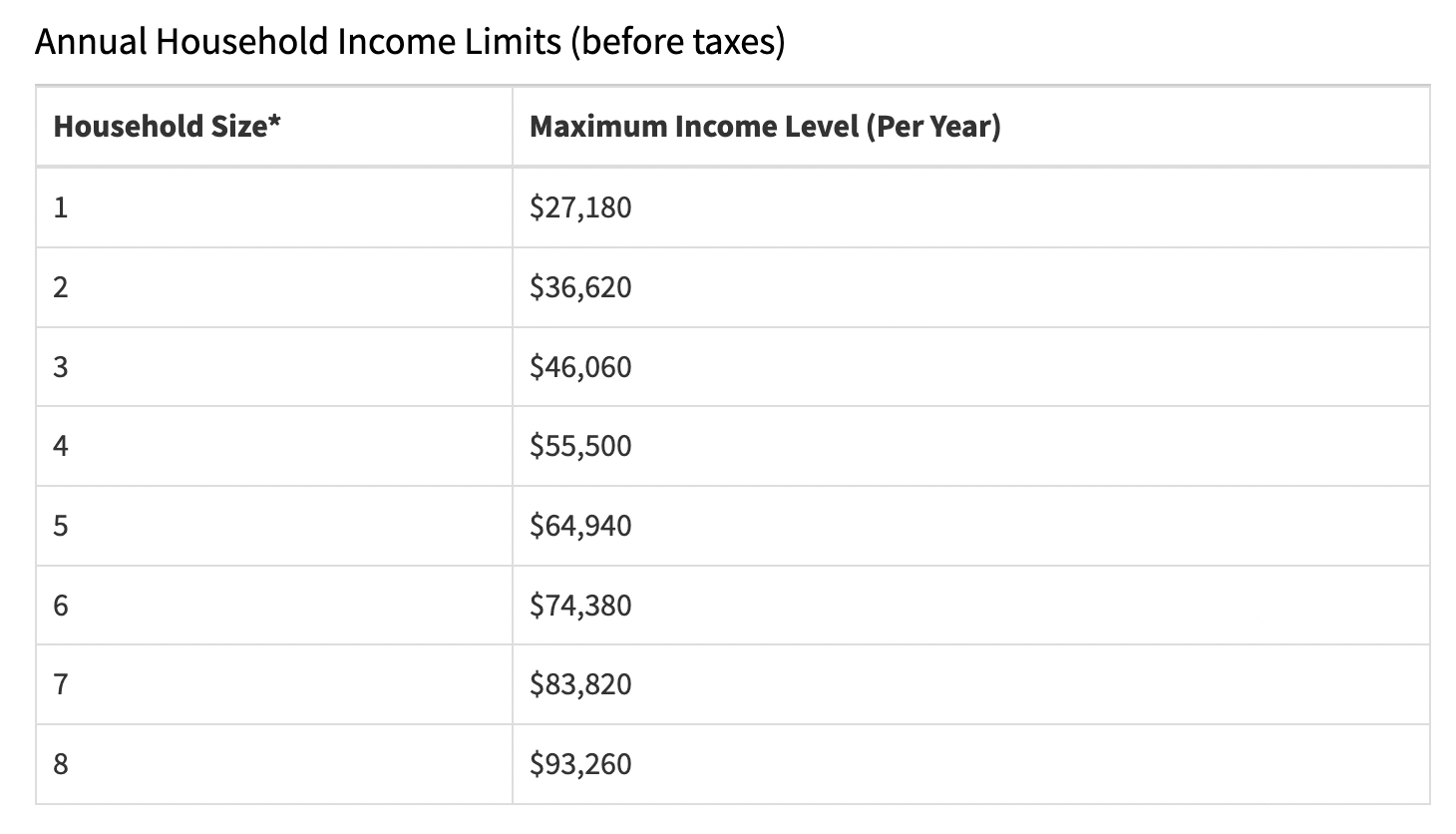
If you’re a single mom in Idaho struggling to make ends meet, keep reading for resources that help with: 

Statistically, families benefit most with cash assistance (vs through benefits programs).1 Here is our guide to single mom grant programs, including our own.

Every month, I give out $500 cash to one single mom struggling with money, health, stress, child care, illness or loneliness — no strings attached. 

Qualifications are simple:

1. You’re a single mom.

2. You need the money right now.

Fill out this form to apply:

(Note that the figures and information in this post are current as of publication date.)

Number of people in family/householdAnnual income
1$15,960
2$21,640
3$27,320
4$33,000
5$38,680
6$44,360
7$50,040
8$55,720

For families/households with more than 8 people, add $5,680 for each additional person.each additional person.

You can also look up your area median income (AMI) here.

Emergency cash for low-income families in Idaho

If you need cash to pay bills, buy gas, feed your family, or for any other reason, these resources can help:

Temporary Assistance for Families in Idaho

TAFI gives in-need families monthly cash to use for food, housing, and other necessities. A family of three can be paid $389/month for a limit of 24 months. Check out the full list of monthly payouts.

Relatives caring for children who aren’t their own may also be eligible for TAFI benefits if the child’s income and resources meet the program guidelines.

Qualifications:

  • U.S. citizen or permanent resident
  • Participate in an employment and training program for job readiness
  • Cooperate with child support services to collect child support payments, if applicable
  • Not have resources above the program’s limits
  • Income can’t exceed the monthly payout for each family size

How to get help:

  • Call 877-456-1233
  • Download an application from the Idaho Department of Health & Welfare website and email it to MyBenefits@dhw.idaho.gov
  • Visit your Idaho Department of Health & Welfare office

More emergency cash help in Idaho: 

Single moms in Idaho can visit 211.org or dial 2-1-1 to ask for assistance.

Check out these posts for more ways to get emergency cash: 

These are some more tips for getting cash quickly: 

Housing help for single moms in Idaho

If you need help finding a place to live or paying your rent/mortgage, these programs can help: 

Rental assistance in Idaho

There are multiple programs in Idaho to help renters find housing and pay their rent:

Idaho Emergency Rental Assistance

Families can receive up to 18 months of emergency assistance to help them pay their rent. The amount a family can receive varies based on their situation. The program prioritizes applicants who:

  • Lost a job
  • On the verge of eviction
  • Have less than 50% of the median area income

Qualifications:

  • Renter who is unable to afford their rent
  • Idaho resident
  • Not related to the landlord
  • Qualify based on income (no limits given, but priority given to lower-income households)

How to get help: 

  • Call 855-452-0801
  • Email HPP@IHFA.org 

Public Housing and Housing Choice Vouchers (Section 8) in Idaho

Low-income families in Idaho can get vouchers from the U.S. Department of Housing and Urban Development to help them pay rent.

Families receiving Section 8 vouchers can also qualify for the Family Self-Sufficiency Program, which helps adults set goals to become financially independent and achieve homeownership. 

The program is free and provides steps single parents can take to own a home.

Qualifications:

Families must meet income requirements for their area based on household size.

How to get help: 

  • Contact your local public housing agency for information on how to apply/income eligibility.
  • Call 800-569-4287

Mortgage assistance in Idaho

If you need help buying a home in Idaho, these programs can help: 

Homeowner Assistance Fund

Homeowners who can’t afford their mortgage payments can get help from the Homeowner Assistance Fund. Payments can be for:

  • Mortgages
  • Property taxes
  • Insurance premiums
  • Some utility payments
  • HOA fees 

Qualifications:

  • Idaho homeowner
  • Experienced a financial hardship due to the pandemic
  • Meet income guidelines, which vary by county                            

How to get help: 

Apply online through the Idaho Housing and Finance Association.

Down Payment Assistance for Idaho Homeowners

Idaho homebuyers can get up to 10% of the sale price of a home they want to buy to pay their down payment or closing costs. The program only requires homebuyers to pay a minimum of 0.5% down.

Qualifications: 

  • Household income less than $150,000
  • Must take a financial course for home buyers

How to get help: 

Contact a participating lender.

Check today’s mortgage loan rates >>


Homeless assistance in Idaho

Idaho Care Line

The Idaho Care Line helps Idahoans who are homeless or at risk of becoming homeless find emergency shelter, food, and other necessities.

How to get help: 

  • Call 2-1-1 or 800-926-2588
  • Text your zip code to 898211
  • Email careline@dhw.idaho.gov 

CATCH Idaho

CATCH Idaho places homeless persons to find and maintain housing. Then, the nonprofit provides support services like job placement and counseling to help residents remain in homes. CATCH programs serve Ada County and/or Canyon County as follows:

  • Our Path Home Connect (Ada): Offers financial assistance to get and keep housing
  • Our Path Home Outreach (Ada): Outreach workers go out in the community to engage homeless persons who have no shelter and are experiencing a severe mental illness
  • Linda Fund (Ada): Helps homeless families with a consistent income to find housing and may offer help with the deposit and first month’s rent
  • Taking Root (Ada and Canyon): Helps homeless families in shelters and on streets find a rental and sponsors the application fee, security deposit, and a monthly rental and utility allowance up to six months

Qualifications:

  • Homeless persons and families living in Ada County or Canyon County are eligible to receive help

How to get help:

  • Call 208-495-4240 in Ada County
  • Call 208-495-5688 in Canyon County

Continuum of Care Program and Emergency Solutions Grants (ESG)

The Continuum of Care Program (CoC) rehomes individuals and families who are homeless and connects them to community resources for additional help getting back on their feet.

ESG gives money to agencies that help homeless people and families or those at risk of being homeless in Idaho.

Qualifications: 

Each agency funded through CoC and ESG has its own guidelines for homeless program eligibility.

How to get help: 

More housing help: 

Electric bill assistance in Idaho

If you are struggling to pay your utility bills in Idaho, check out the following programs:

Idaho Power Energy Bill Assistance

Idaho Power connects customers to programs to help them pay energy bills when they are experiencing financial hardship, including:

  • Payment arrangements: Pay bills over time or break large bills into smaller payments
  • Winter Protection Program: If you have children at home 18 or younger, residents that are 62 and over, or residents whose health or safety require energy service, you can get a freeze on disconnection between December 1 and March 1
  • Winter Pay Program: Make small, agreed upon payments during the winter to keep energy service on even of you can’t pay your bill in full 
  • Project Share: Eligible Idaho Power customers can get a one-time payment up to $450 per household to help with energy costs
  • Energy Efficiency Programs: Programs to help increase energy efficiency to make your home comfortable and reduce energy waste

Qualifications:

  • Idaho Power customer
  • Experiencing hardship and unable to pay energy bills in full

How to get help:

Low-Income Home Energy Assistance Program (LIHEAP) in Idaho

LIHEAP helps families pay their heating bills. Families with children younger than 6 can begin applying in October, one month earlier than other applicants. The amount families get depends on which Idaho county they live in and the cost of their heating bills.

Some families can also get emergency assistance with a one-time payment to help them turn their service back on or prevent their heat from being turned off.

Qualifications:       

For LIHEAP and emergency assistance, households must:

  • Live in Idaho
  • At least one household member is a U.S. citizen or lawful resident
  • Able to show heating bill
  • Meet income guidelines — $3,414/month max income for a family of three

Emergency assistance participants must also be able to prove that they’ve lost their heating service or are at risk for losing it due to financial hardship.

How to get help:

Sign up for an account on the CaseWorthy portal to submit an online application.

Weatherization Assistance Program (WAP) in Idaho

WAP in Idaho pays for repairs or upgrades to make homes more energy efficient. WAP participants can be homeowners or renters, but renters need approval from their landlords to participate. The program prioritizes applicants with children.

Qualifications:

  • Live in Idaho
  • At least one U.S. citizen or permanent legal resident in the household
  • Proof of utility expenses
  • Proof of homeownership or landlord approval
  • Meet income guidelines — $3,838/month for a family of three

How to get help:

Visit the Idaho Department of Health & Welfare website to find a nearby agency to apply.

More electric bill help: 

Free money to help pay bills

Medical insurance and dental help for single moms in Idaho

The following programs give single moms in Idaho help with medical and dental services and costs for themselves and their children: 

Idaho Medicaid for Adults

Idaho Medicaid for Adults gives adults with low incomes free health insurance covering preventative and wellness services.

Pregnant women can also qualify for the program, and their unborn child counts as one family member.

Qualifications:

  • Resident of Idaho
  • U.S. citizen or legal immigrant
  • Assets below program limits
  • Income under 138% of FPL — $2,649/month for a family of three

How to get help:

  • Apply online with IdaLink
  • Call 877-456-1233
  • Email your application to MyBenefits@dhw.idaho.gov 
  • Visit your nearest Idaho Department of Health & Welfare office

Idaho Children’s Medicaid

Idaho Children’s Medicaid allows children to receive affordable health coverage even if their parent or caregiver’s income is too high for Medicaid.

The program covers:

  • Preventative well-child visits
  • Visits for illness or injuries
  • Diagnostic testing
  • Immunizations
  • Vision care
  • X-rays
  • Inpatient and outpatient hospital care
  • Counseling and mental health services
  • Durable medical equipment
  • Lab tests
  • Prescriptions

Qualifications: 

  • Live in Idaho
  • Be a U.S. citizen or eligible non-citizen
  • Be under 19 years old
  • Meet income guidelines based on family size — under $4,394/month for a family of three

How to get help: 

  • Apply online with IdaLink
  • Call 877-456-1233
  • Email your application to MyBenefits@dhw.idaho.gov 
  • Visit your nearest Idaho Department of Health & Welfare office

Idaho Maternal and Child Health

This program helps pregnant women, mothers, infants, and children access quality health care services. Women and their children can get assistance through:

  • Special needs services
  • Home visits
  • Poison control help
  • Pregnancy prevention resources
  • Family planning
  • Child-to-adult transitioning assistance
  • Nutrition guidance

Qualifications: 

Each program has its own set of requirements, which you can learn about on the Idaho Maternal and Child Health website.

How to get help: 

  • Call 208-334-5962
  • Email IdahoMCH@dhw.idaho.gov 

MCNA Dental

MCNA Dental is Idaho’s Medicaid program for adult and child dental services. The program pays for:

  • Routine cleanings
  • Preventative exams
  • X-rays
  • Gum and cavity treatments
  • Root canals
  • Dental emergencies

Qualifications: 

Idaho residents who are eligible for Medicaid are automatically eligible for MCNA dental.

How to get help: 

  • Apply online with IdaLink
  • Call 855-233-6262

Idaho Community Dental Clinics

Some community dental clinics in Idaho provide free or low-cost services to families in need.  

Qualifications: 

Each individual clinic or school sets its own eligibility requirements. 

How to get help: 

Find a local clinic through the Idaho State Dental Association.

More medical/dental help: 

Food help for low-income families in Idaho

A number of federal and state food and nutrition programs are available across the state:

Idaho Food Assistance Program (SNAP)

SNAP is a federal program previously known as food stamps. Idaho families with low incomes can get money from SNAP on an electronic benefits card to buy food like: 

  • Fresh fruit and vegetables
  • Dairy products
  • Meat, poultry, and fish
  • Seeds to grow food
  • Pantry items, like cereal and rice

The amount families receive each month depends on their family size and income. 

Qualifications:

  • Idaho resident
  • U.S. citizen or legal resident
  • Willing to participate in a training or employment program, if necessary
  • Meet income guidelines — $2,495/month for a family of three

How to get help: 

  • Call 877-456-1233
  • Visit your nearest Idaho Department of Health & Welfare office
  • Email an application to MyBenefits@dhw.idaho.gov 
  • Fax an application to 866-434-8278

Women, Infants, and Children (WIC) in Idaho

WIC gives pregnant women, babies, and children up to age five cards to buy nutritious foods and formula. The program also offers breastfeeding support and resources for families to learn more about eating healthy.

Qualifications:

  • Low-income, pregnant, breastfeeding, and postpartum women, for up to one year postpartum
  • Women up to six months postpartum who are not breastfeeding
  • Infants and children under 5 years old, including foster children
  • Low-income sole provider parents of children under age of 5 who are at nutritional risk and who are below 185% of FPL
  • If you are currently receiving Medicaid, Temporary Assistance, or Food Assistance help, you are also eligible for WIC

How to get help: 

Contact your local WIC clinic to set up an appointment.

National School Lunch Program (NSLP) and School Breakfast Program

Public school students in Idaho can get free or reduced lunches and breakfasts on school days. 

Qualifications: 

Eligible households have income within the federal income eligibility guidelines.

How to get help: 

  • Contact your child’s school for more information
  • Call the program director at 208-332-6929

Idaho Summer Meal Program

When school is not in session for the summer, children can receive free meals through the Idaho Summer Meal Program. 

Qualifications: 

  • Children must be between the ages of 1 and 18 to receive meals
  • No income requirements

How to get help: 

  • Dial 2-1-1 for the Idaho CareLine 
  • Text FOOD to 304-304

Idaho Food Banks

Food banks give food to Idaho families in need, usually on a weekly or monthly basis. 

Qualifications: 

Each food bank sets its own eligibility requirements.

How to get help: 

Visit The Idaho Foodbank to find a nearby food bank.

More food help: 

Child care help for low-income families in Idaho

Idaho single moms can get help paying for child care with the following programs:

Idaho Head Start and Early Head Start

Idaho’s Head Start and Early Head Start programs give free resources to families for child development and education. Children from birth through age 2 enter the Early Head Start program, while Head Start caters to preschool-aged children, 3 to 5 years old. 

Qualifications: 

  • Families must have a child up to 5 years old
  • Meet income eligibility requirements — $24,860 for a family of three
  • Households eligible for SNAP, Medicaid, and other federal benefits may automatically qualify
  • Families with children who are homeless or facing homelessness are eligible

How to apply: 

Contact a local Head Start program.

Idaho Child Care Program

ICCP pays some child care costs for low-income families with children under age 13. Families with children older than 13 with special needs may also qualify. 

The amount the program pays for and the family’s co-pay each month is determined by the household’s income. Child care providers must be participants in ICCP to get reimbursed by the program.

Qualifications:

  • Live in Idaho
  • Be a U.S. citizen or legal resident
  • Have a qualifying child
  • Be working, attending school, or training for a job
  • Be eligible for Idaho cash assistance (TAFI) or meet income guidelines — $2,783/month for a family of three

How to get help:

  • Call 877-456-1233
  • Visit your nearest Idaho Department of Health & Welfare office
  • Email an application to MyBenefits@dhw.idaho.gov 
  • Fax an application to 866-434-8278

More child care help

Education help for single moms in Idaho

If you’re a single mom who wants to further her education, here are some helpful resources: 

Get a GED in Idaho

GED test-takers in Idaho must be at least 18 or have a youth waiver form completed if they’re 16 or 17 years old. 

The test has four subject areas, which each cost $30:

  • Reasoning Through Language Arts
  • Mathematical Reasoning
  • Science
  • Social Studies

Grants and scholarships in Idaho

Single moms going to college can find scholarships through the Idaho State Board of Education. Some scholarships are awarded based on academic achievement, while others are given based on financial need. Each scholarship has its own eligibility requirements and rules for applying.  

Empowering Parents Program

The Empowering Parents Program gives children extra educational support to fight against learning challenges resulting from the pandemic. Eligible families can receive $1,000 per student and up to $3,000 per household to pay for educational expenses, like tutoring or educational material.

Qualifications: 

  • Be an Idaho resident
  • Have a child attend kindergarten through 12th grade in an Idaho school

Although the program doesn’t have income limits, it does give priority to families earning $60,000 per year or less.

How to get help: 

Apply online with Odyssey.

More education help: 

Employment help for single moms in Idaho

Workforce programs in Idaho provide training and assist with employment:

Idaho Workforce Commission Unemployment Benefit Services

Idaho single moms who have been fired or laid off from their jobs through no fault of their own can apply for Idaho unemployment benefits. The program pays weekly cash to support the household while the recipient looks for a new job.

Qualifications: 

  • Idaho resident
  • Unemployed, laid off, or had a reduction of hours
  • Willing to actively search for a new job

How to get help: 

Apply through the Idaho Department of Labor website.

IdahoWorks

IdahoWorks is an online job portal and resource center for Idaho residents. Single moms can search for jobs and training opportunities near their homes. 

How to get help: 

Search for a job on the IdahoWorks website or use the Contact Us page to find your local IdahoWorks chapter to speak with a representative for extra help.

More employment help: 

Legal help in Idaho

Idaho Legal Aid

Idaho Legal Aid provides pro bono (free) attorney help for seniors 60 and over and low-income Idaho residents with civil matters (not criminal cases). 

The Lawyer Referral Program can provide you with the name of an attorney in your area you can talk to for 30 minutes for $35 or less.

There is also a free legal advice number to get help with topics like:

  • Custody
  • Divorce
  • Domestic Violence
  • Evictions
  • Guardianship
  • Landlord/tenant disputes
  • Medicare/Medicaid
  • Public assistance programs

Qualifications:

  • Idaho resident
  • Aged 60 and over or annual income is at or below 125% of the federal poverty level (regardless of age)

How to get help:

Idaho Volunteer Lawyers Program

The Idaho Volunteer Lawyers Program offers free legal help on civil matters.

Qualifications:

You must complete the online application to determine eligibility. It is based on your household income, assets, and the type of legal issue you have.

How to get help:

Charity organizations in Idaho

There are a number of charitable organizations throughout Idaho that offer support to single moms:

The House Next Door

The House Next Door gives single moms and their children a rent-free place to stay, at a place called Gracewood. Families pay just $80 per month to contribute to the home’s everyday costs, and they’re responsible for their own personal items and food.

Qualifications: 

  • Mothers must be at least 18 years old or emancipated
  • Children must be eight or younger at move-in time
  • Mothers must be pursuing a part-time or full-time degree and maintain at least a 2.0 GPA
  • All mothers and children must be current on vaccinations

How to get help: 

Submit an application on Gracewood’s website or call 713-988-9757.

The Salvation Army of Idaho

The Salvation Army has several locations in Idaho that help local families:

  • Pay for food
  • Pay their utility bills
  • Receive physical and mental health services
  • Get holiday gifts for their children
  • Access religious or spiritual services
  • Find after-school activities for kids
  • Get help for domestic abuse
  • Find shelter

Qualifications: 

Each Salvation Army location in Idaho has its own services and determines eligibility for each of its services and programs. 

How to get help: 

Visit the Salvation Army website to find your local chapter. 

United Way in Idaho

The United Way is a global charity that connects people with emergency aid, health care access, and financial resources.

How to get help: 

Contact your nearest United Way agency in Idaho or dial 2-1-1.

SOURCES

  1. “The Long-Term Impacts of Cash Assistance to Families,” by Kevin Werner, The Urban Institute, Jan. 31, 2024 https://www.urban.org/research/publication/the-long-term-impacts-of-cash-assistance-to-families


Not your state? Select yours here: