scroll top

Youโ€™re in the thrift store, you spot a โ€œleatherโ€ jacket for $24.99, and your brain starts doing math. A real leather jacket from a popular brand can run hundreds of dollars new. If this one is legit, itโ€™s a steal. If itโ€™s plastic or bonded leather that will peel in a year, you might as well light twenty-five bucks on fire.

Labels lie. โ€œGenuine leatherโ€ can still mean low-quality hide. โ€œVegan leatherโ€ sounds nice but is usually plastic. Cheap bonded leather can look great on the rack and then crack and flake as soon as you actually wear it. Knowing the difference is the only way to stop overpaying for jackets that wonโ€™t last.

You donโ€™t need to be a leather expert. You just need a basic understanding of how leather is made, how junk materials behave, and what to check in the store. Once you learn a few simple tests, youโ€™ll be able to grab the good stuff, leave the peeling mess behind, and even flip solid jackets for extra cash if you want.

Think of a leather jacket like a long-term investment piece youโ€™re getting at yard-sale prices. The thrift store is full of them. You just need to know how to recognize the ones that are actually worth your money.

Why a thrifted leather jacket is worth the effort

different leather jackets hanging on rack
Image credit: Samuel Yongbo Kwon via Unsplash

A real leather jacket is one of those rare pieces that can handle years of wear and still look better over time. Quality full-grain or top-grain leather can last for decades when cared for, while cheaper bonded leather and plastic alternatives may start cracking and peeling within two to five years of regular use.

Buying that durability brand new is expensive. A well-made leather moto or bomber easily hits the $300โ€“$800 range and goes much higher with designer names. Thrifting lets you tap into that quality at prices closer to fast fashion. A $40โ€“$80 secondhand leather jacket that fits your life can outlast several $60 faux leather pieces that flake and get tossed.

Thereโ€™s also flexibility. If you find a real leather jacket at a strong price, you have options: keep it and wear it for years, clean it up and resell it for a profit, or trade up later without losing much money. A fake leather jacket almost never holds resale value. Once it starts peeling, it goes straight into the trash. Learning to tell real from fake is about style, but itโ€™s also about not throwing money at things that are built to fail.

How leather is made and what the labels really mean

leather jacket in thrift store
Image Credit: Shutterstock

Real leather starts as animal hide. Itโ€™s cleaned, treated, and tanned so it doesnโ€™t rot. The outer part of the hide, where the grain and natural markings are, is the strongest. When manufacturers keep this full thickness, including the natural grain, itโ€™s called full-grain leather. This is generally the toughest, most durable type and develops that rich patina people love.

If they sand or buff the surface to remove scars and imperfections, you get top-grain leather. Itโ€™s still real leather, still good quality, but often a little thinner and more uniform. Below that is split leather, which comes from the inner layers of the hide. Split is weaker and often gets heavily coated or embossed to mimic better leather.

Then thereโ€™s bonded leather. Thatโ€™s not just โ€œlower gradeโ€ leather. Itโ€™s a manufactured sheet made from shredded leather fibers mixed with glue or polyurethane binder, then pressed onto a backing and stamped with a fake grain. It might legally contain some leather, but it doesnโ€™t behave like real hide. This is the stuff that peels in sheets and looks terrible fast.

When you see โ€œgenuine leatherโ€ on a label, it usually means โ€œthis contains some real leather,โ€ not โ€œthis is the best.โ€ In many cases itโ€™s split or lower-end material. The actual grain type matters much more than that vague word.

How to tell real leather from faux in the store

leather jacket in second hand store
Image Credit: Shutterstock

In a thrift store, you usually canโ€™t see the original product page or brand marketing. You have your eyes, hands, nose, and a minute or two in a crowded aisle. Use all of them.

First, look at the surface. Real leather has natural variation. You may see tiny scars, pores, or slight differences in texture. Faux leather often looks too perfect, like printed plastic. The grain repeats in an obvious pattern, or the surface looks like one smooth sheet of vinyl. If the jacket looks like it was wrapped in contact paper, be suspicious.

Next, feel it. Real leather usually feels warmer and more โ€œaliveโ€ in your hand. It bends and wrinkles in soft waves when you push it with your fingers. Faux leather tends to be colder and stiffer, or it creases sharply. The backside is a big clue too: if you can see an unfinished edge, real leather often has a fibrous, suede-like underside, while fake leather shows fabric or a smooth plastic back.

Finally, smell it. Real leather has a distinct, rich, earthy smell thatโ€™s hard to copy. Faux leather and PU usually smell like plastic, chemicals, or nothing at all. If youโ€™re comfortable, bring the collar close to your nose and take a quick sniff. Just donโ€™t do it in a creepy way.

How to spot cheap bonded leather that will peel

bonded leather jacket
Image Credit: Shutterstock

Bonded leather is the worst of both worlds: it can be sold as leather because it technically contains leather fibers, but it behaves more like a painted plastic sheet. Itโ€™s made by grinding up leather scraps, mixing them with binder, and pressing the mix onto a backing, then embossing a grain.

On jackets, bonded leather often looks a little too smooth and uniform. The surface grain can be very regular, almost like the same pattern stamped over and over. If you find a worn piece, check high-stress areas like elbows, cuffs, and hem. Bonded leather tends to peel or flake in sheets, revealing a cloth or fuzzy backing underneath. Real leather might crack or scuff, but it wonโ€™t delaminate in big chips the same way.

Durability is the big issue. Many bonded leather products start peeling within about two to five years, especially with regular use and flexing. That might be acceptable for a cheap office chair you use lightly. For a jacket you want to wear for a decade, itโ€™s a bad deal.

If a jacketโ€™s surface looks like itโ€™s starting to bubble, wrinkle in a plasticky way, or peel at the seams, assume bonded leather or a heavy plastic coating. Unless the price is extremely low and youโ€™re okay with a short life, put it back.

Reading tags and marketing language without getting tricked

Leather jeckets that are second hand
Image Credit: Shutterstock

Thrift stores often cut out or cover the original tags, but when you do find labels, they can be confusing. โ€œGenuine leather,โ€ โ€œPU leather,โ€ โ€œbonded leather,โ€ and โ€œman-made materialsโ€ all mean different things.

If you see โ€œ100% leatherโ€ or simply โ€œleatherโ€ on a materials tag, that usually indicates the outer shell is real leather. โ€œGenuine leatherโ€ technically just means โ€œcontains some real leatherโ€ and often refers to lower-grade hides like split leather. โ€œTop-grain leatherโ€ and โ€œfull-grain leatherโ€ are better signs youโ€™re dealing with solid material, not scraps, even if the jacket is scuffed.

โ€œPU leather,โ€ โ€œpolyurethane,โ€ โ€œman-made material,โ€ โ€œvegan leather,โ€ or generic โ€œsyntheticโ€ all point to plastic-based faux leather, not animal hide. These can still be fun for short-term wear, but they will not age like real leather and usually have little to no resale value.

Bonded leather may be labeled as โ€œbonded leather,โ€ โ€œreconstituted leather,โ€ or โ€œcomposition leatherโ€. If a jacket is marketed as leather but the fine print says โ€œbonded,โ€ treat it like a disposable item.

In a thrift store, if the tag is missing or unreadable, fall back on touch, smell, and visual checks. Labels help, but theyโ€™re not necessary if you know how the real thing behaves.

Checking construction: seams, lining, and hardware

close up of leather jacket
Image Credit: Shutterstock

Once youโ€™re pretty sure the shell is real leather, look at how the jacket is built. Quality construction is another big line between โ€œworth itโ€ and โ€œmoney pit.โ€

Check the seams first. On a good leather jacket, seams are usually straight, with tight, even stitching. You shouldnโ€™t see long loose threads hanging everywhere. Panels should match up without puckering. If the leather is pulling away from the seams or you see obvious gaps, thatโ€™s extra stress on already-old material.

Look at the lining. Thicker, smooth linings in materials like cotton, rayon, or decent polyester tend to feel better and last longer than flimsy, scratchy linings. If the lining is shredded, decide whether youโ€™d be willing to pay for a replacement. A tailor can often reline a jacket, but itโ€™s not cheap, and you might end up spending more than the jacket is worth.

Hardware matters too. Zippers should run smoothly and feel solid. Branded metal zippers from known makers are a nice bonus, but the main thing is function. Plastic zippers on leather are a sign of cost cutting. Snaps and buckles should be firmly attached and not corroded. If every zipper sticks and half the snaps are falling off, that jacket has lived a hard life, and the price needs to reflect that.

Different types of leather jackets and how they age

different leather jackets hanging on wall
Image credit: Neil Wallace via Unsplash

Not all leather jackets age the same way. The style and cut change how hard you can be on them and how forgiving they are of wear and tear.

Classic biker and moto jackets are usually made from thicker, tougher leather. Theyโ€™re built to take a beating. Scuffs and creases often look good on these styles, and a thrifted moto with some wear can feel broken-in in the best way. Look for solid zips, sturdy waist belts, and armor pockets if itโ€™s a true riding jacket.

Bombers and flight jackets usually have a softer, more relaxed fit. Theyโ€™re great for casual wear and can handle age well, especially in brown leather that hides scuffs. Check the knitted cuffs and hem; those are often the first to go and can sometimes be replaced if the leather is solid.

Blazer-style and fashion leather jackets tend to be made from lighter leather or even a mix of leather and fabric. They show damage faster. Scratches on a thin lambskin blazer are more noticeable than on a chunky moto. When you thrift these, prioritize clean surfaces and good fit. Light fashion jackets can feel amazing but may not handle daily abuse as well as heavier pieces, so factor that into what youโ€™re willing to spend.

Where and how to shop secondhand for leather jackets

leather jacket in second hand store
Image Credit: Shutterstock

You can find real leather jackets in plenty of places: thrift chains, small charity shops, consignment stores, buy-sell-trade shops, flea markets, estate sales, and online resale platforms. Each has its own pros and cons.

Big thrift chains often have the lowest prices and wildest variety. You may dig through a lot of fake leather and outdated cuts, but thatโ€™s where you get the $20โ€“$40 steals. Smaller curated stores and consignment shops charge more, but someone has already filtered out obvious junk. If youโ€™re new to leather, those can be good places to handle lots of jackets and learn how different materials feel.

Donโ€™t ignore the menโ€™s section, even if you usually shop womenโ€™s. Many leather styles are unisex or can be tailored slightly. Menโ€™s jackets often have thicker hides and simpler cuts, which can be great for a modern look. If youโ€™re shopping online, ask sellers for close-up photos of the grain, edges, and any peeling before you buy.

Timing matters too. Leather tends to show up more in fall and early winter as people clear closets. That doesnโ€™t mean you wonโ€™t find one in May, but if you want the best selection, pay attention to seasonal rotations at your local stores.

Fit, tailoring, and what you can and canโ€™t fix

trying on leather jacket on in store
Image Credit: Shutterstock

A leather jacket that technically โ€œfitsโ€ but feels wrong in the shoulders will sit in your closet. In the thrift aisle, think about how the jacket feels on your body right now, not what size the label says.

Shoulders are the hardest to alter. If theyโ€™re too tight, skip it. Leather doesnโ€™t magically stretch several sizes. If theyโ€™re a little wide but not ridiculous, you can sometimes get away with a slightly oversized look. Sleeves that are too long can usually be shortened, but it costs money. Hems can sometimes be adjusted, especially on simpler styles without a lot of hardware or complex seams.

Zippers and snaps are fixable, but again, not free. If a great jacket has one broken zipper and everything else is solid, it might still be worth buying, especially at a low thrift price. Just mentally add the cost of a new zipper to the purchase.

Be honest about your habits. If youโ€™re never going to take it to a tailor, buy jackets that fit decently off the rack. If you love a project and already have a relationship with a leather repair shop, you can be a little more adventurous with fixer-uppers. The goal is to end up with jackets you actually wear, not a stack of โ€œsomedayโ€ repairs.

Red flags: damage, smells, and when to walk away

rack of leather jackets
Image Credit: Shutterstock

Leather is tough, but itโ€™s not invincible. Some issues are fine, some are manageable, and some are deal-breakers.

Surface scuffs, small scratches, and light fading are usually cosmetic. Many people like that worn-in look. Deep cracks, especially at stress points like elbows and shoulders, are more serious. When leather dries out and cracks all the way through, thereโ€™s no real way to bring it back to full strength. If you can see the crack opening when you bend the sleeve, be cautious.

Smell is another big factor. A light thrift-store smell can usually be aired out. Strong mildew, heavy smoke, or that sour โ€œstored in a wet basementโ€ odor is harder to fix. Leather absorbs smells, and they donโ€™t always come out. Unless itโ€™s a rare or very cheap jacket, funky smells are a good reason to walk.

Watch for mold spots, flaking finish, or areas where the surface looks like itโ€™s separating. That can indicate water damage, poor storage, or bonded leather starting to fail. Even if you can technically still wear it, youโ€™re buying into problems. Your money is better spent on a jacket that hasnโ€™t already lived nine lives.

Basic care so your thrifted jacket lasts for years

sleeve of leather jacket
Image credit: Ksenia via Unsplash

Once you bring a leather jacket home, a little care goes a long way. Most leather experts recommend gentle cleaning, occasional conditioning, and smart storage instead of aggressive washing.

For day-to-day grime, wipe the jacket down with a slightly damp soft cloth. If itโ€™s really dirty, use a small amount of leather-safe cleaner, working gently in circular motions, then wipe off and let it air dry. Donโ€™t soak the leather, and donโ€™t throw it in the washing machine. Too much water and harsh detergents strip natural oils and can make leather stiff or cracked over time.

Conditioning restores some of those oils. A few times a year, depending on how dry your climate is and how often you wear the jacket, apply a leather conditioner made for your type of leather. Rub a small amount in with a soft cloth, let it absorb, then buff off any extra. Avoid heavy oils on very soft or delicate finishes, and always test a hidden area first to make sure it doesnโ€™t darken the leather more than you like.

Store your jacket on a sturdy, wide-shoulder hanger so it doesnโ€™t crease oddly. Keep it away from direct heat vents and strong sunlight, which can dry and fade it. If it gets soaked in the rain, hang it up to air dry naturally at room temperature, then condition once itโ€™s fully dry.

Using your leather jacket finds as a money tool

close-up of leather jacket
Image credit: COPPERTIST WU via Unsplash

Thrifting real leather jackets is about more than aesthetics. It can be a small way to protect your budget and even make a bit of extra cash over time.

When you buy a solid leather jacket secondhand, youโ€™re often getting something that originally retailed for several hundred dollars for a fraction of the price. If you choose classic styles in black, brown, or other neutral colors, you can wear them for years without them looking dated. Your cost per wear drops every season you keep reaching for that same jacket.

If you enjoy reselling, leather can be a good category because well-known brands and timeless cuts stay in demand. A $30 thrift store find can sometimes sell for $80โ€“$150 once itโ€™s cleaned and photographed well, depending on condition and label. Not every jacket will be a flip, and youโ€™ll still make mistakes, but understanding leather quality makes it less of a gamble.

Even if you never resell anything, avoiding junk bonded and faux leather that peels in a few years keeps you from rebuying the same item over and over. You end up with fewer pieces, better quality, and less money quietly leaking out of your bank account.

It's a wrap

it's a wrap on clapperboard
Image Credit: Katy Willis via Artistly

The more jackets you handle, the easier this gets. At first, youโ€™ll second-guess yourself a lot: โ€œIs this real? Is this bonded? Am I being too picky?โ€ Over time, your hands and eyes learn. Youโ€™ll start recognizing real leather across the aisle and spotting peeling bonded junk without even touching it.

You donโ€™t have to memorize every leather grade or own a closet full of pricey pieces. You just need a basic playbook: know how real leather feels and smells, learn what bonded and faux look like when they fail, read tags with a skeptical eye, and be honest about fit and repair costs. From there, itโ€™s about practice.

Next time youโ€™re at the thrift store and you see a โ€œleatherโ€ jacket on the rack, you wonโ€™t be guessing. Youโ€™ll run through your quick checks, decide if itโ€™s real, and then decide if itโ€™s worth your money. Thatโ€™s the whole point: putting your dollars toward things that actually last, instead of paying full price for something thatโ€™s already halfway to the trash.

Strategies for making money outside of a traditional job:

freelance writer
Image Credit: Shutterstock

Where to sell sterling silver for the most money: In this post, youโ€™ll learn about the difference between sterling silver and other types of silver, and find places to make the most money from selling your sterling.

What can I sell to make money (or resell)? 38 ideas: Dive into this article to discover things in your house you can sell for quick cash โ€” and where to sell.

What sells quickly at pawn shops: In this post, youโ€™ll find ways to navigate pawnshops, understand how they work and what items are most in demand.

Byline: Katy Willis

You donโ€™t need a color-coded binder and three hours a week to save on groceries.

Most families are just watching prices climb and hoping the total at checkout wonโ€™t wreck the rest of the month. You grab what youโ€™ve always bought, maybe toss in a few โ€œtreats,โ€ and then wonder how two bags of food cost more than your car payment used to.

The goal here isnโ€™t perfection. Itโ€™s cutting your bill down in ways that fit real life when youโ€™re tired, busy, and stressed. These ideas work whether youโ€™re feeding one person or five, and none of them require sitting at the table clipping coupons all day.

Know your real grocery number (so you can actually cut it)

man looking at his receipt in grocery store
Image Credit: Shutterstock

You canโ€™t cut a bill you never really look at. Most people guess what they spend on groceries and are off by hundreds each month. For the next four weeks, add up everything you spend on food at the grocery store, warehouse clubs, dollar stores, and โ€œquickโ€ trips for milk that somehow turned into $40.

Once you have the real number, decide what โ€œcut in halfโ€ means for you. If youโ€™re spending $1,000 a month, dropping straight to $500 may not be realistic in one shot. Maybe your first goal is $800 for two months, then $650, and so on. That still frees up real money for rent, gas, or debt.

Pick a simple tracking method youโ€™ll actually use: notes in your phone, a sticky note on the fridge, or checking your bank app once a week. Youโ€™re not budgeting for perfection. Youโ€™re trying to see the pattern so you can attack the biggest leaks instead of obsessing over every tomato.

Shop your pantry like a mini grocery store

woman with full food pantry shelves
Image Credit: Shutterstock

Before you leave the house, walk through your kitchen and pretend itโ€™s a store. Open the pantry, fridge, and freezer. Pull things out and put them on the counter: the three half-used bags of rice, the canned beans you forgot about, the chicken in the back of the freezer.

Make a quick list of meals you can build around what you already own. Maybe that looks like burrito bowls from rice, canned beans, and frozen corn; pasta with a jar of sauce and the sausage hiding in the freezer; soup from lentils and leftover vegetables. Every time you build a meal from whatโ€™s on hand, thatโ€™s one less meal you have to fund from this weekโ€™s paycheck.

Pantry-first cooking cuts your bill two ways. First, obviously, youโ€™re not buying as much. Second, you stop letting food rot in the back of the fridge and then replacing it. If you get serious about using what you have, you can shave 10%โ€“20% off your grocery bill without changing stores or brands yet.

Use cheap โ€œmeal templatesโ€ instead of complicated recipes

ingredients for recipe
Image credit: micheile henderson via Unsplash

Fancy recipes with 12 ingredients are great for holidays, not for normal Tuesday nights on a tight budget. To really cut costs, build your week around meal templates that repeat, with small changes so your family doesnโ€™t riot.

Good templates are things like โ€œbeans + grain + veggies + sauce,โ€ โ€œpasta + sauce + one protein + one veg,โ€ โ€œegg-based meal with whateverโ€™s in the fridge,โ€ or โ€œsheet pan of chicken and chopped vegetables.โ€ You change the details, different beans, different sauces, different seasonings, but the basic formula stays the same.

This matters because you start buying the same cheap staples in bulk and using them up. Rice, oats, pasta, dry beans, eggs, and frozen vegetables are usually some of the lowest cost per serving. When you build your weeks around these, you can cut your spending way down while still eating decently. Save the complicated โ€œPinterest mealsโ€ for special nights when you actually have brain space.

Let unit pricing make the decisions for you

buying veg in store
Image Credit: Shutterstock

Stores love to play games with package size. A giant-looking bag isnโ€™t always cheaper; sometimes the โ€œFamily Sizeโ€ is a worse deal than two smaller ones. Unit pricing lets you see through that.

On the shelf tag, look for the small print that shows cost per ounce, per pound, or per count. Thatโ€™s your real comparison number. If the store doesnโ€™t list it clearly, use the calculator on your phone. Take the price and divide by the number of ounces or pounds. It takes seconds once you get used to it.

Start by applying unit pricing to the stuff you buy all the time: rice, cereal, cheese, pasta, meat, snacks, and cleaning products. Youโ€™ll quickly see patterns, like store brands often being cheaper per unit, big tubs beating single-serving packs, and whole foods (like a block of cheese) usually costing less than shredded or sliced versions. Over a month, those tiny unit-price wins add up to serious savings.

Ride the โ€œloss leadersโ€ without getting played

Customer with shopping trolley full of items
Image Credit: Shutterstock

Loss leaders are the items on the front page of the flyer that look almost too cheap: 99-cent pasta, $1.29 eggs, chicken thighs marked way down. Stores use them to pull you in, knowing youโ€™ll probably grab full-price items while youโ€™re there.

You can use this game in your favor by building part of your week around those rock-bottom deals and then walking past the traps. If chicken and carrots are cheap this week, maybe you bake a tray of chicken and vegetables and turn leftovers into different meals. If canned tomatoes and beans are on sale, itโ€™s a chili week.

Check flyers online or in-store, choose one or two loss-leader items that fit your meal templates, and buy a reasonable amount. Then, as much as possible, stick to your list and skip impulse buys. The key is planning around the deals that actually lower your cost per serving, not random junk that ends up crowding your pantry.

Drop brand loyalty and lean into store brands

promotion sign in grocery store
Image Credit: Shutterstock

Brand loyalty is expensive. In blind taste tests, store brands often do just as well as national brands, and sometimes better. But companies spend millions trying to convince you their logo tastes better, so you pay more for the same basic ingredients.

Instead of overhauling everything at once, pick a few categories where store brands almost always make sense: canned tomatoes, beans, flour, sugar, salt, oats, rice, pasta, frozen vegetables, dairy basics like milk and sour cream. Try the store version and be honest about what you actually notice.

If your family truly cares about certain name-brand items, maybe a specific cereal or sauce, keep those and switch everything else. You might find that 80% of your cart can be store brand without anyone blinking. That shift alone can lop a big chunk off your bill every single week.

Cut meat costs without going โ€œall veganโ€

Fresh meat in grocery store
Image credit: tommao wang via Unsplash

You donโ€™t have to give up meat entirely to save serious money. You just have to stop letting it dominate every meal. Meat is one of the most expensive line items in most carts, especially when youโ€™re buying boneless, skinless, pre-trimmed cuts.

Think in terms of using meat as a flavor, not the entire plate. Ground meat in chili, tacos, and pasta sauces can stretch a long way if you bulk it up with beans, lentils, or chopped vegetables. Bone-in chicken thighs and drumsticks are usually cheaper per pound than boneless breasts and can taste better if you cook them low and slow.

Pick one or two nights a week to go meatless with things like bean soups, lentil tacos, or egg-based dinners. Then, when you do buy meat, grab larger โ€œfamily packsโ€ at a good unit price, portion them out at home, and freeze what you donโ€™t use right away. Over a month, that mix of smaller portions, cheaper cuts, and meatless nights can cut your protein spending nearly in half by itself.

Add discount chains and smaller markets to your rotation

young woman with grocery receipt
Image Credit: Shutterstock

Grocery prices are not the same everywhere. Discount chains, salvage grocery stores, ethnic markets, and even certain dollar stores can have dramatically lower prices on staples compared with big national supermarkets.

If you have access to a discount grocer, warehouse club, or local produce market, itโ€™s worth swinging by once or twice and taking notes. Check prices on your top 15โ€“20 items: rice, beans, tortillas, potatoes, onions, frozen vegetables, chicken, eggs, milk, flour, sugar, and oil. You may find that one store is cheaper for meat and dairy, another for canned goods, and your regular store only makes sense for a few things.

You donโ€™t need to drive all over town every week. But building a โ€œstore mapโ€ in your head, knowing where each category is cheapest, lets you plan one or two strategic trips a month. If a discount storeโ€™s prices are much better on staples, stock up on shelf-stable stuff there and then just fill gaps at your usual place.

Build weeks around the same core ingredients

precooked white rice
Image Credit: Shutterstock

Another way to save: build your meals for the week around a short list of shared ingredients. Instead of buying 25 different things, you lean hard on 10โ€“12, used in different ways.

For example, say your core ingredients this week are rice, black beans, chicken thighs, onions, carrots, frozen corn, tortillas, a big tub of plain yogurt, and a basic salsa. Those can become burrito bowls, chicken and rice soup, tacos, quesadillas, and baked chicken with roasted vegetables. Youโ€™re buying in larger, cheaper packages and using them up instead of half-finishing five different meal ideas.

This approach shrinks both your total bill and your food waste. Youโ€™re less likely to end up with random leftovers that donโ€™t go together. It also makes cooking less stressful, because youโ€™re working with a familiar set of ingredients instead of a brand-new recipe every night.

Use frozen and canned food as budget tools, not last resorts

frozen food in grocery store
Image credit: Tan Vic Tor via Unsplash

There is nothing wrong with buying frozen or canned food. In fact, itโ€™s often cheaper and less wasteful than fresh. Frozen vegetables are usually picked and frozen at peak ripeness, and canned beans or tomatoes can be the backbone of dozens of meals.

Think about what you actually use up. If you throw away half your fresh produce every week, youโ€™re literally tossing money. Swapping to frozen broccoli, peas, mixed vegetables, and berries can cut that waste while still getting you fiber and nutrients. Canned fish like tuna and salmon are usually cheaper sources of protein than fresh and keep for months.

The trick is to watch for added salt and sugar, rinse canned items when it makes sense, and use these cheaper options as building blocks: soups, stir-fries, casseroles, pasta dishes, grain bowls. When youโ€™re not constantly throwing away spoiled food, your effective grocery bill drops without much effort.

Stop paying extra for chopped, prepped, and single-serve foods

pre cut fruit in store
Image Credit: Shutterstock

Pre-cut fruit, bagged salad kits, shredded cheese, single-serve yogurts, individual snack packs, all convenient, all marked up. Sometimes convenience is worth it when youโ€™re slammed. But if youโ€™re serious about cutting the bill, you have to pick your battles.

A block of cheese you shred yourself, a big tub of yogurt you portion into bowls, a whole melon instead of cubed fruit, or a full head of lettuce instead of a chopped mix almost always cost less per serving. Same with instant packets versus a big canister of oats or rice.

You donโ€™t have to flip everything at once. Choose a couple of easy wins: swap shredded cheese for block cheese and single-serve snacks for large bags you portion at home. Put on a show or music and spend 15 minutes chopping vegetables when you get home from the store. That small prep window can easily save you $20โ€“$40 a week.

Attack food waste with a โ€œuse it upโ€ routine

fresh food to be used up
Image credit: Anna Voss via Unsplash

You canโ€™t save money on food if half of it goes in the trash. If you regularly clean out your fridge and find slimy lettuce, fuzzy leftovers, or mystery containers, thatโ€™s your money dying a slow death on the back shelf.

Build a simple routine: once a week, maybe the night before trash day, pull everything thatโ€™s close to going bad to the front. Turn fading vegetables into soup, stir-fry, or omelets. Combine leftover meats and rice into fried rice or burrito bowls. Put single servings from earlier in the week into the freezer as โ€œfuture lunchesโ€ instead of letting them sit.

Label leftovers with tape and a date so you know what needs to be used first. Put older items in front and fresher ones in back. Itโ€™s boring, but it works. Even cutting your food waste by a third can feel like getting a quiet raise.

Change how you shop, not just what you buy

smiling woman saving money on grocery
Image Credit: Shutterstock

Some of the biggest savings come from changing your shopping habits, not just swapping brands. Go to the store with a short list based on what you actually need and whatโ€™s on sale. Try to shop once a week instead of โ€œjust popping inโ€ several times; those extra trips tend to include impulse buys.

Donโ€™t shop hungry if you can help it. When youโ€™re starving, everything looks good and your cart fills up with snacks and convenience food you didnโ€™t plan on. If possible, shop alone or with one older kid whoโ€™s on board with the plan, instead of juggling small children asking for everything in sight.

If overspending with a card is a problem, experiment with using cash for groceries. Withdraw your weekly grocery money, bring only that amount, and use a small basket or cart. When the cash is gone, youโ€™re done. Itโ€™s old-school, but it forces choices in a way tapping a card never will.

Batch cook once, eat multiple times

wok making batch meals
Image credit: Clem Onojeghuo via Unsplash

Batch cooking sounds like a lifestyle blog thing, but itโ€™s really just โ€œmake more now so your future self doesnโ€™t hit the drive-thru.โ€ You cook a double or triple batch of a cheap, filling meal and freeze or refrigerate portions for later in the week.

Good batch-cook options are chili, soups, stews, curries, bean dishes, casseroles, and cooked proteins like shredded chicken or taco meat. These use inexpensive ingredients and reheat well. You can change the sides or toppings to make them feel less repetitive.

Set aside one day or evening when your schedule is lighter. Cook two big pots instead of one complicated meal. Label containers with the name and date, and stack them where youโ€™ll see them. Knowing thereโ€™s real food ready at home when youโ€™re tired makes it much easier to drive past takeout and stick to your grocery plan.

Use store apps and rewards without falling into coupon hell

ALDI mobile app
Image Credit: Marques Thomas via Unsplash

You donโ€™t have to clip paper coupons, but itโ€™s worth learning how your favorite storesโ€™ apps and loyalty programs work. Many have digital coupons, weekly specials, and โ€œbuy X, get Yโ€ offers that apply automatically when you scan your card or app.

The trick is to treat apps as a discount on what you already planned to buy, not a reason to add more stuff. Before you shop, quickly check for digital coupons on the exact items on your list. If thereโ€™s an in-app promotion on a staple you always use, like buy-one-get-one rice or pasta, great. If itโ€™s for a random expensive snack you rarely buy, skip it.

Rewards programs that give you points toward gas discounts or future store credit can also add up if youโ€™re consistent. But none of this is worth it if it makes you spend more overall. Keep your eye on the total, not the โ€œyou savedโ€ฆโ€ line the store prints at the bottom of the receipt.

Use food programs for kids if you qualify

child eating meal
Image credit: NHN via Unsplash

If you have children, there may be structured food programs that can take real pressure off your grocery budget. School breakfast and lunch programs, summer meal sites, and sometimes backpack food programs on weekends are designed to make sure kids eat even when money is tight.

Depending on your income, your kids may qualify for free or reduced-price meals at school. Many districts also serve free meals to all children in certain schools or areas, no forms needed. In summer, local sites like libraries, parks, and community centers often host free meals for kids and sometimes no questions asked.

Thereโ€™s no prize for doing this alone. If you qualify, let these programs cover some of your kidsโ€™ calories so your grocery money can stretch further at home. That might be the difference between paying utilities on time or falling behind.

Use food pantries and community fridges without shame

free food from food pantry in box
Image Credit: Shutterstock

Food pantries, community fridges, and church or nonprofit grocery programs exist for a reason. If buying enough food means skipping rent, meds, or gas to get to work, thatโ€™s exactly when these places are meant to help.

Every pantry works differently. Some give pre-packed boxes; others let you โ€œshopโ€ from shelves. Many donโ€™t require proof of income, just basic information about your household. Some have limits on how often you can visit. If youโ€™re nervous, call or check their website first so you know what to expect.

Think of pantry food as part of your overall plan, not a last-resort emergency. If a pantry trip once or twice a month covers staples like rice, beans, canned goods, and maybe some fresh items, you can use your cash to fill in gaps instead of starting from zero every week. Needing help doesnโ€™t say anything about your worth. It says everything about how high prices are.

Tips and advice for saving money on food and grocery tips on Wealthy Single Mommy:

buying groceries
Image Credit: Shutterstock

18 simple tricks to eating well on a shoestring budget: Enjoy healthy, delicious meals without spending much with these surprising tips.

15 sneaky tricks grocery stores use to make you spend more: In this post, learn about surprising ways grocery stores profit so you can avoid them and stick to your budget.

Dozens of ways to get free groceries, food, and meals: If youโ€™re struggling to feed your family, dive into this guide to help you find free food in your local community.

Byline: Katy Willis
You might have a box of old wrestling stuff sitting in a closet and assume itโ€™s all junk. A beat-up program from WrestleMania, an action figure your kid left behind, maybe a dusty video game or two. None of it looks like money.

But wrestling collectors are serious, and some of those โ€œtoysโ€ and paper scraps have turned into real assets. Weโ€™re talking everything from a $40 T-shirt to six-figure trading cards. Condition matters a lot, but even well-used pieces can surprise you.

If you grew up on Hulkamania, the Attitude Era, or early 2000s pay-per-views, itโ€™s worth taking a second look. Here are 18 very specific WWE and WWF items that have actually sold for real money, and what to look for in your own attic or at the thrift store.

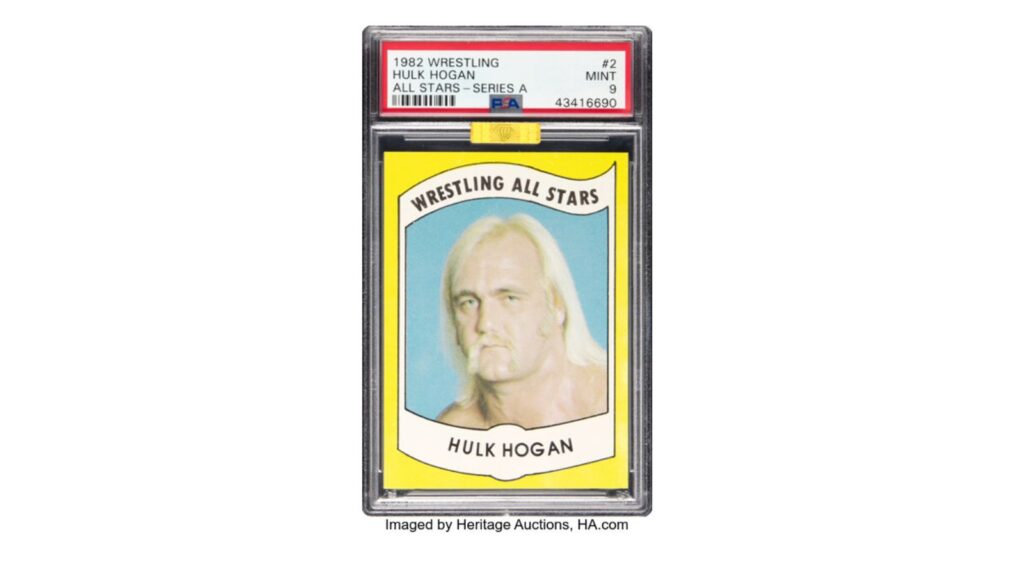
1982 Hulk Hogan Wrestling All-Stars card that sold for $132,000

wwf sports card
Image Credit: Heritage Auctions

If you ever collected non-sports cards in the early โ€™80s, dig through those binders. The 1982 Wrestling All-Stars Series A Hulk Hogan #2 card has become the king of wrestling cards. It was a mail-order set, so lots of kids handled these cards hard or tossed them out, which is why clean copies are so rare now.

A PSA 9 mint example sold in December 2024 for $132,000. That sale made it one of the most expensive wrestling cards ever. Mid-grade copies can still bring thousands, based on recent recorded sales.

If you find this card, donโ€™t clean it, donโ€™t flatten it, and donโ€™t slap a rubber band around it. Slide it into a soft sleeve, then a rigid card holder. Even with some wear, itโ€™s worth checking grading prices and recent sales before you make any fast decisions.

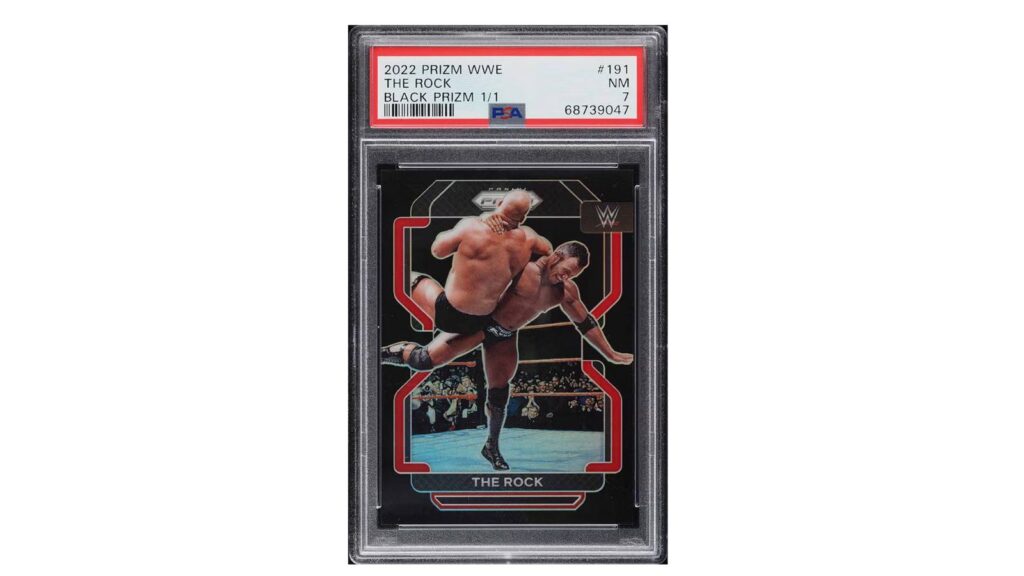
The Rockโ€™s 1-of-1 2022 Black Prizm card that sold for $126,000

Modern cards can be just as wild. In 2023, a one-of-a-kind 2022 Panini WWE Prizm โ€œBlack Prizmโ€ card of The Rock hit the market. It shows him dropping Stone Cold Steve Austin with a Rock Bottom, is numbered 1/1, and was graded a PSA 7.

The Rock card
Image Credit: PWCC Marketplace

That single card sold for $126,000 in an April 2023 premier auction. It briefly held the record for the highest-priced WWE card before Hoganโ€™s All-Stars card jumped ahead.

Youโ€™re not likely to pull this exact card from a random pack now. But if you (or your kid) opened WWE Prizm in 2022, check any shiny Rock cards with serial numbers, especially black or gold. Even lower-tier parallels can be worth grading and selling for hundreds.

WrestleMania I ticket stubs bringing four-figure prices

WWF wrestlemania
Image Credit: Heritage Auctions

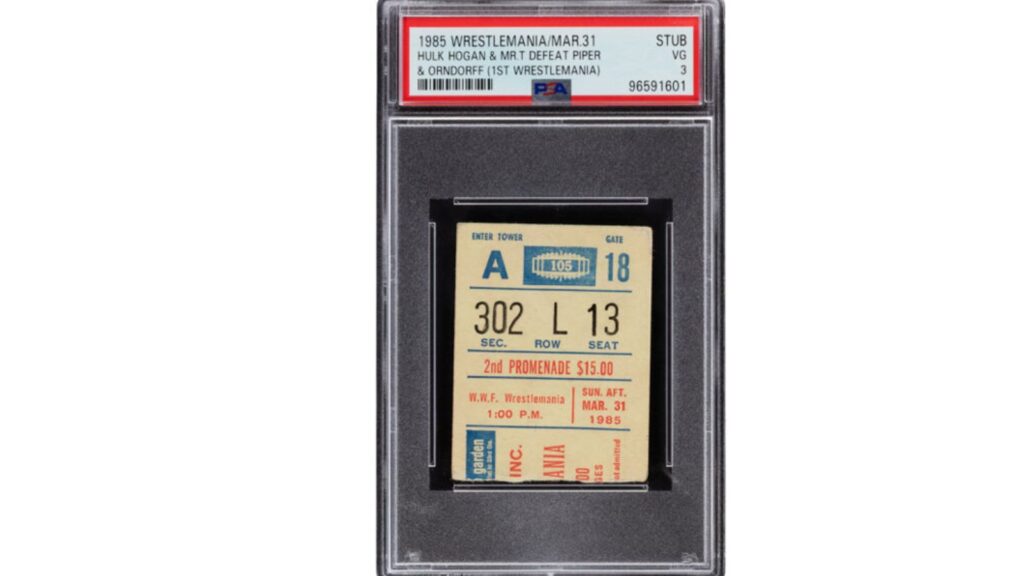
Old ticket stubs get tossed in drawers, stuck in scrapbooks, or run through the wash in jean pockets. If someone in your family went to the first WrestleMania at Madison Square Garden in 1985, their stub might be worth real money today.

One graded stub from WrestleMania I, graded PSA VG 3, sold for $4,148 in June 2025. Other full tickets and higher-grade stubs have gone for similar four-figure amounts in recent years.

These stubs look plain: just event info, seat, and price. Donโ€™t trim edges, flatten them with books, or try to erase pencil marks. Slide the stub into a card sleeve and a rigid holder, then look up recent sold prices before deciding whether to grade or sell it.

WrestleMania III ticket stubs from the Hogan vs. Andre show

WrestleMania III ticket stub
Image Credit: Heritage Auctions

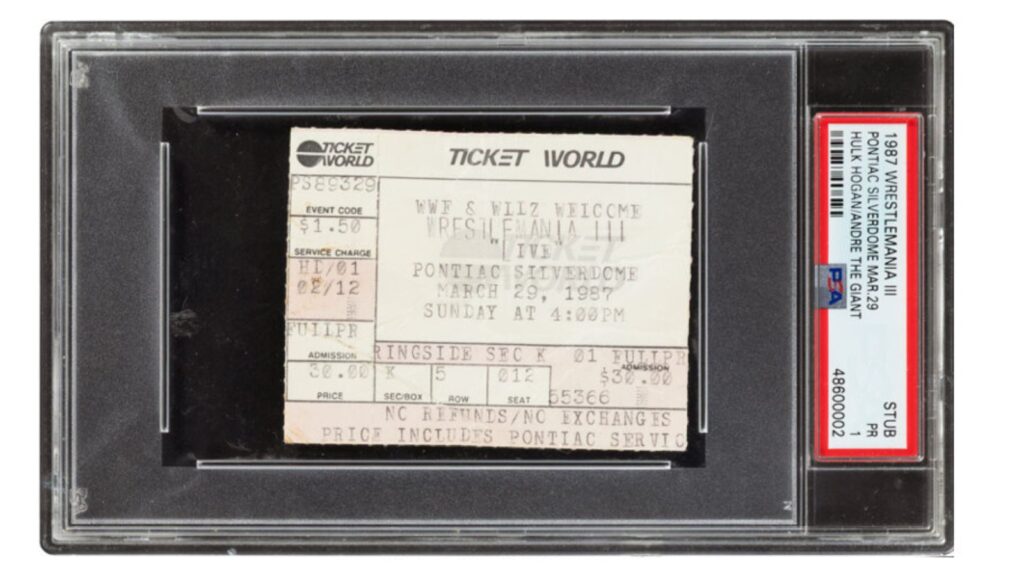
WrestleMania III in 1987 gave us Hogan vs. Andre at the Pontiac Silverdome. A lot of people saved something from that night, programs, foam fingers, or the ticket itself. Those little tickets have become prized pieces of wrestling history.

A heavily worn WrestleMania III stub graded PSA PR 1 still sold for $561.20 in 2025. Signed versions and higher grades can bring even more, often pushing into the low-thousands range.

Look for โ€œWrestleMania IIIโ€ and Hogan vs. Andre printed on the front. Even with creases and fading, donโ€™t laminate or tape it. Store it like a card, and check recent sales to see whether it makes sense to get it graded.

Hulk Hoganโ€™s signed boot with a WrestleMania ticket

Hulk Hogan Boot
Image Credit:
jabt2000 via eBay

Not every valuable piece is small. One display shadow box featuring a Hulk Hogan-signed ring boot and a 1987 WrestleMania ticket sold for $649 in a sports memorabilia auction. The boot was inscribed and paired with an original ticket, which helped push the price.

This kind of piece is easy to overlook. You might see it hanging in a bar, tucked in a basement, or sitting unsold in a local sports shop. The value comes from three things: a large, display-friendly item, a clear signature, and a strong connection to a major event like WrestleMania.

If you come across any signed boots or gear in a frame, look for notes about the event, dates, and inscriptions. Do not take it apart just to โ€œcheckโ€ the boot, keeping the display intact usually helps the value.

Rare WWF Hasbro โ€œgreen cardโ€ 1-2-3 Kid figure

123 kid figure
Image Credit: nycfund via eBay

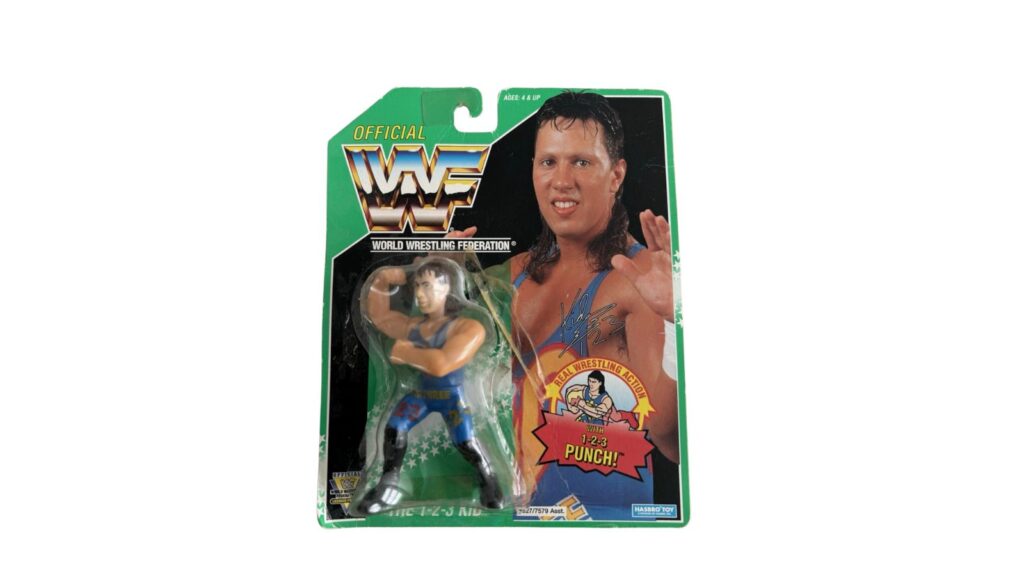
Those chunky early โ€™90s WWF figures are more than childhood toys now. The last Hasbro series came on bright green cards and had lower production numbers. The 1-2-3 Kid figure from that run is one of the toughest to find still sealed.

Recent sales data pulled from finalized online transactions shows mint-on-card 1-2-3 Kid figures often landing around $950 to $1,150, depending on condition. Loose but nice figures can still bring several hundred dollars.

At a flea market or thrift store, this might look like any old plastic figure. Flip it over and look for early-โ€™90s Hasbro markings and the green cardback if itโ€™s still sealed. Even with a cracked bubble or light card wear, it can be worth far more than a modern retail figure.

WWF Hasbro Dusty Rhodes figure that can top $1,500

dusty rhodes figure
Image Credit: veejay210 via eBay

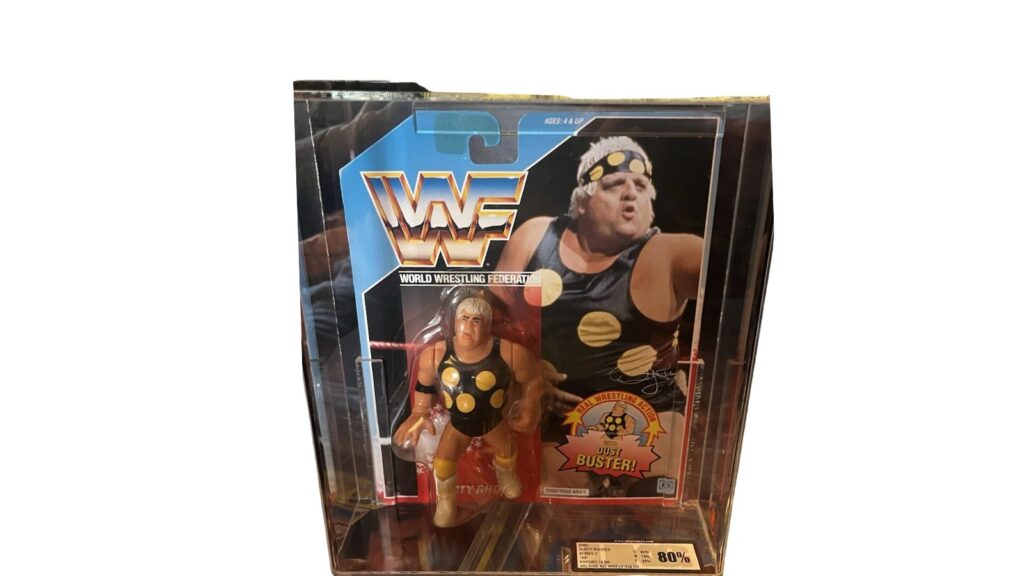
Dusty Rhodes only got one Hasbro WWF figure in the early โ€™90s, and collectors chase it hard. Many were opened and played with, so sealed examples have become pricey.

Based on compiled sales data from multiple completed auctions, mint-on-card Dusty Rhodes figures are estimated around $1,500 to nearly $2,000. Loose figures in good shape often land in the $80โ€“$300 range depending on wear and whether they include the backing card.

If you see a stocky blond figure in polka dots at a yard sale, donโ€™t shrug it off. Check for paint loss, bite marks, and joint damage. Even well-loved copies can be worth listing separately instead of dumping into a bulk toy bin.

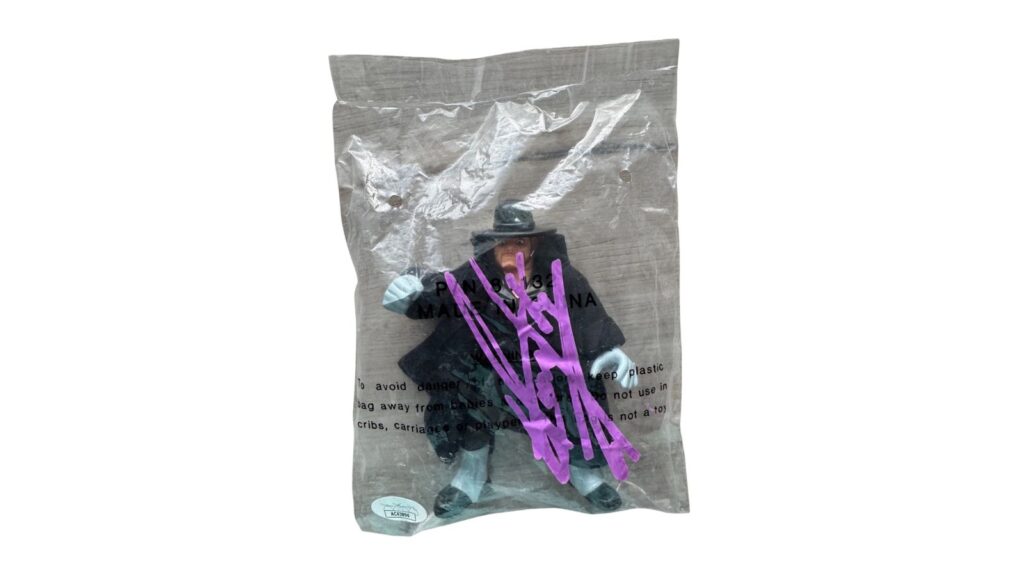
Mail-away Hasbro Undertaker figure worth a few thousand

mail away undertaker figure
Image Credit: altoisthegame via eBay

Mail-away premiums are easy to forget about, which is exactly why they can be so valuable. In the mid-โ€™90s, fans could send in proofs of purchase for a special Hasbro Undertaker figure that arrived in plain packaging instead of on a normal card.

One sealed mail-away Undertaker figure has been documented selling for $2,850, with other sealed copies bringing $1,800โ€“$2,800 and loose examples around $800โ€“$1,000. There are also graded copies reported in the ยฃ1,500โ€“ยฃ2,500 (roughly $1,900โ€“$3,100) range.

If you find an Undertaker Hasbro that came in a plastic baggie or plain mailer box with paperwork, keep everything together. That โ€œjunkโ€ packaging is actually proof you have the special version, not the standard retail figure.

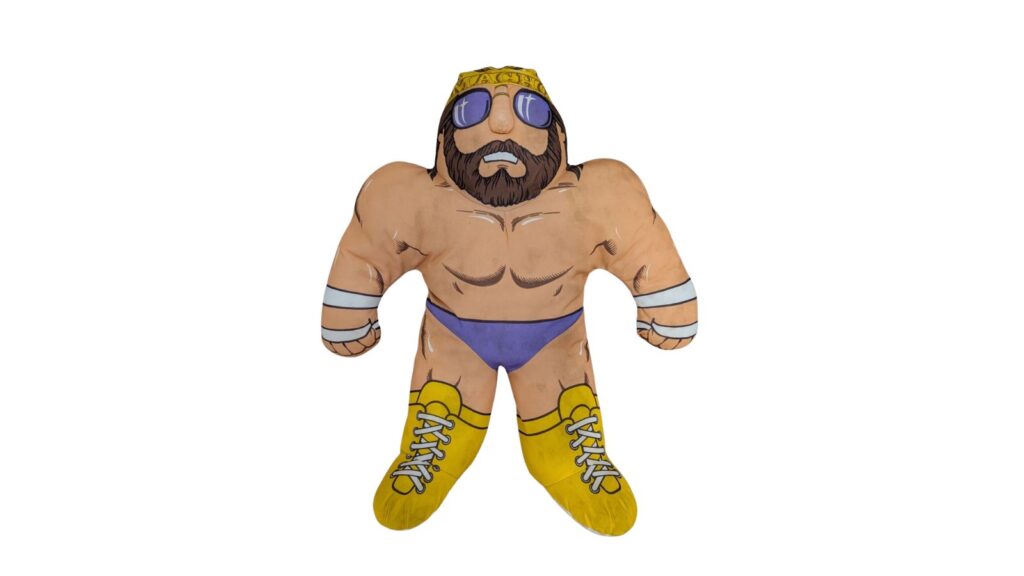
Plush WWF โ€œWrestling Buddiesโ€ from the early โ€™90s

Macho Man Plush
Image Credit: matyb123 via eBay

Those big stuffed wrestlers kids used to body-slam on the couch arenโ€™t always cheap thrift-store toys. Tonkaโ€™s WWF Wrestling Buddies, especially popular stars like Hulk Hogan, Ultimate Warrior, and โ€œMacho Kingโ€ Randy Savage, now sell as nostalgia pieces.

One โ€œMacho Kingโ€ Randy Savage Wrestling Buddy in its original box has been recorded selling for about ยฃ250 (around $300). Another tracked sale shows a Savage buddy around ยฃ307.50 (roughly $380).

At a thrift store, these might be tossed in with generic plush toys. Check the tag for โ€œTonkaโ€ and โ€œWWF,โ€ and look for bright colors, no big tears, and minimal stains. Even with some wear, certain characters can bring $150โ€“$300 if you photograph them clearly and show the tags.

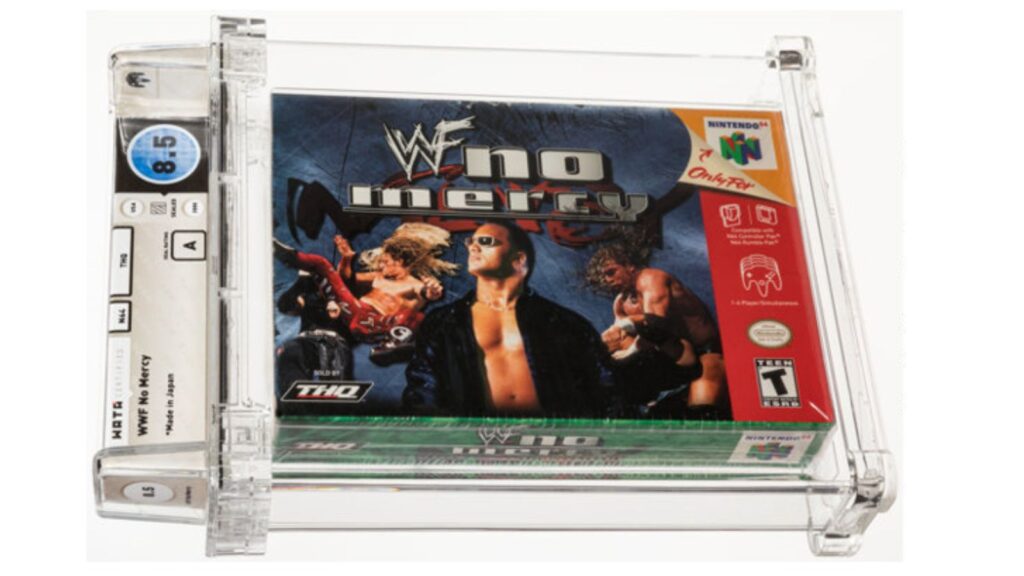
Sealed WWF No Mercy for Nintendo 64

WWF No Mercy for Nintendo 64
Image Credit: Heritage Auctions

If you still have old Nintendo 64 games, they may be worth more than you think, especially if you never opened them. WWF No Mercy is one of the most beloved wrestling games ever, and sealed copies now get graded like comics.

A sealed copy graded Wata 8.5 A sold for $276 in early 2024. Other sealed, graded copies have sold anywhere from about $250 up to $800+ in the last couple of years.

Check your old game stash for intact boxes. A complete-in-box copy (cartridge, manual, box) is worth more than a loose cart, and factory seal bumps it into a different league. Donโ€™t peel off price stickers or โ€œfixโ€ worn edges, collectors would rather see honest wear than tape and touch-ups.

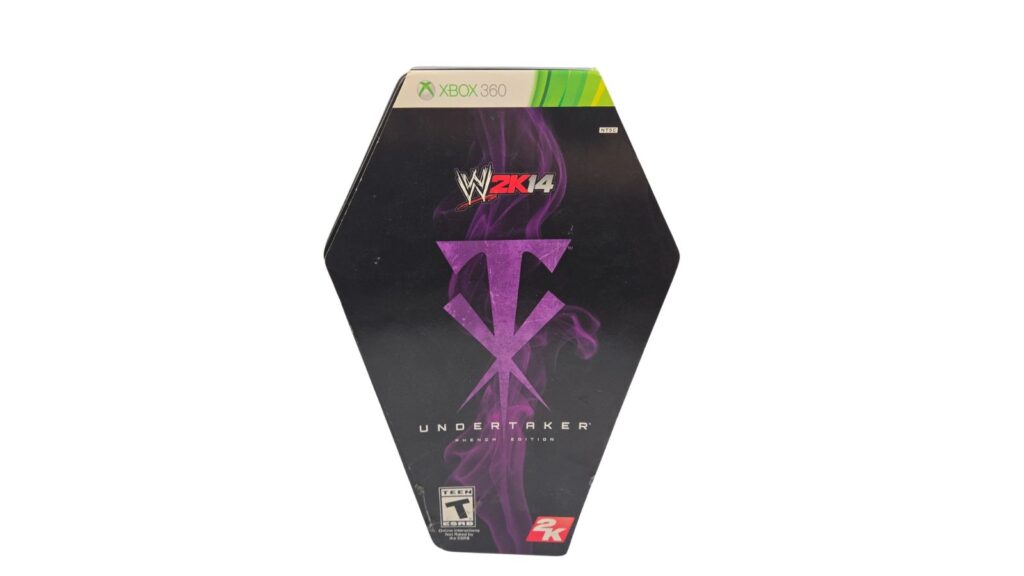
WWE 2K14 โ€œPhenom Editionโ€ with the Undertaker coffin tin

Undertaker tin
Image Credit: LMS Collectables via eBay

Not all valuable wrestling games are cartridges. In 2013, WWE 2K14 released a โ€œPhenom Editionโ€ for PlayStation 3 and Xbox 360. It came in a coffin-shaped tin with an Undertaker autograph and extra goodies. Many were opened; sealed sets are much harder to find now.

One sealed PS3 Phenom Edition in the coffin tin has been documented at around $350(Other sales data show coffin tins and complete sets often changing hands in the low-hundreds, sometimes higher when everything is mint.

If you see a metal coffin-shaped box in a closet or storage unit, check whether itโ€™s still sealed and if the signature is there. Even an opened set with all inserts can bring in a few hundred dollars, especially on the right platform.

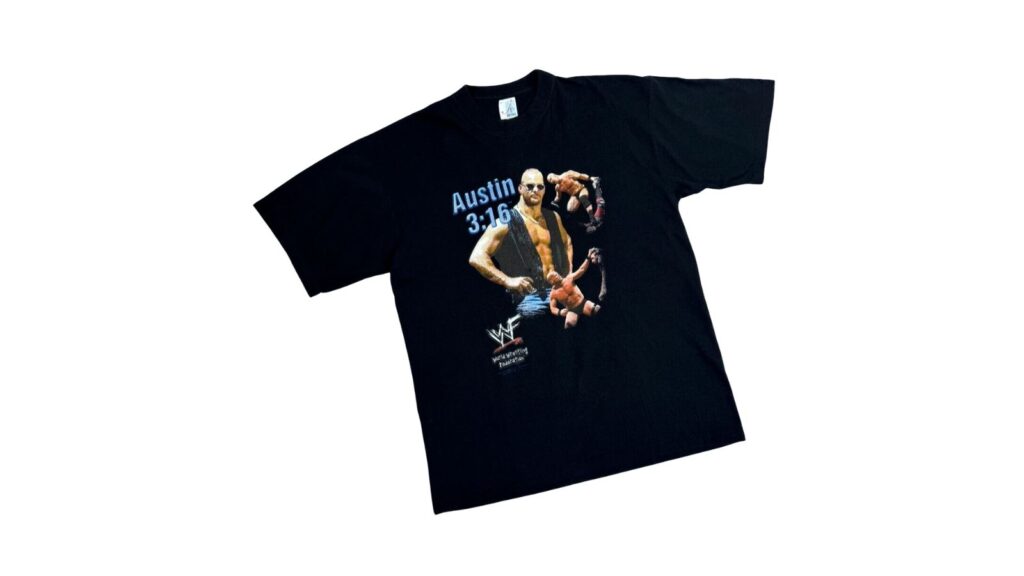
Vintage Stone Cold Steve Austin โ€œAustin 3:16โ€ shirts

Austin 316 T-shirt
Image Credit: Hope_Vintage_Clothing via eBay

Vintage wrestling shirts have become a whole niche of their own, and Stone Cold is one of the big names. Original late-โ€™90s โ€œAustin 3:16โ€ shirts with WWF tags, single-stitch hems, and strong graphics can bring more than youโ€™d expect from an old T-shirt.

One 1998 โ€œAustin 3:16โ€ WWF shirt in good condition has been listed around $349. Another vintage single-stitch design has sold or been offered in the $90โ€“$200 range.

In thrift stores, these may be hanging with band shirts and random sports tees. Look for older copyright dates (mid- to late-โ€™90s), soft faded fabric, and original size tags instead of modern reprints. Small holes are often fine to collectors, but big stains or cut sleeves will drop the price.

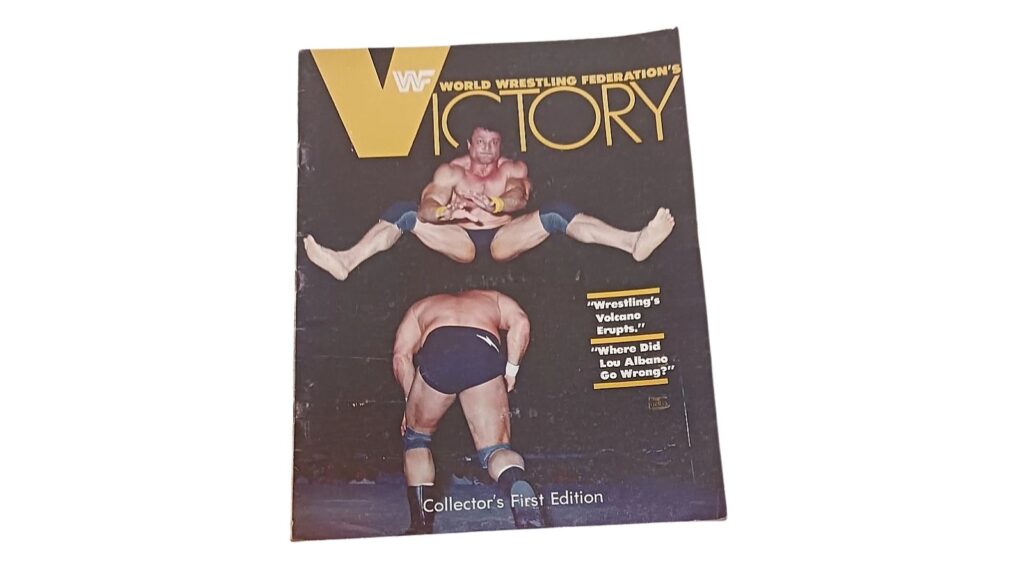
First-issue WWF Victory Magazine from 1983

WWF Victory Magazine
Image Credit: Rummage Rumble via eBay

Before WWF Magazine became a monthly staple, there was WWF Victory Magazine. Volume 1, Issue 1 from 1983 is the first official magazine, and collectors now treat it like a key comic issue.

Copies of WWF Victory #1 often show up in the $140โ€“$200 asking-price range, with some sales landing in that neighborhood depending on condition. Even mid-grade copies can do well if the cover is bright and the spine isnโ€™t shredded.

If you find a stack of old wrestling magazines, donโ€™t just recycle them. Pull out anything from 1983โ€“1984 and check the masthead for โ€œVictory.โ€ Bagging them like comics, using magazine bags and boards, will help preserve value until you decide whether to sell or grade.

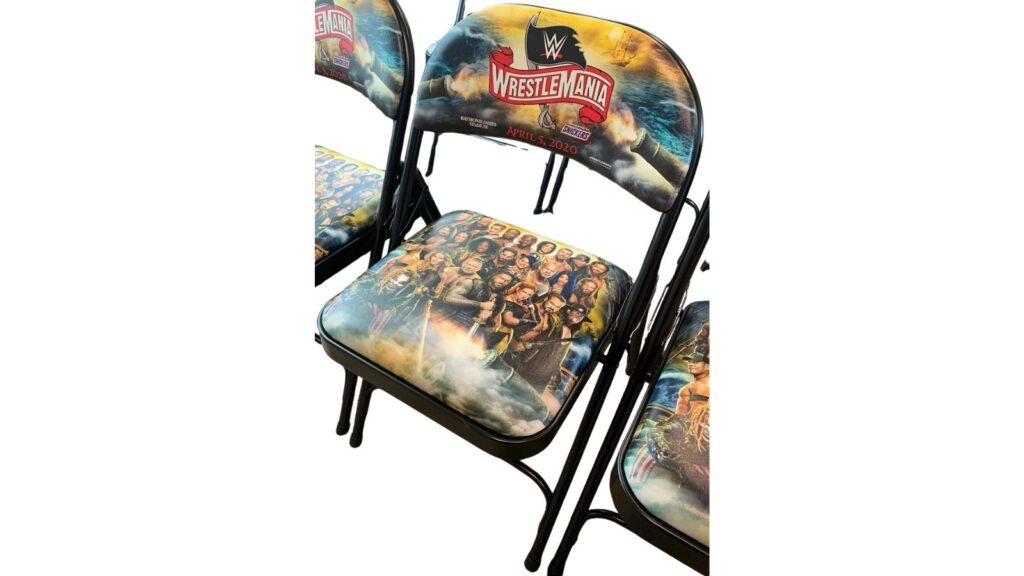
Original WrestleMania ringside chairs

WrestleMania ringside chair
Image Credit: ak62312 via eBay

For many WrestleManias, fans in the highest ticket tiers got to keep their padded folding chair as part of the package. Those chairs have full-color event art printed on the seat and back, and theyโ€™ve turned into a serious side market.

Event chairs from recent WrestleManias commonly sell in the $130โ€“$300+ range. For example, WrestleMania 36 chairs are offered around $300, while WrestleMania 38 ringside chairs featuring Stone Cold vs. Kevin Owens sit in the $130โ€“$220 range and have recorded multiple sales.

If you see one of these in a garage or storage unit, treat it like a collectible, not a spare dining chair. Avoid sitting on it or stacking heavy boxes on top. A clean seat graphic and minimal scratching make a big difference when you go to sell.

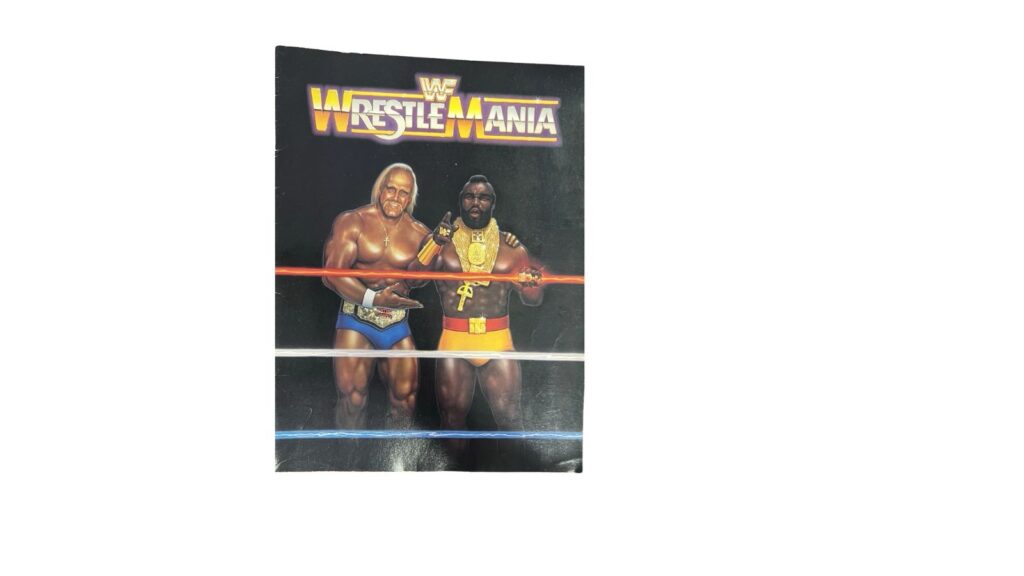
Hulk Hoganโ€“signed WrestleMania I programs and tickets

WrestleMania I program
Image Credit: jodicos-51 via eBay

Paper from the first WrestleMania gets a big boost when Hulk Hoganโ€™s signature is on it. Programs and ticket stubs from March 31, 1985, were everyday souvenirs at the time, but signed examples now attract serious offers.

One original WrestleMania I program with Hogan and Mr. T on the cover has been offered around $2,500, and similar signed pieces have sold in the low-thousands depending on grade and inscription. Signed ticket stubs from that night have also reached strong prices when graded and authenticated.

If you come across a program or ticket with a bold Hogan autograph, keep it flat and avoid rolling it or folding it again. Photo proof from the signing or an older certificate of authenticity can support the value, so keep any paperwork with the item.

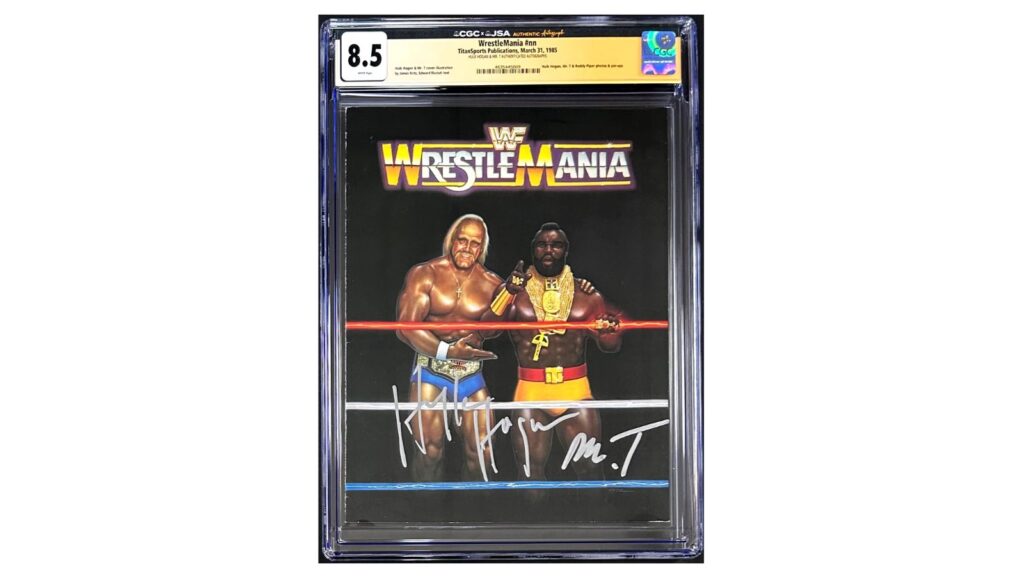
Hulk Hogan and Mr. T dual-signed WrestleMania I program

WrestleMania I program - signed
Image Credit: Fiterman Sports via eBay

Take that same program and add Mr. Tโ€™s signature next to Hoganโ€™s, and you have a crossover collectible that appeals to both wrestling and โ€™80s TV fans. Graded copies become centerpieces in high-end collections.

A graded WrestleMania I program signed by both Hogan and Mr. T and encapsulated at CGC 8.5 has been offered just under $4,000, with some listings originally near $4,300 before discounts. Itโ€™s not uncommon for collectors to pay in that range for clean, dual-signed, graded copies.

If you find any first-WrestleMania program with two or more big signatures, consider having it authenticated and graded before you sell. The plastic case protects fragile paper and makes buyers more comfortable paying thousands instead of hundreds.

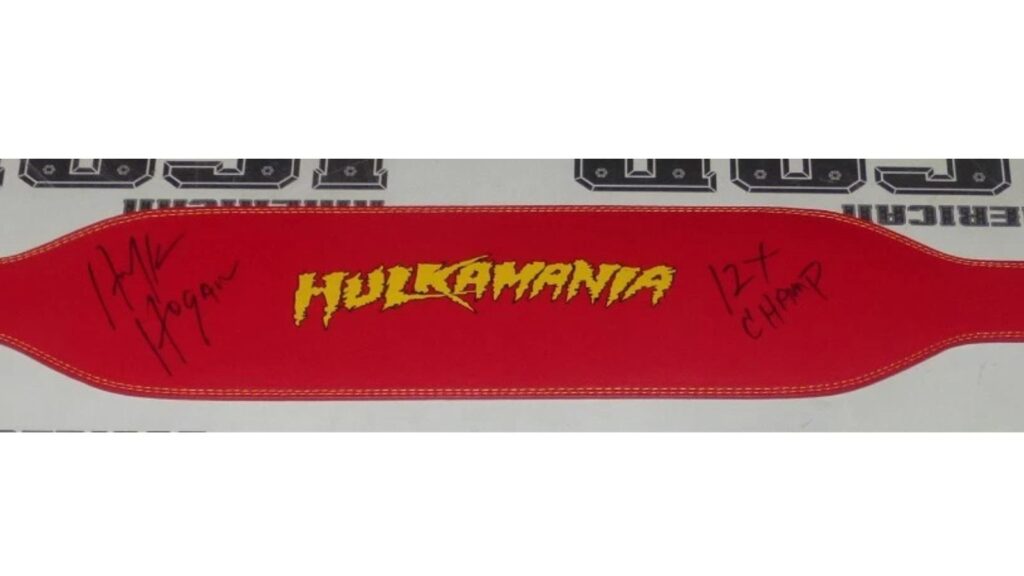
Signed โ€œHulkamaniaโ€ weight belts

signed weight belt
Image Credit: American Icon Autographs via eBay

Those bright red and yellow Hulkamania weight belts started as fun merchandise, but signed versions have turned into nice mid-range collectibles. Theyโ€™re big, display well on a wall, and scream โ€™80s wrestling.

A signed โ€œHulkamaniaโ€ weight belt can easily sell for $350โ€“$800 depending on condition and authentication. Some official signed belts and special Cardillo-brand Hulk belts are regularly priced over $1,400 and even up to $2,500.

If you run into a Hulk belt in a closet or storage locker, look closely at the logo and autograph. Check for cracking, flaking paint, or faded ink. A clear, bold signature with a matching certificate or hologram sticker is much easier to sell at the high end.

Discover job hunting tips, ways to earn more, and flexible working options:

Practising job interview
Image Credit: Shutterstock

21 high-paying careers that desperately need workers, but nobody wants to do them: The pay is generous, but these jobs are searching for workers.

No background check jobs: 12 background friendly jobs: If youโ€™re struggling to find a job due to past issues, here are jobs you can get without background checks.

15 remote jobs you probably didnโ€™t know pay $150,000+ In 2026: High income and flexible work hours from home is not a myth โ€” here are some remote-friendly careers.

Byline Katy Willis

If you get restless when things are calm and think most office jobs move at half-speed, youโ€™re not broken, youโ€™re wired for chaos. Some people do their best work when alarms are going off, plans are changing, and everyone else is looking for the adult in the room.

The good news: there are careers built for exactly that kind of brain. Many of them pay well, need new people every year, and still depend heavily on human judgment, quick thinking, and face-to-face work.

If youโ€™re energized by crises, moving parts, and tough calls, these jobs might feel less like โ€œtoo muchโ€ and more like a normal Tuesday. If you recognize yourself in these roles, calm in emergencies, sharper when things get messy, thatโ€™s a real strength. The key is being honest about your limits, building good boundaries, and choosing a job where the chaos feels meaningful, not just exhausting.

Emergency room nurse

Emergency room nurse
Image Credit: Shutterstock

Emergency room nurses are the first line when life goes sideways, car crashes, heart attacks, weird rashes at 2 a.m. Youโ€™re juggling multiple patients, coordinating with doctors, and making fast decisions with incomplete information. If you stay calm when everyone else is yelling, this environment can feel strangely focused instead of overwhelming.

ER nurses are registered nurses, so youโ€™ll follow the RN path: nursing degree plus a license, then move into emergency care. Federal wage data shows registered nurses earn a median salary around $93,600 per year.Healthcare overall is one of the fastest-growing sectors, adding about 1.9 million openings a year, so demand is strong and steady.

Schedules are usually in 12-hour shifts, often nights, weekends, and holidays. Thatโ€™s rough on your body but ideal if you like compressed workweeks and hate working the same exact hours every day. The mental load is real, so burnout is common. But if you thrive in high-stakes, high-impact situations, the ER gives you daily proof that your chaos tolerance saves lives.

Emergency medicine physician (ER doctor)

emergency dr running through corridor with patient on gurney
Image Credit: Shutterstock

Emergency medicine doctors walk into every shift knowing theyโ€™ll see everything from sore throats to multi-car crashes. You make quick calls with limited information, decide who gets treated first, and coordinate a whole team when minutes actually matter. If that sounds exciting instead of terrifying, you may fit this world.

Physicians and surgeons as a group earn a median wage of at least $239,200 per year. Various salary surveys that pull from federal data put emergency medicine doctors around $300,000โ€“$320,000 per year or more, depending on location and setting.

Training is long, four years of medical school plus residency, and the shifts can be brutal: overnights, weekends, and holidays, often with back-to-back emergencies. But if you like rapid decisions, unpredictable days, and being the person everyone turns to when things fall apart, emergency medicine is about as โ€œthriving on chaosโ€ as it gets.

Air traffic controller

air traffic controller
Image credit: CreativeDesign295 via Freepik

Air traffic controllers coordinate every plane taking off, landing, and crossing U.S. skies. Youโ€™re tracking dozens of aircraft at once, rerouting around storms, and staying hyper-focused while pilots rely on your instructions. Mistakes are not an option, which is exactly why some people love this job.

Controllers have strong earning power. Recent federal data shows a median annual wage of about $144,580, with experienced controllers in busy facilities earning far more. Industry reports describe a long-running controller shortage, with many critical towers understaffed despite average pay around $150,000 and higher at top facilities.

To get in, you typically need specialized training and must meet strict medical and age requirements. The work is stressful and highly regulated, but if you like fast decisions, intense focus, and knowing your calls keep hundreds of people safe at a time, this is chaos with a purpose.

Airline or commercial pilot

two pilots in plane cockpit
Image Credit: Shutterstock

Pilots live with constant change: weather shifts, mechanical issues, last-minute route changes, and passengers who still stand up when the seatbelt sign is on. Youโ€™re managing a complex machine in a very dynamic environment, often across time zones and sleep schedules.

Pay reflects the responsibility. Federal data puts median pay for airline pilots, copilots, and flight engineers at about $226,600 per year, with commercial pilots around $122,670. Employment for airline and commercial pilots is projected to grow about 4% from 2024 to 2034, with roughly 18,200 openings per year as older pilots retire.

Training is demanding and expensive. Youโ€™ll need flight school, licenses, and a lot of flight hours. Schedules can be chaotic too, early mornings, red-eyes, and stretches away from home. But if you love constant decision-making, technical systems, and real-time problem-solving at 30,000 feet, youโ€™ll never be bored.

Firefighter

firefighter
Image Credit: Shutterstock

Firefighters walk into burning buildings, car wrecks, chemical spills, and disaster scenes while everyone else is running out. One moment youโ€™re mopping floors at the station, the next youโ€™re cutting someone out of a vehicle. Shifts are long and quiet until suddenly theyโ€™re not.

Federal wage statistics show a median annual salary of about $59,530 for firefighters, with higher pay in large cities and specialized units. Employment is projected to grow around 3% from 2024 to 2034, with roughly 27,100 openings each year due to retirements and turnover.

Youโ€™ll usually work 24-hour shifts followed by days off, which makes life planning weird but can be great if you like blocks of free time. The job is physically demanding and emotionally heavy, you see people on their worst days. If you stay clear-headed in smoke and sirens, though, firefighting offers steady work, a tight-knit crew, and plenty of action.

Police detective or investigator

senior detective at a crime board
Image Credit: Shutterstock

Detectives live in ongoing chaos: major crimes, messy stories, and evidence that rarely lines up neatly. Youโ€™re reading people, following leads, juggling multiple cases, and making judgment calls that can affect someoneโ€™s freedom.

Pay is higher than for patrol officers. Various analyses using federal data peg detectives and criminal investigators around $83,000 to $93,000 in median annual pay, with police and detectives overall around the high-$60,000s to low-$70,000s.

You typically start as a patrol officer, then move into investigations. The work can mean odd hours, court dates, and calls in the middle of the night when something breaks in a case. If you enjoy puzzles, interviews, and long-term, messy problems more than routine traffic stops, detective work may be the kind of organized chaos you actually enjoy.

911 dispatcher / public safety telecommunicator

911 Dispatcher
Image Credit: Katy Willis via Artistly

If you want chaos without being in the field, 911 dispatch might fit. Public safety telecommunicators take emergency calls, keep frantic callers talking, and send the right police, fire, or medical units where theyโ€™re needed. Youโ€™re calm on the phone while chaos plays out on the other end of the line.

Recent wage data shows a median annual salary of about $50,730 for public safety telecommunicators, with the top 10% earning more than $78,000. Employment is projected to grow around 3% from 2024 to 2034, with about 10,700 openings per year, often because the stress level leads to high turnover.

Shifts are usually 24/7, nights, weekends, and holidays are part of the deal. Youโ€™ll hear hard things and sometimes never learn how a call ended. But if your brain gets sharper under pressure and you like being the calm voice guiding people through the worst minutes of their lives, this is very real, very meaningful chaos.

Emergency management director

Emergency management director
Image Credit: Shutterstock

Emergency management directors are the planners behind big disasters, hurricanes, wildfires, chemical spills, mass-casualty events. You build response plans, run drills, coordinate with fire, police, hospitals, schools, and then step in to lead when a real crisis hits.

This role pays solidly into the middle-class and above. Federal data shows a median annual wage around $86,130, with top earners making over $160,000 depending on industry and location. Employment is expected to grow about 3% from 2024 to 2034, with roughly 1,000 openings a year, as communities keep investing in disaster readiness.

Youโ€™ll usually need a bachelorโ€™s degree plus years of experience in emergency services, public administration, or a related field. The job often means being on call 24/7. If your idea of a good day is coordinating moving pieces, making judgment calls under pressure, and prepping for worst-case scenarios, this is high-level chaos planning.

Critical care (ICU) nurse

ICU nurse
Image Credit: Shutterstock

ICU nurses work where patients are most unstable with ventilators, multi-drip IVs, constant alarms. One tiny change in vital signs can mean a huge change in treatment. Youโ€™re watching monitors, adjusting meds, working closely with doctors, and often supporting worried families at the same time.

While federal data groups ICU nurses under registered nurses, specialty salary surveys put ICU pay in the mid-$70,000s to mid-$80,000s on average, with many experienced nurses earning more. Registered nursing as a whole has a median wage around $93,600 and is projected to grow about 5% from 2024 to 2034, adding nearly 189,100 openings per year.

ICU shifts are intense, and the emotional toll can be high. But if you like deep focus, complex patients, and rapid problem-solving with a team of other high-performers, this kind of constant, controlled chaos can feel strangely satisfying.

Labor and delivery nurse

delivery nurse handing baby to mother
Image Credit: Shutterstock

Labor and delivery nurses live in one of the most unpredictable parts of the hospital. You can go from a routine birth to an emergency C-section in minutes. Youโ€™re coaching, monitoring fetal heart rates, managing pain options, and keeping a room full of people calm while babies arrive on their own schedule.

Specialty pay data shows labor and delivery nurses averaging roughly $80,000โ€“$100,000 a year, with wide ranges based on overtime, location, and certifications. Like other hospital-based RNs, they benefit from the broader strong demand for nursing.

Shifts are usually 12 hours and can flip between happy, terrifying, and heartbreaking in a single night. If you want high emotion, high stakes, and fast changes, but with plenty of joyful outcomes, L&D might be your kind of chaos.

Nurse anesthetist (CRNA)

 Nurse anesthetist helping in operation
Image Credit: Shutterstock

Nurse anesthetists manage anesthesia during surgeries, emergency procedures, and sometimes in trauma or labor settings. Youโ€™re handling powerful medications, monitoring patients second-by-second, and making rapid decisions if anything changes, blood pressure drops, airway issues, or unexpected reactions.

Advanced practice nurses as a group (including nurse anesthetists, nurse midwives, and nurse practitioners) have a median annual wage around $132,050, with employment projected to grow about 35% from 2024 to 2034, far faster than average. CRNAs themselves sit at the top of nursing pay, with national averages commonly reported in the low-to-mid $200,000s.

Youโ€™ll need a BSN, RN experience (often in ICU), and then a graduate-level nurse anesthesia program. The path is long and competitive, and the pressure in the OR is constant. But if you like technical details, fine-tuned decisions, and fast-moving surgical teams, this is high-pay, high-intensity work.

Construction manager

construction manager talking
Image Credit: Shutterstock

Construction managers oversee big, messy projects: building homes, high-rises, schools, roads. Youโ€™re juggling schedules, subcontractors, weather delays, supply shortages, and inspections. Plans change daily, and you make calls that affect safety and cost in real time.

Recent federal data shows a median annual pay around $106,980, with experienced construction managers in certain sectors earning well into the $120,000+ range. Employment is projected to grow about 9% from 2024 to 2034, faster than the average for all occupations.

You usually need at least a bachelorโ€™s degree or strong experience in the trades. Expect long days on job sites, phone calls after hours, and constant problem-solving. If you like being outside, moving between tasks, and keeping a dozen plates spinning at once, construction management is structured chaos with good pay.

Transportation, storage, and distribution manager (supply chain manager)

Transportation, storage, and distribution manager
Image Credit: Shutterstock

Supply chain and transportation managers keep goods moving, from ports to warehouses to stores. When a shipment gets stuck, a truck breaks down, or a warehouse gets overwhelmed, youโ€™re the one rerouting, rebooking, and calming down angry customers.

Federal data puts median pay for transportation, storage, and distribution managers around $102,010 per year, with top earners making more than $180,000. Employment is projected to grow around 6% from 2024 to 2034, faster than average, with about 18,500 openings a year as e-commerce keeps the pressure on logistics networks.

Youโ€™re often on call when something goes wrong, which it will. But if you enjoy maps, systems, and fast coordination under time pressure, this kind of operational chaos can be very satisfying and very marketable.

Securities, commodities, and financial services sales agent

two stock brokers on a computer
Image Credit: Shutterstock

Think stockbrokers, institutional sales reps, and other front-office finance roles. Markets move fast, clients panic, deals fall apart, and youโ€™re on the phone or chat trying to keep money and relationships intact.

Federal data shows a median annual wage around $78,140 for securities, commodities, and financial services sales agents, with the top 10% making over $215,000. Employment is projected to grow about 3% from 2024 to 2034, with around 38,100 openings a year as people keep needing advice and help with investments and deals.

Hours can be long, especially in big firms, and the pressure to hit targets is real. Pay often includes bonuses and commission, so income swings with performance. If you like noisy trading floors, fast decisions, and high-energy environments where every call can move real money, this is financial chaos in its purest form.

Food service manager (busy restaurant or cafeteria)

Food service manager
Image Credit: Shutterstock

Restaurant and food service managers live in daily controlled chaos: staff calling out, equipment breaking, surprise health inspections, and a full dining room on top of it all. Youโ€™re scheduling, putting out fires (sometimes literally), and handling customers who are hungry and impatient.

Federal wage data shows a median salary around $65,310 for food service managers, with top earners crossing the $100,000 mark. Employment is projected to grow about 6% from 2024 to 2034, faster than average, with roughly 42,000 openings each year as restaurants expand and managers move up or out.

The hours are tough, nights, weekends, holidays, and youโ€™re on your feet most of the time. But if you love a buzzing room, constant decision-making, and seeing immediate results from your choices, managing a fast-paced kitchen or dining room can be the right kind of chaotic.

Meeting, convention, and event planner

event planner
Image Credit: Shutterstock

Event planners live in a world where everything can go wrong at once: vendors late, sound systems failing, VIPs missing, and storms rolling in during outdoor weddings. Youโ€™re the one who keeps the show on the road while everyone else enjoys the event.

Federal data puts median annual pay for meeting, convention, and event planners around $59,440, with top planners earning into the $90,000+ range. Employment is projected to grow about 5% from 2024 to 2034, faster than average, with around 15,500 openings a year as companies and organizations keep investing in in-person events.

The work often includes nights and weekends, plus travel. If you enjoy last-minute problem-solving, negotiating, and bringing order to a room full of moving parts and personalities, event planning might be your sweet spot.

Producer or director (film, TV, or live productions)

film director and producer
Image Credit: Shutterstock

Producers and directors are the chaos coordinators of the entertainment world. Youโ€™re juggling scripts, budgets, cast, crew, schedules, live changes, and sometimes weather or technical failures, all while trying to meet a release date or live broadcast time.

Federal wage data shows a median annual salary around $83,480, with the top earners making close to $200,000 or more. Employment is projected to grow about 5% from 2024 to 2034, faster than average, with about 12,800 openings each year as demand for video content and streaming keeps rising.

Youโ€™ll usually start in lower-level production roles and work your way up. Long days, tight deadlines, and last-minute rewrites are normal. If you like creative chaos and can keep your head while everyoneโ€™s asking for something different, producing or directing could be a great fit.

Social worker in crisis or healthcare settings

social worker in crisis setting
Image Credit: Shutterstock

Not all chaos is physical. In crisis hotlines, hospitals, and child welfare agencies, social workers step into familiesโ€™ worst days, abuse reports, mental health crises, housing emergencies, end-of-life decisions. Youโ€™re coordinating services, calming people, and making tough calls with incomplete information.

Federal data shows social workers earning a median annual wage around $61,330, with healthcare and certain specialties reaching the high-$60,000s and top earners near $100,000. Overall employment for social workers is projected to grow about 6% from 2024 to 2034, faster than average, adding roughly 74,000 openings a year.

The emotional load is heavy, and burnout is common. But if your version of thriving on chaos is helping people stabilize during the worst moments of their lives, and you want work that will always be needed, crisis-oriented social work can be a powerful, if demanding, path.

Discover job hunting tips, ways to earn more, and flexible working options:

Practising job interview
Image Credit: Shutterstock

21 high-paying careers that desperately need workers, but nobody wants to do them: The pay is generous, but these jobs are searching for workers.

No background check jobs: 12 background friendly jobs: If youโ€™re struggling to find a job due to past issues, here are jobs you can get without background checks.

15 remote jobs you probably didnโ€™t know pay $150,000+ In 2026: High income and flexible work hours from home is not a myth โ€” here are some remote-friendly careers.

Byline: Katy Willis
The truth separating parents donโ€™t hear enough: having a substance abuse problem does not automatically mean you lose custody of your kids.

In my 15 years of writing about and advocating for separated families, I really have seen it all. This includes many families who struggle with addiction. Sometimes it is one parent, but often it is both. Also, as the 12-steps know: Each addict has a co-dependent.

Separated and divorced families struggling with an addicted parent play out in the following ways:

  1. The parent who is not addicted uses substance abuse to gain legal custody and/or majority parenting time, even though the addict parent has made meaningful work on sobriety and never hurt the kids, or a lot of time has passed since an incident.
  2. The addicted parent does not or cannot become sober or stable enough to be meaningfully involved with their kids, though nearly all parents can and should have some contact and relationship with their minor children, extreme abuse withstanding. An enormous body of academic research and millennia of human history show us that involvement of both the mother and father in raising a child is critical, ideally 50/50.
  3. Both parents commit to both parents being equally involved with the children, and support one another through the inevitable ups and downs of life, including addiction.ย 

Family courts thankfully are not as punitive towards separated parents with addiction as they once were. With cultural and legal changes that make equal parenting presumptions the default throughout much of the country, courts, attorneys, and counselors are now focused on your childโ€™s safety and best interests, which nearly always means at least some parenting time with the right safeguards in place. Today, high-tech breathalyzers like Soberlink make it easier to put those safeguards into action by delivering instant, court-admissible results to all involved parties, allowing parents to prove sobriety in real-time without disrupting daily life.

The key is your ability to show stability, reliability, treatment engagement, and a plan that protects the child.

โ€œWhen youโ€™re detailing family law cases, you want the best interest of the child, the safety of the child, and ensuring the child has a quality relationship with both parents โ€” including parents dealing with substance abuse,โ€ said retired family law judge and New Jersey Bar Association president Timothy McGoughran.

And why shouldnโ€™t it? A 2025 National Institutes for Health research update found that nearly 19 million U.S. children (about 1 in 4) live with at least one parent or primary caregiver who had a substance use disorder. Those parents do not automatically lose custody of their kids โ€” nor should they.

What courts actually care about (and what they donโ€™t)

In custody cases, addiction becomes a big deal when it creates risk, such as:

  • Driving impaired with the child
  • Neglect (missed meals, unsafe supervision, unstable housing)
  • Violence, volatility, or repeated relapses without a safety plan
  • Overdoses or medical emergencies while the child is present

Courts generally donโ€™t care about self-identifying labels (โ€œaddict,โ€ โ€œalcoholic,โ€ โ€œin recoveryโ€) as much as patterns and proof. If the other parent argues youโ€™re unsafe and has proof, such as a DUI or other criminal charges, testimonials from people who have seen you under the influence around the kids, or reports from your recovery or support team, parenting time can justifiably be limited. 

Practical steps to keep (or rebuild) parenting time

If youโ€™re dealing with addiction and want to protect your relationship with your kids, hereโ€™s what actually helps, whether you are facing a judge, mediation, working through a counselor, or simply building trust with your co-parent.

1) Get into treatment and document it

You donโ€™t have to be โ€œperfect,โ€ but you do have to be actively addressing the problem, taking initiative, and showing documentation, such as:

  • Intake paperwork from an outpatient program or therapist
  • Attendance logs (group counseling, AA, counseling)
  • Discharge summary (if completed)
  • A sponsor letter (AA/NA) (sometimes)

This isnโ€™t about โ€œperforming recovery.โ€ Itโ€™s about showing that youโ€™re stable enough to parent safely.

2) Offer sober monitoring

Depending on the situation, you might be asked for:

  • Random drug/alcohol testing
  • Alcohol monitoring (like Soberlink)
  • Supervised visitation short-term

This can feel punitive, but monitoring can facilitate trust with all parties involved, including your children. Consider offering to engage with monitoring to prove your commitment to both sobriety and your kids.

3) Ask for a parenting plan that matches reality

If youโ€™re early in recovery, donโ€™t demand a schedule you canโ€™t reliably follow.

Instead, propose something like:

  • Short, frequent visits (more consistency, less overwhelm)
  • No overnights at firstย ย 
  • A documented โ€œstep-up planโ€ that increases time after milestones (90 days sober, program completion, negative test history). Be explicit, so that milestones are clear and measurable, so everyone involved knows exactly what progress looks like and when parenting time can safely expand.

Courts like step-up plans because theyโ€™re structured and child-focused, not emotional.

4) Build a relapse safety plan (yes, even if you hate that word)

Relapse happens for many people. Courts know this.

What matters is whether you have a plan, such as:

  • If I feel triggered, I call my sponsor/therapist
  • If I slip, I donโ€™t drive with the child
  • If I relapse, the child stays with the other parent temporarily, and I resume visits after a negative test
  • I have approved safe adults for backup childcare

A plan like this shows maturityโ€”and reduces the courtโ€™s fear.

5) Stop giving the other side โ€œeasy winsโ€

If youโ€™re fighting for custody, these are the fastest ways to lose credibility:

  • Missing visits repeatedly
  • Angry or spiraling texts, calls, or threatsย 
  • Violating a temporary order
  • Showing up late, unprepared, or unstable

6) Use support resources before you hit crisis mode

If you need help finding treatment fast, Substance Abuse and Mental Health Services Administration National Helpline (1-800-662-HELP) can connect you to services.

SAMHSA also emphasizes that family support plays a major role in recovery outcomes, which matters when youโ€™re trying to preserve parent-child and co-parenting relationships.

If you already lost parenting time, you have options to get it back

If custody was reduced due to addiction, donโ€™t assume itโ€™s permanent. Courts will reconsider past decisions after seeing progress, consistency, and proof.

A practical path to increasing custodial time may include:

  1. Using an alcohol monitoring system like Soberlink to provide the court with clear, verified proof of sobriety
  2. Agreeing to supervised or shorter visits to show you can be consistent, on time, and prepared
  3. Increasing parenting time step-by-step as you build a documented track record
  4. Asking the court for changes only after youโ€™ve shown sustained progress

In research focused on cases where the state intervenes out of welfare concerns, child outcomes improve when the focus is on supporting family connection rather than punishment.

The bottom line

A past or present struggle with addiction doesnโ€™t deem you a bad parent and shouldnโ€™t result in loss of custody. What matters is whether your child is safe and whether you are taking responsibility for your substance use. When parents are honest, proactive, and willing to put safeguards in place, courts are far more likely to protect the parent-child relationship. You are not without options, and progress โ€” not perfection โ€” gives you the greatest chance of being an involved, and even equal parent. Remember, courts will always default to whatever they deem is in the best interests of the child, which now is recognized as having meaningful relationships with both parents whenever possible.

You probably didnโ€™t keep your childhood plushies thinking theyโ€™d ever be โ€œinvestments.โ€ They got dragged through backyards, slept on, chewed by the dog, then tossed in a bin or dropped at a thrift store.

Most plush toys, even vintage ones, are worth pocket money at best. But a handful, the right brand, era, and condition, can bring $50, $100, or even a few hundred dollars. If youโ€™re cleaning out toys or browsing thrift shelves anyway, itโ€™s worth grabbing your phone, searching the exact name plus โ€œplush,โ€ and filtering to sold listings before you donate that weird little monster youโ€™ve had since 1987.

Rainbow Brite and Puppy Brite plush (1980s)

Puppy Brite
Image Credit: Maritime Moon Vintage via eBay

If you grew up in the โ€˜80s, Rainbow Brite and her friends probably lived on your bed. The cloth-bodied dolls and their pets, especially Puppy Brite, still sell well today because adults want to replace the toys they loved as kids.

What to look for: fabric body, yarn hair, a rainbow dress or bright outfit, and a tag from Hallmark or Mattel dated around 1983. Puppy Brite is the little white dog with rainbow ears and a star over one eye. Clean examples with bright colors and working stitching are the most appealing.

Most Rainbow Brite plush toys in decent shape sell in the $25โ€“$75 range. Scarcer characters and near-mint pieces with original tags can get closer to $100. One 11-inch Puppy Brite plush, for example, sold for the equivalent of about $110 in late 2024.

If you spot one at a thrift store for a few dollars with a clean face and readable tag, itโ€™s usually an easy flip.

Original Kenner Care Bears (early 1980s)

Kenner Care Bear
Image Credit:
willawr75 via eBay

Care Bears never really went away, but the ones with the best resale value are the original Kenner bears from the early 1980s. These are softer, slightly muted in color, and have a small heart logo on the rear, plus a Kenner or American Greetings tush tag.

Look for 13-inch bears with the classic belly symbols, hearts, rainbows, clovers, and tags dated around 1983โ€“1985. Cousins like Brave Heart Lion or Lotsa Heart Elephant can be especially good finds. Light wear is fine; big stains, marker, or missing noses bring prices down.

Common original bears in good used condition often sell between $30 and $75, while scarcer cousins or near-mint examples can reach a couple hundred dollars in the right size and condition.

If you open a bin in your parentsโ€™ attic and see that little heart logo and an early-โ€™80s tag, donโ€™t toss them in the donate pile until youโ€™ve checked what your exact character has been selling for.

Pound Puppies and Pound Purries (Tonka, mid-1980s)

pound puppy
Image Credit: 2DogsDigs via eBay

Pound Puppies were the floppy, sad-eyed dogs that came in cardboard โ€œadoptionโ€ boxes. The larger 18-inch plush from the mid-1980s and less common colors or patterns tend to sell best today.

Youโ€™re looking for a long, low dog with droopy ears, big plastic eyes, and a sewn-on logo tag. Early Tonka versions and the matching Pound Purries cats are the ones collectors want most. Collars and original paper adoption certificates can add value.

Average-condition big Pound Puppies often sell in the $25โ€“$60 range, while very clean, early examples with paperwork can push closer to $100.

If you see a big floppy dog at a yard sale with that familiar logo and a decent face, itโ€™s usually worth the few dollars to pick it up and check recent sale prices.

Popples (late 1980s)

popple plush
Image Credit:
shippedfast69 via eBay

Popples are those wild little creatures that tuck inside themselves and pop out of their own pouch like a fuzzy ball. If you remember flipping one inside out while watching Saturday-morning cartoons, you know the toy.

Vintage Popples have bright, almost neon fur, long tails with pom-poms, and a pouch that folds out from their back. Early characters like PC Popple or Party Popple, especially in the bigger sizes, are the ones that can bring more than pocket change.

Worn but complete Popples tend to sell between $25 and $60, while larger or rarer versions in clean condition can nudge toward $75โ€“$100.

Check for missing tail pom-poms, loose seams, or stretched-out elastic. A Popple that still folds into a neat ball and has bright colors is much easier to sell for the higher end of that range.

My Pet Monster (AmToy, mid-1980s)

My Pet Monster
Image Credit: JBoogie's Emporium via eBay

My Pet Monster was a blue, horned monster with orange breakaway handcuffs. One of the few plush toys originally aimed at boys. The big 24-inch originals from 1986 are very collectible now.

A true My Pet Monster has bright blue fur, a purple nose, fangs, and chunky plastic shackles that clip around its wrists. There were also themed versions like Football Monster. Even well-loved ones without cuffs still sell, but complete sets bring more.

Depending on condition and accessories, big original monsters often sell anywhere from $100 to $250, with especially clean examples sometimes going higher. One well-loved 24-inch plush without handcuffs recently sold through a vintage toy seller, and similar monsters with cuffs have changed hands around the $150โ€“$200 mark.

If you find one hiding in a closet, keep it away from pets and young kids until youโ€™ve checked what complete examples actually sell for.

Vintage Garfield window plush with suction cups

Vintage Garfield window plush
Image Credit: debanddon via eBay

If you ever rode in the backseat behind a Garfield clinging to the glass, that was the โ€œStuck on Youโ€ window plush. These orange car-passenger cats are pure nostalgia, and older ones can sell surprisingly well.

Look for a flat-ish Garfield with suction cups on his paws and sometimes a little โ€œStuck on Youโ€ button. Tags from Dakin or similar brands dated late 1970s or early 1980s are ideal. Some have swappable heads or funny outfits.

Sun-faded, basic cats often sell for $20โ€“$40, while nicer or larger versions in good color can bring $50โ€“$100. There are plenty of examples in that range, including small window clingers and variants with suction cups and tags still intact.

If you spot one stuck in a dusty car window at a garage sale, itโ€™s worth asking the price, and bringing it home to clean and flip.

Classic Snoopy and Peanuts plush (1960sโ€“1980s)

Snoopy has been made as a plush toy for decades, but older versions tied to the original Peanuts era tend to sell better. Collectors especially like simpler designs with felt details and early licensing tags.

Youโ€™ll see Snoopy in all kinds of outfits, Flying Ace, doctor, baseball player, plus Woodstock and other Peanuts characters. Look for tags from companies that worked with Peanuts in the 1960sโ€“1980s and check for dates. Vintage sizes vary, but many are around 8โ€“12 inches tall.

Most older Snoopy plush toys in good shape sell in the $30โ€“$80 range, and rarer or larger examples with original tags and costumes can push into the low hundreds.

If you have a box of โ€œold dog toysโ€ from your childhood, check the tags on any Snoopy before you assume itโ€™s only worth a dollar or two.

Cabbage Patch Kids Koosas (plush pets, 1980s)

 Cabbage Patch Kids Koosas Puppy
Image Credit: 1497carol via eBay

Koosas were the animal sidekicks to the classic Cabbage Patch Kids dolls. They have soft bodies and plastic faces and often get tossed in with random stuffed animals, which is good news for a picker with a sharp eye.

A true Koosa usually has a hard face, yarn hair or ears, and a soft body with a little star marking somewhere. Tags should mention Coleco and the mid-1980s. The most common ones are dogs and cats, but colors and patterns vary.

Average Koosas in played-with shape often sell between $20 and $40, while cleaner examples or more unusual colors can go higher. Itโ€™s not shocking to see them around $50โ€“$80 when theyโ€™re in nice shape or come with collars and accessories.

If you see a plush pet with that familiar Cabbage Patch-style face and a tag from the โ€˜80s, itโ€™s worth a second look.

E.T. the Extra-Terrestrial plush (early 1980s)

E.T. the Extra-Terrestrial plush
Image Credit: toysandantiques via eBay

When E.T. came out in 1982, licensed plush toys followed fast. A lot of kids kept their E.T. dolls for years, and now movie collectors are snapping up older ones.

Youโ€™ll find a mix of all-cloth dolls and plush bodies with vinyl heads or hands. Tags often mention Universal Studios along with a toy company name. Sizes range from small 8-inch dolls to big, hug-sized E.T.s.

Most vintage E.T. plush toys in decent condition sell for $20โ€“$60, depending on size, material, and how rough they look. Larger or rarer versions, particularly with intact vinyl parts and clear tags, can reach around $100.

If your family still has an old E.T. sitting on a shelf, donโ€™t assume itโ€™s worthless. It only takes a couple of clear photos and a quick search of recent sale prices to see if itโ€™s worth listing.

1990s โ€œThe Lion Kingโ€ plush (Simba and friends)

1990s โ€œThe Lion Kingโ€ plush
Image Credit:
sunshineglitter11 via eBay

Disney has made endless plush toys, but early-โ€™90s Lion King plush from the first movie wave can be more valuable than newer versions. People who were kids in 1994 now have money and a soft spot for that first Simba.

Older plush often came from Disney Store locations or theme parks and may have slightly different tags and faces than modern versions. Look for tags dated around 1994โ€“1995 and characters like young Simba, Nala, Pumbaa, and Timon.

Everyday used Lion King plush from that era tend to sell for $25โ€“$60, while larger or more detailed park or store exclusives can get closer to $100โ€“$150 in excellent shape.

If your kids still sleep with an old Simba that looks a little different from the ones in stores now, itโ€™s worth checking the tag date before you decide itโ€™s just another stuffed lion.

Strawberry Shortcake rag dolls and plush pets (1980s)

Strawberry Shortcake rag doll
Image Credit: wildflower_80 via eBay

Strawberry Shortcake started as scented dolls, but plenty of kids also had soft-bodied rag dolls and plush pets from the early 1980s. Those cloth characters are still in demand, especially when theyโ€™re not completely worn out.

The classic rag dolls have printed faces, yarn hair, and soft bodies in striped stockings. Tags usually show Kenner or American Greetings and dates around 1979โ€“1983. Pets like Custard the cat and Pupcake the dog also show up in plush form.

Most vintage Strawberry Shortcake rag dolls and pets in nice, played-with condition sell for $25โ€“$70. Larger dolls, harder-to-find characters, or sets in very clean condition can climb toward.

Even if the scent is long gone, a clean face, intact outfit, and readable tag can make your childhood doll worth more than you expect.

Ty Beanie Babies that actually sell for more than a few dollars

Peanut the royal blue elephant
Image Credit: findintreasures247 via eBay

Most Beanie Babies are worth a couple of bucks, no matter what the internet hype says. But a small handful of early, rare ones really do sell for more, usually in the low hundreds, not tens of thousands.

Examples include first-generation versions of Peanut the royal blue elephant, Daisy the cow, or Nana the monkey with specific early tag styles. These can sell in the $400โ€“$500 range when they have the correct tags, fabric, and pellets and are in great condition.

If you have a bin of Beanies, donโ€™t assume theyโ€™re all worthless, but donโ€™t assume theyโ€™re your retirement plan either. Check the exact name and compare your hang and tush tags to guides that show which generations and errors matter. Most will sell under $20; a few might pay a decent bill.

Webkinz Signature and harder-to-find animals (2000s)

Webkinz Signature puppy
Image Credit:
skyruinrequiem via eBay

Webkinz were the plush-with-a-code toys from the mid-2000s. Most of them now sell for less than their original price. The exceptions are certain โ€œSignatureโ€ animals and retired regular Webkinz that fans still chase.

The Signature line has more realistic details and a โ€œSignatureโ€ logo on the cloth tag. Rare animals like the Signature Arctic Fox or Timber Wolf can do especially well, especially if they still have the paper code tag attached and unused.

Common Webkinz usually sell for $5โ€“$15, but rarer Signatures and certain retired animals can sell anywhere from $75 to around $300 when theyโ€™re in very clean condition with intact tags and codes.

If you have a shoebox of Webkinz from the early years, pull out anything labeled โ€œSignatureโ€ or that looks more realistic and detailed. Those are the ones you check carefully before donating.

Pokรฉmon Center plush and early Pokedolls (2000s)

Pokemon Plush doll
Image Credit: From Japan Souvenirs via eBay

Pokรฉmon plush are still being made, but the ones with real value tend to be older, officially from Pokรฉmon Center shops, and often part of the โ€œPokedollโ€ line. These are smaller, chibi-style versions of popular Pokรฉmon.

Tags will usually say Pokรฉmon Center and often include Japanese text, with dates from the early 2000s. Characters like Magby, Leafeon, and other Eeveelutions can be strong sellers. Condition and original tags matter a lot.

While most modern Pokรฉmon plush sell for under $30, some older Pokรฉmon Center plush and Pokedolls have sold in the $200โ€“$500 range, especially rarer characters in excellent condition with all tags attached.

If you or your kids imported Pokรฉmon plush years ago, donโ€™t just toss them into the toy bin. Look for those older Pokรฉmon Center tags before you decide theyโ€™re worth only a few bucks.

Build-A-Bear limited and retired characters

Build-a-Bear Retired Character
Image Credit: Northern Lights Collection via eBay

Build-A-Bear has made countless bears, bunnies, and licensed characters over the years. Most everyday ones sell for $10โ€“$25 used. The value shows up in limited collaborations and retired characters with full outfits.

Think along the lines of early Pokรฉmon bears, certain Disney collabs, My Little Pony, older Hello Kitty, or seasonal bears that were only available for a short time. Bears with original clothes, shoes, and accessories are worth more than a naked plush.

Plenty of desirable Build-A-Bear characters and sets sell between $40 and $150, and some rarer collaborations and complete bundles can approach $200 or a bit more in excellent condition.

When youโ€™re decluttering kidsโ€™ rooms, set aside any Build-A-Bear plush that still has a full themed outfit or is tied to a big-name franchise. Those are the ones worth researching.

Squishmallows (rare early characters and exclusives)

Avery the Duck Squishmallow
Image Credit:
delightfulcollections via eBay

Squishmallows are everywhere right now, which means a lot of people have them piled on beds and couches. Most common ones resell for under $25. But a handful of early or limited characters already sell for real money.

Look for named characters with tags that mention limited squads, store exclusives, or special events. Early releases and unusual animals or designs tend to be more valuable than generic bunnies or bears. Condition and tags matter: collectors want clean plush with crisp labels.

Many โ€œgoodโ€ Squishmallows sell in the $40โ€“$150 range, while a few rare characters have sold for more. One well-known example is Avery the Duck, which has sold at auction for about $499 in rare versions.

If you or your kids chased Squishmallows during the early craze, itโ€™s worth typing the exact name and size into a search and checking sold prices before you assume theyโ€™re all $5 pillows.

Strategies for making money outside of a traditional job:

freelance writer
Image Credit: Shutterstock

Byline: Katy Willis