scroll top

If you feel like your job is on a chopping block you can’t see, you’re not imagining it. Automation, self-checkout, apps, and AI are changing work faster than most people can keep up. When you’re just trying to pay rent and keep the car running, reading about “the future of work” can feel like another thing to panic about.

The truth is messy. Big studies say up to a quarter of jobs will change in the next few years, with office support, customer service, and some food service roles hit hardest. That doesn’t mean all these jobs vanish overnight, it means fewer openings, more competition, and a lot of pressure on people who already feel squeezed.

The point here is not to scare you. It’s to be honest about which roles are most at risk over the next decade, so you can make plans while you still have options.

Here are 15 jobs that are shrinking fast or highly exposed to automation in the next 10 years, and what that means if you, your partner, or your kid depends on one of them.

Cashiers and checkout clerks

cashier in grocery store
Image Credit: Shutterstock

Every store you walk into has more machines and fewer people at the register. Self-checkout lanes, scan-and-go apps, online ordering, and digital wallets all mean fewer human cashiers per store. A major global jobs report lists cashiers and ticket clerks among the fastest-declining roles as shopping goes digital.

Official U.S. projections expect hundreds of thousands fewer cashier jobs by 2034, even though overall employment grows. Self-checkout is annoying enough that some stores are rethinking it, but the bigger trend is clear: more online orders, kiosks, and “grab and go,” fewer full-time checkout lanes.

If you’re a cashier now, you don’t have to be out of retail. Lean toward roles that machines can’t easily copy: customer-facing problem solver, department lead, inventory specialist, or curbside and online-order coordinator. Learn basic point-of-sale systems, inventory apps, and customer-service skills that transfer into other industries. Those skills travel much better than “I can stand at a register.”

Bank tellers

bank teller
Image Credit: Shutterstock

Most routine banking now happens on screens. People deposit checks by phone, transfer money in apps, and talk to chatbots instead of lining up at a branch. A major future-of-jobs study lists bank tellers among the roles expected to decline the fastest as digital banking takes over.

U.S. projections show tellers among the occupations with the largest job losses over the next decade, even though banks still make huge profits. Branches are closing, and the locations that remain run with fewer front-desk staff and more “universal bankers” who handle everything from loans to tech support.

If you’re in a teller job now, think of it as a stepping stone, not a permanent home. Use these years to move into roles that go beyond cash handling: personal banker, small-business specialist, loan processing, fraud prevention, or back-office operations. Get comfortable with spreadsheets, basic budgeting and credit reports, and whatever training your employer offers. Those skills also transfer into credit unions, mortgage companies, insurance, and even government jobs.

Data entry clerks and keyers

Data Entry Clerk
Image Credit: Shutterstock

Any job that is basically “read numbers and type them into a system” is squarely in AI’s crosshairs. Software now scans forms, reads handwriting, and pushes data into databases with fewer errors than a tired human at the end of an eight-hour shift.

A global jobs report lists data entry clerks among the fastest-declining roles thanks to automation. U.S. projections show data entry keyer jobs dropping by more than a quarter between 2024 and 2034. Other analyses put data entry at or near the top of “most automatable” job lists.

If this is your job, the good news is you already know your way around systems and details. The next step is moving from “just typing” to “understanding the data.” That could mean basic bookkeeping, billing, medical records, logistics, or analyst support roles where you check, interpret, and explain information. Free or low-cost online courses in Excel, basic accounting, or database tools can turn “data entry” into something that still has a future.

General office, file, and order clerks

general office clerk
Image Credit: Shutterstock

A lot of office work used to be shuffling paper: filing, pulling folders, printing reports, manually keying orders. Now, shared drives, project-management software, and online ordering systems do a big chunk of that with fewer people.

Projections through 2034 show general office clerks, file clerks, and order clerks all losing thousands of jobs. A global study also expects record-keeping and basic administrative roles to take some of the biggest hits as companies digitize.

If your day is mostly tracking paperwork or updating simple spreadsheets, assume that work will keep shrinking. The way out is to get closer to the actual decisions behind the files: scheduling, project coordination, customer onboarding, compliance, or HR support. Those roles still use your organizational skills but add people skills and judgment that are harder to automate.

Secretaries and administrative assistants (basic, not specialized)

 Secretary on phone
Image Credit: Shutterstock

Traditional “sit at the front, answer phones, type letters” assistant jobs are fading. Email, calendaring apps, shared documents, and AI writing tools all chip away at the old version of this role. In a major global survey, administrative and secretarial positions were singled out for some of the largest expected job losses.

U.S. employment projections show declines for general secretaries and administrative assistants, with tens of thousands of roles expected to disappear. Companies are keeping fewer admin staff per team and asking them to handle more complex responsibilities, while simpler tasks get automated or pushed back on managers.

If you’re in one of these jobs, your experience is still valuable, you already know how a business actually runs. To stay relevant, lean into specialized support: executive assistant work, legal or medical admin, project coordination, event planning, or operations. You’ll need stronger tech skills than before, including scheduling software, spreadsheets, and maybe light database or customer-relationship tools. But those skills can get you into better-paid roles instead of waiting for yours to be quietly cut.

Telemarketers

Telemarketer
Image Credit: Shutterstock

If you hate robocalls, here’s the one upside: they’re replacing a lot of human telemarketing. Predictive dialers, automated voice systems, and AI chat tools can now handle cold outreach cheaply and at massive scale.

Several automation-risk reports rank telemarketing near the top for jobs likely to be replaced by AI. Official U.S. projections show telemarketing employment dropping more than 20% by 2034.

If you’ve spent years on the phones, don’t sell yourself short. You already know how to stay calm with rude people, explain products clearly, and handle rejection, all valuable skills. The key is to move into higher-trust roles where relationships matter more than volume: inside sales, account management, customer success, or in-person sales roles. Look for jobs where you manage a set of customers instead of dialing strangers all day. Basic CRM and email skills are usually enough to start.

Basic customer service representatives

Customer Service Representative
Image Credit: Getty Images via Unsplash

When you call customer service now, odds are you talk to a bot first. Many companies are rolling out AI tools that answer common questions, reset passwords, and pull up account info before a human ever touches the call or chat. Some expect this to cut millions of hours of call-center work worldwide.

U.S. projections show customer service representative jobs declining over the next decade, even though people still need help. The tasks that disappear first are the simple, scripted ones, which is exactly what many entry-level reps do.

If you’re in customer service, the safest ground is the harder stuff: complex troubleshooting, account retention, fraud resolution, or technical support. Those calls are harder for bots and more valuable to keep happy customers. Ask for training on higher-level queues or product-specialist roles. Over time, those skills can move you into quality assurance, operations, or even product roles where you help design better systems instead of just fixing problems one call at a time.

Telephone and switchboard operators

switchboard operator
Image Credit: Shutterstock

There was a time when an operator connected every call. Then came direct dial, then automated menus, now apps that let you reach the right person without passing through a human at all.

Official projections show telephone and switchboard operator jobs among the fastest-shrinking in the country, with steep double-digit declines expected through 2034. Many organizations have already merged their switchboard with front-desk or security roles, and smaller ones simply route calls with software.

If you do this work today, look at what else you already handle: greeting visitors, basic security, simple admin tasks. Those pieces can grow into front-desk coordinator, building security roles, medical office intake, or customer-facing reception where you handle scheduling and intake, not just calls. Computer literacy and people skills still matter, they just have to be tied to tasks software can’t fully replace.

Postal clerks and mail sorters

mail sorting facility
Image Credit: Shutterstock

Mail is not going away, but the volume of letters, checks, and paper bills definitely is. Online billing, email, and package-sorting machines have already changed daily life in post offices and mailrooms.

A global jobs report highlights postal clerks as one of the roles expected to decline fastest as digital communication grows. National projections also show job losses in several mail-handling roles over the next decade. Sorting centers are increasingly automated, and front-counter work is shared with self-service kiosks and online services.

If you’re in postal or mailroom work, pay attention to internal training paths. There may be chances to move into logistics, warehouse operations, driving, maintenance, or supervisor roles that are harder to automate. Outside the postal system, your experience with tracking, scanning, and routing items can translate into jobs in shipping, delivery, and warehouse management in the private sector.

Word processors and typists

typist in office
Image Credit: Shutterstock

Dedicated “word processing” jobs exist largely because older systems used to be clunky. Now, almost everyone types their own documents, and AI can draft letters, forms, and reports in seconds.

U.S. projections show word processors and typists among the fastest-declining occupations, with employment expected to fall by more than a third by 2034. That’s a huge hit for a role that used to be common in law firms, government offices, and big companies.

If your job is mostly editing and retyping other people’s work, this is a good time to shift toward proofreading, document management, or content coordination, areas where you make decisions, not just keystrokes. Learning basic layout tools, style guides, and project-management software can move you into roles like legal assistant, communications support, or operations, where you still work with documents but in a deeper way.

Bookkeeping, accounting, and payroll clerks

remote bookkeeper
Image credit: mviabgd via Freepik

Entry-level and routine bookkeeping tasks are increasingly built into software. Many small businesses now use tools that automatically pull bank feeds, categorize expenses, and run payroll. The work left over needs fewer people and more tech fluency.

A major future-of-jobs report expects a sharp drop in record-keeping roles, including accounting, bookkeeping, and payroll clerks, driven by digitalization and automation. U.S. projections show tens of thousands fewer of these jobs by 2034.

If you’re in this field, your path forward is not to run from numbers, it’s to move up the ladder. Learn more than data entry: basic financial analysis, budgeting, tax concepts, and spreadsheet skills. Cloud accounting certifications and payroll training can make you the person who sets up and oversees the systems, not the one correcting their leftovers. From there, you can grow into full-charge bookkeeping, analyst roles, or even running your own small bookkeeping business serving multiple clients instead of one employer.

Fast-food cooks and counter workers

fast food cook
Image Credit: Shutterstock

Some fast-food kitchens now have burger-flipping robots, automated fryers, and self-order kiosks. Not every chain will go that far, but a lot of low-wage roles in fast food are designed to be standardized and repeatable, exactly what machines and software are good at.

Official projections show declines in fast-food cook jobs over the next decade. Automation research suggests food service is one of the sectors most exposed to changes in how work is done, even if the total number of meals people buy doesn’t change.

If you’re in fast food now, treat it as a bridge. Consider moving into higher-skill food roles, line cook in a full-service kitchen, baking, catering, or institutional food service, where there is more variety and human judgment. Or use the schedule flexibility to train for something else entirely: trades, health care support, commercial driving, or office work. Your experience handling rushes, customer complaints, and multitasking is genuinely useful in many other jobs.

Packers and hand packagers in warehouses

packer in warehouse
Image Credit: Shutterstock

Online shopping creates a huge need for warehouses and fulfillment centers. But inside those buildings, more and more work is done by conveyors, scanners, and robots. Basic packing and sorting tasks are among the easiest to automate.

U.S. projections show hand packers and packagers losing jobs even as overall logistics and warehousing employment grows. Other analyses point to warehouse roles with repetitive motions as prime targets for robotics.

If you’re working in a warehouse now, aim for the jobs that sit “above” the line: equipment operator, inventory control, quality assurance, shipping coordinator, or team lead. Those roles require more training and safety knowledge but are much harder to replace with machines. Many big companies are desperate for people willing to learn forklift operation, automated system monitoring, or simple data reporting, and they often pay better than packing.

Print binding, prepress, and other print-shop jobs

Print binding
Image Credit: Shutterstock

Newspapers and magazines have been shrinking for years. A lot of commercial printing has moved to digital, on-demand models that use fewer people and more automated machines. Posters, brochures, and books still exist, but they’re produced in different ways.

Official projections list print binding and finishing workers, as well as prepress technicians, among the fastest-declining occupations through 2034. As more content shifts online and print runs get shorter, shops either close or modernize with equipment that needs a handful of skilled operators instead of a room full of workers.

If your background is in printing, your mechanical and detail skills still matter. You might move into digital press operation, packaging design, sign making, or even industrial maintenance for the machines themselves. Another path is shifting into graphic design or layout if you enjoy the visual side more than the mechanical side; low-cost online design courses plus your real-world print experience can be a powerful combo.

Basic computer programmers (not broader software developers)

Basic computer programmer
Image Credit: Shutterstock

This one surprises people, but it’s already happening. Over the past few years, a big chunk of traditional “programmer” jobs, folks whose main job was writing code from specs, has disappeared as companies blend those tasks into other roles and lean on AI tools.

A major research group estimates that by 2030, activities making up around 30% of hours worked across the economy could be automated, with office support and some technical roles among the most affected. That doesn’t mean software is dead, far from it, but narrow “coding only” roles are under real pressure, and early-career positions are often the first to go.

If you code for a living, focus on the pieces AI can’t easily handle alone: talking to users, designing systems, making trade-offs, and owning projects end-to-end. That usually means shifting from “programmer” to broader developer, engineer, or product-adjacent roles. Get comfortable using AI as a tool instead of seeing it as a rival. The people who can design, explain, and oversee these systems are far less likely to be replaced than those who only implement instructions line by line.

Discover job hunting tips, ways to earn more, and flexible working options:

Practising job interview
Image Credit: Shutterstock

21 high-paying careers that desperately need workers, but nobody wants to do them: The pay is generous, but these jobs are searching for workers.

No background check jobs: 12 background friendly jobs: If you’re struggling to find a job due to past issues, here are jobs you can get without background checks.

15 remote jobs you probably didn’t know pay $150,000+ In 2026: High income and flexible work hours from home is not a myth — here are some remote-friendly careers.

You might be sitting on the floor sorting toys for a yard sale and toss a grimy old action figure into the $1 box without thinking twice. Then you see a headline about some 1980s plastic toy selling for thousands of dollars and wonder if you just gave away rent money.

The truth: most figures are still only worth a few bucks. But a handful of specific pieces can bring in real cash, from $40 flips to “this could pay off the car” money and beyond. Some of them are rare prototypes. Others are things people actually had as kids and still stumble across in attics, thrift stores, and estate sales.

If you’re decluttering, dealing with an inheritance, or just eyeing your toy bins as a possible emergency fund, it’s worth knowing what to look for. Here are 16 action figures and variants that can be worth a small fortune today, and how to tell if the one in your hand is the valuable version or just another chewed-up toy.

1979 Rocket-Firing Boba Fett Prototype

Rocket-firing Boba Fett prototype
Image Credit: Heritage Auctions

This is the big one. In 1979, Kenner planned a Boba Fett figure with a working rocket launcher on his backpack. Parents never saw it because the firing rocket was considered a choking hazard, so only a tiny batch of test figures survived. These prototypes are the stuff of legend.

In August 2024, a graded “J-slot” rocket-firing Boba Fett, still sealed with its mailer box, sold for about $1.34 million, the highest publicly known price for any toy.

If you ever think you’ve found one, slow down. The prototype has a distinctive slot shape on the back where the rocket locks in, and most have no copyright stamp on the leg. There are also fakes and modified regular Fetts out there, so serious buyers want grading and authentication.

Realistically, you’re not going to pull one of these out of a random toy box. But knowing this figure exists helps you understand why collectors care so much about tiny details like slot shapes, copyright stamps, and paint variations, that’s what turns “old toy” into “life-changing money.”

1978 Luke Skywalker with Double-Telescoping Lightsaber (12-Back)

1978 Luke Skywalker with Double-Telescoping Lightsaber
Image Credit: Heritage Auctions

Early runs of the first Luke Skywalker figure came with a special two-piece lightsaber. A thin yellow blade pulled out of a thicker plastic shaft that slid from his arm, hence “double-telescoping.” Kids broke them, lost them, and the design was quickly changed to a simpler one-piece saber.

Because of that, a small number of original “double-telescoping” Lukes still sealed on their 12-back cards are now insanely valuable. One graded example with the extended saber on its original card has sold for just over $100,000 in the last few years.

Even loose figures with the correct two-piece saber can be worth serious money if both parts are original and not reproduction. The key tells: the saber has a very thin inner blade, the figure is from the first movie line, and high-end buyers want clear photos of the hilt, tip, and handle. If you find an old farm-boy Luke with a weirdly long yellow saber, don’t toss him into the dollar bin.

Vinyl-Cape Jawa on Original Card

Vinyl-Cape Jawa on Original Card
Image Credit: Heritage Auctions

Most vintage Jawa figures came with a little brown cloth robe. For a short time, though, the figure was packaged with a thin plastic (vinyl) cape. It didn’t look as nice and was quickly swapped out, which turned the vinyl version into a rarity, especially still sealed on its card.

One carded Palitoy (UK) Jawa with the vinyl cape and 12-back card sold for £21,000 in 2023, about $26,000.

You’re unlikely to find a sealed one outside a serious collection, but loose vinyl-cape Jawas are also valuable if the cape is real and not a reproduction. The original vinyl is thin, slightly glossy, and has distinctive arm-hole cuts. If you find an old Jawa with plastic instead of cloth, it’s worth checking the cape against online guides before you let it go.

1978 Princess Leia Organa 12-Back on Card

1978 Princess Leia Organa 12-Back on Card
Image Credit: Heritage Auctions

Carded Princess Leia figures from the very first Star Wars wave have quietly become some of the most sought-after pieces in the hobby. Collectors chase the early “12-back” cards that show the first 12 figures on the back, and high-grade sealed examples can bring in five figures.

A graded 12-back Leia on her original card sold for about $10,625 in a 2022 sale.

If you find a carded Leia, check the back: a grid of 12 figures usually means an early release. Condition matters a lot here. Yellowed bubbles, price stickers, or creases knock value down, but even “nice but not perfect” 12-backs can still sell for thousands. Loose Leias are more common, but clean ones with original blaster and good paint can still bring in $100–$300.

1967 G.I. Joe G.I. Nurse “Action Girl”

GI Nurse
Image Credit: Heritage Auctions

The 1960s G.I. Joe line is better known for soldiers than nurses, which is exactly why this figure is valuable. The G.I. Nurse, sometimes called “Action Girl”, didn’t sell well when it came out. Fewer were made, fewer were kept, and boxed examples in nice shape are scarce now.

One graded G.I. Nurse in her original box sold for about $8,750 in 2024.

If you’re going through an older relative’s attic, this is exactly the kind of thing that could be hiding with dolls and Barbies. Look for a 12-inch figure with a white nurse’s uniform, cap, and medical gear branded to match classic G.I. Joe packaging. Even without the box, an original figure with outfit and accessories can bring in hundreds.

1982 G.I. Joe Snake Eyes v1 Straight-Arm (11-Back Card)

GI Joe Snake Eyes
Image Credit: Heritage Auctions

The very first 3.75-inch Snake Eyes from 1982 is another simple figure that turned into a star. Early “straight-arm” versions came before Hasbro introduced the swivel-arm “battle grip.” On an original 9- or 11-back card, this black-suited commando is now a monster.

One high-grade straight-arm Snake Eyes on an 11-back card has sold for over $20,000 in recent years, with another example around $9,000.

You don’t have to own a mint card to win here. Loose straight-arm Snake Eyes figures with tight joints, original gear, and no broken thumbs can still sell for hundreds. The straight arms are the giveaway, if the elbow looks like one solid bar rather than a separate swiveling piece, it’s worth a closer look.

1983 G.I. Joe Cobra Commander (Mail-Away / 20-Back Card)

G.I. Joe Cobra Commander
Image Credit: Heritage Auctions

Cobra Commander started as a mail-away figure, then appeared on cards in later waves. The early carded versions and high-grade mail-ins can bring in impressive sums, especially with the classic blue uniform and chrome faceplate.

A graded carded “Series 2” Cobra Commander on a 20-back card has sold for a little over $4,000.

Loose figures are much more common, but collectors still pay for nice ones if the silver mask isn’t badly worn and the figure comes with his original pistol. Expect top-notch loose examples with accessories to land in the $150–$300 range, with sealed mail-away bags or clean early cards heading into the four-figure territory.

1982 Masters of the Universe He-Man “8-Back” Card

Masters of the Universe He-Man
Image Credit: Heritage Auctions

He-Man kicked off a whole franchise, so it’s not surprising that his earliest figures are big money now. The most desirable is the original Series 1 “8-back” card, named for the eight characters pictured on the back, especially in high grade and still sealed.

In November 2024, a graded 8-back He-Man sealed on card sold for about $13,750.

Loose vintage He-Man figures are very common, but nice ones can still bring $40–$100, more if they include both halves of the sword, shield, and armor. What pushes value way up is that early card and strong grading. If you find a carded He-Man with only the original eight figures shown on the back, that’s worth professional appraisal before you sell.

1987 Masters of the Universe Scare Glow

1987 Masters of the Universe Scare Glow
Image Credit: Heritage Auctions

Scare Glow, “the evil ghost of Skeletor”, came late in the vintage Masters of the Universe line, when sales were falling. Fewer figures were made, and kids played with the ones they had. That mix of low production and hard play makes carded examples especially tough today.

A graded, first-release Scare Glow on card recently sold for about $9,758

Even loose, this figure can be worth real money. Collectors want the original halberd, fabric cape, and glowing bones with minimal paint wear. Clean, complete loose figures often sell for several hundred dollars, and you can see carded sales in the low thousands. If you find a glow-in-the-dark skeleton with a purple cape in a box of random toys, don’t dismiss it.

1984 Transformers G1 Optimus Prime

1984 Transformers G1 Optimus Prime
Image Credit:
wheeljackslab via eBay

Optimus Prime is the face of the Transformers brand, and his original 1984 figure is still one of the most collectible toys from that era. The truck-and-trailer design, metal parts, and early packaging make it a nostalgia magnet for buyers who now have adult money.

Price histories that track completed auctions show that loose but complete G1 Optimus Prime figures commonly sell in the hundreds, while boxed or complete-in-box examples can land in the $600–$1,200 range or more.

Condition matters a lot. Check for chrome wear, broken fists, missing missiles, or a crushed box. Watch out for reissues and knockoffs, early boxes have specific logos, and some reissues have extra safety markings. If you’re staring at an old red truck with a gray trailer and all the tiny parts, it’s worth the time to compare it against online checklists before you sell.

1984 Transformers G1 Trailbreaker (Rub-Sign, Boxed)

1984 Transformers G1 Trailbreaker
Image Credit: Heritage Auctions

Trailbreaker wasn’t the star of the cartoon, but his original toy has turned into a sleeper hit for collectors. The 1984 G1 version transforms from robot into a Toyota 4×4 truck and, in later runs, includes a little “rub-sign” heat-sensitive Autobot logo.

A high-grade boxed Trailbreaker with rub-sign and bright box art sold for around $1,700–$2,600 in 2025, depending on condition.

Loose figures are more affordable, but even those can bring $70–$150 or more if they’re complete with fists, missiles, and accessories. In attic boxes and toy bins, Trailbreaker often shows up missing his camper shell or small parts. If you find a black pickup truck Transformer with a camper and most of the bits still there, it’s worth setting aside.

1984 Transformers G1 Hound

G1 Hound
Image Credit: Heritage Auctions

Hound is another early Autobot that sneaks up on people. This green jeep, straight from the 1984 line, comes with a lot of tiny accessories that usually went missing, gun, rocket launcher, spare tire, gas can, and more. Complete versions are not easy to find.

Price tracking based on sold auctions shows an average selling price of around $260 for G1 Hound, with some complete boxed examples going higher.

Out in the wild, you’re more likely to see a bare figure with no weapons. Even those can be worth $50–$100 if the joints are tight and the paint and stickers are decent. If you run across a complete Hound with all the add-ons and maybe even his box, you’re looking at real resale value, not retirement money, but a solid bill or two.

1993 TMNT Scratch the Cat

TMNT Scratch the Cat
Image Credit: Heritage Auctions

Among Playmates’ original Teenage Mutant Ninja Turtles figures, Scratch the Cat is the star. Released late in the line in 1993, this orange jailbird cat with a striped prison outfit had limited distribution. Kids didn’t know he’d be rare, so the few that were sold got played with like everything else.

Price data based on completed auctions shows carded Scratch figures selling in the $2,400–$4,000+ range, with graded examples going even higher.

Loose Scratches with original accessories — the fish pole, money bag, tiny sidekick “Jail Bird,” and his weapon — can still bring $1,000 or more. Because he looks like a regular TMNT villain at first glance, this is exactly the kind of figure you might see in a thrift store bag or kid’s toy bin. If you spot a prison-striped orange cat with a ball-and-chain motif, check completed sales before you let it go.

1988 TMNT Raphael “Soft Head” Figure

1988 TMNT Raphael “Soft Head” Figure
Image Credit: Heritage Auctions

The very first wave of 1988 Turtles from Playmates used softer, rubbery heads. Later runs had harder plastic and slightly different paint. Those early “soft head” figures, especially in great condition, are much more desirable than the common later versions.

A high-grade soft-head Raphael sealed on card sold for about $1,375 in 2023.

Loose soft-head Turtles can still sell for $100–$300 apiece if the paint is good and the accessories, sai, belts, weapons rack, are original. To tell if yours is a soft head, gently press the top of the head; early ones give a bit and feel rubbery, while later ones are solid. This is the kind of figure that still turns up in yard sale bins, so it pays to check.

1986 Thundercats Lion-O Red Hair Variant

1986 Thundercats Lion-O Red Hair Variant
Image Credit: Heritage Auctions

Most collectors remember Lion-O with bright orange hair. A much rarer run of figures used a darker, almost red hair color. This subtle change has a big impact on value, especially when the figure is complete with his Sword of Omens, gauntlet, and working electronic “light-up” feature.

A graded red-hair Lion-O sold for about $2,625 in 2025, reflecting just how high demand is for this variant.

Loose red-hair figures can still fetch several hundred dollars if the accessories and battery compartment are intact. The color difference can be tricky to spot in bad lighting, so it helps to compare to photos of standard orange hair online. If you have an old Lion-O in a box, it’s worth checking the shade before you sell or donate.

1986 Kenner Super Powers Cyborg

Kenner Super Powers Cyborg
Image Credit: lost_in_time_toys via eBay

The Super Powers line was full of DC heroes, but Cyborg from Series 3 is one of the toughest to find. He was produced in smaller numbers, and many kids never saw him in stores. Today, that scarcity drives prices into the thousands for nice examples.

A graded loose Cyborg from this line has sold for around $2,500 in a private sale documented by collectors, and high-grade examples are often offered in the $4,000–$5,000 range.

If you find a small silver-and-black Cyborg figure with removable hand attachments and working “power punch” action, check him carefully. Scratches on the chrome and missing parts drop the value, but even a played-with, complete figure can be worth hundreds. Carded Cyborg figures are so rare that they rarely show up outside high-end auctions.

Strategies for making money outside of a traditional job:

freelance writer
Image Credit: Shutterstock

Where to sell sterling silver for the most money: In this post, you’ll learn about the difference between sterling silver and other types of silver, and find places to make the most money from selling your sterling.

What can I sell to make money (or resell)? 38 ideas: Dive into this article to discover things in your house you can sell for quick cash — and where to sell.

What sells quickly at pawn shops: In this post, you’ll find ways to navigate pawnshops, understand how they work and what items are most in demand.

The shoulders of parents carry a huge responsibility not only for raising and developing their children, but also for their financial well-being. Every parent wants their child to have the best education, the best toys, quality food, and hobbies. However, it becomes much more difficult when rent, food, childcare, and all unexpected bills fall on one income, on the income of a single mother.

The role of a single mother is especially challenging in today’s conditions of economic crisis, longer working hours, and limited psychological support. Worrying about finances often turns into chronic stress. This is why an emergency fund is one of the few tools that can reduce anxiety and give confidence in the future.

The financial reality of single mothers in the United States

In 2023, about 7.3 million single mothers lived in the United States — more than 4 out of 5 of all single parents. The country even officially observes Single Parents’ Day on March 21. And all these people face some financial difficulties.

Financial difficulties are not just about having a “tight budget.” The poverty rate in families with single mothers remains high at 28.5%. This high percentage clearly shows that single mothers need emergency savings more than two-parent families do.

Childcare costs add even more challenges. In 2024, the average cost of childcare services nationwide was $13,128. This means that for a single mother to afford these services, she must allocate up to 35% of the average family income. Since even a single expense category can consume a significant portion of the budget, any unexpected event that requires money can seriously impact both finances and emotional well-being.

Why an emergency fund is non-negotiable for single moms

An emergency fund is a guarantee that in a crisis, you won’t have to make costly “decisions.” Credit card interest, overdraft fees, and late payment penalties can turn a $300 problem into months of chaos. A financial safety cushion gives you options. It also protects your rent and utility payments in the event of other problems.

Single mothers often face unexpected expenses such as:

  • Car repairs or maintenance that cannot be postponed.
  • School-related fees or unplanned costs for extracurricular activities.
  • Paying part of the medical expenses or prescriptions.
  • The risk of utilities being shut off.

The goal of creating an emergency fund is not to cover every possible disaster. Its purpose is to prevent a chain reaction from occurring due to ordinary shocks. For this, a starting fund of $500–$1000 is enough.

If, of course, savings have not yet been created and money is needed immediately, parents can review the step-by-step cash help guide for single moms to learn about options for short-term help and how it works.

8 Real steps single moms can take to build an emergency fund

Anyone can build an emergency fund, even with a low monthly income. You just need to follow a few steps:

Step 1: Open a dedicated emergency savings account

First of all, your money needs a place. If your savings are kept in the same account as your grocery money, they will inevitably be spent, and you won’t even notice it. Separation is not a “psychological trick.” It is a practical barrier that protects your money.

Consider creating an account that you can easily access if needed, but that is not easy to drain. This can be a high-yield savings account at an FDIC-insured bank or an NCUA-insured credit union. Name the account specifically for your goal, for example, “Emergency Fund.”

Step 2: Start with a $25–$50 weekly savings rule

Before you start building an emergency fund, you need to set a number you will follow. For a tight budget, it’s better to choose weekly savings because they match grocery shopping cycles and pay schedules. If $50 is too much for you, you can start with $25 or even $10. The key here is consistency, not the amount.

If you set aside $25 every week, you will have $500 in just 5 months. If you save $50, that’s $1,000.

Step 3: Use bulk buying and generic brands to free up cash

When money is tight, it’s worth learning how to turn ordinary purchases into a way to set aside a small amount each week. And the best method is buying in bulk. It’s cost-effective, but it’s important to remember that it only works with products that can sit in the pantry for months. The idea is to lower the price per unit, and the difference can be sent straight into your emergency fund.

Here are the products that let you save a lot and definitely won’t get moldy:

  • rice, pasta, oatmeal, beans, and other long-shelf-life foods;
  • frozen vegetables and fruits;
  • paper towels, diapers, wet wipes;
  • laundry detergent, dish soap, and basic cleaning supplies;
  • school snacks you already buy every week.

Another way to save is to buy store-brand products. You don’t need to give up your favorite foods. You just need to choose another brand. Buy a couple of options, try them. If something doesn’t taste good, simply drop it. Keep only what truly works for your family.

And the most important part: when you save even $15 on essential groceries, send that money to your savings account so you’re not tempted to buy something unnecessary. This is how small amounts start working for you. And your fund grows, even when it feels like you have no “extra” money at all.

Step 4: Cut grocery costs With store rewards and cashback apps

Loyalty programs do not save the budget, but they help reduce expenses. Many stores offer coupons, personalized discounts, and bonus points. Cashback apps also work — they return a certain percentage from purchases to your account, and you can use this money for your next purchase.

The easiest way is to follow this plan:

  1. Choose the grocery store where you shop most often.
  2. Join that store’s loyalty program.
  3. Check digital coupons regularly.
  4. Compare products by price per ounce.
  5. Each month, pick one category, for example, cereal, coffee, yogurt, or diapers, and buy it only when the price is truly good.
  6. Accumulate cashback for your next purchase, use it to pay, and direct the remaining funds into your emergency fund.

And one more thing! When using cashback apps, do not buy anything just for the discount. Spend money only on what you really need.

Step 5: Lower utility, phone, and internet bills

Monthly bills are one of the most predictable places where you can find money for long-term savings. Here are some ways you can save:

  • Ask your internet provider whether there are cheaper plans or a discount for long-term customers.

  • Choose a simpler mobile plan if you do not depend on high-speed mobile internet. 
  • Cancel insurance policies you do not use anyway. Increase the deductible only if you are sure you can cover it when needed.
  • Look into the LIHEAP program if you think your heating or electricity might be shut off.

Keep in mind that LIHEAP is not “free money,” but the program can prevent a serious crisis that could easily wipe out all your savings.

The Lifeline program is also worth considering if you meet the requirements. It is a federal program that makes communication services more affordable for low-income consumers. The subsidy is usually about $9.25 per month for internet and around $5.25 per month for mobile service. This may seem like a small amount, but when the budget is already tight, an extra $5–10 added to your emergency fund can be quite meaningful.

It may seem like child-related expenses cannot be reduced at all, but this is not about limiting your child in any way. It’s about replacing paid options with free or low-cost ones. Many of them already exist at the city, school, or community level:

  • After-school programs are offered by the school district, the YMCA, or the city parks department.
  • Free school breakfasts and lunches, weekend food kits, and local food distribution centers.
  • Library programs that easily replace paid clubs, workshops, and activities.
  • Clothing swaps, secondhand stores, and neighborhood groups where children’s clothes can be bought very cheaply or even for free.
  • Subsidized child-care programs, if you qualify.

Start with just one category and try another one next month. Small steps really do make a difference.

Step 7: Add one reliable source of extra monthly income

You don’t need to work three jobs to have more money. One additional source of income is enough to support your emergency fund for a few months. This is not about building a business. What matters is simply creating a steady flow of money that goes directly into your savings.

For a single mother, the following options are suitable:

  • Short freelance shifts — design, writing articles, SEO services.
  • Weekend babysitting.
  • Dog walking or pet care for neighbors.
  • Selling things you no longer use.
  • Extra shifts or shift swapping at your main job, if possible.

The main thing is to set a goal to send money to the emergency fund until you reach $500 or $1000. Once you reach this amount, you can set other goals.

Step 8: Send all extra and unexpected money to the emergency fund

Sometimes money can come from places we least expect: a tax refund, gifts, a good week of tips, a small bonus, or a child support payment can add a decent amount to your monthly budget. And when you receive a certain sum, it’s important to divide it:

  • Send 50% to the emergency fund.
  • Use 30% to cover upcoming known expenses.
  • Leave 20% for a pleasant purchase for yourself or your child.

Conclusion

Every mother, even if she is raising a child alone and has a limited income, can build an emergency fund with the right approach. The first goal of $500–$1,000 can quickly change your life. It can buy time when life brings an unpleasant surprise.

Choose three steps and start this week. If you do everything wisely, you will quickly notice how the fund becomes real.

When money’s tight, a lot of advice feels unrealistic. “Cancel everything, never eat out, sell your car, grow your own food.” That might look good on TikTok, but most people are just trying to get through the month without another overdraft fee.

You don’t need a whole new personality to save real money. You need a handful of simple habits that don’t feel extreme, but quietly cut $10 here, $40 there, until you’ve freed up a few hundred dollars every month.

These are changes most people can make with a little effort, no new credit cards, and no complicated systems. Pick a couple, get them working, then layer on more.

Put a hard cap on takeout and delivery

family eating a takeaway pizza
Image Credit: Shutterstock

Americans now spend a big chunk of their food budget eating out. One recent estimate found people were spending around $191 per person per month on dining out in 2024, up from $166 the year before. (Escoffier) Even if your number is lower, takeout, drive-thru, and delivery fees add up fast.

Instead of “I should eat out less,” make a clear rule. For example: one takeout night a week, and no delivery apps unless you’re sick or traveling. If you’re ordering in three times a week at $25–$30 a pop, cutting that down to once can easily save $150 or more a month.

Make it easier on tired future-you. Keep a couple of frozen pizzas, jarred sauce, and pasta or rice bowls in the house at all times. Is it gourmet? No. But a $4 quick dinner instead of a $35 delivery order is exactly the kind of quiet, boring choice that makes your bank account feel different.

Make home coffee and simple lunches your default

make a packed lunch the night before
Image Credit: Shutterstock

Buying coffee and lunch on work days seems small, $6 for a drink here, $12 for a sandwich there. Multiply it out and you’re talking real money. A basic coffee and lunch combo at $15 a day, four days a week, is around $240 a month.

You don’t need to become a meal-prep influencer. Just create a default: cheap breakfast and packed lunch unless it’s a special occasion. Coffee at home or at work, oatmeal or toast in the morning, and simple lunches like leftovers, sandwiches, or rice and beans.

Start with a realistic goal. Maybe you still buy lunch on Fridays and grab coffee with a friend once a week. But if you switch three workdays from buying to bringing, you’ll likely keep $150–$200 in your pocket every month. The key is making it a habit, not a punishment. Put your lunch stuff in the same spot, pack it at night, and treat “I bring my own” as just who you are now.

Shop once a week with a list and stick mostly to store brands

young woman with grocery receipt
Image Credit: Shutterstock

Every “quick trip” to the store has a cover charge. You pop in for milk and walk out with snacks, soda, and whatever grabbed your attention at the checkout. Those $15–$25 add-ons a few times a week quietly wreck a budget.

Switch to one big weekly shop. Before you go, look in your pantry, fridge, and freezer, and write an honest list based on what you already have. When you’re there, aim for store brands on basics like rice, canned tomatoes, pasta, beans, oatmeal, cheese, and cleaning products. Store brands are often 20–30% cheaper than name brands for similar quality.

If frequent “I forgot one thing” trips are costing you an extra $50–$100 a month, cutting them down and swapping half your cart to store brands can easily free up $75 or more. The habit part is key: keep a running list on the fridge or in your phone so you’re building your next shop all week instead of winging it in the aisle.

Plan one “use-it-up” night every week

fresh food to be used up
Image credit: Anna Voss via Unsplash

Most families throw away more food than they realize. Federal estimates say 30–40% of the U.S. food supply is never eaten, including what gets tossed at home. That’s basically putting part of your grocery budget straight in the trash.

A low-stress fix is to make one night a week “use-it-up” night. No new groceries, no recipes. You open the fridge and pantry, pull out leftovers and ingredients that are about to go bad, and build dinner from that. It might be fried rice with leftover meat and veg, soup from random bits, or a “snack board” dinner where everyone gets a little of everything.

If you’re tossing even $10–$15 worth of food each week, this one habit can save $40–$60 a month. It also means fewer nights staring into the fridge saying, “There’s nothing to eat,” and then spending $40 on delivery.

Put streaming and paid extras on a 90-day rotation

streaming services
Image credit: Oscar Nord via Unsplash

Streaming and other small subscriptions don’t feel like much until you add them up. Recent surveys show U.S. households paying around $69–$70 a month for video streaming alone, with some research finding people spend about $109 for an average of six services. That doesn’t include music, cloud storage, game passes, or premium apps.

Instead of trying to remember every single subscription, make a “90-day rotation” rule. You keep one or two services you use constantly. Everything else has to earn its spot. Pick one extra per quarter, binge what you want, then cancel and rotate to the next.

Do the same with other small recurring charges, that second music service, the meditation app you haven’t opened in weeks, the monthly box that shows up and mostly disappoints. Trimming even $30–$50 in subscriptions is normal once you look. The habit is reviewing them every three months and clicking “cancel” on anything you wouldn’t miss.

Call once a year to trim your phone and internet bill

man looking for phone prices on his computer
Image Credit: Shutterstock

Phone and home internet are “set it and forget it” bills, which is why companies quietly raise prices. One recent analysis found the median home internet bill rising from about $63 to $80 over three years, with many plans averaging over $70 a month.

Block off one afternoon a year to deal with this. Look at your actual usage: how much data you really use, whether you still need that landline, whether you’re paying for speeds you never touch. Then call and ask about cheaper plans, promotions, or switching to a slower but still usable tier. Don’t be afraid to say, “I need to reduce this bill or I have to shop around.”

You won’t win every time, but dropping a bloated plan by $20 a month is common. Downgrading a phone line you barely use, or moving a kid line to prepaid, might free another $10–$30. That’s $30–$50 a month from one annoying phone call and a habit of checking yearly instead of letting autopay bleed you.

Treat your public library like a subscription you already pay for

learning a language at library
Image Credit: Shutterstock

Your taxes are already funding a huge set of services at your local library: books, audiobooks, DVDs, e-books, streaming movies, online newspapers, and classes. Many systems now let you borrow e-books and audiobooks on your phone or tablet for free, and even offer online magazines and newspapers.

If you’re paying for book clubs, buying new books on impulse, or renting movies every week, swapping some of that for the library can save $30–$60 a month without feeling like deprivation. Put your holds in online, pick them up once a week, and treat those holds like any other subscription you’re “paying” for.

Libraries also run free events for kids and adults, which can take the place of some paid activities. The frugal habit is simple: before you click “buy” on a book, movie, or course, check the library app. If they have it, use that first.

Nudge the thermostat and laundry habits, not your comfort

Close Up Of Woman Setting Digital Smart Heating Thermostat
Image Credit: Shutterstock

You don’t have to freeze to save on utilities. The U.S. Department of Energy says you can save up to about 10% a year on heating and cooling costs by turning your thermostat back 7–10°F for 8 hours a day, for example, while you’re asleep or out. If your average heating and cooling bill is $150 a month across the year, that’s roughly $15 in savings with a small change.

Set a schedule: a little cooler at night or when the house is empty in winter, and a little warmer when you’re out in summer. Combine that with easy habits like washing most clothes in cold water and hanging at least some items to dry. Modern detergents are designed to work in cold water, and dryers are one of the biggest energy hogs in many homes.

These tweaks don’t feel extreme once you’re used to them. Together, they can shave $20–$40 a month off power and gas, especially in peak seasons. That’s not nothing when you’re counting every dollar.

Batch errands and rethink how often you drive

close up of hands on a steering wheel
Image credit: Emma Ou via Unsplash

Gas and wear-and-tear are sneaky. A couple of unplanned trips every day to grab one thing, pick something up, or “just get out of the house” can burn a tank of gas before you know it.

Instead, make batching your default. Keep a simple list of errands on your fridge or in your phone, and aim to handle them in one or two trips a week. Combine grocery runs with pharmacy runs and other stops in the same area. When you can, carpool with a neighbor or family member and split fuel.

Even cutting one full tank of gas a month, say $50–$70 depending on where you live, makes a difference. If you live where driving is non-negotiable, your win is squeezing more use out of each trip. If you have some public transit or walkable options, swap in a bus ride or walk for at least a few local errands and bank the savings.

Make “no-spend weekdays” your automatic setting

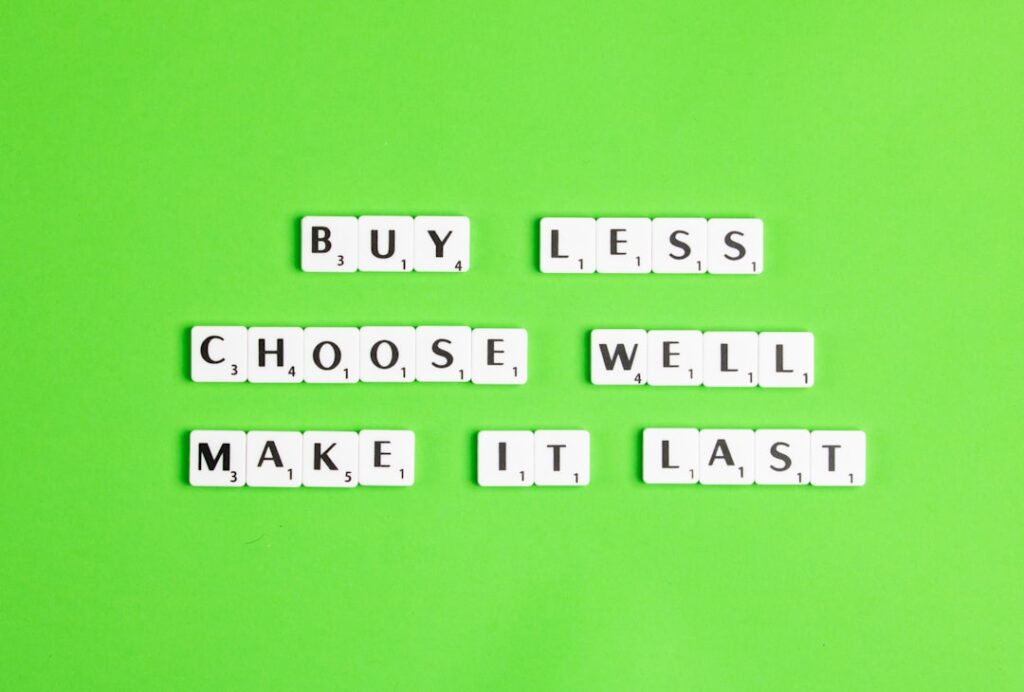
buy less choose well make it last text
Image credit: Edward Howell via Unsplash

A no-spend challenge doesn’t have to be a month of misery. A gentler version is “no-spend weekdays” for anything that isn’t a true bill or necessity.

From Monday to Thursday, your rule is: no food delivery, no random Amazon orders, no “I deserve a treat” shopping. You buy groceries, gas, and necessary medicine, and that’s it. If you see something you want, you write it down for the weekend.

Four quieter days a week add up. If you normally grab snacks, drinks, and impulse buys on weekdays, this habit alone can easily keep $100–$150 a month in your account. The point isn’t to be perfect. It’s to move most of your optional spending into a contained window where you can see it, instead of leaking money all week without noticing.

Use a 48-hour rule for non-essential buys

impulsive purchase written on chalk board in shopping trolley
Image Credit: Shutterstock

Online shopping makes it way too easy to spend money you don’t actually have on things you don’t really need. One small habit can slow that down: the 48-hour rule.

Here’s how it works. If something isn’t a true need, not prescriptions, not diapers, not a replacement for something broken, it goes on a list, not in your cart. You wait at least two days. After 48 hours, you check the list. If you still want it and it fits in your budget, fine. If not, it never leaves your notes app.

Putting this small pause between “want” and “buy” cuts down on emotional spending. Even canceling two or three $30–$40 impulse purchases a month saves $60–$120. This is also a way to involve older kids and teens: they can add wants to the list and revisit them later instead of pressuring you in the moment.

Do a 15-minute weekly bill and account check

reviewing finances at kitchen table
Image Credit: Shutterstock

Late fees, overdraft charges, and small mistakes are the most annoying way to lose money. When you’re juggling a lot, it’s easy to miss a due date or let an account drop below zero.

Set a recurring reminder once a week. Spend 15 minutes looking at your accounts: what’s cleared, what bills are coming up, what autopays are hitting soon, whether your checking account can handle it. Move a little money around if you need to.

If late fees or overdrafts are hitting you even once a month, this habit can save $35–$100 just by catching problems early. It also gives you chances to call and ask for a one-time fee reversal when something does slip, many banks and card companies will do this occasionally if you have a decent history and you ask politely.

Default to generic household and personal-care products

lots of medication in a pile with money
Image credit: Çağlar Oskay via Unsplash

Brand loyalty is expensive. For basics like pain relievers, allergy meds, soap, shampoo, cleaning spray, dish soap, paper goods, and laundry detergent, store brands are often made to very similar standards as name brands and cost noticeably less.

For over-the-counter meds, the active ingredients in the generic and brand versions must match by law and go through the same approval process. For many cleaning and personal-care products, you’re paying extra for pretty packaging and advertising, not magic formulas.

Pick a couple of categories and switch for a month. If there’s something you truly hate, go back to the brand name for that one item. But if you can swap even half your household stuff to generics, you’re likely shaving $20–$40 a month off your regular shopping without feeling like you’re “doing without.”

Learn one or two DIY jobs you usually pay for

painting nails at home
Image Credit: Shutterstock

You do not need to turn into a full homesteader. But picking up one or two basic do-it-yourself skills can trim recurring costs. Think haircuts for kids, simple manicures or pedicures at home, basic clothing repairs, or easy home fixes like unclogging a drain or patching a small hole in the wall.

YouTube, community classes, and local adult-ed programs are full of step-by-step guides. Start very small and practice on things where mistakes won’t wreck anything important. Maybe you do your own nails and only go to the salon for special occasions, or you learn to trim your kid’s hair between professional cuts.

If you replace just one $40 salon visit and one $60 handyman call each month with DIY, that’s $100 you keep. You don’t have to do everything yourself. Just enough that your first reaction to a problem isn’t always, “Who can I pay?”

Swap one “spend” hangout for a free one every week

couple on a picnic
Image Credit: Shutterstock

A lot of social time revolves around spending, meeting at restaurants, grabbing drinks, taking kids to paid play spaces. In a tight budget, this can feel like you can’t see people at all unless you spend money you don’t have.

Instead of going all-or-nothing, change the default. Once a week, suggest a free or cheap hangout instead: a walk, a park meet-up with kids, a movie night at home with snacks from your pantry, or a potluck where everyone brings something simple.

If you’re used to dropping $30–$50 every time you get together, swapping just four of those meetups a month for almost-free ones can save $100–$200. You still get connection, which is the whole point, without the credit card hangover afterward.

Money-saving tips on Wealthy Single Mommy:

saving money
Image Credit: Shutterstock

Free cars for low-income families: If you are struggling financially, read on to find ways to get the transportation you need.

Housing for single moms: free or affordable options now: In this post, we share the options available to you if you’re low income in need of housing.

Byline: Katy Willis

Worried about the likelihood your marriage will end?

Concerned about a union for your sister, son, friend, adult child or parent?

Once upon a time, the likelihood of divorce was, at best, based on an educated guess or a gut check. Now, thanks to decades of academic research and population data, it is possible to quantify the likelihood a marriage will end in divorce.

I used ChatGPT to code this calculator. It’s intended to be one part helpful and one part entertainment.

This calculator is for straight relationships as it relies on data based on straight couples.

FWIW, gay men have the lowest divorce rate and gay women have the highest divorce rate of any relationship structure.

Divorce Likelihood Calculator

This tool generates a risk score (0–100) based on common risk markers. It is not a prediction.

By entering your email, you agree that your responses may be stored for research and marketing purposes.

Sources & scoring notes
    • U.S. divorce trends and demographics: :contentReference[oaicite:3]{index=3} and :contentReference[oaicite:4]{index=4} provide national data on marriage, divorce, and population patterns.
    • Age at marriage and divorce risk: Research consistently finds higher divorce risk among those who marry at younger ages (see work by Nicholas Wolfinger, University of Utah).
    • Financial stress and conflict: Dew (2012), Journal of Marriage and Family, finds financial conflict is one of the strongest predictors of divorce.
    • Unemployment and marital stability: Research shows male unemployment is associated with higher divorce risk (e.g., Killewald; Goñalons-Pons & Gangl, American Sociological Review).
    • Remarriage: Second marriages have higher average divorce rates than first marriages, based on demographic research and Census data.
    • Religion and marriage stability: :contentReference[oaicite:5]{index=5} finds religious participation and shared beliefs are associated with more stable marriages.
    • Political differences and relationships: :contentReference[oaicite:6]{index=6} reports that political disagreement can contribute to relationship strain, particularly when it causes ongoing conflict.
  • Age gap / wife older: England et al. (2016), Journal of Marriage and Family.
  • Pooling finances / joint accounts: Olson et al. (2023), Journal of Consumer Research.
  • Financial conflict & divorce: Dew et al. (2012), Journal of Marriage and Family.
  • Political differences and relationship quality: Fangmeier et al. (2020).
  • Unemployment and divorce risk: Goñalons-Pons & Gangl (2021), American Sociological Review.
  • Income and divorce disparities: Williamson et al. (2023).
  • Religion & family patterns: Pew Research Center.

Related divorce articles:

Sources

Calculations factored in data from these sources:

Age at marriage

Financial stress and conflict

Unemployment and divorce

Remarriage risk

Religion and marriage

Political differences and relationships

Huber, G. A., & Malhotra, N. (2017). Political homophily in social relationships. Journal of Politics, 79(1), 269–283.
https://doi.org/10.1086/687533

Pew Research Center. (2020). Partisan divides in relationships and family life.
https://www.pewresearch.org/politics/2020/10/21/partisan-divides-in-political-values-extend-to-relationships/

Model disclaimer

This divorce liklihood calculator is an educational tool based on population research. It does not predict individual outcomes. Many high-risk couples remain married, and many low-risk couples divorce.

This calculator uses a weighted risk model based on widely documented demographic, economic, and relationship factors associated with marital stability. It does not predict individual outcomes.

A big tax refund or back pay check can feel like finally coming up for air. For a minute, the numbers in your account look like someone else’s life. The pressure eases. Your brain starts listing everything you’ve been putting off for months.

This money is a lifeline. But it’s also dangerous if you treat it like “extra” instead of what it really is: pay that showed up late. When you don’t have much margin, one weekend of fast spending or one bad loan can wipe out what could have been months of breathing room.

You’re allowed to enjoy some of it. You also deserve to have something to show for it a month from now. Here are common mistakes people make with refunds and back pay as well as simple, doable moves that protect your future without killing all the joy.

1. Treating the money like lottery winnings and blowing it in a weekend

cropped photo of people with lots of shopping bags
Image Credit: Shutterstock

When a lump sum hits your account, your brain says, “Finally, I can live a little.” DoorDash, new clothes, a TV, a big night out for the kids. After grinding for so long, it feels good to say yes instead of no.

The problem is that this money is not a prize. Your tax refund from the IRS or back pay from a job or benefits is delayed pay. It was already supposed to be helping with rent, groceries, gas, and catching up. Once the rush wears off, you’re back in the same hole, sometimes deeper, because you assumed “future me” would somehow handle it.

Do this instead: pause 48 hours before touching the money. During that pause, write three short lists on paper: what’s past due, what’s about to come due, and one or two small wants. Once the money clears, hit the past-due list first, then the coming-due list. After that, pick one treat from your “want” list and do it with zero guilt. You’ll still get that good feeling, but next month you won’t be panicking over the power bill.

2. Paying huge fees for “rapid refunds” and check cashing

refund key on keyboard

When you’re broke, waiting even a week for a refund or back pay feels impossible. That’s why refund anticipation loans, “instant advance” products, and high-fee check-cashing places are everywhere. They promise fast cash right now but take a painful bite out of your money. The Consumer Financial Protection Bureau has warned about high-cost refund anticipation products and similar loans.

Those fees and interest charges are basically a tax on being desperate. You might lose a couple hundred dollars of your refund just for getting it a little sooner. That’s money that could have gone to groceries, a car repair, or an emergency cushion.

If you can, avoid anything labeled “refund advance,” “rapid refund,” or “instant refund loan.” File electronically with direct deposit through the IRS so your refund goes straight to your bank; that’s usually the fastest free option. If you don’t have a bank account, consider opening a basic, low-fee checking account at a bank or credit union insured by the FDIC or NCUA. Ask about any monthly fee before you sign.

If you absolutely must use a check-cashing service, compare prices and pick the lowest fee you can find. Then make a plan so this is the last year you have to hand over part of your refund just to get your own money.

3. Ignoring past-due basics and “treating yourself” first

man with large restaurant bill
Image Credit: Shutterstock

When money finally shows up, it’s tempting to buy all the things you’ve said no to: clothes, toys, dinners out, little upgrades. After surviving months of stress, you want something that feels normal.

But if your rent is behind, the power company is threatening shutoff, or your car insurance is about to cancel, those treats are risky. Companies don’t care that you needed a break. They care that the bill is late. If you spend first and pay later, you might lose housing, lights, or transportation which are much harder and more expensive to fix.

Think of your refund or back pay as a chance to reset the foundation. Before you buy anything fun, bring key bills current: housing, utilities, car payment and insurance, and any payment that protects your job (like child care). If there isn’t enough to catch everything, call and ask about payment plans or hardship options while you have some cash in hand. The Federal Trade Commission has basic guidance on dealing with creditors and collectors.

Once the basics are safe for at least the next month or two, then choose that one treat you planned. The treat will feel better when you’re not eating out under the shadow of an eviction notice.

4. Skipping a starter emergency fund and staying one problem away from disaster

emergency fund
Image Credit: diwdom5355 via Freepik

Most families live one problem away from a full-blown crisis such as a flat tire, a broken fridge, a sick kid. Without any savings, every emergency goes on a card, a payday loan, or unpaid bills. Then the next emergency hits, and everything gets worse.

A common mistake is using every single dollar of a refund or back pay on bills or stuff and leaving nothing aside. It feels responsible to throw it all at debt or catch-up, but you’re setting yourself up to fall right back as soon as something else breaks.

Instead, before you pay a single bill, decide on a small “must-keep” amount, maybe $200, $300, or $500, and move it into a separate savings or sub-account as your starter emergency fund. Many banks and credit unions let you open multiple savings “buckets” online for free. Call it “Oh crap money” if you want. That money is for real emergencies: car repairs, doctor visits, surprise school fees, and keeping utilities on.

You will be tempted to dip into it for everyday shortfalls. Remind yourself: this fund is what keeps the next surprise from blowing up your whole budget. Protect it like rent. Over time, you can add more, but even a few hundred dollars changes how stressful life feels.

5. Ignoring high-interest debt that’s quietly eating your money

couple worried about debt
Image Credit: Shutterstock

Credit card balances, buy-now-pay-later plans, and old payday loans can feel like background noise. You make minimum payments, promise yourself you’ll “tackle it next year,” and focus on more urgent things. When a lump sum shows up, it’s easy to pretend those debts aren’t part of the problem.

The truth is, high-interest debt is like a leak in your bank account. Every month you let it sit, more of your paycheck goes to interest instead of to your actual life. The Consumer Financial Protection Bureau has tools to help you understand and compare interest costs. If you never use refund or back-pay money to fight it, you stay stuck paying for the same things over and over.

You don’t have to pay everything off at once. But pick one or two of the worst offenders, usually the highest interest or the ones in collections making your life miserable. Use part of your lump sum to knock those down hard or clear them. Then, with the lower minimum payments, you may free up cash every month.

If you’re not sure where to start, write down each debt, balance, and interest rate. Attacking even one ugly account can feel like pulling a thorn out of your budget.

6. Letting friends, family, or an ex spend your refund for you

elderly father lending money to adult child
Image Credit: Shutterstock

As soon as people sense you got a refund or back pay, the requests start. “Can I borrow a little?” “We should go out; you got it.” “You should buy the kids this.” An ex might suddenly remember child support, old promises, or “their share.” It’s easy to watch your money disappear keeping everyone else happy.

You’re not selfish for wanting this money to actually improve your situation. You are the one whose name is on the lease, the car, the bills. If your refund is gone in a week and you’re still the one getting shutoff notices, that’s not fair.

Before the money hits, decide what you’re willing to do for others, if anything. Maybe you’ll give each kid a small amount for something fun, or cover one shared family outing, or help one person with one bill. Put a clear limit on it. When people ask for more, you can honestly say, “I already set what I could give, and it’s gone. The rest is for keeping us stable.”

If you share kids with someone, talk about how the money will be used for the kids’ needs: clothes, school stuff, activities. Focus on the children, not on paying an ex’s personal bills. You are allowed to say no.

7. Using one-time money to sign up for bigger monthly payments

buying a used car
Image Credit: Shutterstock

New money makes you want new things: a better apartment, a newer car, more streaming services, fancy phones. Salespeople know this. They’ll push you toward “low monthly payments” that fit your budget today, if nothing else ever goes wrong.

The mistake is using a one-time lump sum to lock yourself into higher monthly bills that keep going long after the refund is gone. That’s how people end up forced out of nicer apartments, losing cars to repossession, or drowning in subscriptions they barely use.

Instead, use one-time money to make your monthlies lower, not higher. That might mean paying a chunk off your current car so the payment drops, paying down credit cards, or paying ahead on a lower-cost rental instead of upgrading to something you can’t sustain. If you want to improve your daily life, think small fixed costs: better internet plan that helps with work or school, or a used phone paid in full instead of a big financed one.

Ask yourself, “Will this decision make my future monthly budget easier or harder?” If it makes it harder, think twice. Refunds and back pay should buy you breathing room, not new chains.

8. Not planning for big, predictable expenses that always show up

buying school supplies
Image Credit: Shutterstock

Some bills feel like “surprises” even though they come every year: car tags, school clothes, back-to-school fees, holiday gifts, insurance renewals, property tax on a car, membership dues. When you’re living paycheck to paycheck, these hit like bricks.

A common mistake is to ignore those future bricks when a lump sum lands. You pay what’s screaming the loudest today and forget that, three months from now, you’ll need $300 for school supplies or $200 for car registration. Then you’re forced back onto credit or late fees again.

When your refund or back pay comes, list the big irregular costs you know are coming in the next 6–12 months. Put rough dollar amounts next to each. Then set aside money for at least a few of them in a separate account or labeled envelopes. This doesn’t have to be perfect or fancy. It just has to exist.

You’re not “losing” that money; you’re paying those future bills early. When the time comes, you’ll already have the cash instead of adding another crisis to the pile. That’s how a one-time check can make life less chaotic for months, not just days.

9. Ignoring repairs that keep costing you over and over

check engine light on in car
Image Credit: Shutterstock

You might have a car with bald tires, brakes that squeal, or a check engine light you’ve been ignoring. Maybe there’s a leak under the sink, a broken window, or an appliance that only works if you kick it. You get used to “making do”, until something finally dies at the worst possible time.

Using a refund only for bills and treats and never for repairs can be a quiet, expensive mistake. Every time you put off fixing the thing that keeps breaking, you risk a bigger emergency later: missing work because the car died, higher electric bills because of broken seals, or ruined belongings because a small leak became a big one.

Pick one or two repairs that would make your life safer, cheaper, or more stable and handle them with part of your lump sum. That might mean new tires, a real car tune-up, getting the brakes fixed, or hiring someone to stop a leak. If you’re not sure where to start with car safety, look at basic maintenance guidance from trusted sources like the National Highway Traffic Safety Administration.

You won’t see the payoff in a shiny new toy, but you will feel it in fewer breakdowns, fewer missed shifts, and lower anxiety every time you start the car or open a bill. That peace is worth part of the check.

10. Not checking how the money affects benefits or paperwork

worrying about bills
Image Credit: Shutterstock

Refunds and many types of back pay won’t hurt most benefits, but not all money is treated the same. Some programs look at your bank balance; others look at monthly income; some care about both. A lump sum from unemployment, Social Security back pay, disability back pay, or a lawsuit can affect certain benefits if you leave it sitting in your account or don’t report it the right way.

The mistake is to assume it doesn’t matter and then be shocked when a benefit is reduced or stopped later. Or, on the flip side, to be so scared of “messing up benefits” that you refuse to use the money to improve your situation.

When you know a big payment is coming, call or visit the office that handles your main benefits and ask how they treat lump sums. You can also look up program rules at Benefits.gov or your state human services website. Use simple language: “I’m about to receive back pay from X. Will this change my benefits, and what should I do with it?” Sometimes you can spend down money on approved things, like paying debt, buying a car under a certain value, or making home repairs, so it doesn’t count against you.

The goal isn’t to hide money. It’s to follow the rules and still use this chance to make your life better long-term.

11. Making no plan and trying to “wing it”

depressed couple working on finances
Image Credit: Shutterstock

A lot of people are so tired when the money finally lands that they think, “I’ll just pay what I can and see what’s left.” No plan, just vibes. A week later, they’re confused about where it all went and mad at themselves for not using it better.

Winging it is a plan, it’s just a bad one. In a stress moment, your brain will go for whatever feels urgent or gives quick relief, not what helps you six weeks from now. Without a simple roadmap, it’s easy to overpay one bill, forget another, and leave yourself in the same mess with less money.

Before the deposit hits, grab paper and make a rough spending plan for that money. Start with the total amount. Subtract past-due basics, then a small emergency fund, then one or two key repairs or debts, then any set-asides for upcoming big bills. Lastly, add one modest treat. You don’t need exact pennies; ballpark numbers are fine. The IRS has a basic refund tracker and information so you know what you’re working with.

When the money arrives, follow that plan as closely as you can. You always have the right to adjust a little, but having a written order keeps one emotional day from swallowing what could have been three months of progress.

12. Feeling like you can’t have any joy or going to the other extreme

restaurant special
Image Credit: Shutterstock

Some people blow the whole check in a flash. Others go the opposite way and feel like they must be perfectly “responsible” with every dollar. They pay bills, fix things, and save a bit, but never let themselves or their kids enjoy any of it. That can backfire. After months of saying no, one bad day can lead to a huge, regret-filled spending binge.

You are allowed both stability and joy. The trick is to decide on joy on purpose, not in a panic.

As you plan your refund or back pay, build in one treat that won’t wreck everything else. Maybe that’s a simple day trip, a meal out, a small toy shopping trip with a set budget, or finally buying that one thing you’ve wanted all year. Put a clear price tag on it and stick to that number.

When guilt pops up, remind yourself: you caught up on basics, started your emergency fund, and handled something that’s been hanging over you. Using a small slice of this money to feel human again is not irresponsible. It’s fuel to keep going while the rest of your plan quietly makes your life less fragile.

More benefits advice and news from Wealthy Single Mommy:

A couple doing paperwork together
Image Credit: Shutterstock.

Legit single mom hardship grants — This is an updated list of dozens legitimate hardship grants for single mothers — from private charities, businesses and individual donors.

SNAP in 2026: New max benefits, rule changes, and the exact moves to raise your payout — For the 2026 fiscal year, the caps go up in most places, deduction amounts change, and other changes affect how much you receive. Below you’ll find the new numbers in plain English, a quick way to estimate your own benefit, and how to maximize your sum.

7 surprising EBT benefits — If you receive EBT card benefits you can qualify for more than free groceries and other essential items. In this post, you’ll find places to go for EBT card holders, including free entrance, discounts and other free stuff.

Byline: Katy Willis