
Dig through a coffee can of old coins or a drawer in your parents’ house and you’ll probably turn up at least one big, heavy dollar with Dwight Eisenhower’s face on it. Most people who find one assume it’s worth exactly a dollar, maybe a little more if it feels unusually heavy in the hand. Sometimes that assumption is wrong.
The Eisenhower dollar ran from 1971 to 1978, struck at the Philadelphia, Denver and San Francisco mints to honor the late president and the Apollo 11 moon landing. Most of the series is common copper-nickel clad coinage that rattled through banks, casinos and vending machines and is worth exactly one dollar today. But a real slice of it, the 40% silver versions sold straight to collectors, dates that only ever came in mint sets, die varieties with their own nicknames, and ordinary dates that are surprisingly hard to find in top condition, carries genuine premiums.
Here’s what to check for, mint mark by mint mark and variety by variety.
1. 1776-1976 Eisenhower dollar, Type 1 bold lettering
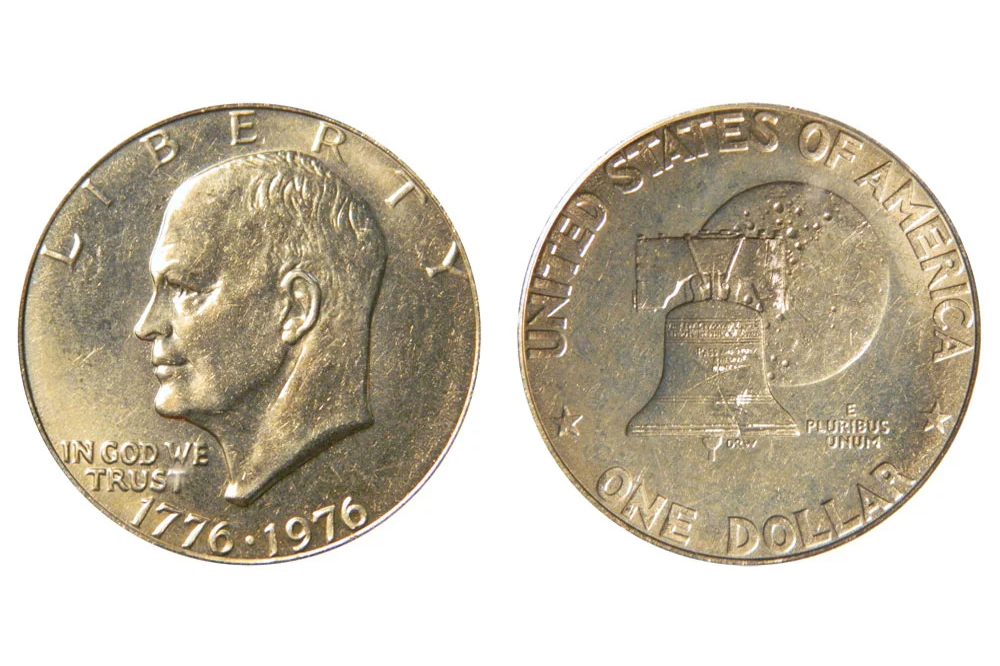
Every 1776-1976 Bicentennial dollar carries the dual date and the Liberty Bell over the moon on the reverse, but two distinct reverse dies exist. The Type 1, used only briefly before the Mint refined the design, has bold, serif lettering in UNITED STATES OF AMERICA. The Type 2, which took over for the bulk of production, has noticeably thinner, taller letters with none of the serifs.
Type 1 is the smaller share of Philadelphia’s combined 117-million-plus 1976 output, and clean, problem-free examples bring meaningfully more than the common Type 2, climbing well past typical clad-dollar prices in the higher mint state grades. The easiest place to check lettering is the word UNITED on the reverse rim: serifs and thick strokes mean Type 1, thin uniform letters mean Type 2.
Most surviving examples came from bags or mint sets, so look for bag marks and weak strikes on the moon’s surface, which are common and don’t hurt the grade much. Deep, even luster across Eisenhower’s cheek matters more than a perfectly struck reverse. A worn, circulated Type 1 is only worth a couple of dollars. The premium belongs almost entirely to clean uncirculated coins, so this is one where a quick look through a roll or an old mint set is worth the five minutes it takes.
2. 1973 and 1973-D Eisenhower dollar
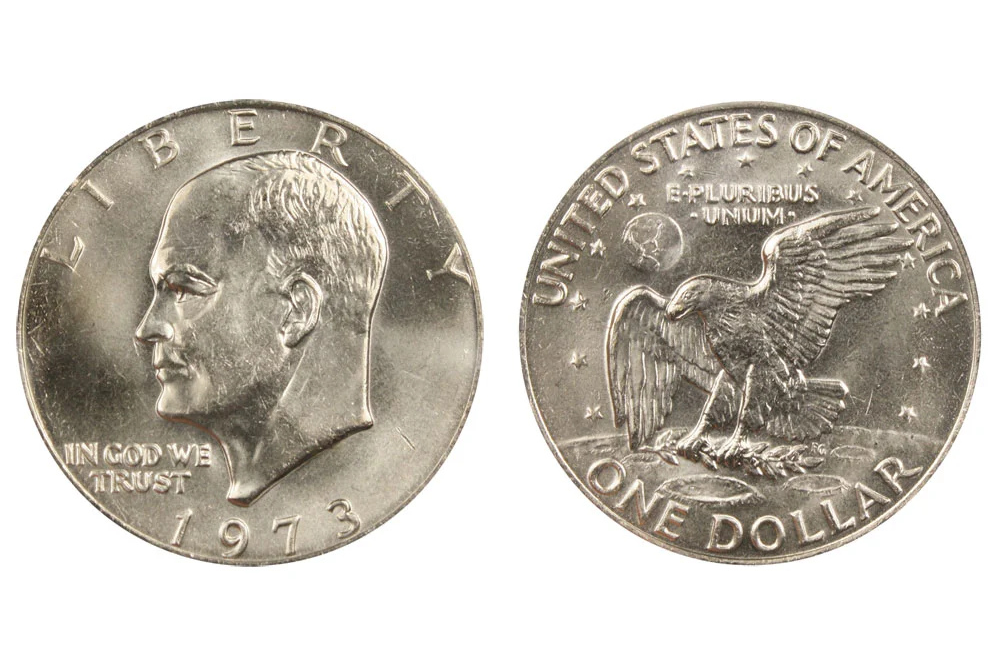
Nineteen seventy-three is the quiet oddity of the series. With casinos and the public showing almost no appetite for a dollar coin, the Mint didn’t release the Philadelphia or Denver strikes into circulation at all that year. Both were sold only inside that year’s annual mint set, with a mintage of just 2,000,000 at each mint, a fraction of the tens of millions struck the year before.
Because nobody spent them, survivors are unusually clean for the series, but they’re also genuinely scarce as a pair compared with every other date. A typical problem-free example still only brings a modest premium over face value, with real money showing up once you reach the higher mint state grades, where both the Philadelphia and Denver issues get noticeably harder to find.
Check for the absence of a mint mark (Philadelphia) or a small D below Eisenhower’s neck (Denver), and look at the coin’s overall cleanliness: hairline scratches from careless handling inside the set’s plastic pack are common and knock the grade down fast. An intact original 1973 mint set, still sealed, is the surest way to land one in top condition, and it’s worth checking any old set tucked away from that year before breaking it apart.
3. 1971-S Eisenhower dollar, 40% silver uncirculated
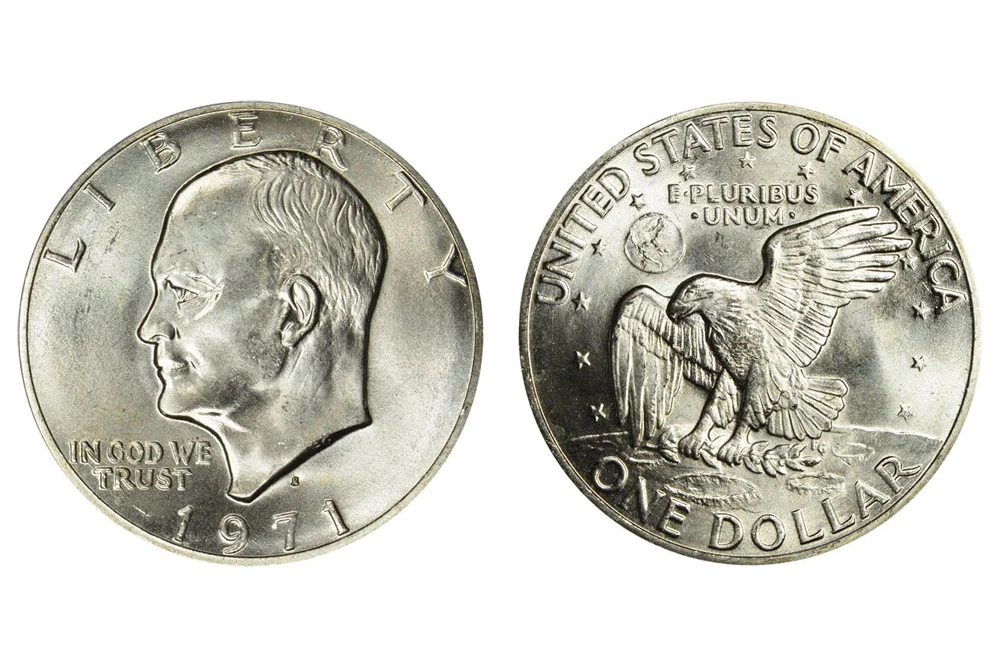
Starting with the series’ first year, the San Francisco Mint struck a separate run of Eisenhower dollars in 40% silver, sold directly to collectors rather than released into circulation. The uncirculated version came sealed in a blue vinyl envelope with a blue foil seal, which is why collectors still call it the Blue Ike.
You can tell it from an ordinary clad dollar two ways: it weighs noticeably more, at 24.59 grams against the clad coin’s 22.68 grams, and the edge shows a grayish tone with no copper stripe. A clean example in its original packaging is worth comfortably more than face value, with part of that tied to the coin’s silver content and part to simple collector demand for the first year of the design.
Condition caveats matter here. Coins pried out of the original blue pack often pick up scratches or haze from improper handling, and that knocks real money off the price. A coin still sealed in its original packaging, with the pack itself undamaged, is worth more than a loose, identical coin. Watch for cleaning, which leaves an unnatural bright shine and is common on silver Ikes that people tried to polish up before selling.
4. 1971-S Eisenhower dollar, 40% silver proof
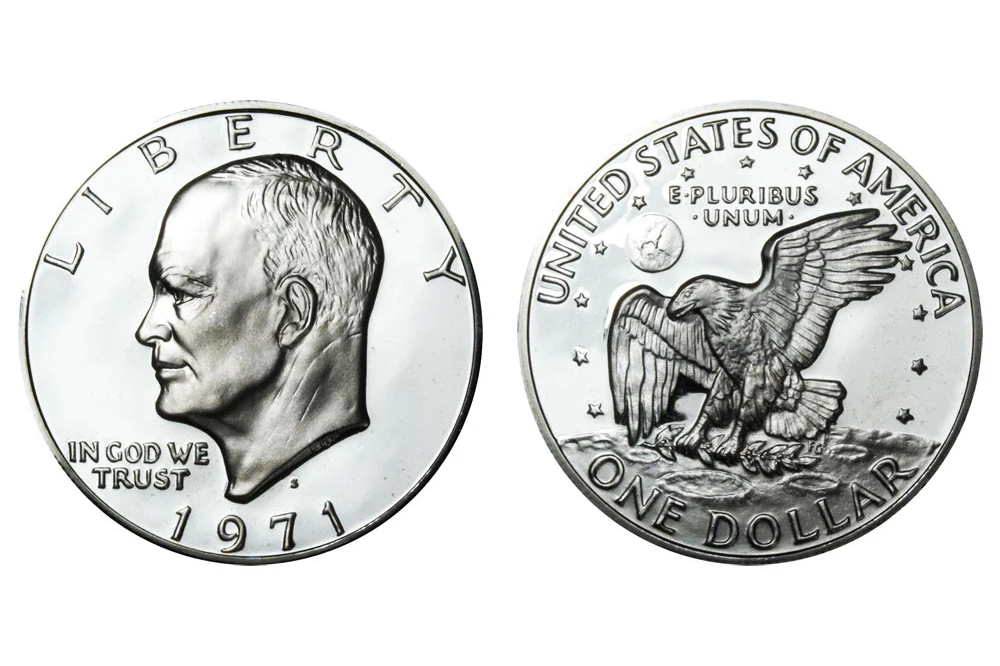
Alongside the uncirculated Blue Ike, San Francisco struck a mirror-finish proof version in the same 40% silver alloy, sold in a brown wood-grain box with a gold foil eagle seal on the lid. This is the first single proof coin the Mint sold directly to the public in more than a century, and demand at the time was strong enough that collectors absorbed millions of them within months.
A proof shows sharp, mirror-like fields around a Eisenhower portrait that should stand out with some frost, though the frost on this earliest issue is often light and uneven. Typical certified examples bring a modest, steady premium, while coins graded in the flawless Proof-70 Deep Cameo tier, where the contrast between the mirrored fields and frosted devices is total, are genuinely scarce and bring far more.
Most survivors sat in their brown boxes for decades and still show excellent eye appeal, but check carefully for milk spotting and haze under the toning, which are common on silver proofs stored in the original plastic capsules and reduce the grade. The box and the original tissue paper insert add a little extra for a complete set, though the coin itself carries almost all the value.
5. 1973-S Eisenhower dollar, 40% silver
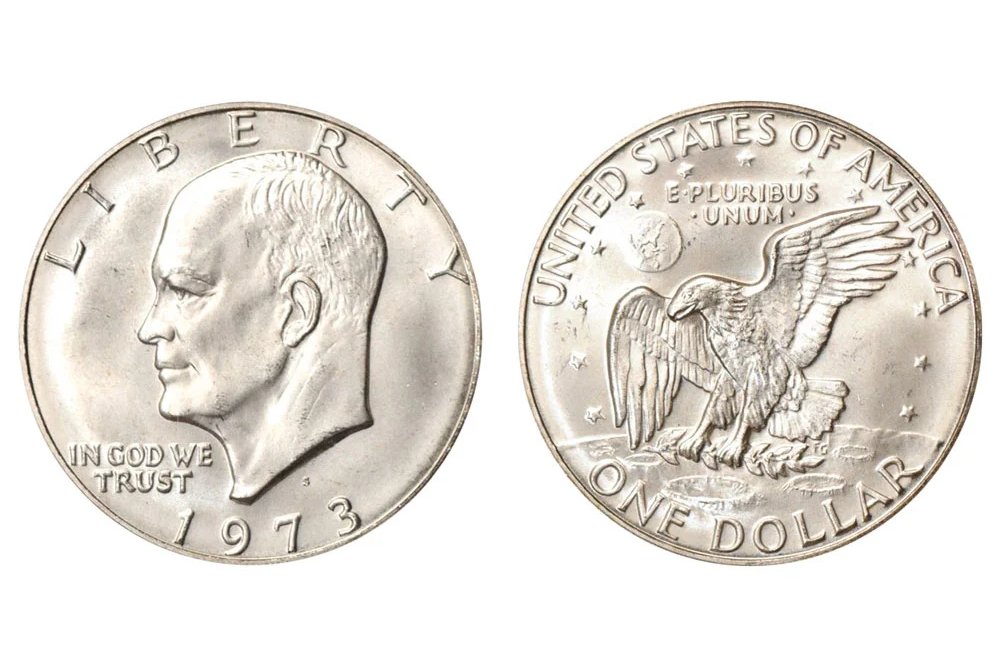
Nineteen seventy-three brought a packaging change that trips up a lot of people. This was the first year the Mint folded the copper-nickel proof dollar into the standard six-coin annual proof set rather than selling it separately, while the 40% silver proof and uncirculated versions kept being sold on their own, just like 1971 and 1972.
That means a loose 1973-S proof dollar you find by itself, outside a six-coin set, is almost certainly one of the silver issues rather than the common clad one. Silver uncirculated examples carry a steady premium tied to both their metal content and ongoing demand, and proofs graded with strong cameo contrast bring noticeably more again in the cleanest certified grades.
Weigh it if you’re unsure: a silver 1973-S comes in at 24.59 grams, a clad one at 22.68 grams. Check the edge too, since the silver issue lacks the visible copper stripe clad coins show. Haze and spotting inside the original plastic capsule are the most common condition issue, and a coin that’s been removed from its original holder and handled loose is worth less than an identical one still sealed.
6. 1974-S Eisenhower dollar, 40% silver
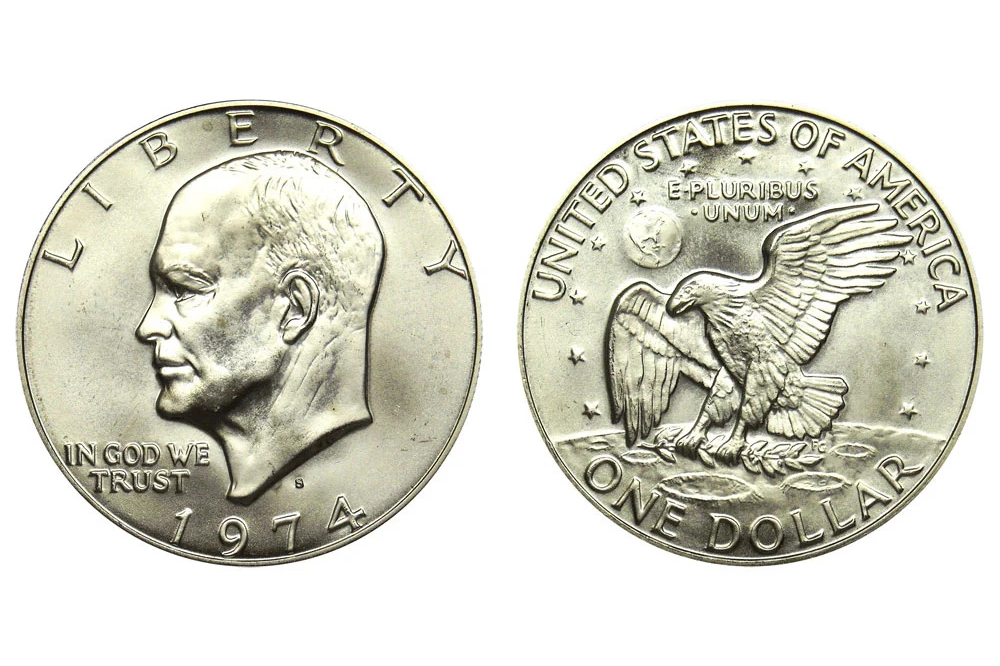
The 1974-S is a quiet but genuine stopping point in the series. It’s the last Eisenhower dollar to pair the original Apollo 11 eagle reverse with the 40% silver alloy, since no dollars were struck for 1975 and the dual-dated 1776-1976 Bicentennial coins that followed carried a completely different reverse design.
Proof mintage that year ran to just over 1.3 million, modest next to 1971’s launch-year numbers, and that lower figure shows up in slightly firmer pricing at the top end even though typical certified examples still trade at a fairly accessible level in both the proof and uncirculated formats.
Identification works the same way as the earlier silver dates: an S mint mark below Eisenhower’s neck and a weight of 24.59 grams confirm the silver composition rather than the common clad strike. Strike quality on this date tends to be excellent, so a soft, mushy portrait usually means wear rather than a weak strike, and that matters for grading. As with the earlier silver proofs, milk spotting under the surface toning is the condition issue to watch for, and it’s common enough on this date that a clean, spot-free example is worth seeking out specifically.
7. 1977-S and 1978-S Eisenhower dollar, clad proof
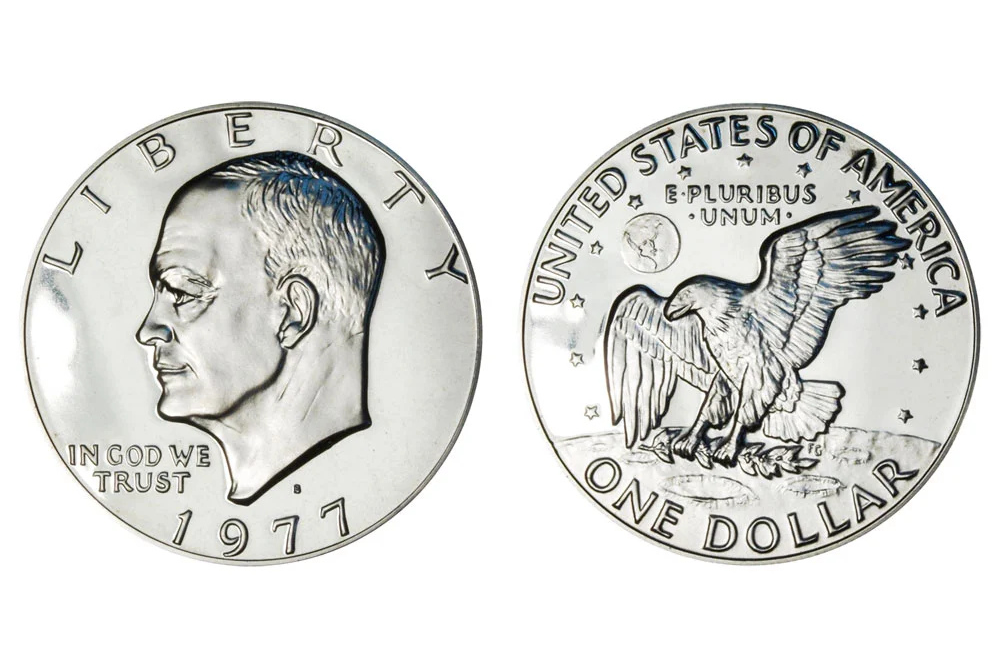
By 1977 the Bicentennial reverse was retired and Frank Gasparro’s original Apollo 11 eagle returned for the series’ final two years, now struck only in copper-nickel clad since the silver collector versions had been discontinued. Production of the dollar itself had slowed sharply by then too, with the Treasury already planning its replacement by a smaller coin.
An ordinary 1977-S or 1978-S clad proof in a typical certified grade is genuinely inexpensive, generally only a few dollars over face value. The real spread in this clad proof run shows up at the very top of the grading scale, where a coin graded in the flawless Proof-70 Deep Cameo tier, with total contrast between glassy fields and frosted devices, brings substantially more than a workmanlike Proof-65 or Proof-66.
Look closely at the fields under a strong light for hairlines, since proof surfaces show every mark, and a coin that’s been wiped or cleaned loses its mirror finish permanently. The original proof set box and its certificate of authenticity are worth keeping together with the coin, since a complete set is easier to sell than a single loose dollar even if most of the value sits in the coin itself.
8. 1972 Eisenhower dollar, Type 2 reverse
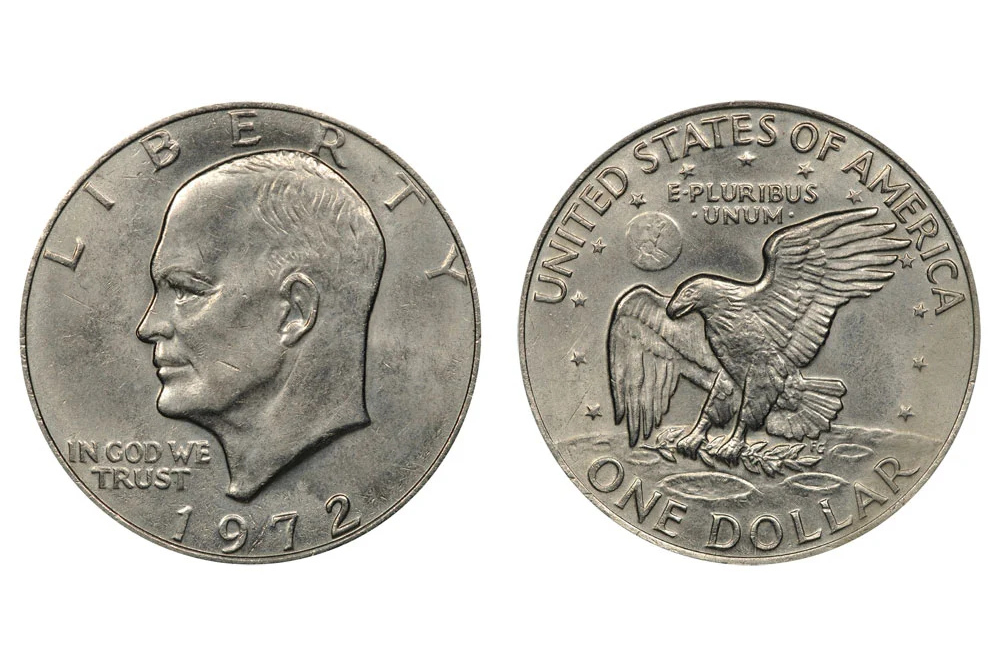
The Mint was still working out how to strike this oversized new coin in 1972, and the Philadelphia reverse die went through three distinct states that year. The first, now called Type 1, is a low relief design with a flattened earth and three small islands visible off Florida. The Mint then tried a high relief version, Type 2, with a rounder earth and islands so weak they’re barely there. That die wore and chipped quickly, so it was refined into Type 3 for the remainder of the year.
Type 2 is the scarcest of the three by a wide margin. Collectors who specialize in the series have graded a few hundred examples through CAC, the overwhelming majority of them Type 2, and the top population at the major grading services has sat unchanged for well over a year. Clean, certified examples bring a serious premium over an ordinary 1972 dollar, with problem-free coins in the best certified grades reaching well into four figures.
To tell it apart, look at Florida and the islands to its south on the reverse: if they’re barely visible against a notably round, high-relief earth, set it aside and get it checked rather than assuming it’s an ordinary Type 3.
9. 1976-D Eisenhower dollar, Type 1 reverse
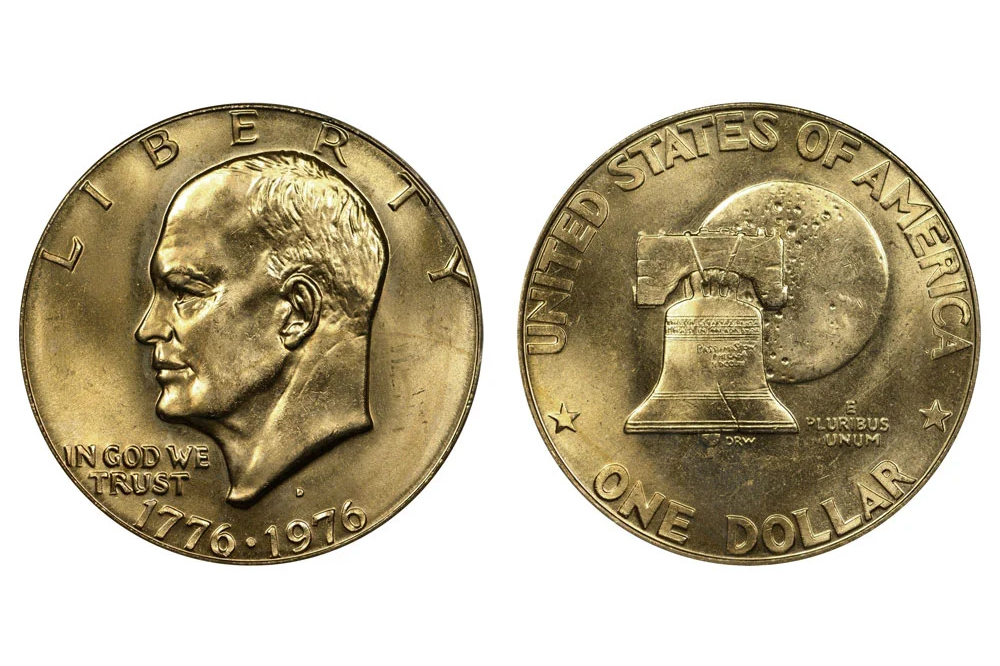
Denver’s Bicentennial dollars went through the same bold-lettering-to-thin-lettering reverse change as Philadelphia’s, and the early Type 1 die is the scarcer of the two at Denver as well. The combined 1976-D mintage ran past 103 million pieces, with the Type 2 thin-lettering version making up the larger share once the Mint settled on the refined die.
Denver struck noticeably sharper coins than Philadelphia throughout the series, and that advantage carries over here: a Type 1 from Denver in top condition tends to show better detail on Eisenhower’s portrait and the Liberty Bell than an equivalent Philadelphia coin. Clean, problem-free Type 1 examples bring a real premium over the common Type 2, particularly once you get into the higher mint state grades where survivors thin out fast.
The identification method is identical to the Philadelphia coin: check the lettering in UNITED STATES OF AMERICA on the reverse rim for bold serifs versus thin, serif-free strokes. A small D mint mark sits below Eisenhower’s neck on the obverse. Most clean examples trace back to original 1976 mint sets rather than loose circulation finds, so an old set from that year is worth checking carefully before you assume every coin inside is the common version.
10. 1971-S Eisenhower dollar, Peg Leg variety
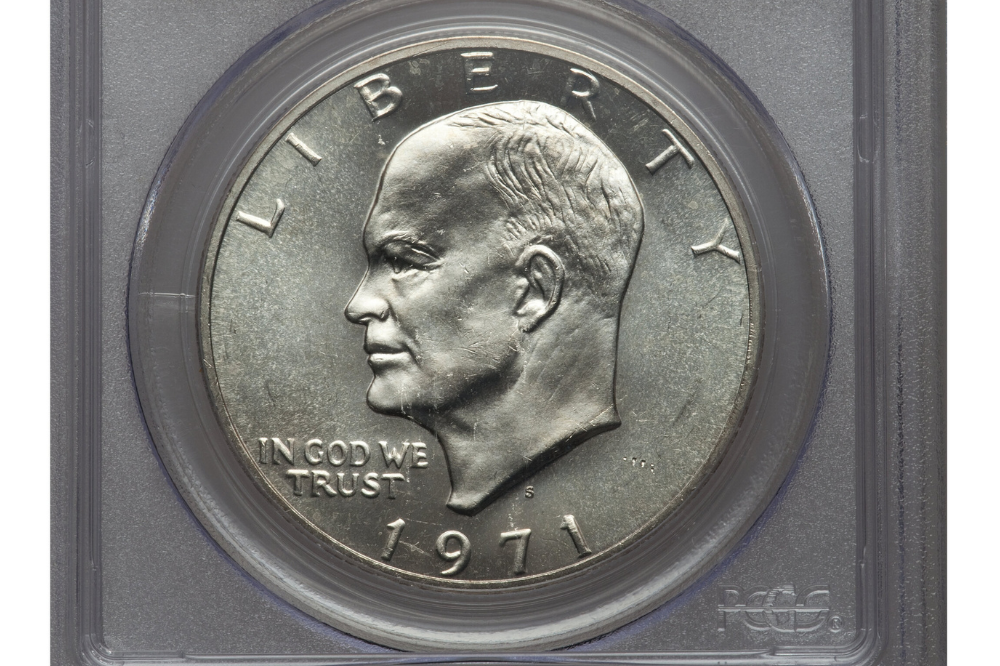
Among the earliest 40% silver Eisenhower dollars, overpolishing of the obverse die shortened the R in LIBERTY and removed its serifs on some 1971-S coins. Collectors nicknamed it the Peg Leg, and it’s listed in the Cherrypickers’ Guide as FS-401.
Researchers estimate the original run at somewhere between 100,000 and 150,000 coins out of the full 1971-S silver mintage, and FS-401 identifies the uncirculated variety. Proof Peg Leg coins also exist, but they are a separate variety. It’s visible to the naked eye once you know where to look, which keeps it popular with collectors who like to search through raw rolls rather than relying only on certified coins. Even a modest, low mint state example in its original packaging commands a real premium over an ordinary 1971-S silver dollar, and the premium grows substantially in the higher certified grades.
Compare the R in LIBERTY on the obverse to a normal 1971-S side by side if you’re not confident spotting it alone: the missing serifs are subtle enough that plenty of sellers misidentify ordinary coins as the variety, so a careful look or a second opinion is worth the time before you price one as the real thing.
11. 1971-D Eisenhower dollar, Friendly Eagle variety
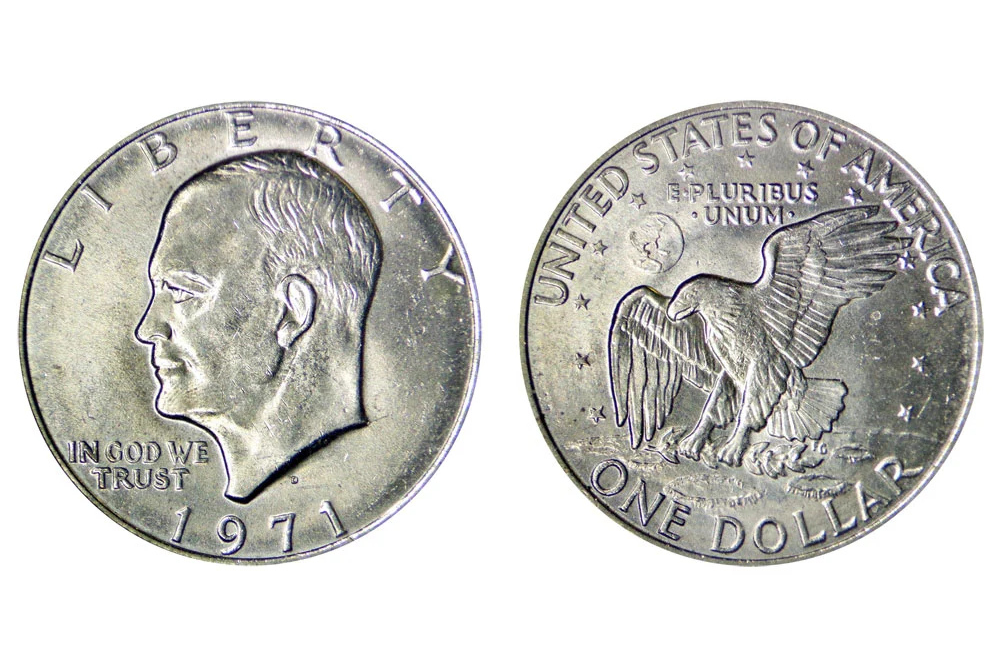
Denver’s first Eisenhower dollars came from a reverse die that was quickly replaced, and the earlier version has an eagle with no eyebrow ridge above its eye, giving it a noticeably softer, friendlier look than the standard design that followed. Researchers first published the variety in a numismatic newsletter in late 1999, and it’s now catalogued by the Cherrypickers’ Guide as FS-401, 901.
Out of Denver’s full 1971 mintage of more than 68.5 million coins, researchers estimate as much as 3% could be the Friendly Eagle die, though confirmed certified examples are far fewer since most people never check. The variety is distinguished by several small details beyond the eagle’s face: a flatter earth with raised Andes Mountains and differences in the crater detail on the moon.
A certified Friendly Eagle in mint state brings real money over an ordinary 1971-D dollar, with the premium climbing sharply in the top certified grades. Because the identifying details are subtle, side-by-side reference photos are worth pulling up before buying or selling one, and a raw coin claimed as a Friendly Eagle without certification deserves a second look.
12. 1976-S Eisenhower dollar, 40% silver proof
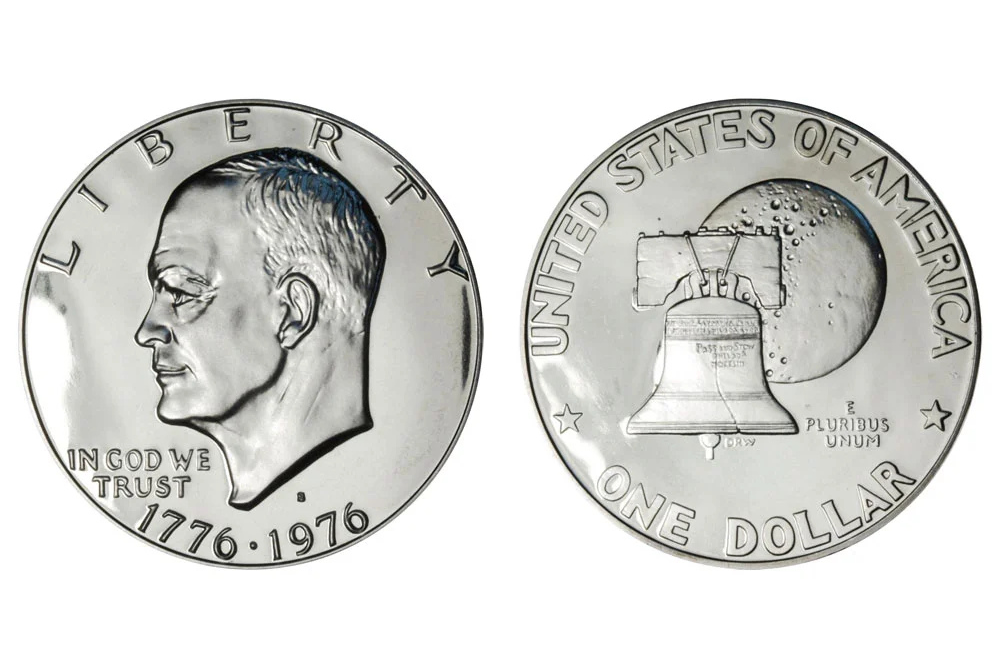
The 40% silver proof Eisenhower dollar went out on a high note in 1976. The San Francisco Mint sold roughly 4 million of these Bicentennial-reverse silver proofs as part of a three-coin silver proof set that also included matching Bicentennial quarter and half dollar designs, and it’s the last dedicated silver proof dollar the series produced.
Most survivors are common and inexpensive right up through the Proof-68 grade, since collectors bought these in bulk at the time and a large share still sit in their original government packaging. The market tightens meaningfully once you reach Proof-69 Deep Cameo, and coins that cross into the flawless Proof-70 Deep Cameo tier are genuinely scarce, commanding far more than an ordinary example from the same silver proof set.
Weigh it to confirm the silver content if the packaging is gone: 24.59 grams for the silver version against 22.68 grams for the far more common clad proof sold the same year. Deep, even cameo frost against glassy, mark-free fields is what separates the valuable top grades from the merely nice ones, and a coin that’s been dipped or cleaned to brighten it loses that cameo contrast permanently.
13. 1971-S Eisenhower dollar, doubled die obverse
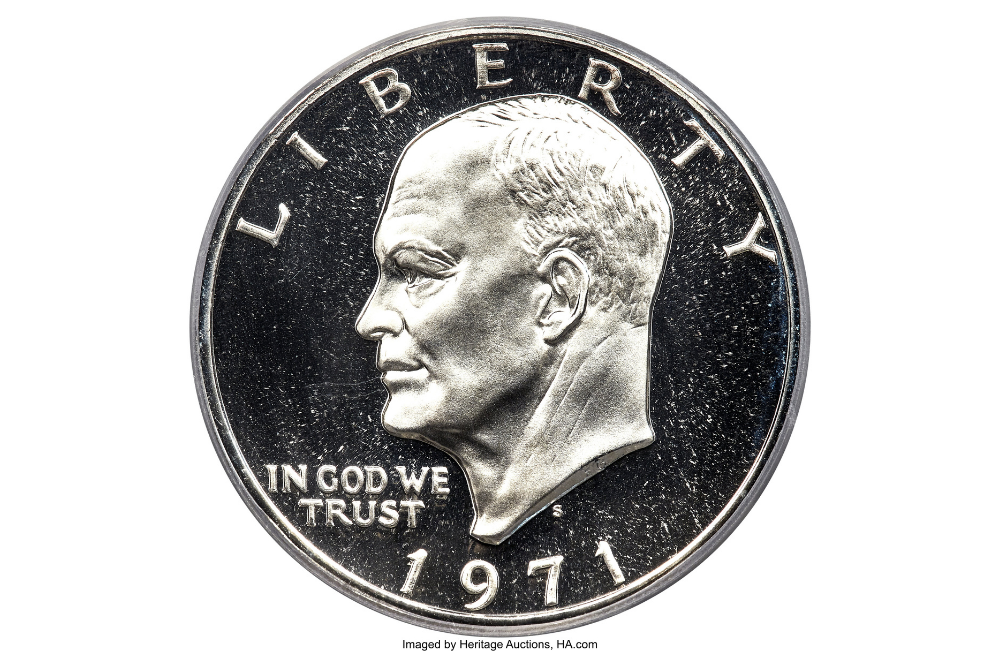
Not every doubling on a 1971-S silver proof is the same variety. Two separate, catalogued doubled die obverses exist from that year, listed as FS-103 and FS-106, both showing visible doubling on the lettering in IN GOD WE TRUST and other parts of the obverse inscription. Doubling like this on the “blue” uncirculated and “brown” proof Ikes shows up periodically throughout the early years of the series, but these two 1971-S varieties are among the more consistently documented.
The two varieties aren’t interchangeable in value. FS-103 is the stronger of the pair in typical certified grades, while FS-106 trades for somewhat less, and both climb meaningfully once you reach the deep cameo tiers where contrast and strike quality come together.
A loupe and a side-by-side comparison with a normal 1971-S proof are the easiest way to confirm either variety, since the doubling sits on fine lettering that’s easy to miss under ordinary light. Given how closely the two varieties resemble each other and how often sellers misattribute one for the other, getting a doubled die 1971-S authenticated before paying a premium for it is worth the modest cost.
14. 1972-D Eisenhower dollar in top mint state grades
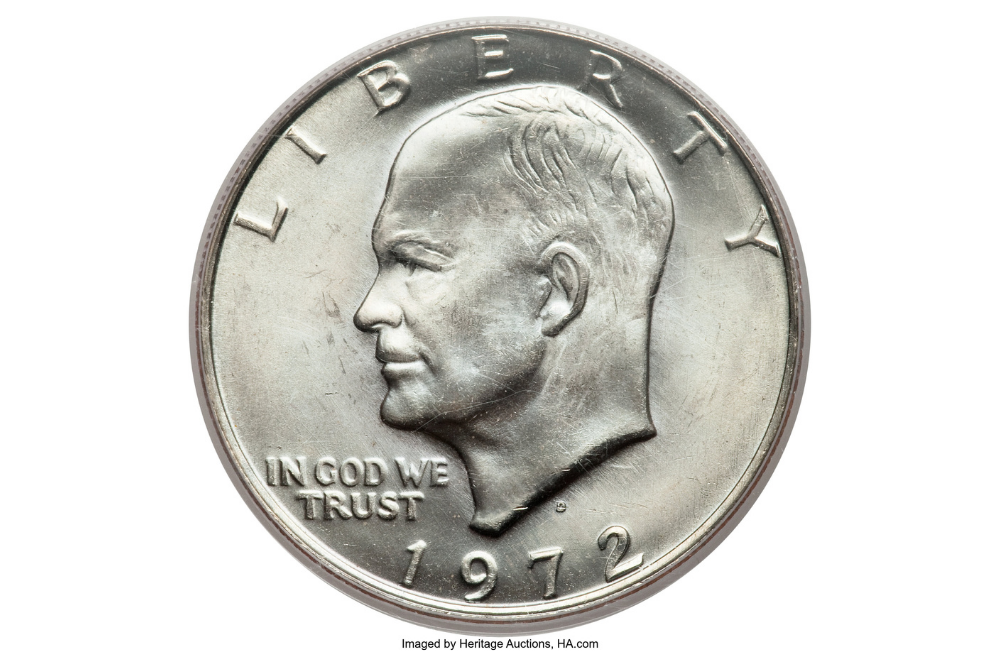
The 1972-D isn’t rare by any ordinary measure. At more than 92.5 million pieces, it’s the single largest mintage of any date in the entire Eisenhower dollar series, and raw examples are everywhere. The catch is condition. Specialists who track the series note that the 1972-D only becomes genuinely hard to find once you reach the MS66 grade and above, where it ranks among the tougher Denver dates to track down in the entire run.
That gap between “common” and “condition rarity” is where the money is. A typical circulated or low mint state 1972-D is worth face value or close to it. Push into MS66 and the price climbs noticeably, and an MS67 example, genuinely scarce for this date, brings a serious premium over anything below it.
The strike on Denver coins tends to be sharp, so look for full detail on Eisenhower’s ear and the eagle and crater details on the reverse, and check for the bag marks and weak luster that keep most survivors out of the top grades. This is a date worth running through a magnifying glass rather than writing off as common just because the mintage number is enormous.
15. 1974-D Eisenhower dollar, Peg Leg variety
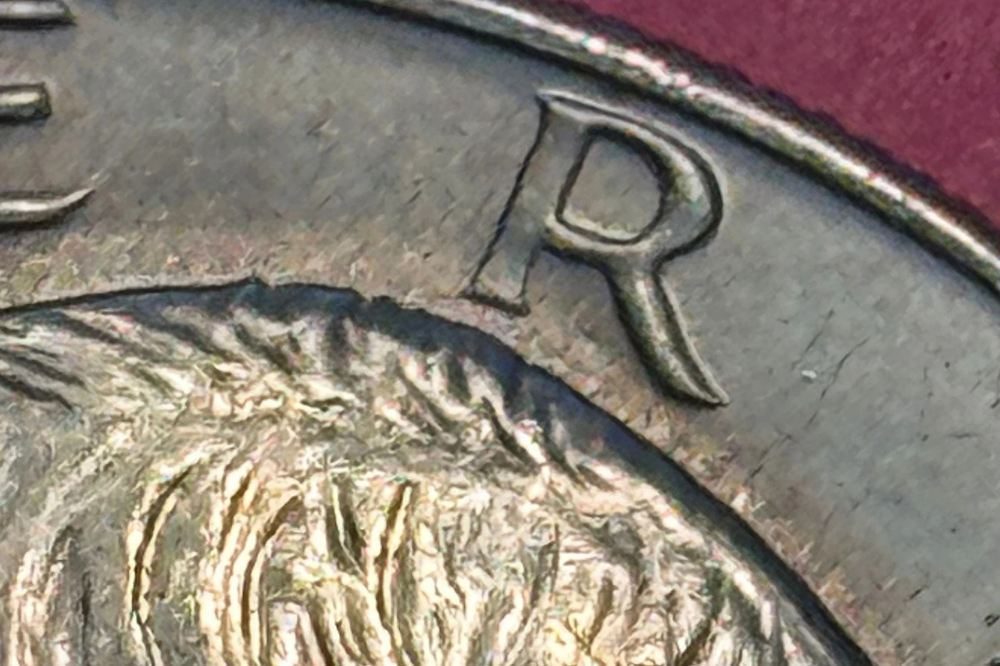
The Peg Leg die flaw that turns up on 1971-S silver coins also appears, separately, on the 1974-D clad business strike, cataloged again as FS-401. On this later date the shortened R in LIBERTY on the obverse, with its serifs polished away, is the diagnostic, but the certified population is dramatically smaller than the well-known 1971-S version, since far fewer collectors have thought to check a common-looking Denver date from the middle of the series.
Certified examples in the top surviving grade bring a wholesale bid in the four figures, with populations at the top grade numbering only in the dozens across both major grading services and barely a handful graded any higher. That scarcity is genuinely surprising for a date that otherwise trades for pocket change in ordinary condition.
Check the R in LIBERTY on the obverse: its lower portion is polished off, leaving no visible serifs. Because this variety is so much less publicized than its 1971-S cousin, a lot of 1974-D dollars with the flaw are sitting unidentified in ordinary coin jars and old mint sets.
16. 1971-S Eisenhower dollar, silver proof, doubled die reverse FS-801
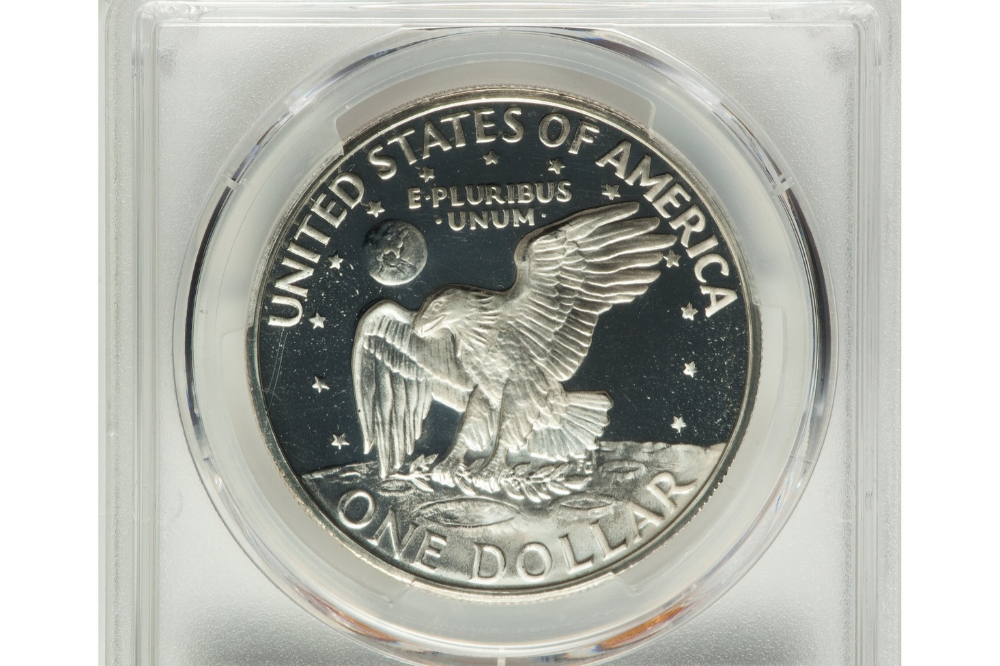
A step up from the more commonly cherrypicked 1971-S doubled dies is FS-801, a proof doubled die reverse on the 40% silver issue that’s substantially scarcer than FS-103 or FS-106. The doubling here is bolder and easier to confirm once you know the pickup points, but genuine examples simply don’t turn up often.
Proof examples in certified holders bring thousands of dollars, and coins with strong Deep Cameo contrast push well beyond that, putting this variety in a different league from the series’ more routine doubled dies. The jump reflects a genuinely low surviving population rather than hype.
Because the dollar amounts involved are serious, authentication matters more here than almost anywhere else on this list. A raw coin pitched as an FS-801 without third-party certification is a coin to be skeptical of, and the doubling should be checked against reference photos from a recognized variety guide rather than taken on a seller’s word. If you’ve got a 1971-S silver proof with obvious doubling on the reverse lettering, it’s worth the cost of sending it in rather than guessing.
17. 1971-S Eisenhower dollar, silver proof, Type 1 reverse
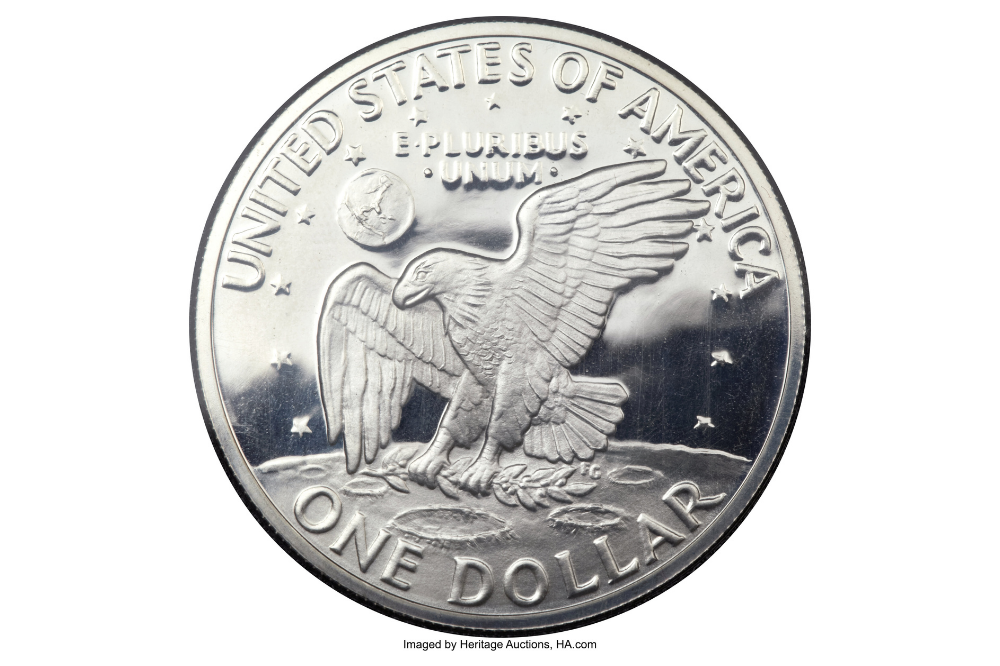
This is the single rarest coin on this list, and it’s easy to confuse with a completely different variety that happens to share its catalog number. The Denver business-strike Friendly Eagle dollar is also listed as FS-901, but this is a different coin entirely: a 1971-S silver proof struck from an early Type 1 reverse die before the Mint settled on the design used for the rest of the proof run that year.
Certified examples bring five figures in proof condition, and Deep Cameo surfaces push the price meaningfully higher still. Out of more than four million 1971-S silver proofs struck, only a small handful of this particular early die state are known to have surfaced and been certified, which is what separates it from every other coin on this list.
Given the values involved, this is not a variety to self-identify from a photo online. If you have a 1971-S silver proof with reverse details that look different from a standard example, particularly around the eagle and the crater detail on the moon, the only sensible next step is a submission to a major grading service rather than a private sale based on a guess.
18. 1977 Eisenhower dollar in superb gem condition
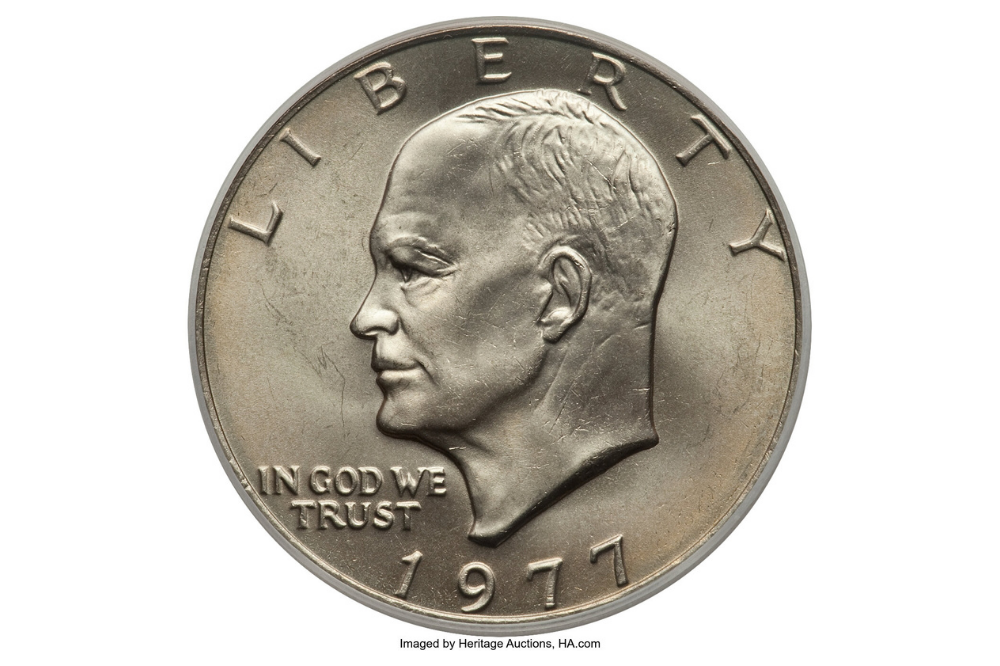
The 1977 Philadelphia dollar is, by most measures, a boring date. Only 12,596,000 were struck, modest for the series, and it’s also considered the best-struck Philadelphia coin from the entire original design era, with sharper detail than the Philadelphia issues that came before it. A typical uncirculated 1977 dollar is worth only a few dollars.
The gap opens at the very top of the grading scale. Certified examples in MS67 regularly bring several hundred to a few thousand dollars, a serious jump for a coin that’s otherwise common and cheap, and the finest known example, a single coin graded MS68 by PCGS, stands alone at the top of the entire condition census with nothing else certified at that level.
What separates a $4 coin from a four-figure one is almost entirely the strike and the surfaces: full, sharp detail on Eisenhower’s hair and the eagle’s feathers, clean fields with no bag marks, and strong original luster. If you’ve got a roll or a handful of 1977 dollars from an old mint set, it’s worth running each one under a loupe before assuming they’re all worth the same.











