
Empty a jar of old coins onto the table and most people check the date and the mint mark. Flip that logic around. Sometimes the interesting part of a coin is what isn’t there. A letter that got polished off a die, a mint mark nobody punched into place, a date worn down to a smooth blank spot. All three can mean a coin is worth checking twice before it goes back in the jar or gets spent at the gas station.
Missing text on a coin happens for different reasons, and the reason matters for value. Some letters and mint marks disappeared because a Mint worker ground down a damaged die and took the mark off with it. Others went missing because a die clogged with grease and never transferred the full design. A few are just worn smooth from decades of hands and pockets, and that kind of missing usually doesn’t mean money.
Not every coin below is a windfall. Several are common enough that you’ll only get face value or a small premium for one. A handful are genuinely rare and worth four, five, even six figures in the right grade. Read the specifics before you get your hopes up, and don’t clean or polish anything until you know what you actually have.
Table of contents
- 1. 1922 no D Lincoln cent, strong reverse
- 2. 1922 weak D Lincoln cent
- 3. 1990 no S proof Lincoln cent
- 4. 1982 no P Roosevelt dime
- 5. 1968 and 1970 no S proof Roosevelt dimes
- 6. 1983 no S proof Roosevelt dime
- 7. 1975 no S proof Roosevelt dime
- 8. 1945-S Micro S Mercury dime
- 9. 1971 no S proof Jefferson nickel
- 10. 1883 no cents Liberty Head nickel
- 11. Barber quarter with a worn LIBERTY headband
- 12. Dateless Standing Liberty quarter
- 13. 1982 no FG Kennedy half dollar
- 14. Presidential dollar with missing edge lettering
1. 1922 no D Lincoln cent, strong reverse
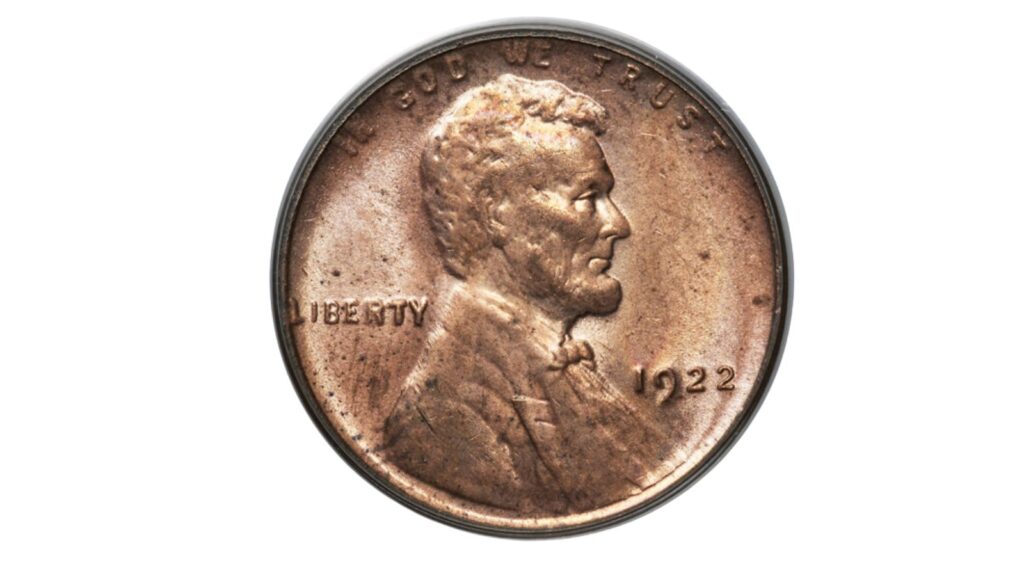
Denver was the only mint striking Lincoln cents in 1922, so every genuine coin from that year should carry a small D under the date. A number of dies got so clogged with grease and dirt that a Mint worker ground one down to fix it, and ground the D clean off in the process. The result is a 1922 cent that looks like it came from Philadelphia, even though Philadelphia made no cents at all that year.
The real version, known to collectors as the strong reverse, shows crisp wheat ears and lettering on the back even though the front looks soft and mushy. Worn examples in Very Fine condition bring $1,200 to $1,600, and coins with light circulation climb past $4,000. Truly uncirculated examples are rare enough that they regularly reach the tens of thousands.
The catch is fakes. People have spent a century grinding the D off ordinary 1922-D cents and passing them off as the real thing. A genuine strong reverse example has a second 2 in the date that looks bolder than the first, and the word TRUST is sharp and clear. If the reverse looks weak too, you likely have a much cheaper variety, not the jackpot version. Get anything promising certified before you get attached to a number.
2. 1922 weak D Lincoln cent
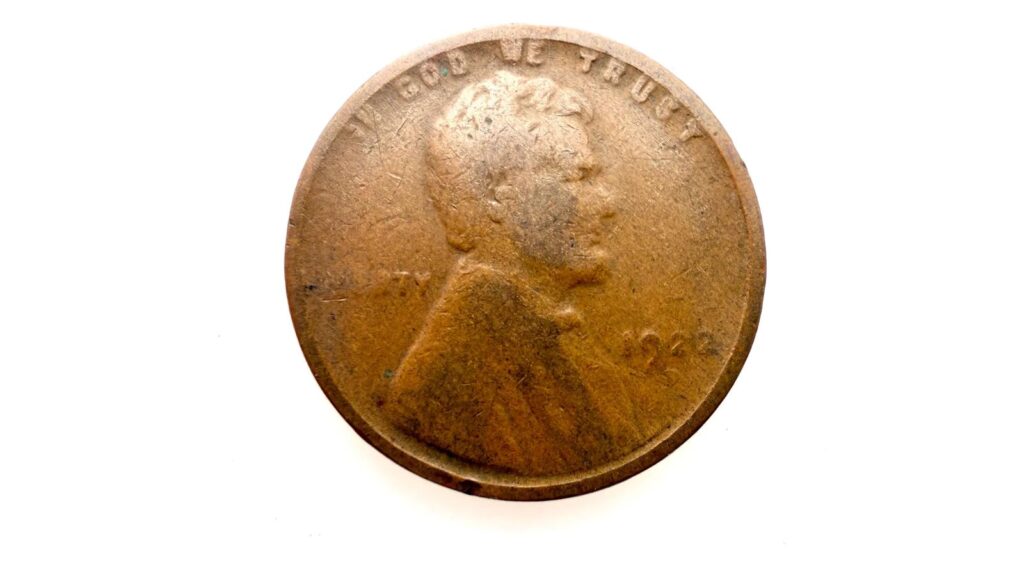
Not every 1922 cent missing its D is the rare one. As the dies that produced the true no D cents kept wearing down, they passed through a middle stage where the D is faint but still visible up close, known as the weak D. It’s a real variety collectors track, but it’s nowhere near as valuable as the strong reverse version, and mixing the two up is an easy way to overpay or undersell.
A weak D cent in typical circulated grades like Good or Very Good brings $60 to $120, and problem-free uncirculated examples can reach $900 or more. That’s a real premium over an ordinary 1922-D cent worth just a few cents in low grades, just a much smaller one than the headline variety commands.
The tell is in the reverse. On a weak D cent, the wheat ears and lettering on the back look soft too, not sharp like the strong reverse version. If you can make out any trace of the D under magnification, even a ghost of it, you’re likely looking at this variety rather than the rare one. Still worth pulling aside, just don’t expect thousands.
3. 1990 no S proof Lincoln cent
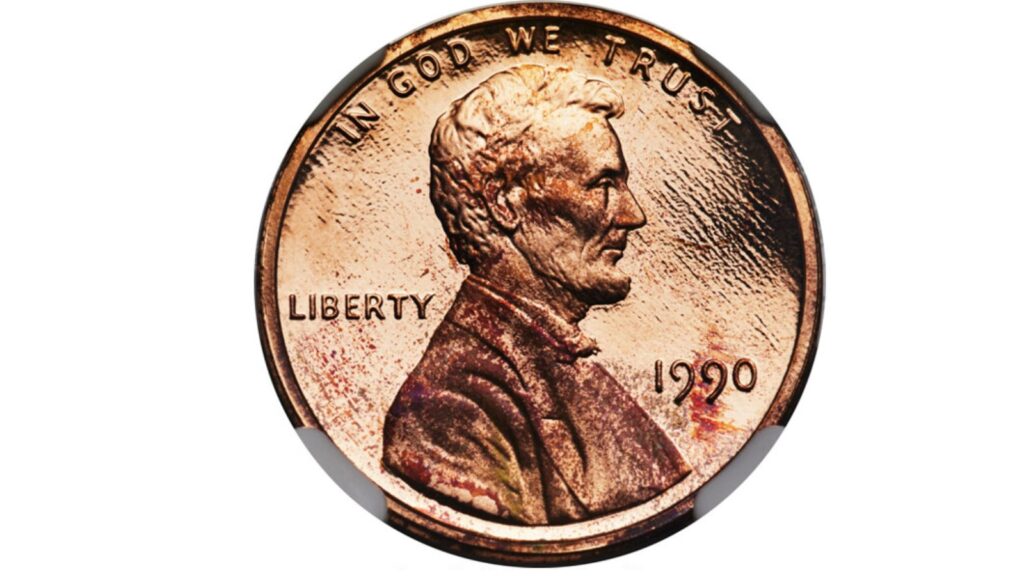
Proof coins from 1990 were supposed to carry a small S below the date, marking them as San Francisco Mint products made for collectors. At least one obverse die that year left the shop without the S ever being punched into it, and a small run of proof cents went out in sealed proof sets missing their mint mark entirely.
Fewer than 200 examples are known to exist, and some are likely still sitting undiscovered inside unopened 1990 proof sets that have gone unchecked for decades. Certified examples in typical proof grades bring $3,000 to $10,000, and the finest known Deep Cameo pieces reach more than $20,000.
If you or a relative bought a 1990 proof set directly from the Mint, it’s worth pulling out and checking under a loupe. The space below the date should be blank, not just faint. A worn or scratched S can look absent to the naked eye, so don’t get excited over a coin that just needs cleaner glasses rather than a jeweler’s loupe. Get it certified by a major grading service before assuming you’ve found one of the real ones.
4. 1982 no P Roosevelt dime
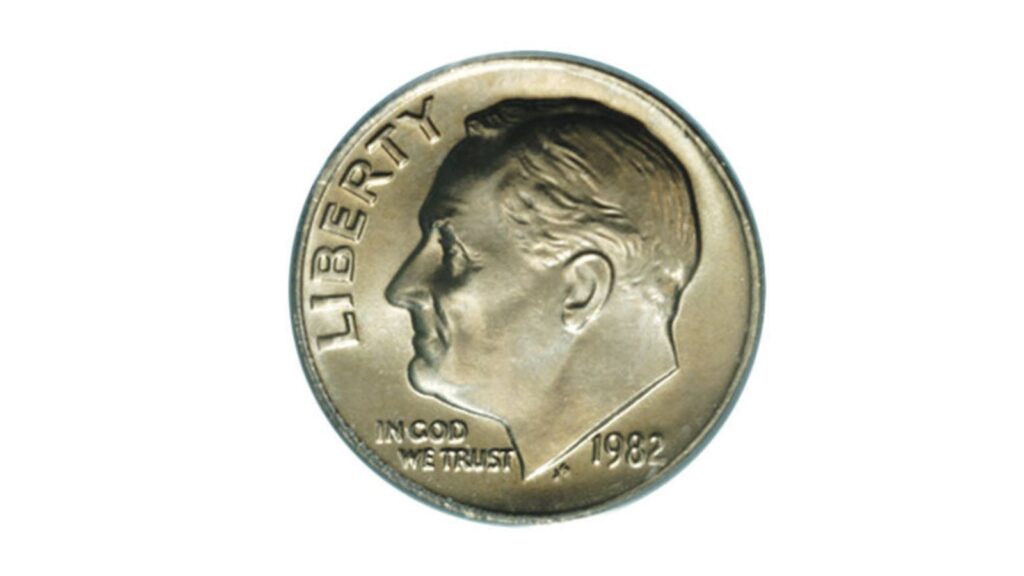
Philadelphia started stamping a P onto its dimes in 1980, ending two centuries of Philadelphia coins carrying no mark at all. In 1982, one obverse die never got that P punched into it, and an estimated 75,000 dimes went into circulation looking like they came from an era before mint marks existed on dimes at all.
This is one of the most findable coins on this list, since examples have turned up in ordinary pocket change and bank rolls for decades. Circulated pieces carry a modest premium, and coins in better condition bring $75 to $150 in average circulated grades, climbing well past $500 in choice uncirculated condition with strong details.
The check takes seconds. Look at the right side of the date on any 1982 dime. It should say P. If that spot is blank, flip it over and confirm it isn’t just worn smooth, since a heavily circulated dime can look like it’s missing a mark it actually has. A crisp, clearly blank space next to a sharp date is the real thing, and it’s one of the few coins here you could genuinely find by checking your own change tonight.
5. 1968 and 1970 no S proof Roosevelt dimes
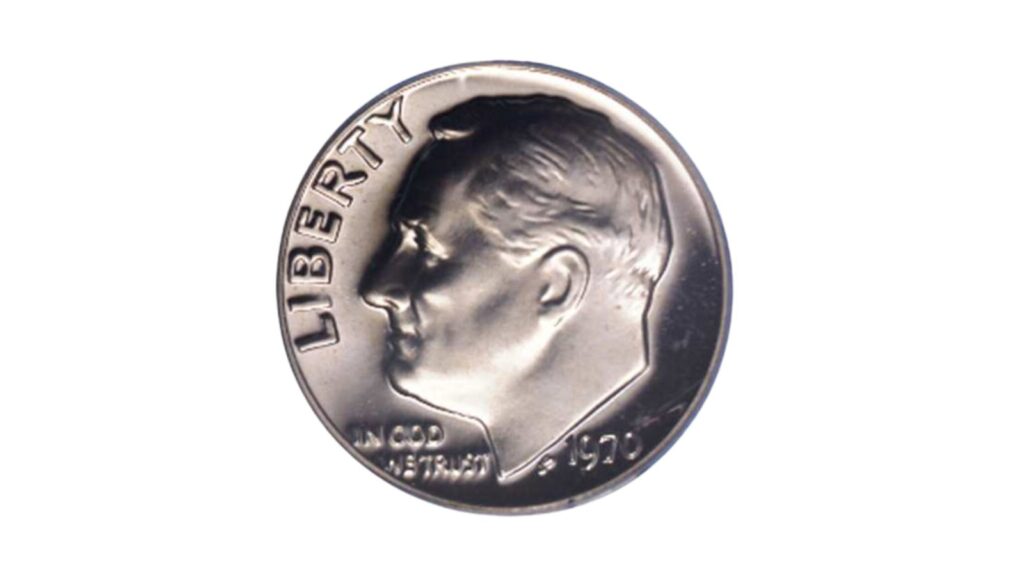
San Francisco resumed striking proof coins in 1968 after a three year gap, and at least one obverse die that year left the shop without its S mint mark. A handful of proof dimes went out in sealed proof sets missing the mark completely, the first in what became a run of similar mistakes across several years.
The 1968 version is the scarcer of the two, with only a couple dozen examples believed to exist. Certified pieces bring $20,000 to $45,000 depending on grade and cameo contrast. The 1970 version turns up more often and typically brings four figures in strong proof grades rather than five.
Both live inside sealed proof sets from their respective years, not in circulation, so the place to look is old Mint proof sets tucked away by a parent or grandparent who bought one when it was new. The S should sit directly below the date on the obverse. If that space is smooth and blank rather than simply hard to see, it’s worth a trip to a grading service before you do anything else with it.
6. 1983 no S proof Roosevelt dime
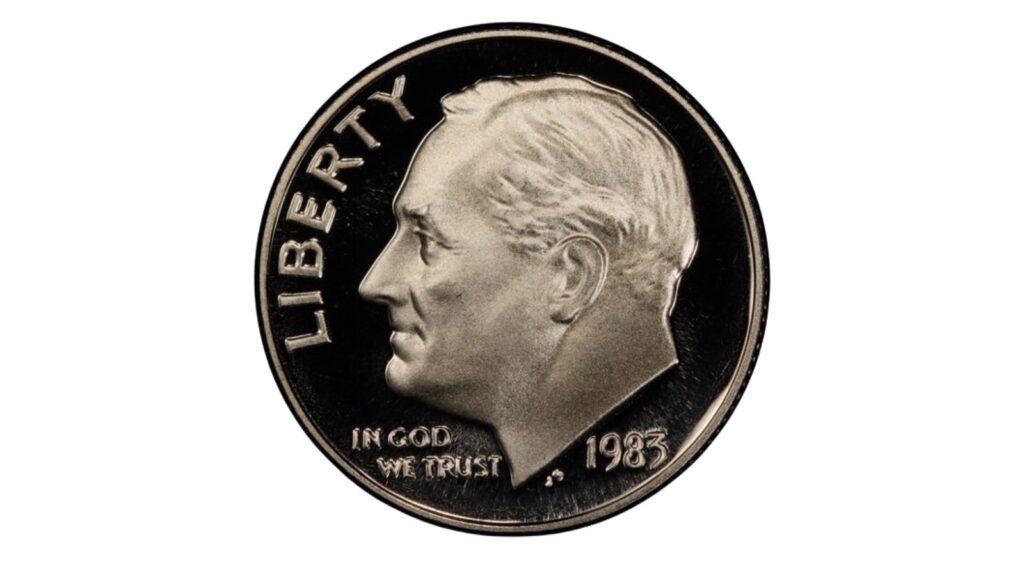
The last and most common entry in this run of missing S proof dimes happened in 1983, when yet another San Francisco die went into production without its mint mark. It’s still a genuine rarity by any normal coin’s standard, just a far more attainable one than its siblings from 1968, 1970, and 1975.
Certified examples bring $400 to $3,000 in typical Deep Cameo proof grades, with the finest known examples reaching past $10,000 at the top of the market. That makes it the realistic entry point for anyone who wants to own one of these missing mint mark dimes without spending a fortune.
As with the other years, this coin only exists inside sealed 1983 proof sets, never in circulation. If a set has been reopened at any point, be cautious, since substituting a regular dime into an opened set is a known scam. The mint mark spot below the date should be completely smooth with no trace of an S under magnification. Given how much cheaper this one is than its siblings, it’s the most sensible year to actually go looking for.
7. 1975 no S proof Roosevelt dime
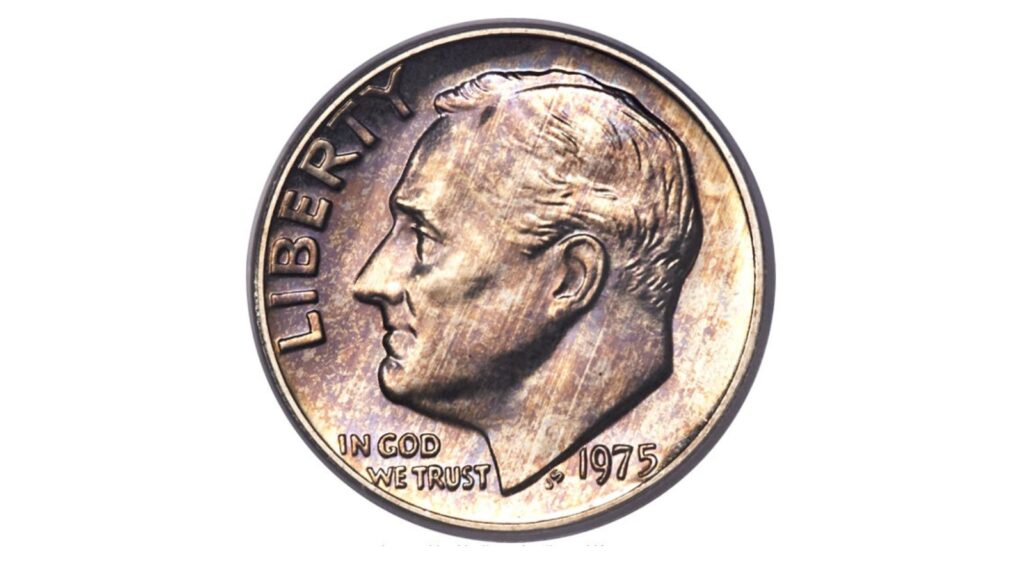
Of every coin on this list, this is the one that turns a coin collection into national news. Only two examples of the 1975 proof dime missing its S mint mark are confirmed to exist, making it one of the scarcest coins struck in the last hundred years, genuine mint error or not.
Both known examples are valued well into six figures today, with one placed at more than $450,000. This is not a coin you should expect to find. It’s here because the story is remarkable, and because the underlying idea, that a proof set from a closet could theoretically hold a fortune, is part of what makes checking old coins fun in the first place.
If you own a 1975 proof set, checking costs nothing and takes thirty seconds. The odds are enormous against you, but they aren’t literally zero, and thousands of these sets are still sitting unchecked in attics and safe deposit boxes. Just know going in that this is the longest shot on this entire list, and treat any apparent find with heavy skepticism until a major grading service confirms it.
8. 1945-S Micro S Mercury dime
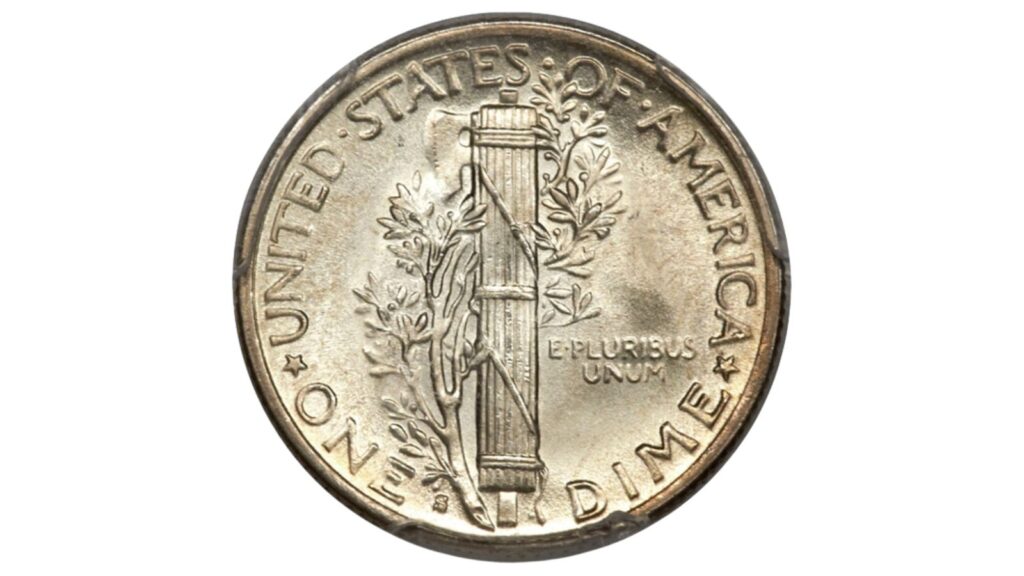
San Francisco struck the final year of Mercury dimes with two different sized S mint marks, and almost nobody noticed until a collector spotted the difference two years later. The smaller version, called the Micro S, used a punch originally made decades earlier for Philippine coinage under U.S. administration and pulled out of storage during the wartime production crunch.
It’s a common coin in worn condition, and circulated examples sell for under $25, so this isn’t one that will make anyone rich in typical pocket condition. The real money sits in high grade uncirculated examples with fully struck bands on the torch, where prices climb into the thousands, and the finest known example reaches more than $25,000.
Comparing the S mint mark on a 1945-S dime against a normal 1945-S is the whole test. The Micro S is noticeably smaller with crisper, sharper serifs than the regular mark’s rounder shape. It’s an easy side by side comparison once you know to look, and a fun variety to hunt through old silver dime rolls even though most examples you’ll find are worth silver melt plus a small premium.
9. 1971 no S proof Jefferson nickel
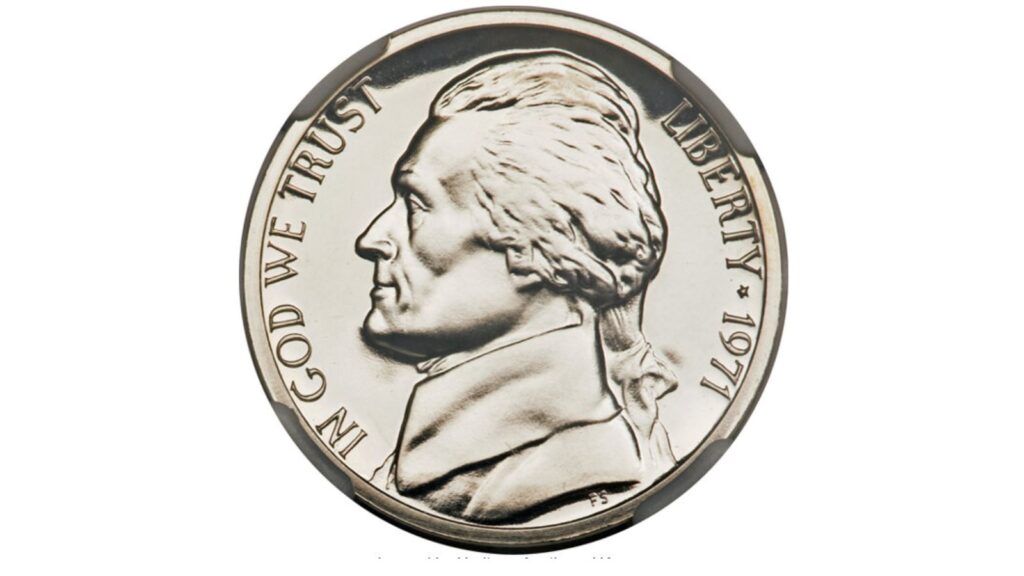
A die intended for San Francisco left the Philadelphia die shop in 1971 without its S mint mark punched in, and a small number of proof nickels were struck and sold before anyone at the Mint noticed. It’s the only nickel in the entire Jefferson series struck without its intended mint mark, a genuine one-off story rather than one of several similar errors.
Typical proof examples in the PR65 to PR67 range bring around $1,000, and rare Deep Cameo pieces, with only around 50 believed to exist, bring considerably more. A few hundred examples total are thought to survive, split across standard, Cameo, and Deep Cameo grades.
The place to look is inside old 1971 proof sets, since this coin never circulated. The space below the date on the obverse should be completely blank rather than faintly marked. It’s a ten second check with a loupe, and one of the more accessible entries on this list given how many 1971 proof sets are still sitting in dresser drawers from people who bought them new and never opened them again.
10. 1883 no cents Liberty Head nickel
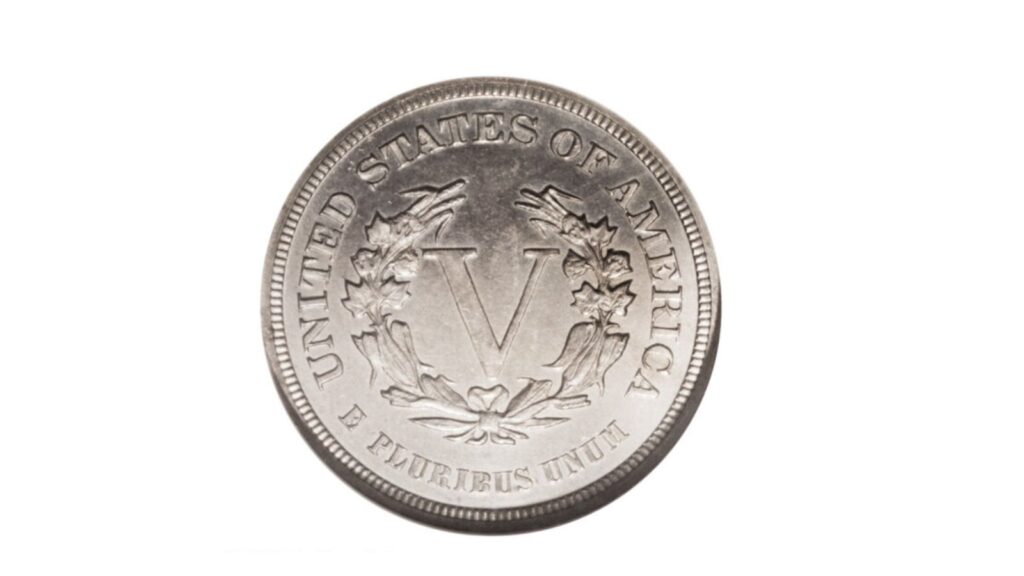
When the Liberty Head nickel debuted in 1883, its reverse carried a large Roman numeral V for five, with the word CENTS nowhere in sight. Within months, people noticed the coin was almost exactly the size of a five dollar gold half eagle, and a wave of con artists began gold plating the nickels and passing them off as five dollar coins to unsuspecting shopkeepers and travelers.
The Mint added the word CENTS to the design before the year was out, but the original no cents version had already been struck by the millions and remains common today. Circulated examples bring $6 to $30 depending on grade, with choice uncirculated pieces reaching $50 or more.
The real fun is the gold plated ones, still nicknamed racketeer nickels today. Genuine period examples with old, worn plating carry a modest premium over a plain example, though the honest reality is most gold plated no cents nickels floating around now were plated decades later purely to recreate the novelty. Either way, it’s a nickel with a genuinely funny history behind that missing word, worth keeping even if it never made anyone rich.
11. Barber quarter with a worn LIBERTY headband
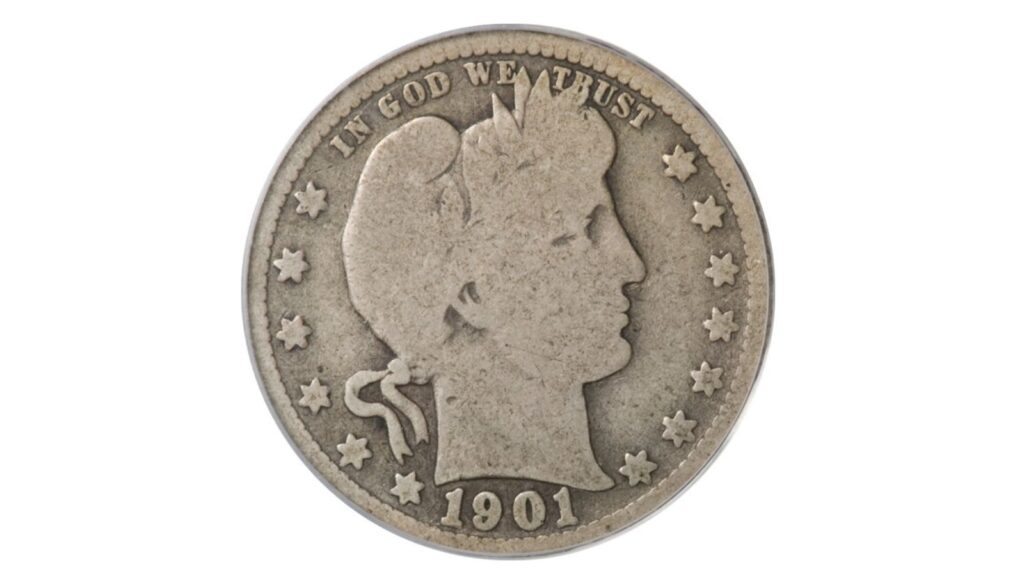
Charles Barber’s Liberty design puts the word LIBERTY on a narrow headband above her forehead, and it’s one of the first details to wear away on a circulated coin. Grading services use it as the dividing line for the whole series: a Barber quarter where the headband is worn completely smooth grades Good or worse, and dealers routinely price coins at that level as junk silver worth roughly its melt value rather than as a collectible coin.
The difference a few visible letters make is real. Once even a couple of letters in LIBERTY become legible, a common date Barber quarter crosses into collectible territory and its value jumps to $15 or $20 instead of $12 or so in melt. Not life changing money, but a genuine multiple for essentially the same worn coin.
Tilt the coin under a strong light and look at the headband before writing off an old Barber quarter as scrap silver. If you can make out even part of the word, it’s worth holding onto rather than selling by weight. Scarcer dates like the 1901-S or 1913-S are worth vastly more in any grade, so check the date too before deciding what you’re holding.
12. Dateless Standing Liberty quarter
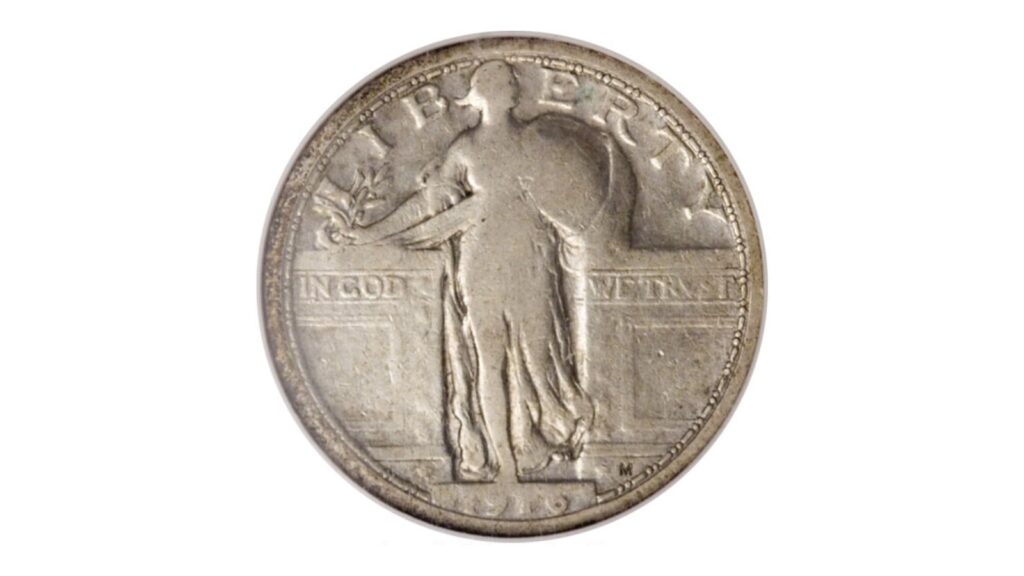
Hermon MacNeil’s Standing Liberty quarter has the opposite date problem in a different spot. The year sits on a raised pedestal at Liberty’s feet, an area so exposed to wear that huge numbers of these quarters lost their dates within a decade or two of leaving the Mint. It was such a common complaint that the Mint redesigned the date area in 1925 specifically to fix it.
A dateless Standing Liberty quarter is 90 percent silver, so it still carries real value regardless of the missing date. At current silver prices, melt value runs around $11 to $12 per coin, and that’s the realistic floor for most examples you’ll find. Without a visible date, there’s no way to confirm a rarer year, so treat any dateless example as bullion rather than a collectible.
Don’t use chemicals to try to bring back the date. It doesn’t reliably work on silver coins the way some sellers claim, and it damages the surface permanently either way. If you have a stack of old silver quarters and some are dateless, separate them out and weigh them for silver content instead of guessing at a date that isn’t coming back.
13. 1982 no FG Kennedy half dollar
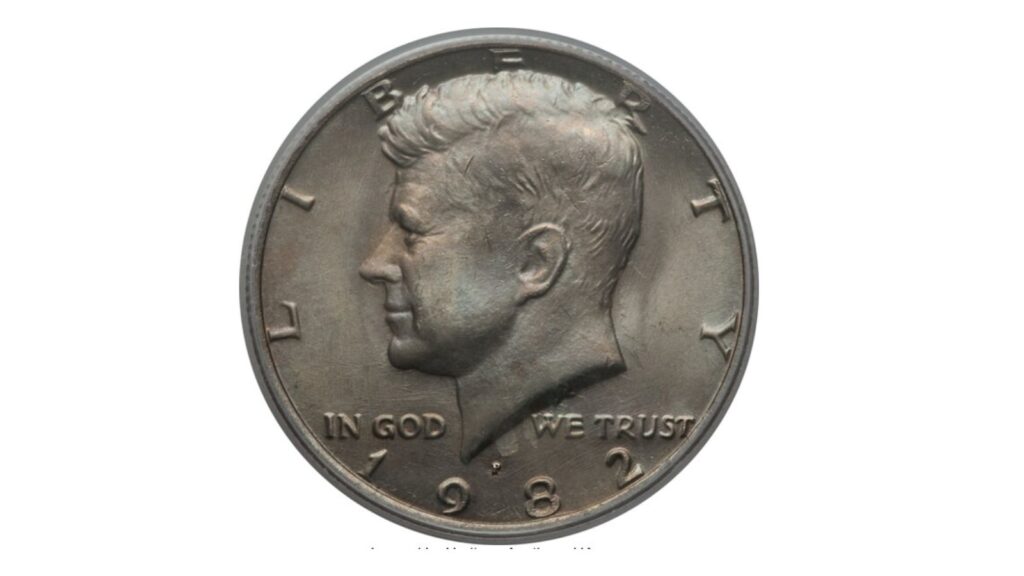
The same missing initials problem that hit the 1972-D half dollar happened again in 1982, this time at the Philadelphia mint and on a larger scale. Excessive die polishing wore Frank Gasparro’s FG initials completely off the reverse of a meaningful number of 1982 halves, alongside a similar 1966 Special Mint Set version and a smaller run in 1983.
This is a far more attainable variety than its 1972 counterpart. Examples in decent condition bring $20 and up, and they genuinely still turn up in bank-wrapped half dollar rolls and old coin jars rather than living exclusively in dealer inventory. A realistic find for anyone willing to spend an afternoon going through rolls of half dollars.
The check is the same as the 1972 version: look just below the eagle’s leg for the FG initials, and confirm they’re entirely gone rather than just weak. Genuine no FG examples usually show some softness in the surrounding feather and star details from the same over-polished die. Given how affordable this one is compared to its scarcer siblings, it’s a good entry point for hunting these varieties yourself.
14. Presidential dollar with missing edge lettering
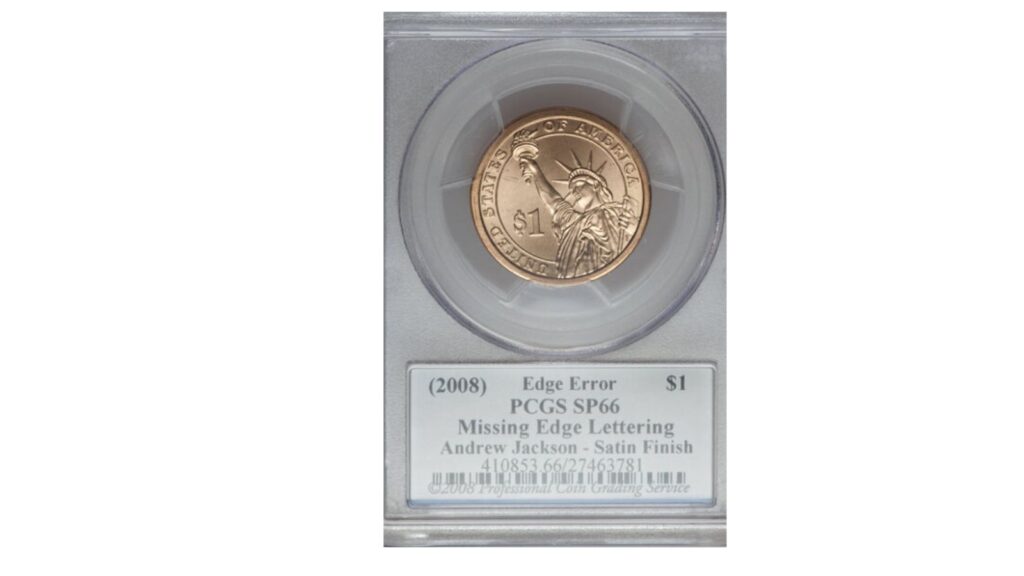
Starting in 2007, the Presidential dollar series moved the date, mint mark, and mottos off the coin’s face and onto its edge, a first for circulating American coinage in decades. The Mint’s new edge lettering machines skipped that step entirely on tens of thousands of coins in the program’s early years, sending smooth-edged dollars straight into circulation before anyone caught the problem.
Common examples, especially the first release honoring George Washington, bring $100 to $300 in certified uncirculated condition. Scarcer presidents and mints command considerably more, with special mint set versions of William Henry Harrison and Martin Van Buren reaching $1,500 to $2,450 in top condition, since far fewer of those particular combinations escaped with the error.
The check couldn’t be simpler. Run your finger and your eyes around the edge of any Presidential dollar. A genuine example has raised text running around it. A missing edge lettering error has a completely smooth, blank edge with no text at all. These coins came out during the height of the series’ popularity, so plenty of people saved rolls without checking closely, and unsearched boxes and bags still turn up the error today.











