
You pay every bill, keep your balances low, and still get handed a mediocre interest rate on your car loan, while someone with a similar income and messier habits gets approved in minutes at a better rate. That difference usually isn’t luck. The scoring models behind the three-digit number a lender pulls before they ever talk to you drive 90% of lending decisions in the U.S., and that number is built almost entirely from your habits, not your paycheck.
Lenders can’t sit across from you and ask whether you’re responsible with money, so they read it off a report instead: how consistently you pay, how much of your available credit you’re actually using, how long your accounts have been open, how your bank account behaves when things get tight. Payment history carries more weight than anything else on that report, and it’s the easiest place to start.
Table of contents
- Paying every bill on time, without exception
- Keeping credit card balances well below the limit
- Letting your oldest accounts stay open
- Spacing out applications for new credit
- Carrying more than one type of credit over time
- Automating your bill payments
- Paying more than the minimum whenever you can
- Keeping your debt-to-income ratio in check
- Building even a small emergency fund
- Keeping a steady, well-documented income
- Keeping your housing payment proportionate to your income
- Building reserves beyond your emergency fund
- Checking your own credit reports on a regular basis
- Thinking twice before co-signing anyone else’s loan
- Keeping your checking account in good standing
- Steering clear of payday loans and similar short-term credit
- Building credit deliberately if you’re starting from zero
- Paying down debt in an order that actually saves you money
- Keeping your savings easy to document
Paying every bill on time, without exception
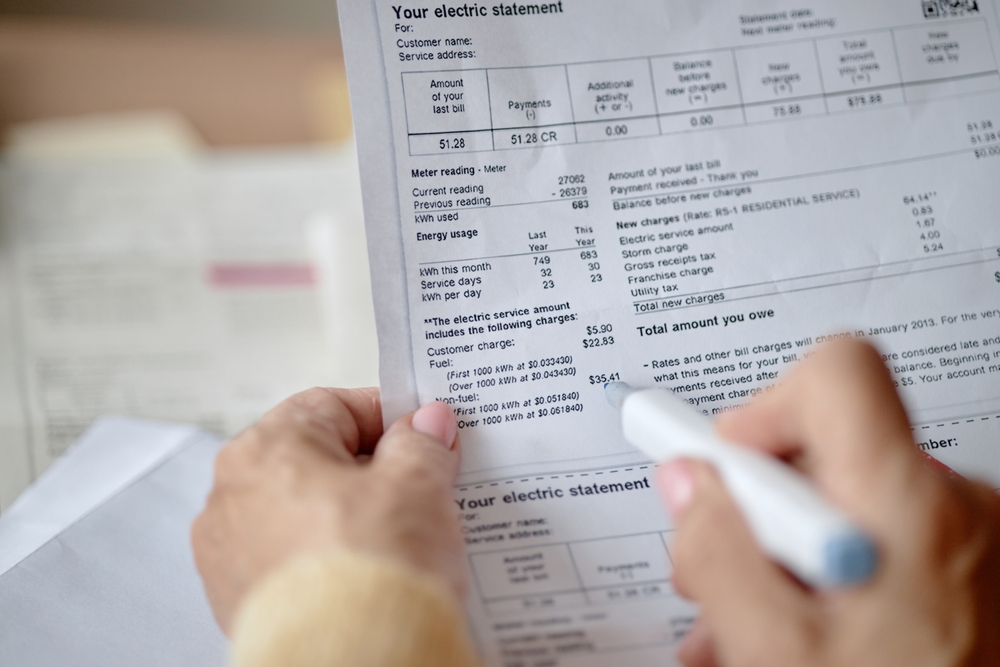
Payment history makes up 35% of your FICO Score, more than any other factor. That single number tells a lender almost everything they want to know before they read another line of your file. Not whether you carry debt, not how much you earn, just whether you do what you said you’d do, on time, month after month, across every account type you hold.
A single late payment doesn’t wreck a strong credit history, but it does register, and the damage gets worse the further behind you fall and the more accounts it happens on. What lenders are actually watching for is a pattern. One missed payment from years ago sitting next to years of on-time payments reads very differently than three missed payments in the last year. If you’ve had a rough stretch, the fix isn’t complicated. Get current, stay current, and let time do the rest. Late payments generally fall off your report after seven years, and the older they get, the less weight they carry against you in the meantime.
Keeping credit card balances well below the limit

How much of your available credit you’re using counts almost as much as whether you pay on time. It’s the second biggest factor in your score, and most guidance says to stay under 30%, with anything under 10% providing an extra boost. A card with a $5,000 limit and a $4,000 balance says something very different to a lender than the same card sitting at $500.
This number gets recalculated every billing cycle, which is part of why it’s one of the fastest things you can improve. Paying a balance down before your statement closes, rather than just before the due date, can drop your reported utilization within a single month. If you’re carrying balances across several cards, spreading them thin looks better on paper than maxing out one and leaving the others untouched, even if the total dollar amount owed is identical. Scoring models look at both your overall utilization and the utilization on each individual card, so one maxed out account can drag your score down even while your total balance across every card looks reasonable.
Letting your oldest accounts stay open

Closing a credit card you don’t use anymore seems like harmless housekeeping, but it can quietly work against you. Length of credit history factors into your score, and an account closed in good standing stays on your credit report for 10 years anyway, so shutting it down early doesn’t erase anything. It just removes a card that was helping your average account age and your available credit.
Someone with three cards opened ten years, seven years, and two years ago has an average account age of roughly six years. Close the oldest one and that average drops noticeably, which can move your score more than people expect for something that looks like harmless cleanup.
If the card carries an annual fee you resent paying, that’s a fair reason to close it. If you’re closing it purely out of habit or because you’re not using it, consider leaving it open with a small recurring charge on it instead, like a streaming subscription, then paying it off automatically. That keeps the account active and the history intact without costing you anything extra.
Spacing out applications for new credit
Every time you apply for a credit card, a loan, or a limit increase, the lender pulls your file and it shows up as a hard inquiry. One inquiry usually costs you as little as five to ten points, and the effect fades within a few months even though the inquiry itself sits on your report for up to two years. On its own, that’s not much to worry about.
The problem shows up when several inquiries land close together. A cluster of new applications tells a lender you might be about to take on debt they don’t know about yet, which is exactly the kind of risk they’re paid to price in. If you’re shopping for a mortgage, auto loan, or student loan, most scoring models group inquiries made within a couple of weeks into one, so it pays to do that comparison shopping in a tight window rather than spreading it across months.
Carrying more than one type of credit over time
Credit mix, the variety of loan types on your file, makes up about 10% of your FICO Score. Lenders like to see that you can manage a revolving account, like a credit card, alongside an installment loan, like a car payment or a mortgage, because the two behave differently and require different kinds of discipline to keep current.
This isn’t a reason to take out a loan you don’t need just to diversify your file. It’s a small factor, and it matters far less than payment history or utilization. But it explains why someone who has only ever had one credit card, even a well managed one, sometimes scores lower than a person with a similar balance and payment record but a more varied file. If you already have a mix through an auto loan, a mortgage, or student loans, that’s working in your favor without you having to do anything else.
Automating your bill payments
Missed payments are rarely a money problem. They’re usually a memory problem. Only about 41% of Americans use autopay for their bills, and more than half of missed payments happen because someone simply forgot the due date, not because the money wasn’t there. Automating recurring bills removes that risk without requiring you to be more disciplined, just less reliant on memory.
The one real risk with autopay is overdrafting, especially if a payment posts on a day your account is running low. Stagger your due dates around payday if you can, keep a small buffer in checking, and set a low balance alert so you’re never caught off guard. Autopay isn’t a set it and forget it decision so much as a set it and check it occasionally one.
Start with the accounts that actually report to the credit bureaus, credit cards, auto loans, personal loans, before worrying about smaller recurring subscriptions that don’t affect your score either way. Those are the payments where consistency does the most work for you.
Paying more than the minimum whenever you can
The average credit card interest rate sits around 19.56%, which means a balance you only pay the minimum on can take years to clear and cost far more than the original purchase. Beyond the cost, lenders and scoring models read a pattern of minimum-only payments as a sign you’re stretched thin, even if you never miss a due date.
On a $5,000 balance at that rate, sticking to minimum payments alone can stretch repayment past a decade and roughly double what you originally charged once interest is added up.
Paying extra, even a modest amount above the minimum, does two things at once. It shrinks your utilization faster, which helps your score directly, and it shortens how long you’re carrying a balance that’s working against you every month. If you can only put a little extra toward one card, put it toward the one with the highest rate first. That’s where the added cost is doing the most damage.
Keeping your debt-to-income ratio in check
Your debt-to-income ratio compares your monthly debt payments to your monthly income before taxes. If you pay $1,500 for housing, $100 for a car, and $400 on everything else, and you earn $6,000 a month before taxes, your debt-to-income ratio is 33 percent. This number doesn’t show up on your credit report, but it’s one of the first things a mortgage or auto lender calculates once you apply.
Unlike your credit score, debt-to-income isn’t a mystery you have to guess at. You can calculate it yourself in a few minutes, and lowering it comes down to two levers: pay down debt or increase income. Of the two, paying off a car loan or a personal loan usually moves the ratio faster than a raise does, because the whole payment disappears rather than being partially offset by taxes. Mortgage lenders in particular tend to want this ratio under 36 percent, though some loan programs allow more with a strong credit score or a larger down payment to offset the risk.
Building even a small emergency fund

Lenders don’t see your savings account balance the way they see your credit report, but the habit still shows up indirectly, in how you handle a surprise expense without missing a payment somewhere else. Right now, just 47% of Americans have enough liquidity to cover a $1,000 emergency without going into debt for it.
An emergency fund doesn’t need to be six months of expenses to be useful. Even $500 or $1,000 sitting in a separate savings account is often the difference between a car repair that’s mildly annoying and one that turns into a missed rent payment or a maxed out card. Building that cushion protects the very routines, on-time payments and low balances, that lenders are already scoring you on.
The easiest way to start is the same trick that makes bill payments reliable: automate it. A recurring transfer of even $25 or $50 on payday builds this fund quietly, without asking you to remember or decide anything each month.
Keeping a steady, well-documented income

Lenders want to see that your paycheck is going to keep showing up, not just that it showed up once. For a mortgage in particular, most guidelines call for reviewing about two years of employment history to judge whether your income is stable and likely to continue.
This is one reason a job change right before a big application can complicate things, even if the new role pays more. It matters even more if you’re self-employed or paid on commission, since lenders typically want two full years of tax returns before they’ll count that income at all, and any dip in earnings year over year invites more questions than a steady climb ever will. Staying in the same field, keeping documentation like pay stubs and tax returns organized, and being ready to explain any gaps in your work history all make an underwriter’s job easier. An easier file to underwrite is, in a very real sense, a more approvable one.
Keeping your housing payment proportionate to your income
The 28/36 rule is one of the oldest habits lenders look for, even when it isn’t a hard requirement. It suggests spending no more than 28% of your gross monthly income on housing costs, and no more than 36% on all your debt combined. Staying inside those numbers signals that you built in room for the unexpected instead of stretching to the top of what you could technically qualify for.
Plenty of people get approved above these ratios, especially with strong credit or a large down payment, but that approval comes with less flexibility every single month. Someone earning $6,000 a month who keeps housing near $1,680 has room left for a car repair or a slow month at work. Someone at $2,600 doesn’t. Keeping your housing cost proportionate to your income isn’t just a lender preference, it’s the difference between a mortgage payment you can absorb during a rough year and one that forces hard choices the moment anything else goes wrong.
Building reserves beyond your emergency fund

Mortgage lenders often want to see cash reserves on top of your down payment and closing costs, measured in months of housing payments rather than a flat dollar figure. Dividing your eligible reserves by your monthly principal, interest, taxes, and insurance payment tells you how many months of reserves you have, and the requirement can range from none at all to six months depending on the loan and property type.
A borrower with $12,000 in eligible reserves and a $3,000 monthly housing payment has four months covered. Double the reserves and you’ve doubled the cushion without changing anything else about the loan.
These reserves don’t have to sit in a checking account earning nothing. Retirement accounts, investment accounts, and the cash value of life insurance can all count, which means this is less about hoarding cash and more about not being financially maxed out the moment you close. A borrower with a thin margin looks riskier than one with the same income and a visible cushion behind it.
Checking your own credit reports on a regular basis
You’re entitled to see exactly what lenders see, and it costs nothing. Free weekly credit reports from all three bureaus became a permanent program in 2023, which means there’s no good reason to go into a loan application without having already looked at your own file.
That matters because mistakes are more common than most people assume. One in five consumers has an error on at least one of their three credit reports, and some of those errors are serious enough to affect the interest rate they’re offered. Catching a wrong late payment or an account that isn’t yours before a lender does saves you from having to explain it under pressure during underwriting, or worse, getting quietly declined without knowing why.
Disputing an error costs nothing and starts with the credit bureau, not the original creditor. Pull all three reports rather than just one, since an error on one bureau’s file doesn’t necessarily show up on the others.
Thinking twice before co-signing anyone else’s loan

Co-signing looks like a favor with no real cost to you as long as the other person keeps paying, but the loan shows up on your credit report as if it were yours the moment you sign. If they miss payments, your score takes the hit too, and getting your name removed later is harder than most people expect. Private lenders reject about 90% of requests to release a co-signer from a loan.
That doesn’t mean co-signing is always a mistake. It means it should be treated with the same seriousness as taking out the loan yourself, because that’s essentially what you’re doing. Your income and existing debt get counted against the new loan too, so co-signing can quietly raise your own debt-to-income ratio right before you need it clean for something else. If you do co-sign, ask the lender in writing what the release process actually requires, and check in on the account regularly rather than assuming no news is good news.
Keeping your checking account in good standing
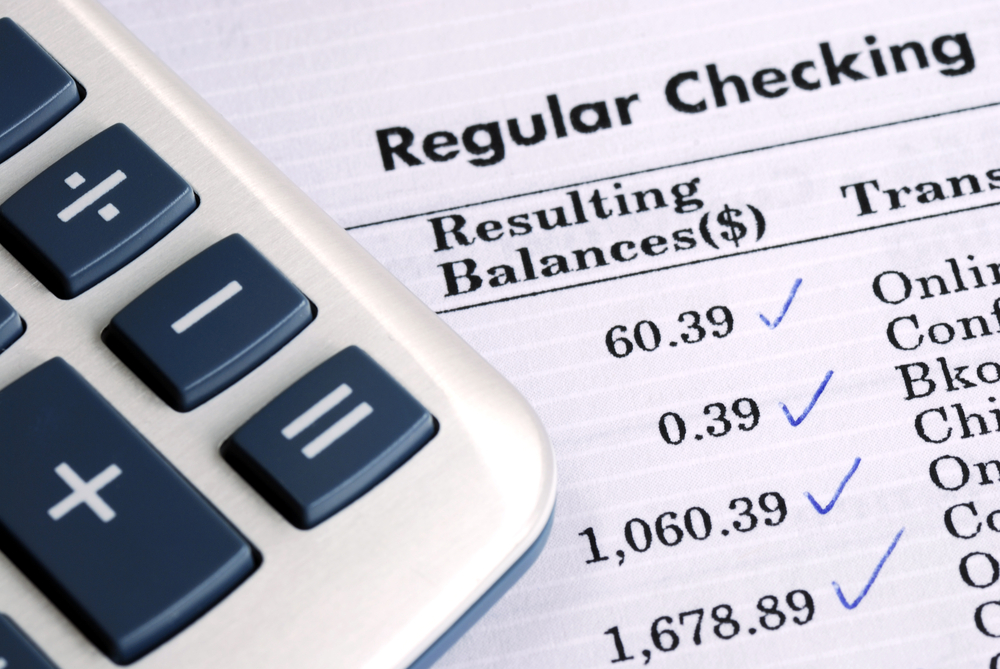
Your banking history gets tracked separately from your credit history, through a reporting agency called ChexSystems, and it can follow you the same way. A history of overdrawn accounts can block you from opening a new checking account, much the way a history of loan defaults makes lenders unwilling to extend credit.
This one is easy to overlook because it doesn’t show up on the credit reports most people check. Repeated overdrafts, unpaid negative balances, and accounts closed by the bank itself for suspected fraud all get reported and can stay on file for years. Once a bank denies you an account over this history, most other banks that use the same reporting agency will too, which can leave you stuck with a second-chance account that charges more and offers less. Keeping a buffer in checking, setting up low balance alerts, and closing accounts properly rather than just walking away from them protects a part of your financial reputation that’s easy to forget exists.
Steering clear of payday loans and similar short-term credit

Payday loans are marketed as a quick fix for a cash flow shortfall, but the cost is severe. The average annual percentage rate runs around 400%, largely because a flat two-week fee gets annualized into a number most borrowers never see written out plainly at the counter.
On-time repayment of a payday loan generally isn’t reported to the credit bureaus, so it does nothing to build your credit even if you pay it back exactly as agreed. A default, on the other hand, can land in collections and stay on your report for years. Borrow $400 with a typical fee and you can owe $460 in two weeks, and if you can’t cover that and roll it over, another fee stacks on top before you’ve touched the original amount. If you need short-term cash, a credit union payday alternative loan, a cash advance app, or a personal loan almost always costs a fraction of what a payday lender charges.
Building credit deliberately if you’re starting from zero
You can’t show a pattern of responsibility that doesn’t exist yet, so if you have thin or no credit history, the first move is building one on purpose rather than waiting for it to happen. Roughly 26 million U.S. adults have no credit record at all, and a secured credit card or a credit builder loan are two of the more reliable ways out of that position.
A credit builder loan works backward from how most loans work: you make payments first, into a locked account, and get the money at the end, with each payment reported to the credit bureaus along the way. In one CFPB study, participants without existing debt who opened one saw their scores rise about 60 points more than those who already carried debt. A secured card works similarly, using your own deposit as the credit line, and most issuers return that deposit once you’ve built enough history to graduate to a standard card.
Paying down debt in an order that actually saves you money

When you’re juggling more than one balance, the order you attack them in changes how much interest you end up paying, sometimes by hundreds of dollars. The debt avalanche method, paying extra toward whichever balance carries the highest interest rate first, is the cheapest way to get out of debt on paper, even when it doesn’t deliver the quick wins of paying off your smallest balance first.
This matters to lenders indirectly. A shrinking total balance, paid down with intention rather than drifting along on minimums, shows up as falling utilization and a debt-to-income ratio that keeps improving instead of stalling, both of which lenders notice the next time you apply for anything. If watching a big balance shrink slowly kills your motivation, there’s nothing wrong with paying off one small account first for the psychological win, sometimes called the snowball method, then switching to the highest-rate balance for the rest. The goal is progress you’ll actually stick with.
Keeping your savings easy to document

If you ever apply for a mortgage, a lender will want to know where every large deposit in your bank statements came from, not because they assume you’re hiding something, but because they have to rule out undisclosed loans that would change your real debt load. Deposits of 25% or more of your monthly gross income typically get flagged for explanation.
Money you’ve saved gradually over months of paychecks rarely causes a problem. A single large, unexplained deposit right before you apply usually does, even if it’s completely legitimate, because now you need a gift letter, a bill of sale, or a paper trail to prove it. Building savings in small, regular, traceable amounts instead of big irregular windfalls means one less delay when you actually need the loan to close on time.
Most of these routines cost nothing and take a few minutes a month. Do them consistently long enough, and the file a lender pulls on you starts telling that story on its own.











