
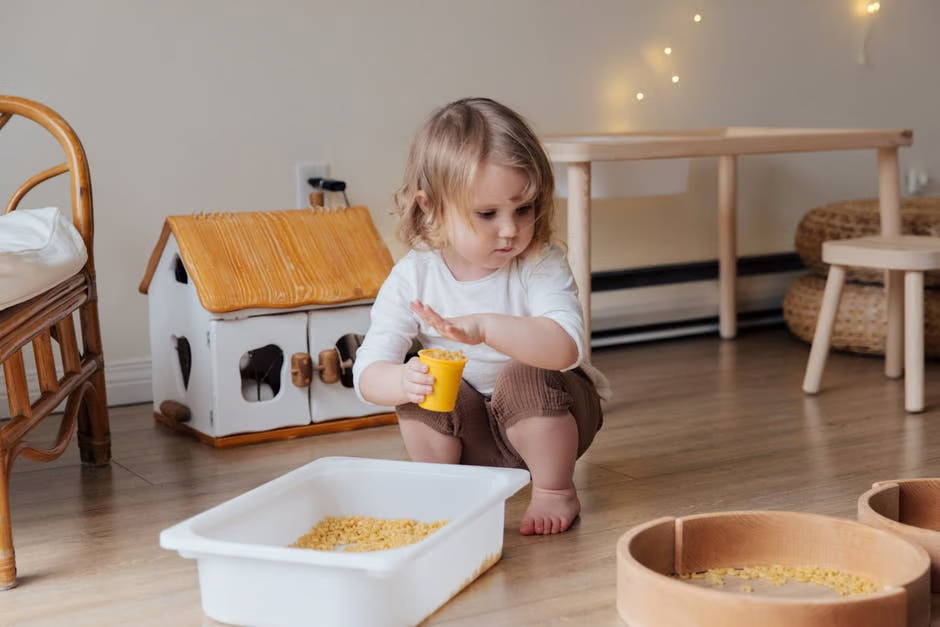
A room packed wall-to-wall with toys can still leave a child complaining, “There’s nothing to do.” The culprit isn’t a lack of playthings—it’s an overwhelming layout.
This guide shows you how to use reachable storage, defined zones, and adaptable furniture to build a practical playroom your kids will actually use (without turning your home into a permanent showroom).
Table of contents
Start with how your child plays
Before moving heavy furniture, take time to watch where your child naturally plays and what toys they reach for most often during daily activities. Do they build on the open floor, draw at a table, or make up stories with stuffed animals? A few minutes of quiet observation can help you shape the room around their real routines rather than an idealized design.
Leave room to move
Keep a clear, open patch of floor for building, dancing, crawling, or spreading out a large board game. You don’t need an entirely empty room, just enough space for active bodies to move without bumping into furniture edges. Secure heavy shelves to the walls and leave a clear, unobstructed path between play areas.
Make favorite toys easy to reach
Children can choose activities more independently when toys are visible and within reach. In a 2024 study of young children’s play, researchers used four toy sets and observed play in 7- to 8-minute segments across 30 minutes. That was the study’s observation setup, not a recommended toy limit for every home.
Start with a few simple storage choices:
- Put everyday favorites on low shelves
- Use picture labels on bins
- Store small pieces in containers
Give popular toys a clear home, then keep extras in a closet or higher cabinet. Open bins make cleanup easier, while a few closed containers can hide supplies that might otherwise make the room feel busy.
Choose pieces that adapt
Furniture doesn’t have to serve only one purpose. A low table can work for drawing, puzzles, and pretend play, while basic floor cushions can easily be repurposed as stepping stones or target markers during active play.
Modular seating design allows room elements to shift fluidly between passive rest and active, imaginative builds throughout the day. For instance, incorporating a cushy couch play couch provides a comfortable baseline for reading or relaxing, but because the individual foam blocks are modular, they can quickly be pulled apart to construct makeshift playhouses, crawling tunnels, or low climbing steps. Brands like Epic Kidz specialize in this multi-use furniture approach, offering pieces engineered specifically to transition from a living room or playroom lounger into an active engineering tool for kids.
Before bringing in a large piece of baby playmats for play corners, consider how your child might use it in more than one way. Check that it fits comfortably without blocking the room’s main floor area, ensuring it earns its spot by actively supporting daily play rather than just taking up space.
Create simple play zones
A playroom feels far easier for children to navigate and clean up when they can immediately tell where each activity belongs. You can clearly mark distinct areas with a small table, a soft rug, or a low open shelf rather than adding physical walls or bulky dividers. Keep the overall layout flexible, ensuring a game or building project can naturally spill over into adjacent spaces when your child gets a bigger idea.
Try grouping activities in a way that fits your room’s natural layout:
- Set art supplies near a child-sized table
- Place books and soft seating in a quiet corner
- Keep open floor space for building and active play
Simple setup tweaks for lasting play
A functional playroom doesn’t require perfection—just a setup that makes starting and ending play effortless for your child. Keeping favorite toys within reach, preserving open floor space, and choosing versatile furniture creates an environment where independent play happens naturally.
When the room adapts to your child’s changing routines, cleanup stays manageable for everyone. Small, thoughtful adjustments along the way will keep the space engaging and easy to use for years to come.










