
Somewhere between the VHS tapes nobody owns a player for anymore and the fast food toys still rattling around in a junk drawer, there’s a decent chance you’re holding onto something a Disney collector would pay real money for. The 1990s were Disney’s second golden age, Aladdin, Beauty and the Beast, The Lion King, Toy Story, and a wall of Happy Meal tie-ins that came with almost every animated release. Most of it got thrown out or donated once the kids grew up.
What’s left over has turned into a genuine collector market, and it isn’t limited to sealed grails sitting in a climate-controlled closet. A lot of it is the ordinary stuff: the VHS tape still in the cabinet, the fast food toy still in its bag, the plush animal still on a shelf. Condition and completeness decide almost everything here, so the same toy can be worth three dollars or three hundred depending on whether the box survived and whether a kid ever got their hands on it.
Table of contents
- 1. The Little Mermaid original “banned” cover VHS
- 2. Disney’s Aladdin for Sega Genesis
- 3. Black Diamond Aladdin VHS
- 4. Burger King Aladdin Kids Club toys
- 5. Mattel Lion King Pride Rock playset
- 6. Mattel Lion King mane-changing Simba plush
- 7. 1994 SkyBox Lion King trading card set
- 8. Thinkway Toys talking Woody and Buzz Lightyear figures
- 9. McDonald’s 101 Dalmatians boxed Happy Meal set
- 10. McDonald’s Pocahontas Happy Meal toys
- 11. Beauty and the Beast Mrs. Potts and Chip china tea set
- 12. Polly Pocket Beauty and the Beast Magical Castle
- 13. Playmates Darkwing Duck action figures
- 14. Disney’s Dinosaurs Baby Sinclair talking doll
- 15. DuckTales 2 for NES
1. The Little Mermaid original “banned” cover VHS
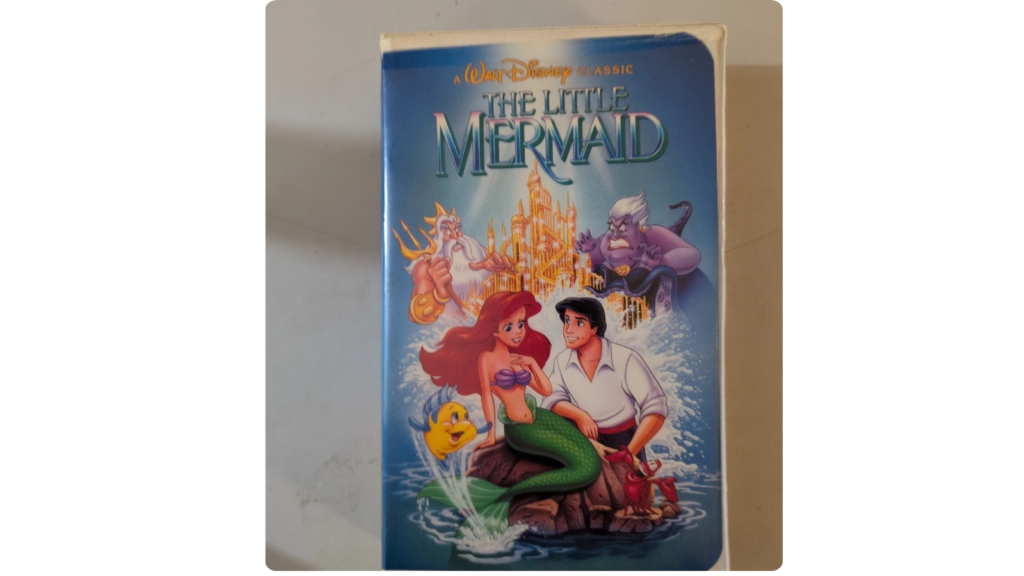
Disney’s first Black Diamond release of The Little Mermaid hit shelves in 1990 with cover art showing a golden castle in the background, complete with a spire that a lot of people noticed looked exactly like a certain body part. A single customer complaint was enough to get the tape pulled and reprinted with safer artwork, which means only a narrow window of stock ever went out with the original design.
Clean copies with the uncorrected cover typically bring around $300 in today’s market, and factory sealed examples with the shrink wrap and price sticker intact can push well past that. Opened, played tapes with the same cover are worth far less, usually closer to the low double digits, since the artwork is the entire story here and playback quality doesn’t factor in.
Check the spine for the small black diamond logo before getting excited, since plenty of ordinary Little Mermaid VHS reprints exist with the corrected cover and are worth next to nothing. A few sellers have also been known to print reproduction covers and wrap them around a common tape, so look for the original chipboard clamshell case rather than a loose cardboard sleeve, and be wary of anything without visible wear consistent with thirty-five years of storage.
2. Disney’s Aladdin for Sega Genesis
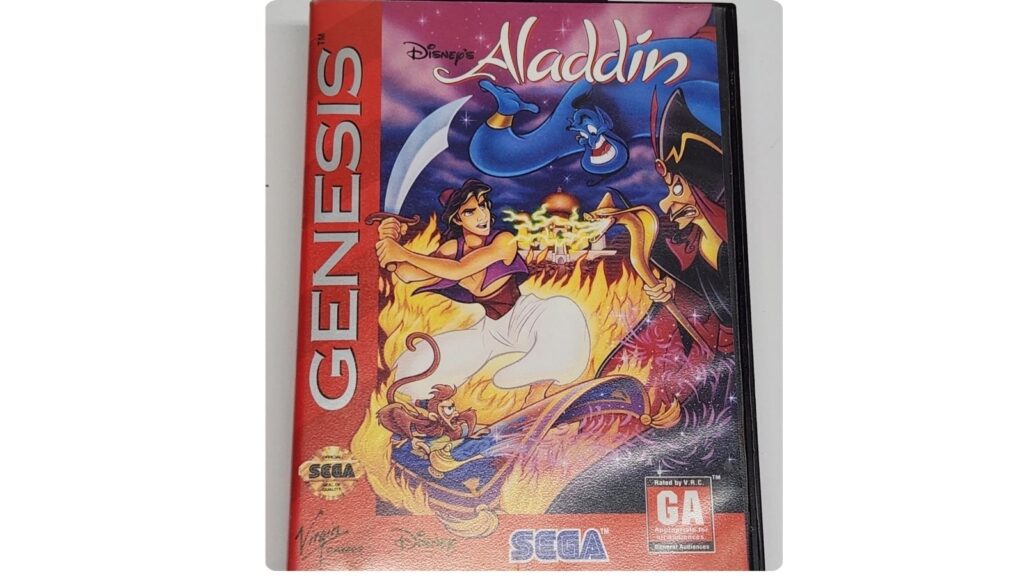
Virgin Games and Disney Software built one of the best looking 16-bit platformers of the era around Aladdin’s 1993 release, with hand-animated sprites that borrowed directly from the film’s own animators. It sold well at the time and still turns up regularly in old game collections, which keeps the loose cartridge affordable while rewarding anyone who kept the box.
A loose cartridge alone is only worth a few dollars, but a complete copy with the case and manual typically brings close to $19, and a factory sealed copy climbs toward $94. Professionally graded sealed copies, the kind collectors send off to have authenticated and encased, have reached over $400, though that’s the ceiling for a pristine example rather than a typical result.
The manual and the cardboard box are what separate a complete copy from a loose one, and both are easy to lose after three decades. Check that the cartridge label is the original glossy print rather than a faded or peeling reproduction sticker, which shows up occasionally on resold copies from sellers padding out incomplete lots.
3. Black Diamond Aladdin VHS
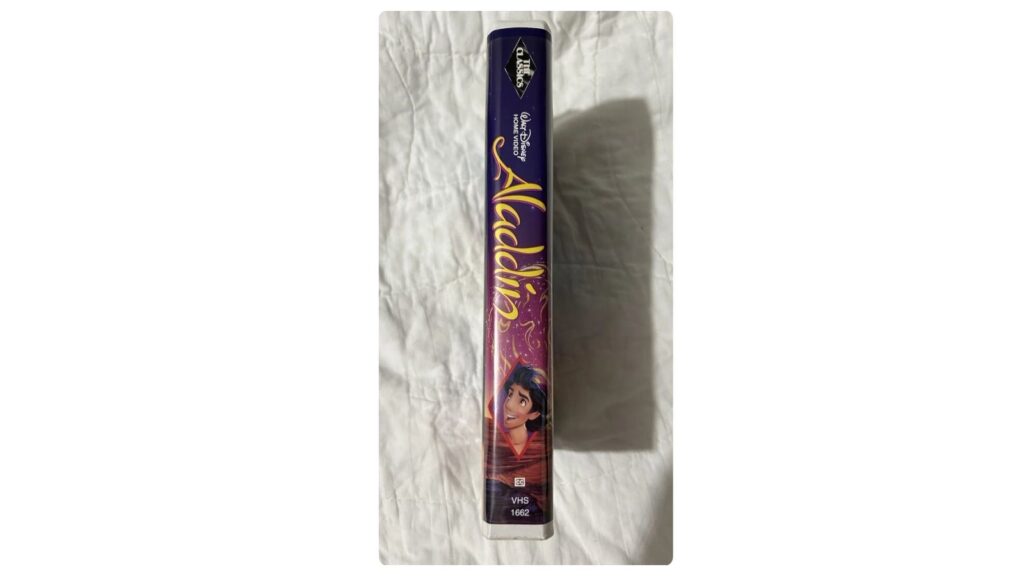
Aladdin’s 1993 Black Diamond release is one of the few titles in Disney’s early home video catalog that holds real value beyond the hype cycle that swept through the Black Diamond category a few years back. Most Black Diamond tapes from this era are worth a few dollars at most, since Disney printed enormous quantities of the popular titles, but Aladdin sits a notch above the pack.
A pristine sealed copy with the shrink wrap and price sticker still attached typically brings up to $200, while an opened copy in good shape is worth a small fraction of that. The black diamond logo printed in the corner of the cover is what identifies the edition, and later reissues without it are common and worth very little.
Look closely at the clamshell case for cracks at the hinge, which is the first place these tapes fail after decades of being stood upright on a shelf. A faded or sun-bleached spine label knocks the price down considerably even on an otherwise complete tape, since collectors buying these want a genuinely clean shelf piece rather than a functional VCR tape.
4. Burger King Aladdin Kids Club toys
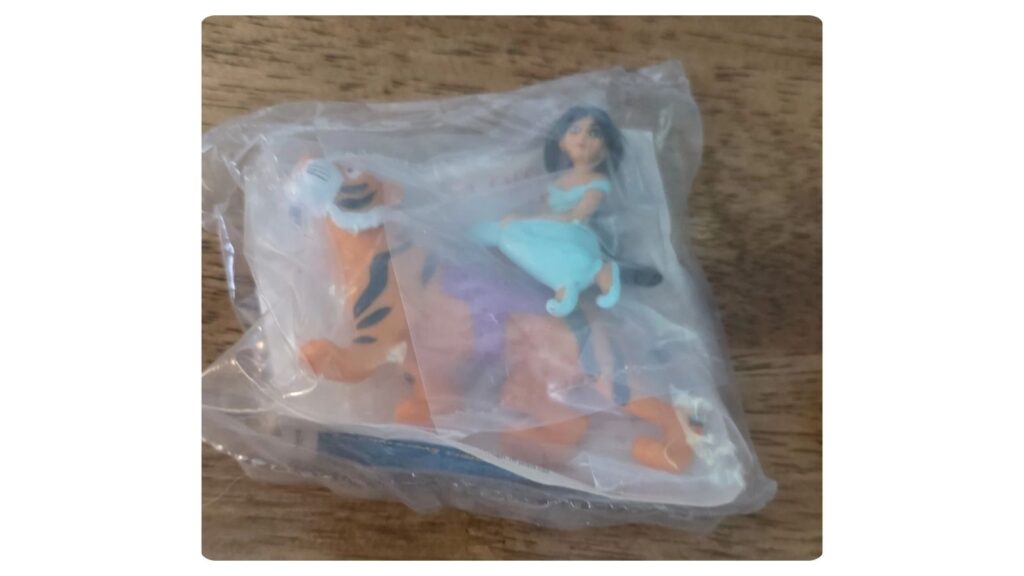
Burger King ran its own Aladdin promotion in 1992 alongside McDonald’s competing Happy Meal line, releasing a set of small wind-up and pull-back toys featuring Aladdin, Jasmine, the Genie, and Abu. The Henry Ford museum holds one of these toys in its own permanent collection, which says something about how thoroughly this promotion saturated fast food counters that year.
A single loose toy in working condition typically brings a modest few dollars, while a complete set of four still sealed in their original wrappers brings meaningfully more, especially with the cardboard header card that identified each character still attached. Most surviving examples are loose and played with, which is exactly why a sealed one stands out.
These are small, simple toys built for a kid’s meal rather than a toy shelf, so check that the wind-up or pull-back mechanism still works before assuming full value. A stiff or broken mechanism cuts the price substantially even on an otherwise clean example, since function matters as much as appearance on toys this size.
5. Mattel Lion King Pride Rock playset
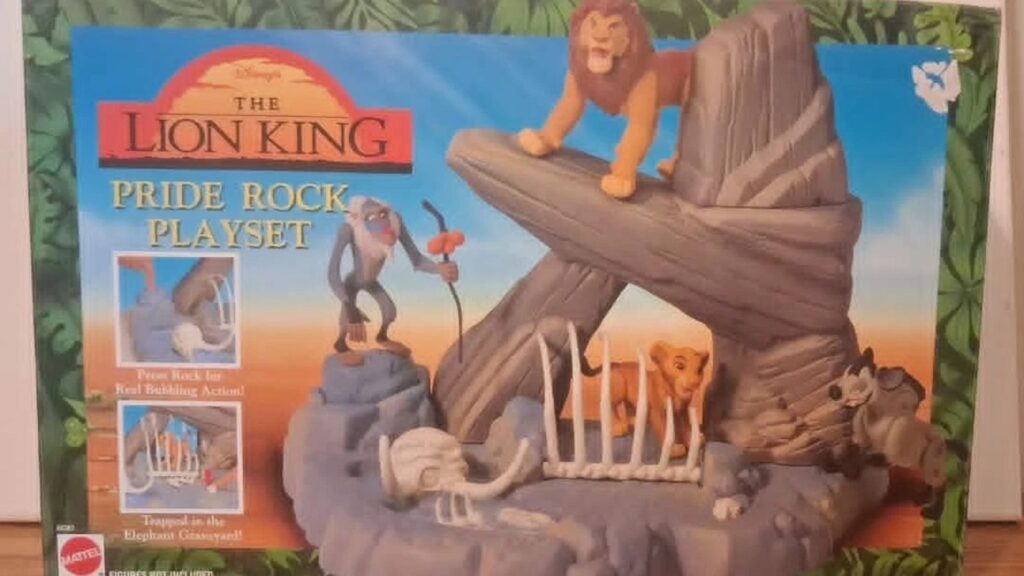
The Lion King was 1994’s biggest movie by a wide margin, and Mattel’s Pride Rock playset was the centerpiece of the toy line built around it, a molded rock formation complete with a working presentation ledge for the opening scene everybody remembers. It came bundled with a handful of figures, which is what separates a genuinely complete example from a bare playset.
A complete playset with its original figures typically brings around $135 in today’s market, while an incomplete one missing figures or accessories drops well below that. The rock formation itself is sturdy plastic and tends to survive fine, but the smaller figures and the plastic sun that slots into the top are the pieces most often missing from estate sale finds.
Watch for the difference between this original 1994 line and the toys Disney released for the 2019 live-action remake, since both used similar branding and turn up in the same secondhand bins. The 1994 Mattel packaging says so directly on the box, and the sculpting style on the original figures is noticeably more cartoonish than the photorealistic remake line.
6. Mattel Lion King mane-changing Simba plush
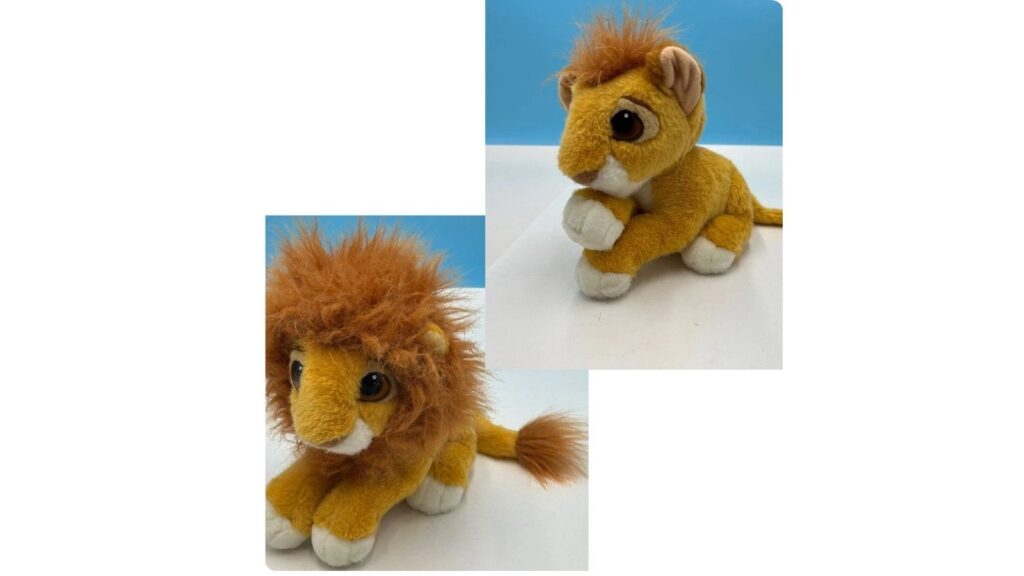
Among the dozens of Simba plush variations Mattel put out in 1994, the mane-changing “growing up” version stood out for its gimmick: pull on a hidden mechanism and the cub’s small mane extended to simulate him aging into an adult lion. It was a clever bit of engineering for a stuffed toy and sold well enough that plenty survive today, though working examples are scarcer than the concept suggests.
A clean example with a functioning mane mechanism typically brings around $50, while plush toys from the same line without the gimmick, or with a mechanism that no longer extends, sell for a fraction of that. Tag condition matters more than most people expect on plush toys this age, since the printed fabric tag confirms the specific line and year.
Check the fur for matting and the mane mechanism for smooth movement before assuming top value, since three decades of handling tends to gum up the internal mechanism on toys built for repeated play rather than display. A plush that still smells strongly of storage or smoke is a harder sell regardless of how well the mechanism works.
7. 1994 SkyBox Lion King trading card set
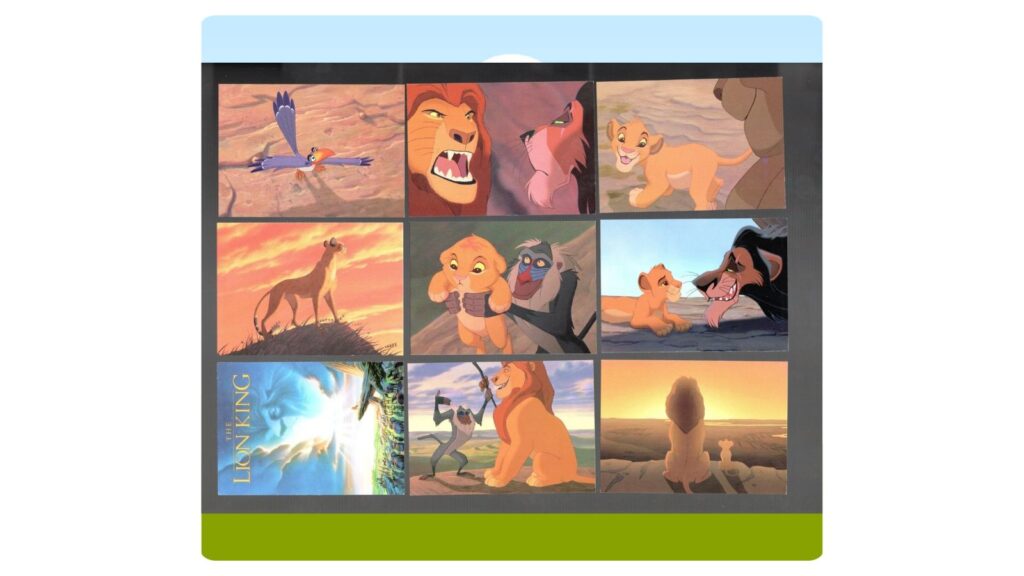
Non-sport trading cards had a real moment in the early 1990s, and SkyBox’s Lion King set capitalized on it with ninety base cards covering the film scene by scene, plus foil chase cards inserted at a lower rate. It was sold in wax packs at grocery store checkouts the same way baseball cards were, which is why complete sets and unopened wax boxes both still turn up with some regularity.
A complete set of the ninety base cards in clean condition typically brings around $20, while the nine-card foil chase subset, numbered separately from the base set, commands more on its own than most people expect for a card printed on foil stock rather than cardboard. Individual base cards are worth pennies apiece outside of a full set.
Corner wear and surface scratches are the main condition issues here, since these cards were handled by kids rather than stored in sleeves from day one. A genuinely mint, unhandled set with sharp corners throughout is uncommon enough to bring a real premium over an average played set, even though the difference isn’t always obvious at a glance.
8. Thinkway Toys talking Woody and Buzz Lightyear figures
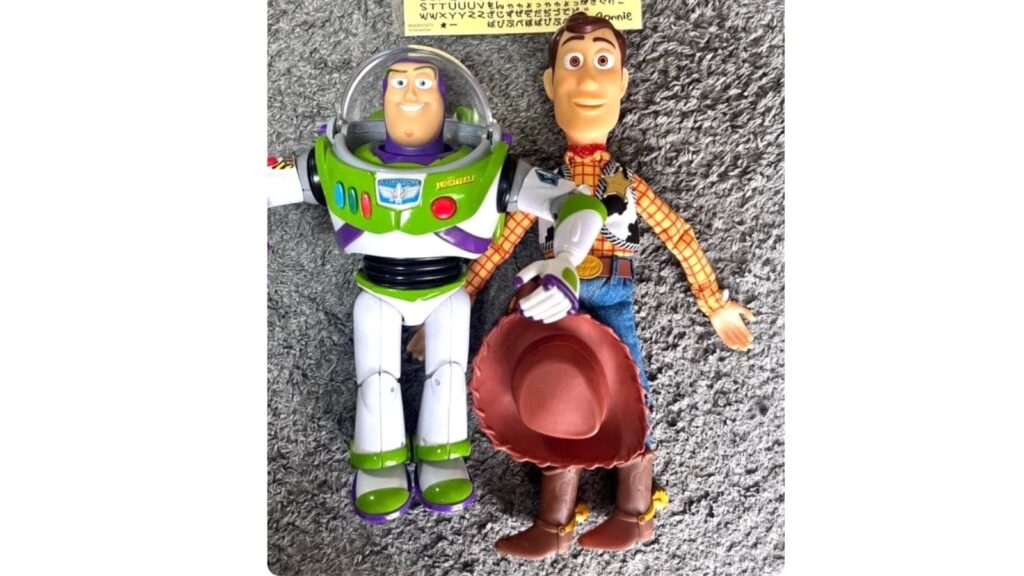
Thinkway Toys had only eight months to build an entire merchandise line before Toy Story hit theaters in November 1995, after bigger toy companies passed on the project. The result was the first pull-string Woody and the first talking Buzz Lightyear, both produced in far smaller numbers than the sequel toys that followed once the franchise took off.
A loose figure in played-with condition typically brings somewhere in the high teens to twenties, while a complete boxed example with the original graphics intact climbs well past that, and a sealed, unopened figure from this original run brings the most of all. The larger Ultimate Talking Buzz, a full-scale electronic version released the same year, commands a premium over the smaller pull-string figures.
Thinkway kept making Woody and Buzz figures for every sequel that followed, so the packaging is what tells an original 1995 figure apart from a later reissue. The earliest boxes say simply “Toy Story” with no sequel branding, and the figures themselves show more paint wear and simpler tooling than the smoother sculpts that came later.
9. McDonald’s 101 Dalmatians boxed Happy Meal set
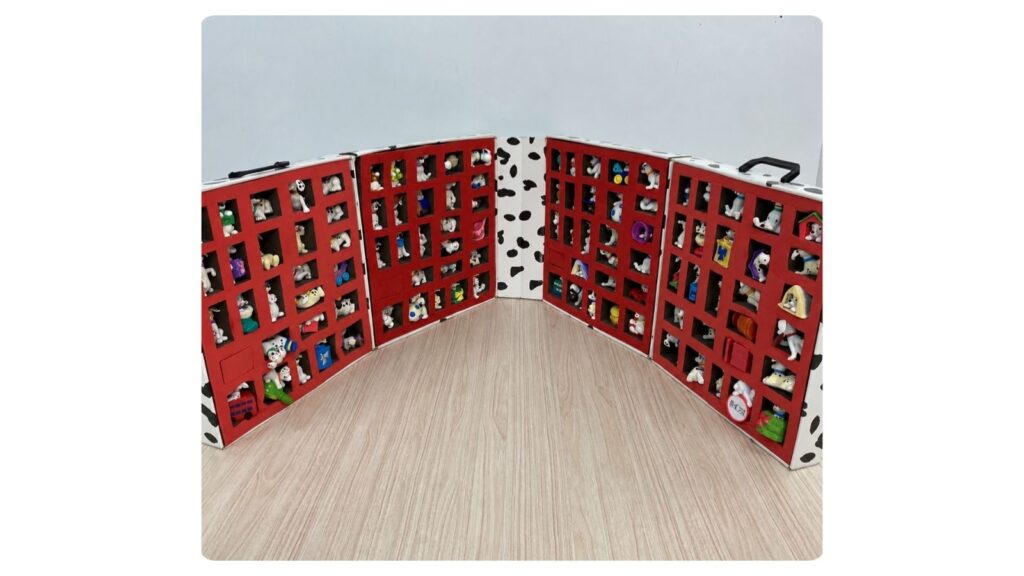
McDonald’s ran its 101 Dalmatians promotion in 1996 to coincide with the live-action remake, and the puppies came packaged individually in Happy Meals the same way most tie-in toys did. What makes this one different is that McDonald’s also released a complete boxed set of all the figures together for people who didn’t want to buy dozens of meals to collect them.
That boxed set, kept sealed with all figures present, typically brings up to $170 today, while individual loose puppies from the same promotion are worth a dollar or two each outside of a complete grouping. The packaging itself is part of the value, since a loose pile of the same figures brings much less than the same figures still boxed.
Fading is the main issue to check for, since the box art on fast food promotional packaging from this era wasn’t printed to last decades in direct sunlight. A crisp, unfaded box with all the figures still in their original plastic sleeves is worth considerably more than a sun-bleached one, even when every piece is technically present.
10. McDonald’s Pocahontas Happy Meal toys
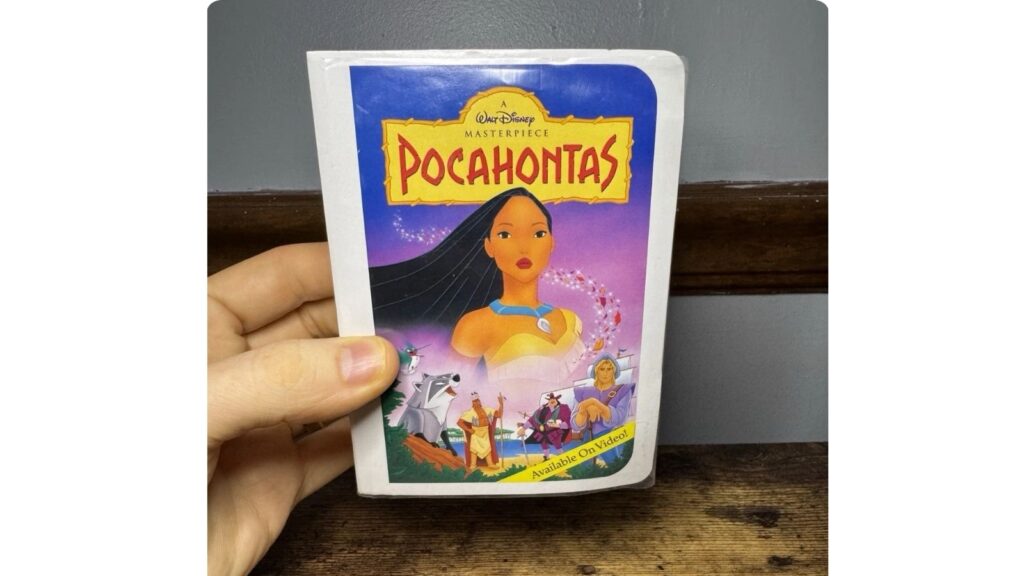
Pocahontas arrived in the summer of 1995 with a full Happy Meal lineup covering Pocahontas, John Smith, Meeko, Flit, and several other characters from the film, each figure built around a small mechanical gimmick tied to a scene. It was a fairly ordinary promotion for its time, which is exactly why complete sets are still findable without much effort.
A complete run of the figures together typically brings around $20, while a single loose figure is worth closer to a dollar. It’s a modest number compared to some of Disney’s flashier 90s promotions, but it’s a realistic, findable price point for anyone who kept a full set stashed in a drawer rather than one that made it into rotation as an actual toy.
Completeness is really the only thing driving value here, since none of the individual figures are especially rare on their own. Check that the small moving parts, like Meeko’s spinning acorn or Flit’s flapping wings, still function, since a broken mechanism on an otherwise common figure makes it worth even less than the going rate for loose pieces.
11. Beauty and the Beast Mrs. Potts and Chip china tea set
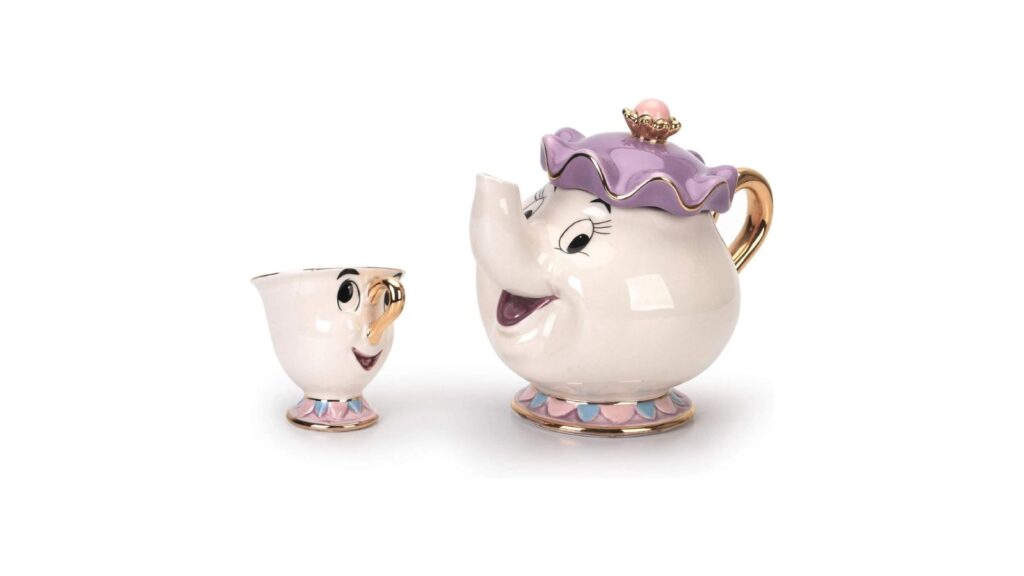
Beauty and the Beast’s 1991 release turned Mrs. Potts and her son Chip into one of Disney’s most merchandised character pairings, and one of the more charming pieces to come out of it was a genuine child’s china tea set modeled after the pair, sold in a boxed set rather than as a single figurine.
A complete boxed set from the film’s original release window typically brings up to $150 today, while a set missing pieces or its original box sells for considerably less. These were made as functional tea sets for kids rather than display pieces, so complete, unchipped examples are less common than the production numbers would suggest.
Check every piece against the original box art before assuming a set is complete, since teapots, cups, and saucers from this line frequently got separated or broken over years of actual play. Hairline cracks in the ceramic are common and reduce value sharply even when they don’t affect how a piece looks from a normal viewing distance.
12. Polly Pocket Beauty and the Beast Magical Castle
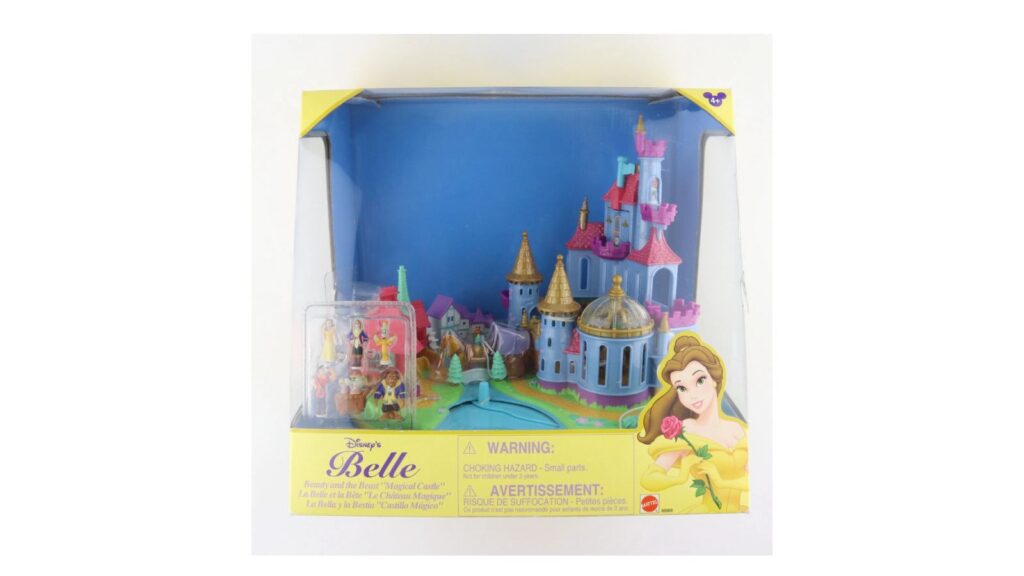
British toy maker Bluebird built an entire Beauty and the Beast themed compact into its Polly Pocket line in 1997, shaping the outer shell like the Beast’s castle and packing a working ballroom scene into the miniature interior most Polly Pocket sets were known for. It wasn’t a huge seller at the time, which is part of why it’s harder to find complete today than the more common Polly Pocket houses from the same years.
A complete example with all its tiny figures and accessories intact typically brings up to $600, while one missing even a single piece drops sharply in value, since the entire appeal of vintage Polly Pocket is built around miniature completeness. The figures themselves are barely bigger than a fingernail and are the first thing to go missing in a toy box.
Bluebird’s original compacts are noticeably smaller and more delicately hinged than the larger Polly Pocket relaunch that arrived years later under new ownership, so check the hinge and clasp closely for the thin, snap-shut mechanism of the originals rather than the chunkier modern version. A working clasp that snaps shut cleanly is worth checking before assuming top value, since decades of hinge wear are common.
13. Playmates Darkwing Duck action figures
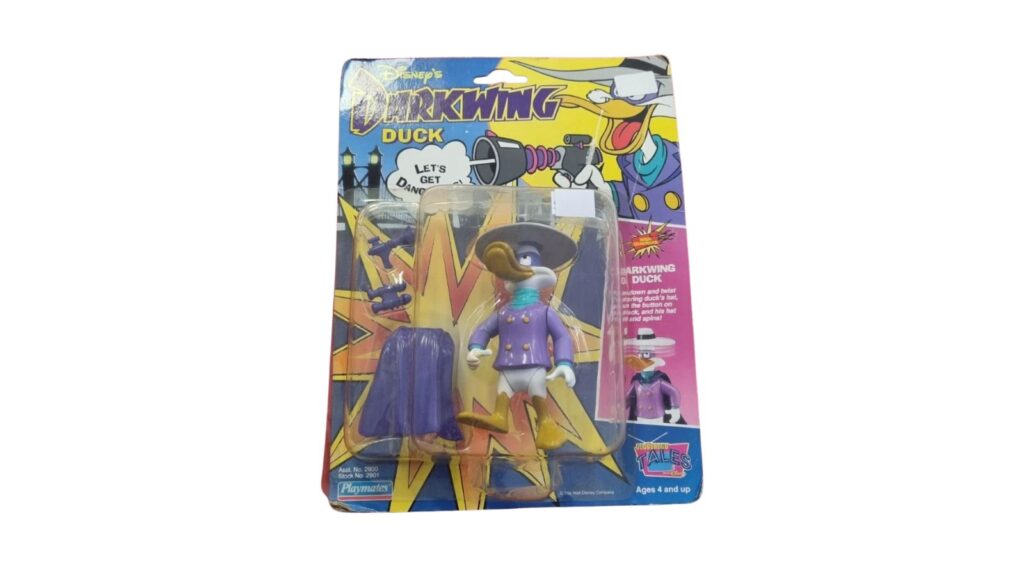
Darkwing Duck debuted in 1991 as part of Disney’s afternoon cartoon lineup, and Playmates built a small line of action figures around the masked mallard and his rogues’ gallery, including Megavolt and Tuskernini. The figures were solidly made for their size but never sold in the volume that bigger 90s toy lines did, which keeps the loose secondary market modest but steady.
A single loose figure in decent condition typically brings somewhere in the $10 to $25 range depending on the character, while a complete carded figure still on its original packaging brings considerably more. Complete sets with the rarer villains included command a real premium over a partial collection built around just the main hero figure.
Paint wear on the beak and cape is the most common condition issue, along with a missing cape entirely on figures that saw real play. Darkwing’s signature hat, which spins on some versions, should still turn freely, since a jammed spinning mechanism is a common and noticeable flaw that collectors specifically check for.
14. Disney’s Dinosaurs Baby Sinclair talking doll
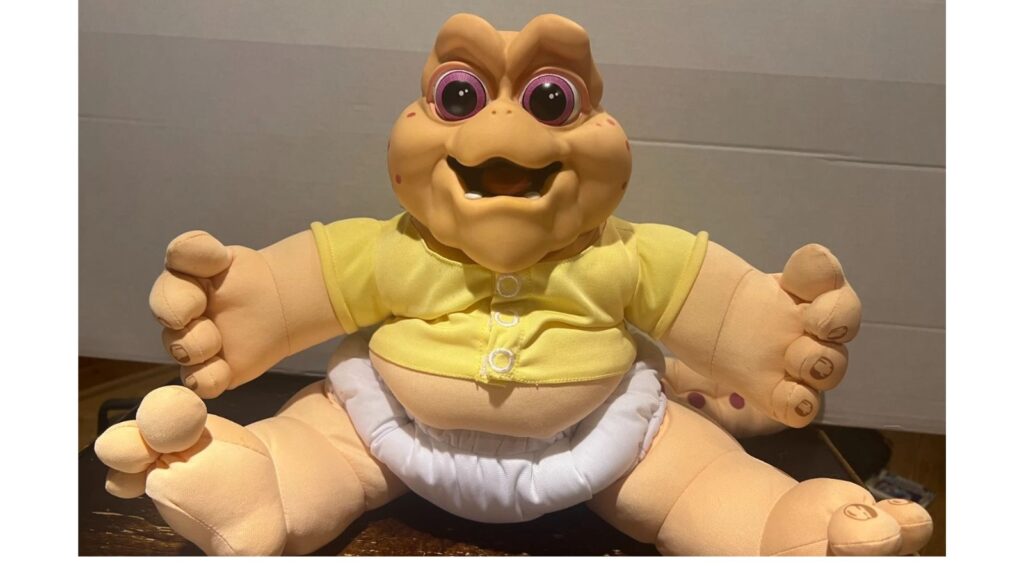
Disney’s live-action puppet sitcom Dinosaurs ran from 1991 to 1994 and turned its wisecracking infant character, Baby Sinclair, into an unlikely merchandising hit. Hasbro’s talking plush version hit stores in time for the 1992 holiday season, repeating a handful of the character’s catchphrases when squeezed, and it sold well enough to become one of the more recognizable toys of that particular Christmas.
A boxed example that still works typically brings up to $250 today, while a loose, unboxed doll sells for a fraction of that even if the electronics still function. The show itself has never had a full streaming release, which keeps a certain nostalgia premium attached to physical merchandise like this one.
Battery corrosion is the most common problem on any electronic plush this age, so check the battery compartment for leakage before assuming the voice function still works. A doll that no longer talks isn’t worthless, since the character and box art still carry appeal, but it sells for meaningfully less than a working example.
15. DuckTales 2 for NES
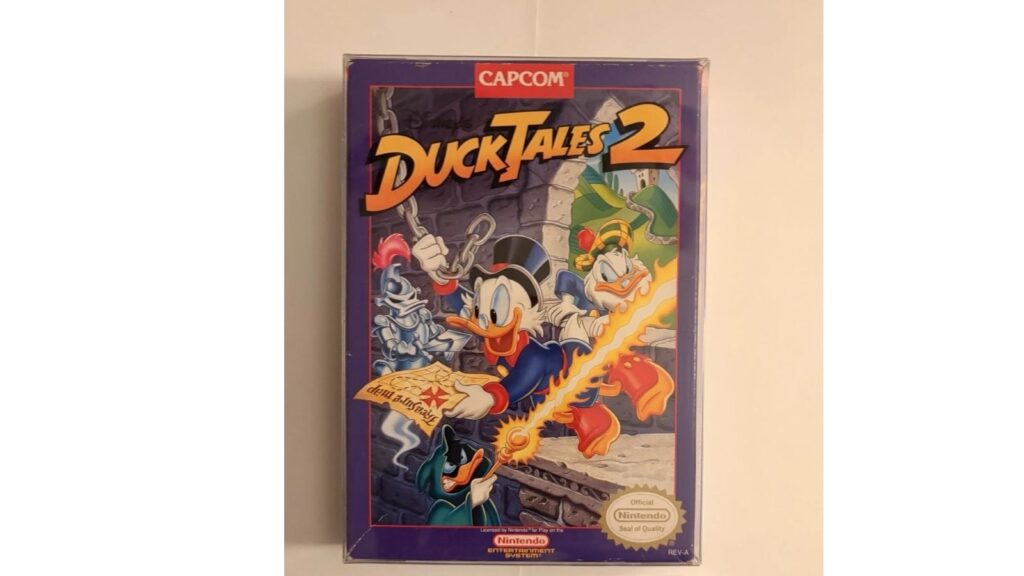
Capcom’s original DuckTales was already a well regarded NES platformer built around Scrooge McDuck’s pogo-cane bouncing mechanic, and its 1993 sequel refined the formula late in the NES’s commercial life, which limited its print run compared to the original game. That smaller print run is exactly why it’s become one of the more expensive standard-release NES cartridges from Disney’s catalog.
A complete copy with the box and manual typically brings up to $600, while a loose cartridge alone sells for a small fraction of that price. Because it arrived so late in the NES’s lifespan, retailers ordered smaller quantities than they had for earlier, more established titles, which is the main driver behind the gap in value.
Reproduction cartridges are a real concern in the retro NES market generally, so check that the label print quality and the cartridge’s pin connector match known authentic examples before paying a premium price. A game that boots but displays glitchy graphics or corrupted saves is a common sign of a repro board rather than an original cartridge.











