
Half dollars barely circulate anymore, which is exactly why so many end up misjudged. People find a roll of them in a parent’s dresser, get handed one in change at a rural gas station, or inherit an old coin jar and just dump the lot into a bank deposit or a coin-counting machine. Most of those coins really are worth fifty cents. Some of them are worth twenty, thirty, or a hundred times that, and a handful of very specific ones are worth a great deal more.
Silver is trading close to $64 an ounce right now, which matters a lot here. Every Kennedy half dated 1964 has real silver in it, and every one dated 1965 through 1970 has some too. That alone puts a floor under their value that has nothing to do with rarity. Layer on a handful of well-documented mint errors, low-mintage years, and collector-only issues, and a stack of ordinary-looking half dollars can turn into real money.
Table of contents
- 1. 1964 Kennedy half dollar
- 2. 1964 Kennedy half dollar, accented hair variety
- 3. 1965 to 1969 Kennedy half dollar
- 4. 1966 special mint set Kennedy half dollar
- 5. 1970-D Kennedy half dollar
- 6. 1974-D Kennedy half dollar, doubled die obverse
- 7. 1776-1976-S Bicentennial Kennedy half dollar, 40% silver
- 8. 1979-S Kennedy half dollar, type 2 proof
- 9. 1982-P Kennedy half dollar, no FG variety
- 10. 1987-P and 1987-D Kennedy half dollar
- 11. 1998-S Kennedy half dollar, matte finish
- 12. 2014-W Kennedy half dollar, 50th anniversary gold
1. 1964 Kennedy half dollar
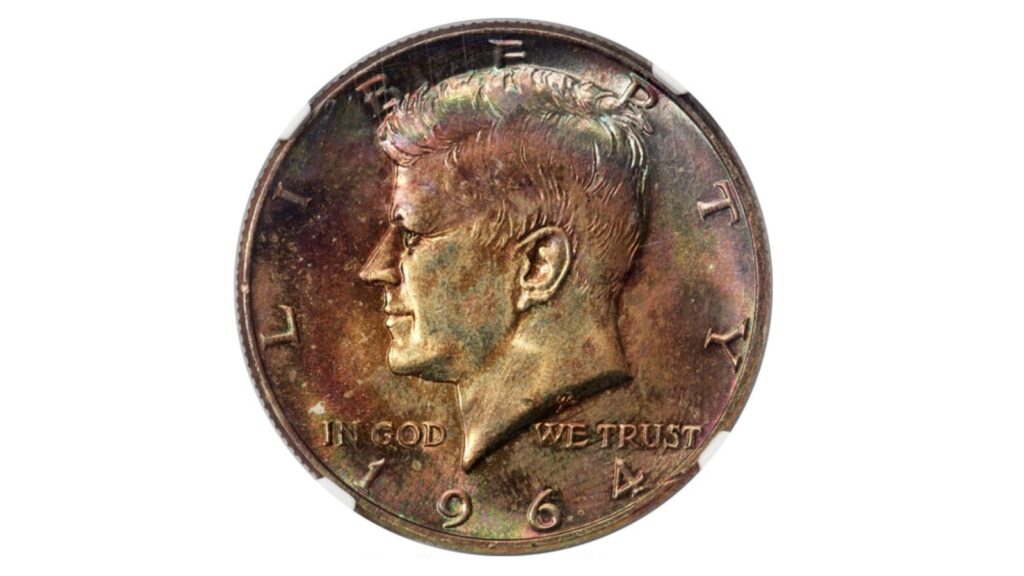
The first year of the Kennedy half dollar is also the last year the coin was struck in 90% silver for general circulation, from both the Philadelphia and Denver mints. Each one contains about 0.36 troy ounces of silver, which puts the melt value at roughly $23 today. Clean, problem-free examples typically sell for a modest amount above that floor, since dealers know exactly what the silver is worth and price accordingly.
These show up constantly in inherited collections, old coin jars, and bank rolls pulled decades ago and never spent. Millions were struck in the months after Kennedy’s assassination as people rushed to save a souvenir of the new coin, so there is no shortage of them. Condition rarely pushes the price much beyond silver value unless the coin is a sharp, fully struck uncirculated piece. Cleaning a silver coin to make it shine actually lowers its value, so leave it alone and let a dealer weigh it.
2. 1964 Kennedy half dollar, accented hair variety
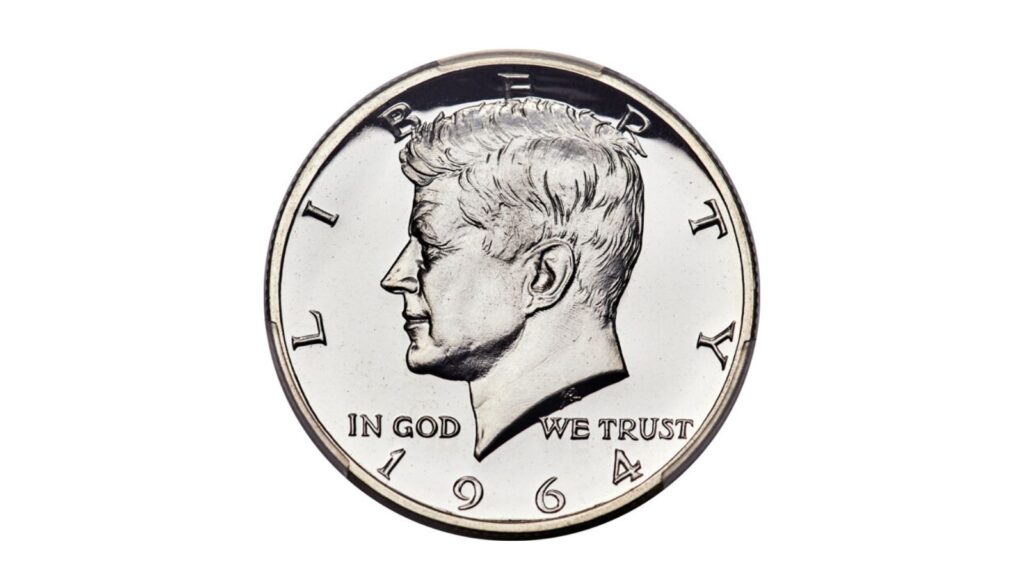
Before the standard 1964 design was finalized, the Mint struck a small batch of proof coins with more defined hair detail above Kennedy’s ear, at Jacqueline Kennedy’s request the design was softened partway through the year. The giveaway on the accented hair version is a weak or broken lower-left serif on the letter I in LIBERTY, and it exists only as a proof issue pulled from 1964 proof sets, never as a coin that circulated.
Population data suggests fewer than 5% of 1964 proofs carry this variety, and pricing tracks grade closely. Modest cameo examples in the PR64 to PR66 range have sold for well under $200, while gem cameo and deep cameo coins in PR68 and PR69 have brought $1,000 to over $2,600. The visual difference from a standard 1964 proof is small enough that a raw coin should go to a grading service before anyone pays variety prices for it. If you have an old 1964 proof set tucked away, it is worth a close look with a loupe.
3. 1965 to 1969 Kennedy half dollar
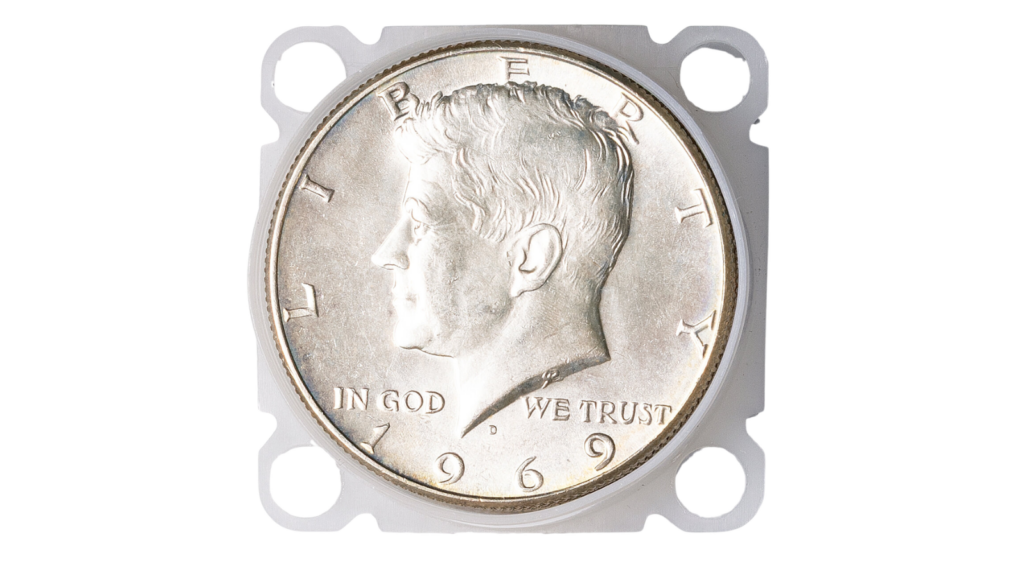
When the Mint pulled silver out of dimes and quarters in 1965, half dollars kept a reduced silver content for a few more years. Coins dated 1965 through 1969 are 40% silver, with about 0.148 troy ounces of silver each, giving them a melt value around $9.50 today. Circulated examples typically sell a little above that.
These are easy to overlook because they look almost identical to the fully clad half dollars that came after 1970. The edge is the tell: a 40% silver half shows a duller gray edge with no sharp copper stripe, while the clad version shows a clean copper line running through the middle. No single date in this run is scarce, so value here is really a silver content story, but it is a real one that plenty of people miss when they toss a mixed bag of change into a coin machine.
4. 1966 special mint set Kennedy half dollar
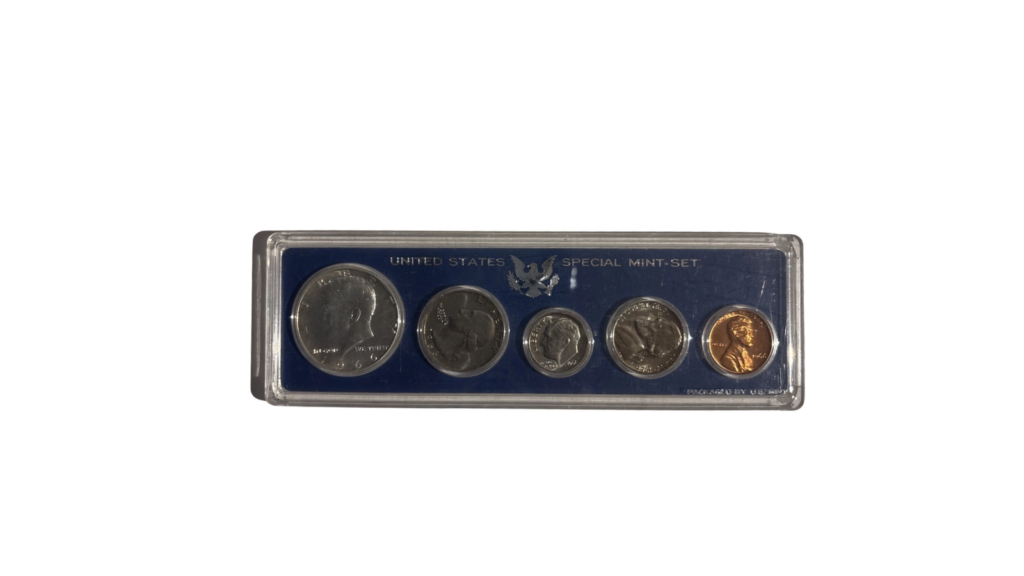
The Mint skipped proof sets entirely from 1965 through 1967 because of a nationwide coin shortage, and issued Special Mint Sets (SMS) instead, struck with a sharper, semi-reflective finish on higher-tonnage presses. A plain, problem-free 1966 SMS half in typical grades brings roughly $15 to $40, which is already more than a common business-strike coin from the same year.
The real money is in the doubled die varieties struck that year, where the design was doubled slightly during the die-making process. These varieties bring anywhere from $25 to $150 in most grades, with the scarcest combination, a doubled die paired with missing designer initials on the reverse, bringing $100 to well over $1,000 in top condition. None of this touches the ultra-rare 1964 SMS mentioned earlier, which is a different, far scarcer issue entirely. If you have a 1966 mint set sitting in a drawer, it is worth pulling the half dollar out and checking it under magnification before assuming it is just another common coin.
5. 1970-D Kennedy half dollar
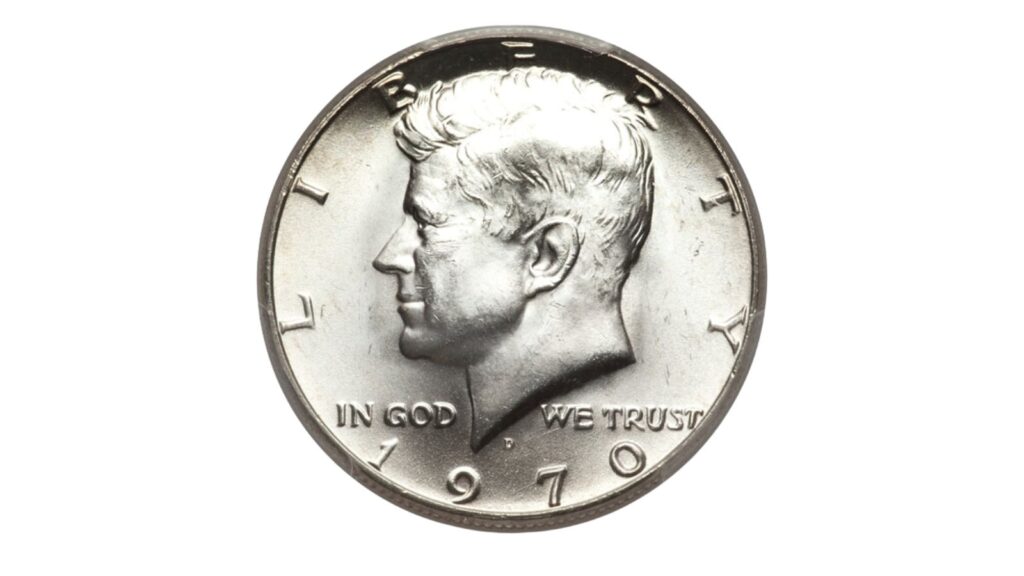
By 1970, half dollars had become so unpopular in daily transactions that the Mint stopped striking them for general circulation altogether. The 1970-D, the last of the 40% silver Kennedy halves, was distributed only inside Uncirculated Mint Sets, with a mintage of about 2.15 million. Typical uncirculated examples bring $15 to $30, several times the coin’s silver melt value, and sharp gem examples graded MS65 or better have sold for $150 to $700.
Because it never circulated, every legitimate 1970-D traces back to a broken-up mint set rather than pocket change, though plenty of people have spent them anyway without realizing what they had. Look for the D mint mark under Kennedy’s neck and check that the coin sits flat with no cloudy haze or scratches from handling, since even minor wear knocks the price back toward melt.
6. 1974-D Kennedy half dollar, doubled die obverse
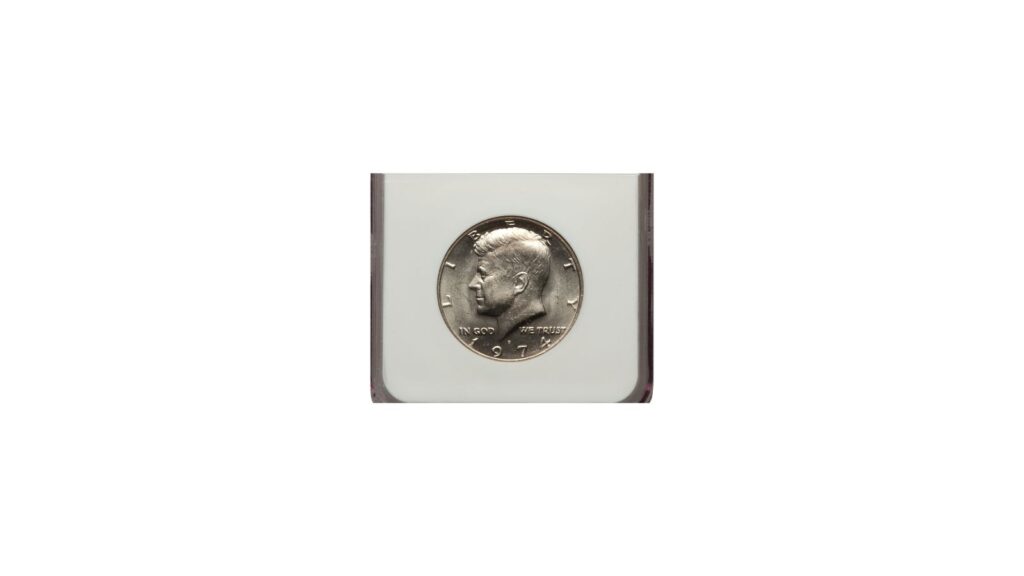
This is one of the more dramatic doubled dies in the entire Kennedy series, ranked among the 100 greatest U.S. modern coins for how visible the doubling is to the naked eye. It shows up strongest in the words IN GOD WE TRUST, the word LIBERTY, and the date, with TRUST showing the heaviest doubling of all.
An ordinary 1974-D without the doubling is worth face value. With it, values in low mint state run $20 to $30, climbing to $60 to $75 in the MS65 to MS66 range, and $200 to $300 for the rare MS67 examples that occasionally surface. A magnifying glass or a phone camera zoomed in on the lettering is usually enough to spot it. These have turned up in ordinary rolls and 1974 mint sets, so it is worth checking any 1974-D half dollar you come across rather than assuming it is common.
7. 1776-1976-S Bicentennial Kennedy half dollar, 40% silver
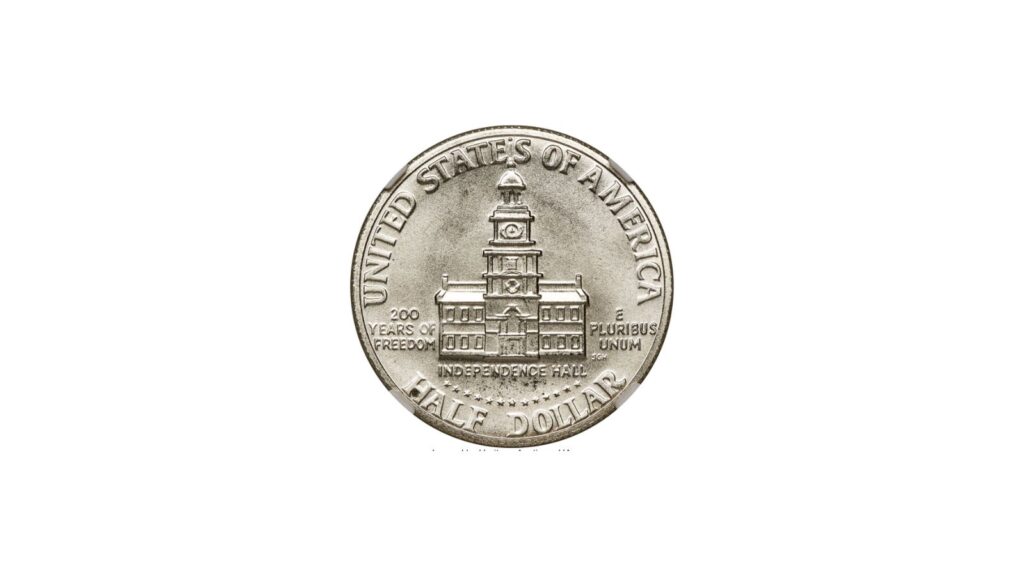
For the nation’s bicentennial, the Kennedy half dollar carried a special dual date and a new reverse showing Independence Hall instead of the usual eagle. Most of these are common copper-nickel clad coins worth little more than a few dollars even in sharp uncirculated condition. The version worth checking for is the San Francisco-minted 40% silver issue, sold only through special mint and proof sets, which typically brings $12 to $25 in brilliant uncirculated or proof condition.
Telling the two apart takes a quick weight or edge check. The silver version weighs 11.5 grams against 11.34 grams for the clad coin, and its edge shows the duller gray tone of silver rather than a sharp copper stripe. Both carry an S mint mark, so the mint mark alone will not tell you which one you have. If you have an old bicentennial mint set, this is the coin in it actually worth pulling aside.
8. 1979-S Kennedy half dollar, type 2 proof
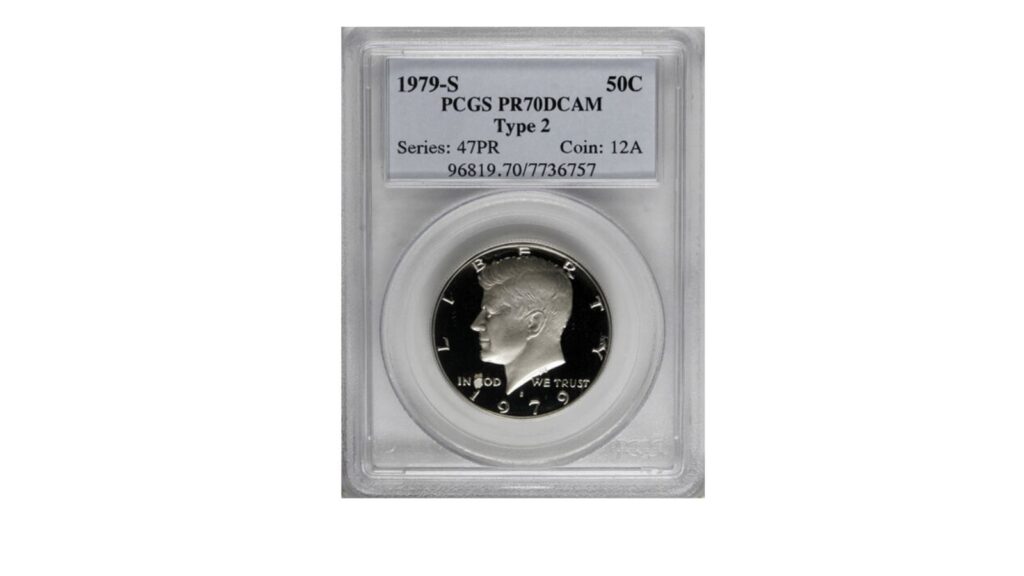
Partway through 1979, the Mint switched to a new punch for the S mint mark on proof coins, creating two distinct versions within the same year. The Type 2, nicknamed the clear S, has neat, evenly formed serifs, while the more common Type 1 mint mark looks slightly blobby and filled in by comparison. It exists only in proof sets, never as a circulating coin.
Individual Type 2 examples commonly bring $10 to $25, a real premium over the standard Type 1 proof from the same year, and top-graded PR69 and PR70 examples can bring considerably more. The visual difference is subtle enough that misattributed raw coins are common on the secondary market, so a certified example from a grading service is the safer bet if you are buying rather than just checking what you already have. If you have an old 1979 proof set, the half dollar inside is worth a close look at the mint mark style.
9. 1982-P Kennedy half dollar, no FG variety
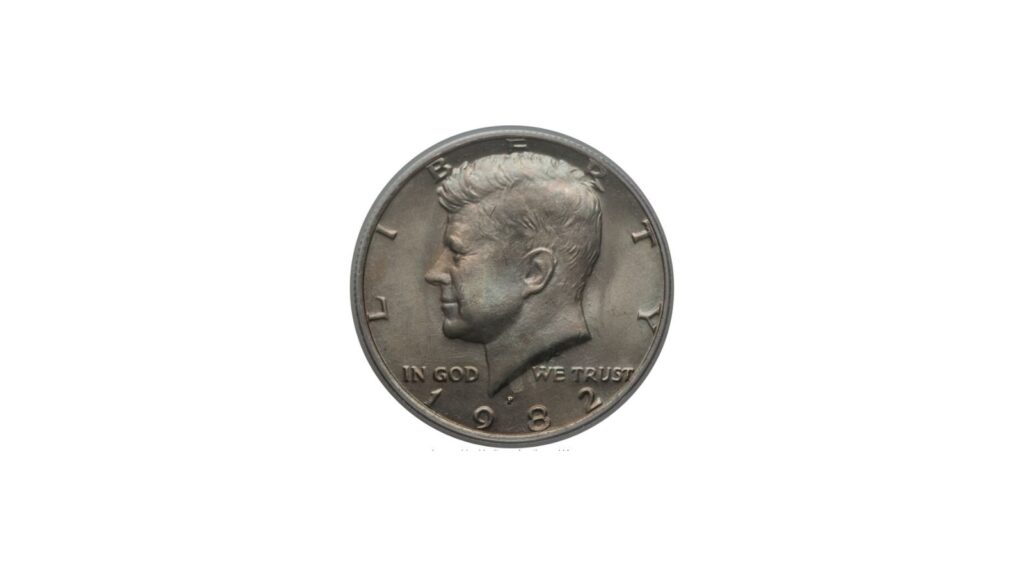
Worn or overpolished dies sometimes stripped away the small FG initials that reverse designer Frank Gasparro placed near the eagle’s claw, and 1982-P is the most commonly found year where this happened. Unlike a lot of collector varieties, these genuinely turn up at face value in circulation, coin rolls, and bank bags, which makes this one worth actually checking your change for rather than only old sets.
Typical mint state examples bring around $20 to $75, with a rare top-graded MS67 example having sold for close to $2,800. The same missing-initials error also turns up on the far scarcer 1966 Special Mint Set and 1972-D issues, both of which carry considerably higher prices into the hundreds and, in top grades, the thousands of dollars. Check the reverse near the eagle’s right claw with a loupe. If the FG initials simply are not there, it is worth a second look no matter which year is on the coin.
10. 1987-P and 1987-D Kennedy half dollar
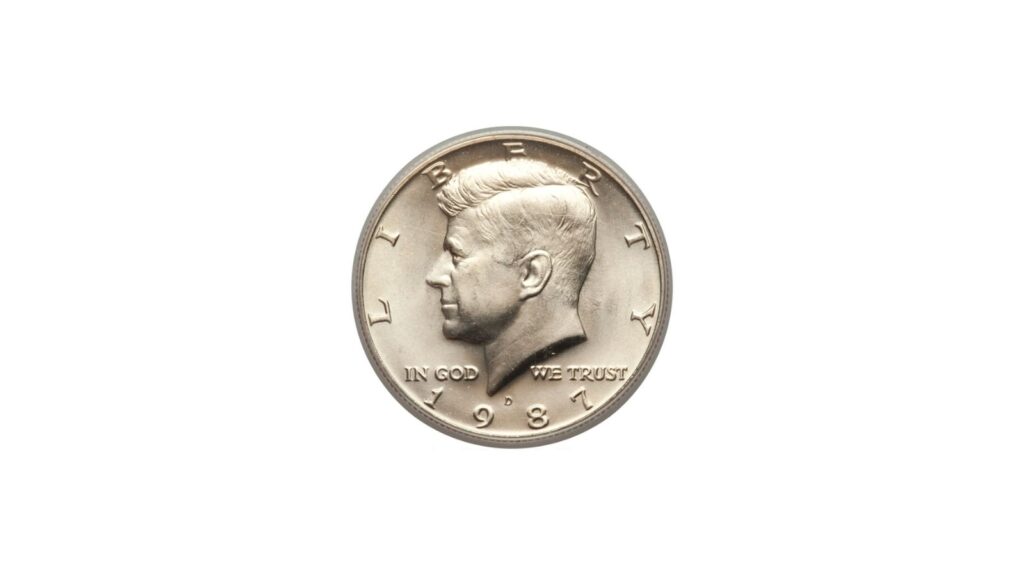
By 1987, demand for half dollars in everyday transactions had dropped so low that the Mint declined to strike any for general circulation at all, the first year that happened. Both the Philadelphia and Denver coins that year exist only because they were included in annual Uncirculated Mint Sets, with identical mintages of just under 2.9 million each.
Loose singles in ordinary mint-set condition are worth only a few dollars, but problem-free examples graded MS66 have sold for $20 to $30, MS67 examples for $100 to $250, and a small handful of exceptional MS68 coins have brought several thousand dollars at auction. A matched pair still sealed in its original 1987 mint set card holds together better than two loose coins and tends to appeal more to collectors chasing the complete date run. If you have a mint set from that year, do not assume the half dollar inside is worthless just because it never circulated.
11. 1998-S Kennedy half dollar, matte finish
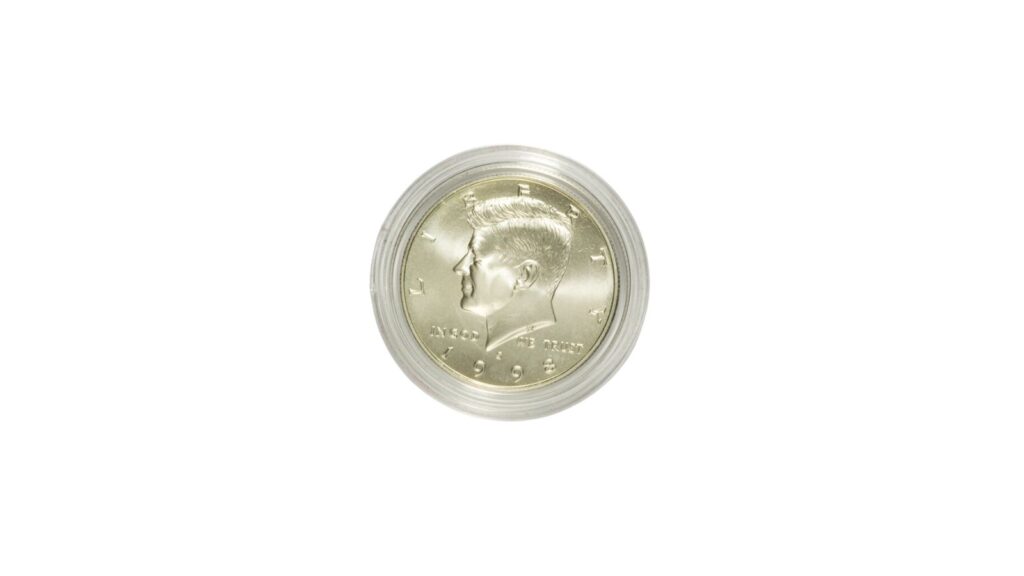
This one was never sold on its own. The Mint issued it only as part of a two-coin set marking the 30th anniversary of Robert F. Kennedy’s death, paired with an uncirculated RFK silver dollar, with a mintage of just 62,000 half dollars, the lowest of any Kennedy half ever struck. It carries an unusual satiny matte finish instead of the mirror-like shine of a standard proof.
Melt value alone runs close to $23 given its 90% silver content, but the coin itself commonly brings well beyond that, typically in the $70 to $150 range in problem-free condition, with top-graded examples pushing higher. Original two-coin sets are frequently broken apart and sold separately, so a half dollar offered alone at a low price is worth double-checking for authenticity. If you or a relative bought one of these sets back in 1998, it is worth far more than the $59.95 it originally cost.
12. 2014-W Kennedy half dollar, 50th anniversary gold
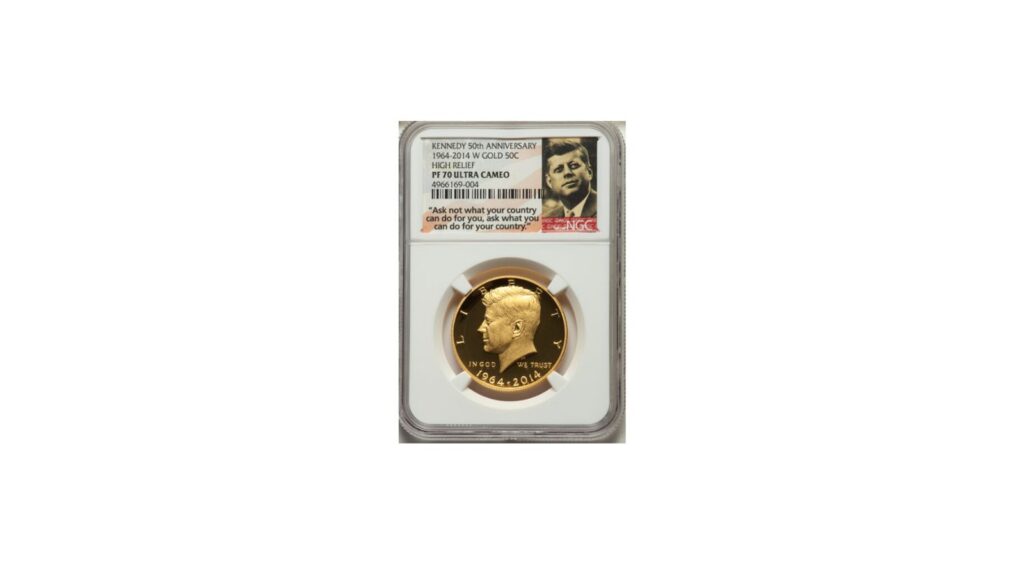
This is the one aspirational entry on this list, and it is worth flagging clearly as such. In 2014, the Mint struck a one-year-only gold version of the Kennedy half to mark 50 years since the coin’s debut, using the original 1964 design in a 24-karat, three-quarter-ounce proof coin. Mintage was 73,772, and it was sold directly by the Mint as a collector item, never intended for circulation or ordinary pocket change.
With gold trading near $4,400 an ounce, melt value alone runs about $3,300, and problem-free examples typically sell a modest amount above that. You will not find this one in a coin jar, but if you or a family member bought one directly from the Mint back in 2014 as a keepsake or investment, it is worth checking today’s gold price before assuming it is only worth what was paid for it originally.
Most half dollars really are just fifty cents. The ones on this list are the exceptions worth a second look before they end up spent, melted down for scrap, or dropped in a coin machine for a fraction of what they are actually worth.











