
Your uncle left behind an old cigar box, and mixed in with the buttons and expired coupons are a dozen half dollars nobody in the family has looked at twice. Most people assume a fifty-cent piece is worth exactly that, and hand them over at the bank without a second thought.
That’s usually a mistake. The half dollar has one of the strangest histories of any American coin denomination. It carried real silver all the way through 1970, six years after dimes and quarters went fully clad, which means a huge range of ordinary-looking half dollars from the mid-20th century are worth many times their face value just for the metal in them. On top of that, a handful of specific dates and varieties are worth real money to collectors, and most of them are genuinely findable rather than locked away in museum cases.
Silver is trading close to $68 an ounce right now, well above where it sat a year ago, which means the floor under every silver half dollar on this list has climbed with it. Here are twelve worth checking before you spend them, starting with what you might already have in a drawer and ending with a genuine long shot worth chasing down.
1. Any half dollar dated 1964 or earlier
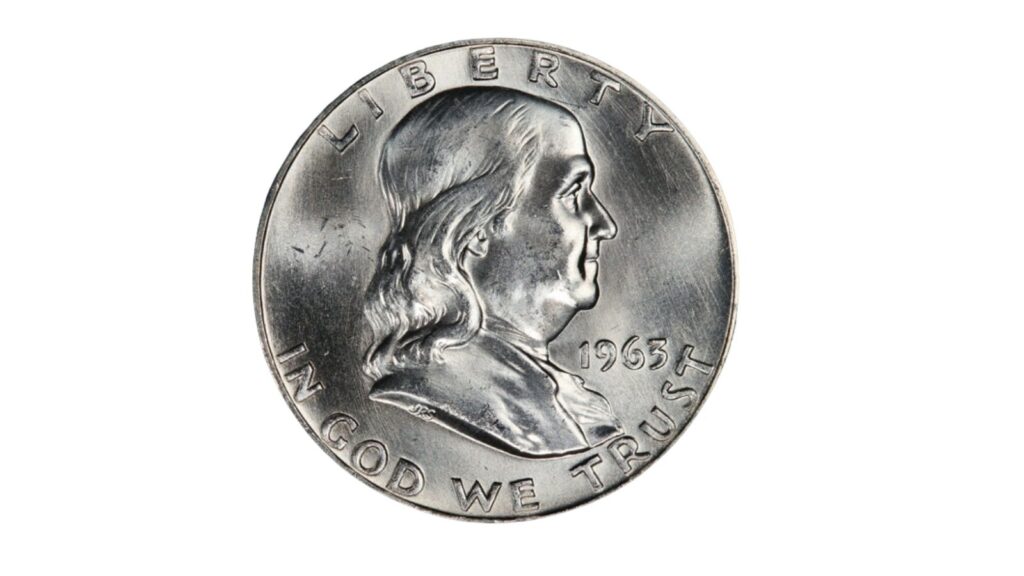
Before you sort through a jar of change looking for anything special, check the date first. Every half dollar minted in the United States before 1965, whether it’s a Walking Liberty, a Franklin, or the very first Kennedy, was struck in 90 percent silver. That single fact puts a real floor under the coin no matter how common the date is or how beat up it looks.
At today’s silver price, that floor sits at around $24 per coin, and it moves with the market, so it’s worth checking again before you sell. A coin with heavy wear, a bent rim, or even a small hole is still worth that silver content as long as it hasn’t been plated or altered. The only things that erase the value are a drill hole through the design, harsh cleaning that leaves scratches, or a later copper-nickel coin with an added or re-engraved date meant to pass as older, which happens more often than people expect.
The fastest way to sort a mixed pile is to check the edge. A silver half dollar shows a solid, uniform edge all the way around. A modern clad half, made from 1971 onward, shows a thin stripe of copper sandwiched between the outer layers. Once you’ve pulled the silver coins out, you can start checking specific dates for anything worth more than melt.
2. 1964 Kennedy half dollar
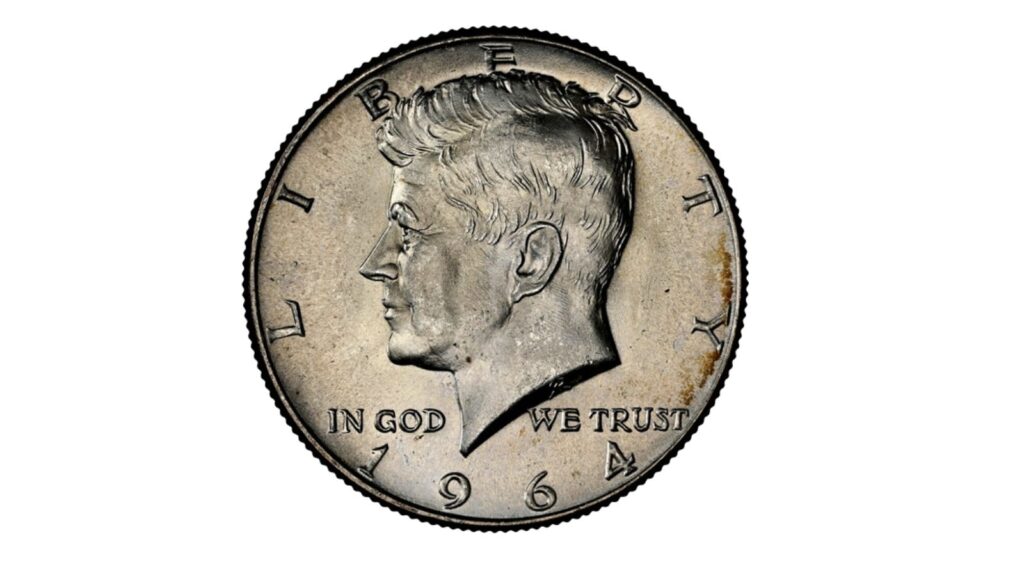
The Kennedy half dollar went into production within months of President Kennedy’s assassination in November 1963, and the public’s reaction to it looked more like hoarding than spending. Banks couldn’t keep them in stock. That first year, 1964, is also the only year the coin was struck in 90 percent silver, the same composition used on dimes and quarters before the switch to clad coinage the following year.
Each one contains just over a third of an ounce of pure silver, which puts the melt value at roughly $24 right now. Because so many were saved rather than spent, most surviving 1964 halves are in decent shape, and clean circulated examples typically sell for a modest amount over that silver floor. Uncirculated coins with a sharp strike bring meaningfully more.
There’s one variety worth knowing: the Accented Hair proof, where the detail above Kennedy’s ear is unusually crisp, a look the Mint reportedly softened after Jacqueline Kennedy weighed in. Those bring several times the price of an ordinary proof, but you need a professional to confirm it since the difference is subtle. For the coin most people will actually find in an old collection or a coffee can of change, the silver content is the real story, and it’s already worth close to fifty times face value.
3. 1965 to 1970 Kennedy half dollar
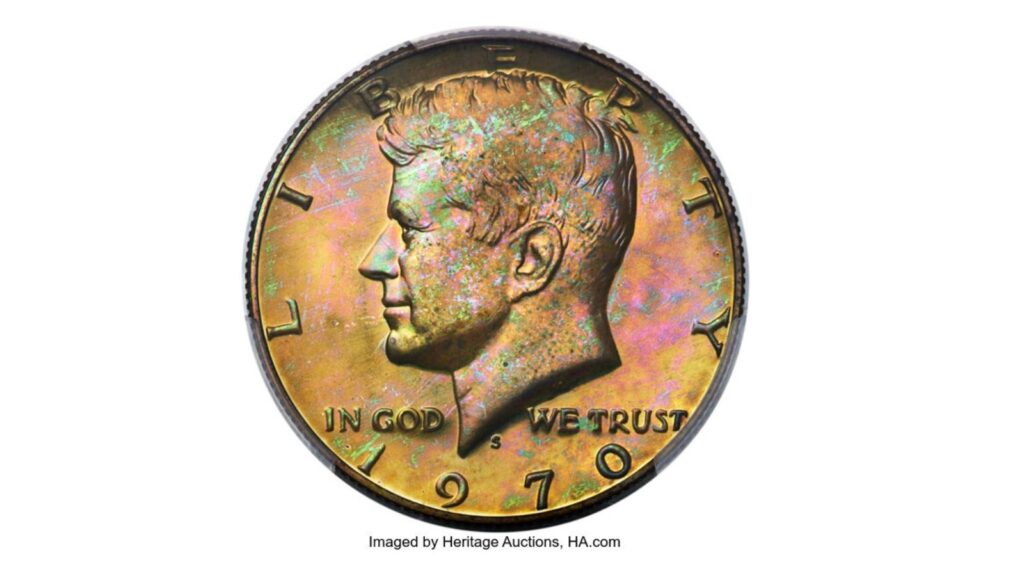
When the Treasury pulled silver out of dimes and quarters in 1965, the half dollar got a partial reprieve. Kennedy halves dated 1965 through 1970 kept a 40 percent silver content, a compromise that lasted six years before the denomination went fully clad in 1971.
These coins are easy to overlook because they look almost identical to the copper-nickel halves that came later, but the date tells you everything you need to know. Any Kennedy half dated 1965 through 1970 contains silver, worth roughly $10 per coin at today’s prices. If you want a visual check, the edge on a 40 percent silver half shows a thinner, less obvious copper line than the coins struck from 1971 onward, though the date is still the more reliable test.
Most dates in this run are common and trade close to that silver floor. The one exception is the 1970-D, which never circulated at all and is worth pulling aside separately, since it commands far more than its silver content alone. Beyond that, these are simple: pull anything dated 1965 to 1970 out of a coin jar, and you’ve got real silver in your hand even if it doesn’t look like much.
4. 1976 Bicentennial half dollar
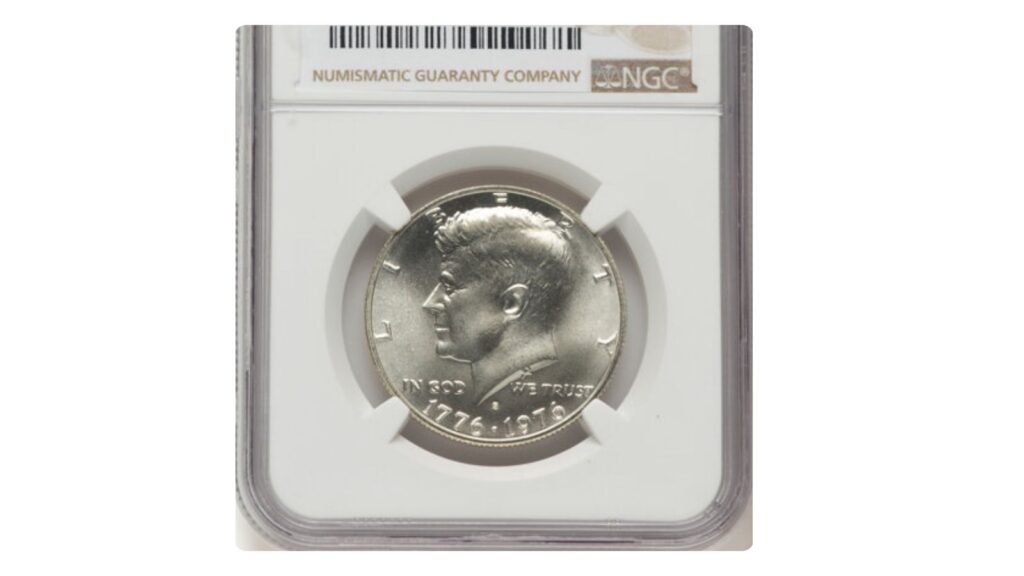
Most people have handled one of these without realizing it. The Bicentennial half dollar, marked with the dual date 1776-1976 and a picture of Independence Hall on the reverse, was struck for general circulation at Philadelphia and Denver, and huge numbers from that run are still floating around in old change jars. On their own, these clad versions are worth little more than face value unless they’re uncirculated with a sharp strike, in which case they can bring a few dollars.
The version worth actually hunting for is different. The Mint also struck a batch of Bicentennial halves in 40 percent silver at the San Francisco mint, sold separately in three-coin collector sets rather than released into circulation. These carry the same silver content as the 1965 to 1970 Kennedy halves, and clean examples still in decent shape typically bring $15 to $25.
The giveaway is the finish and the mint mark. Look for an “S” on the front of the coin, above the date, and check that the surface has a slightly different, satiny look compared to the bright clad coins from circulation. If someone in your family bought a Bicentennial set back in 1976 as a keepsake, it’s worth digging out of the closet and taking a proper look.
5. Franklin half dollar with Full Bell Lines
Franklin half dollars ran from 1948 to 1963, and every one of them is 90 percent silver, so even a beat-up common date is worth its melt value of around $24 today. That alone makes them worth pulling out of any mixed lot of old coins. But the series has a specific feature that separates an ordinary coin from a genuinely collectible one, and it’s easy to check without any special equipment.
Flip the coin over and look at the base of the Liberty Bell. If the horizontal lines running across the bottom are complete and unbroken, the coin qualifies for a Full Bell Lines designation from professional grading services, and that designation can multiply the coin’s value several times over in uncirculated condition. Weak strikes were common, especially on coins struck at San Francisco in the early 1950s, so plenty of Franklin halves that look sharp at a glance still fall short of Full Bell Lines under close inspection.
This is really a game for uncirculated coins, since wear on a circulated example destroys the fine detail needed to judge the bell lines at all. If you’ve inherited a roll or an album of Franklin halves that look clean and unworn, it’s worth having a few of the better-looking ones checked by a grading service before selling the group as junk silver.
6. 1970-D Kennedy half dollar
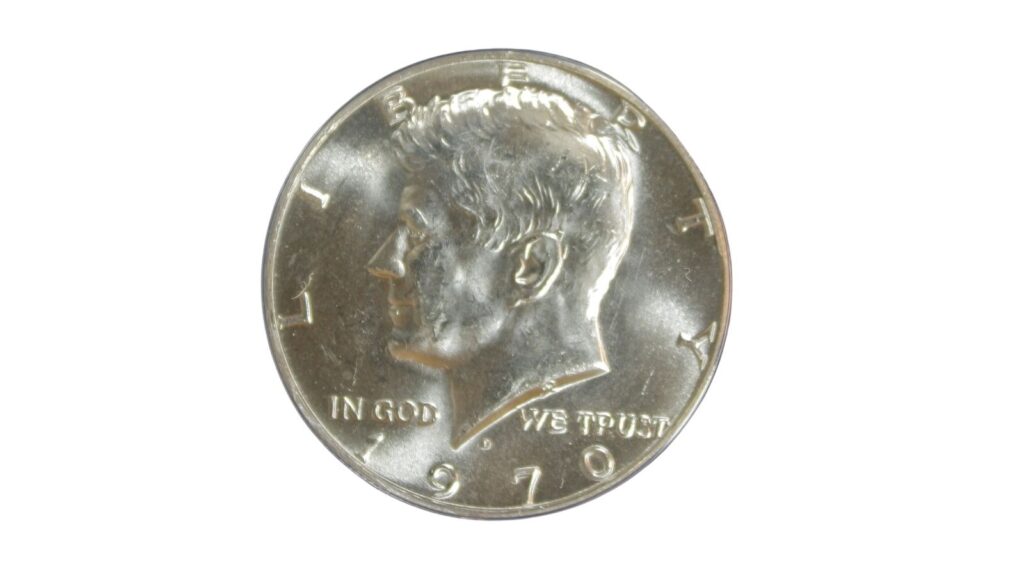
This one has a strange story. In 1970, the Mint decided it had struck enough silver-clad half dollars to meet demand, so the only business-strike Kennedy halves made that year came out of Denver, and every one of them went straight into that year’s mint sets instead of into circulation. Nobody announced this ahead of time, and by the time collectors realized what had happened, the window to order sets at face value had already closed.
With a mintage of just over 2.1 million, the 1970-D is the key date of the entire 40 percent silver run. Because it was never released into circulation, you won’t find one worn smooth from years in a cash register. What you will find are examples pulled from old mint sets, usually in modest mint-state condition with visible handling marks from decades in cardboard packaging. Coins like that commonly sell in the $25 to $50 range, while genuinely clean, well-preserved examples can bring $200 or more, and the finest known specimens are valued in the thousands.
The only way to get one is to find an actual 1970 mint set and check the half dollar inside, since no 1970-D half ever passed through a bank teller’s drawer.
7. 1955 “Bugs Bunny” Franklin half dollar
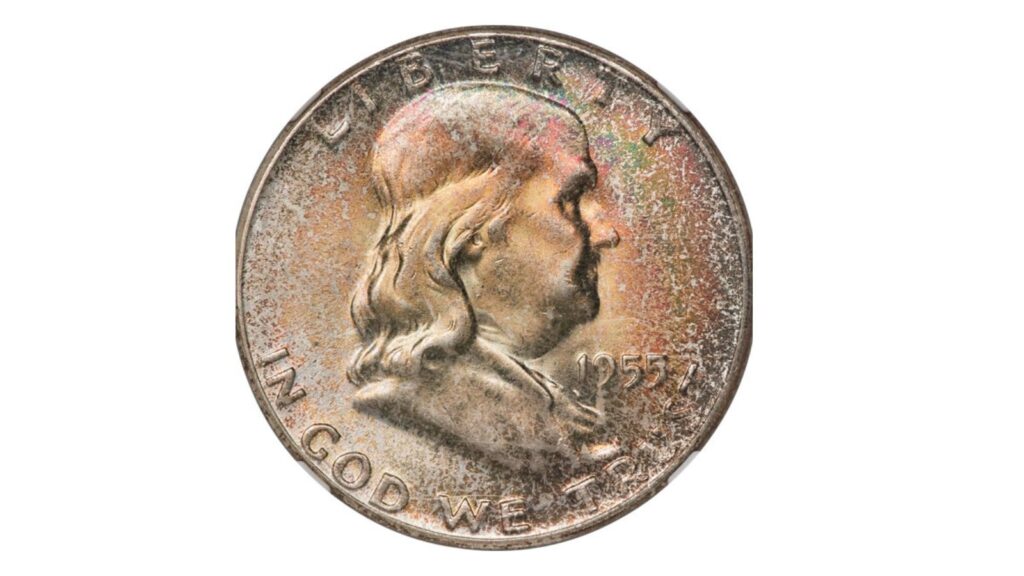
Some of the best coin nicknames come from genuine accidents, and this is one of them. On a batch of 1955 Franklin half dollars struck in Philadelphia, the obverse and reverse dies clashed together without a coin between them, and the impression of the eagle’s wing on the reverse die transferred onto Benjamin Franklin’s upper lip on the obverse. Every coin struck afterward carries a small raised mark that looks uncannily like a pair of buck teeth.
It’s a genuinely charming variety, and it comes from the lowest-mintage year in the entire Franklin series, since 1955 saw just under 2.5 million coins struck. Typical uncirculated examples with the clash mark trade for $50 to $100, a real premium over an ordinary Franklin half’s silver value. Certified examples in gem condition with Full Bell Lines climb into four figures, and the finest known coins are valued at several thousand dollars.
The mark shows up clearly without magnification on uncirculated coins, so it’s worth a close look at any 1955 Franklin half sitting in a family collection. It doesn’t appear on proof coins, only business strikes, and it’s specific to Philadelphia’s 1955 production, so a worn example from another year won’t show it no matter how the light hits it.
8. Barber half dollar
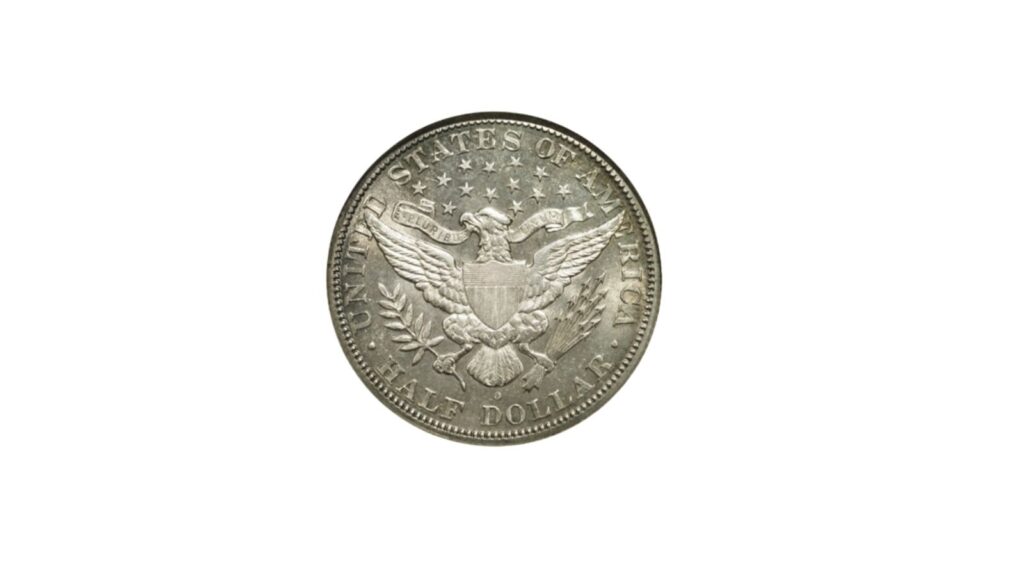
Struck from 1892 to 1915, the Barber half dollar gets overshadowed by the more famous Walking Liberty and Franklin coins that followed it, but it’s a genuinely findable piece of 90 percent silver history. A common date in worn condition is worth $20 to $45, tracking close to silver melt value with a modest bump for collector interest. That’s the floor for nearly any Barber half you come across, no matter how rough it looks.
Where the series gets interesting is the branch mint issues from San Francisco and New Orleans, along with the final three years of Philadelphia production. Coins like the 1892-S, the 1901-S, and the low-mintage 1913, 1914, and 1915 Philadelphia issues bring anywhere from the low hundreds to several thousand dollars even in circulated grades, and the elusive 1892-O with a doubled “micro O” mint mark is a genuine five-figure coin in top condition.
Barber halves wore down fast in circulation, since the design offers almost no protection for the high points, so even coins with moderate wear can carry real premiums if the date is right. Check the mint mark just below the eagle on the reverse, and don’t clean anything you find, since scrubbing a Barber half destroys the light, even wear pattern collectors look for and can cut the value substantially.
9. Seated Liberty half dollar
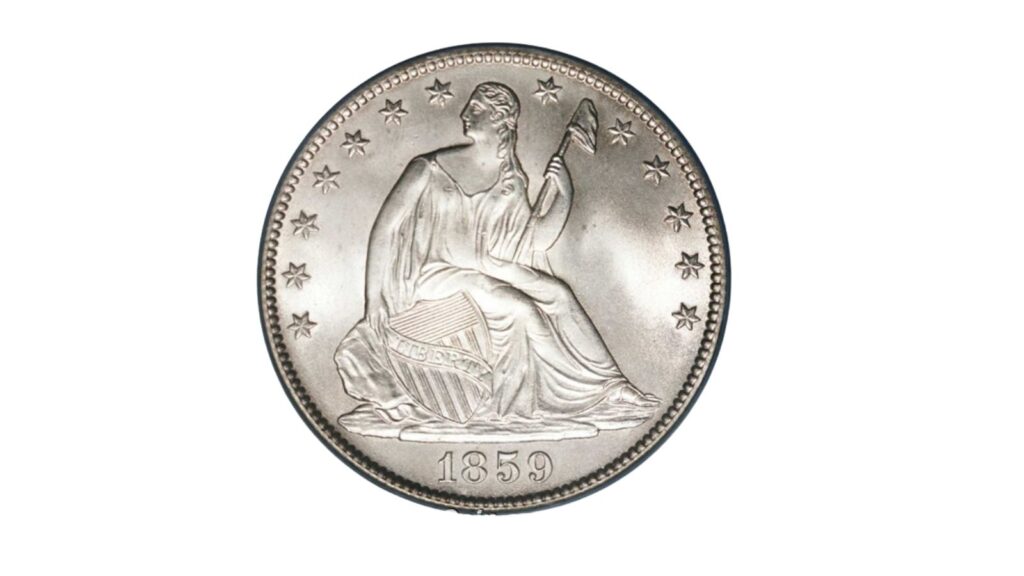
The Seated Liberty design ran on half dollars from 1839 to 1891, more than fifty years, and it’s the coin most likely to turn up in a genuinely old family collection rather than a modern coin jar. These are less common finds than 20th-century half dollars simply because of their age, but a huge number were struck and plenty survive in modest, well-worn condition.
Take the “Arrows at Date” version struck from 1853 to 1855, when the Mint briefly reduced the coin’s silver weight and marked the change with small arrows next to the date. A worn example in Good to Very Good condition typically sells for around $60, and a coin with moderate wear that still shows most of the design detail brings $120 to $140. Coins struck during the Civil War years and anything from the short-lived Carson City mint carry real premiums on top of that.
Seated Liberty halves are 90 percent silver like everything else on this list, so even a low-grade example clears its melt value easily. The bigger risk with a coin this old is improper cleaning from decades ago, which shows up as unnatural brightness or fine scratches across the fields. A coin with old, even, undisturbed toning is worth more than a shiny one, even if the shiny one looks nicer at first glance.
10. 1916 Walking Liberty half dollar
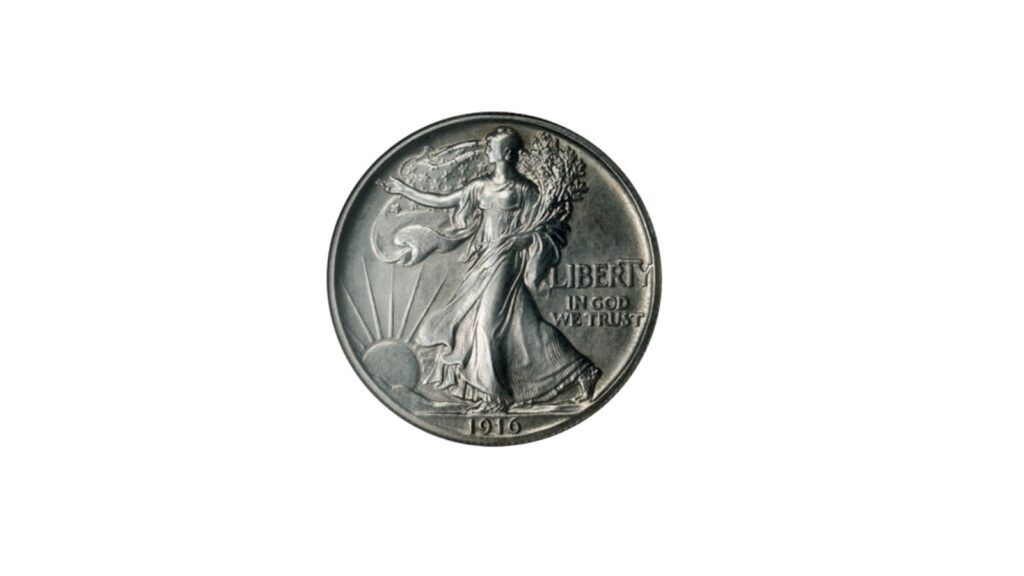
Adolph Weinman’s Walking Liberty design, showing Liberty striding toward a rising sun with an eagle perched on the reverse, is widely considered one of the most beautiful coins the Mint has produced. It debuted in 1916, and because it was a brand-new design competing with an already-familiar Barber half dollar still fresh in people’s pockets, mintages that first year were relatively low at all three mints that struck it.
An average circulated 1916 half dollar, from either Philadelphia or Denver, is worth around $90, well above its silver melt value, simply on the strength of being a first-year coin that collectors want for type sets. Uncirculated examples climb fast from there, often bringing $800 to $1,200 or more depending on how sharp the strike is. The San Francisco issue is scarcer than the other two and commands a further premium.
On 1916 and early 1917 halves, the mint mark sits on the obverse, near Liberty’s lower right, rather than on the reverse where it moved later in the series, so check both sides before assuming a coin has no mint mark at all. As with any early Walker, a flat, worn-smooth Liberty figure with no leg or arm detail left is worth much less than one that still shows even modest remaining design.
11. 1938-D Walking Liberty half dollar
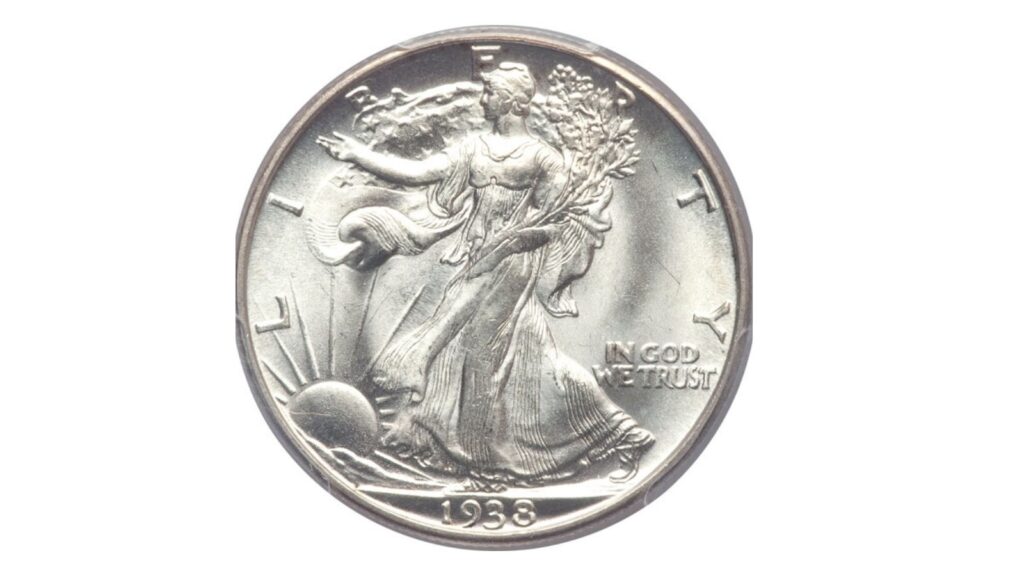
By the late 1930s, the Walking Liberty half dollar was well established and mintages had grown into the millions almost everywhere, which makes the 1938-D stand out. Denver struck fewer than 500,000 that year, the third-lowest mintage of the entire series behind only the two 1921 issues, and it’s a coin that quietly rewards anyone who bothers to check dates on old half dollars instead of just weighing them for silver.
An average circulated 1938-D brings around $89, several times the silver melt value of an ordinary Walker from the same decade. That gap only widens in better grades, since collectors had started saving coins by the roll around this time, which means clean uncirculated 1938-D halves are easier to find than you’d expect for a low-mintage date, and they trade for $600 to $950 or more depending on eye appeal.
The mint mark sits on the reverse, just above and to the left of the “half dollar” inscription, and it’s small enough to miss if you’re not looking closely. Because this date carries a real premium in any condition, it’s one of the clearer examples of an ordinary-looking old half dollar turning out to be worth meaningfully more than the coin sitting next to it in the same drawer.
12. 1921-D Walking Liberty half dollar
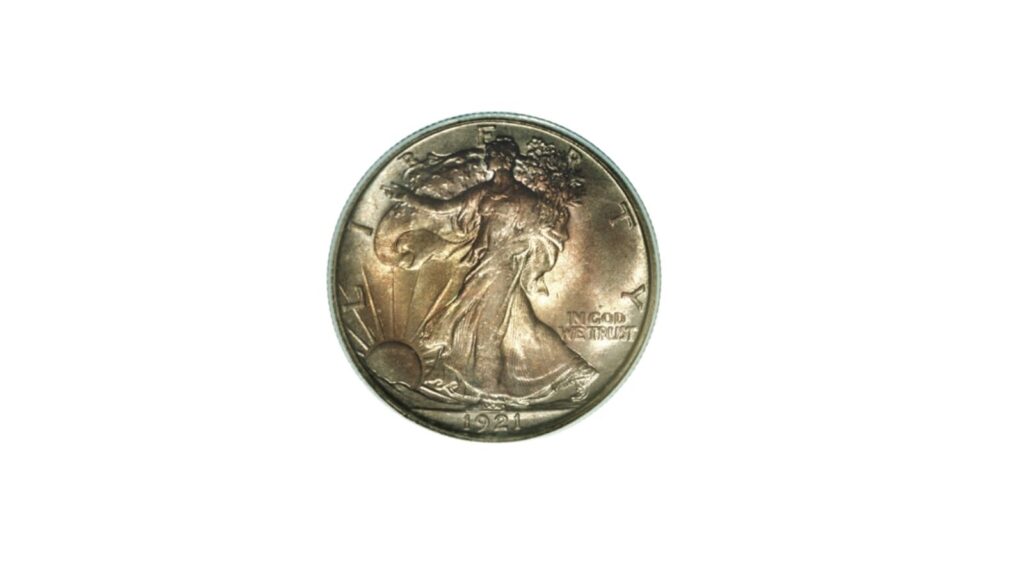
Every collecting series has one date that separates a nice find from a genuine grail, and for Walking Liberty half dollars, this is it. Denver struck only 208,000 in 1921, the lowest mintage of the entire 1916 to 1947 run, during a post-war slump when demand for new coinage had collapsed. Almost every one that survived saw real circulation, since nobody at the time had reason to think it would become valuable.
Even a heavily worn example in Good condition, with the design mostly flattened, is worth well over $100 purely as a key date, and an average circulated example across all grades runs around $450. Anything approaching uncirculated condition moves into five figures, and this is genuinely one of those coins where a dealer’s eyes will light up the moment the mint mark comes into view.
This is the one entry on this list that counts as a true long shot rather than a realistic weekend find. It’s out there, sitting in old collections and estate sale boxes where nobody has checked the date closely, but the odds of turning one up in a random jar of change are low. Authentication matters enormously here too, since the low mintage has made this date a target for altered mint marks. Any example that looks promising is worth professional grading before you get too attached to the number in your head.











