
A worker earning $25 an hour who logs 10 hours of overtime a week is paid $37.50 an hour for that time right now. A bill introduced in the Senate this month would push that same hour to $50 instead, worth about $6,500 more a year for that one worker.
Senator Ruben Gallego of Arizona introduced the Double the Wage for Overtime Act on August 5, and if it becomes law, it would be the first change to the federal overtime rate since 1938. A matching bill has already been sitting in the House since June, backed by a long list of labor unions and progressive advocacy groups.
Whether any of that money actually lands in your paycheck depends heavily on your job, your current pay stub, and whether Congress can move a bill with zero Republican support anywhere close to a vote.
Table of contents
What the bill would actually change
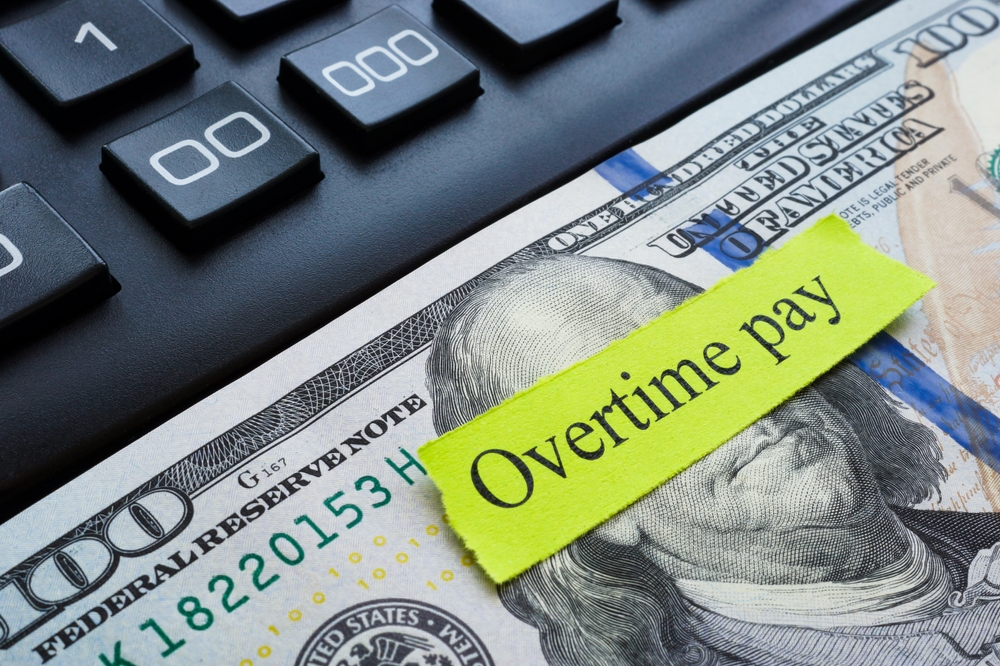
Federal law has required employers to pay time and a half for hours worked past 40 in a week since the Fair Labor Standards Act passed in 1938. That’s meant a worker earning $20 an hour gets $30 an hour for overtime, not $40. The Double the Wage for Overtime Act would rewrite that formula, requiring employers to pay double a worker’s regular rate, not one and a half times it, for every hour worked beyond 40 in a week.
The change wouldn’t happen overnight even if the bill passes. Employers would get 180 days to adjust payroll and scheduling before the new rate kicked in. And passing is a long way off. The Senate bill was just introduced and referred to committee, and it still needs to clear the full Senate, the full House, and get a presidential signature before it changes anyone’s paycheck.
Not everyone who works overtime is covered by this
This bill raises how much overtime pays. It doesn’t touch who actually qualifies for overtime in the first place, and that gap matters more than it sounds like it should.
Under current law, salaried workers earning less than $684 a week, or $35,568 a year, are automatically guaranteed overtime pay no matter their job title. Salaried workers earning more than that can be classified as exempt if their job involves enough management, administrative, or professional responsibility, which means they get no overtime at all, doubled rate or not.
Hourly workers are a different story. Manual laborers, including construction workers, mechanics, and factory floor employees, are guaranteed overtime under federal law no matter how much they earn, and so are police officers, firefighters, and paramedics. Their eligibility for overtime was never in question, only the rate is.
Which workers would see the biggest jump

An estimated 13.4 million workers would benefit if this bill became law. The ones most likely to actually see that money work in jobs where overtime is routine and hard to cut: manufacturing lines, trucking and logistics, hospital floors, warehouses, construction crews, and public safety jobs like firefighting and policing.
A hospital can’t run a night shift two nurses short. A trucking company can’t always pull a second driver out of thin air. Those are the jobs where employers are more likely to keep paying overtime even at double the rate, because running short staffed costs more than the raise does.
Why some workers might not see a raise at all
Not everyone who occasionally works late is going to get a bigger check from this bill, and some workers could end up working less.
Doubling the overtime rate makes overtime a lot more expensive for employers, and businesses tend to respond to higher labor costs by avoiding them. The likeliest response is capping hours at 40 a week and hiring more part time workers to cover what’s left, instead of paying anyone double time. Something similar played out the last time federal regulators tried to expand who qualified for overtime pay in 2016, when many employers responded by capping hours instead of paying more.
Retail, restaurants, and nonprofits running on fixed budgets are the most exposed to this kind of response, since they have the least room to absorb a doubled labor cost without changing anyone’s schedule. The workers who need overtime income the most are often the ones with the least leverage to keep getting it once it costs their employer twice as much.
Where the bill stands in Congress
The bill has real institutional backing, just not from both parties. It’s endorsed by some of the country’s largest unions, including the AFL-CIO, United Auto Workers, and National Nurses United, along with research and advocacy groups like the Economic Policy Institute and the National Urban League.
A companion bill, H.R. 9216, was introduced in the House back in June by Representatives Greg Casar of Texas, Pramila Jayapal of Washington, and Steven Horsford of Nevada. Every cosponsor on both bills is a Democrat, and the Senate version now sits in a Republican controlled committee. That combination makes quick passage unlikely, and some observers see it as more of a messaging bill meant to force a public vote than a near term path to actually becoming law.
Bottom line

Overtime pay is already getting attention in Washington from a different angle. A federal tax deduction on overtime pay, worth up to $12,500 a year for a single filer, took effect for the 2025 tax year and runs through 2028. That deduction only shields part of what you already earn. Doubling the rate itself is a separate fight, and right now, it’s a much longer one.











