
You’re handing over a ten at the gas station and you catch it: a little star sitting where a letter should be, right at the end of the serial number. Most people have no idea what that star means, so they spend the bill without a second thought. It means the bank note in your hand is a replacement, printed to take the place of one that got pulled off the line for a flaw, and some of those replacements are genuinely scarce.
Not every star note is worth anything. The vast majority trade for exactly what’s printed on them, and anyone who tells you otherwise is selling something. What separates a face-value star from a collectible one comes down to how many were printed in that specific run, how old the series is, and how clean the bill has stayed. A circulated, creased star from a run of three million is still just a dollar. A crisp one from a run of thirty thousand is a different story.
Here’s where to actually find value, starting with the kind of star note that could be sitting in your wallet right now.
1. A low print run dollar star note from your own wallet
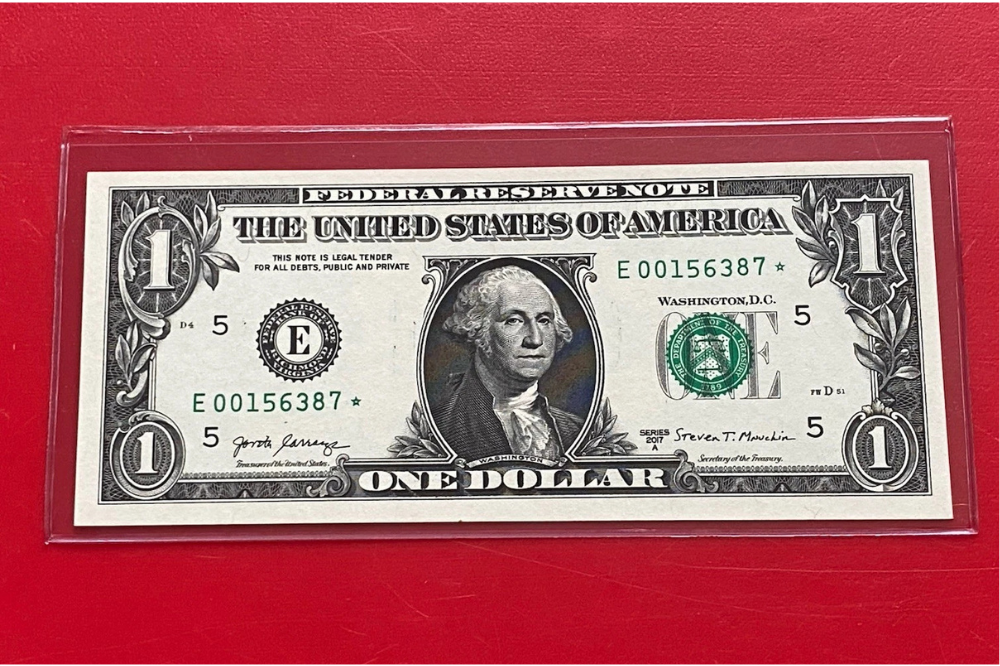
Most dollar star notes come from standard runs of a million or more, which makes them common and worth exactly one dollar. Every so often the Bureau of Engraving and Printing only needs a small batch of replacements for one district, and those short runs are where the money is. In Series 2017, the third star run for the Boston district totaled just 25,000 notes, making it one of the scarcest modern dollar stars in circulation.
A star note from a run under 250,000 typically brings $25 to $100 or more in crisp uncirculated condition, while one from a run under 640,000 is worth closer to $5 to $25. Above that threshold, most stars are only worth face value, and a worn, folded example from any run rarely brings a premium at all.
Checking takes thirty seconds. Note the denomination, the series year, the Federal Reserve district letter, and the serial number, then cross-reference it against published star note production records, which are free to search online. Most of what turns up is ordinary. Occasionally it isn’t.
2. Any $2 star note
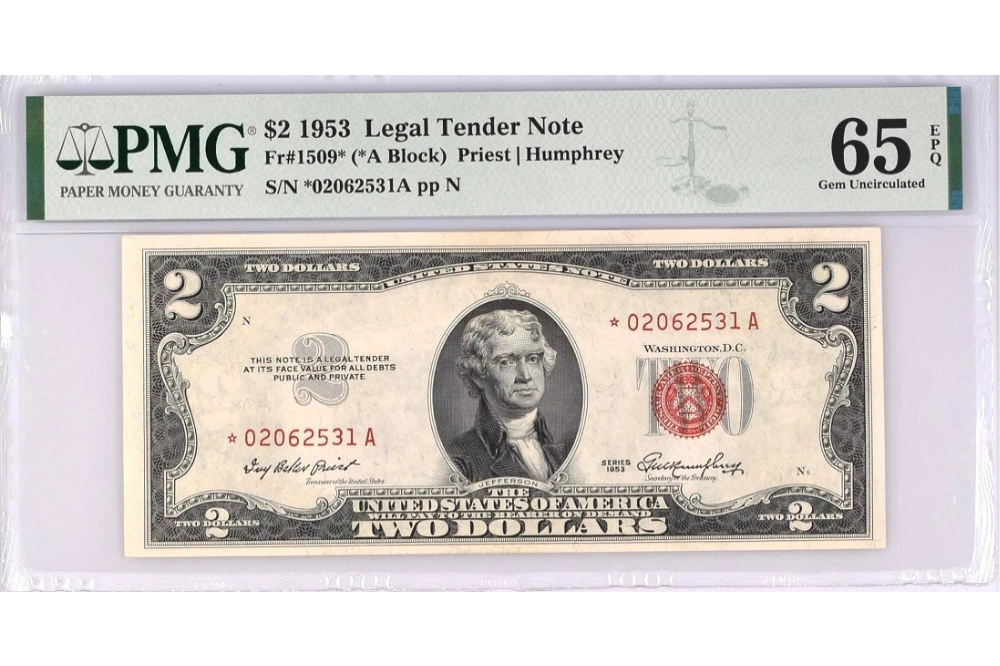
Two dollar bills already print in a fraction of the volume of ones and fives, so their replacement runs are smaller across the board. A star on a $2 bill is working with a thinner pool from the start, which is exactly why collectors treat them differently from star notes on any other denomination.
A 1953 red seal $2 star note in crisp uncirculated condition typically brings $50 to $200, compared to $20 to $50 for a regular 1953 issue in the same grade. The 1995 series is scarcer still: certain uncirculated 1995 $2 star notes carry a value of $500, a serious premium on a bill most people treat as a novelty to tuck away rather than spend.
Modern $2 stars from large runs are still just two dollars, so run size matters here as much as it does anywhere else. What makes this one worth checking is that $2 bills already get saved more than they get spent, so a surprising number of older examples have survived in decent shape. Look at the seal color first. Small-size red-seal examples run from Series 1928 through 1963A; green means 1976 or later. Then check the serial number for that small star before you decide the bill is just a keepsake.
3. A star note with a rock bottom serial number
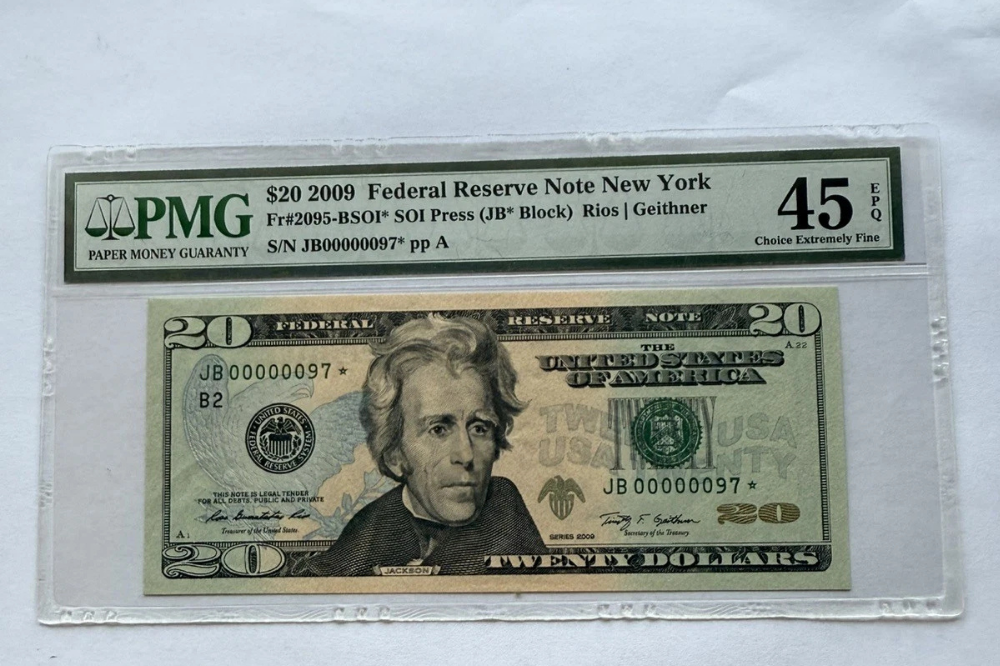
Every bill carries an eight digit serial number, and the lower it runs, the more collectors want it. A star note that also happens to carry one of the lowest numbers in its run is chasing two separate forms of scarcity at once, and the premium reflects that.
Serial numbers 00000001 through 00000009 can bring $300 to $15,000 or more depending on the bill’s denomination and condition, with the number one note of any given series commanding the strongest interest. Numbers under 100 still carry a real premium, just a smaller one, and that premium holds whether the bill is a star replacement or an ordinary issue, though a star adds further interest on top of it.
Checking is simple. Ignore the prefix and suffix letters and look only at the eight digits in the middle. A string of leading zeros followed by a single or double digit number is the signal. Condition still rules everything here: a low serial number on a bill that’s been through the wash is worth a small fraction of the same number on a crisp, flat example. This is also one of the few finds where a $1 bill can outperform a $100 of the same vintage, since the premium rides on the pattern rather than the face value.
4. A radar or repeater star note
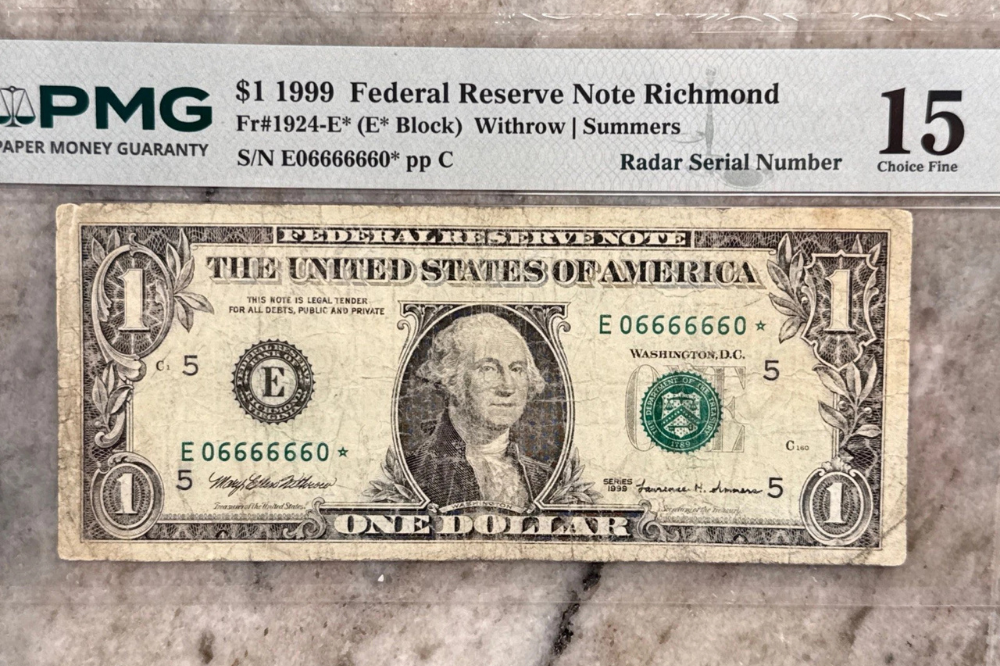
A radar serial number reads the same forward and backward, like 23455432, and a repeater is a shorter block of digits that repeats itself, like 45124512. Both patterns occur naturally by chance, which is part of the appeal: nobody engineered them, the numbering machine just happened to land there.
A radar serial number typically brings $20 to $150, with a super radar, with matching first and last digits and six identical digits between them, pushing that range toward $75 to $400. Collectors have taken a particular liking to radar notes in recent years, enough that even a common $1 bill with a clean radar pattern holds steady demand. Add a star to either pattern and the premium stacks on top of whatever that denomination’s star status is already worth.
These patterns show up across every denomination still in circulation, from ones to hundreds, so there’s no need to track down something exotic. Pull the eight center digits off any bill in your wallet and read them both directions. Most of the time nothing lines up. When it does, condition decides how much that moment is worth, since a radar on a soft, circulated bill brings only a fraction of the same number crisp and flat.
5. A solid serial number star note
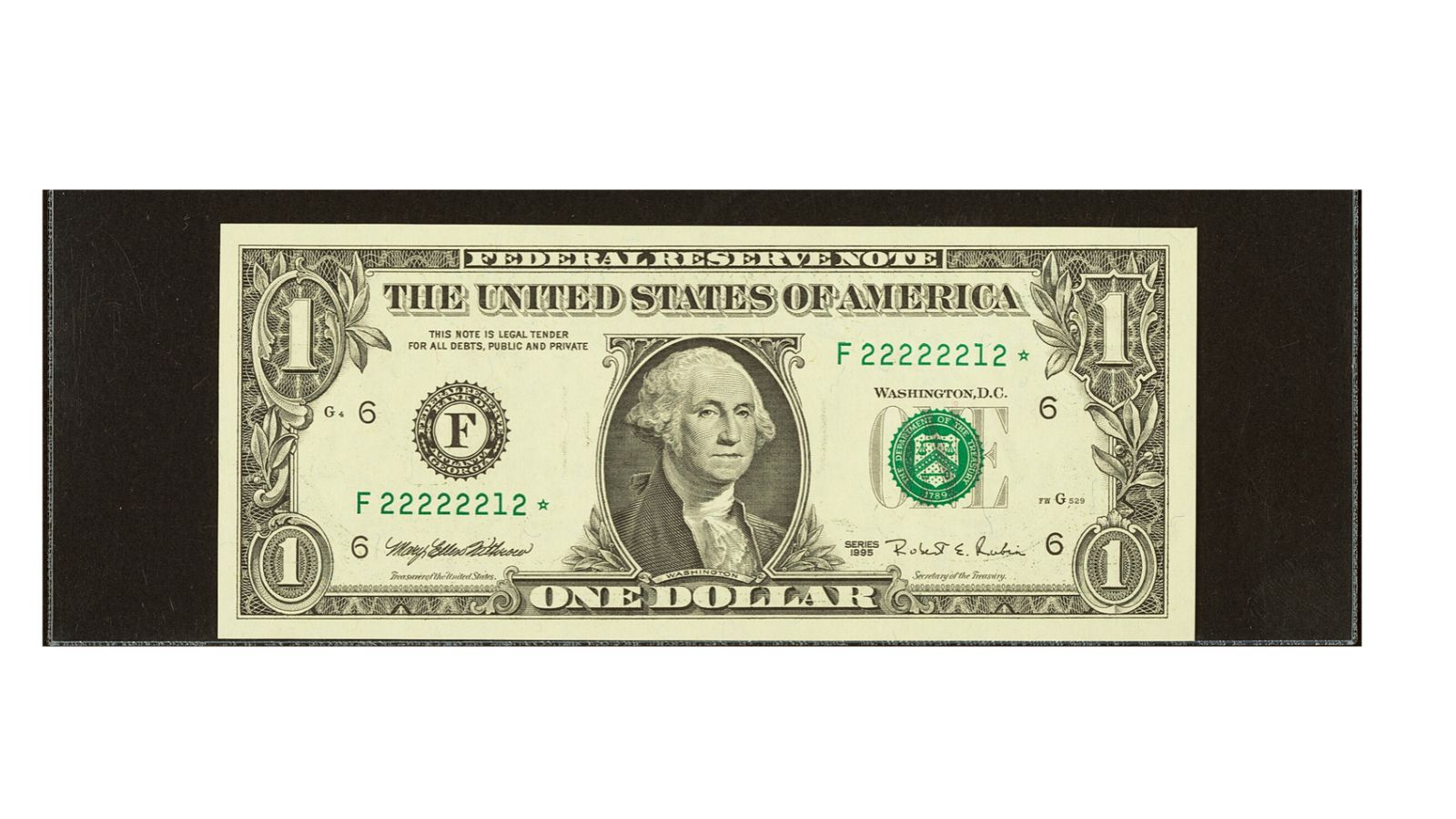
A solid serial number is one where all eight digits match, something like 55555555. It’s the simplest pattern to spot and, outside of a number one note, the one collectors chase hardest, because the math makes it genuinely rare no matter how common the series is.
Notes with solid serial numbers have brought four figures even in less than pristine condition, and a crisp, well-centered example on a desirable denomination can push well past that. Certain repeated digits, particularly 7 and 8, draw extra interest from buyers who consider those numbers lucky, which pushes prices for those two patterns above what a solid run of other digits typically brings.
A star on top of a solid serial is rare enough that most collectors go years without seeing one in person, so expect a genuine premium if you find the combination. Ladders, where the digits run in sequence like 12345678, sit in a similar tier and get the same kind of attention. Before assuming you’ve found one, double check that every digit truly matches or truly ascends. A near miss like 55555556 is a completely different, far less valuable animal, and sellers who blur that distinction are usually hoping you won’t look closely.
6. A 1934 series blue seal $5 star note
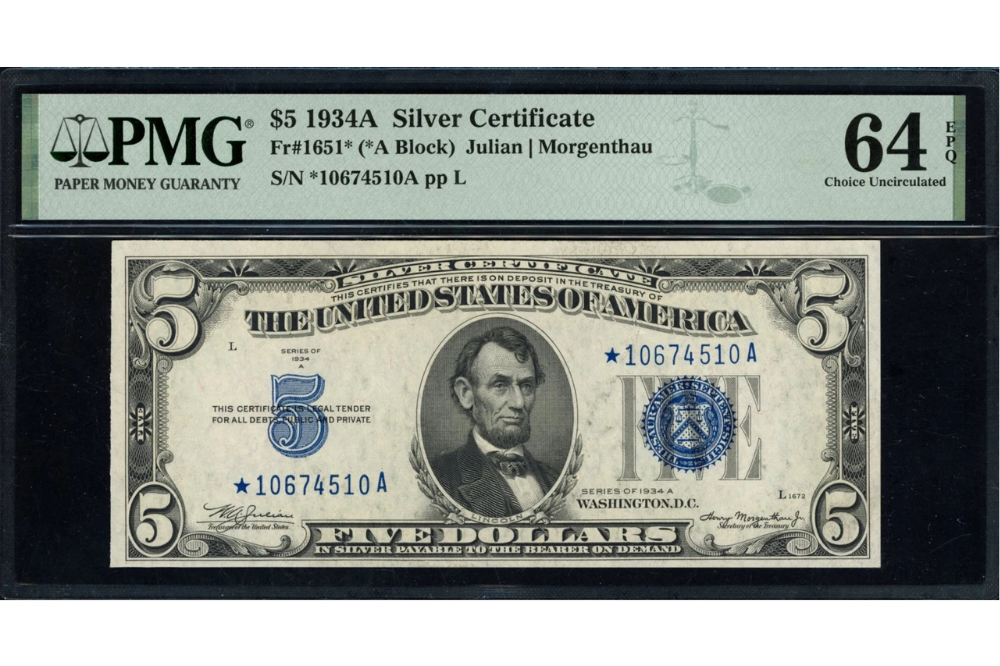
The 1934 series $5 bill is common enough in regular circulation that most examples barely clear face value, which makes the star variant worth knowing apart from the rest of the series. A standard 1934 through 1934-D blue seal $5 bill in good condition is worth up to $425, and star replacements from that run carry a further premium on top of that figure, particularly from sub-series where fewer star replacements survive.
The blue seal sits to the right of Lincoln’s portrait and identifies these notes as Silver Certificates, not Federal Reserve Notes. Four different treasury officials signed across the 1934 through 1934-D sub-series, and the signature combination and sub-series help separate a common example from a scarce one.
Condition drives most of the spread here. A circulated 1934 $5 with heavy wear and soft corners is worth closer to its bare face value than any collector premium, while a note that’s never been folded holds its value through decades of handling. Check the corners for rounding and the paper for the kind of limpness that comes from years in a wallet before assuming you have something special.
7. A 1933 silver certificate $10 star note

Not every valuable $10 bill needs a dramatic story. A 1933 silver certificate $10 bill with a genuinely low serial number has drawn offers of $10,000 or more from currency dealers, but this star variety is an exceptional rarity that cannot be valued by simply doubling the price of a regular issue.
The 1933 series is scarce on its own, since silver certificates of that year were printed in far smaller numbers than the series that followed, and most that survive show decades of circulation wear. A published 2013 study recorded just one surviving Series 1933 star note, serial *00000002A, making this an exceptional rarity. The seal is blue, the portrait is Alexander Hamilton, and the words “Silver Certificate” run across the top rather than “Federal Reserve Note.”
Most people will never encounter this specific combination outside an inherited collection or an estate sale box of old paperwork. If a $10 bill from a relative’s belongings has a blue seal and looks genuinely old rather than merely yellowed, it’s worth a careful look at the serial number and a check for that star before it goes anywhere near a shredder.
8. A $20 star note from the right series and district
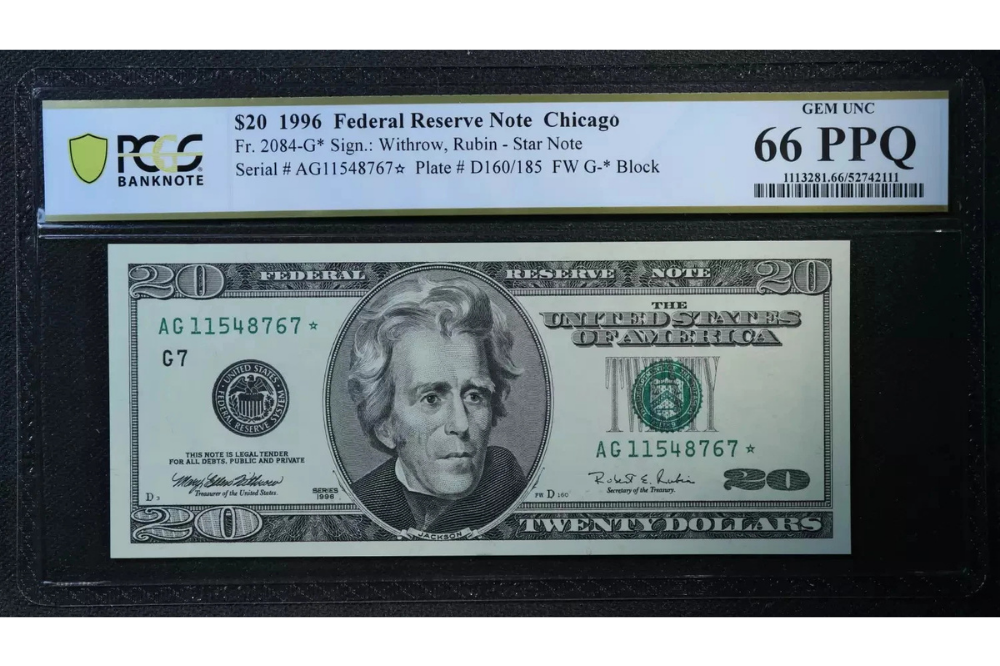
$20 star notes are the honest disappointment of this list for most people who find one. Most modern $20 stars, even from the 1996 and 2017A redesigns, trade close to face value unless the run was unusually small, typically landing in the $10 to $80 range even in crisp condition.
That said, the denomination isn’t hopeless. The 1996 series $20 star note can reach $30 to $80 in strong uncirculated grades, and older series from the 1980s and earlier, where print runs ran smaller and survival rates dropped, can push well past that when the district and run size line up right. The key is treating a $20 star the same way you’d treat any other: find the series year, find the Federal Reserve district letter, and cross-reference the actual run size rather than assuming the star alone means anything.
This is a case where realistic expectations matter more than anywhere else on this list. A circulated $20 star you pull from your wallet today is almost certainly worth twenty dollars and nothing more. The ones worth setting aside are older, crisp, and from a documented short run, not simply starred.
9. A 1985 series $50 star note
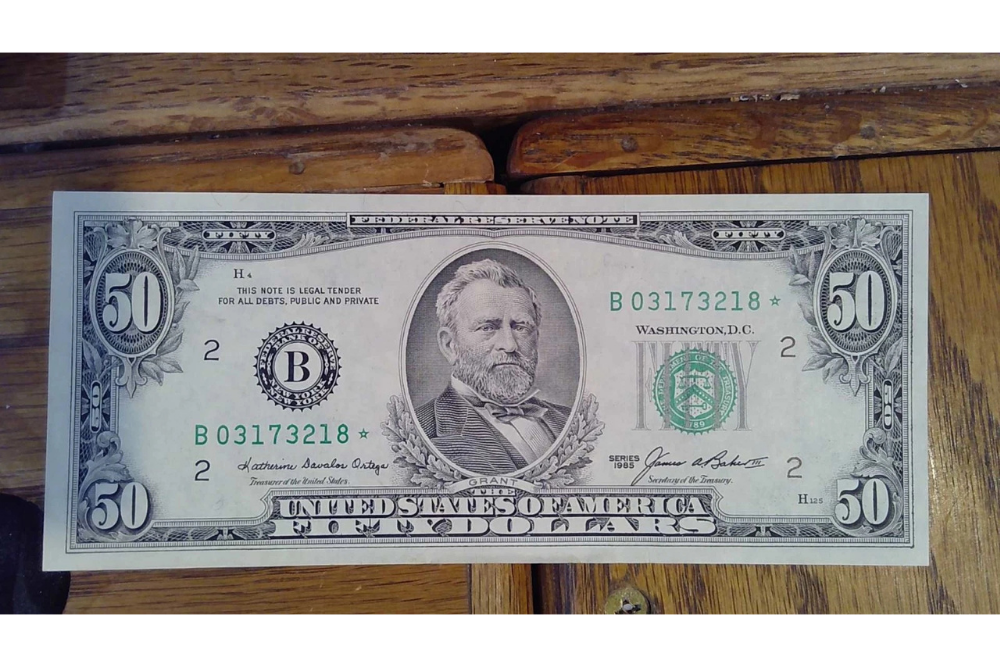
Fifty dollar bills get far less collector attention than ones, fives, or even hundreds, mostly because people don’t dig through $50s the way they dig through pocket change. That inattention is exactly why a decent star note from this denomination can still turn up underpriced.
A 1985 series $50 star note in crisp uncirculated condition typically brings $60 to $340, a real spread depending on exactly how clean and well centered the note is, while a circulated example from the same series runs closer to $75 to $85. That’s a meaningful premium on a bill most people would deposit without a second look.
Fifties don’t circulate through registers the way smaller bills do, so most of what’s out there sits in bank wrappers, safety deposit boxes, or an envelope of cash a relative kept for emergencies. If you come across a stack of older fifties, it’s worth running through them for the star before spending any of them, since this is one of the few denominations where genuinely underappreciated examples are still turning up in ordinary circumstances rather than only at specialty auctions.
10. A 1996 series $100 star note
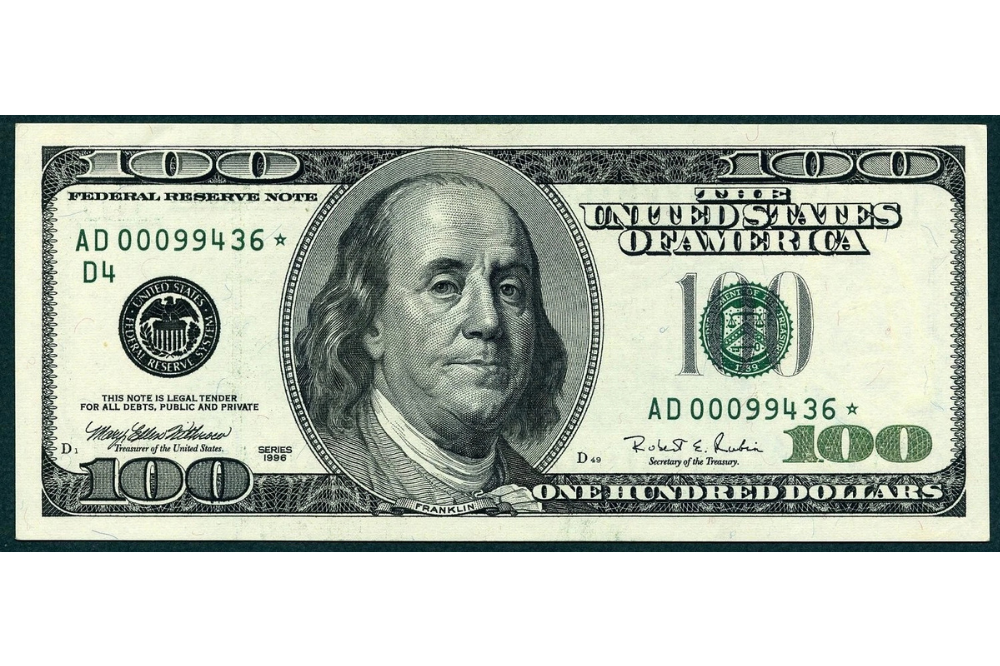
The $100 bill carries the highest face value of anything still printed, which means even a modest percentage premium adds up fast, and collectors know it. A 1996 series $100 star note is generally worth $150 to $350, well above its face value even though most 1996 hundreds in circulation are worth exactly what’s printed on them.
The broader pattern holds across every modern $100 series: a star note from a genuinely small print run typically brings $200 to $500 or more in crisp uncirculated condition, regardless of exactly which redesign year it’s from. Because so few people examine their hundreds closely, and because $100 bills get spent and deposited rather than saved, a surprising number of star replacements from smaller runs are still floating through ordinary transactions.
The 1996 series was the first major redesign of the $100 bill, with an enlarged, off-center portrait of Franklin that was new at the time and is easy to spot once you know what you’re looking at. Check the series year printed beneath the signatures, then look for the small star at the end of the serial number before that bill goes back into your wallet.
11. A Silver Certificate star note from 1928 through 1957
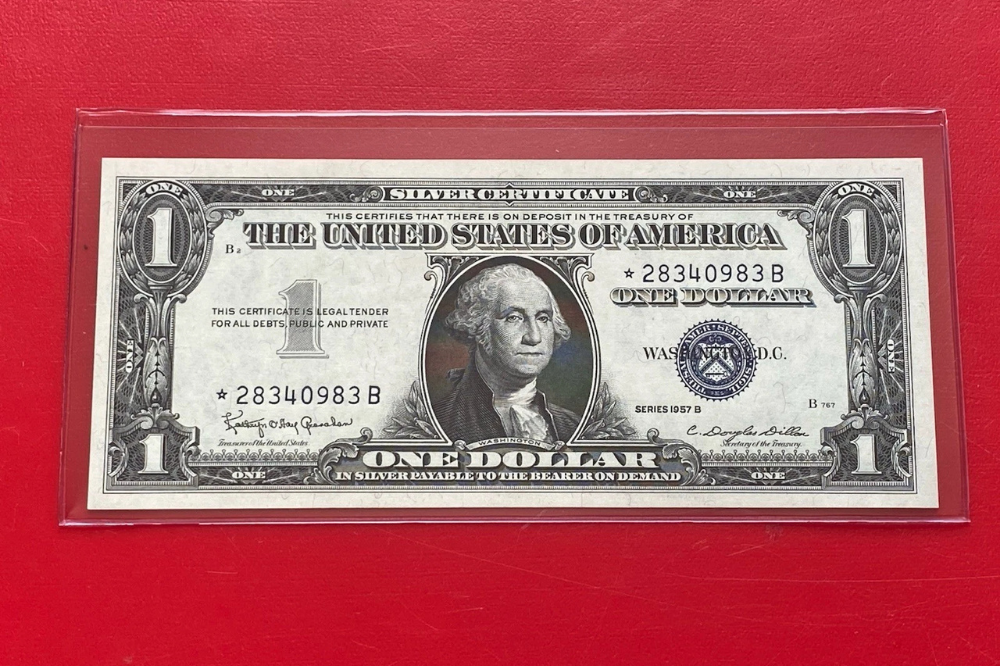
Silver Certificates were phased out of production in the 1960s, which puts every surviving example at least six decades old, and the star replacements from this run are scarcer than the regular notes by definition. A Silver Certificate star note from this window can bring $20 to $1,000 or more, with the spread driven almost entirely by series year, denomination, and condition.
The scarcest of the bunch tend to be from the Great Depression years, when overall print runs shrank along with the economy and a larger share of what was printed eventually got redeemed and destroyed. A 1934 $5 Silver Certificate star note is a frequently cited example of this effect, valuable as much for how few survived as for its age.
Silver Certificates carry a blue seal and the words “Silver Certificate” printed across the top, a quick way to separate them from the green seal Federal Reserve Notes that eventually replaced them. These notes were legal tender redeemable for actual silver once, which is part of why so many were saved rather than spent, but survival in a drawer for sixty years doesn’t guarantee condition. Check for foxing, soft folds, and tears before assuming a weathered example is worth the high end of its range.
12. A red seal Legal Tender star note
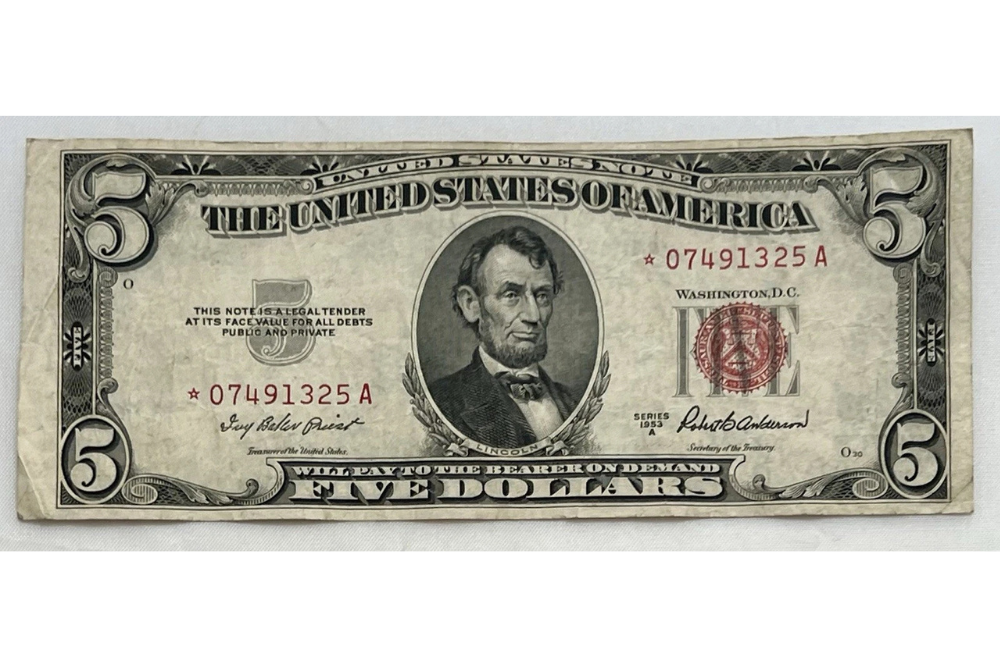
Red seal bills, officially called United States Notes or Legal Tender Notes, are a different legal category from the green seal Federal Reserve Notes most people carry today, and they stopped being issued in 1971. A red seal star note from this family typically brings $25 to $500 or more, depending heavily on denomination and how clean the note has stayed.
What makes these worth knowing apart from ordinary Silver Certificates is the seal color and the legal status behind it. Legal Tender Notes were backed directly by the United States government rather than by silver reserves, a distinction most people never think about but one collectors track closely, since it changes which reference books and price guides apply.
These show up most often in $2 and $5 denominations, although scarcer red seal $1 bills also exist and higher denominations are rarer across the board. A red seal star note surfaces most often in an inherited collection, a coin dealer’s junk box, or the back of a drawer that hasn’t been cleaned out since the bill was still legal tender fresh off the press. Check the color before anything else: a true red seal is unmistakable once you’ve seen one next to a green one for comparison, and a faded or discolored green seal can sometimes be mistaken for one by someone in a hurry.
13. A pre-1950 Federal Reserve star note
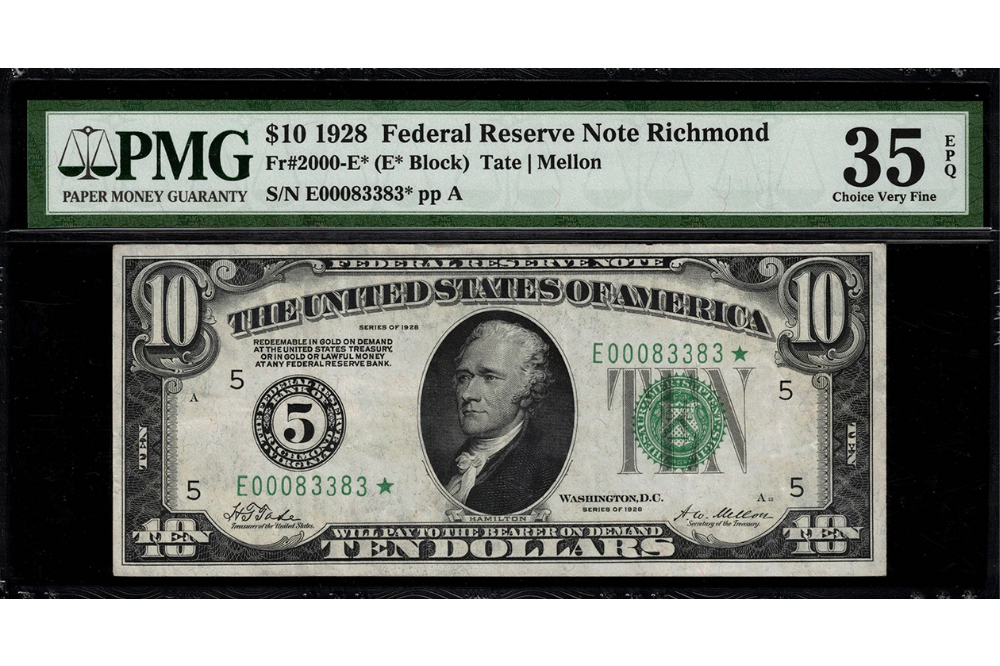
Green seal Federal Reserve Notes from before 1950 sit in an odd middle ground: not as storied as the Depression-era Silver Certificates, but old enough that survival rates have genuinely thinned, especially for the star replacements printed during an era before anyone was deliberately saving them for a collection. These earlier Federal Reserve star notes typically bring $50 to $1,500 or more, a wide range driven by denomination, district, and condition.
Part of what makes this group interesting is that almost nobody was looking for star notes specifically before the hobby matured in the later twentieth century, so plenty of pre-1950 stars were spent and lost without anyone realizing what they were holding. What survived did so mostly by accident, tucked into a cigar box or forgotten in a coat pocket rather than deliberately preserved.
These notes predate most of the standardized design features people associate with modern money, so checking one takes a slightly practiced eye. Look for the series year near the portrait, the green Treasury seal, and the small star at the end of the serial number rather than a letter. An inherited collection from a grandparent who served in the 1940s or ran a small business through that era is a genuinely plausible place for one of these to turn up.
14. A mule star note
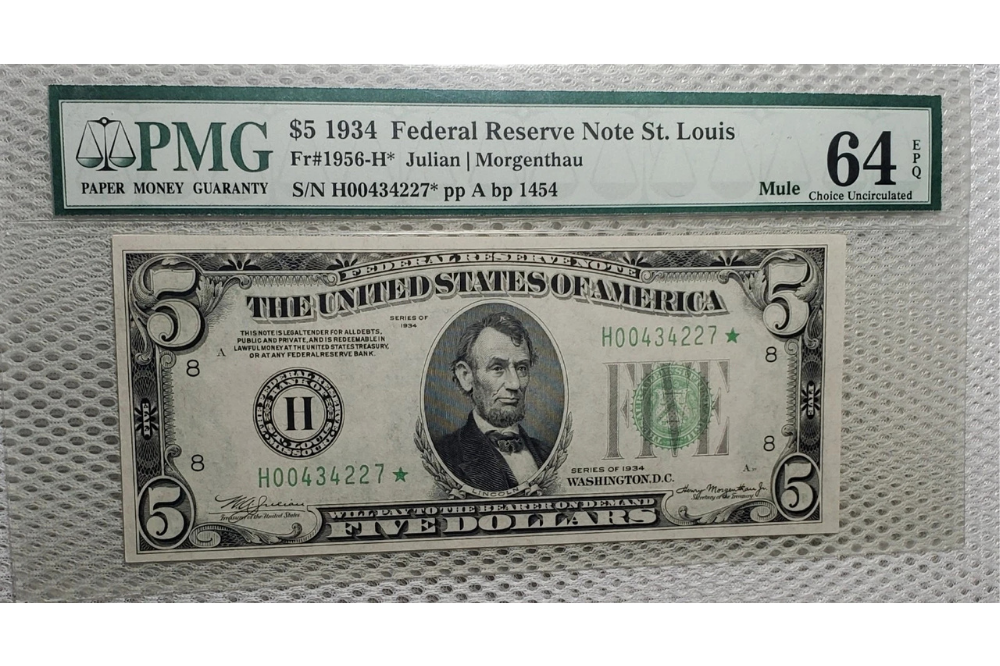
A small-size mule note combines a micro-sized plate number on one side with a macro-sized number on the other, a pairing produced while both plate styles were in use. The mismatch comes down to plate number size, with the two sides printed in a noticeably different font size from each other, and a star replacement caught in that same transitional window is a double rarity.
Collectors who deal in these describe mule stars as genuinely scarce finds, the kind that surface in forum posts and dealer inventories rather than bank wrappers. A graded 1934 series $20 Federal Reserve mule star note from the Philadelphia district has traded for prices from several hundred dollars to just under a thousand, with grade and eye appeal moving that figure considerably.
This is not something to expect from a casual search through pocket change. Small-size mule notes were produced from 1934 to 1953, and spotting one requires comparing the plate number size on the front against the back, which is genuinely difficult without a loupe and a reference point. If a note has been in a family since that era and the plate numbers look mismatched in size between front and back, professional grading is worth the cost before anything else happens to it.
15. A Hawaii overprint star note
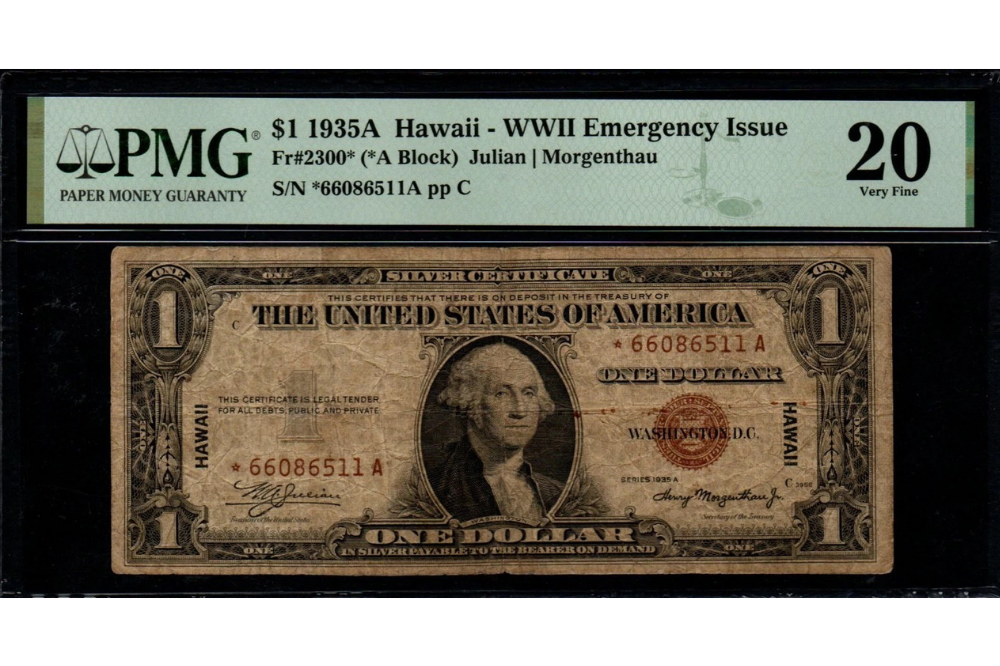
After the attack on Pearl Harbor, the Treasury issued special currency stamped with the word “HAWAII” for use on the islands, so that the bills could be instantly voided if the Japanese military ever seized them. These overprinted notes were issued in $1, $5, $10, and $20 denominations, and every denomination has its own star replacement, each scarcer than the regular overprint.
A 1935A $1 Hawaii star note carries a published value range of $120 to $4,300 depending on condition, and the higher denominations in the series climb from there: a 1934A Hawaii $5 bill alone can reach up to $6,000 in strong condition, with the star variant commanding more still. These notes carry two small “HAWAII” overprints on the front and a large outlined “HAWAII” across the reverse, a design choice specifically meant to make them easy to identify at a glance.
Hawaii notes were recalled starting in 1946, but plenty were never turned in and remain legal tender today. The most likely place to find one is in a veteran’s effects or a family collection with a direct connection to Hawaii during the war years, since these were issued locally rather than distributed nationally. Check both the front overprints and the reverse lettering before assuming a brown seal bill is simply a well-worn regular issue.
16. A North Africa yellow seal star note
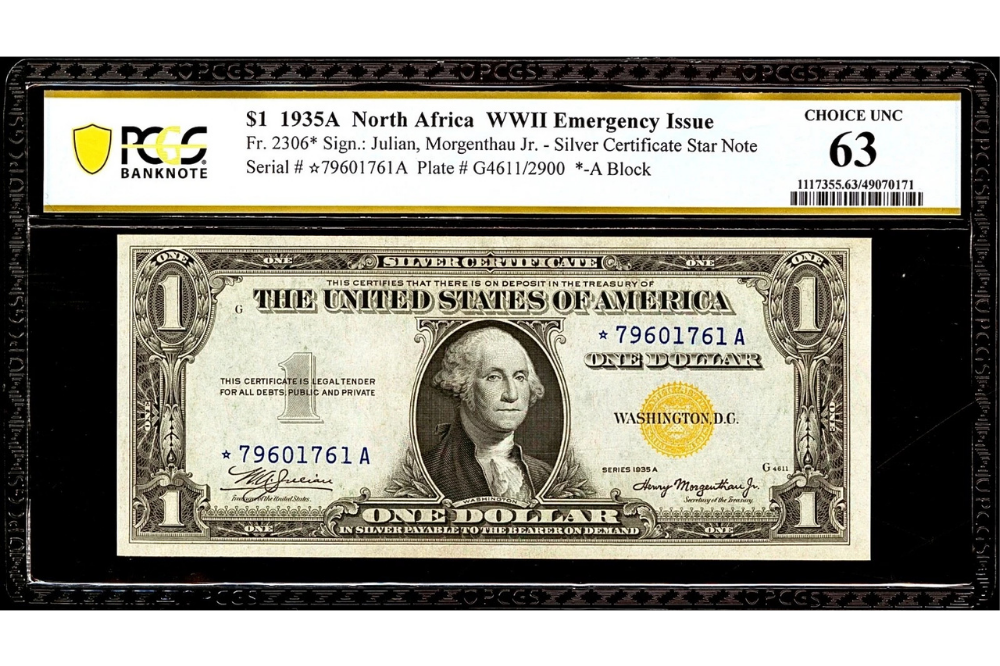
Issued for American troops during the North Africa campaign, these Silver Certificates carry a distinctive yellow Treasury seal instead of the usual blue, chosen specifically so the currency could be devalued instantly if captured by Axis forces. They were printed in $1, $5, and $10 denominations, and the star replacements across all three are harder to find than the already-scarce regular issues.
A 1935A $1 North Africa star note carries a published value range of $130 to $17,000, with the gap reflecting just how much condition matters at this level. The $10 denomination is rarer still: the 1934 series $10 North Africa star note, of which only a small handful are confirmed to exist, carries a published value of $30,000, a figure that sits well outside what most people will ever personally handle.
These notes are unmistakable once you know what to look for: the yellow seal is nothing like the blue or green seals on any other American currency, which was the entire point of issuing them this way. A North Africa note is the kind of thing most families only encounter through a veteran’s wartime effects, inherited alongside medals, letters, and other service memorabilia rather than found loose in a wallet. If a $1, $5, or $10 bill in an inherited collection has a yellow seal, it’s worth a professional look regardless of whether a star is present.
Most star notes in your wallet are exactly what they look like: ordinary money with a small, harmless printing quirk. The ones on this list earn their place because of specific, checkable facts, a run size, a serial number, a seal color, not because of the star by itself.











