
Managing home upkeep on a single income requires deliberate prioritization and sharp vigilance. When you manage a property alone, roofing vulnerabilities stay hidden out of sight until discoloration spots spread across your living room ceiling. Neglecting small wear today leaves you vulnerable to sudden four-figure emergency invoices that strain your personal finances.
Developing a consistent inspection routine preserves your living space and guards your largest financial investment. By identifying small exterior issues before water reaches your interior framing, you protect your monthly cash flow and command full control over maintenance costs.
Table of contents
- Why should you prioritize targeted repairs over costly replacements?
- What makes subtle roof damage a serious financial threat?
- How do minor flaws escalate into massive invoices?
- How can you screen contractors without pressure?
- How should you budget for exterior upkeep on one income?
- What preventative habits protect your home year-round?
Why should you prioritize targeted repairs over costly replacements?
National roofing franchises frequently push full tear-offs because their sales models favor high-volume replacements over small maintenance orders. Partnering with a reliable, locally owned roofer handling repairs gives you transparent evaluations and pinpoint fixes tailored to your home’s immediate condition. Regional professionals value long-term neighborhood relationships and understand local climate patterns far better than transient commission-driven sales teams.
That community focus keeps your repair bills fair and prevents unnecessary construction on an otherwise healthy structure. Honest trade professionals identify whether your shingles possess remaining functional life.
If an isolated windstorm ripped off a ridge cap or lifted two perimeter shingles, a focused restoration protects your home without forcing you to finance a complete reroof. Preserving sound materials keeps money in your pocket while maintaining complete weather resistance against seasonal storms.
What makes subtle roof damage a serious financial threat?
Water follows the path of least resistance, slipping under lifted asphalt shingles and pooling along structural rafters long before dripping onto drywall. Since attic crawl spaces rarely receive weekly visits, damp insulation quietly loses thermal resistance while mold colonies take root. You end up paying higher heating bills while moisture rots your plywood sub-decking silently above your head.
Minor deterioration never cures itself under blistering sun and freezing winter rains. An ignored plumbing vent boot or warped flashing piece creates an open pathway for persistent seepage. When rafters soften, standard spot patching no longer solves the problem, forcing you into extensive structural repairs that overwhelm an individual salary.
How do minor flaws escalate into massive invoices?
Catching exterior flaws during early stages keeps your maintenance budget predictable. Data compiled by Gigngo indicates that fixing isolated leaks runs between $150 and $500, while repairing damaged shingles costs $200 to $600. Complete roof replacements require steep commitments between $5,000 and $15,000 or more. Addressing individual shingles keeps your existing roof deck sound and protects your hard-earned bank balance.
Replacing a cracked neoprene collar on a plumbing vent stack costs a fraction of extensive remediation. Neglecting that broken rubber seal allows driving rain to bypass the shingle surface and saturate the surrounding wood decking.
Once moisture compromises the roof deck, crews must tear away large sections, remove wet insulation, and install fresh framing lumber. A task that requires a modest service call transforms into a multi-day construction headache that commands thousands of dollars.
How can you screen contractors without pressure?
Talking to contractors alone can sometimes feel intimidating when representatives push limited-time discounts or demand immediate signatures. Guard your authority by establishing clear communication rules before anyone climbs onto your roof. Reputable specialists welcome questions, present clear diagnostic photos, and give you space to review paperwork on your own schedule.
Walk through these verification benchmarks before approving any exterior repair contract:
- Verify general liability: Demand a current certificate of insurance naming your address to guard against accidental property damage.
- Examine state licensure: Check your state licensing board website to confirm active status without pending disciplinary actions.
- Request itemized proposals: Insist on detailed estimates that separate individual labor fees, material expenses, and cleanup provisions.
- Check independent reviews: Read multi-year feedback across community forums and local consumer bureaus to measure reliability.
How should you budget for exterior upkeep on one income?
Building a dedicated maintenance reserve provides financial peace when seasonal weather strikes. Homeownership advisors frequently recommend stashing 1% to 2% of your property value each year in a high-yield savings account designated solely for home systems. Automating small monthly transfers into this exterior fund transforms looming repairs from panic-inducing emergencies into planned operating expenses.
Knowing how your insurance policy handles exterior damage helps you avoid sudden out-of-pocket shocks.
Consumer bulletins from the Maryland Insurance Administration remind homeowners that policies may cover repairs for damaged roof sections alone rather than total surface replacements.
What preventative habits protect your home year-round?
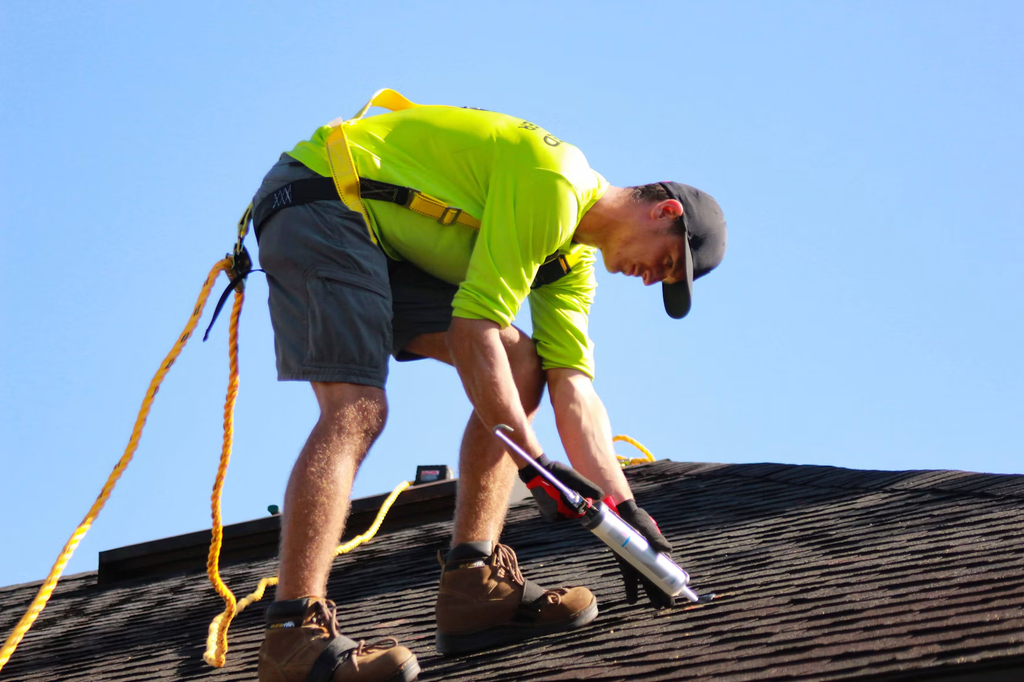
Simple ground-level inspections give you valuable warning signs before water breaches your living areas. Grab a pair of binoculars twice each year to scan shingle lines, focusing closely on chimney flashing, valley intersections, and eave edges. Spotting curling tabs, moss buildup, or granule bald spots early gives you ample time to arrange affordable localized maintenance.
Educating yourself on roofing components gives you the power to protect your home equity with complete certainty. When you understand your exterior structure, you make knowledgeable maintenance decisions and hire honest specialists without intimidation.
Consistent preventative habits eliminate costly surprises, preserving your hard-earned financial independence and keeping your shelter sound through every coming season.










