scroll top

It’s 2 a.m. and someone in Ohio is renewing a hotel booking for a guest in Singapore, watching a hospital patient’s heart rhythm from a home office in Tucson, or explaining a fraud alert to a rattled customer on the East Coast. None of these people left their house tonight.

Companies that used to staff overnight hours with an actual building full of people increasingly staff them with people logging in from home instead, and they often pay more to do it. Fewer people want the schedule, and shift differentials commonly add 10 to 20 percent on top of base pay at employers that offer them.

Below are 21 real remote jobs with night hours built in, along with current pay figures for each one. Some need a license or certification. A few you could realistically start applying for this week.

Overnight customer service representative

Overnight customer service representative
Image Credit: Shutterstock

Customer service reps who work nights are answering calls, chats, and emails for companies that operate around the clock, from airlines to hotel chains to 24-hour retailers. The median pay for the role sits at $42,830 a year, and night and early morning shifts are common because some call centers operate 24 hours a day.

This is one of the easiest remote night jobs to break into. Most employers ask for a high school diploma and train you on the job, and the real barrier is a quiet space to work and reliable internet. The tradeoff is that overall employment in the field is shrinking as companies shift more support to chatbots, though there are still an estimated 341,700 openings a year nationally, almost all from people leaving the role rather than new positions being created. Travel and retail companies tend to be the biggest overnight employers in this category, since a canceled flight or a locked-out hotel guest doesn’t wait until 9 a.m. to become a problem.

Telehealth triage nurse

Telehealth triage nurse
Image Credit: Shutterstock

Telehealth triage nurses field calls from patients describing symptoms and decide, using established protocols, whether someone needs the ER, a same-week doctor visit, or just rest and fluids. Registered nurses broadly earn a median of $93,600 a year, and nurses at facilities that provide round-the-clock care often work nights, weekends, and holidays on a rotating basis. Telehealth-specific listings tend to run close to $97,000 a year.

You need an active RN license and usually a couple of years of clinical experience before a telehealth employer will hand you triage calls, since you’re making judgment calls without anyone physically present to double-check you. Job growth for registered nurses overall is projected at 5 percent through 2034, and telehealth triage lines specifically are expanding as more health systems try to keep patients out of expensive emergency rooms for problems that don’t need one. Most triage nurses work from standardized clinical protocols built into the phone or chat system, which keeps decisions consistent no matter who’s on shift or what time it is.

Remote verification pharmacist

Remote verification pharmacist
Image Credit: Shutterstock

Verification pharmacists review prescriptions already filled by pharmacy technicians, checking dosages, interactions, and accuracy before medication goes out the door. It’s detail work you can do from a home office with the right software, and pharmacies that fill mail-order prescriptions or serve hospitals need someone doing it at all hours. Median pay for pharmacists overall is $137,480 a year, and pharmacists at facilities that run 24 hours a day often work nights, weekends, and holidays.

You’ll need a Doctor of Pharmacy degree and a license in whatever state you’re working from, a heavier lift than most jobs on this list. But remote and mail-order pharmacy work is one of the fastest-growing corners of the field, and opportunities to work from home serving hospitals and mail-order pharmacies keep expanding as more of the industry moves online. Turnaround expectations are tight in this role, since a hospital waiting on a verified prescription doesn’t have the luxury of a next-business-day answer.

Overnight IT help desk technician

Overnight IT help desk technician
Image Credit: Shutterstock

Someone has to answer the phone when a hospital’s scheduling system crashes at 3 a.m. or remote workers in different time zones can’t log in. Computer user support specialists, the official category covering most help desk work, earn a median of $60,340 a year, and some specialists work nights or weekends because support has to be available 24 hours a day.

Overall employment in this category is expected to shrink slightly as companies automate simple fixes with self-service tools, but there are still around 50,500 openings projected every year, mostly to replace people who move up into higher-paying IT roles. That’s the actual appeal here: overnight help desk work is a common entry point into IT careers, since the hours scare off competition from people with more experience, and a quiet overnight ticket queue gives you time to actually learn the systems you’re troubleshooting instead of just following a script.

Cybersecurity SOC analyst

Cybersecurity SOC analyst
Image Credit: Shutterstock

A security operations center, or SOC, is the team that watches a company’s networks for signs of a breach, and it has to be staffed continuously because hackers don’t work business hours. SOC analysts perform round-the-clock monitoring of an organization’s network, which in practice means rotating shifts that include overnight coverage. Information security analysts, the broader category that includes SOC work, earn a median of $124,910 a year.

This is one of the best-paying jobs on this list, and the field is projected to grow 29 percent through 2034, among the fastest growth rates the government tracks for any occupation. Most employers want a bachelor’s degree in a computer science field along with hands-on experience, and a security certification helps. The overnight SOC shift specifically tends to be less competitive than daytime cybersecurity roles, since fewer analysts want to work it, which can work in your favor when you apply.

Remote network operations center technician

Remote network operations center technician
Image Credit: Shutterstock

Network operations center, or NOC, technicians keep a company’s servers, internet connections, and internal systems running, and they get paged the moment something goes down, whatever time it is. Network and computer systems administrators, the official category for this work, earn a median of $96,800 a year, and the job description itself notes that administrators may work evenings, nights, and weekends to monitor, maintain, or update networks and systems.

Employment in this category is actually projected to shrink a bit as more companies move infrastructure to cloud providers who handle their own monitoring, but around 14,300 openings a year are still expected as people retire or move into other roles. A bachelor’s degree in a computer or information science field is the typical entry point, and overnight NOC shifts are a well-worn path into higher-paying network engineering roles, since you get direct exposure to how systems actually fail rather than just reading about it in a training course.

Overnight crisis line counselor

Overnight crisis line counselor
Image Credit: Shutterstock

Crisis and behavioral health lines don’t close at 5 p.m., which is exactly when a lot of people start needing them. Substance abuse, behavioral disorder, and mental health counselors, the category covering most crisis line work, earn a median of $59,190 a year, and in inpatient or residential settings, counselors often need to work evenings, nights, or weekends.

This work is emotionally heavier than most jobs on this list and isn’t a fit for everyone, but demand for it is climbing fast. Employment is projected to grow 17 percent through 2034, much faster than average, as more people seek help for mental health and substance use issues. Requirements vary by state and employer, ranging from a bachelor’s degree and certification to a master’s degree for clinical roles, so check what your state actually requires before committing to a training path, since a certification that qualifies you in one state may not transfer cleanly to another.

Remote insurance claims adjuster

Remote insurance claims adjuster
Image Credit: Shutterstock

Car accidents and house fires don’t wait for business hours, and insurers keep adjusters working through the night to take first reports, especially after storms that generate a surge of claims all at once. Claims adjusters, examiners, and investigators earn a median of $76,790 a year.

Entry into this field typically requires only a high school diploma, though some insurers prefer a bachelor’s degree or want you to hold a state adjuster license, usually a short course and an exam. Overall employment is projected to decline slightly as automation takes over simple claims, but about 21,600 openings a year are still expected, mostly from people leaving the field. Remote adjusters working overnight or rotating shifts tend to handle initial intake calls rather than property inspections, since you can’t inspect storm damage from your kitchen table. Those overnight intake shifts tend to spike hard right after major weather events, which is when insurers scramble hardest to add temporary remote staff.

Bank fraud and transaction monitoring analyst

Bank fraud and transaction monitoring analyst
Image Credit: Shutterstock

Someone has to catch the 2 a.m. credit card charge from a country you’ve never visited, and that someone is usually a fraud analyst watching transaction alerts in real time. Fraud examiners, investigators, and analysts, tracked under the government’s broader financial specialists category, earn a median of $80,190 a year.

Banks, credit unions, and payment processors all need this work covered overnight, since fraud doesn’t pause for the analyst’s bedtime, and card issuers in particular staff fraud desks around the clock so they can freeze a stolen card the moment something looks wrong. A bachelor’s degree in finance, accounting, or a related field is the usual entry requirement, and the role is projected to grow about 3 percent through 2034. It’s a solid option if you want financial industry pay without the sales pressure that comes with a job like loan officer, and the work tends to stay steady regardless of what interest rates are doing.

Remote cardiac telemetry monitoring technician

Remote cardiac telemetry monitoring technician
Image Credit: Shutterstock

Telemetry technicians watch heart rhythm monitors for hospital patients, flagging dangerous arrhythmias so nurses can respond before a situation turns into a code blue. A growing number of hospitals contract this work out to centralized monitoring companies where technicians work entirely from home, watching multiple patients’ rhythms on screen at once. Cardiovascular technologists and technicians broadly earn a median of $67,260 a year, and remote monitoring roles are structured in shifts to provide 24/7 cardiac monitoring coverage.

Most employers want certification as a Certified Rhythm Analysis Technician or Certified Cardiographic Technician, which you can typically earn faster than a full associate’s degree in cardiovascular technology. Growth in this field is projected at 3 percent through 2034, roughly average, but the shift toward remote, centralized monitoring is a newer trend than the national numbers capture, and postings for home-based telemetry roles have grown noticeably in the past couple of years as more hospitals decide it’s cheaper to outsource overnight monitoring than staff it in-house.

Live broadcast captioner

Live broadcast captioner
Image Credit: Shutterstock

Broadcast captioners provide the real-time captions scrolling across a live news broadcast or sports game, typing at speeds most people can’t imagine using specialized stenographic equipment. Court reporters and simultaneous captioners, the government’s category for this work, earn a median of $67,310 a year, and many captioners work from home rather than a studio or courtroom.

Live sports and news happen at all hours, especially once you account for international broadcasts and different time zones, which makes overnight captioning shifts a real and steady part of the field. Training programs run about two to four years and require you to hit strict speed and accuracy standards before you’re job-ready, so this isn’t a quick pivot. Employment is projected to hold roughly steady through 2034, but around 1,700 openings a year are still expected as people retire, and captioning specifically has better growth prospects than courtroom reporting, since streaming and live broadcast have expanded faster than the court system has.

Online English tutor for overseas students

Online English tutor for overseas students
Image Credit: Shutterstock

Online English platforms connect American tutors with students in Asia, and because of the time difference, the students’ after-school hours land in the tutor’s early morning or late evening, sometimes as early as 5 a.m. Eastern time. Tutors broadly earn a median of $40,090 a year, though online ESL platforms specifically tend to pay $10 to $40 an hour depending on the company and your experience level.

Most platforms want a bachelor’s degree and don’t require a teaching certificate, though having one usually bumps your pay. This is contract work, not salaried employment, so there’s no guaranteed schedule and no benefits, but the schedule is flexible and a common option for parents or students working around an odd schedule of their own. The tradeoff for that flexibility is that peak earning hours line up with hours most people would rather be asleep, and the best-paying slots go fast once a platform posts them.

Extended hours virtual bank teller

Extended hours virtual bank teller
Image Credit: Shutterstock

Interactive teller machines let banks and credit unions staff a video teller who can process deposits, cash checks, and answer questions well beyond normal lobby hours, sometimes stretching close to around the clock depending on the network. Tellers broadly earn a median of $39,340 a year, and video teller networks can connect customers with a remote teller up to 24 hours a day, seven days a week when the call center behind them is staffed continuously.

This is an entry-level role, typically requiring only a high school diploma, and one of the more accessible jobs here if you’re new to remote work. The tradeoff is that overall teller employment is shrinking fast, down a projected 13 percent through 2034, as more banking moves to apps and machines. Video and interactive teller roles are one of the few growing corners of that shrinking category, since they let banks close physical branches while still offering live human help around more hours of the day.

Remote freight dispatcher

Remote freight dispatcher
Image Credit: Shutterstock

Freight dispatchers coordinate truck drivers, negotiate rates with brokers, and keep loads moving, and because long-haul trucking runs through the night, dispatchers supporting overnight drivers need to be reachable then too. Pay for dispatchers doing this work runs around $52,060 a year at the median, and the job is one of the more consistently remote-friendly roles in logistics, since load board operations, broker communications, and driver check-ins can all be handled from home.

There’s no license requirement in most states, and training programs run anywhere from a few weeks to a few months. Experienced dispatchers managing bigger fleets can push earnings well past the median, sometimes into six figures if part of their pay is commission-based. Be cautious of programs promising guaranteed six-figure income right out of training. Real earnings scale with the size and reliability of the carrier book you’re dispatching for, and that takes time to build, usually starting with a smaller regional carrier before moving to a bigger long-haul operation.

Overnight mortgage loan processor

Overnight mortgage loan processor
Image Credit: Shutterstock

Loan processing doesn’t strictly require banker’s hours, and some lenders run production teams in shifts to keep applications moving across time zones, particularly during high-volume refinance periods. Loan officers, the closest official category to this work, earn a median of $74,180 a year, though pay for processing-focused roles specifically tends to run lower than that figure, since loan officers often earn commission on top of base pay and processors don’t.

You don’t typically need a license to process loans, only to originate them, which makes processing a lower-barrier entry point into mortgage work. Growth in the field is projected at a modest 2 percent through 2034, and the industry is cyclical, meaning hiring surges when interest rates drop and slows when they rise. If a stable overnight schedule matters to you specifically, ask employers directly whether shift work is a standing arrangement or just a seasonal, volume-driven thing, since it varies a lot by lender.

Trust and safety content moderator

Trust and safety content moderator
Image Credit: Shutterstock

Someone reviews the posts, images, and videos flagged on social platforms and marketplaces, and because users are online globally at every hour, moderation queues never really empty out. Pay for remote content moderators runs roughly $38,000 to $55,000 a year, with platforms typically requiring 24/7 coverage across rotating shifts to keep review queues from backing up.

This job comes with a real caveat: you will see disturbing material, and companies vary widely in how much mental health support they actually provide versus advertise. Most employers require only a high school diploma, though a bachelor’s degree helps for trust and safety roles investigating more complex cases like fraud rings or coordinated harassment. If the emotional weight of the work concerns you, ask specifically about counseling benefits and rotation policies before accepting an offer, not after you’ve started. Larger platforms tend to offer more structured mental health support than smaller ones do, which is worth weighing against any pay difference between them.

Remote sleep study technologist

Remote sleep study technologist
Image Credit: Shutterstock

Sleep studies, formally called polysomnography, are typically run overnight because that’s when people actually sleep, and a growing number of technologists now score and review that data remotely instead of sitting in the sleep lab itself. Polysomnographic technologists average around $74,236 a year, and postings for the role commonly list 7 p.m. to 7 a.m. shifts to match when the studies actually happen.

You’ll need certification as a Registered Polysomnographic Technologist, which requires an accredited training program plus supervised clinical hours, so this isn’t a same-week career switch. The government doesn’t track this occupation as its own category, so the wage figures above come from job posting data rather than official labor statistics, worth keeping in mind when comparing this entry to others on the list. Remote scoring positions specifically, where you review data collected elsewhere rather than running the study yourself, are newer and worth searching for by name.

Online exam proctor

Online exam proctor
Image Credit: Shutterstock

Universities, testing companies, and certification bodies all need someone watching webcam feeds to make sure test-takers aren’t cheating, and because students and professionals test across every time zone, proctoring shifts run around the clock. Virtual proctors typically earn $16 to $27 an hour, with exams commonly scheduled around the clock to accommodate test-takers in different time zones.

This is one of the lowest-barrier jobs on this list. Most companies ask only for a high school diploma or equivalent, a quiet room, and a working webcam. Pay is modest compared to the healthcare or IT jobs above, but the flexibility is real, with many companies offering as-needed shifts you can pick up around other work or school. Turnover tends to be high, which means openings come up often for anyone willing to work the less popular overnight blocks, and most platforms let you pick up shifts on short notice once you’re trained and approved.

Overnight telehealth nurse practitioner

Overnight telehealth nurse practitioner
Image Credit: Shutterstock

Virtual urgent care companies hire nurse practitioners to staff overnight shifts, diagnosing and treating patients over video for everything from a bad cough to a possible UTI, so people don’t have to wait until morning or drive to an emergency room for something minor. The broader category covering nurse practitioners earns a median of $132,050 a year, and night shift telemedicine roles specifically are commonly listed between $108,000 and $155,000 a year.

You’ll need an active NP license and typically several years of clinical experience, since you’re making diagnostic calls without a physical exam to lean on. Employment for nurse practitioners overall is projected to grow 35 percent through 2034, among the fastest growth rates of any occupation tracked, driven partly by the same shortage of primary care access that makes overnight telehealth demand so strong in the first place. Licensing in multiple states widens the jobs you can apply for, since most telehealth employers want multi-state coverage.

Remote roadside assistance dispatcher

Remote roadside assistance dispatcher
Image Credit: Shutterstock

Cars break down at 3 a.m. just as often as they do at 3 p.m., and roadside assistance companies and auto clubs keep dispatchers staffed overnight to answer those calls and send help. Remote roadside dispatchers average around $45,823 a year, and some employers add a shift premium on top of base pay for evening and overnight hours.

This is another accessible entry point, usually requiring just a high school diploma and reliable internet, with training that typically runs a few weeks at most. The work itself blends customer service and logistics: gathering location and vehicle details, explaining coverage, dispatching a tow truck or technician, then following up until help actually arrives. Auto clubs and insurance-backed roadside programs tend to be the biggest employers in this space, since they’re contractually obligated to answer calls at any hour a member’s plan covers. Coverage runs continuously, so overnight and weekend shifts are standard rather than occasional, which makes this a reliable source of steady night hours rather than something you have to fight other applicants for.

Overnight bilingual customer support specialist

Overnight bilingual customer support specialist
Image Credit: Shutterstock

Bilingual reps handle the exact same customer service work as their English-only counterparts, just in Spanish, French, or another language a company’s customers actually speak, and bilingual overnight shifts are consistently harder for employers to fill. Bilingual customer service pay averages $17.44 an hour, and some employers pay a pay premium on top of base wages for bilingual skills.

If you’re fluent in a second language, this is one of the more reliably better-paying versions of an entry-level remote job, since the bilingual requirement narrows the applicant pool in your favor. Requirements are otherwise the same as standard customer service work: a high school diploma, a quiet workspace, and decent typing speed if the role involves chat support. Healthcare systems, insurers, and financial companies in particular are often willing to pay more for bilingual overnight coverage, since a language barrier during a middle-of-the-night crisis is the last thing they want on their hands.


Late August is rough on the grocery budget. School lunches are back, everyone suddenly needs grab-and-go breakfasts again, and dinner still has to happen after the afternoon schedule gets crowded. Sam’s Club has several current discounts that help, plus a few regular-price staples where the bulk math is hard to argue with.

The best values aren’t all giant boxes of snacks. There are inexpensive proteins, produce, bakery basics, and a couple of ready-to-eat dinners that can keep a busy night from turning into a much pricier takeout order. Prices are accurate at the time of publishing but may vary by club or sell out quickly.

Member’s Mark seasoned rotisserie chicken

chicken
Image Credit: Sam’s Club

A whole cooked chicken for $4.98 is still one of the easiest ways to stretch five dollars into more than one meal. Sam’s Club makes these fresh daily, and the chicken is fully cooked and ready to serve.

For a larger household, the real value is what happens after the first dinner. Serve the legs and sliced breast with potatoes or salad, then shred whatever is left for quesadillas, chicken salad, soup, pasta, or sandwiches. That is much cheaper than buying separate packages of cooked chicken for lunches and dinner, and it also saves you from paying convenience-store prices for a last-minute meal when the evening gets away from you.

Soules Kitchen chicken breast fajita strips

chicken breast fajita strips
Image Credit: Sam’s Club

Four pounds of fully cooked fajita chicken for $9.96, down from $11.98, works out to roughly $2.49 per pound. The two-pack contains 32-ounce bags of sliced chicken that can be heated in about five minutes.

That price makes the convenience easier to justify. Use the chicken for tacos one night, rice bowls the next, then throw some into salads or wraps for lunch. A family that regularly buys frozen entrées or hits a drive-through on busy nights can get far more mileage from four pounds of already-cooked meat. Because the bags are separate, you also don’t have to open all four pounds at once.

Member’s Mark cage-free large white eggs

white eggs
Image Credit: Sam’s Club

Two dozen cage-free large eggs are currently around $4.44, or about $2.22 per dozen at the price shown online. That’s a useful staple when one carton can disappear quickly in a house full of people.

Eggs earn their space in a big-family grocery cart because they work at almost every meal. Scramble a dozen with toast for breakfast, turn them into breakfast burritos for the freezer, boil a batch for lunches, or make a frittata to use up vegetables and cheese before they go bad. They also give you a relatively inexpensive dinner option on nights when the meat you planned to cook is still frozen solid.

Member’s Mark 75/25 seasoned ground beef patties

ground beef patties
Image Credit: Sam’s Club

This 40-count box is a serious freezer purchase, but $45.87 works out to about $4.59 per pound. The quarter-pound patties are individually frozen and can be cooked straight from frozen, so there’s no need to thaw the entire box.

For a family of six, one box covers more than six burger dinners before you even start stretching them. Crumble patties into skillet meals, use them for chopped cheeseburgers, or cook extras for next-day lunches. The upfront price is higher than buying a small tray of ground beef, so this only makes sense if you have freezer room. If you do, the per-pound cost and built-in portion control are useful.

Member’s Mark skinless and boneless Atlantic salmon portions

salmon
Image Credit: Sam’s Club

Salmon can blow through a grocery budget quickly, especially when everyone wants their own fillet. Sam’s Club has a 2.5-pound bag of individually wrapped portions for $24.94, about $9.98 per pound.

The individual wrapping is useful in a household where schedules do not line up. Cook six portions for dinner, or pull out only two when fewer people are home. You aren’t paying restaurant prices for salmon, and you aren’t risking a large fresh package going bad before you use it. Pair it with rice, potatoes, or frozen vegetables rather than treating salmon night like a special-occasion meal.

Member’s Mark hot baked cafe pizza

pizza
Image Credit: Sam’s Club

When the realistic alternative is ordering pizza, the Sam’s Club cafe has a 16-inch hot baked pie for $8.98. It is available for pickup or delivery at participating clubs.

That’s the kind of convenience purchase that can actually protect the food budget. Two large pizzas come to under $18 before tax, while a similar order from a pizza chain can climb much higher once delivery fees and tips show up. Add carrot sticks, salad, or fruit from home and you have a low-effort dinner for a crowd without pretending everybody has the energy to cook from scratch seven nights a week.

Russet potatoes

russet potatoes
Image Credit: Sam’s Club

A 10-pound bag of russet potatoes is running about $5.12 at current club pricing, which is roughly 51 cents per pound. Prices vary somewhat by location, but the current Sam’s Club listings put the bag close to the five-dollar mark.

Potatoes are especially useful when you’re trying to make the expensive part of dinner go further. Bake them and top with leftover chicken, stretch a pound of taco meat across a tray of loaded potatoes, make oven fries beside burgers, or mash several pounds for a large dinner. They store longer than most fresh vegetables, too, which matters when buying produce in warehouse-sized quantities can otherwise turn into an expensive composting project.

Member’s Mark Mexican-style shredded cheese

shredded cheese
Image Credit: Sam’s Club

Two pounds of finely shredded Mexican-style cheese cost about $5.97, or roughly 19 cents an ounce. The package is split into two 16-ounce bags instead of one giant open bag.

That split pack is a small detail that makes bulk buying more practical. Keep one bag sealed while you work through the other, or freeze the second if your family doesn’t use cheese quickly. It covers tacos, eggs, baked potatoes, quesadillas, casseroles, homemade pizza, and lunch wraps without requiring a different cheese for every meal. At under six dollars for two pounds, it is also an easy way to make cheap pantry dinners feel less like cheap pantry dinners.

Member’s Mark all-butter sandwich croissants

butter croissants
Image Credit: Sam’s Club

Twelve large bakery croissants are $5.96, which comes to about 50 cents each. These are sized for sandwiches rather than the tiny cocktail croissants that vanish in two bites.

Use them with eggs and cheese for homemade breakfast sandwiches, fill them with deli meat for school lunches, or serve them beside soup when you need a fast dinner. A cafe breakfast sandwich can easily cost several dollars by itself, so making a dozen at home changes the math quickly. The only catch is shelf life. For a smaller household, freeze some right away. For a big family, that may not be a problem anyone actually has.

Member’s Mark uncured ham and turkey lunch kits

lunch kit
Image Credit: Sam’s Club

Sam’s Club has the six-pack of Member’s Mark lunch kits for $6.47, down from $8.47. That is about $1.08 per lunch kit. The box includes three ham versions and three turkey versions with cheese, crackers, and a cookie.

Homemade lunches will usually cost less, but this is a good backup for mornings when packing six separate containers is simply not happening. At barely over a dollar each, these cost much less than grabbing individual convenience lunches from a grocery store on the way to school. Keep them for the busiest days rather than treating them as the only lunch option, and one pack can prevent several more expensive last-minute purchases.

Quaker Chewy granola bar variety pack

granola bar
Image Credit: Sam’s Club

Sixty individually wrapped Quaker Chewy bars are $9.98 through August 30, down from $11.48. That drops the cost to about 17 cents per bar. The box contains chocolate chip and peanut butter chocolate chip flavors.

With multiple kids packing lunches or raiding the pantry after school, 60 bars can disappear less slowly than you might expect. The price per serving is the important part here. Seventeen cents is low enough to beat many smaller grocery-store multipacks, and the individually wrapped bars also work for sports bags and car snacks. If nobody in your house likes granola bars, 60 unwanted snacks are not a bargain. For families that already buy them, this is the better time to restock.

belVita Bites breakfast biscuit variety pack

belVita bites
Image Credit: Sam’s Club

The 36-pack of belVita Bites is currently $12.48, down from $14.48, with the offer running into early September. The box includes individually portioned blueberry, chocolate, and cinnamon brown sugar packs.

This is more about buying a cheaper emergency breakfast than replacing eggs and toast every morning. When somebody misses breakfast at home, a 35-cent snack pack is easier on the budget than buying something at a coffee shop, school kiosk, or convenience store. They also have a long enough shelf life to keep around without creating a use-it-this-week deadline, which is helpful when you’re already buying perishables in bulk.

Capri Sun variety pack

capri sun
Image Credit: Sam’s Club

Forty Capri Sun pouches are down to $8.98 through August 30, a $1.50 discount from the regular $10.48 price. The variety pack contains Fruit Punch, Strawberry Kiwi, and Pacific Cooler.

Water is still the cheapest lunchbox drink, obviously. But if juice-style pouches are already on your grocery list, paying about 22 cents each is much easier to absorb than repeatedly buying smaller boxes. Forty pouches also cover several weeks of school lunches for two kids, or a backyard gathering without buying individual drinks. This is a stock-up deal only if your family regularly uses them, not a reason to devote half a pantry shelf to drinks nobody asked for.

Dr Pepper 36-pack

Dr Pepper
Image Credit: Sam’s Club

A 36-pack of 12-ounce Dr Pepper cans is currently $16.98 at participating clubs, down from $18.98. That works out to roughly 47 cents per can before any applicable deposit.

Soda is not a grocery necessity, but big families also have birthdays, cookouts, movie nights, and relatives who show up thirsty. Buying a discounted case is cheaper than picking up chilled bottles one at a time or ordering drinks with takeout. If soda is already part of your household spending, this is the useful comparison. If it isn’t, skipping the entire category saves more than any warehouse discount ever will.

Green seedless grapes

grapes
Image Credit: Sam’s Club

A three-pound container of green seedless grapes is currently $5.87, or about $1.96 per pound. For fruit that can go directly into lunchboxes with almost no preparation, that is a solid late-summer price.

Wash a batch when you get home and portion it into containers so kids can grab them without turning the refrigerator into a scavenger hunt. Grapes also freeze well, which gives you an escape route if three pounds turns out to be too ambitious. Fresh produce only saves money when it actually gets eaten, so this is a better bulk buy for families with established grape consumers than for people optimistically trying to become a grape household.

Strawberries

strawberries
Image Credit: Sam’s Club

Sam’s Club is selling a two-pound package of strawberries for about $4.97, or $2.48 per pound at the current online price. Availability and pricing can move around by club because fresh produce is local inventory.

Two pounds is enough to cover several breakfasts without buying a tiny clamshell every couple of days. Slice them over oatmeal, yogurt, pancakes, or cereal, and freeze any softening berries for smoothies rather than watching them become refrigerator archaeology. For families trying to keep fresh fruit in rotation without spending heavily on individually packed snacks, a larger container at this price gives you more options for roughly five dollars.

Garden salad

garden salad
Image Credit: Sam’s Club

A two-pound bag of basic garden salad is currently around $2.66, or about $1.33 per pound. It is a simple blend intended for everyday salads rather than one of the pricier kits loaded with toppings and tiny dressing packets.

That makes it useful for stretching dinners instead of becoming dinner. Put a bowl beside pizza, burgers, rotisserie chicken, or pasta and you can get more plates out of the expensive main dish. You can also use the greens in wraps and sandwiches through the week. The warning with any two-pound bag of lettuce is obvious: buy it only if several people will eat it. Wilted bulk produce is never cheaper than the smaller bag you actually finish.

Member’s Mark salted sweet cream butter

sweet cream butter
Image Credit: Sam’s Club

Sixteen four-ounce sticks give you four full pounds of butter for about $10.22 at current club pricing. That comes to roughly $2.56 per pound, with the exact price varying by location.

Four pounds sounds excessive until you have several people eating toast, cooking eggs, baking, and making mashed potatoes in the same week. Butter also freezes well, so there is no need to race through the package. Keep a pound in the refrigerator and freeze the rest. Compared with repeatedly buying one-pound boxes, the bulk pack makes sense for households that already use butter regularly and have enough freezer space to store what they cannot use right away.

Losing a close relative brings deep personal strain and sudden changes to everyday life. Family members often find themselves managing overwhelming feelings alongside unexpected practical responsibilities.

Navigating this process requires patience, clear information, and steady guidance. Understanding the common path forward helps households handle difficult transitions with greater confidence.

Explore practical ways to handle financial responsibilities while giving yourself space to grieve.
Image Credit: Ivan S via Pexels

Handling sudden memorial expenses

Immediate arrangements create swift financial pressure on grieving households. When unexpected fatal incidents happen, partnering with a wrongful death lawyer helps families seek rightful legal recovery. Professional guidance gives relatives space to process grief without facing legal obstacles alone.

Funeral arrangements demand rapid payment settlements for burial services, memorial locations, and administrative fees. Out-of-pocket costs during early planning stages can quickly accumulate for unprepared family members. Planning ahead where possible helps prevent sudden financial strain during difficult weeks.

Families can look into payment plans or community assistance programs to manage upfront costs. Reviewing available funds early gives relatives clarity on what choices fit their current budget. Open conversations among family members help distribute financial responsibilities fairly.

Navigating household budget adjustments

When a household member passes away, monthly fixed bills remain due without delay. Rent, mortgage payments, utility costs, and insurance premiums continue arriving on schedule. Creating a revised monthly balance sheet helps identify immediate priority payments.

Recent industry reports show that average costs for traditional burial ceremonies surpassed $8,300. Dividing household expenses into distinct categories makes managing short-term funds far simpler:

  • Immediate housing obligations like mortgage or rent payments
  • Basic daily living needs including food and utility services
  • Outstanding revolving debt and vehicle loan agreements
    Prioritizing basic living needs protects family stability during initial months.

Adjusting monthly discretionary spending provides quick relief as long-term plans take shape. Identifying non-essential expenses helps stretch existing savings further. Taking small steps to reduce recurring expenses preserves valuable cash reserves.

Addressing cognitive fatigue at work

Grief alters daily concentration levels and reduces mental clarity during normal working hours. Returning to regular professional tasks can feel overwhelming when managing severe emotional distress. Employers often provide brief compassionate leave to support grieving team members.

A published financial report indicated that losing a primary breadwinner drops average household income by nearly 40 percent. Shifts in household finances frequently force individuals to maintain full work schedules despite high stress. Balancing employment duties with family legal obligations creates additional daily pressures.

Communicating openly with supervisors about current energy levels creates realistic expectations. Requesting flexible schedules or temporary task adjustments offers much-needed space to recover. Taking brief rest periods throughout the workday restores focus and reduces mental strain.

Coping with long-term stress and anxiety

Emotional strain affects physical well-being alongside mental health during prolonged grieving periods. Constant worry about financial stability can intensify feelings of sadness and physical tiredness. Recognizing early warning signs of chronic exhaustion helps individuals seek timely support.

Mental fatigue often interferes with daily work output during early recovery periods. Health research reveals that cognitive exhaustion lowers job productivity by an average of 30 percent during the initial six months of bereavement. Setting clear boundaries on work projects helps prevent deep professional burnout.

Professional counseling and local support groups offer safe spaces to share personal feelings. Connecting with individuals who share similar experiences reduces feelings of isolation. Developing healthy coping mechanisms encourages emotional healing as days pass.

Managing major changes in family income

A medical study found that approximately 65 percent of grieving family members report chronic sleep disturbances and elevated anxiety levels. Prioritizing rest and proper nutrition supports long-term physical recovery. Engaging in light daily activity brings structure back to routine schedules.

Evaluating existing life insurance policies provides quick insight into available liquid funds. Contacting policy administrators early speeds up claim payouts and clarifies coverage details. Clear record-keeping prevents delays when submitting necessary documentation.

Seeking advice from independent financial planners offers clear direction for future investments. Professional advisors help restructure retirement plans and protect remaining assets. Establishing new financial targets helps families build long-term stability with confidence.

Image Credit: Ivan S via Pexels

Organizing administrative and financial records

Locating critical administrative paperwork forms a key step in estate administration. Industry statistics demonstrate that over 48 percent of surviving spouses report severe financial hardship within the first year. Gathering physical legal documents prevents unnecessary delays during probate procedures.

Focusing on key legal documents streamlines administrative duties during estate settlement:

  • Official death certificates obtained from local government registrars
  • Valid estate planning documents including last wills and trusts
  • Active bank statements, investment accounts, and property titles
    Organizing these items systematically reduces confusion among executors and heirs.

Notifying financial institutions, credit agencies, and government departments protects accounts from fraud. Requesting multiple certified copies of official records speeds up formal account transfers. Timely administrative action supports smooth distribution of assets according to legal wishes.

Building personal support networks

Reaching out to trusted friends and family creates a strong emotional foundation during hard times. Accepting offered assistance with daily chores lightens practical burdens on grieving individuals. Simple acts of community assistance provide comfort when energy levels remain low.

Community organizations and grief counselors offer structured environments for personal healing. Group sessions encourage open conversation without fear of judgment from outsiders. Sharing memories with supportive listeners validates emotional responses and builds resilience.

Establishing predictable daily routines helps households regain a sense of normal rhythm. Setting manageable daily goals restores confidence during complex transitions. Step by step, families rebuild strength while honoring the memory of their loved ones.

Navigating loss requires balancing immediate practical decisions with personal emotional recovery. Taking measured steps forward helps individuals regain stability and protect long-term family security.

Seeking compassionate legal, financial, and emotional support makes complex challenges manageable across the months. Surrounding yourself with reliable resources allows your family to move forward with strength and hope.

Your house isn’t falling apart. The furnace runs fine, the roof doesn’t leak, and nothing structural needs attention. It just looks older than it should, starting with the almond-colored switch plates that have been on the walls since the house was built and the caulk that’s gone gray around the tub.

None of that requires a contractor’s rate. Most of it is a Saturday, a trip to the hardware store, and less than $50.

Here are 15 fixes that actually change how a house reads, priced with real 2026 numbers so you know what you’re signing up for before you start.

Swap out yellowed switch plates and outlet covers

replace outlet cover
IMage Credit: Shutterstock

A single switch plate costs about a dollar at any hardware store, and most houses built before 2005 still have the same almond or ivory plastic covers from move-in day. Swapping every plate and outlet cover in a house takes an afternoon and a Phillips head screwdriver. You’re not touching wiring, just the plastic frame in front of it, so there’s no electrician needed and no real risk if you go slow and shut off the breaker for anything that looks even slightly loose.

Go with flat white or matte black depending on your trim, and buy a few extras since older screw spacing doesn’t always match new hardware exactly. Kitchens and bathrooms usually have a GFCI outlet with its own test-and-reset buttons, so grab a plate sized for that style rather than a standard one, or it won’t sit flush. It’s one of the few updates where forty or fifty pieces of plastic, a dollar or two apiece, add up to every room in the house looking different by dinner.

Update the cabinet hardware in your kitchen or bathroom

Changing cabinet hardware
Image Credit: Shutterstock

New knobs and pulls cost $40 to $150 for a full kitchen, depending on how many doors and drawers you’re working with. If the existing holes line up with your new hardware’s screw spacing, this is a drill-free swap that takes an evening. Measure center to center on your current pulls, the distance between the two screw holes, before you shop, since a mismatch means filling and redrilling every single one.

Brass and matte black have replaced brushed nickel as the go-to finishes, but the honest answer is that any hardware beats hardware that’s twenty years old and covered in fingerprint grime. Match the finish to your faucet and cabinet hinges if you’re keeping those, since three different metals fighting each other in one kitchen reads as an unfinished project rather than a deliberate mix. Buy one extra piece in case a screw strips on install, since it happens more often than you’d think on older, softer wood.

Re-caulk the tub or shower

recaulk tub
Image Credit: Shutterstock

Gray, cracked caulk around a tub reads as neglect faster than almost anything else in a bathroom, and the fix costs about $21 in supplies. Scrape out the old bead with a razor blade, wipe the seam down with rubbing alcohol, and lay a fresh line of 100% silicone caulk with a caulk gun. Skip the cheaper latex caulk in a wet area like a shower, since it doesn’t flex or resist mildew nearly as well as silicone.

Tape off both sides of the seam with painter’s tape before you start so your line comes out straight, and pull the tape immediately after smoothing the bead with a wet finger, before it skins over. Run a fan or crack a window while it cures, and give it a full 24 hours before you shower again. A clean, white caulk line does more to make a bathroom look cared for than a new fixture ever will, and it’s the cheapest single fix on this whole list.

Add a peel-and-stick tile backsplash

peel and stick tile backsplash
Image Credit: Shutterstock

Peel-and-stick tile runs $4 to $30 a square foot, and for most kitchen backsplashes that means a project under $150 in materials. It sticks straight to a clean, flat wall, no mortar, no grout, and no tile saw required, just a utility knife and a straightedge for the cuts around outlets and cabinets.

The trick is prep, not installation. Wash the wall with a degreaser first, since kitchen walls collect a film of cooking grease you can’t see but the adhesive absolutely notices. Skip that step and tiles start peeling at the corners within a few months. Cut a cardboard template for tricky spots around outlets before you commit tile to the wall, since peel-and-stick sheets don’t forgive a bad first cut the way loose tile does. Work from the center of the wall outward rather than starting at one edge, so any small cuts you need land in the corners where they’re least noticeable. Done right, a rental-friendly backsplash can look convincingly like real tile from across the room, and it peels off clean if you move out.

Paint the front door

painting front door
Image Credit: Shutterstock

A professional paint job on a front door runs $100 to $220, and doing it yourself cuts that down to the cost of a quart of exterior enamel and a Saturday afternoon. Sand the existing finish lightly, wipe off the dust, and paint two thin coats rather than one thick one that’ll show brush marks and take twice as long to dry without running.

Color matters more than most people assume. Recent buyer research found the right door color against the right house exterior can add thousands to what buyers offer, while the wrong pairing, like a dark grey door on a light brick house, can knock thousands off instead. Match your door color to your siding and brick before you fall for a trend you saw online. Pick a dry, mild day for the job, since paint applied in direct sun or heavy humidity dries unevenly and shows every stroke once it cures.

Install a WaterSense showerhead

shower head
Image Credit: Shutterstock

A WaterSense-certified showerhead costs $20 to $40 and installs by hand in about ten minutes, no plumber and no tools beyond maybe a wrench for a stuck old fitting. A WaterSense-certified showerhead can save the average family 2,700 gallons of water a year, which works out to real money on a water bill over time, not just a lower environmental footprint.

Older showerheads clog with mineral buildup and lose pressure long before they actually break, so a lot of homes are showering through a fixture that’s both dated-looking and worse at its actual job than a $25 replacement. Check the box for a WaterSense label before you buy, since not every “high efficiency” showerhead on the shelf actually qualifies. If low water pressure is a concern, look for a model with adjustable spray settings rather than a single fixed pattern, since those tend to feel stronger even at a lower flow rate.

Swap the toilet seat and flush handle

repairing toilet seat
Image Credit: Shutterstock

A toilet seat wears out faster than the toilet itself, and a stained or wobbly one is one of the cheapest tells of an unmaintained bathroom. A new seat runs $15 to $40, and a matching flush handle adds another $10 to $15. Both install with a screwdriver in about fifteen minutes combined, no water shutoff required for the seat and only a quick one for the handle.

Buy slow-close if your current one slams, since it’s a small upgrade that costs a few dollars more and stops the late-night bang that wakes up everyone else in the house. Check whether your bowl is round or elongated before you order, since the two shapes aren’t interchangeable and a mismatched seat will rock or gap at the hinge. Match the finish of your new handle to your faucet, not your toilet, since that’s the metal people actually notice standing at the sink.

Install a smart thermostat

smart thermostat
Image Credit: Shutterstock

A smart thermostat costs $100 to $250 installed and saves the average household about 8% off heating and cooling bills, or roughly $50 a year. Most models install in under an hour if your system already has a C-wire, and the box will tell you if it doesn’t; a small adapter kit handles most older systems that are missing one.

Beyond the savings, a smart thermostat is one of the few upgrades that changes how a house looks and functions at the same time. A round dial thermostat from decades back on the wall tells a visitor exactly how old the systems in that house are, and a sleek touchscreen next to it says the opposite, all for the price of one dinner out for four. Turn off the power at the breaker before you disconnect the old wiring, and take a photo of the wire labels first so you’re not guessing during reinstall.

Power wash the siding, walkway, and driveway

clean driveway
Image Credit: Shutterstock

Professional pressure washing for a full exterior runs $100 to $715, averaging around $311, depending on the size of your house and how much surface area you’re covering. Renting a pressure washer yourself runs $45 to $100 a day, which covers most homes in a single weekend if you budget the time right.

Years of pollen, mildew, and general grime build up on siding and concrete so gradually that most homeowners stop noticing it, right up until they see a before-and-after photo. Use a lower-pressure, wider fan tip on siding and wood, since a narrow, high-pressure jet can strip paint or gouge softer materials in seconds. Save the highest pressure for concrete only. A pressure-washed driveway and a clean strip of siding around the front door change a home’s curb appeal more than almost any other single afternoon of work, and it costs less than one new light fixture.
Paint an accent wall

couple painting parts of wall
Image Credit: Shutterstock

A gallon of interior paint runs $20 to $30 a gallon on average, and one gallon covers a standard accent wall with room to spare for a second coat. It’s the single cheapest way to change the personality of a room without touching furniture, flooring, or trim.

Pick the wall the eye lands on first when you walk in, usually the one behind a bed or a sofa, not a random side wall. A deep, saturated color on one wall reads as an intentional design choice, while the same color on all four walls of a small room can make it look closed in rather than cozy. If you’re going dark, use a tinted primer first, or you’ll be fighting the old color through two or three coats. Tape carefully along the ceiling and baseboard line, since crooked cut lines are the one thing that gives away a DIY paint job.

Replace an old ceiling fan

modern ceiling fan
Image Credit: Shutterstock

Professional ceiling fan installation runs $146 to $360, averaging around $253, though a basic swap using existing wiring can run as little as $85 if you’re comfortable with electrical work and shut off the breaker first. A wobbly fan with dusty blades and a pull chain that’s stopped working cleanly is one of the more obvious dated fixtures in an older home.

Modern fans run quieter and pair with remote or smartphone controls that didn’t exist when most old-house fans were installed. Bring the box with you or measure your room first: an oversized fan in a small bedroom looks as wrong as an undersized one lost in the middle of a big living room ceiling. Check the downrod length against your ceiling height too, since a fan hung too high barely moves air and one hung too low is a hazard for anyone tall in the house. Flip the reverse switch each winter to pull warm air back down instead of pushing a draft.

Swap out the window blinds

installing new window blinds
Image Credit: Shutterstock

New blinds run $55 to $170 a window installed, including materials, and the install itself is a matter of mounting a bracket and clicking the headrail into place, no tools beyond a drill and a level.

Warped mini blinds with broken slats and yellowed cords are one of the more visible signs of a house that hasn’t been touched in a while, since they sit right in every window facing the street. Cordless faux-wood blinds are the current standard, both for the cleaner look and because cords are a real safety hazard in homes with small kids or pets. Decide between an inside mount, which sits recessed in the window frame for a built-in look, and an outside mount, which covers the whole frame and works better on windows that are slightly out of square. Measure inside the window frame twice before you order, since blinds cut even a quarter-inch too wide won’t fit.

Update the exterior door hardware and deadbolt

modern new front door
Image Credit: Shutterstock

A new deadbolt and matching handle set costs $20 to $80 in materials for a DIY install, and swapping a lock on a standard pre-drilled door takes about fifteen minutes with a screwdriver and a drill.

A scratched, tarnished deadbolt at eye level on the front door is something every single visitor touches and notices, whether they register it consciously or not. Matching your new lock finish to your house numbers and light fixtures pulls the whole entryway together, and it’s a security upgrade as much as a cosmetic one, since older single-cylinder deadbolts are easier to bump or pick than current standard-security models. Look for a lock rated Grade 2 or better for the front door specifically, since that rating reflects how many strikes it can take before failing, and consider a rekeyable model so you can change the pins yourself later without calling a locksmith. While the door is open, check the strike plate on the frame too. A short, loose strike plate held by half-inch screws is the actual weak point on most old front doors, not the lock itself, and swapping in three-inch screws that reach the framing behind the trim costs nothing but five minutes.

Add a new porch light

porch light
Image Credit: Shutterstock

Installing a new exterior porch light runs $75 to $250 professionally, averaging around $150, and it’s an easy DIY swap if you’re replacing an existing fixture on the same wiring, with the breaker off the whole time you’re working.

An outdated porch light, especially one with a yellowed glass globe and a bulb that’s been the wrong color temperature for years, is visible from the street every single night. A new fixture in black or bronze with a warm LED bulb changes the entire look of a front entry after dark, which matters more than daytime curb appeal for anyone coming home from work in the winter. Consider a dusk-to-dawn sensor bulb if you never remember to flip the switch, since it turns itself on automatically as the sun goes down and off again at sunrise. Check that your new fixture is rated for outdoor wet or damp locations before you buy, since an indoor fixture hung outside will cloud, rust, or short out within a season no matter how good it looked in the store.

Patch nail holes and repaint the trim white

patch nail hole in wall
Image Credit: Shutterstock

A tube of spackle costs about $5 and covers dozens of nail holes and small dings left behind by old picture frames, curtain rods, and shelving that’s since come down. Let it dry, sand it smooth, and hit it with a dab of matching paint, or a full coat of trim paint if the whole wall needs freshening.

Old houses accumulate decades of these small holes from tenants and owners who came before, and they’re the kind of flaw that’s easy to stop seeing once you live with them daily. A walk-through with a flashlight held at an angle against each wall will show you every hole and scuff you’ve stopped noticing, since raking light catches texture that flat daylight hides. On plaster walls, which many older homes have instead of drywall, use a setting-type compound rather than standard spackle, since plaster cracks wider and standard filler shrinks too much to hold. An hour with a putty knife and a paintbrush closes out a punch list that would otherwise sit there for years.

Some of the steadiest jobs in America are also the ones almost nobody talks about. They happen in equipment rooms, utility shops, laboratories, rail yards, hospitals, warehouses, and service vans. Nobody is making a prestige TV show about somebody calibrating pressure gauges or fixing an automatic door.

That dullness can be useful when the job market feels shaky. A lot of this work revolves around inspections, repairs, testing, safety rules, physical equipment, or dealing with real people. Software can help with paperwork and diagnostics, but somebody still has to show up, use the tools, find the problem, and take responsibility for the result.

Many of these occupations are also growing at least as fast as the overall job market, while others have especially strong hiring projections. Better yet, several are specific jobs you may never have thought to search for.

1. Traffic signal technician

Traffic signal technician
Image Credit: Dan Loran via Unsplash

If spending your day checking traffic lights sounds painfully ordinary, that is pretty much the point. Traffic signal technicians inspect intersections, test controllers, troubleshoot wiring, check timing, replace failed components, and sometimes collect traffic data. Municipal transportation departments, engineering contractors, and public works agencies employ them. Current national pay for this specific job averages about $68,572 per year.

Traffic signals are part electronics job, part infrastructure job. A computer can report a fault, but somebody still has to open the cabinet, test the equipment, trace the problem, and make sure an intersection is safe before leaving. Employment for the broader traffic technician occupation is projected to grow about as fast as average, with hundreds of openings expected each year. Many workers start with electrical, electronics, transportation, or public works experience. Technical certificates and traffic-signal certifications can also help. It is repetitive work with plenty of testing, documentation, and standing beside roads, but cities cannot simply ignore broken signals because a hiring budget is tight.

2. Fire alarm systems installer

Security and fire alarm systems installer
Image Credit: Shutterstock

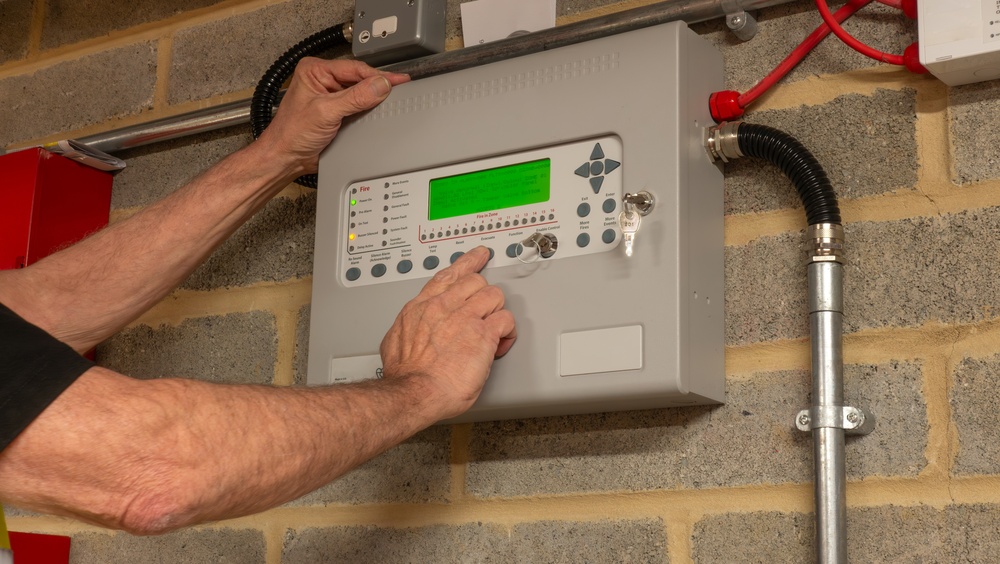
Fire alarm installers spend a lot of time running wire, mounting devices, testing pull stations, checking control panels, and documenting whether every part of a system works the way building codes require. Once a system is installed, it still needs inspections, repairs, battery replacements, sensor testing, and upgrades. Median pay is about $60,070 per year.

This is one of those jobs where boring procedures are a feature, not a flaw. You follow plans, test circuits, label equipment, check codes, and repeat the process at the next building. Employment is projected to grow about 10% over the decade, with thousands of openings each year. Commercial contractors, alarm companies, schools, hospitals, apartment buildings, and industrial facilities all need this work. Vocational electrical training can help you get started, followed by supervised field experience and whatever licensing or certification rules apply where you work. Remote monitoring may tell a building owner that something is wrong, but it cannot replace a technician who has to test, install, and certify physical life-safety equipment.

3. Calibration technician

Calibration technician
Image Credit: Shutterstock

Factories, laboratories, hospitals, and testing companies use thousands of measuring devices that have to give the right answer every time. Calibration technicians check things like pressure gauges, temperature sensors, scales, electrical meters, and other precision instruments against known standards. If something is off, they adjust it, test it again, and document the result. Median pay is about $67,820 per year.

There is a lot of repetition here. Set up the instrument, run the test, compare the reading, make an adjustment, record what happened, then move on to the next one. That routine matters in industries where bad measurements can ruin products or create safety problems. Employment is projected to grow 5%, faster than the overall job market, with roughly 1,400 openings expected each year. An associate degree or technical training in electronics, instrumentation, engineering technology, or a similar field is common, although some people learn through work experience. More automated equipment actually creates another reason to keep calibration specialists around, because sophisticated machines still need somebody to verify that their sensors and measurements can be trusted.

4. Rail car repairer

Rail car repairer
Image Credit: Shutterstock

Passenger trains and freight cars spend their lives getting shaken, loaded, unloaded, coupled, uncoupled, and exposed to weather. Rail car repairers inspect brakes, wheels, suspension parts, couplers, air systems, doors, and other equipment, then repair or replace whatever is worn out. National median pay is about $67,530 per year.

The job is less about glamorous locomotives and more about crawling around rolling stock with inspection lists and tools. Railroads, transit systems, repair shops, and rail-equipment companies need people who can spot mechanical problems before a car goes back into service. Employment is projected to grow roughly in line with the overall job market, and about 1,500 openings are expected each year. A high school diploma is a common starting point, followed by extensive paid training on the job. Mechanical, welding, diesel, or industrial maintenance experience can make you more competitive. Diagnostic software may point technicians toward a problem, but wheels, brake hardware, air lines, and damaged steel still have to be inspected and repaired by people working directly on the equipment.

5. Pump operator

Pump operator
Image Credit: Shutterstock

Pump operators move liquids, gases, slurries, and other materials through industrial systems. A normal shift can involve watching gauges, checking pressures and tank levels, opening and closing valves, inspecting equipment, recording readings, and responding when something moves outside its normal range. Median pay for pump operators outside of wellhead operations is about $61,770 per year.

You find these jobs around construction operations, terminals, industrial facilities, pipelines, bulk-storage sites, and other places that need material moved safely from one system to another. Employment is projected to grow about as fast as the overall labor market, with around 1,500 openings a year. A high school diploma is a common entry point, followed by several months of supervised training. The dull part is watching readings stay normal for long stretches. The important part is knowing when they are not normal and physically checking the system before a small problem turns into a spill, shutdown, or equipment failure. Controls can automate parts of the process, but facilities still need operators who can inspect actual pumps, piping, valves, and transfer equipment.

6. Home appliance repairer

Home appliance repair
Image Credit: Shutterstock

Washers leak. Refrigerators stop cooling. Dryers quit heating. Dishwashers make terrible noises six months after the warranty expires. Home appliance repairers spend their days diagnosing those ordinary problems, replacing parts, testing machines, and explaining to customers whether repairing an appliance makes sense. Median pay is about $50,990 per year.

Employment is expected to grow about as fast as average, with roughly 3,100 openings each year. Repair companies, retailers, manufacturers, warranty companies, and independent service businesses all employ technicians. A high school diploma plus on-the-job training is common, although trade-school courses in electricity, refrigeration, and appliance systems can speed things up. Refrigeration work may require additional certification. Modern appliances certainly have more software than they used to, and some machines can even send error codes remotely. That does not remove the need for somebody to pull the unit away from the wall, test components, replace a failed pump or control board, check for leaks, and make sure it works before the customer starts another load of laundry.

7. Hearing aid specialist

Hearing aid specialist
Image Credit: Shutterstock

Hearing aid specialists perform hearing tests, take ear impressions, fit hearing devices, make adjustments, and show customers how to use and maintain them. Much of the job is repeating the same testing and fitting process for one appointment after another. Median pay is about $65,160 per year.

The demand picture is unusually strong for such a small occupation. Employment is projected to grow 18% over the decade, with an aging population helping drive the need for hearing services. Specialists work in hearing clinics, medical practices, and hearing-device retailers. Licensing is generally required, and the route can include supervised training, examinations, and specialized education rather than the long graduate-school path required to become an audiologist. Devices themselves are getting smarter, but the work is not simply handing somebody a box. Customers still need physical testing, proper fitting, troubleshooting, counseling, cleaning, adjustments, and follow-up. Older clients may also need extra time learning controls and describing what they can or cannot hear. Those hands-on and face-to-face parts are a large reason the occupation continues to add workers.

8. Registered polysomnographic technologist

Polysomnographic technologist
Image Credit: Shutterstock

A polysomnographic technologist spends the night watching other people sleep. You attach sensors, check signals, monitor breathing, brain activity, oxygen levels, heart rate, and movement, then make sure the study produces usable information. If a sensor falls off at 2 a.m., you fix it. Average national pay for a registered polysomnographic technologist is about $62,416 per year.

Sleep testing is closely tied to neurodiagnostic work, a category projected to grow about 5%, faster than the overall job market. Sleep labs, hospitals, and specialty clinics employ these technologists, and many shifts happen overnight. Entry routes vary, but certificate and associate programs with clinical training are common, followed by professional credentialing. There is plenty of technology involved, yet the basic job still depends on somebody preparing the patient correctly, checking electrodes and belts, recognizing bad signals, fixing equipment, and responding if the person being monitored has a problem. Much of a normal night can be quiet and repetitive. That is exactly why careful technicians matter. Missing a loose sensor after several uneventful hours can ruin an entire study.

9. Medical equipment repairer

Medical equipment repairer
Image Credit: Shutterstock

Hospitals are packed with equipment that patients and clinical staff expect to work every single time. Medical equipment repairers inspect, maintain, test, calibrate, and repair things such as patient monitors, infusion pumps, hospital beds, diagnostic equipment, and other electronic or mechanical devices. Median pay is about $62,630 per year.

Employment is projected to grow 13%, with thousands of openings expected annually. Hospitals, medical-equipment companies, repair firms, rental businesses, and healthcare suppliers hire these workers. An associate degree or certificate in biomedical technology, electronics, or a related field is common, although relevant military, apprenticeship, or technical experience can open other routes. A large part of the job is preventive maintenance, which means testing equipment that appears to be working perfectly well and documenting the result. It does not sound exciting until the device is attached to a patient. Software can monitor equipment and flag faults, but somebody still has to enter the room, electrically test the machine, replace components, verify performance, and decide whether it is safe to return to service.

10. Occupational health and safety technician

Occupational health and safety technician
Image Credit: Shutterstock

Safety technicians inspect workplaces for hazards, collect samples, test noise or exposure levels, check protective equipment, review work practices, and document whether rules are being followed. It can mean a lot of checklists, measurements, photographs, training records, and conversations about things employees have heard a hundred times before. Median pay is about $58,440 per year.

Employment for safety technicians is projected to grow 9%, much faster than average. Manufacturing plants, construction companies, hospitals, transportation operations, warehouses, government agencies, and consulting firms all employ them. Unlike the higher-paid specialist track, technician jobs can often be entered with a high school diploma and on-the-job training, although safety certificates and technical education can help. The job stays grounded in physical workplaces. A computer can organize incident reports or flag trends, but it cannot walk a production floor, notice a missing machine guard, test an exposure level, inspect protective gear, or see that workers are taking a shortcut that looks fine on paper. Regulations and employer liability give companies another reason to keep trained people doing those checks.

11. Surveying and mapping technician

Surveying and mapping technician
Image Credit: Shutterstock

Surveying technicians collect measurements used to establish property boundaries, build roads, lay utilities, plan construction, and update maps. Depending on the job, you may carry equipment between survey points, hold rods, set up instruments, record measurements, process field data, or work with mapping software. Median pay is about $54,240 per year.

Employment is projected to grow 5%, with around 7,600 openings expected each year. Engineering firms, surveying companies, utilities, contractors, and public agencies use these technicians. A high school diploma can be enough for some entry-level positions, with substantial training provided at work. Courses in surveying, GIS, construction, or mapping can help. Drones and automated instruments have changed the field, but they have mostly changed how measurements are collected rather than eliminating the need for technicians. Somebody still has to choose control points, set up equipment correctly, check whether data makes sense, return to a site when it does not, and work around trees, buildings, traffic, mud, fences, and all the other things that do not appear neatly on a digital map.

12. Mobile heavy equipment mechanic

Mobile heavy equipment mechanic
Image Credit: Shutterstock

Bulldozers, loaders, cranes, graders, excavators, and other large machines take an enormous beating. Mobile heavy equipment mechanics diagnose hydraulic, electrical, pneumatic, and mechanical problems and keep those machines working. Some stay in a shop, while field technicians drive to wherever a broken machine happens to be sitting. Median pay is about $65,510 per year.

Employment is projected to grow 6%, with about 16,500 openings expected annually. Equipment dealers, rental companies, construction contractors, mining operations, and large fleet owners all need mechanics. A high school diploma followed by technical training or extensive on-the-job learning is a common route. Diesel, hydraulics, electrical systems, and computerized diagnostics are useful areas to learn. Machines increasingly tell technicians what fault code they are seeing, but a code is not the same thing as a repair. Somebody still has to find the leaking hose, remove the failed pump, test a sensor, crawl underneath the equipment, and confirm the machine can safely return to work. Construction companies lose money quickly when expensive equipment sits idle, which gives competent mechanics a fairly durable reason to exist.

13. Industrial machinery mechanic

Industrial machinery mechanic
Image Credit: Shutterstock

Industrial machinery mechanics keep conveyor systems, production machines, packaging lines, pumps, motors, and other factory equipment running. Much of the job is preventive maintenance: lubricating parts, checking wear, aligning equipment, replacing bearings, testing systems, and fixing small problems before they stop production. Median pay is about $63,760 per year.

Employment for industrial machinery mechanics is projected to grow 16%, making this one of the stronger job markets on the list. Manufacturers, warehouses, food processors, distribution centers, and industrial repair companies all employ them. A high school diploma is common, followed by lengthy on-the-job training, though technical-school programs in industrial maintenance can help. More automation does not necessarily mean fewer mechanics here. Automated warehouses and factories contain more conveyors, motors, sensors, rollers, drives, and mechanical systems that have to be maintained. Predictive software may warn that a bearing is failing, but it cannot shut down the line safely, remove the assembly, fit the replacement, align everything, and get production running again. The work can be repetitive, dirty, and noisy, which also helps explain why employers keep looking for people willing to do it.

14. Mechanical insulation worker

Mechanical insulation worker
Image Credit: Shutterstock

Mechanical insulation workers wrap and cover pipes, boilers, ducts, tanks, and other equipment so systems hold temperature, save energy, and protect workers from hot or cold surfaces. It involves lots of measuring, cutting, fitting, fastening, climbing, and working in mechanical rooms where most people would rather not spend their day. Median pay is about $58,340 per year.

Employment is projected to grow about 5%, faster than the overall job market. Mechanical contractors, industrial facilities, commercial construction companies, plants, and energy projects need these workers. Many people enter through a paid apprenticeship after high school and learn the trade while working. The demand is helped by efforts to make buildings and industrial systems more energy efficient. This is also a job with very little opportunity to send the actual labor somewhere else. Somebody has to be physically next to the pipe or duct, shape the insulation around valves and bends, work around existing equipment, and make sure the covering is secure. Plans and measurements can be digital, but the finished job still depends on hands, tools, ladders, and a person willing to squeeze into awkward spaces.

15. Chemical technician

Chemical technician
Image Credit: Shutterstock

Chemical technicians perform routine laboratory and production tests on liquids, powders, gases, raw materials, and finished products. They prepare samples, operate instruments, clean equipment, record results, monitor manufacturing processes, and check whether products meet specifications. It is careful work with lots of repetition and very little room for sloppy habits. Median pay is about $60,390 per year.

Employment is projected to grow about 4%, roughly in line with the overall job market, with thousands of openings expected each year. Chemical manufacturers, testing laboratories, research facilities, environmental companies, and other industrial employers use these technicians. An associate degree in chemistry, laboratory science, or a related technical field is the usual path, although some employers train workers with other relevant backgrounds. Automated instruments can run measurements quickly, but laboratories still need people to prepare and label samples, maintain equipment, notice contamination or strange results, handle chemicals safely, and decide when a test needs to be rerun. Quality control also creates steady work because manufacturers cannot simply assume every batch coming off a production line is correct. Somebody has to test it and document that it meets the required standard.

16. Farm equipment mechanic

Farm equipment mechanic
Image Credit: Shutterstock

Modern tractors and combines may have screens, GPS systems, sensors, and computers, but they still have hydraulic lines, bearings, belts, engines, electrical systems, and moving parts that fail at inconvenient times. Farm equipment mechanics diagnose those problems, perform scheduled maintenance, replace worn components, and get expensive machinery back into service. Median pay is about $56,550 per year.

Employment is projected to grow 11%, with around 3,700 openings a year. Equipment dealerships employ a large share of these mechanics, along with agricultural operations and machinery service companies. A high school diploma is common, while diesel, agricultural equipment, or heavy-equipment training can make it easier to get hired. The work is increasingly technical, but that does not make the mechanic disappear. Diagnostic systems can identify an electrical fault or pressure problem, while the technician still has to open the machine, test components, remove damaged parts, repair hydraulic systems, and work out what happened when the computer’s answer is incomplete. Farming also runs on deadlines. When machinery fails during planting or harvest, leaving it broken until somebody has time next week is not much of an option.

17. Recreational vehicle service technician

Recreational vehicle service technician
Image Credit: Shutterstock

RV technicians fix an odd mixture of household and automotive systems packed into one vehicle. A normal week might involve water pumps, refrigerators, electrical circuits, propane appliances, slide-outs, air conditioners, toilets, roofs, doors, and cabinetry. That makes the work varied in terms of systems, even when the daily routine is mostly diagnosing leaks and replacing parts. Median pay is about $52,000 per year.

Employment is projected to grow more than 10% over the decade, with thousands of openings expected annually. RV dealerships, repair centers, rental companies, and independent service businesses employ technicians. A high school education followed by technical classes and substantial on-the-job training is common, and workers often add manufacturer or industry certifications as they gain experience. This is another job where online troubleshooting only goes so far. A customer can describe a leaking roof or dead refrigerator to a chatbot all afternoon, but somebody eventually has to climb onto the RV, find where the water is entering, test the circuit, pull the appliance out, or replace the failed seal. The physical variety of RV systems makes experienced troubleshooters especially useful.

18. Mechanical door repairer

Mechanical door repairer
Image Credit: Shutterstock

Automatic doors at hospitals, stores, warehouses, offices, and other buildings seem invisible until they stop opening. Mechanical door repairers install and service automatic doors, hydraulic doors, garage doors, tracks, springs, openers, sensors, and related hardware. National median pay is about $55,720 per year.

Employment is projected to grow more than 11%, with roughly 2,700 openings expected each year. Construction contractors, door companies, retailers, and specialized service firms hire these technicians. Many workers enter with a high school diploma and learn through several months of supervised training, though electrical and mechanical experience is useful. This may be one of the purest examples of a boring job that solves a problem people cannot postpone forever. A broken loading-bay door can stop shipments. A failed automatic entrance can create an accessibility or safety problem. Sensors and connected controls can report that a door is malfunctioning, but the repair still involves ladders, springs, tracks, motors, wiring, adjustments, and physical testing. Buildings will keep having doors, and those doors will keep wearing out.


Learn what to consider when choosing your parent's first cane, walker, rollator, or wheelchair.
Image Credit: Michael Fischer via Unsplash

When an elderly parent struggles to get up from a chair or has to hold onto a wall for support and balance while walking down a hallway, that’s a strong sign that something needs to change. The properly-fitted mobility device can return some level of independence and lower the risk of falling among older adults. This guide walks you through the practical steps for making that choice with confidence.

Signs your parent may need extra support

Most families recognize signs of mobility limitations before anyone discusses needing a mobility aid. Your parent may start avoiding stairs, walk across a room while holding onto furniture, or feel fatigued after a short walk. But if it’s a fall, it’s usually the catalyst that gets people to act, even a minor one.

Be aware of smaller changes also. When your parent has decided to avoid social gatherings because going there seems too much trouble, or if they’ve secretly stopped gardening or walking the dog, it’s time to have a conversation. It is a doctor or physical therapist who evaluates a senior’s balance and strength, and their opinion is more influential than a family’s. A professional opinion in the early stages ensures that the mobility aid chosen will reflect a real clinical need.

Types of mobility devices and what they offer

Mobility aids come in a range, and knowing where your parent falls on it makes the decision much easier. A cane is appropriate for those who need minor balance support but have strong upper-body strength.

Rollators (walkers with wheels and a seat) are a good choice for individuals with weaker legs or those who have recovered from surgery and need to rest periodically during a walk. An affordable mobility scooter for seniors is an option for those who don’t get as much exercise as they used to, suffer from chronic pain, or can’t walk safely without support.

Each category has subtypes. Standard walkers must be lifted with every step, which takes more arm strength than a rolling walker. A three-wheeled rollator can roll around more than four-wheeled models, an excellent option for those living in small apartments or stores. Travel scooters disassemble to fit into car trunks. Heavier-duty scooters have higher weight capacities and perform better on outdoor surfaces.

Matching the device to daily life

Not all of the most advanced devices are necessarily the best. It’s the one that matches your parent’s real needs. Find out where they spend most of their time. Someone living in a house with wide hallways has different options than someone living in a small apartment with narrow doorways. Measure all doorways and turning spaces before purchasing a mobility device, as a rollator/scooter that you cannot get through the door without a week becomes useless.

Think about how your parent actually moves through their day. Do they need to access a mailbox at the end of a long driveway? Do they go to church or visit friends within the area? A cane is not going to be enough for someone who has to go long distances, and a scooter is too much for someone who really only needs support standing up off the couch. Discuss this with your parent as their feedback is super important to make the right choice.

Trying before buying

Fit is as important as function. A walker that is too low will make the person hunch over and provide less back support, and one that is too tall won’t provide much support at all. Some medical supply outlets and local pharmacies let you test devices in the store, but you shouldn’t rely on that. Ask your parent to walk the device on various surfaces, such as carpet, tile, ramps, and thresholds.

Even if it seems like a minor detail, comfort is key. Adjustable handgrips are useful for parents who suffer from arthritis. Adjustable seat heights on rollators make sit/stand easier on the knees. If the scooter is designed to fit in a car, test how easily it can be lifted or folded; for scooters, test the turning radius in a space similar to your parent’s home. A device which looks great in a showroom but becomes cumbersome in everyday applications will become a dust collector in the closet.

Cost, insurance, and where to buy

The price of mobility devices varies widely. A basic cane could cost less than thirty dollars, while a power wheelchair can cost a few thousand dollars. Medicare Part B may pay for some of the cost of these devices, including walkers, wheelchairs, scooters, and some other types, if a doctor writes an order for the device due to medical need. However, coverage rules and required forms vary by device and by state. Some private insurance policies and Medicaid have specific requirements, and it’s important to phone ahead, as those plans and programs don’t always cover the same things.

When purchasing refurbished or gently used equipment from a certified medical supply company, note that the savings don’t compromise safety, as long as the provider inspects and services the equipment before sale. Local mobility retailers may offer fitting services, warranty support and repairs that are not available with online marketplaces. Don’t forget to ask about return policies either. It provides a 30-day trial so your parent can get to know the device and make sure it works for them, and it lets you try the first one and then switch to a different one if it doesn’t meet your needs.

Helping your parent adjust

The first day of having a new mobility device isn’t always easy. Some parents feel embarrassed about using a cane or walker in public, viewing it as a loss of independence instead of a way to preserve it. Let them know that it takes time and don’t rush them.

Homework sessions are a great help. Stick by your parent as they get familiar with the device on stairs, thresholds, and uneven terrain. If balance problems persist, consult their physician for a referral to physical therapy, where a physical therapist can help them learn proper technique and provide exercises to strengthen the new equipment. Dress changes, such as removing loose rugs or installing grab bars near the furniture you use most often, can support the transition and reduce fall risk as your parent gets used to the home.

It requires some effort but is worth it when you get the right mobility device; you will see increased confidence and a parent who can continue to do the chores that are important to them. Have an honest discussion, obtain an assessment, try a few options in person and allow time for your parent to adjust. This is a much more natural progression than selecting a product that you’ve seen on a shelf, and hoping for the best.