Thinking of letting your kid walk to school alone for the first time? It’s a big milestone, for sure. It’s also one of those parenting decisions that can make you stare out the window five minutes after they leave and wonder whether you’ve completely lost your mind.
Well, first off, you haven’t; it’s only natural to worry, but all kids have to go through this at some point. What’s important to understand is this: a child who knows the route, has a backup plan, and understands what to do when something goes wrong has a much better starting point than one who simply knows where school is.
After all, pedestrian crashes still cause thousands of deaths and many injuries in the U.S. each year, with speed and road design among the factors that raise the risk. We’re not sharing this to make you or your child afraid of the walk. We’re sharing it because having a solid family safety plan that covers more than “look both ways” is essential. Here’s how to build one.
Walk the route before you hand over the responsibility
Take the actual route with your child several times, preferably around the same time they will walk to school. Morning traffic behaves very differently at 7:45 a.m. than it does on a quiet Sunday afternoon.
Choose the route based on safety, not just distance. The NHTSA recommends looking for well-defined walking paths and routes separated from traffic where possible (preferably sidewalks), and its walkability guidance also flags poor lighting, damaged sidewalks, and other hazards worth noticing.
Point out exactly where your child should cross, which driveways require extra attention, and where they should never cut through to save two minutes. Have them lead you through the route after a few practice walks, as well.
Make traffic rules specific
“Be careful” is not a useful instruction for an eight-year-old standing near a busy intersection. Give your child clear rules they can actually follow:
Use sidewalks and designated crossings where available
Stop fully at the curb and look left-right-left before crossing
Keep phones and headphones away at the crossing
Never assume a driver has seen them, even if the vehicle appears to stop
Follow the planned route unless you have discussed a change beforehand
NHTSA also advises that children under 10 should generally walk with an adult or someone responsible for helping them walk safely. Age matters, but so does the child’s judgment, ability to focus, and the route itself.
Teach kids what to do after an injury or crash
What happens if your child is injured? Nobody wants to picture worst-case scenarios, but having a clear protocol reduces panic if something does happen.
If your child is injured, teach them to move to a safer location only if they can do so safely, call 911 or ask a trusted adult to call, and contact you as soon as possible. They should not worry about figuring out who was at fault, arguing with a driver, or handling the situation themselves.
Securing immediate medical care is always step one. Once your child is safe, you may need legal help for injured pedestrians to navigate insurance claims, understand your rights, and cover medical expenses so you can focus entirely on your family’s recovery.
What if your kid witnesses someone else get hit? Their job is not to play hero. They should call 911 or find a responsible adult, stay nearby only if it is safe, and avoid moving an injured person unless there is immediate danger.
Create a reliable communication plan
Your plan can include a quick “leaving now” and “arrived” message if your child has a phone. But avoid making the phone the entire safety system.
Instead, agree on what happens if your child is late. For example, after a set number of minutes, you call them. If you cannot reach them, you contact the school and then follow the next steps you’ve already decided on.
Your child should also memorize your phone number and at least one other trusted adult’s number. Put emergency contacts in their backpack, but don’t assume a written list replaces memorization.
Build confidence without creating fear
The goal is confidence, not paranoia. You don’t need to invent every terrible thing that could happen on the walk to school.
Practice the plan, answer questions honestly, and revisit it when the route changes, daylight hours shift, or your child shows more independence. A good safety plan should become familiar enough that your child knows what to do without feeling like danger waits behind every parked car.
Finding a lawyer after clergy abuse can feel overwhelming before anyone even picks up the phone. A survivor may be carrying memories they have lived with for years, wondering whether legal action is still possible, and trying to choose a firm that will treat private details with care.
For parents and family members, the search can be difficult in its own way. You may be trying to support someone you love while also protecting their privacy, understanding legal fees, and figuring out which firms handle clergy abuse cases in Michigan.
The firms below are options to consider when researching Michigan clergy abuse lawyers. They are presented as a practical starting point, not a promise of results, for survivors and families seeking a clearer sense of what each firm appears to focus on before deciding whom to contact.
For survivors weighing legal options after abuse by a religious leader, finding representation through firms like InjuryLawyerTeam.com Michigan clergy lawyers can involve looking at whether a church, school, or religious organization knew about warning signs, ignored prior complaints, or failed to protect people in its care.
Injury Lawyer Team handles abuse cases involving trusted institutions. Its clergy abuse information focuses on survivor rights, institutional accountability, confidentiality, and legal steps that may still be available years after the abuse occurred.
That can be helpful for survivors and family members who do not know where to begin. A first conversation with a firm should make the process clearer, including what details may matter, how privacy is handled, whether deadlines apply, and what legal options may still exist.
2. Grewal Law PLLC
Grewal Law PLLC handles abuse and assault cases, including claims involving clergy misconduct. The firm has experience with large, sensitive litigation, which may matter to survivors seeking a legal team familiar with powerful institutions and complex histories.
A good firm should be able to explain the process without making it feel rushed or confusing. Clergy abuse cases can involve old records, prior complaints, church assignments, witness memories, and questions about whether leaders failed to act when they should have. When a firm can organize those details clearly, a difficult process can feel less impossible to face.
Before contacting Grewal Law or any firm on this list, survivors may want to write down what they remember, when and where the abuse occurred, who may have known, and whether there were any reports, transfers, or warnings involving the accused. The first call does not need to include every detail. It should simply help the survivor understand whether the firm may be a good fit.
3. Sommers Schwartz, P.C.
Sommers Schwartz, P.C. handles personal injury, medical malpractice, and sexual abuse cases, including clergy abuse claims. Its clergy abuse work may be relevant for survivors who want a Michigan-based litigation team with experience examining both individual misconduct and the role an institution may have played.
These cases can involve more than a survivor’s memory of what happened. Personnel files, prior complaints, internal communications, reassignment records, and missed or ignored patterns may all matter. A firm that knows how to examine those details can help survivors and their families understand which questions to ask before a civil claim moves forward.
For single moms helping a child, adult child, or relative, that kind of structure can matter. The right firm should explain the process plainly, protect sensitive information, and give the survivor room to decide what feels safe before taking the next step.
4. White Law PLLC
White Law PLLC handles sexual abuse cases, including claims involving clergy abuse. The firm may be a fit for survivors who want a legal team that looks at both the abuse itself and the role a church or religious institution may have played in allowing harm to happen.
A strong clergy abuse firm should be able to explain the difference between a claim against an individual abuser and a claim involving institutional responsibility. That difference can affect which records matter, which questions are asked, and how the firm reviews reports, transfers, supervision, and prior warnings.
For survivors and families, the first conversation should feel private, careful, and clear. A firm should be willing to explain fees, timelines, confidentiality, and which information may be useful, without pressuring someone to share more than they are ready to discuss.
5. Pitt McGehee Palmer Bonanni & Rivers
Pitt McGehee Palmer Bonanni & Rivers is a Michigan civil rights and litigation firm involved in clergy abuse representation through the Michigan Clergy Sexual Abuse Coalition. The firm may be relevant for survivors and families who want a legal team with experience looking at institutional failures, not only individual misconduct.
Cases like these often require attention to patterns. A firm may need to review whether complaints were made before, whether an accused person was moved to another role, who had the authority to act, and whether internal records tell a fuller story than the survivor could have known at the time.
For survivors, the process should still feel human. The right firm should explain what it can investigate, how it protects privacy, and what a survivor can expect before any formal decision is made.
What to ask before choosing a clergy abuse law firm
A first call with a law firm does not have to become a commitment. It can simply help you understand whether the firm handles this kind of case, how private information is protected, and what the next step would look like if the survivor chooses to move forward.
For family members, the legal search often starts with something quieter: listening, believing, and learning how to comfort someone without taking over the decision. A survivor should be able to ask questions at their own pace, and the right firm will respect that.
Useful questions to ask include:
Does the firm handle clergy abuse or institutional abuse cases in Michigan?
Who would be the main contact if the firm takes the case?
How does the firm protect private information?
Are consultations free?
How are fees handled if the case does not move forward?
What records, names, dates, or locations would be helpful to gather?
How does the firm communicate with clients who are not ready to discuss every detail at once?
The first conversation should leave a survivor or family member with more clarity, not more pressure. A firm should be able to explain the process in plain language and give the person room to decide what feels right.
Why trauma-informed legal experience matters
Clergy abuse cases often involve events that happened years ago, private memories, family pressure, and institutions that once felt safe. Many survivors wait years before talking about abuse, and many survivors never report to law enforcement when fear, shame, confusion, trauma, or family pressure shapes what someone feels ready to say.
That is why the first conversation with a law firm matters. A firm that handles clergy abuse claims should be able to explain what information may be useful, how privacy is protected, and how civil claims can differ from criminal investigations.
Survivors do not need to understand every legal issue before making a call. A good first conversation should clarify the process, including what the firm can review, which deadlines may apply, and how sensitive information will be handled.
A careful first step can still be a strong one
Choosing a clergy abuse law firm is a serious decision, and nobody should feel rushed into it. Survivors and families deserve clear answers, private conversations, and enough space to decide what feels safe.
The right firm should be able to explain the process without pressure. That includes how the first call works, what information may be useful, how fees are handled, and what legal options may still be available if the abuse occurred years ago.
For a survivor, making one call or writing down one question can be a meaningful step. It does not have to solve everything at once. It only has to create a little more clarity than there was before.
When your firm shares your timetable with school runs, homework, meals, and bedtime, it’s obvious that going head-to-head with marketing cannot become one of your full-time jobs. You need ideas that bring attention without demanding hours you simply do not have.
You need to start where your ideal customer already spends time. Then look for approved school events, parent groups, markets, and community programs.
If you want a successful move, donate a product or offer a small prize. You are helping the community first, while giving nearby parents and most locals a natural reason to discover your brand.
2. Turn a shopping bag into lasting advertising
Instead of banking on a flyer that may get read only once, a useful branded bag can be your best walking ad. More effectively, it can travel everywhere; through grocery stores, school pickups, offices, and weekend errands while carrying your business name.
If you want to compare materials, sizes, and design choices, explore branded reusable grocery bags available from Bagmasters. Choose a practical option your customer will genuinely reuse.
That creates repeated exposure without paying for another impression each time.
3. Partner with a micro creator
Skip the celebrity influencer. A local parent or niche creator with a relevant audience may give your brand stronger access to the right people.
Your best bet might be offering a product exchange or referral code. Let the creator explain the product naturally, because a real experience feels more believable than a polished script. Choose creators whose content already matches your brand and customers. It saves you half the time and cash.
4. Give referrals a simple reward
Your happiest customers can become an acquisition channel. Nielsen found that 83 percent of global respondents in its 2015 survey trusted recommendations from friends and family, based on research across 60 countries.
If you are still testing your business model, these side hustles that can grow into full-time businesses offer useful perspective on how small customer wins can develop into something bigger.
5. Put QR codes on useful things
It’s more effective if you can add a QR code to package inserts, postcards, receipts, or community flyers. Send people to one focused destination, such as a first purchase offer or email signup.
One scan has to lead to one clear action. Then you can use separate codes to learn which locations produce scans.
6. Give your Google profile some attention
If you serve a local market, your Google Business Profile can act like a free digital storefront. Google says complete and accurate business information can help your profile appear in relevant local search results.
Also, update your hours, category, services, photos, website, and contact details, then never miss responding to reviews. They could be your most effective cash cow without costing much.
7. Build a loyalty habit
You do not need expensive loyalty software. A simple digital tracker or physical card can reward repeat purchases or referrals.
Keep the reward realistic and easy to reach. A good loyalty offer encourages returns without hurting your profit margin.
8. Give email subscribers something useful
“Join our newsletter” is rarely compelling. Give people a useful free resource, such as a checklist or template.
Constant Contact reported in 2026 that 41 percent of small businesses expected email marketing to be among their most valuable channels, behind social media.
9. Listen before you post in neighborhood groups
Community groups these days can reveal problems your clients are already trying their best to solve. So watch for repeated questions, requests, complaints, and recommendations before promoting your product.
Then create a helpful answer or resource and solve the problem before asking for a sale. You need to treat these groups as free customer research, not advertising space.
10. Share a pop-up with another brand
A small event becomes cheaper when you share the work. Partner with a complementary business and split promotion.
A baker could team up with a party planner. A children’s clothing brand could collaborate with a family photographer.
Choose a complementary partner, rather than a direct competitor.
11. Let customers become your content team
While most entrepreneurs spend thousands to polish their brand, ask satisfied customers for permission to share photos, reviews, short videos, or stories about their experience. These can evolve into social posts, emails, product pages, and testimonials; they’re more persuasive branding solutions than costly ads.
Real customer experiences can make your marketing feel more credible. They also give you content without requiring you to create everything yourself.
Make your marketing fit your real life
You do not need to launch all 11 ideas this week. Pick two that fit your schedule, track the response, and give yourself permission to drop tactics that consume time without producing useful results.
Your advantage is not really about having more hours and cash than everyone else. It is actually about knowing where your limited hours can be crafted into something very valuable for today’s consumers. Just kickstart everything with one practical idea, make it repeatable, and let real client feedback and engagement decide what you scale next.
Asking for help with alcohol or drug use when you have children in your care feels heavier than standard medical requests. Fear of external judgment, legal scrutiny, or societal labels can keep many people from seeking professional guidance until support becomes necessary.
There are 17 million children living with a parent who has a substance use disorder in the United States today. That frequency means that struggling with substance reliance while raising a family is a deeply shared reality, not an isolated personal failing. Recognizing that alcohol or drug use is impacting your daily routine is the first step toward reclaiming stability for your entire household.
Overcoming the emotional barrier requires shifting how you view medical care. Seeking professional intervention is not an admission of incompetence, but a direct, responsible act of care that prioritizes your physical health and your family’s safety.
Taking practical steps toward medical stabilization
Attempting to stop substance use abruptly at home without professional supervision carries real physical risks. Medical withdrawal can lead to severe physiological complications, making structured clinical oversight essential for safely managing the transition.
When you decide to address substance use, organizing your immediate steps reduces stress and keeps your focus on recovery:
Schedule a private consultation with a licensed primary care provider or addiction professional to discuss your medical background
Coordinate short-term, trusted child care options through family members, reliable friends, or dedicated community support programs
Assemble key medical documents and insurance information prior to your initial clinical intake appointment
Local guidance and intervention are often best. For parents in Georgia who need to discuss safe next steps, undergoing supervised detox in Atlanta may be an appropriate starting point with qualified medical professionals. Having a clinical team monitor your early stabilization protects your health while keeping your care plan structured, and equivalent facilities can be found nationwide..
Reaching out to healthcare professionals and support systems
Initiating a conversation about substance reliance with a doctor can feel intimidating. Healthcare providers operate under strict confidentiality laws, meaning your personal medical discussions remain protected as you explore treatment avenues.
As mentioned, recent research indicates that parental substance use disorders impact nearly 17 million children, underscoring why medical networks continue to expand specialized family-focused care options. Doctors understand the specific pressures that parents face and can connect you with resources tailored to maintaining family stability throughout recovery.
In addition to primary physicians, speaking with specialized counselors helps map out practical timelines. They help you navigate logistics, evaluate program intensity, and determine how to maintain parental obligations while receiving proper care.
Securing child care and local resources
Arranging safe oversight for your children during medical treatment is often the largest practical hurdle parents encounter. Approaching this task with a clear plan helps ensure your children stay supported without compromising your recovery timeline.
Child welfare studies demonstrate that family support interventions tied to parental recovery needs significantly improve long-term home environments when care is sought early. Reaching out to local family support networks, respite care services, or trusted relatives helps you build a reliable safety net. Framing the situation as a proactive health priority for trusted supporters makes it easier to ask for help with daily routines, school drop-offs, and meal preparation while you undergo treatment.
It’s like taking any major step, whether that’s starting anew after divorce or relocating with your kids. Handling the little things helps make the big things much more manageable.
Building a stronger foundation for your household
Choosing to seek help changes your health trajectory and directly benefits your children’s long-term well-being. Treatment equips you with stress-management tools, emotional regulation strategies, and healthier coping mechanisms that serve your family for years to come.
Taking action today breaks the cycle of isolation that substance reliance creates. Reaching out to a qualified healthcare provider offers a clear, manageable path forward for both you and your children. We have many other life advice articles to read, so whatever challenges you’re facing, help is out there.
You’ve maxed out contributions when you could, paid off debt early, avoided lifestyle creep. On paper, you’ve done everything right. Then you look closely at a few of your biggest financial decisions and realize some of them have been quietly working against you the whole time.
The median 401(k) balance in America is $44,115, while the number most people picture when they hear “average” is closer to $167,970. That gap isn’t only bad luck or low pay. A lot of it comes down to specific, ordinary-sounding choices that feel careful in the moment and cost real money over the next twenty years.
None of the moves below are exotic or reckless. They’re the responsible-looking decisions that quietly drain tens of thousands of dollars from a retirement account, one reasonable choice at a time.
You leave a job, HR hands you paperwork, and one box says you can take your 401(k) balance as cash instead of rolling it into a new account. It looks like found money. It isn’t.
Researchers who tracked more than 162,000 workers leaving 28 different retirement plans found that 41.4% cashed out some or all of their retirement savings at job separation instead of rolling the balance forward. Every dollar cashed out gets hit with ordinary income tax, plus a 10% penalty if you’re under 59 and a half. A $30,000 balance can shrink by a third before it ever reaches your bank account.
The fix costs nothing and takes fifteen minutes: roll the balance into your new employer’s plan or an IRA instead of taking the check. You lose nothing by asking your new plan’s administrator to handle the transfer directly, and you keep every dollar working instead of handing a chunk of it to the IRS on your way out the door.
Claiming Social Security the day you turn 62
Image Credit: Shutterstock
Sixty-two looks like the finish line, and claiming the moment you’re eligible looks like collecting what you’ve earned. It also locks in a permanently smaller check for the rest of your life.
Full retirement age for anyone born in 1960 or later is 67. Claim at 62 instead, and your benefit is reduced for as long as you receive it, not just for a few years. Wait past 67, and you earn delayed retirement credits worth roughly 8% more for every year you hold off, up until age 70. The average retired worker collected $2,071 a month as of January 2026. That 8% a year compounds into a meaningfully larger check for however long you live.
This isn’t a blanket argument for waiting until 70. Health, other income, and family longevity all matter. It’s an argument for running your own numbers before defaulting to the earliest possible date out of habit.
Skipping catch-up contributions once you hit 50
Image Credit: Shutterstock
Turning 50 unlocks extra room in your 401(k) that a lot of people never use, mostly because nobody tells them it exists.
For 2026, workers 50 and older can contribute an extra $8,000 on top of the standard $24,500 limit, bringing the total to $32,500. If you’re between 60 and 63, the IRS lets you go even further with a “super” catch-up of $11,250 instead of the standard $8,000. IRA catch-up contributions rose too, adding $1,100 on top of the $7,500 base limit.
These are your highest-earning, closest-to-retirement years, which makes this room the most valuable stretch of contribution space you’ll ever get. Skipping it isn’t a mistake that shows up immediately. It shows up as a smaller number fifteen years later, after all that unused space has quietly disappeared. Even bumping your contribution rate by a few percentage points the year you turn 50, rather than waiting for a raise or a less busy year, adds up faster than most people expect once compounding has a decade or two to work on it.
Moving your whole portfolio to cash and bonds too early
Image Credit: Shutterstock
Getting nervous about the stock market as retirement approaches is a normal instinct. Acting on it by going almost entirely to cash and bonds in your 50s or early 60s tends to backfire.
New 2026 retirement income research found that portfolios holding 30% to 50% in stocks supported the highest safe withdrawal rates, not portfolios that went heavier into bonds and cash. The baseline safe withdrawal rate for that kind of balanced allocation sits at 3.9% for a fixed-spending retiree in 2026. Go too conservative too soon, and you remove the growth engine that’s supposed to keep your money ahead of decades of inflation and withdrawals.
There’s a middle ground between reckless and overly cautious. A retirement that could last 25 or 30 years still needs some exposure to growth, even if the split shifts gradually as you age rather than dropping to near zero the moment you stop working.
Letting required minimum distributions sneak up on you
Image Credit: Shutterstock
Required minimum distributions read like a future-you problem until future you is standing in front of a tax bill you didn’t see coming.
Under current rules, you generally have to start withdrawing from traditional IRAs and 401(k)s at age 73, a threshold that climbs to 75 by 2033. Miss the deadline or withdraw too little, and the IRS charges a 25% penalty on the amount you should have taken, cut to 10% if you fix the error within two years. Because RMDs count as ordinary income, a large one can also push you into a higher tax bracket or trigger higher Medicare premiums the same year.
The people who avoid this surprise are the ones who mark the calendar the year they turn 73, not the year the IRS sends a notice. A financial advisor or even a plan administrator can calculate the exact figure well ahead of the deadline.
Buying an annuity without reading the surrender schedule
Image Credit: Shutterstock
An annuity salesperson describing guaranteed income for life can sound like exactly what a nervous retiree wants to hear. What often gets skipped is what happens if you need that money back early.
Most fixed and indexed annuities carry surrender charges that start around 10% and shrink to zero over a schedule that can run six to eight years. Pull money out before then, and that percentage comes straight off the top, on top of a 10% IRS penalty if you’re under 59 and a half. Variable annuities add another layer of ongoing fees for mortality, expense, and administrative costs that keep charging every year you hold the contract.
Annuities aren’t automatically a bad product. They’re a bad fit for money you might need access to. Before signing anything, ask specifically how much you’d lose if you needed the funds back in year two, not year ten, and get the answer in writing rather than a verbal estimate from whoever is selling you the contract.
Treating whole life insurance as your investment plan
Image Credit: Shutterstock
An insurance agent pitching a policy that “pays a death benefit and builds cash value” is describing two different products stapled together, and the investment half is the weaker one.
The average annual return on whole life cash value runs between 1% and 3.5%, well below what a low-cost index fund has delivered over most stretches of market history. It also takes 10 to 15 years before the policy builds enough cash value to be worth borrowing against, because early premiums go mostly toward fees and commissions rather than your account balance.
Whole life can make sense for specific estate planning needs or a lifelong dependent who requires ongoing financial support. It rarely makes sense as your main retirement growth vehicle, and premiums that could have gone into a 401(k) or IRA usually would have worked harder there. If an agent frames a policy primarily as a savings or investment tool rather than as insurance, that’s a signal to get a second opinion before you commit to years of premiums.
Draining a retirement account to pay off the mortgage
Image Credit: Shutterstock
Being debt-free looks like the responsible endgame, and pulling a lump sum from a 401(k) to zero out the mortgage balance can look like the fastest route there. The bill for that decision is bigger than most people expect.
Withdraw $50,000 from a 401(k) before age 59 and a half, and you’ll automatically owe a $5,000 penalty before taxes are even calculated. On a $100,000 withdrawal taxed at a 24% federal rate plus the 10% penalty, you could lose $34,000 to the IRS and keep just $66,000 of it. That’s money that also stops compounding for whatever years remain before retirement.
If a mortgage payment actually threatens your monthly budget, refinancing, downsizing, or using non-retirement savings first usually costs less than raiding a tax-advantaged account that’s still supposed to be growing. The emotional relief of a paid-off house is real, but it’s worth pricing out against the tax bill and lost growth before deciding it’s worth the trade.
Forgetting Medicare premiums scale with your income
Image Credit: Shutterstock
Medicare Part B has a standard premium everyone assumes they’ll pay, until a bigger number shows up on the bill because of income from two years earlier.
The 2026 standard Part B premium is $202.90 a month, but income-related monthly adjustments kick in for anyone whose 2024 income topped $109,000 for single filers or $218,000 for joint filers, pushing the monthly premium as high as $689.90. Because Medicare uses a two-year lookback, a big Roth conversion or a large capital gain today can raise your premiums in a year you’re not expecting it.
This is exactly why RMDs, Roth conversions, and capital gains need to be planned with Medicare in mind, not decided in isolation. A withdrawal that looks smart on a tax return can quietly cost you thousands in higher premiums two years down the road, for a full year, since these adjustments reset annually rather than phasing in gradually.
Retiring with a credit card balance still open
Image Credit: Shutterstock
Retirement doesn’t erase existing debt, and a surprising number of retirees find that out the hard way once fixed income meets revolving interest.
A recent analysis found that 92.6% of retirement-age adults carry a credit card balance, with average APRs sitting around 21% in 2026. The 2026 Social Security cost-of-living increase came in at just 2.8%. A fixed benefit growing under 3% a year cannot outrun revolving debt priced at seven times that rate, no matter how disciplined your monthly budget is otherwise.
Paying that balance down before you retire, even if it means working a few extra months, does more for your financial security than almost any investment decision you could make in that same window. Interest at 21% is a guaranteed loss that no market return reliably beats, and treating a payoff plan as part of your retirement timeline, not a separate problem to deal with later, tends to produce a much calmer first year of retirement.
Sending your adult kids more than your own 401(k)
Image Credit: Shutterstock
Helping your kids looks like the obvious right choice, month after month, until you add up how much of your own retirement you’ve quietly redirected to theirs.
Roughly 75% of parents give some form of financial support to at least one adult child, and working parents contribute about 2.3 times more each month to their kids than to their own retirement accounts. Groceries, phone bills, and vacations add up quietly because each individual expense feels small and temporary, even as the combined total quietly outpaces what’s going into your own accounts.
Helping isn’t the problem. Helping without a ceiling is. A monthly dollar limit, tied to what you can afford after your own retirement contributions are funded, keeps generosity from becoming the reason you’re still working at 72. Framing the help as a fixed, temporary amount rather than an open-ended arrangement also tends to protect the relationship, since neither side has to renegotiate the terms every time a new expense comes up.
Never touching Roth conversions before RMDs hit
Image Credit: Shutterstock
A traditional IRA that’s grown for thirty years turns into a tax bill the government eventually forces you to take, whether or not you actually need the income that year.
Converting some of that balance to a Roth IRA during lower-income years, ideally before required minimum distributions start at 73, means paying tax on the conversion now at a rate you control, rather than later at a rate the IRS controls through forced withdrawals. Advisors who work through retirement income planning often flag the years right after you stop working and before Social Security or RMDs begin as the cheapest window to convert, since taxable income tends to dip during that gap.
This isn’t a strategy to run without guidance. Converting too much in one year can itself trigger a higher tax bracket or Medicare surcharge. Converting nothing at all just guarantees the IRS decides your tax bill for you later.
Co-signing your kid’s loan
Image Credit: Shutterstock
Co-signing looks like a formality, a signature that helps your child get approved without really costing you anything as long as they keep paying. That assumption doesn’t hold up well in practice.
About 90% of private student loans require a co-signer, and a survey of 500 parent co-signers found that 56.8% believe their credit score has been hurt by cosigning, while 51.2% said their child’s debt was putting their own retirement in jeopardy. You’re not a backup plan when you co-sign. You’re equally responsible for the full balance from day one, and a lender has no obligation to warn you before your child’s late payment shows up on your credit report.
If you’re financially able to make the payments yourself without hardship, co-signing carries less risk. If you’re not, a smaller amount you’re prepared to give outright is usually safer than a signature obligating you to an amount you can’t control.
Treating the 4% rule like a law of physics
Image Credit: Shutterstock
The 4% rule has been repeated so often it gets treated as settled fact, when the research behind it keeps shifting the number and the assumptions underneath it.
The newest retirement income research sets a baseline safe withdrawal rate at 3.9% for a fixed-spending retiree in 2026, rising to as high as 5.7% for retirees willing to adjust spending based on how markets perform. Even Bill Bengen, the researcher who created the original 4% rule in 1994, has since revised his own worst-case estimate up to 4.7%. Three credible numbers, three different assumptions, and none of them is a fixed rule that applies to every portfolio.
What matters more than memorizing a single percentage is understanding which assumptions apply to your situation, including your asset mix, how flexible your spending can be, and how much guaranteed income you already have from Social Security or a pension. Treat any single number as a starting point for a conversation with an advisor, not a fixed rule you can set and forget for thirty years.
Sitting on a mountain of cash “just in case”
Image Credit: Shutterstock
An emergency fund is smart. Treating half your net worth like an emergency fund is a different decision entirely, and it has a real cost that doesn’t show up on a bank statement.
A retiree holding $100,000 in cash loses roughly $25,770 in purchasing power over ten years at 3% inflation, even while the account balance itself never drops. The interest a savings account pays rarely makes up the difference once you account for taxes on that interest. The balance on your statement stays the same. What it actually buys keeps shrinking.
Most planners suggest 12 to 24 months of expenses in cash or short-term CDs, with the rest invested in something that has a realistic shot at outpacing inflation over the decades a retirement can last. Safety and stagnation aren’t the same thing, even though they can look identical on a balance sheet, and the retirees who confuse the two often don’t notice until their spending power has already slipped.
Bottom line
Image Credit: Shutterstock
There’s one more detail worth knowing before you write off early withdrawals entirely: if you leave a job the year you turn 55 or later, the IRS’s rule of 55 lets you pull from that specific employer’s 401(k) penalty-free, though income tax still applies. It only covers the plan tied to the job you just left, not old accounts or IRAs, and it’s easy to miss if nobody mentions it.
None of this requires perfection. It just takes a five-minute check before you cash something out, sign a loan, or claim a benefit you can’t take back.
You’re dumping a jar of pennies into a coin-counting machine at the grocery store, watching the total climb a cent at a time, when it hits you that some of these coins are older than your grandparents. Before you feed the rest of the jar in, it’s worth pulling a few out and actually looking at them.
The Lincoln cent has been struck almost continuously since 1909, through a world war that changed what pennies were even made of, decades of die mistakes, and a handful of years with mintages low enough to matter. That long, messy history is exactly why this one coin has more genuinely valuable dates and errors than almost any other denomination in American pocket change.
Most pennies are still worth one cent, and that’s fine. What separates an ordinary wheat cent from one worth real money comes down to three things: the exact date and mint mark, the condition it survived in, and whether it carries a documented mint mistake rather than just a scratch or a smudge that looks interesting under bad lighting. The twelve below are the ones actually worth learning to spot.
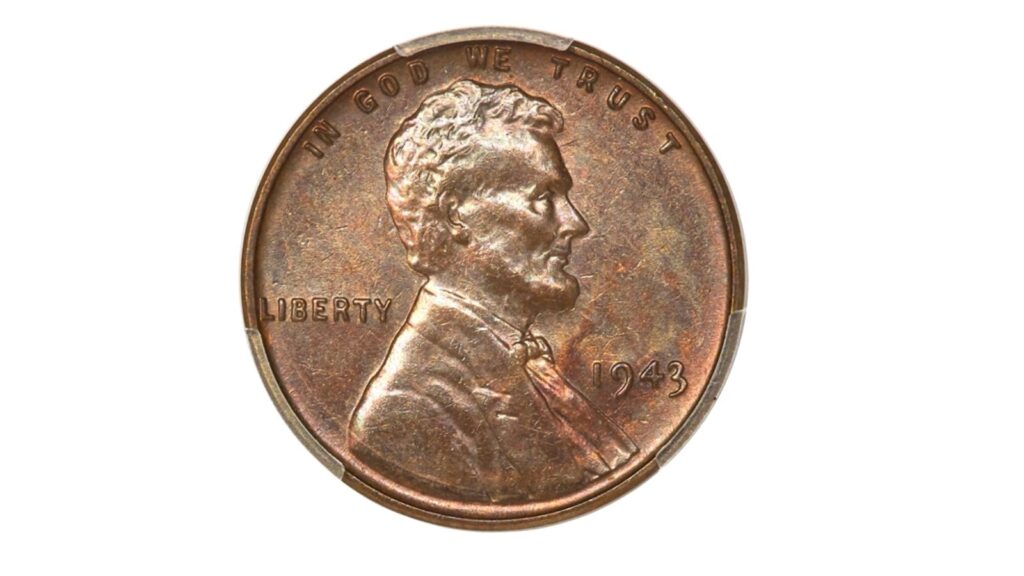
Everybody who has ever sorted a coin jar has heard some version of this story: a handful of 1943 pennies weren’t struck in steel like the rest, they were struck in bronze, and they’re worth a fortune. It’s true, and it’s also rarer than almost anyone realizes.
When the Mint switched cent production to zinc-coated steel that year to save copper for the war, a small number of leftover bronze planchets from 1942 got fed into the presses by accident. Fewer than 20 genuine examples are confirmed across Philadelphia, Denver, and San Francisco combined. A San Francisco example graded AU-55 is worth around $456,000 in today’s market. The single known Denver example, a coin with no known duplicate anywhere, carries a value near $1.7 million.
Start with a magnet. Genuine bronze cents won’t stick, but a copper-plated steel cent will, and that’s what almost every “rare” 1943 penny offered online actually is. If yours passes the magnet test, don’t clean it and don’t sell it to the first person who offers cash. Send it to PCGS or NGC before you do anything else.
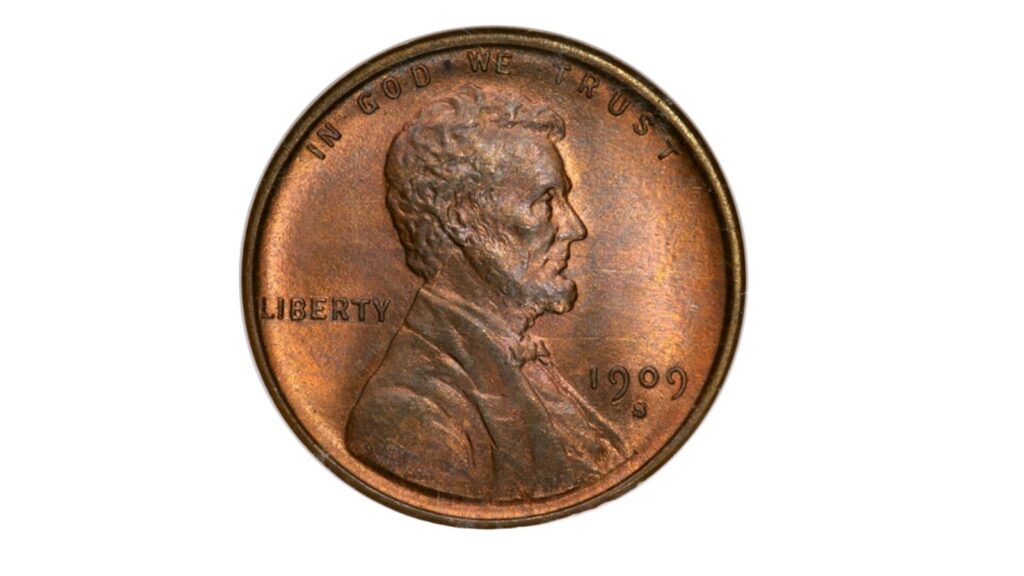
2. 1909-S VDB Lincoln cent
Image Credit: Heritage Auctions
The Lincoln cent almost got pulled from circulation in its first few weeks over three tiny letters. Designer Victor David Brenner signed his work with his initials along the bottom of the reverse, the public objected to how prominent they looked, and the Mint yanked the design within a month. San Francisco had already struck only 484,000 before the recall, making this the lowest-mintage regular-issue cent in the whole series.
Circulated examples have climbed steadily in recent years. Pieces that traded for a few hundred dollars a decade ago now regularly bring $1,200 to $1,800 in honest, moderately worn grades, and the top of the market keeps moving too, with a gem uncirculated example valued around $168,000.
Because demand never really cools, this is one of the most faked coins in the hobby. The usual trick is adding a fake S mint mark to a common Philadelphia 1909 VDB cent. On a genuine coin, the mint mark sits below the date with sharp, even serifs, not soldered on or fuzzy under a loupe. Anything priced above a couple hundred dollars should go to PCGS or NGC before money changes hands.
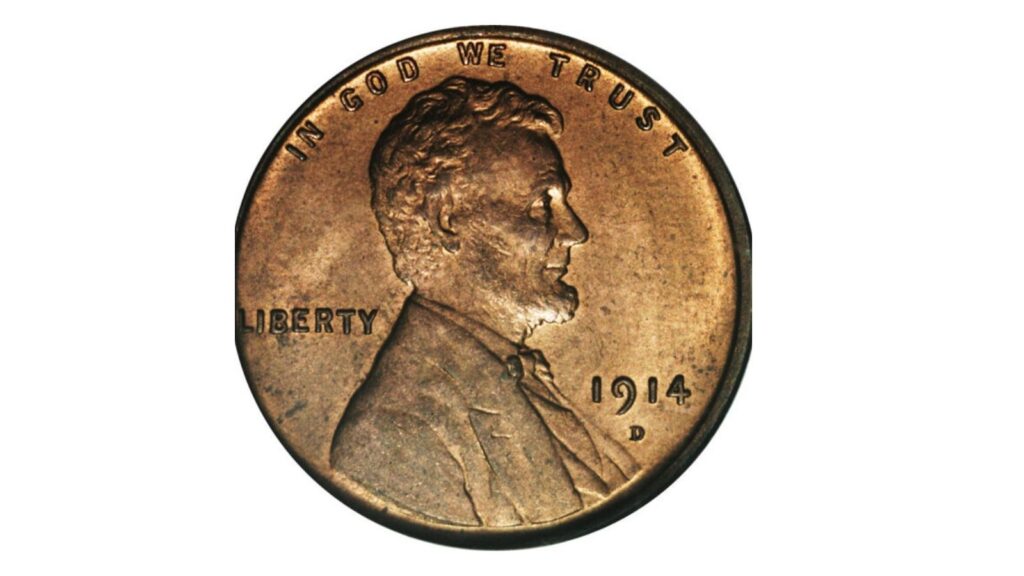
3. 1914-D Lincoln cent
Image Credit: Heritage Auctions
Ask a serious Lincoln cent collector which key date is genuinely hardest to find in nice condition, and plenty will skip past the famous 1909-S VDB and name this one instead. Denver struck a bit over a million cents in 1914, and very few survived decades of pocket circulation without picking up real wear.
Worn examples still carry a solid premium: expect $460 to $575 in VF20, climbing toward $850 to $1,200 by EF40. Once you get into uncirculated grades the price jumps hard, with clean mint state pieces reaching into the tens of thousands and the finest known examples valued between $66,000 and over $80,000 depending on grade.
This is also one of the most heavily counterfeited dates around. Fakes usually involve adding a fake D to a common Philadelphia 1914 cent, or reshaping the digits on a 1944-D to fool a quick glance. Genuine examples show a distinctive set of small circular marks inside the loop of the 9 in the date, a detail forgers routinely miss. Never buy this coin raw at a meaningful price. Certification here isn’t optional, it’s the whole transaction.
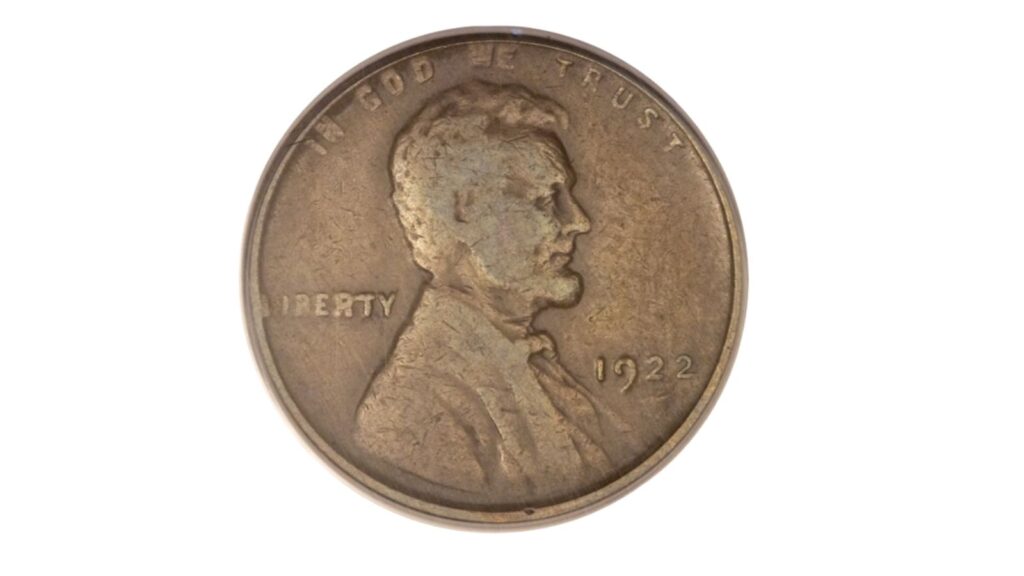
4. 1922 no D Lincoln cent, strong reverse
Image Credit: Shutterstock
In 1922, Denver was the only mint striking Lincoln cents at all, and heavy demand wore out the dies fast. After a bad die clash damaged the obverse, a mint worker polished the die to fix it and accidentally polished away the D mint mark in the process. The result looks like a Philadelphia cent, except Philadelphia didn’t strike any cents that year.
The market on this variety is easy to see in the numbers. A well-worn Fine example is worth around $700 to $800, a problem-free XF example moves into four figures, and mint state examples have cleared $13,800 to $31,000 depending on how sharp the reverse looks. Collectors treat it as belonging in the same conversation as the 1909-S VDB and 1914-D.
Identification takes patience. Plenty of 1922 cents simply have a weak, worn mint mark rather than a genuinely absent one, and those are worth a small fraction of the real thing. Look for a reverse that’s noticeably sharper and better struck than the obverse, a slightly weaker second 2 in the date, and strong lettering in the word TRUST. Given how often weak-mintmark coins get passed off as the genuine article, get any serious example certified before paying real money.
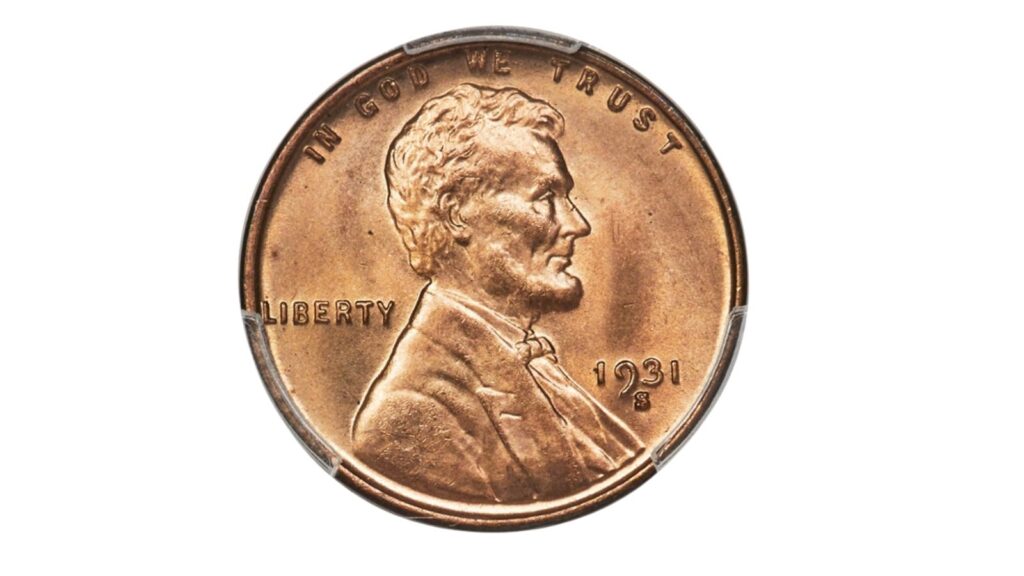
5. 1931-S Lincoln cent
Image Credit: Heritage Auctions
The Great Depression hit coin production hard, and San Francisco’s 1931 output tells the story. At 866,000 pieces, it’s the second-lowest mintage of any regular Lincoln cent, and word got out fast. Collectors and speculators bought up rolls and even full bags directly from banks while the coins were still fresh, which means uncirculated examples are actually easier to find today than honestly circulated ones.
A coin that shows real wear, evidence it once passed through pockets and cash registers rather than sitting in a collector’s roll, typically runs $92 to $155 depending on grade, while clean uncirculated pieces bring $217 and up. At the very top, gem examples with full original red color have reached as high as $42,000.
Because so many were hoarded straight from the bank, this date rewards checking any old accumulation of wheat cents rather than hoping to find one loose in change. The spread between grades is thinner than most Lincoln cents, so even a modest, honestly worn 1931-S is worth pulling aside and confirming rather than assuming it’s just another common 1930s cent.
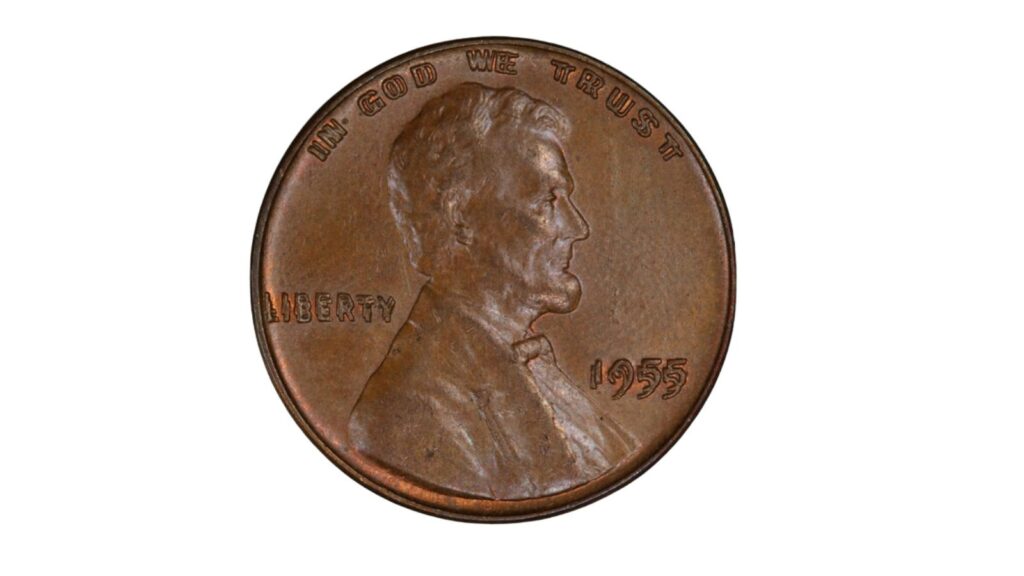
6. 1955 doubled die obverse Lincoln cent
Image Credit: Heritage Auctions
This is the coin that turned an entire generation into penny hunters. A die-making mistake in 1955 caused the date, LIBERTY, and IN GOD WE TRUST to show wide, unmistakable doubling on the obverse, no magnifying glass required. Roughly 24,000 slipped into circulation before anyone caught the error, most of them spent through vending machines and cigarette packs around Massachusetts and upstate New York.
Even worn examples that clearly show the doubling carry real value, averaging around $1,064 in circulated grades and climbing to $5,625 to $18,707 in uncirculated condition. The finest certified example on record is valued at $124,875.
Because so many collectors saved examples once word got out, this is genuinely one of the more attainable key varieties out there, and it remains a rite of passage for anyone building a Lincoln cent collection. Check that the doubling is crisp and spread evenly across all three elements rather than mushy or shifted, since several lesser die varieties get mistaken for the real thing. When in doubt, compare against a certified reference photo before assuming you’ve found the genuine article.
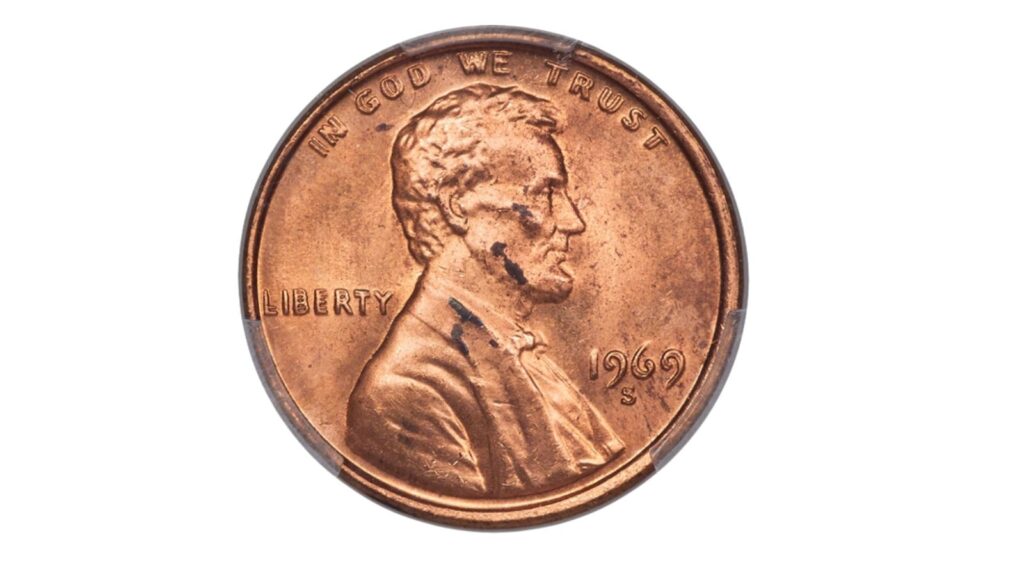
7. 1969-S doubled die obverse Lincoln cent
Image Credit: Heritage Auctions
This coin’s discovery came with an unlikely twist: the Secret Service briefly investigated early examples as counterfeits before anyone realized they were genuine mint errors, a mix-up caused by an unrelated counterfeiting ring operating around the same time. The confusion only added to the legend once the coin’s authenticity was confirmed.
The doubling on the date and motto is dramatic enough to spot without magnification, and only an estimated 30 to 50 genuine examples are known to exist, all struck at the San Francisco mint. A PCGS-certified example in MS64 red is valued at $126,000, and circulated pieces that turn up in old rolls still bring low five figures. Because uncirculated rolls of 1969 cents remain in unopened storage in various collections, more examples could plausibly surface for decades to come.
Counterfeits of this variety are common and convincing, so no genuine example should ever change hands raw. If you think you’ve found one in an old roll, resist the urge to clean it or show it around, and send it straight to PCGS or NGC. A modest grading fee is nothing against what a confirmed example is worth.
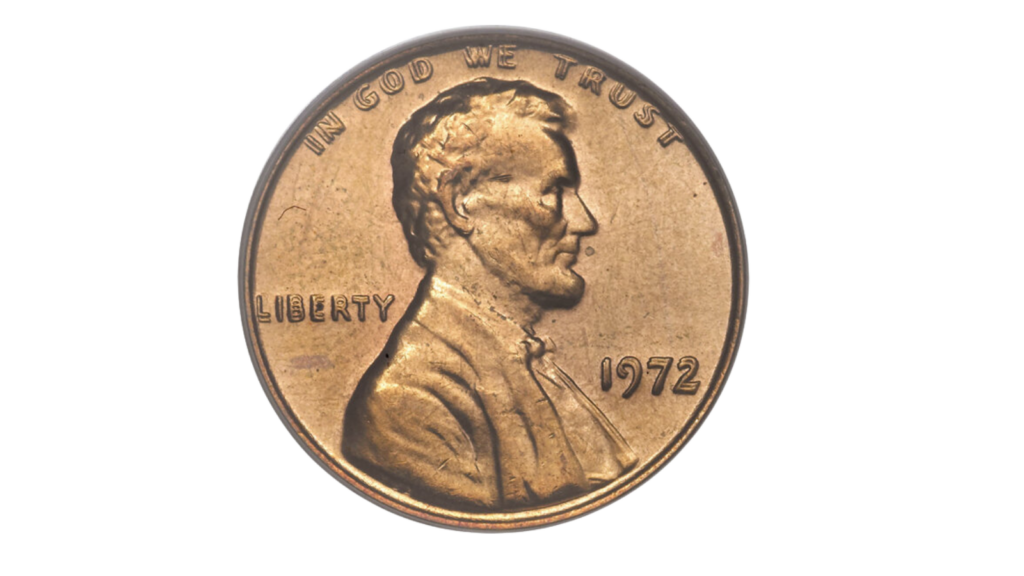
8. 1972 doubled die obverse Lincoln cent
Image Credit: Heritage Auctions
Unlike most doubled dies, you don’t need a loupe for this one. The doubling on the date, LIBERTY, and IN GOD WE TRUST is bold enough to see across the room, shifted noticeably toward the southwest of its normal position. Around 75,000 were struck before the mistake was caught, and a real number of those made it into circulation and change jars before anyone was looking for them.
Typical uncirculated examples of the major variety bring $721 and up, with gem-quality pieces reaching into four figures. Oddly enough, some of the minor 1972 doubled die varieties, ones with much weaker doubling that most collectors would overlook, have actually outpriced the famous major variety at the same grade, with one bringing nearly $22,000 against roughly $1,500 for the well-known version.
Knowing which variety you’re holding matters more than it might seem. Compare the doubling against a reference photo before assuming you’ve found the major type, since several distinct 1972 doubled dies exist with very different values. Circulated examples with honest wear are still worth pulling aside, since this is a coin that genuinely does turn up decades after it was struck.
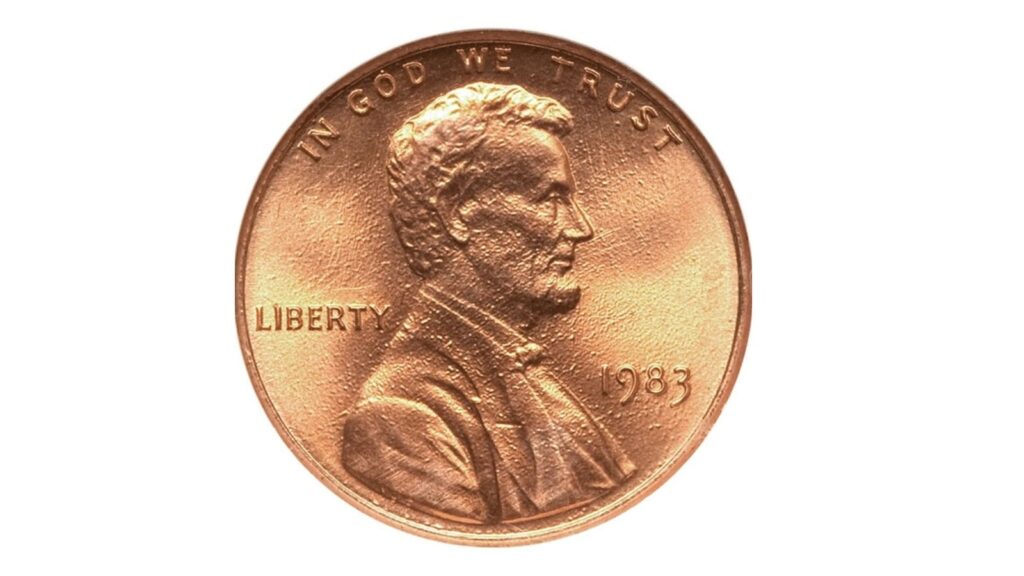
9. 1983 doubled die reverse Lincoln cent
Image Credit: Heritage Auctions
Most doubled dies on Lincoln cents hit the obverse. This one is the exception, with doubling spread clearly across UNITED, E PLURIBUS UNUM, and ONE CENT on the reverse instead, strong enough to see without magnification once you know where to look.
Wholesale pricing gives a good sense of the range: examples in MS64 red trade around $275 to $290, MS65 pieces sit near $300, MS66 climbs to roughly $385, and the rare MS67 has traded near $1,000. Circulated examples exist too and carry a real premium over face value, though nowhere near what uncirculated pieces bring.
Given how enormous the 1983 mintage was overall, finding a genuine doubled die reverse among billions of ordinary coins is a satisfying bit of needle-in-a-haystack work. Check the reverse lettering under a loupe for a clean, doubled outline rather than a flat, shelf-like smear, which usually signals worthless machine doubling instead. Full red color adds a meaningful premium at every grade level, so don’t write off a toned or brown example, it’s still collectible, just worth less than a bright one.
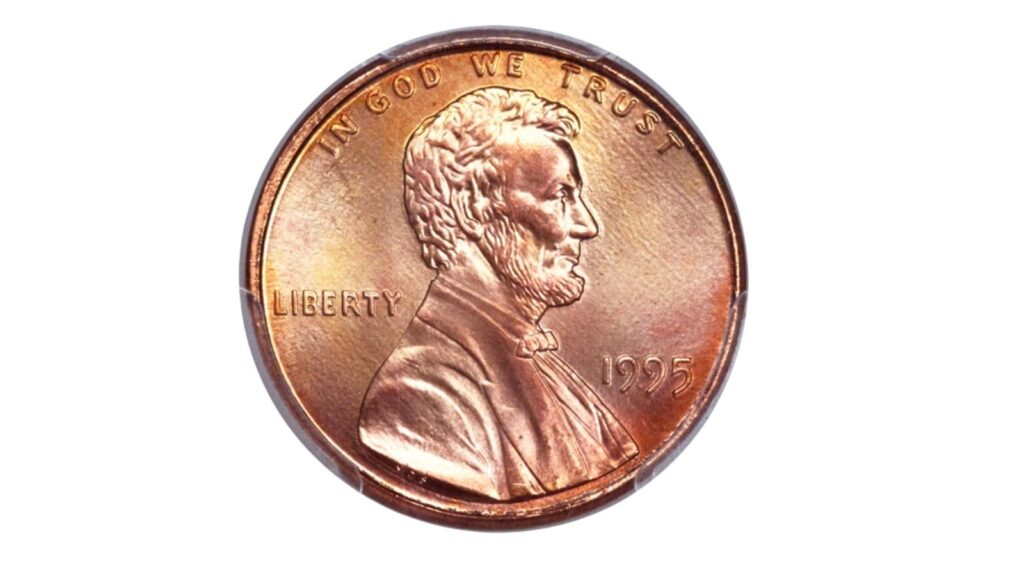
10. 1995 doubled die obverse Lincoln cent
Image Credit: Heritage Auctions
By 1995, this kind of dramatic doubling was already becoming a relic. Soon after this error was discovered, the Philadelphia and Denver mints switched to a single-hub production process that essentially eliminated the possibility of major doubled dies going forward, which makes this the last of its kind.
When collectors first spotted the doubling on LIBERTY and IN GOD WE TRUST, examples were commanding up to $300 apiece. As word spread and tens of thousands more turned up in bank rolls, prices settled down fast. Today a typical circulated to modest uncirculated example brings $61 and up, with the finest certified pieces reaching several hundred dollars. The Denver version of the same error is dramatically scarcer and sells for hundreds of dollars even in worn condition, a detail plenty of casual collectors miss.
Because the Philadelphia version was struck in large enough numbers to stay affordable, this is a genuinely good starter coin for anyone getting into error collecting. The doubling should be legible on both LIBERTY and the motto at once. A coin that only shows it on one element is more likely a lesser, less valuable variety.
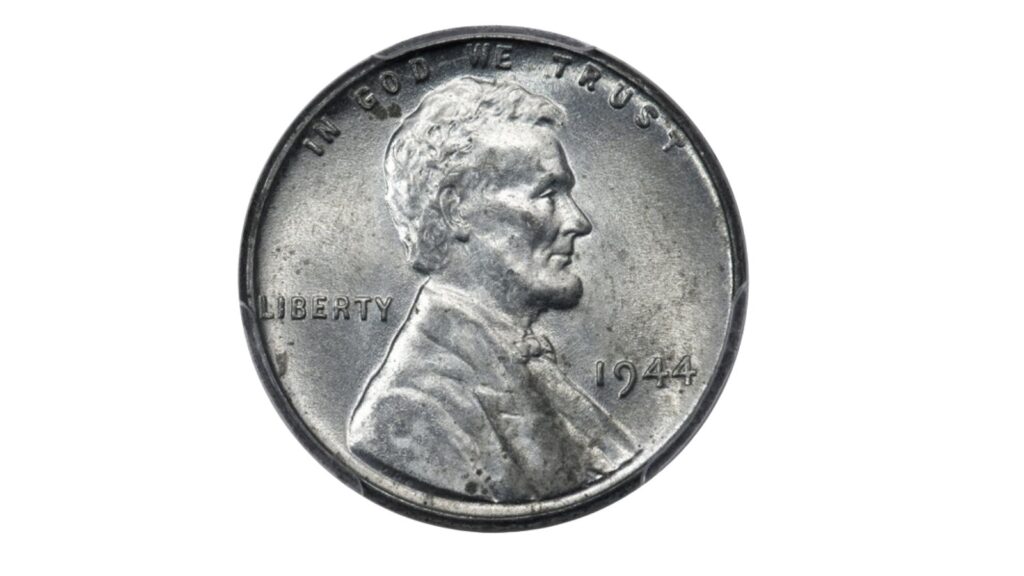
11. 1944 steel Lincoln cent
Image Credit: Heritage Auctions
Weigh it before you get excited. A genuine bronze 1944 cent weighs 3.11 grams and a genuine steel one weighs 2.70 grams, and the steel version is the one worth real money here. This is the mirror image of the famous 1943 error: after the Mint switched back to bronze planchets in 1944, a small number of leftover 1943 steel planchets got fed into the presses by mistake.
The numbers are brutal. Roughly 27 to 30 examples are known from Philadelphia, 7 to 10 from Denver, and just 2 confirmed from San Francisco. Depending on mint and grade, values run from around $25,000 for well-circulated pieces past $150,000 for sharp uncirculated examples, with the rarest San Francisco pieces reaching well into six figures beyond that.
The magnet test works here too, just backward from 1943: a 1944 cent that sticks to a magnet is the one to investigate. Most magnetic 1944 cents sold online turn out to be plated fakes, so authentication through PCGS or NGC isn’t a formality, it’s the only way anyone will take an offer seriously. Given the numbers involved, don’t rush to sell to the first buyer who shows interest.
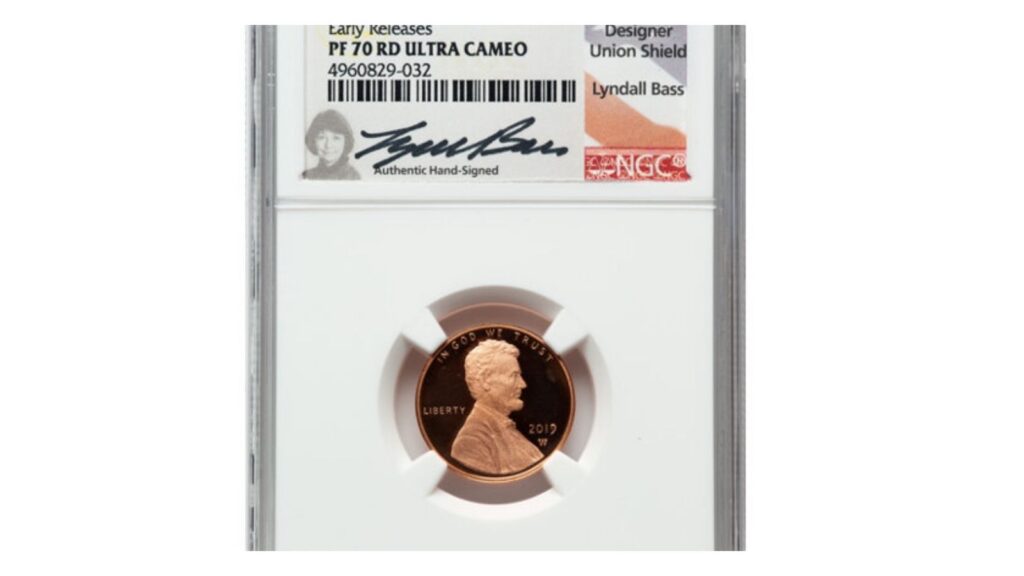
12. 2019-W Lincoln cent
Image Credit: Heritage Auctions
Here’s one that doesn’t require decades of hunting through old jars. In 2019, the West Point mint struck Lincoln cents for the first time in the series’ history, marked with a small W below the date. They weren’t released for general circulation the way an ordinary penny is. Instead, a small number were tucked into that year’s annual uncirculated mint sets as a bonus coin, with proof and reverse proof versions available separately.
An uncirculated example straight from a broken-up mint set typically brings $12 and up, which is still over a thousand times face value for a coin that plenty of people already own without realizing it. Certified examples in the very top grade, MS70 red, are valued at $838.
If you or a relative bought a mint set that year, or picked one up as a gift, it’s worth digging out and checking rather than assuming it’s just a novelty. Keep it in its original mint packaging if you can, since handling and cleaning both knock down the grade fast, and a coin that’s spent years loose in a drawer usually shows it.
Check the dates and the mint marks before you write off that jar of change. A magnet, a loupe, and a few minutes are all it really takes.