Building a solid financial future starts with choosing the right educational path. Professional credentials give job seekers a distinct edge when negotiating compensation packages with potential employers. Specialized knowledge signals high value to potential managers right away.
Short-term business programs equip ambitious adults with practical workplace tools. Modern companies pay top dollar for strategic minds ready to solve real operational problems in fast-moving markets. Practical skills translate directly into bigger paychecks and career growth.
Entering the job market without higher credentials limits immediate income growth. Many individuals choose to study for a business management diploma to skip low-paying entry roles. Qualification signals immediate readiness for higher operational responsibilities right from day one.
Starting with formal training means securing higher base pay right away. Trained candidates demonstrate strong potential to hiring managers during interviews. That initial pay bump creates instant financial relief for workers entering competitive job markets.
Higher starting wages compound into massive career gains as years pass. Early pay advantages set a solid baseline for future annual salary reviews and promotions. Higher initial pay scales raise future percentage raises across a full professional career span.
Accelerated career growth and promotion potential
Upward mobility inside corporate organizations requires recognized credentials. Management teams active in hiring look for candidates with proven strategic skills when filling open team leader spots. A solid credential demonstrates commitment to professional growth and leadership capabilities.
Having a formal qualification speeds up the transition into supervisory roles. Official education figures show graduates holding relevant credentials take home 20% to 40% higher pay compared to high school graduates. Fresh graduates with limited work history still pull in solid middle-class compensation.
Promotions bring bigger performance bonuses alongside increased monthly base pay. Earning structured qualifications helps professionals jump ahead of untrained colleagues competing for the same promotions. Faster promotions create a direct line to top-tier company earnings.
High pay across leadership occupations
Business training opens doors across almost every modern industry. From technology firms to healthcare systems, managers command premium compensation packages across various corporate departments. Broad managerial competencies remain in high demand across all economic sectors.
Early career statistics highlight average starting earnings near $65,000 per year for trained business staff. Specialized organizational knowledge translates directly into upper-tier compensation rates. Earning power continues to rise as professionals take on larger departmental responsibilities.
High-paying positions demand clear decision-making and strong project control. Systematic business study prepares professionals to take on lucrative responsibilities with confidence. Taking command of large projects leads directly to performance-based salary increases.
Key skills that drive high salaries
High compensation reflects the clear financial value a worker brings to an organization. Business programs train students in high-demand technical capabilities that directly impact profitability. Employers readily invest in staff who possess practical management capabilities.
Key practical competencies built during structured study include:
Financial planning and detailed budget tracking
Team management and operational workflow scheduling
Strategic marketing and corporate client communication
Applied skills allow professionals to streamline daily business processes effectively. Mastering core areas makes employees valuable to business owners. Companies pay top rates to retain talent that keeps daily corporate operations running smoothly and profitably.
Versatility across multiple fast-growing sectors
Specialized technical skills lock workers into narrow industry niches with limited earning potential. Broad business knowledge allows smooth transitions into completely different economic fields. Having adaptable skills means job seekers never get stuck in declining industries.
Changing industries lets workers target hot job markets with better compensation packages. Switching from slow sectors to growing commercial industries boosts total lifetime income significantly. Dynamic sectors compete fiercely for qualified administrators by offering higher pay.
Flexibility protects income security during broader economic market shifts. Skilled administrators adapt quickly to changing corporate needs and retain high earning potential. Versatile workers enjoy continuous wage progression regardless of market changes.
Faster return on educational investment
Four-year degree programs require massive investments of time and tuition money. Shorter diploma courses let individuals enter high-paying positions much faster than traditional academic routes. Accelerated learning paths allow students to start earning a paycheck sooner.
Department of Labor data indicates median annual pay for leadership roles exceeds $116,880 nationwide. Working professionals keep a larger portion of their monthly paycheck rather than paying off heavy student loans. Lower debt burdens create instant financial freedom and investment capacity.
Earning full-time income years ahead of traditional university students speeds up long-term wealth building. Faster graduation means immediate cash flow, immediate practical experience, and rapid career advancement. Early income generation builds a stronger financial foundation for the future.
Image Credit: Nacho Gomez
Investing in practical business qualifications offers clear financial rewards for ambitious working professionals. The educational path opens up competitive salaries, fast promotions, and flexible career options. Strategic learning choices lead directly to long-term career success.
Taking action today positions workers for immediate financial improvement in competitive markets. Strong business skills remain a proven foundation for long-term earning power and stability. Developing management expertise secures financial growth across every career stage.
Life rarely follows a smooth straight line. An unexpected accident, sudden health event, or abrupt job change can instantly throw monthly budgets into total disarray. Managing finances during a sudden shift requires clear thinking and practical steps. Taking control of cash flow quickly helps protect long-term stability when life throws a curveball.
When a major disruption occurs, spending patterns must shift immediately. Looking for online injury settlement resources helps individuals understand potential legal options after unexpected severe accidents. Reviewing bank statements line by line helps identify nonessential subscriptions to cancel immediately. Cutting monthly overhead creates an immediate buffer against emergency expenses.
Evaluating fixed monthly obligations opens room for immediate adjustments. Calling service providers to request temporary rate reductions often lowers utility and internet bills. Saving cash early on gives households breathing room as long-term plans take shape.
Structuring payouts for stability
Receiving a lump sum payment after a major event brings both relief and decision fatigue. Spreading payments out over fixed intervals prevents fast depletion of funds during recovery periods. Official guidance from consumer protection agencies highlights how structured payouts help maintain steady income through monthly, quarterly, or annual distribution schedules. Choosing periodic disbursements supports ongoing household stability.
Lump sums often create a false sense of endless wealth. Setting up scheduled distributions prevents premature spending on non-essential purchases. Managing funds through structured arrangements keeps basic monthly living costs covered for years.
Protecting insurance coverage
Health insurance continuity remains a top priority during career or health interruptions. Losing employer benefits leaves individuals exposed to massive medical bills during recovery. Guidelines from labor officials explain that COBRA regulations allow workers to extend group health plans temporarily, with individuals usually covering total premium costs themselves. Maintaining active health coverage prevents minor health issues from causing financial ruin.
Comparing private health plans against group continuation coverage helps identify lower premium rates. Exploring state marketplace options may reveal subsidized coverage based on reduced household income. Securing adequate health insurance prevents medical debt from wiping out existing savings.
Prioritizing high-interest debt
Image Credit: Jakub Żerdzicki via Unsplash
Unpaid bills accumulate rapidly when monthly earnings drop unexpectedly. Standard repayment tactics need quick adjustment to keep balances manageable. Communicating directly with financial institutions allows borrowers to ask about hardship programs or temporary interest freezes.
Focusing extra funds on high-interest credit accounts limits compound interest growth. Paying down high-interest balances prevents debt from snowballing during difficult months. Lowering monthly interest burdens keeps more cash available for food and utility bills.
Negotiating reduced minimum payments with lenders offers short-term relief. Requesting temporary forbearance on personal loans protects credit scores during income disruptions. Taking proactive communication steps prevents accounts from defaulting.
Creating a survival budget
A temporary emergency budget strips away discretionary expenses to protect core living needs. Focusing strictly on foundational items keeps households afloat through tough stretches.
Rent or mortgage payments to maintain stable housing
Basic food groceries and monthly household items
Utilities including electricity, water, and heating
Minimum payments on active credit obligations
Stripping budget lines down to core survival categories prevents unnecessary depletion of cash reserves. Rebuilding monthly reserves becomes easier once core expenses stay locked down. Temporarily halting non-essential spending preserves liquidity for critical needs.
Safeguarding emergency savings
Emergency reserves serve as a financial shield when normal income streams stall. Keeping liquid cash in high-yield savings accounts offers quick access without risk of principal loss. Moving money out of volatile investments protects capital needed for short-term living costs.
Avoiding early retirement account withdrawals shields funds from harsh tax penalties. Using liquid cash first preserves long-term investment growth for future years. Maintaining clear boundaries around liquid reserves keeps panic decisions away during recovery phases.
Automating transfers back into emergency accounts once income stabilizes restores financial safety nets. Rebuilding cash reserves step by step strengthens resilience against future financial shocks. Maintaining disciplined savings habits secures long-term peace of mind.
Negotiating monthly obligations
Reaching out to creditors early prevents missed payments from harming credit profiles. Creditors often provide temporary hardship relief programs for individuals experiencing documented life disruptions. Explaining financial changes clearly helps customer service representatives find applicable repayment adjustments.
Securing deferments on student loans or auto loans provides immediate cash relief. Temporarily freezing principal payments lowers monthly cash outflows significantly. Protecting credit standing keeps future borrowing options open.
Documenting all communication with financial institutions creates a paper trail for payment agreements. Confirming modified terms in writing prevents misunderstandings regarding due dates and fees. Clear documentation keeps financial arrangements transparent.
Building a long-term recovery plan
Stabilizing immediate finances creates space to plan for future months. Re-evaluating career goals or adjusting household budgets helps establish a new financial baseline. Updating estate plans, beneficiary designations, and insurance policies reflects current life circumstances.
Setting modest savings targets creates momentum toward full financial recovery. Tracking small weekly financial wins restores confidence after unexpected disruptions. Professional guidance from financial advisors helps align personal goals with realistic timelines.
Creating a multi-year financial roadmap supports steady progress toward long-term security. Periodically reviewing spending plans keeps financial habits aligned with evolving personal goals. Rebuilding financial independence happens through consistent, measured steps.
Navigating financial detours demands patience, flexibility, and disciplined choices. Taking decisive steps to lower monthly costs and protect existing assets shields households from severe financial distress. Rebuilding financial security takes steady effort, but strategic decision-making creates a firm path forward. Focusing on actionable adjustments helps restore control and peace of mind.
Finding 2 hours to visit a salon feels nearly impossible when managing kids, work, and household budgets. A professional manicure costs upwards of $50 plus tip every few weeks, adding unnecessary strain to family finances.
Learning to perform salon-quality nail treatments at home provides a relaxing self-care routine that saves hundreds of dollars annually. With the right tools and simple preparation, busy parents can achieve durable, elegant nails in under 30 minutes without stepping outside.
Frequent handwashing, domestic chores, and harsh cleaning products take a heavy toll on natural nail beds. Applying a targeted nail care solution fortified with keratin strengthens brittle plates and seals cracks against future breakage. This clear protective layer shields weak surface layers so length can grow naturally without splitting. Consistent application twice a week turns thin, peeling tips into resilient foundations ready for color.
Weakened nails require extra care before applying any decorative color or gel coatings. Stripping away harsh removers and allowing natural keratin treatments to absorb creates a strong surface. Regular conditioning prevents painful side splits during busy workdays.
Preparing the canvas for maximum longevity
Thorough preparation forms the foundation of any long-lasting manicure at home. According to beauty experts at The Zoe Report, pre-manicure prep steps work wonders for delaying chips and creating a smooth canvas that grips onto polish. Removing residual surface oils allows base layers to bond directly to the nail plate without early lifting. Clean prep prevents moisture trapping beneath layers, which often causes premature peeling.
Wipe each nail plate with isopropyl alcohol to remove natural oils.
Gently push back cuticles using a soft wooden stick.
Lightly buff uneven ridges with a high-grit buffer block.
Trim excess hangnails carefully using sharp cuticle nippers.
Taking 5 extra minutes during prep saves days of premature chipping. Clean nail beds help every layer adhere cleanly for full coverage durability.
Investing in precision shaping tools
Achieving clean salon lines requires switching out dull emery boards for proper filing equipment. Insights from Joybuy Beauty note that an electric nail file serves as a precision tool designed for exact shaping and cuticle care. Low speed settings allow beginner home manicurists to smooth rough sidewalls without thinning natural nail layers. Proper speed control keeps nail beds cool and comfortable.
Traditional manual files still play a role when smoothing free edges into classic oval or square shapes. Always file in 1 direction rather than sawing back and forth to prevent microscopic tears. Smooth edges keep nails from catching on fabrics or hair during daily tasks.
Protecting natural nails with base coats
Skipping the base coat remains a primary reason home manicures yellow or peel within days. Coverage in Be Dashing Beauty stresses that starting with a strengthening base coat protects nails from staining and helps polish adhere firmly. The base layer acts like double-sided tape between natural keratin and color pigments. Deep red or navy shades can stain naked nails permanently without this protective barrier.
Further coverage from Global Fashion highlights that base coats keep nails healthy, extend polish longevity, and moisturize the nail plate. Skipping this barrier risks deep color staining that requires aggressive buffing to correct. Investing 2 minutes in a quality base layer doubles the life of your color.
Mastering simple minimalist nail trends
Busy mothers rarely have time for intricate freehand nail design between morning routines and bedtimes. Coverage from Elle Magazine explains that the popular milk nail trend uses semi-sheer white or pale nude polish to paint a subtle wash of color mimicking a soft milky appearance. Minimalist styles hide small growth gaps and minor chips far better than dark shades. Neutral tones match professional workplace wardrobes seamlessly.
Applying 2 thin coats of semi-opaque polish creates a clean, professional look that matches any outfit. Sheer formulas dry rapidly and require less precision around cuticle lines. Minimalist shades offer maximum elegance with minimal maintenance.
Extending wear with semi-permanent polish
For long-lasting power that survives dishes, laundry, and daily parenting duties, semi-permanent options offer great resilience. The Joybuy DIY Guide indicates that a DIY semi-permanent manicure typically lasts between 1 and 3 weeks when properly cured. LED curing lamps set color in seconds, eliminating long drying periods where smudges happen. Quick cure times mean getting back to daily duties immediately.
Apply thin layers of gel polish to prevent bubbling under UV light.
Cap the free edge of each nail with polish before curing.
Wipe away sticky residue using alcohol wipes after the final cure.
Proper curing techniques transform home polish into durable armor against daily wear. Gel formulas maintain a high-shine finish through weeks of routine activity.
Maintaining hydration and skin health
Flawless polish looks incomplete if surrounding skin appears dry, cracked, or neglected. Beauty coverage from Harper’s Bazaar notes that exfoliation paired with rich hand cream maintains hydration and protects the skin barrier. Soft hands frame polished nails, giving a polished appearance even between manicures. Daily hydration prevents painful hangnails from forming near sensitive cuticle edges.
Massaging cuticle oil into nail beds every evening encourages healthy blood flow and flexible growth. Flexible nails bend under pressure instead of snapping during physical tasks. A quick bedtime oil application preserves polish flexibility for extended wear.
Removing polish without surface damage
Peeling or picking off lifting polish represents the fastest way to ruin natural nail thickness. Dermatological tips from Cosmopolitan warn that when polish lifts around edges, peeling it off takes the top layer of your nail with it. Stripping natural keratin layers leaves nails paper-thin and sensitive. Gentle soaking methods keep natural structures intact for future color applications.
Soak cotton pads in acetone remover, wrap nails in small foil squares, and wait 10 minutes for polish to dissolve naturally. Gently slide softened polish off using an orange wood stick without scraping. Safe removal protects underlying strength for your next home manicure session.
Image Credit: Element5 Digital via Unsplash
Creating salon-quality nails at home fits easily into busy schedules without straining household finances. Committing 30 minutes a week to care routines builds confidence and provides dedicated quiet time for self-care. With proper preparation, quality base treatments, and gentle removal, home manicures deliver durable beauty that withstands daily life. Enjoy strong, healthy nails on your own terms and save money every single month.
You’ve paid off the mortgage. The kids are gone. Three of the five bedrooms haven’t been used for anything but storage in a decade, and the property tax bill still shows up every year like clockwork. Selling and moving into something smaller sounds like the obvious move. It usually is a good move. It’s just rarely as simple as listing the house, buying something smaller, and pocketing the difference.
The rules around home sales, taxes, Medicare, and moving costs have all shifted in the past couple of years, and a lot of the advice floating around is either outdated or written for people 20 years younger. Here’s what actually matters if you’re doing this in 2026.
The tax break on selling your home is bigger than most people think
Image Credit: Shutterstock
If you’ve owned and lived in your home for at least two of the last five years, you can exclude up to $250,000 of profit from taxes if you’re single, or up to $500,000 if you’re married and file jointly. This isn’t a deduction you have to claim in some complicated way. It just comes off the top, and you can use it again on a future home sale as long as you meet the same ownership and use rules.
For most retirees selling a home they’ve owned for decades, this wipes out the entire tax bill on the sale. A couple who bought their house for $150,000 in 1995 and sells it for $600,000 has a $450,000 gain, and the $500,000 exclusion covers all of it. Things only get uncomfortable if your gain runs past those limits, which is more common now than it used to be in expensive coastal markets, since the exclusion amounts haven’t been raised since 1997.
Retirees are sitting on more home equity than at any point in history
Image Credit: Shutterstock
Homeowners age 62 and older are holding a combined $14.92 trillion in home equity, a record high, and homeowners in that age group now own roughly four in ten homes in the country. The median homeowner 65 and older holds about $250,000 in home equity, and more than three-quarters of people in that age group own their home outright or with a mortgage. That’s the good news, and it’s a big part of why downsizing conversations keep coming up: the house itself is often the largest asset a retiree owns, by a wide margin.
The number matters for more than bragging rights. It shapes how much cash you can realistically expect to walk away with after a sale, how much room you have to negotiate on a replacement home, and whether products like reverse mortgages or home equity lines are even worth considering as alternatives to selling outright. Before you decide what to do with your house, it helps to know what you’re actually sitting on.
Buyers have more leverage than sellers expect right now
Image Credit: Shutterstock
The market has shifted since the frenzy of a few years ago. Listings have been climbing for more than two years straight, and in the latest data, median list prices were down slightly year over year while price cuts remained common on roughly a third of active listings nationally. If you’re picturing a bidding war like the one your neighbor had in 2021, adjust your expectations. Buyers are pickier, more price sensitive, and less willing to waive inspections just to win a deal.
That doesn’t mean you’ll lose money. Home values are still far above where they were before the pandemic, and you’re likely still selling into a healthy equity position. It means you should price realistically from the start instead of testing the market high and chasing it down over months, and you should expect to negotiate on repairs or closing costs more than sellers did a couple of years ago.
You don’t owe an agent 6 percent anymore
Image Credit: Shutterstock
After a 2024 legal settlement reshaped how real estate commissions work, buyers now sign a written agreement with their own agent before touring homes, and that fee no longer gets automatically baked into what a seller offers on the open market. The result is that commissions have come down some. The national average total commission is now around 5.7 percent, split between the listing agent and the buyer’s agent, and it’s fully negotiable in every case.
On a $500,000 sale, shaving even one percentage point off that total keeps an extra $5,000 in your pocket. Ask any agent you’re considering what they charge and whether they’ll come down, especially if your home is likely to sell quickly or if you’re also planning to buy your next place through the same agent. A lot of agents will negotiate on a full-service listing before they’ll walk away from the business entirely.
The move itself has its own price tag
Image Credit: Shutterstock
People budget for the house and forget the truck. A local move with a couple of movers typically runs $80 to $100 an hour, and a long-distance move of 1,000 miles or more commonly lands around $5,000, sometimes considerably more depending on how much you’re bringing and the time of year. Summer moves cost more than moves booked in the fall or winter.
Get quotes from at least three moving companies before you commit to anything, and get them in writing rather than as a verbal estimate over the phone. Ask specifically whether the quote is binding, since a “non-binding” estimate can legally increase on moving day. If you’re downsizing significantly, it’s often cheaper to sell or donate furniture that won’t fit the new place rather than pay by the pound or the hour to move it and then get rid of it anyway. Weigh the mover’s estimate against what you’d actually spend replacing anything that doesn’t survive the trip or doesn’t fit the new floor plan.
What’s inside the house can help pay for what’s outside of it
Image Credit: AntiqueCupboard via eBay
Before you call the movers, walk through what you’re not taking. Old sterling silver flatware sitting in a drawer, gold jewelry nobody wears anymore, coins someone in the family collected decades ago: all of it has real resale value right now, especially with precious metal prices where they are. A typical 32-piece sterling silver flatware set can bring $800 to $1,500 when sold for scrap, and that’s before you factor in anything with a recognizable maker’s mark or a collectible pattern.
The trick is knowing what you actually have. Silver-plated pieces marked “hotel silver” or stamped with a manufacturer’s plate mark aren’t worth much beyond sentimental value, while anything stamped 925 or marked sterling is worth the weight of the silver itself at the current market price. It’s worth a half hour with a magnet and a jeweler’s loupe before you box up the china cabinet, because what you find can cover a meaningful chunk of your moving costs.
A big profit on the sale can quietly raise your Medicare bill
Image Credit: Shutterstock
Here’s a wrinkle almost nobody mentions. Profit that falls inside your $250,000 or $500,000 exclusion doesn’t count as income at all, so it has no effect on your Medicare premiums. But if your gain is large enough to spill over the exclusion, that taxable portion adds to your income for the year, and Medicare looks back two years when deciding what you pay.
For 2026, an individual with income over $109,000, or a couple over $218,000, pays more than the standard Part B premium under a surcharge called IRMAA, with the standard premium at $202.90 a month climbing as high as $689.90 for the highest earners. A one-time home sale gain large enough to cross one of those thresholds can raise your Medicare premium for an entire year, two years after the sale. If your gain is going to exceed the exclusion, it’s worth talking to a tax professional about timing the sale or spreading other income around it before you sign anything.
Leaving the house to your kids might be the better tax move
Image Credit: Shutterstock
If you’re on the fence about selling versus staying put, there’s a piece of the tax code worth knowing about. When someone inherits a house rather than buying it, the property’s cost basis resets to its fair market value on the date of death. That means decades of appreciation that built up while you owned the home simply disappears for tax purposes, and your heirs could sell shortly after inheriting and owe little or nothing in capital gains.
This isn’t a reason to keep a house you don’t want or can’t maintain. But if your gain is well above the $500,000 exclusion and you’re weighing selling now against holding on, it’s a real factor in the decision, not just an emotional one. It’s also different from gifting the house to your kids while you’re alive, which passes along your original purchase price as the basis rather than resetting it, so the timing and method of the transfer both matter. Run the numbers with a tax professional or estate attorney before you decide selling now is automatically the smarter financial move.
The property tax break you built up might not follow you
Image Credit: Shutterstock
If you’ve lived in your home for a long time, there’s a decent chance your property tax bill is well below what a buyer would pay on that same house today, thanks to assessment caps or homestead exemptions that limit annual increases. Move to a new house, even a smaller and cheaper one, and in most places your tax bill resets to current market value. That can mean paying more in property tax on a $350,000 condo than you were paying on a paid-off $600,000 house you’d owned for 25 years.
A handful of states let you carry some of that saved value with you. California allows homeowners 55 and older to transfer their old assessed value to a new home, and Florida lets homeowners move a portion of their Save Our Homes tax savings to a new property within the state. Rules and eligibility vary widely by state, so check with your county assessor before you assume your new tax bill will look anything like your old one.
Required withdrawals don’t pause while you pack boxes
Image Credit: Shutterstock
If you have money in a traditional IRA or 401(k), federal law requires you to start taking required minimum distributions at age 73, and that clock keeps running no matter what else is happening in your life. A move, a home sale, or a hospital stay doesn’t buy you an extension, and missing a required distribution comes with a real penalty.
If your downsizing timeline overlaps with turning 73, or with a year when you’re already taking a large distribution, plan the sale and the withdrawal separately rather than assuming they’ll sort themselves out together. Missing a required withdrawal entirely comes with a penalty of up to 25 percent of the amount you should have taken, reduced to 10 percent if you correct the mistake quickly. Stacking a large RMD on top of a taxable home sale gain in the same calendar year is one of the easiest ways to accidentally land in a higher tax bracket, or trigger the Medicare premium surcharge mentioned above, without meaning to.
A 55 plus community isn’t automatically the cheaper option
Image Credit: Shutterstock
Age-restricted communities often look appealing on paper: smaller homes, shared amenities, a built-in social scene. What doesn’t always show up in the sales brochure is the monthly fee. HOA dues in active adult communities typically run $230 to $280 a month nationally, and resort-style communities with golf courses or multiple pools can run $350 to $700 a month or more, on top of your mortgage, property tax, and insurance.
Those fees also tend to climb over time as reserves get rebuilt and insurance costs rise, particularly in coastal states. A $250 monthly fee that rises at a typical pace can turn into roughly $490 a month within a decade, which is easy to miss if you only budget for what the fee costs on move-in day. Before you sign anything, ask to see the community’s reserve fund and its history of fee increases over the past five years, not just the current monthly number. A low fee attached to an underfunded reserve almost always turns into a large special assessment down the road.
Assisted living and downsizing are different
Image Credit: Shutterstock
People sometimes lump “downsizing” and “moving into assisted living” together, but they solve different problems. Downsizing is about lowering your housing costs and maintenance burden while you’re still fully independent. Assisted living is about getting help with daily activities like bathing, medication, and meals, and it costs considerably more: the national median runs $6,200 a month, or about $74,400 a year. Standard Medicare doesn’t cover any of it, which is why families end up paying out of pocket, through long-term care insurance, or eventually through Medicaid once savings are exhausted.
If you’re downsizing now while you’re healthy, it’s worth thinking one step ahead. Some smaller homes and condos are far easier to age into than others: single-story layouts, no-step entries, and walk-in showers save you a second disruptive move later. A move driven purely by cost savings today can end up costing you an extra move in five or ten years if it doesn’t account for how your needs might change.
Fixing up the house you’re in might cost less than leaving it
Image Credit: Shutterstock
Selling isn’t the only way to lower your housing burden. If your current home mostly works for you but has a few real obstacles, accessibility renovations often cost far less than a move. A set of grab bars runs $100 to $350 installed, and a curbless walk-in shower typically runs $6,000 to $10,000. A full whole-home retrofit that touches several rooms, including wider doorways or a stair lift, can run $18,000 to $75,000, and a home elevator can push past $60,000, but even the higher end of that range is often cheaper than the combined cost of selling, moving, and buying again.
This is worth running the numbers on before you assume moving is the default answer. A single-story ranch with a bathroom that needs updating might make more financial sense to fix than to leave, especially if you love the neighborhood and the alternative is a smaller home somewhere you’d rather not be.
A reverse mortgage is a loan, not a windfall
Image Credit: Shutterstock
If selling feels premature but you want access to some of your equity, a reverse mortgage lets homeowners 62 and older borrow against their home without monthly payments, with the loan repaid when you sell, move out, or pass away. The federal government raised the maximum amount that can be insured under this program to $1,249,125 for 2026, up from the year before.
It’s still a loan, and interest accrues on the balance the entire time you hold it, which means the amount owed grows even though you’re not making payments. You remain responsible for property taxes, homeowners insurance, and upkeep, and falling behind on those can put you at risk of foreclosure. It can be a reasonable tool for the right situation, but it shouldn’t be mistaken for free money, and it’s worth talking to a HUD-approved counselor, which is required before you can take one out, before you commit.
Most retirees don’t actually want to leave, and that’s a fine answer
Image Credit: Shutterstock
Downsizing gets treated as the obviously smart choice, but most people don’t actually want to do it. A recent nationwide survey found that 75 percent of adults 50 and older would prefer to stay in their current home as they age, and 73 percent hoped to stay in their current community. There’s nothing wrong with that answer, even if it’s not the cheapest one on paper.
A house full of decades of memories, a guest room the grandkids use twice a year, a kitchen where holidays happen: none of that shows up on a balance sheet, and it doesn’t have to. If staying put is financially workable, even if it’s not the cheapest option available, that’s a legitimate choice, not a failure to plan properly. A middle path exists too. Renting out a room, taking in a boarder, or selling a second property while keeping the primary home can lower costs without giving up the house itself.
A cheaper state doesn’t always add up the way the spreadsheet says
Image Credit: Shutterstock
Selling a paid-off home and relocating somewhere with no state income tax looks great on paper. It gets more complicated in practice. Moving away from decades-old friendships and a familiar community carries a real cost that doesn’t show up in a tax comparison. A 2025 study tied loneliness in seniors to a 31 percent higher risk of dementia, along with higher risk of Alzheimer’s and cognitive impairment specifically. Rebuilding a social circle from scratch in your late 60s or 70s takes real effort, and it doesn’t happen automatically just because the weather is nicer or the taxes are lower.
That’s not an argument against relocating. Plenty of people move somewhere new in retirement and thrive. It’s an argument for visiting for an extended stretch, ideally through an off season, before you commit, and for being honest with yourself about how much of your current life is tied to people rather than to the house itself.
Waiting for a crisis to force the decision costs you your choices
Image Credit: Shutterstock
A lot of downsizing decisions get made in a hurry, after a fall, a diagnosis, or a spouse’s death, instead of ahead of time on your own terms. Moves made under pressure tend to go worse: less time to shop for the right buyer, less room to negotiate price, and less ability to compare neighborhoods, tax rates, and healthcare access before signing anything. Full-service moving costs alone can range from about $1,200 to $29,000 depending on distance and services, and a rushed timeline gives you far less room to shop that cost down.
Planning ahead doesn’t mean you have to move before you’re ready. It means having a realistic sense of what your home is worth, what a move would cost, and what your options are, so that if circumstances change quickly, you’re choosing from a plan instead of scrambling. The retirees who end up happiest with a downsizing decision are almost always the ones who made it before they had to.
Somewhere between the good jewelry and the junk drawer, most houses have one of these. A little wooden box that plays a tinny waltz when you lift the lid, tucked away since a grandmother passed it down or a great-aunt’s estate got boxed up. Most people wind it once, smile, and put it back on the shelf without a second thought.
That’s a mistake more often than you’d guess. Music boxes were made in huge volume for over a century, from cheap Japanese exports to precision Swiss workshops that are still household names among collectors. The gap between “cute keepsake” and “actually worth something” comes down to who made the movement, how ornate the case is, and whether it still runs. A handful of these turn up in nearly every estate sale. A few are the kind of find that changes what you thought your grandmother’s parlor was worth.
Below are twelve specific categories worth learning to spot, ranging from boxes that are genuinely common finds worth a modest sum to serious antiques that can bring four and five figures when the right one turns up.
1. Vintage Sankyo musical jewelry box, made in Japan
Image Credit: helenleokadentaylor via eBay
Sankyo has been the workhorse of the music box world since 1947, supplying movements to countless brands while also selling boxes under its own name. Most of what turns up at estate sales is modest: small wooden or lacquered jewelry boxes with a spinning figure or a simple lid mechanism, and most of these bring $15 to $30 in working condition. That’s not nothing, but it’s not the story here either.
The story is in the details that separate an ordinary Sankyo box from a better one. Black lacquer cases with hand-painted scenes, mother-of-pearl or abalone inlay, and novelty shapes like miniature pianos or six-sided “pentangular” boxes push value into the $60 to $90 range, sometimes higher for pristine examples with an intact serial tag. Condition matters enormously since these mechanisms are simple but delicate. A box that plays cleanly and winds smoothly is worth meaningfully more than one with a slipping spring or a cracked cylinder gear. Check the underside for a Sankyo stamp or serial number, since unmarked Japanese imports using the same movements are common and worth less. None of these were built to last foreve r, so a working example from the 1950s or 60s has already survived plenty of culling.
2. Wendt and Kühn Erzgebirge Christmas music box
Image Credit: Carnivore and Corgis via eBay
The Erzgebirge region of Germany has produced hand-carved wooden folk art for centuries, and its Christmas music boxes are some of the most recognizable: painted angels, nativity scenes, and carousel figures rotating gently to a wound melody. Wendt & Kühn is the name collectors look for first, known for a distinctive rounded, faceless figure style that’s been imitated but never quite matched. Small vintage examples with a single figure typically bring $40 to $90, while larger scenes with multiple hand-painted figures and a fuller melody command more.
New pieces from the same Erzgebirge workshops today sell for $100 to $700 depending on size and complexity, and a well-preserved vintage piece in excellent condition can command similar money, especially if the original box and paperwork survive. Paint condition is everything here. These figures were hand-painted in thin layers, and chips or heavy touch-up work drop value fast. Look for crisp, unfaded color and a movement that still turns smoothly. Reproductions and modern pieces from other Erzgebirge makers like Christian Ulbricht or Richard Glaesser are also collectible but generally bring less than genuine vintage Wendt & Kühn.
3. Sorrento inlaid wood music box
Image Credit: starcris via eBay
Sorrento, Italy has specialized in wood marquetry since the 19th century, and the region’s music boxes were a favorite souvenir for generations of European travelers. The technique involves layering thin strips of different colored woods, walnut, olive, elm, into floral or scenic designs without any paint. A typical vintage Sorrento box in good condition with a working movement brings $40 to $150, with price driven almost entirely by the intricacy of the inlay and how crisp the color contrast has stayed over the decades.
Boxes bearing a Reuge movement paired with fine Sorrento inlay work sit at the top of that range, and clean examples typically bring around $300 when the case and mechanism are both in excellent shape. Check for veneer lifting or separating at the seams, which is the most common damage on these pieces and is expensive to repair properly. A working lock and key add a small premium, as does an unfaded lid design, since direct sunlight bleaches the lighter inlay woods over time. These are genuinely common finds at estate sales and thrift stores, since they were imported by the thousands as tourist gifts, so don’t expect a windfall on an ordinary example.
4. Vintage Enesco musical snow globe or figurine
Image Credit: The Insert Coin Here Store via eBay
Enesco built a business on licensed character merchandise, and its musical snow globes and rotating figurines, many featuring Disney characters, were a staple of gift shops and department stores from the 1970s through the 1990s. Most examples in working condition with intact liquid and no cloudiness bring $20 to $60, with early Disney character releases and pieces still in their original box landing at the higher end of that range.
Condition is the whole game with these. Snow globes fail in predictable ways: the liquid clouds or evaporates, the glitter settles and clumps, and the base cracks from age or a fall. A globe that shakes clean and plays its tune without hesitation is worth considerably more than one that’s merely intact. Boxed examples with their original tags carry meaningfully more value than loose ones in identical condition, since Disneyana collectors specifically hunt for complete packaging. These aren’t going to fund a vacation, but they’re an easy, honest category to sort through in a box of old holiday decorations before donating it.
5. Schmid Brothers Peanuts or Disney music box
Image Credit: The Bird Says via eBay
Schmid Brothers was the premium end of 1970s and 80s character merchandise, producing hand-painted ceramic and wood music boxes under license from United Feature Syndicate and Disney. Ordinary examples, small ceramic figures of Snoopy or a Disney character on a simple rotating base, typically bring $40 to $150 in good condition. The range widens considerably once you get into the rarer figural pieces.
Large sculptural Schmid pieces are where this category gets interesting. An 11-inch porcelain Charlie Brown or Lucy figure with a working music movement typically brings around $500 in clean condition, and a Snoopy birdcage-form music box commands even more. Look for the “Schmid Bros., Inc.” mark and a copyright date, since these help separate genuine vintage pieces from later reissues. Ceramic chips, especially on delicate details like Snoopy’s ears or Woodstock’s beak, cut value sharply. A movement that still plays smoothly matters as much as the figure itself, since Schmid used quality Sankyo and Swiss movements that were built to outlast the ceramics around them.
6. Vintage Reuge Swiss musical cigarette or vanity box
Image Credit: FREDERICK WILLIAMS ANTIQUES via eBay
Before cigarette boxes went the way of ashtrays on coffee tables, they were often small showpieces, and Reuge made some of the more charming versions with a wind-up music movement tucked underneath the compartments. These typically show up in burl wood or leather-wrapped cases, sometimes with a carousel design that spins open to reveal the storage inside. Clean, working examples typically bring $50 to $150, with ornate brass or figural decoration pushing toward the top of that range.
These were mid-century accessories more than heirloom jewelry boxes, so condition expectations should be realistic. Hinges loosen, felt linings wear thin, and the winding mechanism can seize from decades of disuse. None of that is a dealbreaker for a buyer, but it does affect price. What collectors actually want is a movement that plays cleanly and a case free of major veneer damage or water staining. The Reuge name stamped on the movement itself, usually visible from underneath, is the easiest way to confirm authenticity, since generic Swiss-movement boxes without the Reuge mark are common and worth noticeably less.
7. Vintage Reuge Swiss wood-inlay music box
Image Credit: TINEdesigns via Etsy
Separate from the novelty cigarette boxes, Reuge’s standard wood jewelry and keepsake boxes, made from the 1950s through the 1980s with 18 to 72-note movements, are the most common Reuge product to turn up secondhand. These typically feature inlaid marquetry lids, sometimes made in Italy with imported Swiss movements, and a velvet-lined interior for jewelry or small keepsakes. A working example in good condition typically resells for $100 to $300, with larger, multi-tune movements and finer inlay work commanding the upper end.
Note count matters more than most people realize. An 18-note movement plays a shorter, simpler melody than a 36 or 72-note version, and collectors pay a real premium for the fuller sound of the larger movements. Check the base or movement plate for a stamped Reuge name and note count, since this is stamped directly into the metal and can’t be faked easily. Cracked veneer, a stuck winding key, or a musty velvet lining are all common and fixable issues that shouldn’t scare off a buyer, but they do factor into resale price. These boxes were made in enormous numbers, so rarity isn’t the draw. Consistent quality and a recognizable name are.
8. Anri hand-carved wood music box
Image Credit: moth3rnatur3lov3 via eBay
Anri has carved wood figures in the South Tyrol region of Italy since 1912, and its music boxes pair that craftsmanship with Swiss movements from Reuge or Thorens. The classic format is a carved wooden base topped with rotating figures, children, animals, angels, that spin gently as the tune plays. Clean examples with intact paint and a working movement typically bring $75 to $200, with larger, more detailed carvings toward the top of that range.
Anri also produced officially licensed music boxes for Disney and for Charles Schulz’s Peanuts characters throughout the 1960s and 70s, and these have become the most sought-after corner of the brand. A mint 1971 Anri Peanuts box featuring Snoopy and Schroeder has been valued at around $100 in top condition, with rarer Disney-licensed pieces bringing more still. Fragile paper overlay details on some Peanuts pieces are prone to water damage and warping, so check those carefully. Look on the base for the ANRI stamp alongside a Reuge or Thorens movement mark, and watch for missing figure pieces, a common issue since small carved elements like a bird or a flower detail were easily knocked loose over decades of use.
9. Vintage Thorens Swiss cylinder music box
Image Credit: FROM ANCIENT TIMES via eBay
Thorens, founded in Sainte-Croix in 1883, made both cylinder and disc movements and supplied Anri with much of its music box hardware, which means the two brands overlap constantly in the secondary market. A standalone Thorens box, in a plain or inlaid wood case with no rotating figures, is a plainer but often better-built piece than its more decorative cousins. Depending on the model and condition, a vintage Thorens music box can be worth anywhere from $200 to $5,000, with most ordinary examples landing much closer to the low end of that range.
What pushes value up is the movement itself: the note count, the number of distinct tunes, and whether it’s a rarer disc-playing model rather than the more common cylinder type. Look for “Thorens” stamped on the metal base plate along with a model number like AD30 or No. 28. A movement that runs freely and holds its tune without skipping is worth considerably more than a stiff or silent one, since Thorens repairs require a specialist and aren’t cheap. Inlaid wood cases with geometric or floral patterns are a hallmark of genuine Sainte-Croix craftsmanship and add to the appeal even when the movement itself is a common one.
10. Vintage Swiss chalet music box
Image Credit: 2morrow2l8 via eBay
Alpine chalet music boxes, carved wooden buildings with tiny figures, waterwheels, or dancers that move as the tune plays, were popular souvenirs from Switzerland’s ski towns for decades. Some incorporate an actual cuckoo clock into the design, blending two collectible categories into one carved piece. Standard examples with a Reuge or Thorens movement typically bring $95 to $300 depending on size and the complexity of the moving scene, with cuckoo-clock combination pieces commanding more.
These were built as decorative novelties rather than fine furniture, so wear is expected and mostly forgivable. Check that the moving elements, a waterwheel, a dancing couple, a swinging door, still operate, since a chalet with a frozen mechanism is worth meaningfully less even if the music still plays. Well-preserved examples with working parts hold their value best. Cracking to the carved wood shingles or peeling paint on the alpine figures are the most common flaws. A maker’s mark from Reuge, Thorens, or the lesser-known Ami Rivenc adds confidence and a modest premium over an unmarked chalet of similar quality.
11. Karl Griesbaum mechanical singing bird box
Image Credit: brendonantiques via eBay
This is where music boxes shade into automata. Karl Griesbaum’s Black Forest workshop built brass birdcages housing a tiny mechanical bird that flutters, turns its head, and genuinely sings when wound, an entirely different mechanism from a standard music box comb. Clean, working examples typically bring $300 to $800, and the broader category of singing bird automatons from makers like Griesbaum, Bontems, and Reuge spans an enormous range, averaging around $2,500 across the market when rarer and more elaborate pieces are included.
The bird’s feathers are usually real, which means moth damage and fading are common condition issues worth checking closely. Look underneath the cage base for a stamped “KG” mark with a bird cypher and the word “Germany,” Griesbaum’s standard signature. A bird that moves its beak, turns its head, and produces clear, sustained chirping in time with the movement is worth considerably more than one that only manages a weak buzz. It’s worth knowing that true 18th and 19th century gold and enamel singing bird boxes, a much older and rarer category, can carry five-figure values, but those are true grails and not something to expect from a mid-century Black Forest cage.
12. Antique Swiss cylinder music box with bells in sight
Image Credit: The Furniture Recycling Shop via eBay
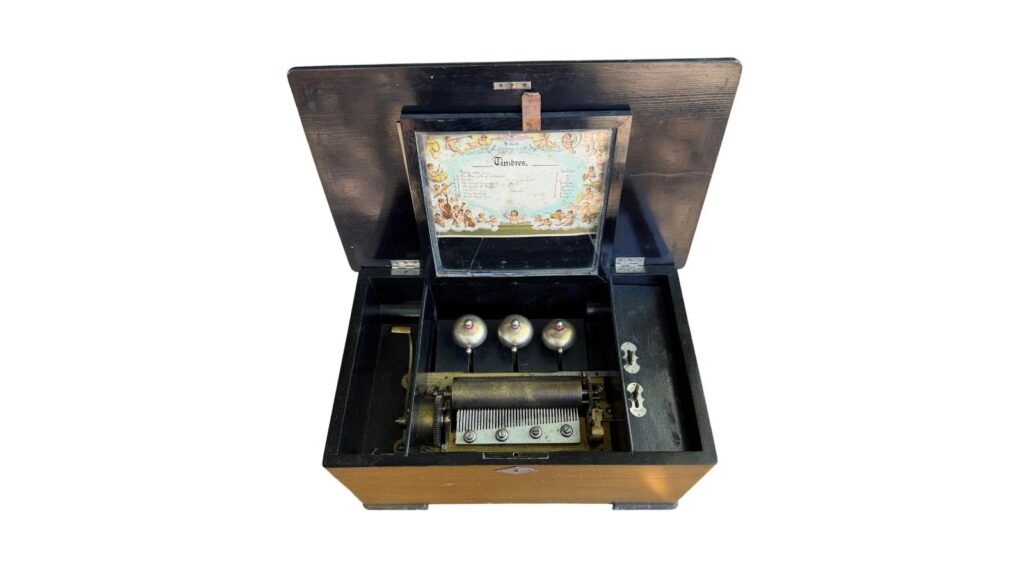
Standard cylinder music boxes just play a comb. The fancier versions add a visible percussion section, bells, a small drum, castanets, that activate alongside the melody, visible through a glass panel when the lid opens. These “bells in sight” boxes were a genuine luxury upgrade when new, and they remain the more desirable cylinder format among collectors today. Clean, working examples in a fine burl or inlaid case with a full percussion section typically fall in the $2,000 to $4,000 range.
Fine wood veneer, inlaid stringing, and a crisp comb that hasn’t lost its tuning all factor into value, but the bells-and-drum mechanism is what separates this category from an ordinary cylinder box. These were unmarked more often than not, since many Swiss workshops didn’t stamp their cases, so dating relies on the tune card inside the lid and the style of the case itself. A qualified music box restorer can confirm whether the percussion section still functions correctly, since a box with silent bells is worth considerably less than one where every element still fires. If a family piece like this has been sitting in an attic for decades, it’s worth a real appraisal before assuming it’s just a pretty box.
Some jobs pay a premium because most people would rather stay clean, dry, and far away from whatever is leaking, smoking, rotting, rusting, or stuck in a pipe. If you can handle grime, bad smells, heavy gear, and the occasional shower the minute you get home, the paycheck can look very different.
The better-paying dirty jobs are not all the usual construction trades. Landfills, ships, rail yards, utilities, factories, pipelines, aircraft hangars, environmental cleanup sites, and industrial plants all need people who can work safely when conditions are rough. These careers are not easy money. Many require apprenticeships, licenses, safety credentials, travel, odd hours, or several years of hands-on experience. But they also depend on people who can physically inspect, repair, operate, and troubleshoot things in the real world.
A landfill gas technician spends the day on top of, around, and sometimes practically inside the workings of a giant pile of decomposing garbage. The job involves checking methane extraction wells, adjusting valves, maintaining blowers and flares, dealing with condensate, and testing the gas collection system. Mud, trash, strong smells, insects, and nasty weather come with the territory. Average pay is about $93,306 per year as of 2026, which is surprisingly strong for a job that rarely makes career lists.
This is also more technical than it sounds. Modern landfills have tightly controlled gas systems that must keep methane from migrating off-site or building up where it should not. Some facilities also turn landfill gas into usable energy. Technicians commonly come in with mechanical, electrical, environmental, or equipment-maintenance experience, and technical certificates can help. Operating and closed landfills can require gas monitoring and control for years, so the work does not end when the final garbage truck leaves. That creates a steady maintenance niche for people willing to work where most others would rather not.
2. Elevator and escalator installer and repairer
Image Credit: Shutterstock
Elevator work is not the polished lobby job it appears to be from the outside. Technicians spend plenty of time in shafts, pits, crawl spaces, and cramped machine rooms coated with dust, grease, and old lubricant. They install motors, cables, controls, doors, hydraulic systems, and safety equipment, then troubleshoot those systems when something fails. Median pay is $106,580 per year, putting this trade well into six figures before considering what overtime or emergency work may add.
Nearly everyone learns through a paid apprenticeship, typically after finishing high school. Mechanical ability, electrical knowledge, and comfort working at heights matter more than looking good in clean clothes. Employment is projected to grow 5%, faster than the overall average, and existing elevators also need constant inspections, repairs, and modernization. Buildings cannot simply ignore a broken lift, especially hospitals, high-rises, transit facilities, and properties where accessibility is essential. That combination of safety rules, aging equipment, and hands-on repair work gives experienced technicians some useful staying power.
3. Ship engineer
Image Credit: Shutterstock
The engine room of a working vessel can be hot, noisy, oily, and nothing like the passenger decks upstairs. Ship engineers keep propulsion systems, generators, pumps, electrical equipment, refrigeration, fuel systems, and other machinery working while the vessel is underway. Depending on the ship, you may be dealing with bilge water, leaking oil, diesel residue, grease, corrosion, and repairs in tight spaces. Ship engineers had median annual earnings of about $101,320 in recent national wage data.
Getting there takes more than showing up with a wrench. Maritime credentials are required for many positions, and engineers can enter through maritime education programs or work their way up through engine-room jobs while earning the necessary credentials and sea time. Growth is modest rather than explosive, but vessels still need licensed people responsible for machinery and safety, and replacement hiring matters in a workforce where experienced crew members eventually retire. Cargo vessels, ferries, research ships, tug operations, and other marine employers all need people who can solve a mechanical problem far from the nearest repair shop.
4. Asbestos abatement supervisor
Image Credit: Shutterstock
There is dirty work, and then there is supervising a crew removing hazardous material from an old building while everyone is wearing respirators and protective suits. Asbestos abatement supervisors oversee containment areas, decontamination procedures, worker protection, waste handling, and the removal process itself. They may work around dusty insulation, old pipe coverings, demolition debris, ceiling material, and cramped mechanical spaces. Average pay is about $85,324 per year as of 2026.
You normally do not walk straight into the supervisor role. Workers first complete required asbestos training, learn proper removal and containment procedures, and build experience before qualifying to run crews. Safety and regulatory knowledge are a big part of the value here because mistakes can expose workers, occupants, and contractors to serious risk. This is not a rapid-growth occupation, but old buildings are still renovated, demolished, repaired, and repurposed every year. When regulated hazardous material is found, somebody trained has to contain it, remove it, document the work, and make sure the crew follows the rules.
5. Powerhouse, substation, and relay repairer
Image Credit: Shutterstock
Substation repairers work around the heavy electrical equipment most people only see from the other side of a fence. They inspect and repair breakers, transformers, relays, control equipment, and other systems that move electricity through the grid. Outdoor substations can mean mud, rain, grime, transformer residue, corroded hardware, and emergency repairs after severe weather. Inside generating facilities, heat, dust, oil, and awkward spaces can be part of the job. Median pay for powerhouse, substation, and relay electrical repairers is $103,020 per year.
Employers usually want a high school education plus substantial electrical training, work experience, or technical education. Many people reach this specialty after learning electrical systems in utilities, industry, or another skilled trade. The broader electrical repair field is fairly steady, but this particular power-grid specialty has stronger prospects as utilities replace equipment and expand capacity. Relays and diagnostic tools have become more sophisticated, yet somebody still has to go to the substation, isolate equipment safely, test it, find the fault, and make a repair without turning a bad day into a dangerous one.
6. Commercial diver
Image Credit: Shutterstock
Commercial diving is a long way from leisurely scuba diving in clear tropical water. Divers inspect bridge supports, repair ships, work on underwater pipelines, remove marine growth, handle rigging, cut metal, recover equipment, and perform construction below the surface. Visibility may be terrible, the water may be cold or dirty, and mud can turn a simple task into a slow one. Recent national occupational data put average annual pay for commercial divers at about $75,570, with specialized and experienced divers able to earn considerably more.
Commercial diving schools teach surface-supplied air systems, underwater tools, rigging, emergency procedures, and job-site safety. Extra skills such as welding, inspection, or nondestructive testing can make a diver much more useful to an employer. The field is relatively small, so it should not be treated as an unlimited hiring boom. Still, bridges, ports, dams, vessels, marine construction, and offshore infrastructure require inspection and repair in places that cannot be reached with a normal toolbox. The more technical your underwater skills become, the less interchangeable you are with someone who simply has a diving certification.
7. Corrosion technician
Image Credit: Shutterstock
Rust can be expensive, and corrosion technicians are paid to find it before a pipeline, storage tank, bridge component, or industrial system develops a much bigger problem. Field technicians take electrical readings, inspect coatings, test cathodic-protection systems, examine buried structures, and help diagnose why metal is deteriorating. The work can involve muddy rights-of-way, rusty tanks, standing water, peeling coatings, dirty test stations, and plenty of time outdoors. Average pay is about $81,074 per year as of 2026.
This is one of those technical careers many people never hear about until they work around pipelines or industrial facilities. Training in electricity, instrumentation, coatings, or mechanical systems is useful, and industry corrosion certifications can help technicians move into more advanced inspection and cathodic-protection work. Demand comes from a simple problem: metal keeps corroding whether the economy is exciting or not. Pipelines, water systems, tanks, marine equipment, and infrastructure must be inspected and maintained throughout their service lives. Good technicians combine measurements with field judgment, because the important question is not merely whether rust exists, but why it is happening and what will stop it.
8. Hydrovac operator
Image Credit: Shutterstock
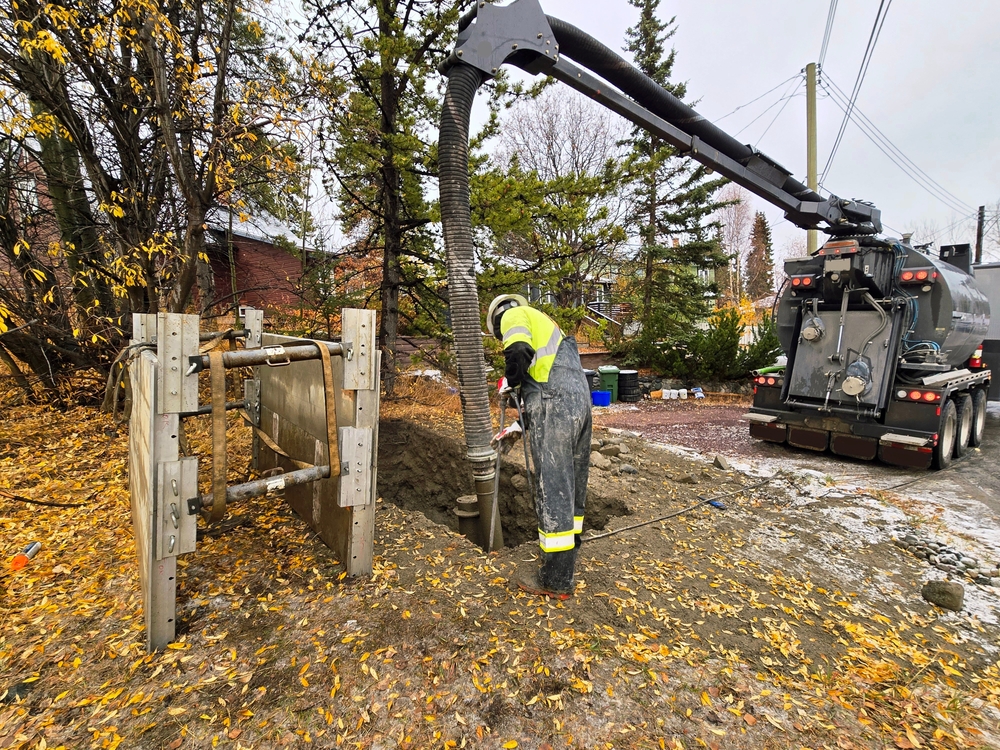
A hydrovac operator uses high-pressure water and a powerful vacuum system to remove soil without tearing blindly through whatever is buried underneath. The process is often used to expose gas lines, electrical cables, pipes, and other underground utilities before construction or repairs begin. It is precise compared with regular excavation, but it is definitely not clean. Operators handle wet soil, thick slurry, muddy hoses, dirty tanks, standing water, road grime, and whatever else comes out of the hole. Average pay is about $73,570 per year as of 2026.
A commercial driver’s license is commonly useful because the vacuum equipment is truck-mounted, and employers also value excavation, utility, or heavy-equipment experience. Operators need to understand safe digging practices and know how to work carefully around infrastructure that can be dangerous or expensive to damage. Hydrovac work benefits from the continuing need to repair buried water, energy, telecommunications, and utility systems. It is also used on industrial sites where ordinary digging would be too risky. You are not just driving a truck. You are controlling powerful equipment while trying to expose a buried line without turning it into an emergency.
9. Industrial hygienist technician
Image Credit: Shutterstock
An industrial hygienist technician goes looking for the things at work that can make people sick. That may mean entering a dusty factory, a mold-damaged building, a chemical processing area, a noisy production floor, or a remediation site to collect samples and measure exposure. Technicians may set up air pumps, test surfaces, monitor noise, check ventilation, and document workplace conditions while wearing protective gear themselves. Average pay for this specialized title is about $95,478 per year as of 2026.
Education varies widely in this field. Higher-level industrial hygiene jobs often favor science degrees, while technician and field positions can also draw people with safety, environmental, laboratory, military, or hazardous-materials experience. Specialized training in sampling equipment and occupational hazards adds value. The larger occupational health and safety field is projected to grow much faster than average as employers deal with workplace hazards, compliance requirements, and complex industrial processes. Much of the job happens where the exposure actually occurs. A report can be written later, but somebody still has to enter the building, place the monitors, examine the conditions, and figure out what workers are really breathing or touching.
10. Rail car repairer
Image Credit: Shutterstock
Freight and passenger rail cars take a beating, and the people repairing them get acquainted with every layer of grime underneath. Rail car repairers inspect and fix brakes, wheels, axles, suspension parts, couplers, doors, bearings, air systems, and structural components. Much of the job happens in yards and shops where workers crawl under equipment coated in grease, brake dust, rust, dirt, and whatever the car carried down the tracks. In the rail transportation industry, median annual pay for rail car repairers is about $80,320.
A high school education is a common starting point, followed by employer training or technical schooling in diesel, welding, industrial maintenance, or mechanical repair. The occupation is expected to remain fairly steady, with continuing replacement needs as experienced workers leave the field. Railroads cannot put off brake inspections or send a damaged freight car down the line indefinitely. Fleets have to be inspected, repaired, and returned to service. For mechanically minded people who do not mind outdoor yards, heavy components, odd shifts, and work clothes that will never stay clean, rail maintenance can provide a solid industrial career without sitting behind a desk.
11. Nondestructive testing technician
Image Credit: Shutterstock
Nondestructive testing technicians look for cracks, bad welds, corrosion, and hidden defects without destroying the equipment they are inspecting. Depending on the specialty, they may use ultrasound, radiography, magnetic particles, or liquid penetrants on pipelines, aircraft parts, storage tanks, pressure vessels, bridges, and industrial machinery. Field assignments can put you in refineries, shipyards, fabrication shops, dirty tanks, or around oily equipment and rusted steel. Average pay is about $64,314 per year as of 2026.
Many technicians enter through technical training and work toward industry Level I and Level II qualifications under experienced personnel. Welding, metallurgy, mechanical, or inspection experience can shorten the learning curve. Employment growth in the closest federal occupation group is modest, but thousands of openings are expected as workers leave the field, and inspection remains necessary in industries where a hidden flaw can cause an expensive or dangerous failure. Equipment can help produce readings and images, but technicians still have to choose the right test, prepare the surface, position equipment correctly, recognize questionable results, and sometimes crawl into very unpleasant places to get the measurement.
12. Pipeline technician
Image Credit: Shutterstock
Pipeline technicians keep the equipment along oil, gas, and other pipeline systems operating safely. They may inspect valves, pumps, meters, controls, pressure equipment, launchers, receivers, and sections of line, then perform maintenance when something is leaking, corroded, stuck, or reading incorrectly. Field conditions can include mud, weeds, standing water, grease, oily residue, insects, heat, cold, and long drives to remote equipment sites. Average pay is about $70,004 per year as of 2026, with experienced technician levels paying considerably more.
Mechanical, electrical, instrumentation, welding, and industrial maintenance backgrounds can all lead into pipeline work. Some employers train technicians internally, while technical-school programs in process technology or industrial systems can help you get started. This is less about building endless new pipelines and more about maintaining the huge network already in the ground. Valves must work, pressure has to stay within safe limits, leaks must be found, and equipment has to meet inspection requirements. A lot of the value comes from knowing a particular system well enough to notice when something looks, sounds, smells, or behaves differently than it should.
13. Electrical power-line installer and repairer
Image Credit: Shutterstock
Lineworkers do not get to choose sunny, pleasant days for every repair. They climb poles and towers, operate bucket trucks, pull cable, replace damaged equipment, and restore service after storms. That can mean mud, rain, ice, broken branches, road grime, hydraulic fluid, and long shifts in rough conditions. There is also the obvious danger of working around high voltage and at serious heights. Median annual pay reached $95,320 in 2025.
A high school diploma is typically enough to begin the path, but lineworkers need technical instruction and substantial on-the-job training. Apprenticeships are common, and employers put heavy emphasis on safety, climbing, electrical knowledge, and physical ability. Employment is projected to grow 10% through 2035, much faster than average, as the electrical system expands and existing infrastructure needs repair and upgrades. It is also a career where emergencies create unavoidable demand. When a storm drops a line or damages distribution equipment, the repair has to happen outdoors, on location, often before everyone else can get back to normal.
14. Pile driver operator
Image Credit: Shutterstock
Pile driver operators build the hidden support systems underneath bridges, docks, large buildings, retaining walls, and other heavy structures. They control equipment that drives long steel, concrete, or timber piles deep into the ground. On marine projects they may work from barges; elsewhere they deal with excavation sites, mud, dust, grease, diesel exhaust, rain, and heavy rigging. Median annual pay for pile driver operators is about $70,510.
People commonly learn through an apprenticeship or extensive on-the-job training, often after gaining experience around cranes, heavy equipment, rigging, or construction. Communication with the ground crew matters because the machinery is powerful and mistakes can become dangerous quickly. Employment for this specialty is projected to grow about as fast as the overall economy, while broader infrastructure work continues to create demand for skilled operators. Bridges, ports, flood-control projects, industrial facilities, and large foundations still require deep structural support. This is a useful niche for someone who likes operating big equipment but wants a specialty that takes more skill than simply moving dirt from one end of a site to the other.
15. Rotary drill operator in oil and gas
Image Credit: Shutterstock
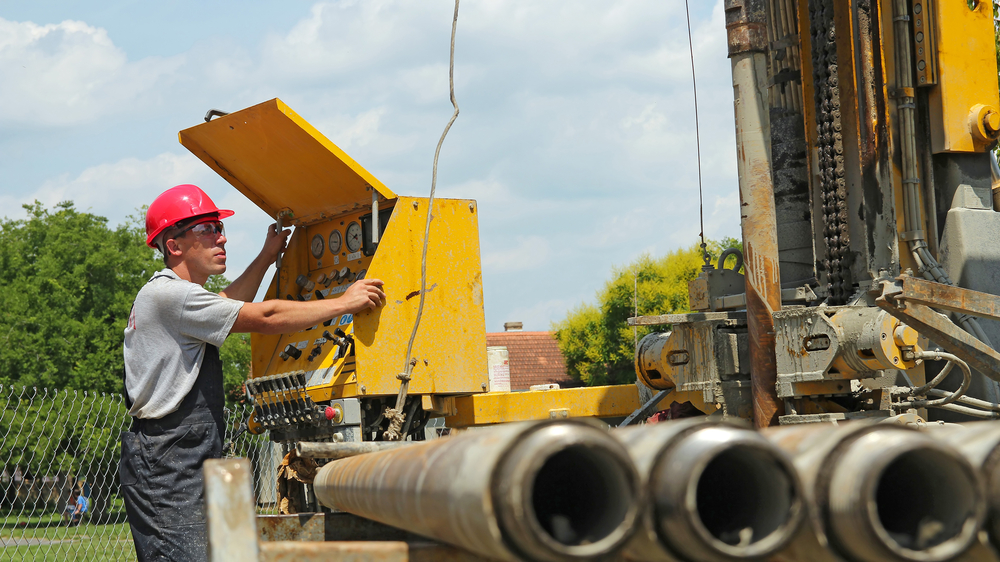
Rotary drill operators work directly on the equipment that turns a drill string into the earth. They monitor gauges, operate controls, handle drilling equipment, and work with crews adding pipe and keeping the process moving safely. Drilling mud, pipe grease, hydraulic fluid, dirt, water, and oily surfaces make clean clothing a lost cause. The work can also mean heat, cold, noise, heavy equipment, and long shifts. Median annual pay for rotary drill operators in oil and gas is about $67,890.
Formal college education usually is not the main barrier. Workers often begin in more junior drilling-crew jobs and learn equipment, safety procedures, and rig operations on the job before moving up. This field is more cyclical than utilities or building maintenance, so hiring can rise and fall with energy activity. Even so, domestic production and worker replacement continue to support thousands of openings across oil and gas occupations. The machinery may become more advanced, but drilling sites still need experienced crews who can recognize trouble, handle pipe and equipment, respond to changing conditions, and keep a complicated physical operation running safely.
16. Stationary engineer and boiler operator
Image Credit: Shutterstock
Stationary engineers keep the large mechanical systems inside hospitals, factories, campuses, commercial buildings, and industrial facilities running. They operate boilers, chillers, pumps, compressors, generators, and related equipment, then troubleshoot problems before a small failure shuts down something important. Boiler rooms can be hot, loud, dusty, and coated in oil or grease. Maintenance sometimes means crawling around equipment or dealing with soot and dirty mechanical spaces. Median annual pay is $78,620.
A high school diploma plus extensive on-the-job training is one common route, although apprenticeships and technical programs in stationary engineering, HVAC, or industrial maintenance can make you more competitive. Licensing or employer certification may also be required depending on the equipment and workplace. Employment is projected to grow about as fast as average, with replacement openings adding to demand. Large facilities cannot simply switch off their heating, cooling, steam, and power systems when equipment gets temperamental. Experienced operators also learn the sounds, temperatures, pressures, and quirks of a particular plant, which makes good troubleshooting skills especially valuable.
17. Aircraft mechanic and service technician
Image Credit: Shutterstock
Aircraft mechanics may work around machines that cost millions of dollars, but that does not make the job clean. Engines, landing gear, hydraulic systems, fuel systems, brakes, and moving parts bring grease, carbon residue, hydraulic fluid, fuel smells, and plenty of awkward spaces. Mechanics inspect aircraft, replace worn parts, track down problems, and document repairs closely because safety rules leave little room for guesswork. Median annual pay for aircraft mechanics and service technicians is $79,870.
Many mechanics complete an approved aviation maintenance program and earn the required mechanic certificates. Others qualify through military or qualifying work experience. This is skilled maintenance rather than generic wrench turning, and every repair has to meet strict standards. Employment for aircraft and avionics mechanics and technicians is projected to grow 6% through 2035, faster than average, with more than 13,000 openings expected each year across the group. Commercial fleets, cargo aircraft, private aviation, repair facilities, and manufacturers all need technicians to keep airplanes airworthy. Inspection and sign-off requirements also keep trained humans directly involved in the work.
18. Wind turbine service technician
Image Credit: Shutterstock
Wind turbine technicians spend much of the day hundreds of feet above the ground, but there is still plenty of grime up there. Inside the nacelle are gearboxes, bearings, hydraulic systems, electrical equipment, lubricants, dust, and machinery that needs regular inspection and repair. Techs may replace components, change filters and fluids, troubleshoot electrical faults, and climb towers carrying tools and safety gear. Median annual pay is about $62,580.
Technical schools offer wind-energy programs that can lead into the occupation, followed by employer training in specific turbine models, climbing, rescue, electrical systems, and safety. You need to be comfortable with heights, weather, confined spaces, and physical work. Wind turbine technician employment is among the fastest-growing occupations in the country as more turbines enter service and existing equipment requires maintenance. Building a turbine is only the beginning. Gearboxes wear, sensors fail, blades need inspection, bolts need checking, and electrical problems have to be traced. Someone still has to climb the tower and put hands on the machine when a fault will not clear itself.
19. Industrial machinery mechanic
Image Credit: Shutterstock
Industrial machinery mechanics are the people factories call when a conveyor stops, a production machine starts vibrating, or a pump decides it has had enough. They repair and maintain motors, bearings, belts, gearboxes, hydraulic systems, production lines, packaging machines, and other equipment. Depending on the plant, the grime may include machine oil, coolant, metal dust, grease, food residue, sawdust, or material from whatever the factory produces. Median pay for industrial machinery mechanics is about $64,520 per year.
A high school education can be enough to enter, although industrial maintenance, mechatronics, machining, or electrical programs can make the first job easier to land. Much of the deeper skill comes from working beside experienced mechanics and learning how equipment fails. The occupation has strong projected growth as manufacturers rely on increasingly complex machinery and need people capable of keeping it running. Advanced equipment does not eliminate maintenance. It often creates more motors, sensors, drives, actuators, and control systems that can fail. A mechanic who understands both the mechanical side and basic electrical troubleshooting can become especially useful when downtime is costing the plant money by the minute.
20. Heavy equipment mechanic
Image Credit: Shutterstock
Heavy equipment mechanics repair bulldozers, excavators, loaders, graders, cranes, mining machines, and other equipment designed to spend its life in dirt. Unsurprisingly, the machines arrive covered in mud, grease, hydraulic oil, dust, and whatever material the crew has been moving. Mechanics diagnose engine, drivetrain, hydraulic, brake, and electrical problems, often wrestling with very large parts in a shop or making repairs right on the job site. Median annual pay across heavy vehicle and mobile equipment service technicians is about $63,850.
Employers commonly hire people with a high school education and train them on the job, though diesel or heavy-equipment technology programs can provide a useful head start. Computer diagnostics are now part of the trade, but so are pressure gauges, hydraulic hoses, seized bolts, dirty undercarriages, and components that weigh more than you do. Employment in this group is projected to grow faster than average as construction, farming, mining, and other industries continue using complex mobile machinery. Equipment owners lose money whenever a machine sits broken, which makes a skilled technician who can diagnose a failure quickly worth keeping around.
21. Plumber, pipefitter, or steamfitter
Image Credit: Shutterstock
Plumbing earns its dirty-job reputation honestly. Depending on your specialty, you may deal with backed-up drains, sewage lines, corroded pipes, flooded basements, muddy trenches, old mechanical rooms, cutting oil, rust, sludge, and water coming from places it absolutely should not. Pipefitters and steamfitters also work around large industrial piping systems carrying water, chemicals, steam, or other materials. Median annual pay for plumbers, pipefitters, and steamfitters is about $63,800.
Most people learn through a multiyear paid apprenticeship that mixes classroom instruction with supervised work. Licensing requirements apply to many plumbers, and experienced workers can specialize in commercial, industrial, medical-gas, service, or other demanding systems. Employment is projected to grow at least as fast as the overall economy, with tens of thousands of openings expected each year from growth and worker replacement. Buildings will always have pipes hidden behind walls, underground, and under floors, and those systems eventually clog, crack, freeze, corrode, or wear out. When wastewater is rising instead of draining, sending an email is not going to fix it.