
You’re pulling old ornaments out of a box in someone’s basement, half looking for anything worth keeping, half just trying to get the job done before dark. Then you spot it: a plastic radio the size of a deck of cards, a mustard jar with a face on it, a folding knife with a bone handle gone amber with age. None of it looks like money. Most of it isn’t. But the 1950s left behind an enormous amount of ordinary stuff, television lamp animals, hand-painted condiment jars, transistor radios that changed how people listened to music, and a surprising amount of it still turns up in attics, church sales, and the back shelves of thrift stores for pocket change.
The trick with this decade is that almost nothing from it looks valuable at first glance. It’s plastic, or cheap ceramic, or glass that was never meant to be precious. What separates a genuine find from garage sale filler is specificity: the right maker, the right pattern, the right condition. A cracked Melmac plate is landfill. A matched set with the right glaze and no chips is a different story entirely.
Here are 15 specific things from the decade worth a second look, with realistic expectations about what they’re actually worth and what condition gets you there.
Table of contents
- Regency TR-1 transistor radio (1954)
- Shiny Brite Christmas ornaments
- Elvis Presley Sun Records 45, “That’s All Right” (1954)
- Davy Crockett merchandise (1955)
- Mr. Potato Head, original 1952 boxed kit
- Russel Wright “Residential” Melmac dinnerware
- Holt-Howard Pixieware condiment jars (1958)
- Blue Willow china
- Blenko genie bottle decanter
- Little Golden Book, first edition
- Yahtzee, 1956 first edition
- Novelty hugging salt and pepper shakers
- Catalin or Bakelite tabletop radio
- Fenton hobnail milk glass
- Zippo Town & Country lighter
Regency TR-1 transistor radio (1954)
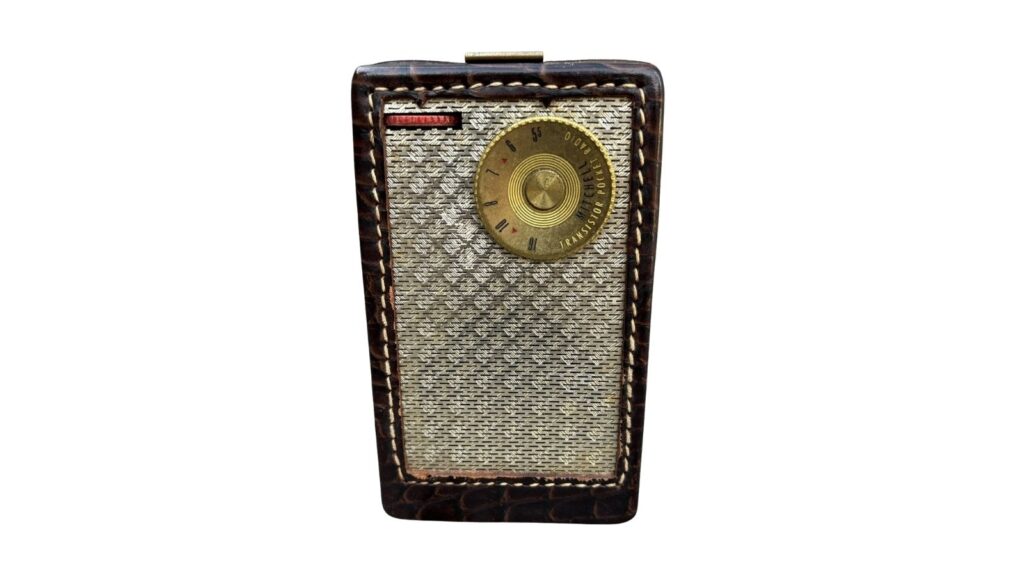
The Regency TR-1, released in October 1954, was the first mass-produced transistor radio ever sold, built by Texas Instruments and a small Indianapolis company called I.D.E.A. It’s about the size of a deck of cards, plastic-cased, and looks almost nothing like the boxy tube radios it replaced. Roughly 150,000 were made in six colors, and it’s the color that decides what a working example is worth. Ivory and gray models bring around $300 in working condition, while mandarin red and black examples climb toward $1,000. The rarer pearlescent pink, jade green, and mahogany swirl cases push past that.
Check the back panel for the small circular or triangular Civil Defense marks near the 6 and 12 positions on the dial, required on all radios sold between 1953 and 1963, since a radio missing them either predates the requirement or isn’t what it claims to be. A working speaker matters more than most people expect. Many TR-1s were repaired decades ago with replacement parts, which knocks the price down for collectors chasing an all-original example. If the leather case survives with it, intact and flexible rather than dried out and cracking, that adds real value on top of the radio itself.
Shiny Brite Christmas ornaments

Shiny Brite ornaments came out of a partnership between a costume jewelry maker and the F.W. Woolworth Company, using thin, lightweight glass lined with silver nitrate to get that mirror shine, and the company kept selling boxed sets straight through the 1950s. Boxed sets in original packaging, especially ones with mica flocking or hand-stenciled designs rather than plain glass, are the ones worth stopping for. Individual well-preserved ornaments bring $5 to $90 depending on the design, with complete boxed sets in good condition landing at the higher end of that range or beyond.
The box itself is part of the value. Early Shiny Brite boxes used simple cardboard graphics, and any box showing Uncle Sam shaking hands with Santa dates to the World War II years rather than the fifties. Cellophane-windowed boxes came in after 1955. Check for missing caps, since the metal cap and hook are original equipment and a plain replacement cap drops the price. Painted, stenciled, and mica-coated designs are worth meaningfully more than plain colored glass, and a full matching set beats the same ornaments sold individually.
Elvis Presley Sun Records 45, “That’s All Right” (1954)
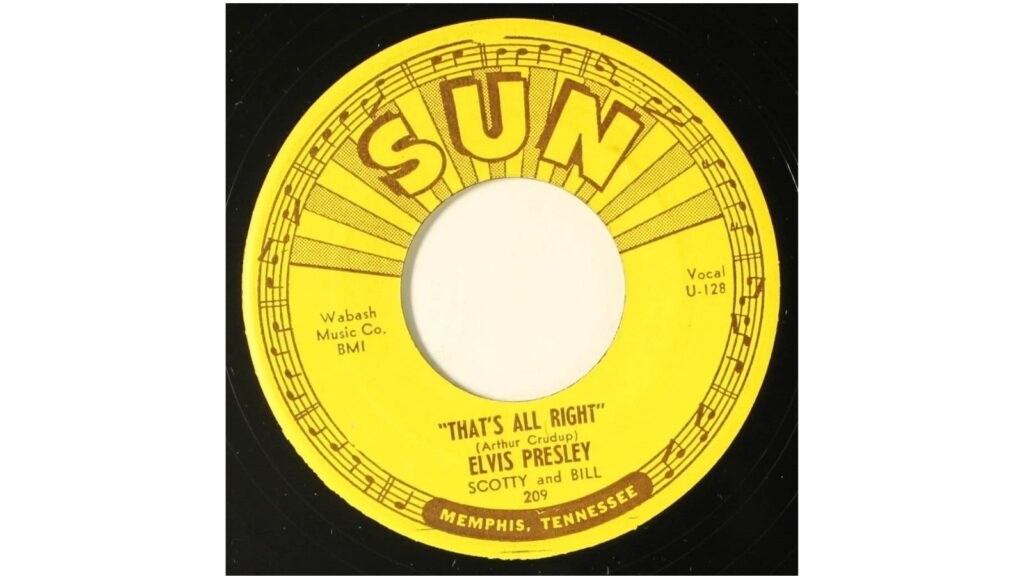
Most people who find an old Elvis 45 in a box of records have a later RCA pressing worth almost nothing extra over a common used record. The exception, and it’s a real one, is Sun 209, Elvis Presley’s first commercial release from July 1954, “That’s All Right” backed with “Blue Moon of Kentucky,” pressed by the tiny Sun Records label in Memphis before RCA bought his contract. Clean original pressings in playable condition bring $10,000 and up, with the finest surviving copies reaching considerably higher.
Identifying a genuine Sun 209 takes some care. The label is yellow with black print, and the matrix number stamped in the run-out groove near the label should read U-128 on the “That’s All Right” side. Reissues and reproductions exist, some good enough to fool a quick look, so a record this valuable is worth having authenticated before anyone gets attached to a number. This is squarely a grail item rather than something most people should expect to own, but it does turn up occasionally in estate collections built by people who bought records as they came out and never thought twice about what they had.
Davy Crockett merchandise (1955)
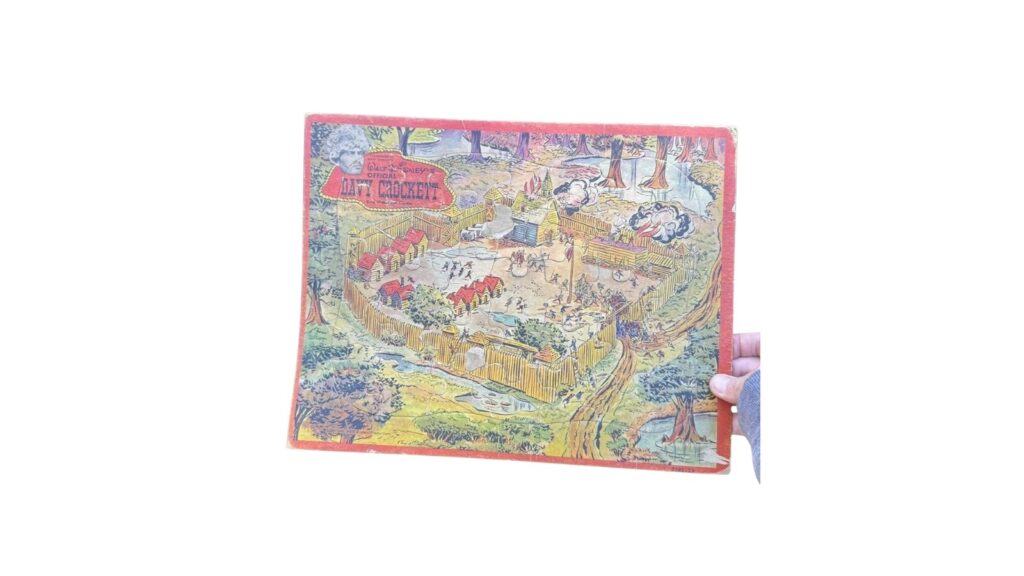
The Davy Crockett craze hit in December 1954, when Walt Disney aired the first of five television episodes starring Fess Parker, and for about two years afterward American kids wore coonskin caps, ate off Davy Crockett branded everything, and bought roughly 5,000 caps a day at the peak of it. Most surviving caps are the generic faux-fur version and worth very little on their own. The real money is in the licensed paper and packaging goods around the craze: wallets, pins, board games, and card sets in their original packaging. A boxed wallet or an unused board game brings $60 to $500 depending on completeness and condition, with movie posters and complete card sets at the top of that range.
Condition does almost all the work here. Paper goods from this era were played with, thrown away, or water damaged, so an unused example still in its original box is genuinely uncommon. Any officially licensed piece will carry a Walt Disney Productions copyright line dated 1955, which is the quickest way to separate real 1950s merchandise from later revivals and reproductions made for the character’s various anniversaries.
Mr. Potato Head, original 1952 boxed kit
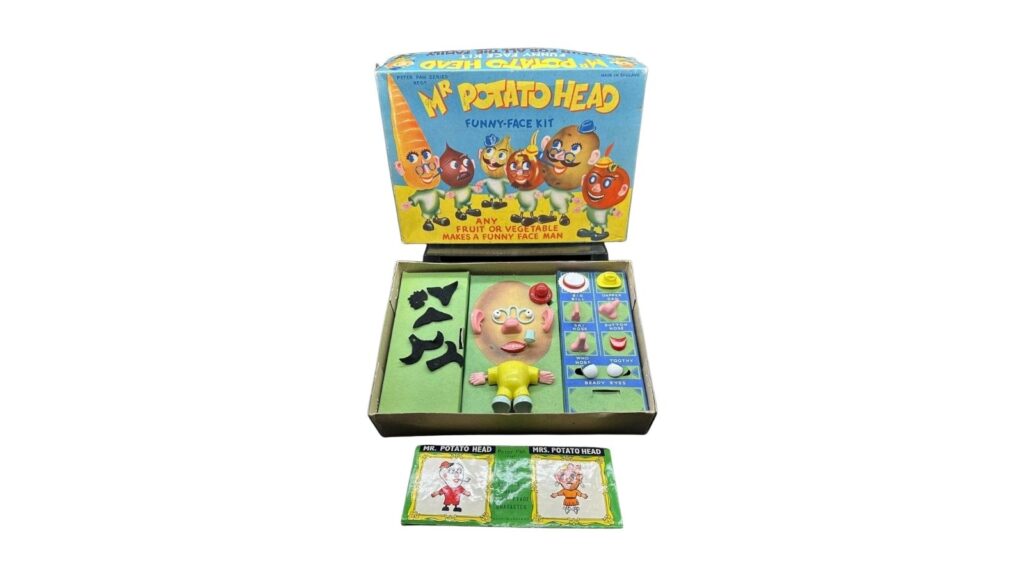
The original Mr. Potato Head, launched by Hasbro in the spring of 1952, didn’t come with a plastic body at all. It was a box of pushpin plastic parts, eyes, ears, a pipe, a mustache, meant to be stuck into a real potato or other vegetable, since parents were expected to supply their own produce. That instruction alone is a giveaway for dating an early set. Complete original kits with the full run of parts, the box, and the instruction sheet are hard to find because most got played into pieces or thrown out once a plastic potato body was introduced later in the decade. Complete boxed examples list for $100 or more, and individual loose pieces typically sell for a few dollars each.
The rarer version to look for is the Snap-On Tools promotional kit, produced as a giveaway and harder to find than the standard retail release, with boxed examples bringing a real premium over the ordinary set. Felt pieces, particularly the mustache and eyebrow accessories, degrade with age and are commonly missing, so a complete felt inventory adds meaningfully to what a set is worth.
Russel Wright “Residential” Melmac dinnerware
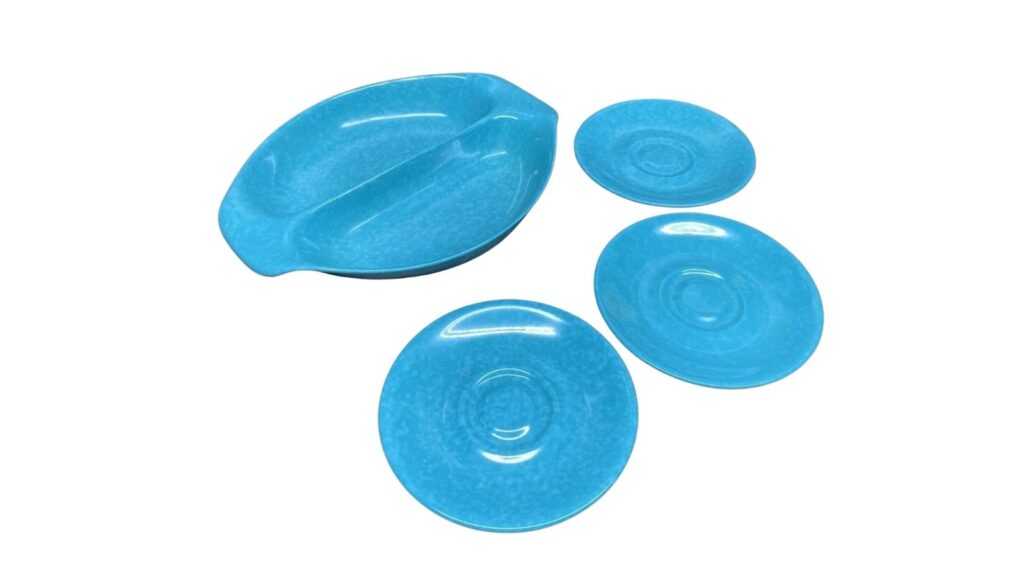
Industrial designer Russel Wright put his name on a lot of mid-century dinnerware, but his Residential line, a melamine plastic pattern manufactured starting in 1953, is the one collectors specifically hunt for in the Melmac category. It came in soft, cloud-overlaid colors like sea mist, lemon ice, and chartreuse, with a sleek, almost sculptural shape that set it apart from the flatter, plainer melamine most households actually owned. A large, mostly complete set in good color and condition typically brings around $150, and standout pieces like the rare two-tone examples, with one color molded on top and another on the bottom, bring considerably more to the right collector.
Melamine scratches and stains in ways ceramic dinnerware doesn’t, so condition matters enormously here. Cloudy, scratched-up plates from decades of knife use are common and worth very little. What collectors actually want is unused or lightly used pieces with the color still bright and the surface unmarked, along with serving pieces like the divided vegetable bowl and creamer, which survived in smaller numbers than the plates and cups.
Holt-Howard Pixieware condiment jars (1958)
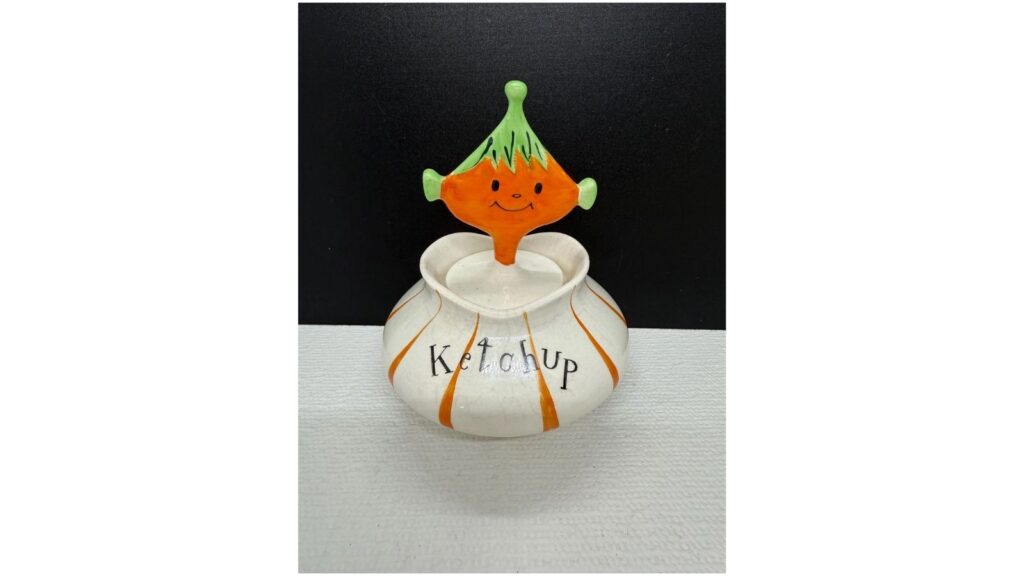
In 1958, a small giftware company called Holt-Howard introduced Pixieware, a line of ceramic condiment jars shaped like grinning, big-eyed elves, each one holding mustard, ketchup, jam, or another kitchen staple and topped with a matching spoon. They originally cost about a dollar apiece and were exactly the kind of thing nobody expected to matter later. Common individual jars in good condition bring modest money, usually under $50, but the harder-to-find condiments, chili sauce, honey, and the oil-and-vinegar cruet pairs, along with rarer serving pieces, regularly bring $200 to $1,000, and the scarcest pieces in the line reach well beyond that.
The line was widely imitated at the time by other Japanese ceramics importers, so check for the Holt-Howard mark or the “HH” stamp and a date before assuming a piece is authentic. Crazing, the fine network of surface cracks that shows up in the glaze with age, is common and doesn’t hurt value much on its own, but a chipped spoon, a cracked lid, or a replaced cork stopper does. Complete jars with their original matching spoon intact are worth noticeably more than the jar alone.
Blue Willow china

Blue Willow, the cobalt blue transferware pattern showing a bridge, a willow tree, and two doves lifted from an old romantic legend, has been in production since the 1700s, but the pieces most people are likely to actually own came out of American and Japanese factories during the postwar china boom of the 1950s. Most of it is common and worth very little on its own, a few dollars a plate, but earlier and better-made examples, particularly anything by an established English or European maker rather than a generic import, sell for real money. A clean example from a recognized maker brings close to $700, and rarer serving pieces bring more.
The maker’s mark on the base is the whole story with this pattern, since the design itself has been reproduced by dozens of companies at every quality level for two centuries. Look for a printed backstamp identifying the manufacturer and country of origin rather than an unmarked or vaguely stamped piece. Chips along the rim and worn transferware, where the blue has faded or scratched thin from decades of washing, both reduce value substantially on a pattern this common.
Blenko genie bottle decanter
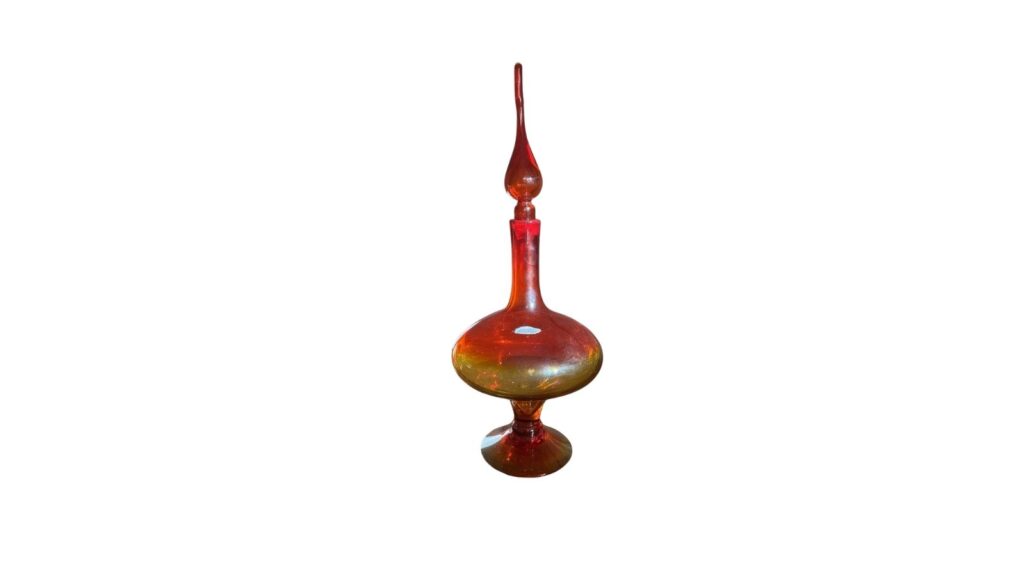
The Blenko Glass Company of Milton, West Virginia, hit its creative stride in the 1950s under designer Wayne Husted, who turned simple hand-blown decanters into sculptural statement pieces in bold, saturated colors. The signature form, a tall, tapered “genie bottle” decanter with a slim teardrop stopper, is the one to look for, and in sea foam green or mulberry with the original stopper intact, complete examples bring $400 to $700, with the largest floor-standing versions, some over 30 inches tall, climbing past $1,000.
Blenko never signed its glass with an etched mark, so authentication comes down to knowing the shapes and checking the base for a rough, unpolished pontil scar left where the piece was cut from the blowpipe, a hallmark of genuine hand-blown glass rather than a machine-made import. The stopper is the single most important thing to check before buying, since a chipped or mismatched stopper cuts the value of an otherwise excellent decanter by a significant amount. Modern Blenko reissues exist and are clearly marked as current production, but they can confuse a quick glance, so compare any piece against catalog photos before assuming it’s a 1950s original.
Little Golden Book, first edition
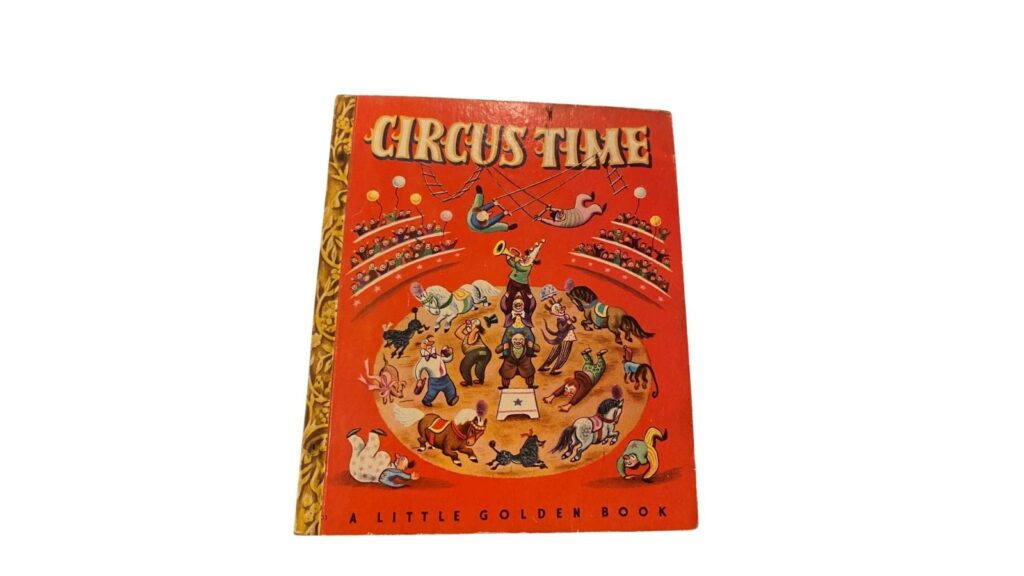
Little Golden Books have been showing up in the hands of American toddlers since 1942, sold cheap at 25 cents apiece and read into pieces by exactly the audience they were made for, which is why clean first editions from the 1950s are harder to find than their original print runs would suggest. Most common titles in average, well-loved condition are worth a few dollars at most. The ones worth hunting for are first “A” editions of popular Disney tie-ins and books illustrated by name artists like Eloise Wilkin, Richard Scarry, or Corinne Malvern, and clean copies of these can bring $275 or more, with the rarest first editions reaching into four figures.
Identifying a first edition comes down to the small printer’s code on the inside back cover or the copyright page, along with checking that the price on the cover matches the year, since Little Golden Books held their 25-cent price from the 1940s all the way through 1962. Torn pages, crayon marks, and a missing or heavily creased spine all knock a book down to bargain-bin territory regardless of how early the edition is, so condition rules this category as much as rarity does.
Yahtzee, 1956 first edition
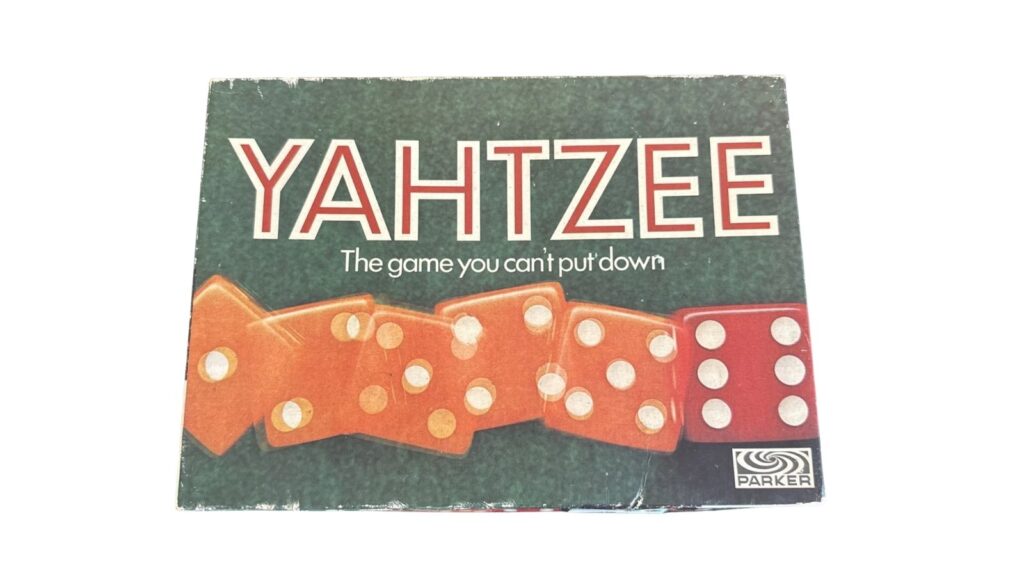
E.S. Lowe released Yahtzee in 1956, and the dice game became such a fixture of American family game nights that complete original sets are more common at estate sales than most 1950s board games, which keeps prices modest even on genuinely old examples. A well-worn but complete original set typically appraises for around $20 to $25, with clean, complete sets in their original box bringing more to buyers who want a display piece rather than a game to actually play.
Completeness is what separates a set worth anything from one that isn’t, since the dice, the leather-look shaker cup, and especially the pad of score sheets are the pieces most likely to go missing after decades of use. Box number 950 identifies the original 1956 release specifically, distinct from the many reissues and variant editions Lowe and later Milton Bradley put out over the following decades, which look similar but don’t carry the same age or interest. A box that’s structurally sound with sharp corners, rather than crushed or heavily taped, is worth more than the rules and dice alone would suggest.
Novelty hugging salt and pepper shakers
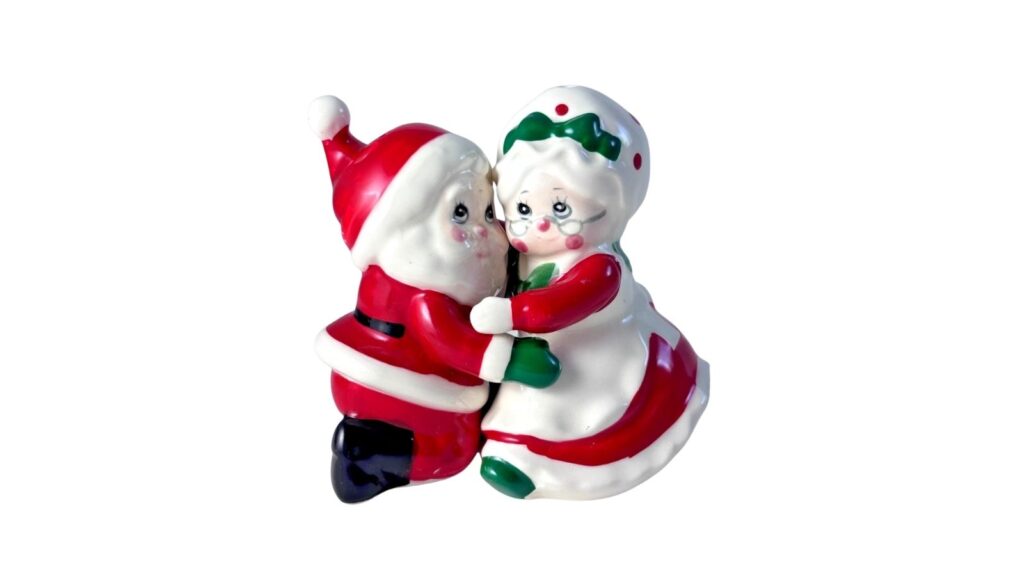
Novelty ceramic salt and pepper shakers were a genuine mania in postwar American kitchens, and companies like Regal China turned out enormous numbers of figural sets through the 1950s, anthropomorphic bears, Dutch children, and animals designed to lean against each other in a hug, with a magnet or interlocking design holding the pair together. Common figural sets are cheap and plentiful, typically $10 to $20 for an average pair in decent shape, but name-brand designer pieces from makers like Lefton or Holt-Howard bring $30 to $100 or more, and the rarest mechanized or novelty designs go higher still.
The cork stoppers underneath are almost always the first thing to fail, so a set with intact, unreplaced corks is worth more than one with mismatched or missing stoppers, even if the ceramic itself looks identical. Chips on the small extremities, an ear, a hat brim, an outstretched hand, are extremely common and easy to miss without close inspection, and they matter more on a set this small than they would on a larger piece.
Catalin or Bakelite tabletop radio
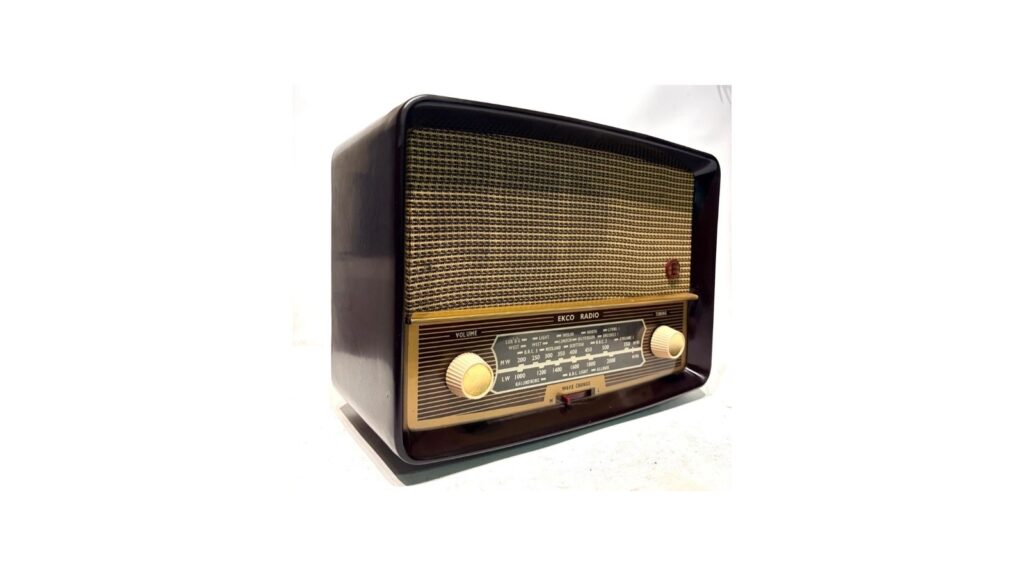
Before television took over the living room, a tabletop radio was the centerpiece of the house, and the plastic cabinets that housed them ranged from plain, workaday brown Bakelite to the vividly colored Catalin resin cabinets that collectors chase today. Plain brown or black Bakelite radios from the 1940s and 1950s are common and affordable, typically $25 to $150 in working condition, while true Catalin radios in saturated colors, red, yellow, green, marbled swirls, climb to $500 or beyond, with the rarest color combinations and Art Deco designs reaching into the thousands.
Catalin production had mostly wound down by the early 1950s, so the colorful examples most often date to the tail end of the 1940s, while the plainer black and brown Bakelite tabletop sets carried on selling well into the fifties and are the more realistic find for most people. Cabinet cracks are the biggest value killer, since Catalin becomes brittle with age and hairline cracks around the dial and speaker cutout are extremely common. A working radio adds to the price, but even non-working cabinets in vivid, uncracked color hold real value to collectors who mainly want them for display.
Fenton hobnail milk glass
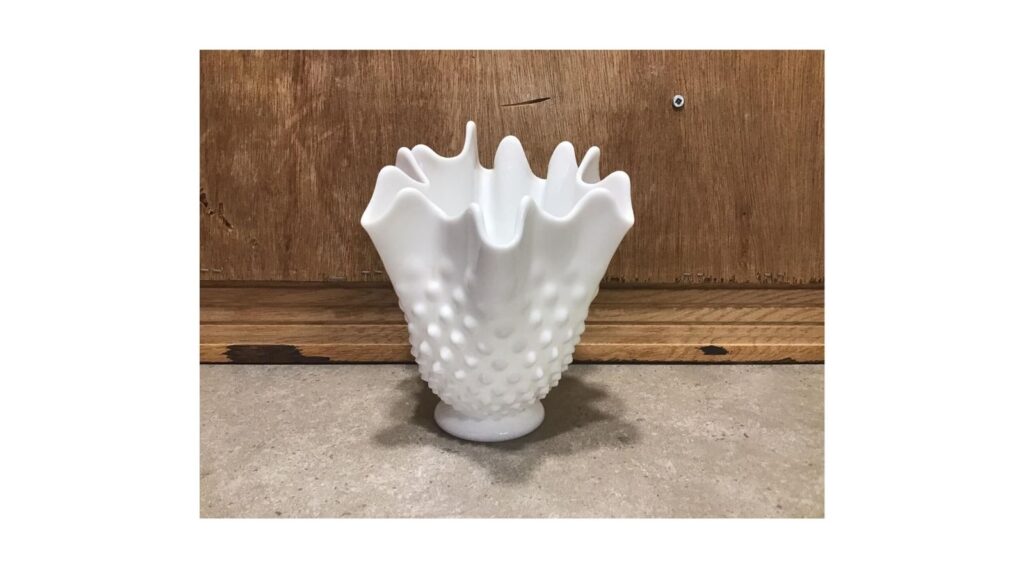
Fenton Art Glass had been making hand-blown glass in Ohio since 1905, but it was the milk-white version of its Hobnail pattern, introduced in 1950 with a dense field of small raised bumps across the surface, that became the company’s single most successful product and one of the most common pieces of glassware to turn up at estate sales today. That abundance keeps most individual pieces affordable. A common milk glass hobnail piece, a cake stand or a small vase, typically brings $20 to $80, while the rarer ruffled epergnes with all their original trumpet-shaped vases intact, along with pieces in less common colors like rose or turquoise rather than plain white, bring $100 to $400 or more.
Because Fenton made so much of this pattern for so long, completeness and color are what actually drive value rather than the pattern itself. An epergne missing even one of its four removable vases is worth a fraction of a complete set. Chips along the crimped, ruffled edges are common on glass this delicate and are easy to miss without running a fingertip carefully around the rim in good light.
Zippo Town & Country lighter
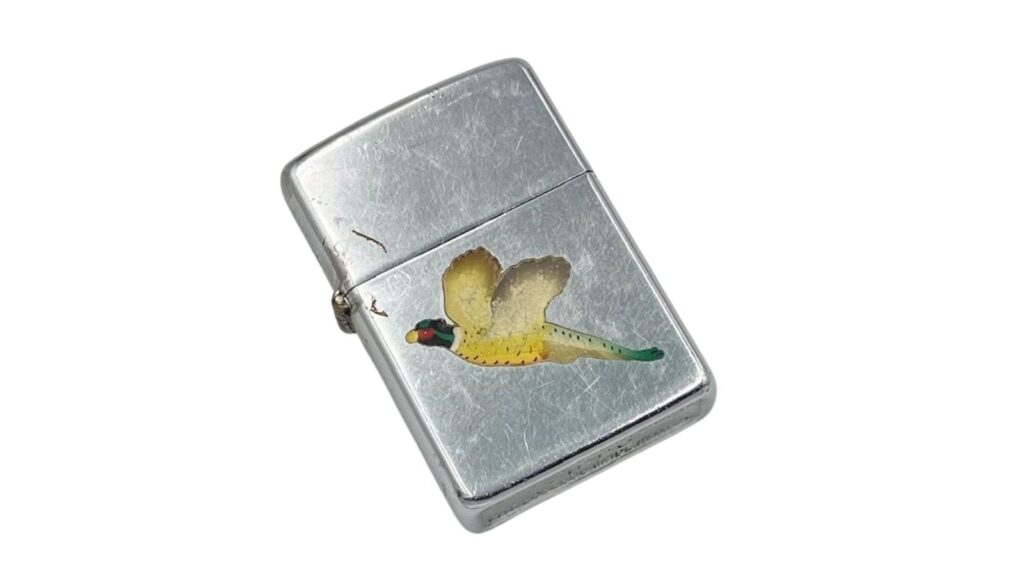
Zippo introduced its Town & Country line in the late 1940s, a labor-intensive process where an enamel design, ducks, pheasants, fish, hunting dogs, was hand-painted into engraved grooves on the lighter’s case and then baked to harden it. By the 1950s the pattern had become one of the company’s signature novelty lines, sold to sportsmen and gift buyers alike. A plain 1950s Zippo in decent condition is worth relatively little, generally under $50, but Town & Country examples from the decade bring $300 to $800 depending on the design and how much of the original enamel survives, with the original presentation box adding meaningfully on top of that.
The bottom stamp is the quickest dating tool, since Zippo’s date-code system was already in limited use by the mid-1950s and became standardized shortly after. Enamel wear at the high points of the design, worn down from decades in a pocket, is common and reduces value, while a lighter that still strikes and closes with a tight, audible snap is worth more than one with a loose or damaged hinge. The original box, if it survived, is often worth nearly as much as the lighter on its own for the rarest designs.











