
You’ve had one in your hand a hundred times without looking twice. Since 2010, every roll of quarters from the bank has been mixed with America the Beautiful quarters, a 56-design series that gave every state, territory, and Washington, D.C. its own national park or historic site. Almost all of those 56 are worth exactly 25 cents.
A small number aren’t. Some carry a mint mark that never should have ended up in pocket change. Some have a doubling or a strike error that happened on the factory floor. A few exist only as five-ounce silver coins that were never meant for circulation at all, and those are worth real money purely for their silver content right now. The trick is knowing which detail to look for, because on this series it’s rarely the design itself.
Table of contents
- The 2020 “bat quarter” from American Samoa
- 2019-W America the Beautiful quarters
- 2020-W V75 privy mark quarters
- 2015-P Homestead National Monument doubled die quarter
- America the Beautiful 90% silver proof sets
- 2017-S 225th Anniversary Enhanced Uncirculated coin set
- 2010 Hot Springs five-ounce silver coin
- 2020-P Salt River Bay five-ounce silver coin
- 2021 Tuskegee Airmen five-ounce silver coin
The 2020 “bat quarter” from American Samoa
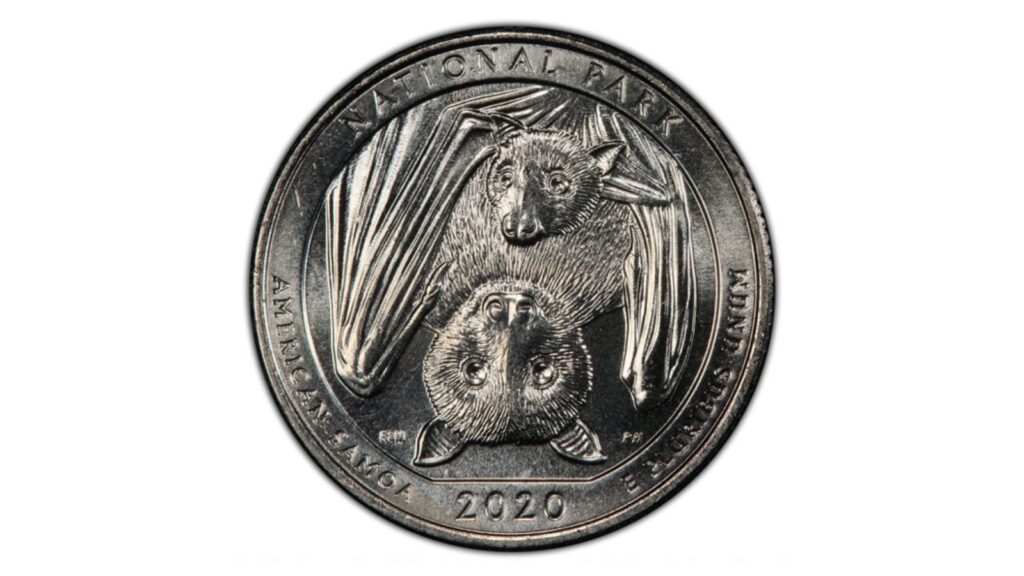
The National Park of American Samoa quarter reached banks in February 2020, a few weeks before COVID-19 became a household word, and its reverse shows a Samoan fruit bat mother carrying her pup. The timing turned an ordinary release into the most talked-about coin in the entire series, and it’s still the one people ask about first.
Most 2020 bat quarters in your change are worth exactly what they say: 25 cents. The version to actually look for carries a W mint mark, struck at West Point and mixed randomly into circulation, which brings $10 to $25 in decent uncirculated condition and climbs from there in higher certified grades.
The real money is in the strike errors. A handful of 2020 bat quarters show a struck-through or “blind bat” error where part of the mother bat’s face is missing or blank, caused by grease or debris on the die during striking. Clean, clearly visible examples of this error bring $100 to $300, with the most dramatic ones pushing higher. Check the bat’s face under good light before assuming yours is ordinary.
2019-W America the Beautiful quarters
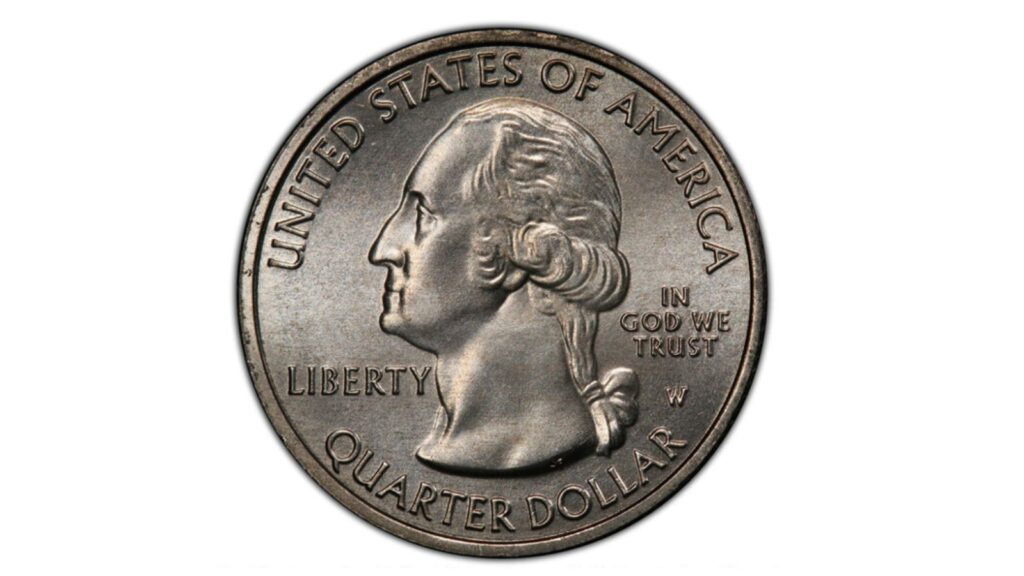
In April 2019, the Mint did something it hadn’t done with quarters in nearly ninety years: it struck circulating coins at the West Point Mint and mixed them into regular bank bags with no announcement beyond a press release. Each of the five 2019 designs got a mintage of just two million W-marked coins, against a combined Philadelphia and Denver mintage north of 170 million for the same designs.
Look for a small W below “In God We Trust” on the obverse. A raw example pulled from change typically brings $10 to $25, and prices firm up from there for coins in gem uncirculated condition. Certified examples in the higher Mint State grades have traded considerably higher: a 2019-W San Antonio Missions quarter in MS68 has been valued at $700 in NGC’s own price guide. These coins are still turning up in ordinary rolls, which is what makes them worth checking for.
2020-W V75 privy mark quarters
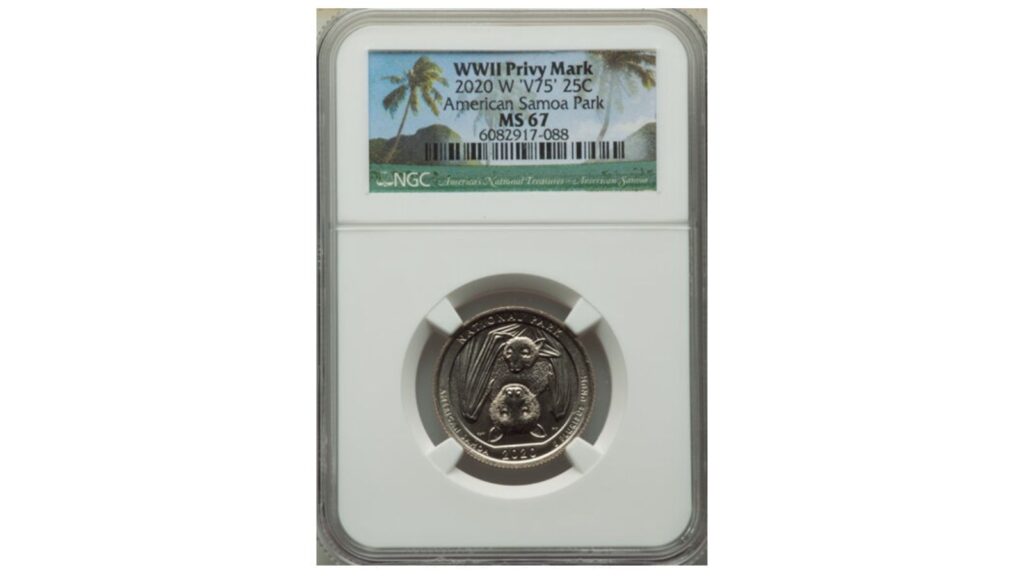
The Mint repeated the West Point experiment in 2020, this time adding a small “V75” mark to honor the 75th anniversary of the end of World War II. The privy mark sits near the date, a tiny outline referencing the Rainbow Pool at the National World War II Memorial, and it’s a design element rarely used on regular circulating American coinage.
All five 2020 designs, including Connecticut’s Weir Farm, the U.S. Virgin Islands’ Salt River Bay, Vermont’s Marsh-Billings-Rockefeller, Kansas’s Tallgrass Prairie, and the American Samoa bat quarter, were struck with the V75 mark in the same two-million-per-design mintage as the standard 2019 and 2020-W releases. Circulated finds run a few dollars over face value, while certified examples in top Mint State grades have reached as high as $500. As with the plain 2019-W coins, these are hiding in ordinary bank rolls right now, not sitting in vaults.
2015-P Homestead National Monument doubled die quarter
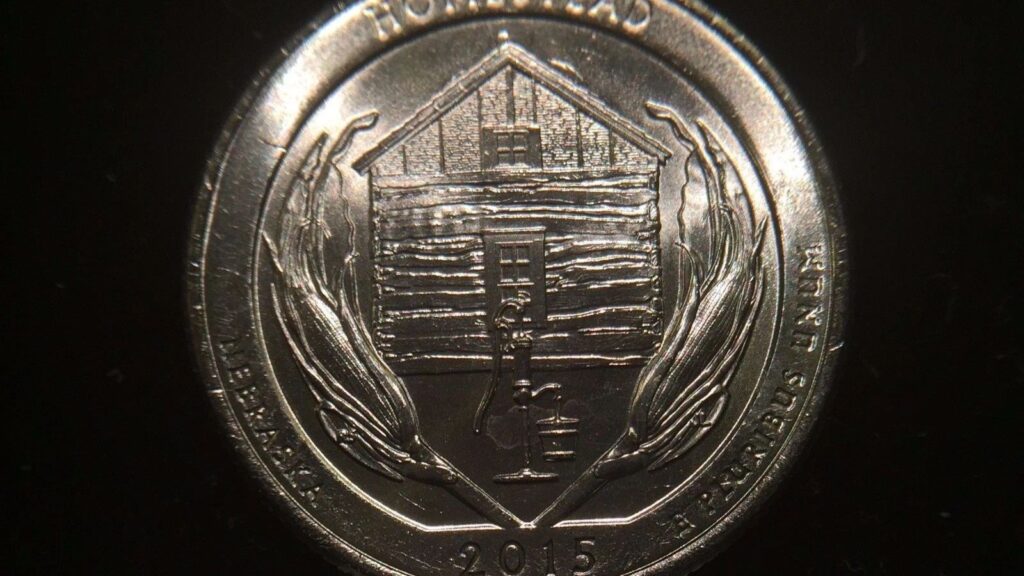
Shortly after the 2015 Homestead quarter for Nebraska went into circulation, collectors began finding examples with strong doubling on the water pump depicted in front of the schoolhouse on the reverse. The most significant variety, catalogued as WDDR-004, shows the top of the pump handle doubled clearly enough to see without magnification, and NGC has certified it as a recognized variety.
Collectors quickly turned up dozens of additional Homestead doubled dies, some strong and some barely visible, but WDDR-004 remains the one worth hunting for. Typical brilliant uncirculated examples of the major variety bring $15 to $45, with early die state examples showing the sharpest doubling worth more. Weaker, minor doubled dies from the same release exist too, but they bring only a few dollars each. A jeweler’s loupe on the water pump and the window frame behind it is all you need to check.
America the Beautiful 90% silver proof sets
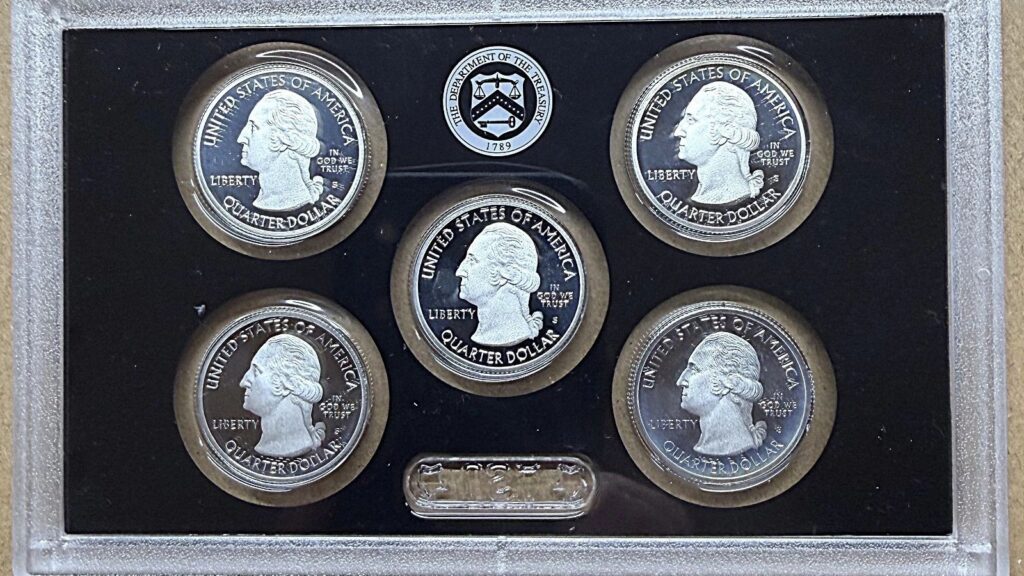
Alongside the regular clad coins, the Mint struck a 90% silver proof version of every design from 2010 through 2018, sold in five-coin annual sets directly to collectors from the San Francisco Mint. A lot of households have one or two of these sets tucked in a drawer from a gift subscription or a one-time purchase.
Each coin holds about 0.18 ounces of silver, so with silver trading in the mid-$60s an ounce, an individual coin carries roughly $11 to $12 in melt value before any collector premium. Complete five-coin sets in their original Mint packaging currently trade for $120 or more, largely tracking the silver market rather than any particular date being scarce. Broken-up sets or individual proof coins sell for less, so a complete set with its box and certificate is worth more than the same five coins loose.
2017-S 225th Anniversary Enhanced Uncirculated coin set
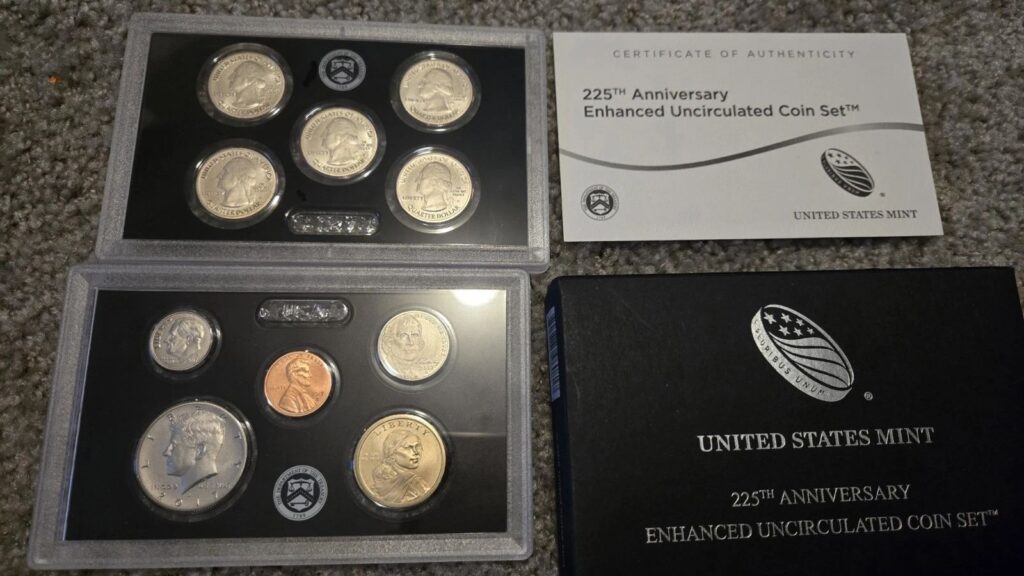
To mark the Mint’s 225th anniversary in 2017, the San Francisco Mint released a ten-coin set limited to 225,000 units, including all five 2017 America the Beautiful quarters struck in a one-year-only Enhanced Uncirculated finish that combines laser-frosted design elements with an unpolished background. It was the first time the Mint had used this finish on circulating-style coinage.
The set carried an original issue price of $29.95 directly from the Mint. Complete sets in original packaging now typically bring $40 to $50, while the five ATB quarters sold individually or broken out of the set bring only a few dollars each. The finish is genuinely distinctive up close, with a frosted, almost matte look that doesn’t match either a business strike or a mirror proof, so a complete boxed set is easy to identify at a glance.
2010 Hot Springs five-ounce silver coin
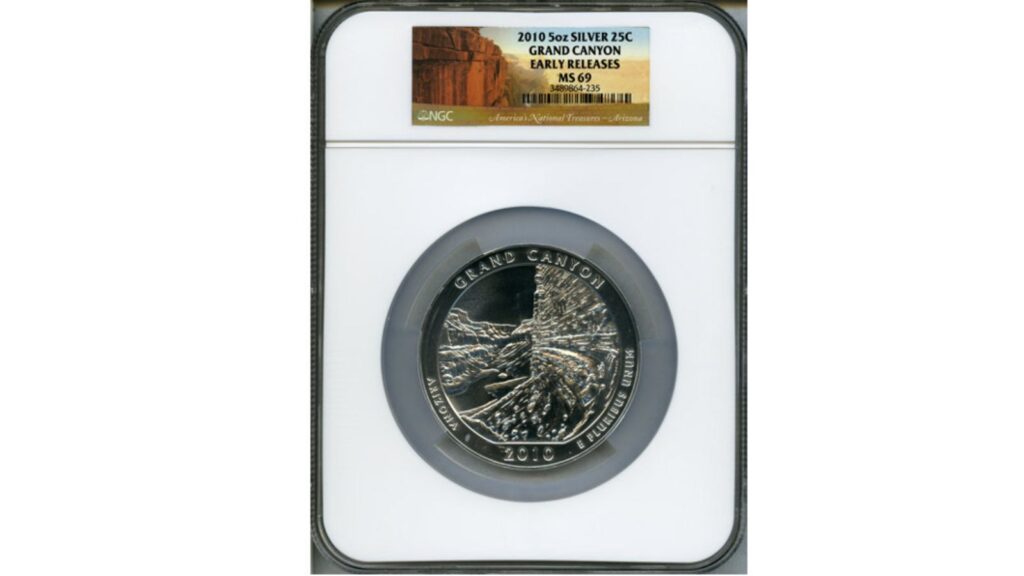
Before the quarter program even released its first circulating coin, the Mint began striking an oversized companion series: five-ounce, .999 fine silver versions of each design, sold directly to bullion dealers and collectors rather than released into circulation. The 2010 Hot Springs coin was the very first release in that silver series, with a bullion mintage of 33,000 and a separate burnished, Mint-mark version limited to under 27,000.
At five troy ounces of pure silver, the coin’s melt value alone runs close to $300 with silver at current levels, and certified examples in original packaging typically sell in that range or somewhat above it, with the lower-mintage burnished version commanding a modest premium over the bullion strike. These coins show up in inherited collections more often than people expect, since they were a popular hedge purchase during the program’s early years.
2020-P Salt River Bay five-ounce silver coin
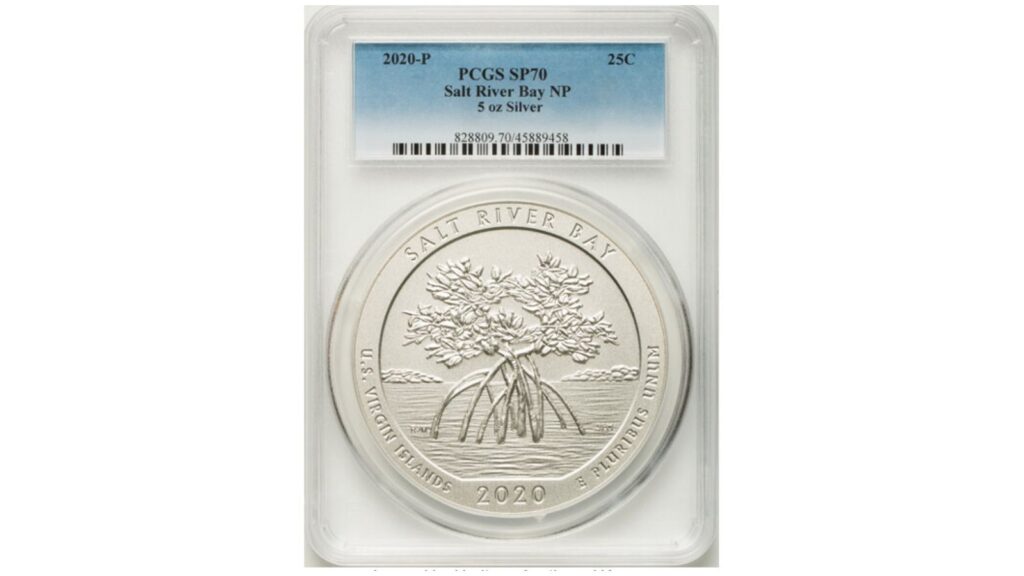
Of all 56 designs in the five-ounce silver series, the lowest mintage belongs to the U.S. Virgin Islands’ 2020 Salt River Bay coin. Its burnished, P-mint version was capped at just 13,566 pieces, the smallest production run of any coin in the entire program, silver or clad.
Scarcity plus silver content pushes this one well past its neighbors in the series. Current asking prices for certified or boxed examples run from roughly $430 to $475, depending on grade and whether it’s still sealed in its original U.S. Mint packaging with the certificate of authenticity. Anyone who bought a handful of these coins as a silver hedge in 2020 and forgot about them is sitting on more than they probably remember, especially with silver having climbed substantially since then.
2021 Tuskegee Airmen five-ounce silver coin
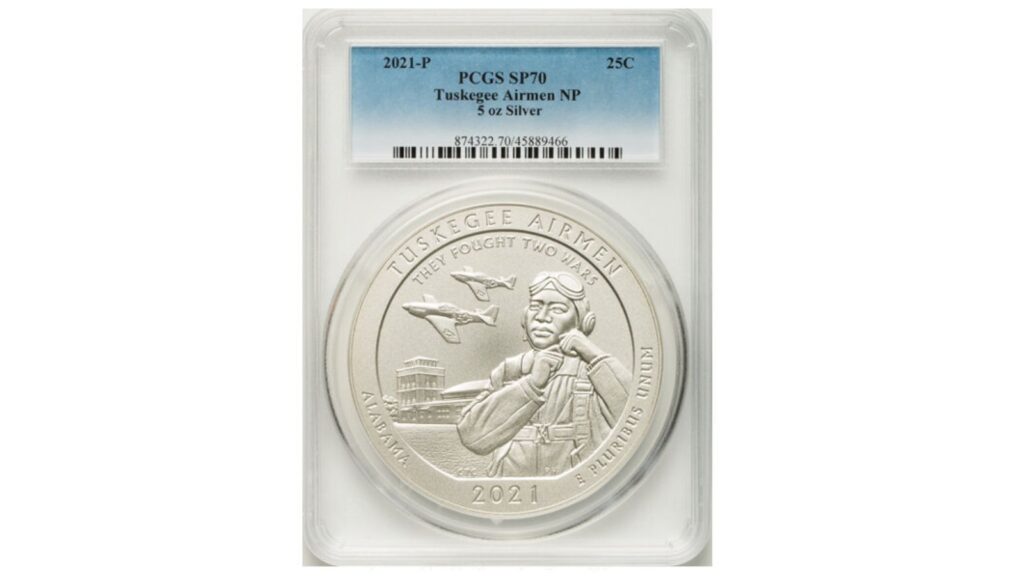
The America the Beautiful program closed out in 2021 with a single design instead of the usual five: the Tuskegee Airmen National Historic Site in Alabama, the 56th and final coin in both the quarter and five-ounce silver series. The reverse depicts a Tuskegee Airman suiting up at Moton Field as two P-51 Mustangs pass overhead.
As the closing release of a twelve-year program, it carries a natural collector interest beyond its silver content. Current prices for the five-ounce coin run close to $400, tracking silver prices closely since the mintage, at just under 53,000 for the bullion strike, isn’t especially scarce by the series’ standards. It’s a straightforward one to confirm: check for the 2021 date and the Tuskegee Airman design, since it’s the only design issued that year.











