
That crooked five-dollar bill in an old cash drawer might be nothing more than a badly handled note. Or it might have left the printing press with the wrong design on its back, two different serial numbers or part of its portrait missing. Those are very different problems, and collectors pay for the second kind.
The prices can be astonishing. One $5 bill with a $10 design on its reverse sold for $44,400 in January 2024. The details of an error are usually far more interesting than the number on the bill.
A shifted seal, a blank stripe through a design or two serial numbers that do not agree can be easy to miss. The best clues are often visible when you put both sides of a note under good light and look closely at how it was printed.
Table of contents
- 1934D $5 bills with a $10 back
- 1996 $20 bills with a retained sticker obstruction
- 1976 $2 bills with upside-down seals and serial numbers
- 1974 $50 bills with the entire back inverted
- 2013 $1 star notes with a matching duplicate serial number
- $20 bills missing their main portrait printing
- 2006 $1 bills with a mirror-image printing transfer
- 1999 $1 bills with different serial-number suffix letters
- 2013 $20 bills with two different serial numbers
- 1928G $2 notes with a stuck serial-number digit
- 1969A $50 bills with a dramatic ink smear
- 1977 $1 bills with weak printing on the back
- 1977 $50 bills with a gutter fold through the overprint
- 2017A $5 bills cut across the printed design
- 2006 $1 bills with misaligned seals and serial numbers
- 1985 $10 bills with an extra back design on the front
- 1988A $5 bills with a paper-jam printing error
- 1934A $5 bills with a missing serial-number star
1934D $5 bills with a $10 back
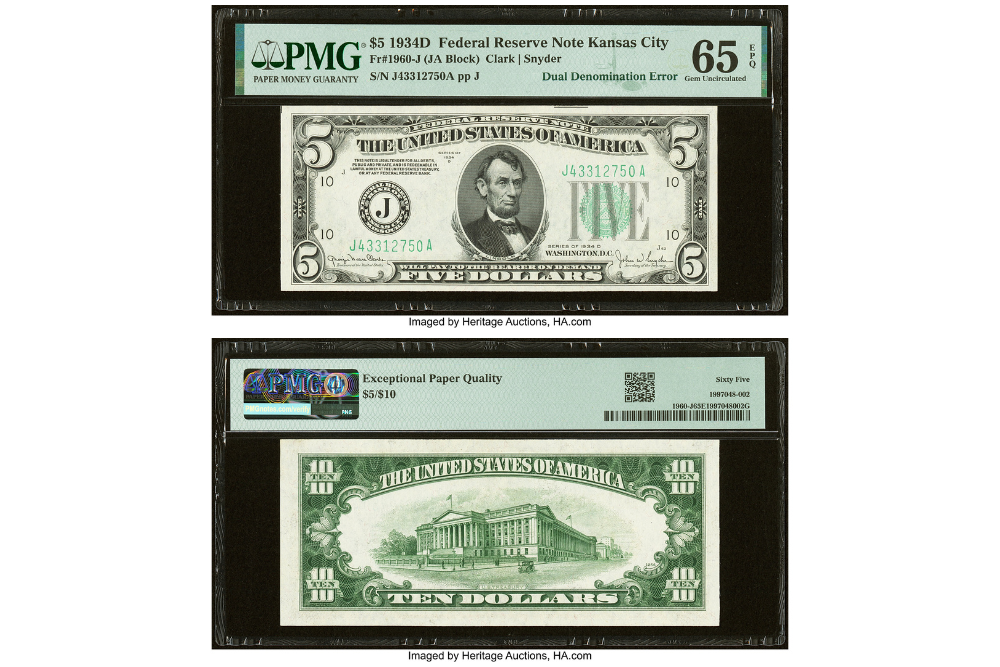
A five-dollar bill showing Abraham Lincoln on the front should not turn over to reveal the back design of a ten. Yet that is exactly what happened to some Series 1934D Kansas City Federal Reserve notes. A correctly printed $5 face was paired with a $10 reverse. It is one of the few errors where the denomination itself is wrong, rather than a minor part of the printing.
A well-preserved example graded PMG 65 EPQ brought $44,400 at auction in January 2024. The giveaway is clear when you check both sides: Lincoln and a FIVE designation on one, the Treasury Building and TEN on the other.
The mix-up paired the two designs during printing. The Kansas City district identification and Series 1934D designation help narrow down the note, while photographs of both sides show the remarkable mismatch.
1996 $20 bills with a retained sticker obstruction
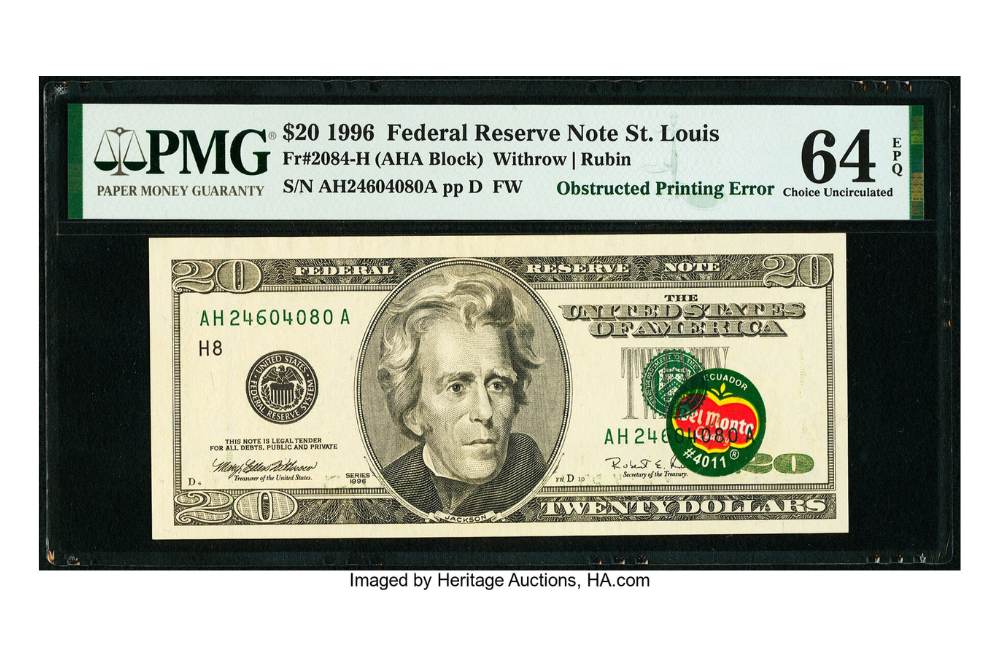
A banana sticker on a twenty sounds like rubbish somebody should peel off. On one 1996 St. Louis Federal Reserve note, however, the sticker was there during production. Parts of the Treasury seal and serial number were printed over it. That makes the sticker part of the error’s history rather than something a customer slapped on the bill afterward.
The now-famous example sold for $396,000 in January 2021. What made it special was the retained obstruction and the way the later printing crossed onto the object. Removing it would destroy crucial evidence.
An ordinary obstructed-printing error can leave a blank patch where paper, tape or another object blocked the ink. If an item is still attached, leave it alone. Look closely at whether the printed details continue across the surface of the obstruction.
1976 $2 bills with upside-down seals and serial numbers
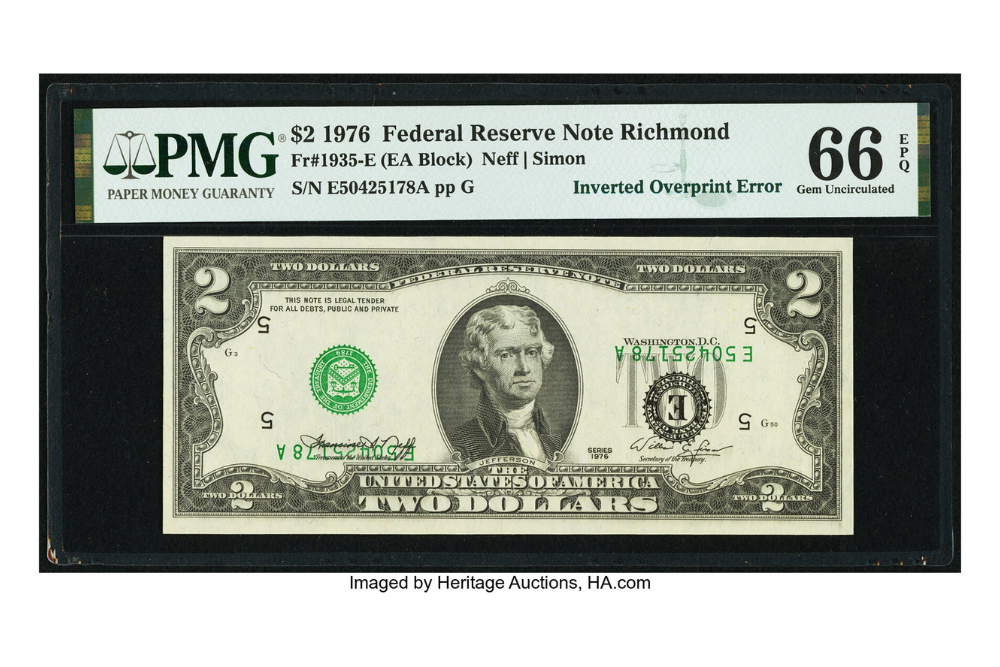
A two-dollar bill can look completely normal until you realize the green serial numbers and seals are upside down. That is an inverted overprint. The main portrait and frame were printed in the right direction; the later pass that added the identifying details was not.
A Series 1976 Richmond $2 note with this mistake realized $2,760 in January 2021. That example was graded PMG 66 EPQ, meaning its condition was exceptionally strong. The seals and serial numbers are completely inverted against Jefferson’s upright portrait.
Look at the orientation of the serial numbers relative to Thomas Jefferson’s portrait and the rest of the face. Those details should not be standing on their heads while everything else is upright. Check the reverse, too. An upside-down back is an entirely different printing mistake.
1974 $50 bills with the entire back inverted
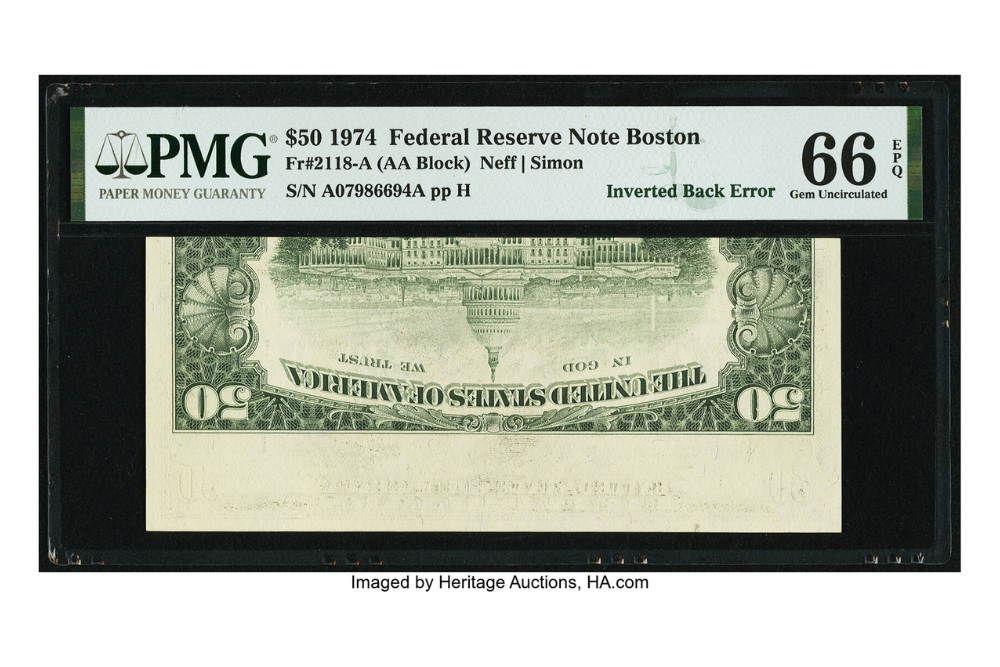
Imagine turning over a fifty-dollar bill and finding the reverse design upside down relative to Ulysses S. Grant on the front. That is not the same thing as upside-down serial numbers. Here the two main designs were printed in different orientations after a sheet went through the press the wrong way.
A Series 1974 Boston $50 note with an inverted back sold for $2,280 in January 2021. It was graded PMG 66 EPQ. Both sides can look crisp and completely normal when viewed alone, which is why checking their orientation together matters.
Keep the top of Grant’s portrait pointing upward, then turn the bill over as you would turn a page. The reverse should have the same upright orientation. Photograph the note with both sides oriented from the same top edge to show exactly how the designs oppose one another.
2013 $1 star notes with a matching duplicate serial number
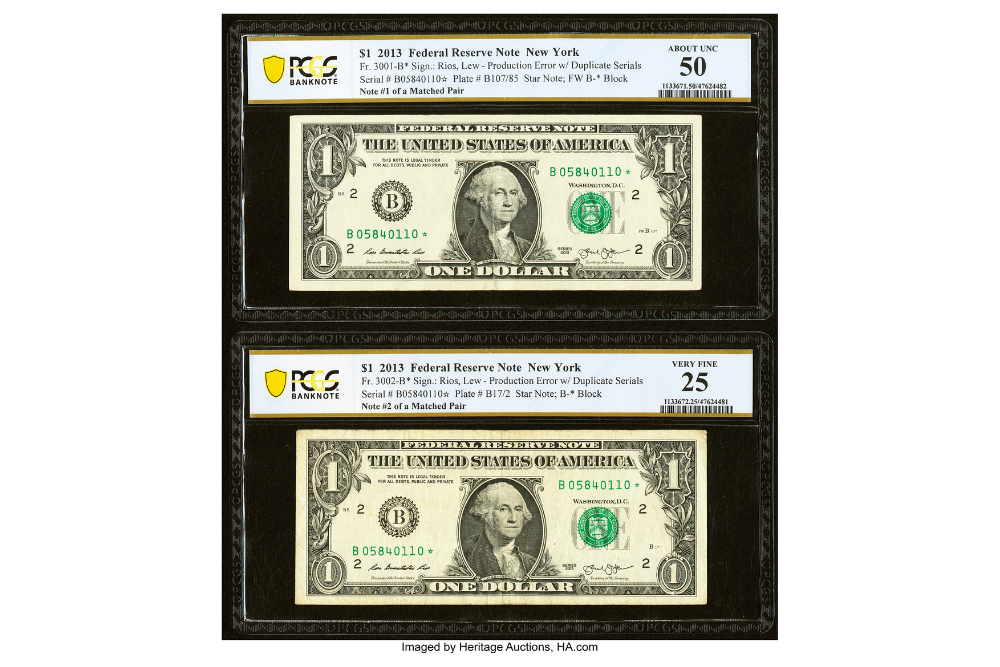
This one is especially easy to misunderstand. Some Series 2013 New York $1 replacement notes were printed with overlapping serial-number ranges at two U.S. currency facilities. Two genuine notes could therefore leave production carrying the same serial number. The valuable collectible is a verified matched pair, not merely a lone dollar with a star.
A pair carrying serial B05840110* sold for $5,040 in September 2024. The two notes had different grades, and the sale was for both together. The overlap affects specified Series 2013 B-star-number ranges.
Check the series, the B district and the full serial number, including the star. Keep the note flat and record the details. It may take years for the matching note to surface, if it ever does. The matching serial on a second physical note is what completes this unusual pair.
$20 bills missing their main portrait printing
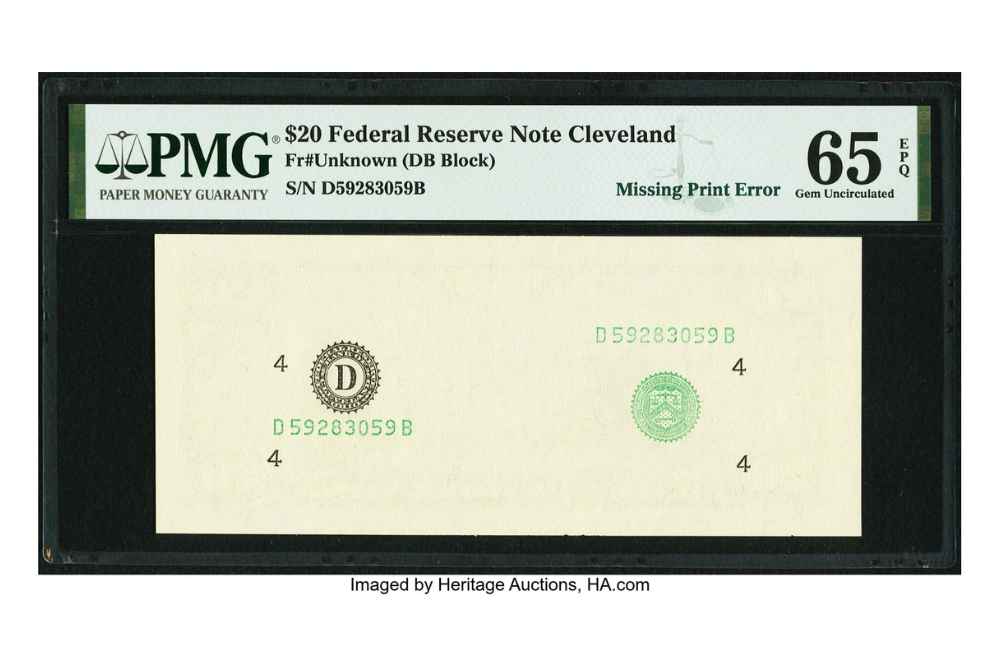
Andrew Jackson is rather hard to overlook on an ordinary twenty. When the large black face design is absent and only the green seals, serial numbers and other later-printed elements remain, the note has missed a major printing stage. It looks unfinished because, in a very literal sense, it is.
A Cleveland $20 Federal Reserve note with its second printing missing realized $870 in January 2021. The important clue is that the later overprint is still present while the portrait and surrounding black artwork never appeared. That separates a missing-print error from a badly worn portrait or a stain.
Do not try to scrub, bleach or otherwise clean a note to see what is underneath. If the error is genuine, the missing ink was never applied in that printing pass. Authentication matters particularly with notes that look blank, because removing ink after issue does not create a collectible production mistake.
2006 $1 bills with a mirror-image printing transfer
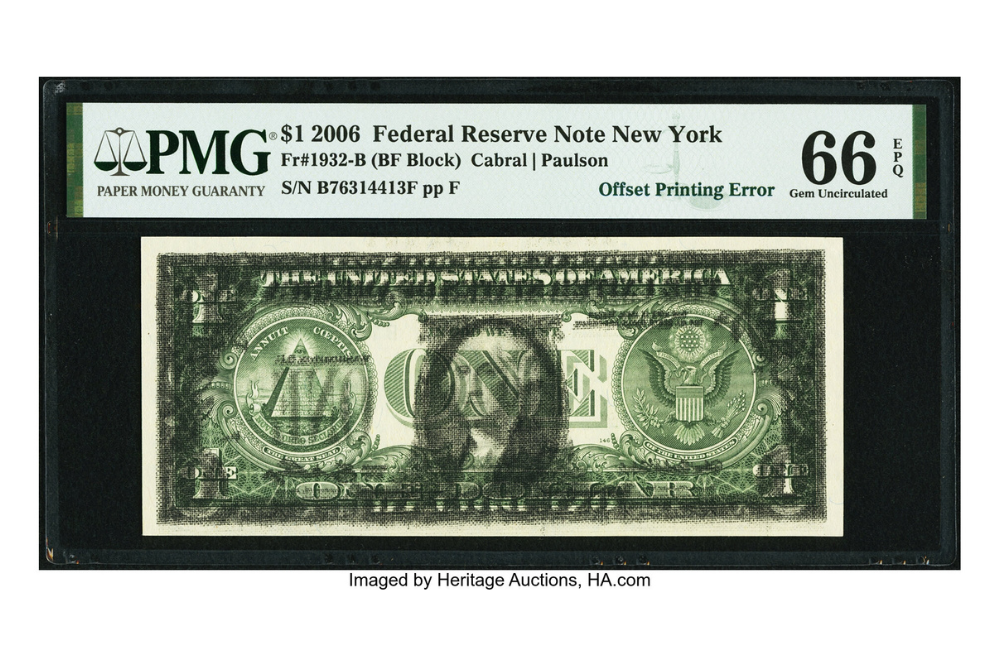
A faint second portrait on the back of a dollar can look like a mark from another bill. Sometimes it is an offset printing error: ink that should have stayed on a printing plate reached the machinery and then transferred onto the wrong side of a sheet as a mirror image.
A 2006 New York $1 note with a particularly striking matte offset effect sold for $2,640 in September 2020. Its extra impression formed a crosshatched pattern, not just a vague shadow. That distinction matters. The sharply defined transferred pattern makes the extra ink easy to recognize.
Check whether the extra design is reversed relative to the normal artwork and whether it fits the bill’s layout. This type of fault is also different from a double impression, where the sheet receives an extra actual printing instead of an unintended mirror-image transfer.
1999 $1 bills with different serial-number suffix letters
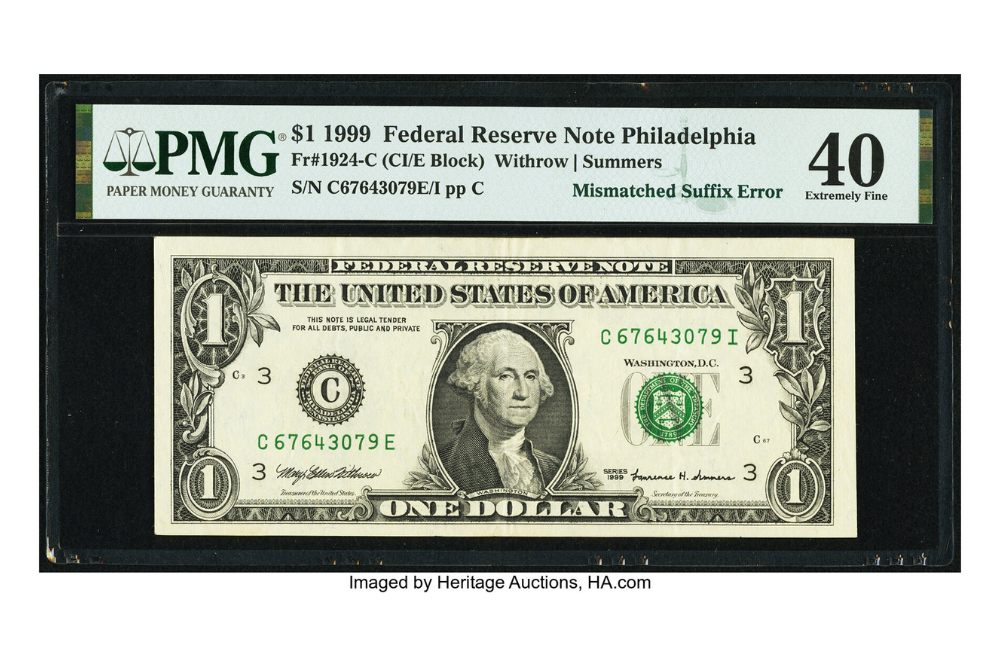
The letters beside the numbers are not decorative. On an ordinary bill, the two printed serial numbers should agree all the way through, including their letter suffixes. A Series 1999 Philadelphia $1 note escaped with different letters at the ends of its two serial numbers.
That certified example brought $1,620 in January 2021, despite being graded PMG 40 rather than brand-new. Suffix mismatches are different from the more familiar cases where the digits fail to match. They can be easy to miss because most people glance at the numbers and never compare the final letters.
Study both serials under good light. Make sure the supposedly wrong character is printed normally, not obscured by damage. Copy the two serials exactly before asking for an opinion. The complete, legible suffix is what makes the mismatch identifiable.
2013 $20 bills with two different serial numbers
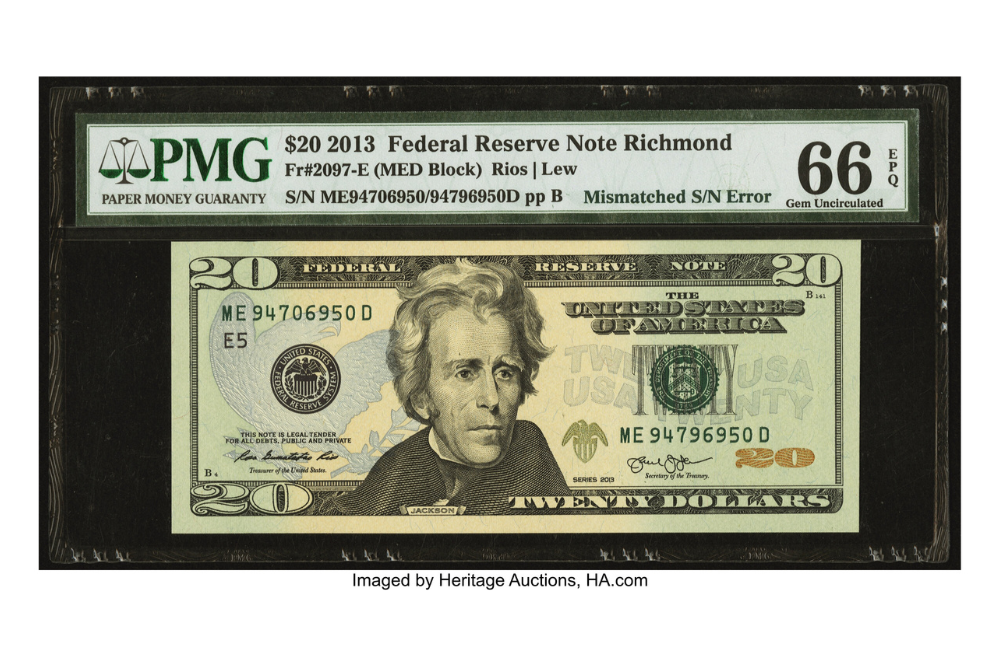
Most people will never check whether the two numbers on a bill are identical. That makes mismatched-number notes easy to spend without noticing. In a genuine error, the numbering equipment has put one sequence on the left and another on the right, even though they belong to the same piece of currency.
A Series 2013 Richmond $20 with mismatched serial numbers, graded PMG 66 EPQ, sold for $1,140 in January 2020. Another modern twenty with the same type of error was discovered in ordinary change at a coin show. The discrepancy is small enough to go unnoticed in everyday change.
Compare every digit, not just the first and last. If the serials differ but the lettering and inks look otherwise consistent, preserve the note and seek confirmation. This is not the duplicate-star-note issue, where two separate physical notes carry one identical serial number.
1928G $2 notes with a stuck serial-number digit
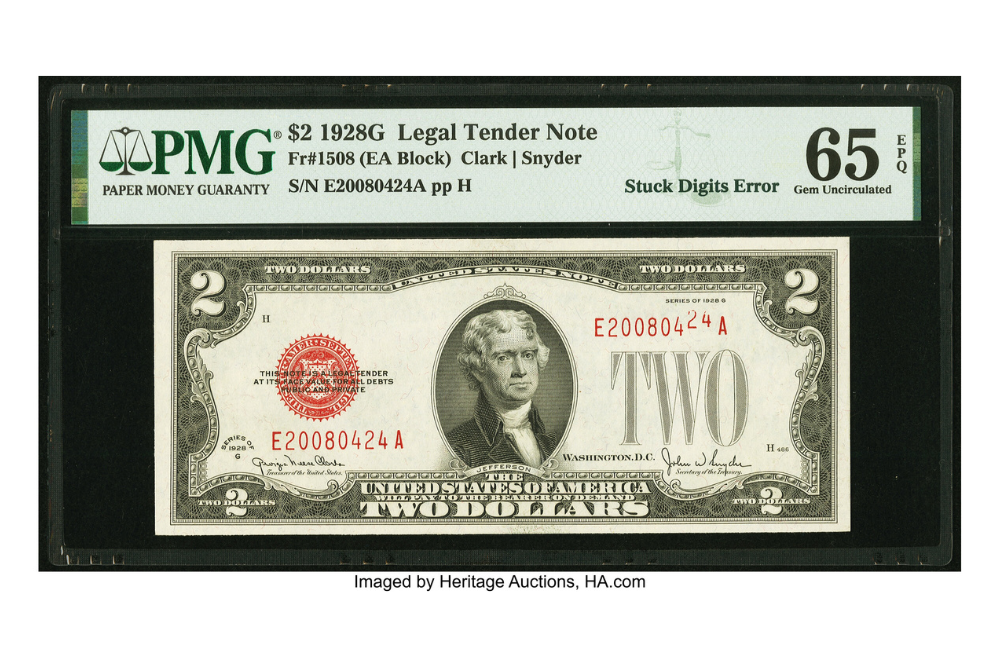
A serial number can have a strange-looking digit because the numbering wheel failed to reach its next position. Instead of producing a complete, aligned number, it may show part of one digit and part of the next. It is a mechanical printing fault, not an attempt to make the serial look fancy.
A Series 1928G $2 Legal Tender Note with stuck digits realized $576 in June 2021. The certified example was in exceptionally attractive uncirculated condition, which helped a two-dollar note bring hundreds. The partly turned number wheel left a strikingly visible flaw in the serial.
Compare the questionable number with the matching digit in the second serial. A bent, rubbed or smeared character can imitate the appearance without being the same error. The position of the ink and the shape of the number matter before deciding whether to pay for grading.
1969A $50 bills with a dramatic ink smear
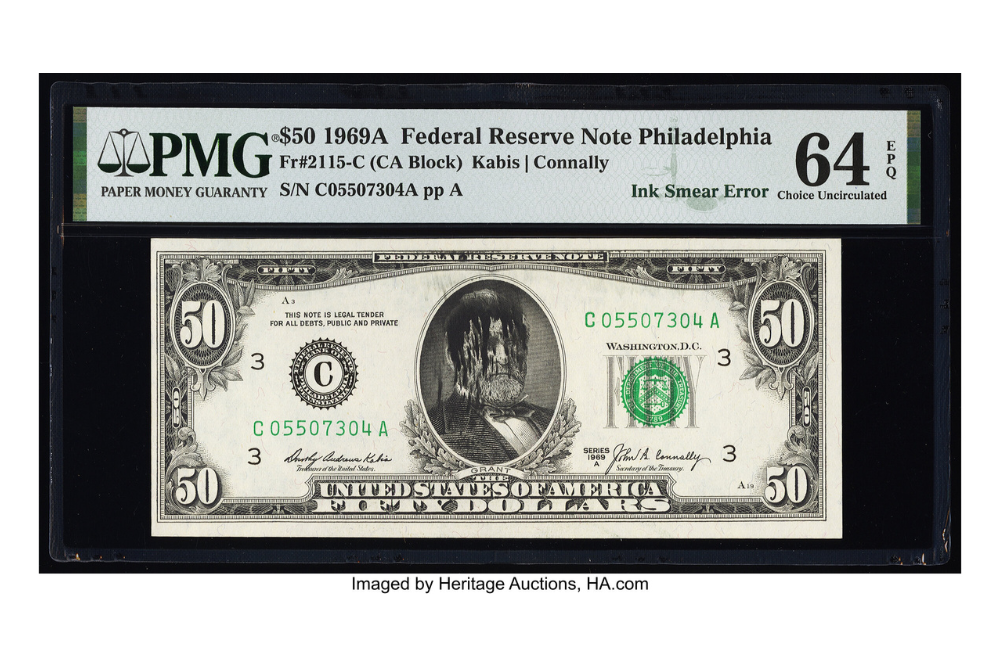
A splash of black across President Grant’s head is not what you expect on a fifty. But a Series 1969A Philadelphia $50 note had excess ink spread across the face during production, leaving one of the more startling examples of an ink smear.
That particular note sold for $1,140 in March 2022 and had been graded PMG 64 EPQ. It was a genuine press-related smear. Somebody spilling coffee, rubbing a stamp pad on a bill or marking it with a pen does not create an equivalent error, no matter how artistic the result looks.
The most useful clues are the relationship between the spilled ink and the engraved design, plus whether the ink is consistent with the production process. Close photographs of the affected printing and the intact reverse help show the shape and position of the smear.
1977 $1 bills with weak printing on the back
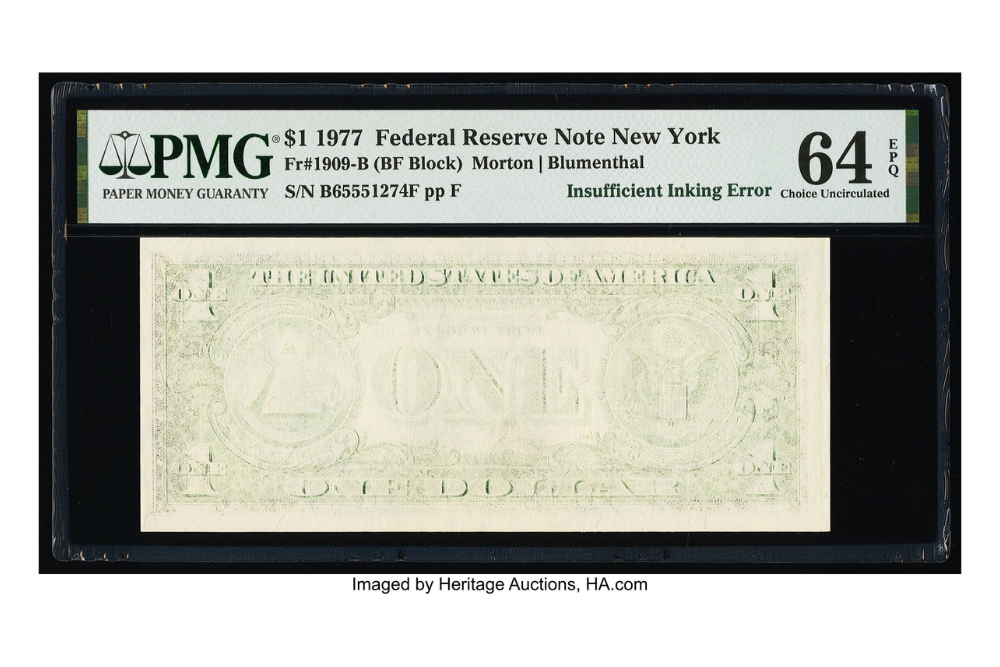
If the reverse of a dollar looks as though the press was running out of ink, it might genuinely have been. Insufficient inking happens when the printing equipment fails to deliver enough ink during a production stage. The result can be pale or nearly absent parts of the design while other printed elements remain strong.
A Series 1977 New York $1 note with weak printing on its back sold for $228 in November 2021. A 1974 dollar with insufficient ink in its overprint sold for $216, illustrating that the fault is not confined to one side. The examples also show that insufficient ink can affect different printing stages.
Sunlight, washing and chemical cleaning can also make ink disappear after issue. What collectors need to see is a production fault, not the effects of years of poor storage. Examine whether the weak ink follows a particular printing pass rather than a random damaged patch.
1977 $50 bills with a gutter fold through the overprint
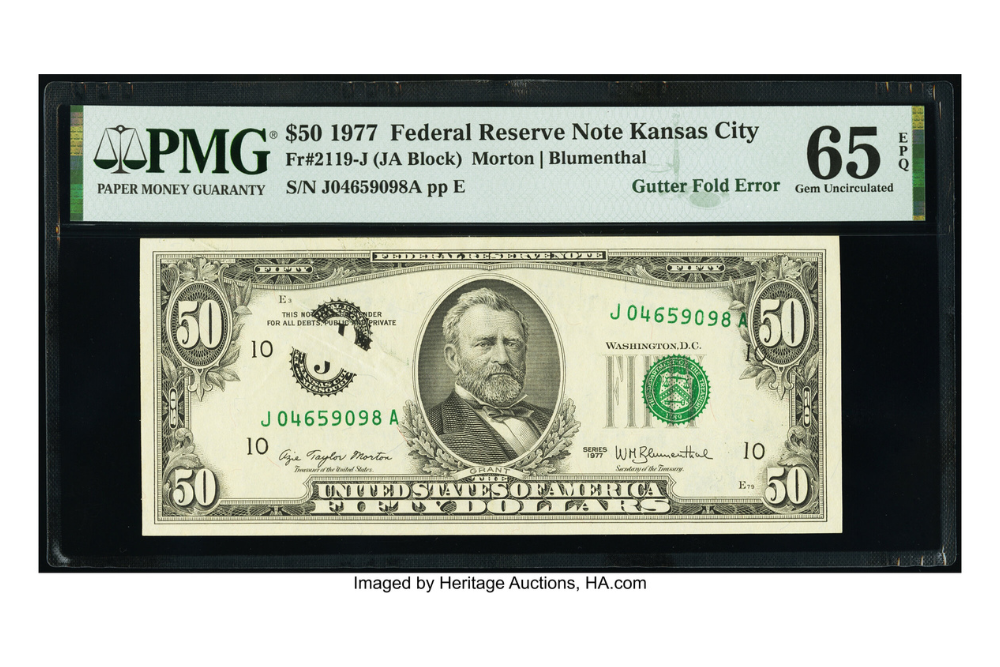
A white stripe cutting through the green serial number can be much more interesting than a plain crease. In a gutter-fold error, part of the paper was folded while ink was applied. Once the sheet opened, a narrow unprinted strip appeared where the fold had sheltered the paper.
A 1977 Kansas City $50 with a gutter fold affecting the seals and serial numbers realized $660 in June 2022. Its back and most of its front were normal, and the paper appears to have been straightened before cutting. The sharp interruption in the green printing shows exactly where the folded paper blocked the ink.
A fold formed in a wallet bends an existing design, rather than creating an original gap where no ink could reach. Check whether the lettering breaks at the fold and resumes on the other side. That tells you more than how odd the crease looks.
2017A $5 bills cut across the printed design
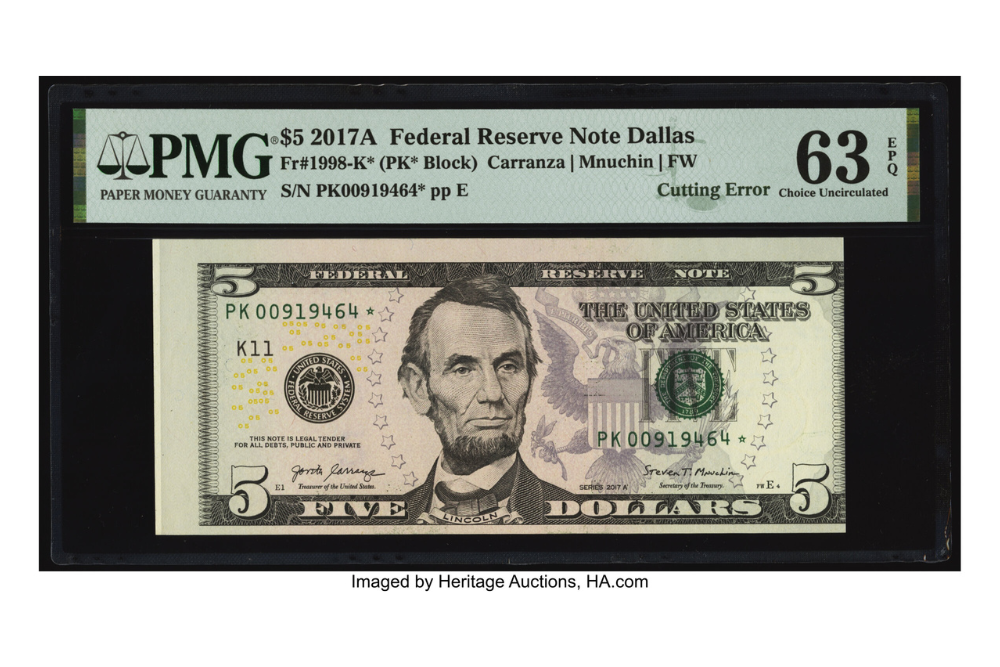
Some bills have uneven white margins because printing and cutting are not perfectly centered. That alone is usually not enough to make them valuable. A genuine cutting error is more serious: part of the intended design is sliced off, or a piece of the next bill shows along the edge.
A Series 2017A Dallas $5 with a horizontal cutting mistake sold for $228 in November 2021. The key distinction is that both sides are affected by the cut. With a misalignment during printing, one side may look normal while the other seems badly shifted.
Lay the note flat and photograph all four edges on both sides. Do not trim it to make the error look neater; that unusual margin is evidence. When the cutting line takes part of the design with it, the mistake is unmistakable.
2006 $1 bills with misaligned seals and serial numbers
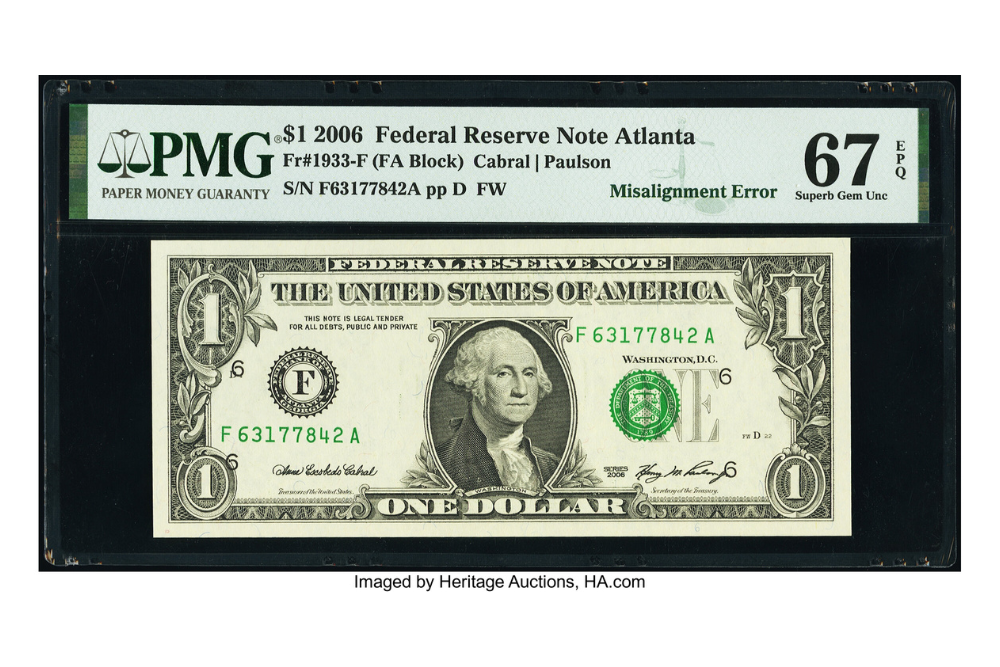
The engraved design on a bill may sit correctly inside the borders while the green seals and serial numbers have wandered sideways. That is an overprint misalignment, caused when a sheet was positioned incorrectly for the later printing pass.
A Series 2006 Atlanta $1 note with this error realized $104 in April 2021. The green printing sits visibly out of position against the otherwise centered design.
Check whether the black portrait and frame still sit normally inside the borders. If they do but the green overprint is conspicuously off, the error is likely in the later stage. The stronger the visual evidence, the easier it is to justify having the note examined.
1985 $10 bills with an extra back design on the front
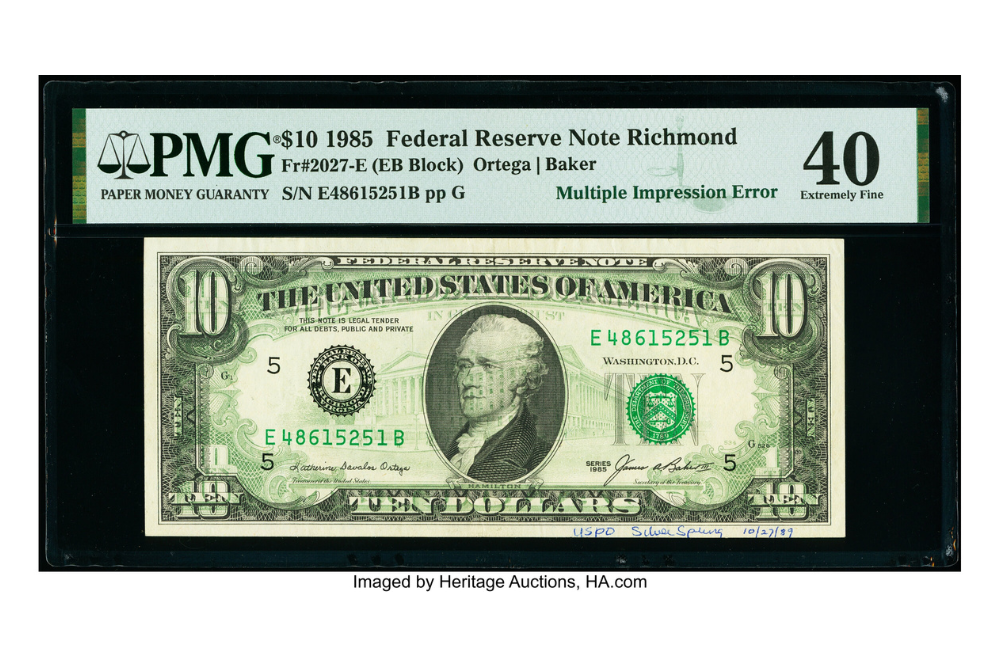
Seeing the Treasury Building printed over Alexander Hamilton’s face would be strange enough on its own. On a 1985 Richmond $10, the front contains an extra impression from the back design as well as the ordinary front artwork. The note received a printing it should never have had.
The certified error brought $6,000 in January 2022. The additional image is an actual printed impression and even has a plate number different from the one associated with the normal reverse. That helps distinguish it from an accidental ink transfer that merely leaves a mirror-image ghost.
Look for sharp, identifiable features of the second design, not a smudge that vaguely resembles a building if you stare at it long enough. Authentic multiple-impression errors can be dramatic, and that also makes them appealing to people trying to imitate them. The overlap and sharpness of the printed details help distinguish a genuine second impression from a later mark.
1988A $5 bills with a paper-jam printing error
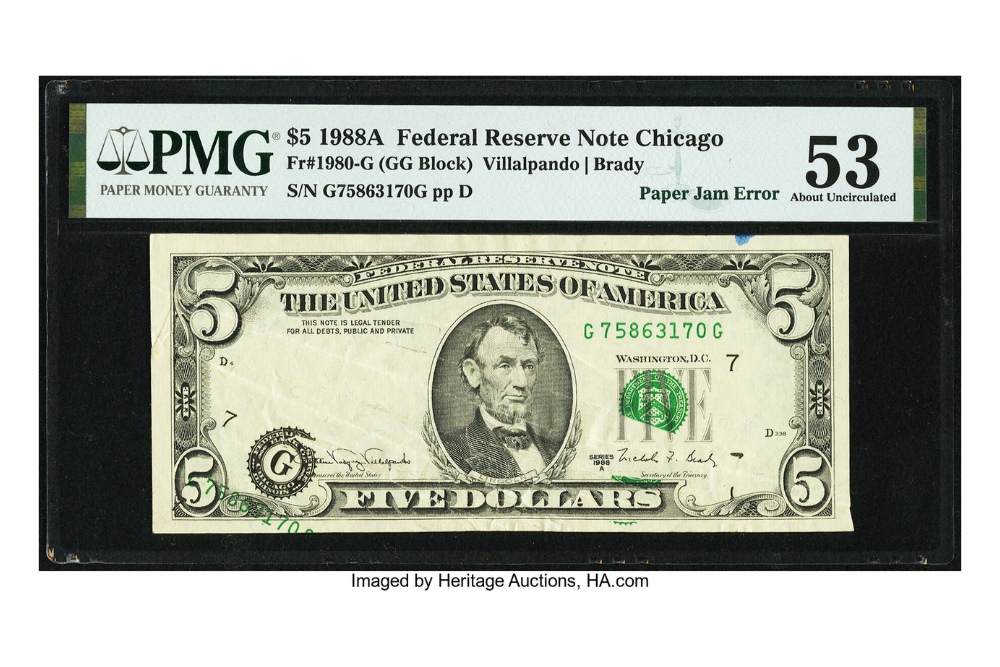
A crumpled bill is usually just a crumpled bill. A paper jam inside the presses is different. It can leave folds and displaced seals printed while the sheet was bunched up, sometimes with odd sections of the design appearing in places they do not belong.
A 1988A Chicago $5 with a paper-jam error affecting its left serial number and both seals realized $1,440 in January 2021. The sheet had apparently straightened enough by the cutting stage for the note to retain a fairly ordinary outline. Another jammed $100 with several printed folds sold for $528.
Follow the path of the ink across the folds. If a crease developed after the bill was completed, the design should simply bend with the paper. If ink landed while the paper was folded, there may be interrupted or unprinted areas. Flattening or washing a suspicious note is a good way to spoil that evidence.
1934A $5 bills with a missing serial-number star
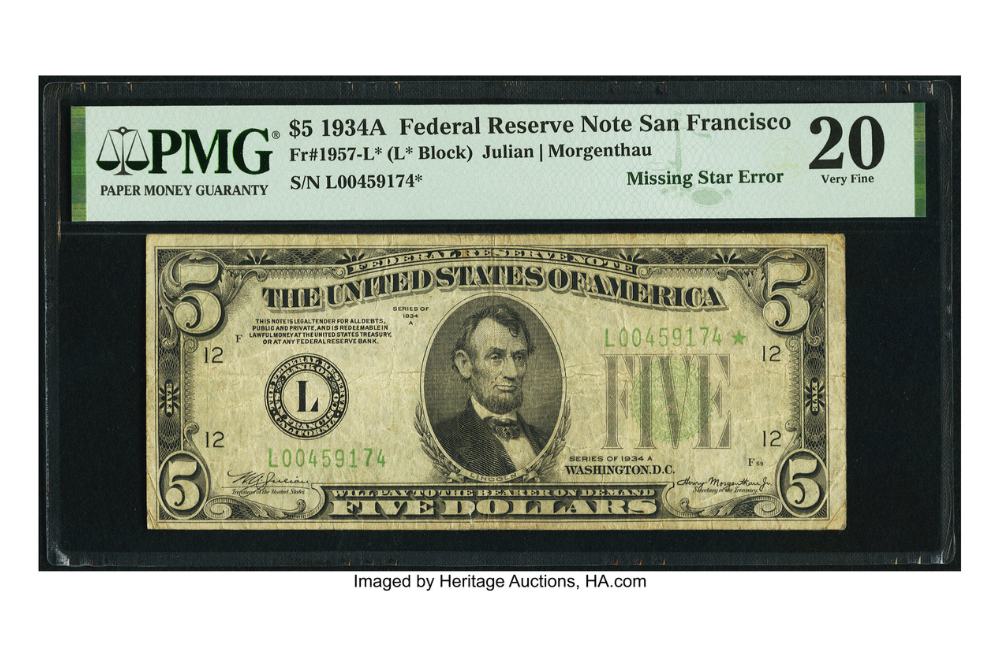
Replacement notes sometimes have a star in their serial number. On a 1934A San Francisco $5 Federal Reserve note, one of those stars was missing from its printed position. That is a specific numbering error, not the same thing as finding an ordinary bill that happens to have a star.
A certified example graded PMG 20 Very Fine brought $1,740 in January 2023. The result shows that a strong, clearly identified production mistake can interest collectors even when the paper is far from perfect. Its missing symbol is the striking detail to examine.
Both serial numbers and their endings need to be examined. The missing star has to be a genuine omission at the press, not a character hidden by a tear or rubbed away later. Keep the bill flat and have the missing-star error checked before making any changes to its storage.











