
A full synthetic oil change costs $65 to $125 at most shops, which is exactly the kind of bill that gets pushed back a month when rent, groceries, and the car payment are all due first. An engine replacement typically costs between $2,000 and $10,000, and worn-out oil is one of the ordinary ways an engine ends up needing one.
A timing belt replacement runs $500 to $1,400, while engine repairs after a belt snaps can reach $2,000 to $10,000 or more. A transmission fluid change averages around $100, and replacing a transmission on a mainstream automatic costs $2,500 to $5,000.
Gas matters here too, since regular averaged $4.152 a gallon over the 12 months that ended in May, which makes every lost percentage point of fuel economy cost more than it used to.
Table of contents
- Oil changes on the schedule in your owner’s manual
- Tire pressure checked once a month
- Tread depth and rotation
- Wheel alignment after impacts and new tires
- Brake pads replaced before they wear down to metal
- Brake fluid changed on the automaker’s timeline
- Coolant flushed before it turns to sludge
- Transmission fluid changed before the shifts get rough
- Battery tested every year after the third
- Timing belt replaced on the manual’s schedule
- A check engine light that gets read quickly
- An engine air filter you change yourself
- Windshield chips repaired while they are small
- The fuel grade your manual calls for
- Smoother driving that spares the gas and the brakes
- Extra weight and roof boxes removed
- Idling kept to a minimum
- Receipts kept and the shop you choose
Oil changes on the schedule in your owner’s manual
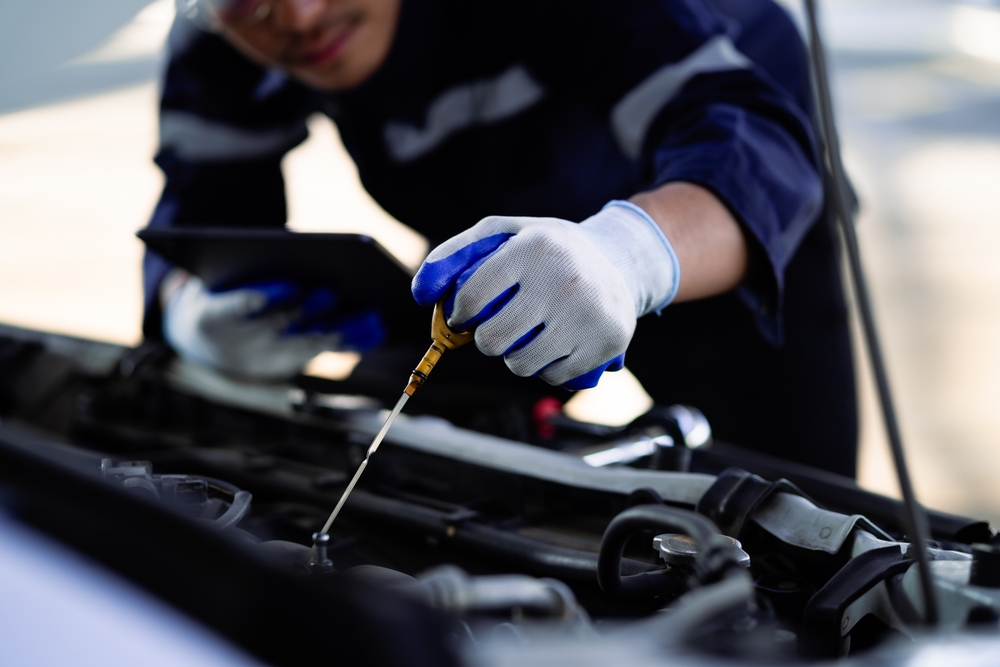
Conventional oil is generally changed after 3,000 to 5,000 miles, a synthetic blend can go up to 7,500 miles, and full synthetic can run as long as 10,000 miles, although the owner’s manual has the number for your engine. The prices follow the oil: a conventional change costs $35 to $75, a blend costs $40 to $100, and full synthetic costs $65 to $125. Paying more for synthetic usually means fewer visits, so the yearly total ends up closer than the sticker prices suggest.
Using the oil grade the manufacturer calls for improves gas mileage by 1% to 2%, and putting 5W-30 in an engine designed for 5W-20 can lower it by 1% to 1.5%. Stretching the interval is where the expensive end of the range comes in, since an engine replacement can cost $2,000 to $10,000. A sticker on the windshield from the last shop is a reminder, and the interval in the manual for your engine is the one that counts.
Tire pressure checked once a month
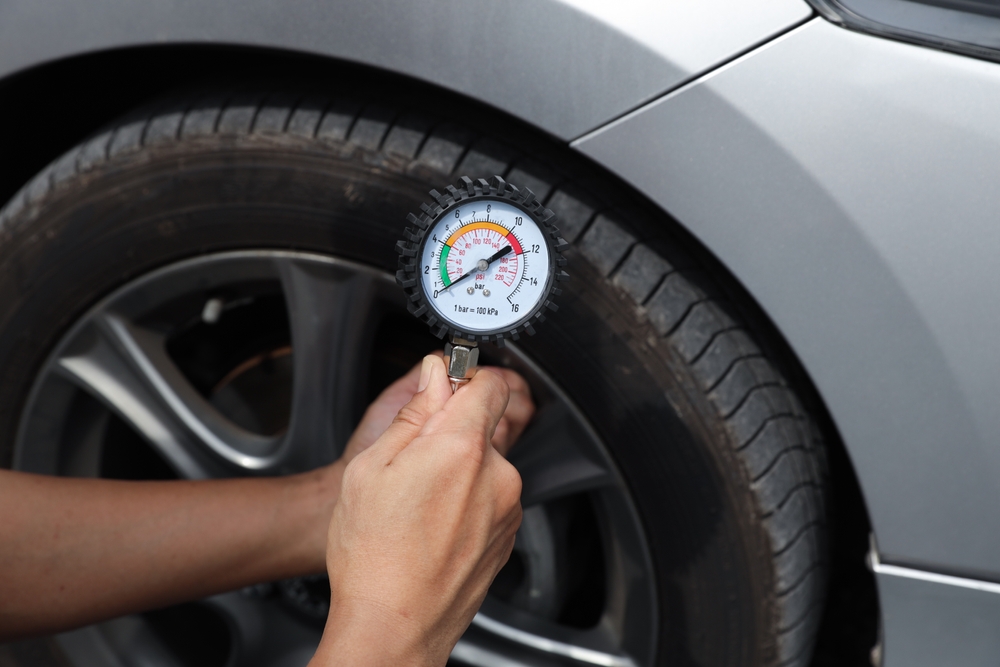
Pressure should be checked on all four tires and the spare at least once a month when the tires are cold, which means the car has sat for at least three hours. The correct number is on the sticker in the driver’s door jamb or in the owner’s manual, and the maximum pressure molded into the sidewall is a limit for the tire, not a target.
Low pressure costs money at the pump and at the tire shop. Gas mileage drops about 0.2% for every 1 psi below the proper average pressure, so four tires that are each 5 psi low waste roughly 1% of the fuel, which is about $50 a year for a car that burns 600 gallons at $4.152 a gallon. The larger cost is tread, because low pressure causes uneven or premature tread wear, and a set of four installed runs $600 to $900 for most people.
Tread depth and rotation
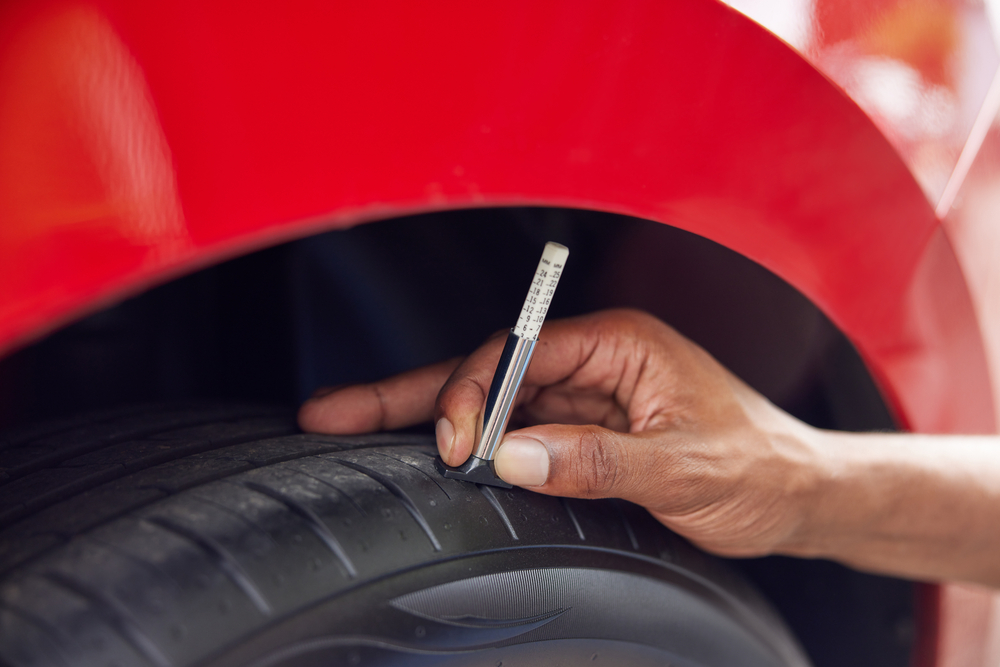
A penny works as a tread gauge. Turn Lincoln’s head upside down and slide the coin into a groove, and if the top of his head is visible, the tread has worn to 2/32 of an inch, which is the point where tires are no longer safe. Checking the tread when the monthly pressure check is done takes a minute and shows whether one tire is wearing faster than the others.
Tires should be rotated every 5,000 to 8,000 miles if the vehicle manufacturer recommends it, or sooner if uneven wear appears, and a few vehicles should not be rotated at all, so the manual comes first. Age counts as well, since some manufacturers recommend replacing tires that are six to 10 years old regardless of tread, and the last four digits of the DOT number on the sidewall give the week and year the tire was made. With a set of four costing $600 to $900 installed, getting full life out of each tire is worth the few minutes.
Wheel alignment after impacts and new tires
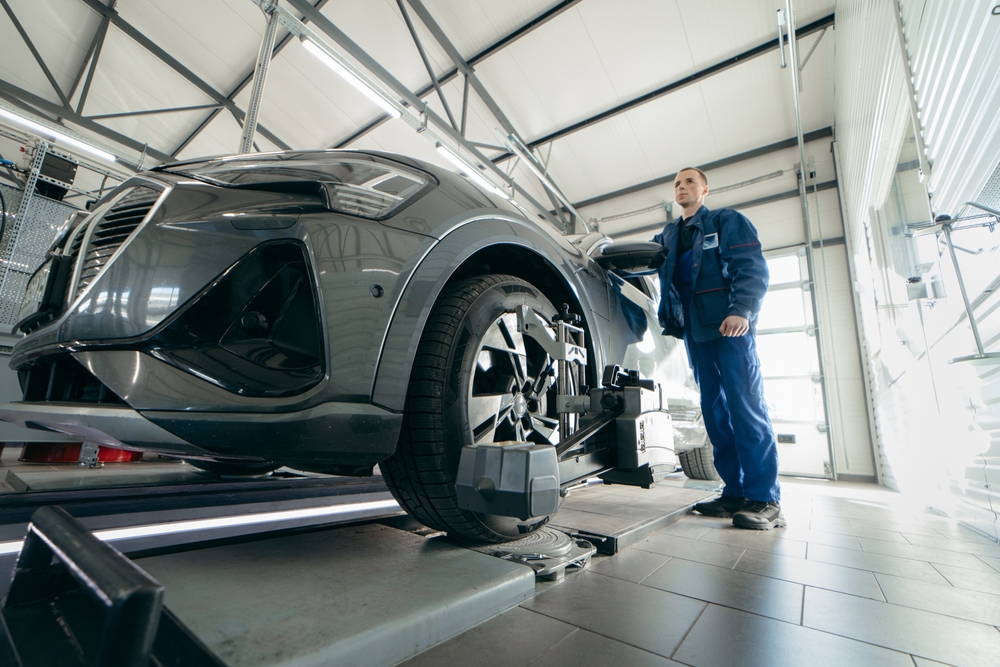
A typical alignment costs $70 to $250 depending on the vehicle, with front-end alignments running about $70 to $130 and four-wheel alignments about $120 to $250. Every 12 to 24 months is common, and sooner after hitting a curb or a pothole, putting on new tires, or having suspension or steering work done.
Toe, the angle at which the tires point slightly inward or outward, is the biggest driver of tire wear, and a bad alignment usually shows up as wear on the inner or outer edge, feathered tread, or one tire wearing out faster than the rest. A car that tracks straight and wears evenly can wait. One that pulls to the side after a pothole is worth checking before the tread shows it, because even the most expensive alignment costs a fraction of a $600 to $900 set of tires. An alignment done right after new tires goes on protects the money that was just spent on them.
Brake pads replaced before they wear down to metal
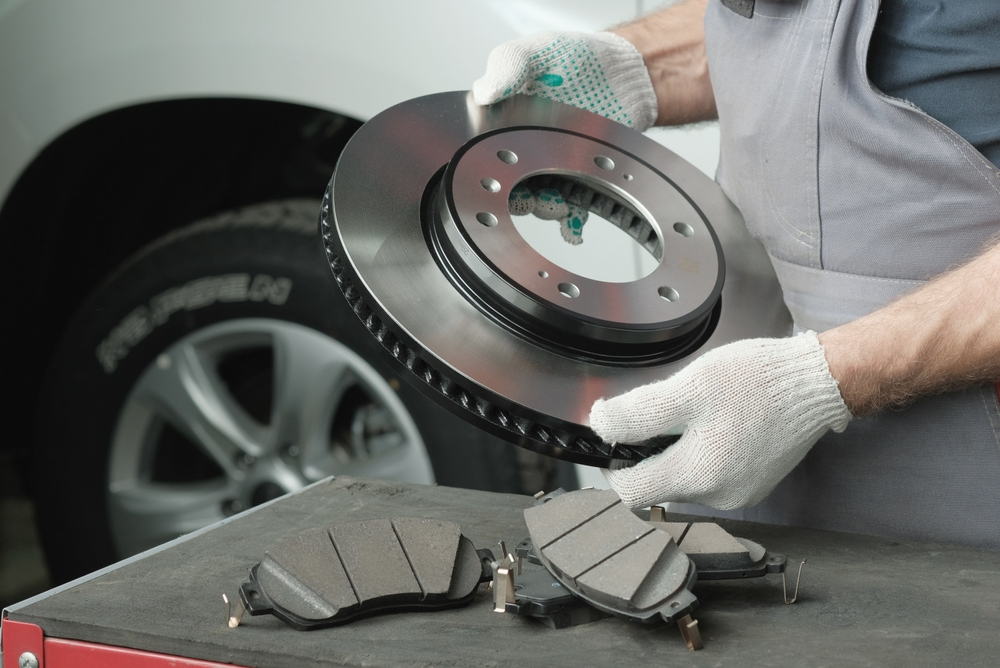
Pads should be replaced when there is only about 3 millimeters of material left. Pads alone run $330 to $390 per axle, while pads plus rotors run $901 to $1,084 per axle, which adds roughly $570 to $700 per axle when the rotors have to come along. Waiting until the grinding starts is how a $330 to $390 job turns into a $901 to $1,084 one, and replacing pads at the 3-millimeter mark lets the work be scheduled instead of forced by a noise on the way to work.
Pads that wear down to the metal backing grind into the rotor, which is how a pad job becomes a pad-and-rotor job. The warning signs are loud screeching or grinding, a pulsing brake pedal, a brake warning light, longer stopping distances, and the car pulling to one side when braking. Brakes should be inspected at least once a year or at the interval in the maintenance schedule, and rotors last roughly 50,000 miles, though they can sometimes be resurfaced instead of replaced.
Brake fluid changed on the automaker’s timeline
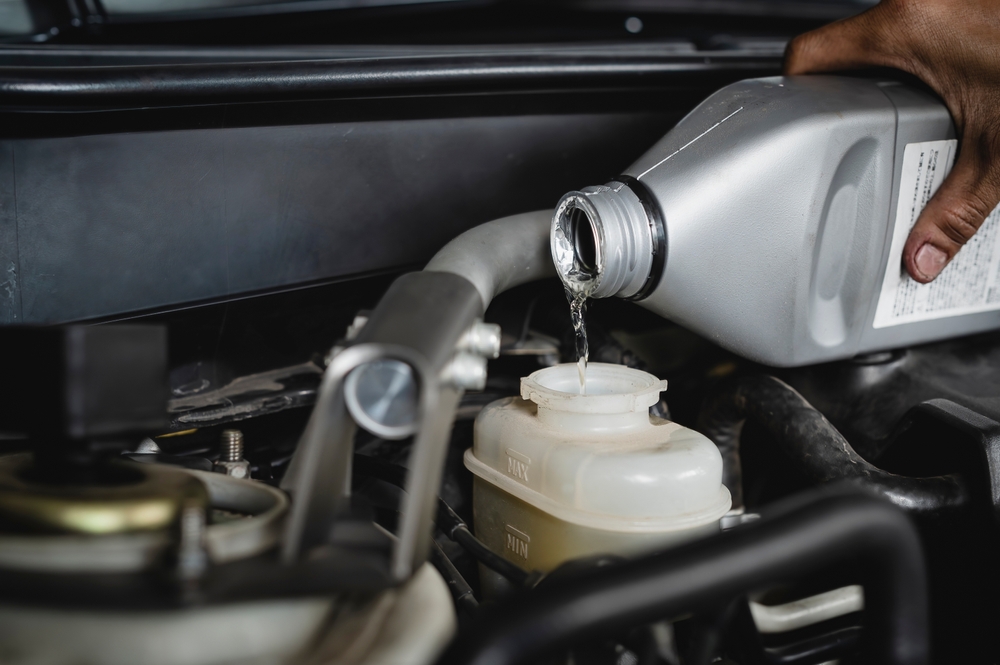
Brake fluid pulls in water over time even in a sealed system, and moisture lowers the boiling point of the fluid, which can reduce pedal effectiveness during repeated hard stops. Water can also corrode the brake system from the inside, and replacing corroded brake lines or a master cylinder costs far more than replacing the fluid.
Automakers disagree on the timing. Mercedes-Benz says every two years or 20,000 miles, Volkswagen says every two years regardless of mileage, Subaru says every 30,000 miles, and Chevrolet allows up to 150,000 miles or 10 years. The spread is wide enough that the owner’s manual is the only number worth following, and a shop that recommends a flush at every oil change is worth questioning. Someone who bought a used car with no service records has no way to know when the fluid was last changed, which makes the first year of ownership a reasonable time to have it tested.
Coolant flushed before it turns to sludge
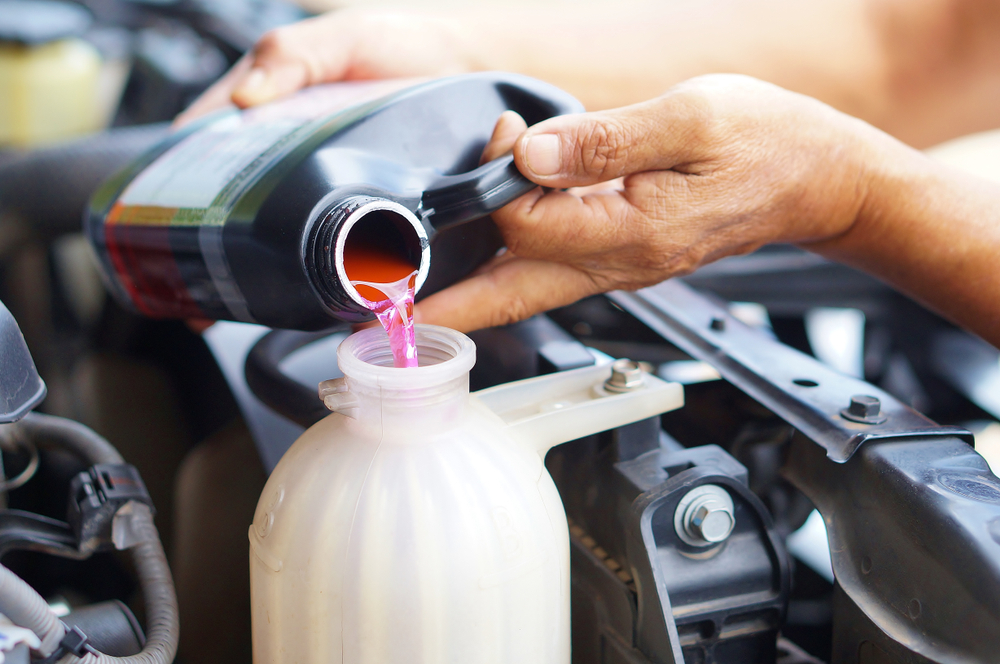
A coolant flush typically costs between $200 and $250 at a dealership, and independent shops are often cheaper, especially when the flush is paired with an oil change. Every two years or 30,000 miles is a good rule of thumb, though the schedule in the owner’s manual takes priority because it varies by model.
Old coolant lets rust, sediment, and scale build up, which can block coolant flow and cause the engine to overheat, and neglect can end in a blown head gasket or a cracked engine block, repairs that cost considerably more than the flush. The hoses and radiator cap deserve a look during the same appointment, and hoses more than five years old are worth replacing. A low reservoir between services is worth checking too, since topping off a leak without finding it only delays the same repair. At $200 to $250 every two years, the flush works out to about $100 to $125 a year.
Transmission fluid changed before the shifts get rough
A transmission fluid change on an automatic averages around $100 and can range from $80 to $250, and a flush with a new filter runs $230 to $475. The recommended interval is every two to five years or 30,000 to 50,000 miles depending on the type of transmission, so the owner’s manual decides which end of that range applies to your car.
Replacing a transmission on a mainstream automatic costs $2,500 to $5,000, a manual runs $1,500 to $3,000, and luxury or high-performance vehicles can top $6,000. Replacing the filter and cleaning the pan with each fluid change helps avoid costly damage, and fluid that is low or breaking down should be changed right away. If the car starts shifting differently, checking the fluid is the first and cheapest thing to do. Spread over a five-year interval, a $100 fluid change costs about $20 a year, against a replacement that starts at $2,500.
Battery tested every year after the third
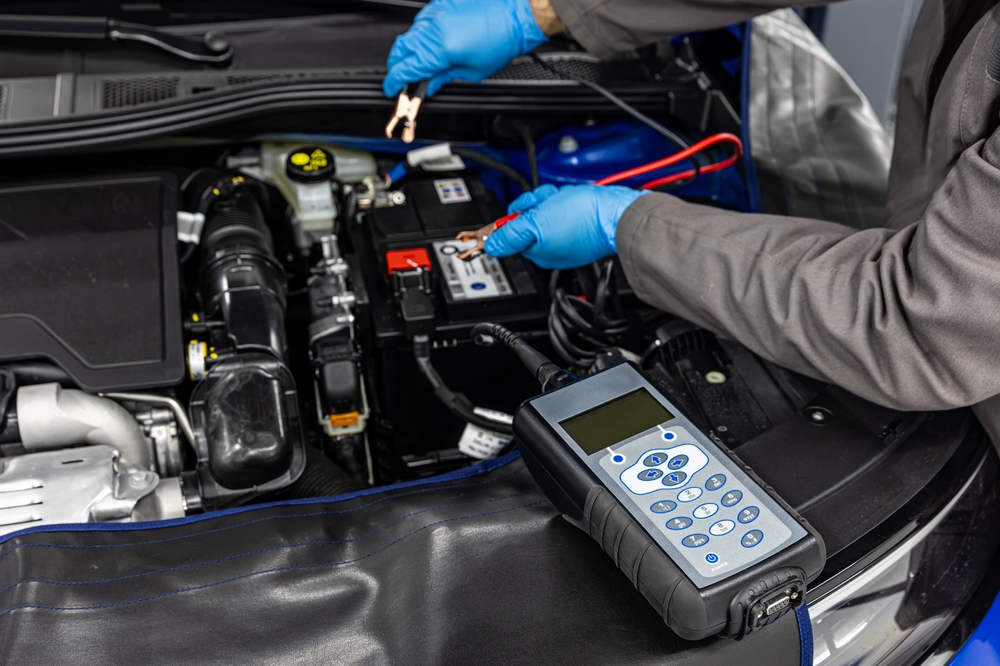
Car batteries last about three to five years, and heat shortens that. Batteries in hot southern climates typically last about three years, while those in cooler northern climates can reach five years or longer, because under-hood temperatures can easily exceed 200 degrees Fahrenheit in hot weather and speed up the wear.
Some failing batteries show no obvious symptoms, so the battery should be inspected at every oil change and tested annually once it reaches its third year. Slow cranking, a battery or charging warning light, and dim headlights at idle in older cars are the signs that usually show up first. A free diagnostic test of the battery and the starting and charging systems is available to AAA members in most areas, and a technician can install a new battery on the spot if the test says it’s needed. Writing the install date on the battery with a marker makes the testing schedule easy to keep.
Timing belt replaced on the manual’s schedule
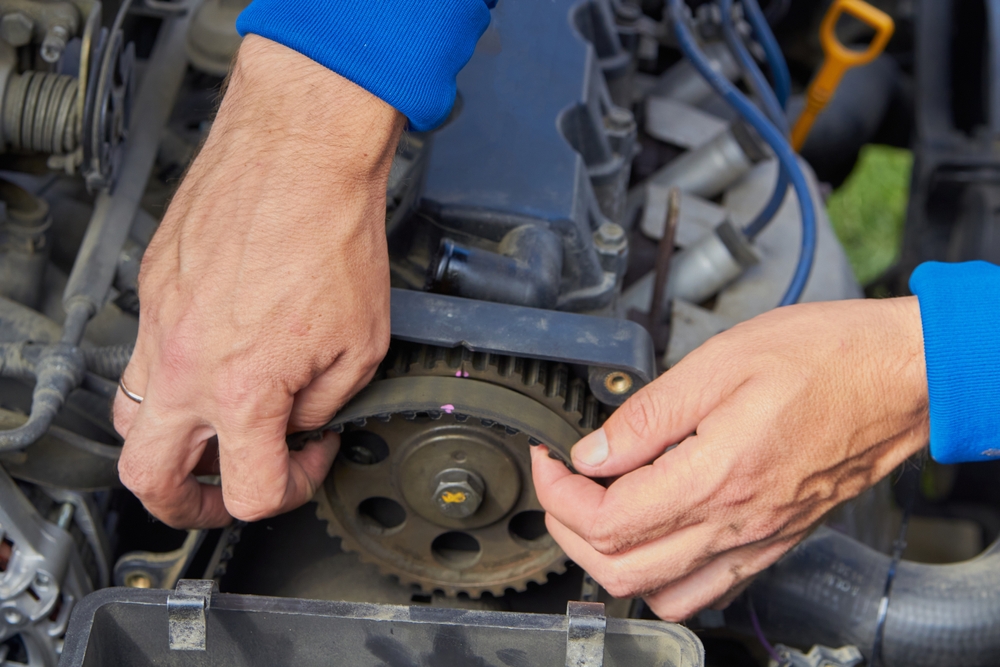
A scheduled timing belt replacement typically costs $500 to $1,400 for parts and labor. When a belt breaks, engine repairs or a full replacement run $2,000 to $10,000 or more, and on interference engines the repair bill can reach $2,000 to $5,000.
Many belts fail without any symptoms, so there is no noise or warning light to wait for. The owner’s manual lists the replacement interval, and some engines use a timing chain instead, which has no scheduled replacement. A used car with no record of when the belt was last replaced should have the job done right away. Whether a snapped belt damages the engine depends on the design, so a mechanic or the manual can say whether yours is an interference engine, and that answer sets how much risk each postponed month carries. The scheduled job is one of the more expensive ones, which is why it tends to get postponed, but even the top of that range at $1,400 costs $600 less than the cheapest engine repair after a failure.
A check engine light that gets read quickly
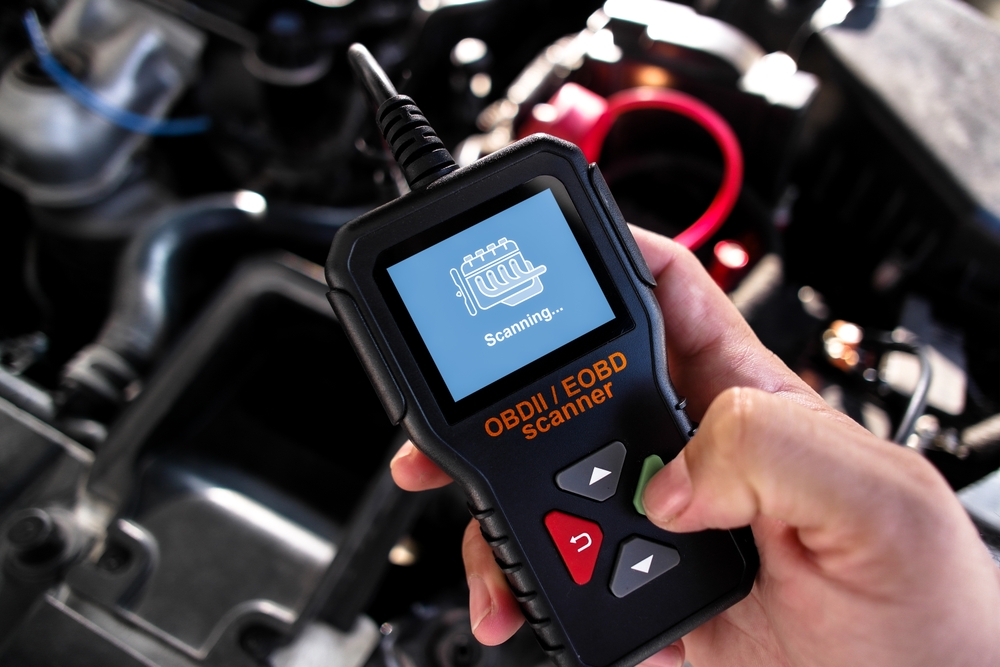
The check engine light could signal a more serious issue that could reduce your fuel economy, and some of the faults behind it are expensive when left alone. A faulty oxygen sensor that goes unfixed can cause as much as 40% lower fuel efficiency, and a lit light can also mean the car may not pass emissions testing in states that require it for registration.
Oxygen sensors sit in the exhaust system, where they monitor the catalytic converter and the oxygen level, and neglected sensor problems can lead to catalytic converter replacement, which is also costly. The code behind the light identifies which system is reporting a fault, and reading it is the cheapest first step because it turns a vague warning into a specific repair estimate. A light that comes on and goes off again still counts as a warning. A repair that could have waited a month can turn into one with a deadline once registration renewal requires a passing test.
An engine air filter you change yourself
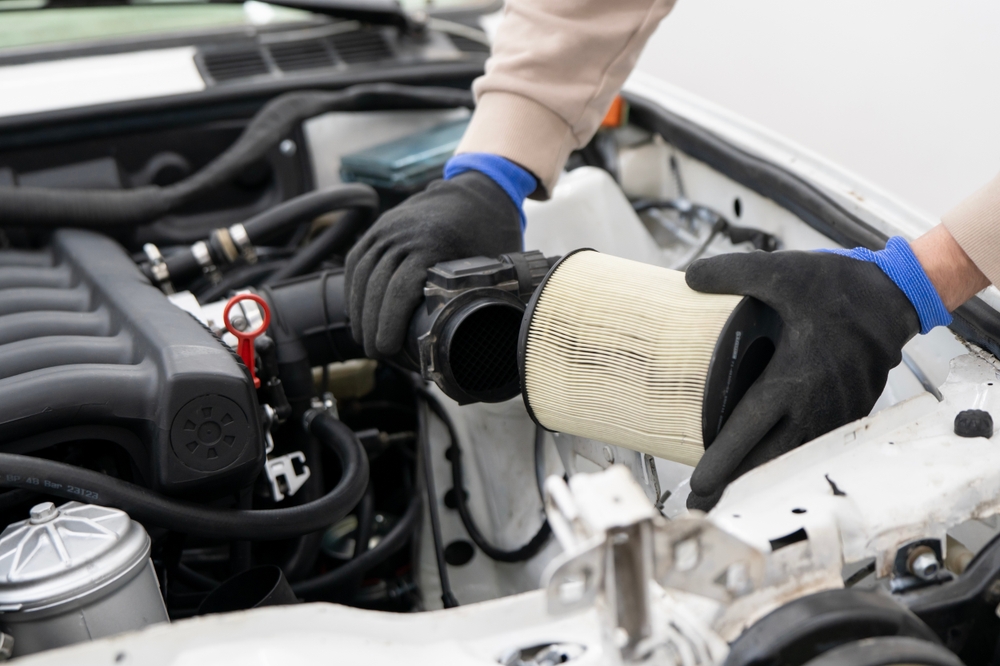
Most drivers pay $73 to $142 for an engine air filter replacement at a shop, while the filter alone costs $15 to $84. Replacement is typically recommended every 15,000 to 30,000 miles, or sooner in dusty areas, and the owner’s manual has the interval for your car.
On a modern fuel-injected engine, replacing a clogged filter does not improve fuel economy, but it can improve acceleration, so the savings come from doing the job yourself and not from gas mileage. On older carbureted engines a new filter can improve both by a few percent. Labor on the job can cost $30 at an independent shop and $60 or more at a dealer, for work that on many cars means opening a plastic housing and swapping one part. Over 90,000 miles, a filter changed every 30,000 miles is three jobs, which comes to about $219 to $426 at a shop and $45 to $252 in parts alone.
Windshield chips repaired while they are small
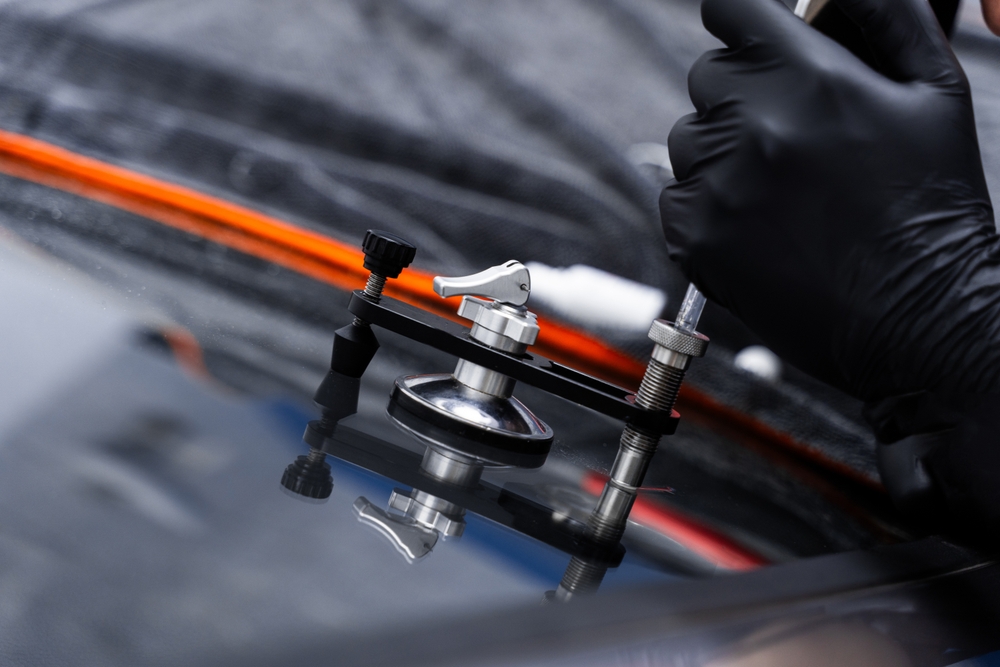
A chip roughly the size of a quarter or smaller, or a crack typically under about six inches, can usually be repaired as long as the damage is shallow, recent, and outside the driver’s direct line of sight. Repair is often under a couple hundred dollars, while replacement runs several hundred dollars or more.
A chip left alone can spread with bumps and temperature swings, and once a crack grows or reaches the edge of the glass, repair may no longer work. Slamming doors and sudden temperature changes make spreading more likely. Replacement also costs more on newer vehicles with driver-assistance sensors that need recalibration. Glass damage is commonly covered under comprehensive coverage where it is included, and some policies waive the deductible for repairs while replacements may carry one, so a call to the insurer before the chip grows can cost nothing. The line-of-sight rule is the reason to act early, since a chip that sits outside the driver’s direct view today can spread into it.
The fuel grade your manual calls for
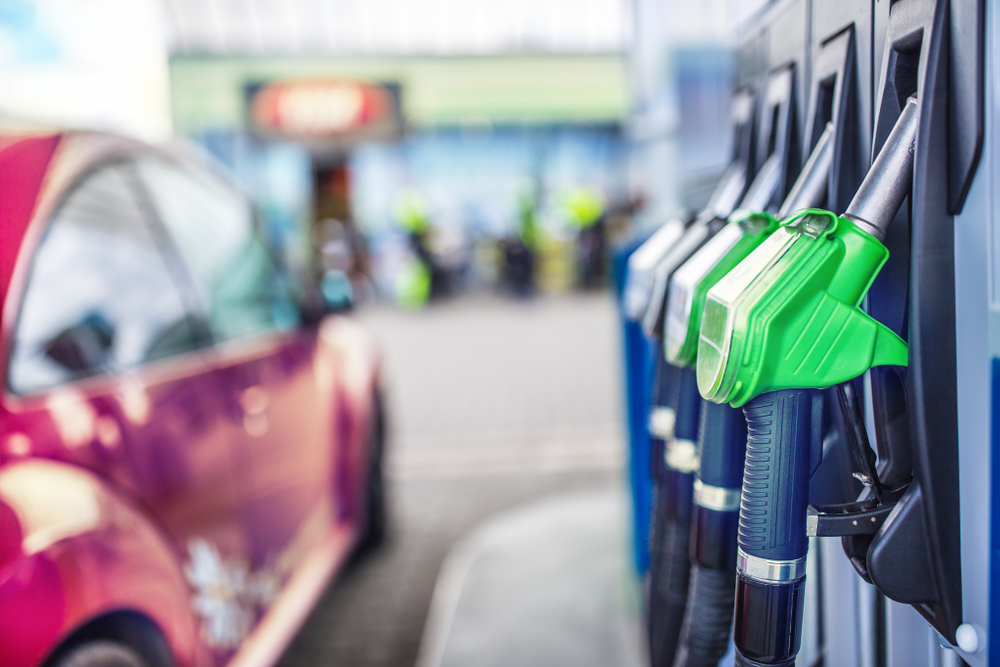
Premium costs more per gallon, and under normal driving conditions a car designed for regular gets little to no benefit from it. Even in severe duty such as towing, where higher octane can gain a few percent, the cost increase is typically higher than the fuel savings.
The wording in the manual decides what to buy. Regular is 87 octane, midgrade is 88 to 90, and premium is 91 to 94. A car that requires premium needs it, while a car that only recommends premium will run better on higher octane but the choice is yours. The fuel door or the owner’s manual says which wording applies, and buying the lowest grade the manual allows is the cheapest way to keep a fuel budget intact. Say premium costs 70 cents more per gallon than regular, a hypothetical difference: a 15-gallon fill-up is $10.50 extra, and 25 fill-ups a year is more than $260.
Smoother driving that spares the gas and the brakes

Speeding, rapid acceleration, and hard braking can lower gas mileage by roughly 15% to 30% at highway speeds and 10% to 40% in stop-and-go traffic. On a car that burns 600 gallons a year at $4.152 a gallon, a 15% hit costs about $370. At the top of the highway range, a 30% loss on the same car is about $750 a year. The range is wide because the damage depends on how much of each trip is spent accelerating hard, which comes down to how early the foot comes off the gas.
Speed has its own price. Each 5 mph over 50 mph is like paying an additional $0.21 per gallon, so driving 70 mph instead of 55 mph adds about $0.63 per gallon in effect. Easing onto the brakes instead of stopping hard also leaves pads thicker for longer, which pushes the $330 to $390 per axle pad job further down the road.
Extra weight and roof boxes removed

An extra 100 pounds in a vehicle could reduce mpg by about 1%, so a trunk holding tools, sports gear, bags of salt, and boxes meant for a donation drop-off that never happened costs fuel on every trip, and 300 pounds of it costs about 3%, or roughly $75 a year on 600 gallons at $4.152 a gallon. A rooftop cargo box can reduce fuel economy by around 2% to 8% in city driving and 6% to 17% on the highway, and by 10% to 25% at interstate speeds of 65 to 75 mph.
Rear-mounted cargo boxes and trays have a much smaller effect than a box on the roof. A 10% loss on a car that burns 600 gallons a year at $4.152 a gallon costs about $250. Racks and boxes that stay on through the off-season are paying for nothing, and taking them off takes less time than the trip to the gas station.
Idling kept to a minimum
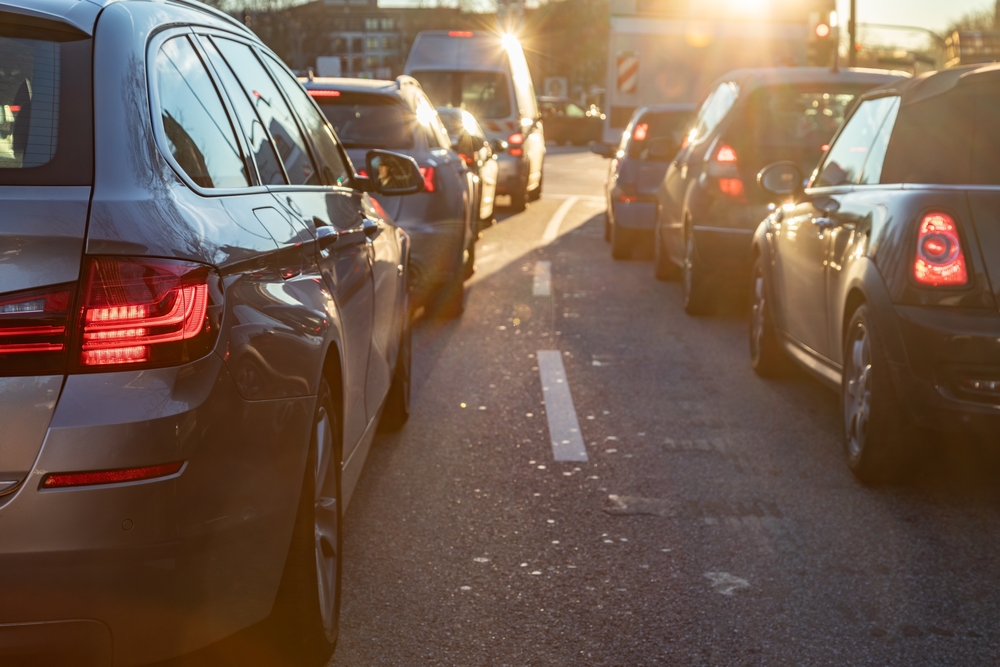
Idling can use a quarter to a half gallon of fuel per hour, depending on engine size and air conditioner use. Twenty minutes a day on 250 days adds up to about 83 hours a year, which comes to 21 to 42 gallons, or roughly $86 to $173 at $4.152 a gallon.
Warming up the car in the driveway, waiting in a pickup line with the A/C running, and sitting in a parking lot before an appointment are the usual sources. Cutting that in half still saves $43 to $86 a year at $4.152 a gallon. Turning the engine off for longer waits costs nothing, and it keeps hours off an engine that is not moving the car. Anyone who idles for a full hour a day, such as a delivery or rideshare driver waiting between jobs, burns about 91 to 183 gallons over 365 days, or roughly $380 to $760 at $4.152 a gallon.
Receipts kept and the shop you choose

A company can’t void a warranty or deny coverage solely because you used another company’s part or an independent shop, so routine maintenance does not have to happen at the dealer to protect the warranty. Coverage can still be denied for damage or defects caused by third-party parts or services, which is why records of what was done and when are worth keeping.
Invoices should list parts, labor, mileage, and service details, and DIY work should be logged with the date, mileage, and product used. Inspection reports are worth saving even when the work was declined, and a phone photo of each paper invoice keeps them from getting lost. Records do not guarantee a higher offer when the car is sold, though they support a stronger case for its condition. Anyone told that a warranty is void for using an independent shop can file a report with federal regulators.











