
The forehead is one of the first parts of the face where repeated movement becomes visible. Every time someone looks surprised, frowns, concentrates, or raises the eyebrows, the skin folds along familiar paths. At first, those marks disappear when the expression stops. With time, however, changes in collagen, elastin, hydration, sun exposure, and genetics can leave lines visible even while the face when relaxed.
Some are mainly movement-related, while others reflect accumulated skin damage and structural aging. The most useful approach begins by identifying what is contributing to the lines rather than trying to fill, relax, or resurface every forehead in the same way.
Table of contents
What causes deep forehead wrinkles?
Deep forehead wrinkles usually develop through a combination of repeated muscle contraction and gradual changes within the skin. The frontalis muscle lifts the eyebrows and creates horizontal forehead lines. Nearby movement in the glabella contributes to vertical creases between the brows, particularly with frowning or concentration.
Several factors can make those lines more pronounced:
- repeated facial expression and frequent raising of the eyebrows;
- loss of collagen and elastin with age;
- ultraviolet exposure and damaged skin;
- genetics and individual skin type;
- smoking, stress, dehydration, and other habits.
Dynamic lines become visible mainly during movement, whereas static wrinkles remain when the face is relaxed. A line that once diminished can gradually become permanent as the skin becomes less elastic and less able to recover from repeated folding.
Skin care for forehead lines
A consistent skin care routine cannot stop facial movement or erase every crease, but it can improve moisture balance, texture, and the appearance of early lines. A moisturizer helps retain water in the outer layers of the skin, while selected active ingredients may support smoother texture and collagen-related processes over time.
Products commonly considered in an anti-aging routine include:
- retinoids or retinol, depending on tolerance;
- moisturizer selected for the individual type of the skin;
- antioxidants such as vitamin C;
- peptides in suitable formulations;
- broad spectrum sunscreen with SPF 30 or higher.
Introducing too many strong products at once is a common error. Irritation can make the forehead look rougher rather than smoother, so active ingredients are usually added gradually. Anyone with sensitive skin, persistent irritation, pregnancy, or a skin condition should discuss stronger products with a dermatologist before changing the routine.
Sun protection and prevention
Daily protection is one of the more useful steps for prevention because ultraviolet radiation breaks down collagen and adds to premature aging. Sunscreen should be combined with shade, hats, and an effort to avoid deliberate tanning. Protection is relevant even when wrinkles are already visible because further UV exposure can continue to affect the skin.
Adequate rest, regular exercise, and a balanced diet support the body and general skin health, although none will make established wrinkles fade on their own. Lifestyle factors work best as part of a broader routine rather than as a substitute for treatments aimed at muscle activity or structural skin changes.
The best way to reduce forehead wrinkles
The best way to reduce forehead wrinkles is dependent on whether the problem is mainly muscle movement, surface damage, loss of elasticity, or a combination of these. A dermatologist or qualified aesthetic practitioner can assess the face both at rest and during expression to identify which mechanism is most responsible.
For example, movement-related horizontal lines often respond better to neuromodulators than to a cream. Fine surface lines and uneven skin texture may improve with resurfacing technologies, while deeper static wrinkles sometimes need more than one technique. Cost, recovery time, type of the skin, desired result, and tolerance for repeated procedures also influence the choice. A restrained combination can sometimes improve several causes at once without overcorrecting one feature.
Botox and other neuromodulators
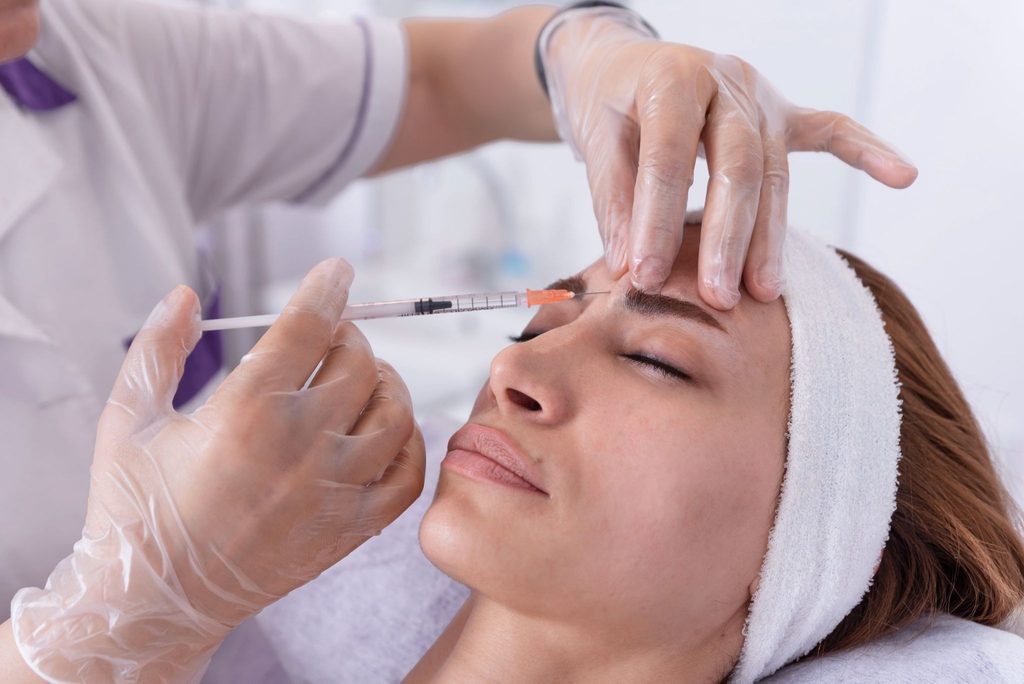
Botulinum toxin treatments are widely used for forehead lines because they temporarily relax the muscles responsible for repeated folding. Small injections into selected points reduce contraction of the frontalis and related muscles, allowing the overlying skin to appear smoother.
Among the neuromodulator options available to clinics, Innotox for sale at Dkdermal is a practical choice for professional use. It fits naturally into aesthetic practice where product quality, reliable sourcing, and consistent handling matter.
Injecting too much or choosing the wrong points can affect the position of the eyebrows, which is why forehead treatment should account for the balance between the frontalis and muscles around the glabella and eyes. Someone who relies strongly on the forehead to raise a low brow may need a different plan from a person with higher resting brows.
Botox and similar products usually provide temporary improvement rather than a permanent change. The effect develops over several days and generally lasts for a few months before muscle activity gradually returns.
Cosmetic procedures for forehead wrinkles
Muscle relaxation is only one option. When skin quality itself is contributing to visible lines, cosmetic procedures designed to stimulate renewal or collagen production may be more appropriate.
Lasers and resurfacing technologies
Laser resurfacing uses controlled energy to create changes in the skin and stimulate new collagen formation. Depending on the technology and intensity, treatment can address fine wrinkles, uneven pigmentation, rough texture, and some forms of sun damage.
Options may include:
- ablative laser resurfacing;
- non-ablative lasers;
- fractional resurfacing;
- chemical peels;
- microneedling or other collagen-stimulating devices.
The stronger the resurfacing procedure, the more carefully recovery and risk need to be considered. Some lasers carry a greater chance of pigment changes in darker skin tones, while deeper resurfacing may involve more downtime. A responsible provider should match the technology to the patient’s skin rather than choosing a device simply because it is newer.
Fillers for static wrinkles
Dermal fillers can sometimes be used when a forehead crease remains visible at rest, although this area requires particular caution because of its vascular anatomy. Fillers do not stop the frontalis muscle from contracting; instead, they add material beneath a crease or restore support where appropriate.
For that reason, a filler may occasionally be combined with a neuromodulator rather than used alone. The goal is not to completely fill every line. Careful assessment is especially important on the forehead, where injection-related vascular complications can be serious.
Brow lift and surgical options
A brow lift addresses a different problem from ordinary wrinkle treatment. When low or descending eyebrows, excess upper-face skin, and deeper forehead creases occur together, lifting the brow can change both eyebrow position and forehead tension. Surgery may produce a more substantial structural change than injectable procedures.
A surgical brow lift is generally considered when:
- eyebrow descent is pronounced;
- forehead skin has significant laxity;
- non-surgical treatments cannot address the main concern;
- the patient is comfortable with recovery and surgical risk.
There are also nonsurgical approaches sometimes described as a chemical brow lift, using botulinum toxin to alter the balance of muscles around the eyebrows. These effects are temporary and much more subtle than surgery.
Preventing forehead wrinkles from becoming more visible
Not every contributing factor can be changed. Genetics, natural aging, facial structure, and the way someone instinctively moves the face all play a role. Still, prevention can slow avoidable damage and help maintain the result of professional procedures.
The practical priorities are straightforward: use reliable sun protection, avoid tanning, moisturize consistently, choose ingredients appropriate for the skin, and limit habits that accelerate skin aging. Trying to consciously stop every facial expression is neither realistic nor necessary.
When lines become deeper despite good daily care, professional assessment can help determine whether the next step should target muscle movement, surface texture, collagen loss, or brow position. The right choice is usually the one that addresses the actual cause while keeping the forehead expressive, balanced, and firm rather than simply making every visible line disappear.










