
You keep hearing the word automation in meetings that used to be about quarterly targets. Nobody says it outright, but you’ve started wondering just how replaceable your own job sounds, said out loud. Meanwhile, the electrician who rewired your breaker panel last spring wasn’t lacking for work, and nobody in that van was worried about a software update.
The real security right now sits in jobs that software can’t draft, summarize, or auto-generate on command. It’s in work that still needs an actual person standing in the room, hands on the patient or hands on the wire.
Skilled trades and hands-on health care roles got written off for years as the fallback option for people who didn’t go to college. Neither one is a fallback anymore, and the apprenticeship route into electrical work proves it better than almost anything else on this list.
Table of contents
- Electricians
- Electrical power-line installers and repairers
- Plumbers, pipefitters, and steamfitters
- Wind turbine service technicians
- Industrial machinery mechanics
- Aircraft mechanics and service technicians
- Dental hygienists
- Diagnostic medical sonographers
- Respiratory therapists
- Radiologic and MRI technologists
- Registered nurses
- Physical therapist assistants
- Occupational therapy assistants
- Surgical technologists
- Orthotists and prosthetists
- Cardiovascular technologists and technicians
- Nuclear medicine technologists
- Occupational health and safety specialists
Electricians

Electricians pull a median $63,190 a year, or about $30.38 an hour, and most of them never took out a student loan to get there. The standard path is a four- to five-year apprenticeship: you earn a paycheck from day one while a contractor or union trains you on the job, and you come out the other side with a license instead of a transcript.
Demand isn’t slowing down. The field is projected to grow 9% through 2035, with roughly 72,700 openings a year nationally, driven by data center construction, EV charging infrastructure, and homes adding solar panels and battery backups faster than the existing workforce can keep up with. Nobody is going to automate a service panel upgrade in a 1970s house with its own wiring quirks. That job needs a person standing in the basement with a multimeter.
Electricians also split into specialties, residential, commercial, and industrial work all pay differently, and union jobs tend to run higher than non-union ones. Electricians who eventually get licensed as contractors can bid their own jobs instead of working for an hourly wage indefinitely, an upside you don’t get waiting on a promotion that might never come at a desk job.
Electrical power-line installers and repairers
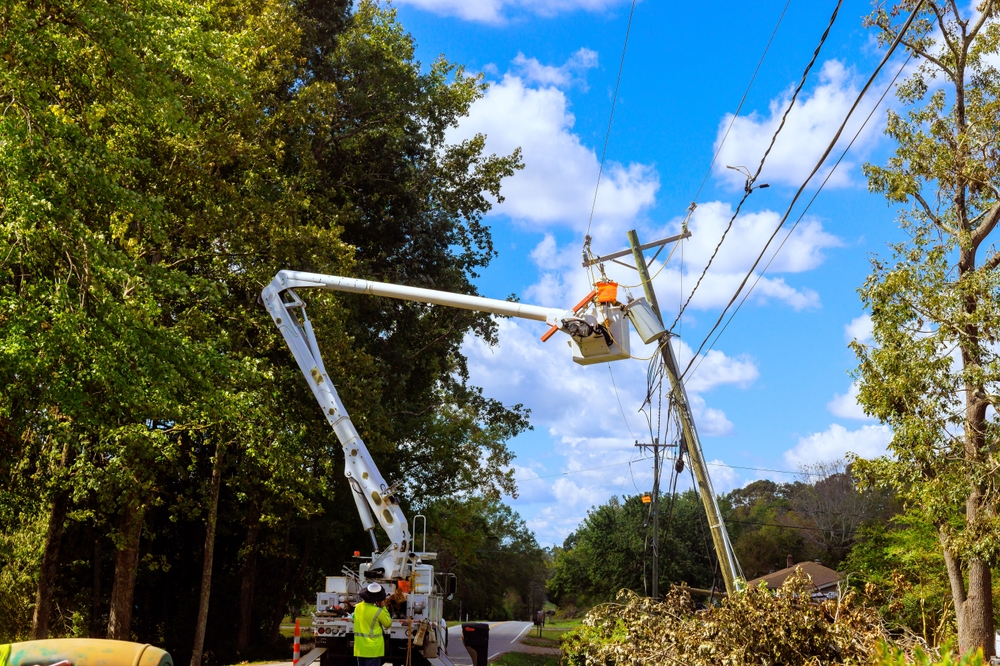
Line workers, the crews who climb poles and work high-voltage grid lines, earn a median $95,320 a year, close to $46 an hour, among the highest-paying jobs on this list that doesn’t ask for a four-year degree. The apprenticeship usually runs up to three years and starts with a high school diploma.
The field is projected to grow 10% through 2035, adding about 10,900 openings a year, and part of that comes from an aging grid that needs rebuilding at the same time utilities are adding new lines for data centers and EV charging. When a storm knocks out power to half a county, it’s a line crew in a bucket truck restoring it at 2 a.m., not a server somewhere.
Storm response crews often travel from state to state after hurricanes and ice storms, and that work typically carries significant overtime on top of the base rate. It’s physically demanding and often happens in bad weather, which is part of why the pay here sits well above most other trades that don’t require a four-year degree.
Plumbers, pipefitters, and steamfitters

Plumbers, pipefitters, and steamfitters bring home a median $63,800 a year, or about $30.67 an hour. The training path is a four- to five-year apprenticeship, and most states require a license before you can work unsupervised, which also keeps the field from being flooded overnight by undertrained competition.
Job growth is projected at 7% through 2035, with an unusually large 42,000 openings a year, the highest opening count of any trade on this list. Every building with running water needs someone qualified to work on it, and a burst pipe at 11 p.m. on a Saturday isn’t waiting for business hours or a chatbot.
Pipefitters and steamfitters working in industrial settings, refineries and power plants in particular, often out-earn residential plumbers by a wide margin, and that work is heavily unionized in many regions. Plenty of plumbers also eventually get licensed to run their own company, which means the real ceiling on this career isn’t actually capped at the median.
Wind turbine service technicians

Wind turbine technicians earn a median $64,120 a year, or about $30.83 an hour, for work that involves climbing several hundred feet up a turbine tower and doing mechanical repairs in a nacelle the size of a school bus. Most technicians complete a technical program that runs well under two years.
This is, by a wide margin, the fastest-growing job on this list and one of the fastest-growing in the country: employment is projected to jump 30% through 2035. The opening count is smaller, around 1,500 a year, simply because it’s a newer and more specialized field, but the growth rate reflects how much wind capacity is still being built. Nobody is sending a drone up to tighten bolts on a gearbox at 300 feet.
Most of the work is concentrated in wind corridor states like Texas, Oklahoma, Iowa, and Kansas, and many positions require specialized fall-protection and confined-space certification before anyone’s allowed up the tower. Some wind farms run technicians on rotating schedules, a set number of days on followed by days off, which isn’t typical of most trade jobs.
Industrial machinery mechanics

Industrial machinery mechanics, the people who keep factory equipment, conveyor systems, and production lines running, earn a median $64,520 a year, which works out to a little over $31 an hour. Most employers want a high school diploma plus at least a year of hands-on training, either through an employer program or a community college.
The occupation is projected to grow 18% through 2035, well above the average for the broader job market, as manufacturers keep automating production lines and need more people to maintain the robots and machinery doing that automating. That’s worth sitting with: machines don’t fix themselves when they break, and a factory losing money every minute a line sits idle isn’t going to wait on a diagnosis from an app.
These mechanics work across food processing plants, auto manufacturing, warehouses, and anywhere else machinery runs around the clock, and overtime is common when equipment breaks down outside a normal shift. Some employers run their own in-house apprenticeships, so new hires can start earning while they train instead of paying for a program up front.
Aircraft mechanics and service technicians

Keeping a commercial airliner or a private jet legally airworthy falls to aircraft mechanics and service technicians, who earn a median $79,870 a year, or roughly $38 an hour. Getting in typically means completing an FAA-approved aviation maintenance program, then earning an Airframe and Powerplant certification.
The occupation is projected to add about 7,500 new jobs over the decade through 2035, and airlines have been warning publicly for years about a wave of retiring mechanics they can’t replace fast enough. Every aircraft that flies has to pass an inspection signed by a licensed human being. That requirement doesn’t change because a diagnostic tool got smarter.
Pay varies quite a bit by employer: major airlines and cargo carriers tend to pay more than small regional shops, and mechanics who work on private or corporate jets can earn more still. A grounded aircraft costs money every hour it sits waiting on a repair, which is part of why overtime is common in this field when something needs fixing fast.
Dental hygienists

Dental hygienists earn a median $98,100 a year, close to $47 an hour, for work that typically requires an associate’s degree, two to three years of school rather than four. Hygienists handle cleanings, X-rays, and patient education, and in many states they work with a fair amount of independence from the dentist who employs them.
The field is projected to grow 8% through 2035, with about 15,000 openings a year, and that growth is steady rather than explosive, which in this case is a good thing: it means the demand isn’t a bubble. Cleaning plaque off someone’s molars and reading a set of X-rays for early decay both require a person physically present in the room, holding actual instruments.
A lot of hygienists work three or four days a week by choice, since the pay is strong enough per hour that full-time hours aren’t necessary to make a good living. Settings range from a private dental office to school programs and public health clinics, and a growing number of states now let hygienists practice with more independence from a supervising dentist than used to be standard.
Diagnostic medical sonographers

Diagnostic medical sonographers operate ultrasound equipment for everything from pregnancy scans to cardiac imaging, and median pay is $96,590 a year, or about $46 an hour. Most sonographers complete an associate’s degree in a two-year ultrasound technology program, often followed by a certification exam.
Growth here is strong at a projected 14% through 2035, with around 6,000 openings a year, as imaging-based diagnosis keeps expanding into more areas of medicine. A sonographer is making real-time decisions about probe angle and pressure while reading a live image on the fly, a skill that takes actual hands and actual judgment, not a dataset.
Sonographers often specialize, in obstetrics, cardiac imaging, or vascular studies, and those specialties can be layered on top of the base certification to push pay higher still. Hospital-based sonographers sometimes take on-call shifts for emergencies, while those working in outpatient imaging centers tend to have steadier daytime hours.
Respiratory therapists

Respiratory therapists manage ventilators and treat patients with breathing disorders, from premature infants in the NICU to adults in respiratory failure in the ICU. Median pay sits at $82,280 a year, or about $39.56 an hour, and the standard entry point is an associate’s degree, though some employers now prefer a bachelor’s.
The field is projected to grow 9% through 2035, adding roughly 8,600 openings a year, driven by an aging population and rising rates of chronic lung conditions like COPD. Adjusting a ventilator setting on a patient who’s struggling to breathe is not a task anyone wants to hand off to an algorithm, and the license required to do it legally reflects that.
Most respiratory therapists work in hospitals, but the field also includes sleep labs, home health care, and rehabilitation centers treating patients with long-term lung disease. Hospitals need this coverage around the clock, so therapists typically work rotating shifts that include nights, weekends, and holidays, which is reflected in the pay for those shifts.
Radiologic and MRI technologists

Radiologic and MRI technologists position patients and operate the machines behind X-rays, CT scans, and MRIs. Median pay is $81,390 a year, or about $39 an hour, for work that typically requires an associate’s degree and a state license or national certification.
The occupation is projected to grow 5% through 2035, with about 15,000 openings a year, a steady rather than explosive pace, which tracks with how embedded imaging already is in routine medical care. Someone still has to physically position a patient correctly and manage radiation exposure and safety in the room, and that’s not a job done through a screen.
Technologists who cross-train into MRI or CT scanning, on top of a basic radiography license, typically earn more than those who stick to standard X-rays, and many hospitals actively encourage that cross-training. Emergency room imaging runs around the clock, so hospital-based techs often work rotating or on-call shifts, while outpatient imaging centers tend to keep regular daytime hours.
Registered nurses

Registered nurses earn a median $97,550 a year, or about $46.90 an hour. Most employers now prefer a bachelor’s degree, but an associate’s degree plus a passing score on the national licensing exam is still a valid path onto the floor in plenty of states and health systems.
This occupation is projected to grow 6% through 2035, and the opening count is enormous: about 180,800 a year, more than any other job on this list by a wide margin. Hospitals have spent the past several years openly worried about nursing shortages, not about replacing nurses with software. Direct patient care, administering medication, monitoring vitals, making judgment calls at 3 a.m., requires a licensed human being who can be held accountable for the outcome.
Pay climbs well above the median for nurses who specialize in high-acuity areas like intensive care, the emergency room, or the operating room, and travel nurses who take short-term contracts at understaffed hospitals can earn considerably more than a standard staff position. Night and weekend shift differentials add to the base rate in most hospital settings as well.
Physical therapist assistants

Physical therapist assistants work directly with patients on prescribed rehab exercises, under the supervision of a licensed physical therapist. Median pay for PTAs specifically is $68,380 a year, or about $32.88 an hour, for a role that requires an associate’s degree and a license in every state.
Growth here is one of the strongest on this list: PTA positions are projected to grow 23% through 2035. The opening count for this role is tracked together with physical therapist aides, projecting about 24,900 a year combined between the two positions. An aging population with more joint replacements, more sports injuries, and more people living longer with mobility issues needs hands physically guiding a knee through a range of motion, not an app sending a reminder.
PTAs work across outpatient clinics, nursing homes, hospitals, and home health, and sports medicine practices increasingly hire them too as more people stay active later in life. The growth here tracks directly with an aging population getting more hip and knee replacements than previous generations, each one requiring months of supervised rehab afterward.
Occupational therapy assistants

Occupational therapy assistants help patients relearn daily living skills, dressing, cooking, basic mobility, after an injury, surgery, or diagnosis like a stroke. The role pays a median $72,300 a year, or about $34.76 an hour, and requires an associate’s degree from an accredited program, plus supervised fieldwork and a state license.
Growth is projected at a strong 21% through 2035. The opening count is tracked together with occupational therapy aides, projecting roughly 8,600 a year combined. This work is entirely physical and personal: relearning how to button a shirt with a weakened hand takes a person sitting across from you, coaching the actual movement.
OT assistants work in a wide range of settings: schools helping kids with developmental delays, nursing homes helping older adults regain independence after a fall, and hospitals helping stroke patients relearn basic tasks. That range means the job doesn’t look the same from one employer to the next, which some people find more engaging than a role that’s identical every single day.
Surgical technologists

Surgical technologists prep the operating room, sterilize and pass instruments, and keep the sterile field intact during live surgery. Median pay is $64,700 a year, or about $31.10 an hour, for a role that typically requires a postsecondary certificate rather than a full degree.
The field is projected to grow 5% through 2035, with about 8,600 openings a year. Anyone who has spent time in an operating room knows exactly why this job isn’t going anywhere: a surgeon mid-procedure needs the right instrument handed over in seconds by someone actually standing there, not a robotic arm waiting on a command.
Surgical techs work in hospital operating rooms and increasingly in outpatient surgery centers as more procedures move outside hospitals entirely. Hospital-based techs are often on-call for emergency surgeries that can’t wait until morning, and some go on to become surgical first assistants, a role with more responsibility and a noticeably higher paycheck.
Orthotists and prosthetists
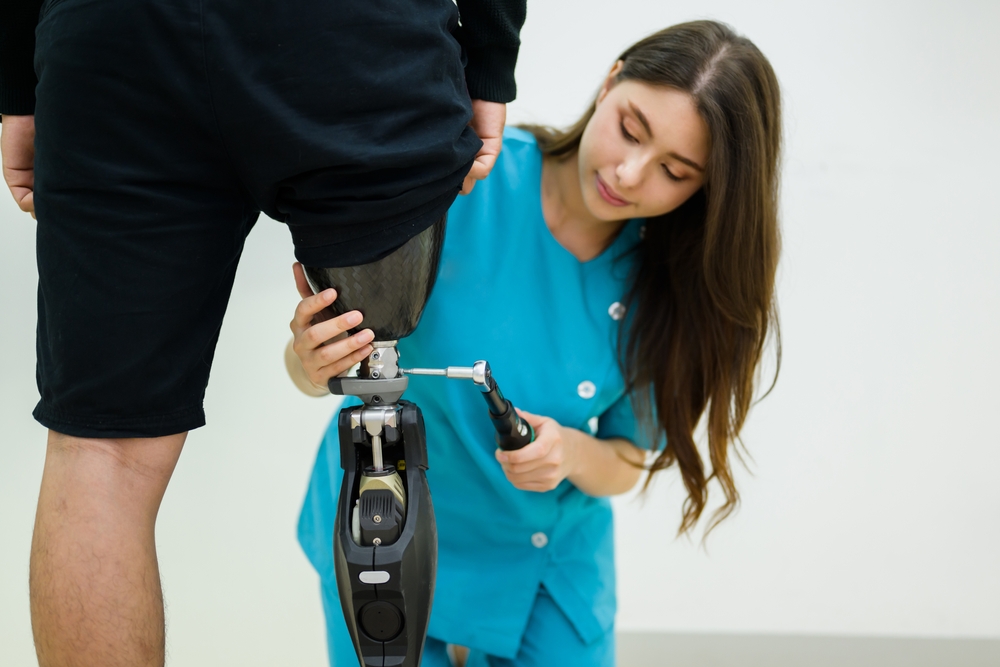
Orthotists and prosthetists design and custom-fit braces and artificial limbs directly on patients, adjusting the device to a body that’s never quite the same as the last one. It’s one of the higher-paying jobs on this list, a median $81,110 a year, or about $39 an hour, though it requires a master’s degree and roughly a year of supervised clinical residency afterward.
It’s a small field, with only about 700 openings a year nationally, but demand is growing fast: 13% through 2035. Fitting a prosthetic limb to someone’s actual gait and residual limb, then adjusting it as their body changes, is intimate, physical, iterative work. There’s no version of that done remotely.
A lot of this work involves a long-term relationship with the same patient, since a prosthetic or brace needs adjusting as a person’s body changes, a child grows, or an amputation site heals further. Rising rates of diabetes-related amputations and an aging population are both adding to demand, on top of standard trauma and sports injury cases.
Cardiovascular technologists and technicians

Cardiovascular technologists and technicians assist with procedures like cardiac catheterizations, stress tests, and EKGs. Median pay is $74,310 a year, or about $35.73 an hour, and the education path varies: a full cardiovascular tech role usually wants an associate’s degree, but an EKG technician specifically can sometimes start with just a high school diploma and a certificate program that takes under a year.
Growth is projected at 4% through 2035, with about 3,400 openings a year. Heart disease remains the leading cause of death nationally, and the population getting cardiac screenings and procedures keeps growing older. Someone has to physically operate the equipment and monitor a patient’s heart rhythm in real time during a procedure, which isn’t a remote job.
Many cardiovascular techs start as EKG technicians and add training over time to work in a cardiac catheterization lab, which pays more and involves assisting during live heart procedures. Hospital-based techs are often on-call for emergency cardiac cases, since a heart attack doesn’t wait for a scheduled shift.
Nuclear medicine technologists
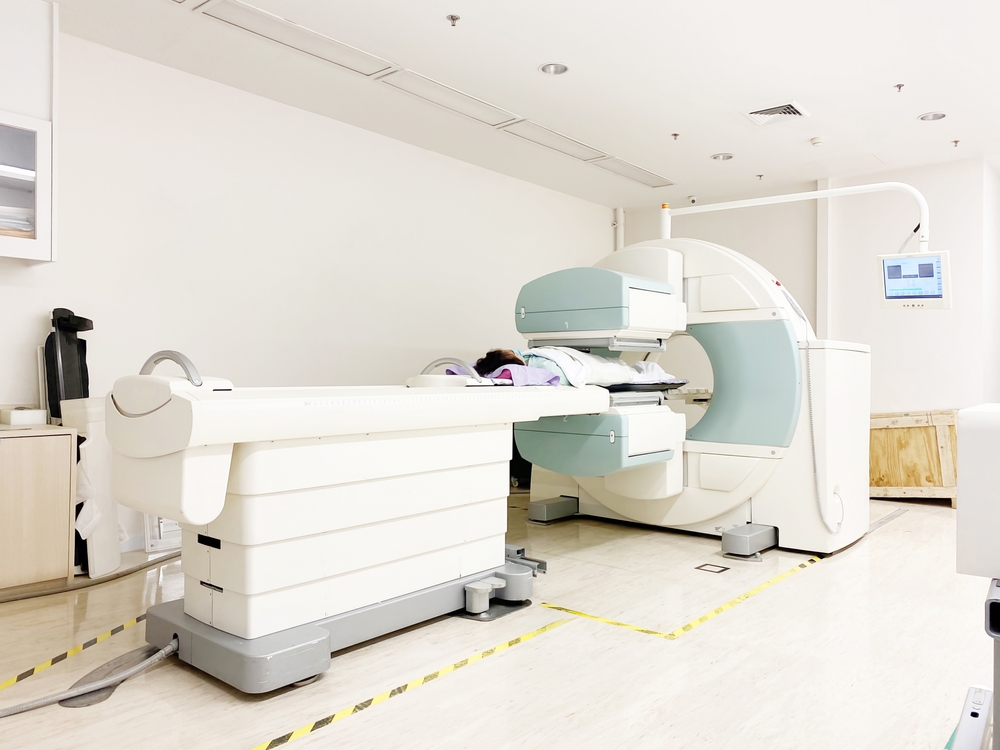
Nuclear medicine technologists administer small, carefully measured doses of radioactive material to patients, then operate the imaging equipment used to diagnose conditions like cancer and heart disease. It’s the highest-paying technologist role on this list, a median $101,370 a year, or about $48.74 an hour, for a job that typically requires an associate’s degree.
It’s a small, specialized field, with around 800 openings a year, and growth is steady rather than fast at 4% through 2035. Handling radioactive materials safely and administering them to a specific patient at a specific dose is tightly regulated work that requires a licensed person physically present, not a formula run somewhere else.
Most nuclear medicine technologists work in hospital imaging departments or dedicated cancer treatment centers, and the job comes with ongoing radiation safety training throughout a career, not just at the start. Because it’s such a small field, there’s less competition for open positions than in larger occupations, which can work in a new graduate’s favor.
Occupational health and safety specialists

Occupational health and safety specialists inspect workplaces, identify hazards, and make sure employers are meeting safety regulations, everywhere from construction sites to factory floors to hospitals. Median pay for specialists specifically is $90,150 a year, which works out to a little over $43 an hour, and the role typically requires a bachelor’s degree.
Growth for specialists is projected at a strong 18% through 2035. The opening count is tracked together with safety technicians, projecting about 20,900 a year combined. Spotting a real hazard, an unguarded machine, a blocked exit, a chemical stored wrong, takes someone physically walking the floor and understanding how people actually work there, not reading a report after the fact.
Construction companies, manufacturers, oil and gas operations, and large hospital systems all hire safety specialists in-house, and the role can lead to a corporate safety director position with considerably higher pay after a few years of field experience. It’s one of the more office-adjacent jobs on this list, but the core of the work still happens on-site, not at a desk.
None of these jobs are easy money, and most of them ask for real training before the real paycheck shows up. But every one of them still needs a person who can show up in the room, not a program that can only talk about it.











