
A roofer who started climbing ladders at 19 and is still doing it at 58 doesn’t get a vote on when his knees give out. A bill introduced in the House this fall would let him collect his full Social Security check at 60 anyway, seven years before today’s full retirement age of 67, without the penalty that normally comes with claiming early.
Representative Haley Stevens, a Michigan Democrat, introduced the Blue Collar Social Security Fairness Act on September 24, 2026. The idea behind it is specific: Social Security assumes everyone can keep working until 67, but construction workers, machinists, nursing aides, and anyone else whose job grinds down a body for three decades don’t get much say in that assumption.
Bodies wear out faster than paperwork does, and plenty of people in physically demanding trades already know that firsthand.
Whether the bill becomes law is a separate question from how it would actually work, and the mechanics are more specific than most headlines about it let on.
What the bill would actually change

Under current law, anyone born in 1960 or later has a full retirement age of 67. They can claim as early as 62, but doing so locks in a reduction that lasts for life: a $1,000 benefit shrinks to $700, a 30% cut that never goes away.
The Blue Collar Social Security Fairness Act doesn’t just move the earliest claiming age back a couple of years. It creates a new category called a “covered worker” and exempts that group from the early-claiming reduction entirely. A covered worker who claims at 60 gets the same unreduced check someone else would wait until 67 to collect: seven extra years of full payments instead of a smaller one that started two years earlier.
That’s the heart of the bill, and it’s a bigger ask than it sounds. Plenty of past proposals have nudged the early-claiming age down a year or two while still shrinking the check. This one hands qualifying workers the full amount seven years sooner, which costs the program far more than a simple age change would.
How the points system decides who qualifies
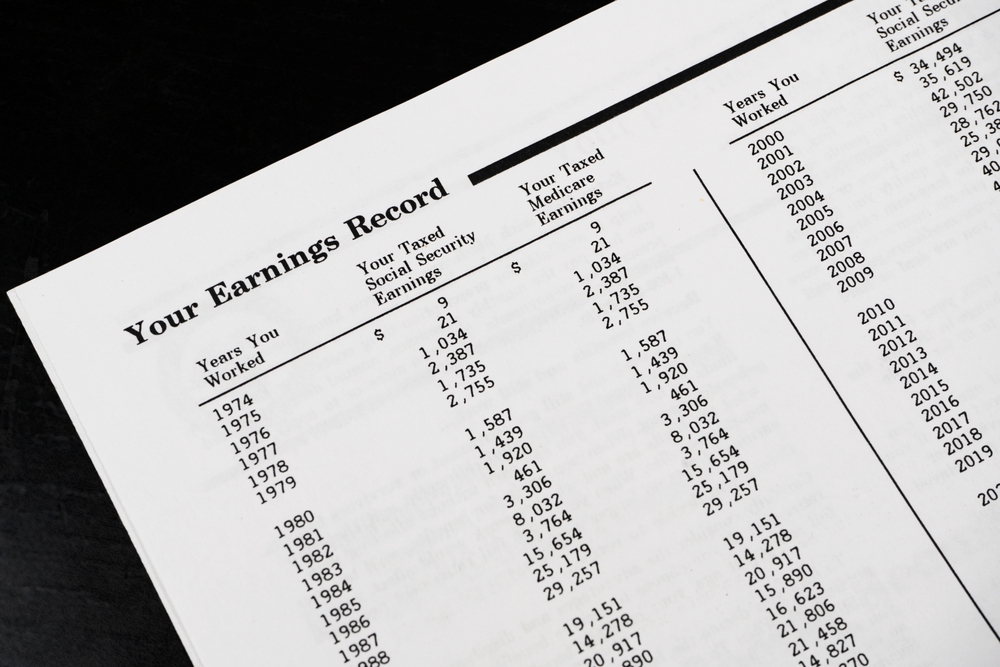
Qualifying isn’t only about years on the job. A worker earns credit for a calendar year only after spending at least eight months of it in an occupation the bill defines as physically demanding, and there are two separate routes to the age-60 claim.
The first is simple: 20 years of qualifying work, earned at any point in a career, adds up to 20 base points and locks in eligibility on its own. The second route runs on an age-weighted scale that rewards work done later in a career more heavily than the same work done young. A qualifying year between ages 18 and 34 earns 0.5 points. Ages 35 to 44 earn 1 point a year. Ages 45 to 54 earn 1.5 points. Every qualifying year from 55 onward earns 2 points, and 15 of those age-adjusted points is enough to qualify on its own.
The weighting rewards physical work done late in a career more than the same work absorbed by a younger body, on the theory that strain lands harder the older a worker gets. Someone who spent their 20s behind a desk and moved into physically demanding work at 50 can reach 15 points faster than someone who did the identical job from 18 onward and eased into something lighter by 50.
Which jobs would actually count

Nothing in the bill spells out a fixed list of covered occupations. Instead, the job of deciding falls to the Social Security Commissioner, working jointly with the Secretaries of Labor and Health and Human Services, who would have to publish a list of qualifying occupations within a year of the law taking effect and update it every three years after that.
Stevens has pointed to construction, roofing, nursing, and manufacturing as the kinds of jobs she expects the eventual list to cover, but her office has been clear that the list is meant to grow rather than stay fixed at those four examples.
That open-endedness cuts both ways: warehouse pickers, home health aides, and line cooks could eventually make the list even though nobody named them at introduction, but nobody currently working toward 60 can be certain their own job qualifies until the first list actually comes out, which under the bill’s own timeline wouldn’t happen until a year after it passed.
The case for dropping the age to 60

Close to 36% of civilian workers hold jobs requiring at least a medium level of physical strength under the federal government’s own classification system, and nearly 7% of all workers are in jobs heavy or very heavy enough to mean regularly lifting more than 50 pounds.
That physical toll shows up directly in retirement timing. More than half of older workers who retire between ages 55 and 64 leave the workforce involuntarily, and the share climbs above 60% among Black and Hispanic workers, who are also more likely to hold physically demanding jobs in the first place.
Few retirement researchers dispute the underlying problem. The harder question is whether the fix belongs inside Social Security specifically, since the program already pays out more than it collects. Supporters argue that a worker who spent 30 years hauling, lifting, and climbing has already paid for an earlier exit through the toll the work took, and that the standard retirement-age rules simply weren’t built with that worker in mind.
The objection that matters most

The timing is the problem: the Old-Age and Survivors Insurance trust fund, the one that pays retirement benefits, is projected to run out of reserves in the fourth quarter of 2032. After that point, incoming payroll taxes alone would cover only 78% of scheduled benefits, an automatic cut of roughly 22% for everyone drawing a check unless Congress acts first.
Adding a new category of workers who can claim full, unreduced benefits seven years early doesn’t close that shortfall. It widens it, and Stevens hasn’t said how the added cost would get covered. Other current proposals aimed at shoring up the program’s finances point the opposite direction, including eliminating the cap that currently exempts any pay above $184,500 a year from the Social Security tax entirely.
That tension doesn’t make the bill dishonest so much as one more entry in a long list of fairness-driven ideas competing for space inside a program that’s already short on cash, which is exactly the kind of bill that tends to stall in committee instead of reaching a floor vote.
Where the bill stands, and what would have to happen

As of today, the bill has cleared exactly one procedural step: introduction and a referral to the House Committee on Ways and Means on September 24, 2026. Nothing else has happened to it since, which is ordinary. Most bills introduced in a single Congress never get a committee vote, let alone a floor vote, and Stevens’ proposal is competing for attention with other Social Security ideas already working their way through the same chamber.
For it to become law, the Ways and Means Committee would need to approve it and send it to the full House, where it would need a majority vote. It would then need a matching bill to pass the Senate, and a president would need to sign it. Any one of those steps can stall a bill indefinitely, and most do.
For scale, the Social Security Fairness Act that repealed two older benefit-reduction rules took nearly two decades to go from first introduction to becoming law in January 2025. Committee referral is step one of many, and there’s no fixed timeline for how long the rest takes, if it happens at all.
If the physical toll of your job already has you counting down years instead of decades, this bill is worth watching. It just isn’t something to build an actual retirement date on until it clears committee, which it hasn’t yet.











