
A four-year degree isn’t always an option, especially when you’ve got bills to pay and can’t afford to spend years out of work. But staying in a low-paying job isn’t much of a plan either.
Fortunately, there are some well-paying careers that don’t require four years of college or a lengthy apprenticeship. Some involve working with medical equipment or helping patients, while others take you into factories, laboratories, aircraft hangars, or places you probably haven’t considered working.
These 18 jobs have national median or average salaries between $60,000 and $80,000 a year, with training routes of two years or less. Those are typical earnings across the occupation, not guaranteed starting salaries. You’ll generally earn less while learning, and some jobs require supervised experience or a licensing exam before you can work independently.
1. Neurodiagnostic technologist

Ever wondered what happens during a brainwave test? Neurodiagnostic technologists, also called EEG technologists, attach small electrodes to patients’ scalps to record electrical activity in the brain. Doctors use these recordings to investigate seizures, epilepsy, sleep problems, and other neurological conditions. The job requires careful observation because small changes in a recording can matter.
The national average salary for an EEG technologist is approximately $77,790 per year. You can train through a neurodiagnostic technology certificate or associate degree program, generally taking 12 to 24 months. Look for an accredited program that includes clinical training and prepares you for the relevant certification exam.
Hospitals, neurology clinics, and epilepsy monitoring units employ these specialists. Some work overnight shifts monitoring patients for seizure activity. It’s a good option if you’re comfortable with medical technology and patient care but don’t want to spend four years earning a nursing degree. You’ll need patience, especially when testing children or patients who are confused or frightened.
2. Sleep technologist

If working nights doesn’t bother you, sleep technology is worth considering. Sleep technologists monitor patients during overnight sleep studies, checking breathing patterns, oxygen levels, heart rhythms, and brain activity. Much of the work involves setting up sensors and watching for signs of conditions such as sleep apnea. You’ll also help patients who struggle to sleep while attached to the equipment.
Registered polysomnographic technologists earn approximately $63,728 annually on average. Training options include accredited programs and approved sleep technology courses combined with supervised clinical experience. Some people qualify for the registered technologist exam after completing a shorter training program and at least 960 hours of clinical work.
Sleep clinics, hospitals, and specialist respiratory centers need people who can perform these studies correctly. The hours aren’t suitable for everyone, and you may spend much of your shift working while everyone else is asleep. However, the training period can be relatively short, and the work offers a way into healthcare without following a traditional nursing route.
3. Histotechnician

Histotechnicians work behind the scenes in medical laboratories, preparing tissue samples so pathologists can examine them under a microscope. When someone has a biopsy, for example, a histotechnician may be responsible for preserving the tissue, cutting extremely thin sections, and applying stains that reveal different types of cells.
Average annual pay is approximately $71,270. You can qualify through an accredited histotechnology program, including two-year associate degree options. These programs cover anatomy, chemistry, laboratory safety, tissue preparation, and supervised practical work. Completing an approved program can also make you eligible for professional certification, which many employers prefer.
Most jobs are in hospitals, pathology laboratories, and medical testing facilities. You don’t usually spend your day dealing directly with patients, which may appeal if you’re more comfortable doing careful technical work. Accuracy matters because poorly prepared tissue can make it harder for a doctor to reach a diagnosis. It’s a specialized job that most people never hear about, despite the essential work these laboratories do every day.
4. Hearing aid specialist

Hearing aid specialists help people with hearing loss find and use suitable hearing devices. You may perform basic hearing assessments, take ear impressions, adjust hearing aids, and teach customers how to care for their equipment. You’ll also spend time following up with people whose devices aren’t working as expected.
The national median salary is $65,160 per year. Unlike audiologists, who need advanced university education, hearing aid specialists can enter through supervised training and state licensing. Some states require approximately one year of apprenticeship experience followed by examinations. Requirements vary, so it’s important to check the rules where you plan to work.
Hearing aid retailers, hearing care clinics, and specialist practices employ these workers. The growing number of older Americans supports demand for hearing services, although the retail side of the job may involve sales targets. You’ll need to be comfortable explaining technology to people who may find it confusing. A patient, practical approach is particularly valuable when someone is frustrated because they still can’t hear properly.
5. Nondestructive testing technician

Somebody needs to check whether aircraft parts, pipelines, bridges, and industrial equipment are safe without cutting them apart to find out. That’s where nondestructive testing technicians come in. They use methods such as ultrasound, magnetic particles, and radiographic testing to identify cracks, corrosion, and other defects.
The national average salary is approximately $64,333 annually. You can enter through a technical certificate, specialized training school, or employer-sponsored training. Moving beyond trainee status generally means building documented work experience under supervision and passing examinations for specific testing methods. Several certification routes can be completed within two years.
Employers include aerospace manufacturers, energy companies, engineering contractors, and industrial inspection businesses. Some positions involve working in factories, while others require travel to construction sites or remote facilities. You may need to work at heights or in confined spaces, depending on the industry. It’s detailed, safety-critical work, and there’s a big difference between spotting a potential defect and accidentally approving something dangerous.
6. Fire alarm service technician

Fire alarm service technicians do more than install smoke detectors. They inspect, test, troubleshoot, and repair the alarm systems protecting offices, hospitals, apartment buildings, and other commercial properties. A faulty control panel, damaged sensor, or wiring problem could leave an entire building without adequate warning of a fire.
Specialists working in fire alarm service earn approximately $73,501 annually on average. You can begin with electrical or low-voltage systems training, then work under an experienced technician. Professional certification is available after gaining field experience. For example, the first level of NICET fire alarm certification requires at least six months of relevant experience, while Level II requires two years.
Fire protection contractors, building maintenance companies, and specialist alarm businesses employ these technicians. Commercial buildings require regular inspections and maintenance, helping support ongoing service work. Be aware that the higher service-technician salary isn’t what a completely inexperienced alarm installer should expect immediately. However, the route into the industry is relatively quick, and you can build your qualifications while earning.
7. Traffic signal technician

Traffic signal technicians keep intersections working safely. They inspect signal heads, repair wiring, troubleshoot traffic controllers, and maintain the sensors that detect approaching vehicles. When a busy intersection suddenly loses its lights, these are the workers who investigate the fault and get traffic moving safely again.
Average annual pay is approximately $70,116. You can enter the field through electrical training or a trainee position with a city, highway contractor, or transportation department. The IMSA Traffic Signal Technician I certification requires one year of related experience and approved work-zone safety training. More advanced certifications take longer, but you can begin working before earning them.
This isn’t a desk job, and emergency repairs may mean working outdoors at night or in unpleasant weather. You’ll also need to follow strict roadside safety procedures. However, it’s a useful alternative to conventional electrical work if you want to specialize without completing a traditional multiyear electrician apprenticeship first. Municipal transportation systems require regular maintenance, and faulty signals still need technicians on-site to repair them.
8. Fiber optic cable splicer

Fiber optic cable splicers join the thin glass fibers that carry internet and communication signals. Their work helps connect homes, businesses, data centers, and telecommunications networks. They use specialized equipment to fuse fiber ends together, then test the connection to make sure the signal can pass through without excessive loss.
The national average salary for a fiber optic cable splicer is approximately $61,938 annually. Training can begin with a short fiber optics course covering cable preparation, splicing, termination, and testing. You can then gain practical experience with an installation contractor. Industry certifications include the Certified Fiber Optic Technician credential and a specialist splicing qualification, which can be earned through approved training.
Telecommunications contractors, network infrastructure companies, and specialist cabling firms employ these technicians. Some work takes place inside buildings, while other jobs involve underground cables, roadside cabinets, or aerial installations. Travel and occasional emergency repair work are common. There’s a physical skill to preparing and joining tiny glass fibers, and poor workmanship can cause expensive network problems that someone must locate and repair.
9. Robotics technician

Factories increasingly use robots to weld, package, assemble, and move products, but those machines still need people who can maintain them. Robotics technicians inspect equipment, replace worn components, investigate faults, and help keep automated production lines running. You might spend part of your day working with electrical controls and the rest repairing mechanical components.
Average pay for robotics technicians is approximately $70,307 per year. Community colleges offer robotics, automation, and mechatronics programs that can be completed in two years or less. Many include practical training with programmable controllers, motors, sensors, and industrial robots. Some employers also offer trainee positions for people with relevant electrical or mechanical experience.
Automotive manufacturers, warehouses, food processors, and industrial equipment companies employ robotics technicians. The work can involve shifts and urgent repairs because a stopped production line costs money. It’s worth knowing that this is primarily a maintenance and troubleshooting career, not a job designing robots from scratch. If you enjoy fixing machinery and understanding how electrical and mechanical systems work together, it’s an interesting route into modern manufacturing.
10. Calibration technician

A medical device, laboratory instrument, or factory pressure gauge is only useful if its readings are accurate. Calibration technicians check measuring equipment against recognized standards, make adjustments, and document the results. They might work on temperature sensors one day and precision measuring instruments the next.
The national median salary for calibration technologists and technicians is $67,820 annually. Many enter through an associate degree in electronics, engineering technology, or another technical subject. Some employers also accept shorter technical training followed by supervised work. You need to be comfortable with measurements, basic math, and following detailed procedures.
Calibration technicians work in manufacturing plants, testing laboratories, research facilities, and companies that maintain scientific instruments. Businesses that must meet strict quality or safety standards need reliable measurements and records. Employment in this occupation is projected to grow faster than the average across all jobs. It’s particularly suitable for someone who enjoys precise, methodical work but would rather handle real equipment than spend every day working on a computer.
11. Biomedical equipment technician
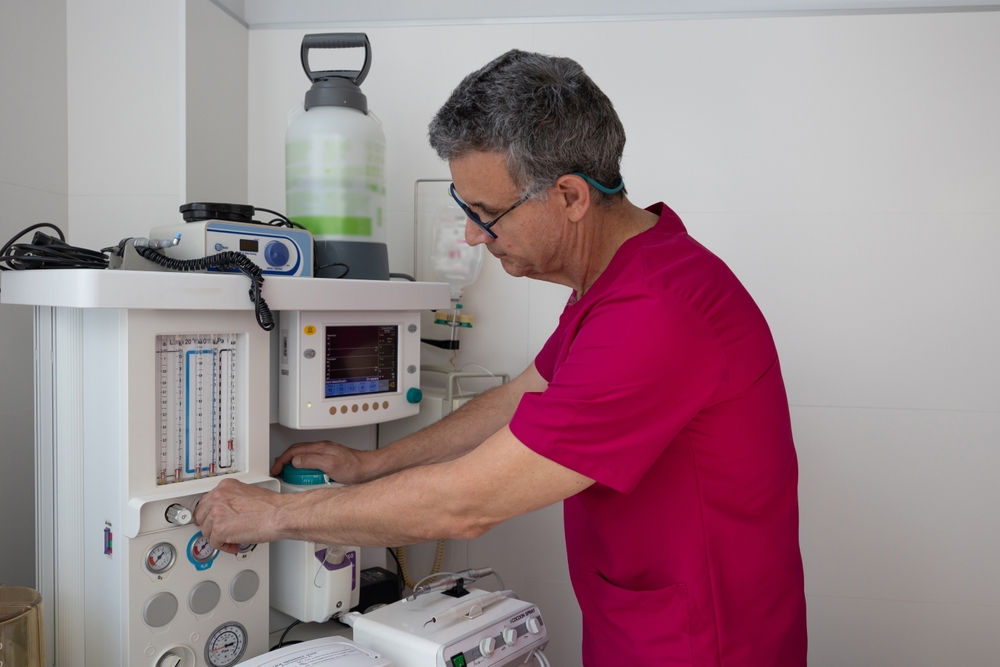
Hospitals depend on equipment such as patient monitors, infusion pumps, defibrillators, and other medical devices. Biomedical equipment technicians inspect, test, maintain, and repair this equipment so healthcare staff can use it safely. When something stops working, the technician must identify whether the problem involves electronics, software, or a physical component.
The national median salary for medical equipment repairers is $61,660 per year. A two-year associate degree in biomedical equipment technology is a common entry route, although some employers accept shorter technical qualifications followed by supervised training. Courses usually cover electronics, medical equipment operation, safety testing, and troubleshooting.
Hospitals, medical equipment manufacturers, and specialist repair companies employ these workers. Some jobs involve visiting several healthcare facilities rather than working in one building. Equipment failures can be urgent, so occasional evening or weekend callouts are possible. Employment is projected to grow substantially as healthcare providers use more complex devices. It’s a practical option if you like working with electronics and want a healthcare-related career without providing direct medical treatment.
12. Aircraft maintenance technician

Aircraft maintenance technicians inspect and repair aircraft engines, structures, hydraulic systems, and other components. They check for damage, replace worn parts, and follow strict maintenance procedures before an aircraft can return to service. The responsibility is considerable because even a small mistake could affect flight safety.
Aircraft mechanics and service technicians earn a national median salary of $79,870 annually. An FAA-approved aviation maintenance technician school typically takes 18 to 24 months, depending on the program and qualifications pursued. Graduates must also pass the appropriate certification examinations. The alternative experience-only route takes longer, so an approved school is the better fit for someone aiming to qualify within two years.
Airlines, aircraft maintenance companies, airports, and aerospace businesses employ these technicians. Shift work is common because aircraft need servicing outside normal business hours. The industry is expected to grow faster than average, although employment opportunities depend heavily on location. You need to be comfortable following detailed instructions and taking responsibility for your work, even when repairs are repetitive or time-sensitive.
13. Wind turbine technician

Wind turbine technicians inspect, maintain, and repair the huge machines used to generate wind power. Their work includes checking electrical systems, maintaining mechanical parts, replacing damaged components, and investigating faults that cause turbines to shut down. A typical day can involve climbing inside a tower and working high above the ground.
The national median salary is $64,120 per year. You can prepare through a technical certificate or associate degree in wind energy technology, often completed within one or two years. Employers also provide practical safety and equipment training. You’ll need to be physically fit and comfortable working at heights and in confined spaces.
Wind farms, renewable energy contractors, and turbine maintenance companies employ these workers. Some positions require travel between remote wind farms, and offshore maintenance may involve staying away from home. Employment is projected to grow much faster than average as more wind power equipment is installed and maintained. However, it’s demanding work, particularly in bad weather, and people who dislike climbing or isolated locations should probably consider another technical career.
14. Cardiovascular technologist

Cardiovascular technologists help doctors investigate problems involving the heart and blood vessels. Depending on their specialty, they may perform diagnostic tests, monitor patients during procedures, or assist with cardiac catheterization. The work involves medical equipment and close contact with patients who may be worried about their health.
The national median salary is $74,310 annually. Many enter through a two-year associate degree or an approved certificate program. Training includes anatomy, cardiovascular procedures, patient safety, and supervised clinical practice. Requirements vary by specialty, and some employers prefer professional certification.
Hospitals, cardiology clinics, and specialist diagnostic centers employ these technologists. Some roles involve regular daytime appointments, while hospital positions may require shifts or being on call. With heart disease remaining a major health concern, there is continuing demand for trained staff who can support cardiac testing and treatment. This could suit you if you want direct patient contact and technical medical work but aren’t interested in becoming a registered nurse.
15. Occupational therapy assistant

Occupational therapy assistants help people regain the everyday skills they need after an injury, illness, or disability. You might help a stroke patient practice dressing independently, support someone recovering from surgery, or work with a child who needs help developing coordination. The occupational therapist creates the treatment plan, and the assistant helps patients work through it.
The national median salary for occupational therapy assistants is $72,300 per year. You generally need a two-year associate degree from an accredited occupational therapy assistant program, followed by the required examination and state licensing. Training includes classroom study and supervised clinical work.
These assistants work in rehabilitation centers, hospitals, nursing facilities, schools, and patients’ homes. Employment is expected to grow much faster than average, partly because older adults often need help recovering mobility and independence. You’ll spend considerable time on your feet, and some patients require physical assistance. The work demands patience because progress can be slow, but it gives you direct involvement in helping people manage daily life.
16. Surgical technologist

Surgical technologists prepare operating rooms and help surgical teams during procedures. They arrange sterile instruments, check supplies, assist with equipment, and pass instruments to surgeons. They also help maintain the sterile environment throughout an operation, which is vital for reducing infection risks.
The national median salary for surgical technologists is $64,650 annually. You can qualify through an accredited certificate or associate degree program, generally completed within two years. Programs include anatomy, surgical procedures, infection control, and supervised clinical experience. Some states regulate the occupation, and employers may require professional certification.
Hospitals and outpatient surgery centers employ most surgical technologists. The job involves long periods of standing, and hospital shifts may include nights, weekends, or emergency operations. Employment is projected to grow faster than average as surgical care remains essential. You need to be calm under pressure and comfortable working around blood and medical procedures. It’s a direct route into operating-room work without spending years training as a surgeon or nurse.
17. Industrial machinery mechanic

When a factory conveyor stops moving or a packaging machine breaks down, industrial machinery mechanics are responsible for finding and fixing the problem. They inspect motors, bearings, gears, hydraulic systems, and other components that keep production equipment working. Some repairs are straightforward, while others require tracking down a fault across several connected machines.
The national median salary for industrial machinery mechanics is $64,520 per year. Many people enter with a high school diploma and learn through paid workplace training. Others complete a one- or two-year industrial maintenance program covering mechanical repairs, electrical systems, hydraulics, and safety. Full proficiency can take longer, but entry-level training can get you working much sooner.
Factories, food processing businesses, distribution centers, and equipment maintenance companies employ these mechanics. Employment is expected to grow considerably as companies continue using complex machinery. Some positions involve rotating shifts or emergency repairs outside normal hours. It’s a good option for someone who enjoys practical problem-solving and doesn’t mind getting dirty while repairing equipment.
18. Rail car repairer

Rail car repairers maintain the freight cars and passenger vehicles that run on America’s rail networks. They inspect wheels, brakes, couplings, suspension components, and other mechanical systems, replacing damaged parts before vehicles return to service. Much of the work happens in rail yards, maintenance depots, and specialist repair facilities.
The national median salary for rail car repairers is $67,530 annually. You can enter through employer training or a technical program in diesel technology, welding, or heavy equipment maintenance. Relevant vocational programs typically take one to two years. You’ll continue building your skills on the job, particularly when learning to diagnose more complicated mechanical faults.
Freight railroads, transit authorities, and rail equipment repair contractors employ these workers. Rail vehicles experience constant wear, making regular inspection and repairs necessary even when companies aren’t purchasing new equipment. You’ll need to follow strict safety rules while working around heavy machinery, and some jobs involve outdoor work in all weather. It’s an unusual alternative to automotive repair, particularly if you’d prefer maintaining large industrial vehicles rather than working in a conventional garage.











