
Some of the steadiest jobs in America are also the ones almost nobody talks about. They happen in equipment rooms, utility shops, laboratories, rail yards, hospitals, warehouses, and service vans. Nobody is making a prestige TV show about somebody calibrating pressure gauges or fixing an automatic door.
That dullness can be useful when the job market feels shaky. A lot of this work revolves around inspections, repairs, testing, safety rules, physical equipment, or dealing with real people. Software can help with paperwork and diagnostics, but somebody still has to show up, use the tools, find the problem, and take responsibility for the result.
Many of these occupations are also growing at least as fast as the overall job market, while others have especially strong hiring projections. Better yet, several are specific jobs you may never have thought to search for.
Table of contents
- 1. Traffic signal technician
- 2. Fire alarm systems installer
- 3. Calibration technician
- 4. Rail car repairer
- 5. Pump operator
- 6. Home appliance repairer
- 7. Hearing aid specialist
- 8. Registered polysomnographic technologist
- 9. Medical equipment repairer
- 10. Occupational health and safety technician
- 11. Surveying and mapping technician
- 12. Mobile heavy equipment mechanic
- 13. Industrial machinery mechanic
- 14. Mechanical insulation worker
- 15. Chemical technician
- 16. Farm equipment mechanic
- 17. Recreational vehicle service technician
- 18. Mechanical door repairer
1. Traffic signal technician

If spending your day checking traffic lights sounds painfully ordinary, that is pretty much the point. Traffic signal technicians inspect intersections, test controllers, troubleshoot wiring, check timing, replace failed components, and sometimes collect traffic data. Municipal transportation departments, engineering contractors, and public works agencies employ them. Current national pay for this specific job averages about $68,572 per year.
Traffic signals are part electronics job, part infrastructure job. A computer can report a fault, but somebody still has to open the cabinet, test the equipment, trace the problem, and make sure an intersection is safe before leaving. Employment for the broader traffic technician occupation is projected to grow about as fast as average, with hundreds of openings expected each year. Many workers start with electrical, electronics, transportation, or public works experience. Technical certificates and traffic-signal certifications can also help. It is repetitive work with plenty of testing, documentation, and standing beside roads, but cities cannot simply ignore broken signals because a hiring budget is tight.
2. Fire alarm systems installer
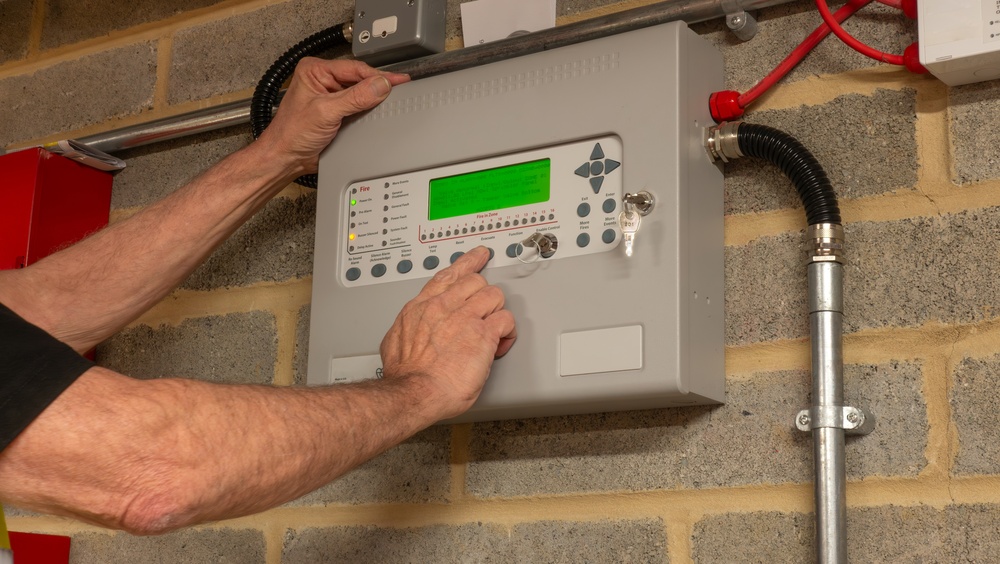
Fire alarm installers spend a lot of time running wire, mounting devices, testing pull stations, checking control panels, and documenting whether every part of a system works the way building codes require. Once a system is installed, it still needs inspections, repairs, battery replacements, sensor testing, and upgrades. Median pay is about $60,070 per year.
This is one of those jobs where boring procedures are a feature, not a flaw. You follow plans, test circuits, label equipment, check codes, and repeat the process at the next building. Employment is projected to grow about 10% over the decade, with thousands of openings each year. Commercial contractors, alarm companies, schools, hospitals, apartment buildings, and industrial facilities all need this work. Vocational electrical training can help you get started, followed by supervised field experience and whatever licensing or certification rules apply where you work. Remote monitoring may tell a building owner that something is wrong, but it cannot replace a technician who has to test, install, and certify physical life-safety equipment.
3. Calibration technician

Factories, laboratories, hospitals, and testing companies use thousands of measuring devices that have to give the right answer every time. Calibration technicians check things like pressure gauges, temperature sensors, scales, electrical meters, and other precision instruments against known standards. If something is off, they adjust it, test it again, and document the result. Median pay is about $67,820 per year.
There is a lot of repetition here. Set up the instrument, run the test, compare the reading, make an adjustment, record what happened, then move on to the next one. That routine matters in industries where bad measurements can ruin products or create safety problems. Employment is projected to grow 5%, faster than the overall job market, with roughly 1,400 openings expected each year. An associate degree or technical training in electronics, instrumentation, engineering technology, or a similar field is common, although some people learn through work experience. More automated equipment actually creates another reason to keep calibration specialists around, because sophisticated machines still need somebody to verify that their sensors and measurements can be trusted.
4. Rail car repairer
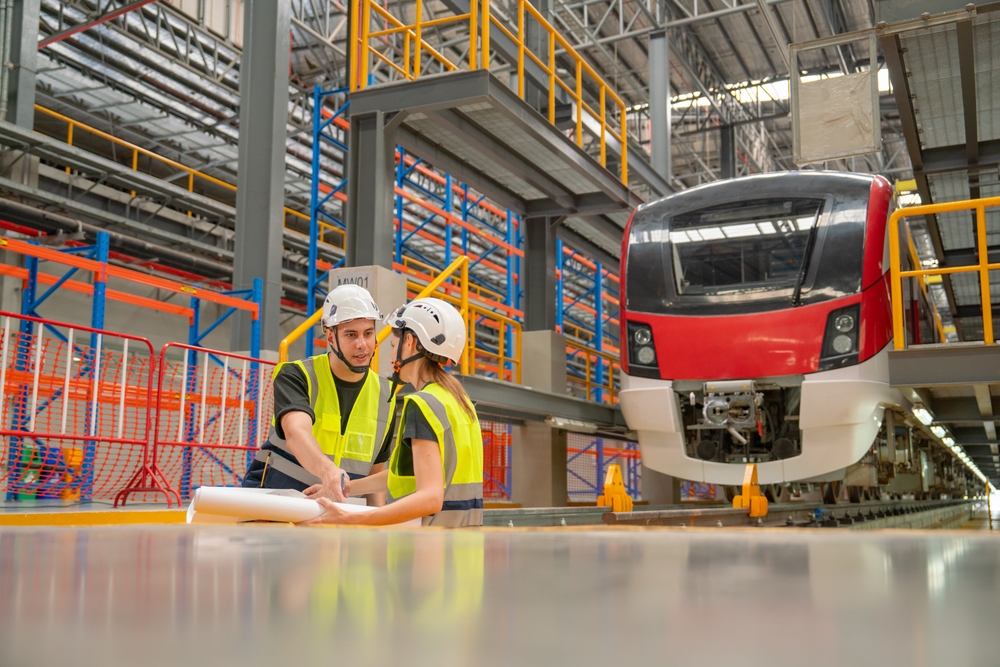
Passenger trains and freight cars spend their lives getting shaken, loaded, unloaded, coupled, uncoupled, and exposed to weather. Rail car repairers inspect brakes, wheels, suspension parts, couplers, air systems, doors, and other equipment, then repair or replace whatever is worn out. National median pay is about $67,530 per year.
The job is less about glamorous locomotives and more about crawling around rolling stock with inspection lists and tools. Railroads, transit systems, repair shops, and rail-equipment companies need people who can spot mechanical problems before a car goes back into service. Employment is projected to grow roughly in line with the overall job market, and about 1,500 openings are expected each year. A high school diploma is a common starting point, followed by extensive paid training on the job. Mechanical, welding, diesel, or industrial maintenance experience can make you more competitive. Diagnostic software may point technicians toward a problem, but wheels, brake hardware, air lines, and damaged steel still have to be inspected and repaired by people working directly on the equipment.
5. Pump operator
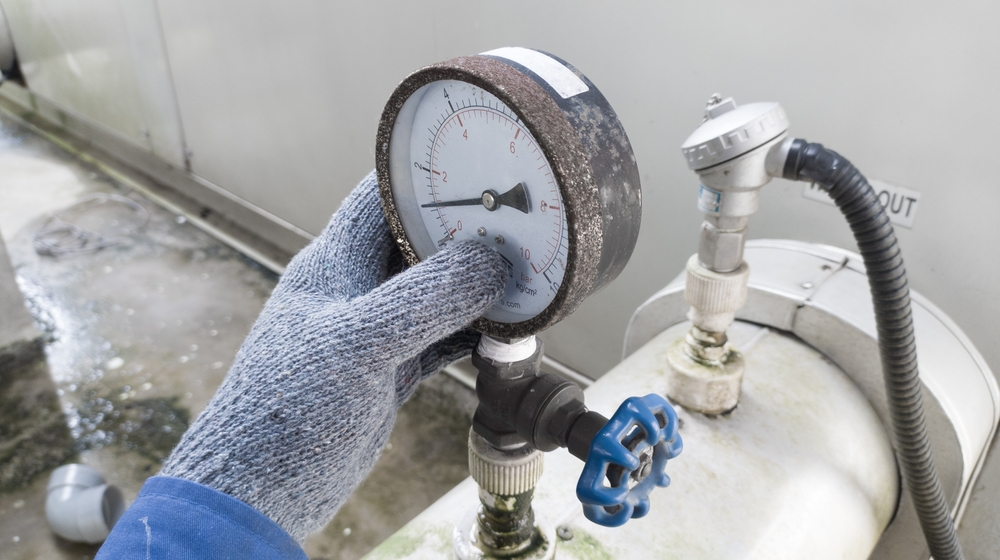
Pump operators move liquids, gases, slurries, and other materials through industrial systems. A normal shift can involve watching gauges, checking pressures and tank levels, opening and closing valves, inspecting equipment, recording readings, and responding when something moves outside its normal range. Median pay for pump operators outside of wellhead operations is about $61,770 per year.
You find these jobs around construction operations, terminals, industrial facilities, pipelines, bulk-storage sites, and other places that need material moved safely from one system to another. Employment is projected to grow about as fast as the overall labor market, with around 1,500 openings a year. A high school diploma is a common entry point, followed by several months of supervised training. The dull part is watching readings stay normal for long stretches. The important part is knowing when they are not normal and physically checking the system before a small problem turns into a spill, shutdown, or equipment failure. Controls can automate parts of the process, but facilities still need operators who can inspect actual pumps, piping, valves, and transfer equipment.
6. Home appliance repairer

Washers leak. Refrigerators stop cooling. Dryers quit heating. Dishwashers make terrible noises six months after the warranty expires. Home appliance repairers spend their days diagnosing those ordinary problems, replacing parts, testing machines, and explaining to customers whether repairing an appliance makes sense. Median pay is about $50,990 per year.
Employment is expected to grow about as fast as average, with roughly 3,100 openings each year. Repair companies, retailers, manufacturers, warranty companies, and independent service businesses all employ technicians. A high school diploma plus on-the-job training is common, although trade-school courses in electricity, refrigeration, and appliance systems can speed things up. Refrigeration work may require additional certification. Modern appliances certainly have more software than they used to, and some machines can even send error codes remotely. That does not remove the need for somebody to pull the unit away from the wall, test components, replace a failed pump or control board, check for leaks, and make sure it works before the customer starts another load of laundry.
7. Hearing aid specialist

Hearing aid specialists perform hearing tests, take ear impressions, fit hearing devices, make adjustments, and show customers how to use and maintain them. Much of the job is repeating the same testing and fitting process for one appointment after another. Median pay is about $65,160 per year.
The demand picture is unusually strong for such a small occupation. Employment is projected to grow 18% over the decade, with an aging population helping drive the need for hearing services. Specialists work in hearing clinics, medical practices, and hearing-device retailers. Licensing is generally required, and the route can include supervised training, examinations, and specialized education rather than the long graduate-school path required to become an audiologist. Devices themselves are getting smarter, but the work is not simply handing somebody a box. Customers still need physical testing, proper fitting, troubleshooting, counseling, cleaning, adjustments, and follow-up. Older clients may also need extra time learning controls and describing what they can or cannot hear. Those hands-on and face-to-face parts are a large reason the occupation continues to add workers.
8. Registered polysomnographic technologist

A polysomnographic technologist spends the night watching other people sleep. You attach sensors, check signals, monitor breathing, brain activity, oxygen levels, heart rate, and movement, then make sure the study produces usable information. If a sensor falls off at 2 a.m., you fix it. Average national pay for a registered polysomnographic technologist is about $62,416 per year.
Sleep testing is closely tied to neurodiagnostic work, a category projected to grow about 5%, faster than the overall job market. Sleep labs, hospitals, and specialty clinics employ these technologists, and many shifts happen overnight. Entry routes vary, but certificate and associate programs with clinical training are common, followed by professional credentialing. There is plenty of technology involved, yet the basic job still depends on somebody preparing the patient correctly, checking electrodes and belts, recognizing bad signals, fixing equipment, and responding if the person being monitored has a problem. Much of a normal night can be quiet and repetitive. That is exactly why careful technicians matter. Missing a loose sensor after several uneventful hours can ruin an entire study.
9. Medical equipment repairer

Hospitals are packed with equipment that patients and clinical staff expect to work every single time. Medical equipment repairers inspect, maintain, test, calibrate, and repair things such as patient monitors, infusion pumps, hospital beds, diagnostic equipment, and other electronic or mechanical devices. Median pay is about $62,630 per year.
Employment is projected to grow 13%, with thousands of openings expected annually. Hospitals, medical-equipment companies, repair firms, rental businesses, and healthcare suppliers hire these workers. An associate degree or certificate in biomedical technology, electronics, or a related field is common, although relevant military, apprenticeship, or technical experience can open other routes. A large part of the job is preventive maintenance, which means testing equipment that appears to be working perfectly well and documenting the result. It does not sound exciting until the device is attached to a patient. Software can monitor equipment and flag faults, but somebody still has to enter the room, electrically test the machine, replace components, verify performance, and decide whether it is safe to return to service.
10. Occupational health and safety technician

Safety technicians inspect workplaces for hazards, collect samples, test noise or exposure levels, check protective equipment, review work practices, and document whether rules are being followed. It can mean a lot of checklists, measurements, photographs, training records, and conversations about things employees have heard a hundred times before. Median pay is about $58,440 per year.
Employment for safety technicians is projected to grow 9%, much faster than average. Manufacturing plants, construction companies, hospitals, transportation operations, warehouses, government agencies, and consulting firms all employ them. Unlike the higher-paid specialist track, technician jobs can often be entered with a high school diploma and on-the-job training, although safety certificates and technical education can help. The job stays grounded in physical workplaces. A computer can organize incident reports or flag trends, but it cannot walk a production floor, notice a missing machine guard, test an exposure level, inspect protective gear, or see that workers are taking a shortcut that looks fine on paper. Regulations and employer liability give companies another reason to keep trained people doing those checks.
11. Surveying and mapping technician

Surveying technicians collect measurements used to establish property boundaries, build roads, lay utilities, plan construction, and update maps. Depending on the job, you may carry equipment between survey points, hold rods, set up instruments, record measurements, process field data, or work with mapping software. Median pay is about $54,240 per year.
Employment is projected to grow 5%, with around 7,600 openings expected each year. Engineering firms, surveying companies, utilities, contractors, and public agencies use these technicians. A high school diploma can be enough for some entry-level positions, with substantial training provided at work. Courses in surveying, GIS, construction, or mapping can help. Drones and automated instruments have changed the field, but they have mostly changed how measurements are collected rather than eliminating the need for technicians. Somebody still has to choose control points, set up equipment correctly, check whether data makes sense, return to a site when it does not, and work around trees, buildings, traffic, mud, fences, and all the other things that do not appear neatly on a digital map.
12. Mobile heavy equipment mechanic

Bulldozers, loaders, cranes, graders, excavators, and other large machines take an enormous beating. Mobile heavy equipment mechanics diagnose hydraulic, electrical, pneumatic, and mechanical problems and keep those machines working. Some stay in a shop, while field technicians drive to wherever a broken machine happens to be sitting. Median pay is about $65,510 per year.
Employment is projected to grow 6%, with about 16,500 openings expected annually. Equipment dealers, rental companies, construction contractors, mining operations, and large fleet owners all need mechanics. A high school diploma followed by technical training or extensive on-the-job learning is a common route. Diesel, hydraulics, electrical systems, and computerized diagnostics are useful areas to learn. Machines increasingly tell technicians what fault code they are seeing, but a code is not the same thing as a repair. Somebody still has to find the leaking hose, remove the failed pump, test a sensor, crawl underneath the equipment, and confirm the machine can safely return to work. Construction companies lose money quickly when expensive equipment sits idle, which gives competent mechanics a fairly durable reason to exist.
13. Industrial machinery mechanic

Industrial machinery mechanics keep conveyor systems, production machines, packaging lines, pumps, motors, and other factory equipment running. Much of the job is preventive maintenance: lubricating parts, checking wear, aligning equipment, replacing bearings, testing systems, and fixing small problems before they stop production. Median pay is about $63,760 per year.
Employment for industrial machinery mechanics is projected to grow 16%, making this one of the stronger job markets on the list. Manufacturers, warehouses, food processors, distribution centers, and industrial repair companies all employ them. A high school diploma is common, followed by lengthy on-the-job training, though technical-school programs in industrial maintenance can help. More automation does not necessarily mean fewer mechanics here. Automated warehouses and factories contain more conveyors, motors, sensors, rollers, drives, and mechanical systems that have to be maintained. Predictive software may warn that a bearing is failing, but it cannot shut down the line safely, remove the assembly, fit the replacement, align everything, and get production running again. The work can be repetitive, dirty, and noisy, which also helps explain why employers keep looking for people willing to do it.
14. Mechanical insulation worker

Mechanical insulation workers wrap and cover pipes, boilers, ducts, tanks, and other equipment so systems hold temperature, save energy, and protect workers from hot or cold surfaces. It involves lots of measuring, cutting, fitting, fastening, climbing, and working in mechanical rooms where most people would rather not spend their day. Median pay is about $58,340 per year.
Employment is projected to grow about 5%, faster than the overall job market. Mechanical contractors, industrial facilities, commercial construction companies, plants, and energy projects need these workers. Many people enter through a paid apprenticeship after high school and learn the trade while working. The demand is helped by efforts to make buildings and industrial systems more energy efficient. This is also a job with very little opportunity to send the actual labor somewhere else. Somebody has to be physically next to the pipe or duct, shape the insulation around valves and bends, work around existing equipment, and make sure the covering is secure. Plans and measurements can be digital, but the finished job still depends on hands, tools, ladders, and a person willing to squeeze into awkward spaces.
15. Chemical technician

Chemical technicians perform routine laboratory and production tests on liquids, powders, gases, raw materials, and finished products. They prepare samples, operate instruments, clean equipment, record results, monitor manufacturing processes, and check whether products meet specifications. It is careful work with lots of repetition and very little room for sloppy habits. Median pay is about $60,390 per year.
Employment is projected to grow about 4%, roughly in line with the overall job market, with thousands of openings expected each year. Chemical manufacturers, testing laboratories, research facilities, environmental companies, and other industrial employers use these technicians. An associate degree in chemistry, laboratory science, or a related technical field is the usual path, although some employers train workers with other relevant backgrounds. Automated instruments can run measurements quickly, but laboratories still need people to prepare and label samples, maintain equipment, notice contamination or strange results, handle chemicals safely, and decide when a test needs to be rerun. Quality control also creates steady work because manufacturers cannot simply assume every batch coming off a production line is correct. Somebody has to test it and document that it meets the required standard.
16. Farm equipment mechanic

Modern tractors and combines may have screens, GPS systems, sensors, and computers, but they still have hydraulic lines, bearings, belts, engines, electrical systems, and moving parts that fail at inconvenient times. Farm equipment mechanics diagnose those problems, perform scheduled maintenance, replace worn components, and get expensive machinery back into service. Median pay is about $56,550 per year.
Employment is projected to grow 11%, with around 3,700 openings a year. Equipment dealerships employ a large share of these mechanics, along with agricultural operations and machinery service companies. A high school diploma is common, while diesel, agricultural equipment, or heavy-equipment training can make it easier to get hired. The work is increasingly technical, but that does not make the mechanic disappear. Diagnostic systems can identify an electrical fault or pressure problem, while the technician still has to open the machine, test components, remove damaged parts, repair hydraulic systems, and work out what happened when the computer’s answer is incomplete. Farming also runs on deadlines. When machinery fails during planting or harvest, leaving it broken until somebody has time next week is not much of an option.
17. Recreational vehicle service technician

RV technicians fix an odd mixture of household and automotive systems packed into one vehicle. A normal week might involve water pumps, refrigerators, electrical circuits, propane appliances, slide-outs, air conditioners, toilets, roofs, doors, and cabinetry. That makes the work varied in terms of systems, even when the daily routine is mostly diagnosing leaks and replacing parts. Median pay is about $52,000 per year.
Employment is projected to grow more than 10% over the decade, with thousands of openings expected annually. RV dealerships, repair centers, rental companies, and independent service businesses employ technicians. A high school education followed by technical classes and substantial on-the-job training is common, and workers often add manufacturer or industry certifications as they gain experience. This is another job where online troubleshooting only goes so far. A customer can describe a leaking roof or dead refrigerator to a chatbot all afternoon, but somebody eventually has to climb onto the RV, find where the water is entering, test the circuit, pull the appliance out, or replace the failed seal. The physical variety of RV systems makes experienced troubleshooters especially useful.
18. Mechanical door repairer

Automatic doors at hospitals, stores, warehouses, offices, and other buildings seem invisible until they stop opening. Mechanical door repairers install and service automatic doors, hydraulic doors, garage doors, tracks, springs, openers, sensors, and related hardware. National median pay is about $55,720 per year.
Employment is projected to grow more than 11%, with roughly 2,700 openings expected each year. Construction contractors, door companies, retailers, and specialized service firms hire these technicians. Many workers enter with a high school diploma and learn through several months of supervised training, though electrical and mechanical experience is useful. This may be one of the purest examples of a boring job that solves a problem people cannot postpone forever. A broken loading-bay door can stop shipments. A failed automatic entrance can create an accessibility or safety problem. Sensors and connected controls can report that a door is malfunctioning, but the repair still involves ladders, springs, tracks, motors, wiring, adjustments, and physical testing. Buildings will keep having doors, and those doors will keep wearing out.











