
Your child comes home buzzing about tryouts. The registration form says $150, which feels manageable, so you sign it. Then come the uniform order, the cleats, the tournament two hours away and the Saturday you have to find someone to watch your younger kid.
By midseason, that $150 has quietly tripled. If you’re budgeting on one income, or splitting costs with a co-parent who sees the numbers differently, those surprises hit hard.
None of this means youth sports aren’t worth it. It means the sign-up fee is only the first line of the real bill. Here’s what usually comes after it, and how to get a clear number before you commit.
Table of contents
- Ask what the registration fee actually covers
- Uniforms are rarely a one-time purchase
- Travel adds up faster than you expect
- Equipment wears out and kids outgrow it
- Childcare for siblings is a hidden cost
- Splitting costs with a co-parent
- Separate essentials from extras and set a limit
- Before you sign the next registration form
- Frequently asked questions
Ask what the registration fee actually covers
Registration fees vary wildly, and so does what they include. One league’s fee might cover a jersey, field rental and referee costs. Another might cover little more than insurance and a spot on the roster.
Before you pay, send the coach or league coordinator a short message with a few direct questions:
- Is a uniform included, or ordered separately
- Are there tournament or travel fees beyond registration
- Is there required equipment the team doesn’t supply
- Are fundraising or volunteer commitments expected
- Will there be team photos, banquets or end-of-season gifts
You’re not being difficult by asking. Coordinators get these questions all the time, and a clear answer now saves an awkward surprise later. Asking costs nothing, and the answer can save you real money.
Check on paperwork, too. MedlinePlus notes that most states require a sports physical before children and teens can play. Find out whether your child’s annual checkup can cover it, and book early, since pediatric offices fill up right before the season starts.
Uniforms are rarely a one-time purchase
Uniforms look like a single line item, but they often aren’t. There may be a home jersey and an away jersey, matching socks or a team jacket. Kids also grow, so last season’s uniform might not fit this year.
On many teams, a parent volunteer or coach handles the order instead of each family shopping alone. On a school softball team, for example, the coordinator might collect everyone’s sizes and compare a team order from a few suppliers, such as Sports Gear Swag’s custom softball uniforms for a school team, where you can start your design online from a template and order samples. Ask the coordinator what your share per player will be before the order goes in, rather than waiting to see the total.
A basketball, volleyball or soccer team usually works the same way. Get the per-player cost in writing, along with what’s included, and ask whether any piece can be reused next season. If your child is between sizes, it’s worth saying so when sizes are collected.
Travel adds up faster than you expect
Local leagues might keep games within a few miles. Club and travel teams are a different story. Weekend tournaments can mean gas, tolls, parking, meals on the road and sometimes a hotel.
Ask for the season schedule as early as you can and look for the far-off dates. Then estimate the cost of each trip, even roughly. Gas for a two-hour drive each way, plus lunch for two kids, can easily cost more than a month of practice fees.
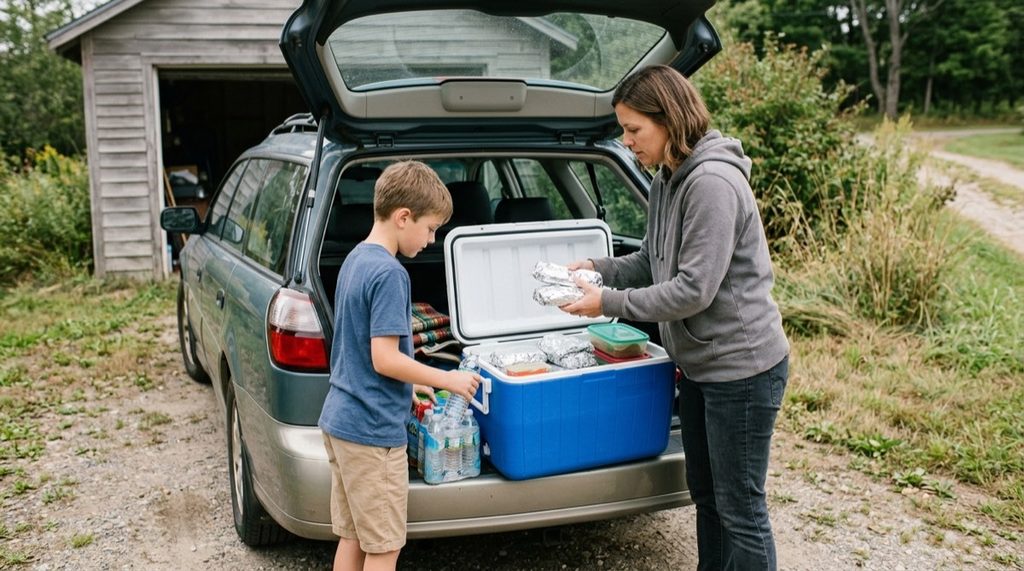
Carpooling helps. So does packing a cooler instead of buying concession-stand food at every game. Ask other parents early whether anyone wants to share rides or split a hotel room for overnight tournaments. Families who set it up in August tend to save more than those scrambling the week before.
Equipment wears out and kids outgrow it
Cleats, shin guards, gloves, bats, helmets and practice clothes all have a lifespan. Growing kids can go through a pair of cleats in a single season, and gear that was fine in spring can be too small by fall.
Safety gear is the one place you shouldn’t stretch things too long. The Consumer Product Safety Commission lists cracks in the shell or liner, worn straps and missing pads among the reasons to replace a helmet, and it advises against wearing a helmet that doesn’t fit correctly. Check helmets and pads at the start of each season, not the night before the first game.
For everything else, look at secondhand options. Sports resale shops, team equipment swaps and local parent groups often have gently used gear at a fraction of new prices. Ask whether your league runs an end-of-season swap.
| Top Tip: Keep a running note on your phone of each child’s current shoe and glove sizes, and update it every few months. When a swap or resale sale pops up, you’ll know right away whether something fits, and you won’t end up buying gear your child outgrows before the first game. |
Childcare for siblings is a hidden cost
If you have more than one child, every practice and game creates a question: what happens with the kids who aren’t playing?
Sometimes they can tag along. A toddler at a two-hour Saturday tournament, though, is a whole separate project. And if practices fall during your work hours, you may need paid care to cover the gaps.
Add up what sibling care might cost over the season, even if you only need it a few times a month. Then look at ways to lower it. Trading rides and childcare with another family on the same team works well, especially when your schedules match up.

Splitting costs with a co-parent
Shared custody adds another layer. Who pays for registration? What about the uniform, the hotel for the out-of-state tournament or new cleats midseason? Without a plan, these questions can turn into arguments at the worst possible time.
Start by checking your parenting plan or custody agreement. Some already say how extracurricular costs are split. If yours doesn’t, it’s worth agreeing on a method before the season begins.
Agree on the total first
Talk through the full estimated season cost before signing up, not just the registration fee. When both parents see the same number up front, it’s much harder for later costs to feel like a surprise.
Pick a split and write it down
Some co-parents split everything 50/50. Others divide costs by income or by category, with one parent covering fees and the other covering equipment. Choose whatever fits your situation, and put it in a text or email so you both have a record.
If it isn’t written down, it didn’t happen, at least as far as a future disagreement is concerned.
Use a shared tracker
A simple shared spreadsheet or a co-parenting app can keep track of who paid what. Upload receipts as you go, so you’re not reconstructing the season from memory in June.
Separate essentials from extras and set a limit
Once you know the real costs, sort them. Essentials are what your child needs to play safely: the registration fee, required uniform pieces, safety gear and a way to get to games.
Extras are the things that are nice but optional:
- Team-branded backpacks, hoodies or spirit wear
- Private lessons or extra clinics
- Professional photos and banquet tickets
- Premium gear when a basic version works fine
Then set a spending limit for the season, ideally with your co-parent and before day one. Include a small cushion for the surprises you can’t predict, like a lost glove or an extra tournament. When a new request comes up midseason, you can check it against the number you already agreed on instead of deciding in the moment.
Being honest with your kids helps, too. Older children can understand a budget, and they’ll often choose which extras matter most to them if you give them the choice.
Before you sign the next registration form
Youth sports can be one of the best things in your child’s week. They’re also easier to afford when the full cost is on paper before the season starts.
Before you sign the next form, send the coordinator your list of questions, sketch out a rough season budget and share it with your co-parent. That one message today can save you a stack of surprise costs later.
Frequently asked questions
What costs are not usually included in youth sports registration?
Uniforms, travel to tournaments, replacement equipment and childcare for siblings often fall outside the registration fee. Ask the coach or coordinator what’s included before you pay, so you can budget for the rest.
Do kids need a physical to play youth sports?
MedlinePlus notes that most states require a sports physical before children and teens can play. Ask whether your child’s annual checkup can cover it, and book early before the season starts.
How should co-parents split youth sports costs?
Check your parenting plan first, since some already say how extracurricular costs are split. If yours doesn’t, agree on the total season cost and a split method before signing up, and write it down.










