
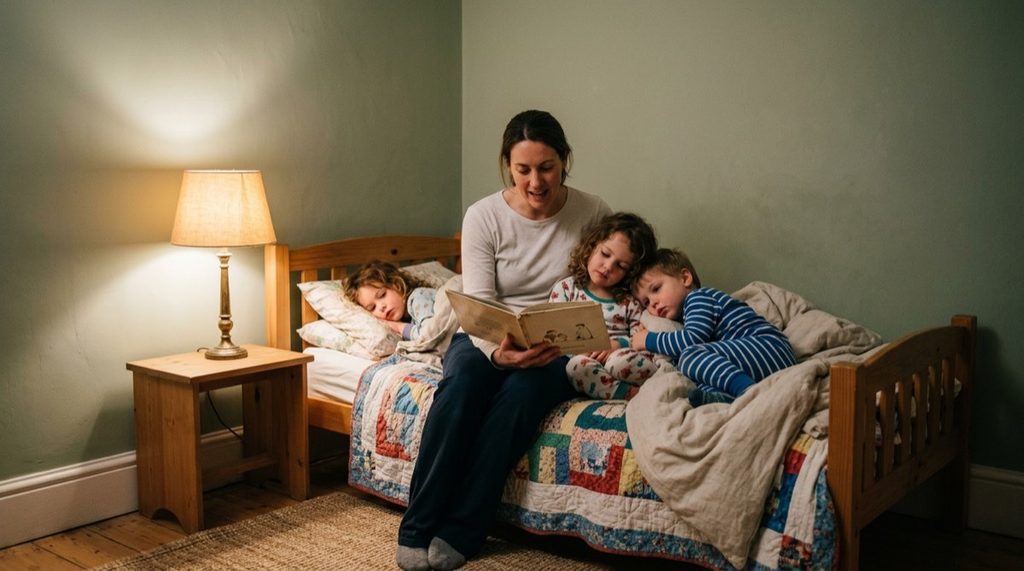
It’s 8:40. One child is asking for a third glass of water, the other just remembered a project that’s due tomorrow, and the dishes from dinner are still sitting in the sink. You had a plan for tonight. It’s gone.
If you’re parenting solo, there’s no one to tag in when bedtime falls apart. That’s why the usual advice about perfect routines can feel useless. You don’t need a routine that works on a good night. You need one that still works on a bad one.
These four steps will help you build exactly that, so a rough evening doesn’t wipe out the whole night, including the few minutes you need for yourself.
Table of contents
Step 1 – Decide which evening tasks really matter
Most evening routines grow by accident. A bath gets added, then a second story, then lunches, then a quick tidy, until bedtime has fifteen steps and any interruption knocks the whole thing over.
Start by writing down everything you currently try to do between dinner and lights-out. Then sort each item into one of two groups: the things that have to happen tonight and the things that would be nice.
The must-do list is usually shorter than you think. It often looks something like this:
- Kids fed, washed enough and in pajamas
- Teeth brushed for everyone, including you
- Anything urgent for tomorrow morning ready by the door
- Lights out close to the usual time
Keep that last point in mind. The CDC says children aged 6 to 12 need 9 to 12 hours of sleep in every 24 hours. Protecting lights-out time matters more than finishing every extra task on the list.
Everything else, like baths every night, folding laundry or packing lunches, can move to another time or get dropped on hard nights. Give yourself permission to skip the extras when the evening goes sideways. That’s not failure. It’s triage.
Step 2 – Prepare a short fallback routine
A fallback routine is the version of bedtime you use when the full version isn’t going to happen. Think of it as the emergency plan you decide on while you’re calm, so you don’t have to invent it at 9 p.m. when everyone’s upset.
Your fallback should take 15 minutes or less and cover only your must-do list. Write it down and stick it on the fridge or inside a bathroom cabinet door.
What a short version can look like
Pajamas on, a quick face wash instead of a bath, teeth brushed and one short story or song. That’s it. Kids often care more about the familiar order of things than about how long each part takes.
Use the same words every time you switch to the short version. Something like “It’s a quick night tonight” tells your kids what to expect and cuts down on bargaining.
When you’re alone with more than one child
Stagger the steps. Get the younger child into pajamas while the older one brushes, then swap. Older kids can often handle more on their own if you give them a simple checklist of their own.
If one child is having a hard night, it’s fine to let the other one read quietly in bed while you help. Fair doesn’t always mean identical.
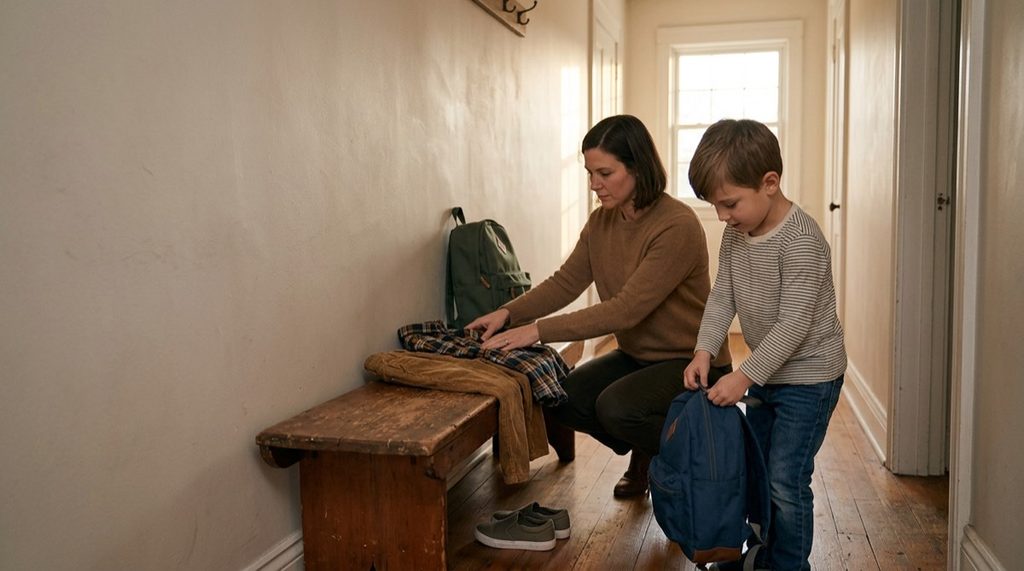
| Top Tip: Lay out tomorrow’s clothes and backpacks right after dinner, before bedtime starts. If the evening falls apart later, the hardest part of the morning is already done, and you won’t be digging through the laundry basket at 7 a.m. while someone hunts for a missing shoe. |
Step 3 – Keep adult brushing in the bathroom reset
When bedtime drags on, your own routine is usually the first thing to go. You finally get the kids down, collapse on the couch and fall asleep there without brushing your teeth or washing your face.
One fix is to fold your own basics into a quick bathroom reset. While the kids are brushing, or right after you tuck them in, take two minutes to wipe the sink, hang up wet towels and set out tomorrow’s toothbrushes. Then brush your own teeth while you’re already standing there, instead of saving it for later.
It’s easy to end up brushing with whatever’s closest, and in a family bathroom that’s usually the kids’ tube. Keep a tube that’s just yours at eye level, so your own routine doesn’t depend on what’s left over at the end of the day. If you’re buying one, you might pick up Wellnesse’s hydroxyapatite toothpaste for an everyday brushing routine. Mention it at your next dental checkup and ask whether it suits your teeth.
The point of the reset isn’t a spotless bathroom. It’s making sure your own care happens at a set point in the evening, so it doesn’t depend on how much energy you have left at 10 p.m.
Step 4 – Pick up where you left off
Interruptions are part of bedtime with kids. A nightmare, a stomachache, a sudden memory of a permission slip. The mistake most of us make is trying to restart the whole routine from the beginning afterward.
Instead, pick up from wherever you stopped. If teeth are brushed and pajamas are on, the next step is lights out, even if the story got skipped. Kids settle faster when the evening keeps moving forward.
Keep the restart calm and dull. Dim the lights, use a quiet voice and skip anything stimulating. A University of Texas Medical Branch pediatrics page notes that the American Academy of Pediatrics recommends all screens off at least an hour before bedtime, because screen time right before sleep can make it harder for kids to fall asleep. So resist the urge to hand over a tablet just to buy some quiet.
Once they’re down, do a fast check of your own must-do list:
- Your teeth brushed
- Tomorrow’s essentials by the door
- Phone charging and alarm set
Then stop. The dishes can wait until morning. A tidy kitchen isn’t worth an hour of your sleep.
Build your fallback plan before tomorrow night
A bedtime routine that only works on calm evenings isn’t much of a routine. The version that helps is short, written down and easy to return to after an interruption.
Tonight, after the kids are asleep, take five minutes to write your must-do list and your 15-minute fallback version. Tape it somewhere you’ll see it, and put your own toothbrush where you’ll reach for it during the bathroom reset. Tomorrow night, you’ll already have a plan when things go sideways.
Frequently asked questions
How much sleep do school-age kids need?
The CDC says children aged 6 to 12 need 9 to 12 hours of sleep in every 24 hours. That’s why protecting lights-out time matters more than finishing every extra task on the list.
What should a fallback bedtime routine include?
Keep it to 15 minutes or less and cover only the must-do items, such as pajamas, a quick wash, brushed teeth and one short story. Write it down so you don’t have to invent it when the evening falls apart.
What should you do when bedtime gets interrupted?
Pick up from wherever you stopped instead of restarting the whole routine. Keep the restart calm and quiet, and avoid screens, since screen time right before sleep can make it harder for kids to fall asleep.










