
Rolex got more than 560 applications for 27 open seats in its Dallas watchmaking program last year. That’s not really a story about luxury watches. It’s what happens when a skilled trade pays well, takes months rather than years to learn, and almost nobody is training for it anymore.
Most career advice defaults to electrician, plumber, or HVAC tech and stops there. Those are solid picks, and one of them even made this list, but the real opening sits one layer down: trades where training runs weeks or months instead of years, where evening and online coursework exists because the industry can’t wait for people to quit their day job first, and where a lot of the people currently doing the work are old enough to retire soon.
None of these need a four-year degree or a six-figure student loan. Most need a few hundred to a few thousand dollars in course fees, a willingness to work with your hands on weekends, and enough patience to get through an unglamorous first year.
Watch and clock repair technician

The number isn’t a fluke. North Seattle College’s Watch Technology Institute, one of the few schools in the country that trains watchmakers, graduates about 10 to 12 students a year and still reports an 87 percent employment rate for its graduates. The mechanical watch boom of the last decade created more repair work than the industry has people to do it.
You don’t need to commit to a two-year program to get started. The American Watchmakers-Clockmakers Institute runs week-long introductory courses a few times a year, plus correspondence and distance-learning options through sister organizations, so you can build toward certification around a day job rather than quitting it outright. A handful of veterans’ programs and nonprofit training centers also offer free or low-cost tracks.
Full watchmaking, the kind that lets you build a movement from loose parts, is a serious multi-year craft. But watch servicing, battery swaps, and basic repair work, which is the bulk of what independent jewelers and watch shops actually need, can be learned faster, and the shortage means a motivated beginner gets noticed fast.
Farrier

Horseshoeing sits at the opposite end of the spectrum from watch repair: fast to start, extremely physical, and almost entirely learned through short, intensive programs rather than classroom years. Community college farrier certificate programs typically run about eight weeks, while longer options like Cornell’s century-old farrier course run 16 weeks alongside a full semester. Either way, you’re looking at a couple of months, not a couple of years.
The money surprises most people. Average farrier income runs $119,770 a year, and farriers who complete a formal apprenticeship after school earn noticeably more than those who go it alone. Most farriers build their client base gradually while still working another job, scheduling horses on weekends and early mornings before transitioning to full time once the calendar fills up.
It’s not for everyone. You’re working underneath a half-ton animal with tools heated over an open forge, often outdoors in whatever weather the horse owner’s barn happens to have. But rural and suburban horse country has far more demand than supply, and a working farrier with a decent truck and a forge can set up shop almost anywhere there are horses, which is most of the country.
Piano tuner and technician

Pianos don’t go away, but the people who service them are aging out faster than anyone’s replacing them. The average age of a working piano technician is over 60, and schools that train new ones are small and scattered. That imbalance is good news if you’re the one walking in the door with fresh training.
You don’t need to read music or even play well to learn the trade. The skill is almost entirely mechanical and acoustic: hearing a piano’s pitch, understanding string tension, and knowing how a hammer action actually works. The Piano Technicians Guild doesn’t run its own school, but it maintains a directory of training programs and administers the Registered Piano Technician exams, which cover tuning, repair, and general piano knowledge and can be studied for on a self-paced, part-time basis.
Most working technicians are self-employed and build a route of regular clients: schools, churches, music stores, and households with a piano nobody’s touched since the kids moved out. Early on, that means evenings and Saturdays while you keep your day job, tuning two or three pianos a weekend until the schedule justifies going full time. It’s quiet, detail-oriented work, and there’s remarkably little competition for it.
Locksmith

Locksmithing has one of the lowest barriers to entry on this list, and that’s exactly why it’s worth a second look. Plenty of states don’t require a locksmith license at all, which means the main thing standing between you and your first paying job is skill and a reputation, not a credential. Median pay for locksmiths and safe repairers runs $51,320 a year, and that’s before the mobile, after-hours lockout calls that pad a solo operator’s income.
Certification still matters for credibility and for the commercial and institutional work that pays best. The Associated Locksmiths of America runs a tiered system, starting with a Registered Locksmith credential built from a set of continuing-education classes and working up through Certified Professional Locksmith and Certified Master Locksmith, each requiring more elective exams than the last. None of it requires quitting a job to attend full time; the classes are built around working adults adding credentials one at a time.
Start-up costs are modest compared to most trades on this list: a basic set of tools, a few training courses, and a vehicle. Plenty of locksmiths start as a weekend side business doing lockouts and rekeys before building toward commercial accounts, alarm integration, or automotive key programming, which is where the real money sits now that cars have gone almost entirely digital.
Chimney sweep
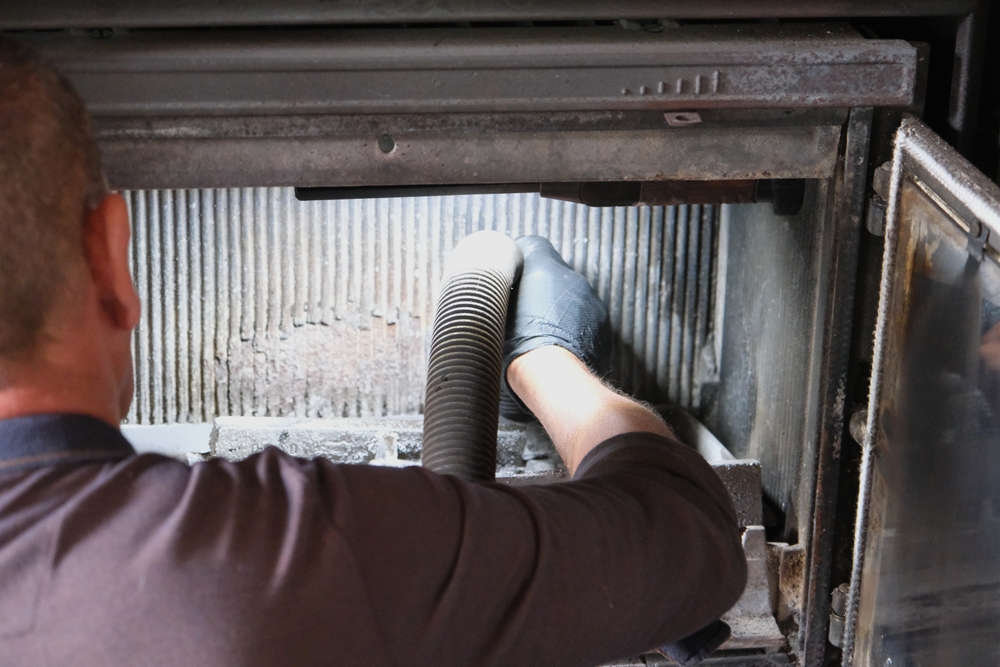
Chimney sweeping sounds like a Victorian relic, but it’s a licensed, inspected trade with real liability behind it (a badly maintained flue is a house fire waiting to happen) and a credential you can earn in under a week. The Chimney Safety Institute of America runs a six-day, Monday-through-Saturday training academy that ends with the certification exam on the final day, or you can prep through a one-day review class or a fully online course and sit the exam separately.
Annual recertification runs a flat $199, which is cheap compared to the licensing and insurance costs attached to most of the trades on this list. Fall and early winter are brutally busy, since everyone wants their chimney swept before the first cold snap, which makes it a strong fit for a weekend or seasonal business that ramps up exactly when a lot of other side income dries up.
The work itself is dirty and physical: climbing onto roofs, running brushes and rods down flues, and inspecting masonry and liners for cracks or creosote buildup. It’s also one of the few trades on this list where a single motivated person with a van and the right brushes can realistically run the whole operation without ever hiring help.
Upholsterer
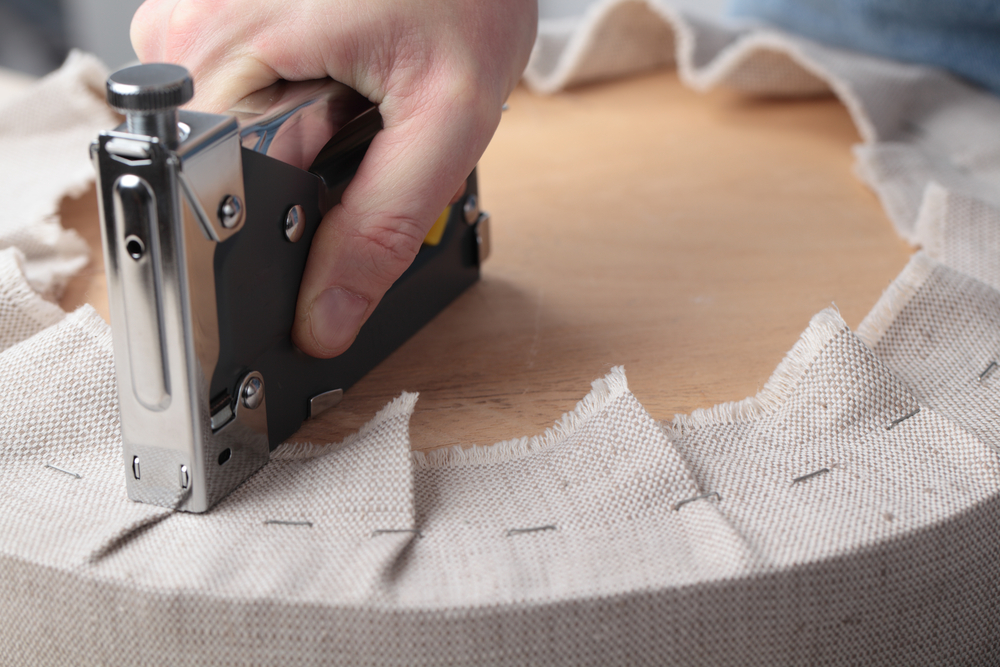
Furniture upholstery sits in an odd spot: legitimately useful, in steady demand from people restoring vintage pieces or just refusing to throw out a good couch frame, and almost nobody under 40 knows how to do it. Median pay runs $46,340 a year, which is modest compared to the construction trades on this list, but most working upholsterers are self-employed and set their own rates project by project rather than earning a flat wage.
Community and technical colleges offer certificate programs built in short chunks. Clover Park Technical College’s upholstery program, for example, breaks training into a two-quarter fundamentals certificate and separate three-quarter tracks for furniture or automotive upholstery, with new terms starting four times a year, so you can start small and decide how far to take it.
The skill set covers sewing, pattern-cutting, frame repair, and spring and foam work, and it transfers directly into a side business: reupholstering a neighbor’s dining chairs on a Saturday, restoring a vintage sofa someone found at an estate sale, or doing marine and RV cushion work, which pays considerably better than household furniture and barely anyone specializes in.
RV technician
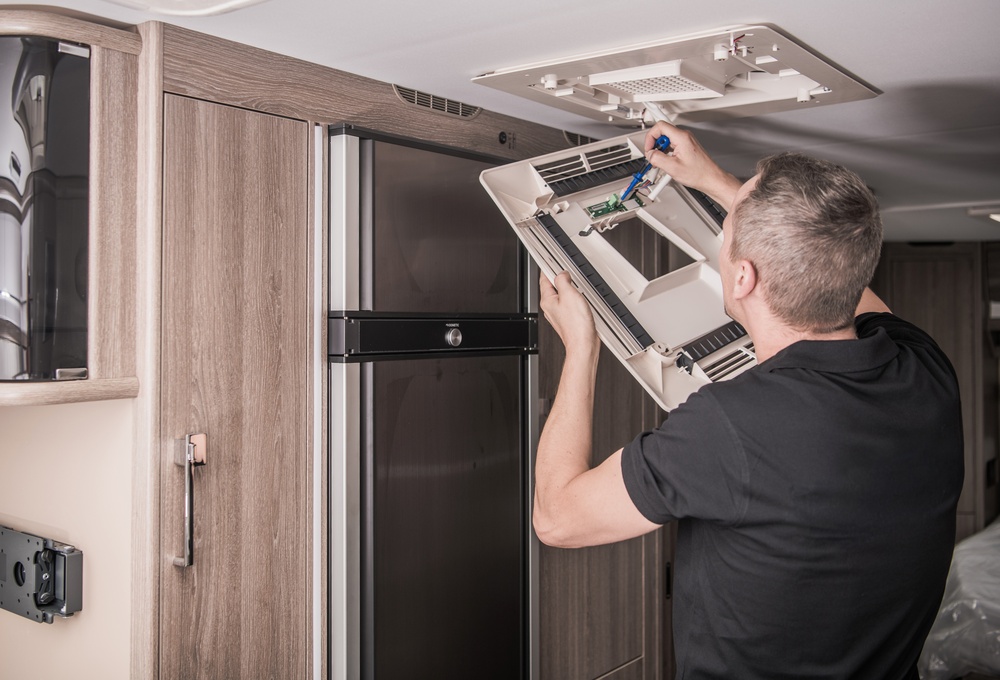
RV sales boomed over the past several years, and the number of people qualified to fix what’s inside one did not keep pace. The RV Technical Institute, the industry’s main training body, runs certification for $630 in tuition covering five courses, completed over a 12-month window, either online at your own pace or in person at its Indiana training center. That’s a fraction of the cost and time commitment of most trade school programs.
An RV technician has to understand plumbing, 12-volt and shore-power electrical systems, propane appliances, slide-out mechanisms, and basic carpentry, since a travel trailer is essentially a small, mobile house. Wages range from around $50,690 a year up to six figures for technicians who complete the Institute’s higher certification levels, and dealerships are actively recruiting because fewer than one in five certified technicians currently hold those advanced levels.
The online, self-paced format makes this one of the more realistic nights-and-weekends paths on this list. You can work through the coursework after your current job ends for the day, test into Level 1 certification, and start picking up repair work at a dealership or as a mobile technician serving the campground circuit before committing to it full time.
Crane operator

Operating a crane looks intimidating from the ground, but the path to doing it legally and safely is shorter than most people assume. Basic operator training can take under a year, after which candidates sit written and practical exams through the National Commission for the Certification of Crane Operators, the body OSHA recognizes for construction work. The certification stays valid for five years once you’ve earned it.
Median pay for crane and tower operators runs $68,080 a year, which puts it ahead of most entry-level trades on this list, and operators who certify across multiple crane types, such as tower, mobile, and overhead, can push well past that. Union apprenticeships exist and combine paid on-the-job hours with evening classroom instruction, which is the more traditional path, but plenty of operators certify directly through an accredited training program without going through a union first.
The job itself is less physical and more mentally demanding than most construction trades: load charts, rigging math, and hours of sustained concentration while moving materials over a job site full of people. For someone who’d rather sit in a cab solving a spatial puzzle than swing a hammer all day, it’s one of the better-paying, more overlooked entry points into construction.
Security and fire alarm systems installer
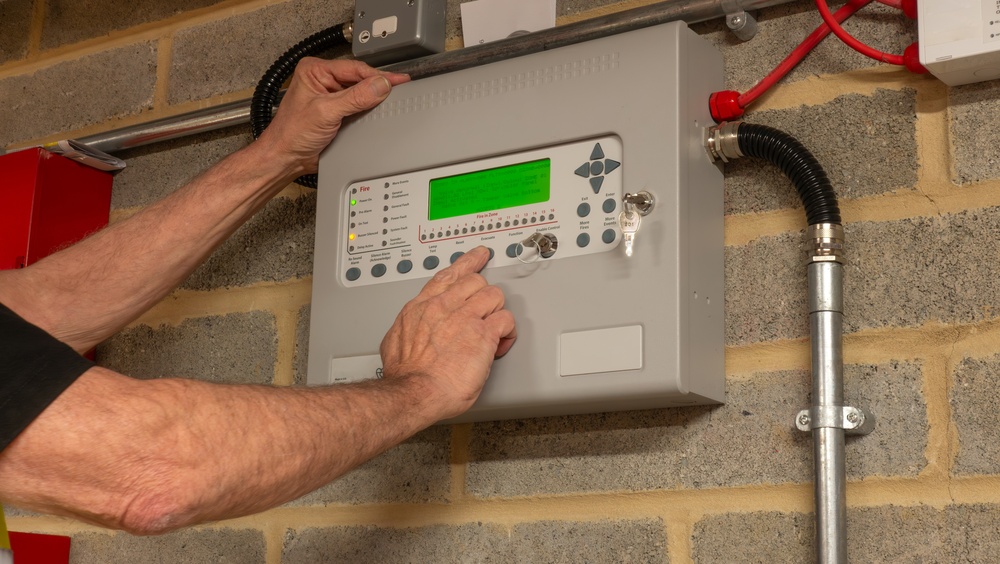
Every new commercial building and a growing share of residential ones need someone to wire, program, and service their security and fire alarm systems, and it’s a narrower, faster path into the electrical trades than becoming a full electrician. Median pay sits at $60,070 a year, on par with HVAC and ahead of several other trades on this list, and the work overlaps heavily with low-voltage cabling, which opens the door to data and networking installation on the side.
Training runs through trade school certificate programs, employer-sponsored apprenticeships, or manufacturer-specific courses offered by the big alarm and fire-safety brands, many of which run evening sessions since they’re training working technicians rather than full-time students. Licensing requirements vary significantly by state and sometimes by municipality, so the honest first step is checking what your local jurisdiction actually requires rather than assuming it matches the trade next door.
It’s steady, recurring work by nature: alarm systems need periodic inspection and testing to stay compliant with fire codes, which means a technician’s book of clients tends to generate repeat revenue rather than one-off jobs. That makes it an easier trade to build into a side business than most of the one-and-done repair trades on this list.
Glazier

Glass work doesn’t get much attention next to electricians and plumbers, but it pays comparably and the barrier to entry is the same: a high school diploma and an apprenticeship. Median pay for glaziers runs $57,080 a year, and the trade covers everything from installing a replacement window in a house to hanging storefront glass and architectural curtain walls on commercial buildings.
Most glaziers learn through a three- or four-year apprenticeship that combines paid, on-the-job training with technical classroom instruction, usually scheduled in the evening so apprentices can work full days on job sites. A handful of union and contractor associations sponsor these programs, and most require applicants to be at least 18 with a high school diploma, nothing more exotic than that.
It’s physical, sometimes dangerous work; glaziers handle heavy panes at height and risk cuts from the material itself, which is part of why hazard pay kicks in for elevated installs. But demand is tied to both new construction and the steady churn of window and glass replacement in existing buildings, which keeps the work coming even when new building slows down.
Solar panel installer

Solar installation is one of the fastest-growing trades in the country right now, with employment projected to grow 37 percent between 2025 and 2035, a rate that outpaces almost every other occupation the government tracks. Training is correspondingly short: courses at technical schools and community colleges range from a few days to several months, and some installers learn primarily on the job, working alongside an experienced crew.
Median pay runs $53,140 a year, with the top 10 percent of installers clearing closer to $80,000, and people who already have construction, roofing, or electrical experience tend to move through training faster since a lot of the skill set overlaps.
The work is outdoors, physical, and done at height, so it’s not a fit for anyone with a fear of roofs or ladders. But solar manufacturers also run their own product-specific training, and electrician and roofing apprentices can often complete photovoltaic modules as an add-on to training they’re already doing, which makes this one of the easier trades to pick up as a second specialty rather than starting from scratch.
Welder

Welders earn their skill through repetition more than classroom theory, and training reflects that reality: median pay runs $53,750 a year, available through high school technical programs, community colleges, and private welding schools, with a high school diploma as the only real prerequisite.
What makes it a particularly good nights-and-weekends fit is baked into the industry itself. Many manufacturing shops run two or three shifts a day to keep production going around the clock, and evening and weekend shifts are a routine part of welding work, not an exception to it. Someone learning the trade part time can often find shift work that fits around a current job while building skill and saving toward their own equipment.
Certification through welding-specific exams and employer-paid training is common, and specialization pays: pipeline welders, underwater welders, and those certified in multiple processes (MIG, TIG, stick) earn well above the median. It’s also one of the more portable trades here, since welding shops and construction sites that need welders exist in almost every part of the country, not just dense metro areas.
Diesel technician
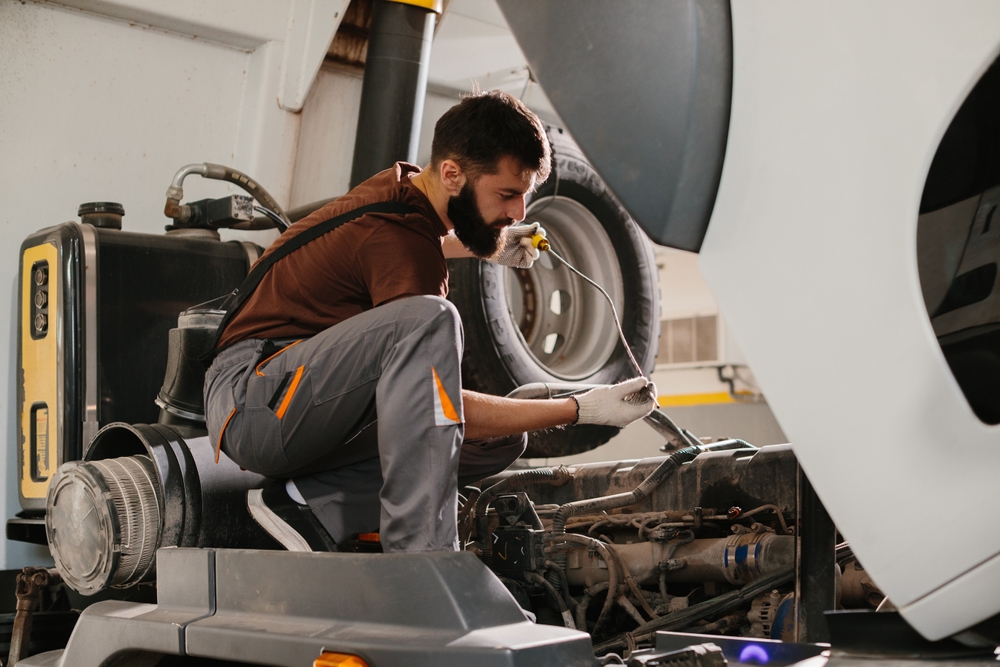
Every truck, bus, and piece of heavy equipment running on diesel needs someone who can keep it running, and that demand isn’t going anywhere even as electric vehicles chip away at other automotive trades. Median pay for diesel service technicians and mechanics runs $61,770 a year, and employers increasingly prefer candidates with postsecondary training, which most community colleges offer as a certificate program mixing classroom instruction with hands-on shop work.
The scheduling fits a nights-and-weekends mindset better than most trades. Some repair shops extend their service hours into evenings and weekends, and certain truck and bus shops run maintenance around the clock, which creates part-time and second-shift openings for someone still building skill or working another job during the day.
ASE certification, earned through a series of exams in specific systems like engines, drivetrains, and electronics, is the industry’s standard credential and directly correlates with higher pay once earned. For anyone already mechanically inclined from working on cars or small engines, the jump to diesel systems is less of a leap than starting a trade from zero, and the pay ceiling is considerably higher than general automotive repair.
HVAC and refrigeration technician

Heating and cooling systems break in every season, which is part of why HVAC consistently ranks as one of the more stable trades to learn, underrated mostly because it’s so commonly recommended that people stop actually looking into it. Median pay runs $61,010 a year, with top earners well past $90,000 once they’re NATE-certified and working commercial or industrial accounts rather than residential service calls.
Community colleges and trade schools run HVAC certificate programs with evening and weekend class schedules specifically because so many students are working adults, not fresh high school graduates with open calendars. EPA Section 608 certification, required for anyone who handles refrigerants, is a separate, relatively short exam that most programs build into the curriculum.
The career ladder is clear and well-documented: apprentice to journeyman to master technician, with NATE certification as the credential that unlocks the higher end of the pay scale. Technicians willing to take emergency and after-hours calls, which most homeowners are happy to pay a premium for, can meaningfully boost their income beyond the median without changing employers or specialties.
Elevator and escalator mechanic

This is the highest-paying trade on this list by a wide margin. Median pay for elevator and escalator installers and repairers runs $109,910 a year, nearly double several other entries here, and it’s a trade most people never think to look into simply because they’ve never seen anyone doing the work up close.
The path in is a four-year apprenticeship, sponsored by a union, industry association, or employer, that combines paid on-the-job training with technical classroom instruction scheduled around work hours rather than full-time attendance. Apprentices typically start around half of what a fully trained mechanic earns and receive raises as they progress, which means you’re earning a paycheck from day one rather than paying tuition with no income to show for it.
It’s demanding, specialized work: reading complex blueprints, understanding electrical and hydraulic systems, and often working in cramped machine rooms or elevator shafts, sometimes at serious heights. Most states require a license on top of the apprenticeship. But for someone willing to commit to the full four years, this is the clearest path on this list from entry-level pay to a six-figure trade career, and the applicant pool is a fraction of what it is for electricians or plumbers.











