
Your grandmother’s dresser has been holding folded sweaters in the guest room for thirty years, and nobody in the family wants to be the one who finally throws it out. Good instinct. Flip it over, feel for a label, and look at the legs. If it’s a compact walnut chest with tapered dowel legs or a maple dresser with a sunburst of brass pulls, you might be looking at real money instead of a trip to the curb.
Mid-century furniture has had a strange couple of decades. Pieces that sold for $75 at estate sales in the 1990s now regularly bring four figures, and the collector market keeps widening past famous names like Eames and Knoll into smaller American manufacturers that made this style of furniture by the truckload. What separates a thrift store find from real money comes down to the maker, the specific line, and how much of the original finish and hardware survived.
The good news for anyone digging through a basement or an inherited house: almost none of this furniture was a signed, one of a kind piece to begin with. These were production lines, built by the hundreds or thousands in factories across the Midwest and New England, which means a real example could be sitting in your own house right now.
Heywood-Wakefield “Wheat” finish dresser
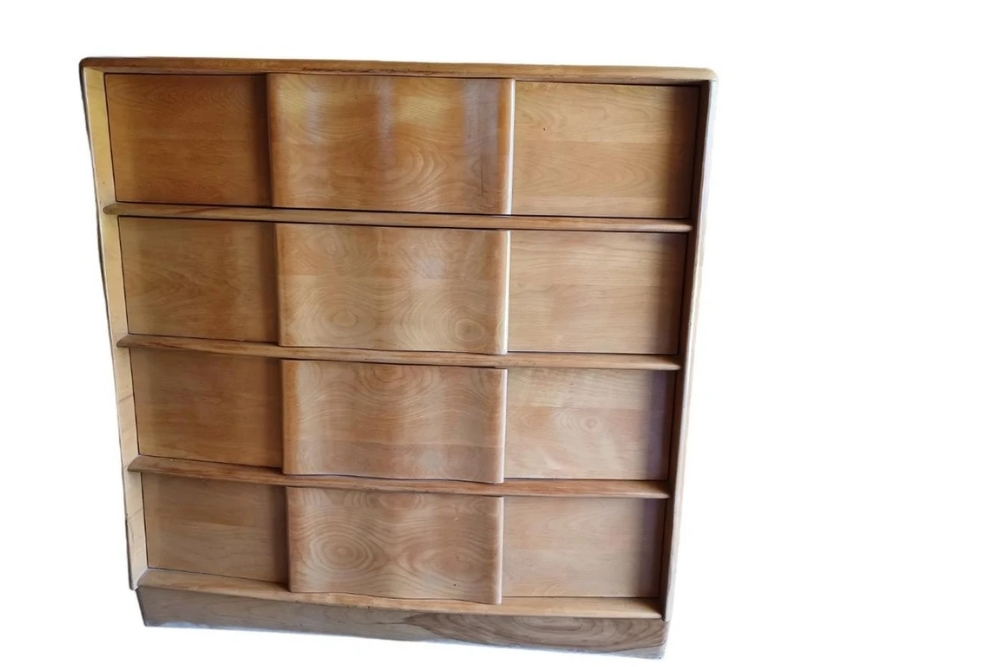
Heywood-Wakefield ran a furniture company out of Gardner, Massachusetts for more than a century, but it’s the blonde maple Modern line the company sold from the mid-1930s through the mid-1960s that collectors actually chase. Wheat was one of the original factory finishes, a warm honey tone applied to solid birch and maple with no veneer anywhere on the piece, which is itself a useful tell against lookalikes.
Clean examples with the original finish intact typically bring $1,200 to $3,000, while smaller or heavily worn pieces fall closer to $600 to $1,000. Flip the piece over or pull a drawer: genuine Heywood-Wakefield from this era carries a burned in “dogbone” logo stamp, usually inside the top left drawer or on the underside, along with penciled model and drawer numbers worth checking closely before you get your hopes up.
The finish is what makes or breaks the price here. A quick nail polish remover test on a hidden spot tells you a lot: original lacquer barely reacts, while a later coat of polyurethane or stain softens almost immediately. Repainted or heavily restained pieces lose a significant chunk of their value, and replacement plastic drawer pulls are a common and easy to spot downgrade from the originals.
Broyhill Brasilia dresser or credenza
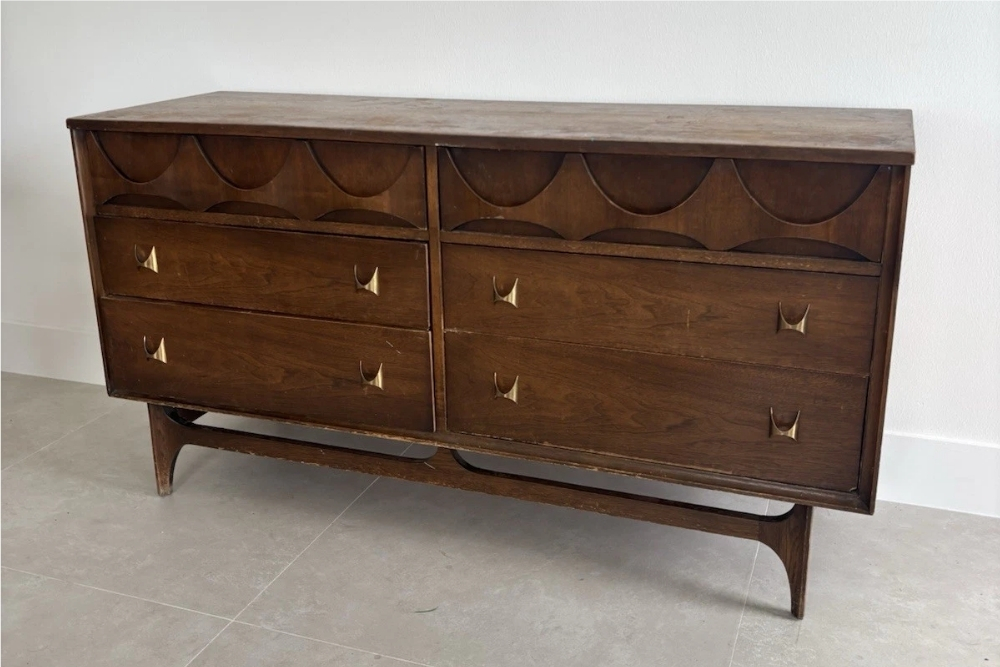
Broyhill debuted its Brasilia line at the 1962 Seattle World’s Fair, named for the dramatic new Brazilian capital city architect Oscar Niemeyer was building at the time, and the sculpted walnut case pieces still look strikingly modern six decades later. The line’s defining feature is drawer fronts carved into raised, parabolic curves rather than flat panels, a detail that was genuinely difficult and expensive to mass produce.
A clean dresser or credenza with its original sculpted brass pulls typically brings $1,800 to $3,800, and the large illuminated display credenzas built as room dividers can run higher still. Rougher or incomplete examples fall to $600 to $1,200. Because Brasilia was made in real volume between 1962 and 1970, it shows up often enough at estate sales that patience usually pays off more than urgency.
Check inside a drawer or on the back panel for a Broyhill paper or foil label before paying a premium price, since generic sculpted walnut furniture from other, unbranded makers is routinely sold online as Brasilia on styling alone. Chipped or cracked edges on the raised curves are common and reduce value, as does veneer lifting on the case sides. Replacement hardware is an easy downgrade to spot: original Brasilia pulls are heavier and more deeply sculpted than any generic brass substitute.
Paul McCobb Planner Group dresser
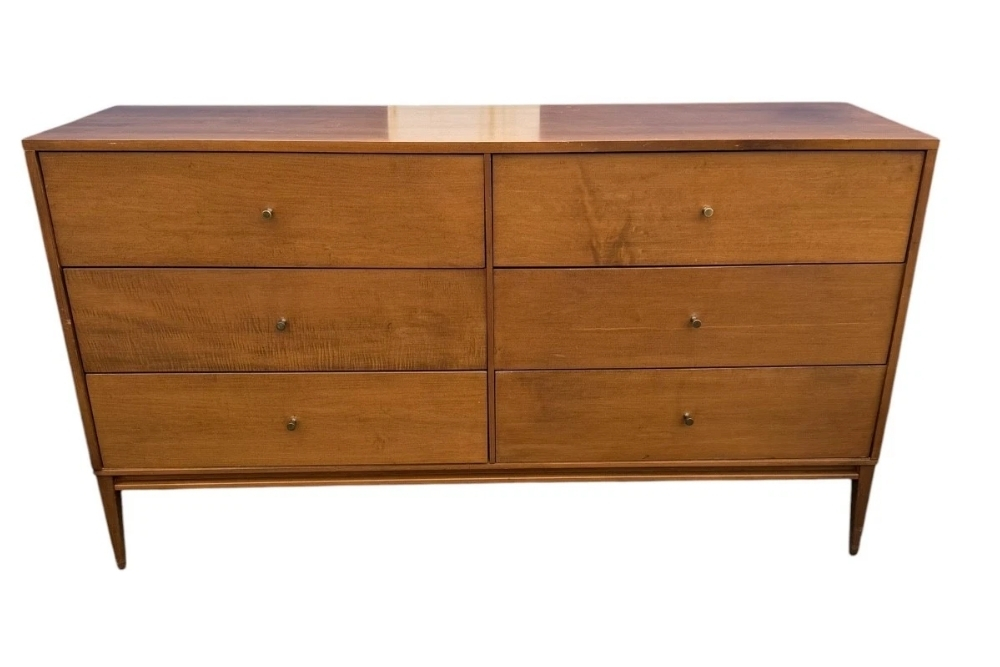
Paul McCobb designed the Planner Group in 1949 as affordable modular furniture for small postwar homes, and Winchendon Furniture Company in Massachusetts built it by the thousands through the 1950s. The line’s low cost and modularity were the whole point, which is exactly why so much of it survived in attics and basements instead of getting replaced.
A standard six to eight drawer maple dresser in solid original condition typically brings $1,500 to $3,000, with smaller three-drawer chests and nightstands running $400 to $900. Unusual or oversized examples can go well beyond that: an oversized twenty-drawer dresser can reach $9,500, though that’s a genuine outlier rather than anything close to typical. McCobb designed the line in 1949, debuting it at the Chicago furniture market the following January.
Look for the original “Planner Group” paper label, which is often lost but meaningfully helps both authentication and price when it survives. Tapered, canted maple legs on a black iron base are the signature look, along with conical or cylindrical brass pulls. Maple ambers unevenly with age and sun exposure, which is normal rather than a flaw. A missing or replaced iron base, water rings on the top, or non-brass replacement pulls hurt value more than ordinary surface wear does.
Drexel Declaration dresser or credenza
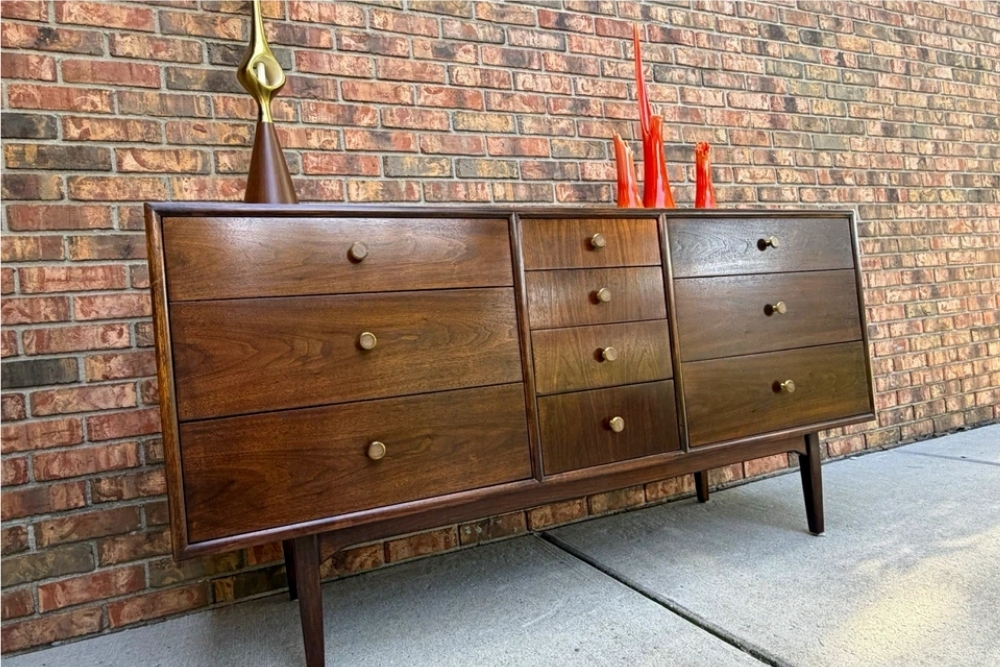
Drexel’s Declaration collection came out of a late 1950s partnership between designers Kipp Stewart and Stewart MacDougall, and the walnut line was good enough that several pieces were chosen to represent American design at the 1958 Brussels World’s Fair. The look is restrained compared to some of its more sculptural competitors: clean rectangular cases, tapered round legs, and either plain round brass pulls or white porcelain knobs set into brass fittings.
A clean credenza or dresser with its original hardware and an intact Drexel stamp typically brings $2,000 to $4,800, depending on size and form. Matched nightstand pairs typically bring around $3,895 for the set.
Authentication comes down to the stamp, which should appear inside a top drawer or on the case back reading “Declaration by Drexel.” That matters because several other 1960s manufacturers made visually similar sculpted walnut dressers, and sellers sometimes borrow the Declaration name without the piece actually being Drexel’s. A missing or mismatched pull set is the most visible value hit since the hardware is distinctive and hard to replace to match, followed by warped drawer fronts and over-stripped refinishing that flattens the warm walnut tone the line is known for.
American of Martinsville “Dania” dresser
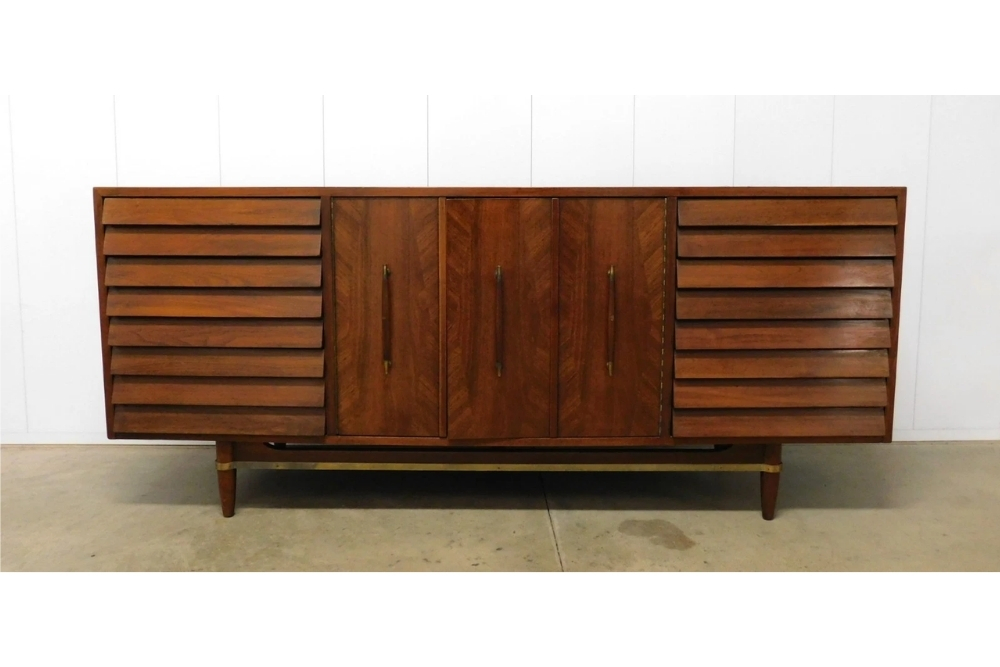
Merton Gershun designed more furniture lines than almost anyone working in American mid-century case goods, and Dania, built by American of Martinsville in Virginia, is generally considered his most successful. The signature detail is immediately recognizable: overlapping, angled louvered slats across the lower drawer fronts with no visible pulls at all, paired with brass capped tapered legs and a brass band running across the base.
A highboy or lowboy dresser with its louvered fronts intact typically brings $1,000 to $2,300, with restored examples landing at the higher end and original finish pieces priced lower. Dania ranks among Gershun’s most internationally successful lines, alongside similar work he produced for Dillingham under different names.
That overlap is worth knowing about if you’re trying to identify a piece: Gershun designed several visually related collections for American of Martinsville alone, including Dilettante, Fortissimo, and Harlequin, so don’t assume a piece is Dania just because it’s walnut with brass trim. The louvered slat fronts are the detail to check for specifically, and they’re also the most fragile part of the piece. Cracked, missing, or replaced slats meaningfully hurt the price, and so does a dresser that’s lost its brass leg caps or base banding. Water rings and dulling refinishing that flattens the walnut to brass contrast are the other common issues.
Kent-Coffey “Tempo” dresser
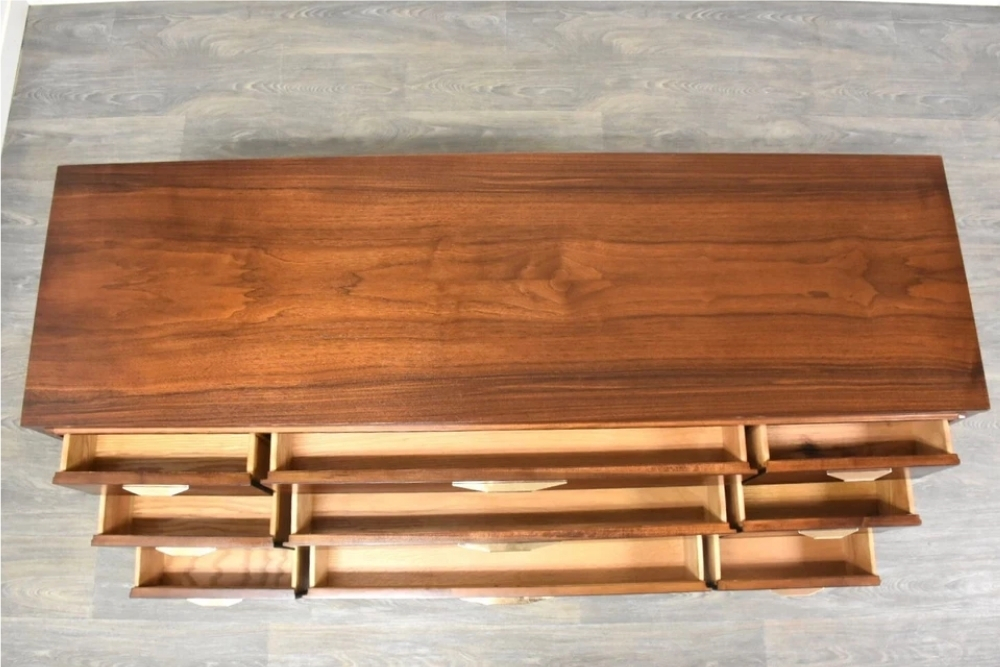
Kent-Coffey was a North Carolina furniture manufacturer that ran several visually similar walnut lines through the 1960s, and Tempo is one of the more recognizable thanks to its sculpted, arched drawer fronts and substantial brass hardware. The line sold well enough that it still turns up regularly at estate sales across the South and Midwest.
A professionally refinished dresser with its original brass pulls typically brings $1,800 to $3,000, while an unrestored example with visible age sells for less, usually $800 to $1,800 depending on how rough the finish is. Because Kent-Coffey ran so many similar lines side by side, including Perspecta, Tableau, and Townhouse, confirming the line name matters more than it might seem: check the maker’s label on the back or underside rather than assuming from styling alone.
The sculpted brass hardware is both the signature feature and the biggest vulnerability. It’s distinctive enough that generic replacement pulls are an obvious and value-killing downgrade, and original sets that are missing or mismatched should bring the asking price down meaningfully. Veneer chips along the sculpted fronts, water rings and finish crazing on the top, and any structural wobble in the case joinery are the other things worth checking before you commit to a price.
George Nelson “Basic Cabinet Series” credenza
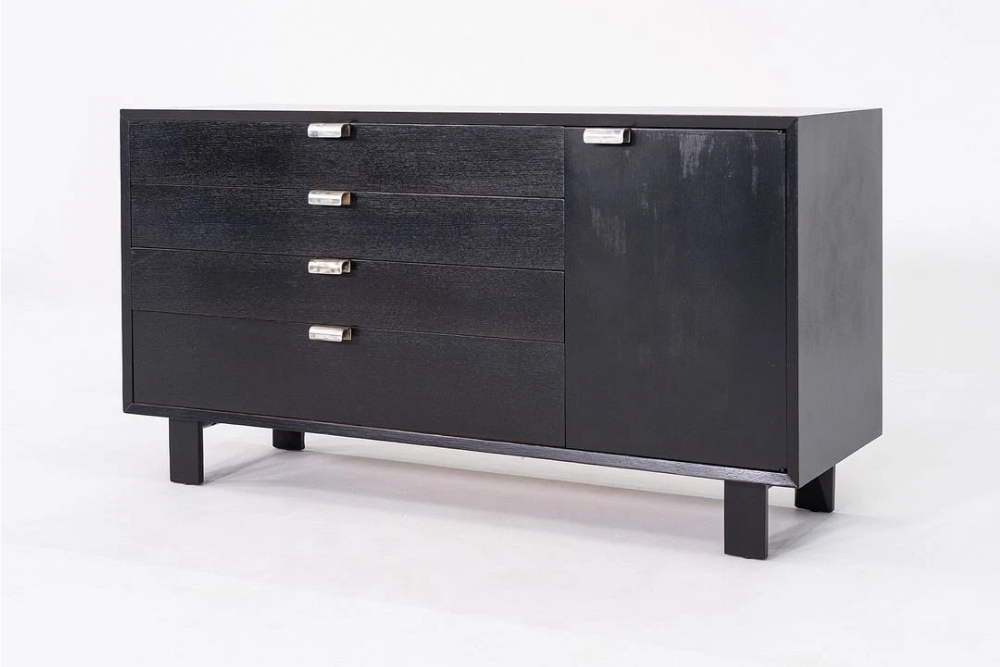
George Nelson designed the Basic Cabinet Series for Herman Miller in 1946, building on a modular “Storage Wall” concept he’d developed two years earlier with Henry Wright while the two were editors at Architectural Forum. The modular, interchangeable cabinets were a direct response to postwar Americans owning more belongings and moving more often than earlier generations had, solving a problem fixed furniture suites couldn’t.
An ordinary single-cabinet credenza in walnut with no unusual finish typically brings $1,500 to $2,500 in good condition. Rare finishes or a matched, multi-piece run push well past that, sometimes into the thousands. The catch with this one is that Herman Miller still manufactures the Basic Cabinet Series today as an authorized reissue, and the new version looks remarkably close to the original in photographs.
The real tell is the label and the hardware rather than the overall look. Vintage examples carry an original Herman Miller or George Nelson paper label inside a drawer, with wording and a format distinct from current production’s SKU style labeling. The steel frame legs should show age-appropriate wear on the chrome or brushed finish, not the crisp modern plating of a new piece. Veneer lifting or bubbling, pitted chrome legs, and non-original aluminum pulls are the main things that knock down the price of a genuinely vintage example.
Lane “Acclaim” cedar chest
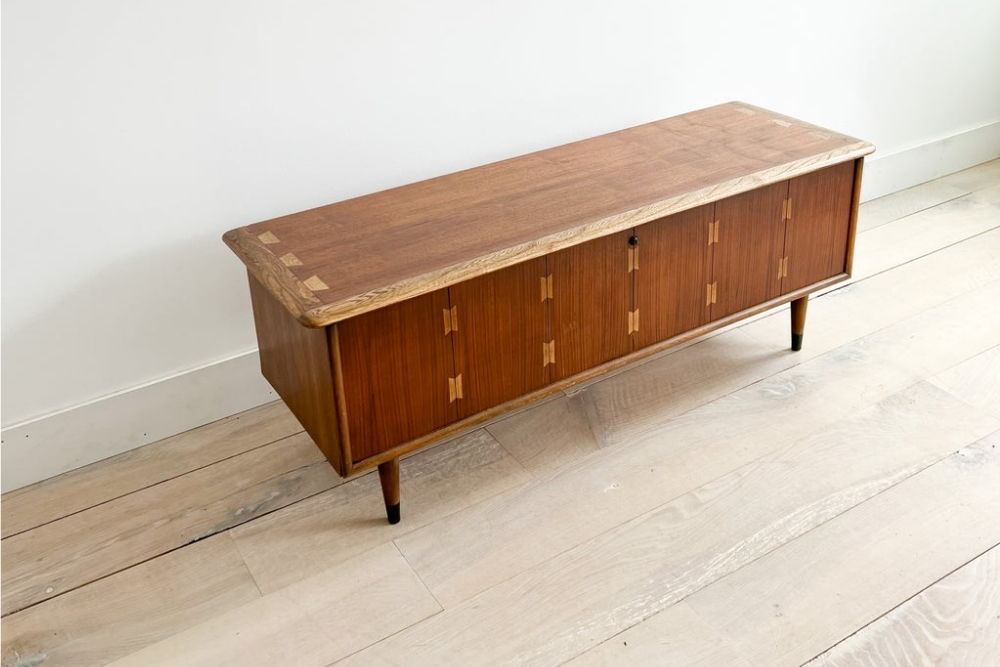
Lane built cedar hope chests by the millions out of Altavista, Virginia starting in 1912, using mass production methods the company originally developed filling WWI ammunition box contracts. The Acclaim line was one of many Lane cedar chest designs sold through decades of romance themed advertising aimed at young women receiving one as a gift, which is part of why so many ended up in American homes and stayed there.
That same volume is also why most of them aren’t worth much. A plain, ordinary Lane cedar chest with no particular design distinction typically sells for $100 to $300, and damaged or incomplete examples go for even less. Clean, undamaged pieces with original hardware and sharper mid-century styling can reach $700 to $1,500, but that’s the exception rather than the rule for this category.
Check the back or bottom for a stamped serial number and a small brass maker’s plate reading Lane, since several other manufacturers made visually similar cedar chests that get mistaken for Lane online. Cracked cedar lining, a missing or replaced lock, water damage, and replaced legs are the main condition issues to watch for. One safety note worth passing along regardless of value: the automatic push button locks used on pre-1990s Lane chests were the subject of a 1996 recall over child entrapment risk, so that mechanism is worth disabling or replacing if the chest will be around kids.
Poul Cadovius “Royal System” wall-mounted shelving
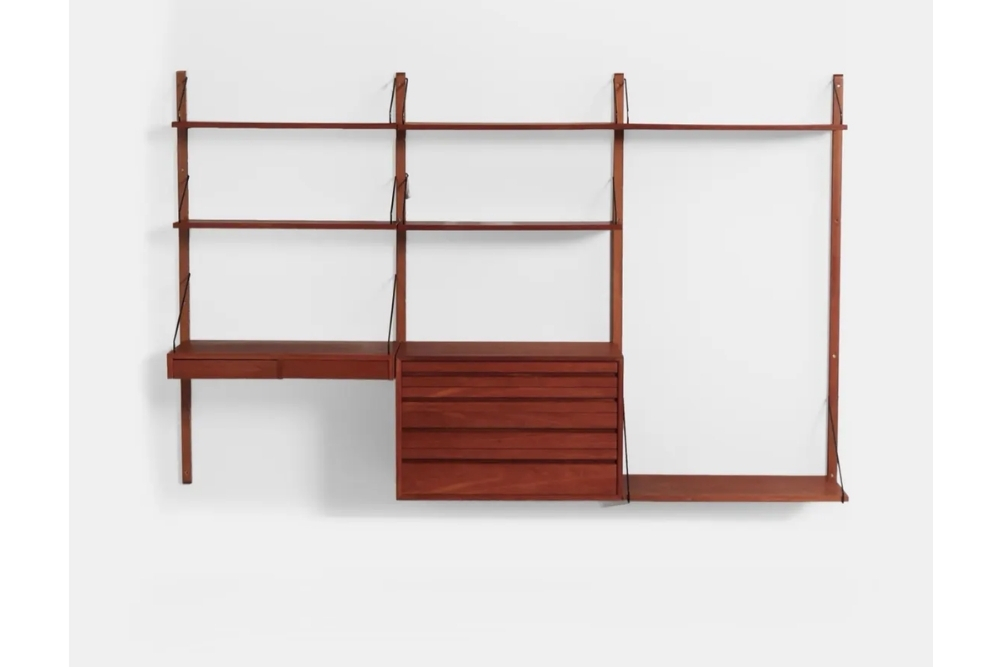
Danish designer Poul Cadovius introduced his Royal System wall-mounted shelving in 1948, growing the idea out of a Venetian blind manufacturing business he already ran. The concept, teak or rosewood shelves and cabinets that hang on slotted steel rails mounted directly to the wall rather than sitting on legs, became one of the most commercially influential pieces of Danish furniture design and popularized wall-hung modular storage well beyond Denmark.
A clean, complete three-bay teak set with its original wall rails and brackets typically brings around $1,500, and larger, complete multi-bay runs in rosewood can reach several times that. The catch is completeness: a single bay or a handful of loose shelves without the matching rails and brackets is worth very little, since the hardware is what makes the shelves reconfigurable in the first place and it’s easy to lose track of over the decades.
Genuine Cadovius pieces hang on vertical, slotted steel rails using angled brackets, a system that’s distinct enough to spot once you know what you’re looking at. Worth knowing before you get attached to a find: “Cado” and “Royal System” get used loosely online for similar Danish wall-rail shelving by other designers that isn’t actually Cadovius’s design. If the rails or brackets don’t match the original hardware pattern, treat the attribution with some skepticism.
Dyrlund flip-top teak extension dining table
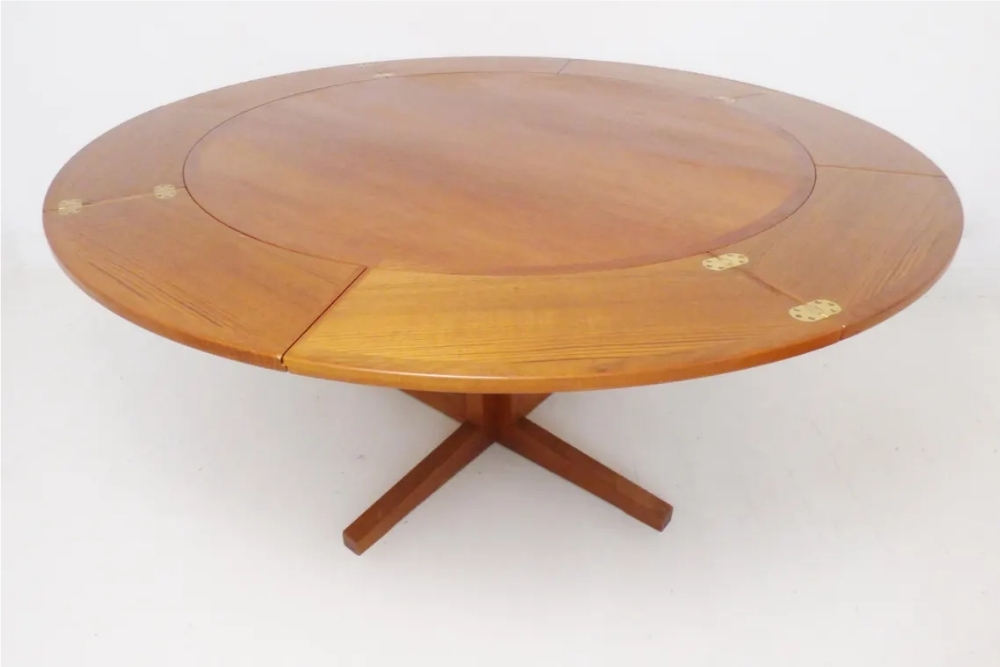
Danish manufacturer Dyrlund built its reputation on the “flip-flap” extension mechanism, where the leaves are hidden folded beneath the main tabletop and flip up and over into place rather than being stored separately and inserted by hand. It’s a clever bit of engineering that solved the real problem of where extension leaves go when nobody’s using them, and several of the company’s best-known tables in this style are attributed to designer Johannes Andersen.
A used teak example with visible scratches and some sun fading typically brings $600 to $900, while a clean rosewood example sold through a specialist dealer can reach $2,500 to $5,000 or more depending on size and condition. Rare, architect-designed Dyrlund tables occasionally go well past that, though that’s not the typical outcome for an ordinary flip-top table someone inherits.
Look for a metal “Dyrlund / Denmark” tag or stamp on the underside of the top or apron, and check that the flip mechanism itself still works smoothly, since that’s the whole point of the design. Sun fading is extremely common and shows up as a color mismatch between the main top and the leaves, which spend most of their life hidden from light. A sticking or loose flip mechanism and veneer chips at the hinge points are the other condition issues worth checking before you buy or sell.
Mersman step and nesting tables
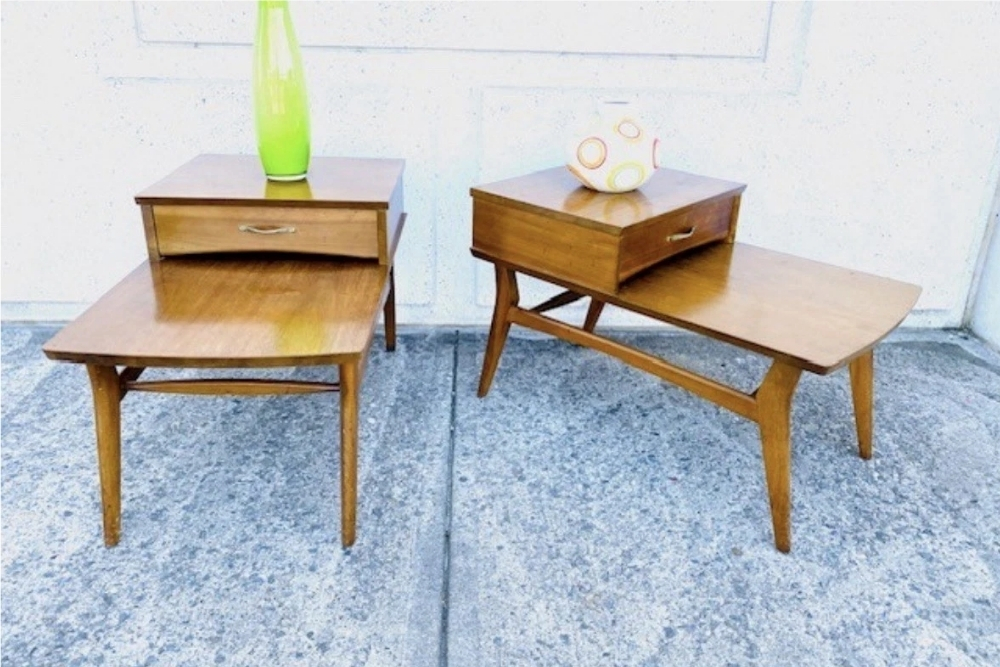
Mersman Bros. Corporation ran an Ohio table factory dating back to 1905 and became one of the most prolific occasional table manufacturers in American history, which means most of what the company made is common enough today to be worth very little. An ordinary Mersman lamp table or step table in typical condition sells for $20 to $75, and that’s the honest outcome for the vast majority of examples still floating around.
The exception is the boomerang-leg, amoeba-top design that shows up occasionally in Mersman’s mid-century output, with a sculptural asymmetrical shape that looks nothing like the company’s more common lyre-base and plain round tables. These genuinely collectible examples are priced well above the typical range by the dealers who specialize in them, though confirmed sold prices for this specific variant are harder to pin down than for the more common forms.
Check the underside or a drawer bottom for a paper or stamped “Mersman” label, often paired with a model number. Because the company produced so much generic furniture, condition matters less to price here than simply having the right, sought-after shape in the first place: a pristine plain Mersman table is still a plain Mersman table, while a boomerang-leg example with some wear is still the one collectors are actually looking for.
Dunbar sofa by Edward Wormley
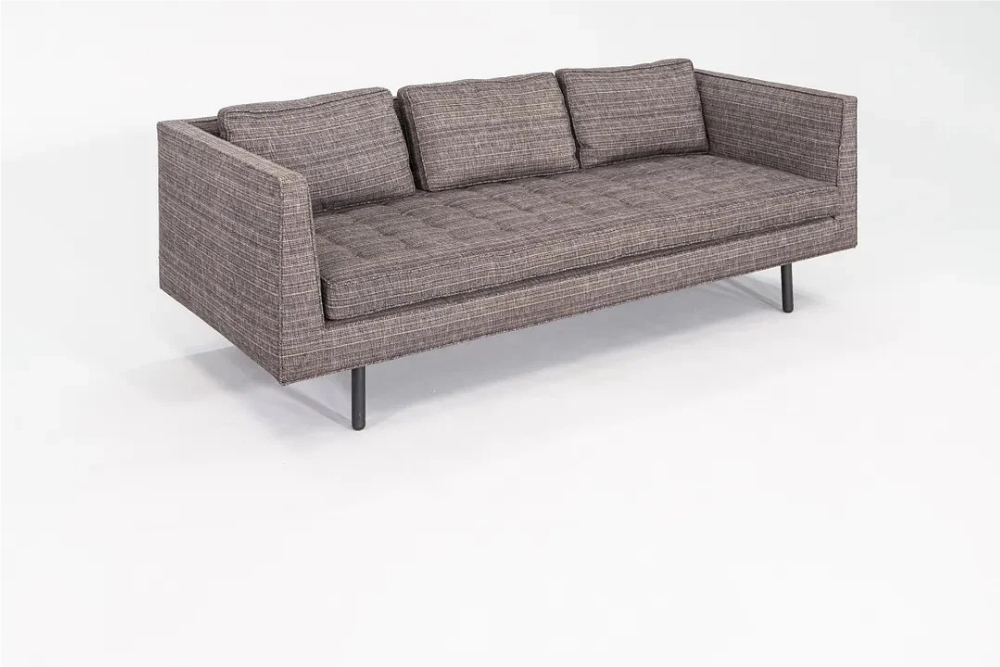
Edward Wormley spent 37 years as Dunbar Furniture’s lead designer out of Berne, Indiana, turning out roughly two small-batch collections a year, each averaging about 100 pieces, with clients able to customize finishes and wood veneers. That low-volume, high-quality approach is exactly why Dunbar furniture holds value today in a way a lot of mass-market mid-century seating doesn’t.
A standard sofa in good original upholstery and a sound lacquered wood base typically brings $2,500 to $4,500, with unusual forms like the tete-a-tete sofa occasionally reaching $8,000 to $10,000. Wormley introduced the Janus collection in 1957, one of several distinct design lines within the Dunbar catalog that collectors use to date and authenticate a piece today.
The manufacturer’s fabric, printed with a repeated “Dunbar” pattern, is usually visible on the underside once you lift a seat cushion, which is the fastest way to confirm you’re looking at a real example rather than a Wormley-style knockoff. Original foam that’s still soft rather than crumbling, intact original pillows, and a lacquered base with no major repairs all matter here. Light scuffing on the legs from normal use is expected and doesn’t hurt value much. Torn or heavily soiled upholstery and a sagging or structurally unsound frame do.
Selig Z-chair
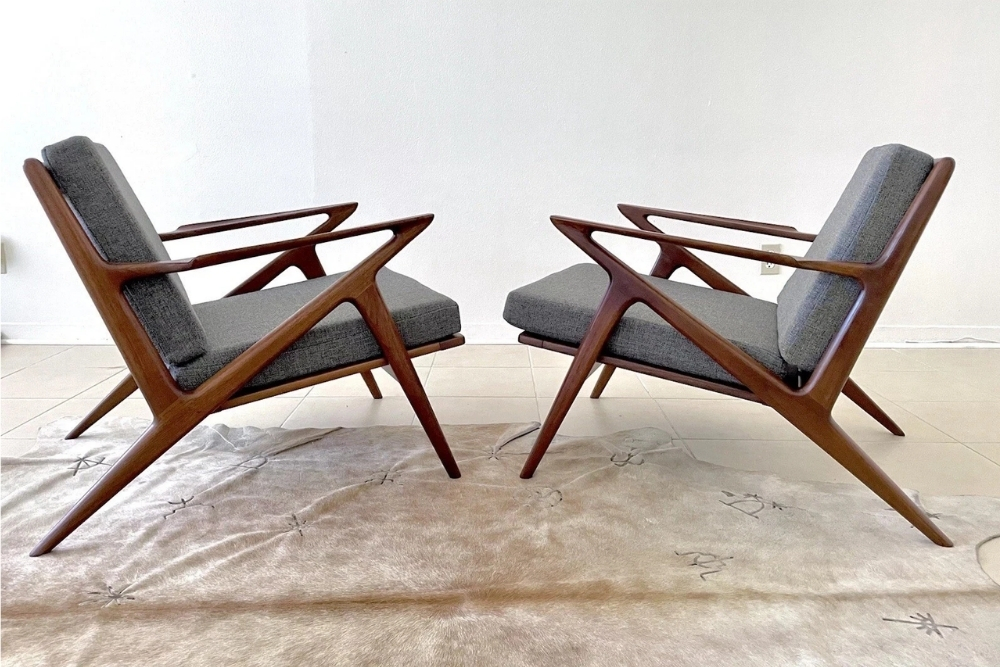
The Z-chair’s cantilevered seat, floating on a Z-shaped frame with no visible legs at the front, made it an instant visual signature when Selig Manufacturing started importing it from Denmark in the late 1950s. The design is credited to Poul Jensen on a 1957 patent filing, though the attribution has long been disputed among collectors and historians, which is itself a point of genuine debate rather than settled fact.
Pricing on this one swings hard depending on restoration. A single chair with an altered or sandblasted frame and later upholstery sells for as little as $400 to $600, while a professionally restored pair in walnut typically brings around $6,400. Nearly every surviving example has been reupholstered or refinished at some point, so original fabric or leather in good condition is genuinely rare and commands a real premium over a redone chair.
Check for the original “Selig” stamp on the frame before paying a premium price. This is one of the most heavily knocked off mid-century chairs on the market right now, sold new under half a dozen different brand names at a fraction of what an authenticated vintage example brings, and dealers also openly sell “Poul Jensen style” reproductions that look nearly identical but carry a fraction of the resale value. If a listing doesn’t mention the Selig stamp specifically, assume it’s a reproduction until proven otherwise.
Jens Risom 666 chair for Knoll
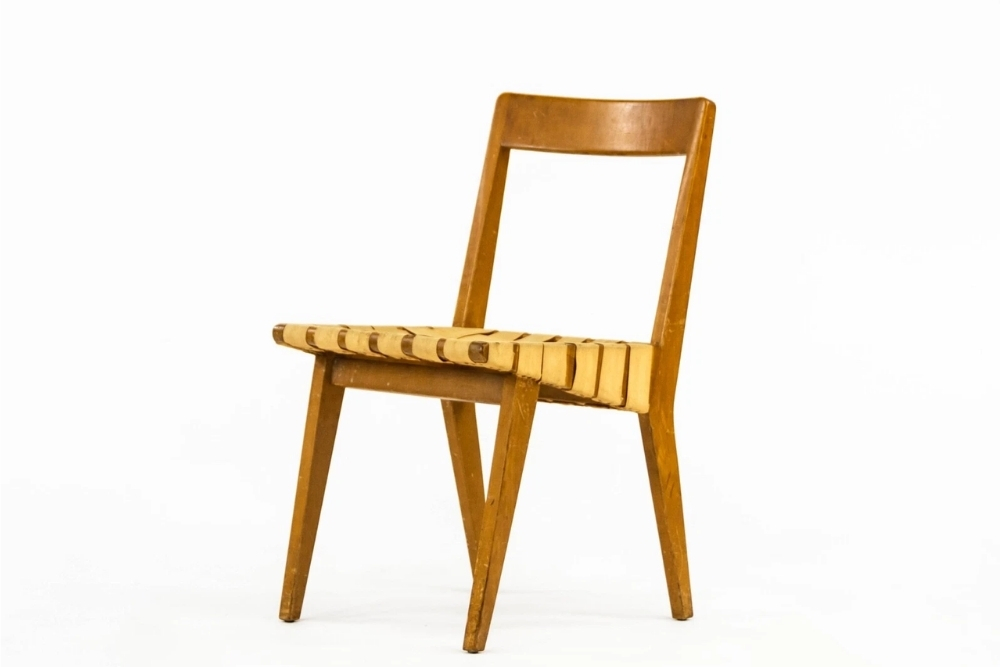
Jens Risom’s 1942 furniture line for Knoll was the company’s first commissioned collection, built out of wartime necessity from scrap wood and rejected parachute nylon webbing that couldn’t be used for its intended purpose. The resulting woven strap seats and backs became Risom’s signature look, and the 666 model, in both dining and lounge forms, is the piece most commonly found today.
A set of four dining chairs in good original condition typically brings around $1,625, while a single chair with some wear and an altered finish sells for considerably less, closer to $400. The low end of that range reflects just how many of these survive: Knoll produced the line for years, and it was popular enough that originals show up regularly at estate sales and smaller regional auctions rather than only at specialist dealers.
Look for the original Knoll Associates fabric label or decal, usually stamped on the frame underside or along the rear selvage of the webbing. The webbing itself is the first thing to fail on these chairs: sagging, staining, or replacement strapping in a non-original material or color all reduce value, as does a refinished or sandblasted birch frame. Knoll still sells a current “Risom Collection” of authorized reissues, clearly marked as new production, so don’t mistake a brand-new Knoll piece for a vintage original just because the Risom name is attached.
Milo Baughman lounge chair for Thayer Coggin
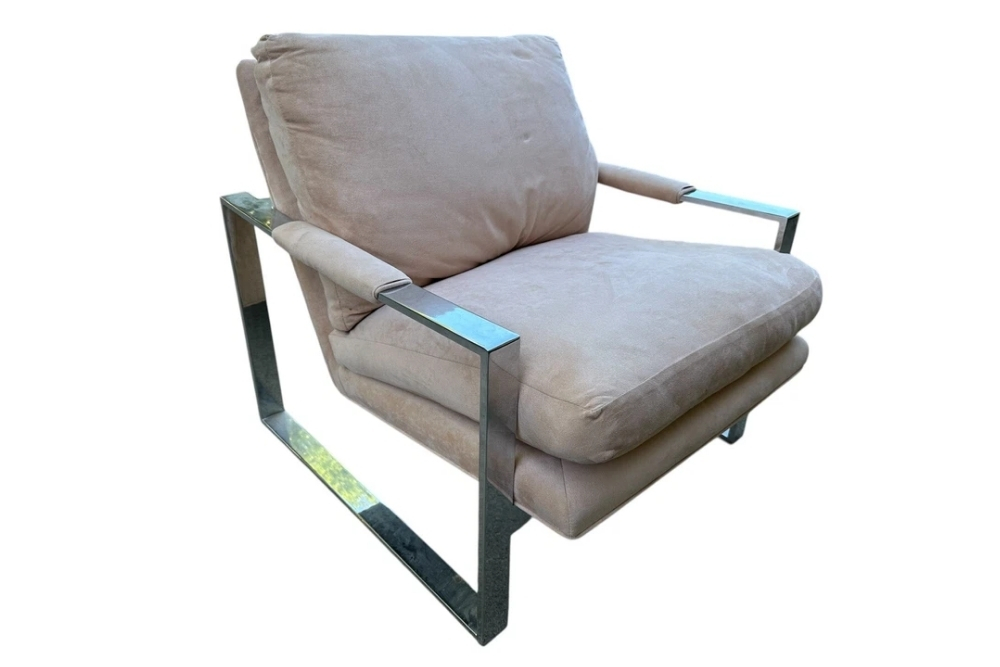
Milo Baughman and furniture manufacturer Thayer Coggin began working together in 1953 on a handshake deal that ran for roughly fifty years, making Baughman’s chrome-framed lounge chairs and sofas some of the most widely produced American mid-century seating around. The partnership’s longevity is part of what makes authentication a little tricky, since Thayer Coggin still builds some of these designs today to the original specifications.
A pair of lounge chairs in good, original condition typically brings $3,000 to $7,000 for the pair, or roughly $1,500 to $3,500 each, with rare documented models occasionally reaching into five figures. A single chair in decent shape but without matching documentation runs closer to $1,200 at retail. Heavily worn or reupholstered examples in unoriginal fabric sell for considerably less than either figure.
Every genuine piece should carry a Thayer Coggin tag stamped or sewn to the frame underside, but because the company still manufactures some of these chairs new, the tag alone doesn’t confirm vintage age. Check the hardware style, the fabric, and the foam type as secondary cues, since older examples tend to have heavier, more age-appropriate chrome plating and foam that’s started to compress or yellow. Chrome pitting and oxidation are common and expected on a genuinely old piece. Sagging or replaced upholstery in clearly modern fabric is the bigger value concern.
Dux recliner by Folke Ohlsson
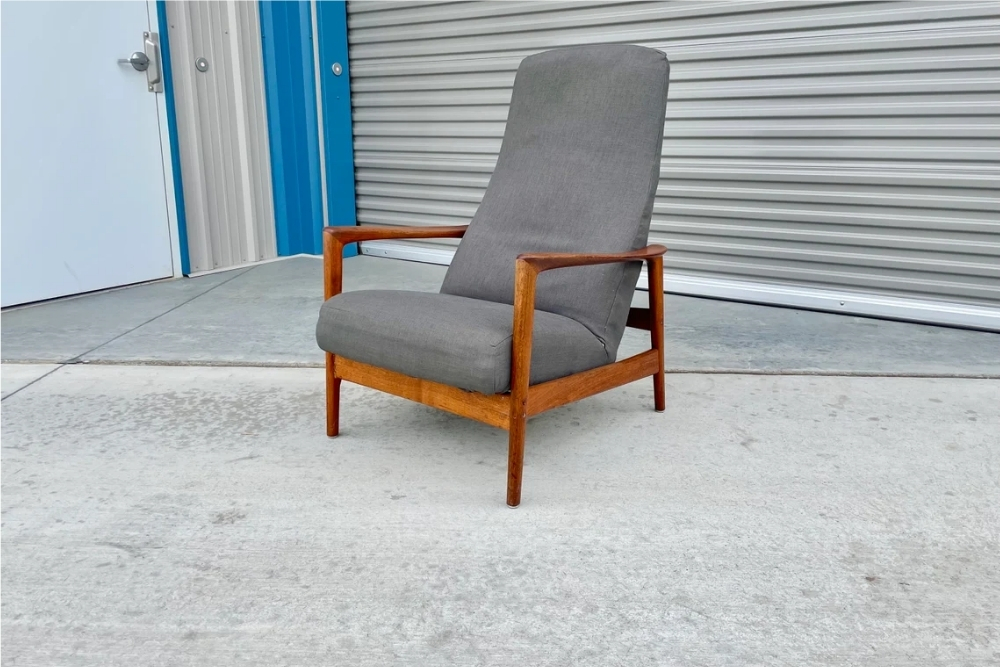
Folke Ohlsson designed for Swedish manufacturer Dux starting in the early 1950s and personally moved to the United States in 1950 to pitch American retailers using miniature models of his furniture, a sales approach that worked well enough to make Dux a recognizable household name within a few years. His patented knock down construction, which let the chairs ship and store flat, kept costs down and helped the line spread well beyond the design conscious buyers who usually sought out Scandinavian imports.
A single recliner in teak, walnut, or beech with its original leather or fabric typically brings $1,200 to $1,500 in clean condition. A matched pair with ottomans in good shape typically brings $3,400 or more, and sets with working mechanisms and intact upholstery sell for considerably more than one with a broken recline function.
Look for a manufacturer’s label on the underside identifying the specific recliner model. The recline and rock mechanism matters more to the price than cosmetic wear does: pilling, light staining, or dust on the upholstery are minor and expected, while a mechanism that doesn’t function properly or a misaligned ottoman support knocks the price down more noticeably, even if the wood and upholstery are otherwise in good shape.
Eames molded plywood lounge chair
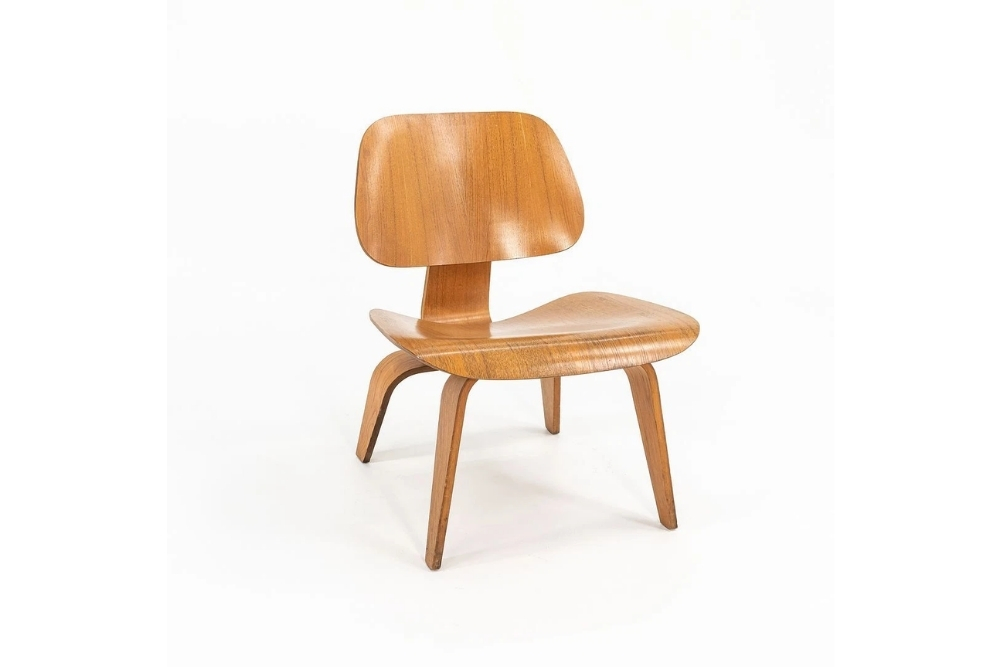
Charles and Ray Eames designed the molded plywood lounge chair in 1945, and it debuted at the Museum of Modern Art the following year to the kind of reception that gets a chair called the best design of the 20th century by Time magazine decades later. Evans Products Company manufactured the earliest examples under license before Herman Miller took over production directly, and the chair has stayed in continuous or near continuous production ever since in one form or another.
That long production run is exactly why price expectations need to be realistic here. Clean, authenticated early examples typically sell for $650 to $850, not the much higher figures sometimes seen on dealer retail markups without a documented sale behind them. Herman Miller and Vitra are currently the only two authorized manufacturers of the design, so a brand new “Eames LCW” sold by anyone else isn’t a legitimate reissue regardless of how it’s marketed.
Early examples carry a specific five screw, two screw, five screw pattern on the back where the shock mounts attach, along with a period label reading “Manufactured by Evans Products Company” rather than a modern Herman Miller tag. Delamination between the plywood layers, cracked veneer at stress points, and loose or sheared shock mounts are the serious value killers. Minor edge nibbles or a small split at the back of the seat are normal wear for a chair this age and don’t meaningfully hurt the price.
Adrian Pearsall walnut and slate coffee table
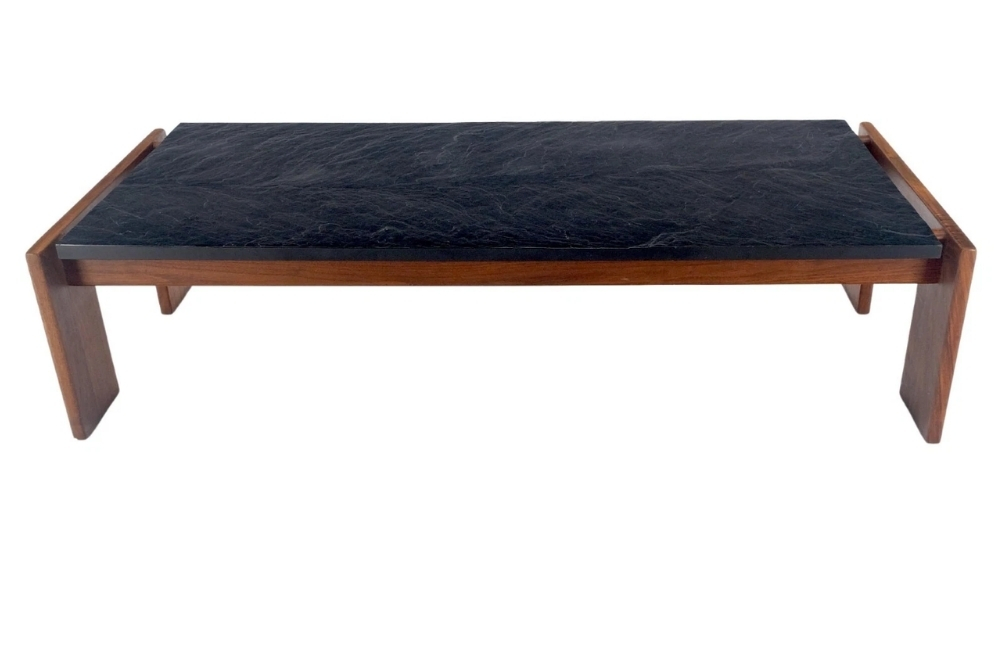
Adrian Pearsall trained as an architectural engineer before founding Craft Associates in Kingston, Pennsylvania in 1952, starting out in wrought iron before shifting to the sculptural, biomorphic walnut designs he’s best known for by the late 1950s. His coffee tables, built around a carved walnut base topped with slate or glass, are some of the most recognizable and frequently reproduced pieces of the whole mid-century walnut category.
A clean example in good structural condition typically brings $600 to $1,900, with most well-preserved pieces landing closer to $1,000 to $1,500. The spread depends heavily on the base’s condition and whether the top is genuine slate rather than a cheaper laminate version that circulates under the same model names.
One detail worth knowing before you pay a premium for a “signed” example: Pearsall didn’t sign his own work, so a signature on a table is a red flag for misattribution rather than confirmation of authenticity. Listings hedged with language like “attributed to” or “in the style of” aren’t confirmed originals and should be priced accordingly. Oiled walnut dries out and grays over time, which is normal and fixable with re-oiling rather than a real flaw. Loose joints on the sculptural base need regluing, and chips at the edges where a glass top rests against the walnut are common and worth checking closely before you buy.











