
Say you clear $5,000 in profit from weekend deliveries, online resale, or custom orders, and the plan is to put it toward a car repair or a holiday trip. A little over $700 of that is owed in self-employment tax at 15.3%, which is applied to 92.35% of net earnings, and income tax comes on top of it.
Extra income matters when prices keep climbing, and nobody starts a side hustle with the goal of funding a payment processor, a storage unit, and a tax preparer. Fees come out of payouts before the money reaches the bank, miles pile up on a car that was already paid for, and tax bills arrive months after the work is done.
No form has to arrive for any of this to apply. A payment app or marketplace has to send a 1099-K only after someone passes $20,000 in payments and 200 transactions, and a state can set a lower bar, but the tax is owed once net earnings reach $400, whether or not anyone mails a form.
Self-employment tax on every dollar of profit

Employees pay half of their Social Security and Medicare taxes and an employer covers the other half, while people who work for themselves pay both halves. The rate is 15.3%, split into 12.4% for Social Security and 2.9% for Medicare, and it is figured on profit after business expenses, which means every legitimate cost on this list lowers the bill a little.
A day job with tax withheld from each paycheck does nothing to cover this tax, because that withholding is calculated on the day job’s pay. The IRS allows a deduction for the employer-equivalent portion of self-employment tax when figuring adjusted gross income, which reduces income tax but not the self-employment tax itself. On the $5,000 example, the self-employment tax works out to about $706, and that figure grows in step with every extra dollar of profit. A freelancer who nets $12,000 over a year should expect a self-employment tax bill of about $1,700 before income tax is counted, which is why the number needs a place in the budget from the first sale.
Quarterly payments and the penalty for skipping them

Nobody withholds tax from side hustle income, so the IRS expects payments during the year instead of one bill in April. Sole proprietors generally have to make estimated payments when they expect to owe $1,000 or more at filing, and the last installment for 2026 is due January 15, 2027. A person who has been hustling since January without sending anything can still make that payment, although the earlier periods stay short, and the penalty is tied to each payment period rather than assessed once for the year.
Most taxpayers avoid the penalty by paying at least 90% of the current year’s tax or 100% of the prior year’s tax, whichever is smaller, and the prior-year route helps when this year’s profit is hard to predict. Unpaid tax also accrues interest, which is 7% a year, compounded daily for the quarter that began October 1. At that rate, a $2,000 shortfall left unpaid for a full year adds roughly $145 in interest before any penalty is counted.
Fuel that costs more than it did a year ago

Driving jobs start with gas, and gas has become a bigger line item. Fuel now works out to 17.3 cents a mile for the average car, based on regular gas averaging $4.152 a gallon over the 12 months that ended in May, compared with 13 cents a mile the year before. Someone who adds 10,000 miles to a car for a side hustle spends about $1,730 on fuel at the current rate.
The IRS noticed the same pressure and made a rare midyear change, raising the business mileage rate to 76 cents a mile for travel from July 1 through December 31, up from 72.5 cents earlier in the year. The increase was prompted by rising fuel costs, and it was the first midyear change since 2022. The deduction lowers taxable profit, but it does not put any cash back in the account on the day the tank is filled.
Repairs, tires, and the value the car loses

Maintenance, repairs, and tires run 11.7 cents a mile for the average car, which adds up to about $1,170 over 10,000 miles, and depreciation on the average new car comes to $4,422 a year. Extra miles bring oil changes, brake jobs, and replacement tires sooner than they would have come otherwise, and a repair bill can land in the same month as a slow week of orders. An older car may cost less to own on paper, though its repairs tend to arrive in lumps, such as a transmission or a full set of brakes, instead of steady monthly amounts that are easy to plan for.
The IRS deduction is also smaller than the full cost of running a newer car. Its 76 cents a mile compares with 86 cents a mile at 15,000 miles a year and $1.10 a mile at 10,000 for the full cost of owning and running a typical new car, because fixed costs like depreciation and insurance are spread over fewer miles when a car is driven less. Multiplying each month’s hustle miles by 11.7 cents gives a rough amount to move into a separate savings account for repairs.
A personal car policy that may not cover delivery driving

A standard personal auto policy may limit or exclude business use, including delivering goods for a fee, and the insurance a delivery platform provides can stop short during certain parts of the delivery process. It is easy for drivers to assume the delivery service covers everything, and the first time anyone checks is usually after a claim.
A Wisconsin appeals court decision from March 2026 shows how messy the dispute can get. A DoorDash driver crashed while the app was open but no delivery was underway, the personal insurer pointed to a delivery exclusion, and the court found the exclusion ambiguous and required the insurer to cover the accident. The driver won, though only after the case reached an appeals court, which is a slow way to find out what a policy means. A call to the insurer that describes exactly what the driving involves, followed by a question about a delivery endorsement or a business policy, settles the question before there is a claim.
Liability insurance for the work itself

Car coverage handles the driving, and general liability insurance handles claims for injuries and property damage connected to the work. Small businesses pay an average of $45 a month for it, with yearly premiums ranging from about $250 to more than $3,000 depending on the type of work and the business. A pet sitter, a handyman, a baker selling at a farmers market, and someone assembling furniture in customers’ homes all face different risks, and the price follows the risk.
A homeowners or renters policy is written for the household, and it often limits coverage for business activity, so a customer’s claim after an accident during a paid job may not be covered by it. Some venues, markets, and clients ask to see proof of coverage before they let a vendor work, which turns a premium that looks optional into a condition of getting the job. A market organizer that asks for a certificate of insurance usually wants it before a booth is assigned, so the policy has to be bought ahead of the first event rather than after it.
Marketplace fees on every sale

eBay charges a final value fee of 13.6% of the total sale in most categories, plus 40 cents per order over $10, and the total includes shipping and sales tax. In one example, a $400 phone sold with free shipping and 6% sales tax carries $58.41 in fees, which leaves the seller $341.59 before shipping costs. Because the fee is a percentage of a total that includes shipping and tax, raising the shipping charge or selling into a state with higher sales tax raises the fee too, even though the seller never keeps either amount.
Etsy charges $0.20 to list an item, and listings expire after four months, a 6.5% transaction fee on the item price plus shipping and gift wrapping, and 3% plus 25 cents for payment processing on the full amount including tax and shipping. A $50 order that includes shipping carries $5.20 in those fees, which is $3.25 in transaction fees, $1.75 in processing, and the 20-cent listing fee. The listing fee is charged each time a listing is created or renewed, whether or not the item sells.
Etsy advertising fees on orders from its own ads

Etsy buys ads on other websites, and when a buyer clicks one and orders from the shop within 30 days, the shop is charged an advertising fee on the order. The fee is 15% for shops with under $10,000 in sales over the prior 365 days, and those shops can opt out. Once a shop reaches $10,000, the fee drops to 12%, and participation becomes required for the life of the shop.
The fee applies to the whole order, shipping included, and is capped at $100 per order. A $30 order that comes through one of those ads carries $4.50 in advertising fees on top of $3.30 in listing, transaction, and processing fees, for $7.80 in total, or 26% of the sale. Prices that were set to cover only the standard fees leave a much thinner margin on those orders. A shop that is close to the $10,000 mark should price for the advertising fee before the choice to opt out goes away, because the fee will apply to every order that comes through those ads from then on.
Payment processing on sales outside a marketplace

Selling through a personal website, social media, or invoices means paying a processor to move the money. PayPal charges 3.49% plus 49 cents on checkout payments and 2.99% plus 49 cents on standard card payments, and Stripe charges 2.9% plus 30 cents on domestic online cards, which looks small until the sale is small too.
On a $20 sale, PayPal checkout takes about $1.19, just under 6% of the sale, while Stripe takes $0.88, or 4.4%. The fixed part of the fee weighs more heavily on cheap items, so a seller with many small orders pays a higher effective percentage than one with a few large orders. A seller whose prices were figured from the percentage alone will find that the fixed fee comes out of profit. Invoicing clients directly through a processor works the same way, so one $200 invoice costs about 3% in Stripe fees while ten $20 invoices cost 4.4%. Sellers of small items can keep the fixed fee from eating the margin by setting a minimum order or selling in bundles.
Shipping costs that rise during the holidays

The Postal Service filed for temporary holiday rates that run from Oct. 4 through Jan. 17, 2027. At retail prices, USPS Ground Advantage packages up to three pounds rise 50 cents in zones 1 through 4 and 75 cents in zones 5 through 9, packages from four to ten pounds rise 80 cents and $1.40 in those same zones, and Priority Mail packages up to three pounds rise $1.00 in zones 5 through 9.
Sellers who advertise free shipping absorb the full increase. Sellers who charge for shipping can pass part of it along, though a higher shipping charge also raises the marketplace fee, because eBay’s final value fee covers the shipping charged to the buyer and Etsy’s transaction fee applies to shipping as well. Boxes, tape, labels, and packing material are separate costs that add up with volume. A seller who ships 40 light packages to zones 5 through 9 pays $30 more in December at the extra 75 cents than the same packages would have cost before the change, and a seller who ships 200 pays $150 more.
Refunds and chargebacks that keep the fees

When a buyer asks for a refund, the processing fee often stays with the processor. PayPal does not return the fees originally paid to receive the payment when a sale is refunded, and Stripe does not return the processing fees from the original transaction either. Etsy handles it differently by recalculating its processing fee on the adjusted sale price, except on full refunds that Etsy itself covers.
Disputes cost more. Stripe charges $15 for each dispute received and another $15 to respond, with the second fee returned when the seller wins. PayPal’s standard dispute fee is $15, and eBay charges $20 when a seller is found responsible for a disputed amount. A $25 order that ends in a lost dispute costs the $25 and the fee, plus the item if it already shipped. Even a routine refund has a price, since a $25 order refunded in full leaves the seller without the sale, about $1.03 in processing fees at Stripe’s card rate, and return shipping if the shop’s policy covers it.
Website and subscription costs

Shopify’s Basic plan costs $39 a month, or $29 a month when billed yearly, which comes to $348 for a year on the annual plan and $468 on the monthly one. New stores can pay $1 a month for the first three months, and the full price starts after that. Etsy sellers who want extra tools can pay $10 a month for Etsy Plus, and the Pattern website tool costs $15 a month after a 30-day free trial.
These charges continue in months when no orders come in, so they belong in the budget as fixed costs. A shop with $400 in monthly sales and a $39 plan is paying close to 10% of its revenue just to keep the storefront open, and that is before payment processing and shipping are counted. Domain names, business email, inventory apps, label printers, and design tools often carry their own subscriptions, and each one is billed on a different day, which makes them easy to lose track of. Reading through a card statement once a quarter usually turns up a charge for something that is no longer in use.
Tax preparation fees

Paying a professional to file the return is a cost that arrives in the spring, long after the money has been spent. Tax professionals now charge an average base fee of $236 for a Form 1040 with schedules, up from $162 in 2024, and business income, a state return, and other complications are priced above that base amount.
Side hustle income also means more paperwork to hand over, since a preparer needs sales records, expense receipts, and mileage logs with dates and business purposes, and a shoebox of loose receipts tends to cost more hours to sort. The part of the fee that relates to the business is generally deductible for sole proprietors who file a Schedule C, which softens the cost slightly but still leaves most of it to pay up front. People who file their own returns can avoid the fee, though software that handles business income usually costs more than the basic version.
Annual state fees for an LLC

Forming an LLC sounds like a one-time filing, but many states charge for keeping it. In California, every LLC that is doing business or organized in the state owes an annual tax of $800, and that tax is due even if the LLC is not conducting business, until the LLC is canceled. The state waived the tax for the first year only for LLCs whose tax years began from 2021 through 2023, so a newly formed LLC now owes it from the start.
Other states have annual reports and fees of their own, and a few add a franchise tax on top of the fee for forming the company, so the first year can cost more than the years after it. The state’s business website is worth reading before filing anything. A sole proprietor can generally earn side income without forming a company, and an LLC protects its members against personal liabilities in exchange for recurring costs such as these.
Sales tax when you sell from your own website

Marketplaces handle sales tax on many orders. Etsy calculates, collects, and remits sales tax on orders shipped to US locations, and eBay includes sales tax in the total amount of the sale that its fee is based on. Selling through a personal website changes the arrangement, because the seller becomes responsible for registering with a state and collecting its tax once sales there pass a threshold.
Since the 2018 Supreme Court decision in South Dakota v. Wayfair, states can require out-of-state sellers to collect tax based on sales volume alone, and the most common trigger is $100,000 in sales or 200 transactions in a single state. The rules keep shifting, and Illinois dropped its 200-transaction test on January 1, 2026, which leaves $100,000 in gross receipts as the trigger there. Tax software can calculate rates at checkout, but registering with each state and filing the returns is usually the seller’s job, and tax collected from buyers belongs to the state whether or not it was set aside.
Storage space for inventory

Inventory tends to outgrow a spare room before a side hustle has outgrown its budget. A 10-by-10 unit averaged $74.98 a month as of February 2026, the lowest national average in five years and well below the $132.06 average in July 2022, and a climate-controlled unit averaged $82.39. At $74.98 a month, a unit costs about $900 a year.
The inventory in that unit has to produce more than $900 in profit a year before it covers its own space, and a national average hides plenty of variation from one city to the next. Sellers who store items for months while waiting for the right buyer, which is common in resale, pay rent on stock that has not earned anything yet. Climate control costs more, though it protects paper goods, electronics, and fabrics from humidity. A seller who stocks a unit with $2,000 of goods and sells them at a 50% markup earns $1,000 before fees, shipping, and tax, and a year of rent at the average price has already taken most of it.
Monthly fees on a business bank account
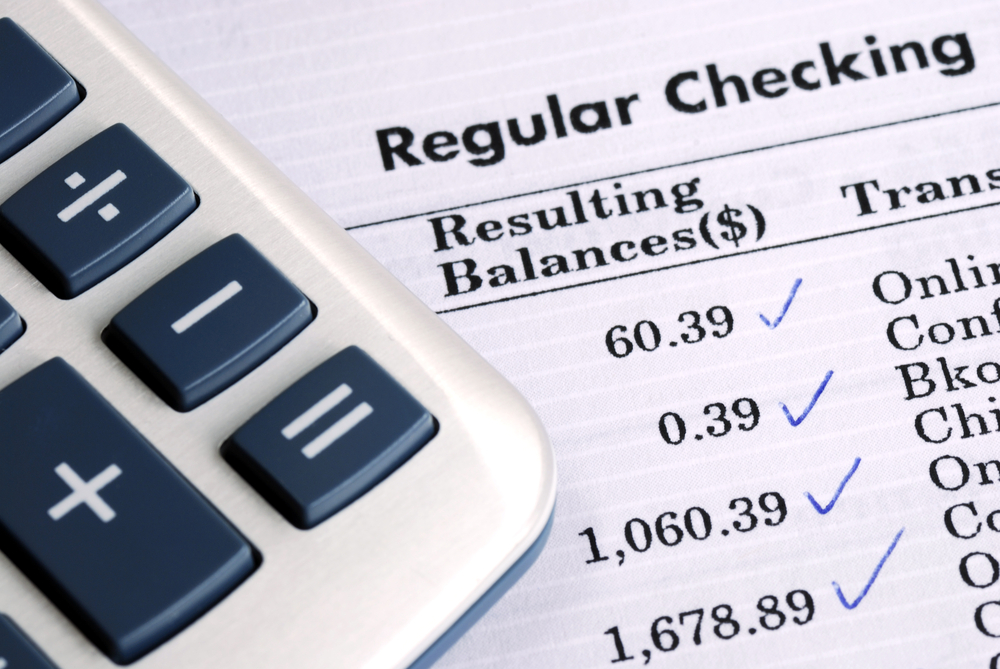
Keeping side hustle money in a separate account makes the quarterly payments and the tax return easier, and the account comes with its own price. One popular option, Chase Business Complete Banking, charges $15 a month unless the owner keeps a $2,000 minimum daily balance or meets another waiver, which adds up to $180 a year for people who do not qualify.
A hustle that never holds $2,000 at once, such as a few hundred dollars a month from dog walking or tutoring, would pay that fee every month. Some banks and credit unions offer business checking without a monthly fee, and comparing the fee, the balance requirements, and the limits on monthly transactions takes less time than discovering them on a statement. Fees can also appear when an account receives cash deposits, sends money to a personal account, or goes past a set number of transactions in a month, and those limits are listed in the fee schedule that comes with the account.
Child care while you work

Side hustles often run in the evenings and on weekends, which are the hours when children are home and someone has to watch them. The national average price of full-time child care was $13,184 in 2025, up from $13,128 in 2024, which works out to about $1,100 a month. A sitter for a few hours costs a fraction of that, though an hourly sitter or a drop-in program can still take a large share of what a short shift or a weekend market pays.
The same applies to anyone arranging care for an older relative or a pet while they work. Whoever steps in is either paid or owed a favor, and either one is worth counting before accepting a gig that pays by the hour. Say a sitter charges $15 an hour and a market shift runs four hours. That is $60 gone before the booth fee, the gas, or any of the other costs on this list are paid.
Bottom line

Adding these costs up after the first month, rather than after the first tax bill, shows what a side hustle is really paying for each hour of work. Costs that rise with sales can be built into prices right away, and the fixed ones can be compared with the profit needed to cover them.











