
A coin dealer in Forney, Texas once opened a routine twenty-five-coin roll of 2014 Calvin Coolidge dollars to fill a customer order. He pulled four coins, and the fifth one had no edge lettering at all. That coin turned out to be the only one of its kind ever certified, and it’s valued in the thousands today.
Most Presidential dollar errors aren’t that dramatic, but the series genuinely is one of the better places to go looking for one. Between 2007 and 2016, the Mint ran every single Presidential dollar through a second machine just to stamp the edge with the date, mint mark, and two mottos, something U.S. circulating coinage hadn’t done in 74 years. That second step went wrong constantly: lettering came out missing, doubled, weak, or stamped twice facing different directions. Because each error is tied to a specific president and often a specific mint product, they’re easy to identify once you know what you’re holding.
None of this requires a serious coin collection to get lucky. A roll of these from a bank, an old Uncirculated Mint Set bought directly from the Mint and never opened, or a handful of dollar coins kept in a drawer as souvenirs are all realistic places to find one. Here’s what to check for, president by president.
1. 2007-P Thomas Jefferson, satin finish missing edge lettering
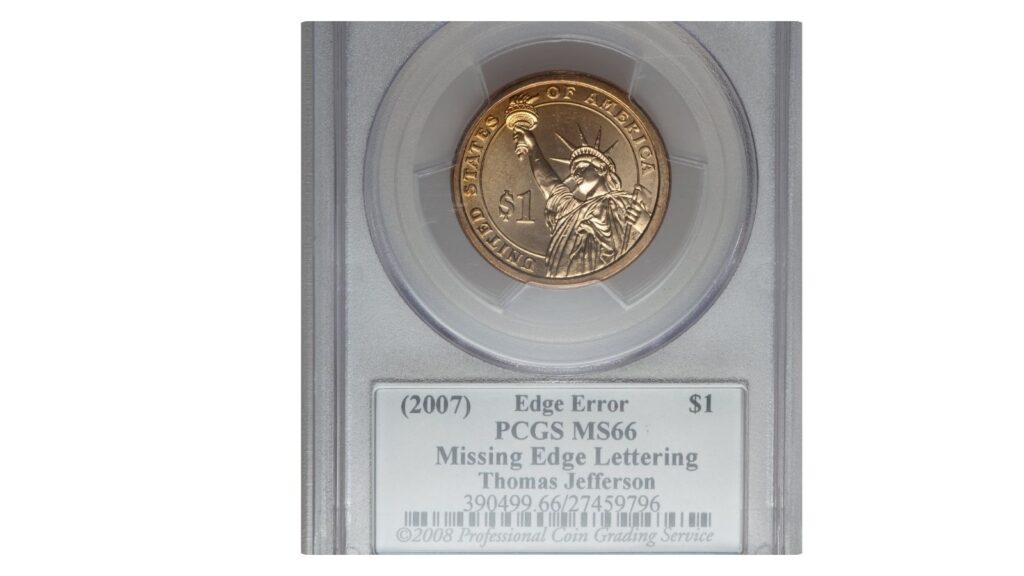
In 2007 the Mint sold a small run of “satin finish” Presidential dollars exclusively through annual Uncirculated Mint Sets ordered directly from the Mint, never through banks or general circulation. A handful of the satin Jefferson dollars went through the edge-lettering press incomplete, coming out with a totally blank, featureless edge instead of the date, mint mark, and the two mottos.
This is the scarcest of the satin missing-edge-lettering varieties in the whole series. A clean example at the SP67 grade level carries a value of around $600, with the finest known pieces worth more, and fewer than 175 have been certified in any grade.
If you or a relative bought one of these mint sets straight from the Mint back in 2007 and never broke the packaging, pull the Jefferson dollar out and check the edge under good light. A dull, blank edge with no raised lettering anywhere is the thing to look for. Regular business-strike Jefferson dollars with the same error exist too, but they’re far more common and worth a fraction of the satin version.
2. 2007-P James Madison, missing edge lettering
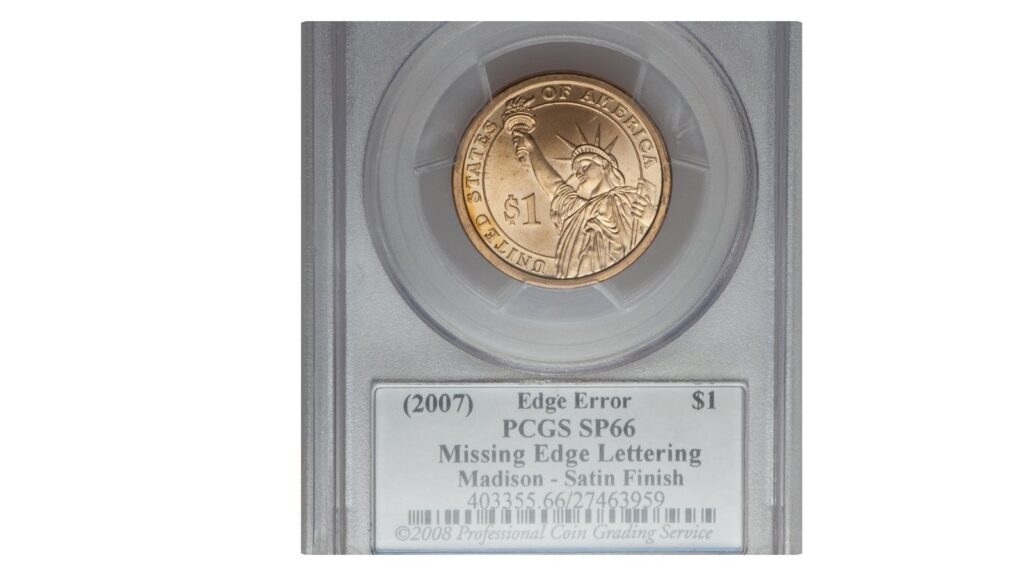
Madison was the fourth and final 2007 release, by which point the Mint’s edge-lettering machine should have been running smoothly. It wasn’t. Business-strike Madison dollars, the kind that actually reached banks and circulation rather than staying in mint sets, turn up with a completely blank edge often enough that certified examples bring as much as $600 in top uncirculated grades, with more typical pieces bringing considerably less.
Because these are business strikes, they’re genuinely the kind of thing that could still be sitting in a bank-wrapped roll or a jar of old dollar coins rather than locked away in a collector’s mint set. Check the edge first. If it’s smooth all the way around with no trace of lettering, it’s worth having authenticated before you spend it. Weak or partial lettering, where you can just make out faint letter shapes with a magnifier, is a different and much less valuable error, so don’t confuse the two.
3. 2008-P James Monroe, satin finish missing edge lettering
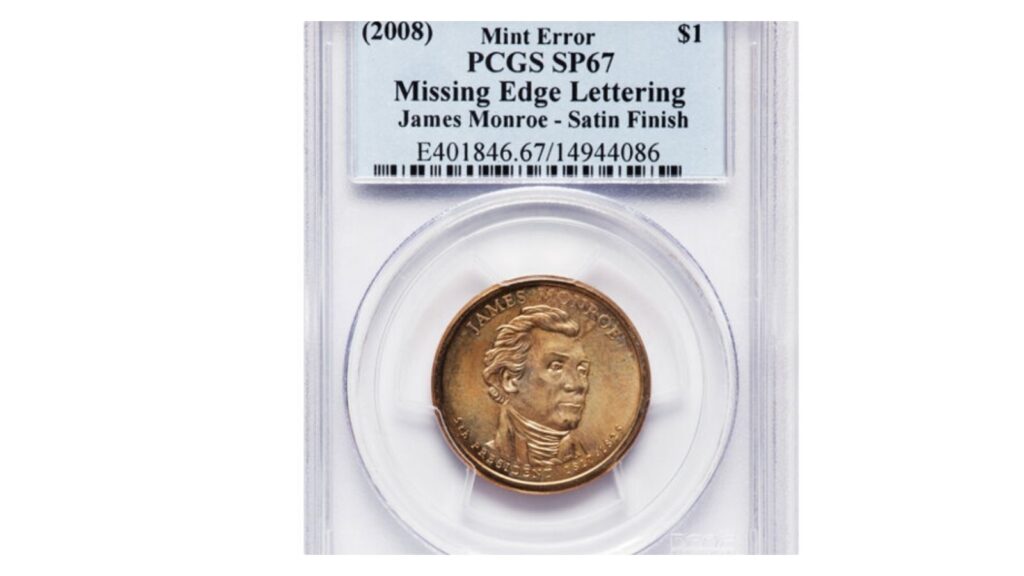
A separate and considerably scarcer version of the Monroe error turned up specifically in 2008 Uncirculated Mint Sets sold directly by the Mint, not in circulation. Collectors going through boxes of these sets found Monroe dollars with the satin finish and a blank, lettering-free edge, a genuine mint-set find rather than something picked out of pocket change.
A certified example at the SP67 grade level carries a value of around $382, and population reports put this variety at a small fraction of the number of satin Washington or Jefferson examples known, making it meaningfully scarcer despite the more modest price.
If you have an unopened 2008 Uncirculated Mint Set, this is worth checking specifically, since the satin finish coins were never released any other way. Look for the dull, matte texture of the satin finish paired with a smooth edge, and resist the urge to clean or handle the coin before having it looked at, since mishandling a satin surface shows up immediately to a grader.
4. 2008-P Martin Van Buren, satin finish missing edge lettering
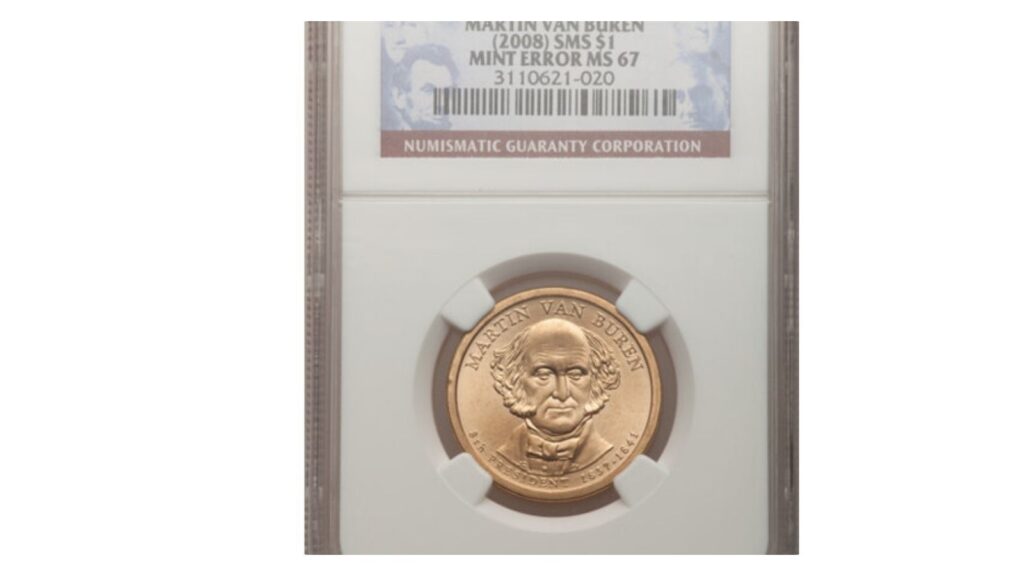
Van Buren closed out the 2008 lineup, and the satin-finish mint-set version of this coin’s missing-edge-lettering error is one of the more valuable in the entire series. A certified example at the SP68 grade level carries a value of around $2,350, among the highest prices any missing-edge-lettering Presidential dollar commands.
PCGS has certified roughly 225 examples across all grades, a small enough population that demand regularly outpaces supply when one comes up for sale. A business-strike Van Buren with the same blank-edge error also exists from circulation, but it’s far more common and worth only a modest premium over face value by comparison.
The satin finish on these is genuinely soft and matte to the touch, almost chalky looking next to a normal business strike’s shine. If an old 2008 Uncirculated Mint Set has been sitting in a closet since it was bought, the Van Buren dollar inside is worth pulling out and checking the edge before anything else.
5. 2009-P William Henry Harrison, missing edge lettering
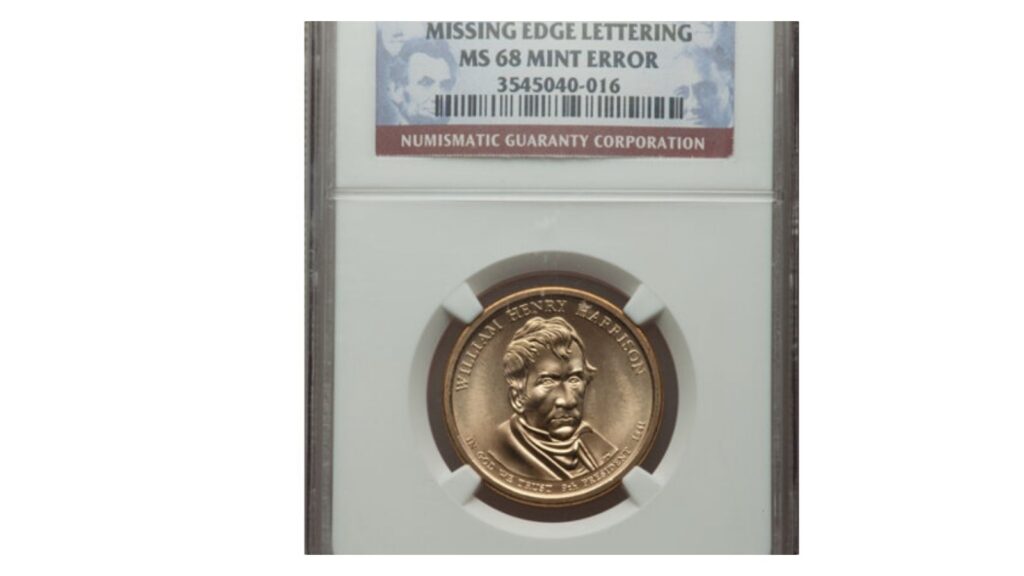
Harrison opened 2009, the year the Mint also moved “In God We Trust” off the edge and onto the face of the coin after the public backlash over the 2007 “Godless Dollar” controversy. That change makes a missing-edge-lettering Harrison dollar slightly different from the earlier ones: the edge is still blank where the date, mint mark, and “E Pluribus Unum” should be, but the religious motto is safely on the obverse either way.
These are business strikes that genuinely circulated, and certified examples bring around $41 to $74 in the MS66 and MS67 range, modest money but real money for a coin that could still be riding around in a bank bag.
Check the edge for a smooth, blank surface with absolutely no trace of lettering. Harrison dollars were struck in huge numbers at both mints that year, so the odds of finding one are better than with almost any other president in the series.
6. 2009-P William Henry Harrison, satin finish missing edge lettering
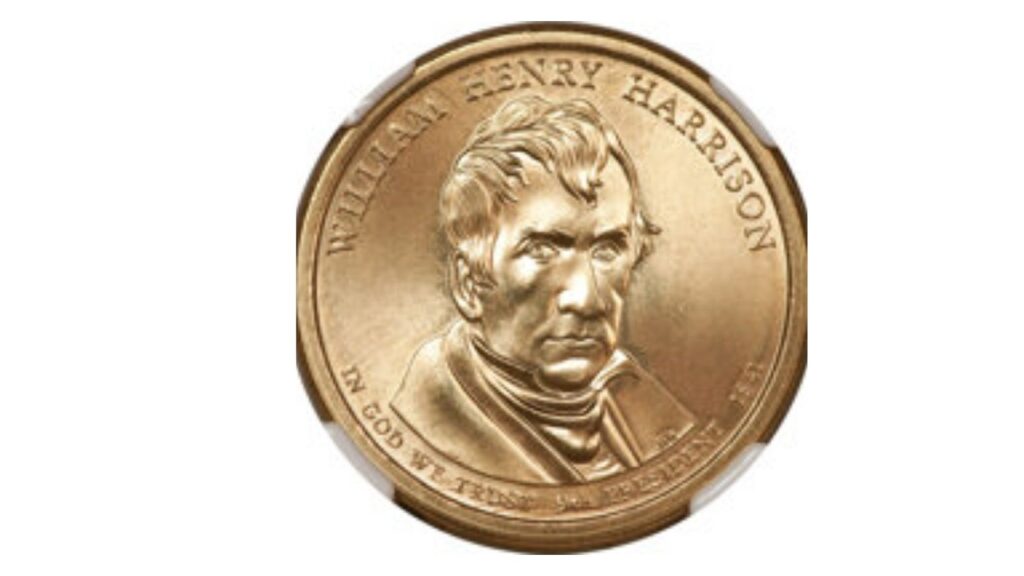
The same error shows up again on the satin-finish Harrison dollars sold only through 2009 Uncirculated Mint Sets, and this version is worth dramatically more than the business-strike coin above. Certified examples have carried values up to $2,450 at the top end of the grading scale, making it one of the single most valuable missing-edge-lettering coins in the whole Presidential series.
The gap between this coin and its business-strike counterpart is a useful reminder of how much the satin, mint-set-only coins can be worth compared to the ones found in everyday rolls, even from the same president and the same year. The satin finish itself is the tell: a soft, non-reflective surface rather than the brighter luster of a normal strike.
Anyone with an unopened 2009 Uncirculated Mint Set should check the Harrison dollar inside before anything else in that box. A blank edge on this particular coin is a genuinely significant find.
7. 2009-P John Tyler, missing edge lettering
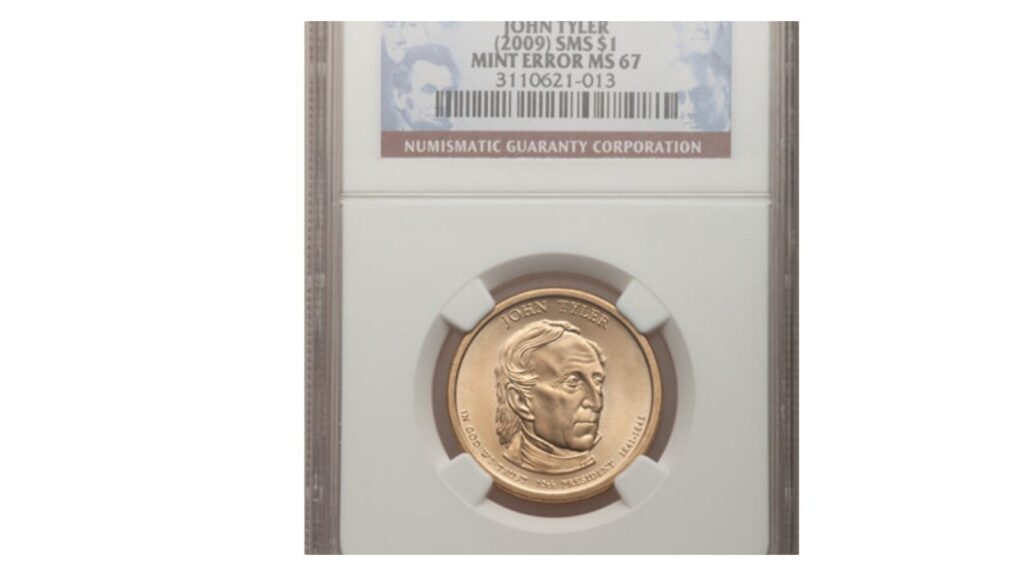
Tyler was the third release of 2009, and business-strike examples with a completely blank edge turn up with some regularity in certified grades. Top examples bring up to $100, solidly ahead of the earliest, most common Washington and Adams errors from two years earlier.
As with the rest of the missing-edge-lettering family, the test is simple: run a finger and then a loupe around the entire edge looking for any trace of incused lettering. A coin that’s merely circulated and worn won’t show this; the edge on a genuine error is smooth from the moment it left the Mint, not worn smooth over years of handling, and the rest of the coin’s surfaces should still look like an otherwise normal, lightly circulated or uncirculated Tyler dollar.
Tyler dollars were struck in the tens of millions, so while the error itself is uncommon, the base coin is easy enough to compare against when you’re trying to tell a real find from ordinary wear.
8. 2009-P Zachary Taylor, missing edge lettering
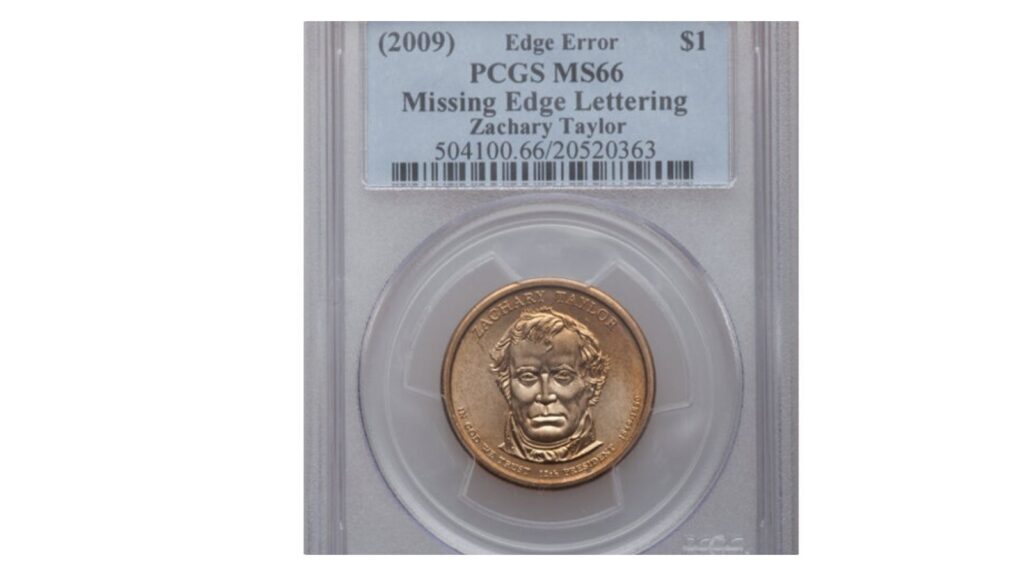
Taylor closed out 2009, and missing-edge-lettering examples from this release carry some of the stronger pricing among the later 2009 coins. Certified pieces have brought up to $183 in the best grades, notably more than the Tyler dollar released just before it that same year.
The identification process doesn’t change: a smooth, blank edge with no date, mint mark, or mottos incused into it anywhere around the circumference. Because 2009 was the first full year with “In God We Trust” moved to the coin’s face, a Taylor dollar missing its edge lettering is still a perfectly legible coin on both the front and back; it’s only the edge that’s gone wrong.
These coins show up most often in old bank rolls and the loose change jars of anyone who was still handling dollar coins in 2009 and 2010, so it’s worth checking any stray Taylor dollars that have been sitting around since then.
9. 2010-P Millard Fillmore, missing edge lettering
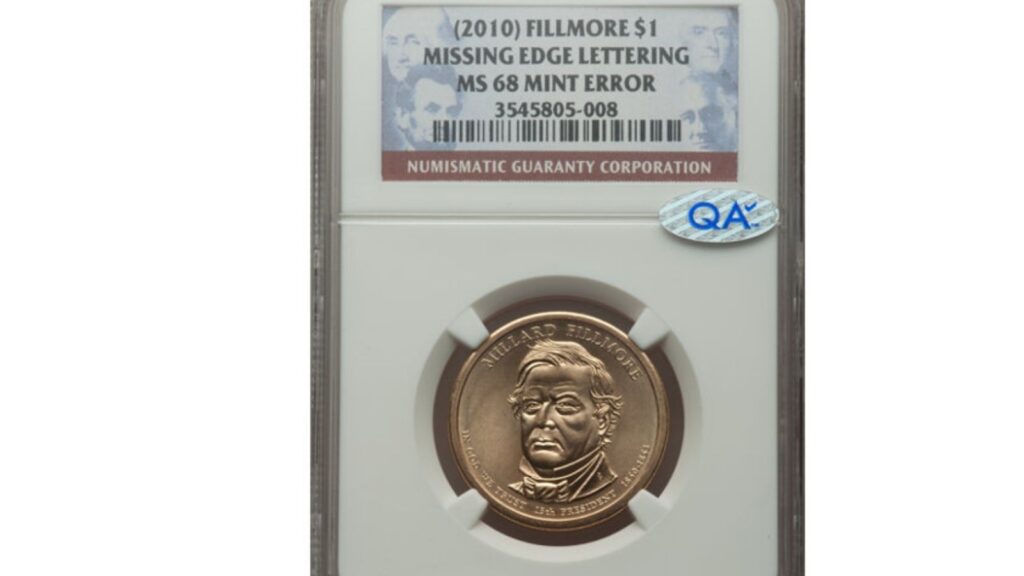
Fillmore opened 2010, and missing-edge-lettering examples from this release are genuinely common enough to show up regularly in the certified coin market. Recent certified sales have ranged from around $32 up to $156 depending on grade, with most clean MS66 and MS67 examples landing comfortably in the middle of that range.
This is one of the more accessible errors to actually go looking for, since enough examples exist that a patient search through old rolls has a real chance of turning one up. The edge should be completely smooth, with no trace of the date, mint mark, or either motto. A coin that shows faint, barely visible letters under magnification is a weak-lettering error rather than a true missing-lettering one, and it’s worth considerably less.
Fillmore dollars were minted at both Philadelphia and Denver in solid numbers, so there’s a reasonably large pool of coins out there for anyone willing to check rolls one by one.
10. 2010-P Franklin Pierce, missing edge lettering
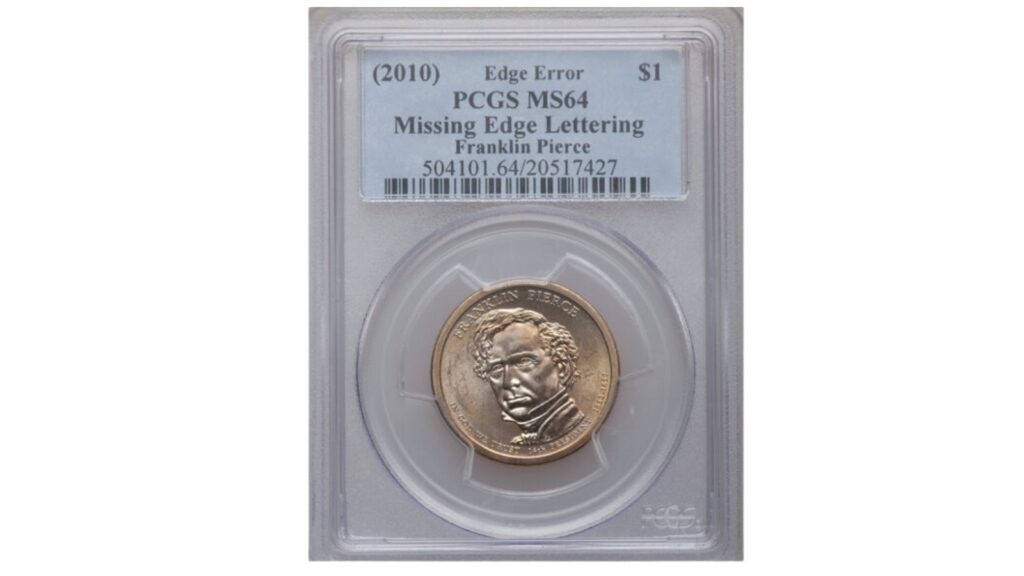
Pierce followed Fillmore later in 2010, and examples of this coin with a blank, lettering-free edge are among the stronger performers in the back half of the series. A certified example at the 68 grade level carries a value of around $740, well above most of its immediate neighbors in the lineup.
That price gap is mostly about how few high-grade examples exist rather than the error being especially rare in lower grades; plenty of Pierce dollars with this error exist in average uncirculated condition and sell for far less. What separates the valuable ones is a genuinely clean, mark-free surface combined with the blank edge, since a coin can have the right error and still be worth little if it’s covered in bag marks and scuffs from circulation.
Check any Pierce dollars you have for a smooth edge first, then look closely at the overall surface quality before assuming you’ve found a four-figure coin.
11. 2010-P James Buchanan, missing edge lettering
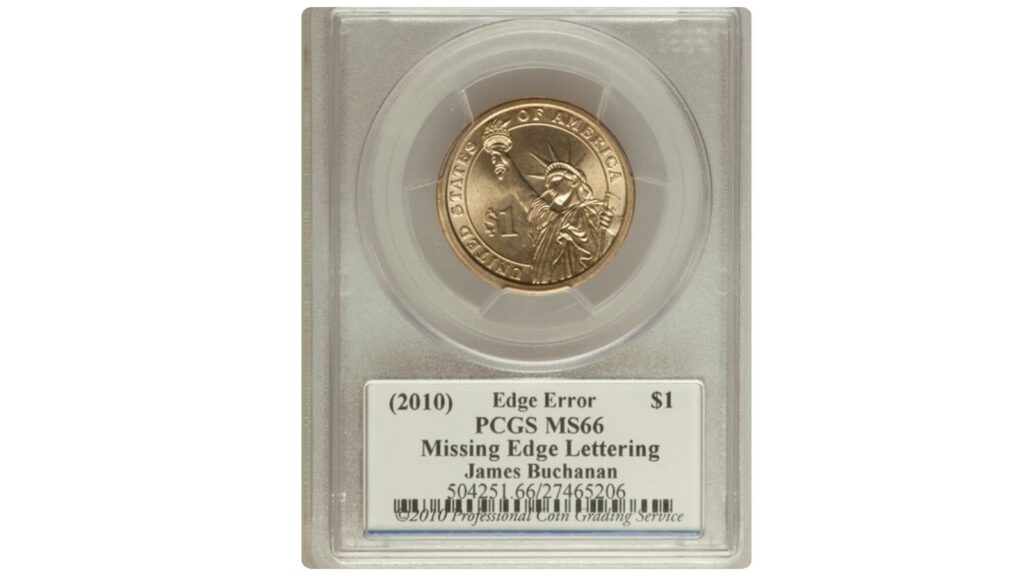
Buchanan closed out 2010 and, with it, the last full year before “In God We Trust” controversy-era design issues had largely faded from public attention. Missing-edge-lettering examples from this release still command a real premium, with certified pieces selling for up to $125 in top uncirculated grades.
By 2010 the Mint’s quality control on the edge-lettering process had generally improved from the early days of the series, which is part of why these later errors tend to be scarcer in absolute numbers even when the prices don’t always reflect it. A smooth, blank edge with no trace of lettering is still the thing to look for, checked the same way as every other coin on this list: good light, a loupe if you have one, and a slow pass around the entire circumference.
Buchanan dollars are common enough in general circulation that finding a normal one costs nothing to compare against.
12. 2011-P Rutherford B. Hayes, overlapping edge lettering
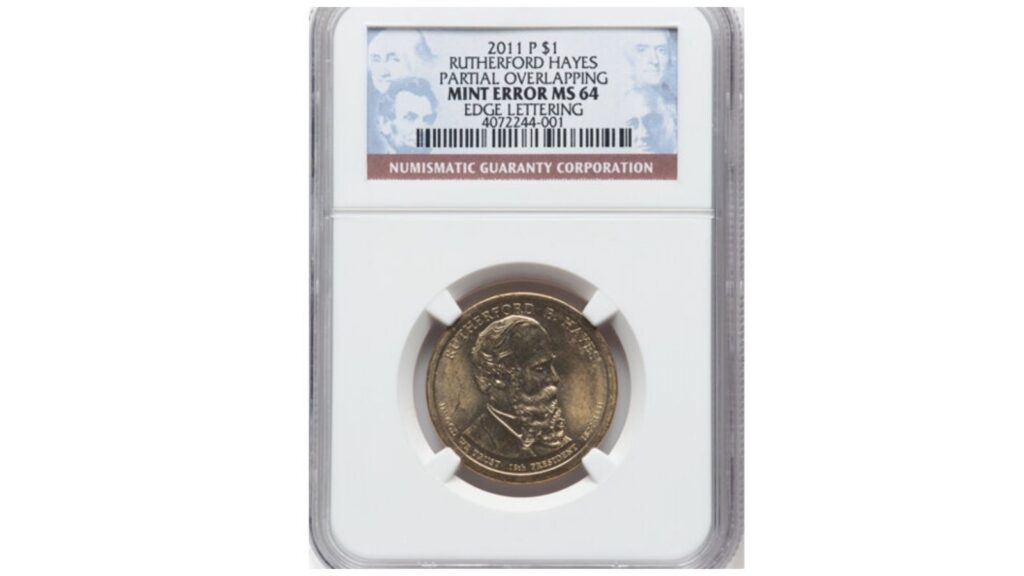
Doubled edge lettering, where a coin passes through the edge press twice and ends up with two overlapping sets of lettering, is mostly associated with the first-year Adams dollars. It’s rare enough on other presidents that a genuine example from a different year draws real attention, and a 2011 Hayes dollar with partial overlapping edge lettering carries a value of around $216 at the MS64 grade level, a strong price for a coin released that late in the program.
Unlike the missing-lettering errors, this one shows up as too much going on around the edge rather than too little: a second, partial run of letters and numbers crowding or overlapping the first set. It takes a careful look to catch, since from a distance the edge can look simply busy rather than obviously wrong.
Hayes dollars were part of the Mint’s last full year of circulating Presidential dollar production before the program shifted almost entirely to collector sets, so any genuine error from 2011 is worth a second look.











