scroll top

The image of the hoodie-wearing twenty-something entrepreneur might dominate headlines, but the reality tells a different story. Research from MIT shows that the most successful startup founders are actually 45 years old on average, and the coaching industry is booming with a $6.25 billion market in 2024 that's projected to reach $7.31 billion by 2025. For those over 40, this represents an unprecedented opportunity to leverage decades of experience into a meaningful second career. Your wisdom, emotional intelligence, and professional networks are assets that no amount of youthful enthusiasm can replicate.

1. Understand the Market Opportunity Is Massive

white and red basketball hoop under white clouds and blue sky at daytime
Image credit: Quentin Ferrer via Unsplash

The coaching industry is exploding. The global market reached $6.25 billion in 2024 and is on track to hit $7.31 billion by 2025, representing a 17% compound annual growth rate. With 109,200 certified coaches worldwide and demand continuing to outpace supply, there's plenty of room for experienced professionals to establish thriving practices. The market's maturity means clients are increasingly willing to pay premium rates for proven expertise rather than trendy tactics.

2. Leverage Your Age as Your Competitive Advantage

sa=tarting a coaching business
Image Credit: Getty Images via Unsplash

Stop apologizing for your age and start weaponizing it. A 50-year-old founder is 1.8 times more likely to achieve upper-tail growth than a 30-year-old founder, according to MIT research. Clients hire coaches for wisdom, not Instagram followers. Your decades of navigating workplace politics, relationship challenges, and life transitions give you credibility that younger coaches spend years trying to establish. Embrace your grey hair as a badge of authority.

3. Start With What You Know

coffee and knowledge book
Image Credit: Gabriella Clare Marino via Unsplash

Build your coaching practice around your existing expertise rather than chasing trending niches. Career transition coaching alone represents a growing market with 32% of workers aged 25-44 considering career changes in the past year. If you've successfully navigated corporate restructures, raised teenagers, or managed aging parents, you have valuable experience to share. Your authentic stories of overcoming real challenges resonate more than theoretical frameworks.

4. Budget Realistically for Startup Costs

a glass jar filled with coins and a plant
Image credit: Towfiqu barbhuiya via Unsplash

Coaching businesses require modest startup investment compared to traditional ventures. Initial costs typically range from $2,000 to $15,000, covering certification, basic technology, and marketing materials. ICF certification costs between $3,000 and $20,000 but dramatically increases your credibility and earning potential. Unlike younger entrepreneurs who might bootstrap with ramen noodles, plan properly and invest in quality from the start.

5. Get Properly Certified Without Overthinking It

becoming certified
Image Credit: RUT MIIT via Unsplash

While coaching isn't legally regulated, 85% of clients consider certification a key factor in their hiring decisions. The International Coaching Federation (ICF) offers the gold standard, but don't get paralyzed by perfectionism. Start with basic certification and upgrade later. Many successful coaches began with entry-level programs and built their expertise through practice, not endless education.

6. Choose Technology That Actually Works for You

red and black wireless computer mouse
Image credit: Marija Zaric via Unsplash

Forget about being the cool tech-savvy coach. Focus on reliable, user-friendly platforms rather than the latest trendy apps. Zoom for video calls, a simple scheduling system like Calendly, and basic CRM software handle 90% of your needs. Your clients want seamless experiences, not cutting-edge technology. Invest in quality equipment like professional lighting and a good microphone instead of chasing software trends.

7. Price Like the Professional You Are

Image Credit: Valeria Nikitina via Unsplash

The average coaching hourly rate is $244, but many midlife coaches undervalue themselves. Your experience commands premium pricing. Package your services rather than selling by the hour, with 3-month packages ranging from $1,500 to $5,000 depending on your niche. Don't compete on price with new graduates. Compete on results and expertise.

8. Network Like the Seasoned Professional You Are

a close up of the word network on a black surface
Image credit: Kim Menikh via Unsplash

Your existing professional network is your greatest asset. Reference your LinkedIn connections, former colleagues, and industry contacts instead of starting from scratch. Attend industry conferences, chamber of commerce events, and professional association meetings. Building relationships in person often proves more effective than social media strategies for your demographic.

9. Market to Your Peers, Not Gen Z

two women the same age counselling
Image Credit: Getty Images via Unsplash

Research shows that 73% of women are considering career changes, driven by a quest for greater fulfillment. Your ideal clients are likely facing similar midlife transitions. Focus your marketing on professional publications, LinkedIn articles, and industry events where your peers gather. Skip TikTok dances and focus on thought leadership content that demonstrates your expertise.

Consider hosting a small in-person or hybrid workshop to showcase your expertise. If you're in Southern California, partner with professional AV event staff teams like Audio Visual Nation Long Beach, California can manage sound, lighting, and livestream production so your event looks polished and you stay focused on clients.

10. Structure Your Business Properly From Day One

structuring your business
Image Credit: Curated Lifestyle via Unsplash

Don't wing the legal stuff. Form an LLC for personal asset protection and professional credibility. Professional liability insurance costs $400-$2,000 annually but protects against client disputes. Set up proper accounting systems from the beginning rather than scrambling during tax season. Your business maturity should match your personal maturity.

11. Build a Professional Website, Not a Trendy One

a group of white and black signs
Image credit: sarah b via Unsplash

Your website should scream competence, not creativity. Choose platforms like Squarespace that offer professional templates specifically designed for coaches. Include client testimonials, your credentials, and clear descriptions of your services. Avoid flashy animations or millennial pink color schemes. Your website should appeal to clients who can afford to pay premium rates.

12. Specialize Strategically

Specialize Strategically
Image Credit: Brett Jordan via Unsplash

Niche coaches command higher fees than generalists. Choose specializations that match your experience: executive coaching for former managers, divorce coaching for those who've navigated breakups, or retirement planning for those approaching that phase. Your authentic understanding of these challenges gives you instant credibility.

13. Plan for the Long Haul

planning for the long haul in your business
Image Credit: Getty Images via Unsplash

Building a sustainable coaching practice takes 1-4 years. Plan your finances accordingly and maintain part-time income during the transition if possible. The average career changer spends 11 months planning their move, so don't rush the process. Your patience and planning capabilities are advantages over impulsive younger entrepreneurs.

14. Embrace Your Communication Style

a close up of food on a table
Image credit: Md Mahdi via Unsplash

Your professional communication style is an asset, not a liability. While younger coaches might rely on casual text speak and emoji-heavy emails, your polished communication demonstrates professionalism. Clients value clear, articulate communication over trendy slang. Don't try to sound younger; sound more professional instead.

15. Use Your Life Experience as Content

using life experiences
Image Credit: Christina @ wocintechchat.com via Unsplash

Your setbacks, career pivots, and personal challenges are valuable content for marketing and coaching. Women in midlife have “built up a wealth of experience” that younger coaches simply cannot replicate. Share stories of how you navigated corporate downsizing, managed difficult teenagers, or rebuilt after divorce. Authenticity trumps perfection every time.

16. Build Strategic Partnerships

the word together spelled with scrabble tiles on a wooden surface
Image credit: Ling App via Unsplash

Partner with complementary professionals rather than competing with other coaches. Form relationships with therapists, financial planners, career counselors, and business consultants who serve similar demographics. The coaching industry values collaboration over competition. Your professional maturity makes these partnerships easier to establish and maintain.

17. Invest in Ongoing Education Strategically

brown wooden blocks on white table
Image credit: Brett Jordan via Unsplash

Continue learning, but avoid becoming a perpetual student. Allocate $200-$2,000 annually for continuing education, focusing on skills that directly impact your practice. Choose advanced certifications in your niche rather than collecting general credentials. Your learning approach should be strategic and purposeful, not scattershot.

18. Trust Your Instincts About Difficult Clients

a wooden block that says trust, surrounded by blue flowers
Image credit: Alex Shute via Unsplash

Your years of experience have given you excellent instincts about people and situations. Don't ignore red flags from potential clients just because you need the business. Professional coaches emphasize the importance of finding the right client fit. Your time and energy are valuable; protect them by working only with clients who respect your expertise and commit to the process.

Gen X is juggling mortgages, credit cards, and the tail end of student loans. Household debt in the U.S. topped $18.20โ€ฏtrillion in Q1โ€ฏ2025, driven by rising mortgage and student loan balances. Beyond mortgages, the typical Gen Xer carries $32,190 in nonโ€‘mortgage debt. Although most have paid off higherโ€‘education loans, approximately 13% of working Gen Xers still carry student loan balances. Tackling these debts early can boost financial security and pave the way to worryโ€‘free retirement.

1. Create a Detailed Spending Plan

calendar
Image credit: Frugal Flyer via Unsplash

A clear budget reveals exactly where every dollar goes, freeing funds for extra debt payments. List fixed costsโ€”mortgage, utilitiesโ€”first, then allocate the rest to essentials, savings, and debt reduction. Simple toolsโ€”spreadsheets or appsโ€”make tracking painless. Seeing progress visually keeps motivation strong.

2. Track Every Expense

trscking all of your expenses
Image credit: Towfiqu Barbhuiya on Unsplash

Logging each purchase, however small, brings spending habits to light. A quick note on your phone or a receipt jar can uncover hidden drains on your cash. Reviewing totals weekly highlights areas where cuts can free up extra repayment money. Awareness is the first step toward control.

3. Set Clear Payoff Milestones

paying off debts
Image credit: sincerley media via Unsplash

Breaking big balances into smaller targets makes progress feel achievable. Decide on miniโ€‘goalsโ€”eliminating $500 or $1,000 chunksโ€”and reward yourself modestly when you meet them. Use charts or apps to tick off each milestone. Celebrating wins builds momentum for tackling larger debts.

4. Use the Debt Snowball Technique

a stack of coins sitting on top of a table
Image credit: John Vid via Unsplash

List debts from smallest to largest and focus extra payments on the tiniest balance. When the first account is paid off, roll its payment into the next smallestโ€”your โ€œsnowballโ€ grows with each win. Early successes fuel confidence and keep you committed, often more so than targeting interest rates first.

5. Try the Debt Avalanche Method

APR
Image credit: Allison Saeng via Unsplash

Attack debts charging the highest interest to slash overall costs. Identify which account has the steepest APR and direct extra funds there while making minimum payments on others. Paying down highโ€‘rate balances first reduces cumulative interest paid and gets you debtโ€‘free sooner.

6. Negotiate Lower Interest Rates

negotiate lower interest rates
Image credit: Getty Images via Unsplash

Contact card issuers and lenders to ask for rate cuts. With the average APR at 21.16%, even a 2% reduction can lower monthly interest by tens of dollars. Highlight your history of onโ€‘time payments and account longevity. A successful negotiation frees up cash for faster principal paydown.

7. Consolidate Highโ€‘Interest Debts

Image Credit: Ronak Ramnani via Unsplash

Combine multiple balances into one loan at a lower rate to simplify paymentsโ€”and cut interest costs. Look for personal consolidation loans or balance transfers with 0% introductory APRs, but beware transfer fees.

8. Leverage Windfalls and Bonuses

A close up of a scrabble type word on a table
Image credit: Markus Winkler via Unsplash

Use tax refunds, work bonuses, or other oneโ€‘off windfalls to tackle debt directly. Resist splurging and apply the full amount to your highestโ€‘rate balance. A single large payment can reduce principal, trim future interest, and accelerate your payoff schedule. Reframe windfalls as debtโ€‘crushing tools.

9. Make Biweekly Payments

A person holding a small house and some money
Image credit: Jakub ลปerdzicki via Unsplash

Splitting your monthly mortgage or loan payment into halves paid every two weeks adds an extra payment each year. This approach accelerates principal reduction, shaving years off a 30โ€‘year mortgageโ€”total interest paid can drop by nearly $30,000 and the term shorten by around five years. Confirm with your lender that extra amounts apply to principal.

10. Automate Extra Payments

a person holding a credit card and a cell phone
Image credit: Nathana Rebouรงas via Unsplash

Set up automated transfers for a small additional amount each month to your highestโ€‘interest debt. With the average credit card balance at $6,730, even a $25 boost can cut interest fees significantly. Automation removes the temptation to skipโ€”review annually and increase as your income rises.

11. Cut Unnecessary Subscriptions

streaming services
Image credit: Oscar Nord via Unsplash

Recurring services can quietly drain your budget. Audit all subscriptionsโ€”streaming, apps, membershipsโ€”and cancel those you rarely use. Redirect that saving straight to debt payments. Over a few months, cancelling a handful of $10 subscriptions can fund an entire extra repayment.

12. Boost Income With Side Gigs

craft sales to make extra money
Image Credit: Ahmet Kurt via Unsplash

Turn skills or hobbies into extra income through freelancing, tutoring, or partโ€‘time gigs. Platforms for pet sitting, consulting, or craft sales make it easy to earn on the side. Devote all sideโ€‘gig earnings to debt, and watch your balances shrink faster. Extra work now pays off in longโ€‘term freedom.

13. Sell Unused Assets

a collection of old clocks
Image credit: Margarita Marushevska via Unsplash

Decluttering can pay dividends. Sell seldomโ€‘used itemsโ€”old electronics, furniture, collectiblesโ€”online or at yard sales. Proceeds often cover a minimum payment or two. Applying sale money to highโ€‘rate debts creates a satisfying cycle of decluttering and debt reduction.

14. Refinance to a Better Rate

a neon sign for a bank in a city at night
Image credit: Gilbert Ng via Unsplash

Refinancing big debts like mortgages or auto loans can slash interest over years. Compare current market rates, fees, and terms before committing. Even a 0.5% rate drop on a large balance can save thousands over the life of a loan. Shop multiple lenders to ensure the best deal.

15. Seek Professional Advice

scrabbled letters spelling credit on a wooden surface
Image credit: Markus Winkler via Unsplash

Certified credit counsellors and nonprofit agencies offer free or lowโ€‘cost debt counselling. They can negotiate with creditors, craft custom repayment plans, and teach budgeting strategies. Expert guidance helps avoid pitfalls like highโ€‘fee consolidations. Getting advice early can set you on the surest path to debt freedom.

Sometimes, life doesnโ€™t fall apart, it justโ€ฆ stalls. You know you should be doing something, changing something, moving forward. But instead, you find yourself staring at a sink full of dishes or endlessly scrolling, unsure where your energy went. Feeling stuck in midlife isnโ€™t rare, and itโ€™s not a sign that anything is wrong with you. Itโ€™s a sign that something important inside you needs attention, not fixing.

1. Clean or Rearrange a Small Space

A book shelf filled with books and other items
Image credit: Brelyn Bashrum via Unsplash

Physical clutter often mirrors mental clutter. Tackling a single drawer, shelf, or side table can trigger momentum and calm your brainโ€™s overactivity. Tidying up even small spaces has been shown to improve focus and reduce anxiety levels. Youโ€™re not solving your whole life, but you are clearing space for clarity.

2. Reconnect With an Old Hobby

person holding black iphone 4
Image credit: gaspar zaldo via Unsplash

Picking up something you once loved can reconnect you with a version of yourself you mightโ€™ve left behind. Whether itโ€™s painting, birdwatching, woodworking, or playing the piano, doing something familiar can soothe and ground you. Creative hobbies have been linked to greater life satisfaction. They also help re-establish a sense of purpose, which often fades during transitions.

3. Take a Technology Fast

blue and white smartphone screen
Image credit: Brett Jordan via Unsplash

Constant notifications and digital noise can dull your sense of direction. Unplugging for even half a day gives your brain a break from overstimulation. Social media use has been repeatedly linked to increased midlife depression and anxiety. Stepping back helps your mind recalibrate and opens space for actual reflection, not just reaction.

4. Try the โ€œOne Next Thingโ€ Rule

to do list
Image Credit: Thomas Bormans via Unsplash

Instead of overhauling your entire life, ask: โ€œWhatโ€™s one small thing I can do next?โ€ That might mean sending an email, making a list, or taking a walk. Breaking tasks into micro-steps is one of the most effective ways to fight procrastination. The brain likes progress more than perfection.

5. Start a Simple Morning Routine

pink bell alarm clock showing 2:10
Image credit: Mpho Mojapelo via Unsplash

A predictable rhythm, especially in the morning, gives your nervous system something steady to rely on. Routines signal safety and stability, helping reduce stress and decision fatigue. You donโ€™t need to run 5K at dawn, just a cup of tea, some stretches, and five minutes of silence can reset your day.

6. Say No Without Justifying

a close up of a wall with graffiti on it
Image credit: Marija Zaric via Unsplash

Midlife is the perfect time to stop explaining yourself. If something drains you, โ€œnoโ€ is a complete sentence. Constantly saying yes increases cortisol levels and emotional burnout. Protecting your energy isn't selfish, itโ€™s how you stay available for what actually matters.

7. Walk Somewhere Without a Destination

gray dirt road between green grass and trees during daytime
Image credit: Megan Lee via Unsplash

Walking for its own sake, without errands or a goal, reconnects your body to the present. Being outdoors improves mood, memory, and sleep. Even 15 minutes around your neighborhood can rewire a frozen thought loop. Movement helps unstick mental energy.

8. Revisit a Meaningful Place

woman sitting on ladder
Image credit: Noรฉmi Macavei-Katรณcz via Unsplash

Whether itโ€™s your childhood park, an old bookstore, or the lake where you once cried out your heart, place holds memory. Returning to familiar locations can ground you. Make it somewhere that can touch a core memory and do two things. Firstly, indulge in and enjoy the nostalgia. Secondly, take stock of just how far youโ€™ve come since those past times.

9. Write Without Editing Yourself

black pen on white paper
Image credit: Ire Photocreative via Unsplash

Journaling, done privately and honestly, lets your subconscious thoughts surface without censorship. Expressive writing is proven to reduce stress by calming the brainโ€™s alarm system. Set a timer for 10 minutes and just write. Donโ€™t fix it. Donโ€™t even reread it.

10. Get Your Blood Work Done

person in white long sleeve shirt sitting on chair
Image credit: Nguyแป…n Hiแป‡p via Unsplash

Sometimes, what feels like overwhelm is a physiological issue. Hormonal changes, vitamin deficiencies, and thyroid shifts are common in your 40s and 50s. Fatigue and mood swings often have medical causes that are easy to overlook. A check-up can uncover things you didnโ€™t know were treatable.

11. Schedule Something to Look Forward To

person holding calendar at January
Image credit: Brooke Lark via Unsplash

Anticipation can be a powerful antidote to stuckness. Looking forward to even small things, like a lunch date or weekend road trip, can increase feelings of optimism and motivation. Planning something creates a sense of movement. It reminds your brain that the future still holds surprises.

12. Change Your Input

a woman holding up a book to her face
Image credit: Ionela Mat via Unsplash

The books, podcasts, and people you consume shape your thinking more than you realize. If youโ€™re always listening to crisis or chaos, your brain stays in survival mode. Curating your media diet toward curiosity, calm, and creativity can shift your internal state. What you feed your mind matters.

13. Let Yourself Grieve What Didnโ€™t Happen

a woman sitting on a dock with her head in her hands
Image credit: Mihail Tregubov via Unsplash

Part of feeling stuck comes from carrying invisible grief, the career path you didnโ€™t follow, the relationship that never healed, the dream you didnโ€™t chase. Acknowledging that sadness gives it somewhere to go. Facing those feelings is uncomfortable, but it helps release the pressure. You canโ€™t move forward while pretending youโ€™re not carrying weight.

14. Talk to Someone Who Gets It

man sitting on bench near sea during daytime
Image credit: Anne Nygรฅrd via Unsplash

Midlife loneliness is more common than most of us would like to admit. Almost a quarter of American adults report feeling lonely on a regular basis. For deeper work, consider Internal Family Systems therapy, which helps you gently map the โ€œpartsโ€ insideโ€”like managers, firefighters, and exilesโ€”and reconnect with your calm, capable core Self. An IFS-trained therapist can make space for grief, stuckness, and midlife transitions without judgment.

Sharing how you feel with someone who listens without judgment, whether itโ€™s a therapist, friend, or support group, helps you process emotions instead of storing them. Connection breaks the isolation cycle.

15. Take a Break From Fixing

man wearing blue denim jacket \
Image credit: Hamdan Ahli Khoiri via Unsplash

You donโ€™t have to solve your whole life in a weekend. Letting go of โ€œproductivity panicโ€ can itself be a radical act. Rest is not laziness, itโ€™s resistance to a culture that equates worth with output. Sometimes, sitting with the discomfort is part of finding your next step.

When your children move out, you and your partner face a major life change that can feel both exciting and challenging. After years of focusing on parenting duties, many couples discover they have grown apart or feel like strangers living in the same house. This transition offers a unique opportunity to rebuild your connection and create a stronger relationship than ever before.

The shift from active parenting to an empty nest requires you to rediscover who you are as a couple. You might find that couples feel disconnected once the kids move out because children often act as a buffer in relationships. Now you can focus on shared experiences and rekindling the romance and brought you together in the first place.

1. Schedule Regular Date Nights Without Distractions

wine bottle beside wine glass on brown wooden table
Image credit: Liza Pooor via Unsplash

Now that your house feels quieter, you can finally focus on each other again. Regular date nights help strengthen your relationship and bring back the connection you may have lost during busy parenting years.

Put your phones away during these dates. Giving your partner your full attention is one of the simplest yet most powerful ways to connect.

Pick a schedule that works for both of you. Weekly or monthly dates work best when you treat them as non-negotiable time together.

Date nights don't need to be fancy dinners out. A simple walk in your neighborhood works just as well for reconnecting.

2. Take a Weekend Trip Together Without Children

romantic getaway
Image Credit: Paulina Herpel for Unsplash+

A weekend getaway gives you uninterrupted time to focus on each other. You can sleep in, eat meals without distractions, and have real conversations again.

Choose a destination within driving distance to keep things simple. Beach towns, mountain cabins, or city hotels all work well. The key is picking somewhere you both want to explore.

Romantic getaways for couples can be budget-friendly weekend escapes or longer retreats. Book a place with room service or nearby restaurants so you don't spend your time cooking and cleaning.

Leave your phones in the hotel room during dinner. Walk around new neighborhoods together. Try activities you used to enjoy before kids took over your schedule.

3. Enroll in a Cooking or Dance Class as a Couple

middle aged couple dancing
Image Credit: Getty Images via Unsplash+

Taking a class together gives you both something new to focus on. You'll learn skills while spending quality time together.

Dance classes help couples strengthen their connection through physical movement and teamwork. You'll laugh at mistakes and celebrate small wins together.

Cooking classes teach you to work as a team in the kitchen. You'll try new foods and bring fresh recipes home to enjoy.

Both activities get you out of your usual routine. You'll meet other couples and create shared memories that have nothing to do with parenting.

4. Create a Shared Hobby or Project

black and silver dslr camera on white textile
Image credit: Laura Chouette via Unsplash

Starting a new hobby together gives you both something exciting to focus on. Pick something neither of you has tried before so you learn at the same pace.

Consider activities that match your interests and energy levels. Hobbies for couples can range from rock climbing to cooking, giving you plenty of options to explore.

Working on a project creates natural conversation and teamwork. You might renovate a room, build a garden, or learn photography together. The key is choosing something you both genuinely want to do.

5. Discuss and Set New Relationship Goals

couple travelling
Image Credit: Freepik

Empty nest life gives you fresh chances to create shared goals and vision for the future. Talk about dreams you put on hold while raising kids.

Maybe you want to travel more or learn new skills together. Write down three goals you both care about.

Setting relationship goals can strengthen your partnership when you work toward them as a team. Pick one small goal to start with this month.

Check in monthly about your progress. This keeps you both focused and connected to your shared future.

6. Write Letters to Each Other Expressing Feelings

red rose bouquet beside white printer paper
Image credit: Pongracz Noemi via Unsplash

Put pen to paper and write heartfelt letters to your partner. This simple act creates deeper connection than quick texts or rushed conversations.

Writing letters allows you to express thoughts and feelings that might feel awkward to say out loud. You have time to choose your words carefully.

Share specific memories you cherish together. Write about dreams you want to pursue now that you have more freedom.

Couples who regularly express their feelings report 50% higher relationship satisfaction. Letters give you both space to be vulnerable without interruption.

Exchange letters weekly or monthly. Keep them private between you two to build trust and intimacy.

7. Attend Couples Therapy or Counseling Sessions

Mature couple, therapist and support in house for relationship for depression in health, stress and advice. Man, woman and psychologist for talking, hug or embrace in lounge with counsellor in home.
Photo Credit; The Yuri Arcurs Collection

Professional guidance helps couples navigate relationship changes after children leave home. Couples therapy techniques focus on improving communication and rebuilding trust between partners.

Many couples find that therapy sessions improve communication patterns and increase emotional intimacy. A trained therapist provides neutral ground to discuss concerns and learn new relationship skills.

Effective couples therapy activities can strengthen your relationship through structured exercises. These activities help you practice better communication and build deeper emotional connections with your partner.

Not all therapy approaches work the same for every couple. Different couples need different therapy types based on their specific relationship challenges and goals.

8. Establish Technology-Free Zones During Time Together

Mature, coffee or happy couple talking in home living room for conversation or communication in marriage. Smile, drinking tea or woman speaking to man in retirement or discussion to relax together.
Photo Credit: The Yuri Arcurs Collection via Freepik

Phones and tablets can kill romance faster than you think. When you're both scrolling through different screens, you're not really together at all.

Creating tech-free zones in your home helps you focus on each other without digital distractions. Pick specific areas like the bedroom or dining room where devices stay out.

Try the screen basket method during your time together. Both of you put your phones in a basket before dinner or movie night.

Setting clear boundaries around screen time makes conversations flow better. You'll actually listen to each other instead of checking notifications every few minutes.

Start with one hour of tech-free time each evening. This small change can transform how you connect as a couple.

9. Reconnect Through Daily Meaningful Conversations

older couple chatting and laughing
Image Credit: Freepik

Empty nest couples often discover they've forgotten how to talk beyond schedules and logistics. Daily meaningful conversations help rebuild that deeper connection you once shared.

Start with simple questions about each other's day. Ask about feelings, not just events. “How did that meeting make you feel?” works better than “How was your meeting?”

Meaningful conversation helps spouses reconnect through shared thoughts and emotions. Set aside 15 minutes daily without phones or TV distractions.

Share childhood memories, future dreams, or current worries. These topics create emotional intimacy that busy parenting years often push aside.

10. Plan Surprise Gestures or Small Gifts

Loving senior man giving gift box to woman, making great surprise for St. Valentines Day, celebrating holiday at home interior. Husband congratulating wife on her birthday or marriage anniversary
Image Credit: Freepik

Small surprises work better than grand gestures after the kids leave. Your partner will notice when you pay attention to their daily habits and preferences.

Leave encouraging notes in unexpected places like their coffee mug or car dashboard. Pick up their favorite coffee on your way home from work.

Plan a weekend getaway to somewhere you both enjoyed before having children. Book the same restaurant from your early dating days.

Buy concert tickets for a band they mentioned months ago. These thoughtful acts demonstrate care and show you listen during conversations.

11. Revisit Favorite Places From Your Early Relationship

a couple sitting on a stone wall
Image credit: Ben Iwara via Unsplash

Going back to places that hold special meaning can bring back powerful memories from when you first fell in love. These spots trigger emotions and stories you may have forgotten.

Start with the restaurant where you had your first date. Order the same meal you shared back then.

Visit the park where you took long walks together. Walk the same paths and sit on the same bench.

Drive to the coffee shop where you spent hours talking. Notice how it's changed over the years.

Return to the movie theater where you saw your first film together. Check if that same screen is still there.

These visits work because familiar places spark specific memories. Your brain connects locations to emotions from the past.

12. Practice Active Listening to Understand Each Other Better

active listening coffee date
Photo Credit: The Yuri Arcurs Collection via Freepik

After years of focusing on kids' needs, many couples forget how to truly hear each other. Active listening builds deeper connections between partners.

Put away your phone when your partner talks. Look at them directly and focus on their words instead of planning your response.

Ask questions about what they share. Simple phrases like “tell me more” or “how did that make you feel” show you care about their thoughts.

Active listening requires being fully present during conversations. This means avoiding distractions and giving your complete attention to your partner's words and feelings.

13. Engage in Joint Volunteer Work or Community Service

men and women in a fun run activity
Image credit: Roman Synkevych via Unsplash

Working together for a good cause creates new shared experiences. You'll see different sides of each other while helping others.

Volunteering delivers health and wellness benefits while creating meaningful connections. Many couples find this work brings them closer together.

Choose causes you both care about. Animal shelters need dog walkers. Food banks sort donations. Libraries need reading volunteers.

Community volunteer work helps people share common goals and interests. This shared purpose strengthens your bond as a couple.

Start small with monthly commitments. Build up to weekly activities if you enjoy the work together.

14. Designate Time for Physical Intimacy and Affection

woman and man hand holding
Image credit: Hunters Race via Unsplash

Physical touch builds stronger connections between partners. Schedule regular time for intimacy just like you would any important appointment.

Start small with daily hugs, hand-holding, or brief massages. These simple acts release oxytocin, which helps you feel closer to your partner.

Physical intimacy encompasses multiple aspects of your relationship. Set aside uninterrupted time each week for deeper physical connection.

Remove distractions during intimate moments. Put phones away and focus entirely on each other.

15. Celebrate Milestones and New Traditions Together

couple celebrating anniversary
Photo Credit: A. C. For Unsplash+

Empty nesters have fresh chances to mark special moments without kid schedules getting in the way. Your relationship enters a new phase where you can focus on each other again.

Start by celebrating relationship milestones you might have missed during busy parenting years. Pick dates that matter to you both, like your first date or when you moved in together.

Create new traditions that fit your current life. Maybe you take a weekend trip every season or try a new restaurant monthly. These small rituals give you something to look forward to together.

Mark achievements outside your relationship too. Celebrate work promotions, fitness goals, or learning new skills. Supporting each other's wins builds connection and shows you're still a team.

Every grandparent wants the best for their family, but sometimes good intentions go sideways. Without meaning to, grandparents can step on their adult kids' toes or unintentionally hurt feelings. Even loving grandparents can trigger stress or friction when they donโ€™t realize how their words and actions land. Avoiding these common pitfalls helps keep family bonds strong, open, and respectful.

1. Ignoring House Rules

Three children sitting on a pink couch in front of a christmas tree
Image credit: Tati Odintsova via Unsplash

Being relaxed around your grandkids is one of the joys of grandparenting, but bending the rules can create stress for your adult kids. If parents limit sugary snacks or electronics, quietly handing over sweets or devices sets up unnecessary conflict. While itโ€™s tempting to spoil grandchildren, backing up the parentsโ€™ decisions shows respect and consistency. Supporting their rules makes grandchildren feel secure and helps parents trust your involvement.

2. Giving Unsolicited Financial Advice

a wallet with money sticking out of it
Image credit: Kostiantyn Li via Unsplash

Money is sensitive territory. And, even though 74% of grandparents provide financial support to grandchildren, offering your opinion about how your adult children handle their finances can feel intrusive, even when well-intentioned. Comments about their spending habits or financial choices might come across as judgmental. Itโ€™s better to wait until your opinion is sought out, showing respect for their independence and judgment.

3. Critiquing Parenting Decisions

a typewriter on a table
Image credit: Markus Winkler via Unsplash

Grandparents often have valuable parenting experience, but unsolicited advice can feel undermining. Pointing out how youโ€™d do things differently might subtly suggest your adult children arenโ€™t capable. Instead, support their decisions openly and reserve advice for when it's requested. Doing so shows trust and helps your relationship grow stronger.

4. Stepping in Too Quickly During Problems

grandparents helping grandchildren
Image Credit Kateryna Hilznitsova for Unsplash

When grandkids face minor setbacks, jumping in immediately to help seems natural, but doing it repeatedly denies your adult kids a chance to problem-solve. Solving every little issue for them sends a message that you donโ€™t believe they can handle challenges themselves. Giving them room to tackle issues independently builds their confidence and makes your support more meaningful when truly needed.

5. Sharing Family Information Without Permission

a family posing for a picture
Image credit: Daria Trofimova via Unsplash

Posting grandchildrenโ€™s photos online or sharing family updates publicly without first checking can cause tension. Even casual sharing might cross privacy boundaries parents have set. Checking first shows you respect their wishes and ensures everyoneโ€™s comfortable with whatโ€™s being shared.

6. Overdoing Generosity with Gifts

A group of red boxes with black bows
Image credit: Maria Kovalets via Unsplash

Giving lavish gifts feels generous, but can put pressure on your adult kids. They might feel uncomfortable accepting expensive presents or worry about reciprocating. Thoughtful, smaller gestures that align with their lifestyle and values mean just as much, if not more. Keep the lines of communication open to gauge what's welcome.

7. Speaking Negatively About Their Partners or Friends

two women sitting on a park bench smoking a cigarette
Image credit: Ernst-Gรผnther Krause (NID) via Unsplash

Even casual comments about your adult childโ€™s partner or friends can cut deeply. Negative remarks may unintentionally make your child feel defensive or protective of their relationships. If you have genuine concerns, approach these conversations gently and privately, or wait until they seek your input.

8. Undermining Their Authority in Front of the Grandkids

A group of people sitting around a wooden table
Image credit: Tati Odintsova via Unsplash

Correcting your adult kids or questioning their decisions in front of grandchildren weakens their authority. Even well-intended corrections can give grandkids mixed signals about whoโ€™s in charge. If you disagree with a choice, address it privately later, ensuring your kids maintain authority in their children's eyes.

9. Assuming Control During Visits

group of people beside coffee table
Image credit: National Cancer Institute via Unsplash

Stepping into your adult children's home and immediately taking charge, whether by cooking, rearranging items, or initiating tasks without asking, can feel intrusive. Your desire to help is wonderful, but respect their household routines by offering assistance rather than taking control. Asking whatโ€™s most helpful builds goodwill rather than resentment.

10. Voicing Constant Worries and Concerns

a woman holding her head in her hands
Image credit: engin akyurt via Unsplash

Expressing frequent anxiety or worry over your adult kidsโ€™ choices or lifestyle can leave them feeling scrutinized. Your concerns come from love, but constant reminders may imply you doubt their judgment. Trust their decisions by stepping back occasionally and offering your ear rather than your opinion.

11. Avoiding Important Conversations About the Future

man wearing black collared top sitting on chair in front of table and woman wearing multicolored top
Image credit: Matt W Newman via Unsplash

Difficult conversations around finances, health, and end-of-life plans may be uncomfortable, but avoiding them can leave your adult kids unprepared for tough times. Initiating these conversations early ensures clarity and reduces stress when decisions must be made. Approaching these talks honestly and openly fosters mutual respect and understanding.

12. Comparing Their Experiences to Yours

black and white photo of parenting past
Photo by Library of Congress on Unsplash

Comments like โ€œWhen you were a child, things were harderโ€ or โ€œYou have it easy compared to our generationโ€ might seem harmless but diminish your adult childโ€™s experiences. Everyone faces unique challenges. Instead, acknowledge their struggles and validate their achievements without comparisons.

13. Expecting Your Traditions to Be Maintained

group of person eating indoors
Image credit: National Cancer Institute via Unsplash

Insisting family traditions remain unchanged can create unintentional pressure. Your adult children may feel obligated to keep up customs that no longer fit their lifestyle or values. Letting traditions evolve naturally, or creating new ones together, can strengthen family bonds without pressure.

14. Ignoring Boundaries Around Discipline

a man and a child walking on a sidewalk
Image credit: Sebastiano Piazzi via Unsplash

Stepping in to discipline grandchildren without permission can quickly strain relationships. Your intervention may make your adult kids feel undermined or criticized. Respect their preferred methods by discussing discipline privately, allowing them to lead in managing behavior.

15. Forgetting to Ask What Kind of Help Is Needed

an older man and a young boy playing with a toy car
Image credit: Tamara Govedarovic via Unsplash

Grandparents who help generously often assume whatโ€™s needed rather than asking. While your intentions are kind, making assumptions can sometimes cause inconvenience or frustration. Checking in to see exactly what assistance your adult kids want or need keeps your help genuinely useful and appreciated.

Single, low-income moms are not signing up for child support, and this is a very good thing. Less formal child support means more and improved co-parenting, higher rates of father involvement, better child outcomes and increased gender equality.

This trend makes sense:

Child support laws were created to support divorced mothers who solely raised the children and had far lews earning potential than the divorced dads. Today, the majority of separated families were never married, single moms earn as much as men (or more), equal co-parenting is on a rapid rise, and the majority of eligible participants are just over child support.

Child support has never had any success in its intended goals of equalizing income between parentsโ€™ households or improving poverty rates, but it has contributed to fatherlessness, male poverty and family conflict. Anecdotally, I see women holding themselves back professionally and financially to qualify for child support โ€” and then thrive once they let go of that dependence.

Nonetheless, legislators and the public still have the hots for child support, believing more is more. In my state of Virginia, legislators (Democrat) and the governor (Republican) this year passed a bill increasing child support percentages (the Black Caucus opposed it).

On the ground, poor moms are quietly doing away with this broken, toxic program, and it is a beautiful sign of progress. These women are replacing a brokent, expensive, destructive government program with co-parenting and father involvement.

In this post:

Current child support stats

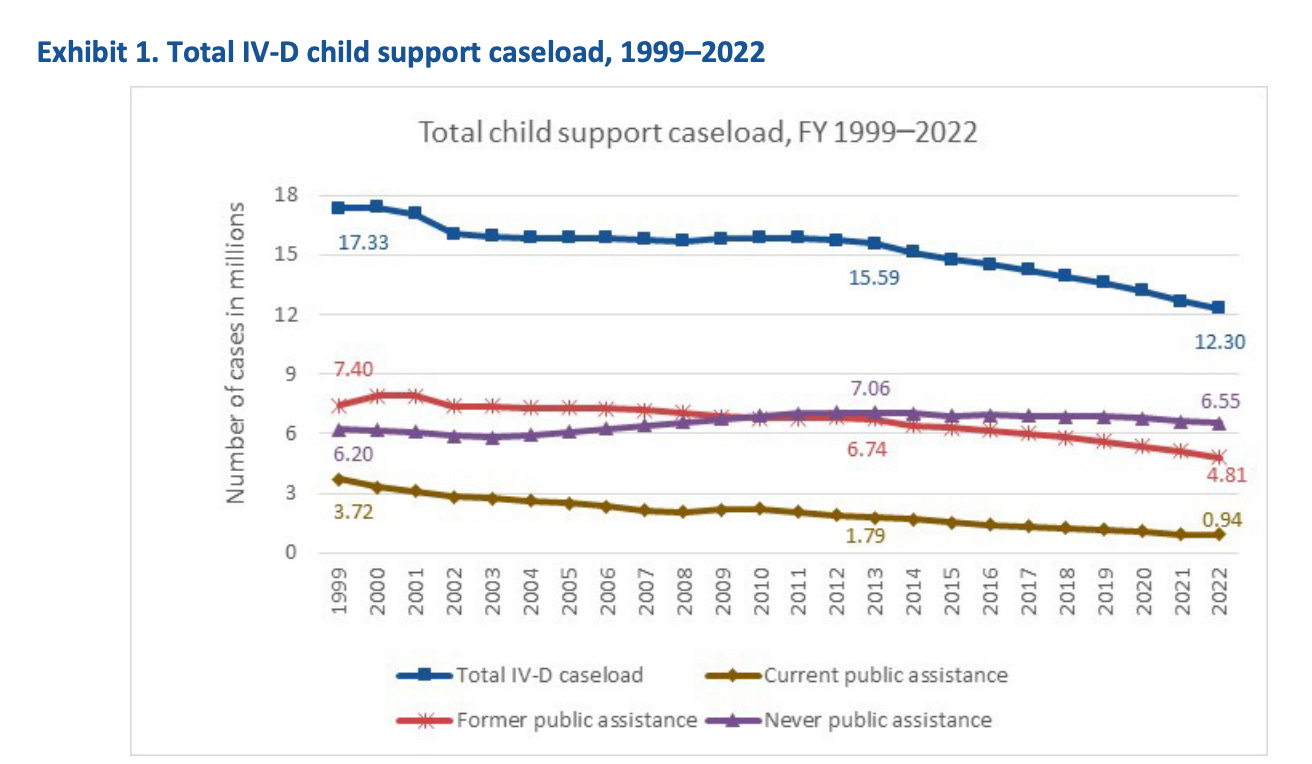
In the 23 years ended 2022, total child support cases filed through the state dropped by 29%Rates of poor moms filing for support fell at an even more accelerated rate further while women who are not or have never been on public assistance are more likely than ever to file:

  • 74% drop for filersย on public assistance
  • 42% drop for moms who wereย formerly on assistance
  • 6%ย increaseย for moms who wereย never on assistance
Source: Office of Child Support Services Annual Reports to Congress

Meanwhile child support compliance has never exceeded 30% in all its history and arrearage totals for the program have grown each year.

Child Support Payments Received by Custodial Parents

Why are poor moms skipping child support?

1. Moms know child support hurts co-parenting

According to a Census survey, momsโ€™ attitudes about child support have shifted to viewing the child support program as frivolous, intrusive and even toxic, and they now extend grace and common sense to their co-parents. Moms also want to retain financial and relationship decisions within their families and keep the government out of their business.

Top reasons cited by parents (80% of child support applicants are women) not filing child support through the state:

Keep reading …