Fifty has a way of turning retirement savings into an intrusive thought. A birthday, a milestone reunion, a stray Facebook memory, and suddenly you’re doing math you didn’t sign up for.
Here’s the real number. Households headed by someone age 45 to 54 have an average of $313,220 saved in retirement accounts. That figure might feel wildly out of reach, or suspiciously low. Both reactions are common, because averages hide more than they reveal.
The median is the number that tells a different story about where most people your age actually stand, and it’s worth knowing before you panic or relax.
Retirement account data breaks down by age bracket rather than exact birthday, so a 50-year-old falls between two useful benchmarks. Households aged 45 to 54 have an average of $313,220 saved, while the median for that same group is $115,000. Push a few years older into the 55 to 64 bracket, and the average climbs to $537,560, with a median of $185,000. Both figures cover 401(k)s, IRAs, and similar dedicated retirement accounts only, not home equity, pensions, or other savings you might be counting on later.
Those averages get pulled upward by a small number of households with seven-figure balances. About 62% of households aged 45 to 54 have any retirement account at all, which means more than a third have nothing saved in a 401(k), IRA, or similar account. Wages haven’t kept pace with housing and healthcare costs for a long stretch of working adults, and having nothing saved by 50 says more about that reality than it does about anyone’s choices.
The median is the number that actually matters
Averages and medians measure different things, and mixing them up is how misleading headlines happen. The average gets pulled up by a relatively small group of high earners and long-term savers, while the median tells you what the person squarely in the middle of the pack actually has.
Apply that rule to an average salary and the target gets real fast. Someone earning $75,000 a year would need $450,000 saved by 50 to hit that benchmark. Compare that to the actual median of $115,000 to $185,000 for people in their late 40s and 50s, and the shortfall is obvious for most households. These numbers are aspirational goalposts, not a pass or fail test, and that framing matters. Your real number depends on when you plan to retire, whether you’ll have a pension, and how much you expect to spend once you stop working.
The catch-up contribution rules just got bigger for 2026
Turning 50 does come with one real advantage: you’re allowed to contribute more toward retirement accounts starting the year you turn 50. For 2026, the standard 401(k) contribution limit is $24,500, and anyone 50 or older can add an $8,000 catch-up contribution on top of that, for a total of $32,500 a year. If you’re turning 60, 61, 62, or 63 sometime in 2026, the catch-up jumps to $11,250, pushing your total possible contribution to $35,750.
IRAs got a boost too. The annual IRA limit is now $7,500, with an additional $1,100 catch-up contribution for anyone 50 and older, bringing the total to $8,600.
There’s a new wrinkle for higher earners this year. If you made more than $150,000 in wages in 2025, your 401(k) catch-up contributions in 2026 have to go into a Roth account instead of pretax, under a rule from the SECURE 2.0 Act. That means paying tax on that money now instead of at withdrawal, which is worth factoring into your planning before the year ends.
What actually helps if you’re behind
If your own number looks nothing like the benchmarks above, a few moves matter more than others. Maxing out your catch-up contributions is the fastest lever available, since that extra $8,000, or $11,250 if you’re 60 to 63, compounds for the rest of your working years. Getting even halfway there beats leaving it on the table.
Delaying Social Security past your full retirement age is the other big one. Waiting to claim benefits past full retirement age increases your monthly payment by 8% for every year you wait, up to age 70, and that’s a guaranteed return that’s hard to match anywhere else.
Paying down high-interest debt frees up money you can redirect into savings, and working even two or three extra years gives your existing balance more time to grow while shrinking the number of years it needs to cover. None of it closes a six-figure shortfall overnight, and it doesn’t need to. Small changes made consistently in your 50s still move the number that matters by the time you actually retire.
Somewhere in a drawer, a coffee can, or the bottom of an old change jar, there’s a good chance you’re sitting on more than pocket change. Pennies get treated like the least interesting coin in American pockets, and most of the time that’s fair. But the one-cent coin has more genuinely valuable dates, errors, and varieties than almost any other denomination the U.S. Mint has ever produced, and a lot of them are still out there in ordinary circulation.
None of the pennies on this list require a magnifying glass collection or a safe deposit box to find. Some are worth a few extra dollars over face value. A few are worth thousands. A small handful, if you’re genuinely lucky, are worth six figures or more. What separates a valuable penny from a common one usually comes down to three things: the specific date and mint, the condition it survived in, and whether it carries one of the mint’s occasional mistakes.
Before you get too excited, know that most 1943 pennies are not rare, most wheat cents are worth a few cents, and most doubling you’ll spot under a loupe is worthless machine doubling rather than a genuine die variety. The pennies below are the real exceptions worth learning to recognize.
If you own a 1943 penny, the first thing to do is find a magnet. Nearly every one from that year is made of zinc-coated steel and will stick tight. The ones that do not stick are the ones worth chasing down. When the country needed copper for the war effort, the Mint switched cent production to steel for a single year, but a small number of bronze planchets left over from 1942 slipped into the presses anyway.
Fakes are everywhere. Most “copper” 1943 cents offered online are ordinary steel cents that have been plated to look bronze, and the magnet test catches nearly all of them instantly. A genuine example that fails the magnet test should go straight to PCGS or NGC for authentication before anyone discusses a sale. Don’t clean it, don’t polish it, and don’t let a pawn shop make you an offer before you know what you actually have.
1909-S VDB Lincoln cent
Image Credit: Heritage Auctions
This is the coin every wheat penny hunter has in the back of their mind while flipping through an old jar of change. In 1909, the Mint put designer Victor David Brenner’s initials on the reverse of the brand new Lincoln cent. The public objected to how prominent they were, and the Mint pulled them within weeks, but not before the San Francisco branch struck a run of only 484,000.
That low mintage, combined with a century of people spending, losing, and melting down cents, has made genuine examples scarce in any grade. Worn but honest circulated coins typically bring $700 to $1,600, and once you get into mint state the price climbs quickly toward the low thousands and beyond.
Because the demand is so steady, this is one of the most counterfeited coins in the hobby. Fakes are made by adding a fake S mint mark to a common 1909 VDB cent from Philadelphia, or by altering other dates entirely. The mint mark should sit below the date and look sharp, not soldered on or fuzzy under magnification. Any example worth real money should be sent to PCGS or NGC before you spend a dime on it, since authentication pays for itself many times over on a coin at this price point.
Off-center strike Lincoln cent
Image Credit: Heritage Auctions
Not every valuable penny has a special date. Sometimes the mint itself made the mistake, and those errors turn up in ordinary circulation more often than people expect. An off-center strike happens when a blank planchet isn’t sitting correctly between the dies when the coin is struck, so the design lands off to one side instead of centered. Depending on how far it’s shifted, part of Lincoln’s portrait, the date, or the lettering can be missing entirely.
The value depends almost entirely on how far off-center the strike is and whether the date survived the mistake. A cent that’s 10 to 15 percent off-center is worth around $20, 20 to 35 percent brings closer to $50, and anything 40 percent or beyond with a readable date can bring $200 or more. A coin missing its date entirely is worth considerably less, since it can’t be tied to a specific year or mint.
These show up in circulation because mint quality control isn’t perfect, and a coin like this can slip into a roll of ordinary cents without anyone noticing until someone actually looks. Check that the error looks mechanical rather than damaged after the fact. A coin that’s been struck off-center has a clean, slightly crescent-shaped blank area, while one that’s been clipped or altered after leaving the mint usually shows tool marks or an uneven edge.
1969-S doubled die obverse Lincoln cent
Image Credit: Heritage Auctions
This one made headlines for the wrong reason when it was first found. In 1969, a doubling error on the obverse die produced cents where the date and the words IN GOD WE TRUST show a clear, doubled outline, strong enough to see without a loupe. Early examples were so unusual that the Secret Service briefly investigated them as counterfeits before confirming they were genuine mint errors.
Only an estimated 30 to 50 examples are known to exist, all struck at the San Francisco mint. Circulated pieces that turned up in pocket change have sold in the low thousands, while sharp, uncirculated examples have brought over $600,000 at the very top of the grading scale. Most collectible examples land somewhere between those two extremes, typically in the tens of thousands for a solid mint state coin.
The catch is that ordinary machine doubling, a common and worthless printing artifact, gets mistaken for this variety constantly. True doubling on this date shows a clear, evenly spaced second image on the date and motto, not a flat, shelf-like smear. If you think you have one, don’t clean it, and get it to PCGS or NGC before doing anything else. This is a case where a modest grading fee could be the difference between missing a fortune and confirming one.
1943 steel Lincoln cent
Image Credit: Shutterstock
Most 1943 pennies are the common, magnetic kind, and they are worth having but not worth getting your hopes up over. Struck in zinc-coated steel for a single year to save copper for the war, over a billion of these were made, and huge numbers survive today in drawers, jars, and old collections.
A circulated example with the usual gray staining or light rust is worth $0.10 to $3, basically pocket change with a story attached. Bright, well-struck uncirculated pieces do better, typically $8 to $25 in the common mint state grades, and the very best certified examples, graded MS67 or higher, have brought $500 to $900 or more.
Condition is everything here because steel rusts, and rust cannot be reversed without damaging the coin further. Look for a coin that still has its original bright, silvery sheen rather than dark spotting or pitting. Be cautious of anything advertised as brilliant uncirculated without a PCGS or NGC holder, since regrading disappointment is common on this date. And remember the real prize hiding among these: if a 1943 penny does not stick to a magnet, stop and read the entry above, because you may be holding something worth vastly more than a common steel cent.
1955 doubled die obverse Lincoln cent
Image Credit: Heritage Auctions
This is probably the most famous variety coin in American numismatics, and it’s the one that got an entire generation of collectors checking pocket change for doubling. A die-making error in 1955 caused the date, the word LIBERTY, and the motto IN GOD WE TRUST to show strong, unmistakable doubling on the obverse. Around 24,000 escaped into circulation, mostly through vending machines in the northeastern United States, before the mistake was caught.
Worn examples that clearly show the doubling typically bring around $1,000 even in heavily circulated grades, and clean uncirculated pieces climb from there into the $5,000 to $19,000 range depending on how sharp the strike is and how much original color remains.
This is a rite of passage coin, and it’s genuinely one of the more accessible key varieties because so many were saved once collectors realized what they had. Verify the doubling under magnification: it should be crisp and evenly spread across all three elements, not a mushy, shifted blur. Weak or partial doubling usually means a different, far less valuable die variety, and there are several that get mistaken for the real thing. When in doubt, compare against a certified reference image before assuming you’ve found the genuine article.
1926-S Lincoln cent
Image Credit: Heritage Auctions
Most wheat pennies from the 1920s are common enough that dealers barely look twice at them. The 1926-S is the exception, and it’s one that a lot of casual collectors overlook because nothing about the date looks unusual at a glance. San Francisco struck plenty of cents that year, but very few survived in top condition with their original color intact, and the strike on this date tends to be weak even on nice examples.
Ordinary, worn brown examples are worth a modest premium over face value, typically a few dollars, which is already more than most 1920s wheat cents bring. The real story is at the top end. Full, glowing red mint state examples are the rarest business strike Lincoln cent in that condition, and the finest known example has reached nearly $150,000.
If you inherit a wheat penny collection, this is a date worth pulling and checking closely, especially any coin that still shows bright orange-red color rather than the typical dull brown most survivors have taken on. A weak strike on Lincoln’s hair and beard is normal for this date and doesn’t hurt value much on its own. What matters most is color and surface preservation, since a clean, lustrous 1926-S is genuinely hard to find at any price.
1970-S small date Lincoln cent
Image Credit: Heritage Auctions
There are two versions of the 1970-S cent, and most people have never noticed the difference because it comes down to the size and shape of a single digit. On the small date variety, the top of the 7 barely reaches the height of the other digits, and the word LIBERTY is noticeably weaker than on the more common large date version. Both were struck at the San Francisco mint the same year, but the small date die was used far less.
Large date 1970-S cents are common and worth face value in circulated grades. The small date is a different story: clean uncirculated examples bring $80 and up, with the finest certified pieces reaching several hundred dollars, and even honestly circulated examples are worth several times face value once identified correctly.
Identification takes a steady hand and good light. Line up the top of the 9 and 0 in the date, then check where the top of the 7 falls relative to that line. On the small date it sits right at or above the line, and on the large date it falls clearly below. This is a coin that rewards patience more than luck, since most people who own one have simply never checked.
1914-D Lincoln cent
Image Credit: coyneone6q71 via eBay
The 1914-D doesn’t have the fame of the 1909-S VDB, but serious collectors will tell you it’s actually the tougher coin to find in top condition. Denver struck a bit over a million cents that year, a modest number that shrank further after decades of ordinary spending, and the coin is now considered the true key to completing a full date-and-mintmark set of Lincoln wheat cents.
Circulated examples with visible wear bring several hundred dollars even in modest grades, since demand for this date has never really cooled. Once you move into uncirculated condition, prices climb fast, with clean mint state examples reaching into the tens of thousands and the very finest certified pieces pushing past $60,000.
This is one of the most heavily counterfeited dates in the entire series, and the fakes fall into two categories: a fake D added to a common 1914 Philadelphia cent, or a reshaped digit turning a 1944-D into a fraudulent 1914-D. Genuine examples show a distinctive set of small circular hub marks inside the loop of the 9 in the date, a detail forgers routinely miss. Never buy a raw, uncertified 1914-D at a meaningful price. This is a date where certification isn’t a formality, it’s the entire transaction.
1972 doubled die obverse Lincoln cent
Image Credit: YKcoins via eBay
The 1972 doubled die is proof that not every valuable variety requires a magnifying glass. The doubling on this date is bold enough to spot with the naked eye across the date, the motto IN GOD WE TRUST, and the word LIBERTY, all shifted noticeably to the southwest of their normal position. Only about 75,000 were struck before the error was caught, and a meaningful number of those were spent into circulation before anyone realized what they had.
Typical uncirculated examples bring $300 to $700, with gem-quality pieces reaching into four figures. There are also several minor doubled die varieties from the same year with much weaker doubling, and those are worth a fraction of the major variety, so knowing which one you’re holding matters.
The safest way to confirm the major 1972 doubled die is to compare the date against a reference image, since the doubling should be obvious and dramatic rather than something you have to squint to see. Circulated examples with honest wear are still collectible and worth searching change rolls for, since this is a coin that legitimately does turn up decades after it was struck. Anything you find should be handled by the edges and left unwashed until you know what you have.
1999 Wide AM Lincoln cent
Image Credit: bena_3558 via eBay
Most people have never heard of this one, and that’s exactly why it’s worth knowing about. In the 1990s, the Mint accidentally used a small number of proof-style reverse dies on ordinary circulation strike cents. The tell is in the letters A and M of AMERICA on the reverse: on a normal business strike cent they sit close together, almost touching, while on this variety they’re clearly separated.
The 1999 version is the scarcest of the three known Wide AM years. Even the lowest circulated grades bring over $100, mint state examples run several hundred dollars, and coins graded MS66 or better commonly bring $1,000 or more, with the finest certified pieces reaching $4,000 and up.
Because the difference comes down to letter spacing rather than an obvious doubling or color shift, this is a coin that gets overlooked constantly, even by people actively searching rolls. It’s worth checking any 1998, 1999, or 2000 cent you come across, since thousands of examples are likely still sitting unrecognized in circulation and old jars of change. A loupe and a side-by-side comparison against a normal Close AM cent is really all you need to make the call yourself before sending anything off for grading.
1984 doubled ear Lincoln cent
Image Credit: Hunting for Treazure Coins via eBay
This is one of the more charming errors in the series, mostly because of how it looks. A doubling error on the working die left Lincoln with what appears to be a second earlobe sitting just below and behind the real one, along with lighter doubling on his beard and bowtie. It’s a coin you can identify with a decent photo and a bit of patience, no expensive equipment required.
Circulated examples with the doubling still visible are collectible in their own right, and typical uncirculated red pieces run $150 to $400. The certified auction record for this variety sits at $3,910, set by a top-population MS68 red example.
Because the error is subtler than something like the 1972 or 1955 doubled dies, plenty of genuine examples get passed over in circulation without anyone noticing the extra earlobe. Machine doubling, the common and worthless kind, tends to look flat and shelf-like rather than raised and sculptural, so look carefully at the area below Lincoln’s ear before getting excited. Billions of 1984 cents were struck, so most are worth face value, but this is a date genuinely worth a second look every time one turns up in change.
1922 no D Lincoln cent, strong reverse
Image Credit: Ttown419erTreasures via eBay
In 1922, Denver was the only mint striking Lincoln cents, and heavy production demand led to a die-clash accident that mint workers tried to fix by polishing a damaged obverse die. In the process, someone polished away the D mint mark entirely, creating a Philadelphia-looking cent that was actually struck in Denver. Collectors treat it as one of the defining varieties in the wheat cent series, right alongside the 1909-S VDB and 1914-D.
Worn but identifiable examples, where the missing mint mark is clear and not just weakly struck, typically bring $700 to $2,500 depending on grade, and clean mint state examples with strong reverse detail have sold well into five figures.
The identification here takes real care. Many 1922 cents show a mint mark that’s simply weak from a worn die rather than genuinely absent, and those are worth a small fraction of the true no-D variety. The reverse should be sharp and well struck while the obverse looks noticeably soft, a combination collectors call the strong reverse. Given how often weak-mintmark coins get mistaken for the real thing, certification from PCGS or NGC is essential before you price this one seriously.
1983 doubled die reverse Lincoln cent
Image Credit: coinsourpassion via eBay
Most doubled dies on Lincoln cents show up on the obverse, which makes this one unusual. The doubling here hits the reverse instead, spreading clearly across the words UNITED, E PLURIBUS UNUM, and ONE CENT. It’s considered one of the strongest reverse doubling errors in the entire series, easily visible without magnification once you know where to look.
Typical uncirculated examples bring $150 to $500 depending on grade and color, and the finest certified pieces have reached over $7,000 for coins in near-perfect condition. Circulated examples exist too, and while they’re worth less than uncirculated pieces, they still carry a real premium over face value.
Given how enormous the 1983 cent mintage was, a genuine doubled die reverse is a satisfying find precisely because it hides in plain sight among billions of ordinary coins. Check the reverse lettering under a loupe for a clean, doubled outline rather than a blurry or shelf-like smear, which usually signals worthless machine doubling instead. Full red color adds a meaningful premium over brown or red-brown examples at every grade level, so don’t assume a toned or dull example is worth nothing. It’s still collectible, just less than a bright one.
Boring doesn’t mean dead-end. A lot of decent-paying work is surprisingly dull. Someone has to test the alarm panel, measure the property line, watch a machine run, inspect the same safety equipment again, and replace the worn bearing before it shuts down a factory.
That can be good news if you care more about a steady paycheck than having an impressive job title. Routine work tied to buildings, roads, factories, hospitals, utilities, and safety rules tends to stick around because skipping it eventually causes something expensive, dangerous, or both.
These jobs aren’t glamorous. Many involve checklists, repetitive testing, preventive maintenance, documentation, or long stretches of monitoring equipment. But that ordinary work is exactly what can make them dependable.
Automatic doors don’t seem complicated until one stops opening at a hospital, warehouse, grocery store, or office building. Mechanical door repairers install and service automatic sliding doors, powered gates, hydraulic doors, garage doors, and the motors, sensors, tracks, and controls that make them work. Median pay is about $55,720 per year.
A lot of the job is gloriously uneventful: inspect a door, clean or lubricate parts, test the safety sensor, adjust the closing speed, replace a worn roller, and move to the next one. That physical service work isn’t easy to send overseas or hand completely to software. Employment is projected to grow much faster than average, with thousands of openings expected as buildings keep adding automatic access systems. You can usually enter through mechanical, electrical, garage-door, or building-maintenance work and learn the specific equipment on the job. Basic electrical troubleshooting skills are especially useful because modern doors mix mechanical parts with sensors and electronic controls.
2. Security and fire alarm systems installer
Image Credit: Shutterstock
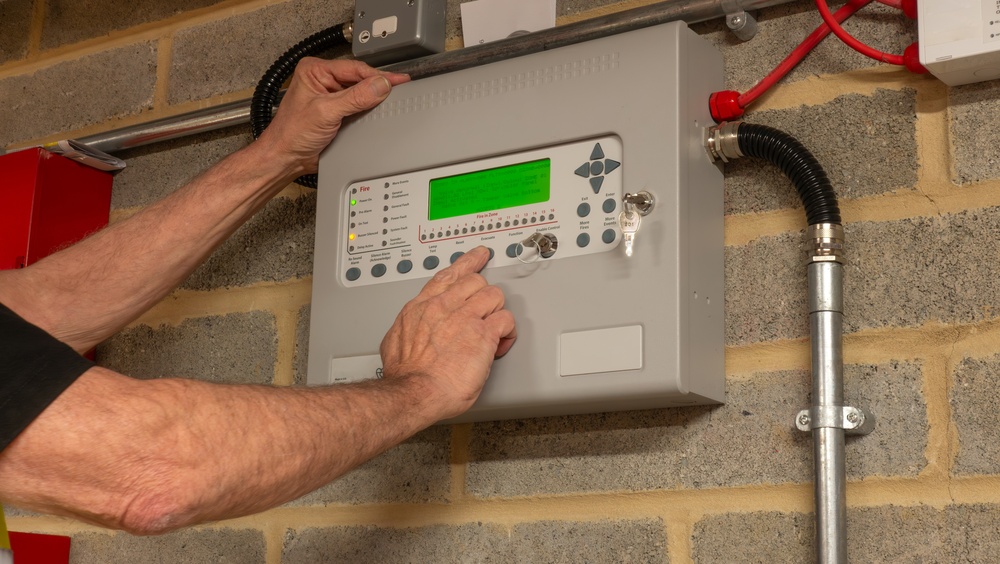
If spending an afternoon testing smoke detectors and tracing wires through ceiling tiles sounds boring, this field may suit you perfectly. Security and fire alarm systems installers wire, program, test, maintain, and repair alarm panels, sensors, cameras, notification devices, and related equipment. Median pay is about $60,070 per year.
The work follows codes, testing procedures, and maintenance schedules, which means plenty of repetition. But building owners can’t simply decide alarms are optional when budgets get tight. Systems also need humans on-site to inspect wiring, find failed devices, verify that alarms actually trigger, and make repairs inside real buildings. Employment is projected to grow much faster than average, with roughly 9,400 openings over the projection period. A common path starts with electrical or electronics training, followed by employer instruction on specific alarm systems. Licensing or registration requirements can vary, and manufacturers often offer training on their own panels and equipment.
3. Calibration technician
Image Credit: Shutterstock
Factories, laboratories, hospitals, and testing facilities use instruments that have to give the right measurement every single time. Calibration technicians check gauges, meters, temperature sensors, pressure instruments, electrical test equipment, and other devices against known standards. Median pay is about $67,820 per year.
This is detail work in the purest sense. You may spend much of your day connecting instruments, taking readings, comparing results, making tiny adjustments, attaching calibration labels, and recording what you found. The job is expected to grow faster than average, with continued demand in manufacturing and technical services. Automation can collect readings, but somebody still has to verify the measuring equipment itself, investigate bad results, physically adjust devices, and document that equipment meets required tolerances. Technical-school programs in electronics, instrumentation, metrology, or industrial technology can help you get started. An associate degree is common in some workplaces, while others hire people with military electronics, manufacturing, or maintenance experience and train them on their equipment.
4. Semiconductor processing technician
Image Credit: Shutterstock
Making computer chips involves some extremely advanced technology and some extremely repetitive work. Semiconductor processing technicians monitor the machines that coat, etch, clean, heat, cut, and otherwise process silicon wafers. Median pay is about $51,430 per year.
You may spend hours following cleanroom procedures, loading materials, watching process readings, checking wafers, recording production information, and responding when a machine drifts outside its normal settings. Employment is projected to grow much faster than average. Chip plants use plenty of automation already, but that doesn’t eliminate the need for technicians who deal with equipment faults, contamination problems, material handling, changeovers, and quality issues on the production floor. Entry requirements vary by employer. Some plants hire workers with technical certificates or manufacturing experience, while more complicated equipment jobs may favor an associate degree in electronics, semiconductor technology, mechatronics, or a related field. Cleanroom discipline matters almost as much as mechanical skill because one small contamination problem can ruin expensive batches.
5. Rail car repairer
Image Credit: Shutterstock
Passenger and freight rail cars spend their lives vibrating, braking, rolling over rough track, and hauling heavy loads. Rail car repairers inspect that equipment and fix what wears out. Median pay is about $67,530 per year.
Expect a lot of routine inspections, brake work, replacing worn parts, checking couplers, crawling underneath cars, and documenting repairs. It’s not the romantic side of railroading. Employment is projected to grow about as fast as average, with ongoing openings as railroads and transit systems replace workers and keep existing fleets in service. The equipment is large, physical, and safety-sensitive, so repairs still require people who can inspect an actual car, spot damage, use tools, and confirm that the repair is safe. A high school diploma is often the starting point, followed by employer training. Welding, diesel, industrial maintenance, or heavy-equipment experience can make you more competitive, particularly for jobs involving brakes, structural repairs, and mechanical systems.
6. Mechanical insulation worker
Image Credit: Shutterstock
Mechanical insulation workers wrap pipes, ducts, boilers, tanks, and other equipment with insulation that controls temperature, prevents condensation, reduces energy loss, or protects workers from hot surfaces. Median pay is about $58,340 per year.
There is plenty of measuring, cutting, fitting, wrapping, fastening, and then doing the same thing a few feet farther down the pipe. The occupation is projected to grow faster than average. Buildings and industrial plants keep needing insulation when equipment is installed, renovated, repaired, or upgraded for efficiency. The job also takes place around pipes and mechanical systems that have to be handled in person, often in cramped spaces where a computer can’t do much for you. Many workers learn through apprenticeships or employer training rather than a four-year degree. Construction experience helps, but newcomers can also start as helpers and build the measuring, cutting, safety, and material-handling skills needed for more independent work.
7. Earth driller
Image Credit: Shutterstock
Earth drillers operate drilling equipment for work such as water wells, environmental sampling, foundation investigations, mineral exploration, and other projects outside oil and gas production. Median pay is about $60,190 per year.
The routine can be pretty basic: set up the rig, drill, add or remove sections, watch pressure and equipment readings, collect material, clean up, and move the rig again. Employment is projected to grow about as fast as average, with around 1,700 openings over the projection period. Construction, groundwater work, environmental testing, and site investigations all depend on somebody physically getting below the surface. Remote software isn’t going to wrestle drill pipe out of the ground. Most workers learn heavily on the job. Mechanical experience, construction work, heavy-equipment skills, and commercial driving credentials can all help, since crews move large rigs and supporting equipment between sites. The job can be dirty and repetitive, but that’s part of why fewer people are lining up to do it.
8. Paving, surfacing, and tamping equipment operator
Image Credit: Shutterstock
Road paving involves a surprising amount of doing the same thing slowly and accurately for hours. These operators run asphalt pavers, rollers, tampers, screeds, and related machines that spread and compact road-building materials. Median pay is about $53,340 per year.
Your shift may consist of following the paving crew at walking speed, watching gauges and material flow, keeping the machine lined up, and making small adjustments so the finished surface stays even. Employment is projected to grow about as fast as average, with thousands of openings expected. Roads, parking areas, airport surfaces, and other paved infrastructure wear out no matter what happens in the office-job market. The machines have become more sophisticated, but they still operate on physical job sites where people deal with traffic, weather, equipment jams, changing grades, and uneven material. Most operators learn through construction employment, apprenticeships, or on-the-job training. Experience with loaders, skid steers, rollers, or other equipment can provide an easier way in.
9. Surveying and mapping technician
Image Credit: Shutterstock
Before somebody builds a subdivision, road, utility line, or commercial property, someone has to stand outside and measure where everything actually is. Surveying and mapping technicians help collect field measurements, set up survey instruments, mark points, maintain records, and turn field information into usable maps. Median pay is about $51,940 per year.
Some days involve repeatedly moving a tripod, holding a survey rod, entering measurements, hammering stakes, and checking that the crew’s numbers match. Employment is projected to grow 5%, with about 7,600 openings expected each year. GPS, drones, and modern surveying tools make crews more efficient, but they don’t eliminate field verification, property measurements, construction layout, or the need to work around buildings and terrain. Entry-level field jobs may be open to workers with a high school diploma and on-the-job training. Technical programs in surveying, GIS, drafting, or civil technology can improve your chances and help you move toward more skilled instrument or mapping work.
10. Food science technician
Image Credit: Shutterstock
Food science technicians help test the products and ingredients that move through food plants and laboratories. That can mean preparing samples, checking moisture or acidity, operating lab equipment, recording results, inspecting production conditions, and helping make sure batches meet standards. Median pay is about $52,130 per year.
If you enjoy predictability, testing the same type of sample over and over may be a feature rather than a drawback. Employment is projected to grow faster than average, with thousands of openings expected. Food producers can’t skip quality and safety checks just because the work is repetitive. Instruments can automate pieces of the testing process, but technicians still prepare samples, investigate odd results, maintain equipment, follow sanitation procedures, and deal with physical products coming off production lines. An associate degree in food science, chemistry, biology, or laboratory technology is a common route. Some employers also train workers who already have food-manufacturing or quality-control experience and enough science coursework to handle laboratory procedures.
11. Chemical technician
Image Credit: Shutterstock
Chemical technicians spend their days running tests, preparing solutions, cleaning equipment, collecting samples, watching production processes, and recording whether materials meet specifications. Median pay is about $60,390 per year.
This can be repetitive bench work where precision matters more than excitement. Employment is projected to grow about as fast as average, with roughly 6,700 openings over the projection period. Manufacturers, testing laboratories, chemical producers, and other facilities still need people to handle physical samples, troubleshoot equipment, follow safety procedures, and investigate results that don’t look right. Automated instruments can perform many measurements, but somebody has to prepare what goes into them and decide what to do when a test fails. An associate degree in applied science, chemistry, laboratory technology, or a similar field is a common entry route. Hands-on lab classes are useful because employers care about whether you can measure accurately, handle chemicals safely, maintain clean work areas, and follow written procedures without improvising.
12. Polysomnographic technician
Image Credit: Shutterstock
Polysomnographic technicians work in sleep labs, where they attach sensors to patients and monitor breathing, oxygen levels, brain activity, heart rate, eye movements, and other signals overnight. Average pay is about $65,814 per year.
Once everybody is hooked up, much of the shift can involve sitting in front of monitors while other people sleep. You watch signals, correct loose sensors, note unusual events, and make sure the study produces usable information. The broader neurodiagnostic field that includes sleep testing is projected to grow faster than average. This work is hard to fully automate because patients move, sensors fall off, signals develop artifacts, equipment acts up, and somebody has to respond in the room. Entry routes vary. Formal sleep-technology programs are available, and people also enter from respiratory care or other neurodiagnostic backgrounds. Employers may prefer or require a recognized sleep credential after you meet the applicable education and clinical-experience requirements.
13. Dialysis equipment technician
Image Credit: Shutterstock
Dialysis clinics depend on machines that move and clean a patient’s blood several times a week. Dialysis equipment technicians concentrate on keeping those machines, water-treatment systems, and supporting equipment working properly. Average pay is about $54,764 per year.
This is preventive maintenance territory: inspect equipment, run tests, replace components, disinfect systems, document service, and troubleshoot machines that aren’t performing correctly. The broader medical-equipment repair field is projected to grow much faster than average as healthcare facilities use more complex equipment. Dialysis machines can’t simply be ignored when they throw an error, and repair work has to happen where the equipment and patients are. Employers commonly look for electronics, biomedical equipment, mechanical, or technical training. An associate degree or certificate can help, although related repair experience may also open doors. Once hired, you’ll need to learn the specific dialysis machines and water systems used by that employer, along with strict maintenance and infection-control procedures.
14. Occupational health and safety technician
Image Credit: Shutterstock
Occupational health and safety technicians inspect workplaces for hazards and help check whether companies are following safety rules. They may measure noise, collect air samples, inspect protective equipment, review work areas, investigate incidents, and keep records of what they find. Median pay is about $61,560 per year.
It’s a checklist-heavy job, and much of it involves noticing ordinary problems before they turn into expensive ones. Employment is projected to grow much faster than average, with about 3,400 openings over the projection period. Warehouses, factories, construction operations, transportation companies, and other employers still need actual people to walk through work areas, inspect equipment, talk to workers, and see hazards that aren’t neatly captured in a spreadsheet. Technicians may enter with a high school diploma plus substantial workplace training, while certificates or associate-level coursework in occupational safety can make you more competitive. Experience in manufacturing, construction, transportation, or another safety-sensitive industry can also be useful because you already understand how work is really performed.
15. Industrial machinery mechanic
Image Credit: Shutterstock
Factories are packed with conveyors, pumps, motors, gearboxes, packaging machines, and production equipment that eventually wear down. Industrial machinery mechanics keep that equipment running. Median pay is about $64,520 per year.
A big part of the job is preventive maintenance that nobody notices when it’s done correctly: lubricating components, checking belts, replacing bearings, inspecting machinery, aligning parts, and listening for a problem before a machine fails. Employment is projected to grow much faster than average, with tens of thousands of openings expected. More automated factories can actually create more complicated machinery that needs maintenance when sensors, motors, pneumatic systems, and mechanical components stop cooperating. Many mechanics start with a high school diploma and lengthy on-the-job training. Industrial maintenance, mechatronics, machining, welding, or electrical programs can shorten the learning curve and make you more useful around modern production equipment.
16. Mobile heavy equipment mechanic
Image Credit: Shutterstock
Bulldozers, graders, cranes, loaders, and other heavy machines spend their days pushing, lifting, digging, and shaking themselves apart. Mobile heavy equipment mechanics inspect, service, diagnose, and repair the hydraulic, mechanical, and pneumatic systems that keep them working. Median pay is about $65,510 per year.
Routine oil and filter changes, hose inspections, hydraulic leaks, worn pins, brake adjustments, and endless preventive-maintenance checks make up a large share of the work. Employment is projected to grow faster than average, with about 16,500 openings over the projection period. Construction and other equipment-heavy industries lose money when a machine sits broken, so employers have a strong reason to keep mechanics around. Diagnostic software can tell you that a system has a problem, but it can’t crawl under a muddy loader and replace the failed component. Employers often prefer diesel, heavy-equipment, or technical-school training, although apprenticeships and employer training are also common ways to build the necessary skills.
17. Refrigeration rack technician
Image Credit: Shutterstock
Large grocery stores, warehouses, food distributors, and similar facilities use commercial refrigeration systems that may run dozens of coolers and freezers from one equipment rack. Refrigeration rack technicians maintain and troubleshoot those systems. Average pay is about $60,315 per year.
The routine isn’t flashy: check pressures and temperatures, look for leaks, clean components, test controls, replace parts, log readings, and answer service calls when something stops staying cold. The larger heating and refrigeration service field is projected to grow 8%, with about 40,100 openings expected each year. Food businesses can’t leave a failed refrigeration rack alone while thousands of dollars of inventory warms up. The equipment is physical, complicated, and spread through real buildings, which keeps skilled service work local. Trade-school refrigeration or HVAC training is a common starting point. Technicians who work with regulated refrigerants also need the appropriate refrigerant-handling certification, and rack systems usually require additional hands-on experience beyond basic residential air conditioning.
18. Surgical technologist
Image Credit: Shutterstock
Surgery sounds dramatic from the outside, but surgical technologists spend a lot of time doing controlled, repetitive work. They prepare operating rooms, arrange sterile instruments, count supplies, help gown and glove the surgical team, pass instruments, and keep the sterile field organized. Median pay is about $64,650 per year.
The job still carries real pressure because mistakes matter, but much of a normal shift revolves around setup, procedure, counting, cleaning, restocking, and doing it all again for the next case. Employment is projected to grow faster than average, with about 7,000 openings over the projection period. Hospitals and surgery centers need someone physically present who understands sterile technique and can respond immediately when the surgeon needs a particular instrument or supply. Most surgical technologists complete a certificate, diploma, or associate program that includes supervised clinical training. Professional certification can also improve job prospects and may be preferred by employers.
You send your 26-year-old $200 for her phone bill on the first of the month. On the fifteenth, your mother’s home care agency emails an invoice for $2,240. Somewhere in between, you’re supposed to be funding your own retirement, and most months you just don’t get to it.
Half of parents with adult children are now providing them regular financial help, averaging close to $1,500 a month, while their own parents’ care bills run into the thousands. Two full households on top of your own, paid for out of one paycheck. That’s what happens when nobody in the family ever actually renegotiates who pays for what.
A chunk of what you’re covering right now is real and necessary. A bigger chunk than you’d guess is just sitting on autopay, tied to a decision someone made years ago that nobody’s revisited since. Some of these you can cancel by tonight. A couple take one phone call to an office you didn’t know existed.
Half of parents with adult children are providing them regular financial support, and 65 percent of that group is still covering some or all of a cell phone bill for a kid who has a job. If your 28-year-old is employed and living on their own, a family plan line costing you $40 to $80 a month isn’t a kindness anymore, it’s a subsidy nobody’s tracking.
The fix isn’t a hard conversation about independence. It’s a five-minute one about splitting the bill. Most carriers let a second person pay their share directly from a linked card, so you stop being the collection agency and just stay the account holder. Compare what you’re paying as an add-on line against what a solo plan from a budget carrier would cost your kid on their own, since many run $25 to $35 a month with no contract. Often the difference is close enough that keeping them on your plan isn’t actually saving anyone real money, it’s just habit nobody’s questioned since they moved out. If the relationship can’t handle even that much accounting, that’s worth noticing on its own. A recurring payment that never gets discussed tends to stay invisible for years, long after the reason for it has quietly stopped making sense.
Your adult child’s car payment or cosigned debt
Image Credit: Shutterstock
Nearly one in three parents with grown children are currently providing them financial support, and almost half of that group are directly covering a car payment, insurance premium, or utility bill. One in five have added their adult child as an authorized user on a credit card. Cosign a car loan or keep an adult child on your insurance policy, and their driving record and payment history become your risk, not just your expense.
A cosigned loan can be the only way someone with thin credit gets approved for a reliable car. Where it gets expensive is when the bridge becomes permanent. If your name is still on a loan or policy for someone who’s been employed for two years and built a driving record of their own, ask your insurer or lender what it actually takes to separate the accounts, and whether your kid can now requalify on their own.
Subscriptions running on autopay across the whole household
Image Credit: Shutterstock
The average household guesses it spends $86 a month on subscriptions, then actually spends $219 once every recurring charge gets added up. That gap widens fast once you’re managing more than one household’s accounts, your own streaming logins, a parent’s cable package, the meal kit your daughter signed up for on your card two years ago and forgot to cancel.
Pull up your bank and credit card statements and search for anything billed monthly or annually. Cross off what you or your parent actually used in the last 60 days. What’s left is money leaving your account for a service nobody’s opened. Do this twice a year, once for your own cards and once for any account where you have visibility into a parent’s spending, since subscriptions attached to an aging parent’s card are often the last thing anyone checks. Pay close attention to streaming. It’s common for grown kids to still be logged into a parent’s account years after moving out, and just as common for a parent to be paying for three or four services when they regularly watch one. Neither is a crisis on its own, but stacked together across a household, it’s usually the single biggest chunk of the gap between what you think you’re spending and what you actually are.
Extended warranties on electronics and appliances
Image Credit: Shutterstock
Extended warranty buyers typically pay around $1,000 for coverage worth about $700 in actual repairs, and only about one in ten people who buy one ever file a claim. Retailers push these hardest on the exact categories a sandwich generation household buys a lot of: a new washer for your place, a replacement TV for your parents, a laptop for a kid starting a job. Manufacturer warranties already cover the window when a product is statistically most likely to fail. Many credit cards also extend that coverage automatically for a year or more when you buy with that card, at no extra cost.
Before saying yes at checkout, check what protection you already have through the card in your wallet. If you’re financing or buying appliances for your parents’ house, check that card coverage too, since duplicate protection on the same item happens more often than you’d think. The one real exception worth considering is a laptop or phone that travels constantly and gets dropped or spilled on, where the cost of a cracked screen can actually exceed the price of the plan. For a washer, a fridge, or a TV that mostly just sits there, the odds almost never favor the warranty.
Credit insurance tacked onto a loan
Image Credit: Shutterstock
When you finance a car for your kid or help refinance a parent’s loan, the dealership or lender will often offer credit insurance, a policy that pays off the balance if the borrower dies, loses a job, or becomes disabled. It’s optional coverage that increases your loan amount and the interest you pay over the life of the loan, not a required part of financing.
If you already carry life insurance or disability coverage, credit insurance usually duplicates protection you’re paying for elsewhere, just at a worse price and tied to one specific debt instead of your whole financial picture. It’s also negotiable, right alongside extended warranties and gap insurance, even though finance managers rarely bring that part up during the paperwork rush. Ask for the loan quote without the add-on and watch the payment change before you agree to anything. If you’re helping a parent refinance and a lender is presenting credit insurance as a requirement for approval, that’s worth a second call to a different lender, since making it sound mandatory when it isn’t is exactly the kind of practice that gets these products flagged by regulators in the first place.
A landline nobody in the house answers
Image Credit: Shutterstock
Landline service typically ranges from $20 to $50 a month, and if your parent also carries a cell phone or a medical alert device with its own connection, that landline is often paying for redundancy nobody uses. Multiply that by 12 and you’re looking at $240 to $600 a year for a phone that mostly rings with scam calls.
The one real argument for keeping it is that a corded landline still works during a power outage, when cell towers and routers can go down. If that’s the actual reason it’s still connected, that’s a legitimate safety call, not a wasted expense, especially in a rural area with spotty cell coverage. If it’s just habit, or your parent already carries a cell phone everywhere and knows how to use it, call the provider and ask what canceling actually looks like. Some plans bundle the landline with a discount on internet or cable, so dropping the phone line alone can sometimes raise the price of what’s left. Ask for the real total both ways before deciding, rather than assuming the landline itself is the whole $20 to $50.
Private mortgage insurance you forgot to cancel
Image Credit: Shutterstock
If you bought your home with less than 20 percent down, you’re likely paying private mortgage insurance, and it cancels once you reach 20 percent equity, but only if you ask. Your servicer isn’t required to remove it on its own until your balance drops to 78 percent of the home’s original value, which can take years longer.
This one’s easy to lose track of while you’re juggling a parent’s care costs and a kid’s rent help, because PMI is baked into your monthly mortgage payment and doesn’t show up as its own line item demanding attention. Pull your most recent mortgage statement, check your loan balance against your home’s original value, and call your servicer if you’re near or past that 20 percent mark. Removing PMI on a typical loan can free up anywhere from $50 to a few hundred dollars a month, depending on your loan size and credit profile, money that’s currently doing nothing for you. Home values have risen in a lot of markets over the past few years too, which means you may have crossed 20 percent equity sooner than your original amortization schedule suggested, even without extra payments. It costs nothing to ask your servicer where you actually stand.
A premium medical alert subscription before checking free options
Image Credit: Shutterstock
Monitored medical alert systems typically run $20 to $60 a month, with some well-known providers charging closer to $90. If your parent already carries an iPhone and an Apple Watch, fall detection is built into the watch at no extra monthly cost, and it automatically calls emergency services if a hard fall is detected and the wearer doesn’t respond.
The tradeoff is that it dials 911 directly instead of routing through a live monitoring center, and the watch needs to be charged and worn consistently, which not every parent will do. If your parent won’t wear a watch reliably, a monitored pendant service still has a real place, especially for someone who wants a live person to talk to during a fall rather than an automated call. Just shop it like the subscription it is instead of defaulting to whichever brand your parent’s doctor mentioned in passing. Prices for equivalent coverage vary by tens of dollars a month between companies, and some lock you into a multi-year contract with an early cancellation fee, while others run month to month with no commitment. Ask directly about contract length before signing anything, since that detail rarely comes up unless you raise it.
Full retail home care rates before checking VA Aid and Attendance
It’s a needs-based benefit, so income and assets matter, and the application is famously tedious. It’s also one of the most underclaimed VA benefits, largely because most families never think to check whether a parent’s decades-old military service still qualifies them for something today, especially service from decades before anyone in the family needed care. Before paying a home care agency’s full rate out of pocket, call a Veterans Service Officer, usually free through a county or state veterans affairs office, and ask them to run the numbers. The benefit can pay for care from an agency or, in some cases, from a family member providing the care directly, which matters if you’re the one currently covering hours yourself instead of hiring help.
Full price on a parent’s Medicare prescriptions
Image Credit: Shutterstock
Medicare’s Extra Help program pays a parent’s Part D premium and deductible and caps copays at $5.10 for generic drugs and $12.65 for brand-name ones in 2026, and it’s worth around $5,300 a year to someone who qualifies. Income limits apply, roughly $23,475 a year for a single person, but plenty of parents living on Social Security alone fall under that line without realizing there’s a program to apply to.
Parents who already receive Medicaid or Supplemental Security Income are usually enrolled automatically, with no separate application needed. If not, the application takes about twenty minutes, either online, by phone, or at a local Social Security office, and it doesn’t require you to already be enrolled in a specific drug plan first. Check this even if you’re fairly sure your parent’s income is too high, since the real limits are higher than most people assume, and a partial subsidy is available on a sliding scale just above the full threshold. If your parent has been paying full price for medications on a fixed income for years, it’s worth twenty minutes to find out whether they’ve simply never applied.
Timeshare maintenance fees for a property nobody uses anymore
Image Credit: Shutterstock
The average timeshare maintenance fee climbed to roughly $1,480 per interval in 2024, and those fees rise every year regardless of whether anyone in the family has actually used the property recently. If your parents bought a timeshare decades ago and it’s been sitting unused while the annual bill keeps arriving, that’s real money leaving a fixed income for a vacation nobody’s taking.
Here’s what a lot of families get wrong: heirs aren’t personally responsible for a parent’s timeshare debt after they die unless they cosigned the deed, even though resorts sometimes imply otherwise. If your parent wants out while they’re still living, most major timeshare companies have exit or deed-back programs worth trying before paying a timeshare exit firm thousands of dollars. If the obligation has already passed to you, most states allow you to file a formal disclaimer of interest to refuse it within a set window after the death.
Brand-name prescriptions when a generic exists
Image Credit: Shutterstock
By law, a generic drug has to contain the same active ingredient, at the same dose and strength, and prove it performs the same way in the body as the brand-name version. A single generic competitor typically cuts prices by 30 percent, and five or more competitors push prices down by nearly 85 percent. That gap adds up fast across a household managing prescriptions for a parent with several chronic conditions and a kid who’s still on your insurance until 26.
Ask your doctor or pharmacist directly whether a generic exists for anything currently prescribed as brand-name only, since electronic prescriptions often default to dispense as written unless someone actively changes it. This is a five-second question at the pharmacy counter that can drop a $400 monthly prescription to under $20 in some cases. Ask again at every refill too, since new generics enter the market constantly and a drug that had no generic option last year might have one now. This applies as much to your own prescriptions and your kid’s as it does to a parent’s, since it’s easy to assume everyone’s already on the cheapest version when nobody’s actually checked recently.
Paid credit monitoring instead of a free credit freeze
Image Credit: Shutterstock
A credit freeze is free, permanent, and blocks new accounts from being opened in your name or a family member’s, and federal law has required all three credit bureaus to offer it at no charge since 2018. Paid credit monitoring services, often running $15 to $30 a month, mostly just alert you after something’s already happened rather than preventing it in the first place.
If you’re managing finances for an aging parent or keeping an eye on a young adult child’s credit for the first time, freezing all three bureaus takes about fifteen minutes total and costs nothing. You can lift it temporarily any time someone needs to apply for a loan, a credit card, or a new phone plan. Paid monitoring can still make sense for identity theft insurance or dark web scanning, but plenty of people are paying for that without ever placing the free freeze that actually stops new fraud.
A percentage-of-assets financial advisor fee
Image Credit: Shutterstock
Most financial advisors who charge a percentage of assets under management take around 1 percent a year, or roughly $9,600 on a $1 million portfolio, a fee that climbs automatically every time the market goes up, whether or not the advisor did anything differently that year. Flat-fee advisors charge a set dollar amount instead, often a few thousand dollars a year regardless of portfolio size.
This matters most for households juggling a parent’s estate planning alongside their own retirement accounts, since more assets under management usually means a bigger percentage fee without necessarily more work on the advisor’s end. A percentage fee also isn’t a flat 1 percent for everyone. Many firms drop the rate on assets above a certain threshold, so a large account may be paying a blended rate closer to 0.7 or 0.8 percent without anyone mentioning it. Ask any advisor you’re currently paying to show you, in dollars, exactly what you paid last year, and what a flat-fee structure would cost for the same work. If that number surprises you, it’s worth a second opinion before your next annual review, particularly if a parent’s assets recently got added to what the advisor manages.
A grocery delivery subscription you’re not using enough
Image Credit: Sulav Jung Hamal via Unsplash
Instacart+ runs $99 a year and Walmart+ costs $98 a year, and both are solid deals if you or a parent are ordering groceries at least twice a month. Below that, you’re paying an annual membership for a discount you’re not using often enough to break even on, on top of whatever markup the store already adds to delivered items.
If you signed up during a busy stretch, helping a parent recover from surgery, covering groceries while juggling a kid’s move, check whether that stretch is actually still happening. Look at your last three months of orders through the app before renewing, since both services show your order history right there once you log in. If it’s one or two orders, canceling and paying the occasional delivery fee directly will almost always cost less than keeping the membership running out of habit. And if you’re paying for one of these memberships on your own card while also covering a parent’s groceries separately, check whether consolidating onto a single membership and doing both shops together would actually cover more ground for less money than running two separate subscriptions in parallel.
Dorm shopping gets expensive in August because the boring basics and the bigger purchases all land on the same bill. Twin XL bedding, towels, storage, laundry gear, lighting and a few electronics can easily cost more than the decorative stuff students are usually more excited to buy.
Target has several Room Essentials and Brightroom basics marked down right now, plus a few everyday items that are simply priced low enough to make sense for a dorm. The best buys are the ones that solve an actual move-in problem without taking up much space.
Prices are accurate at the time of publishing but may vary by store or sell out quickly.
A dorm bed usually means buying Twin XL sheets that may never be useful anywhere else, so this is one category where keeping the cost low makes sense. The Room Essentials microfiber set is $9.00, down from $10, and includes a fitted sheet, flat sheet and pillowcase. The Twin/Twin XL sizing handles the longer mattress commonly found in dorm rooms.
Microfiber is not going to feel like a pricey cotton set, and students who sleep hot may prefer natural fibers. But at $9, this is a sensible starter set or backup for laundry day. Having two inexpensive sets is also more practical than discovering at midnight that the only sheets are still sitting wet in a communal washer.
Room Essentials firm support dorm bed pillows
Image Credit: Target
Two standard/queen pillows for $14.00 works out to $7 each, and Target currently has the set marked down from $20. They have firm support, moisture-wicking fabric and an allergy-protection cover, with the firmer fill aimed at back and side sleepers.
A two-pack is particularly useful in a dorm because the bed often doubles as the room’s sofa. One pillow can stay in its usual sleeping spot while the other gets used for reading, studying or propping yourself against a concrete-block wall. If you already own pillows you like, bring those instead. For someone starting from scratch, though, $14 covers the whole bed without spending $20 or more on each pillow.
Room Essentials 5-zone foam mattress topper
Image Credit: Target
Dorm mattresses tend to prioritize durability over comfort. Before spending $50 or more trying to fix one, the Twin/Twin XL Room Essentials foam topper is worth considering at $12.00. It is 1.25 inches thick and uses five support zones, and Target currently lists the Twin/Twin XL size in stock.
This is a basic foam layer, not a thick memory-foam topper, so expectations should stay reasonable. It makes the most sense when the mattress is simply too firm and needs a little cushioning. Target’s Room Essentials reversible memory-foam toppers currently start at $26, so trying the $12 option first can save money if extra softness is all that is needed.
Room Essentials six-piece dorm towel set
Image Credit: Target
Buying towels as a set cuts out several small purchases at once. This striped Room Essentials dorm set costs $20.00 and includes bath towels, hand towels and washcloths in 100% cotton terry. Target was also running a buy-one-get-one-50%-off promotion on select bath essentials when checked.
One set covers the basics without filling a tiny closet with oversized bath linens. A second set can be useful if laundry tends to happen only when absolutely necessary, and the current promotion makes that less painful. Target carries other dorm towel patterns at the same general price, so there is no reason to buy several nearly identical sets just because the prints are different.
Room Essentials small plastic dorm shower caddy
Image Credit: Target
Shared bathrooms turn shampoo, soap, toothpaste and a toothbrush into traveling equipment. This Room Essentials plastic dorm caddy is just $5.00 and was in stock when checked, with black and ivory options available.
The hard plastic construction is the useful part here. It can be carried into the shower, set on a wet surface and wiped or rinsed clean without much fuss. Spending more on a large organizer is unnecessary if the student only needs everyday toiletries, and the smaller size is easier to park under a bed or in the corner of a cramped dorm room. It is also one of those purchases that prevents a collection of loose bottles from permanently taking over the sink.
Room Essentials dorm shower flip flops
Image Credit: Target
For $6.00, these Room Essentials shower flip flops give students something specifically meant for trips to a shared bathroom instead of sacrificing a nicer pair of sandals. They have perforated insoles and a simple slip-on design, and Target lists black and ivory versions in sizes XS through L.
This is a small purchase with a very specific job: keeping bare feet off communal shower floors. The perforations also make more sense around water than wearing everyday foam slides that can hold moisture. Keep them next to the shower caddy and they are less likely to disappear into the general shoe pile. At $6, replacing them at the end of the school year will not feel like throwing away expensive footwear.
Brightroom hanging closet organizer
Image Credit: Target
A narrow dorm closet needs vertical storage more than it needs another piece of furniture. The Brightroom hanging organizer is currently $7.20, marked down from $9. It hangs from the closet rod and adds open shelf space plus side pockets without using any floor space.
That makes it useful for folded T-shirts, sweatshirts, hats, towels or other things that would otherwise end up piled on a chair. At this price, it is a cheaper fix than adding a freestanding drawer unit just to gain a few cubbies. It also moves easily at the end of the semester, which matters when everything in the room eventually has to fit back into a car.
Brightroom three-drawer rolling cart
Image Credit: Target
When a room has one desk, one dresser and not much else, a small drawer cart can earn its keep quickly. Brightroom’s three-drawer medium cart is $12.80, down from $16, and was available in black, white and lavender when checked.
The drawers give loose items such as chargers, notebooks, socks, toiletries or snacks somewhere to go, while the casters make the whole thing easy to move beside a desk or bed. That flexibility is more useful in a dorm than buying several decorative bins that each hold one category of stuff. It is inexpensive enough for temporary college housing but substantial enough to move into an apartment later instead of heading straight to the donation pile.
Brightroom underbed storage bag
Image Credit: Target
The empty space beneath a dorm bed is too valuable to waste on dust. This Brightroom underbed storage bag is currently $4.00, down from $5. It measures 29 by 23 inches and 5.5 inches high, with a zipper closure, clear viewing flap and pull handle. Target listed it in stock when checked.
That is enough room for extra sheets, sweatshirts, shoes or clothes that will not be needed until the weather changes. A soft storage bag is also easier to deal with on move-out day than a bulky hard-sided tote. For $4, it turns otherwise dead space into usable storage without requiring bed risers, another shelving unit or a complicated dorm-room organization system.
Brightroom 1.5-bushel laundry basket
Image Credit: Target
A dorm laundry basket needs to be big enough to carry a real load but cheap enough that nobody is upset when it gets banged into doors and stair rails. Brightroom’s 1.5-bushel basket costs $4.00 and holds about 53 liters. It has reinforced edges and built-in handles on all four sides.
There are collapsible hampers and rolling laundry bags that save space, but many cost several times more. This basic plastic basket does the main job for four bucks and can also hold bedding, towels or random move-in supplies while getting everything into the room. Students with a long walk to the laundry room may prefer a backpack-style bag, but for straightforward carrying and sorting, the price is hard to argue with.
Brightroom seven-gallon wastebasket
Image Credit: Target
A tiny bathroom trash can fills up fast when it is serving as the only bin in a dorm. Brightroom’s seven-gallon wastebasket is $10.00, with a rectangular shape and simple open top. Target had the black version in stock when checked.
Seven gallons is still compact enough for a desk or bedside area, but it gives students enough capacity for takeout packaging, paper and normal daily trash without needing constant trips down the hall. A lid or step pedal would be nicer for food waste, but those features also raise the price and take up more room. For a student mainly needing an everyday room bin, this is the practical middle ground between a miniature can and a full kitchen trash can.
Room Essentials LED task lamp
Image Credit: Target
Target has the Room Essentials task lamp marked down to $4.50 from $7.50, a 40% cut. The small LED lamp comes in white or black and was listed in stock when checked, making it a particularly cheap way to add focused light to a dorm desk.
A task light is useful when a roommate is asleep and the overhead light needs to stay off, or when a poorly placed ceiling fixture leaves the desk dim. There is one tradeoff worth knowing: the LED is integrated and not replaceable. If it eventually fails, the whole lamp gets replaced. At $4.50 that is easier to accept than it would be on a $40 fixture, especially for temporary student housing.
Dealworthy six-outlet surge protector
Image Credit: Target
Between a laptop, phone charger, lamp, fan and other small electronics, the one convenient wall outlet never stays one outlet for long. This Dealworthy six-outlet surge protector is $9.99 and was in stock when checked. It has a four-foot cord, 720-joule surge rating, six grounded outlets, a circuit breaker and LED warning lights.
For under $10, it handles several devices without buying separate outlet adapters. The important caveat is that dorm electrical rules vary, so check the school’s housing policy before packing any surge protector or extension product. If this specification is allowed, it is a far more useful buy than a bare extension cord because it combines extra reach, multiple outlets and surge protection in one compact piece.
Holmes USB personal desk fan
Image Credit: Target
Not every dorm has great air conditioning, and even a cooled building can have one room that never seems to get the memo. The Holmes four-inch personal desk fan is $7.99. It is USB-powered with an adjustable head, and Target listed it in stock when checked.
This is a personal fan, not something meant to cool an entire room. That is part of the appeal when desk and floor space are limited. It can sit close to a bed or study area and provide direct airflow without finding room for a pedestal fan. At under $8, it is also cheap enough to buy before move-in rather than discovering during the first warm week that the room needs one and paying whatever is left nearby.
Midea 3.3-cubic-foot mini fridge with freezer
Image Credit: Target
The biggest bargain in the group is for dorms that allow personal refrigerators. Midea’s 3.3-cubic-foot compact fridge is currently $99.99, down from $169.99, a $70 savings. Target listed the silver model in stock when checked, and it includes a freezer compartment.
At about $100, it can make sense for students who regularly keep drinks, breakfast food, leftovers or simple meal ingredients in their room, particularly when the alternative is buying food every time hunger hits. Check the school’s appliance and size rules before ordering, since dorm policies are not universal. The freezer is not frost-free either, so occasional manual defrosting comes with the low price. For an allowed 3.3-cubic-foot fridge, though, paying $99.99 instead of the regular $169.99 is a meaningful cut to the move-in bill.
Say your Social Security benefit at full retirement age comes to $2,000 a month. Claim it the day you turn 62 and that check drops to $1,400 for life. Wait until 70 and the same benefit grows to $2,480. That’s a gap of more than $1,000 a month, for the rest of your life, decided entirely by when you sign the paperwork.
Most people turning 62 this year don’t run that comparison. They claim close to the birthday because the check is available and the need feels real, and nobody at the Social Security office sits them down to walk through what the decision actually costs over twenty or thirty years. The average retired worker is pulling in about $2,071 a month right now, and the difference between claiming early and claiming late can be worth tens of thousands of dollars over a normal lifespan.
This doesn’t have one right answer. It depends on your health, your other income, whether you’re married, and whether you’re still working. But it is something you can actually calculate, and most people never do.
Your full retirement age, the point where you get 100% of your benefit, is 67 if you were born in 1960 or later. Claim at 62 instead and Social Security cuts your check by roughly 30%, and that reduction is permanent. It doesn’t get corrected later, it doesn’t reset, and it follows you for every check you receive for the rest of your life.
The math behind that number isn’t arbitrary. Social Security shaves five-ninths of 1% off your benefit for each of the first 36 months you claim before full retirement age, then five-twelfths of 1% for every month beyond that. Stack up 60 months of early claiming, which is what happens if you go from 62 to 67, and you land at almost exactly 30% off. It’s a formula built to even out over an average lifespan, not to punish you, but it still means a permanently smaller check if you don’t live to the average.
What waiting until 70 actually gets you
Image Credit: Shutterstock
Delay past full retirement age and the math flips in your favor. For every year you wait, your benefit grows by 8%, all the way up to age 70. At 70, someone with a full retirement age of 67 is collecting 124% of their full benefit, the maximum the formula allows. Waiting past 70 buys you nothing more, so if you haven’t filed by then, file immediately.
One detail that surprises people: you don’t lose out on inflation adjustments by waiting. Cost of living increases apply to your benefit starting the year you turn 62, whether or not you’ve actually claimed yet, so a delayed benefit still gets every COLA bump along the way. The idea that waiting means missing years of inflation protection is a myth.
It helps to think of delaying as buying a bigger, guaranteed, inflation-adjusted paycheck with your own patience. There’s no CD or bond on the market that reliably pays out an extra 8% a year just for waiting, and Social Security does exactly that, for anyone healthy enough to make it worth the wait.
The break-even age most people never calculate
Image Credit: Shutterstock
Here’s the concept that actually settles this argument: the break-even age. It’s the point where the bigger checks from waiting catch up to and pass the head start you got from claiming early. Before that age, claiming early wins on total dollars received. After it, waiting wins, and keeps winning for every year you live past it.
For claiming at 62 versus waiting for full retirement age, the break-even typically lands around 78 and a half. For full retirement age versus waiting all the way to 70, it’s closer to 82 and a half. Comparing 62 directly against 70, most people land somewhere in the low 80s. Live past your break-even age and the delayed claim was the better financial move. Die before it and the early claim paid off instead. Nobody knows their own death date in advance, which is exactly why this is a bet, not a guarantee, in either direction.
Your health and family history change the math
Image Credit: Esther Ann via Unsplash
If you’re in solid health and your parents lived into their late 80s or 90s, the odds favor waiting. You’re more likely to clear the break-even age and come out ahead with the larger check. The CDC’s most recent numbers back that up in general terms: someone who reaches 65 today can expect to live to about 85, which is well past every break-even age described above. If you’re managing a serious health condition, or your family has a pattern of shorter lifespans, claiming earlier and locking in income while you can use it may make more sense than betting on a break-even point you might not reach.
This isn’t a call to be morbid about your own mortality. It’s a call to be honest about it. A financial advisor or even a frank conversation with your doctor about your general health outlook is more useful here than any online calculator, because a national average doesn’t know your family history, your diagnoses, or your daily habits, and you do.
What you’ll live on between 62 and 70
Image Credit: Getty Images via Unsplash
Waiting until 70 sounds great on paper until you ask the obvious question: what pays the bills for those eight years? If you’ve got a pension, a paid-off house, retirement savings you’re comfortable drawing down, or a part-time income stream, bridging the gap is realistic. If Social Security is your main source of income the moment you stop working, waiting eight years to claim it isn’t a plan, it’s a hardship.
Common bridge strategies include drawing from a 401(k) or IRA for a few years before benefits start, working part time to cover basic expenses, or using taxable savings and only tapping retirement accounts once Social Security kicks in. Some retirees use a reverse mortgage or downsize their home to free up cash rather than touch investments during the bridge years. None of these are free options, and each one comes with its own trade-offs, but they’re worth pricing out before you assume delaying is off the table.
Some people split the difference and claim at full retirement age instead of pushing all the way to 70. You still get 100% of your benefit with no early reduction, and you don’t need eight years of bridge income, just five. It’s a reasonable middle path if neither extreme fits your finances.
If you’re married, this isn’t only your decision
Image Credit: Shutterstock
Social Security lets a widow or widower step into whichever benefit is higher: their own, or a survivor benefit based on what their spouse was collecting. And a survivor benefit carries over any delayed retirement credits the deceased spouse had earned. That means if the higher earner in a marriage delays claiming until 70, the surviving spouse could eventually inherit that larger, delayed-credit benefit for the rest of their own life.
For couples, the general rule of thumb is that the higher earner should delay as long as financially possible, since that claim eventually becomes the survivor’s income floor, while the lower earner has more flexibility to claim earlier if the household needs cash sooner. A spouse who never worked, or worked very little, can also claim a spousal benefit worth up to half of the other spouse’s full retirement age amount, separate from any survivor benefit that kicks in later. This is a household decision, not two separate individual ones, and it’s worth working through together rather than each spouse claiming in isolation.
Watch the earnings test if you’re still working
Image Credit: Shutterstock
If you claim before full retirement age and keep working, Social Security can temporarily withhold part of your benefit if you earn too much. In 2026, if you’re under full retirement age for the entire year, the limit is $24,480, and Social Security withholds $1 in benefits for every $2 you earn above that. In the calendar year you actually reach full retirement age, the limit jumps to $65,160 for earnings before your birthday month, with $1 withheld per $3 over. Once you hit full retirement age, the earnings test disappears completely and you can earn any amount without losing a dollar of benefits.
The withheld money isn’t gone forever. Social Security recalculates your benefit at full retirement age and credits you for the months it withheld, so your check goes up afterward to make up the difference over time. Still, if you’re claiming at 62 and plan to keep working a job that pays well above the limit, you may end up getting very little of your benefit for years, which makes claiming early a much weaker move than the sticker number suggests.
Get your real numbers before you decide
Image Credit: Shutterstock
Every example above uses round numbers because your actual benefit depends entirely on your own earnings record. The only way to make this decision properly is to pull your real figures. Log into your my Social Security account and look up your personal estimate at 62, at full retirement age, and at 70. Social Security’s online calculators will show all three side by side.
Once you have your actual numbers, run your own break-even math using them instead of the examples here, then weigh that number against your health, your family’s longevity, your marital situation, and how you’d cover your bills if you waited. Factor in taxes too, since up to 85% of your benefit can be taxable depending on your other income, which can shift the real dollar gap between claiming ages more than people expect. That combination, not the calculator alone, is what should drive a decision this permanent.
There’s no version of this choice you get to remake later. Run your own numbers before you lock one in.