scroll top

Somebody hands you a $2 bill at a diner as a joke, or you’re going through a parent’s dresser drawer and find one folded flat under some old photos. Almost everyone assumes it’s automatically valuable, just because it’s a $2 bill and you don’t see them often. Almost none of them actually are.

That mismatch between assumption and reality is the whole story with $2 bills. The Bureau of Engraving and Printing still makes them today, and the vast majority in circulation, including most from 1976 onward, are worth exactly two dollars. What actually moves a $2 bill into collector territory has nothing to do with the denomination being unusual. It comes down to the series year, the seal color, whether the serial number does something interesting, and whether the paper has ever been folded.

This list runs from bills you might genuinely have sitting in a drawer right now up through the older large-size notes that occasionally turn up in an inherited collection. Check the seal color and the serial number before you spend anything, and don’t assume a plain, well-worn bill is worth more just because of its age.

1976 first day issue $2 bill with an original postmark

1976 first day issue $2 bill with an original postmark
Image Credit: Heritage Auctions

When the redesigned $2 bill launched on April 13, 1976, Thomas Jefferson’s birthday, people lined up at banks to get one, then rushed to the post office to have it postmarked that same day as a keepsake. Those postmarked notes, usually still attached to an envelope with a commemorative stamp and sometimes a decorative cachet, are called first day issues.

A basic first day cover from an ordinary city brings modest money, but examples from a notable city like Philadelphia or Washington, D.C., with a nice cachet design can bring $30 to $75, and a first day cover holding a star note climbs higher still. The value lives in the whole package, envelope, stamp, cancellation, and bill together, not the $2 note by itself. Check that the postmark is genuinely from April 1976 and not added later with a rubber stamp, and keep the envelope intact rather than removing the bill. Cutting a first day cover apart destroys most of what makes it worth anything.

1976 $2 star note from a scarce Federal Reserve district

1976 $2 star note from a scarce Federal Reserve district
Image Credit: Heritage Auctions

A star symbol at the end of the serial number means the bill is a replacement note, printed to take the place of one damaged during production. Most 1976 star notes are common enough to bring only a modest premium over face value. A handful of Federal Reserve districts, though, had noticeably smaller print runs for their star notes, and those command real money.

Check the letter printed before the serial number. Districts including Minneapolis, Kansas City, and San Francisco had some of the smaller 1976 star note print runs, and uncirculated examples from those runs can bring $50 to $200 or more, compared to $15 to $30 for a common district in similar condition. A worn example is still worth checking but brings far less than a crisp one. This is a genuinely accessible find since 1976 twos still circulate in family collections and old bank envelopes, and most people have never thought to check the letter prefix at all.

Any $2 bill with a fancy serial number

$2 bill serial number
Image Credit: Heritage Auctions

Every bill carries an eight-digit serial number, and most are forgettable strings of random digits. Every so often, though, the digits form a pattern collectors specifically hunt for: a solid run of one digit, a perfect ascending ladder like 12345678, a palindrome that reads the same both directions, or a serial made of only two repeating digits. Because far fewer $2 bills are printed each year than $1s, a fancy serial on a two carries a meaningful premium over the same pattern on a one, often 25 to 50 percent more.

A true solid serial number can bring $500 to $5,000 depending on condition, a complete ladder $200 to $1,500, and even a modest palindrome or repeater can add $20 to $100 to an otherwise ordinary bill. This applies to any series year, so it’s worth glancing at every $2 bill that crosses your path, old or new. Confirm the pattern is genuine and complete before getting excited. A near-miss, like a serial that’s almost a ladder but off by one digit, is worth face value only.

1963 or 1963A red seal $2 bill, uncirculated

1963A red seal $2 bill
Image Credit: Heritage Auctions

The 1963 series was the last time the $2 bill wore a red Treasury seal before the Bicentennial redesign switched to green, and it was also the first $2 bill to carry “In God We Trust” on the back. These are United States Notes, a Treasury-issued currency type that predates the modern Federal Reserve Note system, which gives them a bit of built-in history even in ordinary condition.

Circulated 1963 and 1963A notes typically bring $3 to $8, which is honest but modest money for a bill that’s over sixty years old. Crisp, never-folded uncirculated examples do better, running $12 to $25, and a star note in similar condition pushes toward $50 to $100. The biggest mistake people make with this series is assuming any red seal automatically means real money. Grade honestly. A single visible fold drops a note out of uncirculated pricing entirely, and most red seals that spent decades in a wallet or envelope will grade Very Fine or lower.

1953 red seal $2 star note

1953 red seal $2 star note
Image Credit: Heritage Auctions

The 1953 series, printed across four nearly identical sub-series (1953, 1953A, 1953B, and 1953C), is the red seal two-dollar bill people find most often, usually tucked into an old wallet or a coin collection someone started decades ago. On their own, regular circulated examples are honestly not exciting, typically worth just a few dollars over face.

Star notes change the math. A star symbol at the front of the serial number marks a replacement note printed in smaller numbers than the regular run, and those bring roughly $15 to $20 circulated and $75 or more in uncirculated condition, sometimes considerably higher when paired with a fancy serial number. A small number of exceptional error and star combination notes from this series have brought serious money at the high end, but those are genuine outliers, not a realistic expectation for the note in your drawer. Check the front for a star before assuming a plain 1953 two is worth spending time on, and don’t clean or press the note, since original surface condition matters more than most people expect.

1928D red seal $2 bill

1928D red seal $2 bill
Image Credit: Heritage Auctions

The 1928 series was the first $2 bill printed in the small size still used today, shrinking American currency from the older, larger “horse blanket” format. You’ll recognize it by the red seal sitting on the left side of the face, opposite where later red seals moved to the right. Of the eight sub-series printed between 1928 and 1928G, the 1928D is by far the most common, with more than 146 million printed, which makes it the version you’re statistically most likely to actually own.

That abundance keeps prices modest but real. Circulated 1928D notes bring roughly $3 to $5, and crisp uncirculated examples can reach $40 to $65. It’s a genuinely accessible entry point into pre-Bicentennial $2 collecting, the kind of note that shows up in an inherited cigar box of old bills. Check the small letter after “1928” near the portrait to confirm which sub-series you actually have, since it’s easy to mistake this common variety for a scarcer one at a glance.

1928B red seal $2 bill

1928B red seal $2 bill
Image Credit: Heritage Auctions

Buried among the eight 1928 sub-series, the 1928B stands apart for one simple reason: only about 9 million were printed, compared to the 1928D’s 146 million. That’s a meaningful difference in surviving population, and collectors treat it accordingly, even though the design looks essentially identical to its more common siblings at a glance.

Circulated 1928B notes typically bring $10 to $20, noticeably more than the common 1928 sub-series in the same condition, and choice uncirculated examples can push toward $80 to $130. The only way to tell it apart from a common 1928D is the small signature-era letter printed near the series date, so it’s worth actually checking rather than assuming any 1928 red seal is the same as the next. This sits comfortably in mid-market territory: genuinely findable in an old collection, but scarce enough to reward the person who bothers to check the fine print.

1899 $2 silver certificate, the “Mini Porthole” note

1899 $2 silver certificate, the Mini Porthole note
Image Credit: DMZCollectibles via Etsy

Before the 1928 downsizing, the $2 silver certificate went through several large-size designs, and the 1899 series is the one collectors nicknamed the “Mini Porthole.” A small circular portrait of George Washington sits at the bottom center of the note, framed so it looks like you’re viewing him through a ship’s porthole, flanked by allegorical figures representing agriculture and mechanics. It’s considered one of the most artistically striking $2 notes ever issued, ranked among the 100 greatest American currency notes by longtime collectors and dealers.

This was the last time the $2 denomination appeared as a silver certificate before the government moved to legal tender notes in 1928, and survival estimates across all ten signature combinations run to only a few thousand notes. Worn, complete examples in the lower grades bring a few hundred dollars, while sharp, high-grade notes have been valued at $2,500 to $3,500 or more. This is genuinely aspirational territory, more likely to surface in a great-grandparent’s papers than a thrift store bin, but it’s exactly the kind of note that ends up misidentified as a modern novelty bill if nobody in the family recognizes what a large-size note actually is. Confirm the larger dimensions and blue serial numbers before assuming it’s a reproduction.

1918 $2 Federal Reserve Bank Note, the “Battleship” note

1918 $2 Federal Reserve Bank Note, the Battleship note
Image Credit: Heritage Auctions

Issued for exactly one year as an emergency response to a silver shortage under the Pittman Act, the 1918 $2 Federal Reserve Bank Note is nicknamed the “Battleship” for the dreadnought-style warship engraved across its back, a striking contrast to the Jefferson portrait and Monticello imagery used on every other $2 series. It’s a large-size note, noticeably bigger than a modern bill, printed on cotton paper because wartime shortages had disrupted the usual linen supply.

Twelve different Federal Reserve Banks issued their own version of this note, each with the same design but a different bank name printed on the face, and some banks, Atlanta in particular, produced far fewer than others. Worn, well-circulated examples bring roughly $700 to $900, while sharp extremely fine notes can reach $1,500 to $2,000, and gem uncirculated examples from scarce banks go considerably higher. Given the values involved and the number of large-size reproductions floating around as decorative pieces, anything that looks like this note deserves professional grading rather than a guess based on photos online.

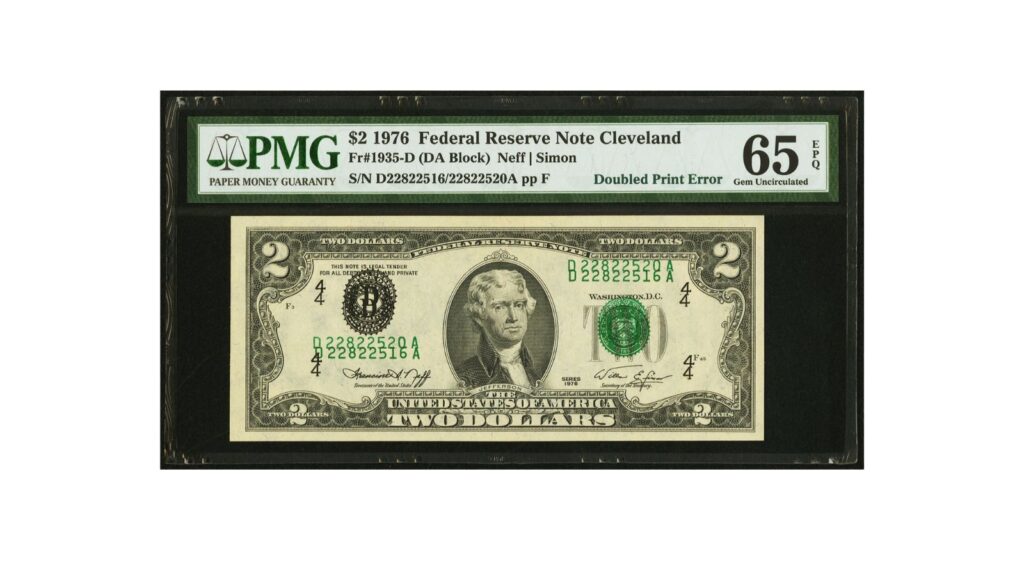
$2 bill with a genuine printing error
$2 bill with a genuine printing error
Image Credit: Heritage Auctions

Errors happen across every series, including bills printed this year, and $2 bills are actually a favorite target for error hunters precisely because far fewer are printed than $1s, which means a smaller pool of notes to search but slightly better odds per bill examined. The most common errors are misaligned printing, where the design shifts noticeably off center, and ink smears, where excess ink transfers onto the sheet in a streak or blotch.

Minor misalignment might add $25 to $50, but a dramatic shift that cuts into the portrait can bring $200 to $500, and a strong ink smear across a key design element can reach $1,500. Rarer errors, like a section of the bill missing its printing entirely or an overprint that’s upside down relative to the rest of the note, climb into four figures. The catch is that genuine production errors are frequently imitated by washing, bleaching, or trimming an ordinary note to look damaged. Anything you think is a real error and worth more than a couple hundred dollars is worth sending to a professional grading service before you try to sell it, since authentication is really the whole ballgame here.

A bachelor’s degree can be expensive, slow, and hard to fit around a job or family responsibilities. Healthcare has another problem: plenty of career lists act like your only choices are nursing, medical assisting, or years of school.

There are more doors than that. Hospitals, clinics, specialty practices, labs, rehab centers, and medical equipment companies need people who can work with patients, handle specialized equipment, keep procedures safe, and solve problems in real time.

Some of these jobs require a certificate. Others require an associate degree, licensing exam, or paid training after you’re hired. None requires a four-year degree as the standard starting point, and many are growing faster than the overall job market.

1. Ophthalmic medical technician

Ophthalmic medical technician
Image Credit: Shutterstock

Ophthalmic medical technicians do much more than schedule eye appointments. You might measure eye pressure, test visual fields, take images of the retina, put drops in a patient’s eyes, and prepare people for an ophthalmologist’s exam. The work is a mix of patient care and specialized testing, which makes it a good fit if you want healthcare without working on a hospital floor. Median pay was about $44,080 a year in 2024.

This is also one of the stronger sleeper careers in healthcare. Employment is projected to grow about 20 percent over the decade ending in 2034. A postsecondary certificate is the typical entry path, rather than a bachelor’s degree, and previous work experience is not normally required. Jobs are concentrated in ophthalmology offices, eye clinics, and medical centers. Because you’re positioning patients, operating diagnostic equipment, noticing problems, and working directly with physicians, there is still a large hands-on part of the job that software cannot simply take over.

2. Hearing aid specialist

Hearing aid specialist
Image Credit: Shutterstock

Hearing aid specialists test hearing, take ear impressions, fit hearing devices, program them, and show clients how to use and care for the equipment. It is a surprisingly accessible healthcare career because a high school diploma is the typical entry-level education. You learn much of the job through several months of training, although licensing and exam requirements apply before you can work independently. Median annual pay was about $61,560 in 2024.

The demand picture is unusually strong for a career with this education level. Employment is projected to rise about 18 percent through 2034 as the population ages and more people need help with hearing loss. You may work in a hearing clinic, an audiology practice, or a business that sells and services hearing devices. There is a sales element in some positions, so look closely at compensation plans before accepting a job. The core work, though, is very personal. You have to listen to what a client is experiencing, adjust tiny devices, test results, and help someone who may be frustrated or embarrassed about losing their hearing.

3. EEG technician

EEG technician
Image Credit: Shutterstock

An EEG technician records the electrical activity of the brain. You attach electrodes to a patient’s scalp, check the equipment, watch the recording for problems, and document what happens during the test. Patients may be children, older adults, people with epilepsy, or seriously ill hospital patients. Average U.S. pay for an EEG technician was about $67,963 a year as of August 2026.

You do not need a bachelor’s degree to enter neurodiagnostics. One clean route is completing an accredited neurodiagnostic program and then working toward the EEG credential. There are also recognized certificate programs, although other credentialing paths require more clinical experience. Neurodiagnostic technologists are considered a faster-growing occupation, with the broader category projected to expand about 5 percent through 2034. Hospitals, neurology practices, epilepsy centers, and sleep centers hire these workers. This is detail-heavy work where you need to place electrodes correctly, spot a bad signal, keep a nervous patient still, and know when something in the recording deserves attention.


4. Sleep technician

Sleep technician
Image Credit: Shutterstock

Sleep technicians spend the night watching other people sleep, but the job is a lot more technical than that sounds. You connect sensors that track breathing, brain activity, heart rhythm, oxygen, and movement. During a study you watch the signals, correct loose sensors, document events, and sometimes help with equipment used to treat sleep apnea. Average pay for a sleep technologist was about $64,908 a year as of August 2026.

There is an entry-level sleep credential specifically intended for people who are new to the field. One path combines approved sleep education with early clinical experience and a high school diploma or GED. Accredited sleep technology programs are another option. Most jobs are in sleep labs connected to hospitals or specialty clinics, and overnight shifts are common. Sleep testing remains hands-on because someone has to prepare the patient, attach the sensors correctly, recognize faulty signals, and respond when a patient has trouble during the night. Sleep work also sits within the broader neurodiagnostic field, which is expected to keep growing faster than the overall job market.

5. Dialysis patient care technician

Dialysis equipment technician
Image Credit: Shutterstock

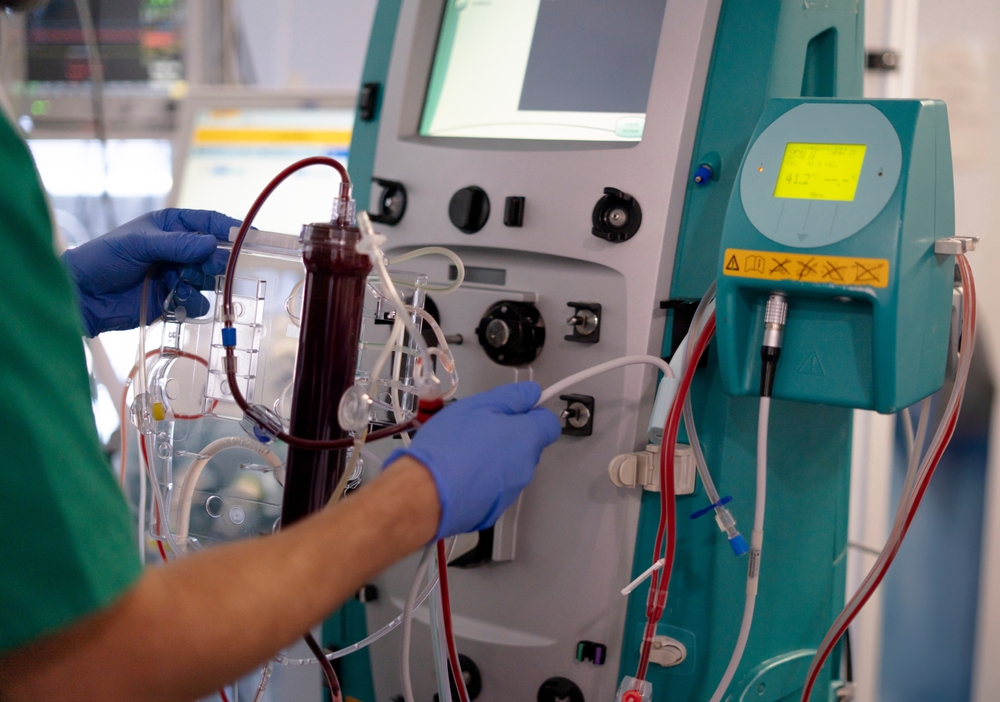
Dialysis patient care technicians help people whose kidneys can no longer clean their blood well enough on their own. You prepare dialysis machines, check vital signs, monitor patients during treatment, document what happens, and watch closely for complications such as falling blood pressure. Because patients may spend hours in the chair several times a week, you often get to know the same people well. Average pay for a dialysis technician was about $47,375 a year as of August 2026.

This is one of the more practical ways into direct patient care without college. A high school diploma is generally required for technicians entering chronic outpatient dialysis, and employers may provide substantial training after hire. Technicians working in covered dialysis facilities must also earn an approved certification within the required federal timeframe. The broader health technician category tied to dialysis credentials is projected to grow faster than average. Kidney disease is also a long-term condition, so dialysis clinics need staff who can safely run equipment and watch patients throughout treatment. Machines can automate parts of the process, but they cannot replace the person checking the access site, noticing a patient suddenly looks unwell, or responding to a medical problem.

6. Sterile processing technician

Sterile processing technician
Image Credit: Shutterstock

Every surgical instrument has to be cleaned, inspected, assembled, packaged, sterilized, and tracked before someone can safely use it again. Sterile processing technicians handle that work behind the scenes. You may take apart instrument sets, inspect tiny hinges and cutting surfaces, operate sterilizers, and make sure an operating room receives the correct trays. National average pay for the broader medical equipment preparer occupation was about $50,510 a year in May 2025.

A four-year degree is not part of the normal path. A high school diploma plus employer training can be enough, and certificate programs are available if you want formal preparation before applying. There are even registered apprenticeship routes for central sterile processing. Employment for medical equipment preparers is projected to grow well above average, helped by the continuing volume of surgeries and other procedures. This is not glamorous work, but the consequences of doing it badly are serious. A missed bit of debris, damaged instrument, or failed sterilization process can put a patient at risk. Hospitals, surgery centers, and other facilities need people who understand those standards and can physically inspect the equipment.

7. Endoscopy technician

Endoscopy technician
Image Credit: Shutterstock

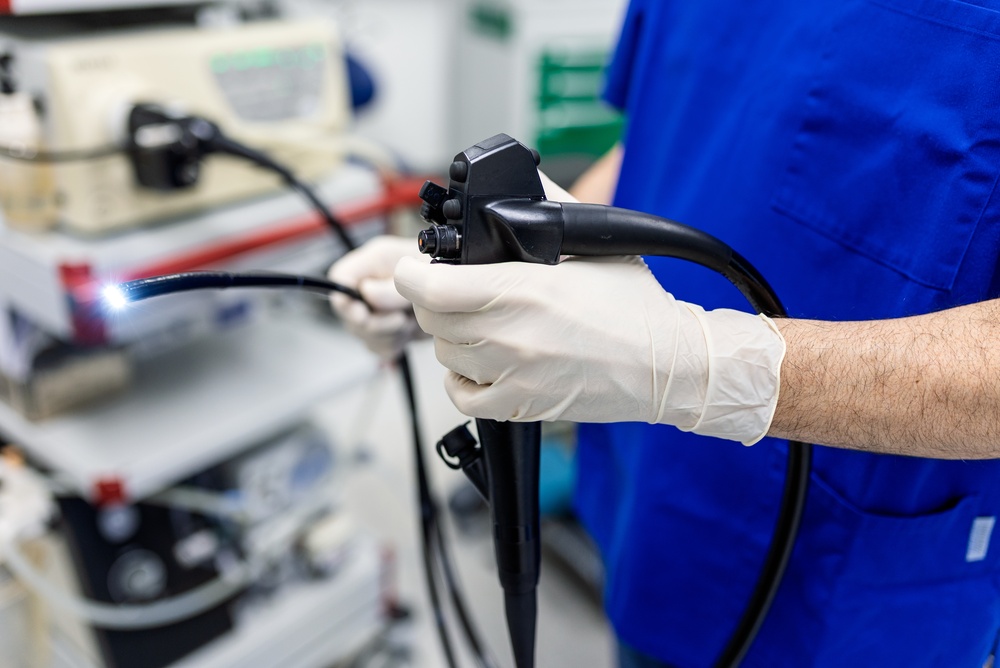
Endoscopy technicians help doctors and nurses perform procedures that use flexible scopes to look inside the digestive system and other parts of the body. Before a procedure you prepare the room, equipment, monitoring devices, and supplies. During it, you may assist the clinical team and handle specimens. Afterward, the scopes have to be cleaned and disinfected according to strict procedures. Average U.S. pay for an endoscopy technician was about $44,929 a year as of August 2026.

This specialty is far more accessible than its equipment-heavy name suggests. Occupational data places it in a job zone requiring little to some preparation. More than half of surveyed workers reported a high school diploma as the education needed for a new hire, while others reported a certificate. Training may last anywhere from a few days to about a year depending on the employer and your duties. The broader occupation has stable projected growth. You can find these jobs in hospitals, gastroenterology clinics, and outpatient procedure centers. The cleaning and inspection side is especially difficult to hand off to automation because flexible scopes have intricate channels, connections, and parts that must be checked carefully between patients.

8. Medical equipment repairer

Medical equipment repairer
Image Credit: Shutterstock

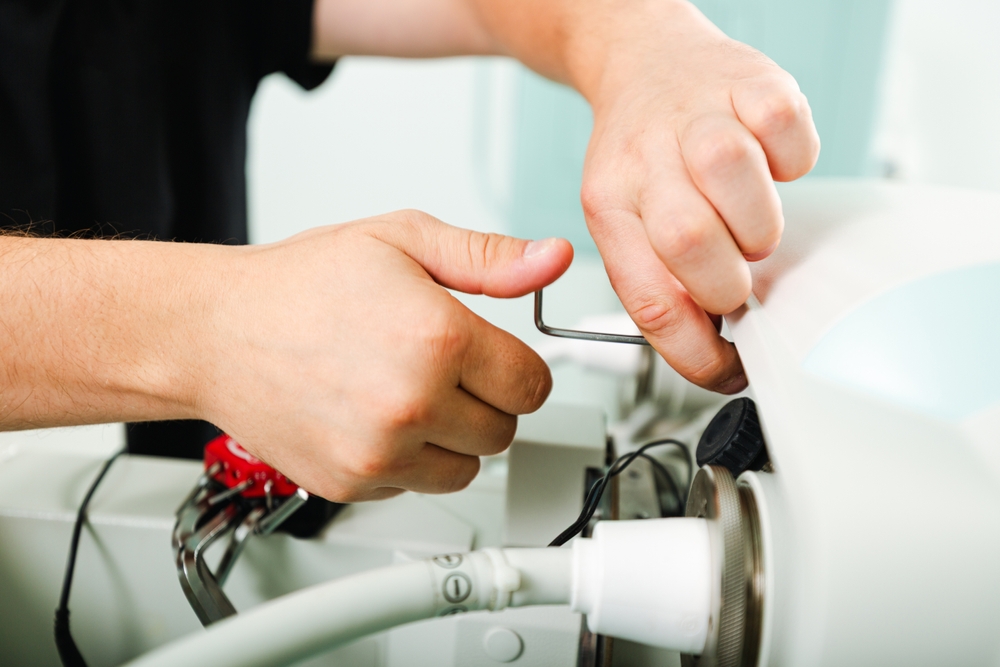
If you like fixing things more than taking blood pressure, medical equipment repair could be a strong healthcare path. These technicians install, inspect, maintain, and repair equipment used to diagnose and treat patients. That can include monitors, hospital beds, infusion equipment, defibrillators, imaging components, and other electronics. Median pay was $62,630 a year in 2024, with hospital workers earning more.

An associate degree or certificate in biomedical equipment technology is the usual route, not a bachelor’s degree. Some workers get in with a high school diploma plus relevant technical training, military experience, or an apprenticeship. Employment is projected to grow about 13 percent through 2034, which is much faster than average. Hospitals need more equipment as patient demand grows, and every device eventually needs preventive maintenance or repair. This career also sits in a useful middle ground between healthcare and the skilled trades. You are not providing bedside care all day, but your work directly affects whether nurses, doctors, and therapists have safe equipment when they need it. When a vital machine fails, someone still has to diagnose the physical problem and fix it.

9. Community health worker

Community health worker
Image Credit: Shutterstock

Community health workers help people navigate a healthcare system that can be confusing even on a good day. You might connect someone with a clinic, explain how to follow a care plan, help a patient find transportation, organize health screenings, or visit people who have trouble getting regular medical care. It is less technical than many jobs here, but it relies heavily on trust and communication. Median pay was $51,850 a year in May 2025.

A high school diploma is the typical minimum education, although some employers prefer college coursework and some areas require certification. New workers usually receive a brief period of on-the-job training. Employment is projected to grow about 13 percent through 2035. Community health workers are hired by hospitals, public health programs, nonprofit organizations, social-service agencies, and outpatient providers. This can be especially appealing if you are good with people but do not want to spend your day in a treatment room. A database can give someone a phone number. It cannot easily figure out why a patient keeps missing appointments, earn that person’s trust, and work through the transportation, language, money, or family problems that are getting in the way of care.

10. Surgical technologist

Surgical technologist
Image Credit: Shutterstock

Surgical technologists help keep an operating room ready and organized before and during surgery. You prepare sterile instruments, check supplies, help position patients, pass equipment to surgeons, and keep track of sponges, needles, and other items. The pace can be intense, and mistakes matter. Median pay for surgical technologists was about $62,830 a year in 2024.

The usual education is a postsecondary certificate or other nondegree award, although associate degree programs are also available. Previous work experience is not normally required. Employment is expected to grow faster than the overall job market as an aging population needs more procedures and more surgeries move into outpatient centers. Surgical techs work in hospitals, ambulatory surgery centers, and specialty surgical facilities. This job suits people who are comfortable standing for long periods and staying focused when a room gets busy. Technology in the operating room keeps getting more sophisticated, but that tends to change the tools surgical teams use rather than remove the need for trained staff. Someone still has to maintain the sterile field, anticipate what the surgeon needs, and catch problems before they affect a patient.

11. Dental hygienist

dental hygienist at work
Image Credit: Shutterstock

Dental hygienists clean teeth, remove plaque and tartar, take X-rays, look for signs of gum disease, apply preventive treatments, and teach patients how to care for their teeth. You work independently for much of the appointment but coordinate closely with a dentist. The pay is unusually strong for a career that does not require a bachelor’s degree. Median earnings were $98,100 a year in May 2025.

The catch is that this is not a quick certificate career. You generally need an accredited associate degree, and programs often take around three years when prerequisites and clinical training are included. You must also qualify for professional licensing. Employment is projected to grow about 8 percent through 2035 as people keep their natural teeth longer and demand for preventive dental care continues. Most hygienists work in dental practices, and part-time schedules are common. The job requires excellent hand control because you are using sharp and powered instruments inside someone’s mouth, often within a few millimeters of sensitive tissue. You are also constantly adjusting to the person in the chair, especially when someone is anxious, in pain, or has complicated oral health problems.

12. Physical therapist assistant

Physical therapist assistant
Image Credit: Shutterstock

Physical therapist assistants help patients rebuild strength, movement, and balance after injuries, operations, strokes, and other health problems. A physical therapist creates the treatment plan, then the assistant works directly with patients on exercises, walking, stretching, and other activities. You also watch how the patient responds and report progress or problems. Median pay was $68,380 a year in May 2025.

You generally need an associate degree from an accredited physical therapist assistant program, followed by whatever licensing or certification is required where you work. That is more school than a short certificate, but still well short of a four-year degree. Demand is strong. Employment for physical therapist assistants and aides is projected to grow about 17 percent through 2035. Jobs are available in therapy practices, hospitals, nursing facilities, rehabilitation centers, and home healthcare. This is active work, not a desk job. You may spend much of the day on your feet, demonstrating movements or helping people safely stand and walk. Recovery is also rarely predictable. A machine can count repetitions, but a human has to see that a patient is guarding a painful knee, losing balance, getting discouraged, or pushing harder than is safe.

13. Occupational therapy assistant

Occupational therapy assistant
Image Credit: Shutterstock

Occupational therapy assistants help people regain the skills they need for ordinary life. That could mean teaching someone recovering from a stroke how to dress again, helping an injured worker use an adapted tool, practicing fine-motor tasks with a child, or showing an older adult a safer way to move around the home. Average annual pay for occupational therapy assistants was about $70,710 in May 2025.

You will need an associate degree from an accredited occupational therapy assistant program, and licensing is common. The payoff is a strong employment outlook. Recent projections put growth for occupational therapy assistants at about 19 percent over the decade ending in 2034. You may work in rehabilitation centers, schools, nursing facilities, hospitals, home health, or therapy practices. Although this sounds similar to physical therapy, the focus is different. PT often concentrates on movement and physical function. Occupational therapy is about helping someone perform the activities that make daily life possible. Those activities vary wildly from person to person, so the assistant needs patience, observation, creativity, and the ability to adjust a task on the spot when the original plan is not working.

14. Respiratory therapist

Respiratory therapist
Image Credit: Shutterstock

Respiratory therapists treat people who are struggling to breathe. They give breathing treatments, check oxygen levels, manage ventilators, perform lung tests, and respond during emergencies. Patients may have asthma, chronic lung disease, pneumonia, serious injuries, or breathing problems after surgery. Median pay was $82,280 a year in May 2025.

An associate degree is the normal entry point, followed by professional credentialing and licensing where required. Employment is projected to grow about 9 percent through 2035, driven in part by an aging population and continuing demand for treatment of chronic lung conditions. Hospitals employ a large share of respiratory therapists, but jobs also exist in nursing facilities, clinics, and doctors’ offices. This career can involve nights, weekends, and holidays because breathing emergencies do not stick to business hours. It also puts you directly next to patients and complex medical equipment. A ventilator can monitor numbers and sound an alarm, but someone has to understand what those numbers mean, assess the person connected to the machine, troubleshoot equipment, and communicate quickly with the rest of the medical team.

15. Diagnostic medical sonographer

Diagnostic medical sonographer
Image Credit: Shutterstock

Diagnostic medical sonographers use ultrasound equipment to create images doctors use to diagnose medical problems. Pregnancy scans may be the best-known example, but sonographers also examine the abdomen, breasts, blood vessels, heart, and other areas. You position the patient, move the transducer, adjust the machine, and decide which images best show the area a doctor needs to see. Median pay was $89,340 a year in 2024.

An associate degree is the most straightforward route if you are starting from scratch. Postsecondary certificate programs also exist, although some are designed for people who already have college credits or healthcare training. Employment is projected to grow about 13 percent through 2034. Hospitals employ most sonographers, with additional jobs in doctors’ offices, imaging centers, and outpatient facilities. The equipment does plenty of sophisticated processing, but getting a useful scan still depends heavily on the person holding the transducer. Bodies are not identical, patients may be unable to lie in the ideal position, and suspicious findings sometimes mean you need to change your approach and capture additional views while keeping the patient calm.

16. Pharmacy technician

Pharmacy Technician
Image Credit: National Cancer Institute via Unsplash

Pharmacy technicians prepare and label medications, count tablets, enter prescription information, manage inventory, handle insurance details, and work under the supervision of pharmacists. Hospital technicians may also prepare intravenous medications and deliver drugs to patient-care areas. Median pay was $45,750 a year in May 2025, with hospital jobs paying more than the occupation-wide figure.

A high school diploma is the typical entry-level education. Some employers train technicians after hiring, while others prefer a pharmacy technology program or certification. Registration, exams, or formal training may be required depending on local rules. Employment is projected to grow about 6 percent through 2035, and the occupation is large enough to produce tens of thousands of openings each year. Retail pharmacies are the obvious employer, but hospitals, health systems, grocery pharmacies, and other medical facilities hire technicians too. Automated dispensing equipment is already common in this field, yet technicians still have a growing role in collecting patient information, handling prescription transfers, preparing specialized medications, checking inventory, and supporting pharmacists as pharmacists take on more direct patient-care duties.

17. Licensed practical nurse

Licensed practical nurse
Image Credit: Shutterstock

Licensed practical nurses, sometimes called licensed vocational nurses, provide hands-on nursing care without completing a four-year nursing degree. Duties can include checking vital signs, changing dressings, helping with daily care, giving certain medications, collecting information, and reporting changes in a patient’s condition. What you are allowed to do depends on licensing rules and the workplace. Median pay was $64,400 a year in May 2025.

The usual training path is a state-approved practical nursing program that takes about one year, followed by the licensing exam. Employment growth is projected to be about average through 2035, but this is a huge occupation with roughly 51,800 openings expected each year as workers retire, change careers, and healthcare demand rises. LPNs work in nursing and residential facilities, hospitals, home healthcare, clinics, and doctors’ offices. The work can be physically demanding, and some jobs involve nights or weekends. It is also difficult to separate from human care. Patients need someone to notice changes, explain what is happening, provide physical help, and respond when a routine shift suddenly stops being routine.

18. Medical assistant

medical assistant
Image Credit: Shutterstock

Medical assistants keep outpatient medical offices moving. On the clinical side, you might take vital signs, prepare exam rooms, collect basic patient information, help with procedures, and give injections where permitted. On the administrative side, you may schedule appointments, update records, and handle forms. National average annual pay was about $46,120 in May 2025.

A certificate is the most common route, and many programs can be completed in roughly a year. There are also employers that hire people with a high school diploma and teach the job through supervised training, although certification can make you a stronger candidate. Employment is projected to grow about 12 percent through 2034, with more than 100,000 openings expected in an average year. Doctors’ offices employ the largest share, followed by hospitals and outpatient centers. Some of the paperwork around this job will continue to become more automated, but the clinical half is another story. Someone still has to bring the patient back, check vital signs, notice when something looks wrong, prepare equipment, assist the clinician, and deal with the everyday questions and nerves that come with a medical visit.

Somebody ringing up groceries in Bridgeport, Connecticut is about to make $17.48 an hour. Somebody doing the exact same job in Houston, Texas is stuck at $7.25, the same rate that’s been on the books since 2009. That’s not a typo, and it’s not close. It’s the real state of minimum wage in this country heading into 2027, and the difference between the two ends of that scale keeps growing every year Congress leaves the federal number alone.

California and Connecticut have already locked in their 2027 numbers for January 1. Most other states haven’t announced theirs yet. They’ll do it this fall, using formulas tied to inflation data that isn’t fully in yet. You don’t need to wait for every state to finish before you can see where this is headed, though. The country is splitting into two groups: places where minimum wage climbs on autopilot every year, and places where it hasn’t moved in almost two decades.

California and Connecticut already know their 2027 numbers

California
Image Credit: Shutterstock

California’s minimum wage rises to $17.40 an hour on January 1, 2027, up from $16.90 this year. That works out to about $36,192 a year for someone working a standard 40-hour week all year, an increase tied to the same inflation formula the state has used since 2017. The raise also pushes the minimum salary for exempt employees up to $72,384 a year, so it reaches well past hourly workers.

Connecticut moved first, confirming that its minimum wage will jump to $17.48 an hour on January 1, 2027, a 54 cent increase from $16.94. That number comes from a formula written into a 2019 law, based on how much wages grew nationally between mid-2025 and mid-2026. At $17.48 an hour, a full-time worker earns about $36,358 a year, edging out California for the highest confirmed state minimum wage set to take effect in January.

Neither state waited for the usual fall announcement window. California and Connecticut both use formulas built on data that comes in earlier in the year, which is why their 2027 numbers were locked in by early August while most other states are still waiting on theirs.

The federal minimum wage has not moved since 2009

While states push their own rates higher, the federal minimum wage sits exactly where it’s been since July 2009, at $7.25 an hour. That’s the longest stretch without a change since the federal minimum wage was created in 1938. A person working 40 hours a week, every week, at that rate brings home about $15,080 a year before taxes.

Twenty states still default to that $7.25 floor: Alabama, Georgia, Idaho, Indiana, Iowa, Kansas, Kentucky, Louisiana, Mississippi, New Hampshire, North Carolina, North Dakota, Oklahoma, Pennsylvania, South Carolina, Tennessee, Texas, Utah, Wisconsin and Wyoming. Five of those, Alabama, Louisiana, Mississippi, South Carolina and Tennessee, don’t have a state minimum wage law at all, so the federal rate applies there by default. Georgia and Wyoming actually set their own state minimum lower, at $5.15 an hour, but employers still have to pay $7.25 because federal law overrides it for almost every job covered by the Fair Labor Standards Act.

None of that changes on January 1, 2027. Unless Congress acts, workers in those 20 states start next year exactly where they are right now.

Missouri already had automatic increases, then lost them

Missouri state flag
Image Credit: Shutterstock

Missouri’s minimum wage reached $15.00 an hour in January 2026, the final step of a 2024 ballot measure that voters approved directly. That same measure was supposed to keep going, adjusting the rate for inflation starting in January 2027. It won’t. Missouri lawmakers passed a bill this year that repealed the inflation formula before it ever took effect, while leaving the $15.00 rate itself in place.

So Missouri workers keep the raise voters already approved, just not the annual increases that were supposed to follow it. A full-time worker at Missouri’s $15.00 rate earns about $31,200 a year, a number that isn’t likely to move again until state lawmakers decide to change it, since the automatic mechanism no longer exists. It’s a rare case of a state legislature reversing a piece of a ballot measure after voters had already approved it, and it’s a reminder that these formulas only last as long as the people in charge want them to.

More states will lock in their 2027 rate this fall

Sixteen states now adjust their minimum wage automatically every January, now that Missouri’s version has been repealed. California and Connecticut are done for 2027. The other fourteen, including Washington, currently the highest state minimum wage in the country at $17.13 an hour, along with Arizona, Colorado, Maine, Minnesota, Montana, Nebraska, New Jersey, New York, Ohio, Oregon, South Dakota, Vermont and Virginia, haven’t announced their 2027 rate yet.

Washington’s new rate is expected to be announced by the end of September, and Arizona typically announces its own new rate that same month, based on inflation data from the prior August. New York is switching to this same kind of automatic system for the first time. After years of fixed, legislated increases, New York’s minimum wage will start adjusting based on regional inflation data starting January 1, 2027, though the exact new number for New York City, Long Island and Westchester County, and for the rest of the state, wasn’t official as of late August.

By the time most of these states finish announcing their numbers this fall, the list of states above $17 an hour is going to get longer, not shorter.

Washington DC pays more than double the federal rate

Washington DC
Image Credit: Shutterstock

No state minimum wage comes close to what Washington DC already pays. The district’s minimum wage rose to $18.40 an hour on July 1, 2026, and it stays there until its next scheduled adjustment next summer. That means DC’s rate has nothing to do with the January 2027 wave of state increases. It was already more than double the federal minimum before any of those other states caught up.

At $18.40 an hour, a full-time worker in DC earns about $38,272 a year. At the federal minimum of $7.25, a full-time worker earns about $15,080 a year for the exact same 40 hours a week. That’s roughly a $23,000 difference in annual pay for full-time work, based entirely on which side of a jurisdictional line someone happens to work on.

DC is also in the middle of phasing in a higher tipped minimum wage. The direct cash wage for tipped workers there rose to $10.30 an hour in July 2026, on its way toward 75 percent of the full minimum wage by 2034. Combined with the annual inflation adjustment built into DC’s law, the district’s minimum wage has climbed steadily for years while the federal number hasn’t moved at all.

Check your specific city, not just your state

State minimum wage is only the floor. Dozens of cities and counties set their own, higher minimum wage on top of it, mostly in California, Washington and Colorado. Seattle, Tukwila and Bellingham already pay well above Washington’s state rate, and Denver and Boulder do the same in Colorado. Some of these local rates adjust every January 1 too, on their own schedule, separate from the state’s.

Tipped workers are a different calculation entirely. A handful of states, including Washington, California, Montana, Alaska and Minnesota, require employers to pay the full minimum wage before tips even factor in. Most other states allow a lower direct cash wage as long as tips bring total pay up to the regular minimum. Federal contractors follow yet another minimum wage, set separately from both the federal and state numbers.

If you’re comparing a job offer in one state against a job in another, the state number is a decent starting point. It’s not the whole picture.

Bottom line

bottom line new
Image Credit: Shutterstock

Twenty-one states raised their minimum wage this past January, putting more than $5.7 billion in new pay into the pockets of over 9.2 million workers. Nobody has a matching number yet for January 2027, since more than a dozen of the states involved are still waiting on their own formulas to produce a figure. Check your state labor department’s website this fall if you want the real number before it shows up on a paycheck.

A severe car crash can flip a single mother’s daily routine upside down within seconds. Beyond the immediate physical trauma, managing the financial aftermath creates immense pressure on a one-income household. Emergency medical visits, sudden vehicle repairs, and lost work time can quickly drain savings. Single parents face unique financial risks after an auto collision, along with strategies that can help keep their families afloat.

Learn about the financial challenges single moms may face after an auto accident and practical ways to manage medical bills, lost income, and expenses.
Image Credit: Clark Van Der Beken via Unsplash

Sudden emergency costs strain one-income budgets

Immediate medical bills after a crash can overwhelm any household budget. Single moms must cover co-pays, prescription costs, and emergency room fees without a second adult income to soften the hit. A recent report revealed that 56% of Americans cannot afford a $1,000 emergency expense using their savings.

When a crash happens, that $1,000 threshold is crossed almost instantly. The financial shock hits single-parent homes double as hard – leaving very little room to pivot.

Loss of transportation interrupts daily work earnings

Losing a primary vehicle stalls daily life completely for a single parent. Getting kids to school and commuting to work requires reliable transportation.

  • Daily rental car fees accumulate quickly after an accident.
  • Public transit schedules may not align with daycare drop-off times.
  • Rideshare options cost significantly more than regular gas usage.

Without a working car, keeping a steady work routine becomes a major struggle. Reallocating finances after an unexpected life incident presents a major hurdle for families transitioning to a single-parent home.

Unpaid work days accelerate household debt

Taking time off work to heal or attend doctor visits directly cuts into earning power. Seeking guidance from experts such as the Moore Law Firm car accident team helps single parents navigate complex insurance claims to seek compensation for lost wages. Immediate legal counsel can protect family finances while the parent recovers.

Missing just a few shifts can lead to unpaid utility bills or late rent payments. A recent study noted that single mothers are far more vulnerable to financial stress than dual-parent families.

Managing extended light-duty restrictions

Injuries might prevent a full return to normal job duties for weeks. Hourly workers face severe budget shortfalls when light-duty options pay less or are unavailable.

Wages lost taking time off work to recover, visit the doctor, or go to court are easy to calculate, but future expenses prove far harder to project.

Unexpected childcare costs add major burden

Single mothers often rely on routine schedules to manage childcare costs. Following an injury, extra childcare is frequently needed for physical therapy sessions or court dates.

Friends and relatives cannot always step in on short notice. Paying for extra babysitting or extended daycare hours adds a huge weight to an already stretched budget.

Uninsured motorists increase out-of-pocket risk

Getting hit by an uninsured driver complicates the recovery process immensely. Research indicates around 1 in 7 drivers in the U.S. lacks auto insurance coverage.

  • Uninsured motorist claims often involve complex policy limits.
  • Out-of-pocket deductibles must be paid before repairs begin.

Single moms must often exhaust personal savings to bridge the gap while waiting for insurance payouts. Major financial stability can easily be lost through an accident without full coverage.

Hidden costs impact long-term goals

Unexpected life events force single-parent households to divert hard-earned savings away from future goals. Money set aside for child education or emergency reserves gets spent on immediate collision expenses.

Missed income can quickly lead to falling behind on mortgage payments, car loans, utilities, or other crucial bills. Rebuilding those lost savings takes years of careful budgeting.

Settlement calculations and future financial planning

Calculating full compensation requires looking beyond immediate medical bills to account for long-term rehabilitation and future lost income. Approximately 95% of personal injury cases settle before trial, making settlements the most common resolution method.

Securing a fair settlement ensures long-term recovery needs are covered without putting future household stability at risk. Working with legal professionals helps ensure all future damages get accounted for properly.

Insurance delays can create cash flow problems

Insurance claims often take weeks or even months to process, leaving single mothers responsible for covering immediate expenses out of pocket. 

During this waiting period, everyday costs like groceries, rent, and utility bills continue to pile up alongside accident-related expenses. Delayed reimbursements can force families to rely on credit cards or personal loans, increasing long-term financial strain.

Building an emergency recovery plan after an accident

While no one expects to be involved in a serious collision, having a financial recovery plan can reduce stress when the unexpected happens. Keeping an emergency fund, reviewing insurance coverage annually, and organizing important financial documents can help single mothers respond more effectively after an accident. 

Knowing where to find community assistance programs and legal resources also provides added financial security during recovery.

Image Credit: Boost Media-Marketing via Pexels

Navigating the financial fallout of a car crash requires patience, organization, and proactive planning. Single mothers can safeguard their family budgets by tracking every crash-related expense and exploring support resources. With the right help, recovering physical health and financial stability becomes far more achievable.

Managing a demanding career and raising children solo leaves minimal room for self-care. Night after night, sleep becomes the first sacrifice on a relentless daily task list. Waking up exhausted drains your motivation, making every morning feel like an uphill battle. Simple, practical adjustments to your evening routine can yield dramatic gains in your nightly energy.

Discover simple sleep habits that can help busy parents feel more rested, improve sleep quality, and build healthier bedtime routines.
Image Credit: David Veksler via Unsplash

Upgrade your bedding comfort

Physical comfort forms the foundation of deep rest every single night. Exploring a bamboo pillow collection and investing in an orthopedic-grade head support helps align your spine and reduces neck strain. Natural breathable fabrics prevent middle-of-the-night tossing caused by heat traps. Proper spinal support allows your muscles to relax fully, encouraging continuous sleep cycle recovery.

Bedding choices impact your daily energy far more than most people realize. Worn mattresses and flat bedding create subtle tension points that keep your nervous system on guard. Replacing old gear creates a luxurious sanctuary that invites deep relaxation the second you crawl into bed. Prioritizing physical comfort sends a clear signal to your body that rest is a top priority.

Creating a comfortable bedroom can make a real difference to your nightly routine, and choosing quality sleep products is one way to make your sleep environment more supportive and relaxing.

Build a rigid wind-down window

Solo parenting duties constantly stretch personal schedule limits and exhaust mental reserves. Recent surveys indicate that 4 in 5 parents survive on fewer than 6 hours of rest each night. Establishing a firm cutoff time for work emails and household chores gives your mind space to decompress. Reserving 30 minutes before bed to read or listen to calming music signals to your brain that the workday is officially over.

Creating a predictable routine helps quiet a racing mind after hours of heavy decision-making. Switching off intense mental tasks early reduces late-night cortisol production. Your body learns to recognize these predictable cues, making it much easier to transition smoothly into deep slumber. Consistency with your nightly routine pays off with faster sleep onset.

Protect your mental energy

Handling household responsibilities independently requires intense focus and continuous problem solving. Research from healthcare providers demonstrates that short-term sleep loss erodes mood, memory, and daily cognitive performance. Guarding your mental capacity requires setting clear boundaries against nighttime worries.

Implementing quick nightly habits clears mental clutter before your head hits the pillow:

  • Write down tomorrow’s top 3 priorities on a notepad to offload mental strain.
  • Leave work laptop chargers in another room to prevent late-night task checking.
  • Practice 5 minutes of deep belly breathing to calm your nervous system.

Offloading lingering worries onto paper frees your mind from holding onto endless task lists. When your thoughts are organized on paper, your brain feels safe enough to power down for the night. Taking a few moments to decompress sets up a smoother evening transition.

Optimize your bedroom climate

Your physical environment heavily influences how deeply your body rests throughout the night. Pediatric medical data highlights that the ideal sleeping temperature rests around 68 degrees Fahrenheit. Cooler room settings prevent middle-of-the-night awakenings triggered by sudden temperature spikes. Keeping your room dark with light-blocking window shades further reinforces your natural body rhythm.

Managing airflow with a quiet bedroom fan adds soothing background sound plus keeps conditions cool. Heavy blankets paired with cool ambient air create a snug setting without overheating. Simple room adjustments transform your bedroom into a dedicated sleep sanctuary. Keeping ambient noise low prevents unnecessary nighttime micro-arousals.

Standardize sleep and wake times

Irregular sleep patterns throw off your internal body clock and lead to morning grogginess. Going to sleep and waking up at identical times every day anchors your circadian rhythm. Setting steady boundaries around sleep schedules trains your body to feel naturally tired at bedtime. Even on weekends, staying close to your regular wake-up time prevents severe Monday morning fatigue.

Consistent timing improves sleep efficiency, allowing you to wake up feeling refreshed without reliance on multiple alarms. When your internal clock runs smoothly, daytime focus improves and mid-afternoon energy slumps disappear. Sticking to a stable schedule remains one of the most effective habits for long-term health.

Limit evening stimulants and screens

Late-night screen time disrupts natural hormone production and keeps your brain artificially alert. Blue light emitted by smartphones, tablets, and televisions tricks your mind into believing it is daylight. Turning off digital devices 1 hour before sleep allows natural sleep hormones to flood your system. Replacing evening screen scrolling with gentle stretching or journaling prepares your body for rest.

Late-night caffeine and sugary snacks disrupt sleep architecture by triggering sudden blood sugar spikes. Swapping late evening espresso or sweet treats for warm chamomile tea relaxes your digestive system. Avoiding heavy meals right before bedtime prevents uncomfortable indigestion that disrupts deep rest. Clean evening nutrition combined with digital detox habits paves the way for uninterrupted slumber.

Image Credit: Vitaly Gariev via Unsplash

Building healthy sleep habits takes time, intention, and consistent choices. Prioritizing your personal rest strengthens your capacity to manage single-parent responsibilities with clarity, confidence, and calm. Small upgrades to your sleep environment and daily routine deliver big long-term dividends for your energy. Give yourself permission to rest deeply tonight, knowing a refreshed morning sets up a successful day ahead.

Managing a busy household leaves little time for dealing with unexpected stomach upsets or missed school days. As a single parent, keeping kids healthy requires practical routines that fit into action-packed schedules. Digestive wellness forms the foundation of a child’s daily energy, mood, and school focus. Small adjustments to family meal choices and daily habits bring strong long-term benefits to growing kids without adding extra stress.

Discover simple parenting tips to support better digestive health in children through healthy foods, hydration, routines, and daily habits.
Image Credit: Vitaly Gariev via Unsplash

Understanding the gut microbiome

A child’s digestive system relies on complex inner balances to function smoothly every single day. A pediatric health guide noted that trillions of microorganisms live inside the digestive tract to support immune function and nutrient intake. These tiny helper organisms work around the clock, processing school lunches into steady physical energy. Supporting this microbial ecosystem early in life prevents frequent tummy troubles during busy academic terms.

Immune strength links directly to internal digestive health throughout childhood growth stages. A medical review stated that up to 80% of immune cells reside around the digestive tract, directly affecting how frequently kids catch common colds. Keeping this internal ecosystem balanced protects children against common classroom bugs. Single parents can safeguard daily attendance by prioritizing gentle, consistent gut care at home every week.

Exploring quality digestive supplements

Busy work schedules mean daily meals might not always cover every targeted nutrient your child requires. As noted by the team behind BioPhysics Essentials, incorporating high-quality daily formulas supports balanced internal flora through targeted strain options. Selecting reliable wellness products helps maintain steady digestion during chaotic school weeks. Simple morning additions give single parents peace of mind without creating complex meal prep steps. Finding dependable daily wellness solutions simplifies single parenting plus maintains excellent health standards for growing children.

Prioritizing whole foods in daily meals

Building healthy dinner plates does not require spending hours in the kitchen after work. Pediatric recommendations advise that 85% of a child’s diet should come from unprocessed whole foods. Swapping out packaged snacks for raw fruits or fresh vegetables provides natural fiber without extra preparation time. Keeping whole foods readily available in the fridge encourages healthy grazing between school dismissals and sports practices.

Everyday meal habits shape how children view nutritious choices as they mature into adults. A child nutrition article explained that digestive wellness starts with simple foods promoting smooth digestion and lifelong meal confidence. Offering simple whole foods during family dinners sets positive lifetime habits. Children learn by observing parental choices during shared morning breakfasts and quick weeknight dinners, creating lifelong healthy mindsets.

Feeding good bacteria with smart snacks

Certain foods nourish beneficial gut bacteria better than standard sugary treats. A nutrition research report highlighted that slightly green bananas contain high levels of resistant starch, which feeds beneficial Bifidobacteria species. Offering green-tipped bananas creates quick, gut-friendly options for busy after-school routines. Combining prebiotics with familiar everyday foods helps kids enjoy their daily snacks without complaining.

Try these simple snack ideas during afternoon homework sessions:

  • Unripe green-tipped bananas served with almond butter
  • Plain Greek yogurt mixed with sliced fresh strawberries
  • Crispy apple slices paired with sunflower seed butter
  • Warm oatmeal sprinkled with ground flaxseeds and cinnamon

Encouraging daily movement and activity

Physical activity benefits far more than muscle growth and bedtime fatigue. A digestive health study reported that regular movement directly expands microbial diversity inside the gut. Playing at neighborhood parks or organizing living room dance parties improves digestion and burns off excess evening energy. Outdoor play gives kids a healthy mental break from schoolwork and stimulates internal organ function.

Fitting exercise into tight schedules feels easier when treating movement as fun family play. A 20-minute evening walk allows single moms to reconnect with kids after work, promoting healthy digestion before bedtime. Active weekends spent riding bikes or walking local trails keep digestive tracks working smoothly throughout the entire year.

Establishing consistent daily routines

Consistency plays a massive role in maintaining smooth digestive tract function for young kids. A child development publication emphasized that regular meals, hydration, fiber, physical activity, and solid sleep together support proper digestion. Creating predictable daily schedules helps young bodies digest food efficiently and regularly. Structured routines lower stress for both parents and children throughout demanding work weeks.

Setting realistic meal times keeps gut rhythms steady throughout school terms. Keeping water bottles visible around the house reminds children to drink water during homework hours. Simple bedtime rituals provide adequate rest for smooth morning digestion, preventing rushed morning routines.

Image Credit: Ugyen Tenzin via Unsplash

Supporting a child’s digestive wellness does not demand complex diet overhauls or expensive lifestyle changes. Small, sensible choices made consistently throughout the week build strong foundations for long-term health. Prioritizing balanced whole foods, regular exercise, and predictable family routines helps your kids feel great every single day. Single parents can comfortably manage these practical habits within any busy weekly schedule without feeling overwhelmed.