
The coin jar on the kitchen counter probably holds nothing remarkable. But before you roll those nickels for the bank, set aside anything that looks old, struck differently, or worn in an unusual way. A few of those five-cent pieces could be worth significantly more than their face value, and some of the most valuable ones look nearly identical to ordinary change.
Nickels span four distinct design eras: Shield (1866-1883), Liberty Head (1883-1913), Buffalo or Indian Head (1913-1938), and Jefferson (1938 to today). Each series has key dates, errors, and varieties that send certain examples well above face value. Old coin collections, estate sale finds, and inherited albums are all legitimate sources for the pieces on this list.
What separates a real find from a five-cent piece is usually a combination of date, mint mark, and condition. Most heavily worn examples earn very little. Getting the right coin in decent shape, or finding a specific error that collectors actively chase, is what actually moves the number.
Table of contents
- 1942-1945 silver war nickels
- 1883 Liberty Head “no cents” nickel
- 1866 Shield nickel with rays
- Pre-1920 Buffalo nickels with a readable date
- 1950-D Jefferson nickel
- 1939 Jefferson nickel, doubled Monticello variety
- 1943-D war nickel
- 1943/2-P overdate war nickel
- Full Steps Jefferson nickels (1938-1964)
- 1926-S Buffalo nickel
- 1913-S Type 2 Buffalo nickel
- 1937-D three-legged Buffalo nickel
- 1916 Doubled Die Buffalo nickel
- 1971 No-S proof Jefferson nickel
- More info on finding and selling rare coins
1942-1945 silver war nickels
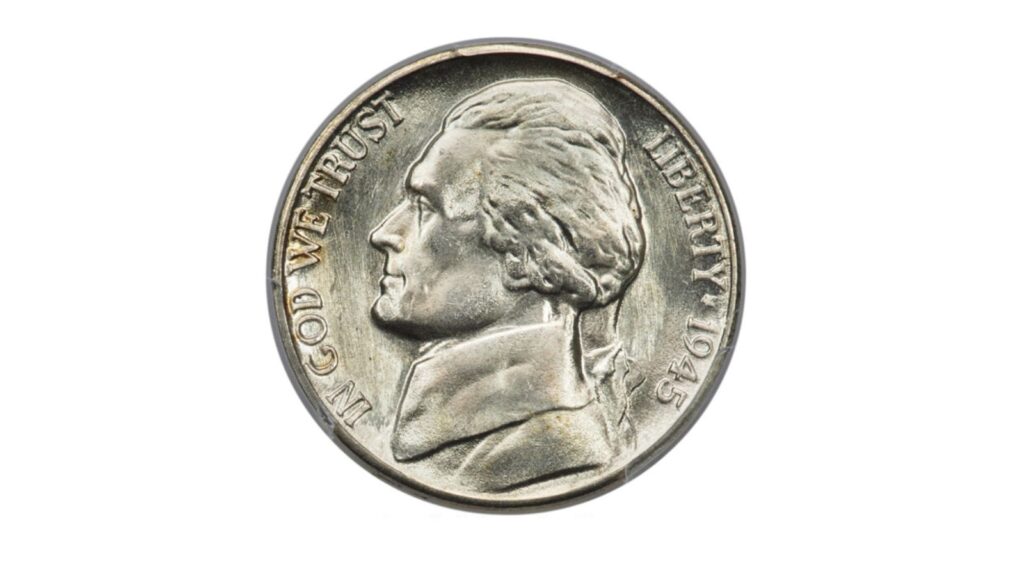
From mid-1942 through the end of 1945, the U.S. Mint produced Jefferson nickels from a silver alloy instead of nickel, because nickel was needed for artillery and other wartime materials. The result is a coin with a built-in silver floor: every single war nickel, no matter how worn, contains 35% silver and brings at least $1 to $5 based on the metal alone. With silver prices elevated, that floor has been rising.
The key identifier is a large P, D, or S mint mark placed above Monticello on the reverse. Regular Jefferson nickels have small mint marks in a different position; the large placement above the dome is unique to the wartime issues. The 1942 year is slightly complicated because both standard copper-nickel and silver war nickels were made that year, so checking the mint mark size and position is essential before assuming any 1942 nickel is silver. The 1943 and 1944 and 1945 dates are all silver without exception.
Within the series, condition determines how much above the silver floor a coin commands. Common worn examples don’t bring much over melt. Clean, nearly uncirculated examples of any date bring $10 to $40 and up. Fakes exist, particularly altered coins where someone has moved or added a mint mark. Weigh any suspected war nickel: authentic examples should sit at approximately 5 grams. Any significant deviation is a red flag.
1883 Liberty Head “no cents” nickel
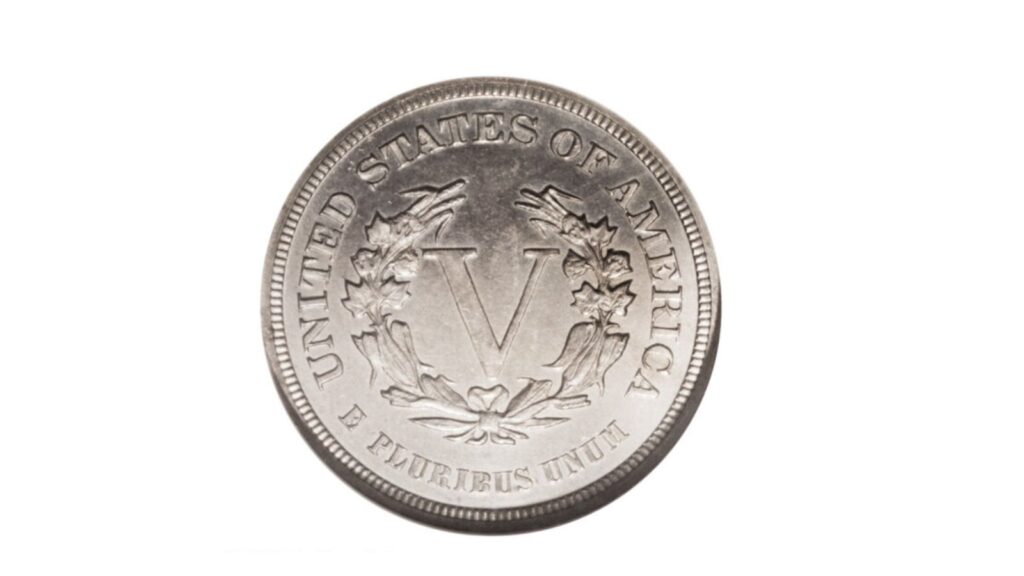
When the U.S. Mint introduced the Liberty Head nickel design in early 1883, it included a large Roman numeral V on the reverse without the word “CENTS” to spell out the denomination. Con artists quickly noticed the coin resembled a $5 gold piece in size and finish, and began gold-plating them to pass as gold. The Mint corrected the design within the year, but not before producing around 5.5 million of the “No Cents” version. These gold-plated coins became known as Racketeer Nickels and now have their own dedicated collector category.
In worn circulated condition, the 1883 “No Cents” nickel typically brings $10 to $18. In uncirculated condition, nice examples bring $43 to $61, with sharper, fully-lustrous specimens at MS64 and above commanding considerably more. Gold-plated examples with original intact plating are worth more than replated or stripped ones. Authentic original-plating pieces are a distinct category with their own collector base.
Identify a “No Cents” piece by checking the reverse. If the large V is surrounded by a wreath with no denomination word below it, you have the 1883 Type 1 issue. If it reads “FIVE CENTS,” you have the corrected later version, which is more common and worth less in typical circulated grades. Both have collector value, but the “No Cents” is the one people specifically hunt.
1866 Shield nickel with rays
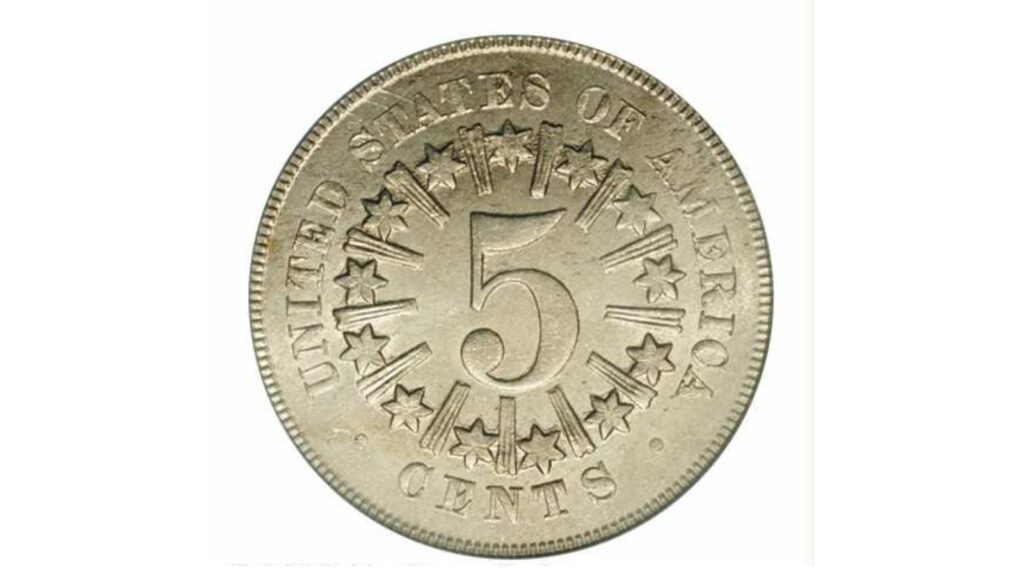
The Shield nickel was America’s first copper-nickel five-cent piece, replacing the silver half dime in 1866. The reverse design featured a large numeral 5 surrounded by alternating stars and rays, and the rays caused constant problems: they made the die intricate enough that cracking was frequent. The Mint removed the rays mid-1867 to reduce die failures. Every 1866 and early-1867 nickel with rays is therefore a distinct type, and the only way to get one is to find it because they stopped making them over 150 years ago.
In average circulated condition, an 1866 Shield nickel with rays typically brings $50 to $80. In nicer circulated grades, the price climbs. Uncirculated examples with original luster regularly bring $400 to $600 or more depending on strike quality and eye appeal. The design is notoriously hard to strike fully, so a sharp, well-detailed example with clean fields is genuinely uncommon even among surviving pieces.
Any old collection might have one of these tucked alongside better-known coins. They circulated for years alongside later nickel issues and many ended up in coin albums without anyone noting what they were. Carbon spots and surface problems are common on the series. A clean, problem-free examples with visible shield detail and sharp rays is rarer than the mintage suggests, because so many survivors carry some kind of damage.
Pre-1920 Buffalo nickels with a readable date
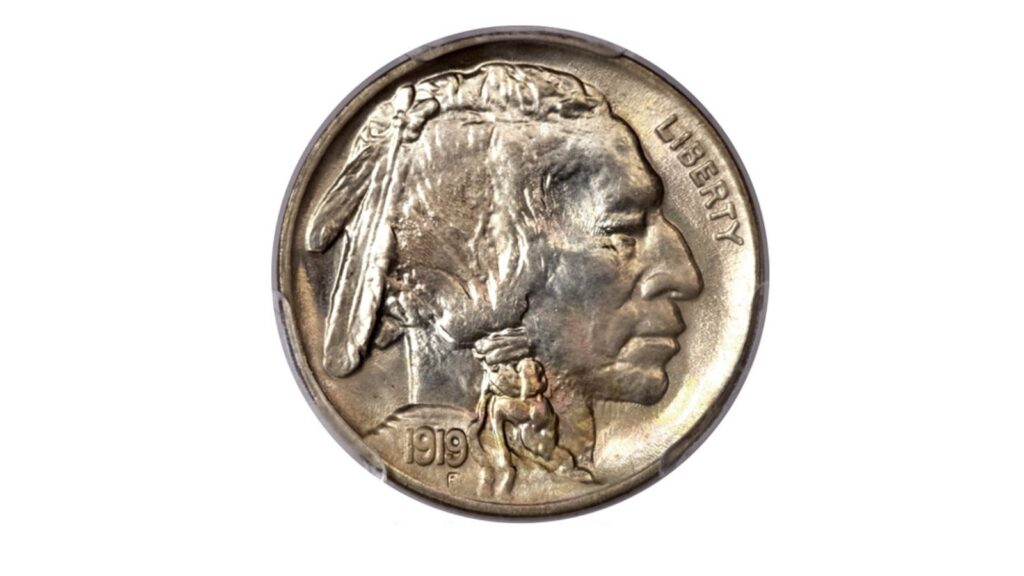
Buffalo nickels ran from 1913 to 1938, and the series presents one constant frustration for collectors: the date is positioned on a high-relief area of the design that wore flat with circulation. A nickel without a readable date is essentially worthless to collectors regardless of age. A Buffalo nickel with a clear, readable date is at minimum worth $3 to $20 in average worn condition depending on date and mint mark, and specific early issues are worth considerably more.
The first year of the series, 1913, is particularly interesting. Two distinct design varieties were produced: a Type 1 with the bison standing on a raised mound and a Type 2 with the bison on a flat plain. The Type 1 mound design was changed because the denomination text on the raised area wore away too quickly. Both types are worth meaningfully more than later common dates, and the branch mint issues with a D or S mint mark below the date command the most.
Pre-1920 Buffalo nickels carry a collector premium even in worn condition simply because of their age and the surviving-date rarity that the design’s wear patterns create. Run your thumb across the lower front of any Buffalo nickel. If you can feel distinct numerals, you have something worth looking up before it goes in a jar.
1950-D Jefferson nickel
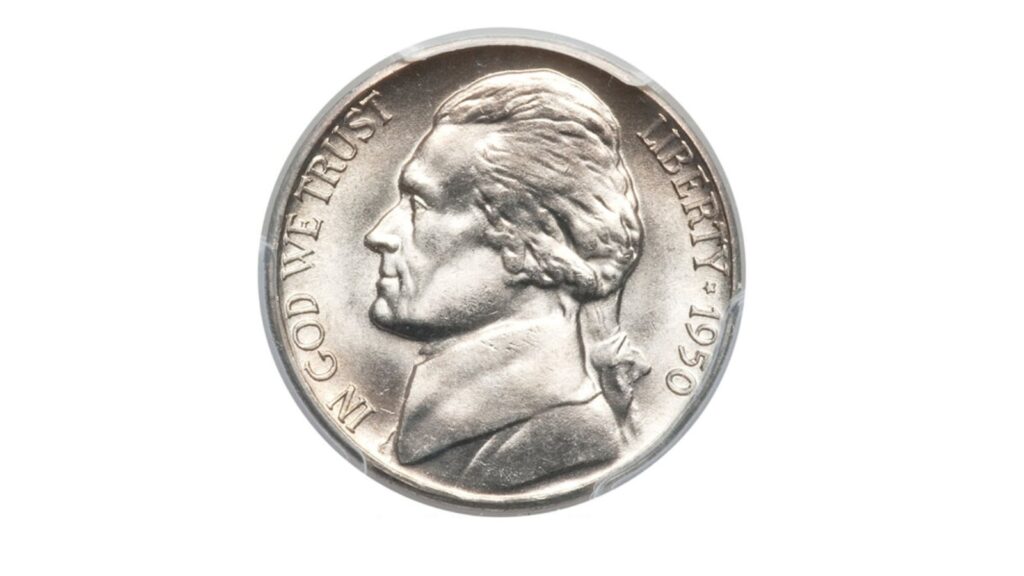
The 1950-D Jefferson nickel had a mintage of just 2.63 million, the lowest of any Jefferson nickel to that point. Dealers and speculators recognized this quickly, and coin promoters aggressively marketed it as a sure-fire investment through the late 1950s and into the 1960s. Rolls sold for hundreds of dollars. Then the shift to clad coinage happened, new collector interest cooled, and the bottom fell out.
The honest truth about the 1950-D is that it was so aggressively hoarded that finding a genuinely worn example is now harder than finding a mint-state one. A typical MS65 example brings $30 to $50. Well-worn circulated examples bring even less because the hoarding effectively removed most of the original mintage from circulation before it could wear down. It’s a more affordable coin than its decades-old reputation suggests.
Where it earns its keep is in the Full Steps category. A 1950-D with crisp, fully-defined steps on Monticello in uncirculated condition is a genuinely scarce piece and brings significantly more than a typical example of the same date. It remains a necessary key date in any complete Jefferson set, and its value holds in higher uncirculated grades. Just don’t expect the windfall some older coin books still promise.
1939 Jefferson nickel, doubled Monticello variety
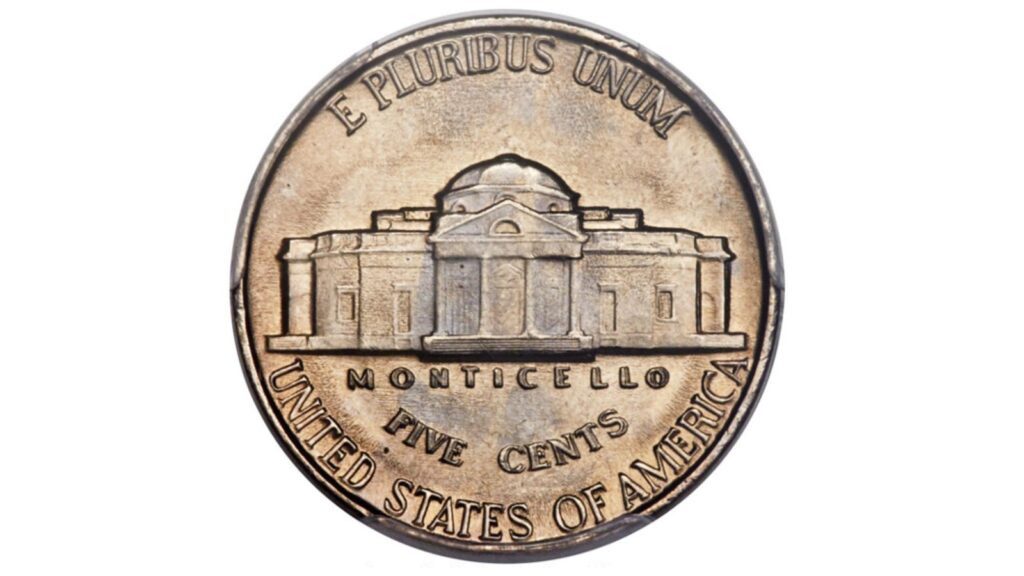
There are only three major doubled die varieties in the circulation-strike Jefferson nickel series. The 1939 doubled Monticello is the most dramatic of the three, with the doubling most visible in the words “FIVE CENTS” on the reverse, where a ghost impression shifts clearly from the primary text. You don’t need sophisticated equipment to find it: 10x loupe magnification makes it obvious, and strong examples show it under good light without any magnification at all.
Well-worn circulated examples bring $20 to $30. As condition improves to lightly worn, prices climb to around $150. Nice uncirculated examples bring $300 and up, and the Full Steps designation pushes values into four figures. The coin isn’t extremely rare: experts estimate around 60,000 survive. But active collector demand means any example in decent, undamaged condition sells without difficulty.
The 1939 doubled Monticello turns up in old Jefferson nickel collections with some regularity. If you have a shoebox of old nickels or a partially assembled Jefferson set, check every 1939 Philadelphia mint nickel under a loupe. The “FIVE CENTS” text on the reverse is where to look. When the doubling is there, it’s obvious.
1943-D war nickel
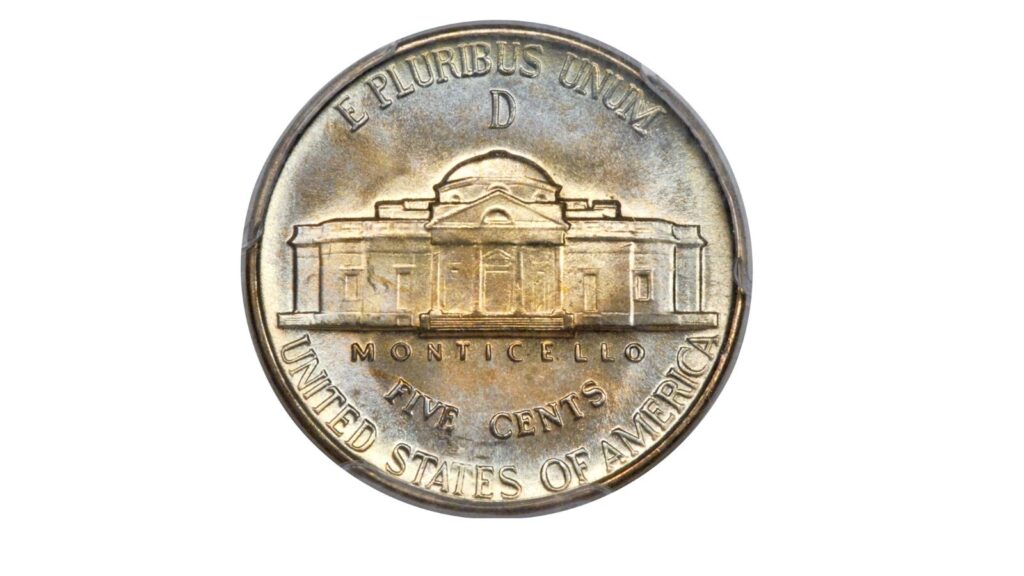
The 1943-D is the key date of the wartime silver nickel series. Denver produced just 15,294,000 nickels in 1943 compared to 271 million at Philadelphia that year, making it the scarcest regular-issue coin in the entire 11-piece wartime silver set. In worn circulated condition, it’s still worth its silver content plus a collector premium. The real gap opens in nicer circulated and uncirculated grades, where a 1943-D commands significantly more than a common 1943-P or 1943-S of equivalent condition.
Identify the 1943-D the same way as any war nickel: large mint mark above Monticello on the reverse. The “D” there confirms Denver. In circulated grades from Very Fine upward, expect $10 to $25 where common war nickels of the same condition might bring $3 to $5. Mid-grade uncirculated examples bring $50 to $150 depending on strike quality.
The Full Steps designation matters particularly for this date. A 1943-D with clean, fully-defined Monticello steps in uncirculated condition is significantly scarcer than the total mintage implies and brings considerably more than any common war nickel variant in any grade.
1943/2-P overdate war nickel
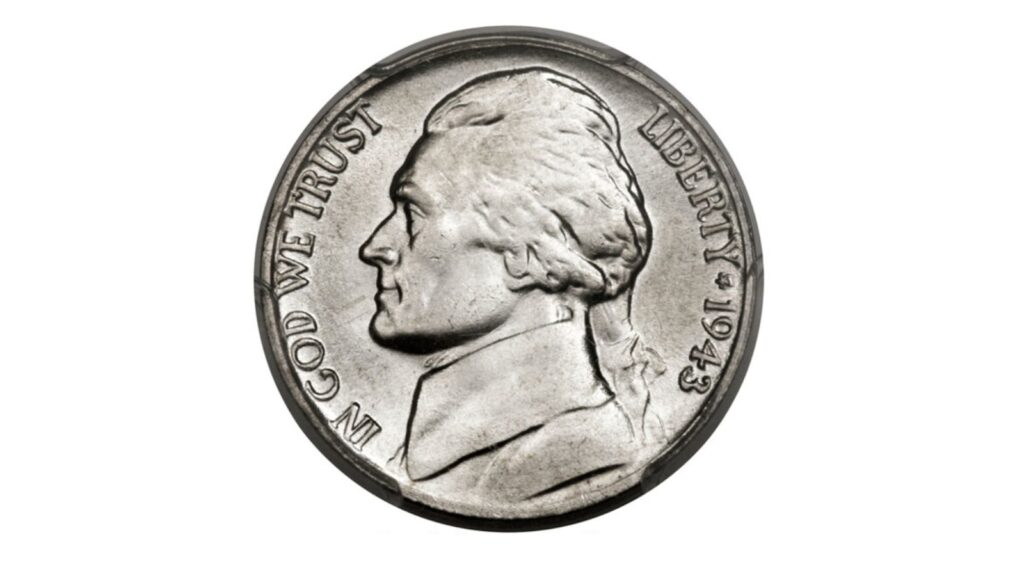
The 1943/2-P is the only overdate in the entire Jefferson nickel series, which means it holds a specific place that date-and-variety collectors need to fill a complete set. It happened when the Mint reused a 1942 die, stamping a “3” over the existing “2,” and the trace of the original digit remained visible in the finished coin. The elongated lower curve on the “3” in the date is the key diagnostic, seen clearly at 10x magnification on any clean example.
Well-worn examples bring $40 to $100. As condition improves to lightly circulated and Extremely Fine, prices climb into the $250 to $500 range. Uncirculated examples start at several hundred dollars. About 75,000 examples are believed to survive, which makes this rare but not impossible to find in the wild.
Examine every 1943-P war nickel you have under magnification. Look at the “3” in the date. A genuine overdate shows clear remnants of the underlying “2” in the bottom curl of the “3,” and the doubling looks mechanical and consistent, not random wear or damage. If you think you have one, any experienced coin dealer can confirm it in seconds with a loupe.
Full Steps Jefferson nickels (1938-1964)
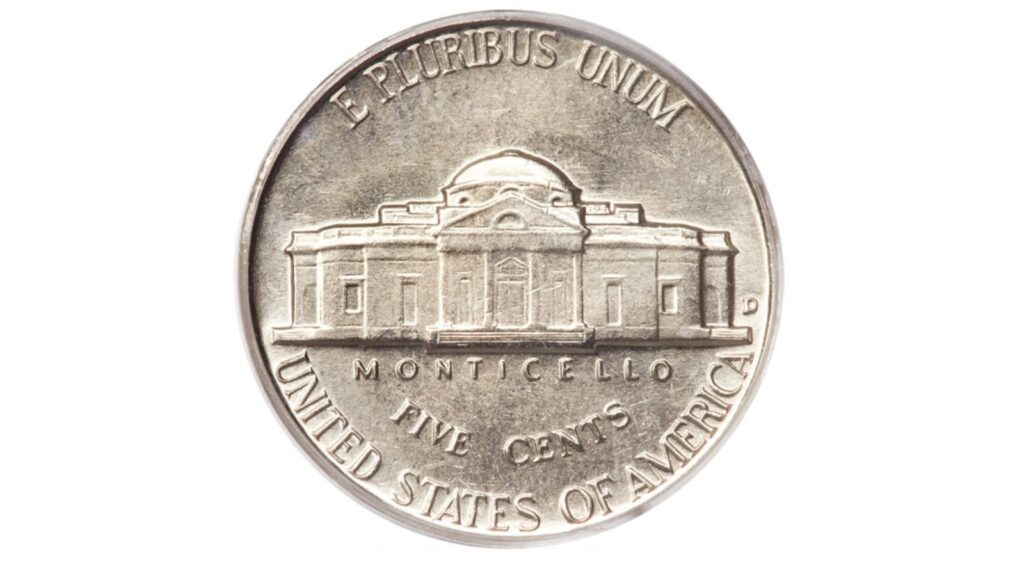
The Monticello building on the reverse of a Jefferson nickel has a flight of steps at its entrance. On most examples, those steps are partially obscured by weak striking, die wear, or the general production realities of high-volume coinage. When all five or six steps are fully defined and clearly separated, grading services award the coin a Full Steps designation. That designation can multiply a coin’s value by ten to twenty times over an otherwise identical example of the same date and grade.
The concept applies across the series, but the most valuable pieces cluster around specific scarce dates. A 1953-S or 1954-S Jefferson nickel in mid-grade uncirculated condition with Full Steps typically brings $200 to $600 or more where a common circulated example of the same date might sell for $5 to $10. The 1938-D and 1938-S in Full Steps uncirculated condition command several hundred dollars each. Even common dates like the 1964 or 1962 can bring real premiums with a legitimate Full Steps designation in high uncirculated grades.
To check at home, use a loupe and a well-lit, angled surface. Tilt the coin under the light and examine the steps in front of Monticello’s entrance. If all the step lines are clearly separated and fully defined all the way across, you may have something worth sending to PCGS or NGC for grading. A coin that comes back MS65 Full Steps on a key date can justify the grading cost many times over.
1926-S Buffalo nickel
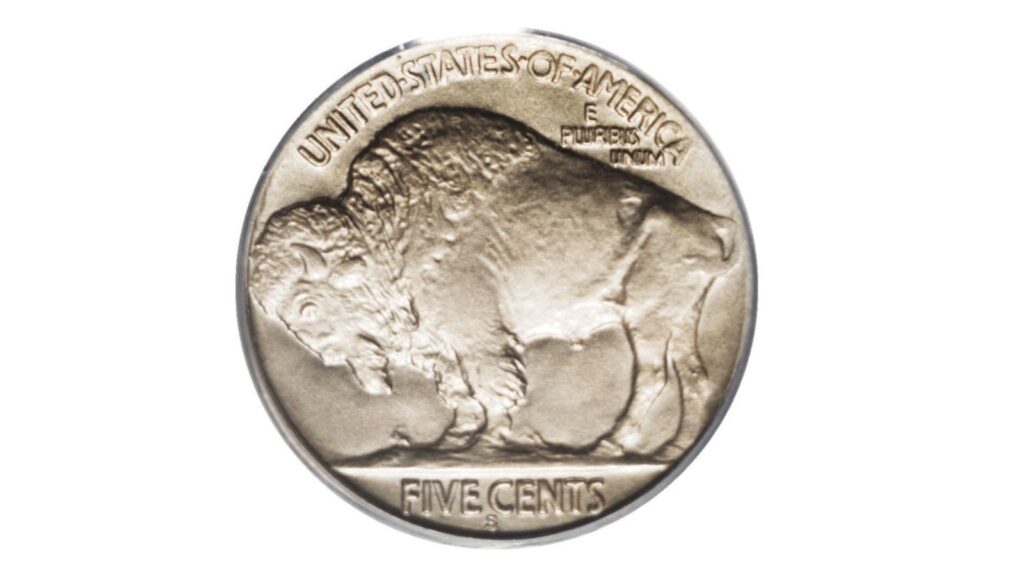
The 1926-S is a genuine key date in the Buffalo nickel series, with one of the lowest mintages of any regular-issue nickel in its era: just 970,000 pieces struck at San Francisco. The general public paid no special attention when these circulated, most ended up in everyday use without being saved, and significant numbers were scrapped in wartime metal drives. Survival estimates are low in all grades, and gem mint-state examples are exceptionally rare.
In worn circulated condition, a 1926-S typically brings $55 to $80. Nice Very Fine examples climb toward $100 to $200. Higher circulated grades push further still. Uncirculated examples are scarce enough that prices vary widely by strike quality, but gem MS65 specimens have sold for $3,000 and up. The finest known examples are rarer than the mintage suggests because Buffalo nickel dies frequently produced weak strikes, and a 1926-S with strong horn and feather detail is genuinely hard to find.
The mint mark on a Buffalo nickel appears on the reverse, below the bison’s body near the bottom edge of the design. On the 1926-S, look for a clear “S.” Many nickels passed off as 1926-S are more common dates with altered or damaged digits, so examine the date carefully before getting excited. The “6” in 1926 should be clearly readable, and the “S” should be clean.
1913-S Type 2 Buffalo nickel
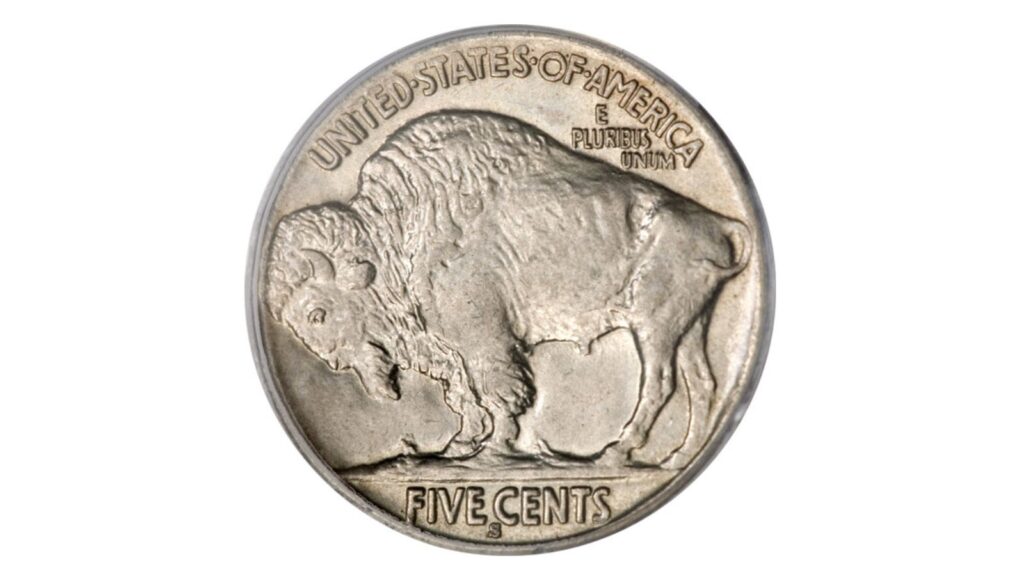
The 1913-S Type 2 is the third-lowest mintage in the entire Buffalo nickel series, with just 1,209,000 coins produced at San Francisco in the second half of 1913 when the design switched to the flat-ground reverse. Only about 14,000 examples are believed to survive across all grades. Even heavily worn examples in Good condition bring $170 and up, which is unusual for a coin of this era. This is a piece that earns money at every grade level.
In Fine condition, expect $300 to $450. Very Fine examples bring $430 to $550. Nice Extremely Fine examples command $750 to $900. Uncirculated examples start around $825 for lower mint-state grades and climb sharply into the $1,200 to $5,000 range at MS64 and above. Gem specimens in MS65 and above are scarce and can command $3,000 to $5,000 with strong eye appeal.
The key is confirming both the date and the variety type. The Type 2 reverse shows the bison standing on a flat strip of land with “FIVE CENTS” inscribed in a recessed area below the bison’s feet. The Type 1 from earlier in 1913 shows the bison on a raised mound. Any 1913-S needs to be identified as one or the other before a price means anything. The Type 2 is worth considerably more than the Type 1 from the same mint.
1937-D three-legged Buffalo nickel
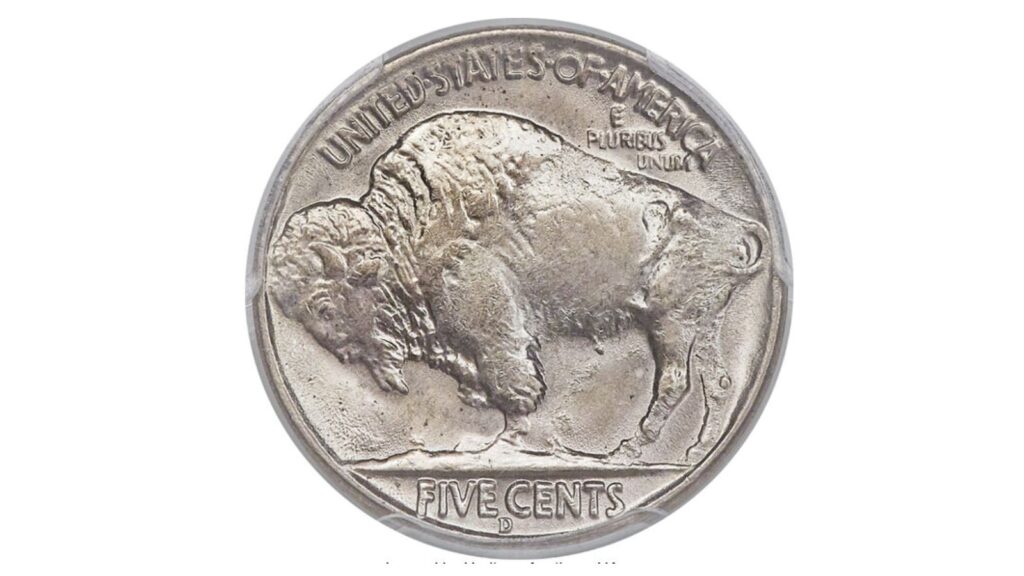
A Denver Mint worker polished a damaged reverse die too aggressively, removing the bison’s foremost right leg in the process. The result is a Buffalo nickel where the animal appears to stand on three legs. It wasn’t caught before coins went into production, and approximately 10,000 examples are believed to survive. Because word spread quickly that the coin was unusual, many were pulled from circulation, so surviving examples tend to cluster in nicer circulated grades.
Worn examples in Very Fine condition bring $800 to $1,000. Nice About Uncirculated examples bring $1,250 to $2,300. Mint-state examples are rare and command $5,000 and above depending on grade. The error is obvious enough that even casual observers recognize it immediately, which drives broad collector interest well beyond the usual numismatic audience.
Fakes are a serious issue here. The most common method is grinding down the fourth leg on a genuine Buffalo nickel. On a real three-legged Buffalo, a small tuft or line of hair should remain near the position where the leg was removed. If there’s no detail whatsoever in that area, or the surface around the missing leg looks scraped or smoothed, walk away. When in doubt, send it to PCGS or NGC before putting any money on it.
1916 Doubled Die Buffalo nickel
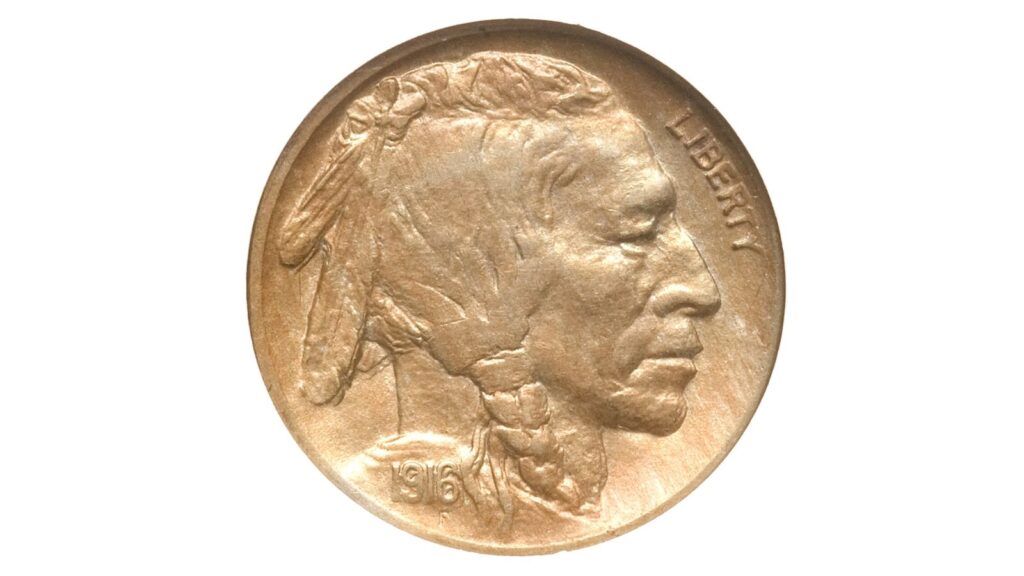
This is one of the most dramatic doubled die errors in 20th-century U.S. coinage, and it’s visible without any special equipment. During die manufacturing, the hub struck the working die multiple times with slight misalignment, leaving a “916” ghost impression hanging below and to the right of the primary date. The Indian’s profile and feathers show additional doubling. When you see it, there’s no question about what you’re looking at.
Only 200 to 500 examples are believed to survive. Even heavily worn examples in Good condition start around $4,800. Fine examples bring $9,400 and up. Extremely Fine examples push toward $19,000. Mint-state examples, of which only about 15 are known, range from $67,500 into six figures for the finest. This coin has no realistic “casual find” price level. Any grade commands serious money.
The dramatic values mean counterfeits exist. Common 1916 Buffalo nickels, of which over 63 million were made at Philadelphia alone, are sometimes altered to mimic the doubled die. On a genuine example, the doubling is mechanical and consistent throughout: the secondary impression is clean, sharply defined, and parallel to the primary. Postmint tooling or surface damage looks rough and irregular under magnification. If you think you have one, do not clean it, do not handle it more than necessary, and take it directly to PCGS or NGC.
1971 No-S proof Jefferson nickel
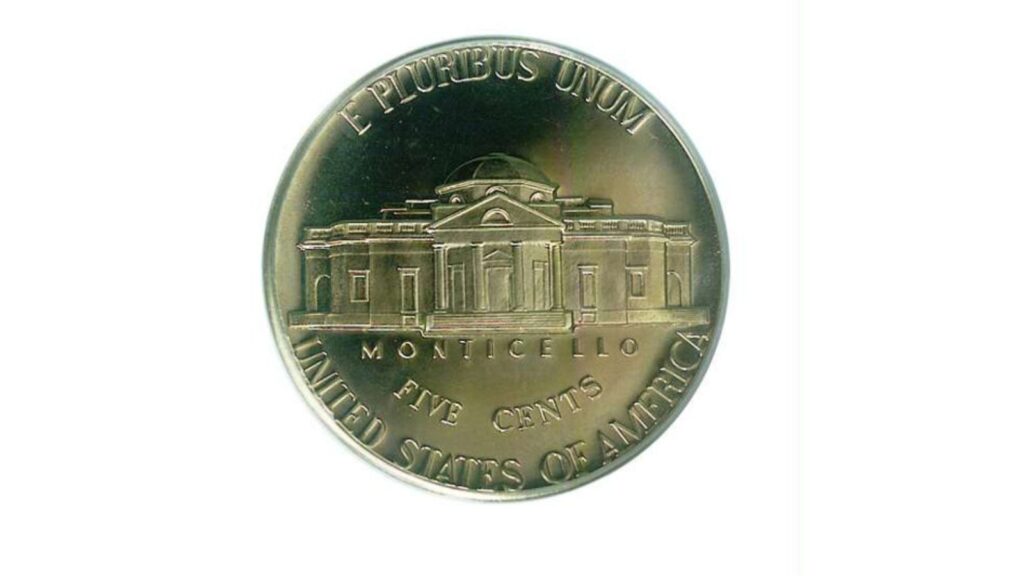
Proof coins are struck at the San Francisco Mint and carry an “S” mint mark. In 1971, a die left the Philadelphia facility for San Francisco without the “S” punched in, and a small number of proof nickels were struck from it before anyone noticed. These coins turned up inside normal 1971 Proof Sets and represent the only proof coin in the entire Jefferson nickel series struck without its intended mint mark.
In typical mid-range proof grades from PR65 to PR67, the 1971 No-S brings around $1,000. Deep Cameo examples, with the strongest frosted devices against completely mirrored fields, are far rarer with only around 50 estimated to exist, and bring considerably more. Several hundred No-S examples are believed to exist in total, split across standard proof, Cameo, and Deep Cameo designations.
If you have old proof sets in a drawer, particularly from the early 1970s, it’s worth checking every one. The regular 1971-S proof nickel is worth a few dollars. On the regular coin, “S” appears below the date on the obverse. On the No-S variety, that space is blank. The check takes about ten seconds with a loupe, and the payoff if you find one is around $1,000 to start.











