
Retirees got a 2.8% cost of living raise on their Social Security checks for 2026, and it still isn’t keeping up with grocery and heating bills that climbed faster than that. If your fixed income buys less every month than it used to, you’re not imagining it.
The frustrating part is how much money retirees leave unclaimed simply because nobody mentioned it was available. Nearly 9 million older adults who qualify for food assistance never apply for it, missing out on more than $2,000 a year on average. Millions more are paying full Medicare premiums they could be getting covered, or letting a tax credit built specifically for their age group go unused.
Some of what follows is a one time move. Some of it is worth thousands of dollars spread out over several years. None of it requires a financial advisor, just a phone call or a form most people never got around to looking up.
Delay Social Security if you can swing it
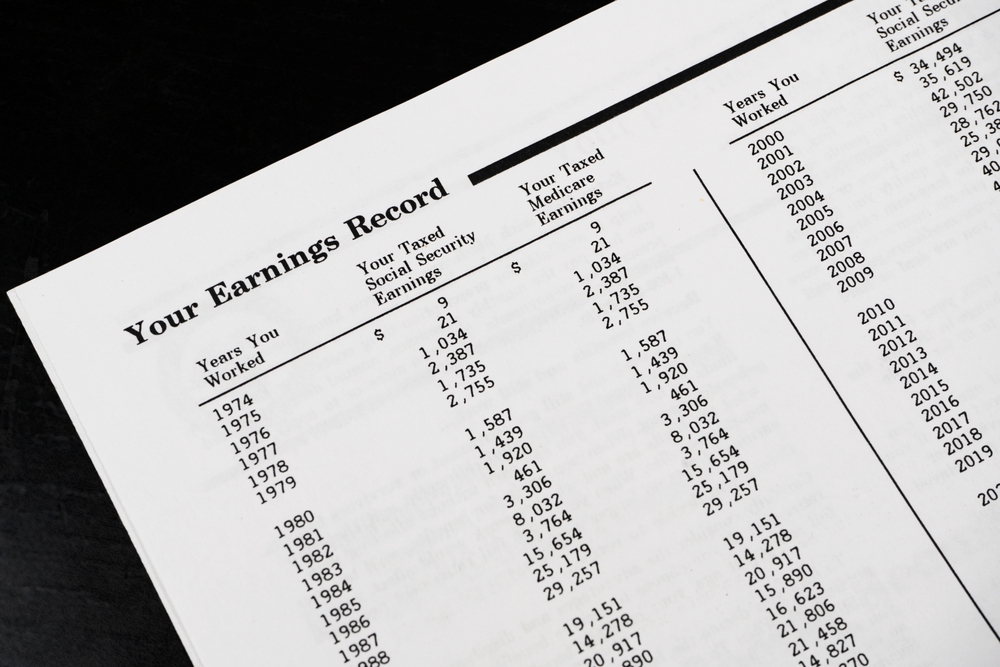
Waiting even one extra year to claim Social Security can make a real difference to your monthly check, permanently. Social Security adds 8% to your benefit for every year you delay claiming past your full retirement age, up to age 70. For most people retiring now, full retirement age is 67, which means someone who waits from 67 to 70 ends up with a noticeably bigger check for the rest of their life.
That’s not realistic for everyone. If you need the income now, or your health makes waiting risky, claiming early is still the right call for you. But if you have savings or part time work that can cover your expenses for a few more years, running the numbers on a delay is worth the time. A few hundred extra dollars a month, for the rest of your life, adds up fast.
Call Social Security directly, or use the agency’s online estimator, to see what your benefit looks like at different claiming ages before you decide anything. Whatever number you lock in follows you for the rest of your life, so it’s worth the extra half hour now.
Know your 2026 earnings limit before you go back to work

If you claimed Social Security early and you’re thinking about picking up part time work, there’s a number you need to know first. For 2026, if you won’t reach full retirement age at any point during the year, Social Security withholds $1 in benefits for every $2 you earn above $24,480. In the calendar year you actually reach full retirement age, the limit jumps to $65,160, and the penalty eases to $1 withheld for every $3 earned above that, counting only the months before you hit the milestone.
This isn’t a tax. It’s money Social Security holds back and eventually pays you back, spread out after you reach full retirement age, through a higher monthly benefit. But in the moment, it can feel like a serious pay cut if you didn’t see it coming, especially if you take a seasonal job expecting a certain paycheck and the withholding shows up instead.
Once you reach full retirement age, the limit disappears completely. You can earn any amount from work without losing a cent of your Social Security check. Knowing where that line falls before you accept a new job, or decide how many hours to take, saves you from an unpleasant surprise the following spring.
Factor in this year’s cost of living bump

Social Security benefits went up 2.8% for 2026, pushing the average retiree’s monthly check to roughly $2,071. That’s an extra amount most months won’t even notice, but it does change a few things worth paying attention to.
First, if you’re on a Medicare Savings Program or Extra Help, a higher benefit could nudge your income closer to the eligibility limit for those programs. It’s worth checking where you land after the increase, not before. Second, if you have a Medicare Advantage or Part D plan with a premium deducted straight from your Social Security check, you may have noticed your deposit didn’t rise as much as expected. Premiums and the cost of living adjustment often land in the same month, which can make the raise look smaller than it actually was.
The adjustment is calculated every year based on inflation data, and it rarely keeps pace with real cost increases for the things retirees actually spend money on, especially health care and housing. Treat it as a small cushion, not a solution, and keep checking whether you still qualify for the programs below that have their own income cutoffs.
Get Extra Help paying for your prescriptions

Extra Help is a federal program that pays most of the cost of Medicare’s prescription drug coverage for people with modest income and savings, and a lot of retirees who qualify never apply because they assume it’s only for people on full Medicaid. It isn’t. For 2026, you can qualify with an annual income under $23,940 if you’re single, or $32,460 if you’re married, along with resources under $18,090 for an individual or $36,100 for a couple. Resources means money in the bank and investments, not your home or car.
If you qualify, Extra Help covers most or all of your Part D premium and deductible, and it caps what you pay for each prescription at a low, fixed amount instead of the percentage based costs most people face. For someone taking several maintenance medications, that can mean the difference between a drug bill that eats into groceries and one that barely registers.
You apply through Social Security, not through your drug plan, and the application takes most people under half an hour. Even if you’re not sure you qualify, apply anyway. Being turned down costs you nothing, and plenty of people who assumed they’d earn too much find out they were wrong.
Ask about a Medicare Savings Program for your Part B premium

Every month, $202.90 comes out of most retirees’ Social Security checks automatically to cover the standard Medicare Part B premium, whether they notice it or not. A Medicare Savings Program can cover that premium for you, and depending on which tier you qualify for, it can cover your deductibles and coinsurance too.
There are three tiers based on monthly income. The Qualified Medicare Beneficiary program, for individuals earning up to $1,350 a month or couples up to $1,824, pays your Part B premium plus most other Medicare costs. The Specified Low-Income Medicare Beneficiary program, for individuals up to $1,616 or couples up to $2,184, covers just the Part B premium. The Qualifying Individual program, for individuals up to $1,816 or couples up to $2,455, also covers only the Part B premium, but funding is limited and you have to reapply every year. Resource limits for all three sit around $9,950 for an individual and $14,910 for a couple, not counting your home.
These programs run through your state’s Medicaid office, not Social Security or Medicare directly, which is part of why so many eligible people never sign up. Contact your state Medicaid office or your local State Health Insurance Assistance Program to apply. Getting $202.90 back every month is real money, and it’s the kind of application most people regret not filing sooner.
Mark your calendar for Medicare’s fall shopping window

Between October 15 and December 7 each year, you can switch Medicare Advantage plans, switch Part D drug plans, or drop Medicare Advantage and go back to Original Medicare, no questions asked and no medical underwriting required. Most retirees let this window close without doing anything, either because the renewal letter from their plan went straight into a drawer, or because switching plans seems like more trouble than it’s worth.
It’s worth the trouble more often than people think. Drug formularies change every year, meaning a medication that was cheap last year can suddenly cost hundreds more under the same plan, while a competing plan covers it at a fraction of the price. Premiums, networks, and extra benefits like dental or vision coverage shift too, sometimes dramatically, and the only way to know if you’re still on the best plan is to actually compare.
Medicare’s plan finder tool lets you enter your specific medications and preferred pharmacy, then ranks plans by your actual expected annual cost, not just the premium. Spend thirty minutes with it every October before the window closes on December 7. If your current plan still wins, you’ve lost nothing. If it doesn’t, you’ve likely just saved yourself hundreds of dollars for the coming year.
Check whether your Medicare Advantage plan comes with a grocery or utility card

A growing number of Medicare Advantage plans load a prepaid debit card with a set amount of money every month or every quarter that you can spend on groceries, over the counter items like pain relievers and vitamins, or in some cases utility bills. These are usually called flex cards or OTC cards, and plenty of people who have one don’t realize what it covers, or that unused funds often don’t roll over to the next period.
Not every Medicare Advantage plan offers one, and the ones that do vary enormously in how much they load and what you’re allowed to buy with it. Some restrict spending to specific pharmacy chains or a narrow list of approved items. Others are far more flexible and work at any major grocery store. If you’re not sure whether your plan includes this benefit, check your plan’s evidence of coverage document or call the member services number on the back of your card.
If your current plan doesn’t offer a flex card and a competitor does, that’s worth weighing during open enrollment alongside premiums and drug coverage. A few hundred dollars a year in groceries is easy to overlook next to bigger numbers like premiums and deductibles, but it’s real spending money that otherwise comes straight out of your pocket.
Apply for help with your heating and cooling bill

The Low Income Home Energy Assistance Program, known as LIHEAP, helps cover the cost of heating in the winter and cooling in the summer for households that qualify, and older adults are named as one of the groups the program specifically prioritizes. It can pay toward your utility bill directly, help in a heating or cooling emergency, and in some cases fund weatherization work like insulation or a furnace repair that lowers your bills going forward.
There’s no cost to apply, and the program explicitly warns that anyone asking for a fee to help you apply is running a scam. Funding comes through your state, so how much is available and exactly who qualifies varies depending on where you live, but income limits are usually set well above the poverty line specifically so that more people qualify than you’d expect.
You can find your state’s LIHEAP office and application through the national energy assistance referral line, or by searching your state name along with LIHEAP. If your heating bill has been creeping toward the top of your monthly budget, or you’ve been putting off running the air conditioner because of what it costs, this is the kind of help that exists for exactly that situation. Apply before the coldest or hottest months hit, since some states run out of funds.
Find out if you’re one of the millions skipping free food money

Close to 9 million older adults who qualify for SNAP never apply for it, missing an average of $2,256 a year in grocery help that could cover a meaningful chunk of a retiree’s food budget every single month.
A lot of the people skipping this benefit assume their Social Security check puts them over the income limit, or that applying means a complicated process better suited to younger families with kids. Neither is necessarily true. SNAP eligibility depends on your household size and income, and many retirees living on Social Security alone, or Social Security plus a small pension, fall well within the limits in their state. The application also allows deductions for medical expenses and housing costs that can push someone who looks over the limit back under it once those are factored in.
Benefits load onto an EBT card you use like a debit card at most grocery stores, and the amount depends on your specific household finances. If you’ve never applied because you assumed you wouldn’t qualify, or because you didn’t want to deal with the paperwork, it’s worth a second look. The application takes under an hour, and the downside of applying and being denied is exactly nothing.
Buy the senior pass that pays for itself on one road trip

If you’re 62 or older, the National Park Service sells a lifetime pass for $80 that covers entrance fees at more than 2,000 federal recreation sites, including every national park, for the rest of your life. There’s also an annual version for $20 if you’d rather test it out before committing, though at that price the lifetime pass pays for itself after just two or three visits to parks that typically charge $20 to $35 per carload.
The pass covers the pass holder and everyone in their vehicle at sites that charge per vehicle, or the pass holder plus three adults at sites that charge per person. It also gets you a discount on some camping fees and tours run by the Park Service itself, though not on fees charged by outside concessionaires running things like boat tours or lodges inside the parks.
You can buy it online, by mail, or in person at any staffed federal recreation site, and you’ll need some proof of age and residency or citizenship. For retirees who like to travel, or who are finally getting around to visiting parks they’ve been meaning to see for decades, this is one of the cheapest forms of entertainment the federal government sells, and it never expires.
Call your local Area Agency on Aging

Every region of the country has an Area Agency on Aging, a local office funded to help older adults stay independent in their own homes for longer. What they offer varies by location, but it commonly includes home delivered meals through programs like Meals on Wheels, help with light housework through homemaker assistance programs, and connections to whatever other local resources exist in your specific area.
Most people have never heard of their Area Agency on Aging because nothing prompts you to look for it. There’s no single national ad campaign, no letter that arrives automatically, and the name itself sounds bureaucratic enough that people assume it’s only for someone in worse shape than they are. In practice, these offices exist precisely so that retirees don’t have to wait for a crisis before getting support.
The easiest way to find yours is the Eldercare Locator, a free national service that connects you to the agency covering your specific address with one phone call or a quick search. If you’re managing a long list of small, draining tasks on a fixed income and a limited amount of energy, a single call to find out what’s available locally is worth the ten minutes it takes.
Dial 211 or run a BenefitsCheckUp

Two free tools exist specifically to cut through the confusion of figuring out what you qualify for, and most retirees have never used either one. Dialing 211 connects you to a local, confidential helpline that can point you toward help with bills, food, housing costs, utility costs, and health care costs in your specific area, run by people who know what’s actually available where you live rather than a generic national list.
BenefitsCheckUp, a free online tool from the National Council on Aging, checks your answers about income, location, and situation against close to 2,000 federal, state, and local benefit programs to show you which ones you likely qualify for, covering everything from food and medicine to utilities and health care. No registration is required, and it’s available in English and Spanish.
Neither of these costs anything, and neither one tries to sell you anything afterward. If you’ve read through several items on this list and found yourself unsure whether you’d actually qualify for Extra Help, a Medicare Savings Program, or LIHEAP, running your situation through BenefitsCheckUp once is faster than researching each program’s rules separately. It will tell you where to apply once it finds a match.
Claim the tax credit built for people your age

There’s a federal tax credit built specifically for people 65 and older, or for people who are permanently and totally disabled, and most eligible filers have never heard of it because tax software doesn’t always flag it automatically. It’s called the Credit for the Elderly or the Disabled, and you claim it on Schedule R when you file your return.
The credit phases out based on income, so it’s aimed at retirees with modest earnings rather than anyone with a large pension or significant investment income. Single filers lose eligibility once their adjusted gross income passes $17,500, married couples filing jointly lose it at $20,000 if only one spouse qualifies or $25,000 if both do, and the threshold is lower for married people filing separately. There’s also a separate limit on how much nontaxable Social Security or pension income you can receive and still qualify.
The credit itself works out to 15% of a base amount after those income limits are applied, which can mean a few hundred dollars off your tax bill depending on your specific numbers. It won’t change anyone’s life on its own, but it’s money the IRS makes available precisely for people in your situation, and skipping it because you assumed you wouldn’t qualify is the only way to guarantee you get nothing from it.
Use a qualified charitable distribution to shrink your tax bill

If you’re 70 and a half or older, charitably inclined, and sitting on a traditional IRA, a qualified charitable distribution lets you send money straight from your IRA to a qualifying charity without it ever counting as taxable income. For 2026, you can give up to $111,000 this way, or up to $222,000 combined if you’re married and both spouses have IRAs and make their own qualified charitable distributions.
The real advantage shows up once you’re required to take minimum distributions from your IRA, usually starting at 73. A qualified charitable distribution counts toward satisfying that year’s required minimum distribution, but because the money goes directly to the charity rather than into your bank account first, it never shows up as income on your tax return. That matters more than it sounds like it should, because a lower adjusted gross income can also help keep you under the thresholds that trigger higher Medicare premiums or taxation of your Social Security benefits.
The money has to move directly from your IRA custodian to the charity, not through your own hands first, or it loses the tax benefit entirely. Most custodians can set this up with a simple request, often by mailing a check directly to the charity on your behalf. If you were planning to donate money this year anyway, routing it this way instead of writing a personal check can save you real money in taxes you’d otherwise owe.
Grab the bigger retirement catch-up if you’re 60 to 63

If you’re still working and contributing to a 401(k) or similar workplace retirement plan, 2026 comes with a specific advantage for anyone turning 60, 61, 62, or 63 this year. The standard contribution limit is $24,500, and most people 50 and older can add a catch-up contribution of $8,000 on top of that, for a total of $32,500. But workers who are 60 to 63 specifically get a bigger catch-up of $11,250 instead, bringing their total possible contribution to $35,750 for the year.
This window closes the year you turn 64, when the catch-up amount drops back down to the standard $8,000 level available to everyone else 50 and older. If you’re in your early sixties, still earning a paycheck, and have the cash flow to contribute more without hurting your current budget, these four years are the single biggest opportunity you’ll get to pack extra money into a tax advantaged account before retirement.
Not every employer’s plan is set up to accept the higher amount automatically, so check with your HR department or plan administrator before assuming it’s happening on its own. For anyone behind on retirement savings and still earning an income, this is one of the most direct ways the tax code currently rewards catching up late, and it’s only available for a few specific years of your life.
Consider a move to a state that leaves your Social Security alone

Most states don’t touch your Social Security benefit at all once it hits your bank account. As of 2026, only eight states still tax it to any degree: Colorado, Connecticut, Minnesota, Montana, New Mexico, Rhode Island, Utah, and Vermont, and most of those offer exemptions based on income or age that let many retirees avoid the tax anyway.
That leaves 42 states plus the District of Columbia where your Social Security check is simply yours, with no state level tax taken off the top. If you’re already weighing a move for other reasons, cost of living, proximity to family, climate, it’s worth checking whether your destination state is one of the eight before you commit. Even within states that do tax Social Security, the actual bite is often small once exemptions are applied, so it shouldn’t be the only factor in a decision this big.
State income tax on Social Security is also just one piece of the full picture. Some states with no tax on Social Security make up for it with higher property taxes or sales taxes, so a state that looks ideal on this one measure alone can still end up more expensive overall. Treat this as one factor to check, not a reason by itself to pack up and move somewhere new.
Sell the silver and gold sitting in a drawer

Silver is trading at roughly $57 an ounce right now, and gold is sitting above $4,160 an ounce, both near record territory. If you’ve got old silverware, jewelry you don’t wear, a few inherited coins, or anything else that might contain real silver or gold sitting in a drawer, prices like these make it one of the better times in years to actually sell.
A full set of sterling silver flatware can be worth several hundred dollars to well over a thousand once you weigh it against today’s prices, and that’s before accounting for any added value from a desirable pattern or maker. Gold jewelry gets weighed and valued the same way, based on its purity and weight rather than what you originally paid for it or what it might be worth to a collector. Reputable buyers will tell you upfront that they’re paying based on melt value unless a piece has genuine collectible worth beyond its metal content.
Before you sell anything, confirm what you actually have. Sterling silver is stamped 925, and anything silver plated is worth far less than true sterling, so check for a hallmark before you get your hopes up about a full set’s value. Prices on precious metals move daily, so get a current quote rather than relying on a number you saw months ago, and compare at least two buyers before accepting an offer.
Stack a few senior discounts into your regular routine

A handful of senior discounts are easy to forget about simply because claiming them takes a specific action, like showing up on the right day or signing up for a free membership you didn’t know existed. Kohl’s takes 15% off in store purchases for customers 60 and older, but only on Wednesdays. Walgreens offers 20% off eligible items on the first Tuesday of every month for anyone 55 and older who joins its free myWalgreens rewards program, which takes about two minutes to set up.
Restaurant and travel discounts work similarly. Denny’s gives AARP members 55 and older 15% off, up to a $10 discount, simply for showing a membership card. Amtrak knocks 10% off most fares for riders 65 and older, or 60 and older on routes crossing into Canada, and the discount applies automatically once you select the senior fare when booking.
None of these individually changes your monthly budget. But stacked together over a year, routine discounts like these on groceries, prescriptions, meals out, and travel add up to real savings for essentially no effort beyond asking or showing an ID. Check with specific locations before you go, since participation and exact terms can vary by store, and it’s worth a quick search every so often for what’s currently available near you.
Most of this money and these programs already exist for people in exactly your situation. The only real step left is picking one from this list and making the call.











