
There’s a whole industry built around convincing you that cooking at home requires more equipment. A machine for this, a gadget for that, an appliance for the one time a year you feel ambitious. Most of it just moves from the store shelf to your cabinet shelf, with a brief stop on the counter where you use it twice and feel vaguely guilty every time you see it.
Some of these things are cheap enough that the waste stings only a little. Others run $100 to $300, which is real money. The 18 items below are genuinely worth skipping, whether you’re setting up a kitchen from scratch, trying to clear out the clutter, or just wondering why your drawers won’t close.
Table of contents
- Bread maker
- Centrifugal juicer
- Quesadilla maker
- Single-use fruit and vegetable gadgets
- Electric can opener
- Oversized knife block sets
- Pre-filled matching spice rack
- Waffle maker
- Electric pasta maker
- Ice cream maker
- Electric wine opener
- Egg cooker
- Mandoline slicer
- Spiralizer
- Soda maker
- Cheap nonstick cookware sets
- Salad spinner
- Specialty single-use baking pans
Bread maker
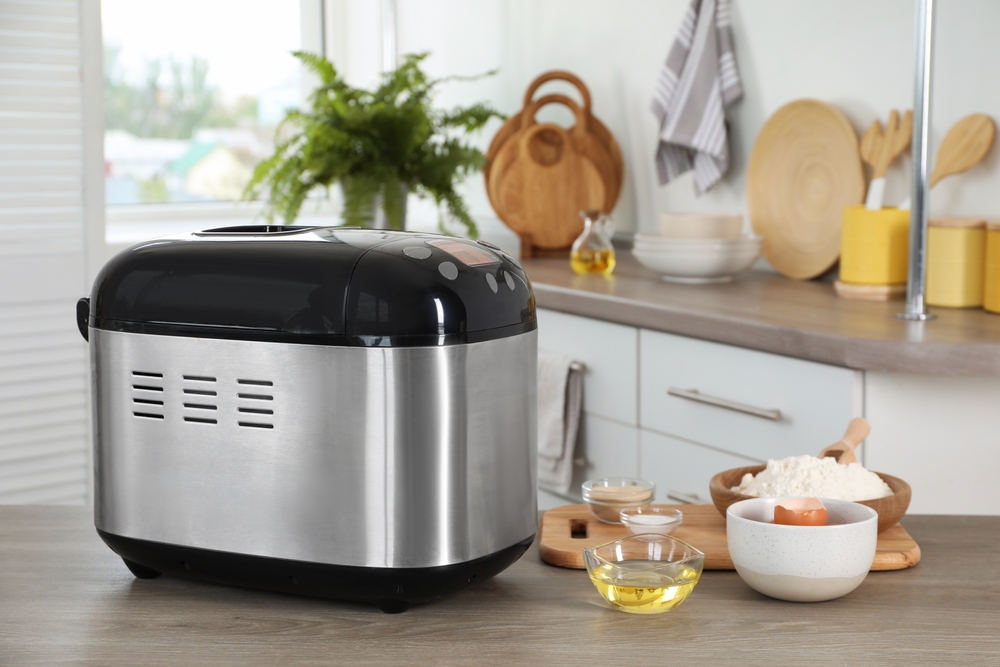
The bread maker fantasy is easy to understand. Fresh bread every morning, homemade loaves for almost nothing, the smell of it baking while you sleep. The reality is that most people use a bread maker a few times, then find a permanent spot for it in the back of a cabinet or on Marketplace for $25.
The machines themselves run from around $80 to $200 for popular home models, and the savings on ingredients are modest. At current grocery prices, making a loaf at home costs roughly $1.87, compared to about $3 to $5 for a store-bought loaf depending on the brand. That margin sounds appealing until you factor in that a $100 machine needs to produce over 50 loaves before you break even, which requires genuine, sustained commitment to home baking. Most people don’t have that, and that’s fine.
If you actually bake bread regularly, a Dutch oven and a good no-knead recipe will produce a better loaf than most bread machines. The texture is superior, the crust is crunchier, and you already own the pot.
Centrifugal juicer
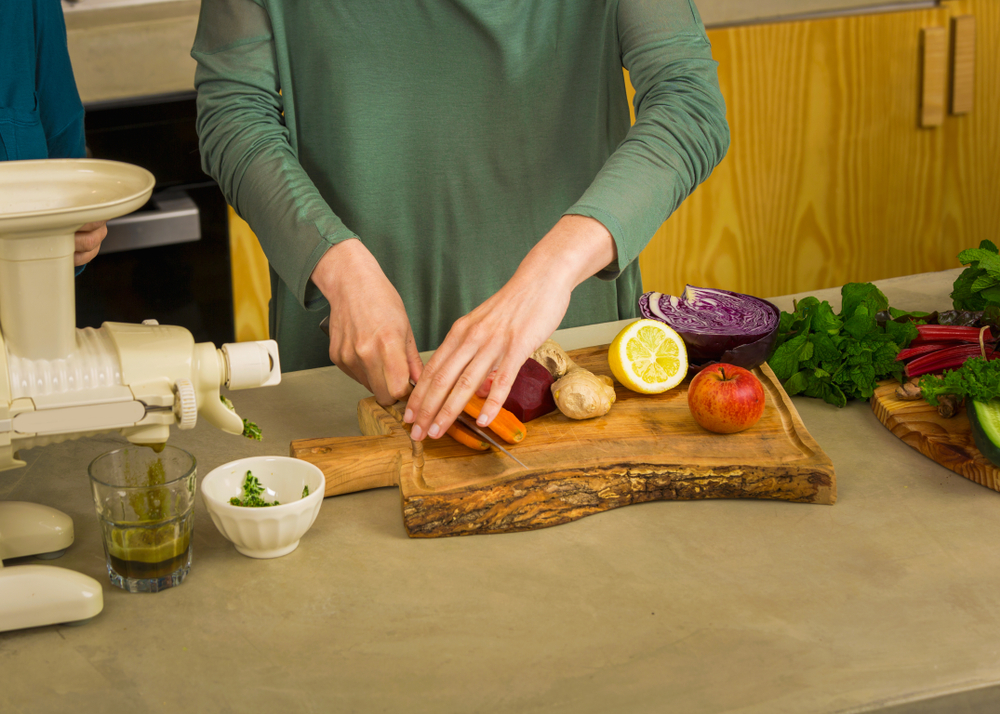
Juicers are a classic aspirational purchase. You buy one in January, make three glasses of carrot-ginger juice, and then never use it again because cleaning the thing takes 20 minutes and makes the whole process feel like a project. The machine itself runs from $60 to $150 for a centrifugal model, plus the cost of the produce, which disappears into pulp at a rate that will genuinely surprise you.
A centrifugal juicer spins fast and generates heat, which degrades some of the nutrients you’re paying all that produce money to extract. Cold-press masticating juicers do a better job, but they cost $300 to $700 and take even longer to clean. Neither type is a good buy for someone who juices occasionally.
For most households, a blender works better and wastes nothing. If you want straight fruit or vegetable juice without the fiber, buying a bottle of cold-pressed juice when the mood strikes is almost certainly cheaper than owning a machine you rarely use, once you add up the produce cost and the time.
Quesadilla maker
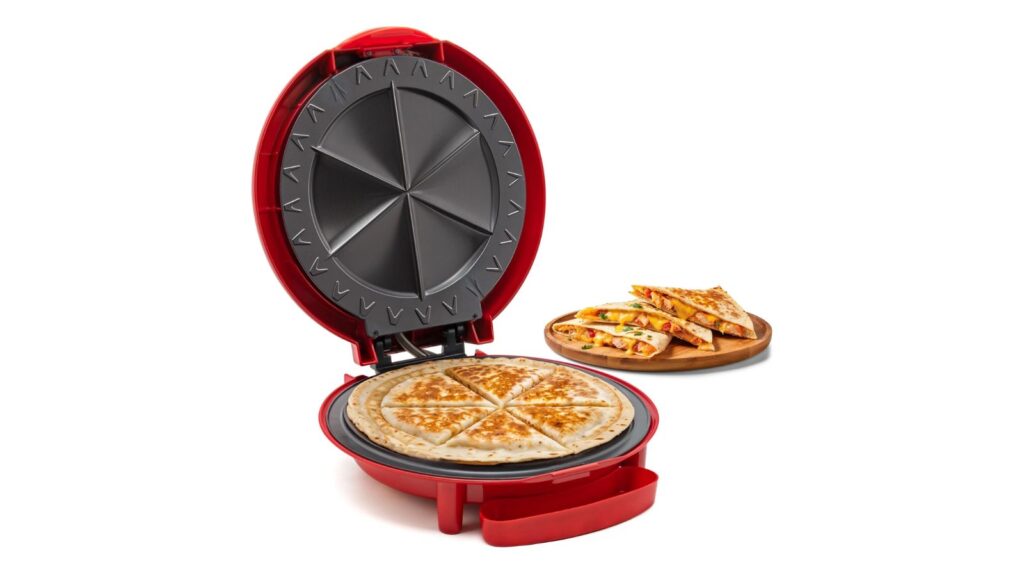
iha-08 via eBay
A quesadilla maker is a round, countertop appliance that costs between $25 and $60. It does exactly one thing: heats a tortilla with fillings inside it. You can do the same thing in a skillet in the same amount of time, with better browning control and no extra appliance to wash. The quesadilla maker doesn’t even have an advantage in speed or result quality.
These turn up constantly at thrift stores because there’s a very short window between “this seems useful” and “why do I own this.” The nonstick plates are hard to clean properly, they degrade with use, and the round shape forces you to use smaller tortillas than you’d actually want. A 10-inch skillet with a lid for the first 30 seconds does the job with less hassle.
If you find yourself making quesadillas three or four times a week, a panini press at least gives you flexibility for other sandwiches. But the single-purpose quesadilla maker is a solution to a problem that a pan already solved.
Single-use fruit and vegetable gadgets
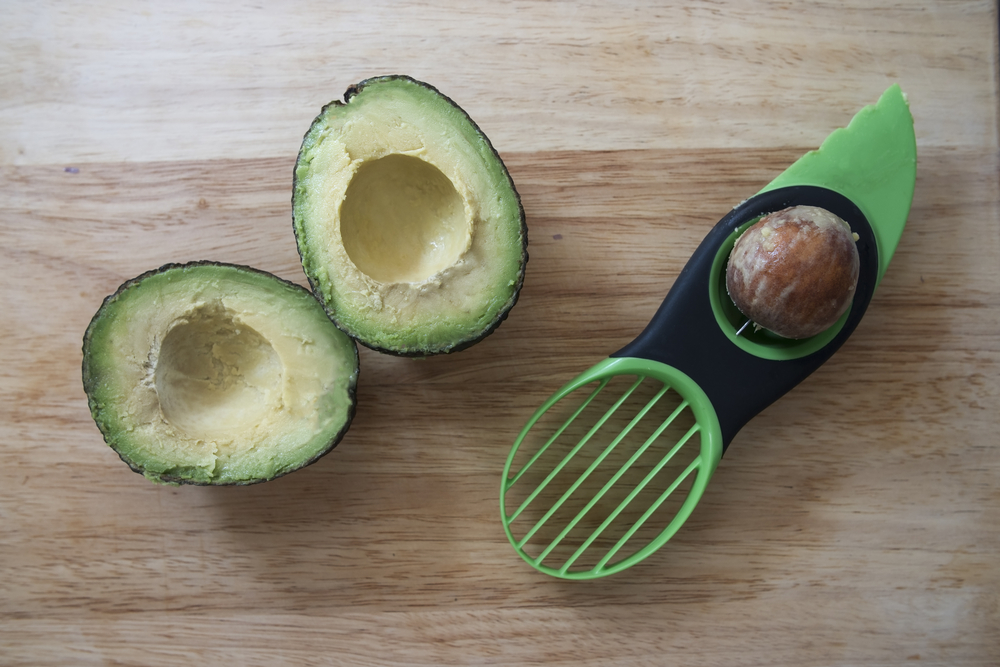
Avocado slicers, strawberry hullers, cherry pitters, pineapple corers, mango splitters, corn strippers. Every one of these costs between $7 and $20, takes up drawer space, and does something a knife does in roughly the same time once you know the technique. The avocado slicer is the canonical example: it splits the fruit, removes the pit, and slices the flesh, but a chef’s knife does all three things in about 15 seconds.
These gadgets accumulate because they’re cheap and seem clever in the store or while watching a kitchen reel online. The problem is that most people eat avocados or strawberries infrequently enough that they never build the muscle memory to make the gadget faster than their hands. Then it sits in the drawer, dull and vaguely sticky, until a drawer cleanout produces the question of why it was purchased at all.
The exception, if there is one, is the cherry pitter if you pit cherries in volume for baking. But for most households, none of these earn their real estate. A sharp paring knife and a few YouTube videos on basic knife skills will make every one of these redundant.
Electric can opener
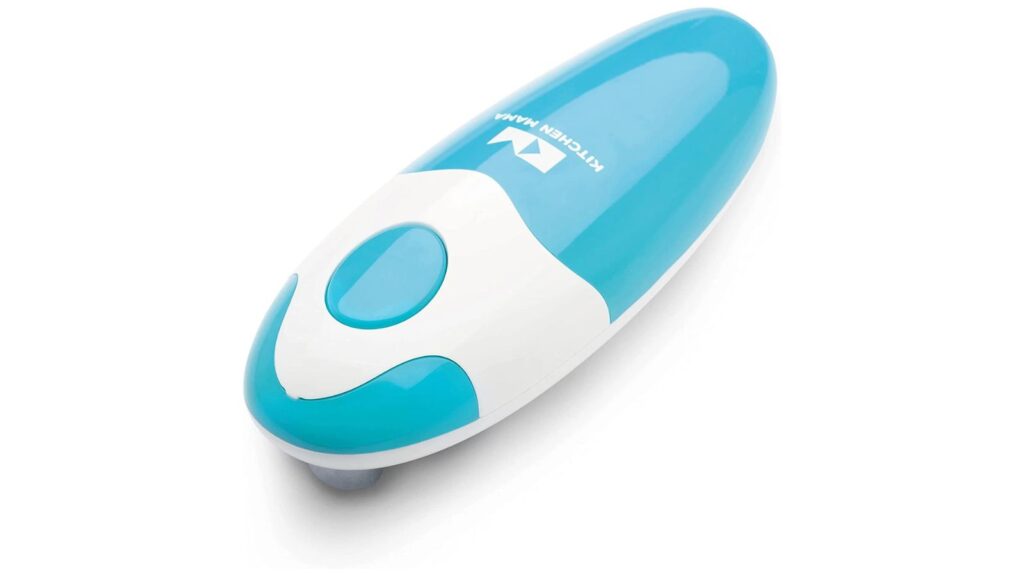
Productos De Ventas via eBay
An electric can opener costs $20 to $50. A manual can opener costs $8 to $15. Opening a can takes about 20 seconds either way. The electric version requires a power outlet, takes up counter or drawer space, and adds a motor and gears that will eventually break, at which point you’ll need a manual opener anyway.
The case for electric can openers is usually convenience or ease of use for people with limited hand strength or grip issues, and for that specific purpose, they make sense. For everyone else, the manual opener does the same job with zero electricity, easy storage in a drawer, and a lifespan measured in decades if you buy a decent one. A good manual can opener, like the OXO Good Grips, runs about $12 and will outlast several electric models.
The “smooth edge” style of manual opener, which cuts the side of the lid rather than the top, leaves no sharp edges and costs the same as a standard one. Either way, this is a $12 purchase, not a $40 one.
Oversized knife block sets
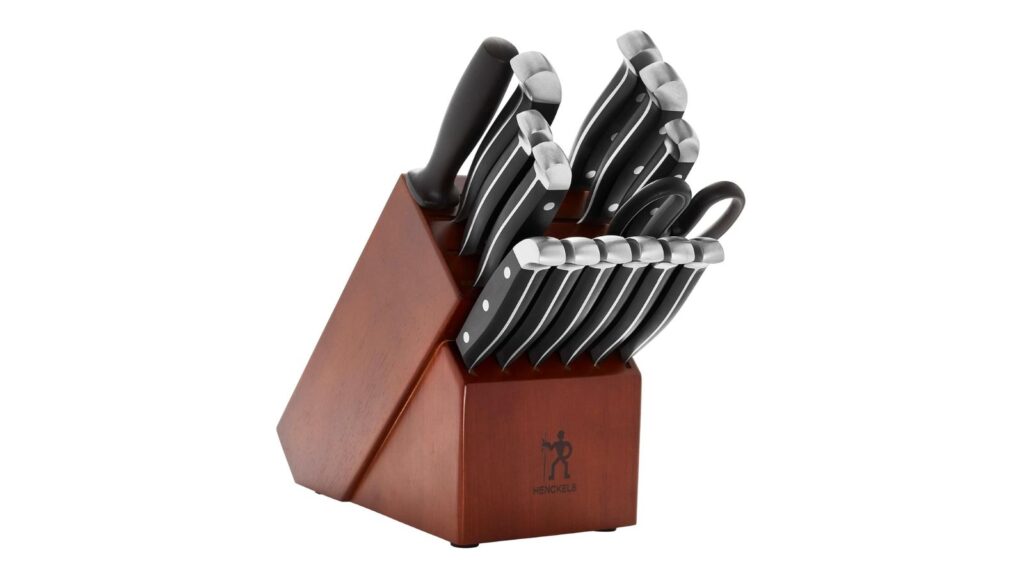
The 16-piece or 20-piece knife block set looks impressive and signals that someone is serious about cooking. In practice, most of those slots hold knives that will never be used: a boning knife for the household that doesn’t bone, a bread knife that rarely gets pulled, a carving fork, a sharpening steel that requires skill to use properly, and six steak knives that are inferior to the ones you’d buy separately.
The actual knives you need are three: a good chef’s knife (8 to 10 inches), a paring knife, and a serrated bread knife. Those three will cover almost everything a home cook does. A quality 8-inch chef’s knife from a reputable brand like Victorinox runs about $45 and will outperform many of the blades that come in a $200 block set, because the economics of a big set mean cost-cutting on the individual knives.
Block sets also encourage bad storage habits. The wooden slots dull knife edges over time as blades drag across the wood with each insertion and removal. A magnetic knife strip, which costs $20 to $40, stores knives edge-safe, keeps them accessible, and takes up zero drawer or counter space.
Pre-filled matching spice rack
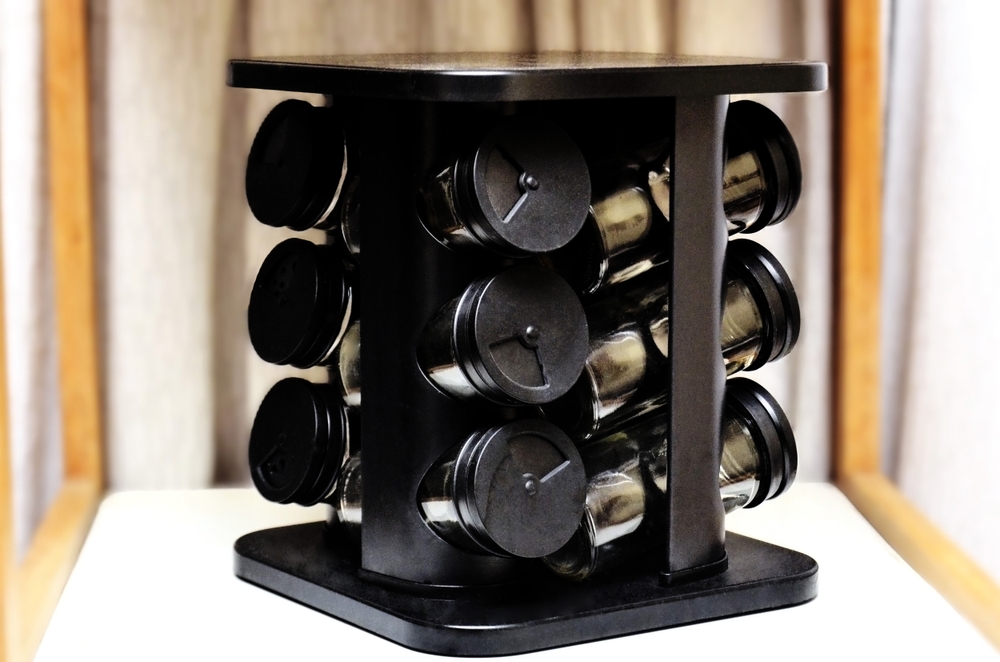
The countertop spice rack with 20 or 24 matching jars looks organized and intentional. The catch: you’re paying for the aesthetic, not the spices. Pre-filled spice racks sold as sets almost always contain spices in very small quantities, often in jars that are already months old by the time they reach the shelf. Spices lose their potency over time, and a jar of dried oregano that sat in a warehouse and then a store for six months is already fading before it reaches your kitchen.
The other problem is that the set dictates what spices you own rather than what you actually cook with. Most of those 20 jars will sit untouched while you run out of cumin and garlic powder constantly. Buying spices individually, in larger quantities from a bulk store or a quality spice retailer, costs less per ounce and produces far fresher results.
If you want uniform storage, buy matching empty jars and fill them yourself. You’ll pay $15 for a set of jars instead of $40 to $80 for a pre-filled rack, and you’ll know how old your paprika is.
Waffle maker

Waffle makers have the same problem as most single-use appliances: the ratio of cabinet space to actual use is terrible. The machine costs $30 to $150 depending on the model, and most households use it on occasional Sunday mornings until the novelty wears off, then it migrates to a high shelf or a box.
The cleaning is what kills the habit for most people. Batter drips into the hinge, the plates don’t detach on budget models, and getting the machine fully clean requires more effort than it feels worth on a weekend morning. There’s also the issue that it only makes waffles. A good griddle or even a skillet can handle pancakes and French toast and eggs, which are all faster and don’t require a specialized appliance.
If waffles are a genuine weekly ritual in your household, the machine earns its place. But be honest about how often you’ll actually use it before spending $70 on a Belgian waffle maker that takes 10 minutes to heat up.
Electric pasta maker
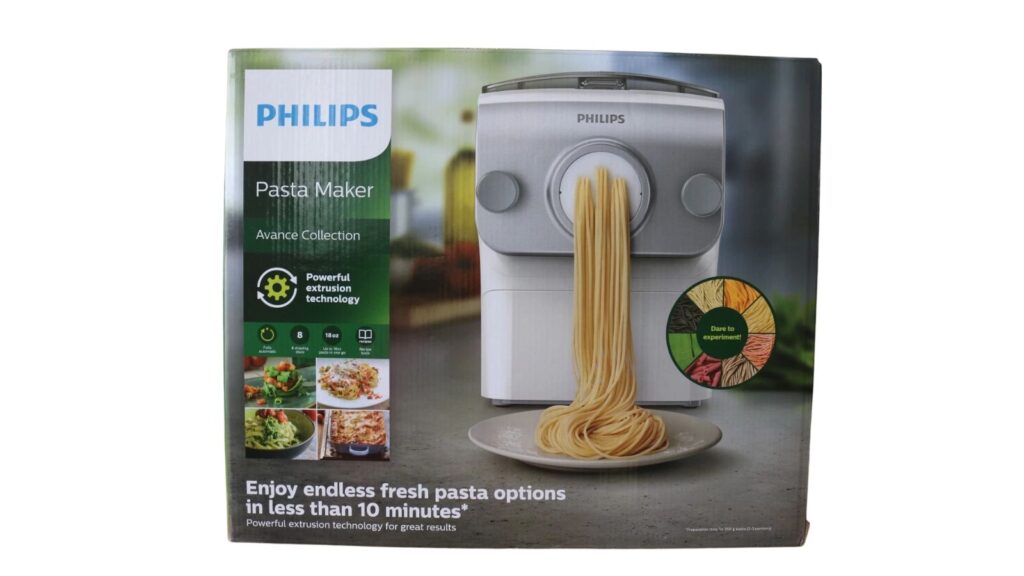
An electric pasta maker, like the Philips Avance model, runs about $300. It automates the kneading and extruding process, which sounds great until you realize that making fresh pasta from scratch still requires planning, ingredient prep, and cleanup of a machine with multiple small parts. The result is genuinely delicious, but the time commitment doesn’t disappear just because a machine handles the kneading.
Most people who buy an electric pasta maker use it enthusiastically for a few weeks, then drift back to dried pasta because it’s faster and works fine in 90% of recipes. Dried pasta from a good Italian brand costs a fraction of what fresh pasta costs in time and ingredients, and in sauces with strong flavors, the difference is minimal.
If fresh pasta is something you want to make regularly, a hand-crank pasta machine costs about $50 to $80 and does the rolling and cutting just as well with a little practice. It takes up less space, cleans easily, and costs a third of the electric version. The KitchenAid pasta attachment, at around $170, is a reasonable middle option if you already own the stand mixer and would genuinely use it weekly.
Ice cream maker
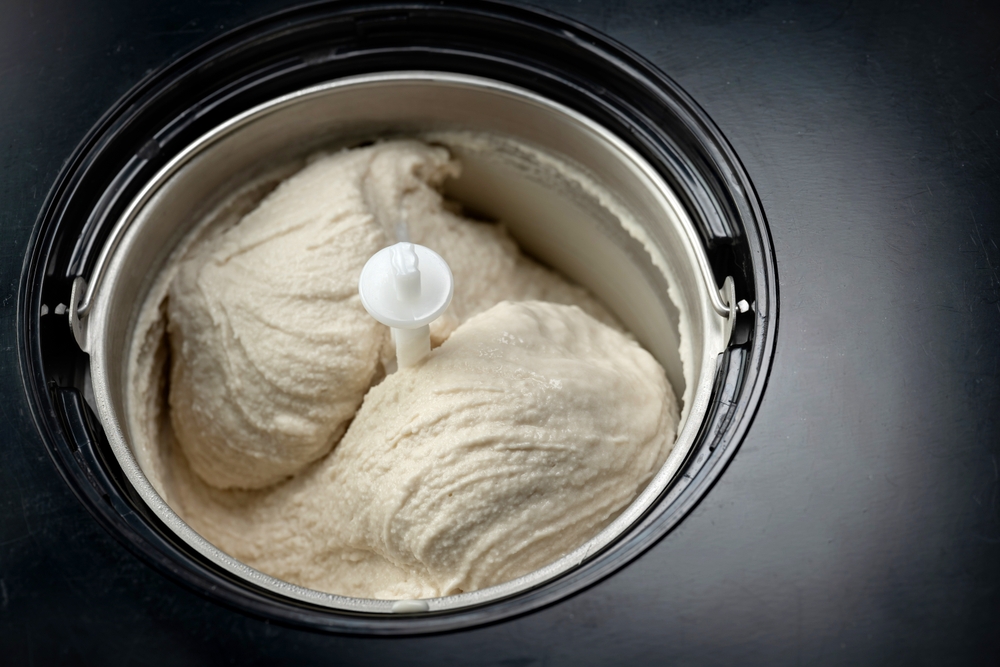
Ice cream makers fall into two categories: the bowl-freeze type that costs $30 to $80, and the compressor type that costs $200 to $400. Both make decent ice cream at home. Both also require planning, chilling, and the purchase of cream, milk, eggs, and flavorings in quantities that make a single batch cost $8 to $12 before you consider the machine.
The bowl-freeze models require you to freeze the bowl for at least 12 to 24 hours before you can use them, which means impulse ice cream making is impossible. If you forget to freeze the bowl, you’re back to buying a pint at the store. The compressor models fix that problem but cost as much as a small appliance and take up significant counter or cabinet space.
For most households, good-quality ice cream from the grocery store is $5 to $8 a pint. Making it at home can produce better results, but the machine cost, ingredient cost, and time rarely pencil out for the occasional user. This is one that home bakers and dessert enthusiasts with a regular schedule can justify. Everyone else should buy the pint.
Electric wine opener
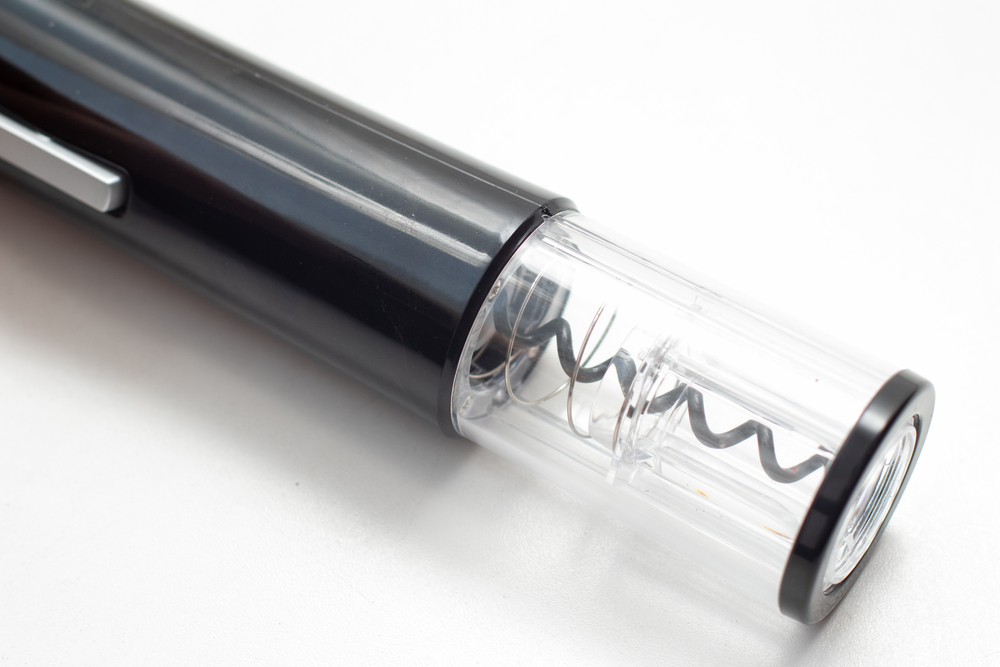
An electric wine opener costs $20 to $60 and removes a cork in about six seconds. A waiter’s corkscrew costs $10 and removes the same cork in about eight seconds. The electric version requires a charge, will eventually stop holding a charge, and adds one more small appliance to the drawer. It also doesn’t work on natural corks that are crumbling or synthetic corks that require a little torque to seat properly.
The waiter’s corkscrew, also called a wine key, is the version used by every bartender and restaurant server in the country because it is fast, reliable, and fits in a pocket. It cuts the foil and removes the cork in two motions and has essentially no moving parts to break. Learning to use one properly takes about five minutes.
The electric opener exists because it feels like an upgrade. It’s not. Same wine, same result, more to lose, more to charge, more to throw away when it dies in two years.
Egg cooker
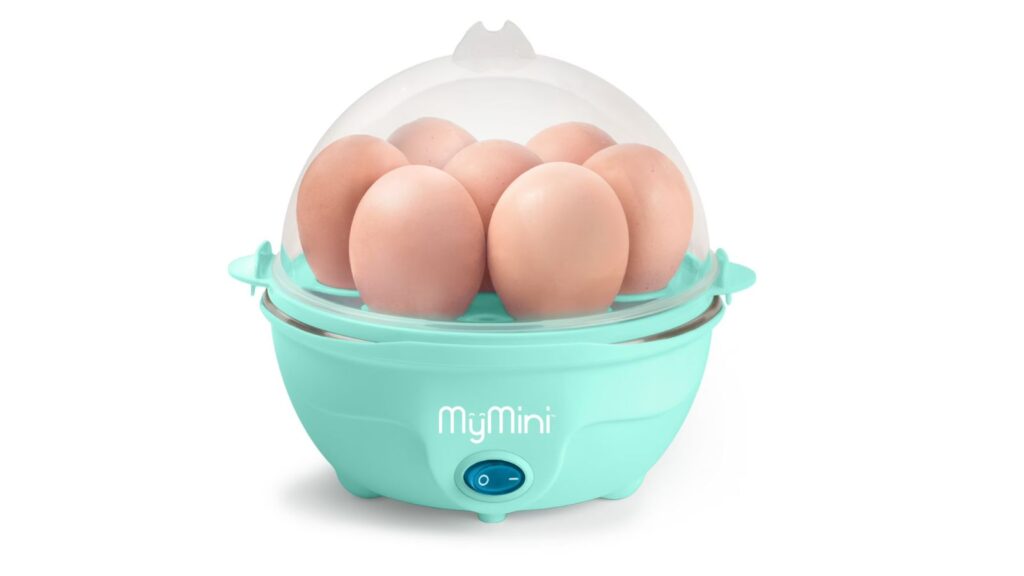
The egg cooker, which is a small plastic appliance designed to hard boil, soft boil, or poach eggs using steam, sells for $20 to $40. It does work. It also does exactly what a pot of water does, in roughly the same time, but requires counter space, a cord, and periodic descaling because the heating element accumulates mineral deposits.
Hard boiling an egg in a pot requires: filling the pot, setting the burner to medium-high, setting a timer. That’s it. Poached eggs in a saucepan take a little practice with the swirling technique, but most people get it on the second or third try. Neither process requires a specialized appliance that can only cook eggs.
The people who use egg cookers consistently tend to be making large batches of meal-prep eggs, and for that specific case there’s a real argument for the convenience. For most households making two to four eggs at a time, a small saucepan and a timer work just as well and don’t need to be stored anywhere special.
Mandoline slicer
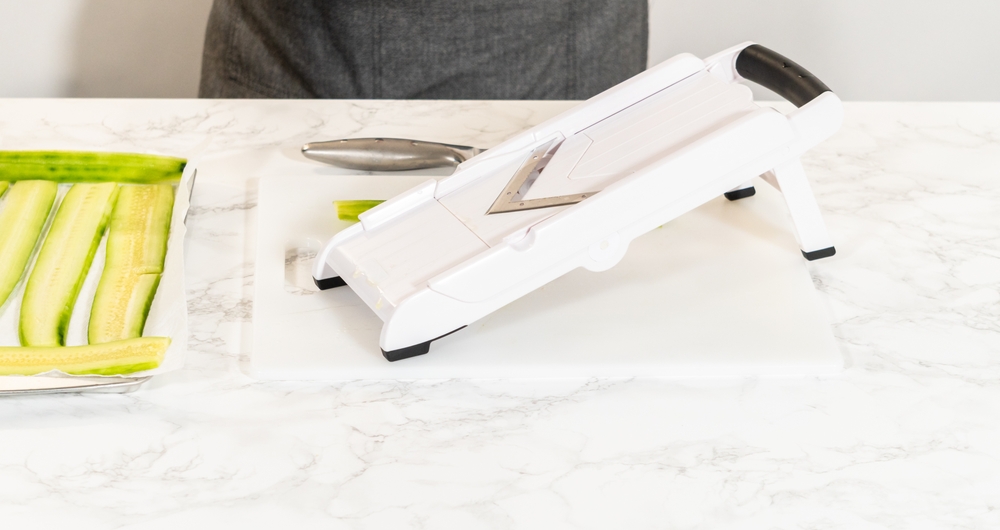
The mandoline creates dangerously thin, uniform slices at high speed. It is also one of the most injury-prone pieces of kitchen equipment in home use, because the blade is fixed and extremely sharp, the hand guard is awkward, and most people stop using the guard after the third time it slows them down. The result is a tool that cuts vegetables beautifully and fingers easily.
Mandolines run from $25 for a cheap plastic version up to $150 for a quality stainless steel model. The cheap ones flex under pressure, which makes them unpredictable. The good ones work well but still require full attention and cut-resistant gloves every single time. Even professional cooks treat mandolines with genuine respect.
For most home cooks, a sharp chef’s knife and a little patience produces slices that are good enough for the things they’re actually making. Gratins, potato dishes, and thin salads don’t require mandoline-level precision. If you’re making dishes that actually require paper-thin, consistent slices at volume, the mandoline earns its place. For the occasional thin slice, it doesn’t.
Spiralizer
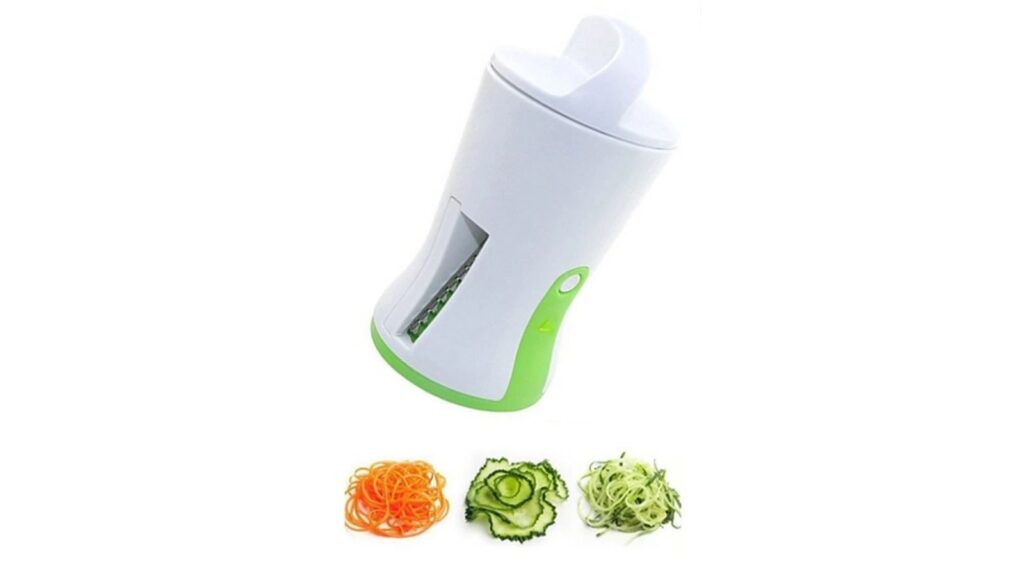
The spiralizer had a big cultural moment when zucchini noodles became a low-carb trend. That moment peaked, and most spiralizers now sit in the back of cabinets next to the quesadilla maker. The standalone countertop spiralizer costs $30 to $60, takes up real space, and creates zucchini or cucumber or carrot spirals that, if we’re being direct, aren’t a genuine substitute for pasta to anyone who’s eaten actual pasta.
The spiralizer also requires vegetables of a specific size and firmness, creates a significant amount of vegetable waste from the ends and cores, and produces a cleanup task out of proportion to what it actually makes. A julienne peeler, which costs about $8, does a similar job for most applications. A box grater does another version of it.
If spiralized vegetables are genuinely part of your regular cooking, the KitchenAid spiralizer attachment is a reasonable option if you already own the stand mixer. The standalone spiralizer is harder to justify. The phase passes, and then you have a large plastic contraption that doesn’t fit anywhere neatly.
Soda maker
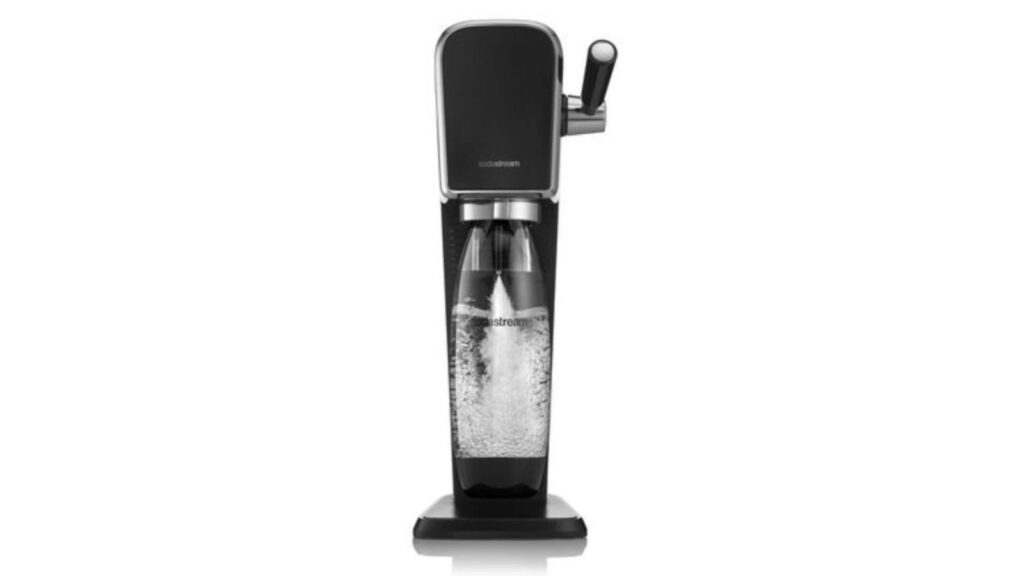
A SodaStream or similar soda maker costs $80 to $200 for the machine, plus ongoing CO2 cylinder costs of around $15 to $25 per refill, with each cylinder carbonating roughly 60 liters. The savings over store-bought soda are real but modest: roughly $0.22 per liter compared to generic store-brand soda. At that margin, a $100 machine needs to produce hundreds of liters before it pays for itself, which works out to well over a year of heavy use even for a dedicated fizzy water household.
The machine makes sense if you drink a lot of sparkling water and care about reducing plastic waste, and if you’ll actually stick with the CO2 refill routine. The inconvenience is real: you need to track when the cylinder is running low, return it for an exchange, and remember to carbonate ahead of time. That’s not much friction, but it’s enough that many people drift back to buying cans and bottles within a few months.
For pure sparkling water, store-brand canned seltzer at Costco or Aldi runs about $0.10 to $0.15 per can, which is hard to beat even with a SodaStream once you factor in the machine cost and refill trips. The environmental case is stronger than the financial one, and that’s a personal calculation each household has to make.
Cheap nonstick cookware sets
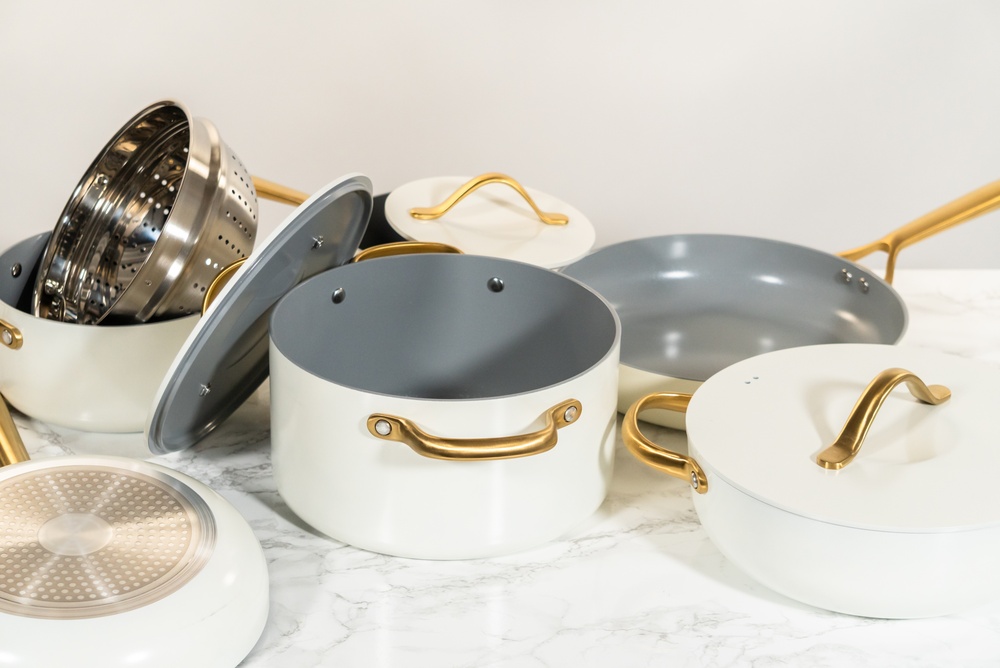
The 12-piece nonstick cookware set for $60 at a big box store is appealing because it seems like a complete kitchen solution at a low price. The problem is that cheap nonstick coatings, particularly the ceramic-coated variety marketed as “safe” and “green,” degrade faster than traditional PTFE coatings and are often chipping and staining within 12 to 18 months of regular use. At that point, you’ve bought a set of pans twice in three years instead of once in ten.
Cheap nonstick pans also tend to warp under high heat because the aluminum base is too thin to stay flat. A warped pan sits unevenly on the burner, cooks unevenly, and will frustrate you every time you use it. The nonstick coating is usually already compromised by the time the warping starts.
A better approach is to buy fewer, better pans: one 10-inch or 12-inch nonstick skillet for eggs (a Tramontina or Cuisinart commercial-grade pan runs $30 to $50 and will last years with normal care), plus a stainless or cast iron pan for everything that needs higher heat. That’s $80 to $100 for two pans that will genuinely serve you rather than $60 for a set you’ll replace in a year.
Salad spinner

The salad spinner dries washed greens by spinning them in a basket. It works. It also costs $20 to $50, takes up a surprising amount of cabinet space for what it does, and the spinning mechanism breaks on cheaper models within a year or two. The bowl is usually too small for a family-sized salad, and the whole contraption needs to be disassembled and dried before you store it or it smells.
A clean kitchen towel does the same job. Wash the greens, roll them loosely in the towel, and give it a few gentle shakes. The greens come out drier than most salad spinners achieve, because the towel absorbs rather than just flinging the water. This is actually the method used in many restaurant prep kitchens for individual greens.
The salad spinner is one of those items that feels more essential than it is. People who meal prep large batches of salad greens get genuine use from it. For most households making a salad a few times a week, the towel method takes the same amount of time and involves one less thing to wash and store.
Specialty single-use baking pans
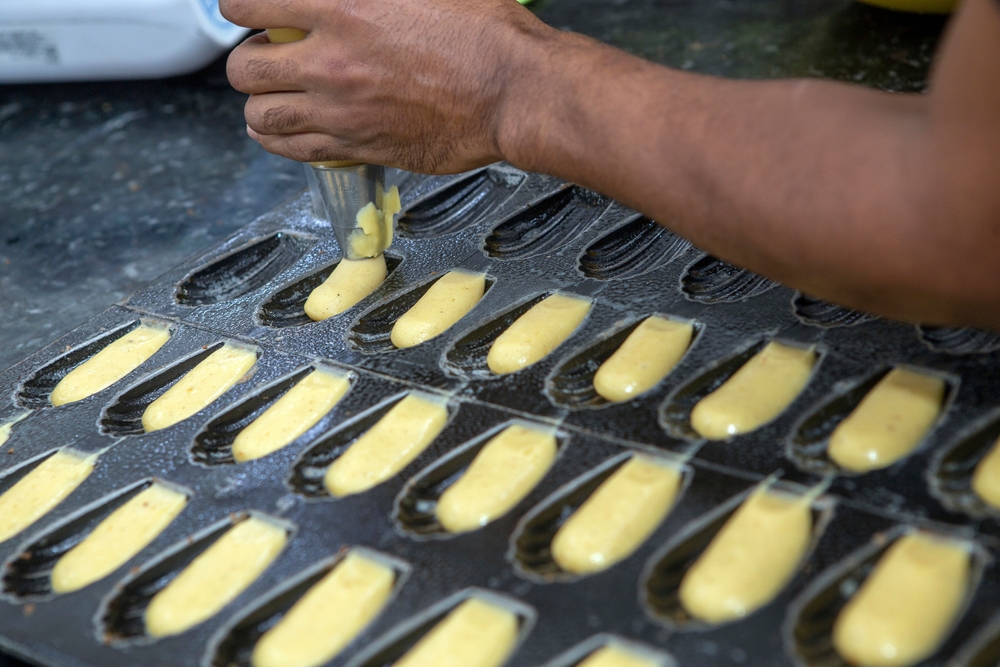
Donut pans, cake pop molds, whoopie pie pans, madeleine tins, mini bundt pans, the market for baking pans that make one specific shape is enormous and largely unjustified. These cost $10 to $30 each, and most of them get used once for the novelty and then pushed to the back of the cabinet until a kitchen cleanout produces the slow realization that you’ve been storing a cake pop mold for four years.
The pull of these pans is usually tied to a specific moment: you saw a recipe, there was a birthday, someone posted something on social media. The pan gets bought, the item gets made, and then the recipe never gets made again because the moment passed. Standard baking pans, a good muffin tin, and a loaf pan cover 95% of home baking. Anything truly specialized can be rented from some kitchen supply stores or borrowed for a one-time occasion.
The exception is the pans you actually reach for regularly. If you make madeleines twice a month, the madeleine tin is clearly justified. But be honest about which specialty pans you’ve used more than twice. Those are the ones worth keeping. The rest are decorative clutter with a cooking-adjacent alibi.











