
You find a box of old brooches, clip-on earrings, and chunky necklaces in a closet or from a relative’s estate. You’re not sure if it’s all “junk jewelry” or if one of those pieces could help you cover a bill, pay down a card, or pad your savings a bit.
Maybe you’ve already sold silver flatware or old gold jewelry when money was tight, so you know how much the details matter when you sell valuables. The same thing is true with costume jewelry: two pieces can look alike, but one sells for $5 and the other for $500.
Table of contents
- Understand what “vintage costume jewelry” really is
- Look for signatures and maker’s marks
- Judge the quality of construction
- Use age clues: clasps, findings, and wear
- Know the materials buyers want
- Research brands and styles that actually sell
- Compare real selling prices, not wishful asking prices
- Decide when condition kills value
- Sort your pile into smart groups
- Know when to get a second opinion
Understand what “vintage costume jewelry” really is
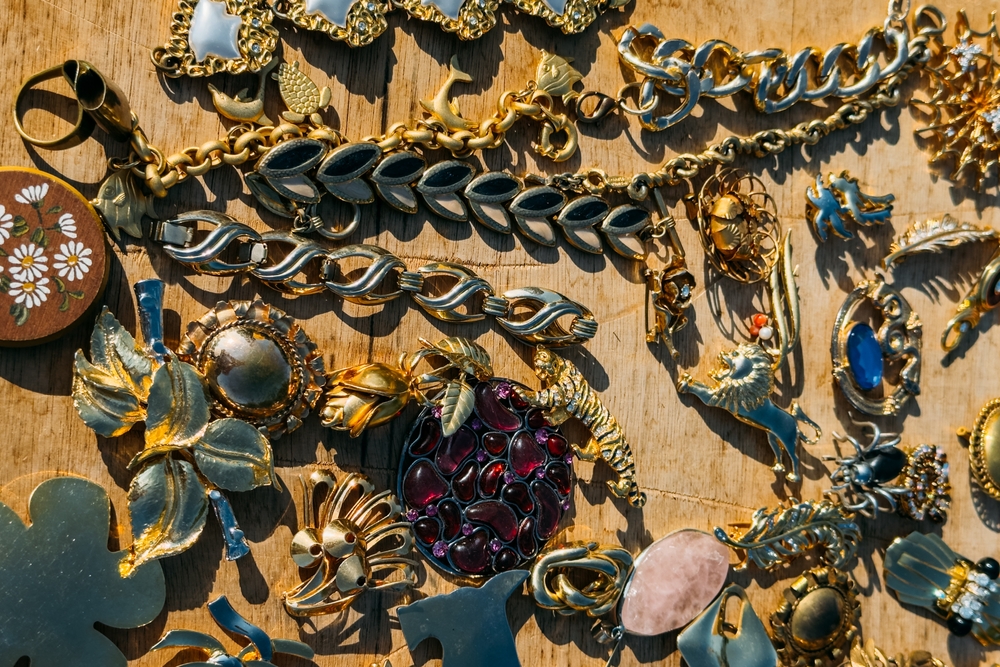
Costume jewelry is jewelry made with non-precious materials: base metals instead of solid gold, glass or crystal instead of diamonds, and often plated finishes instead of solid precious metal. What makes some of it valuable is not the metal content, but the designer name, age, style, and quality of the work. Many pieces made between the 1920s and 1960s were built with the same care as fine jewelry, even though they used glass stones and plated metal.
“Vintage” usually means at least 20 to 30 years old. A big rhinestone brooch from the 1950s or 1960s, signed by a known maker, might be desirable. A mass-produced necklace from last year’s fast-fashion store usually is not. Some older pieces were made to go with high-end clothing brands or couture houses, and those connections can raise value.
So your first goal is to separate true older costume jewelry from modern, low-end pieces. Focus your attention on items that feel solid, have some weight, show real craftsmanship, and look like they belong to an earlier style era rather than something from the mall last season.
Look for signatures and maker’s marks
The single fastest way to spot value is a maker’s mark. Turn every piece over and look carefully along the back, inside a bracelet, near the clasp, or on the pin of a brooch. You’re looking for tiny raised or stamped words, initials, or logos. These are often called signatures or maker’s marks.
Certain names are very collectible in costume jewelry. Pieces marked with brands like Trifari, Coro, Napier, Miriam Haskell, Weiss, Boucher, Kramer, Florenza, Sarah Coventry, Schreiner, Whiting & Davis, and similar mid-century makers can be worth far more than unmarked pieces, especially if the design is bold and in good condition.
Signed costume jewelry from top makers can sell for hundreds or even thousands of dollars, depending on rarity and condition. If you find a signature, write it down exactly as it appears. Later, you can look up “maker name + costume jewelry” and compare your piece to verified examples and recent selling prices. For now, any signed piece goes in the “research more” pile, not the garage-sale box.
Judge the quality of construction
Even without a signature, the way a piece is built tells you a lot. Pick it up and feel the weight. Higher-end vintage costume jewelry tends to feel solid and well balanced, not thin or flimsy. Stones in better pieces are usually set with little metal prongs or in well-made bezels, not just glued onto a flat surface.
Look at the back. On nicer vintage pieces, the back is often finished, with clean casting, tidy soldering, and no sharp edges. Cheaper modern items may have rough backs, obvious glue blobs, or thin stamped metal that bends easily. Check how the links of a bracelet or necklace move. Quality chains and settings flex smoothly, without gaps or visible seams.
Pay attention to the stones. Older rhinestones and glass stones can have rich color and depth, sometimes with special finishes like “aurora borealis” that flash rainbow colors. Cheap modern stones often look flat, cloudy, or overly perfect in a way that feels plastic rather than glass. Overall, if a piece feels heavy for its size, nicely finished, and thoughtfully put together, there’s a better chance it has real resale value.
Use age clues: clasps, findings, and wear

Small hardware details can help you tell if a piece is truly vintage and roughly how old it is. Bracelet and necklace clasps have changed over time. Earlier pieces may have simple “C” clasps, hook clasps, barrel clasps, or older spring-ring styles. More modern lobster clasps and certain types of magnetic clasps tend to show up on newer jewelry.
Brooch pin backs are also useful. Long pin stems that stick out past the edge of the brooch, simple “C” catches, or open tube hinges often point to an older piece. Shorter, safety-style catches with rotating locks are more common in mid-century and later jewelry.
Normal wear can be a good sign. Honest age, like light finish loss on high-spots or some soft patina, fits with a piece that has been around for decades. But be careful with obvious modern repairs, like new-looking backs soldered onto old fronts, which can mean the piece was altered. Learning these clues won’t make you an instant expert, but they help you avoid paying vintage prices for something that was made last year.
Know the materials buyers want
Not all costume jewelry is metal and rhinestones. Some of the most collectible pieces are made from early plastics and other special materials. Bakelite, for example, is an older plastic used from the 1920s through the 1940s, especially in chunky bracelets, bangles, and carved pins. Real Bakelite has a distinct weight and often gives off a particular chemical smell when warmed or exposed to hot water, which collectors use as one test.
Other desirable materials include high-quality glass cabochons, art glass, and crystal stones. Vintage glass can have swirls, “moonglow” effects, or foil backs that give deep sparkle. Some costume pieces use poured glass, enamel work, or hand-wired beads, which all point to more careful construction.
On the other hand, very lightweight plastic that feels hollow and cheap, painted metal that flakes when you scratch a hidden spot, or rough, cloudy stones usually mean lower-end pieces. Those might still be fun to wear, but they rarely bring serious money. When you find unusual materials that look and feel special, set those pieces aside to research further.
Research brands and styles that actually sell

Once you’ve pulled out signed pieces and better-made items, it’s time to see what the market likes. Many collectors chase certain makers and styles. Mid-century American brands like Trifari, Coro, Napier, Miriam Haskell, Weiss, Boucher, Florenza, Kramer, Sarah Coventry, and Schreiner are common examples of names that can sell well, especially for complex designs and original sets.
Beyond the name, some themes do better than others: big statement necklaces, elaborate floral or insect brooches, figural pins (animals, people, objects), and runway-style pieces tied to fashion houses. Costume jewelry linked to couture designers or famous workshops has a long track record of bringing strong prices at auction.
Type your maker’s name and a short description of the item into a search engine or selling platform and look at multiple examples. Pay attention to pieces that are clearly similar to yours in design, size, and condition, not just any piece with the same name. This gives you a realistic sense of whether your item is common, moderately collectible, or something special.
Compare real selling prices, not wishful asking prices
A lot of people list costume jewelry online for sky-high prices and hope someone bites. That doesn’t mean those pieces are actually worth that much. What matters are completed sales. Look for search filters that show “sold” or “completed” listings and focus only on the prices those pieces actually brought.
When you compare, line up details: maker, design, color, size, and condition. A signed brooch in mint condition with original stones may bring many times more than a similar one that is badly worn. If you can find your exact piece, or something very close, that’s ideal. If not, use several similar examples to estimate a range.
Remember that venue matters. A unique designer piece in a specialty auction or high-end shop may sell for more than the same item in a random online listing, but those numbers at least tell you the item has collector demand. This step is where you turn “this looks nice” into a realistic dollar range so you can decide whether it’s worth the time to sell individually or better to bundle.
Decide when condition kills value

Vintage jewelry is allowed to show its age, but there is a line where damage starts to crush value. Green corrosion on metal, deep rust on pin backs, peeling or bubbling plating, badly chipped glass stones, or missing parts from complicated designs usually push a piece into “wear it if you like it” territory instead of “sell for real money.”
That said, don’t toss damaged signed pieces without checking. A rare brooch from a top maker might still have value even with a missing stone, because collectors can sometimes repair or use it for parts. On the flip side, generic unsigned items with lots of damage are usually not worth the effort to fix or list.
Be honest with yourself, especially if you’re selling to raise cash. You want to spend your energy on pieces that are truly collectible. Many people keep a small “fun but flawed” pile to wear or gift, then focus selling time on items that are both desirable and in solid, wearable shape.
Sort your pile into smart groups
If you have a lot of jewelry, it helps to break the job into three simple piles. One pile is for signed or clearly high-quality vintage pieces. Another is for maybe-vintage or interesting items that feel solid but are unmarked. The last pile is for obvious low-end, broken, or modern fashion pieces.
The first pile is where your most valuable items are likely to live. Those are the ones you might sell individually, get appraised, or offer to a specialist buyer. The second pile might be worth selling in small lots to crafters or resellers, after a bit of research to be sure you’re not missing a hidden gem. The third pile is usually best for donation, yard sales, or repurposing into art or craft projects. (Antique Trader)
If the idea of all that sorting feels like too much on top of everything else you’re juggling, that’s normal. The goal is not perfection. It’s simply to avoid giving away a $200 brooch for a dollar because you never turned it over to check the back.
Know when to get a second opinion
You don’t have to figure out every piece alone. If you find jewelry with signatures from well-known makers, very elaborate construction, or anything tied to fashion houses or named designers, it can be worth asking an expert for a quick look. Many vintage jewelry dealers or appraisers can tell at a glance whether something is common or special, and some will review photos online.
This is the same logic people use for silver or gold: before you sell, it helps to know what you actually have so you don’t leave money on the table. If you already spend time looking for side gigs or higher-paying work to improve your finances, treating your jewelry box like a small business inventory makes sense too.
If an expert tells you a piece is rare or in very high demand, you can decide whether to sell through them, list it yourself, or hold onto it. If they shrug and say it’s pretty but common, that’s helpful information as well. Either way, you’re making decisions based on facts, not guesses.











